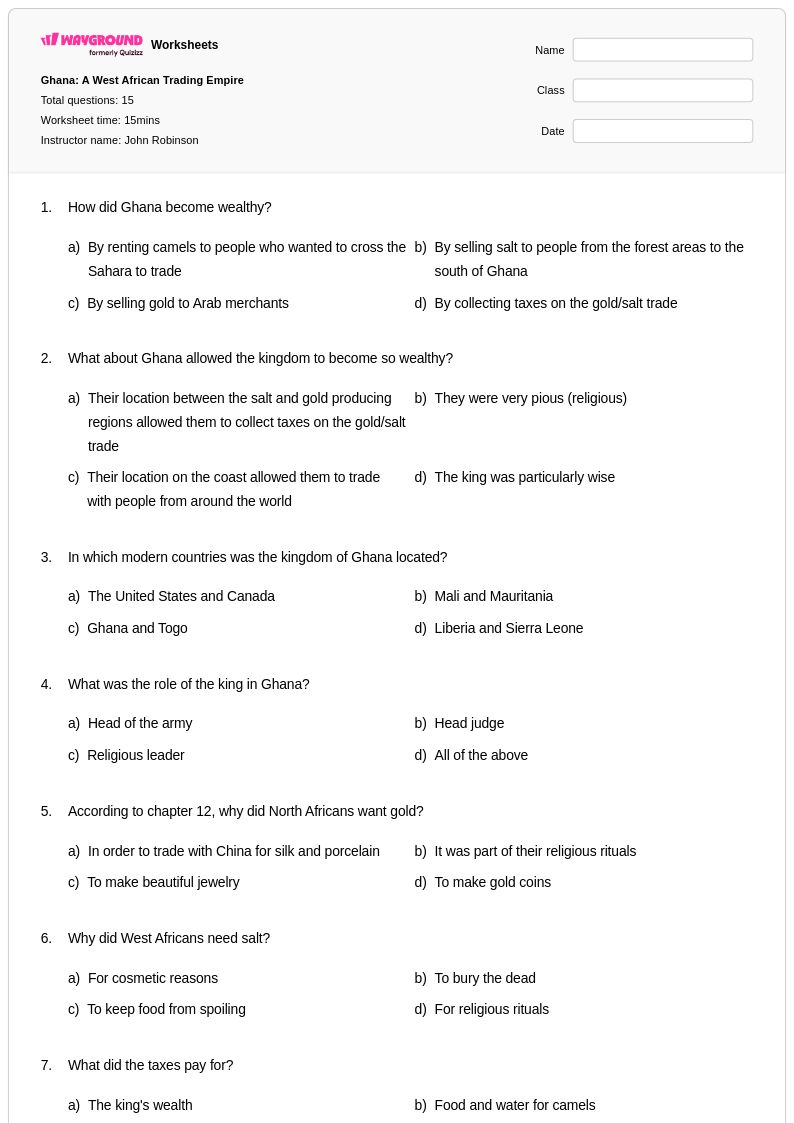
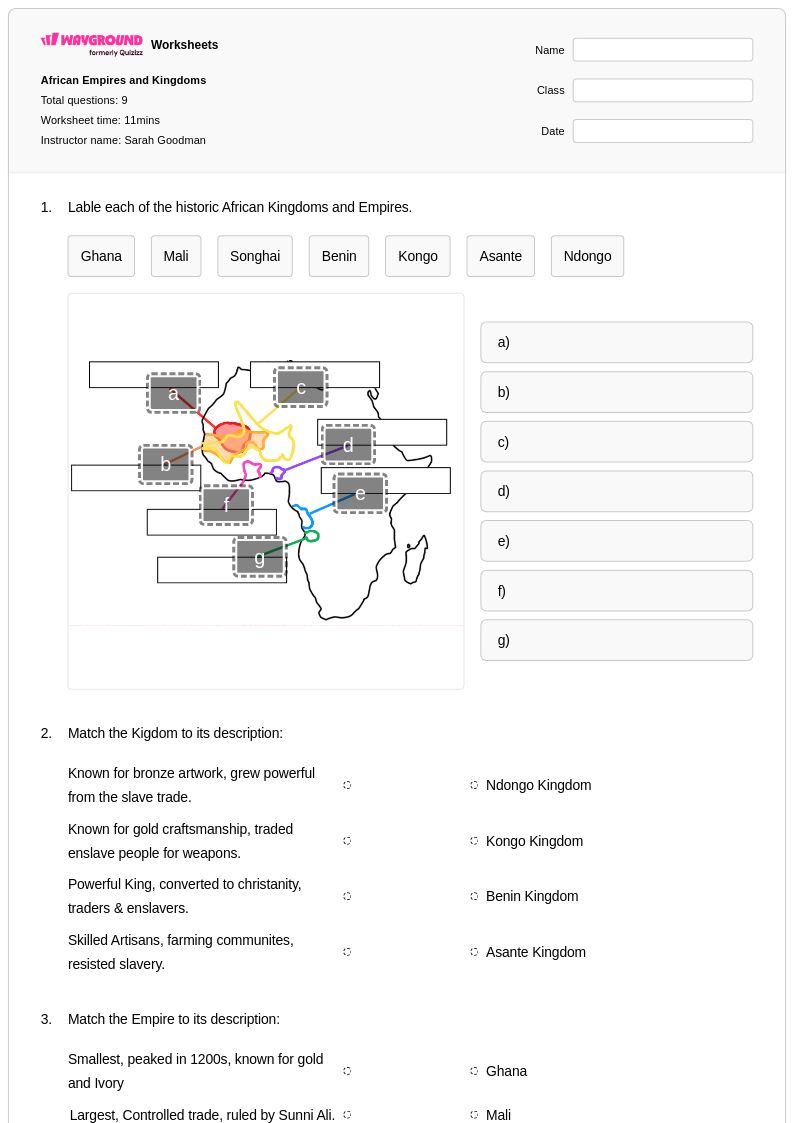
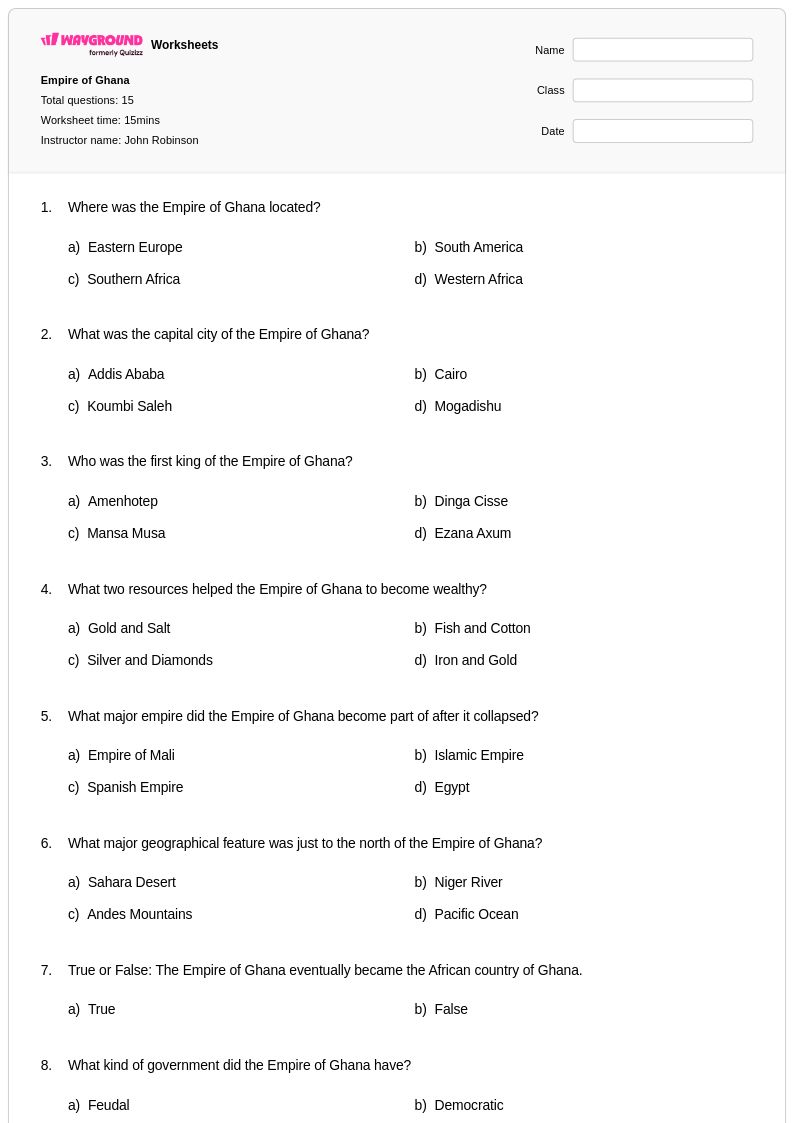
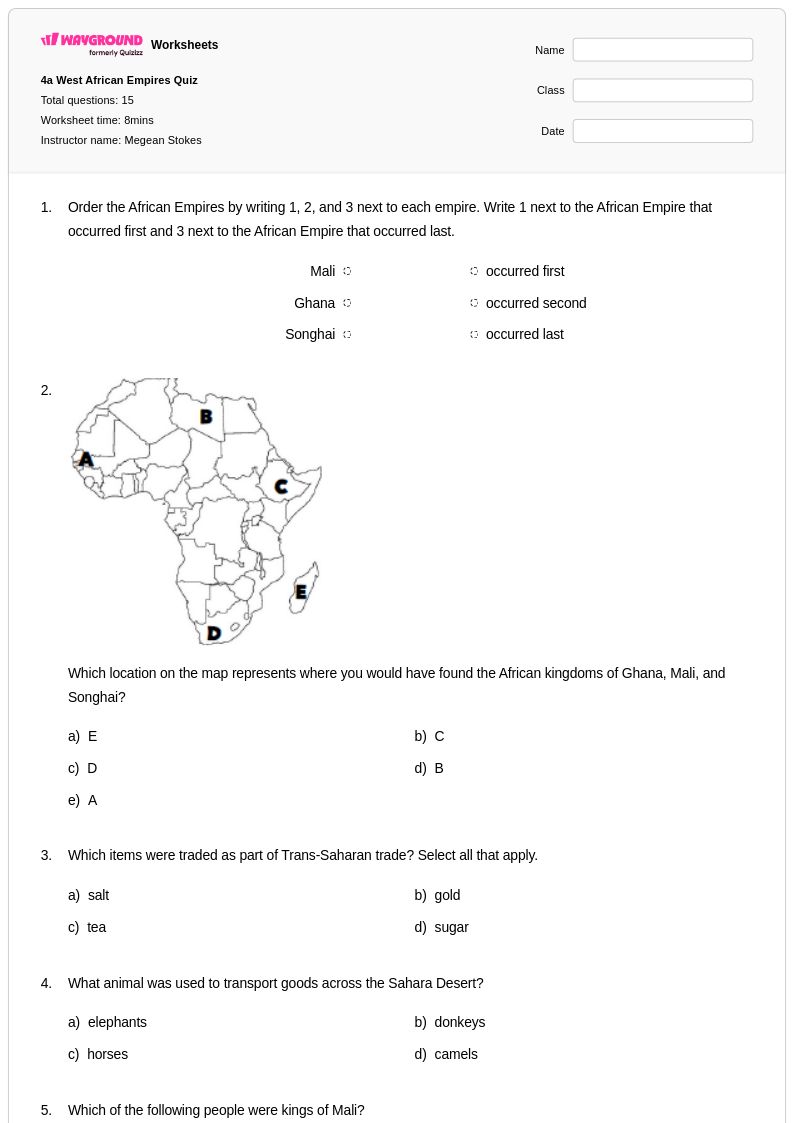
Free Printable The Ghana Empire Worksheets for Year 8
Year 8 students can explore the rich history of the Ghana Empire through our comprehensive collection of free worksheets, printables, and practice problems with complete answer keys to master this pivotal West African civilization.
Explore printable The Ghana Empire worksheets for Year 8
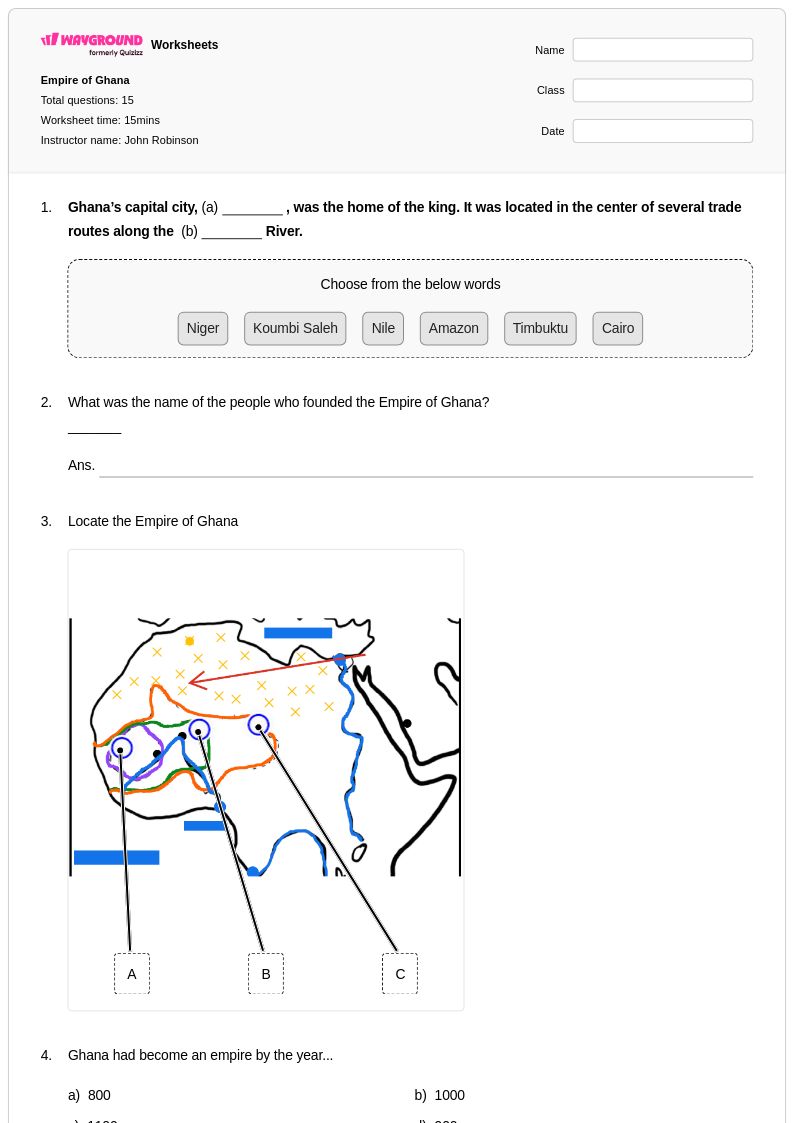
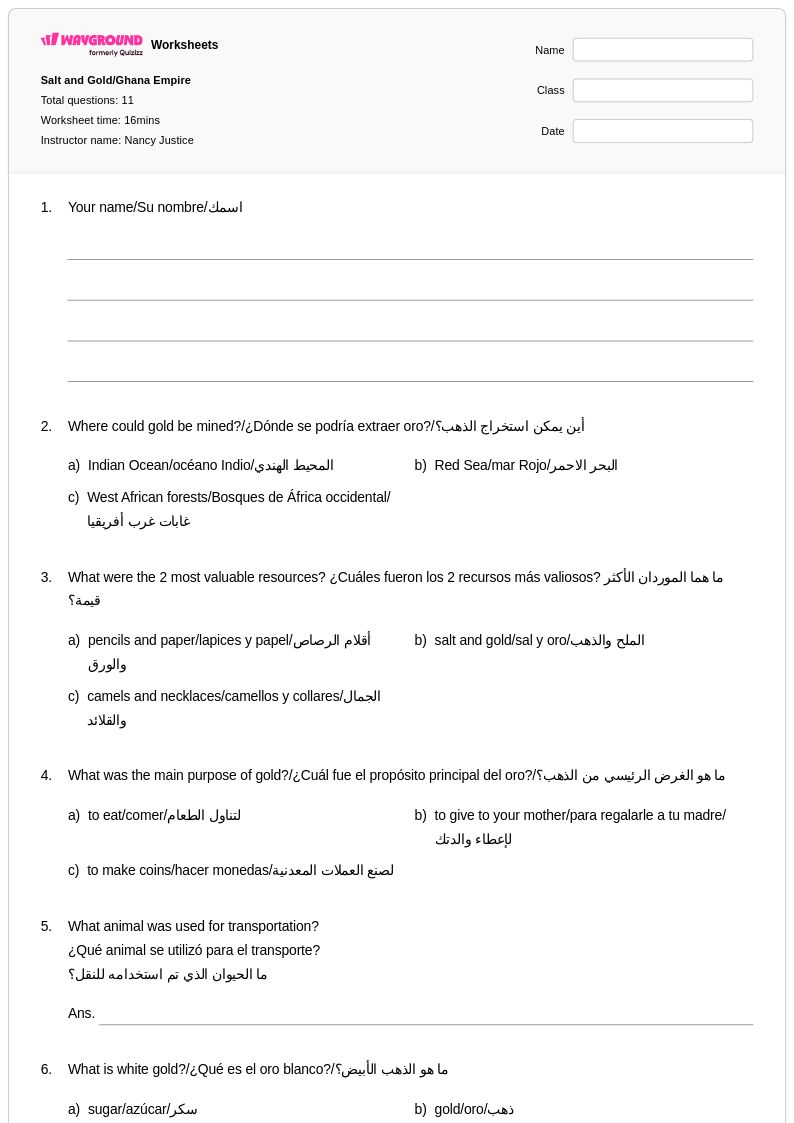
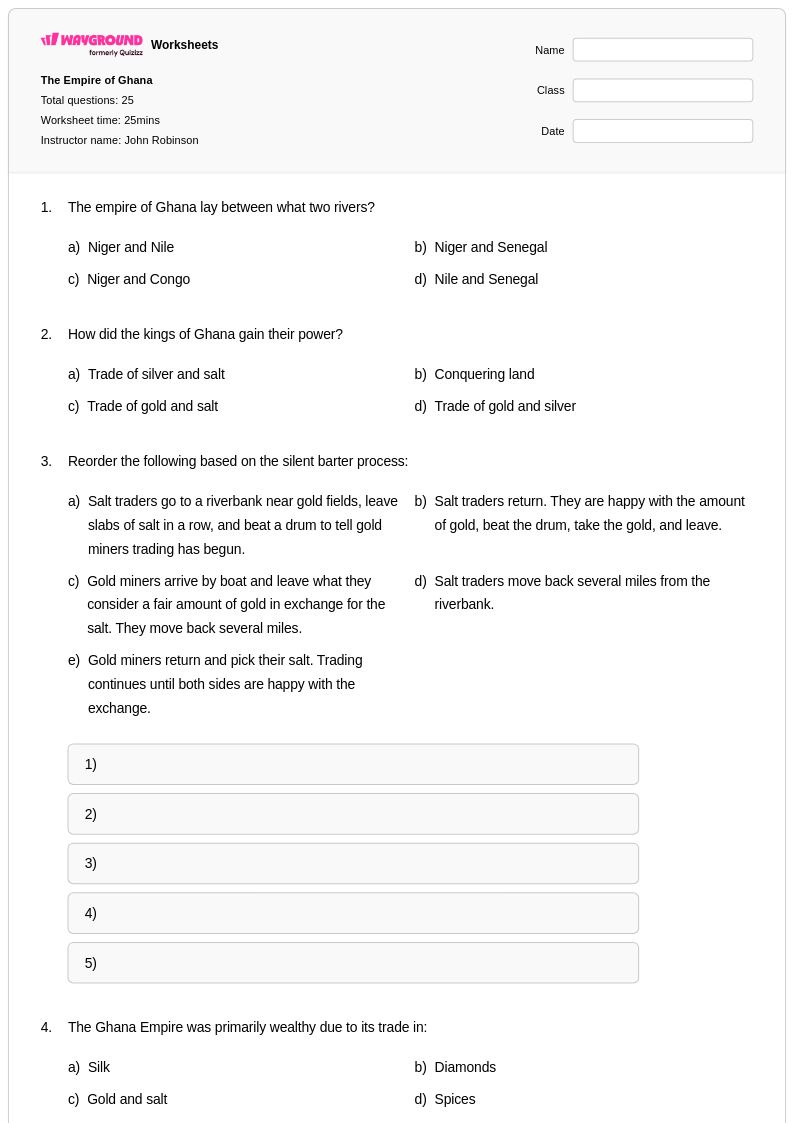
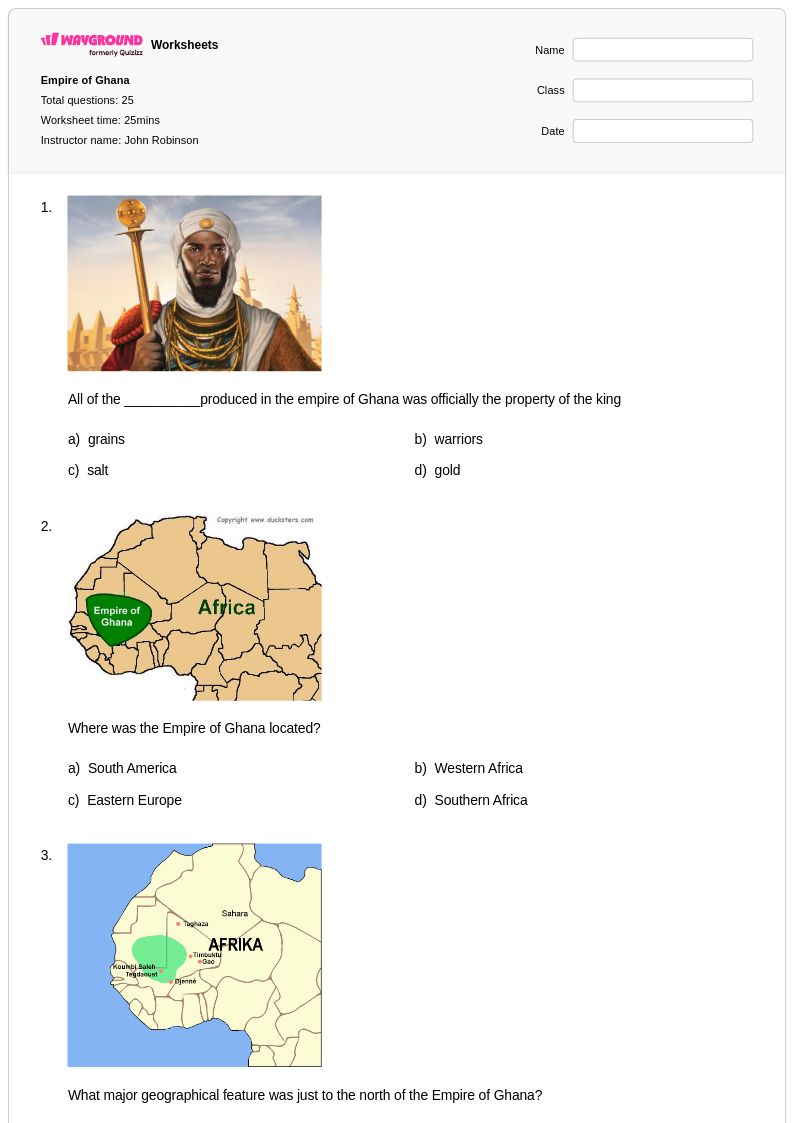
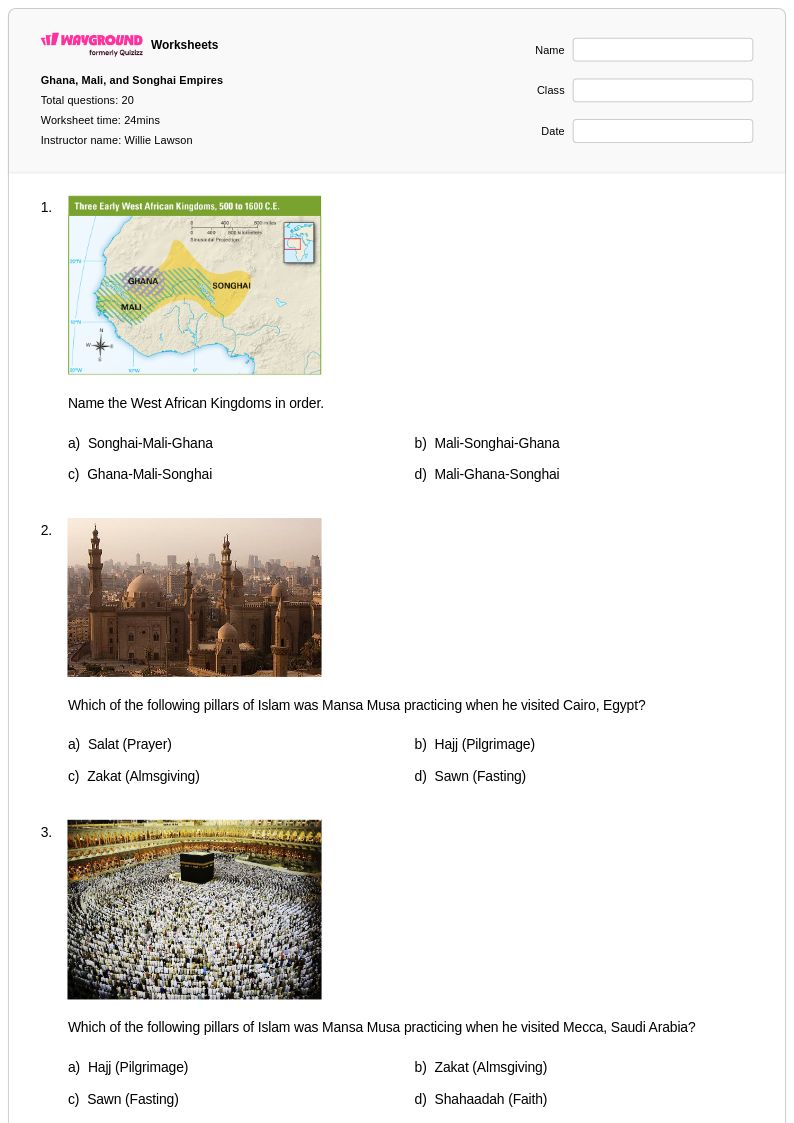
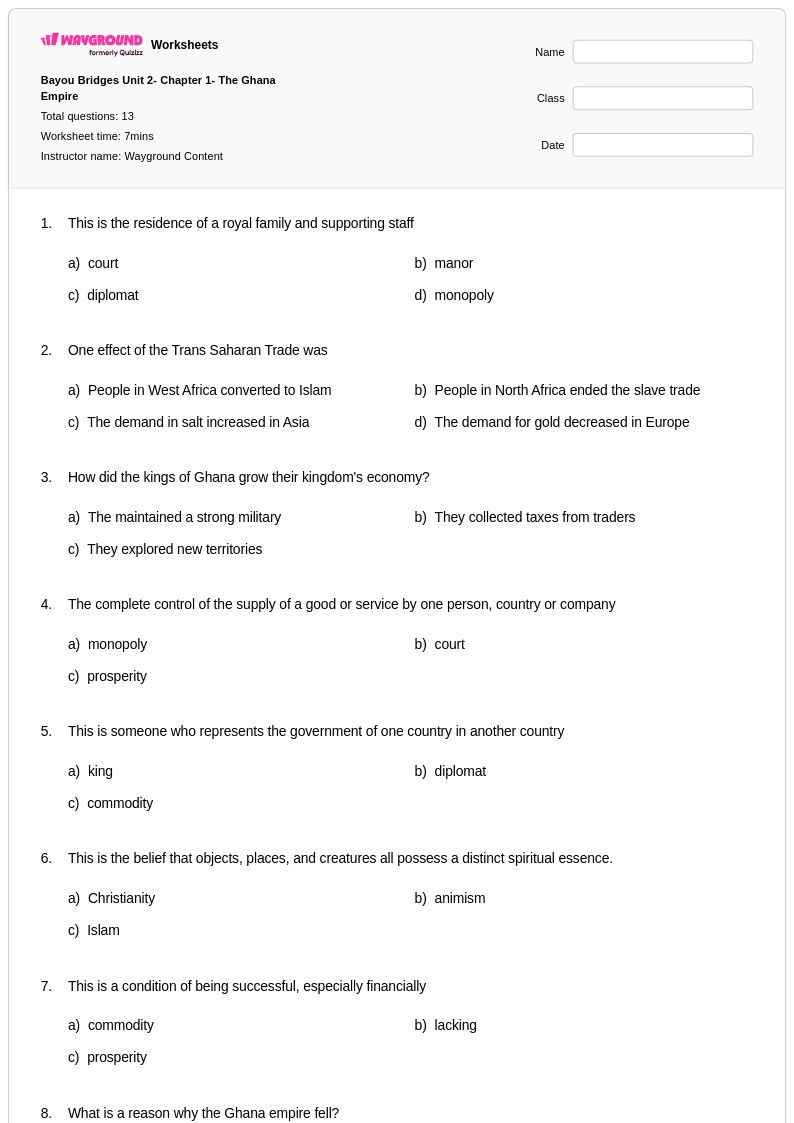
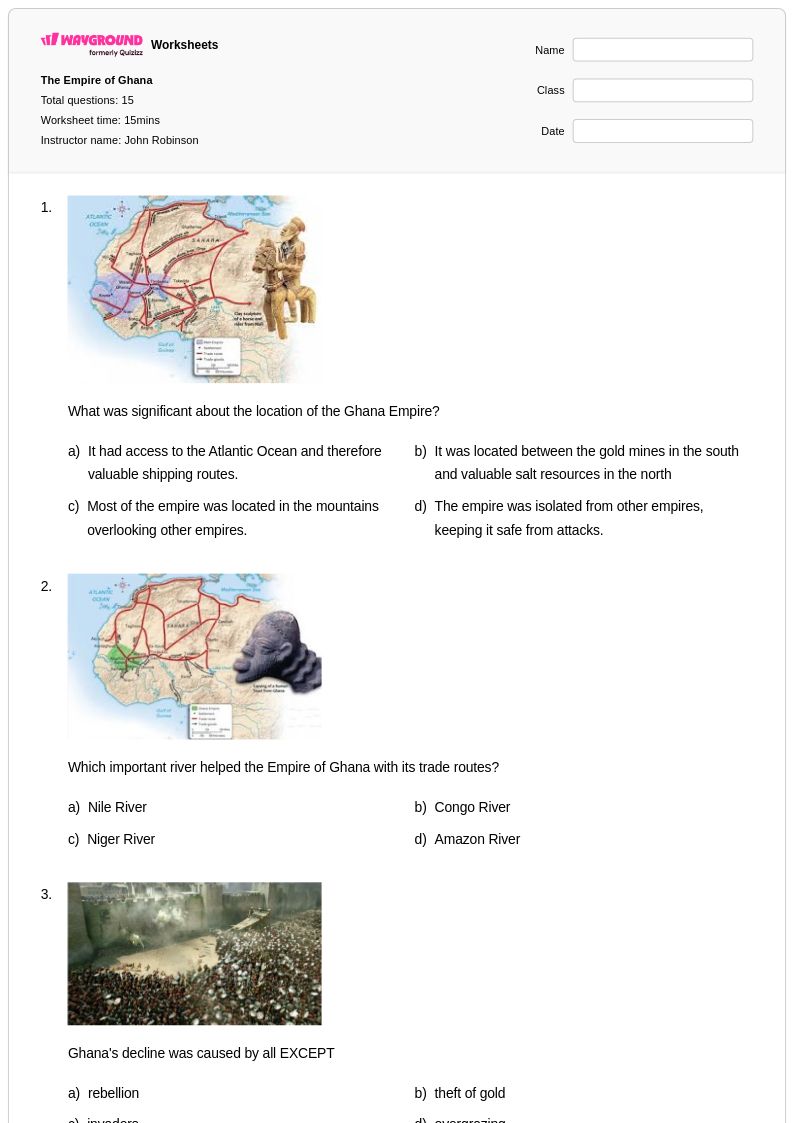
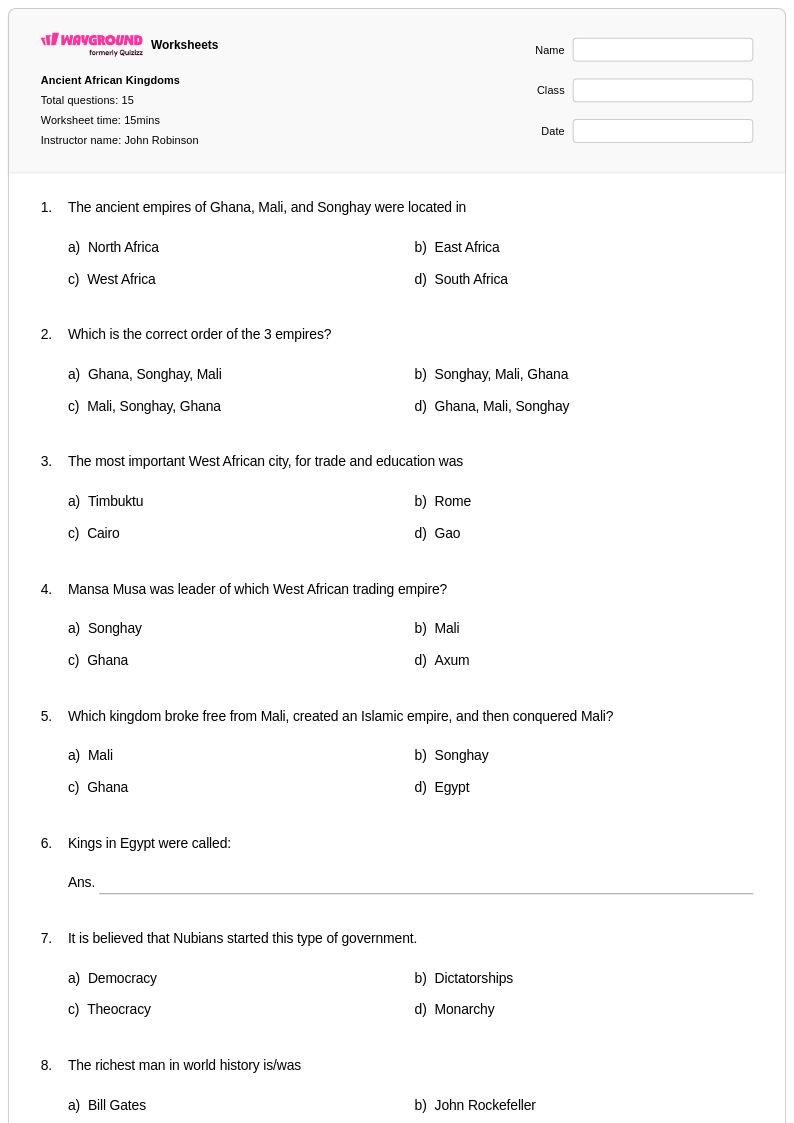
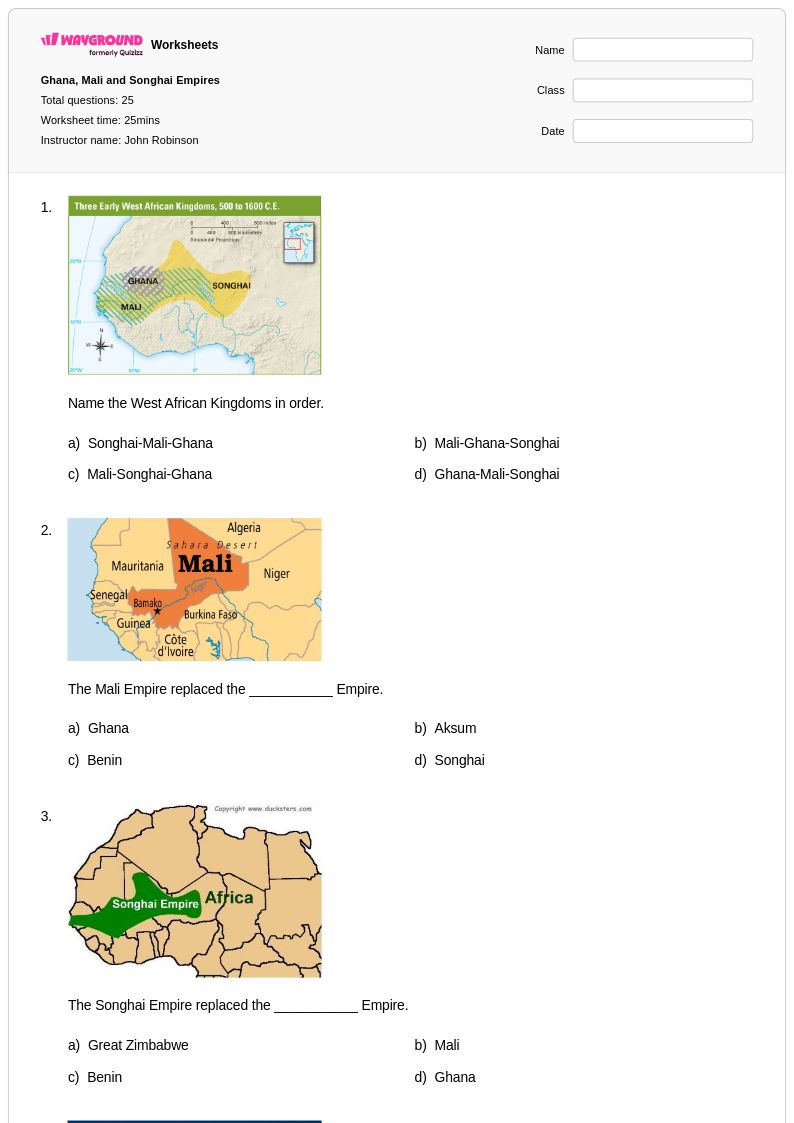
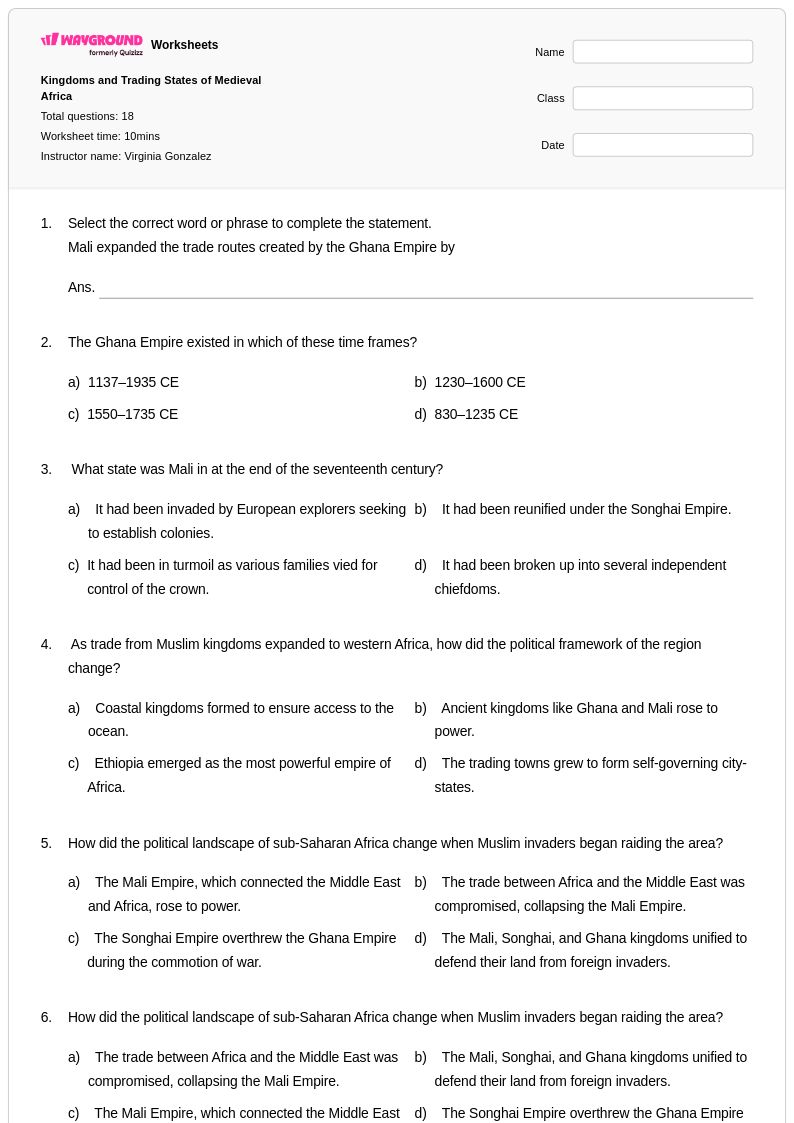
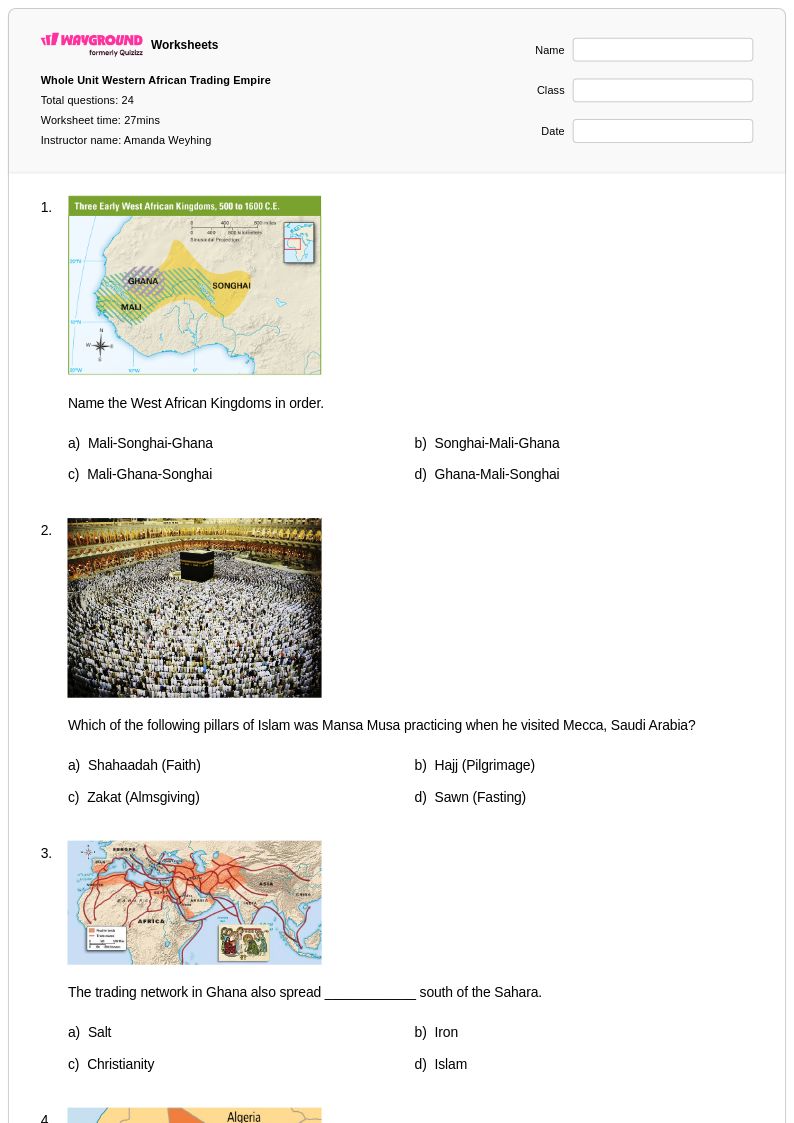
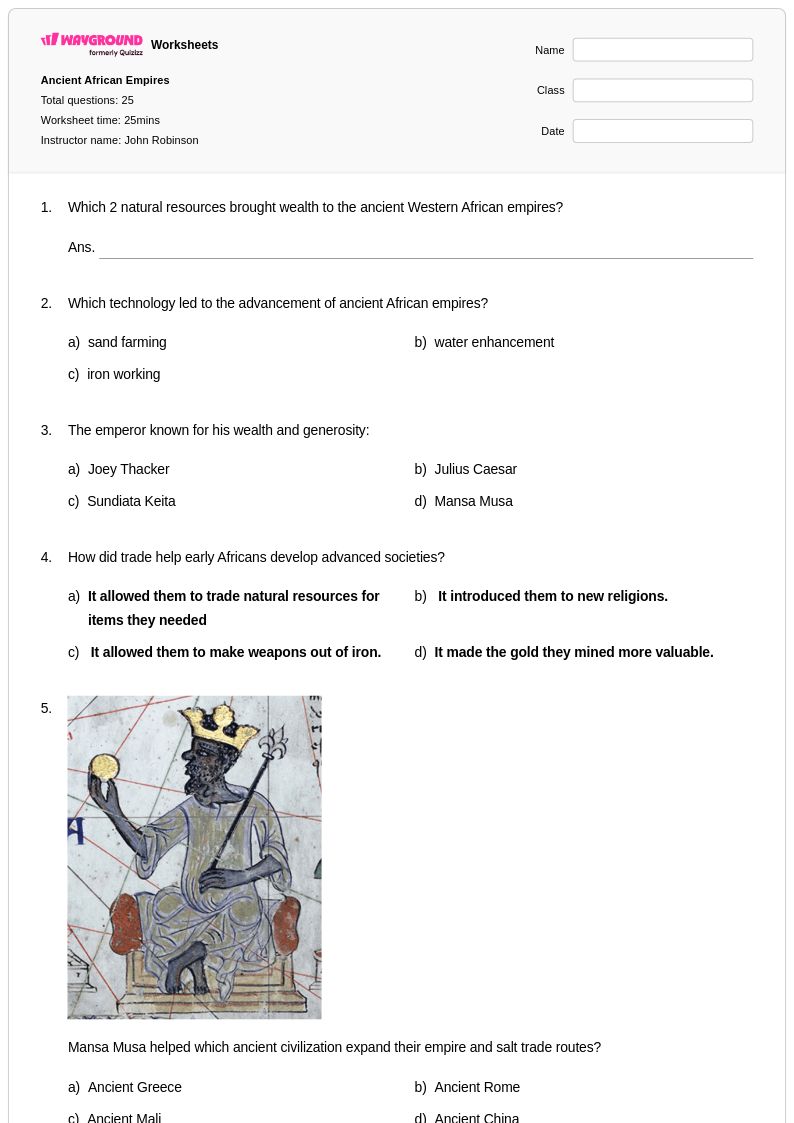
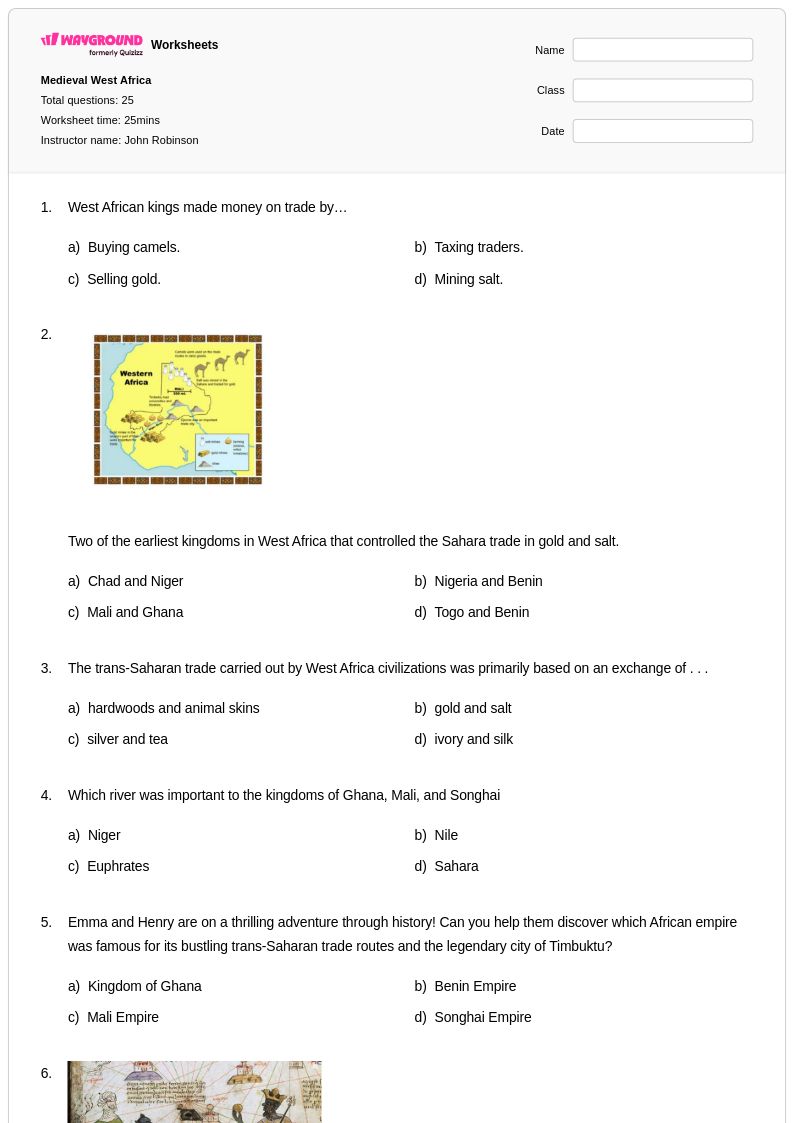
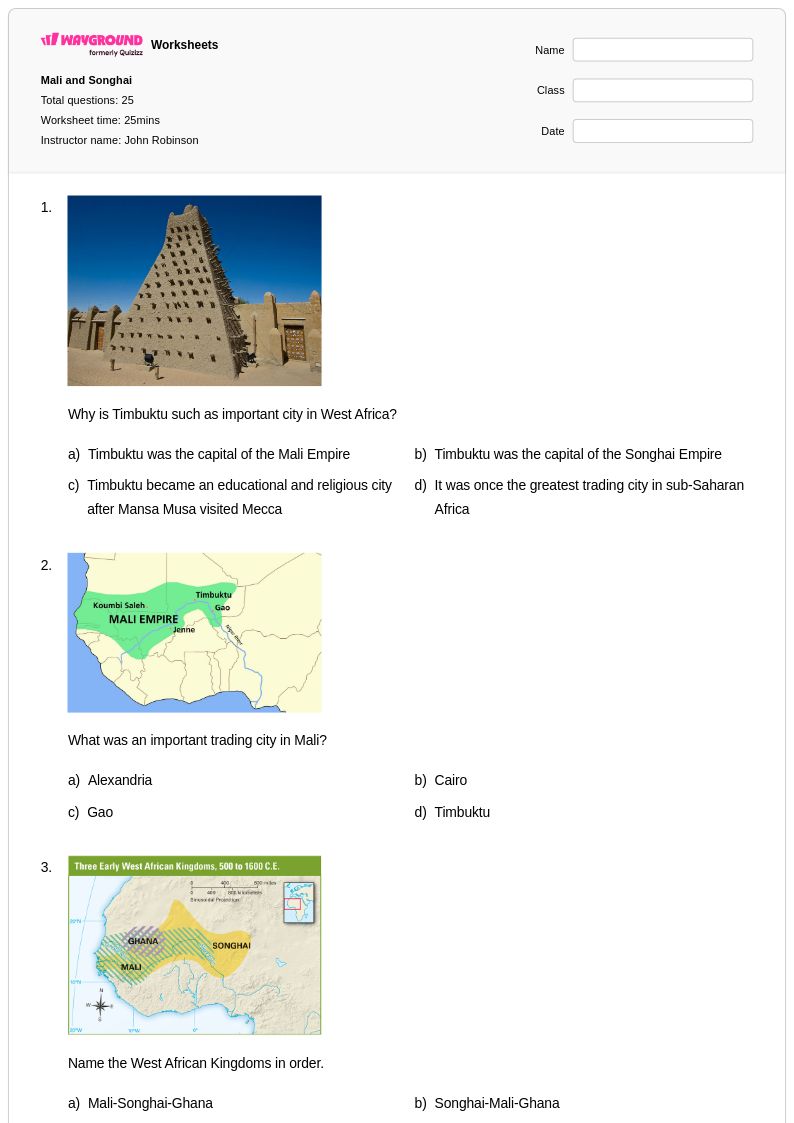
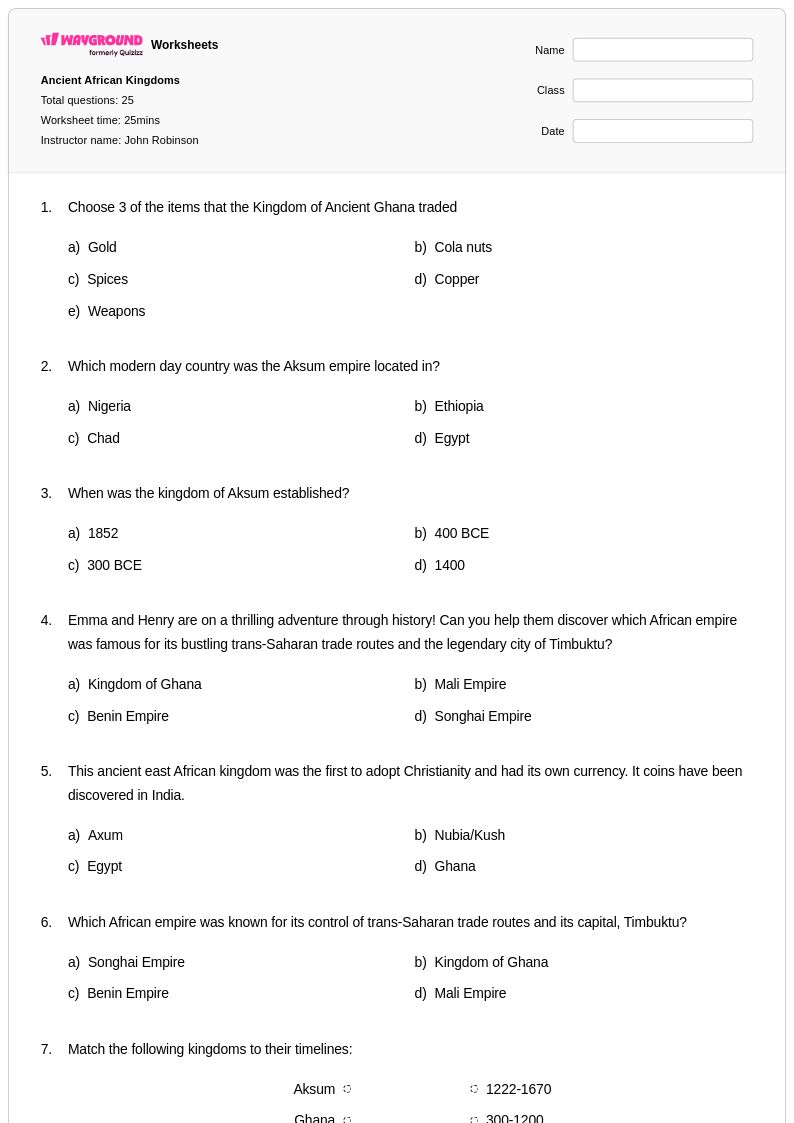
The Ghana Empire worksheets available through Wayground (formerly Quizizz) provide Year 8 students with comprehensive resources to explore one of West Africa's most influential medieval kingdoms. These carefully designed materials strengthen critical thinking skills by engaging students with practice problems that examine Ghana's rise to power through strategic control of gold and salt trade routes, its sophisticated governmental structure, and its eventual decline in the 11th century. Students develop analytical abilities as they work through exercises that connect Ghana's geographic advantages along the trans-Saharan trade networks to its economic prosperity and political influence. Each worksheet includes a detailed answer key to support independent learning, and the materials are available as free printables in convenient pdf format for seamless classroom integration.
Wayground (formerly Quizizz) empowers educators with access to millions of teacher-created resources specifically focused on medieval African civilizations and the Ghana Empire, supported by robust search and filtering capabilities that allow precise alignment with curriculum standards and learning objectives. Teachers can easily differentiate instruction by customizing worksheets to match varying skill levels within their Year 8 classrooms, while the platform's flexibility enables seamless transitions between printable pdf versions for traditional assignments and digital formats for interactive learning experiences. These comprehensive tools streamline lesson planning by providing ready-to-use materials for skill practice, targeted remediation for students who need additional support understanding complex historical concepts, and enrichment opportunities for advanced learners ready to explore deeper connections between Ghana's legacy and subsequent West African empires.
FAQs
How do I teach the Ghana Empire to middle school students?
Teaching the Ghana Empire effectively starts with grounding students in its geographic context — specifically its position along trans-Saharan trade routes and how that location drove its economic and political power. From there, teachers can build outward to cover the empire's rise between the 6th and 13th centuries, its gold and salt trade, and its sophisticated political structure. Using primary source analysis and historical maps of trade networks helps students move beyond memorization toward genuine historical thinking.
What activities help students practice key concepts from the Ghana Empire?
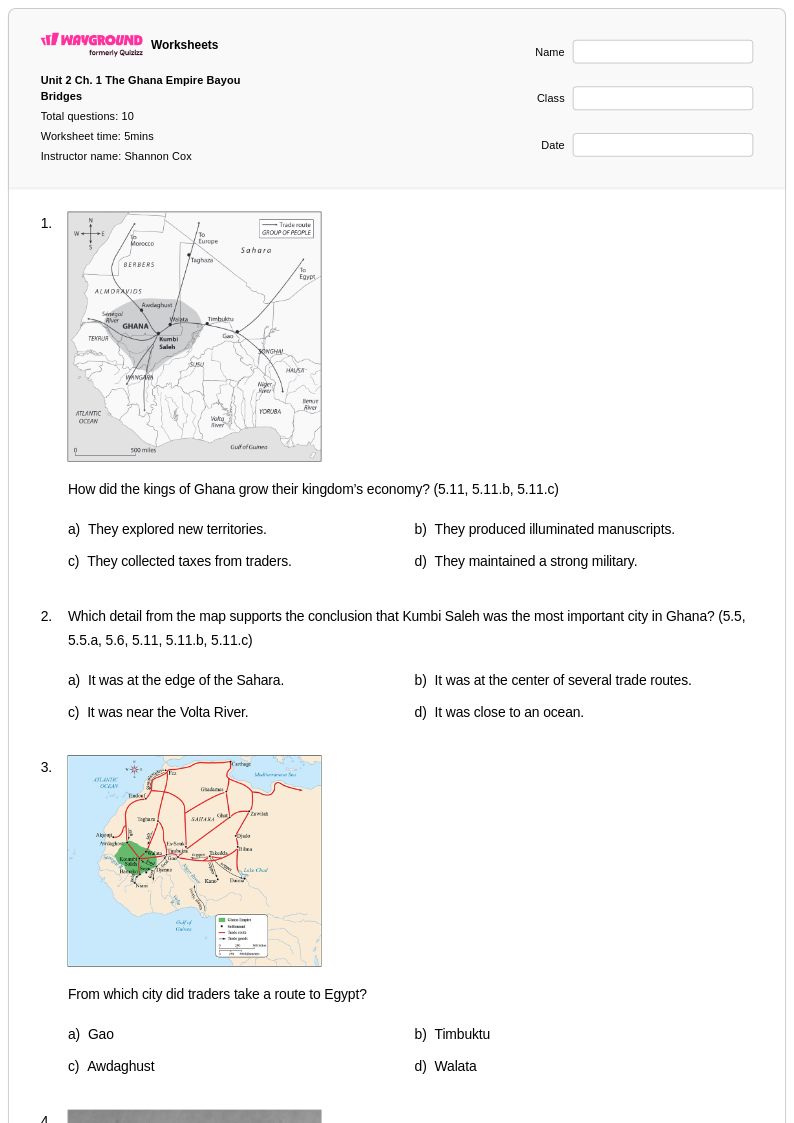
Effective practice activities for the Ghana Empire include analyzing primary sources, interpreting trade route maps, and responding to document-based questions about the empire's economic foundations in gold and salt commerce. Worksheets that ask students to evaluate the Ghana Empire's influence on regional development push them to apply content knowledge rather than simply recall facts. These types of tasks build the analytical skills aligned with social studies standards while keeping students engaged with historically specific material.
What misconceptions do students commonly have about the Ghana Empire?
One of the most common misconceptions is that the Ghana Empire was located in present-day Ghana — it was actually centered in what is now southeastern Mauritania and western Mali. Students also frequently confuse 'Ghana' as a geographic label with its original meaning as a royal title. Another common error is underestimating the empire's sophistication, with students assuming medieval African kingdoms lacked complex political or economic systems, which targeted primary source work and map analysis can directly counter.
What caused the decline of the Ghana Empire, and how do I teach it?
The decline of the Ghana Empire resulted from a combination of factors including overextension of trade networks, internal political instability, environmental pressures such as drought and desertification, and military pressure from the Almoravid movement in the 11th century. Teaching the decline works best when students are asked to weigh these factors rather than identify a single cause, which develops historical reasoning skills. Worksheets focused on evaluating decline factors — asking students to rank or argue for competing causes — are particularly effective for this unit.
How can I use Ghana Empire worksheets in both printable and digital classroom formats?
Ghana Empire worksheets on Wayground are available as printable PDFs for traditional classroom use and in digital formats for technology-integrated learning environments, making them flexible across in-person, hybrid, and remote settings. Teachers can also host the worksheets as a quiz directly on Wayground, allowing for real-time student interaction and streamlined assessment. Each worksheet includes a complete answer key, which supports independent student work as well as teacher-led review sessions. Wayground also offers built-in accommodation settings — such as read aloud, extended time, and reduced answer choices — that can be assigned to individual students without disrupting the rest of the class.
How do I differentiate Ghana Empire instruction for students at different learning levels?
Differentiation for the Ghana Empire can involve adjusting the complexity of sources students analyze — pairing struggling readers with simplified texts or visual trade maps, while extending advanced students with fuller primary sources or comparative tasks across West African kingdoms. On Wayground, teachers can apply individual accommodations such as read aloud, extended time, and reduced answer choices to specific students, while the rest of the class receives standard settings without any notification. Teachers can also customize worksheets to focus on specific aspects of the empire, such as military innovations, religious practices, or economic decline, for remediation or enrichment purposes.