Free Printable The Tell-tale Heart Worksheets for Year 7
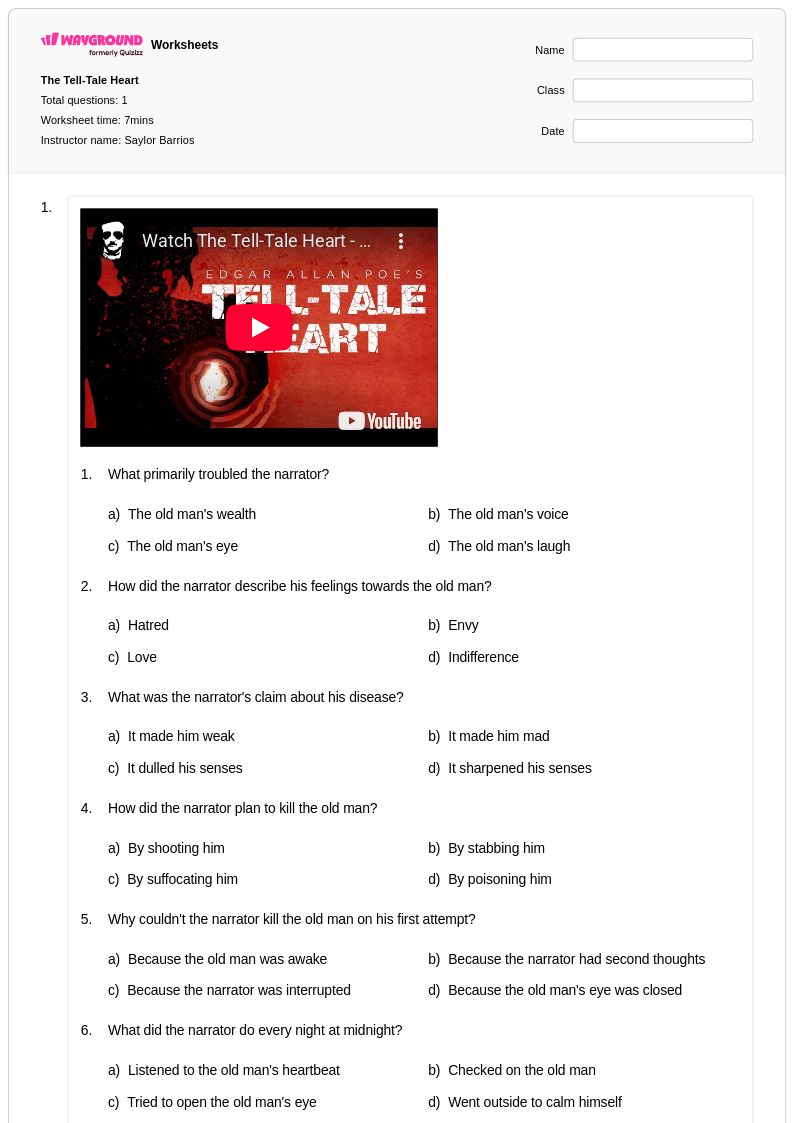
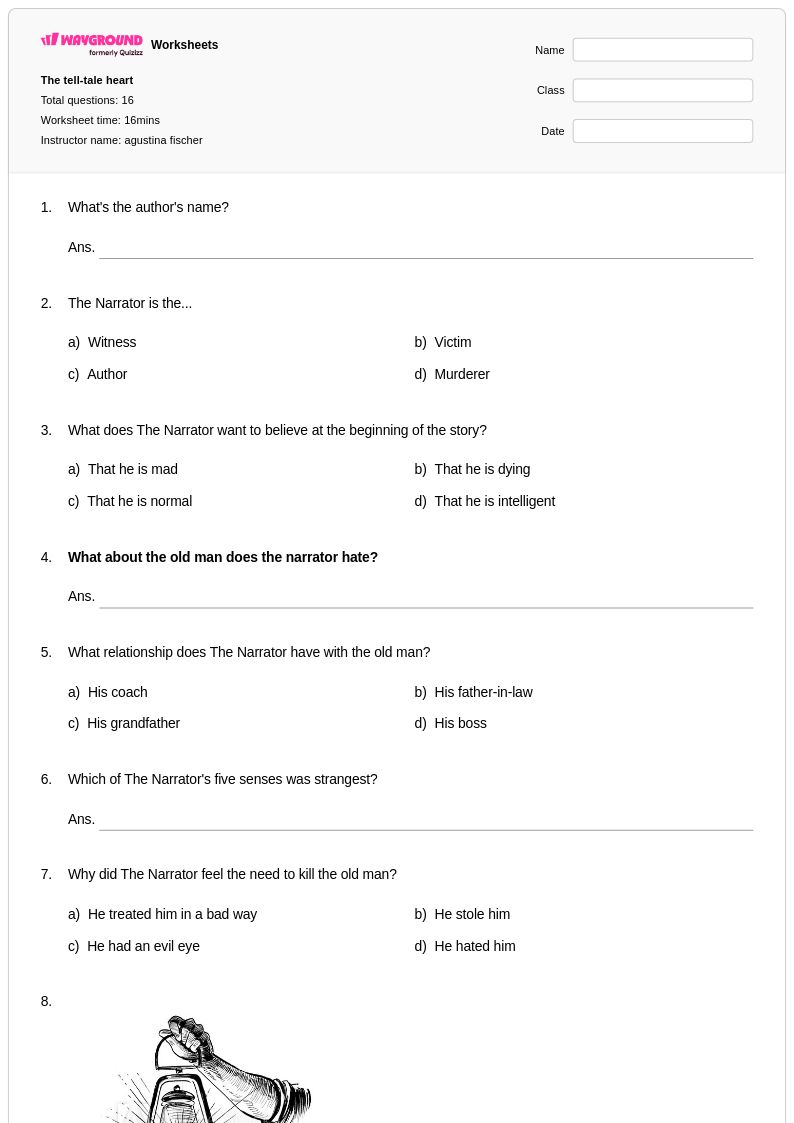
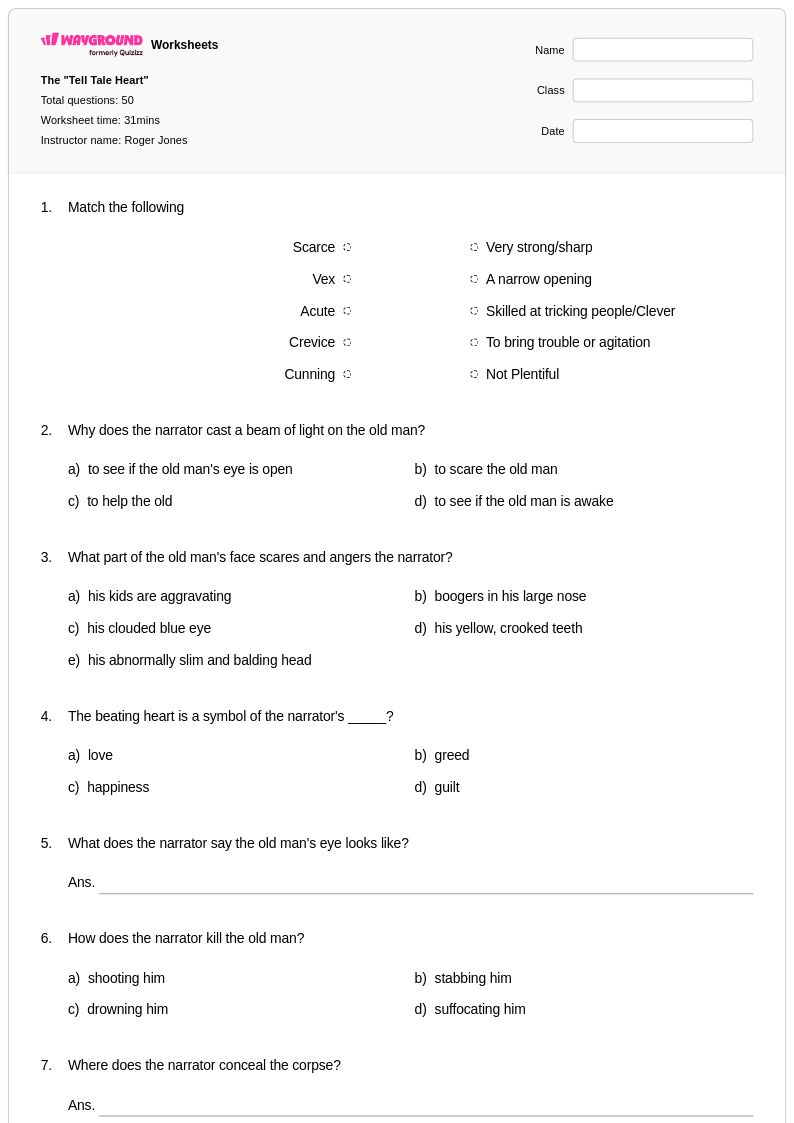
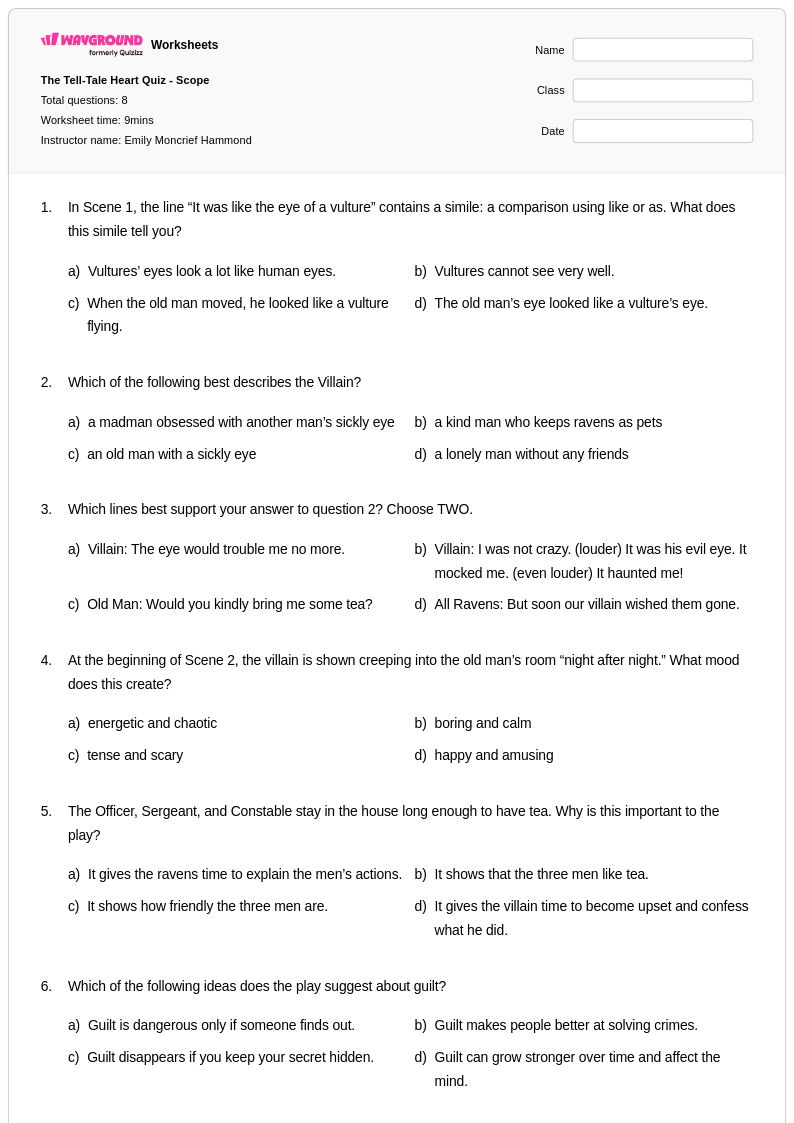
Year 7 students can explore Edgar Allan Poe's "The Tell-tale Heart" through Wayground's free worksheets and printables, featuring practice problems and answer keys to enhance reading comprehension skills.
Explore printable The Tell-tale Heart worksheets for Year 7
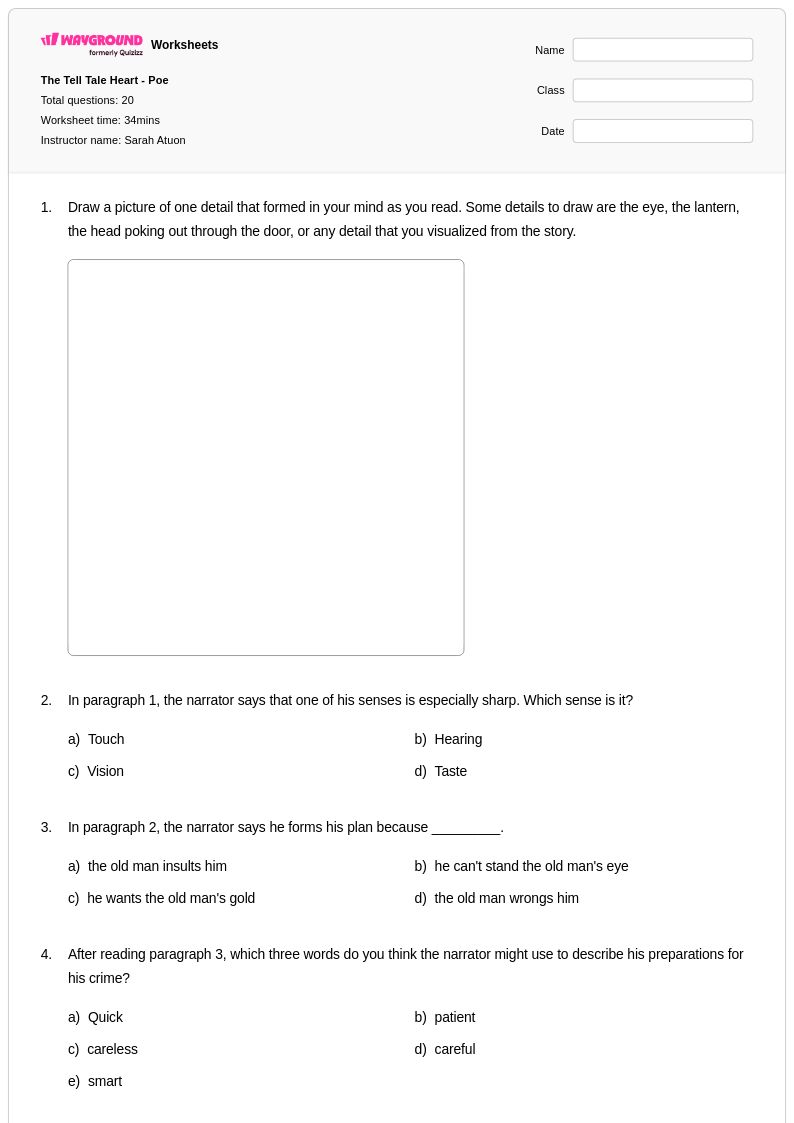
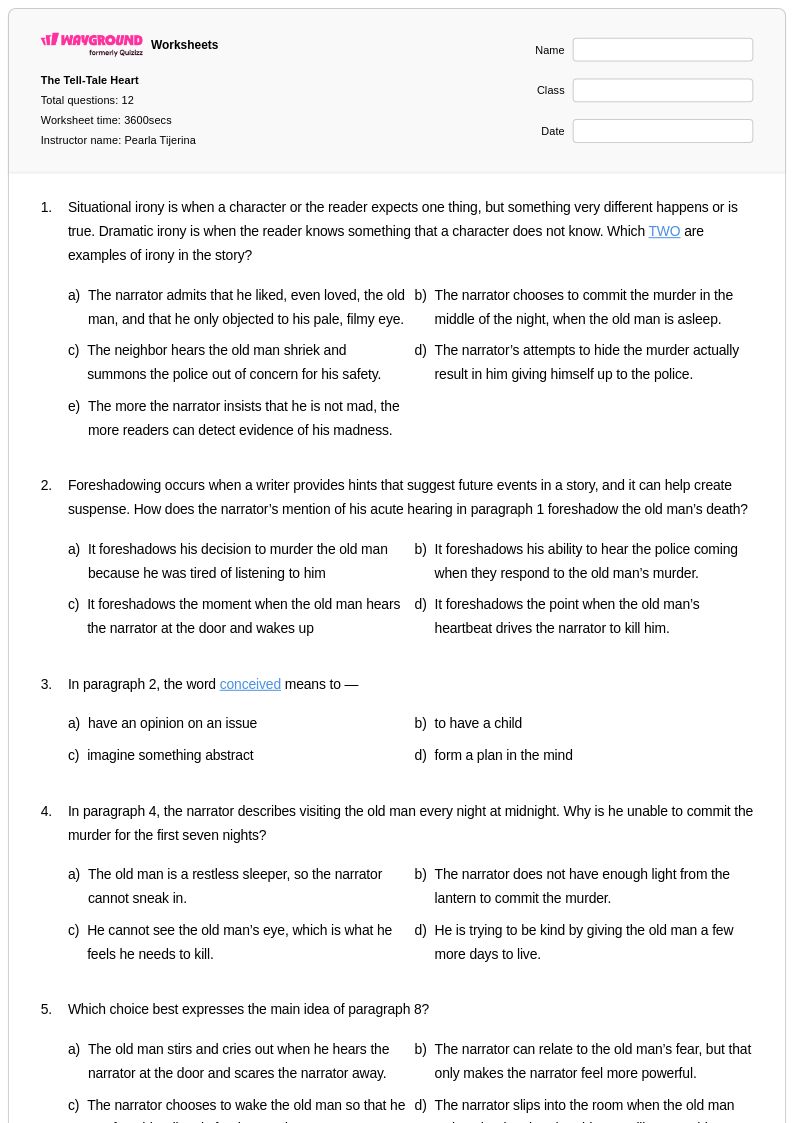
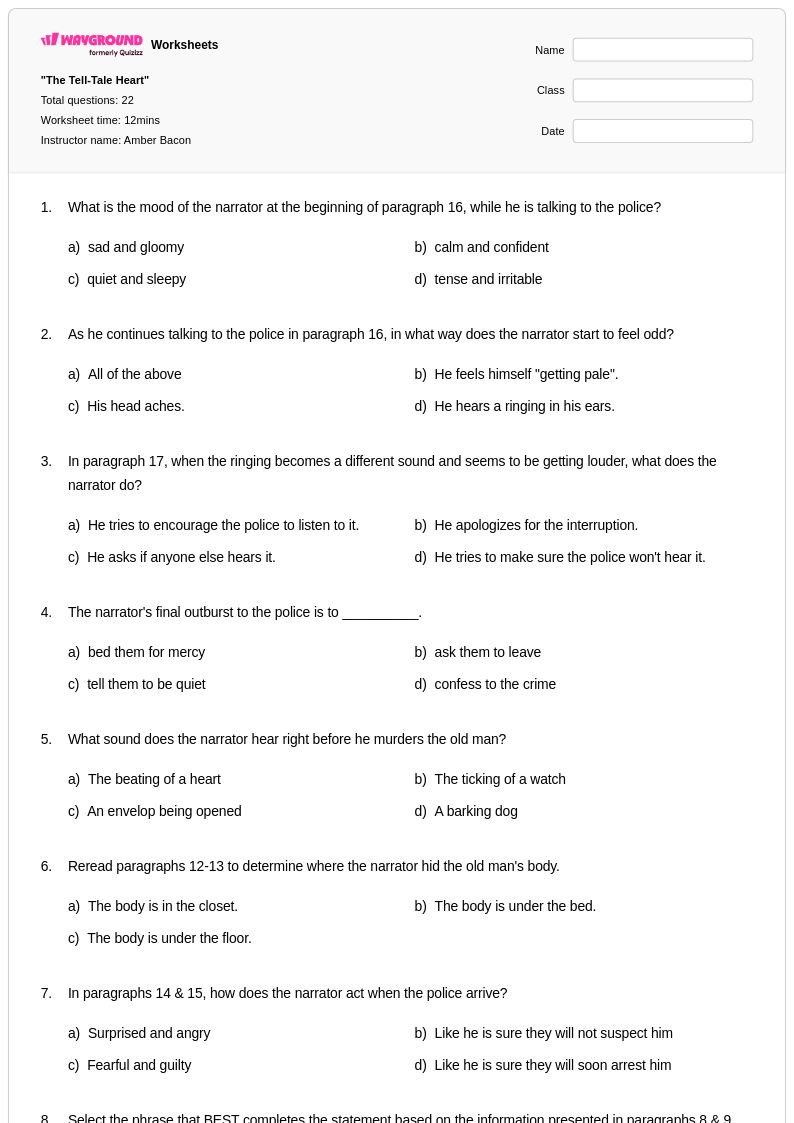
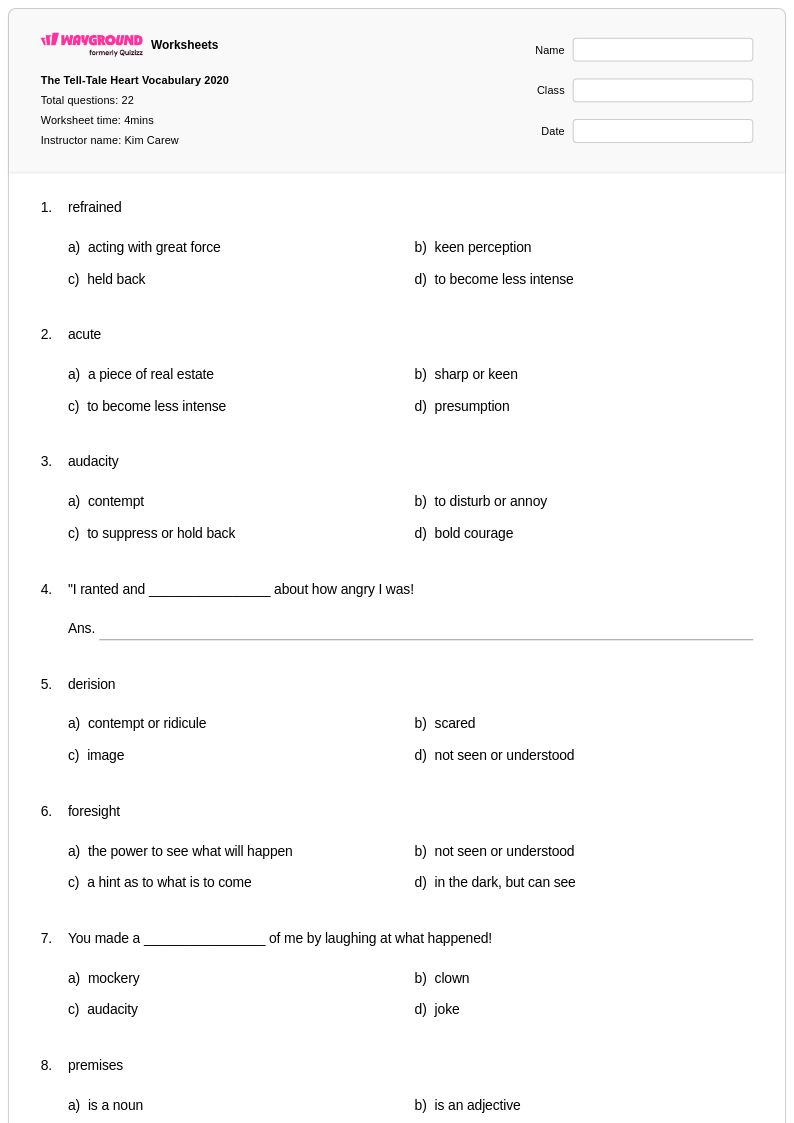
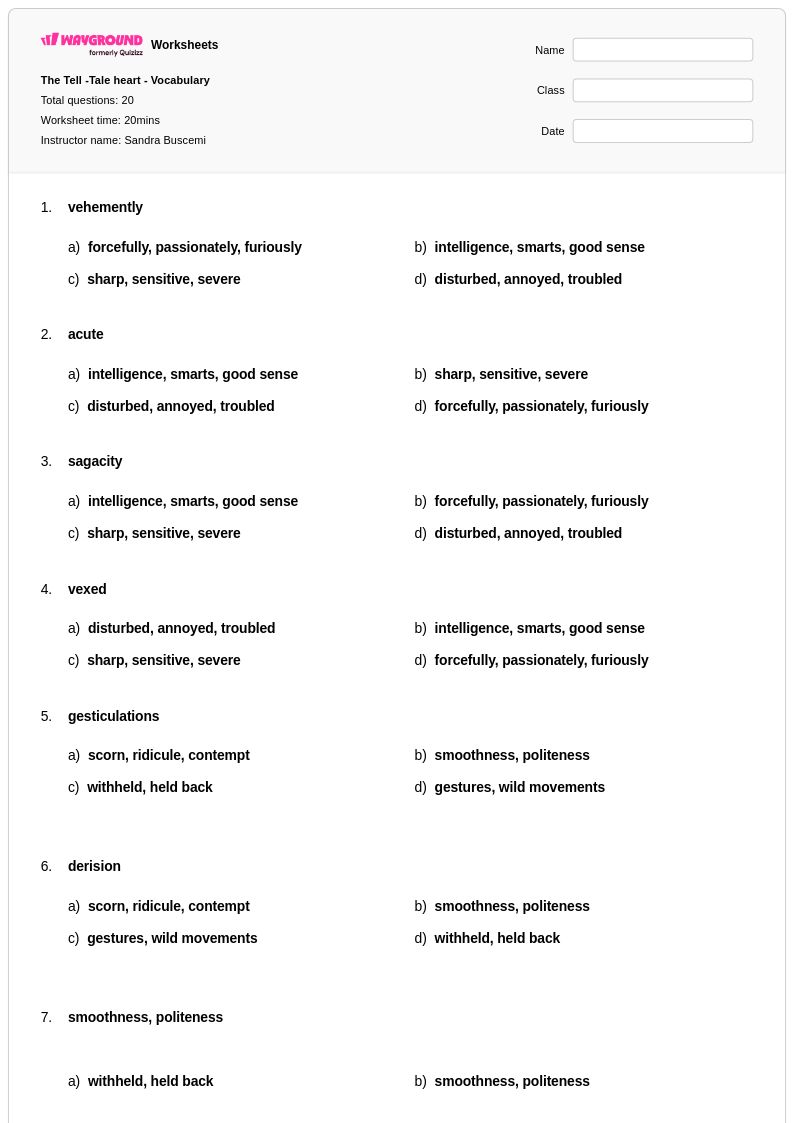
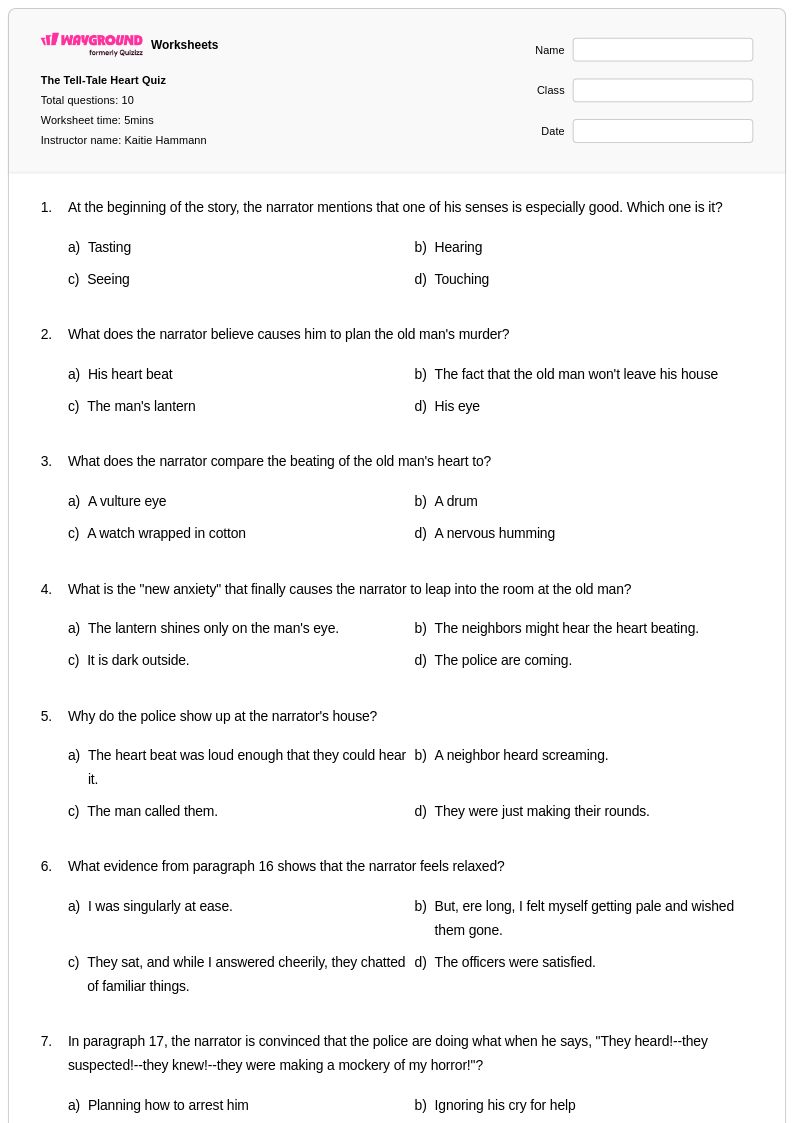
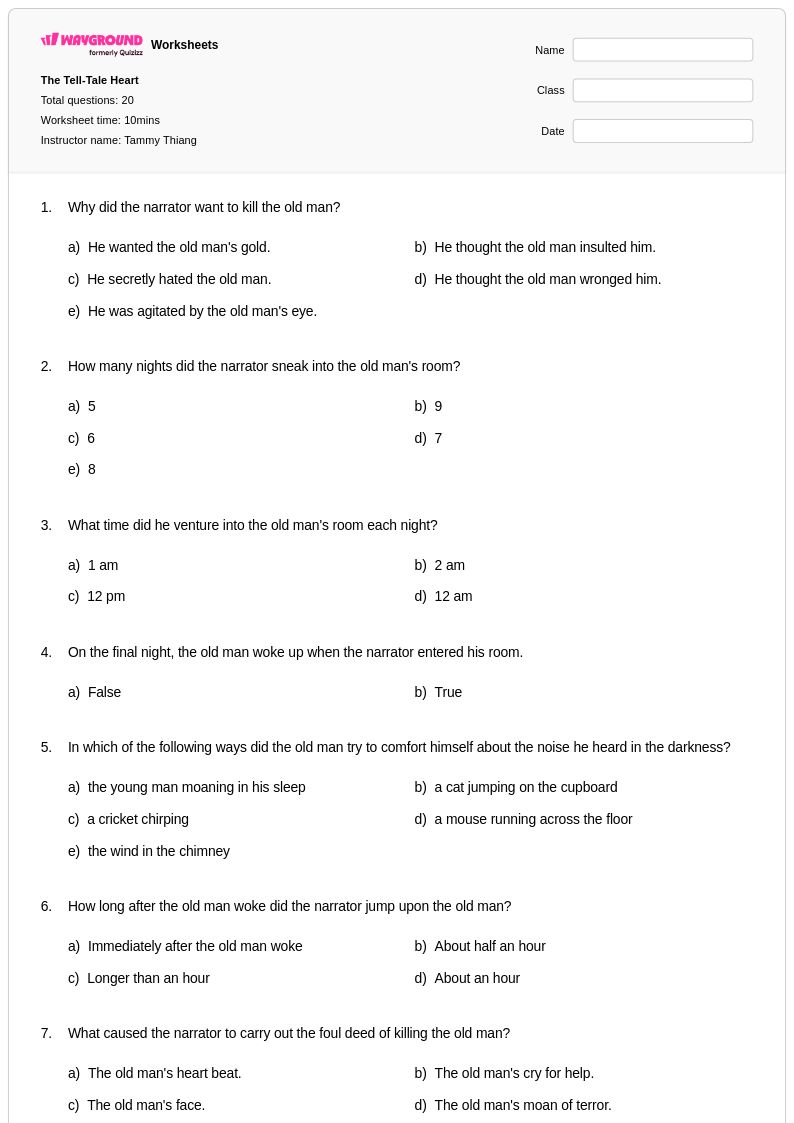
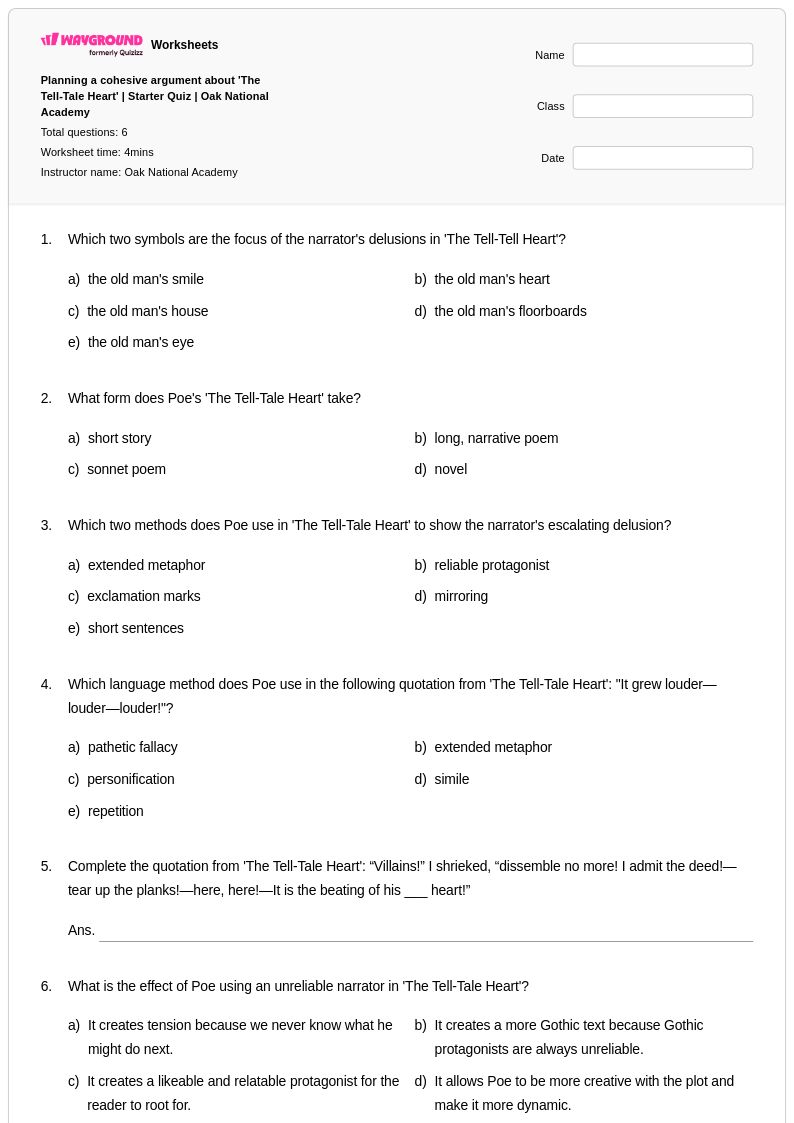
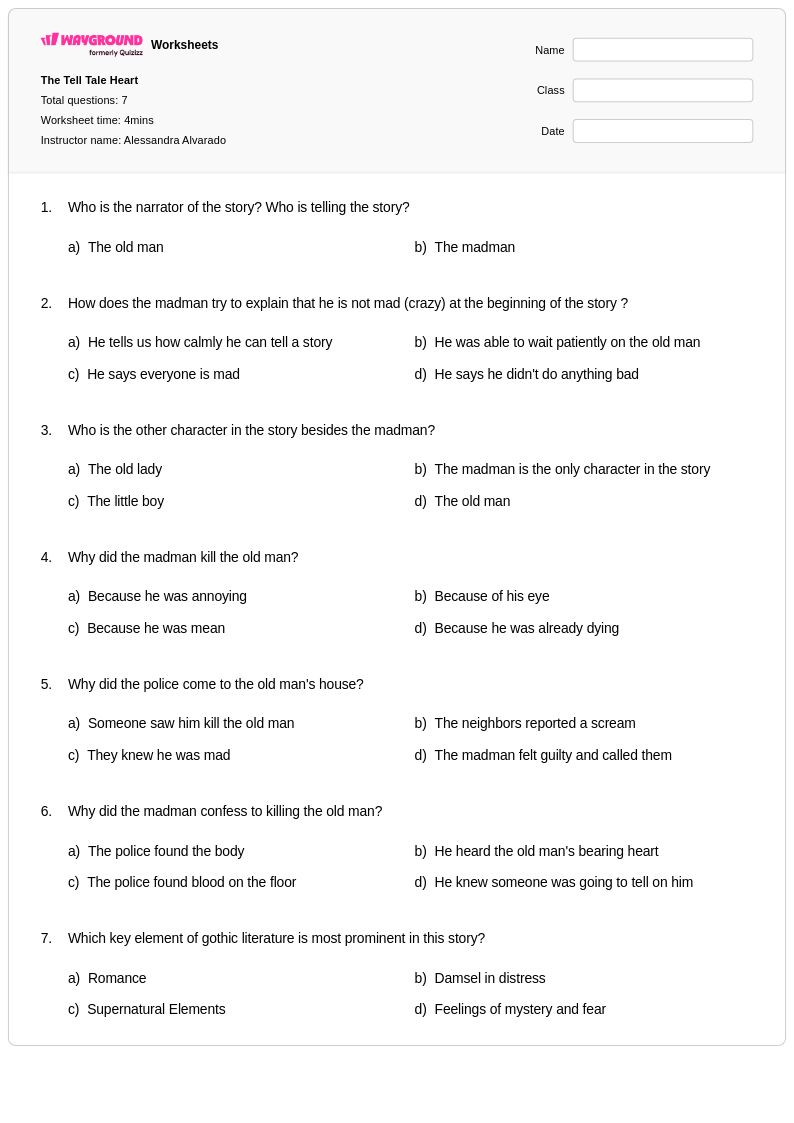
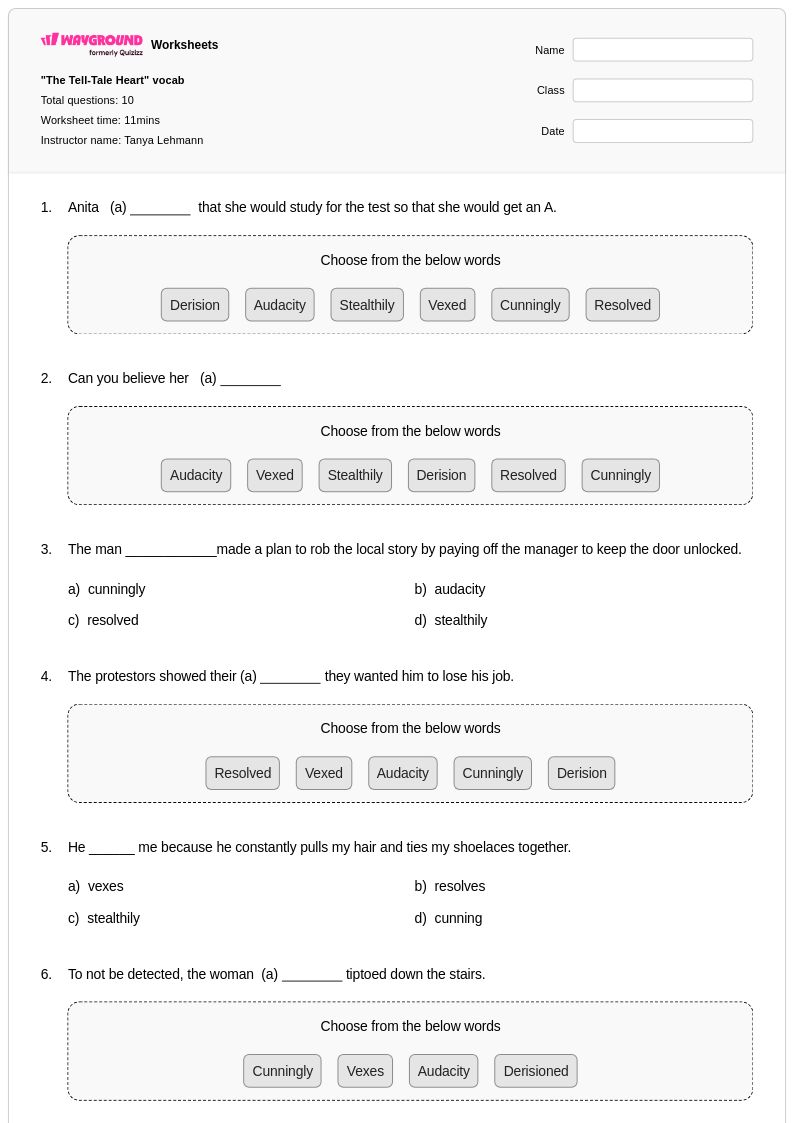
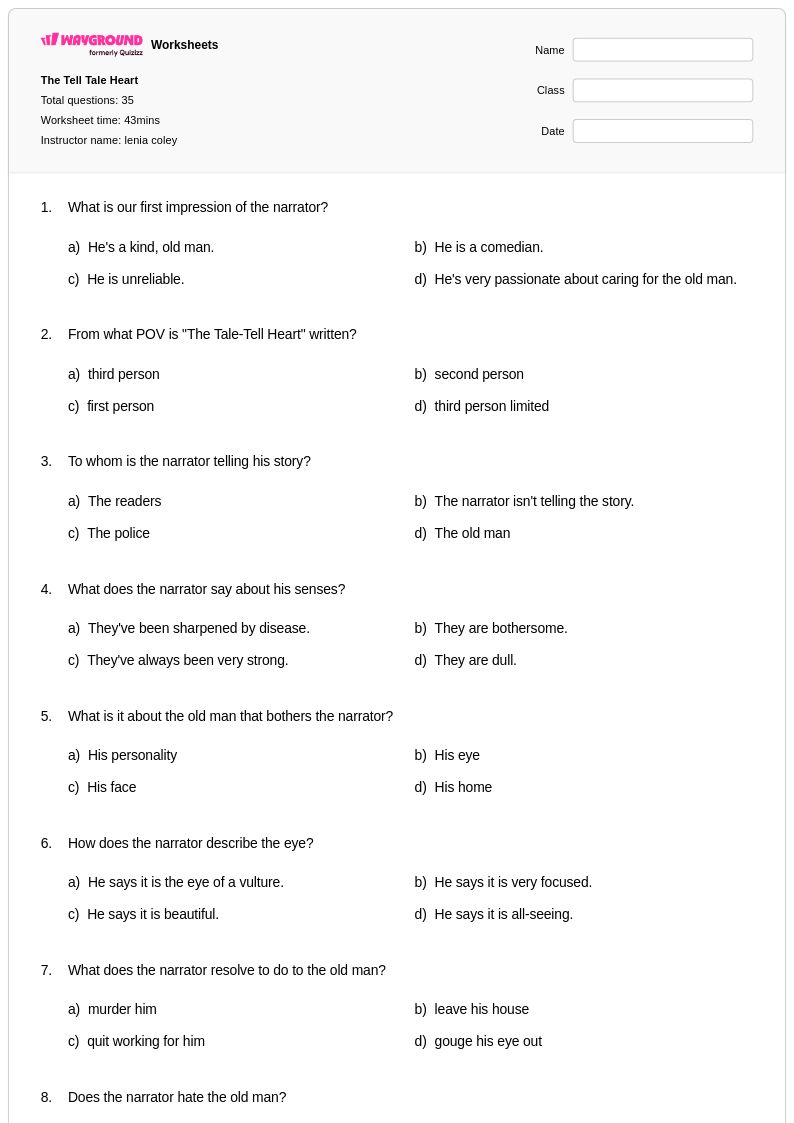
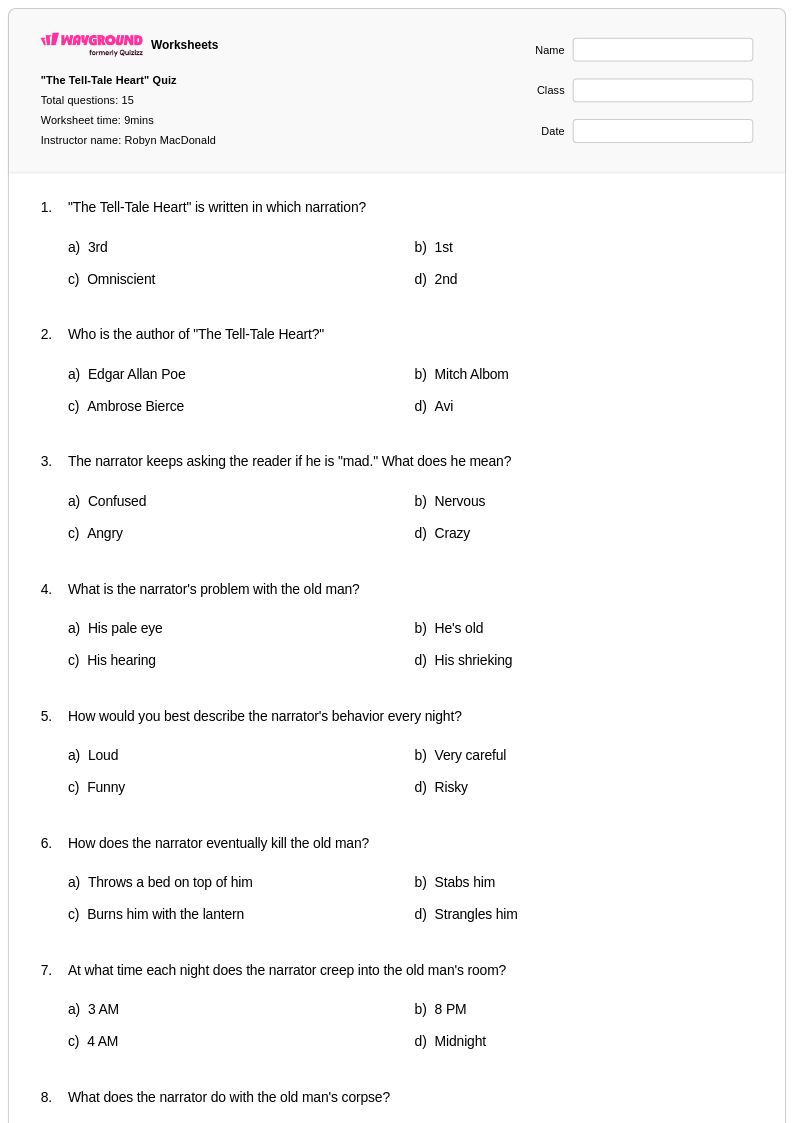
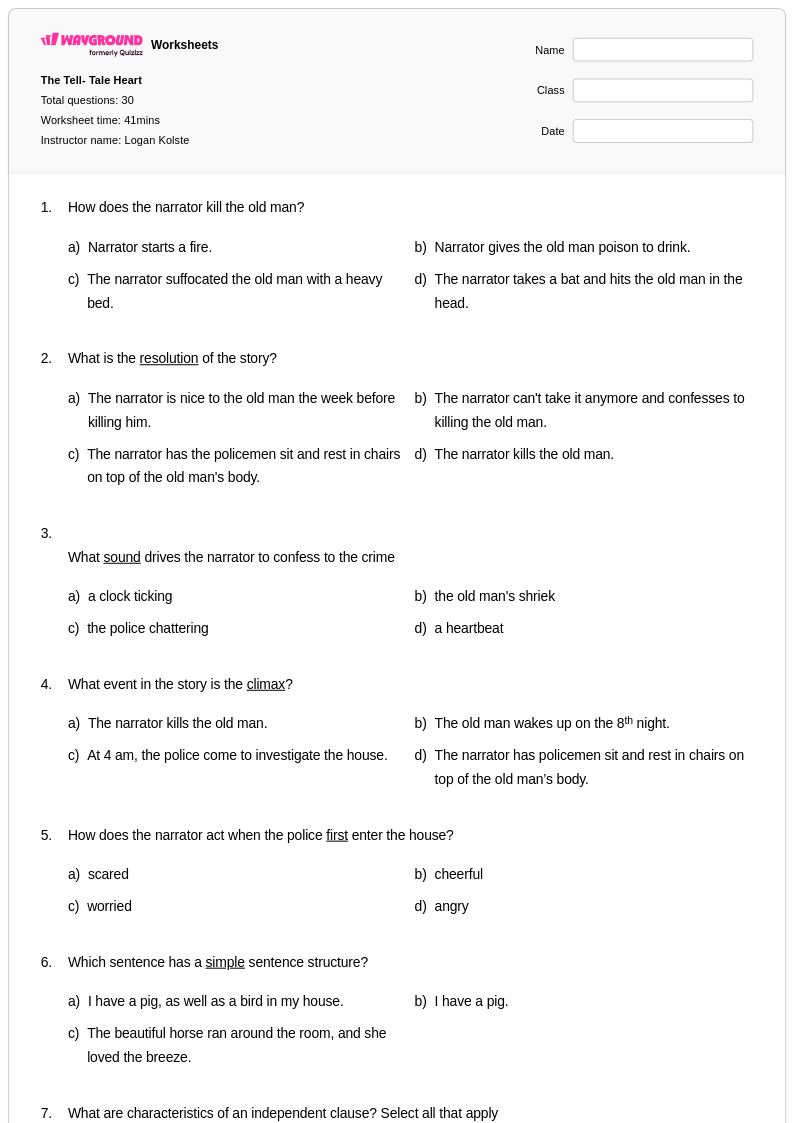
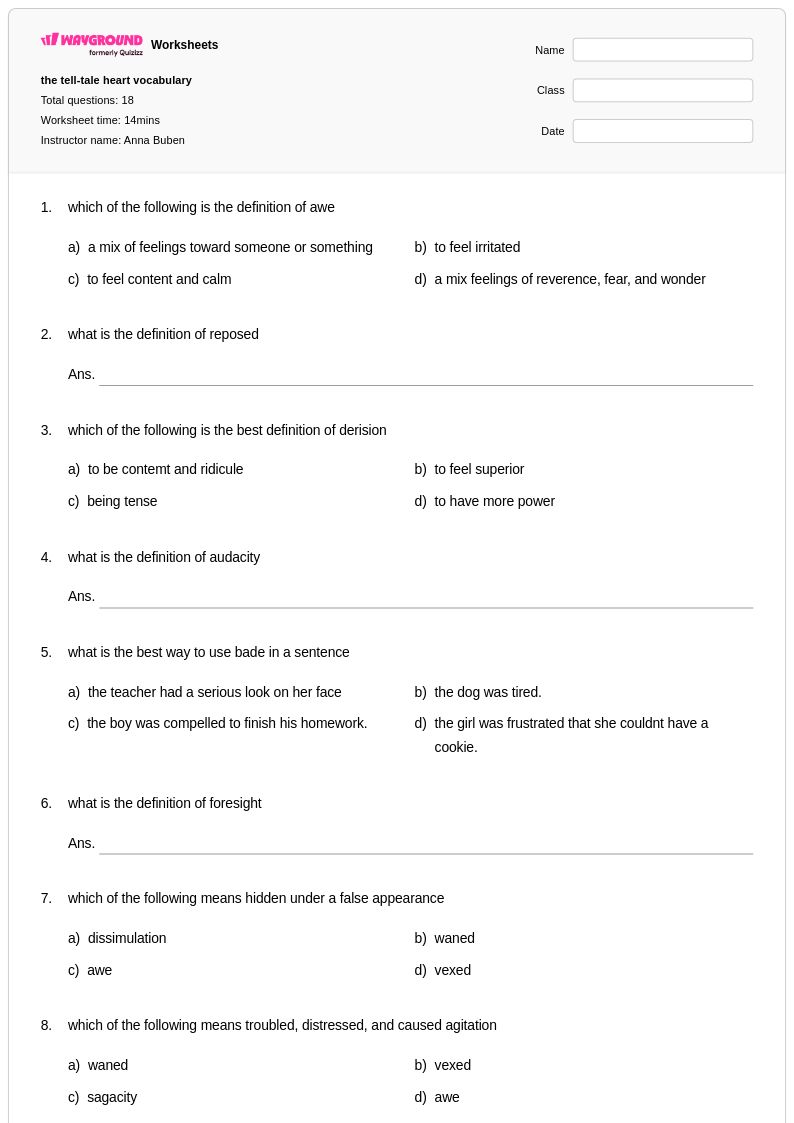
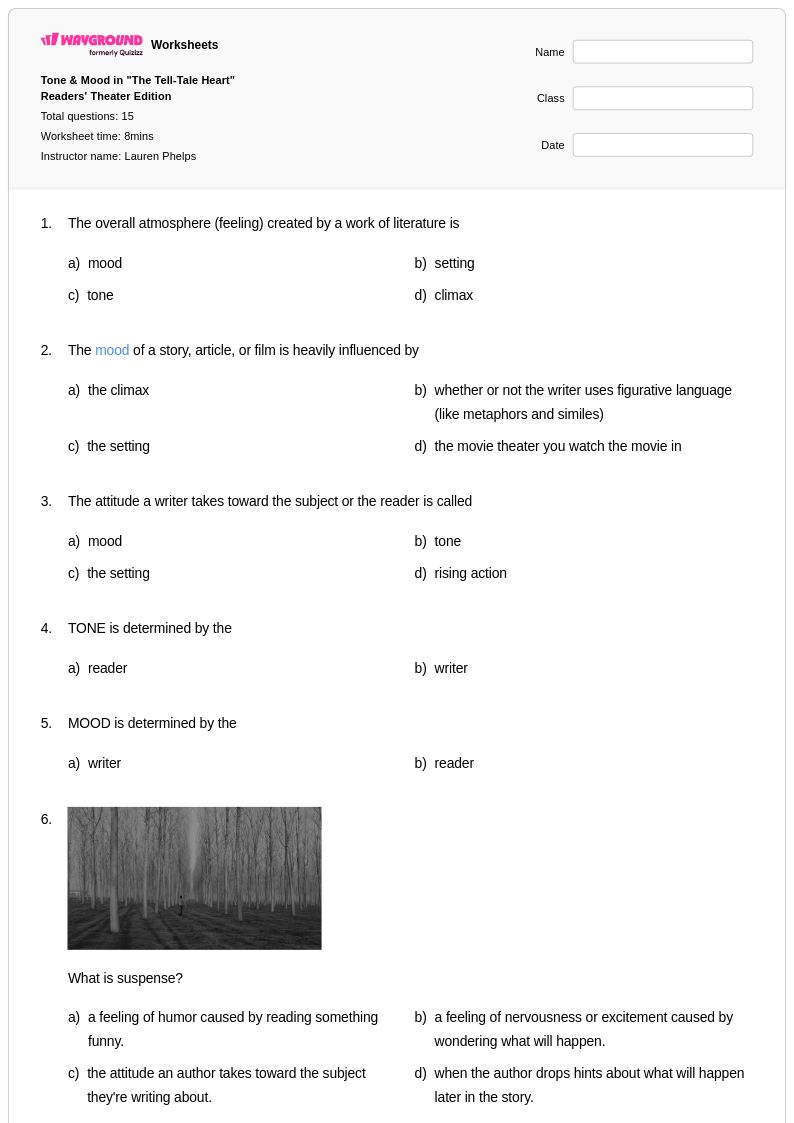
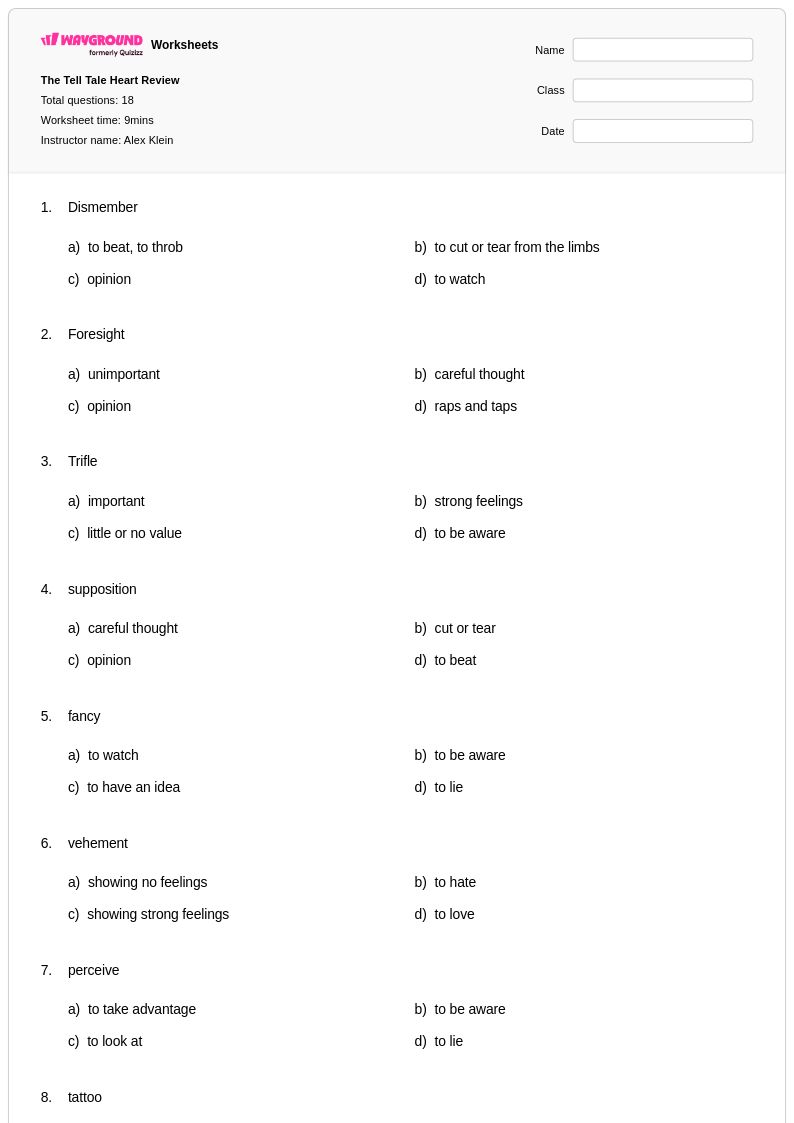
Edgar Allan Poe's "The Tell-Tale Heart" serves as an exceptional foundation for Year 7 students to explore the psychological horror genre while developing critical reading comprehension skills. Wayground's extensive collection of worksheets focused on this classic short story helps students analyze literary elements such as unreliable narration, symbolism, and dramatic irony that define gothic literature. These carefully crafted practice problems guide students through character analysis, plot structure examination, and thematic exploration, enabling them to understand how Poe creates suspense and explores themes of guilt and madness. Teachers can access comprehensive materials including detailed answer keys, ready-to-use pdf printables, and free resources that support close reading strategies essential for middle school English language arts development.
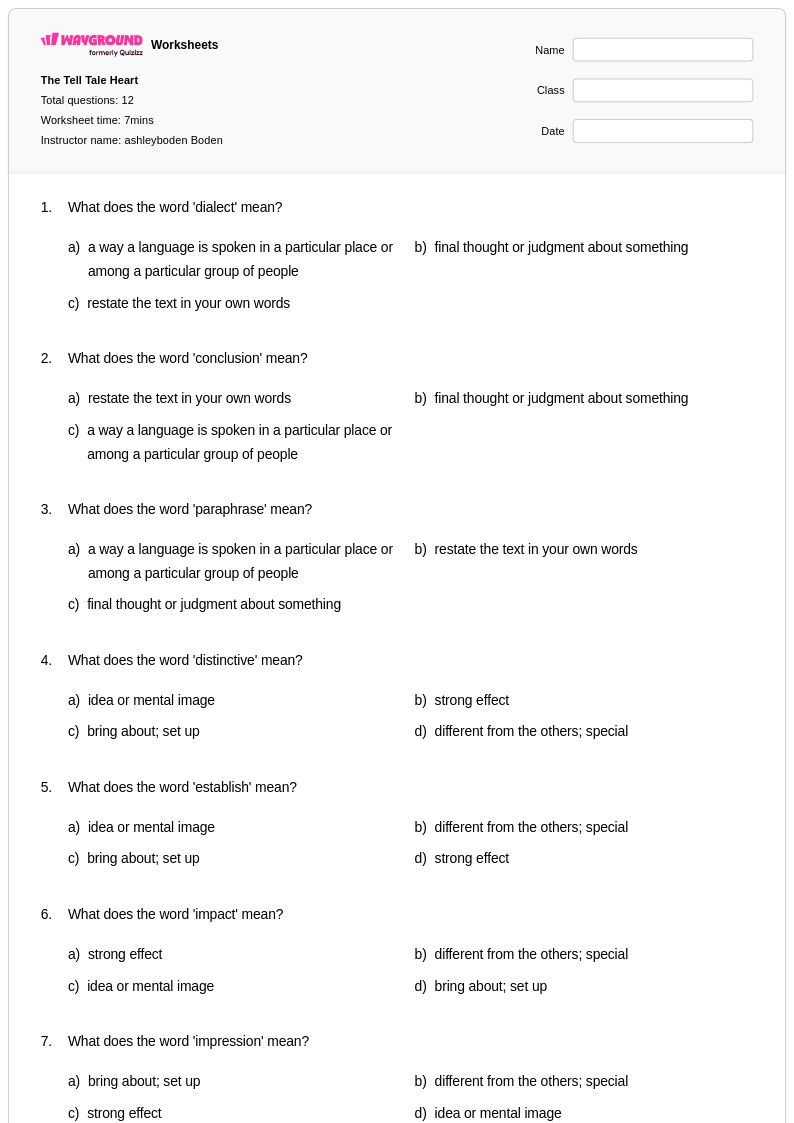
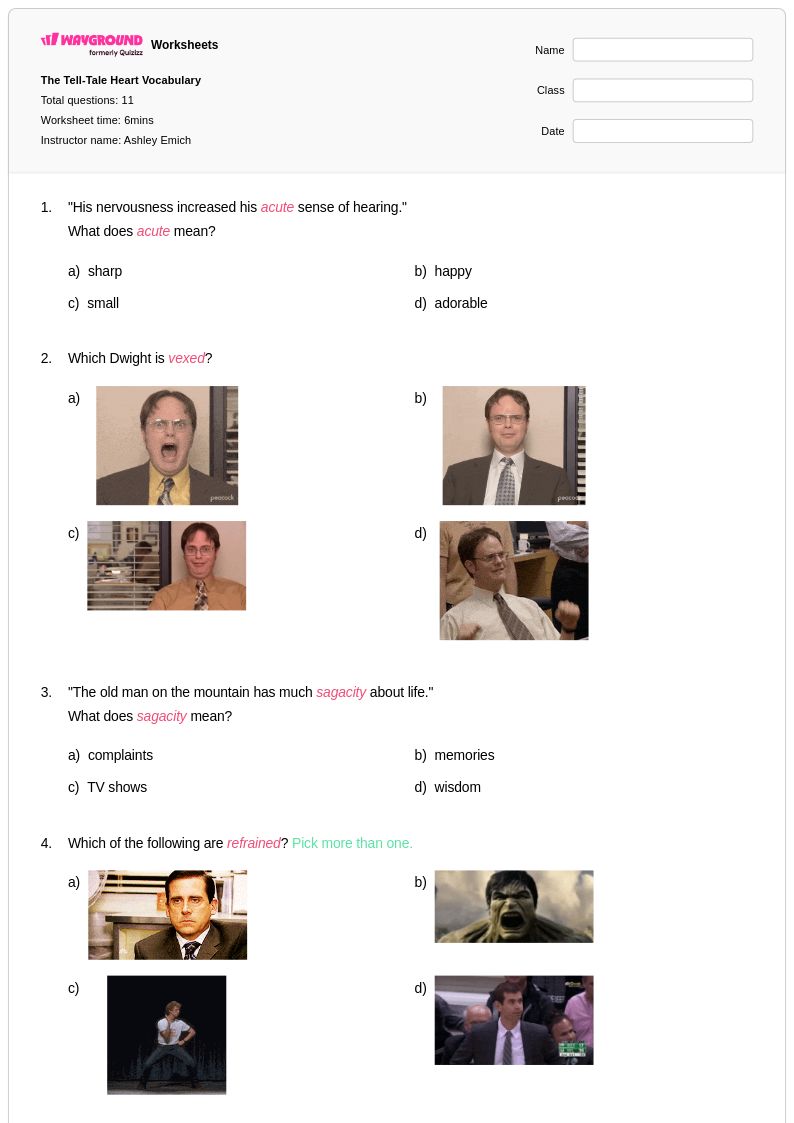
Wayground's robust platform, formerly known as Quizizz, empowers educators with millions of teacher-created resources specifically designed for "The Tell-Tale Heart" instruction and broader reading genre studies. The platform's advanced search and filtering capabilities allow teachers to quickly locate materials aligned with state standards and curriculum objectives, while differentiation tools enable customization for diverse learning needs and reading levels. Whether accessed as printable pdf worksheets for traditional classroom use or interactive digital formats for technology-enhanced learning, these resources support comprehensive lesson planning from initial skill introduction through remediation and enrichment activities. Teachers can seamlessly adapt materials to provide targeted practice in literary analysis, vocabulary development, and critical thinking skills that prepare Year 7 students for more sophisticated textual analysis in advanced coursework.
FAQs
How do I teach 'The Tell-Tale Heart' to middle or high school students?
Start by introducing the concept of an unreliable narrator before students read, so they approach the text with the right analytical lens. During reading, pause at key moments to ask students whether they trust the narrator's account and why. After reading, guide discussion around Poe's use of first-person perspective, pacing, and repetition to build psychological tension. Grounding instruction in close reading of specific passages helps students move beyond plot summary into genuine literary analysis.
What exercises help students practice analyzing 'The Tell-Tale Heart'?
Effective practice exercises include character motivation analyses that ask students to trace the narrator's reasoning and identify where his logic breaks down, as well as symbolism identification tasks focused on the old man's eye and the beating heart. Structured close reading activities that ask students to annotate for tone, diction, and pacing help build analytical habits. Practice problems that require students to support claims with textual evidence are especially useful for preparing students for literary essay writing.
What are the most common mistakes students make when analyzing 'The Tell-Tale Heart'?
The most frequent error is accepting the narrator's account at face value rather than reading critically through his unreliability. Students often conflate the narrator's self-professed sanity with actual reliability, missing Poe's deliberate signals that the narrator is mentally unstable. Another common misconception is treating the beating heart as a literal sound rather than a psychological manifestation of guilt. Addressing these patterns early, before students draft any written analysis, significantly improves the depth of their responses.
How can I use 'The Tell-Tale Heart' worksheets to assess student comprehension?
Comprehension assessments for 'The Tell-Tale Heart' should move students beyond recall toward interpretation. Look for whether students can explain the narrator's motivation, identify the story's Gothic elements, and articulate how narrative perspective shapes meaning. Structured response questions that ask students to connect textual evidence to thematic claims about guilt or madness are strong indicators of genuine understanding. Common comprehension gaps include difficulty explaining why the narrator confesses and what the title's double meaning implies.
How do I use Wayground's 'The Tell-Tale Heart' worksheets in my classroom?
Wayground's 'The Tell-Tale Heart' worksheets are available as printable PDFs for traditional classroom use and in digital formats for technology-integrated environments, making them adaptable to in-person, hybrid, or remote instruction. Teachers can also host the material as a quiz directly on Wayground, enabling real-time student interaction and progress tracking. Each worksheet includes a detailed answer key, supporting both independent student work and teacher-led review. Wayground's search and filtering tools allow teachers to quickly identify resources aligned to specific skills, such as narrator analysis or theme identification, without sorting through unrelated materials.
How can I differentiate 'The Tell-Tale Heart' instruction for struggling or advanced readers?
For struggling readers, focus on scaffolded activities that build vocabulary and background knowledge about Gothic literature before assigning the full text, and consider using Wayground's Read Aloud feature so students can hear the questions read to them as they work. For advanced students, enrichment activities might include comparative analysis with other Poe texts or an essay examining how the unreliable narrator functions as a Gothic convention. Wayground also allows teachers to adjust accommodations at the individual student level, including extended time and reduced answer choices, without disrupting the rest of the class.