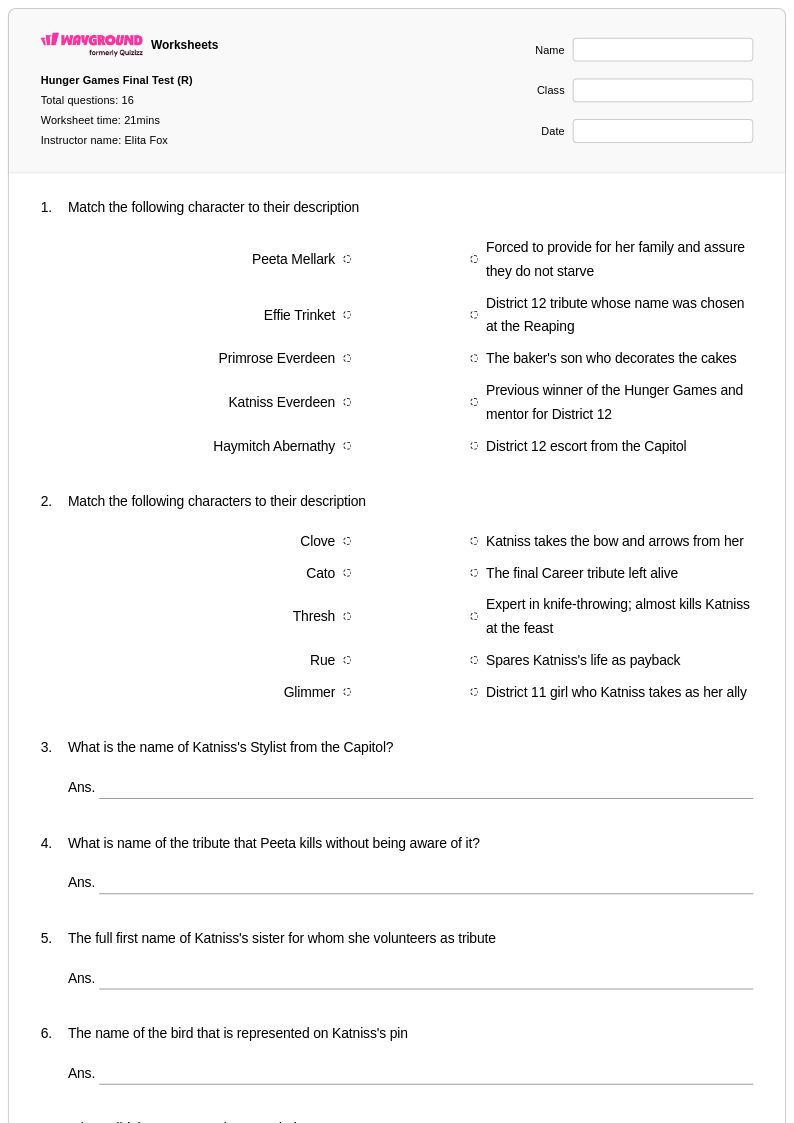
Year 7 themes worksheets and printables help students master identifying central messages and underlying meanings in literature through engaging practice problems, free PDF resources, and comprehensive answer keys.
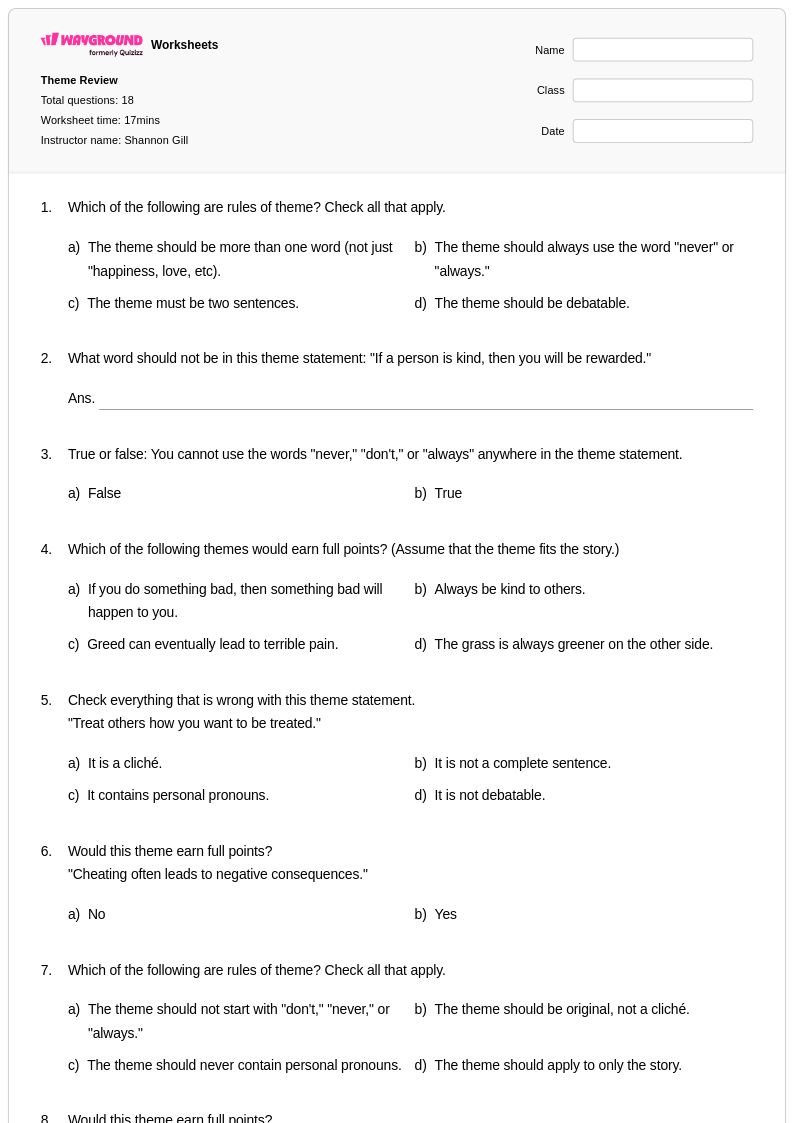
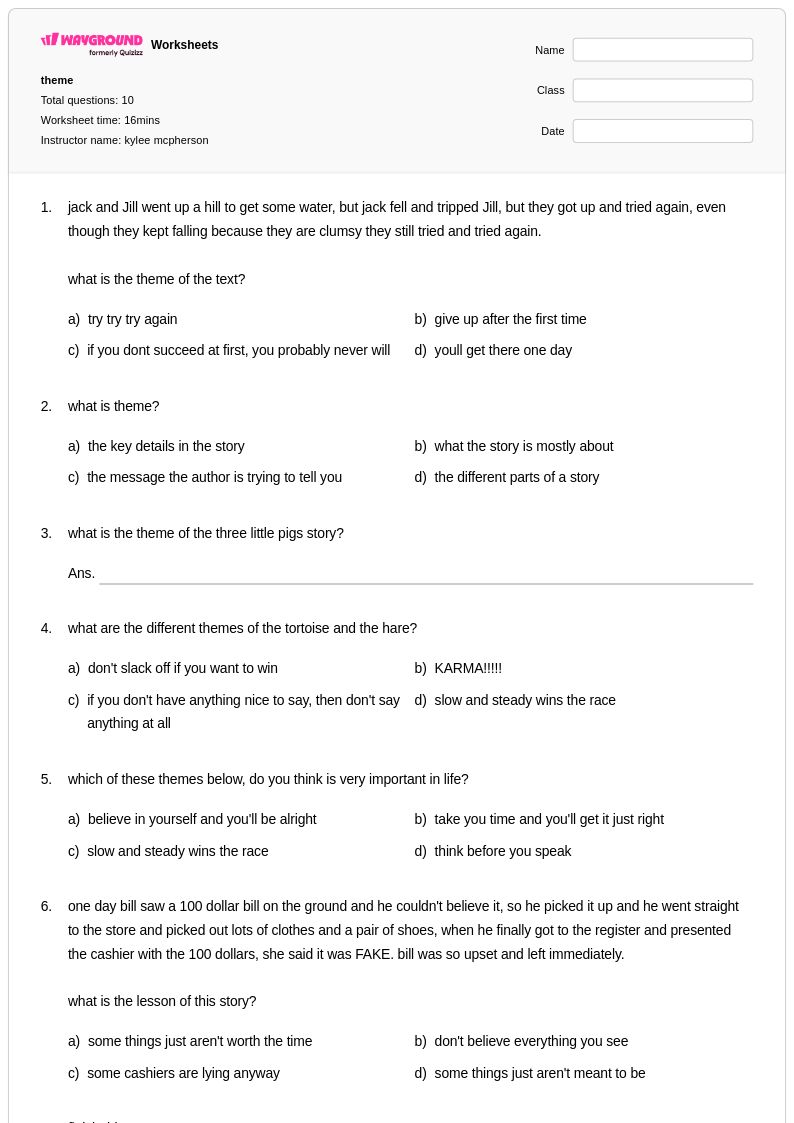
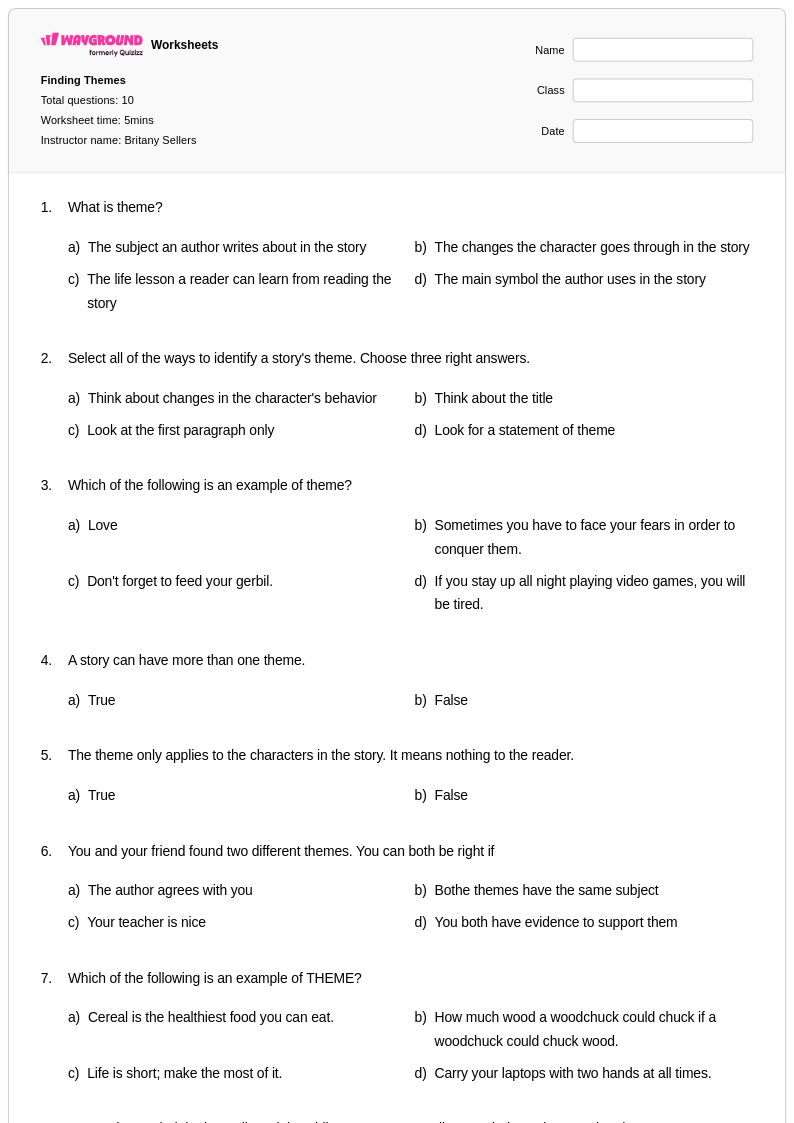
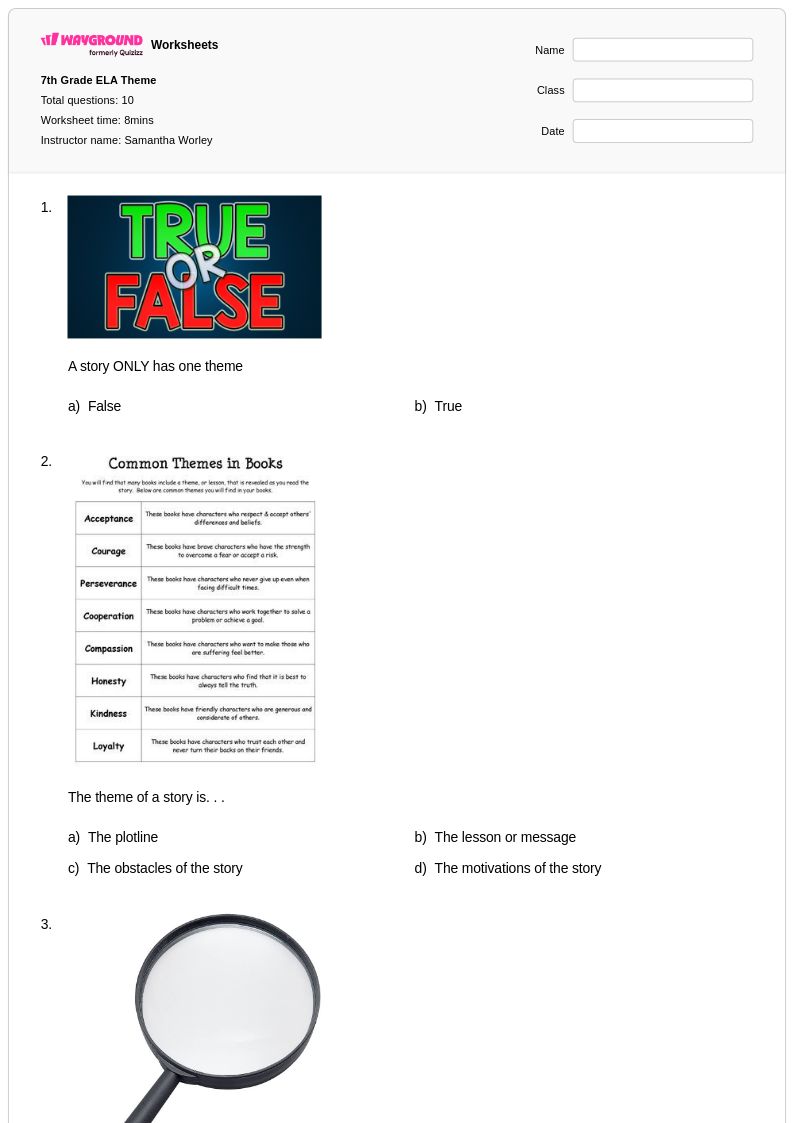
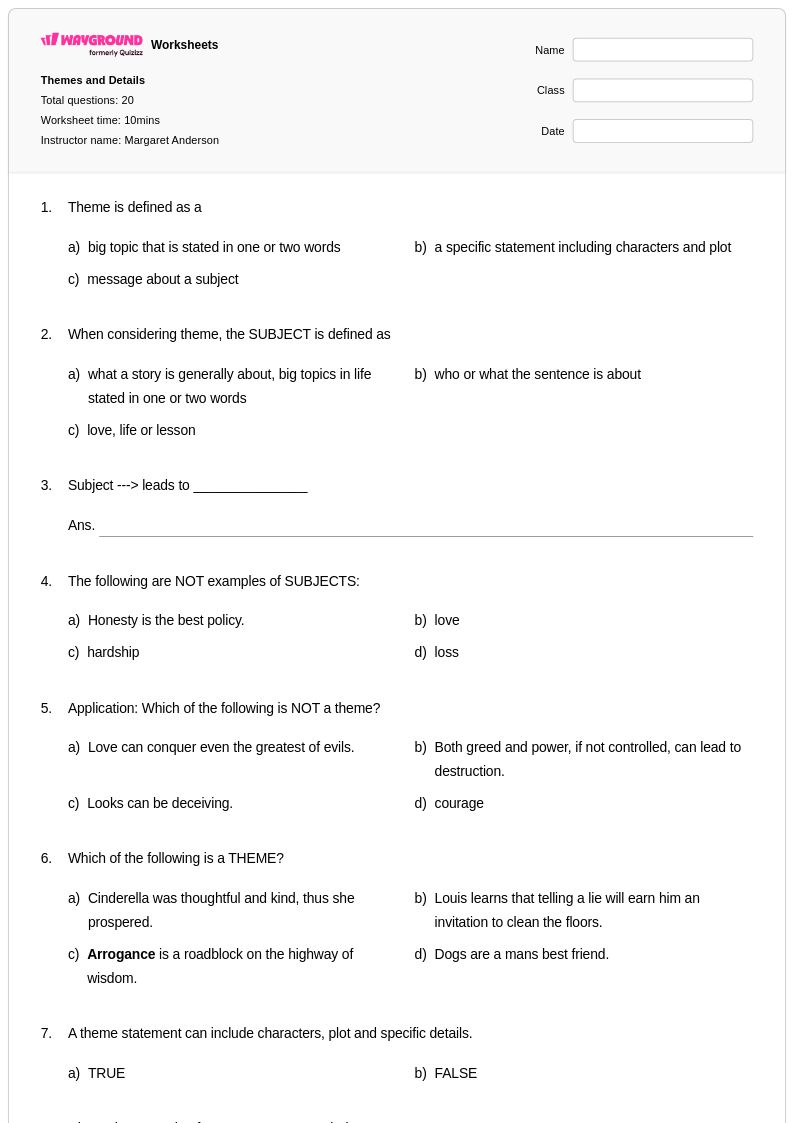
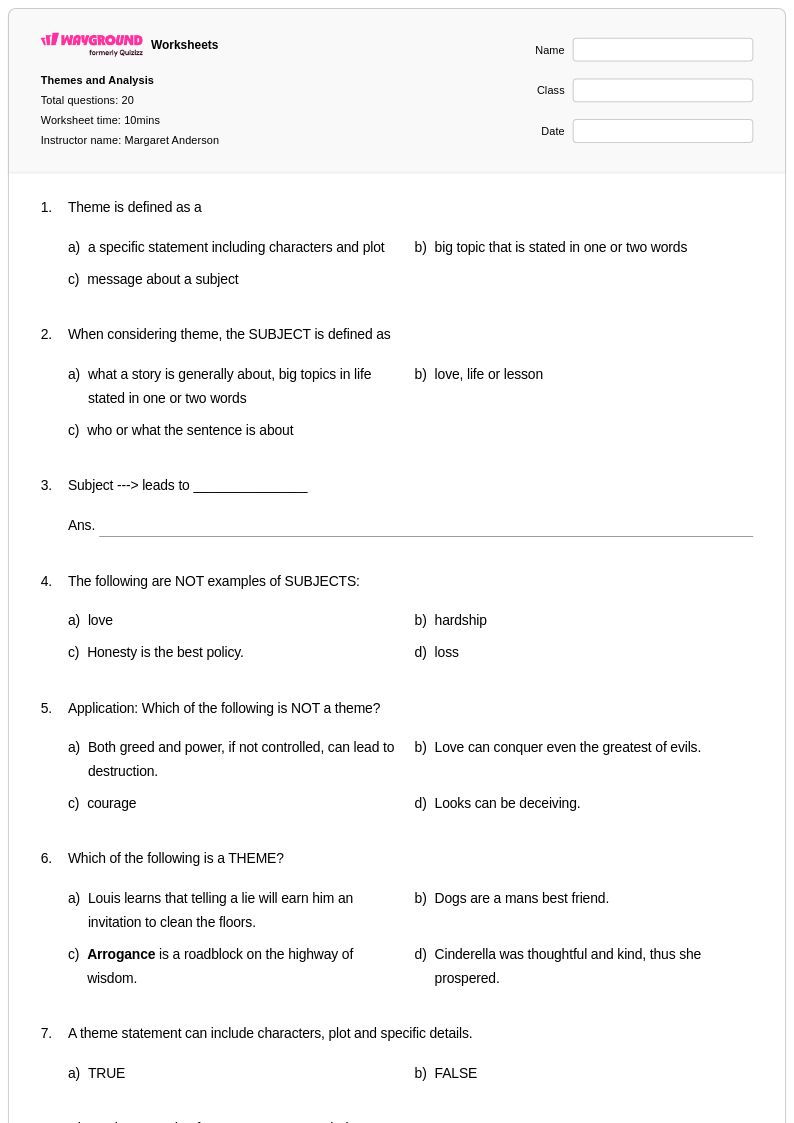
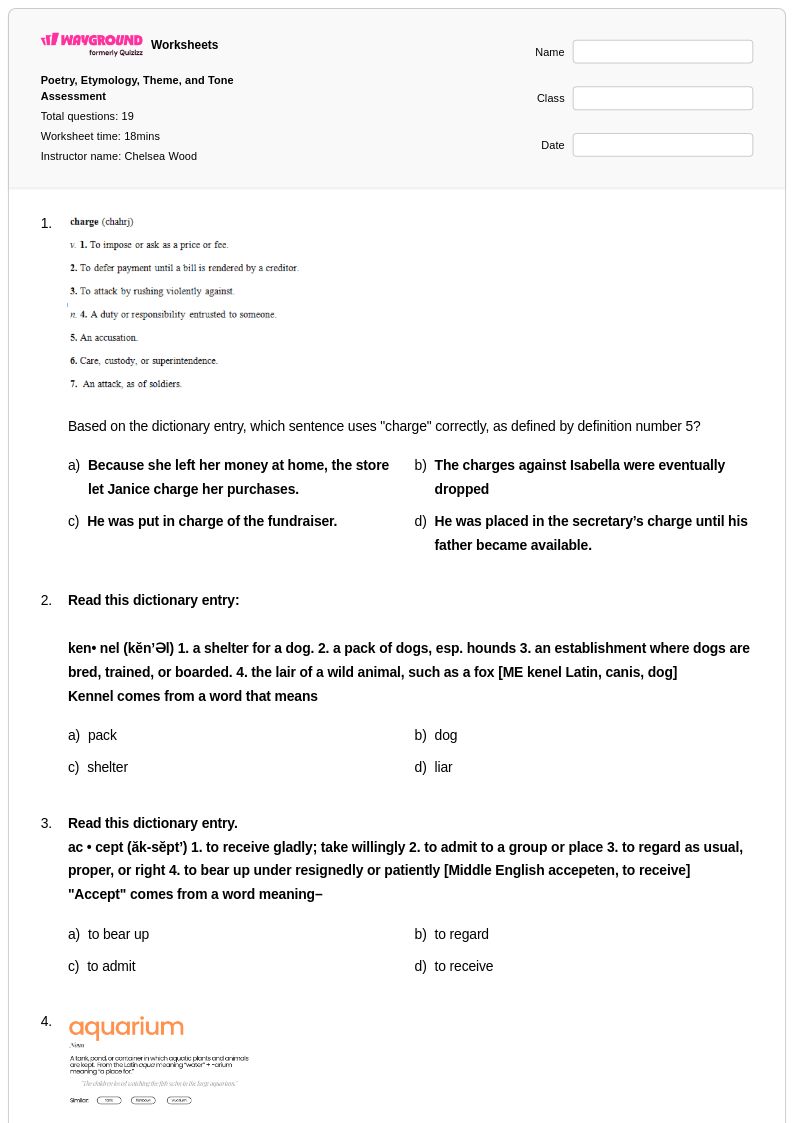
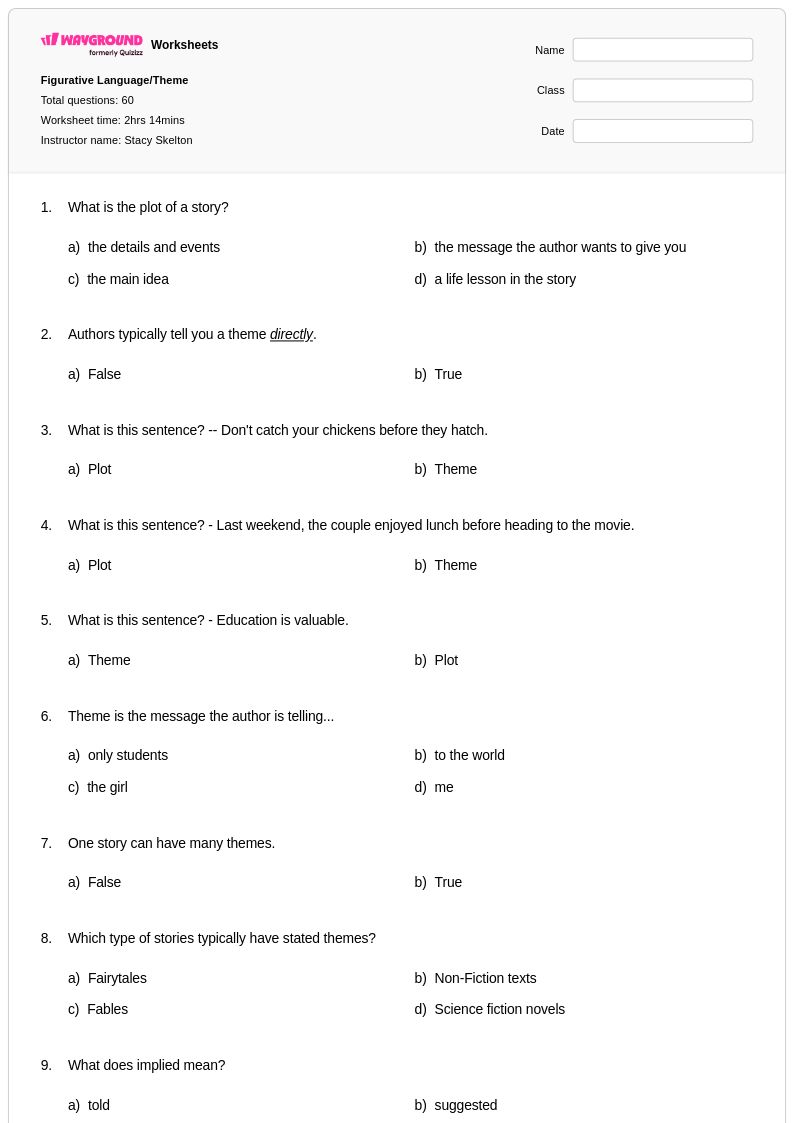
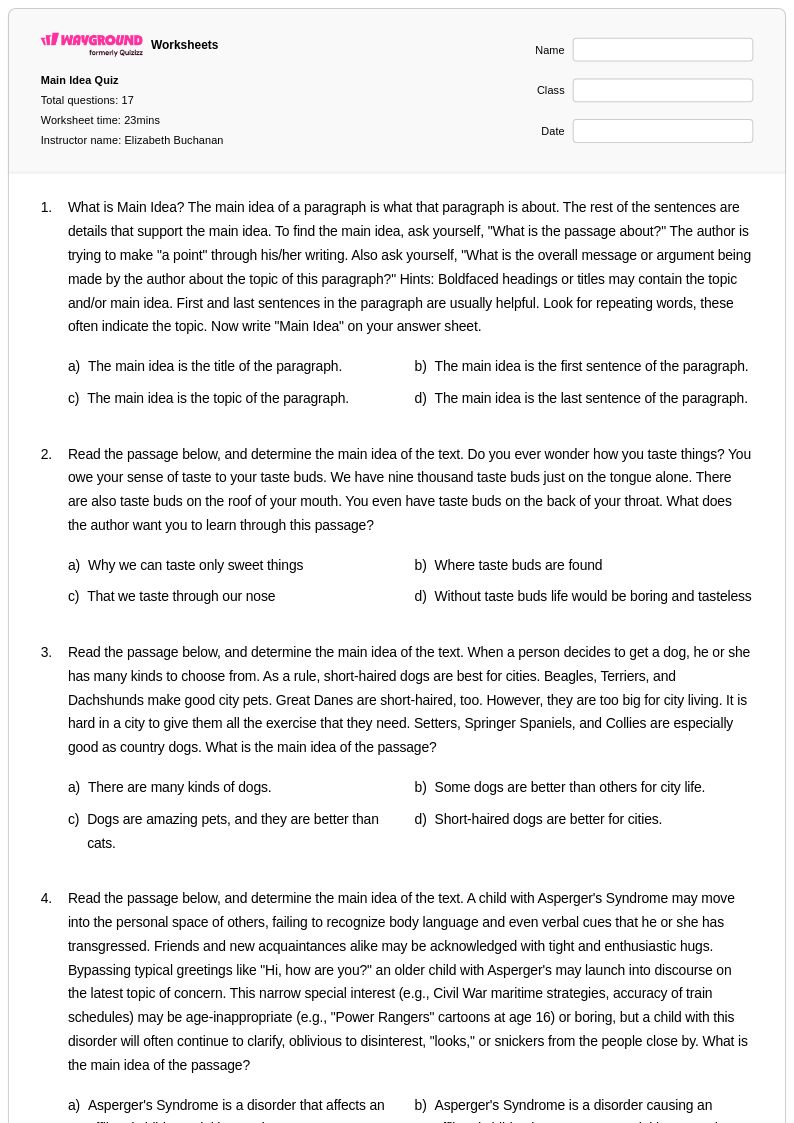
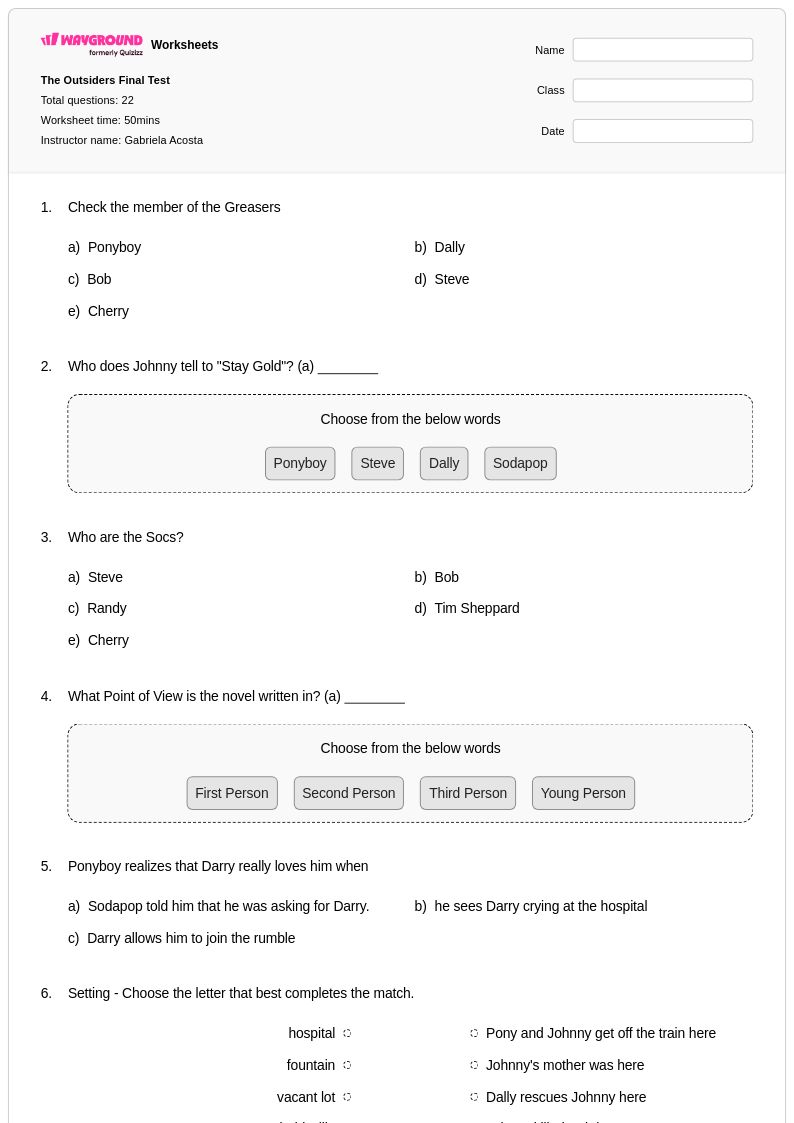
Themes worksheets for Year 7 students available through Wayground (formerly Quizizz) provide comprehensive practice in identifying, analyzing, and articulating the central messages and underlying meanings within literary texts. These expertly designed resources strengthen students' ability to distinguish between explicit and implicit themes, recognize how authors develop thematic elements through character actions, plot events, and symbolic details, and support their interpretations with relevant textual evidence. Each worksheet collection includes varied practice problems that challenge seventh graders to move beyond surface-level comprehension toward deeper literary analysis, with accompanying answer keys that guide both independent study and classroom instruction. Teachers can access these free printables in convenient PDF format, making it simple to distribute materials that align with grade-appropriate complexity levels while building essential critical thinking skills.
Wayground (formerly Quizizz) empowers educators with millions of teacher-created theme analysis worksheets specifically curated for Year 7 reading comprehension instruction. The platform's robust search and filtering capabilities allow teachers to quickly locate resources that align with specific literary standards and match their students' diverse learning needs. Built-in differentiation tools enable seamless customization of worksheet difficulty levels, supporting both remediation for struggling readers and enrichment opportunities for advanced learners. Available in both printable PDF and interactive digital formats, these theme-focused materials streamline lesson planning while providing flexible options for in-class activities, homework assignments, and targeted skill practice sessions that help students master this fundamental aspect of literary analysis.
FAQs
How do I teach theme in literature to students who confuse it with plot summary?
The most effective approach is to anchor theme instruction in the distinction between what happens in a text and what the text means. Ask students to identify a central conflict or character decision, then push them to articulate what lesson or truth that moment reveals about human experience. Frames like 'The author wants us to understand that...' help students move from retelling events to constructing thematic statements. Repeated practice with short texts before moving to full novels gives students the repetition needed to internalize the skill.
What exercises help students practice identifying theme in a story?
Structured worksheets that guide students through character motivation, conflict resolution, and author's message are among the most effective tools for building thematic analysis skills. Activities that ask students to track recurring symbols or motifs and connect them to a central idea reinforce the analytical process. Practice problems that progress from identifying explicit themes in fables or short stories to inferring subtle themes in complex literary texts build the skill incrementally, which is essential for retention.
What are the most common mistakes students make when identifying theme?
The most frequent error is stating a topic rather than a theme — writing 'friendship' instead of 'true friendship requires sacrifice.' Students also tend to pull a single line of dialogue as the theme rather than synthesizing evidence across the whole text. Another common mistake is confusing the moral of a story with its theme, treating theme as a directive ('be kind') rather than an observation about human nature ('kindness can transform even the most broken relationships'). Worksheets that require students to cite textual evidence for their theme statements directly address these patterns.
How do I differentiate theme worksheets for struggling readers and advanced learners?
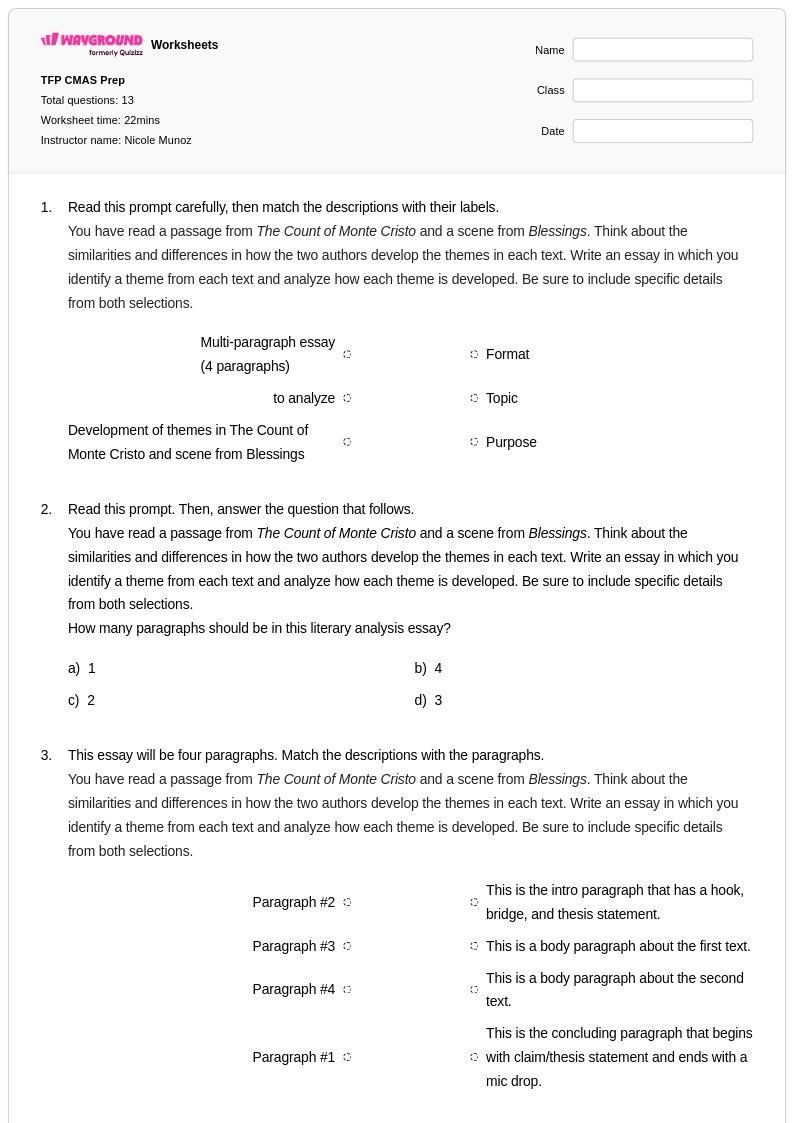
For struggling readers, choose texts with explicit thematic signals and use scaffolded worksheets that break the analysis into discrete steps — identifying the conflict, tracking character change, then drafting a theme statement. Advanced learners benefit from worksheets that require them to compare thematic development across two texts or analyze how literary devices like symbolism and irony reinforce theme. On Wayground, teachers can apply accommodations such as Read Aloud and reduced answer choices for individual students, while advanced learners receive standard settings, allowing genuine differentiation without singling anyone out.
How can I use Wayground's theme worksheets in my classroom?
Wayground's theme worksheets are available as printable PDFs for traditional classroom use and in digital formats for technology-integrated settings, including the option to host them as a quiz directly on Wayground. Teachers can use them for whole-class instruction, independent practice, targeted remediation, or enrichment. Each worksheet includes an answer key, making it easy to provide immediate feedback or set up student self-assessment. The platform's search and filtering tools allow teachers to quickly find materials that align with specific standards and reading levels.
How do I help students find theme in a text when they struggle to move beyond surface-level reading?
Students who read at the surface level benefit from explicit questioning sequences: What does the main character want? What stands in the way? What does the character learn or fail to learn? These questions redirect attention from plot mechanics to meaning-making. Pairing this questioning sequence with a structured written response — where students must state a theme and support it with at least two pieces of textual evidence — trains them to look deeper by making the analytical process visible and repeatable.