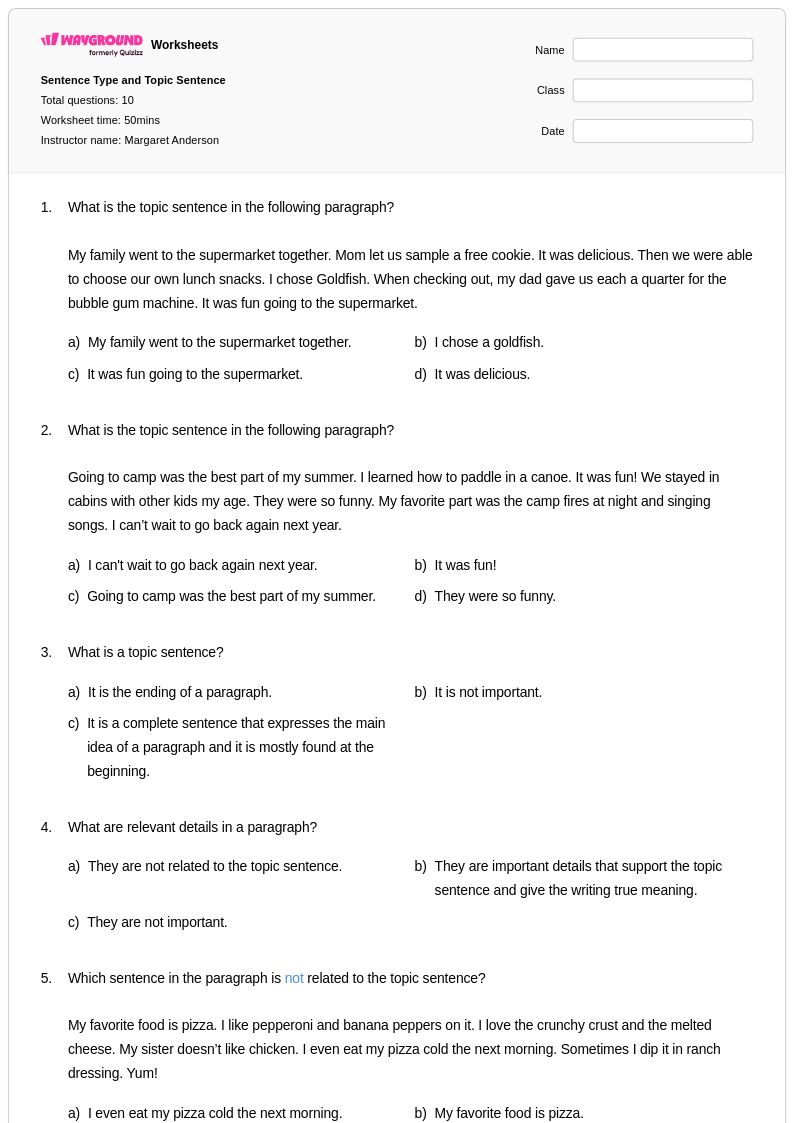
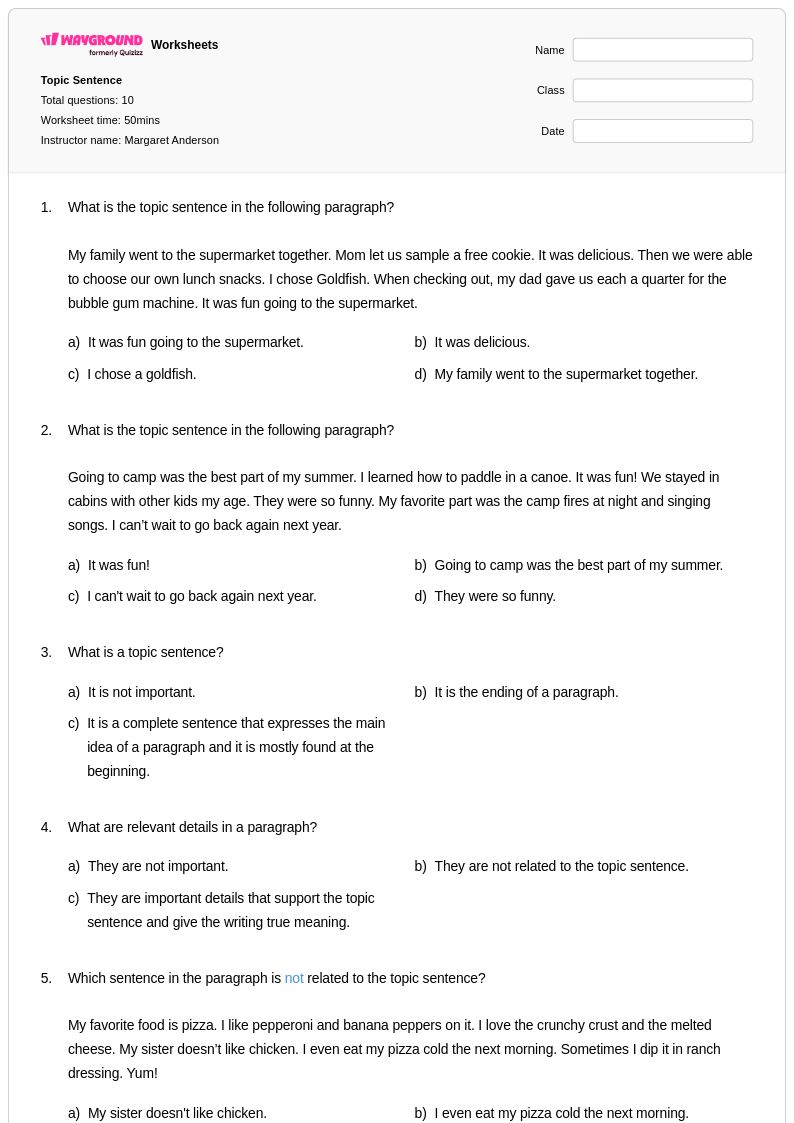
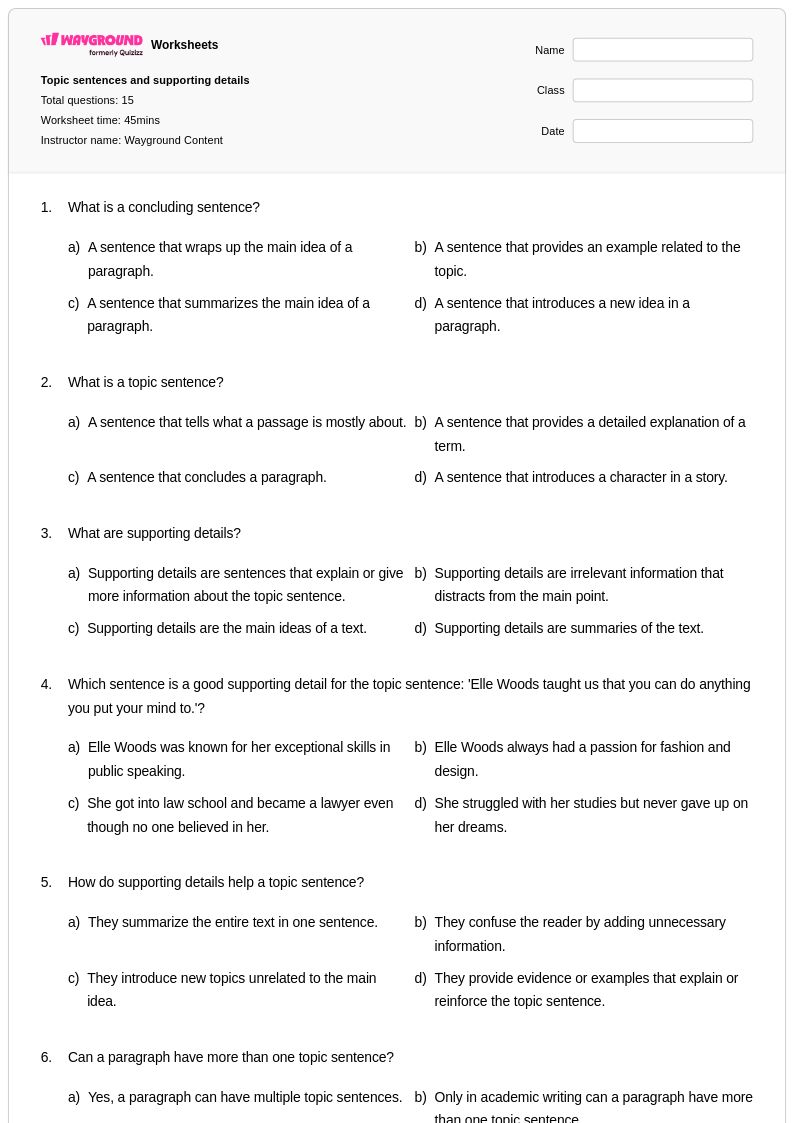
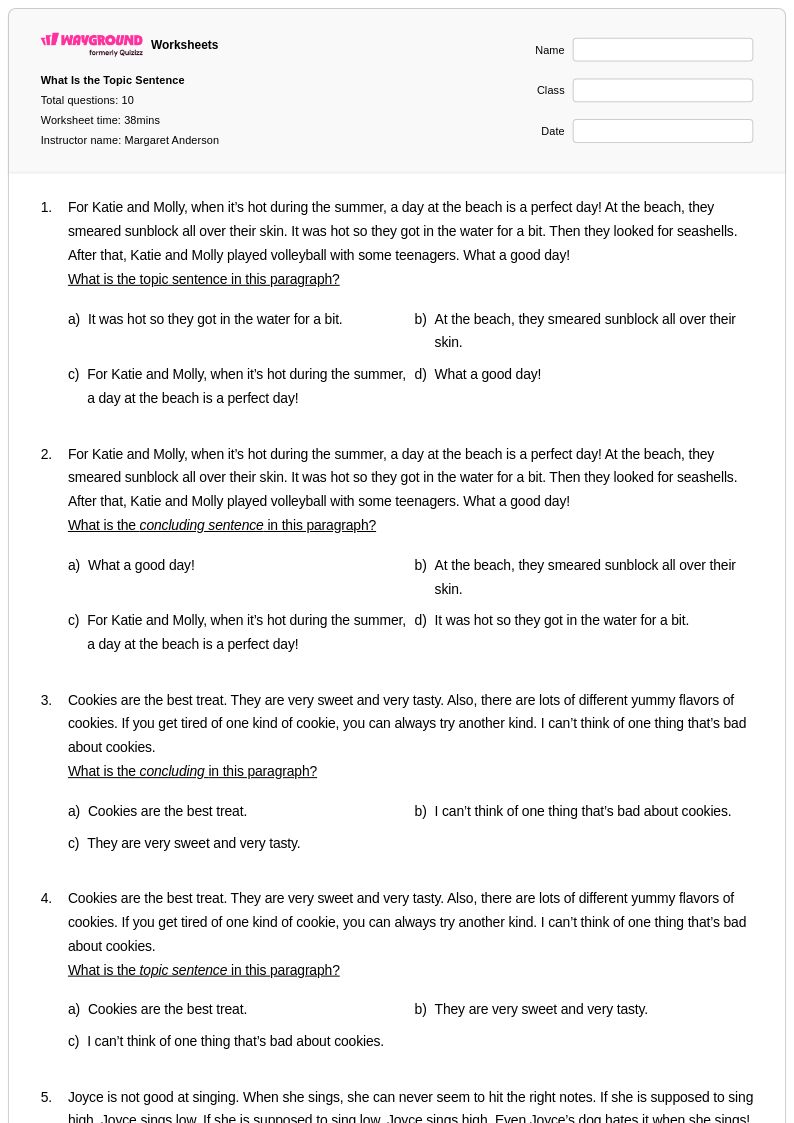
Free Printable Topic Sentence Worksheets for Year 3
Year 3 topic sentence worksheets and printables help students master identifying and writing strong opening statements that clearly introduce paragraph main ideas through engaging practice problems and comprehensive answer keys.
Explore printable Topic Sentence worksheets for Year 3
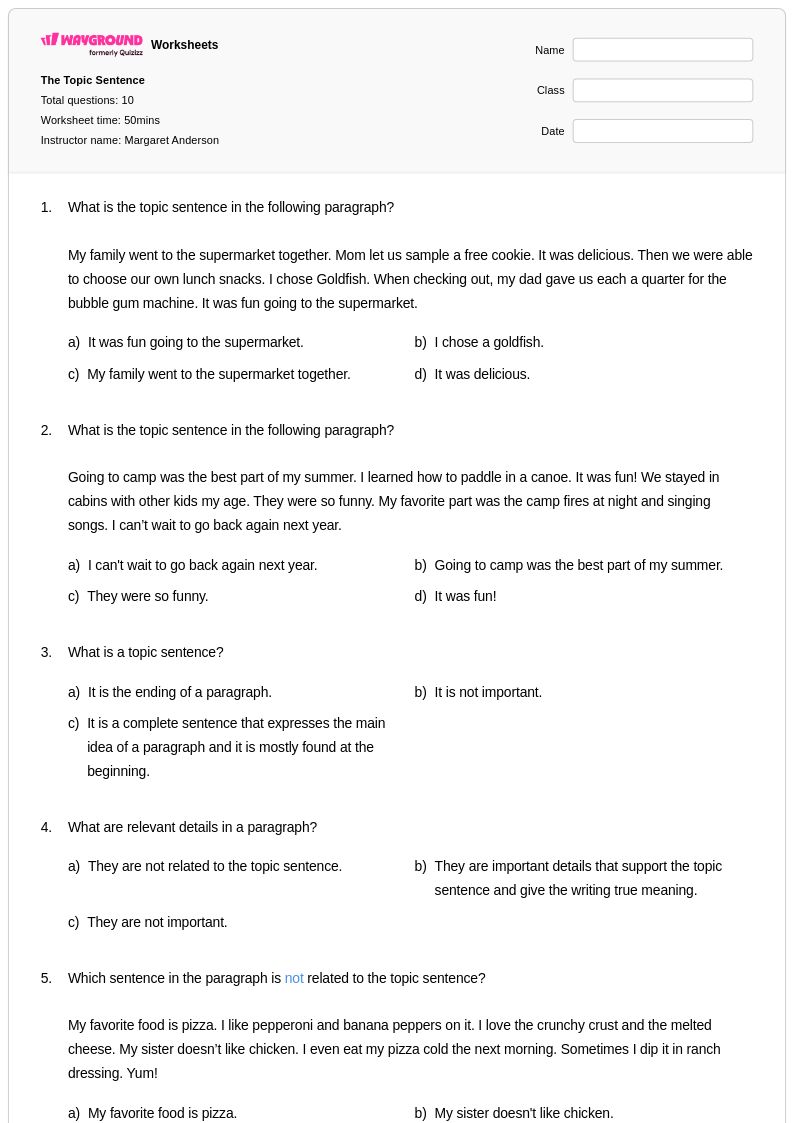
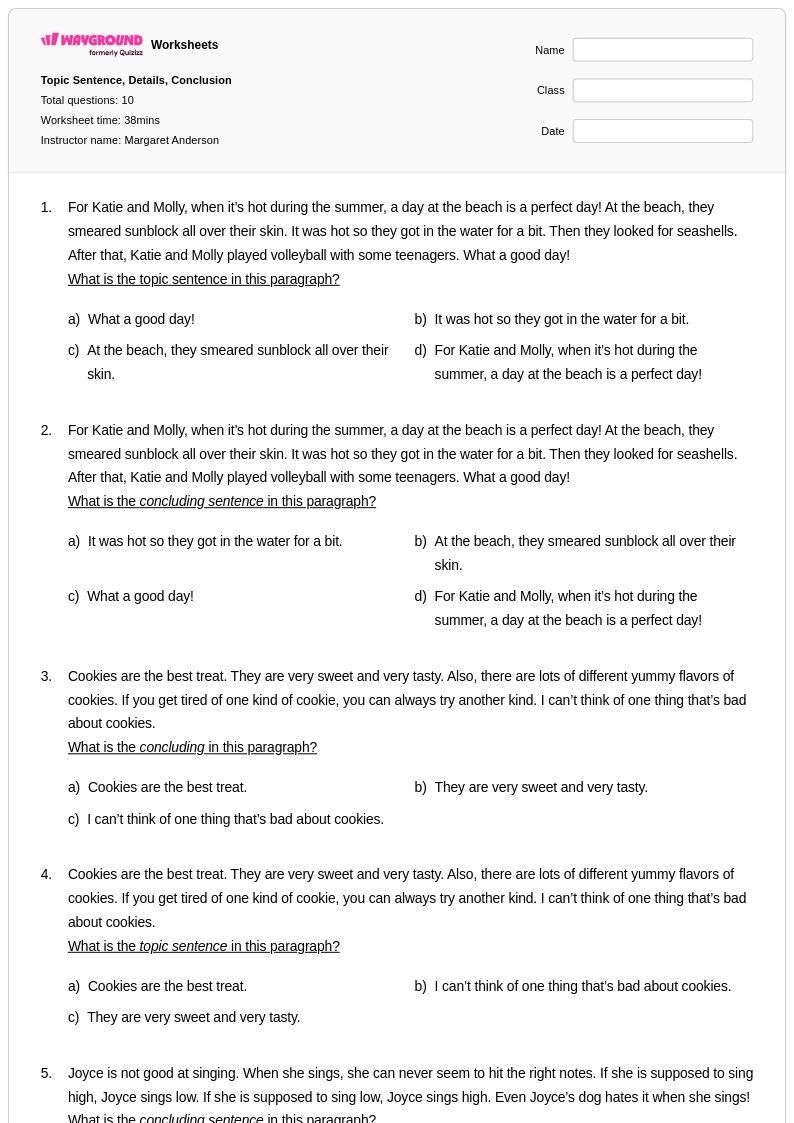
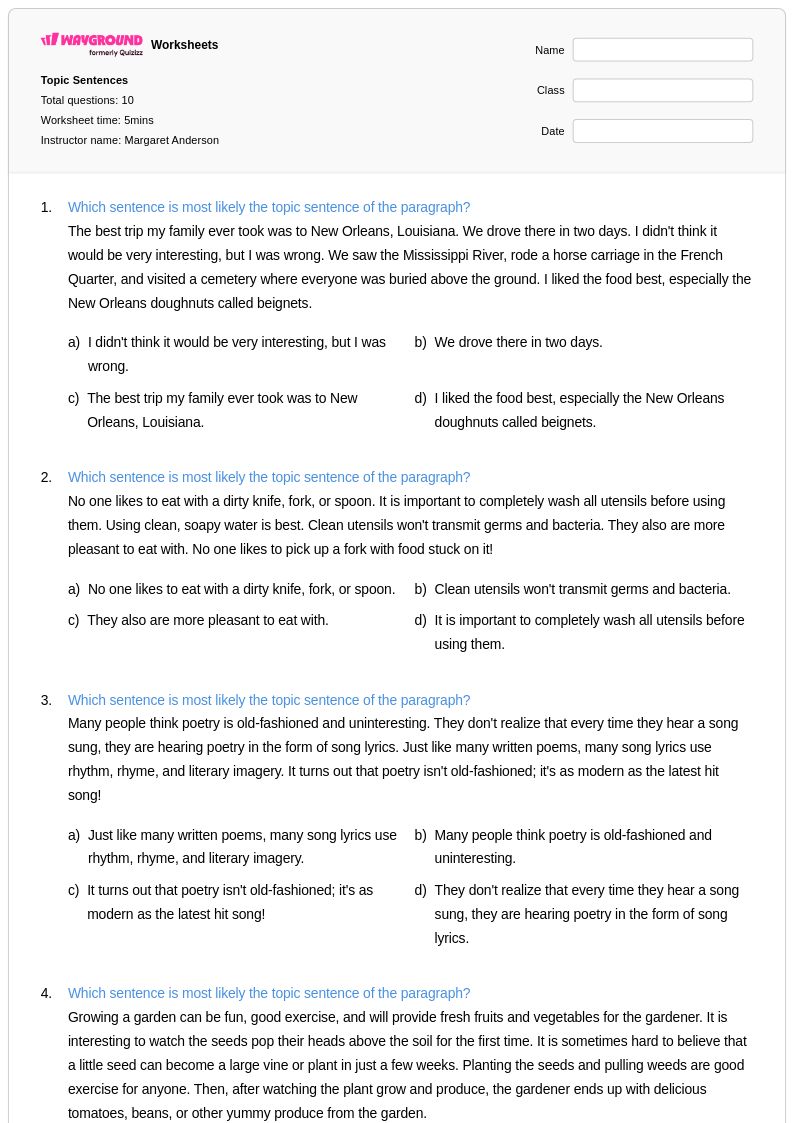
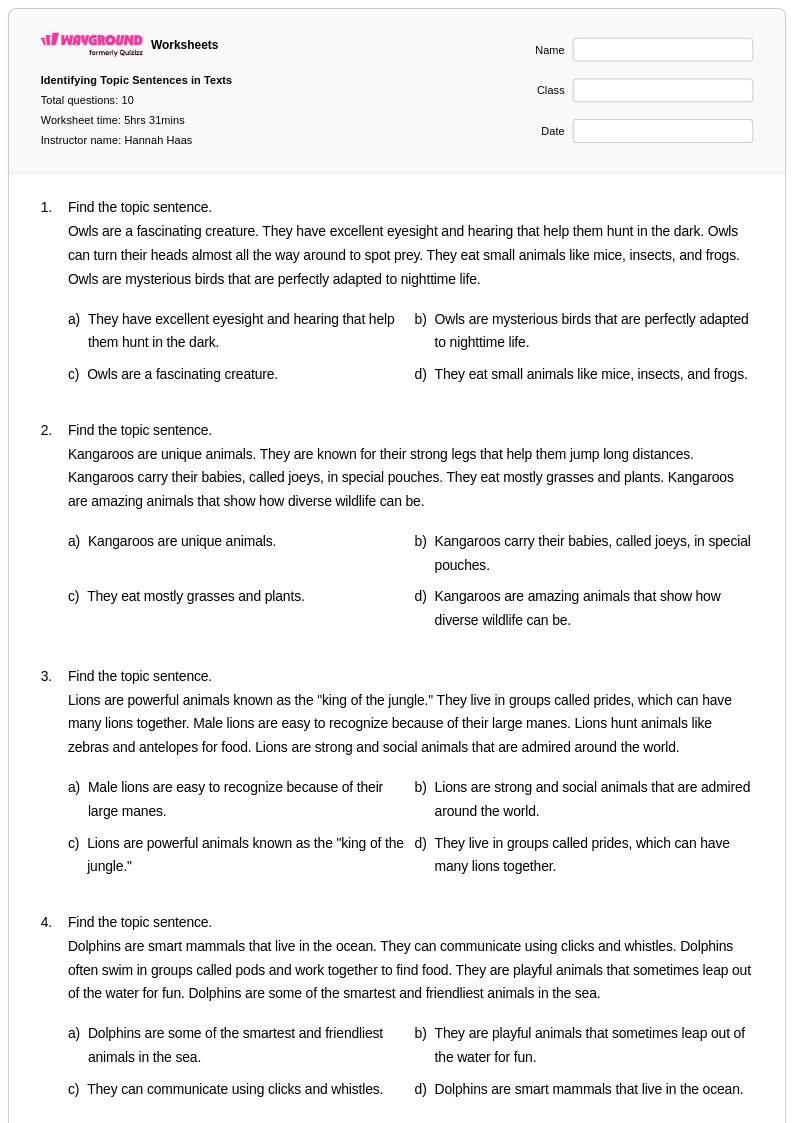
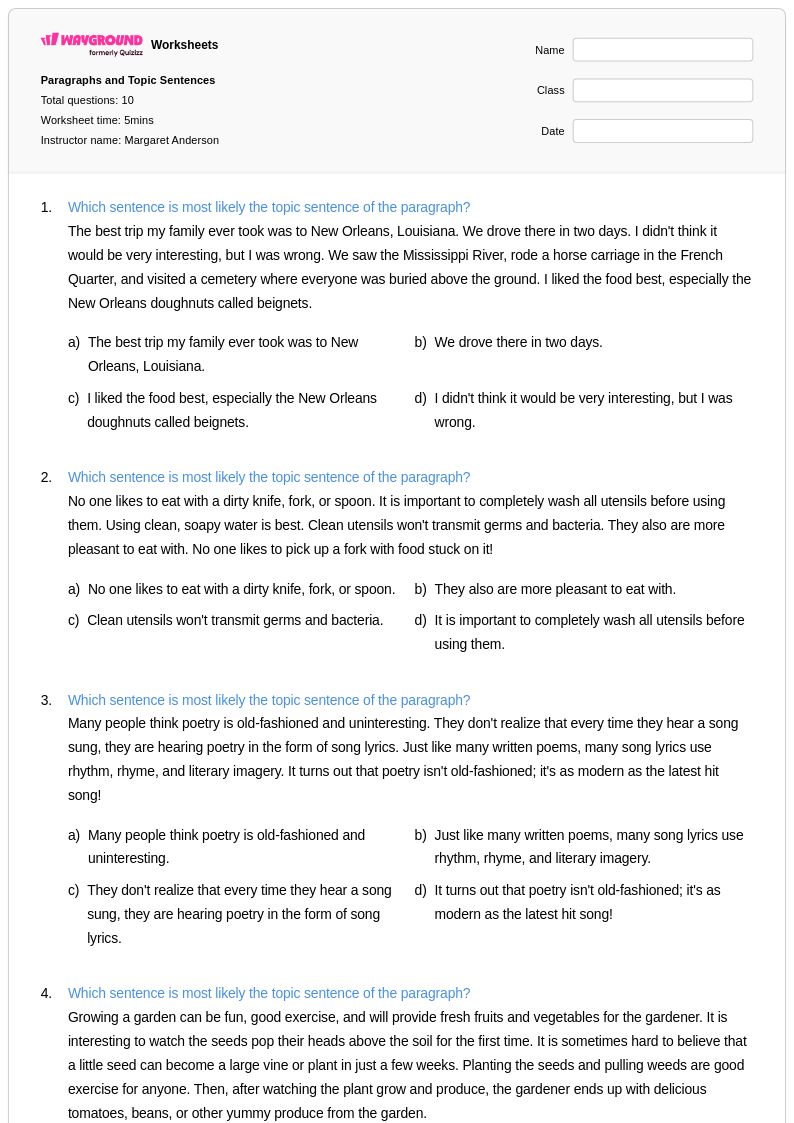
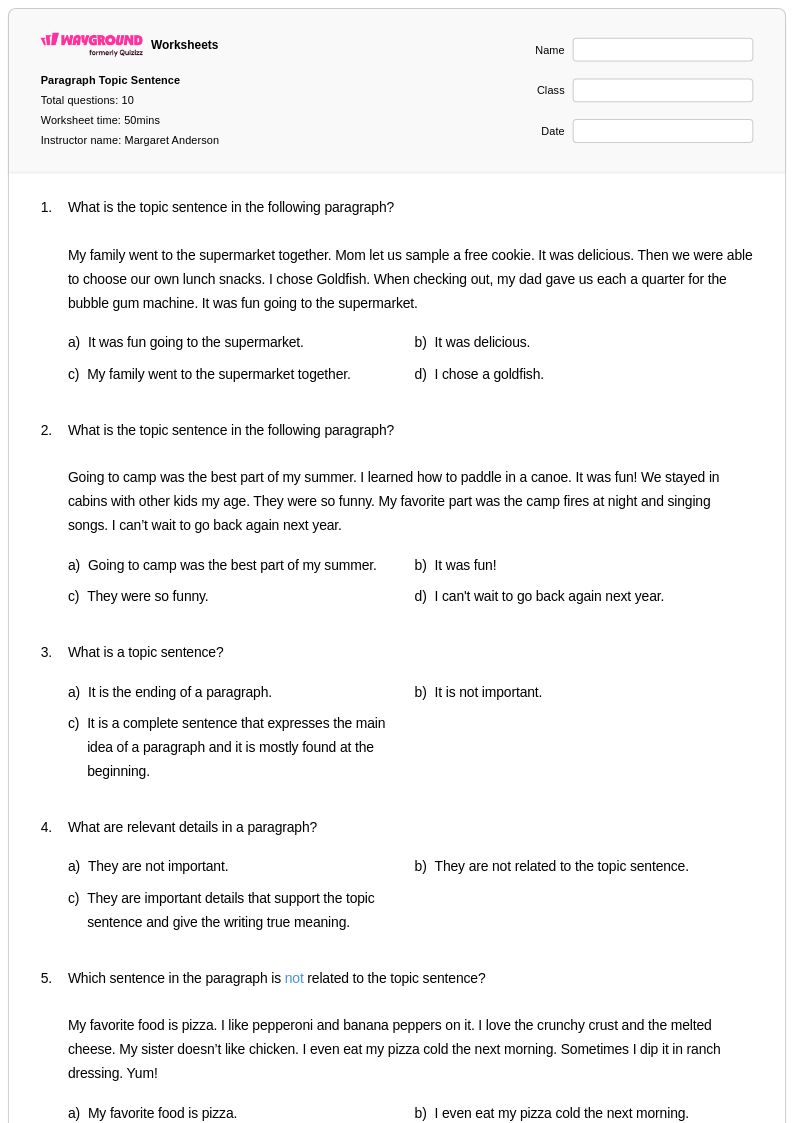
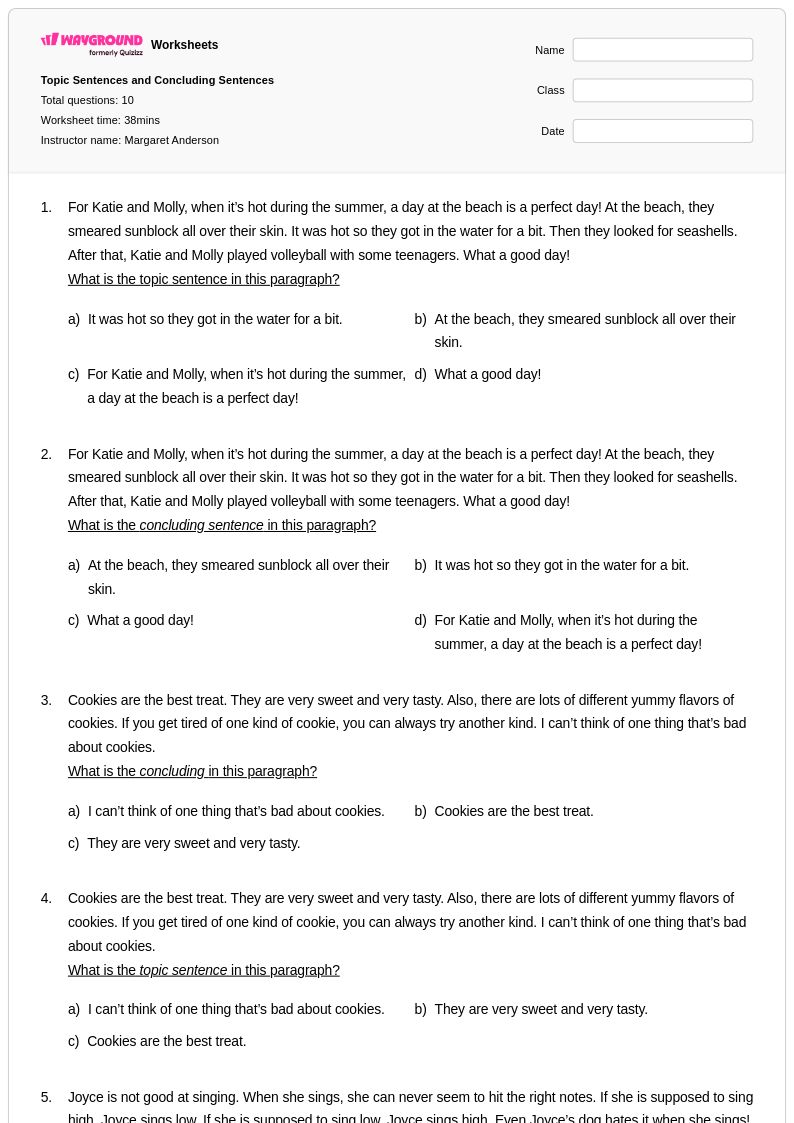
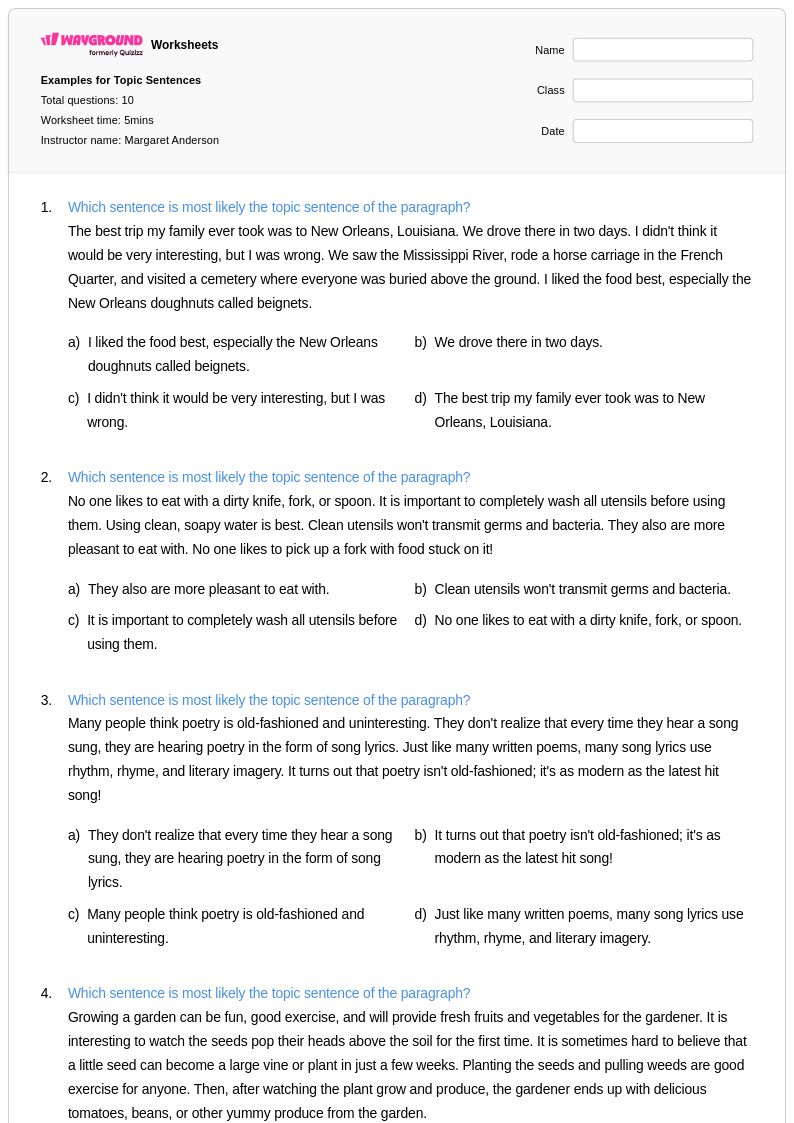
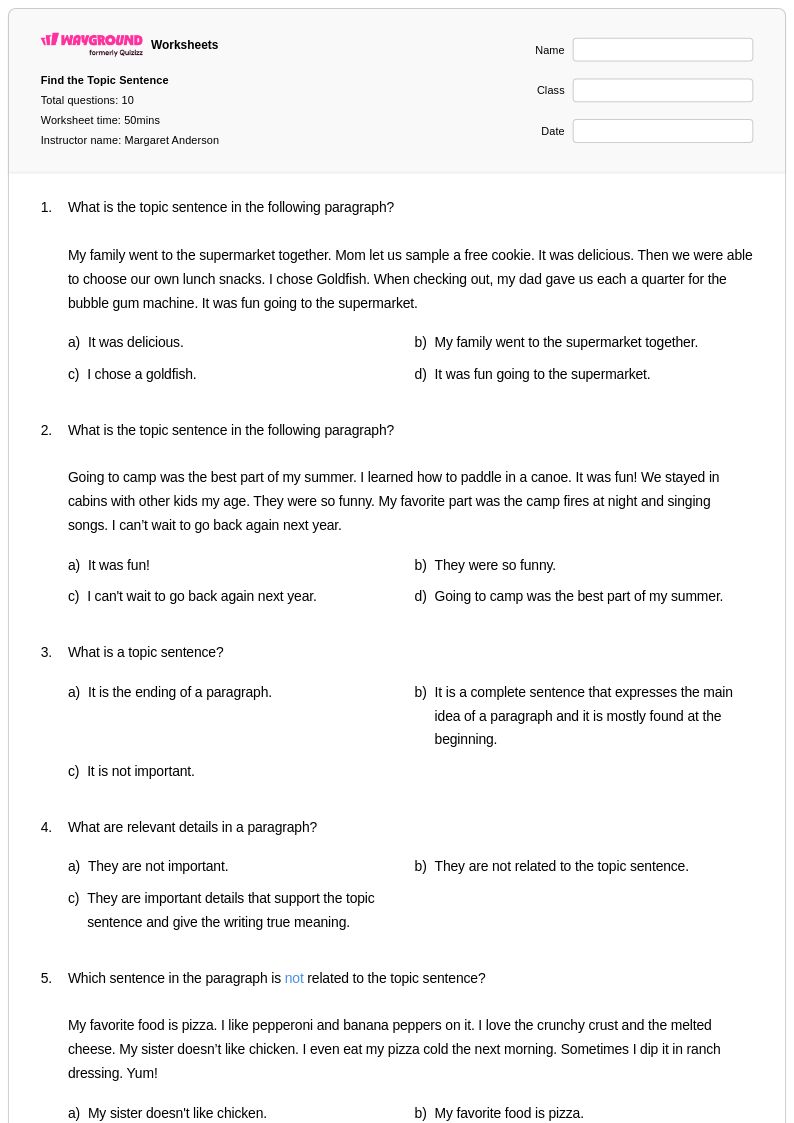
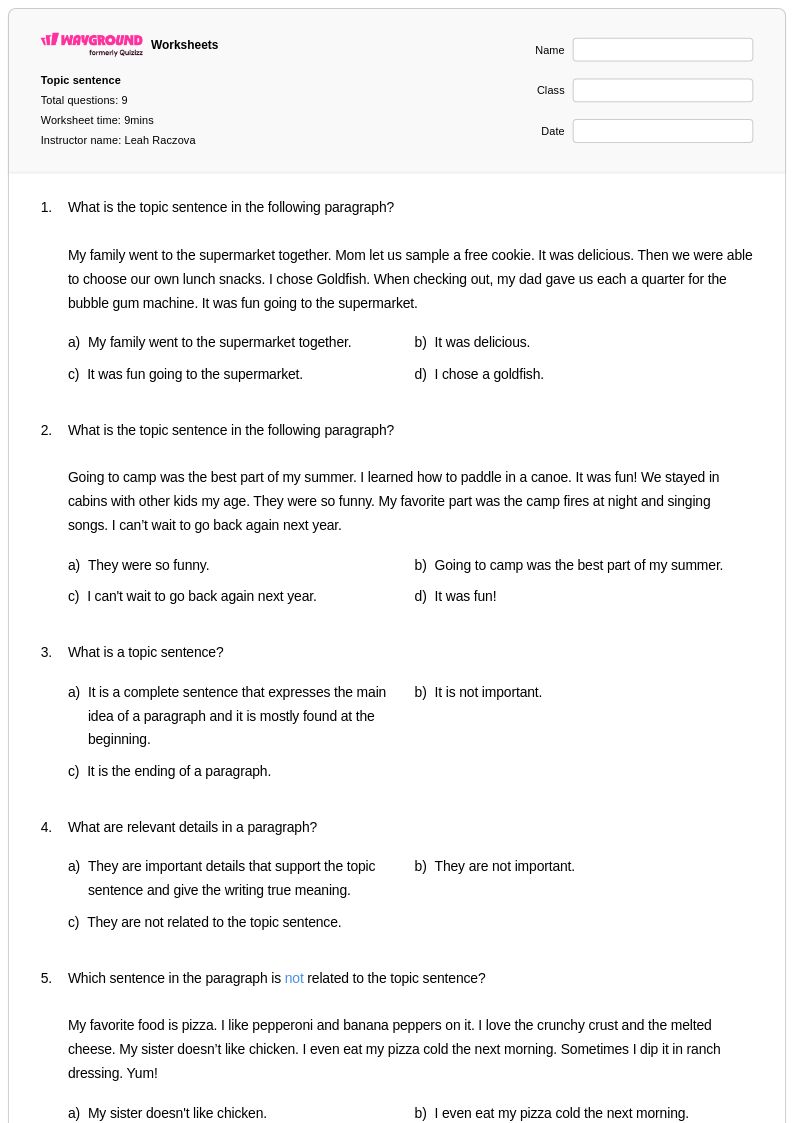
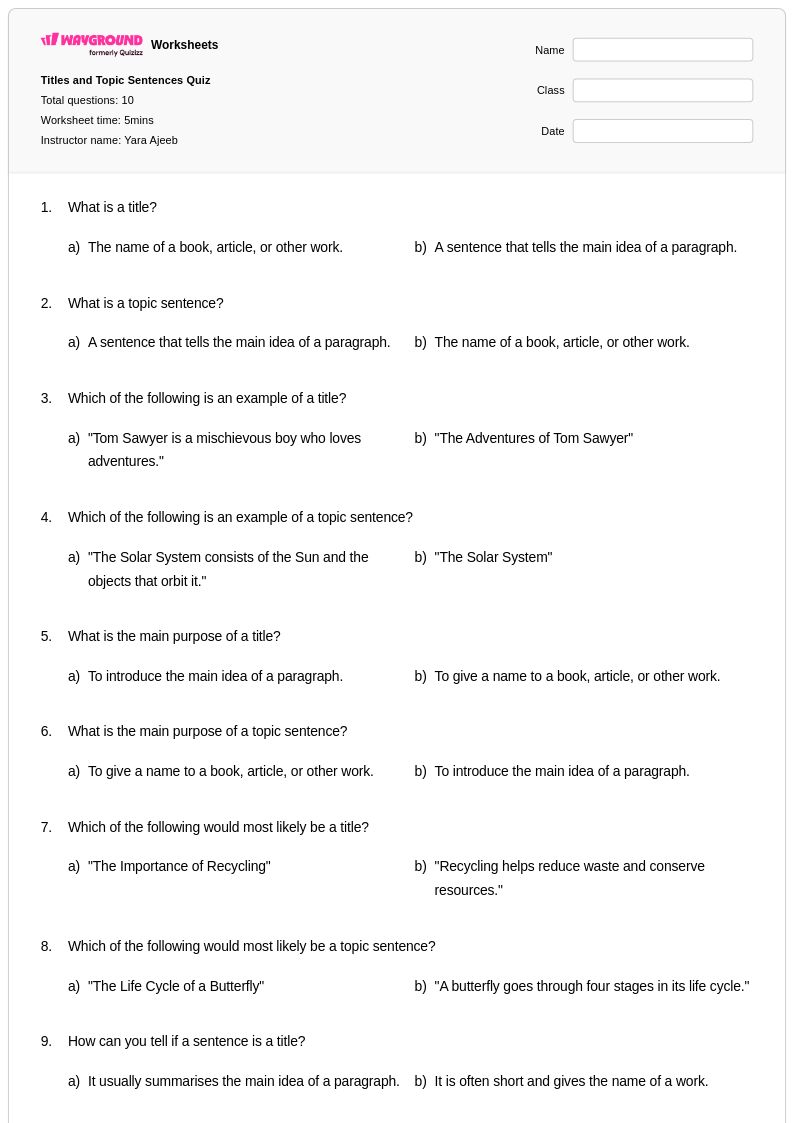
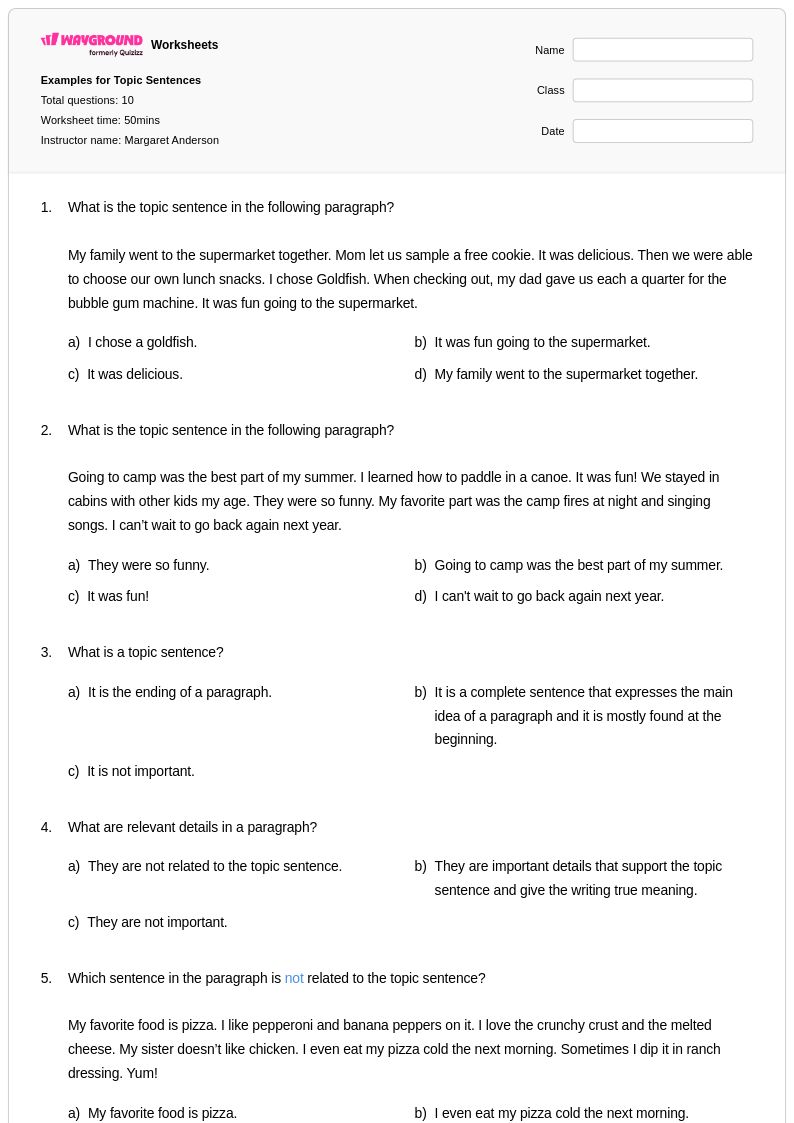
Topic sentence worksheets for Year 3 students available through Wayground (formerly Quizizz) provide essential practice for developing strong paragraph writing foundations. These carefully designed printables focus on helping young writers identify, create, and effectively position topic sentences that clearly communicate the main idea of their paragraphs. Students work through structured practice problems that teach them to distinguish between strong topic sentences and supporting details, while building confidence in their ability to craft opening statements that engage readers and set clear expectations for what follows. Each worksheet includes comprehensive answer keys that allow teachers and students to review correct responses and understand the reasoning behind effective topic sentence construction, making these free resources invaluable for both classroom instruction and independent practice.
Wayground's extensive collection of topic sentence worksheets draws from millions of teacher-created resources, offering educators powerful search and filtering capabilities to locate materials perfectly suited to their Year 3 writing instruction needs. The platform's robust differentiation tools enable teachers to customize worksheets for varying skill levels within their classrooms, ensuring that struggling writers receive appropriate scaffolding while advanced students encounter challenging extensions. These resources align with established writing standards and are available in both printable PDF format and interactive digital versions, giving educators flexibility in how they incorporate topic sentence practice into their lesson planning. Teachers can seamlessly integrate these worksheets into writing centers, homework assignments, remediation sessions, or enrichment activities, supporting comprehensive writing instruction that builds students' organizational skills progressively throughout the academic year.
FAQs
How do I teach students to write a strong topic sentence?
Teaching topic sentences effectively starts with helping students understand that a topic sentence must name the subject and make a specific claim about it, not simply announce what the paragraph is about. Use mentor texts to show the difference between weak topic sentences (too broad or just a fact) and strong ones (focused and arguable). Have students practice by reading paragraphs and reverse-engineering the topic sentence before writing their own from scratch.
What exercises help students practice writing topic sentences?
Effective practice exercises include identifying topic sentences in published paragraphs, rewriting weak or vague topic sentences into focused ones, and matching topic sentences to their corresponding supporting details. Progressively challenging tasks work best, starting with identification, moving to revision, and then independent construction. Structured worksheets that walk students through these stages help build confidence before open-ended writing tasks.
What mistakes do students commonly make when writing topic sentences?
The most common errors are writing topic sentences that are too broad ("Animals are interesting."), too narrow (a supporting detail rather than a main idea), or simply a statement of fact with no direction for the paragraph. Students also frequently confuse a title or a thesis with a topic sentence. Targeted practice that asks students to evaluate and revise flawed examples is one of the most effective ways to address these misconceptions.
How can I help struggling writers understand the difference between a topic sentence and a supporting detail?
A useful strategy is to present students with a set of sentences and ask them to sort each one as either a topic sentence or a supporting detail, then explain their reasoning. This categorization task forces students to think about whether a sentence introduces an idea or develops one. Visual scaffolds, such as a simple two-column chart labeled "Main Idea" and "Supporting Detail," can reinforce this distinction during independent practice.
How do I use Wayground's topic sentence worksheets in my classroom?
Wayground's topic sentence worksheets are available as printable PDFs for traditional classroom use and in digital formats for technology-integrated learning environments, making them flexible for in-class instruction, homework, or independent practice. Teachers can also host the worksheets as a quiz directly on Wayground for real-time student responses. Each worksheet includes a complete answer key, so they work equally well for guided instruction, independent work, or self-paced review.
How do I differentiate topic sentence instruction for students with different skill levels?
For students who are still developing foundational skills, start with identification tasks before moving to writing tasks, and reduce the number of answer choices on practice items to lower cognitive load. On Wayground, teachers can apply individual accommodations such as reduced answer choices, extended time, and read-aloud support to specific students without alerting the rest of the class. Advanced students can be challenged with revision tasks that require them to explain why a given topic sentence is weak and rewrite it with precision.