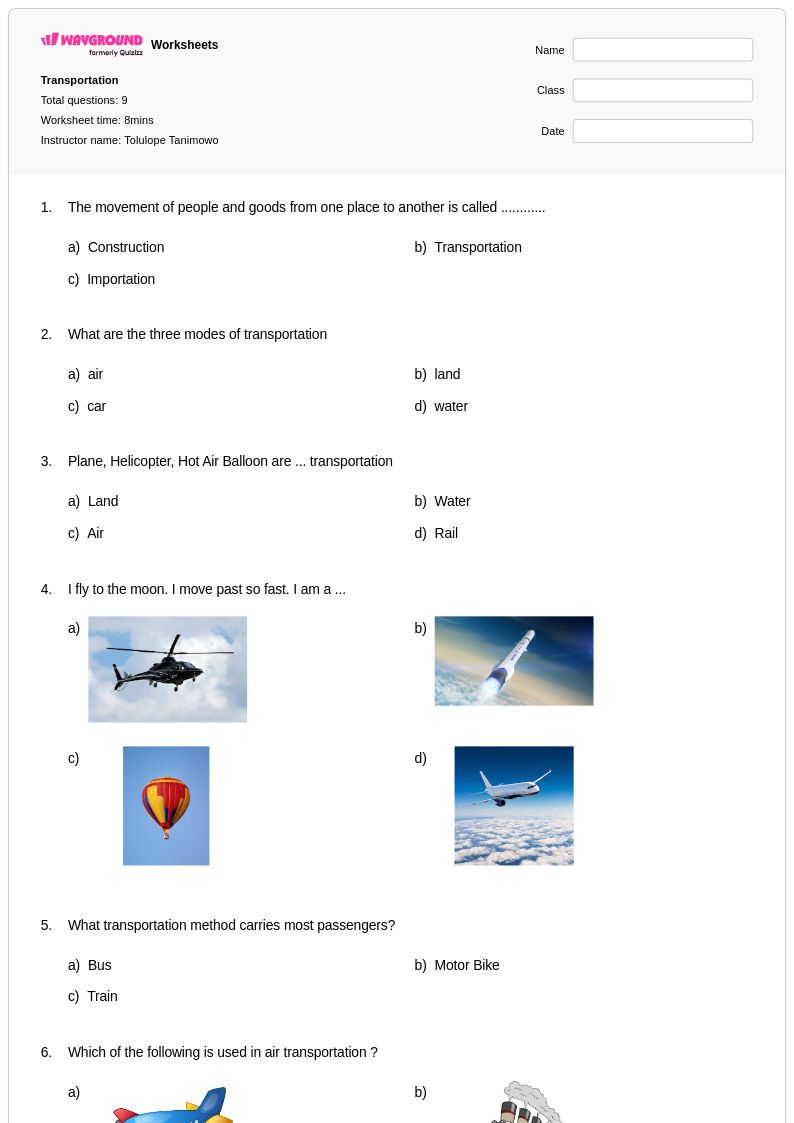
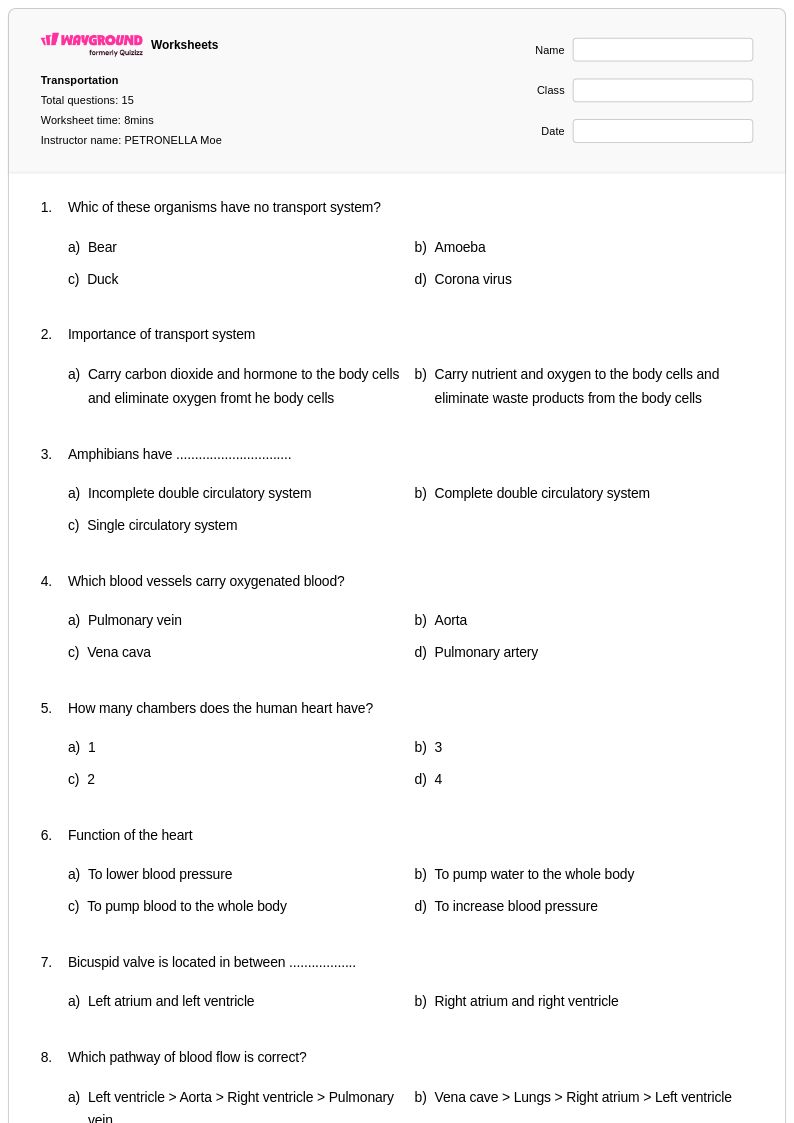
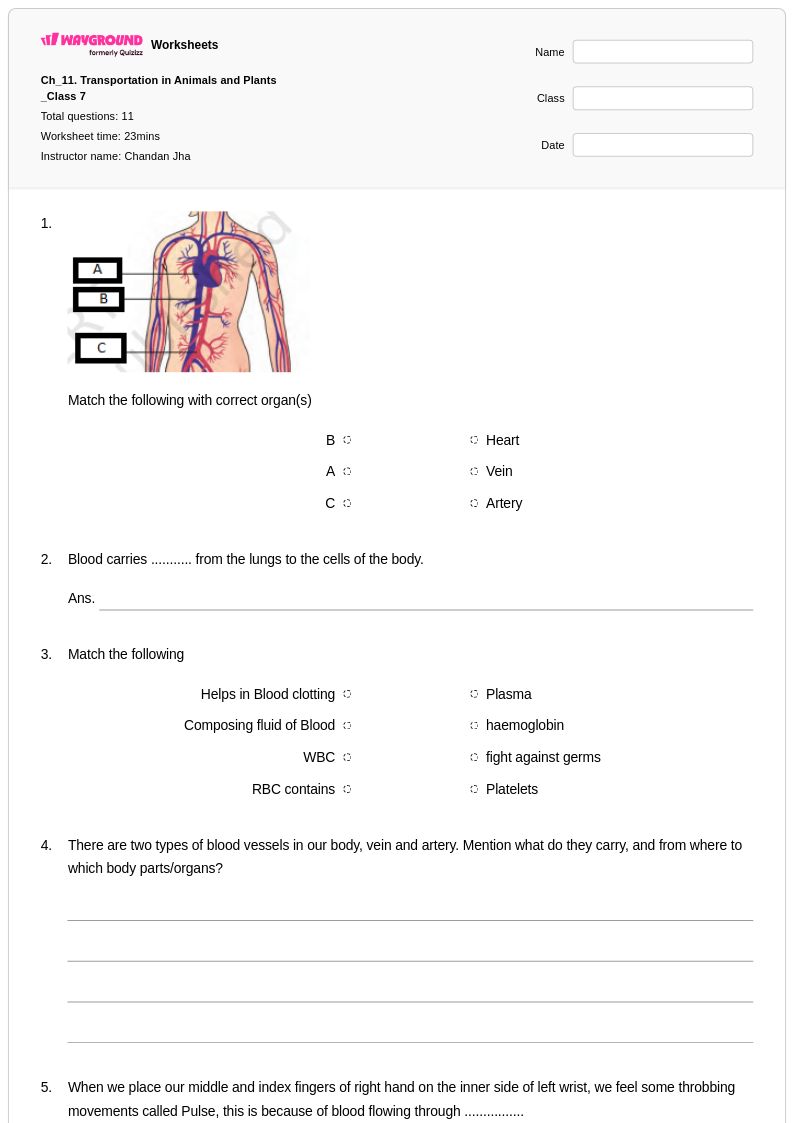
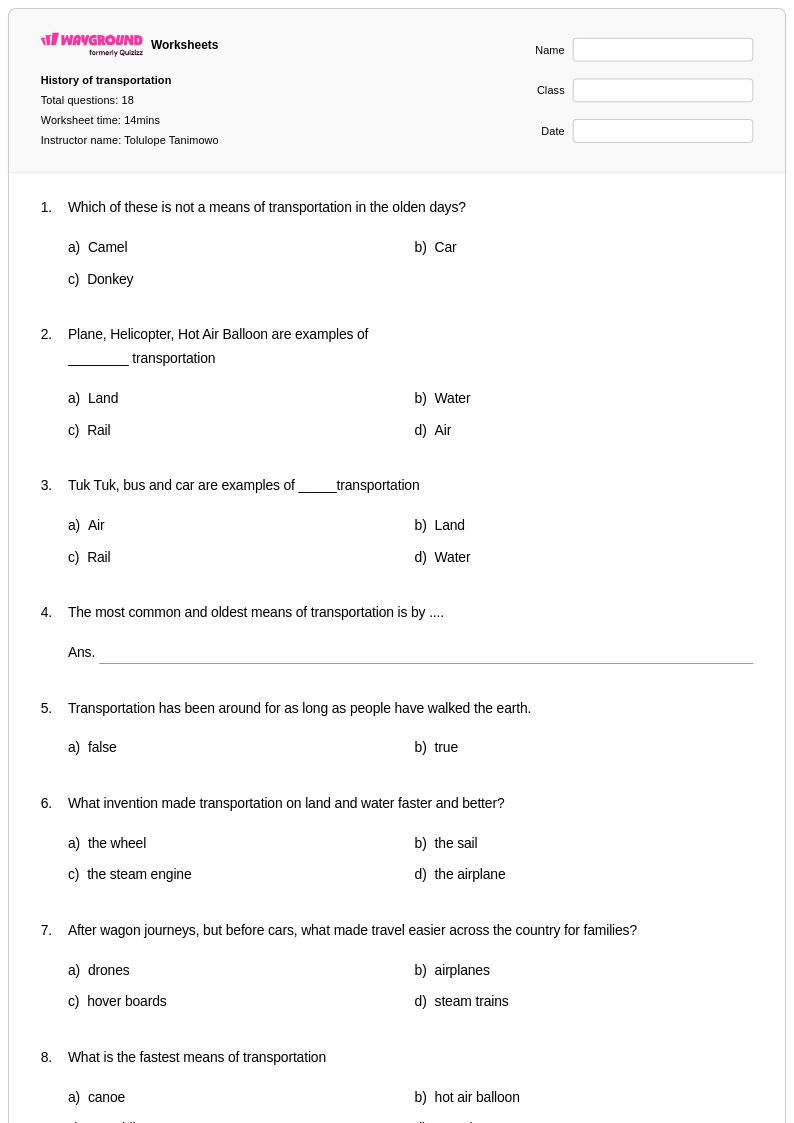
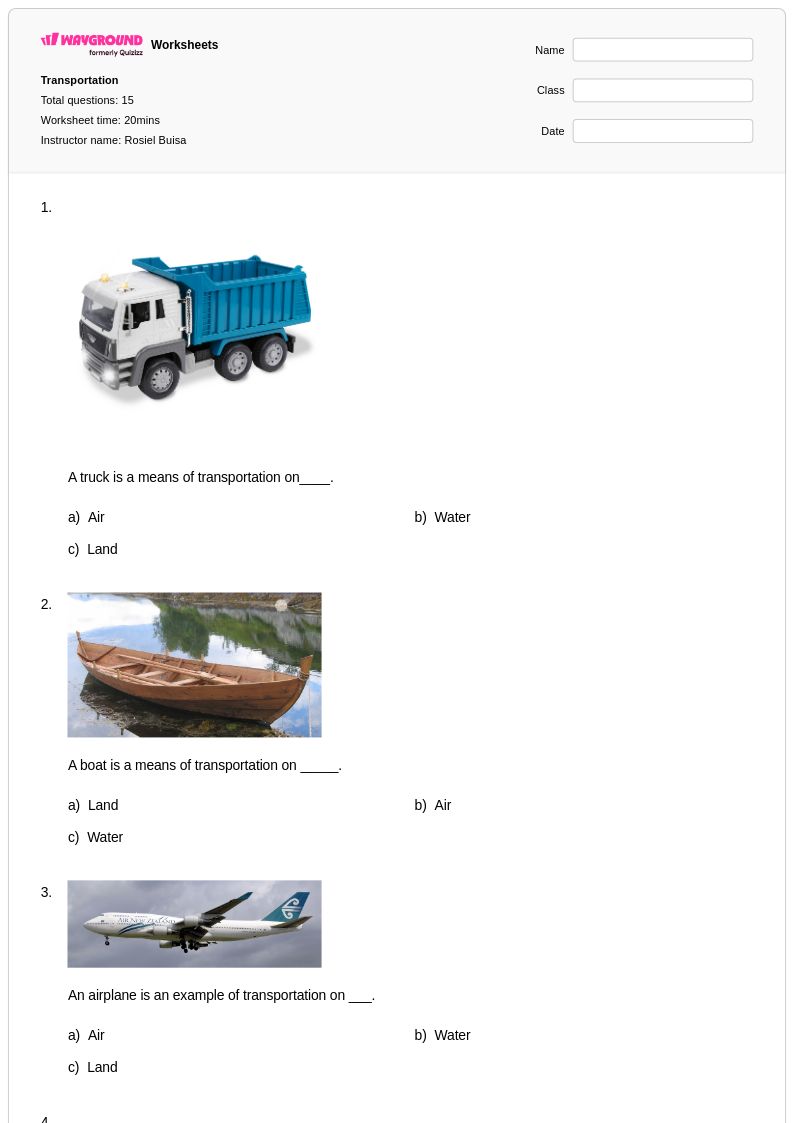
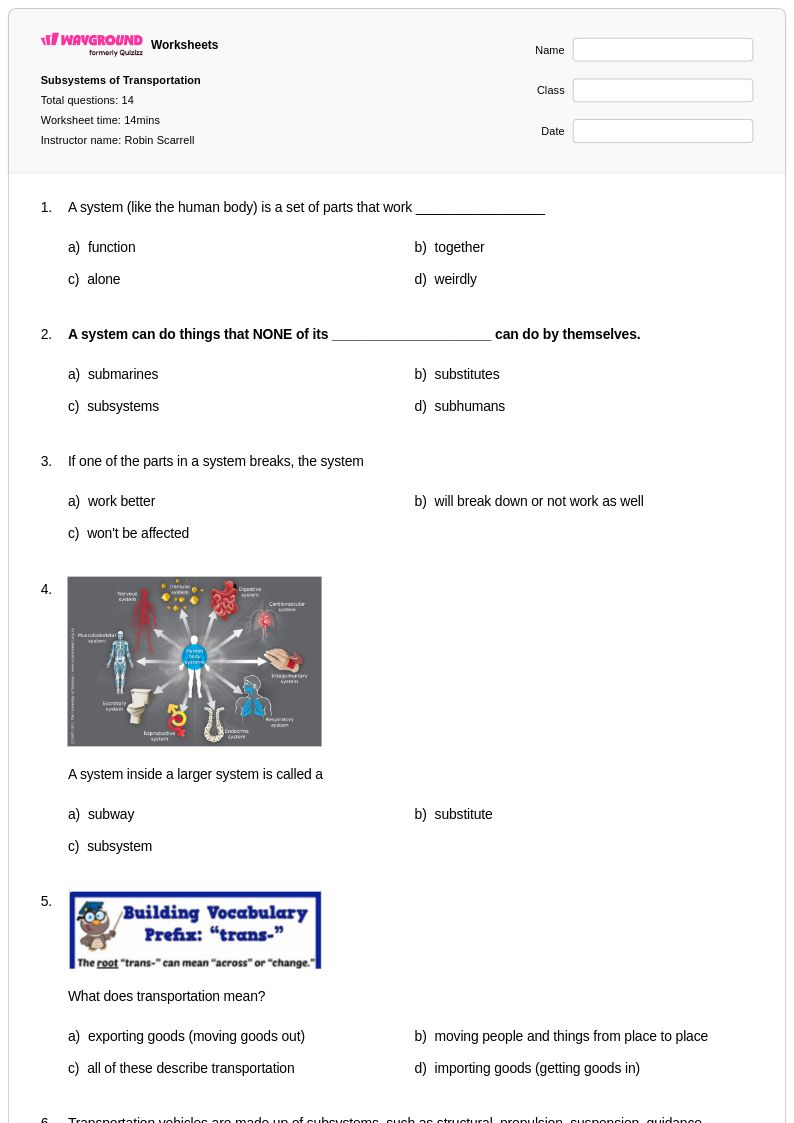
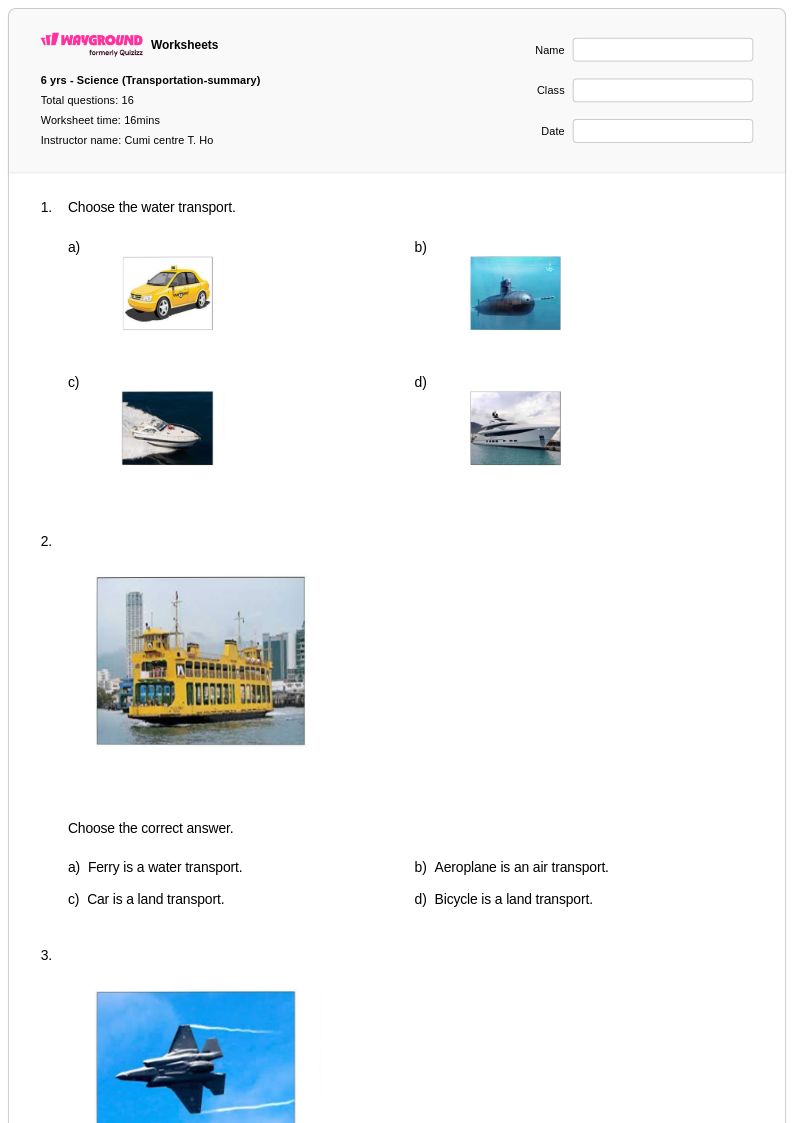
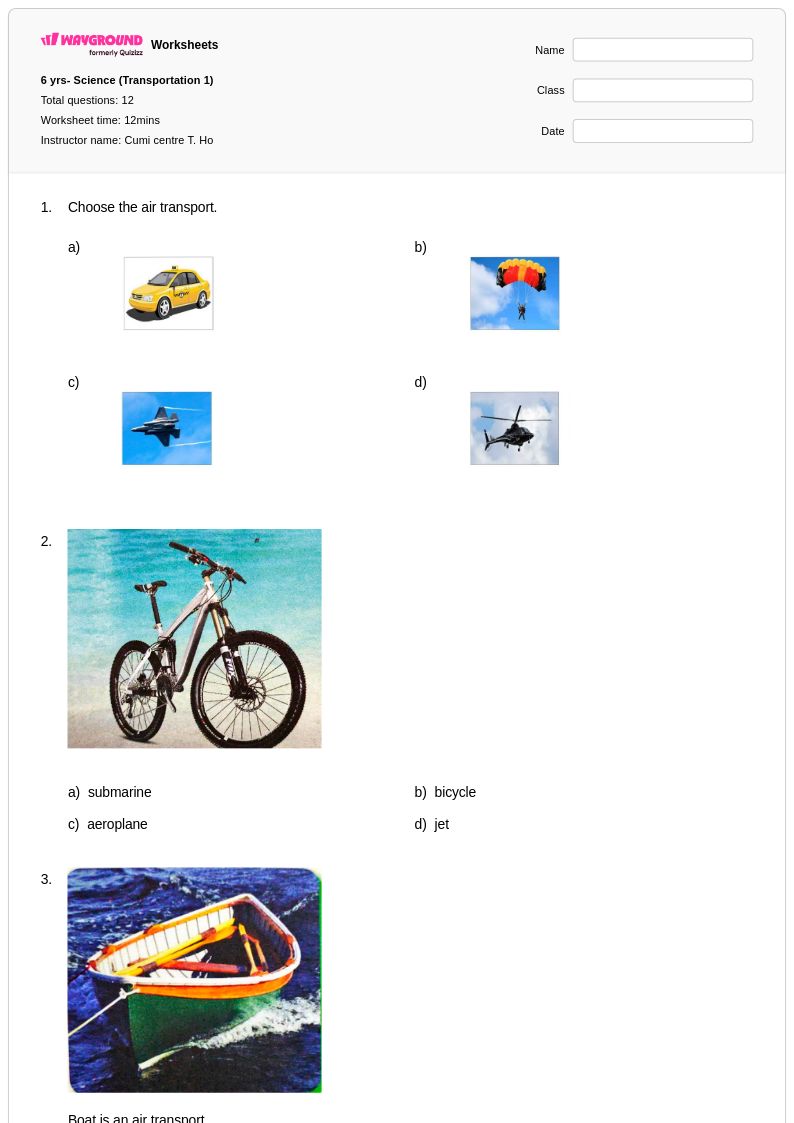
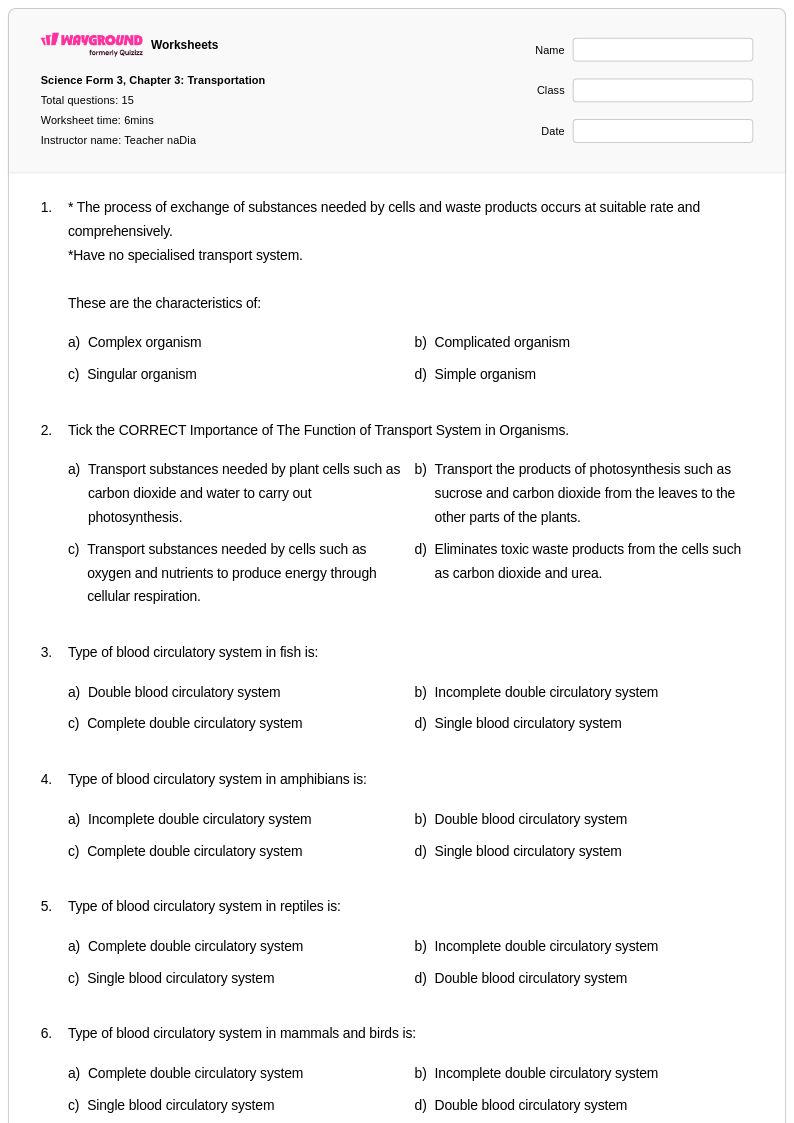
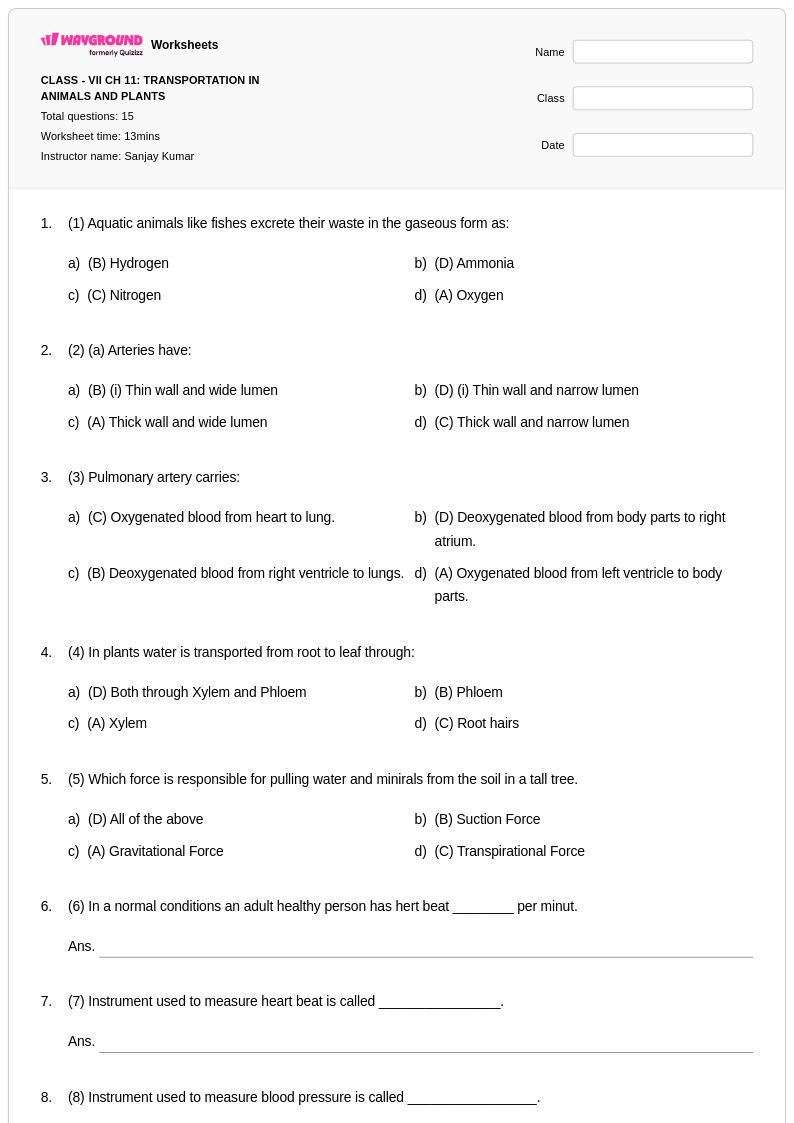
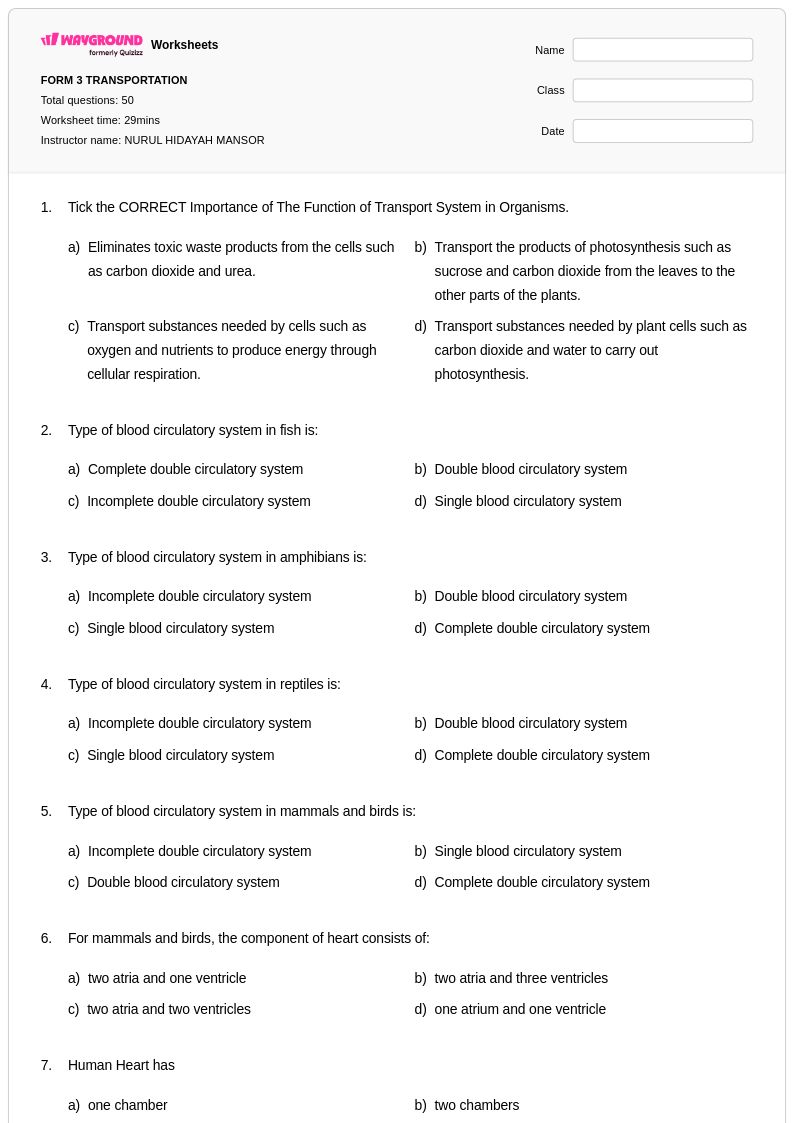
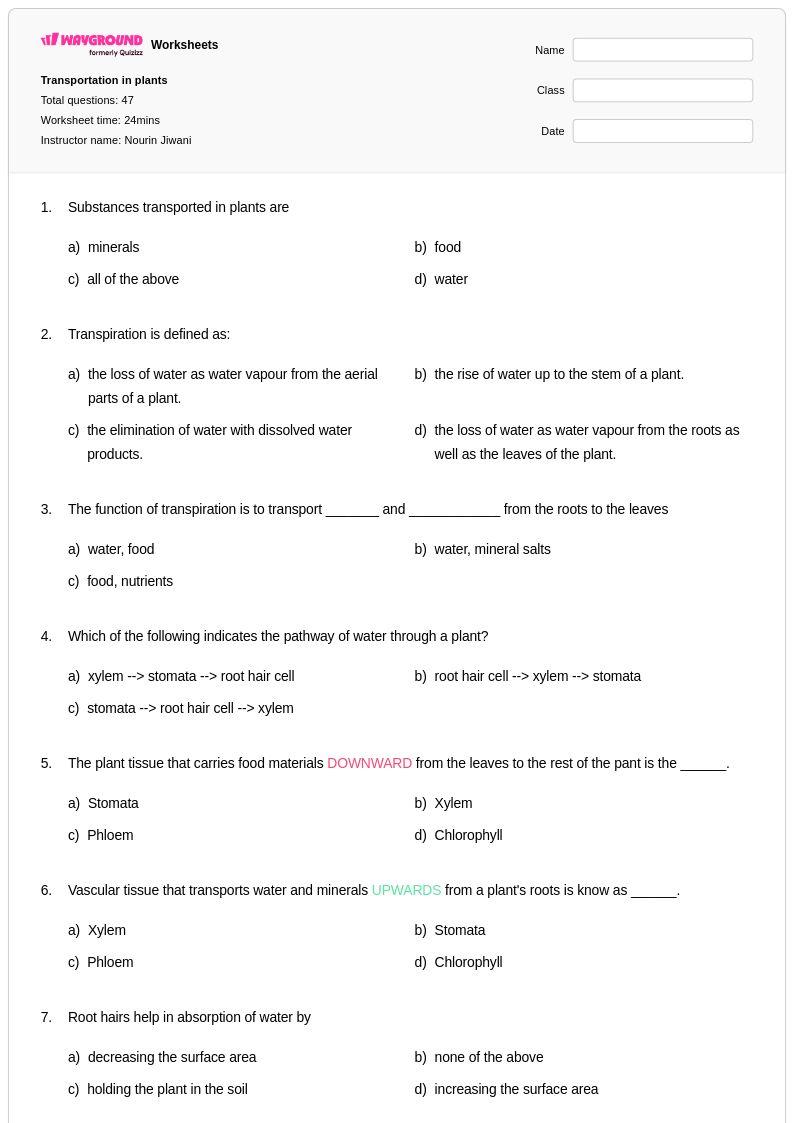
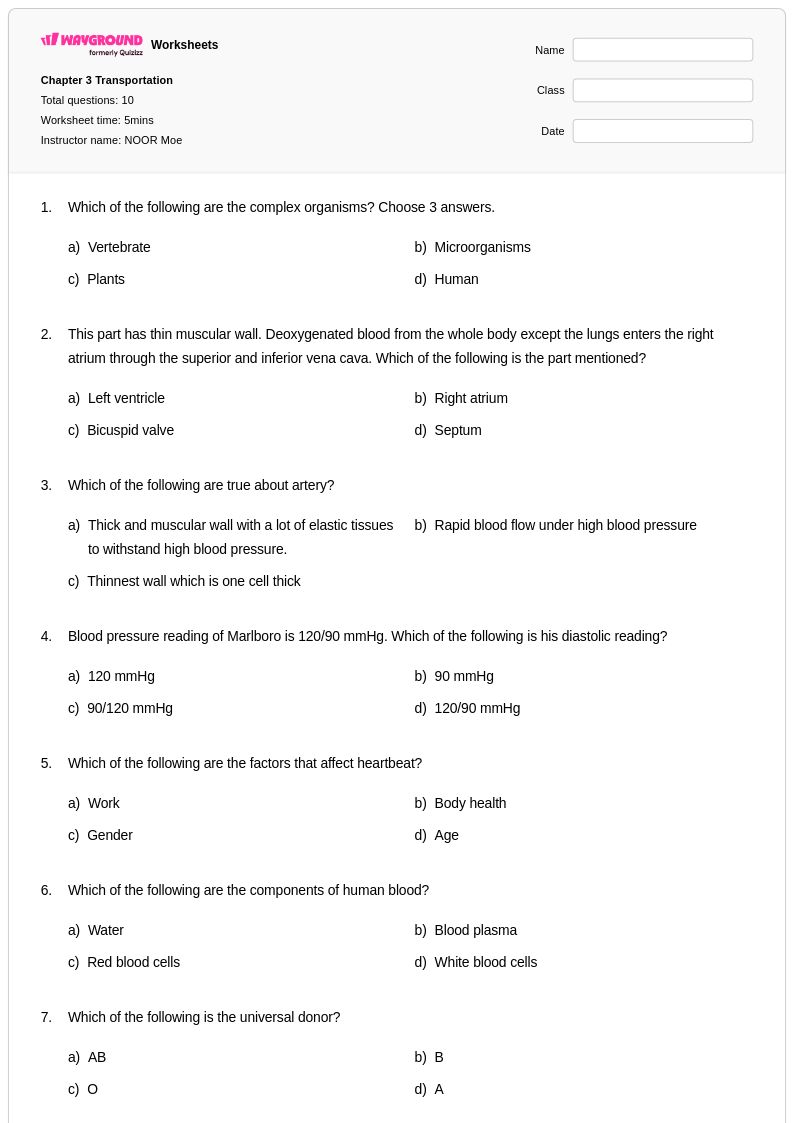
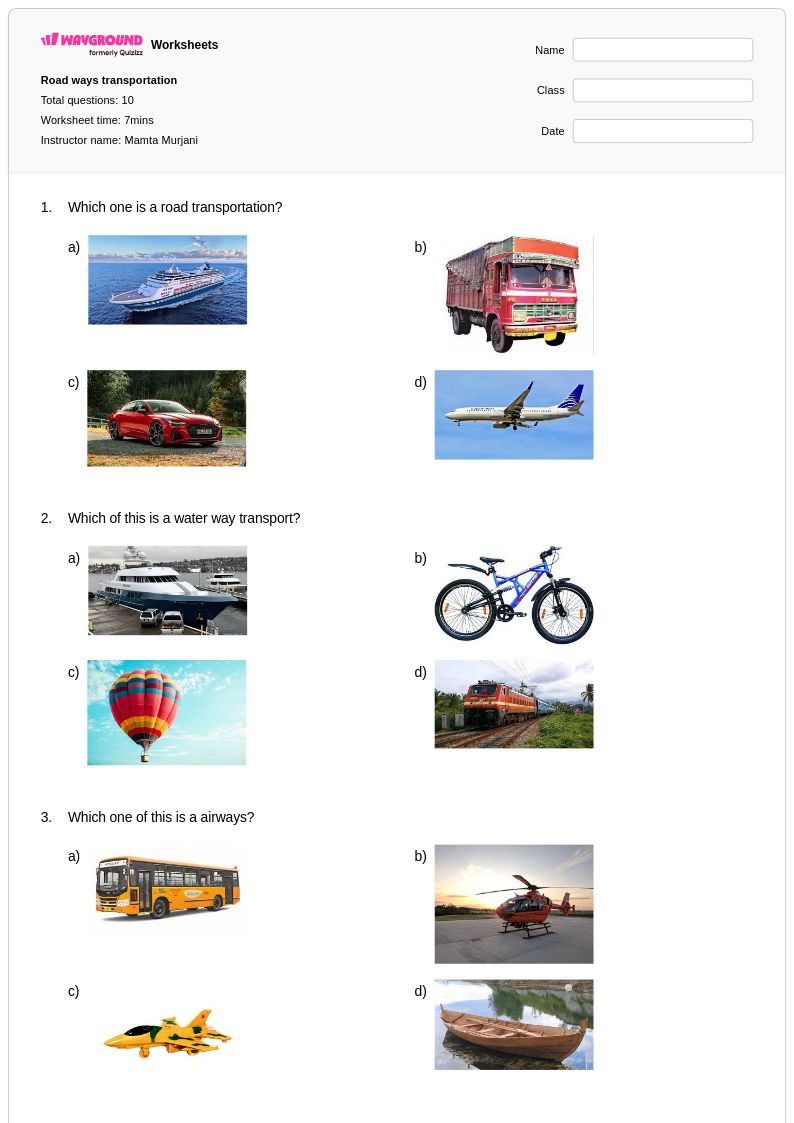
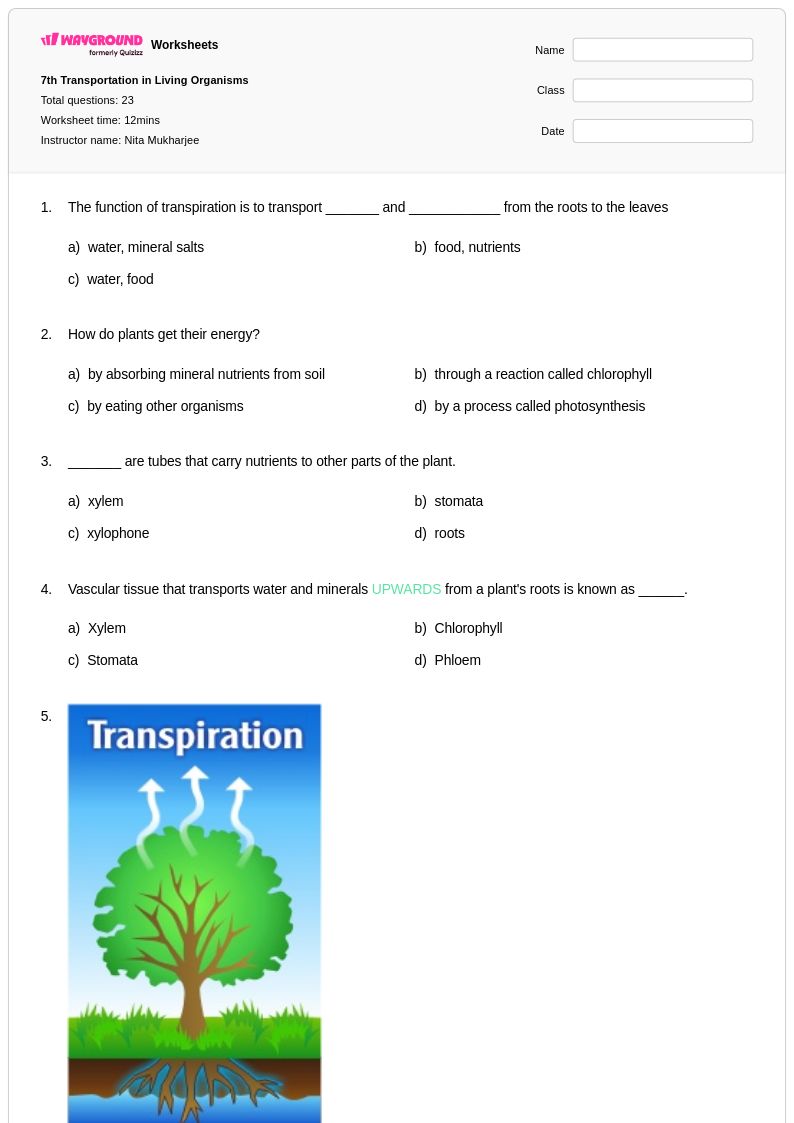
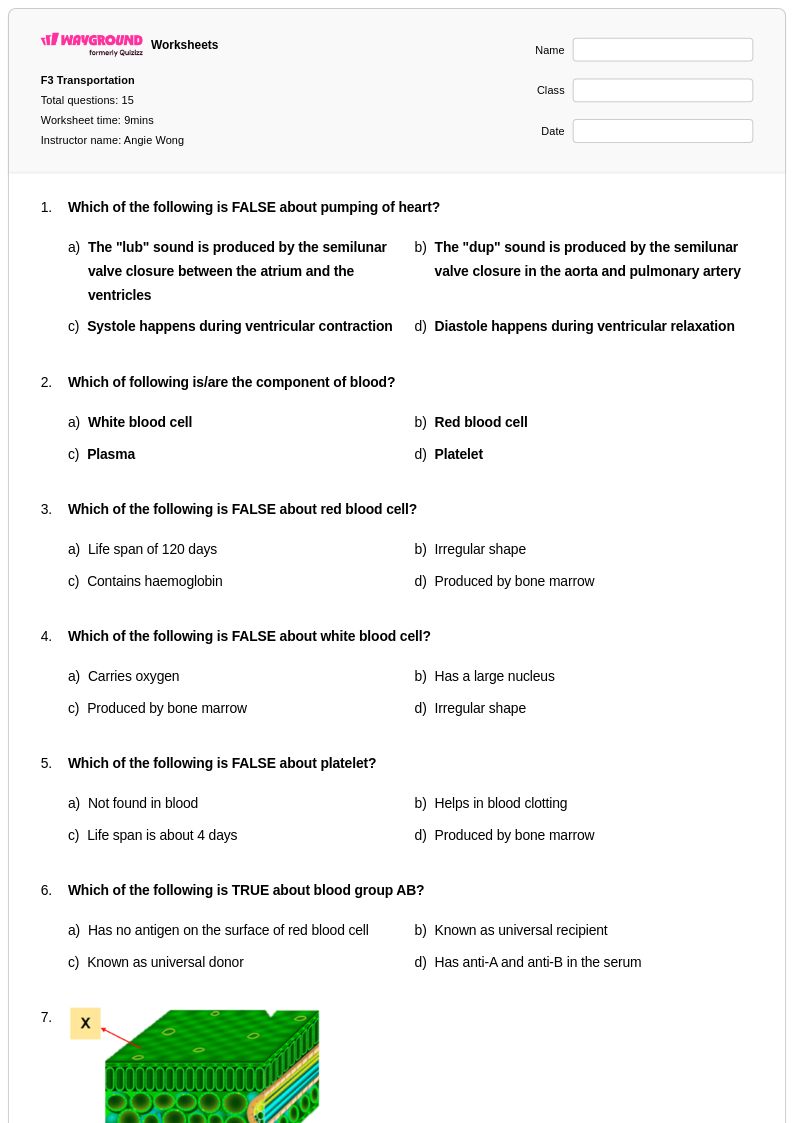
Explore Wayground's free transportation science worksheets and printables that help students discover how vehicles, machines, and systems move people and goods, complete with practice problems and answer keys.
Transportation science worksheets available through Wayground (formerly Quizizz) provide comprehensive educational resources that explore the scientific principles underlying various modes of movement and travel. These carefully designed materials help students understand fundamental concepts including force and motion, energy transfer, friction, aerodynamics, and engineering design as they relate to cars, trains, airplanes, ships, and other vehicles. The worksheets strengthen critical thinking skills through hands-on practice problems that require students to analyze how different transportation systems work, calculate speed and distance relationships, and evaluate the efficiency of various mechanical systems. Each resource includes detailed answer keys and is available as free printable PDFs, making them accessible for both classroom instruction and independent study while reinforcing essential scientific literacy skills.
Wayground's extensive collection draws from millions of teacher-created resources, offering educators powerful search and filtering capabilities to locate transportation science materials that align with specific learning objectives and curriculum standards. The platform's differentiation tools enable teachers to customize worksheets for diverse learning needs, providing both printable and digital format options including downloadable PDFs for maximum classroom flexibility. These comprehensive resources support effective lesson planning by offering materials suitable for initial concept introduction, skill reinforcement, remediation for struggling learners, and enrichment activities for advanced students. Teachers can seamlessly integrate these transportation science worksheets into their instruction to provide targeted practice opportunities that help students master complex scientific concepts while developing problem-solving abilities essential for STEM success.
FAQs
How do I teach transportation science concepts to students?
Teaching transportation science works best when you connect abstract physics principles to vehicles students already recognize. Start with force and motion using cars or bicycles as examples, then build toward more complex concepts like aerodynamics with airplanes or energy transfer in trains. Grounding lessons in real-world transportation systems helps students see scientific principles in action rather than as isolated formulas.
What topics are covered in transportation science worksheets?
Transportation science worksheets typically cover force and motion, friction, energy transfer, aerodynamics, and engineering design as they relate to vehicles like cars, trains, airplanes, and ships. Strong worksheets also include speed and distance calculations and ask students to evaluate the efficiency of different mechanical systems, connecting math skills to scientific reasoning.
What practice exercises help students understand how transportation systems work?
Effective practice for transportation science includes analyzing how specific vehicles overcome friction and air resistance, calculating speed and distance relationships using real-world data, and comparing the energy efficiency of different transportation modes. Problems that ask students to explain why a design choice was made — rather than just calculate an answer — build the deeper reasoning skills this topic requires.
What misconceptions do students commonly have about transportation and motion?
A common misconception is that a moving object requires a constant force to keep moving, confusing Newton's first law with everyday friction. Students also frequently conflate speed and velocity, or assume that heavier vehicles are always slower. Targeted practice problems that isolate these concepts and require written explanations help surface and correct these errors before they become entrenched.
How can I use transportation worksheets to support STEM learning?
Transportation worksheets bridge science and engineering by asking students to analyze real mechanical systems, apply physics formulas, and evaluate design trade-offs. Using them as part of a STEM unit — pairing worksheet analysis with a hands-on design challenge, for example — reinforces both content knowledge and problem-solving habits. These materials are particularly effective for building the quantitative reasoning skills students need in later STEM coursework.
How do I use Wayground's transportation worksheets in my classroom?
Wayground's transportation science worksheets are available as free printable PDFs for traditional classroom use and in digital formats for technology-integrated instruction. Teachers can assign them as independent practice, small-group work, or homework, and can host them as a quiz directly on Wayground for instant feedback. Each worksheet includes a complete answer key, reducing prep time and making it easy to use the same resource for instruction, reinforcement, or assessment.