Free Printable Units of Temperature Worksheets for Year 5
Explore free Year 5 units of temperature worksheets and printables from Wayground that help students master Celsius, Fahrenheit, and Kelvin scales through engaging practice problems with complete answer keys.
Explore printable Units of Temperature worksheets for Year 5
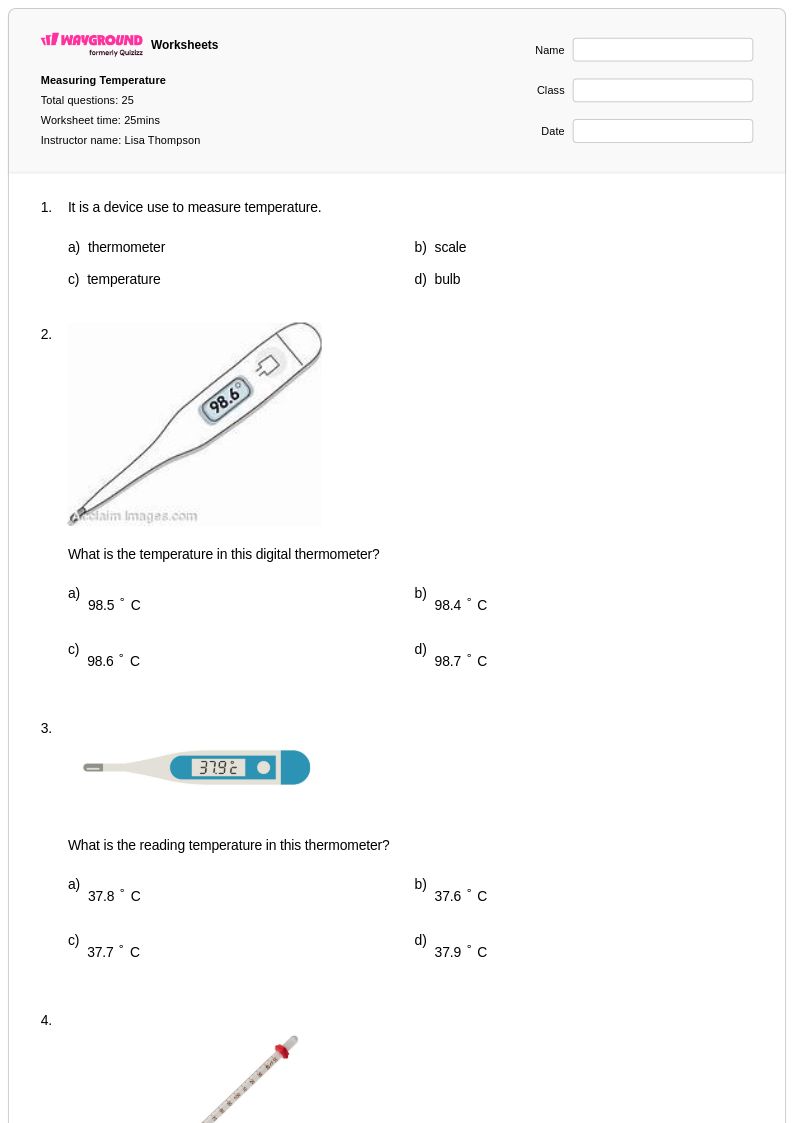
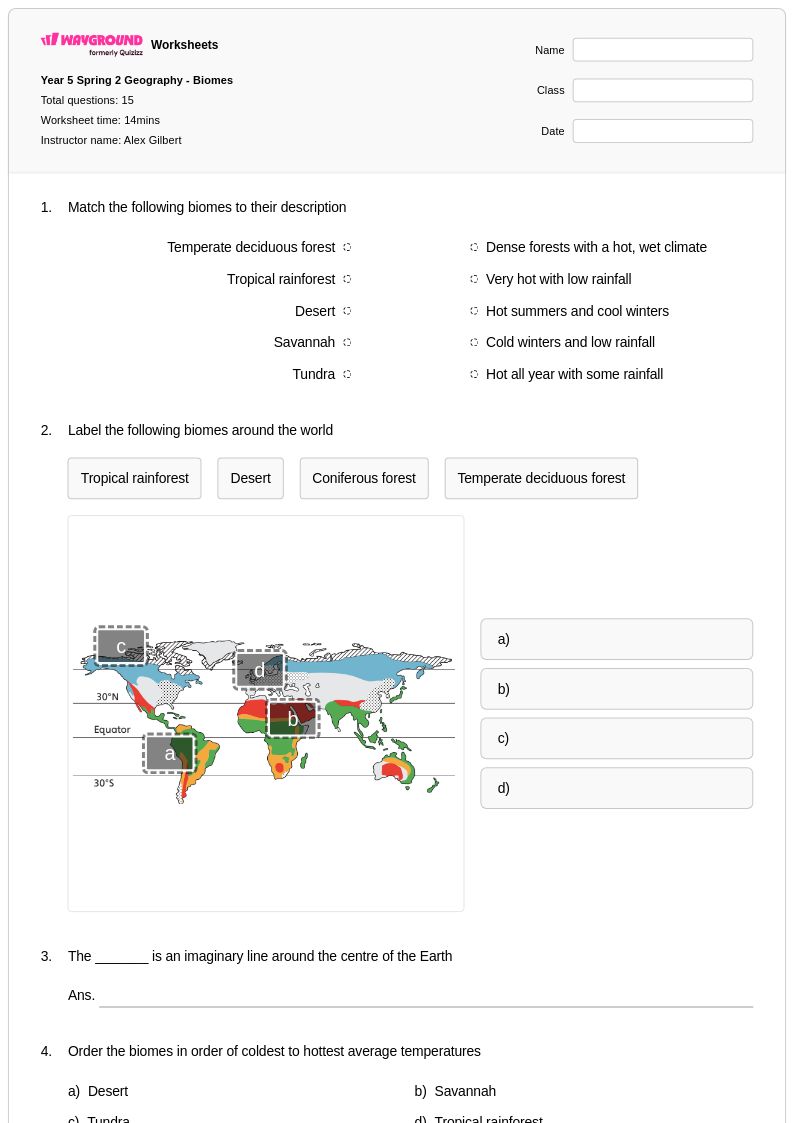
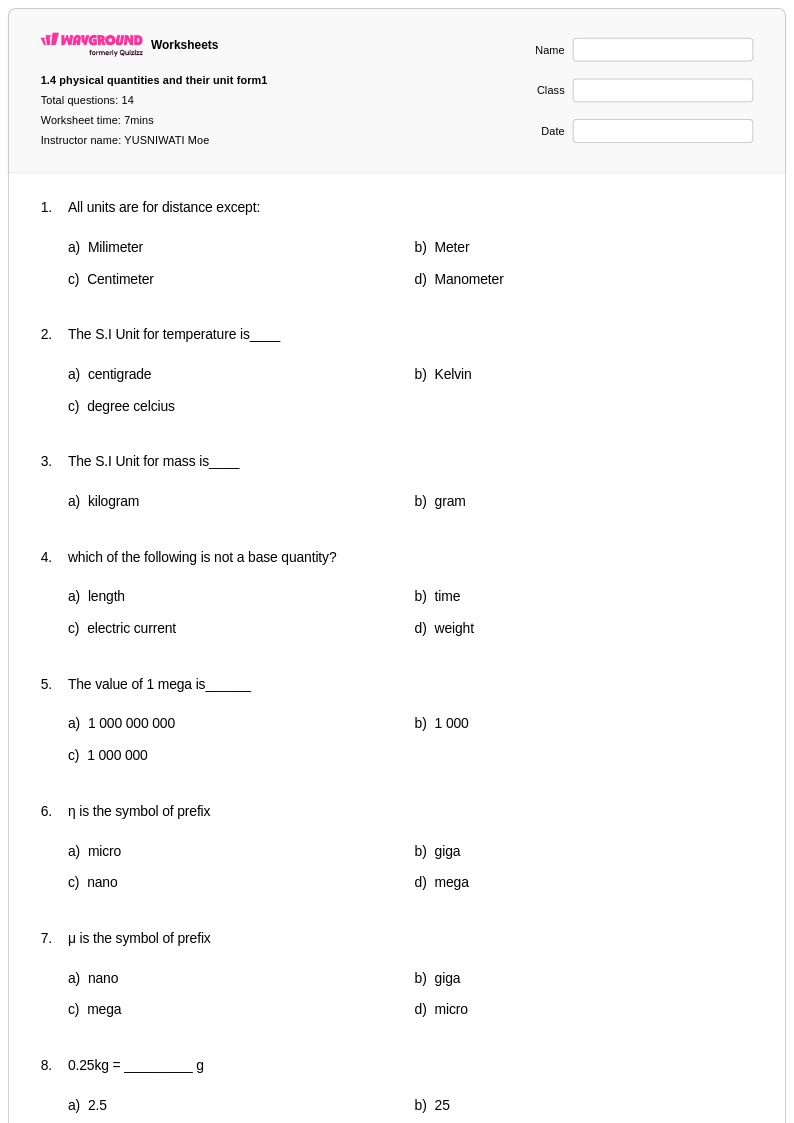
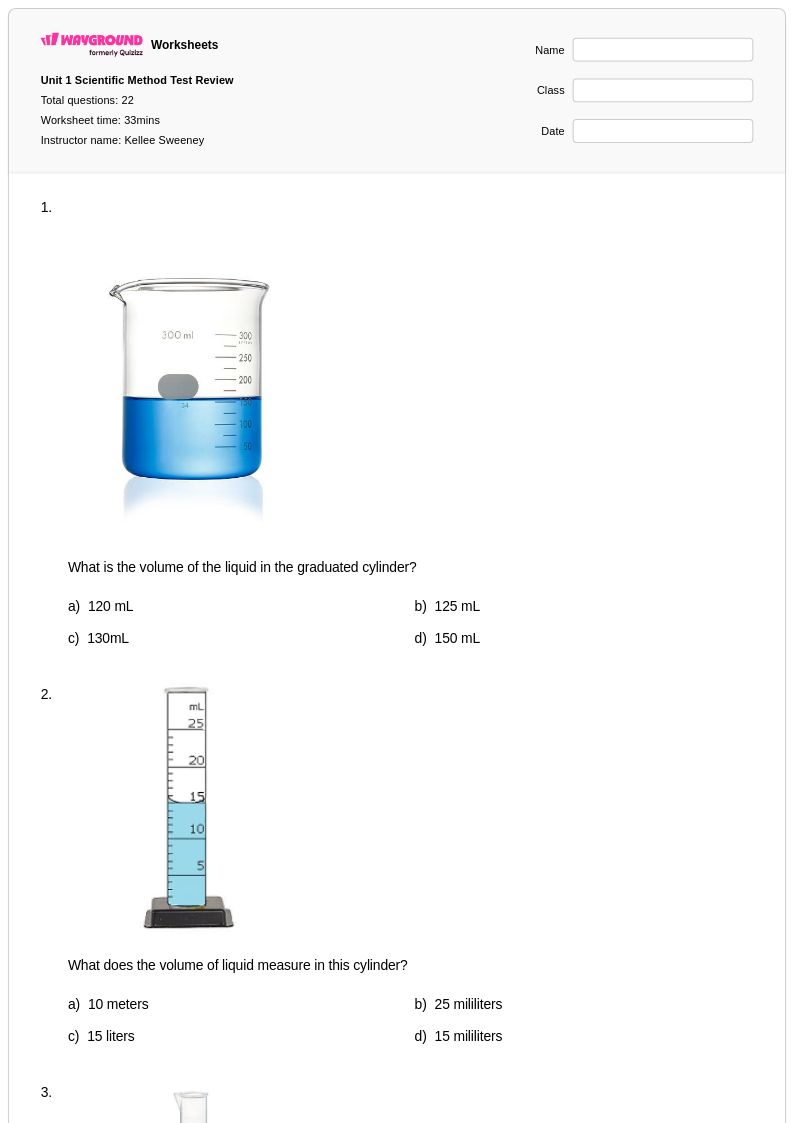
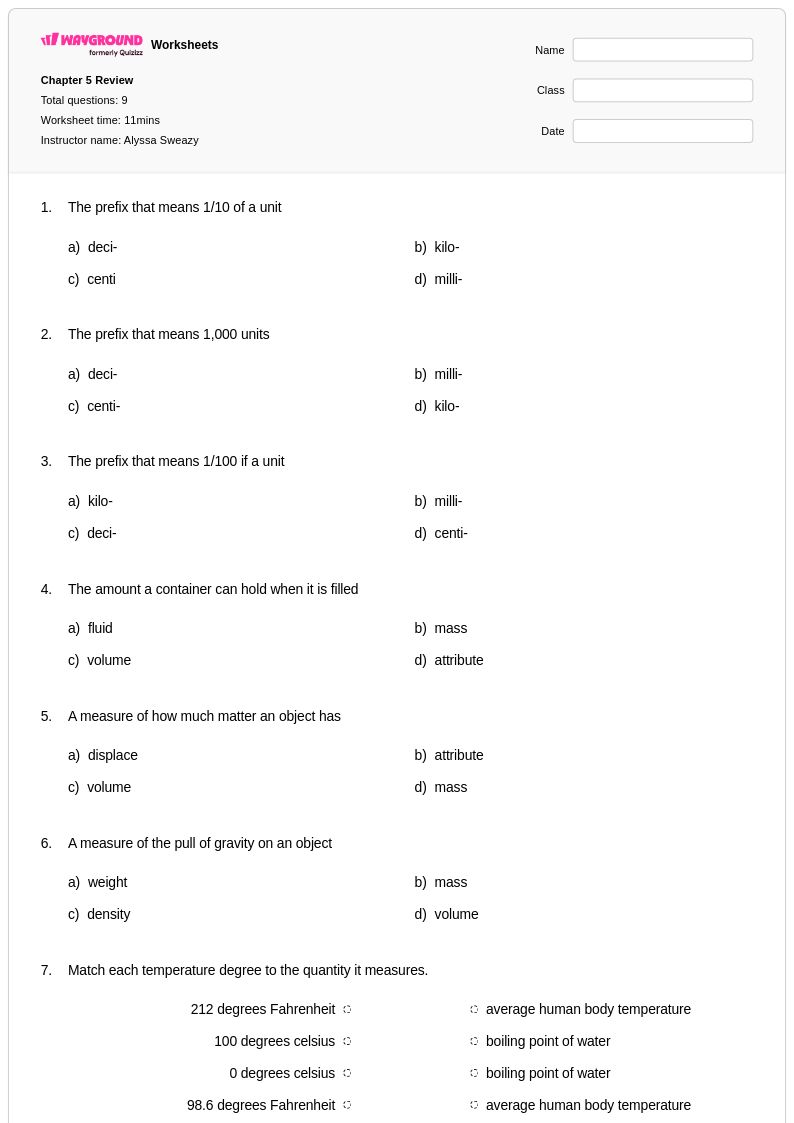
Units of temperature worksheets for Year 5 students available through Wayground (formerly Quizizz) provide comprehensive practice with Celsius, Fahrenheit, and Kelvin temperature scales. These educational resources strengthen essential measurement skills by engaging students in converting between temperature units, reading thermometers accurately, and understanding real-world temperature applications in weather, cooking, and scientific contexts. The collection includes diverse practice problems that challenge students to identify appropriate temperature units for different situations, compare temperatures across scales, and develop number sense around temperature values. Each worksheet comes with a detailed answer key to support independent learning and self-assessment, while the free printables ensure accessibility for all classrooms and home learning environments.
Wayground (formerly Quizizz) empowers educators with millions of teacher-created temperature measurement resources that streamline lesson planning and differentiated instruction for Year 5 science curricula. The platform's robust search and filtering capabilities allow teachers to quickly locate worksheets aligned with specific standards and learning objectives, while customization tools enable modifications to match individual student needs and classroom requirements. These versatile materials are available in both printable pdf formats and interactive digital versions, making them ideal for traditional classroom settings, remote learning, and hybrid educational environments. Teachers can seamlessly integrate these resources into remediation sessions for struggling learners, enrichment activities for advanced students, or regular skill practice to reinforce temperature measurement concepts throughout the academic year.
FAQs
How do I teach Celsius, Fahrenheit, and Kelvin conversions to students?
Start by anchoring each scale to familiar reference points: water freezes at 0°C, 32°F, and 273.15 K, and boils at 100°C, 212°F, and 373.15 K. Once students understand these benchmarks, introduce the conversion formulas step by step, emphasizing why Kelvin is used in scientific contexts as an absolute scale with no negative values. Connecting conversions to real-world scenarios, such as weather forecasts or lab experiments, helps students see the practical relevance of each scale.
What exercises help students practice temperature unit conversions?
Effective practice includes converting between all three scales using standard formulas, interpreting thermometer readings in different units, and solving word problems that require applying temperature conversions in scientific contexts. Worked-example problems followed by independent practice sets help students internalize the formulas before tackling multi-step problems. Mixing conversion directions, such as Celsius to Fahrenheit and back, reinforces fluency rather than rote memorization.
What mistakes do students commonly make when converting temperature units?
The most frequent error is applying the wrong formula or misremembering the constants, particularly confusing the Celsius-to-Fahrenheit formula (°F = °C × 9/5 + 32) with its inverse. Students also commonly forget that Kelvin conversions require adding or subtracting 273.15, not 273, which matters in precise scientific calculations. Another persistent misconception is treating Kelvin as a relative scale like Celsius or Fahrenheit, not understanding that 0 K represents absolute zero and negative Kelvin values are physically impossible.
How do I use Wayground's units of temperature worksheets in my classroom?
Wayground's units of temperature worksheets are available as printable PDFs, making them easy to distribute in a traditional classroom setting, and in digital formats that support technology-integrated or remote learning environments. Teachers can also host the worksheets as an interactive quiz directly on Wayground, enabling real-time student responses and instant scoring. This flexibility means the same resource can be used for whole-class instruction, independent practice, or homework, accommodating a range of teaching setups and student preferences.
How can I support students who are struggling with temperature conversions?
Targeted remediation should focus on identifying whether the struggle is conceptual, such as not understanding what each scale represents, or procedural, such as arithmetic errors in applying the formula. Providing a reference card with formulas and key benchmark values can reduce cognitive load while students build fluency. On Wayground, teachers can apply accommodations such as reduced answer choices or read-aloud support to individual students, helping those who need additional scaffolding without disrupting the rest of the class.
How do temperature conversion skills connect to broader science learning?
Fluency with temperature units is foundational for chemistry, physics, and earth science courses, where calculations involving gas laws, thermodynamics, and climate data all require working confidently across scales. Kelvin in particular is essential for advanced science because many formulas, such as the ideal gas law, only hold when absolute temperature is used. Building accuracy with conversions early prevents compounding errors in later scientific coursework where temperature is a variable in multi-step problems.