Explore Year 8 urbanization worksheets and printables that help students understand how cities developed throughout world history, featuring free PDF downloads with comprehensive answer keys for effective practice.
Explore printable Urbanization worksheets for Year 8
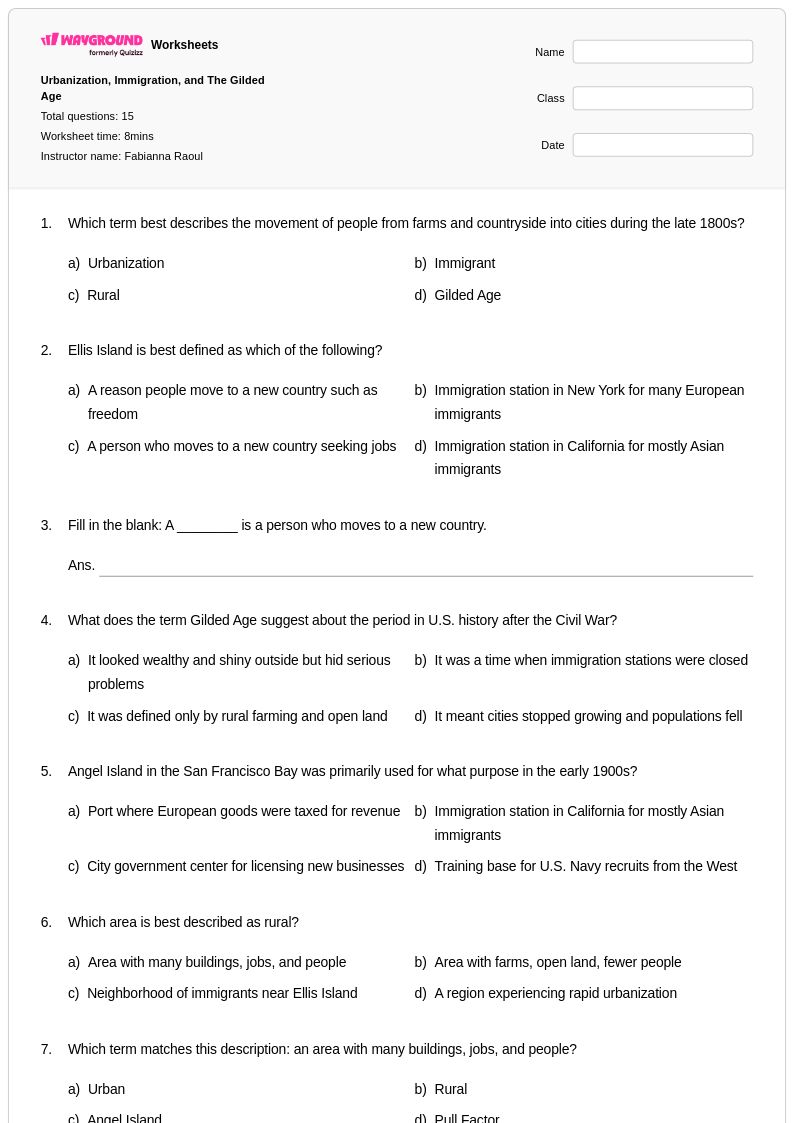
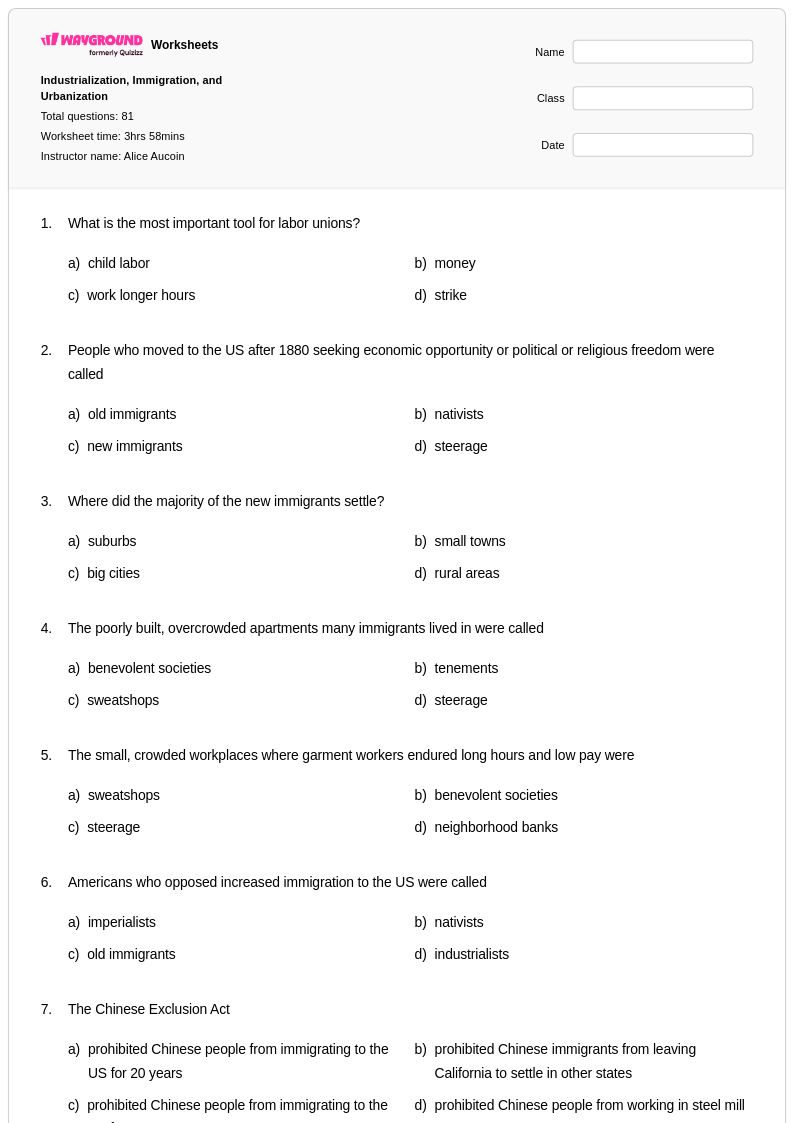
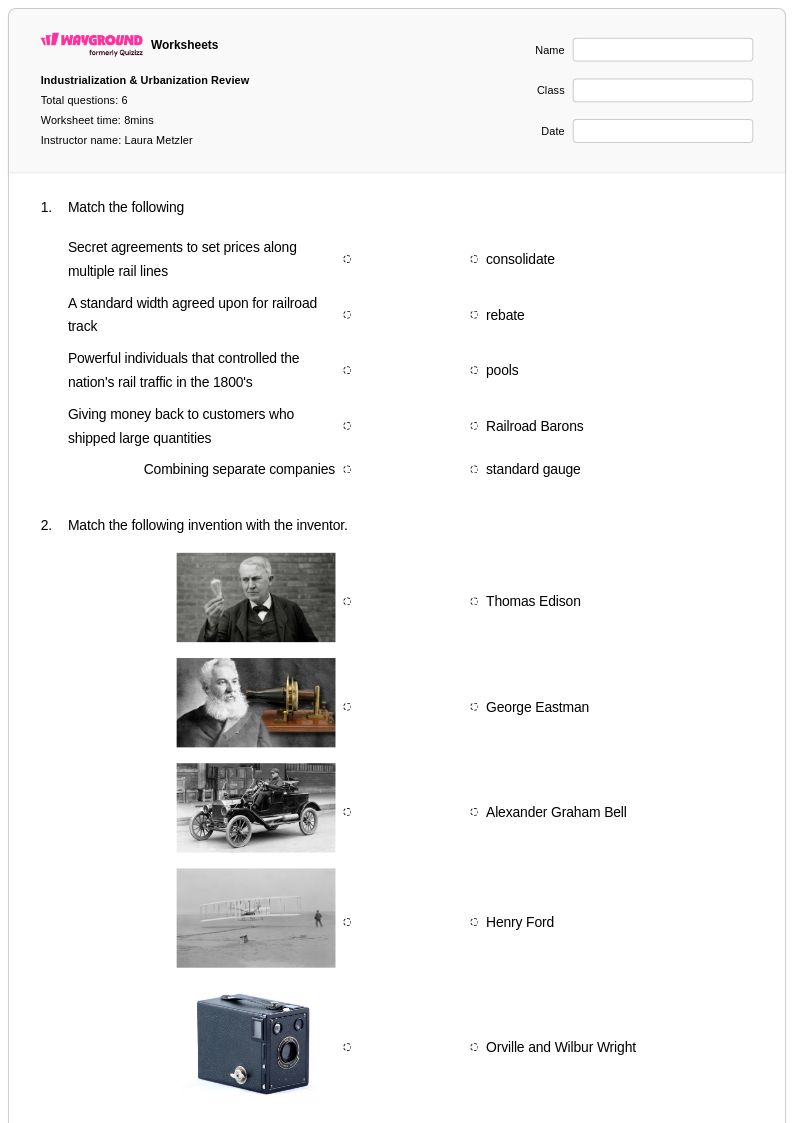
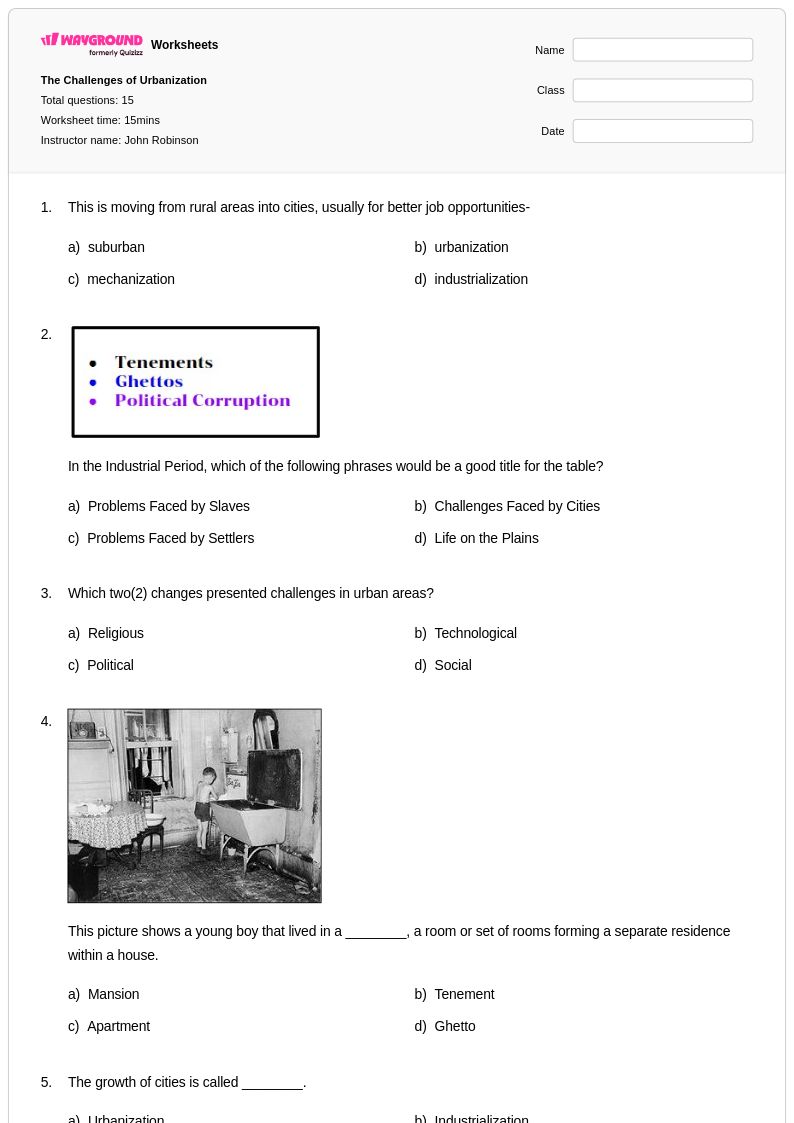
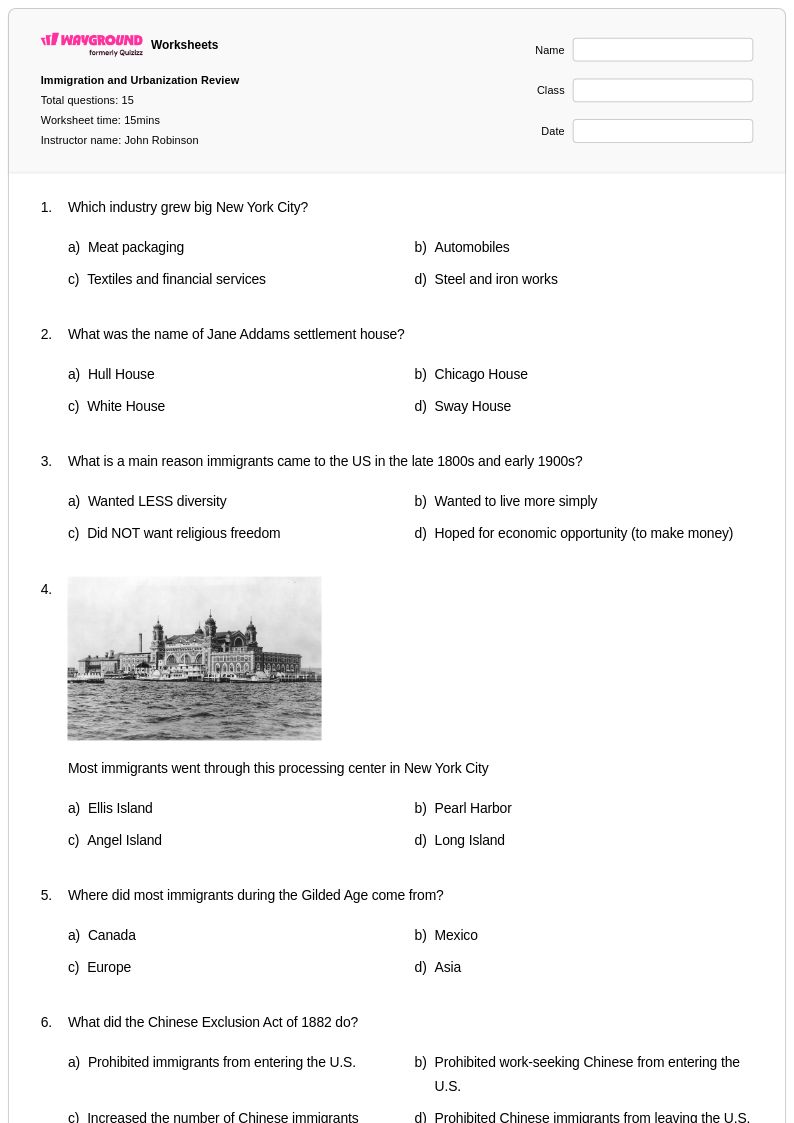
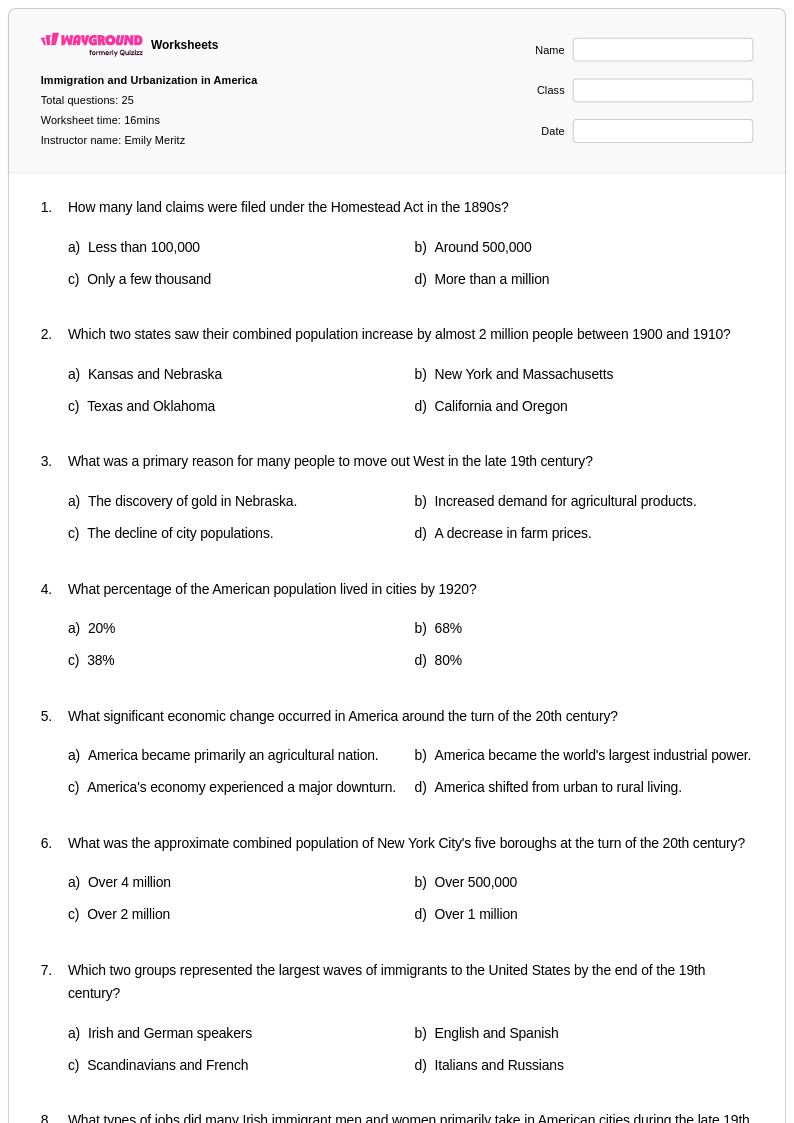
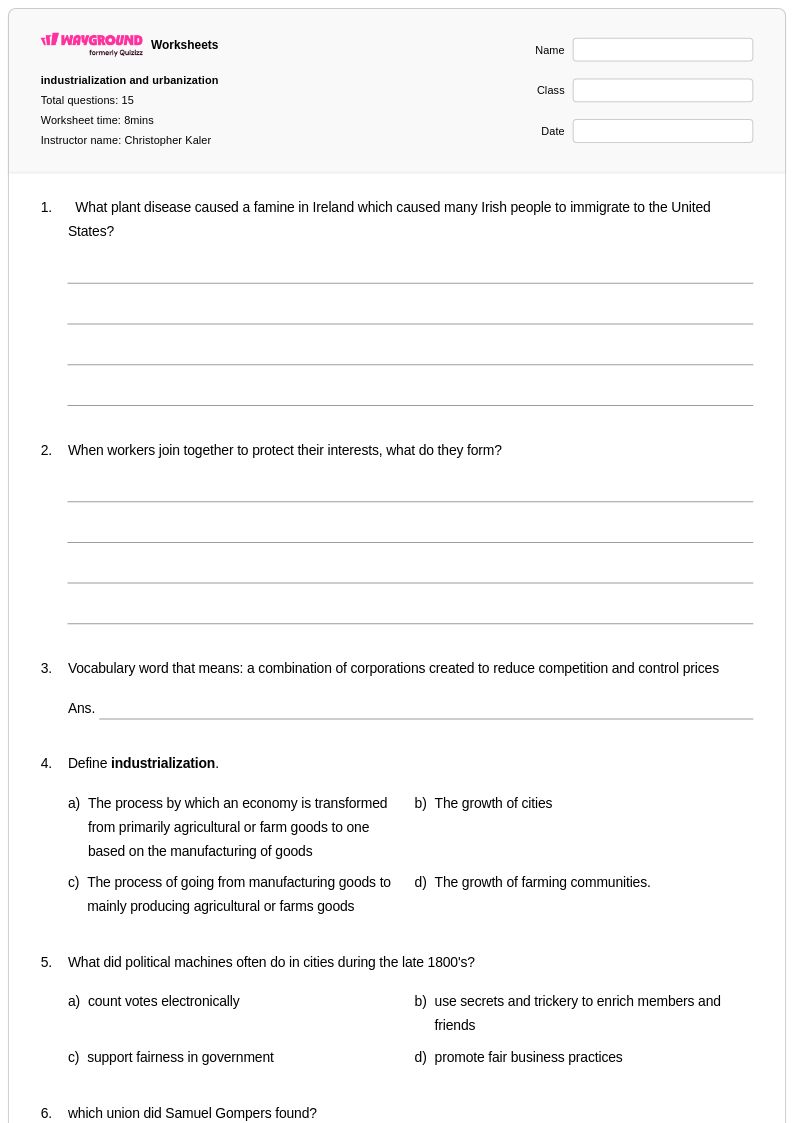
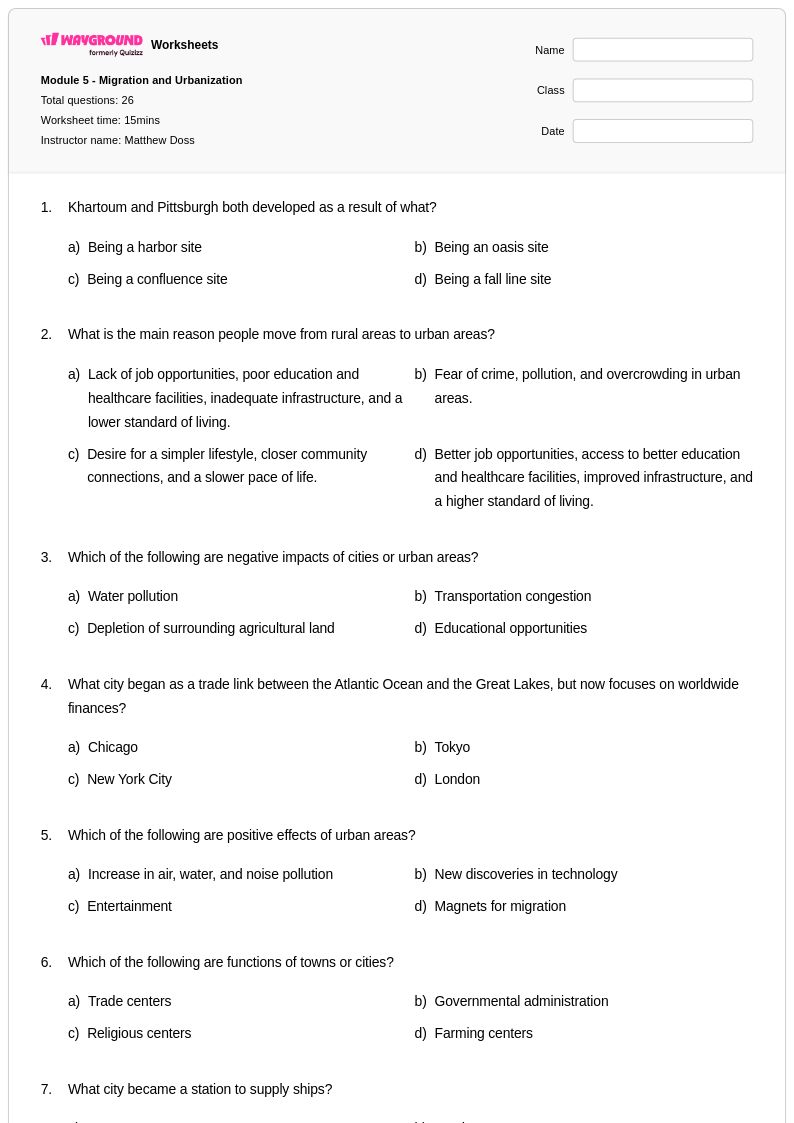
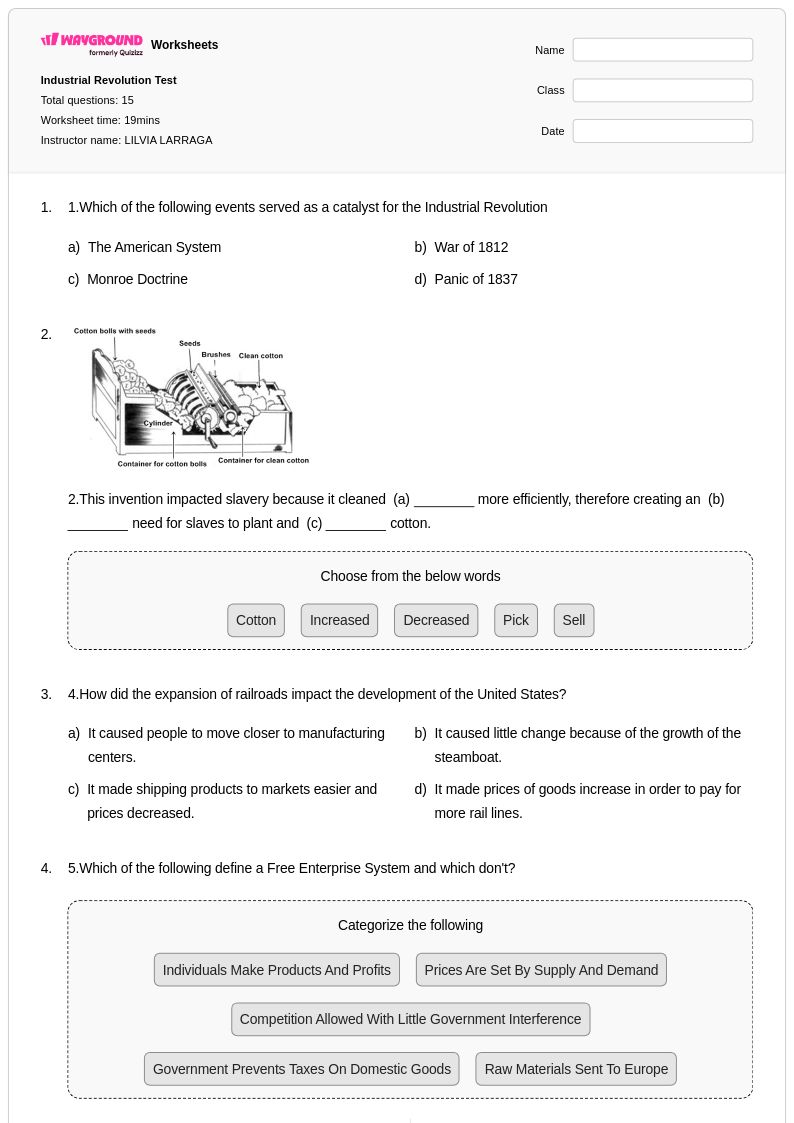
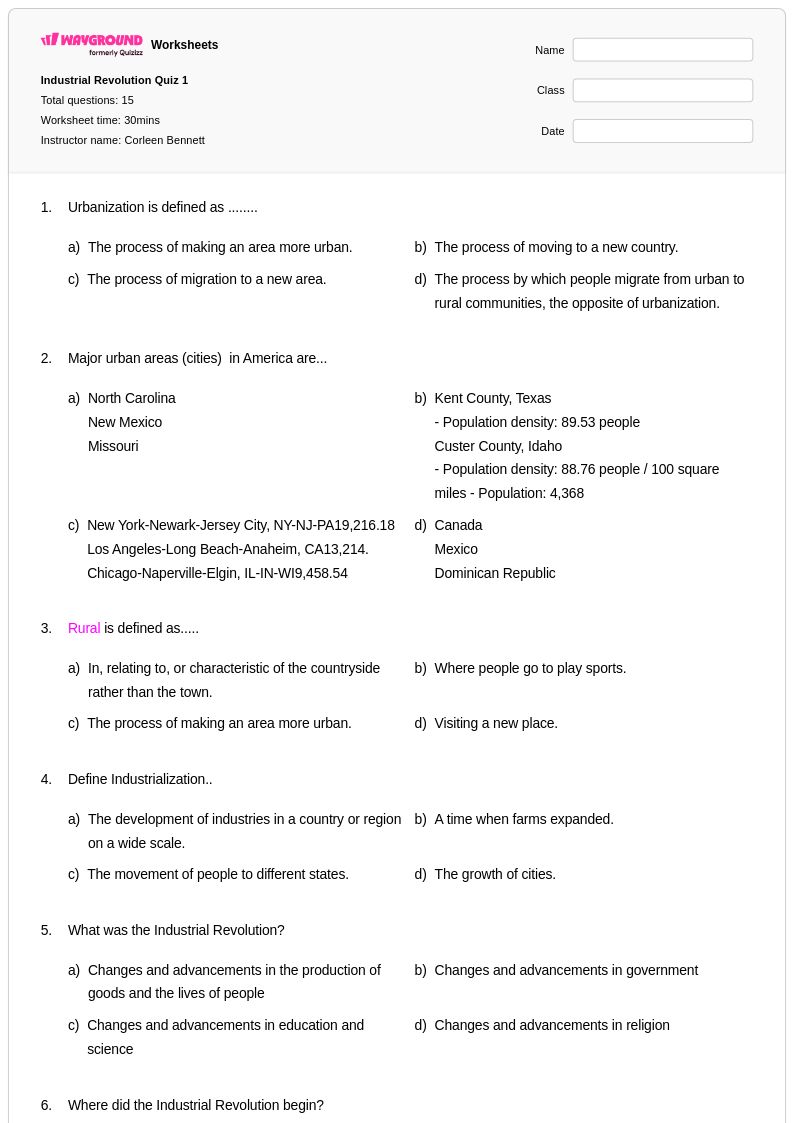
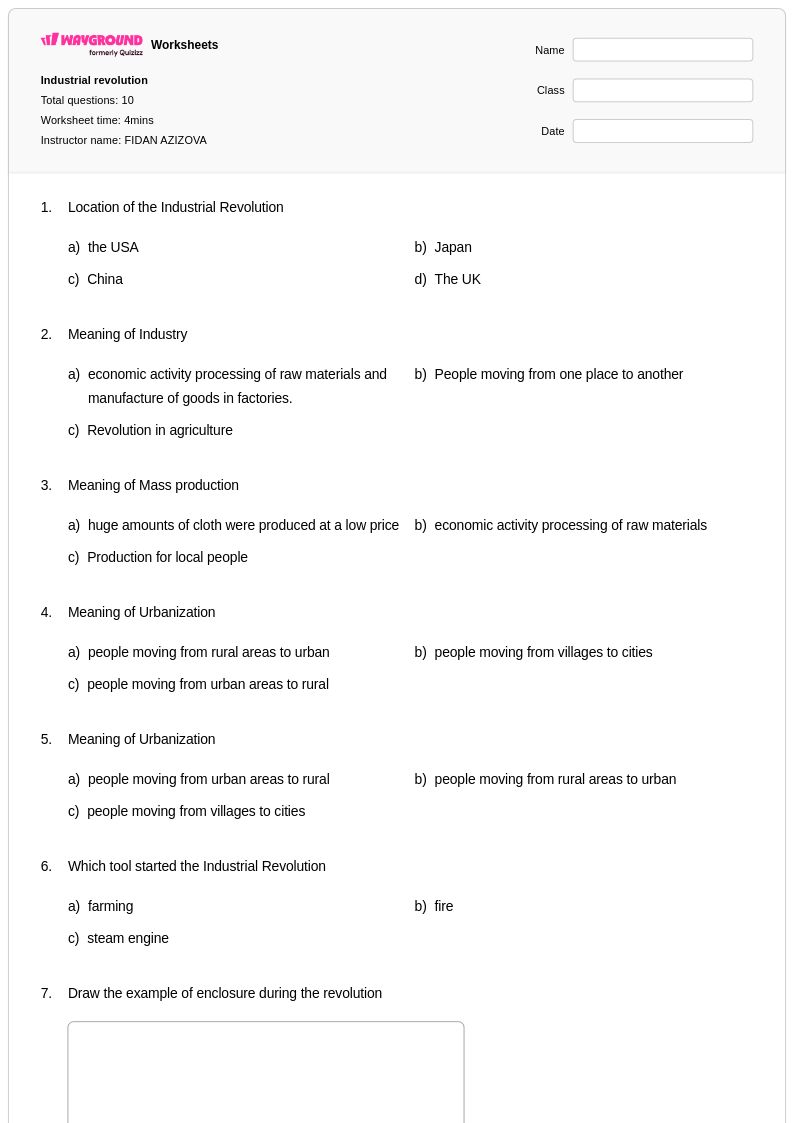
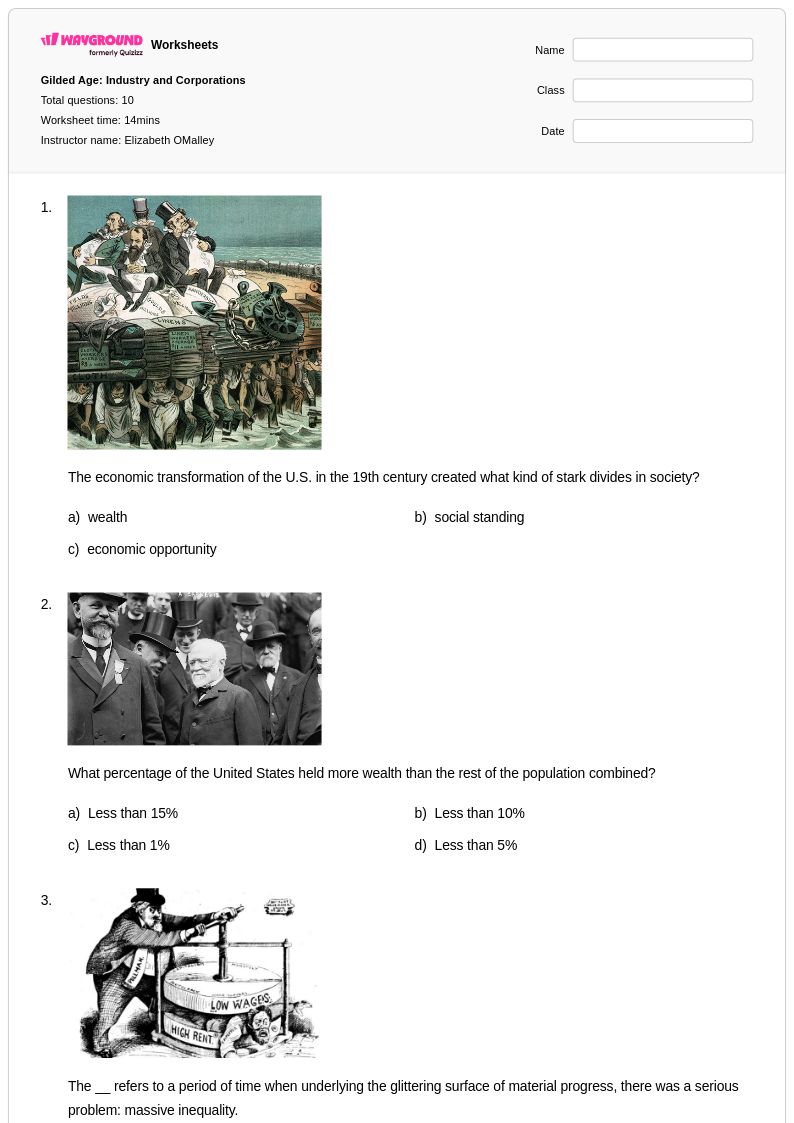
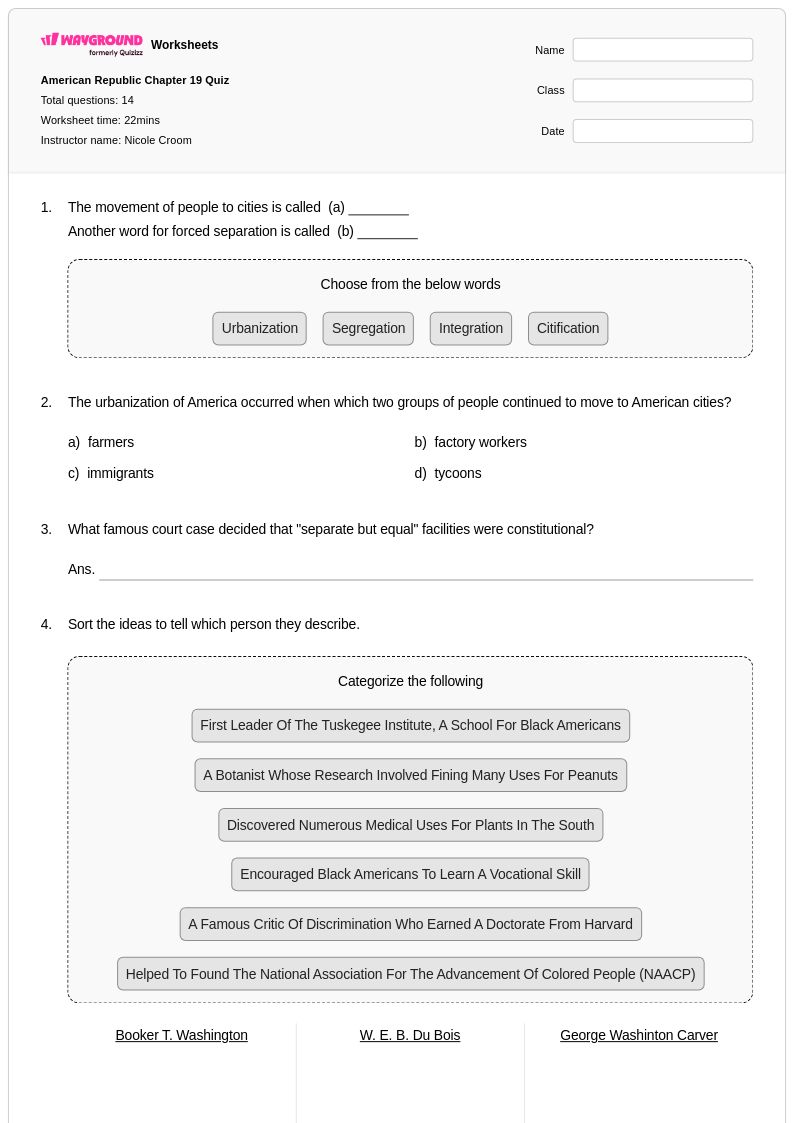
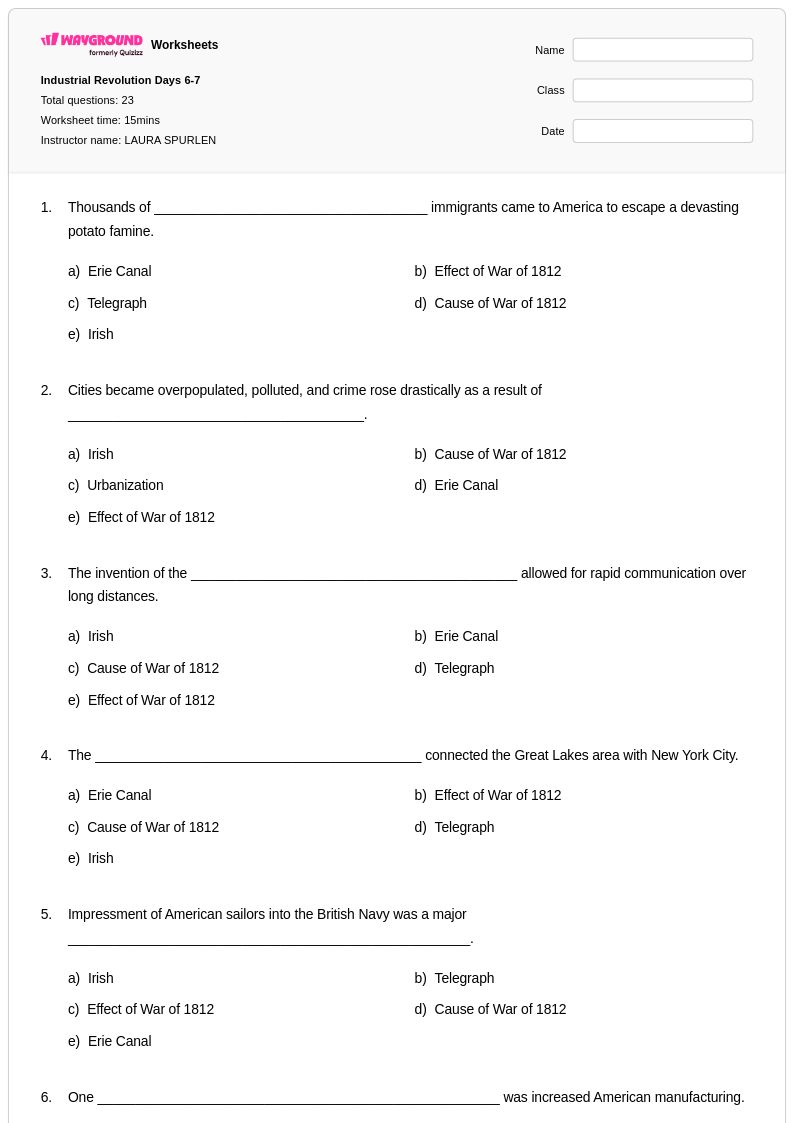
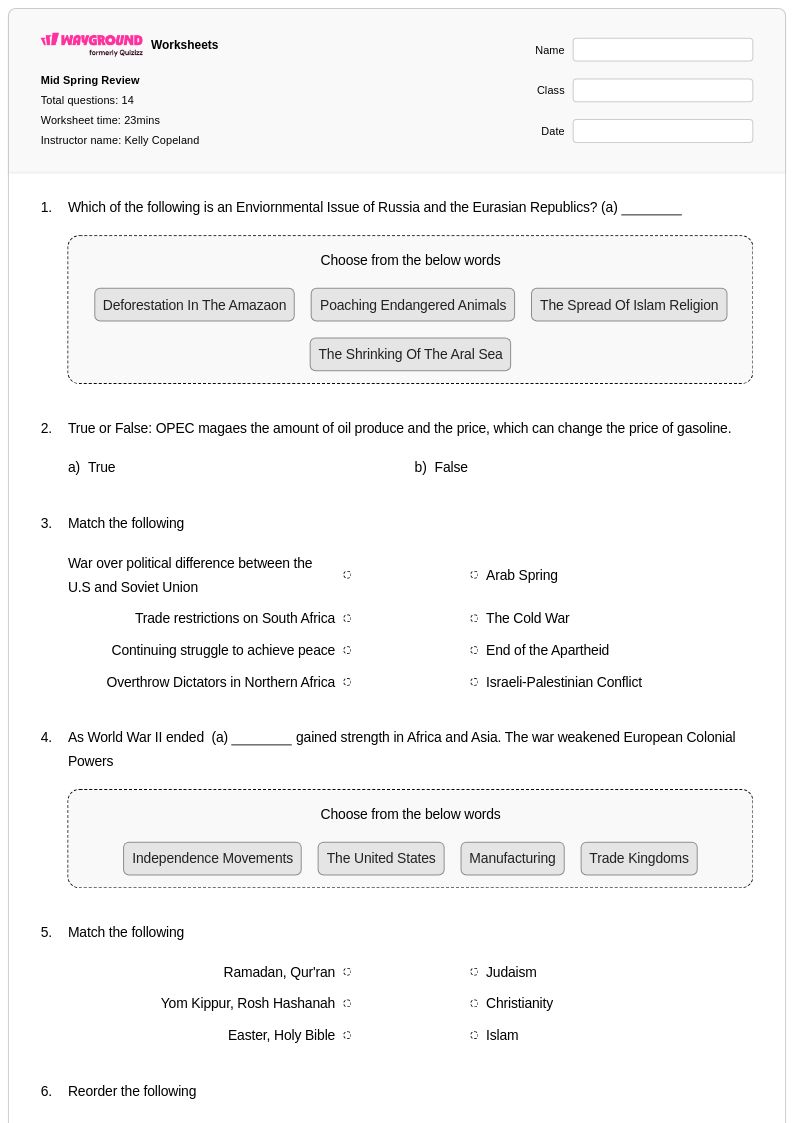
Urbanization worksheets for Year 8 students available through Wayground (formerly Quizizz) provide comprehensive exploration of how human settlements transformed during key historical periods, from ancient civilizations to the Industrial Revolution and beyond. These educational resources strengthen critical thinking skills by guiding students through the complex factors that drove population shifts from rural to urban areas, including economic opportunities, technological advances, and social changes. Students engage with practice problems that analyze primary sources, interpret demographic data, and examine the consequences of rapid urban growth on society, culture, and the environment. Each worksheet includes detailed answer keys to support independent learning and comes in convenient PDF format as free printables that teachers can easily distribute and students can complete at their own pace.
Wayground (formerly Quizizz) empowers educators with millions of teacher-created urbanization resources specifically designed for Year 8 World History instruction, featuring robust search and filtering capabilities that allow teachers to quickly locate materials aligned with specific curriculum standards and learning objectives. The platform's differentiation tools enable seamless customization of worksheets to accommodate diverse learning needs, while flexible formatting options provide both printable PDF versions for traditional classroom use and digital formats for interactive online learning environments. These comprehensive features streamline lesson planning by offering ready-to-use materials for skill practice, targeted remediation for students who need additional support understanding urbanization concepts, and enrichment opportunities for advanced learners ready to explore more complex aspects of urban development throughout world history.
FAQs
How do I teach urbanization to my students?
Teaching urbanization effectively means grounding students in the push-pull factors that drive population movement from rural to urban areas before examining historical case studies. Start with a concrete example, such as Industrial Revolution-era city growth, then layer in comparisons across time periods and regions to help students see urbanization as an ongoing global process. Mapping activities and demographic data analysis are especially effective for making abstract trends visible and discussable in the classroom.
What exercises help students practice analyzing urbanization?
Students benefit most from practice problems that require them to interpret population graphs, compare urbanization rates across different regions and time periods, and evaluate the social, economic, and environmental impacts of rapid city expansion. Activities that ask students to analyze case studies from both historical and modern contexts, such as ancient cities versus contemporary megacities, build the comparative thinking skills central to understanding urbanization. Mapping urban growth patterns is another strong practice format because it connects abstract data to visual, geographic outcomes.
What misconceptions do students commonly have about urbanization?
A common misconception is that urbanization is purely a modern or Industrial Revolution phenomenon, when in fact it has occurred across ancient civilizations and continues today in dramatically different forms globally. Students also tend to treat urbanization as universally positive, overlooking the environmental strain, housing shortages, and social inequality that often accompany rapid city growth. Addressing these misconceptions early helps students engage more critically with demographic data and case studies.
How can I use urbanization worksheets to support students with different learning needs?
Urbanization worksheets on Wayground can be assigned digitally, allowing teachers to apply individual accommodations such as read aloud for students who need audio support, reduced answer choices to lower cognitive load, and extended time for students who need it. These settings can be configured per student without other students being notified, making differentiation seamless during both in-class and homework assignments. The flexible format also means teachers can use the same worksheet content across skill levels while adjusting the support each student receives.
How do I use Wayground's urbanization worksheets in my classroom?
Wayground's urbanization worksheets are available as printable PDFs for traditional classroom use and in digital formats for technology-integrated environments, including the option to host them as a quiz directly on the Wayground platform. Teachers can use them for direct instruction support, independent practice, homework assignments, or targeted skill review depending on where students are in the unit. Each worksheet includes a complete answer key, making them practical for both teacher-led review and independent student self-assessment.
What topics within urbanization are typically covered in social studies worksheets?
Urbanization worksheets typically cover the causes and effects of population shifts from rural to urban areas, the role of industrialization in accelerating city growth, and comparisons of urbanization across different world regions and historical periods. Students may also examine the social, economic, and environmental challenges faced by rapidly expanding urban centers, as well as contemporary issues like urban planning and the rise of megacities. These topics align closely with world history and human geography curriculum standards at the middle and high school levels.