Free Printable Verb Identification Worksheets for Year 4
Year 4 verb identification worksheets help students master recognizing and categorizing action words through engaging printables, free practice problems, and comprehensive answer keys available as downloadable PDFs.
Explore printable Verb Identification worksheets for Year 4
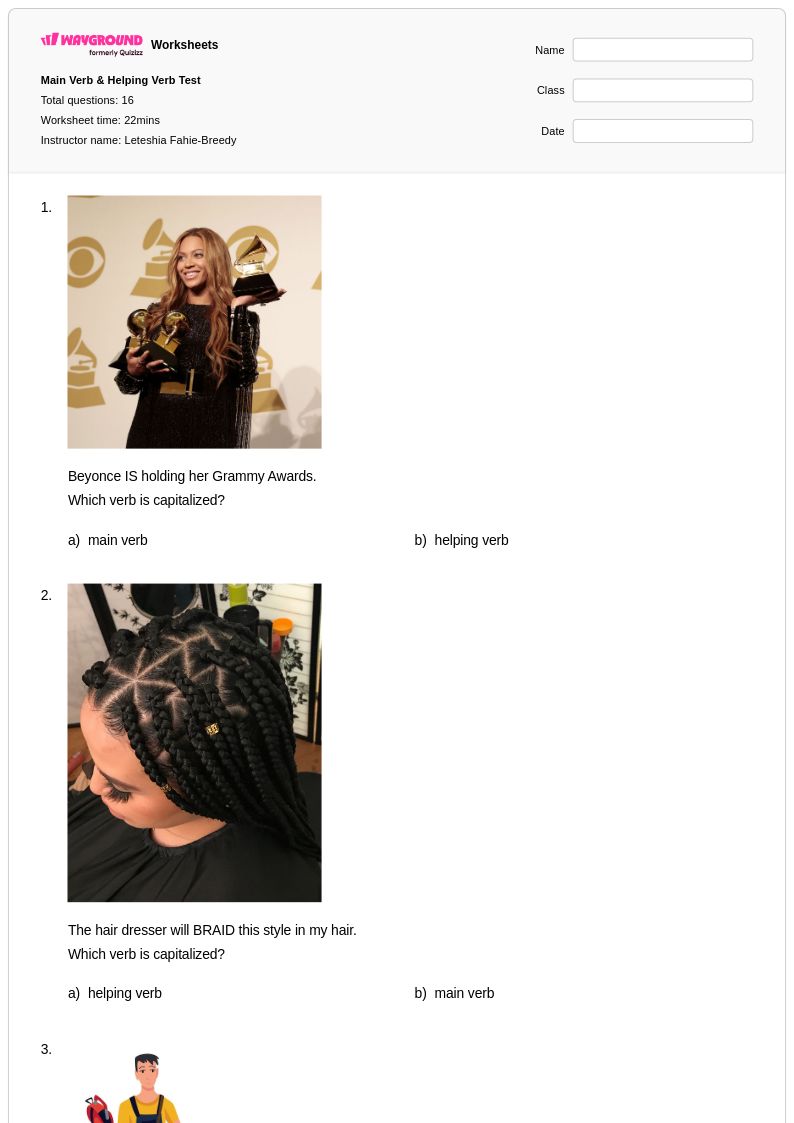
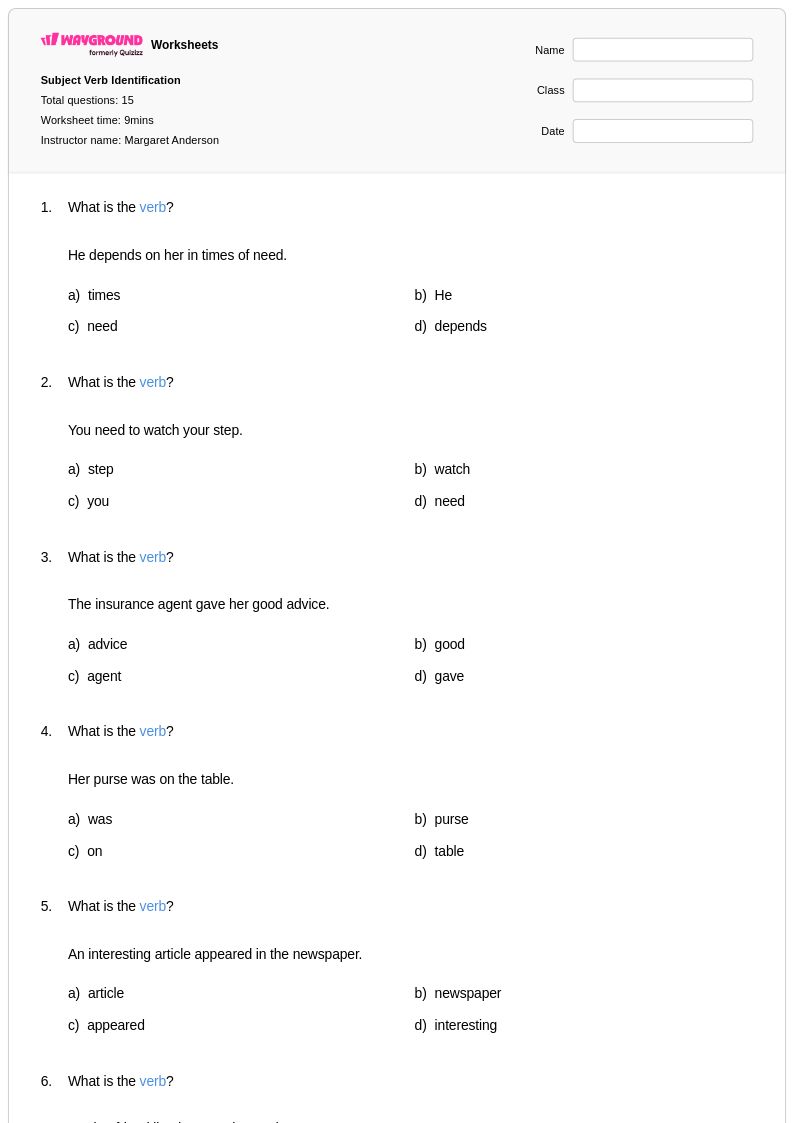
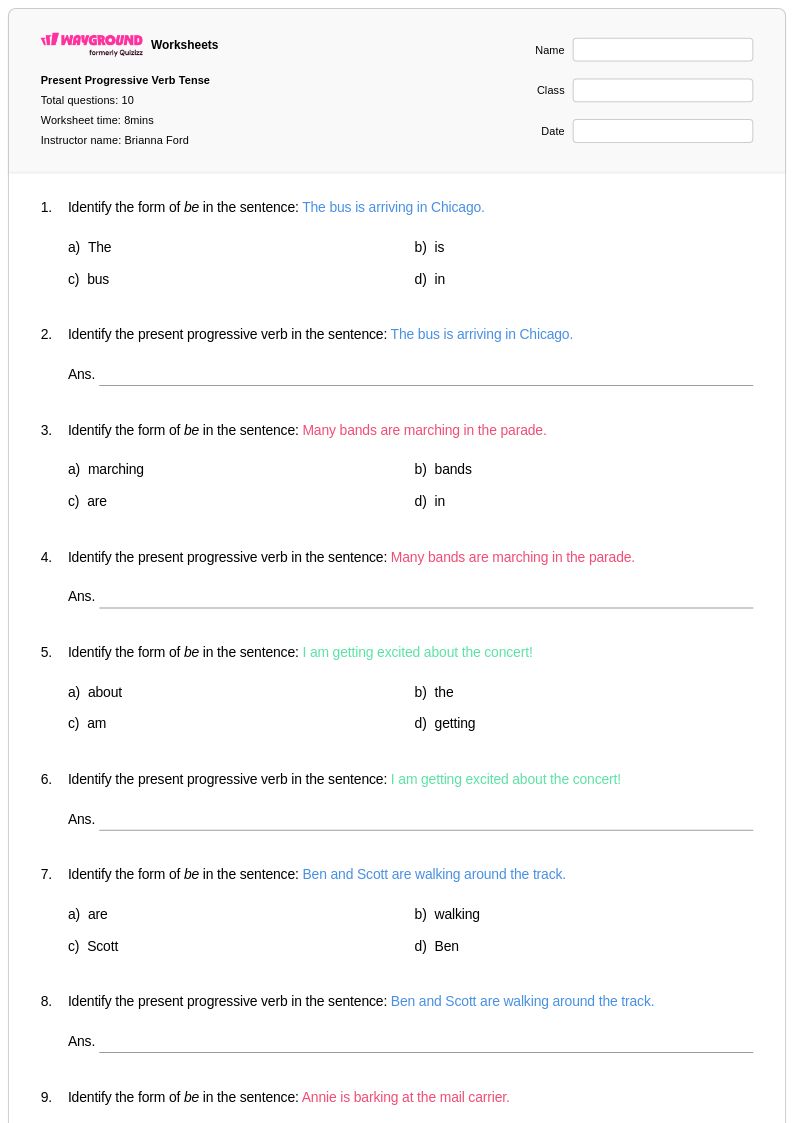
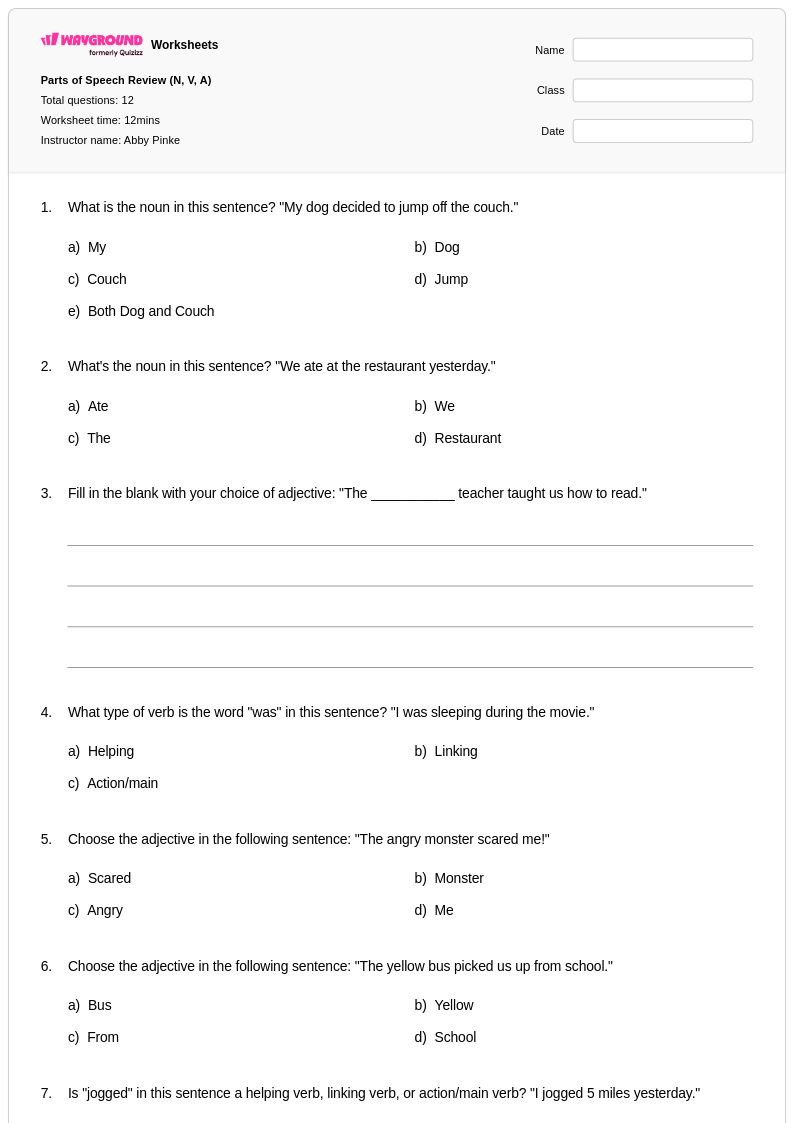
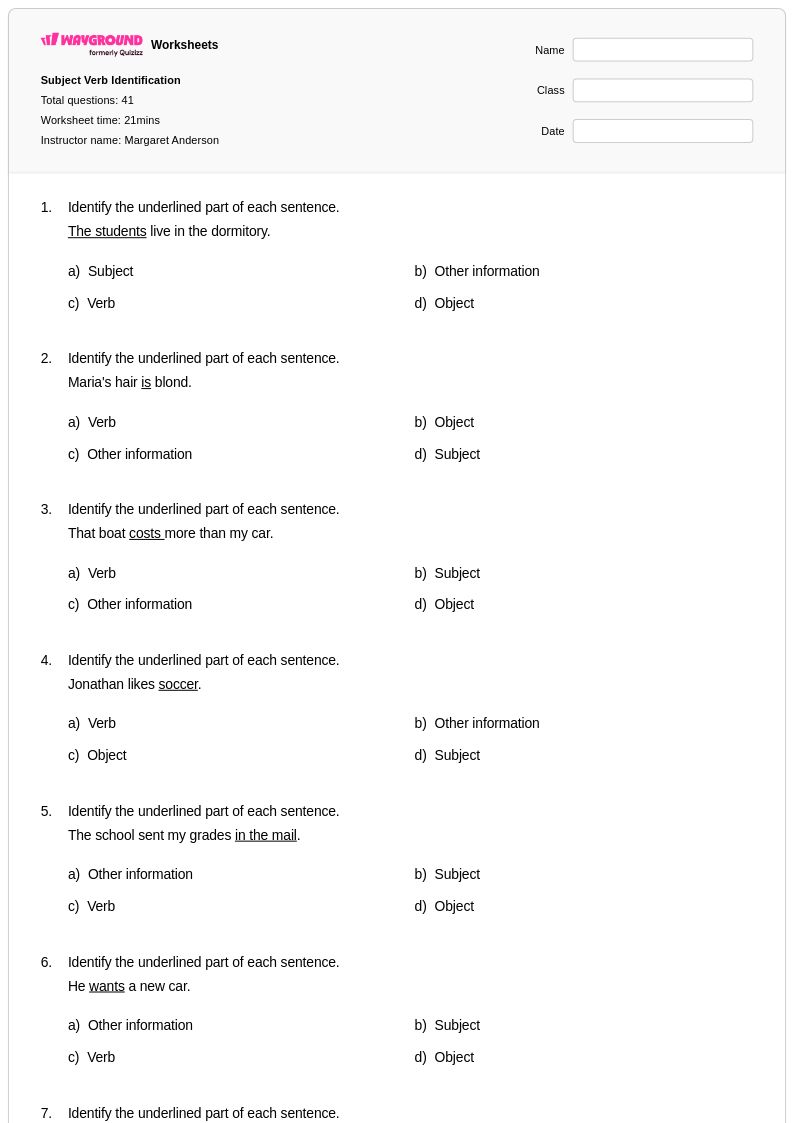
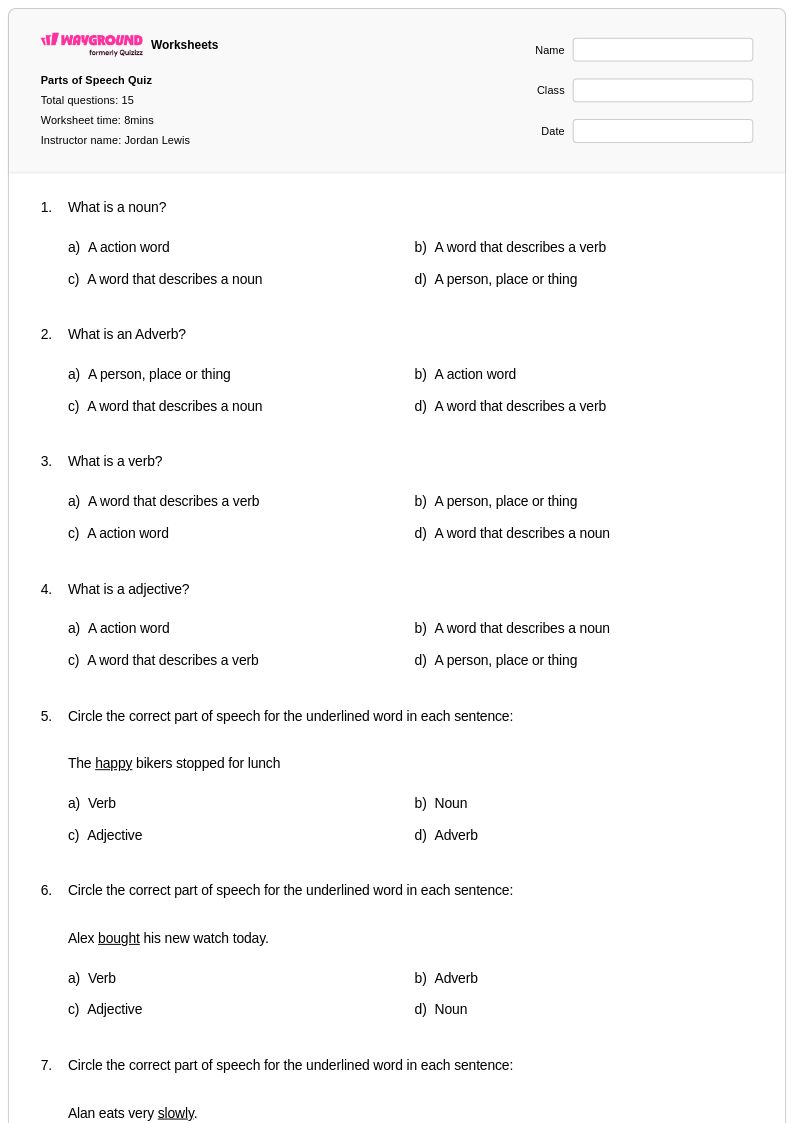
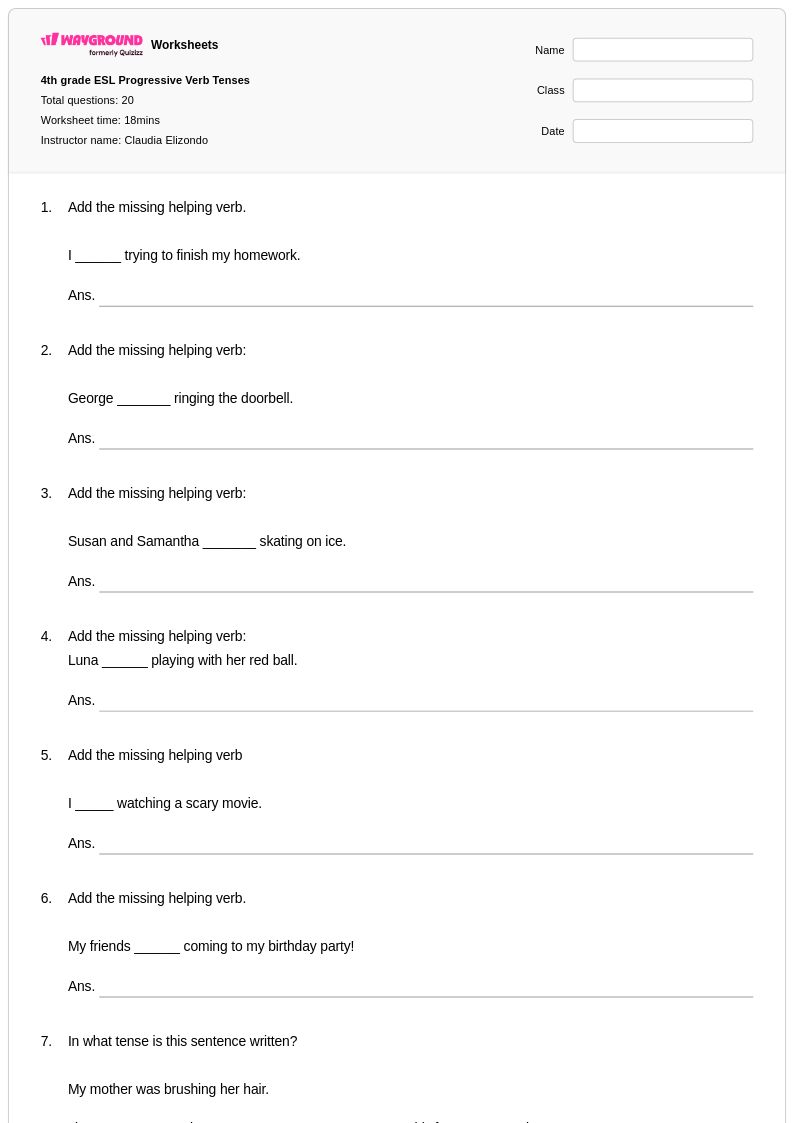
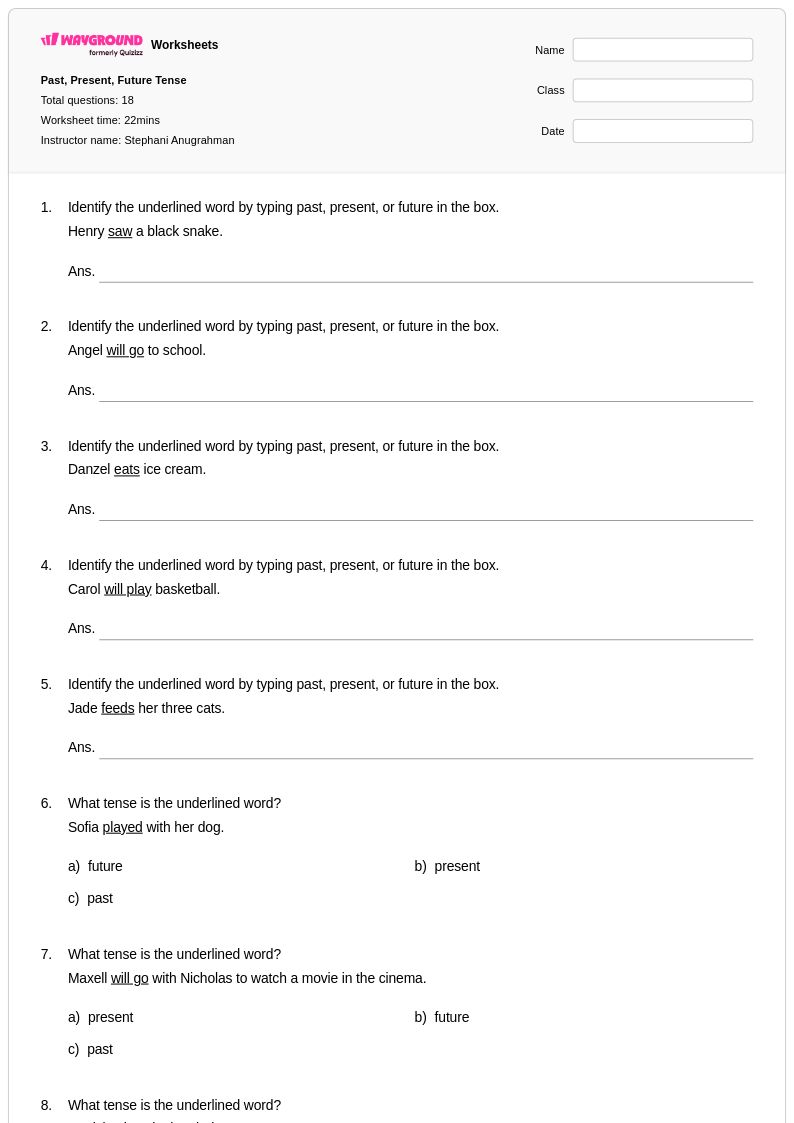
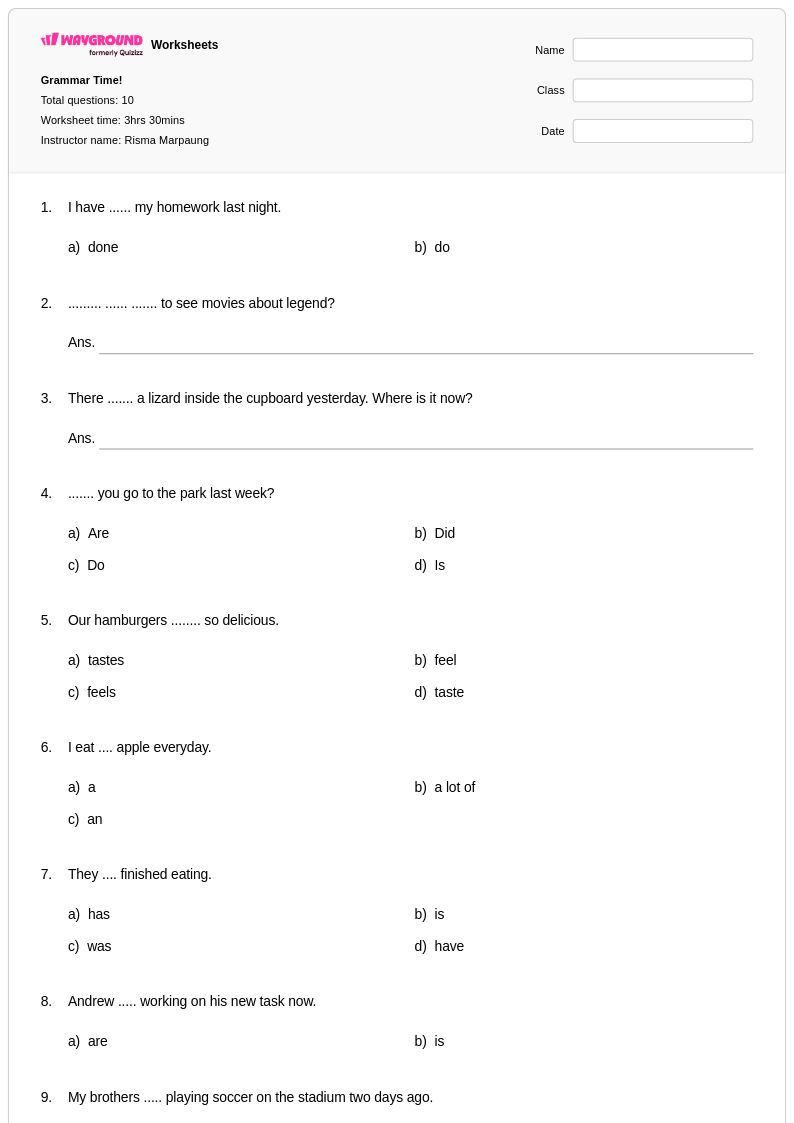
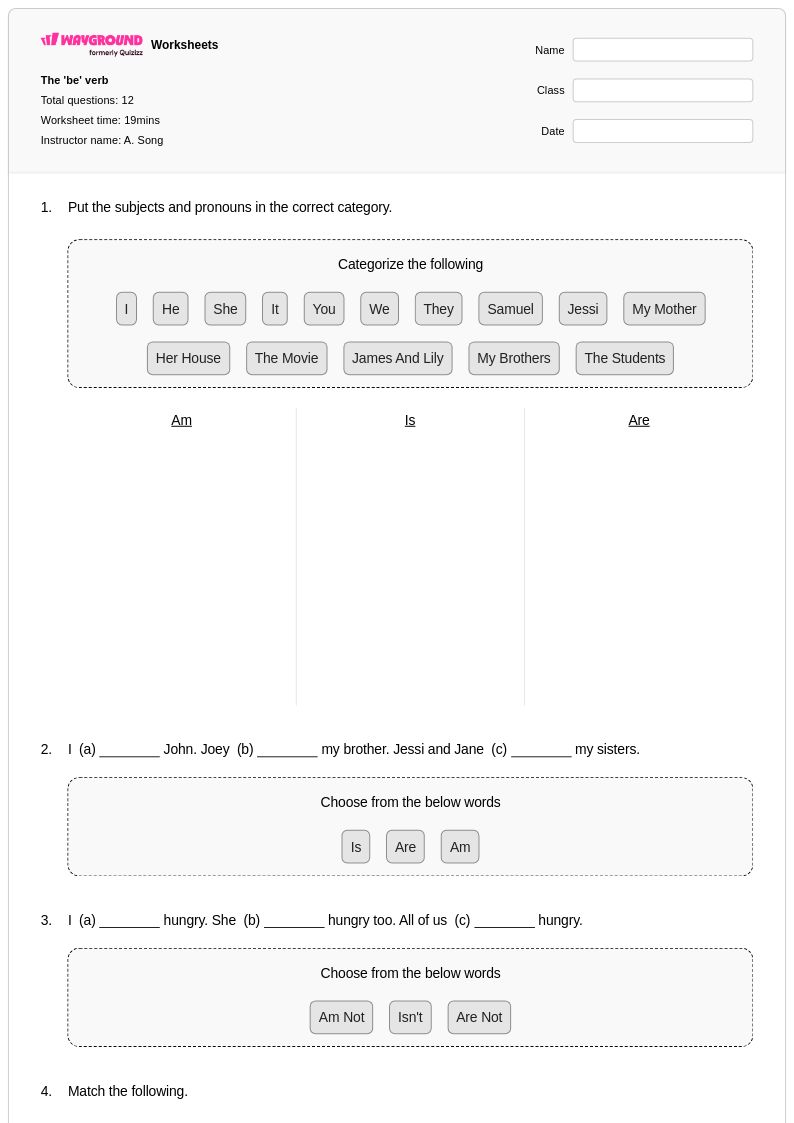
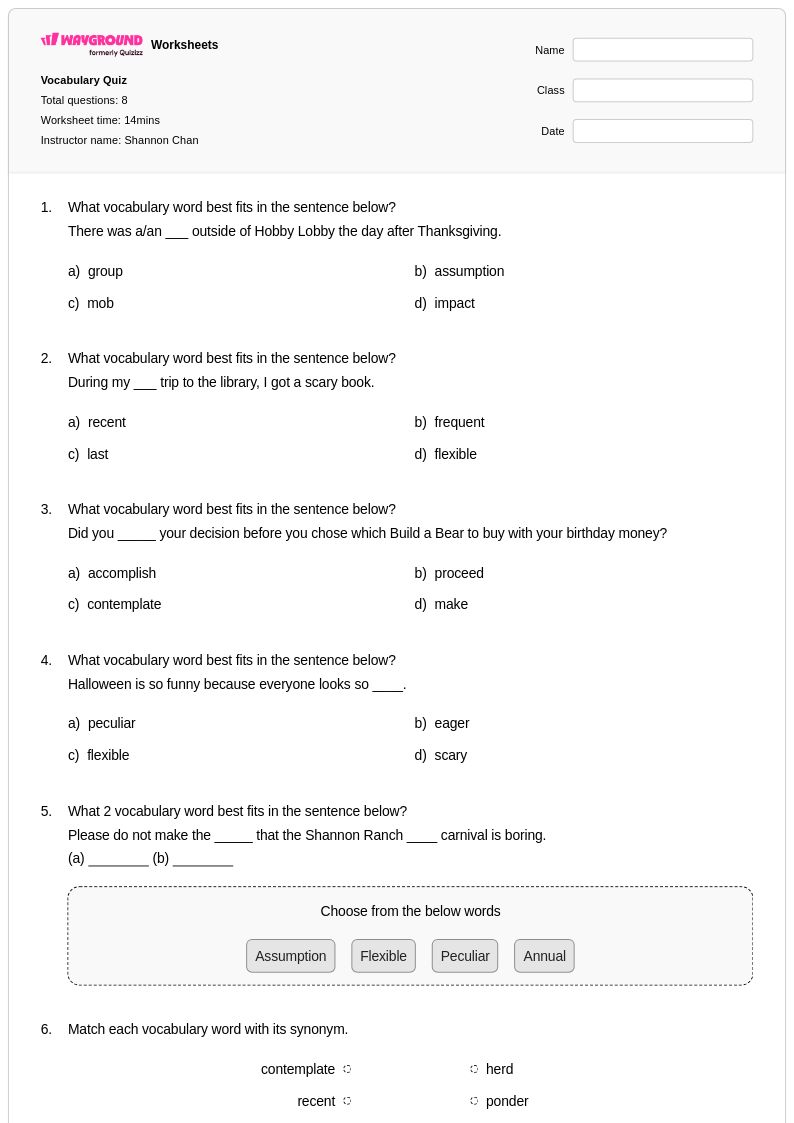
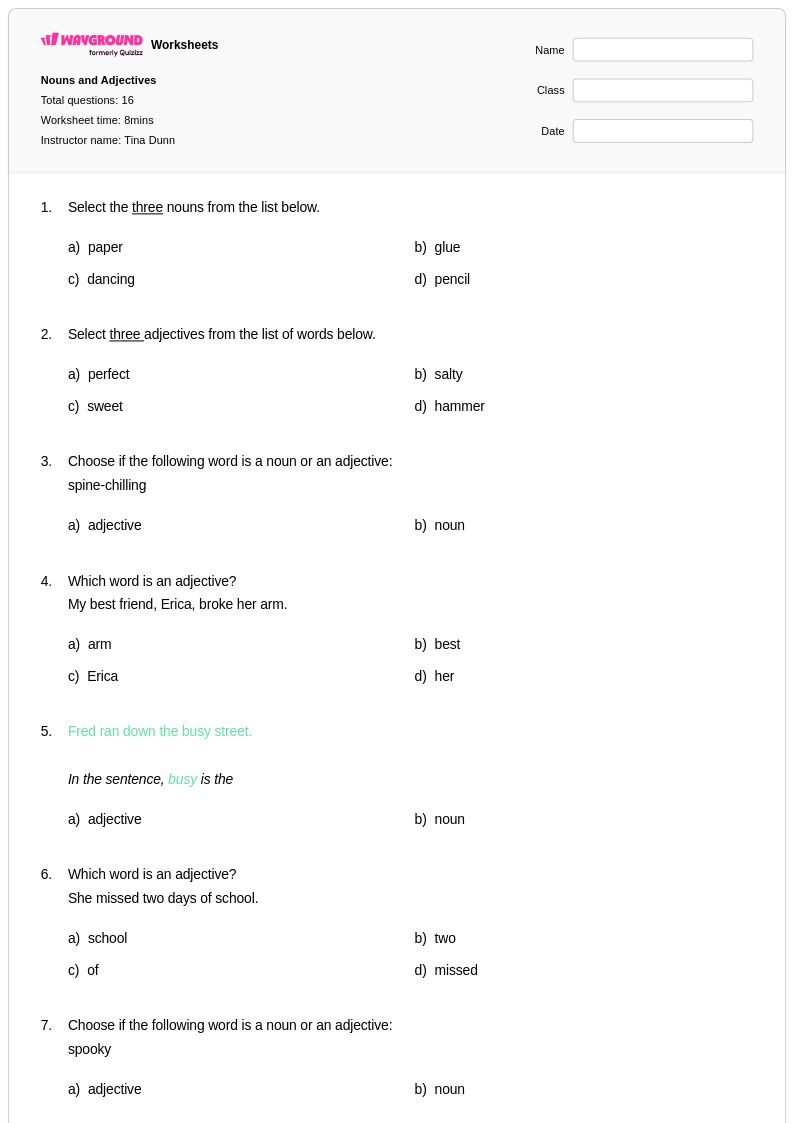
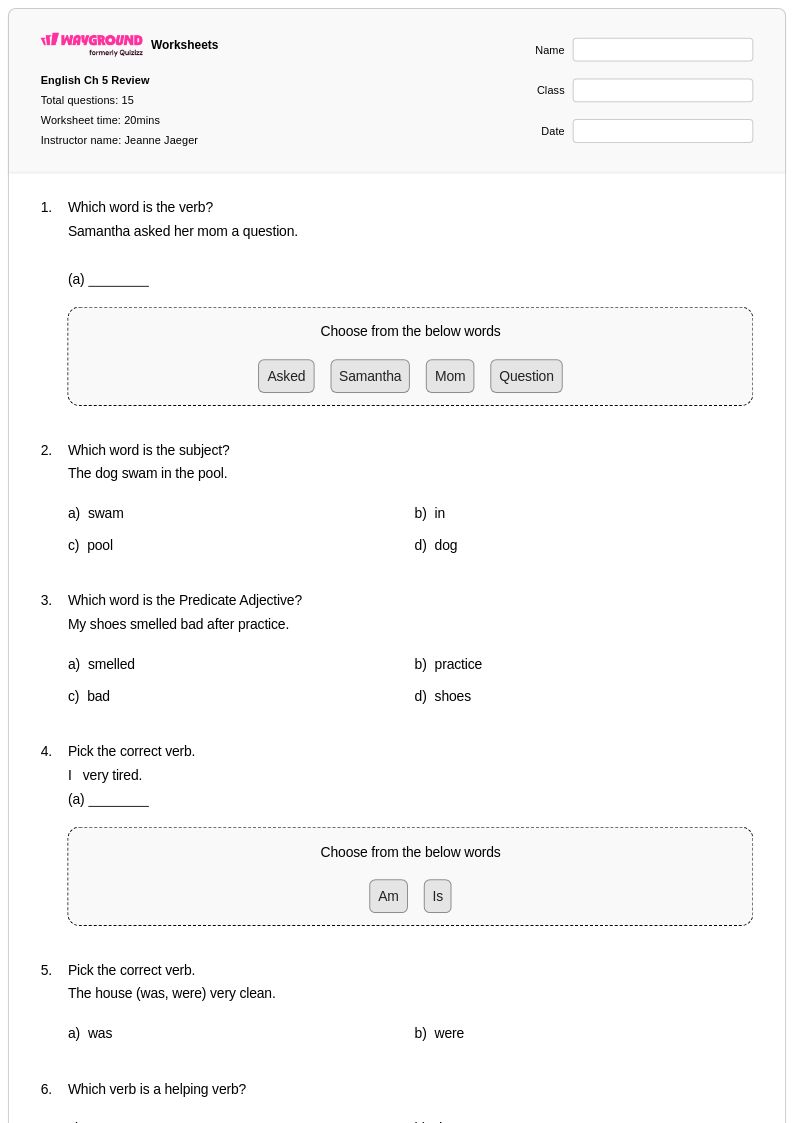
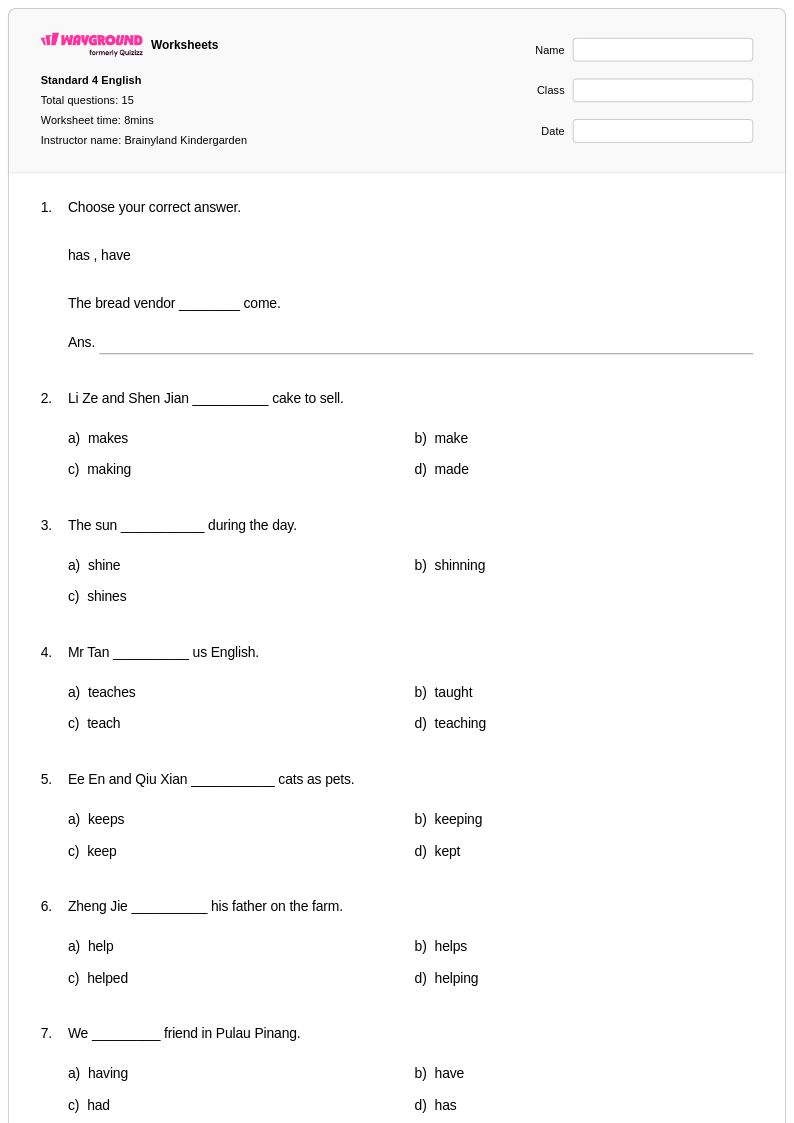
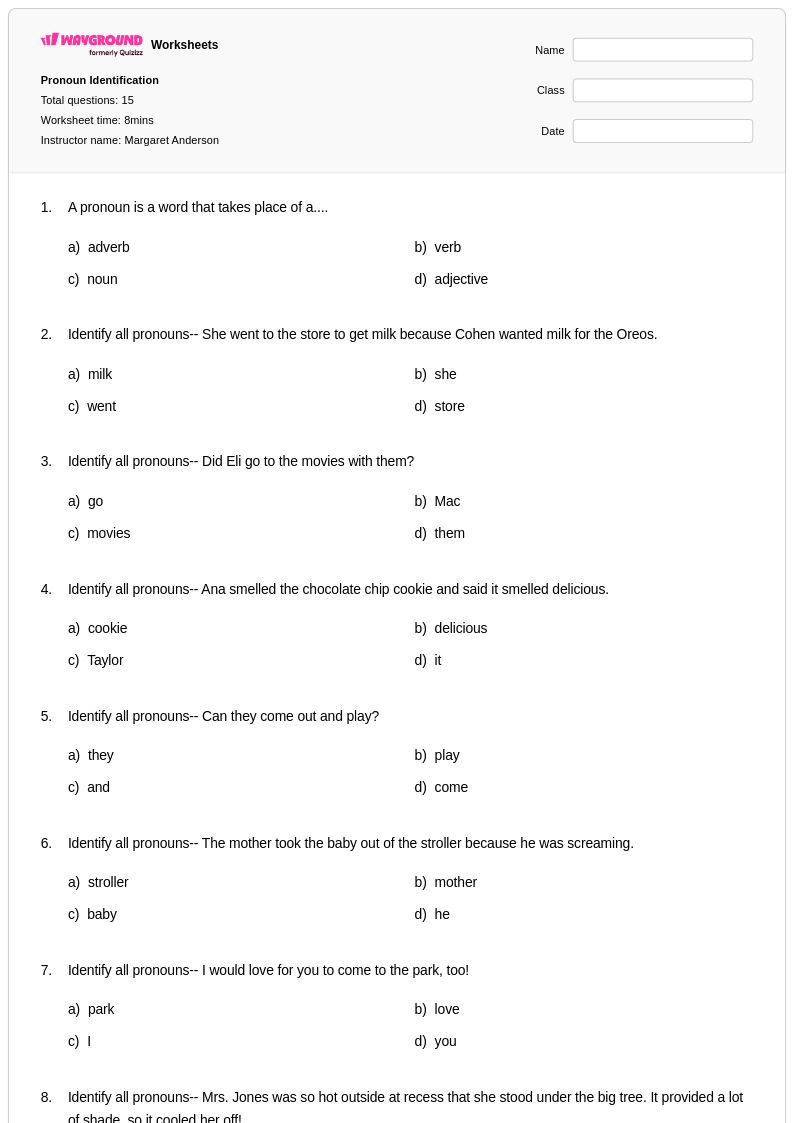
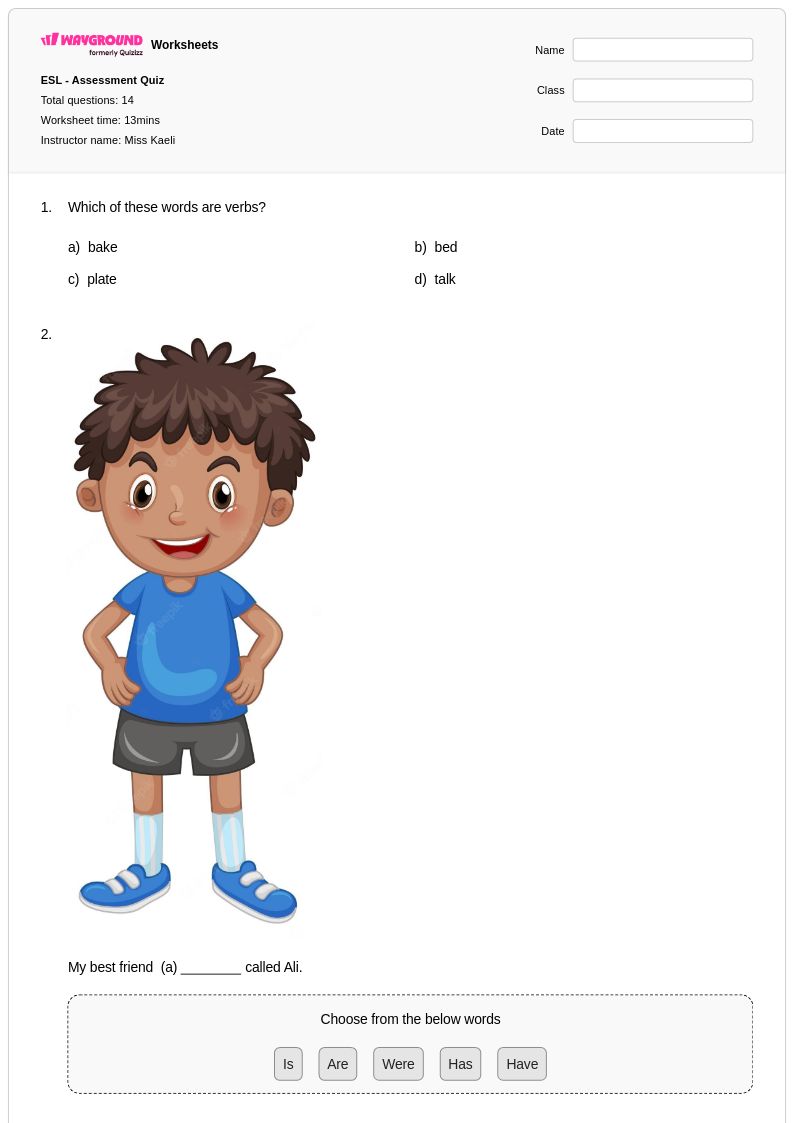
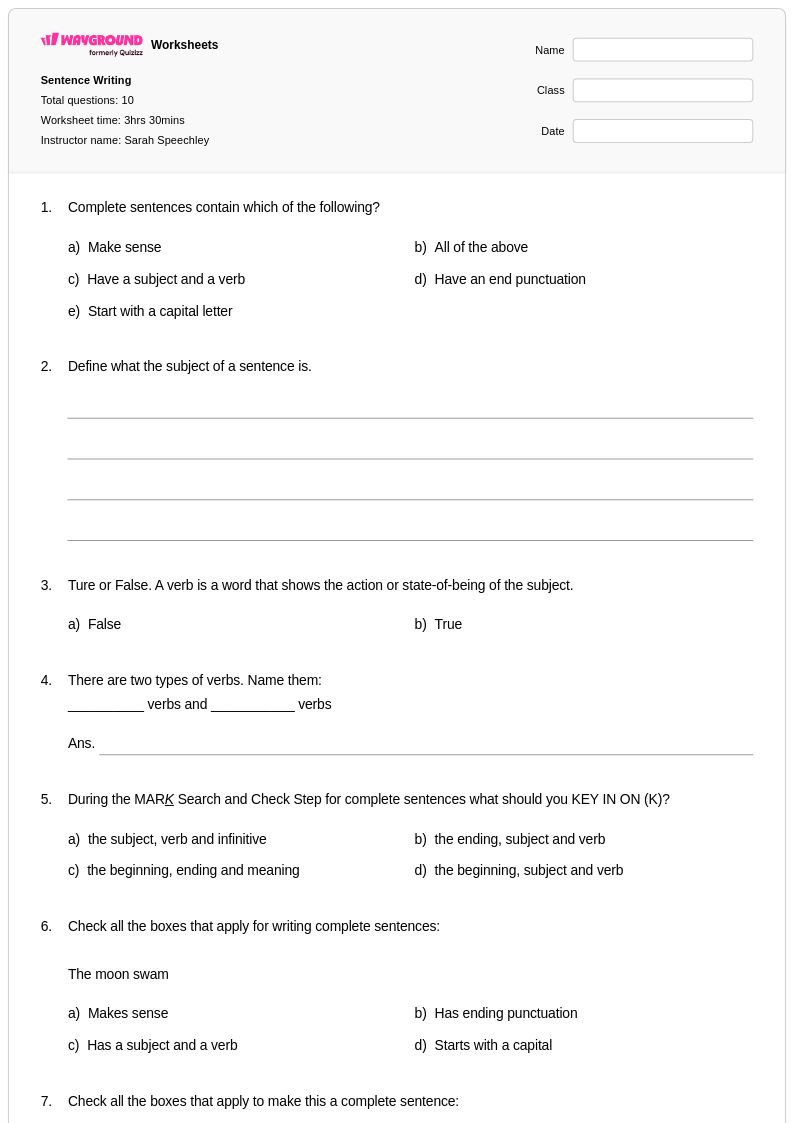
Verb identification worksheets for Year 4 students through Wayground (formerly Quizizz) provide comprehensive practice in recognizing and categorizing verbs within sentences and passages. These educational resources strengthen students' fundamental grammar skills by teaching them to distinguish action verbs, linking verbs, and helping verbs from other parts of speech. The practice problems progress systematically from simple sentence structures to more complex grammatical constructions, allowing fourth graders to build confidence in identifying verbs across various contexts. Each worksheet includes detailed answer keys that support both independent learning and teacher-guided instruction, with free printable pdf formats making these resources accessible for classroom use, homework assignments, and targeted skill reinforcement.
Wayground (formerly Quizizz) empowers educators with millions of teacher-created verb identification resources specifically designed for Year 4 learners. The platform's robust search and filtering capabilities enable teachers to quickly locate worksheets that align with state standards and match their students' specific learning needs. Advanced differentiation tools allow educators to customize existing materials or create new practice sets that address varying skill levels within their classrooms, supporting both remediation for struggling learners and enrichment opportunities for advanced students. Available in both printable and digital formats including downloadable pdfs, these verb identification worksheets seamlessly integrate into lesson planning workflows, providing flexible options for whole-class instruction, small group activities, and individual practice sessions that reinforce essential grammar concepts.
FAQs
How do I teach students to identify verbs in a sentence?
Start by teaching the three main verb types separately: action verbs (run, write, think), linking verbs (is, seem, become), and helping verbs (has, will, must). A reliable classroom strategy is to have students ask 'What is the subject doing?' or 'What connects the subject to a description?' to locate the verb. Once students can identify single verbs reliably, introduce verb phrases and compound predicates so they learn to recognize verbs in more complex sentence structures.
What exercises help students practice identifying verbs?
Effective practice exercises include sentence-level identification tasks where students underline or circle verbs, sorting activities that ask students to classify verbs as action, linking, or helping, and fill-in-the-blank exercises that reinforce how verbs function within sentence context. Progressing from simple sentences to compound predicates and verb phrases ensures students build skill incrementally rather than encountering complexity before foundational recognition is secure.
What mistakes do students commonly make when identifying verbs?
The most common error is confusing linking verbs with action verbs — students often assume every verb describes a physical action, so they miss verbs like 'seems', 'appears', or 'remains'. Students also frequently overlook helping verbs, identifying only the main verb in a verb phrase (e.g., writing 'running' instead of 'was running'). Another persistent error is misidentifying verbal adjectives or gerunds as verbs because they are derived from verb forms.
How can I differentiate verb identification practice for students at different skill levels?
For struggling learners, begin with single-clause sentences containing clear action verbs before introducing linking and helping verbs. Advanced students can work with multi-clause sentences, verb phrases, and compound predicates. On Wayground, teachers can apply accommodations such as reduced answer choices to lower cognitive load for selected students, or enable Read Aloud so sentences are read to students who need additional language support — all without other students being aware of the adjustments.
How do I use Wayground's verb identification worksheets in my classroom?
Wayground's verb identification worksheets are available as printable PDFs for traditional classroom use and in digital formats for technology-integrated or online learning environments. Teachers can also host the worksheets as a quiz directly on Wayground, enabling real-time student responses and automatic grading. Each worksheet includes a complete answer key, making them efficient for both guided instruction and independent practice assignments.
How do I help students distinguish between action verbs, linking verbs, and helping verbs?
Teach students a substitution test for linking verbs: if you can replace the verb with 'equals' and the sentence still makes sense (e.g., 'She seems tired' → 'She equals tired'), it is likely a linking verb. For helping verbs, show students that they always appear before the main verb and change the tense or mood of the sentence. Using color-coded annotation during guided practice — one color per verb type — helps students visually track the distinctions across sentence types.