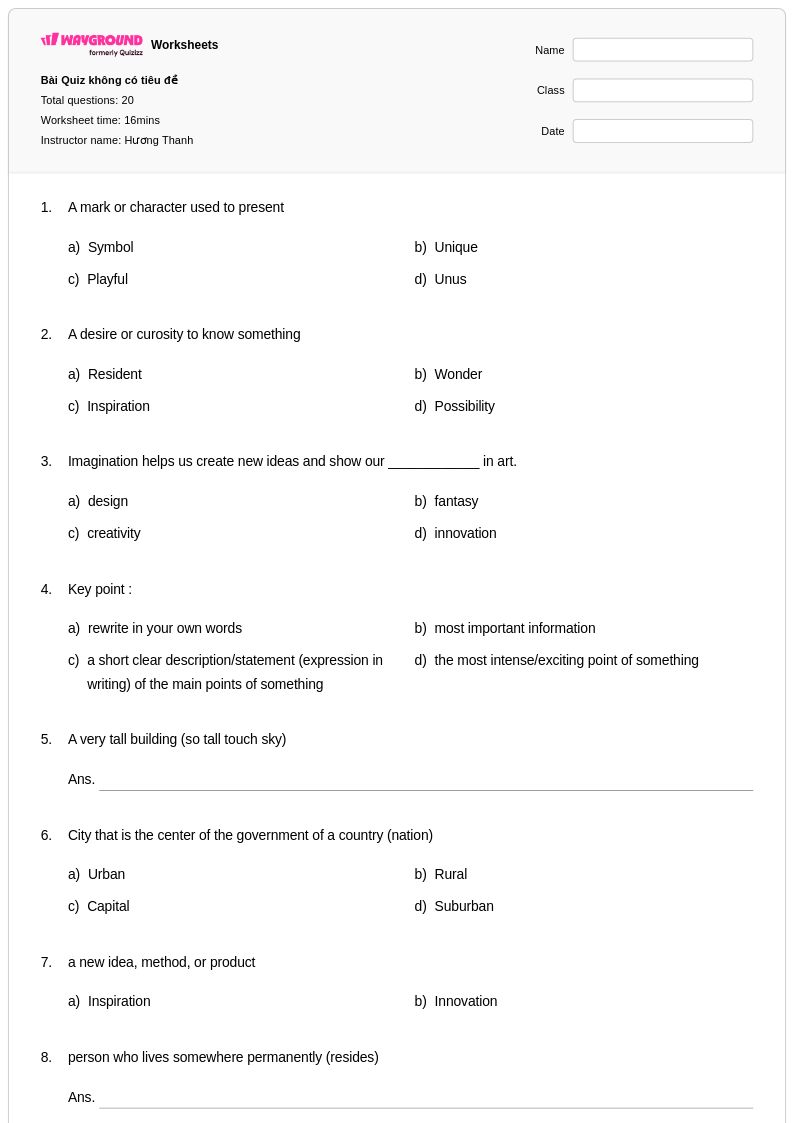
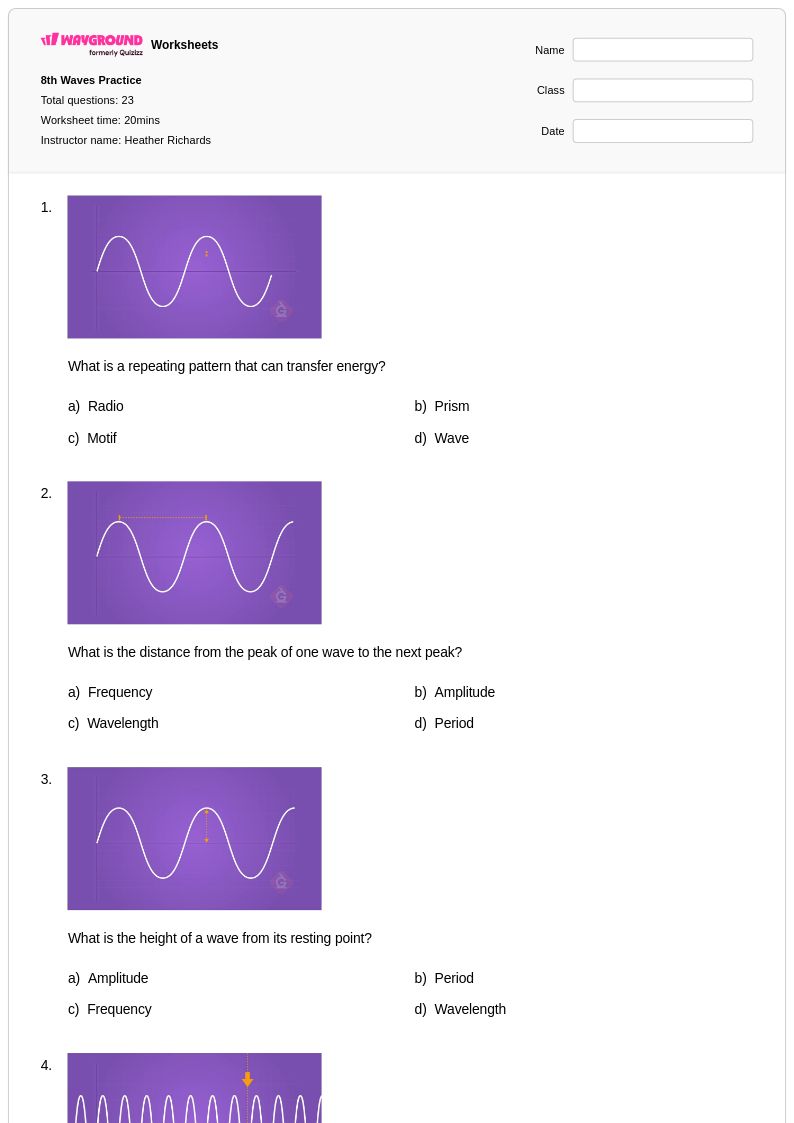
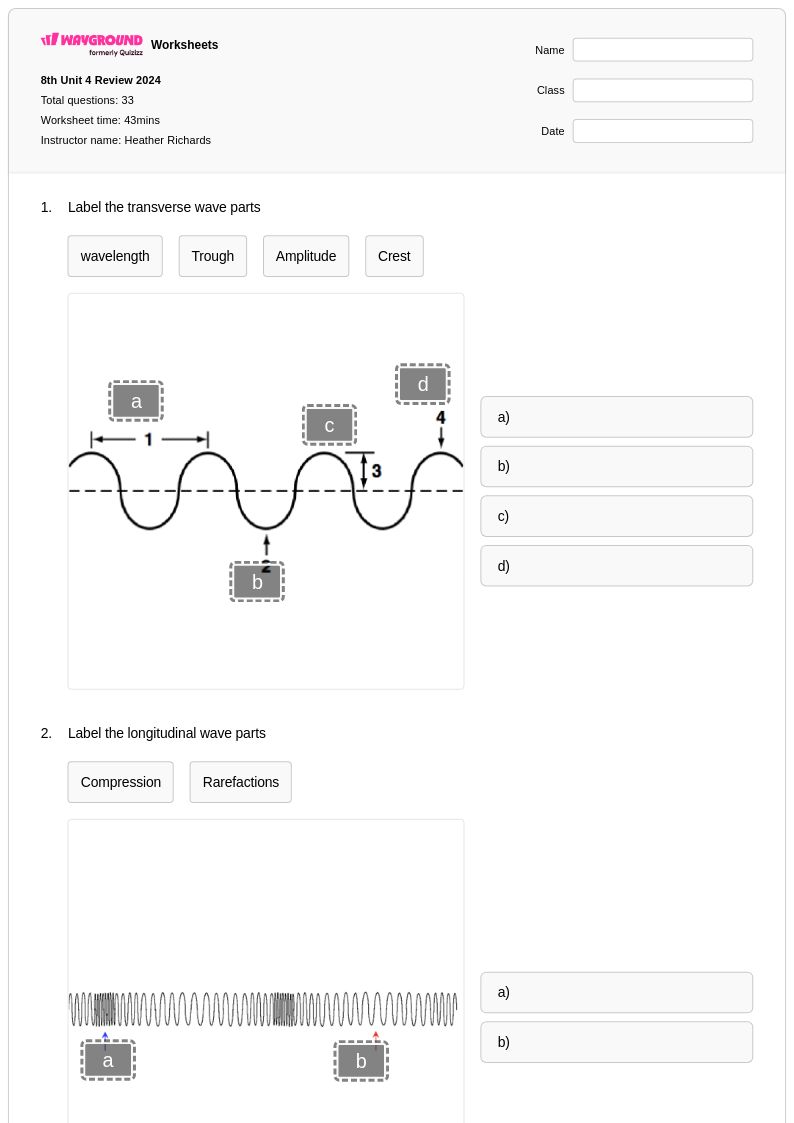
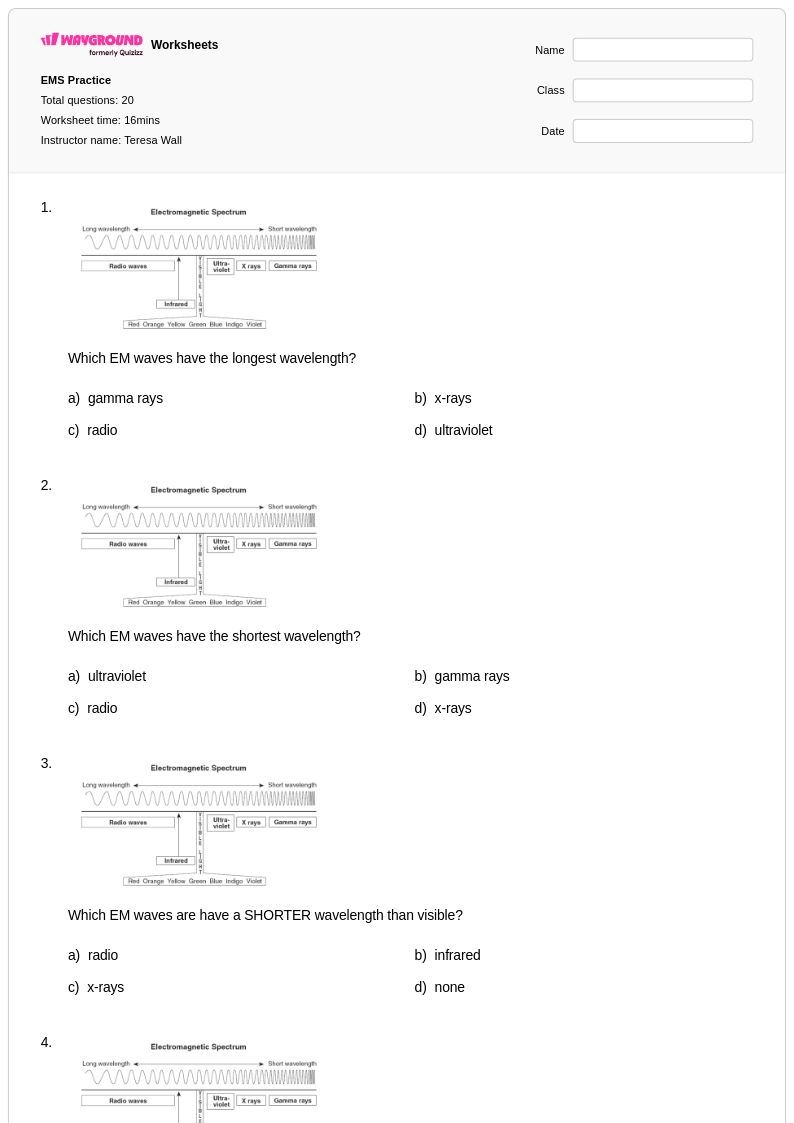
Explore Wayground's comprehensive collection of Year 8 vision worksheets and printables that help students understand how the eye works, light perception, and visual processing through engaging practice problems with complete answer keys.
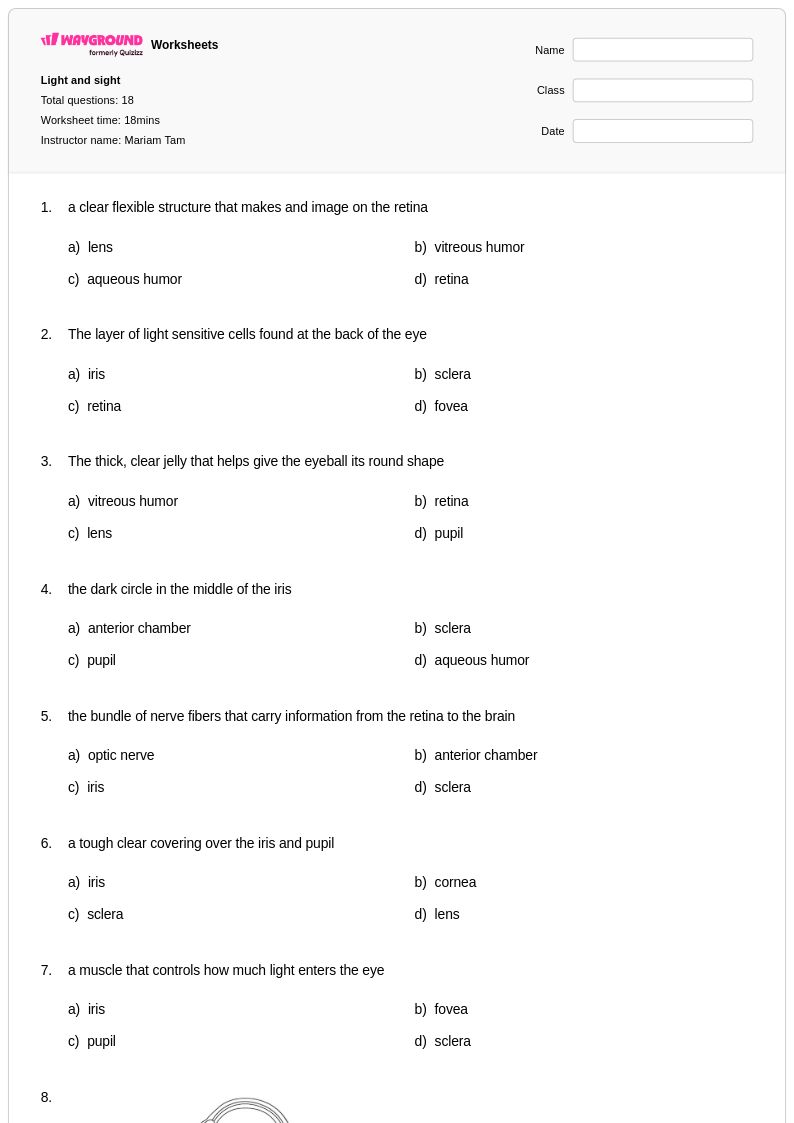
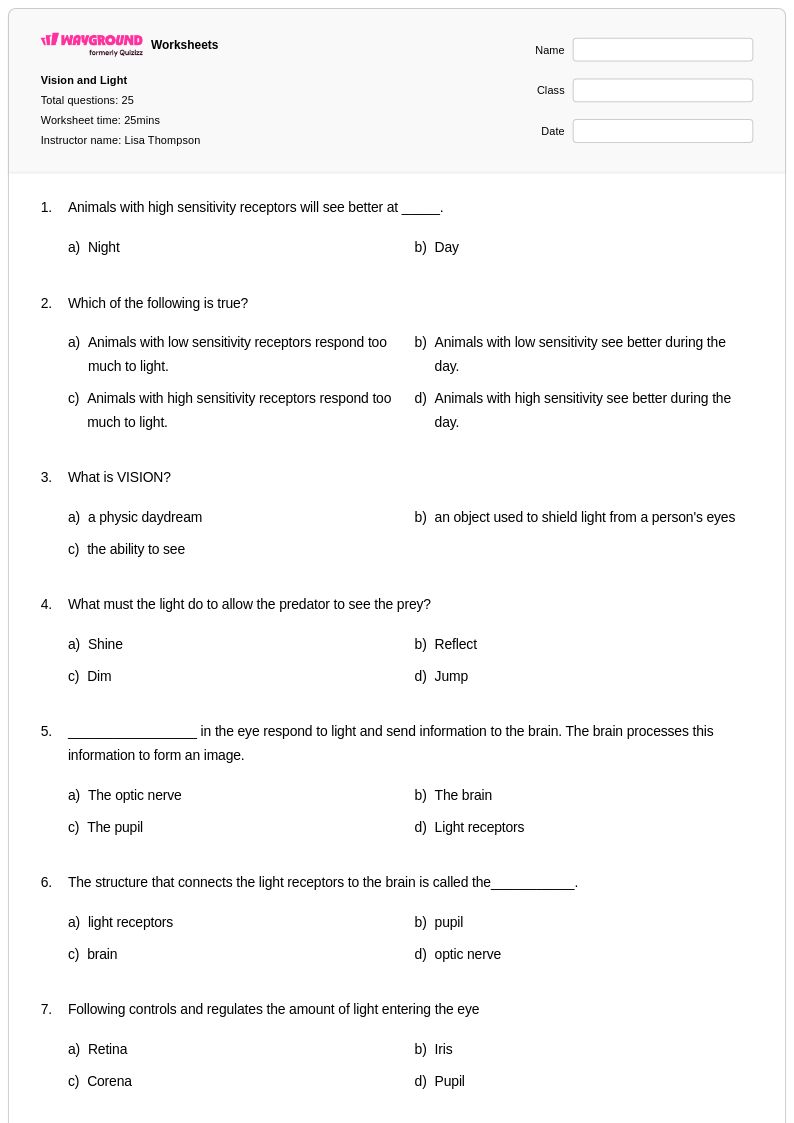
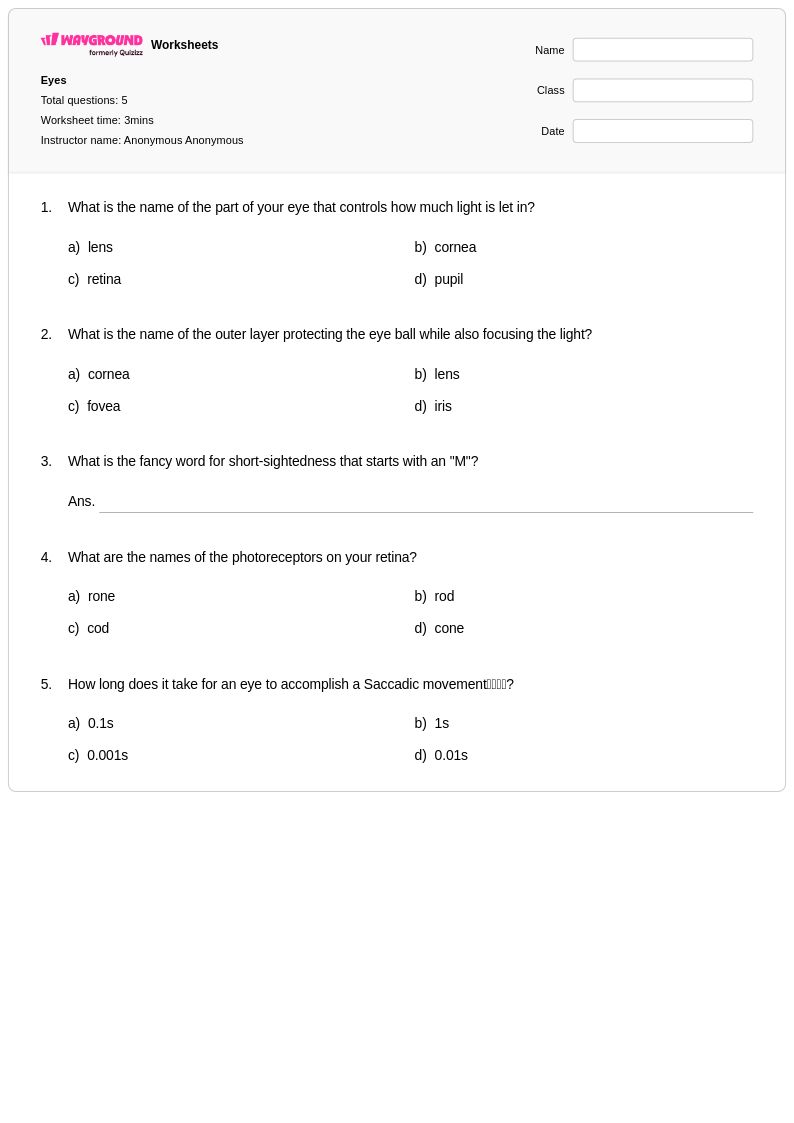
Year 8 vision worksheets available through Wayground (formerly Quizizz) provide comprehensive coverage of how the human eye functions and processes visual information, supporting students as they explore the complex mechanisms of sight. These educational resources strengthen critical scientific skills including anatomical identification of eye structures, understanding light refraction and focusing, analyzing the role of photoreceptors in the retina, and connecting vision processes to the nervous system. Students engage with practice problems that challenge them to explain how the cornea, lens, and vitreous humor work together to focus light, while answer keys enable independent learning and self-assessment. The collection includes free printable materials and pdf formats that allow teachers to seamlessly integrate vision concepts into their life science curriculum, helping students master fundamental principles of human sensory systems.
Wayground (formerly Quizizz) empowers teachers with millions of educator-created vision worksheets that can be easily discovered through robust search and filtering capabilities aligned with science education standards. The platform's differentiation tools allow instructors to customize materials for varying ability levels within Year 8 classrooms, ensuring all students can access appropriate challenges whether they need remediation support or enrichment opportunities. Teachers benefit from flexible formatting options that include both printable pdf versions for traditional classroom use and digital formats for interactive learning experiences. These comprehensive worksheet collections streamline lesson planning by providing ready-to-use resources for skill practice, formative assessment, and reinforcement of key vision concepts, enabling educators to focus more time on instruction and student support rather than material creation.
FAQs
How do I teach students how the human eye works?
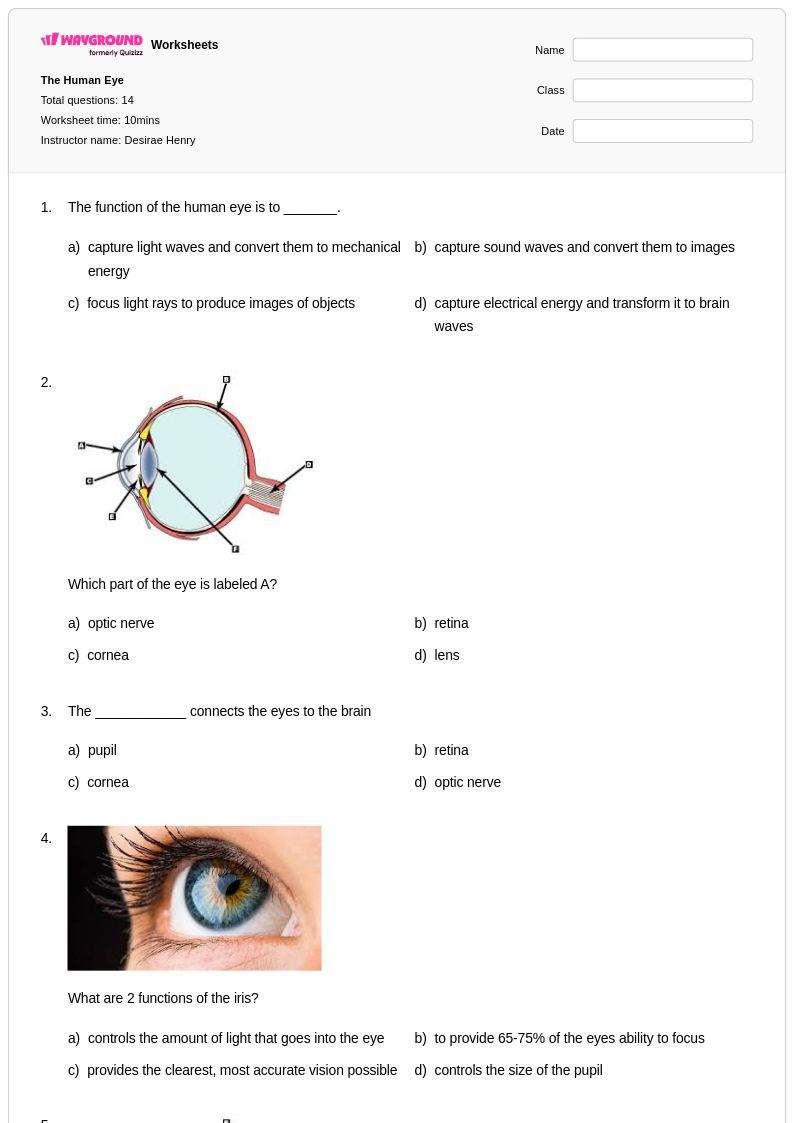
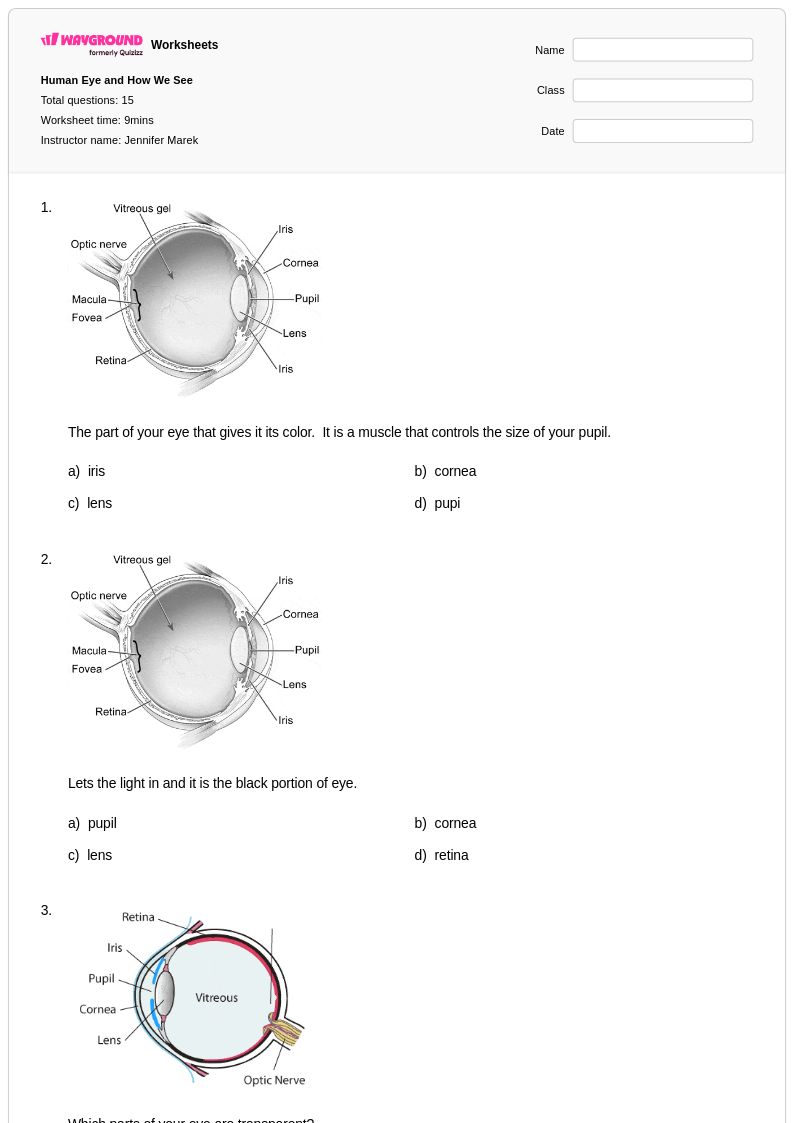
Start by grounding students in the anatomy of the eye, covering key structures like the cornea, lens, retina, and optic nerve before introducing function. Use diagrams that trace the path of light from entry through the cornea to signal transmission along the optic nerve, so students can see how each structure contributes to the final image. Connecting structure to function helps students understand vision as a system rather than a list of parts.
What activities help students practice tracing the path of light through the eye?
Labeling diagrams and sequencing exercises are particularly effective for reinforcing the path of light through the eye. Students can practice identifying where refraction occurs at the cornea and lens, where the image is focused on the retina, and how the optic nerve transmits signals to the brain. These exercises build procedural understanding that prepares students to explain the full visual pathway in their own words.
What common mistakes do students make when learning about vision and the eye?
A frequent misconception is that the eye simply 'receives' images passively, without understanding the role of refraction at the cornea and lens in focusing light. Students also commonly confuse myopia and hyperopia, mixing up which condition involves difficulty seeing near versus far objects. Another common error is forgetting that the retina projects an inverted image, which the brain then corrects, which is a detail that often surprises students and reinforces why vision is a brain process, not just an eye process.
How do I explain vision disorders like myopia and hyperopia to students?
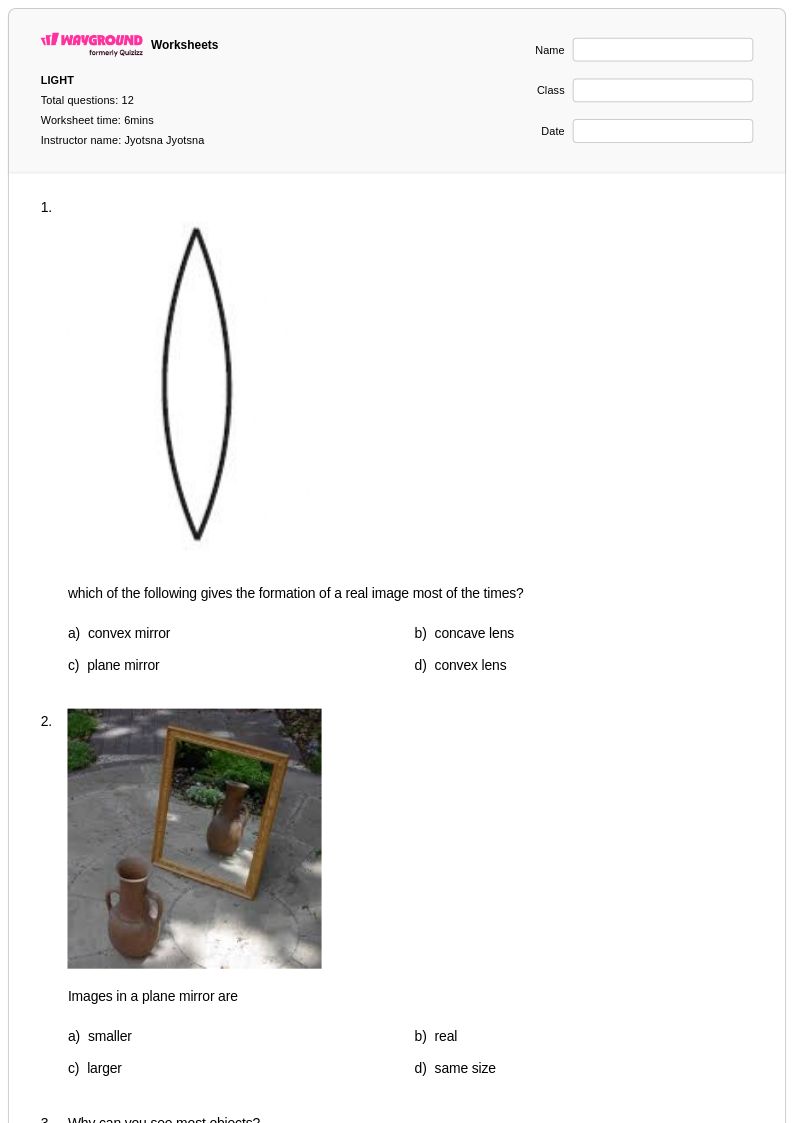
Frame myopia and hyperopia in terms of where light converges relative to the retina. In myopia, the eye focuses light in front of the retina, making distant objects blurry, while in hyperopia, light focuses behind the retina, making close objects difficult to see. Using diagrams that show corrective lens shapes alongside the uncorrected condition helps students connect the disorder to its structural cause and clinical solution.
How do I use Wayground's vision worksheets in my classroom?
Wayground's vision worksheets are available as printable PDFs for traditional classroom use and in digital formats for technology-integrated environments, including the option to host them as a quiz on Wayground. Teachers can use them for direct instruction support, independent practice, homework assignments, or assessment preparation. The included answer keys make them practical for both self-paced student review and teacher-led instruction.
How can I differentiate vision worksheets for students who need extra support or enrichment?
For students who need additional support, Wayground's accommodation tools allow teachers to enable Read Aloud so questions and content are read to the student, reduce answer choices to lower cognitive load, or grant extended time per question. These settings can be applied to individual students without notifying the rest of the class. For advanced learners, enrichment can extend into more complex topics like depth perception and color vision, which build on the foundational visual pathway concepts.