Free Printable World War I Timeline Worksheets for Year 10
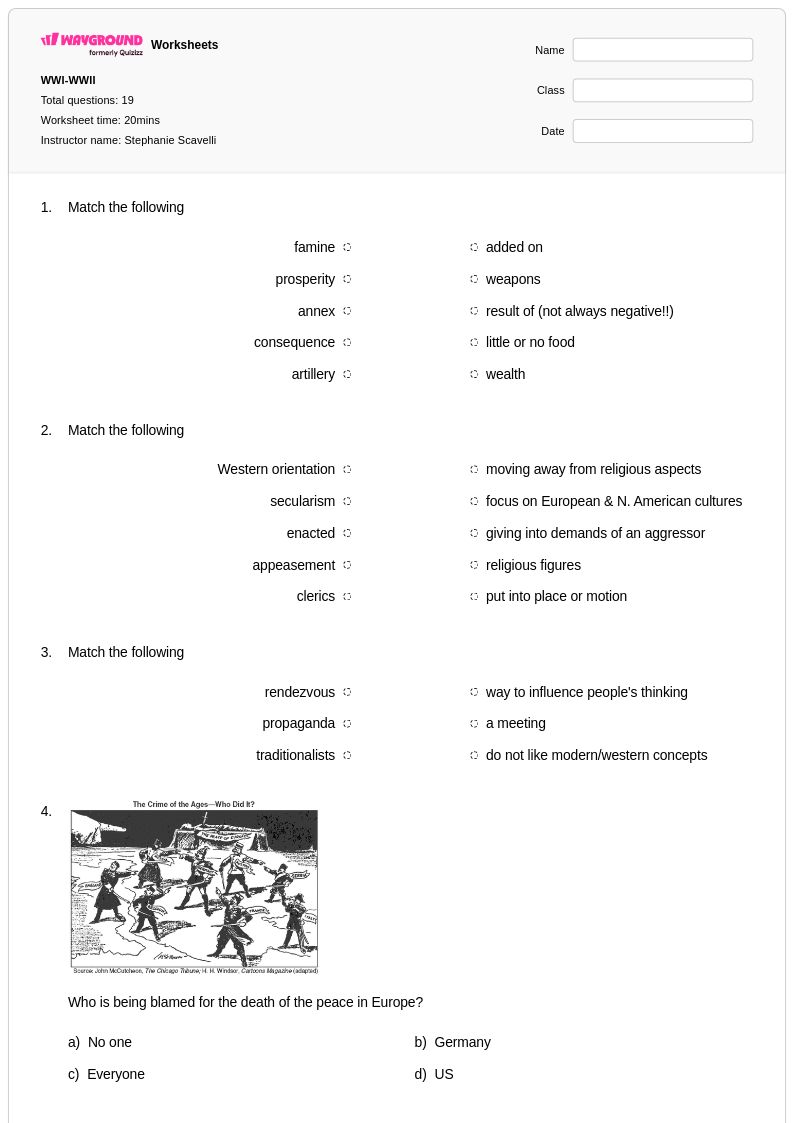
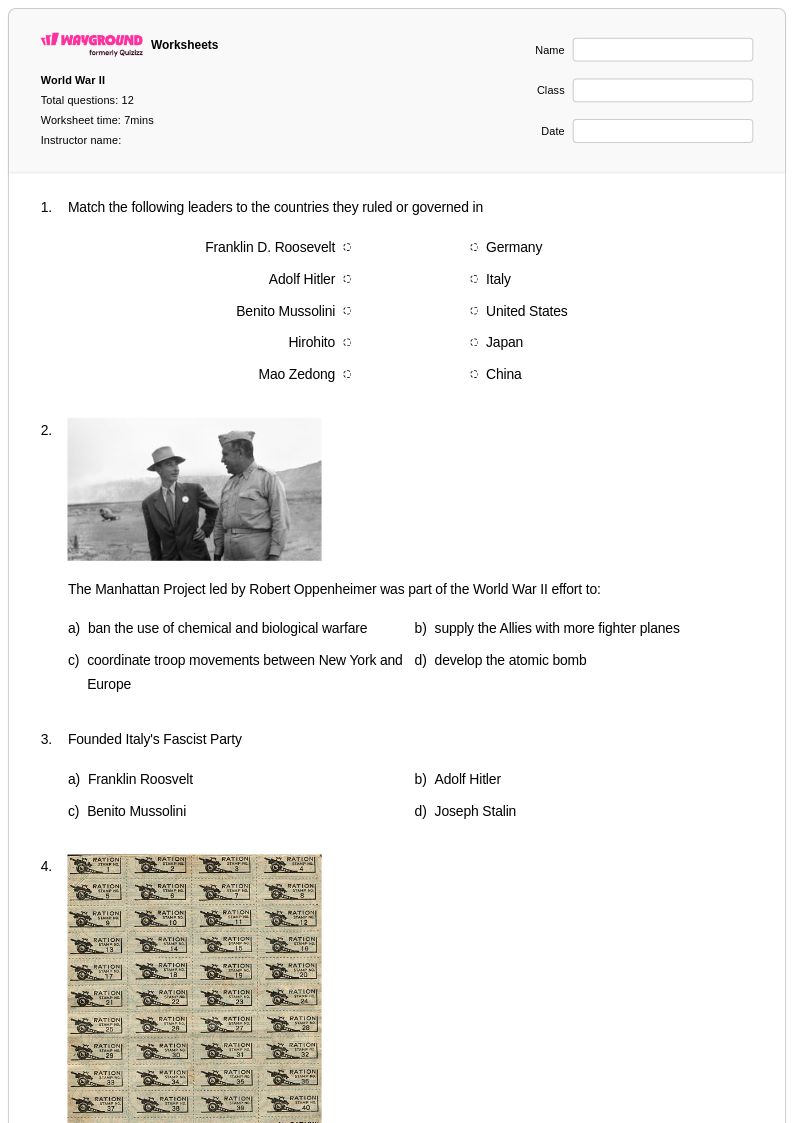
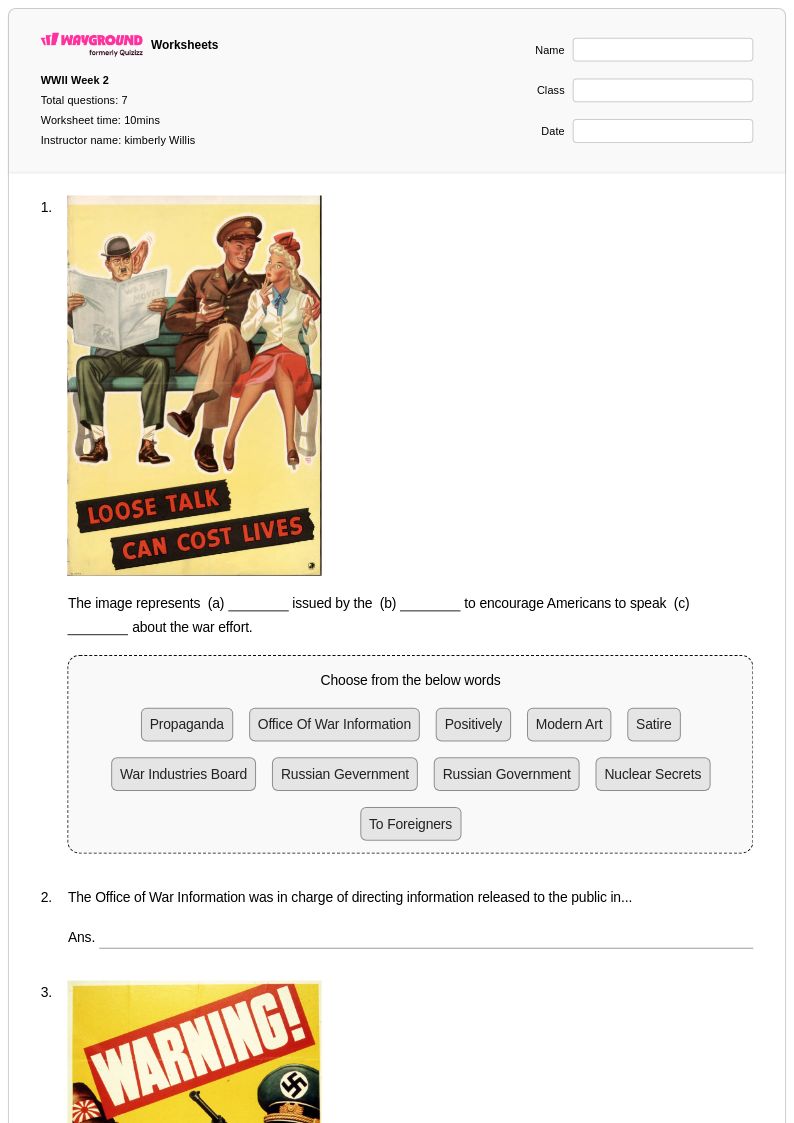
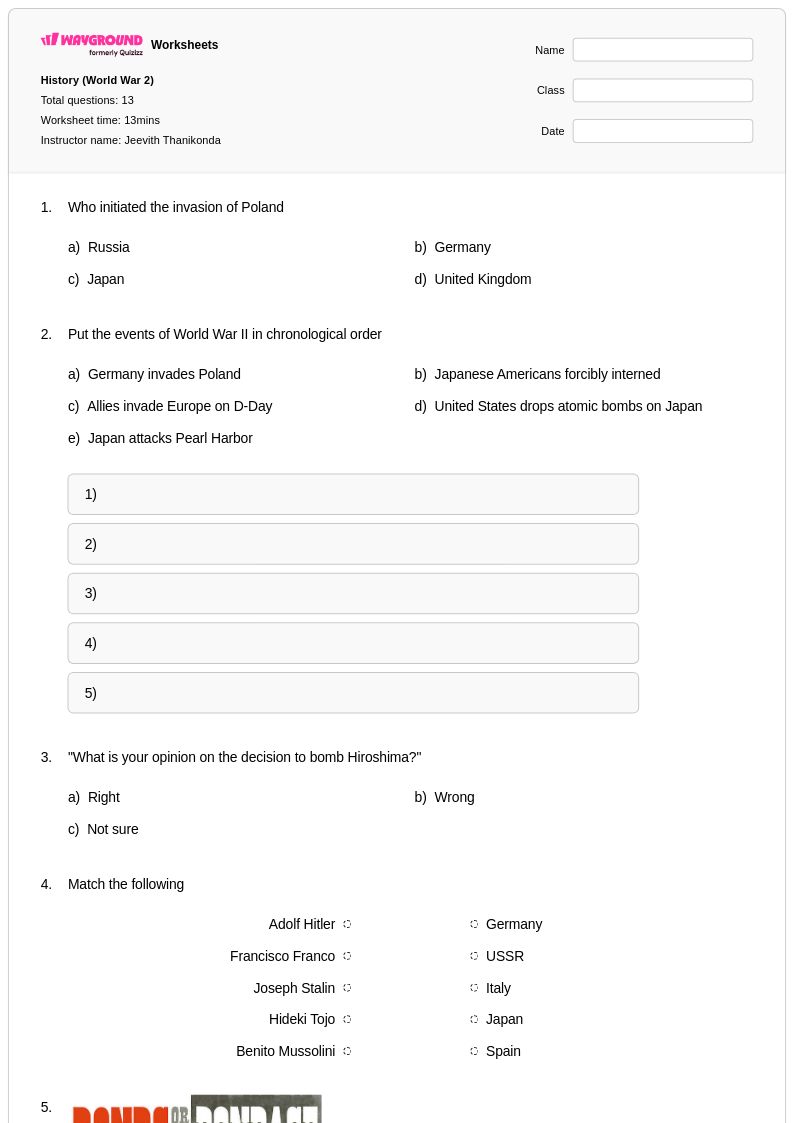
Explore Year 10 World War I Timeline worksheets and printables from Wayground that help students master key events, dates, and chronological sequences through engaging practice problems and comprehensive answer keys.
Explore printable World War I Timeline worksheets for Year 10
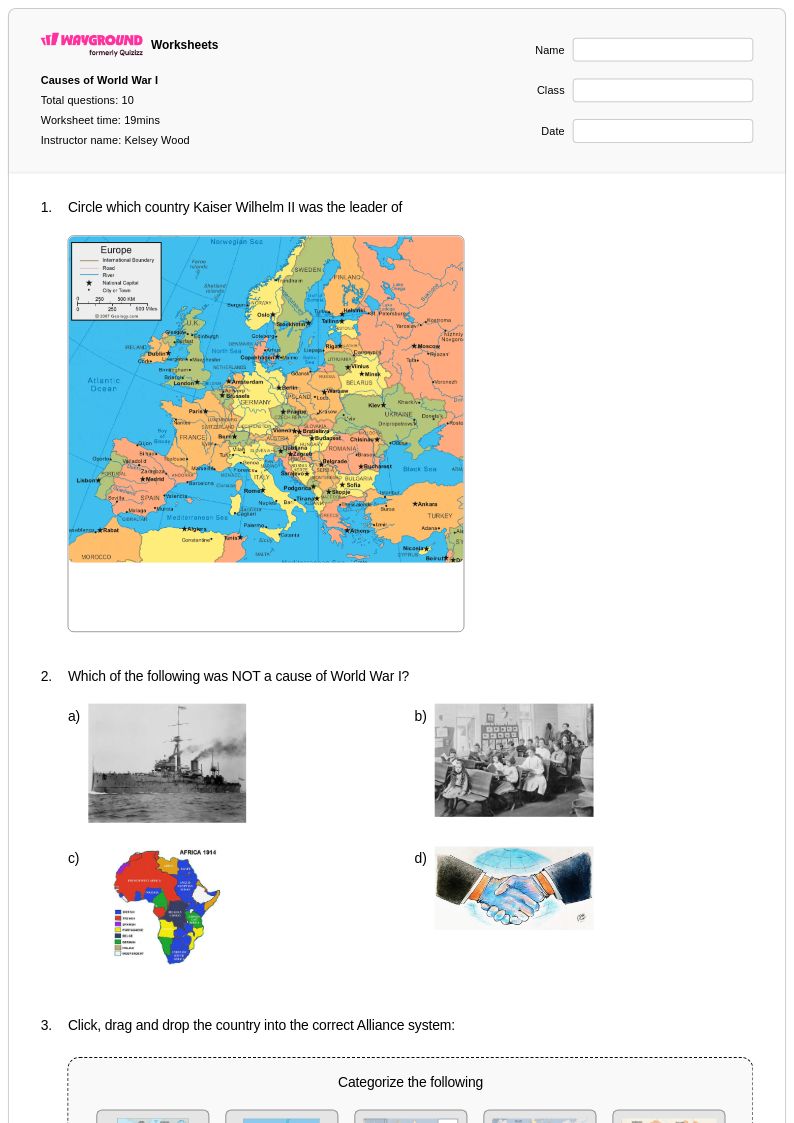
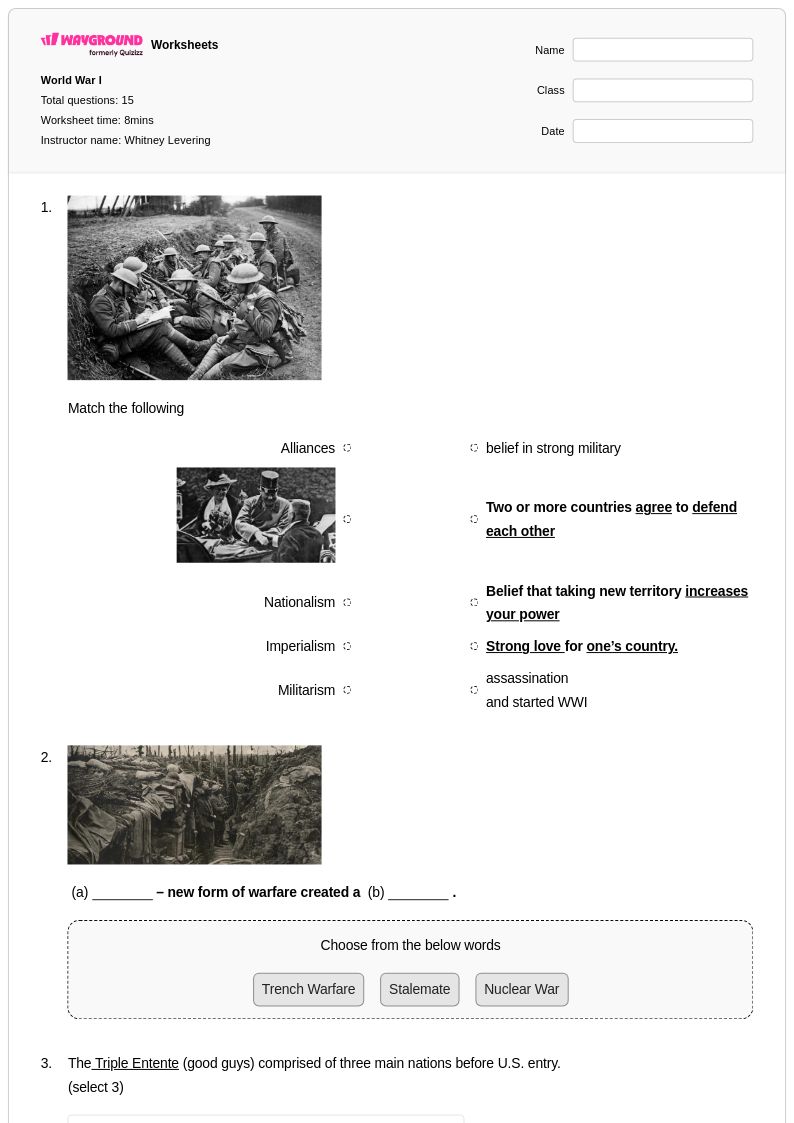
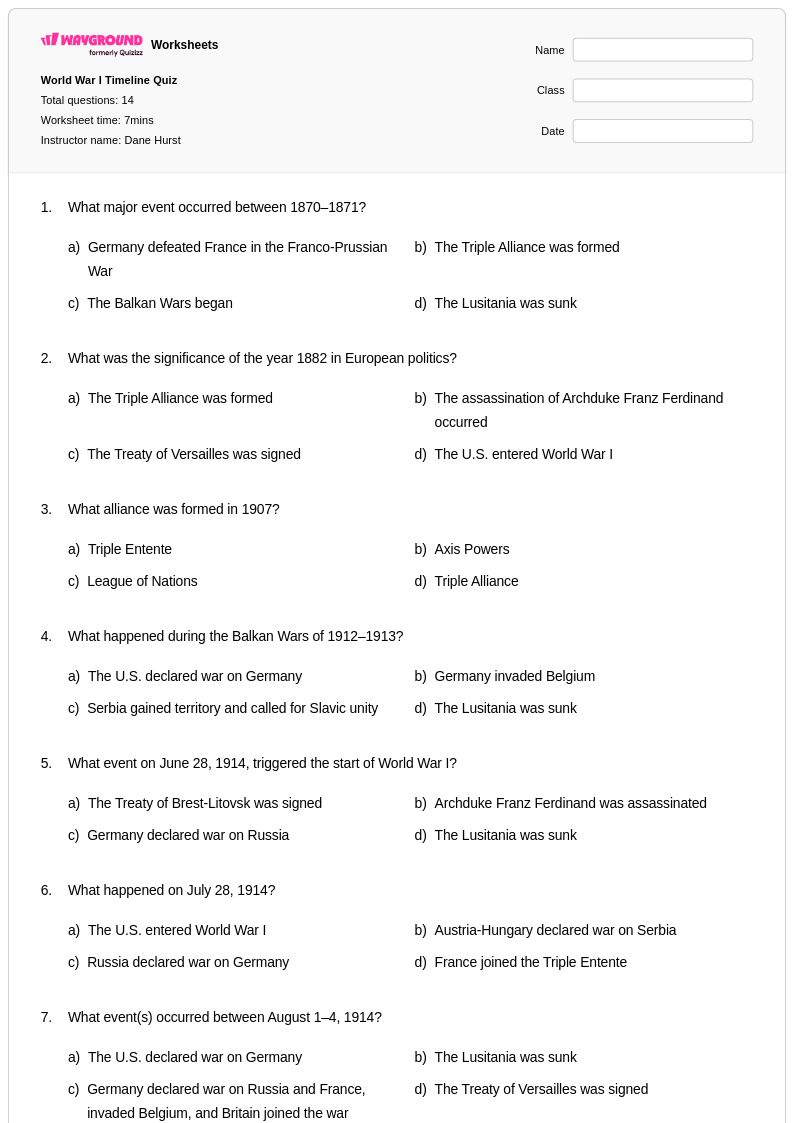
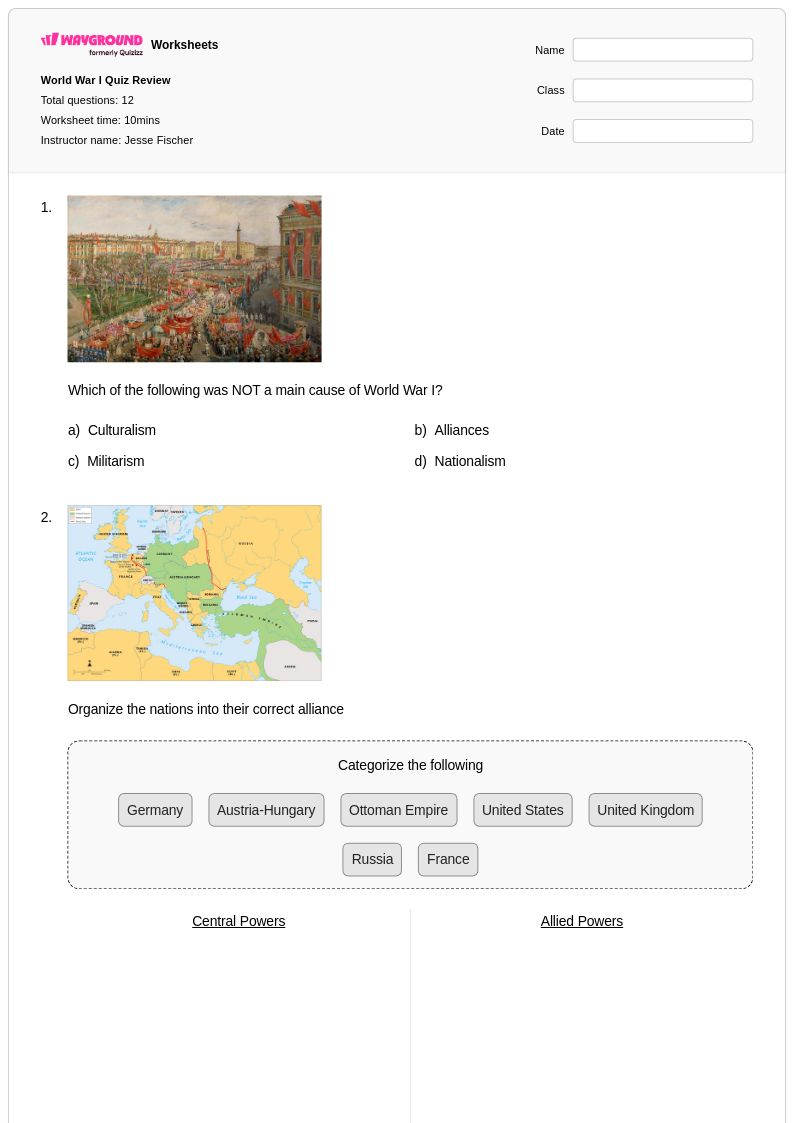
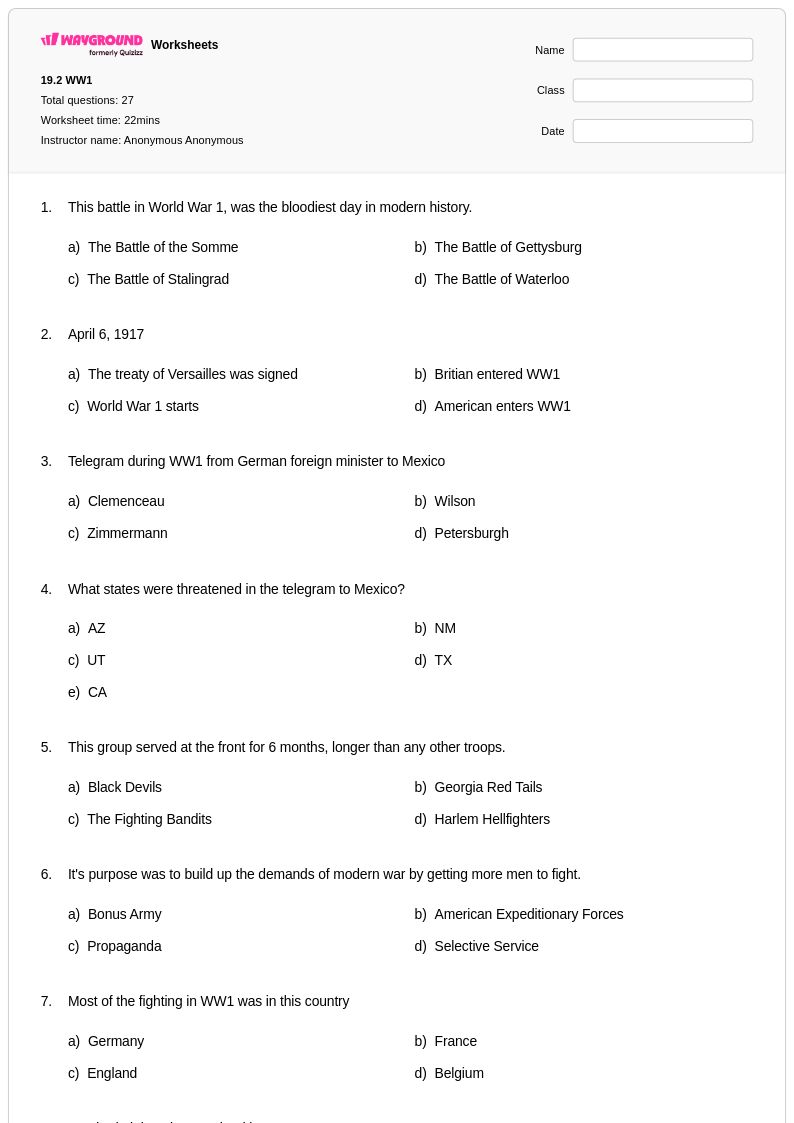
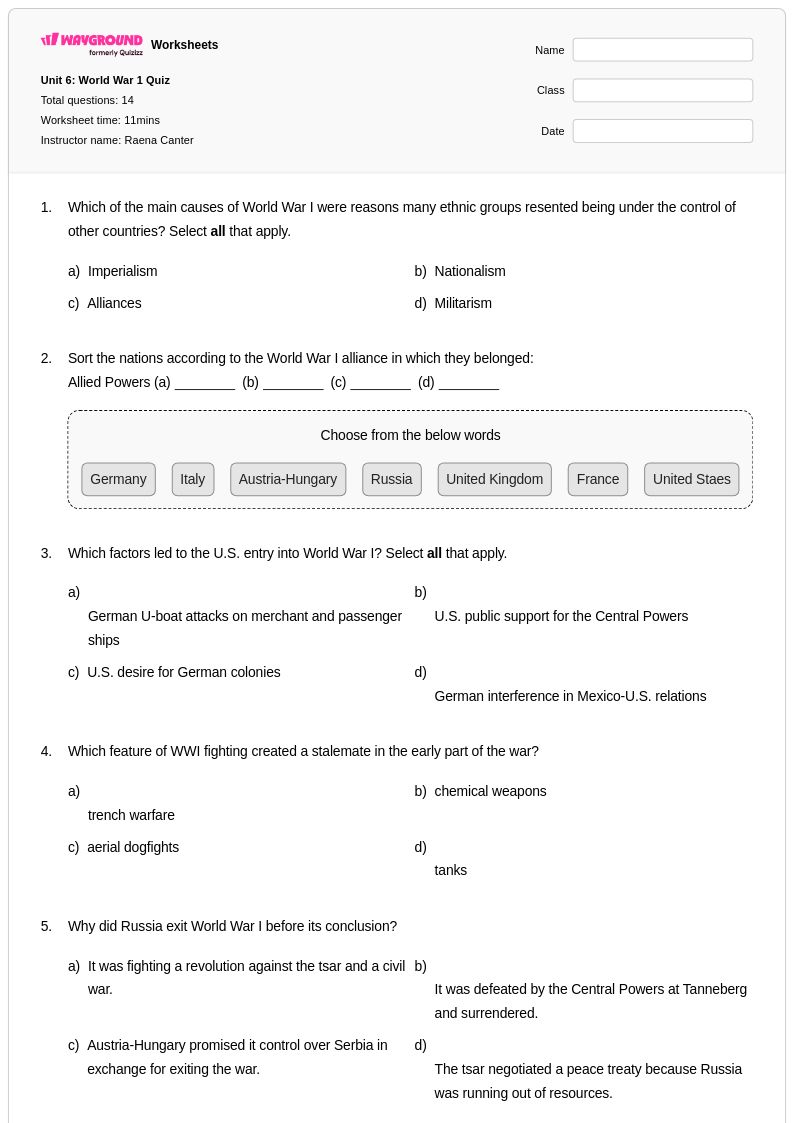
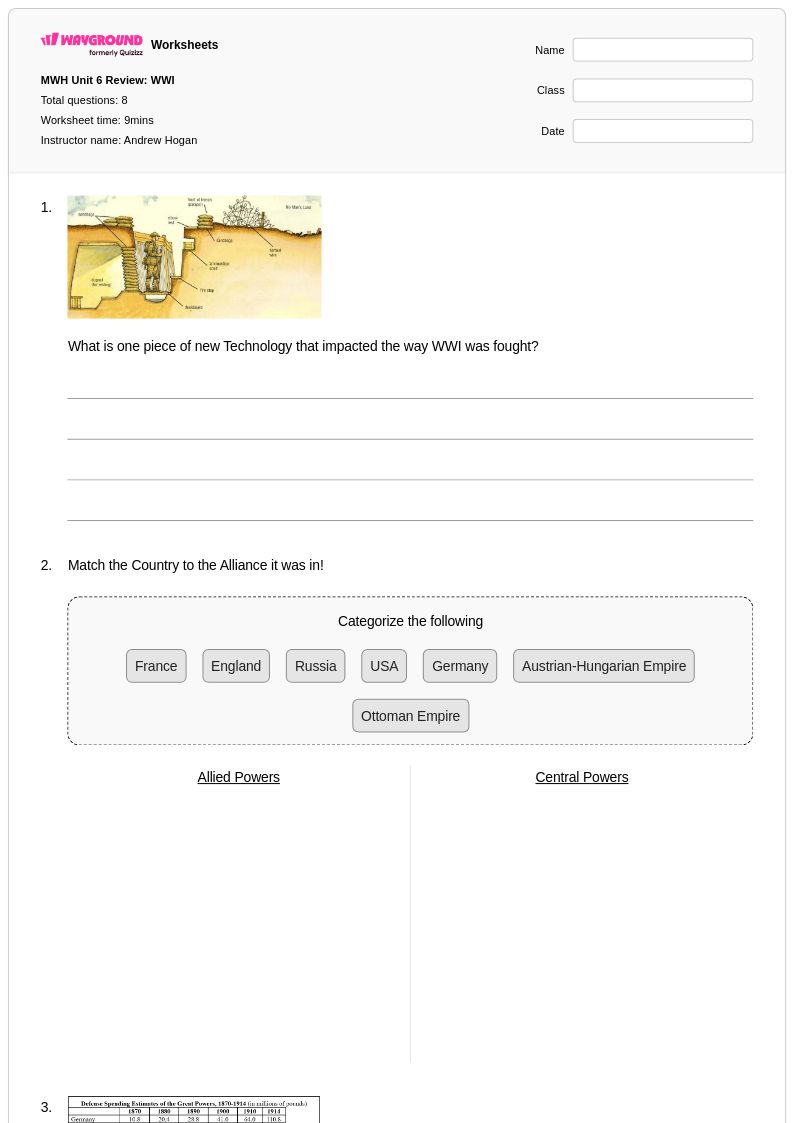
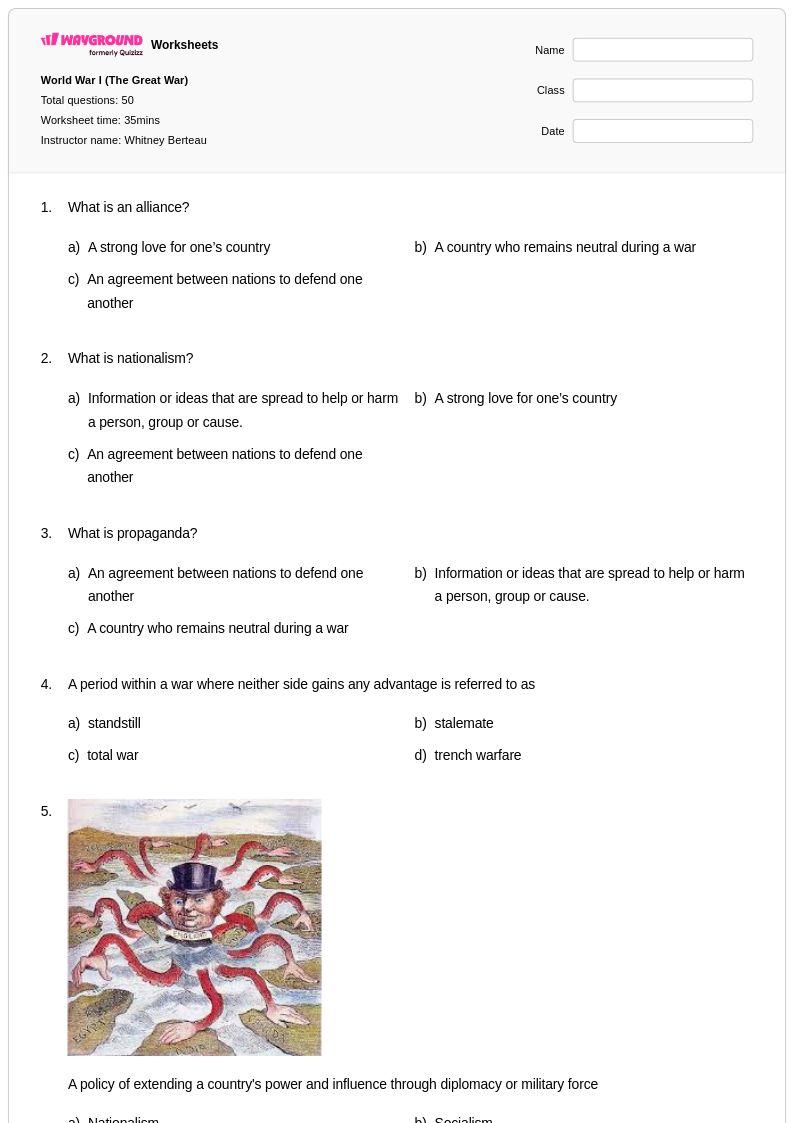
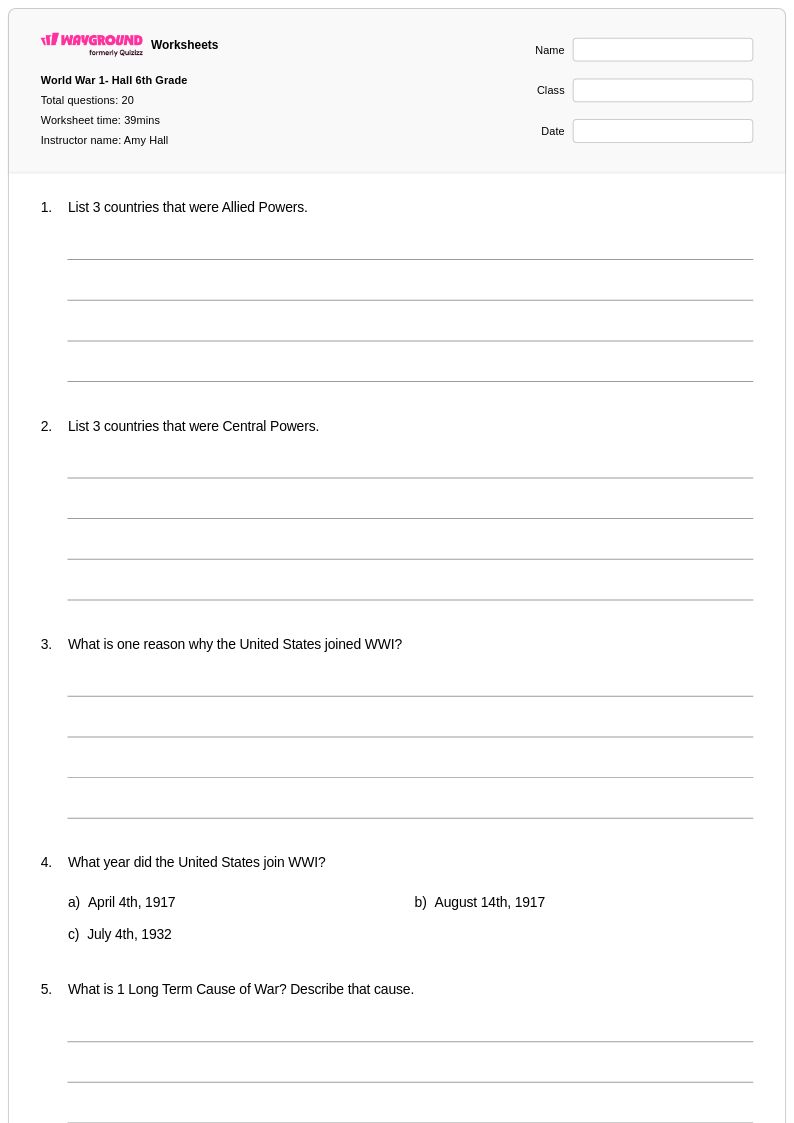
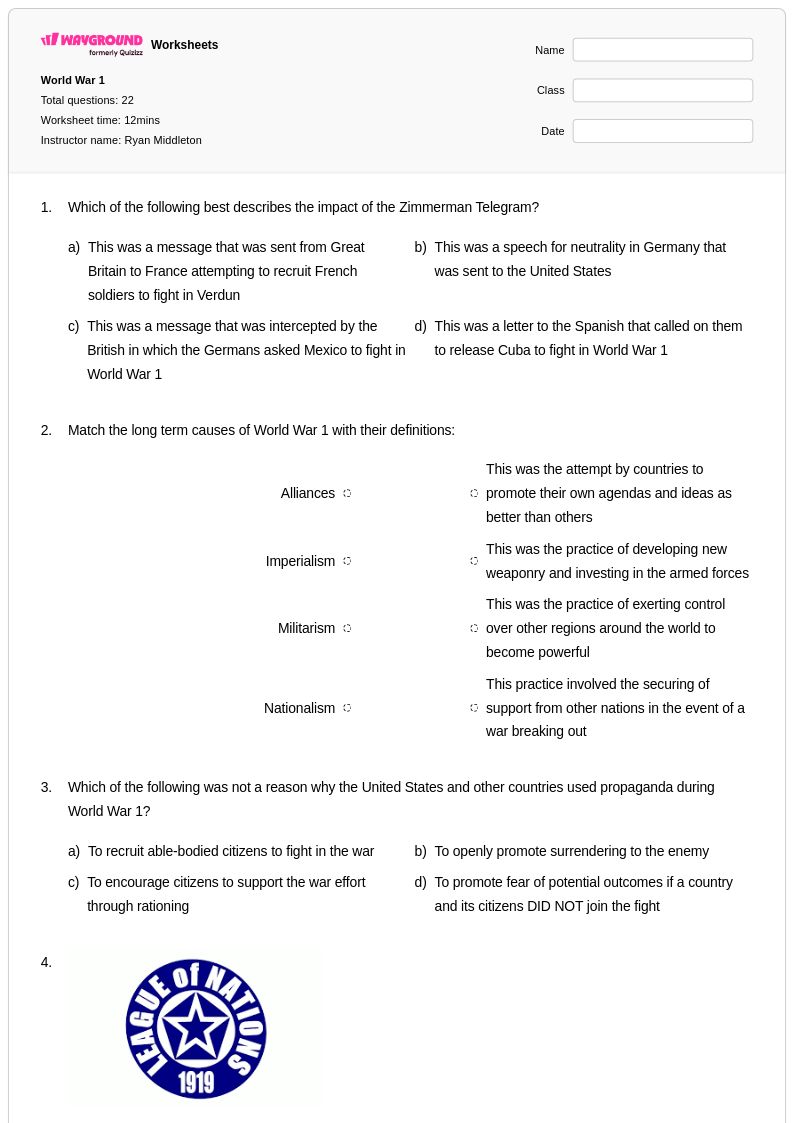
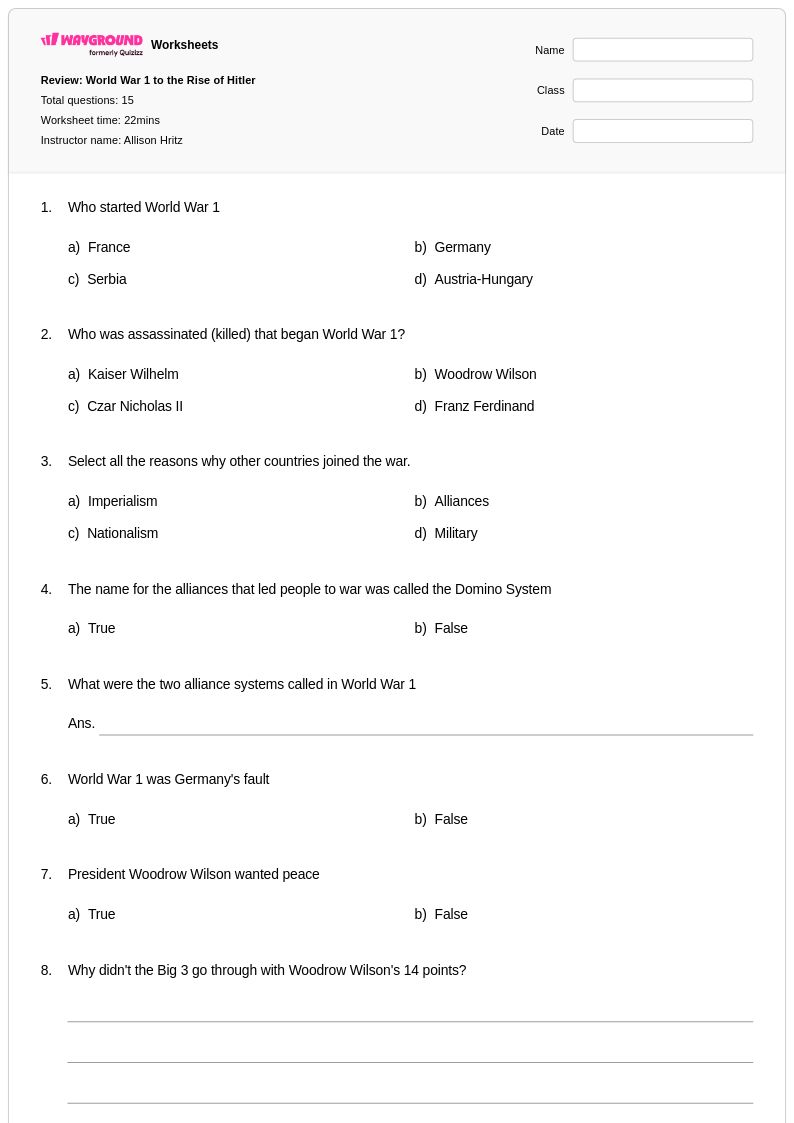
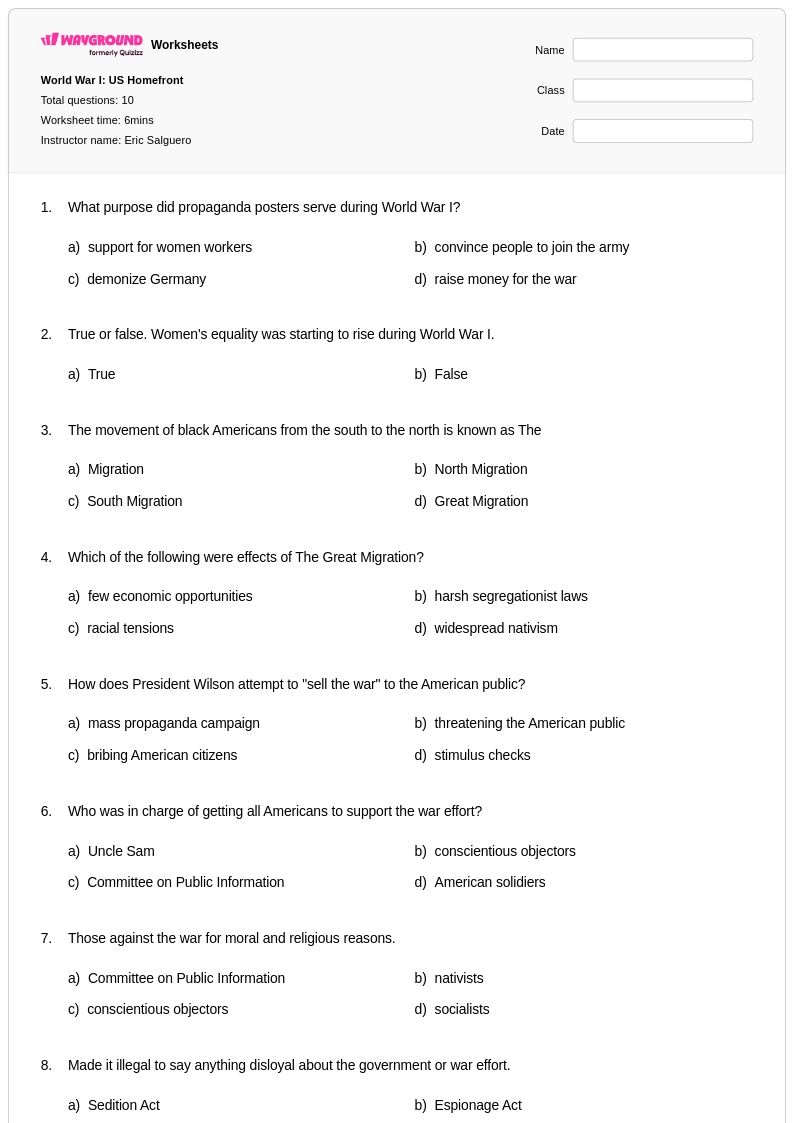
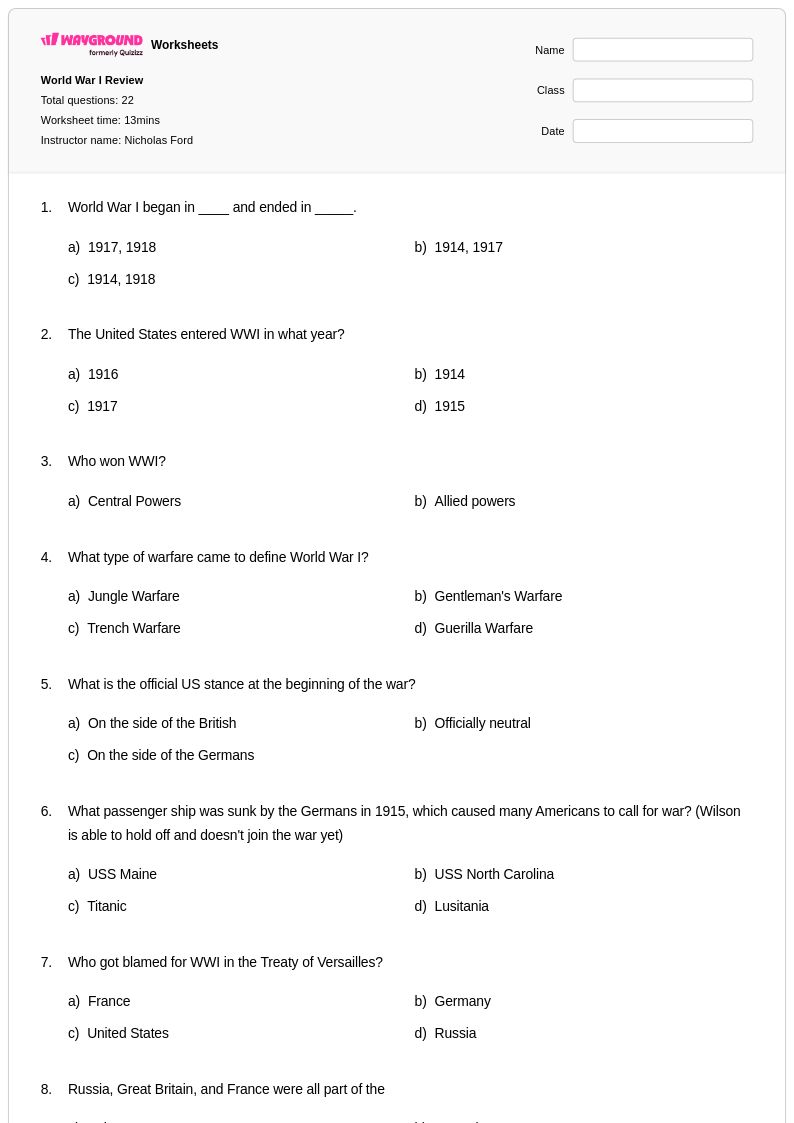
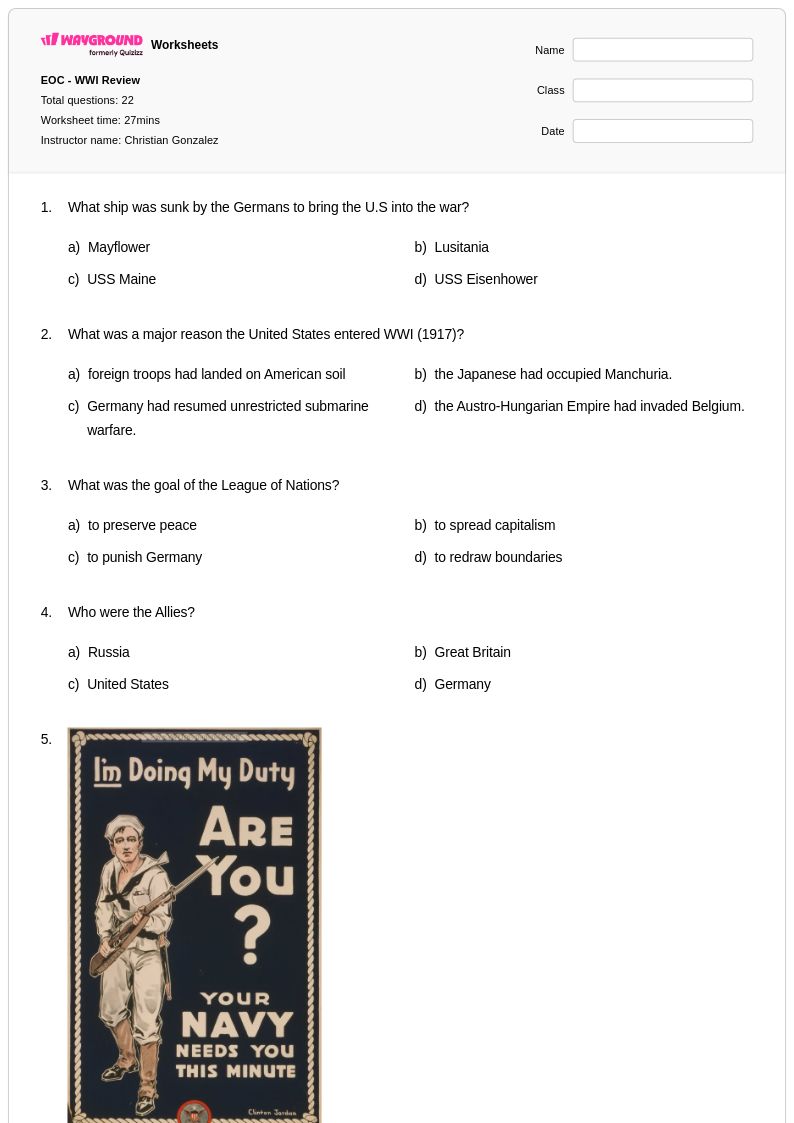
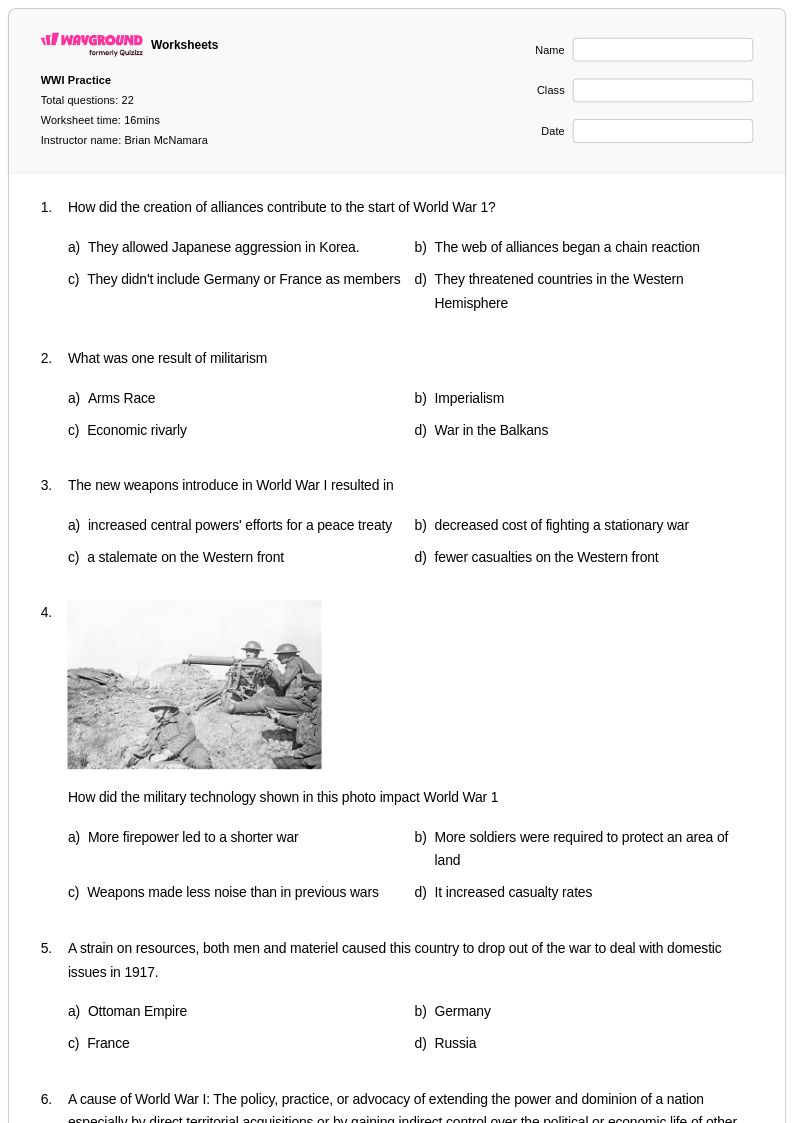
World War I Timeline worksheets for Year 10 students available through Wayground (formerly Quizizz) provide comprehensive chronological frameworks for understanding the complex sequence of events that shaped the Great War from 1914 to 1918. These educational resources strengthen critical analytical skills by requiring students to examine cause-and-effect relationships between major battles, political developments, and social changes throughout the conflict. Students engage with practice problems that challenge them to sequence pivotal moments such as the assassination of Archduke Franz Ferdinand, the declaration of war by major powers, significant military campaigns like the Battle of the Somme and Verdun, and the eventual armistice negotiations. Each worksheet includes detailed answer keys that support independent learning and self-assessment, while the free printable format ensures accessibility for diverse classroom environments and study situations.
Wayground (formerly Quizizz) empowers educators with an extensive collection of millions of teacher-created World War I Timeline resources specifically designed to meet the rigorous demands of Year 10 social studies curricula. The platform's advanced search and filtering capabilities enable teachers to locate materials that align with specific academic standards while accommodating various learning levels through built-in differentiation tools. Instructors can seamlessly customize timeline activities to focus on particular theaters of war, diplomatic negotiations, or home front developments, then distribute materials in both printable pdf formats for traditional classroom use and digital versions for interactive learning experiences. This flexibility proves invaluable for lesson planning, targeted remediation for students struggling with chronological thinking, enrichment opportunities for advanced learners, and systematic skill practice that builds historical reasoning abilities essential for success in advanced social studies coursework.
FAQs
How do I teach World War I timeline in sequence without overwhelming students?
Breaking the war into distinct phases helps students manage the volume of events: the July Crisis and outbreak (1914), the stalemate on the Western Front (1915–1916), the entry of the United States and Russian Revolution (1917), and the armistice and aftermath (1918). Teaching each phase as a cause-and-effect chain rather than a list of dates builds chronological reasoning and helps students see why events unfolded as they did. Anchoring each phase around one or two pivotal moments, such as the assassination of Archduke Franz Ferdinand or the Battle of the Somme, gives students a scaffold for placing surrounding events in context.
What are the most important events students should know on a World War I timeline?
Students should be able to place the following events in sequence: the assassination of Archduke Franz Ferdinand (June 1914), the chain of declarations of war (July–August 1914), the start of trench warfare on the Western Front, the sinking of the Lusitania (1915), the Battle of the Somme (1916), the Zimmermann Telegram and U.S. entry into the war (1917), the Russian Revolution and armistice on the Eastern Front (1917–1918), and the armistice on November 11, 1918. Understanding the causal links between these events is as important as memorizing the dates themselves.
What exercises help students practice sequencing World War I events?
Cut-and-sort timeline activities are highly effective because they require students to actively reconstruct the chronological order of events rather than passively read a list. Cause-and-effect mapping exercises, where students connect a political decision to its military consequence, build deeper understanding than simple sequencing alone. Worksheets that ask students to identify turning points, such as the U.S. entry into the war or the Hundred Days Offensive, push students to evaluate not just when events happened but why certain moments changed the direction of the conflict.
What mistakes do students commonly make when learning the World War I timeline?
Students frequently conflate the causes of the war with the trigger, treating the assassination of Franz Ferdinand as the sole cause rather than understanding the underlying tensions of militarism, alliances, imperialism, and nationalism that made war likely. Another common error is treating the Western Front as the entire war, overlooking the Eastern Front, the Gallipoli Campaign, and the war in the Middle East. Students also struggle to distinguish between the Armistice of November 1918 and the Treaty of Versailles signed in 1919, leading to confusion about when the war actually ended versus when it was formally settled.
How do I use Wayground's World War I Timeline worksheets in my classroom?
Wayground's World War I Timeline worksheets are available as printable PDFs for traditional classroom use and in digital formats for technology-integrated or remote learning environments, giving teachers flexibility in how they assign and collect work. Each worksheet includes a complete answer key, making them practical for independent practice, guided instruction, or homework. Teachers can also host worksheets as a quiz directly on Wayground, enabling real-time student responses and immediate feedback on chronological accuracy and historical analysis tasks.
How do I differentiate World War I timeline instruction for students at different skill levels?
For students who need additional support, providing a partially completed timeline with key dates already placed reduces cognitive load while still requiring students to analyze and sequence remaining events. More advanced students benefit from open-ended analysis tasks, such as arguing which single event on the timeline had the greatest long-term consequence and defending that claim with evidence. On Wayground, teachers can apply accommodations such as read aloud, extended time, and reduced answer choices to individual students without disrupting the experience of the rest of the class, allowing the same worksheet to serve a range of learners simultaneously.