
Recommended Topics for you
- Combining Sentences
- Describing a Setting
- Figurative Writing
- Paragraph Structure
- Parts of a Friendly Letter
- Relevant Details
- Sentence Expansion
- Sentence Variety
- Sequencing
- Speaker Listener Technique
- Topic Sentence
- Transitional Devices
- Using Sensory Details
- Using Time Order Words
- Voice in Writing
- Writing a Strong Ending
- Writing a Strong Introduction
15 Q
3rd
10 Q
3rd
11 Q
3rd - 5th
21 Q
1st - 5th
13 Q
3rd
10 Q
3rd
16 Q
1st - 5th
21 Q
3rd
6 Q
2nd - Uni
10 Q
3rd
14 Q
1st - 5th
227 Q
3rd

18 Q
1st - 5th
26 Q
3rd
10 Q
1st - 3rd
19 Q
3rd
10 Q
3rd
11 Q
3rd
14 Q
1st - 3rd
11 Q
3rd
10 Q
3rd - 5th
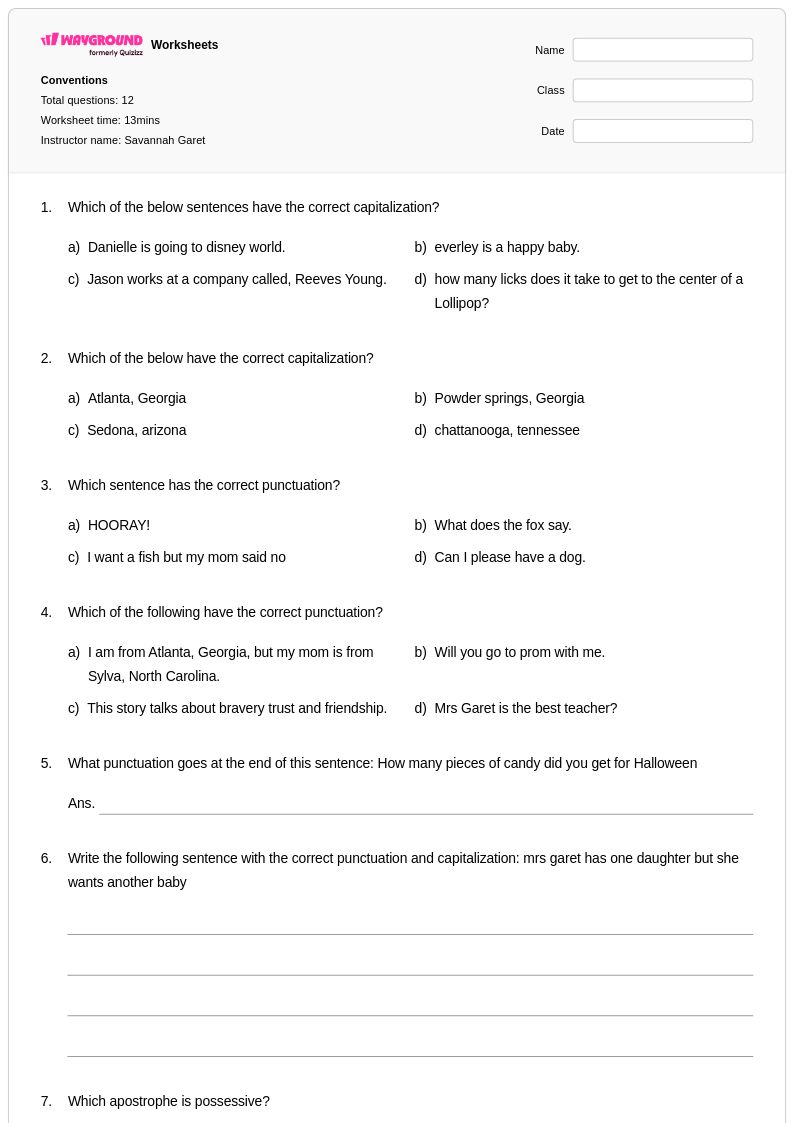
12 Q
3rd
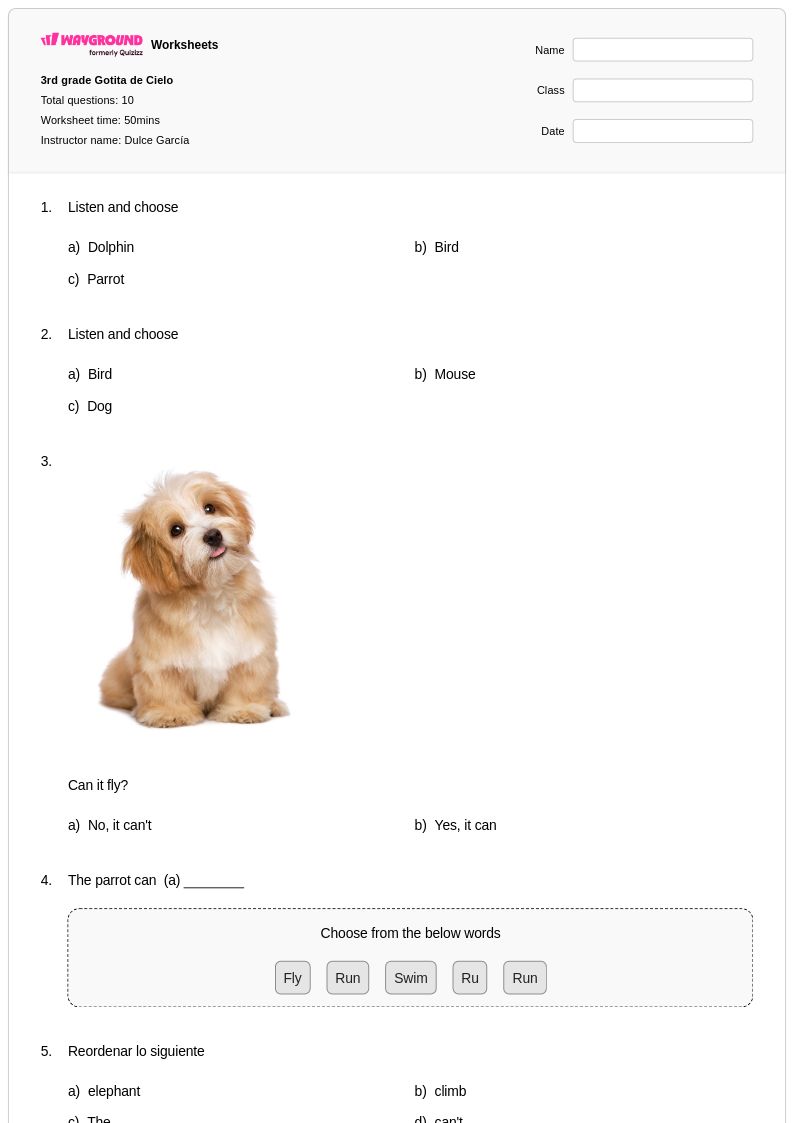
10 Q
3rd
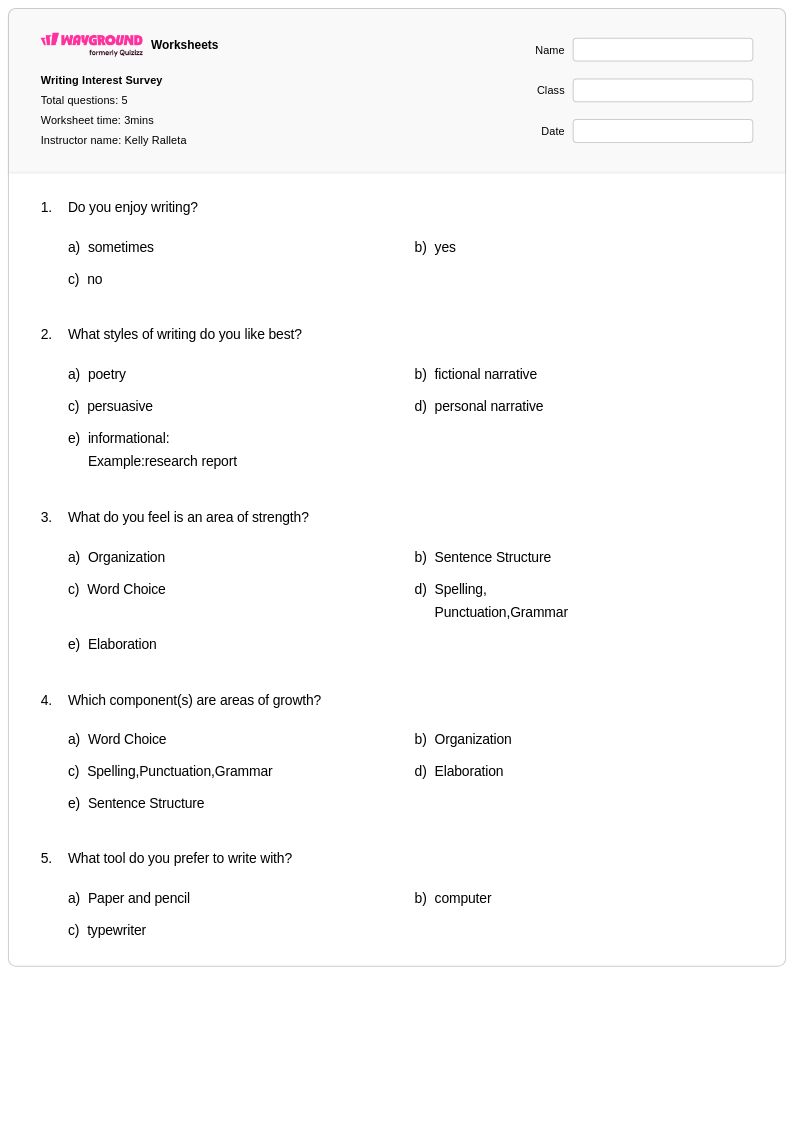
5 Q
3rd - 6th
Explore Writing Organization and Structure Worksheets by Grades
Explore Writing Organization and Structure Worksheets for year 3 by Topic
- Combining Sentences
- Describing a Setting
- Figurative Writing
- Paragraph Structure
- Parts of a Friendly Letter
- Relevant Details
- Sentence Expansion
- Sentence Variety
- Sequencing
- Speaker Listener Technique
- Topic Sentence
- Transitional Devices
- Using Sensory Details
- Using Time Order Words
- Voice in Writing
- Writing a Strong Ending
- Writing a Strong Introduction
Explore Other Subject Worksheets for year 3
Explore printable Writing Organization and Structure worksheets for Year 3
Writing Organization and Structure worksheets for Year 3 students available through Wayground (formerly Quizizz) provide essential practice in developing logical, coherent written compositions. These comprehensive printables focus on teaching young writers how to sequence ideas effectively, create clear beginnings and endings, and organize supporting details in meaningful ways. Students work through practice problems that strengthen their ability to use graphic organizers, outline their thoughts before writing, and arrange sentences and paragraphs in logical order. Each worksheet includes an answer key to support independent learning and help students self-assess their organizational skills. The free pdf resources cover fundamental structural elements such as topic sentences, supporting details, transitional words, and proper paragraph formation, giving third-grade students the scaffolding they need to produce well-structured writing pieces.
Wayground (formerly Quizizz) supports educators with millions of teacher-created resources specifically designed to enhance Year 3 writing instruction through robust organizational skill development. The platform's advanced search and filtering capabilities allow teachers to quickly locate worksheets that align with specific writing standards and match their students' developmental needs. These differentiation tools enable instructors to customize assignments for diverse learners, providing additional support for struggling writers while offering enrichment opportunities for advanced students. Available in both printable and digital formats, including downloadable pdf versions, these Writing Organization and Structure materials seamlessly integrate into lesson planning, remediation sessions, and independent practice time. Teachers can efficiently address individual student needs while building classroom-wide competency in essential writing skills that form the foundation for more complex composition tasks in upper elementary grades.
FAQs
How do I teach writing organization and structure to students?
What are the most common mistakes students make with writing organization?
What exercises help students practice paragraph structure and transitions?
How can I help struggling writers understand how to organize an essay?
How do I use Wayground's writing organization and structure worksheets in my classroom?
How do I teach students to use transitional words and phrases effectively?
What writing organization topics should I prioritize at the middle school level?