Free Printable Zero Conditional Worksheets for Year 11
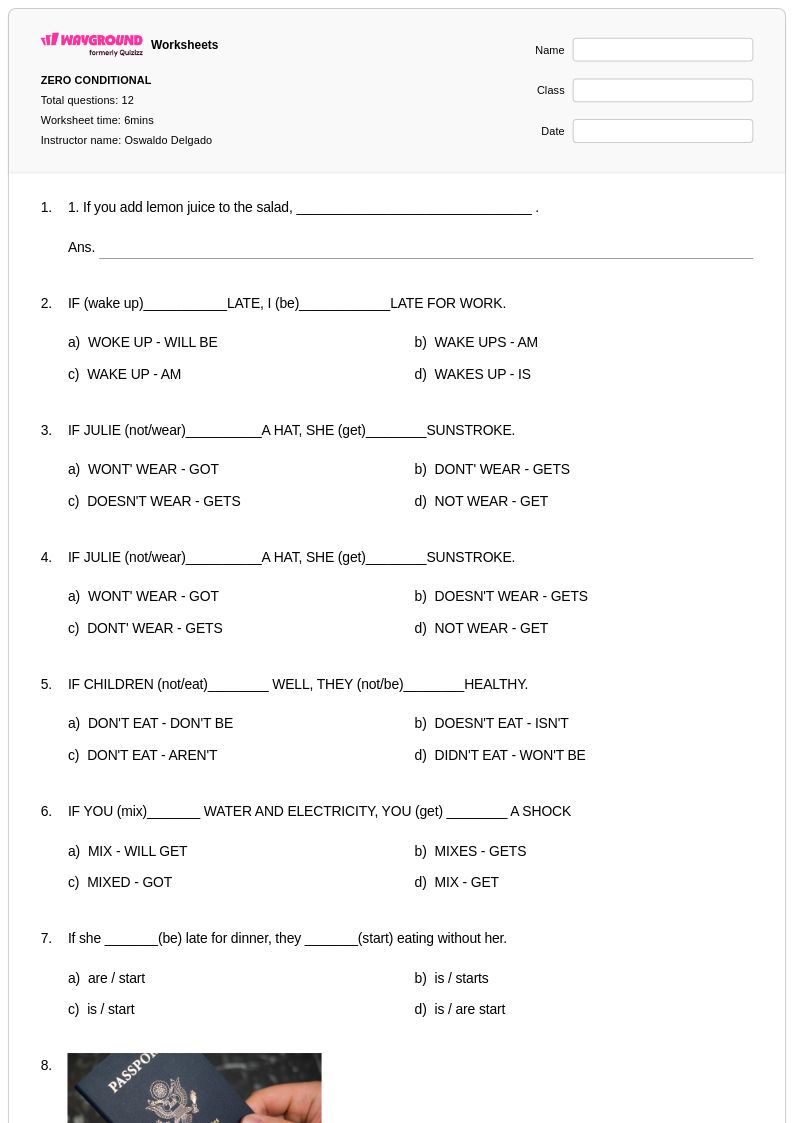
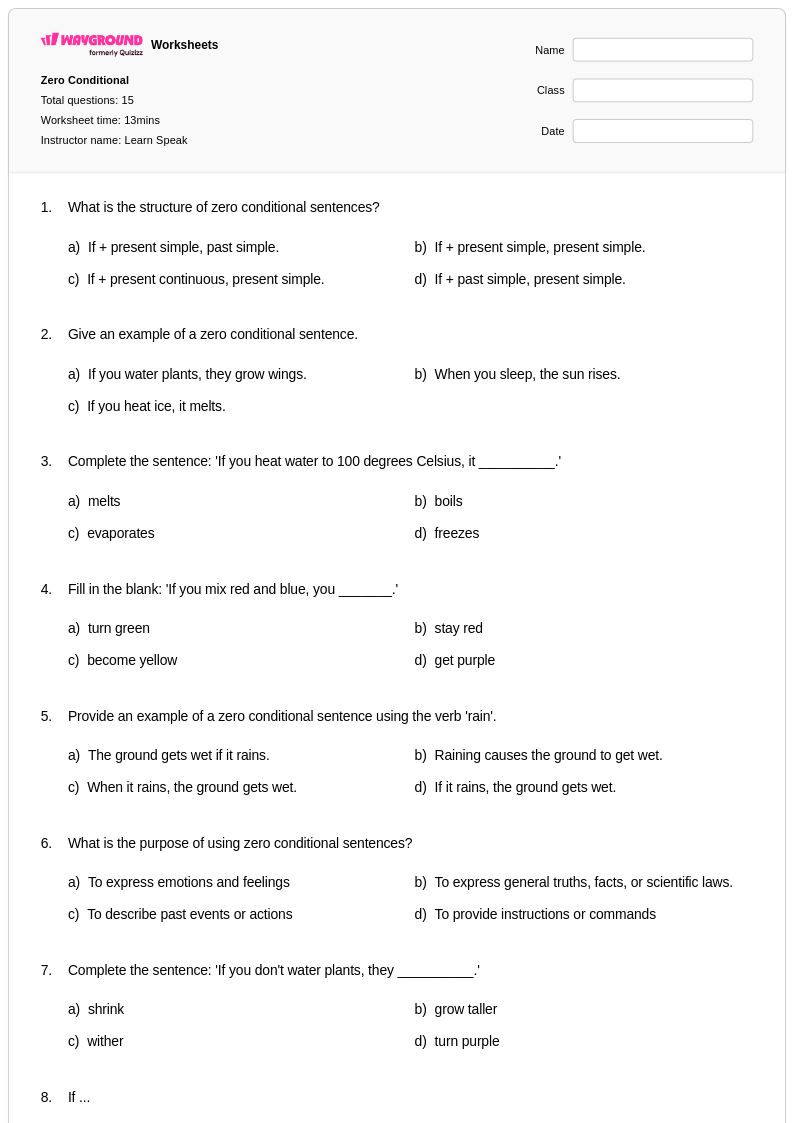
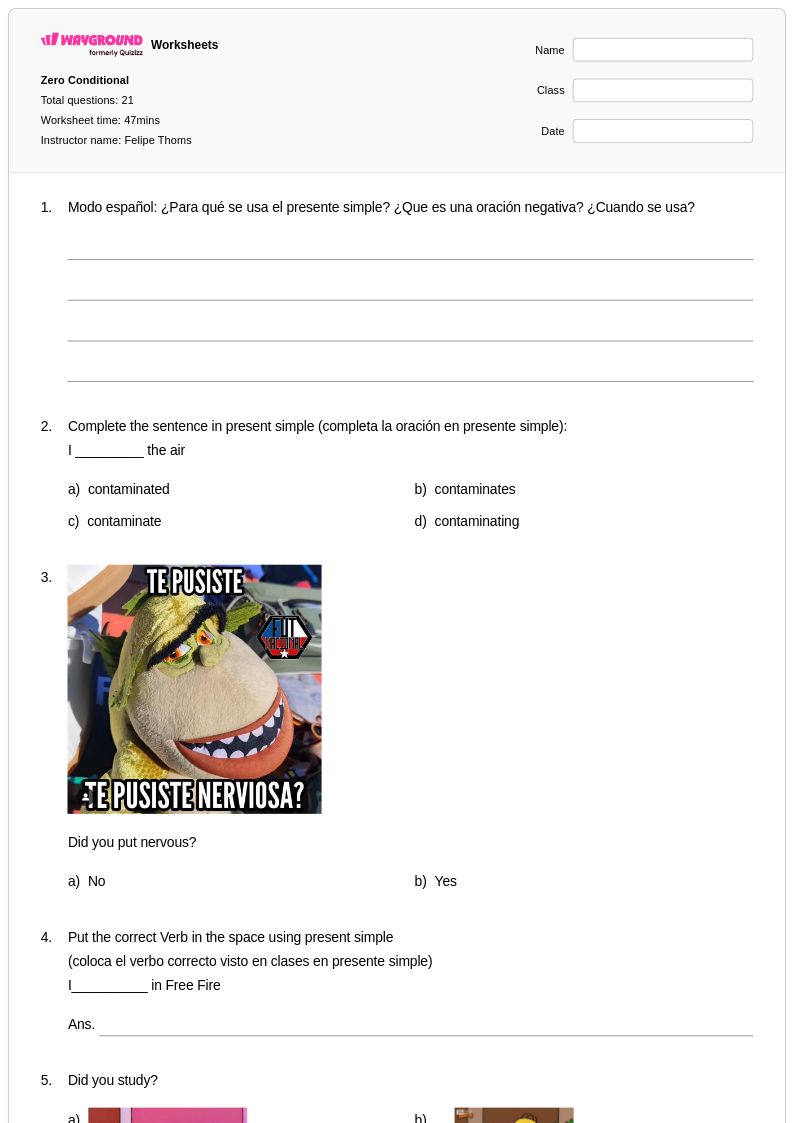
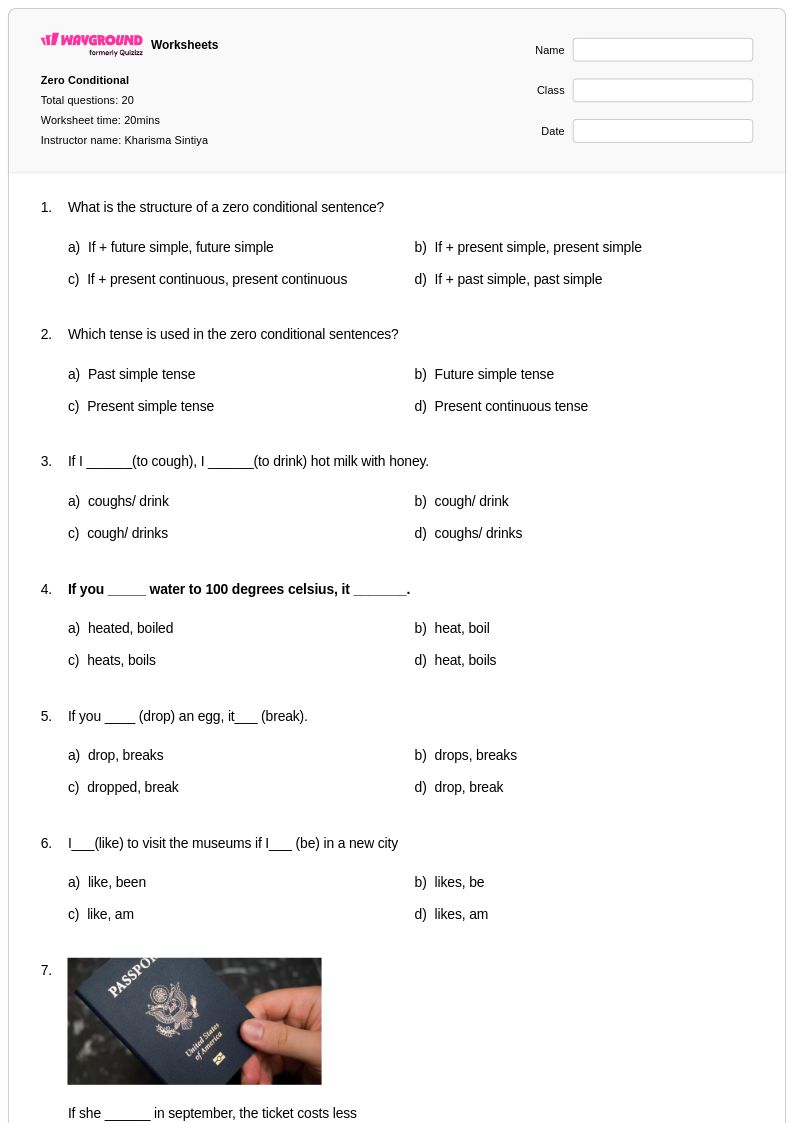
Year 11 zero conditional free worksheets and printables help students master if-then grammar structures through engaging practice problems with comprehensive answer keys available as downloadable PDFs.
Explore printable Zero Conditional worksheets for Year 11
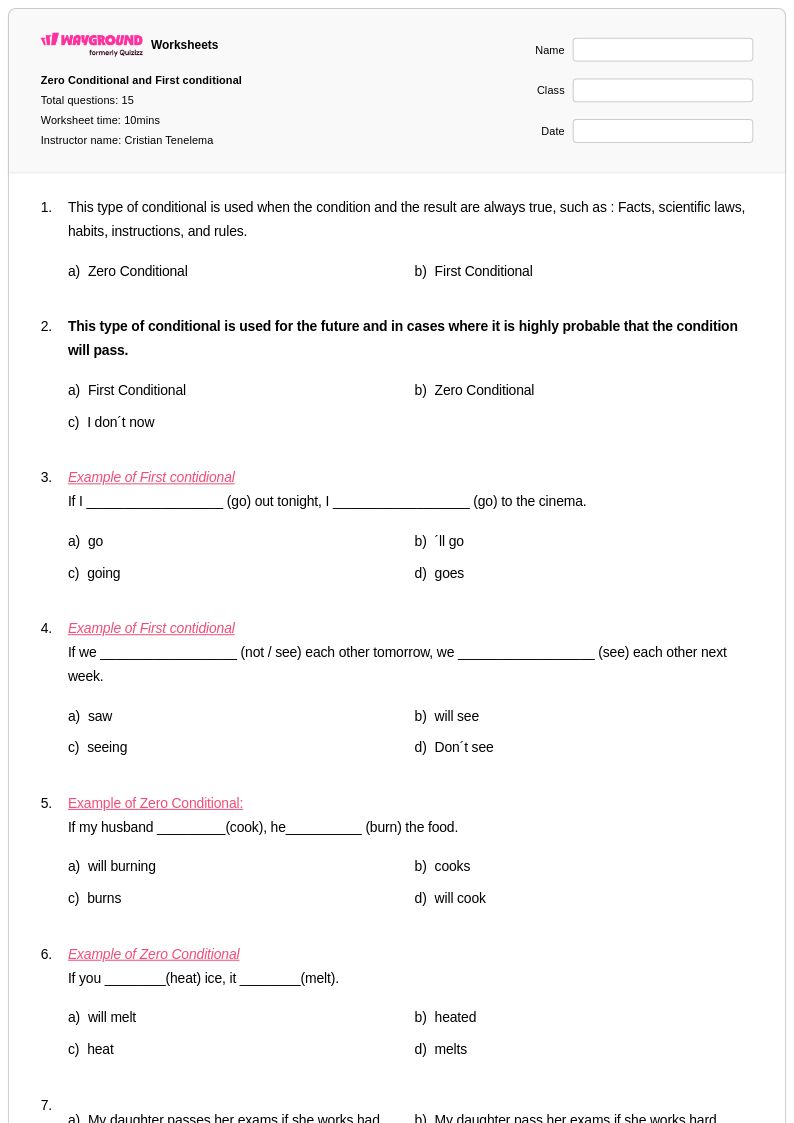
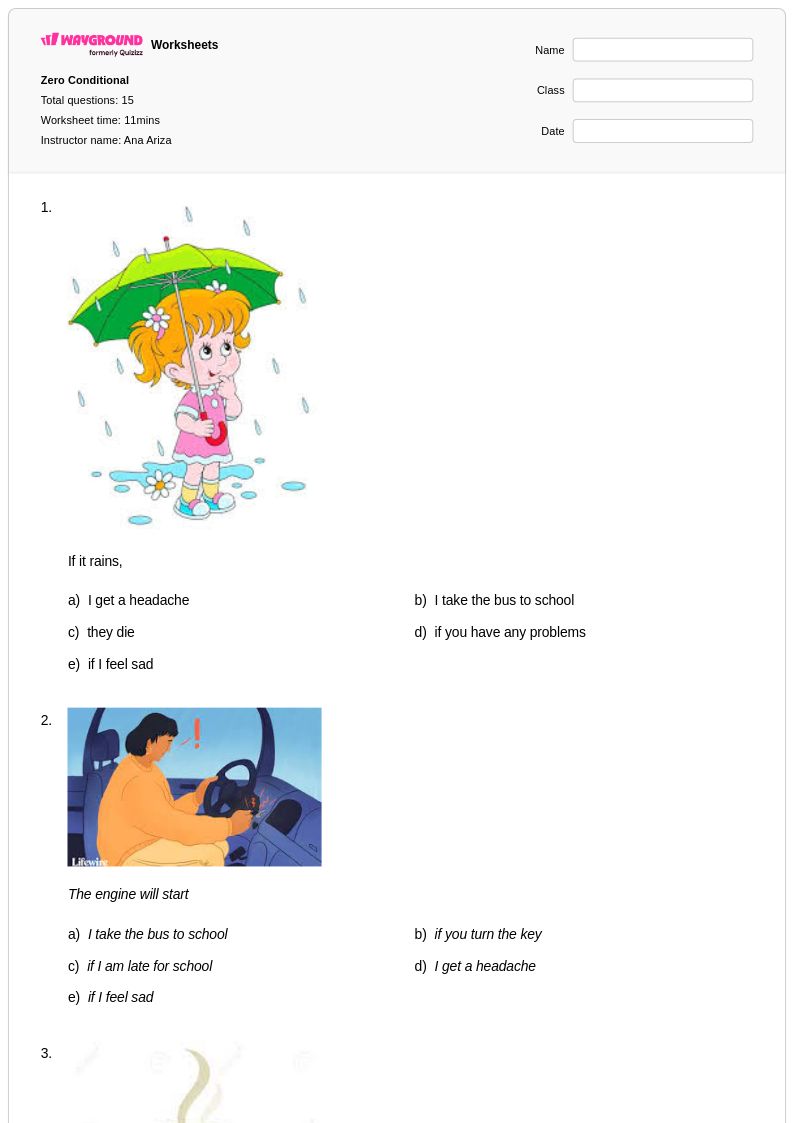
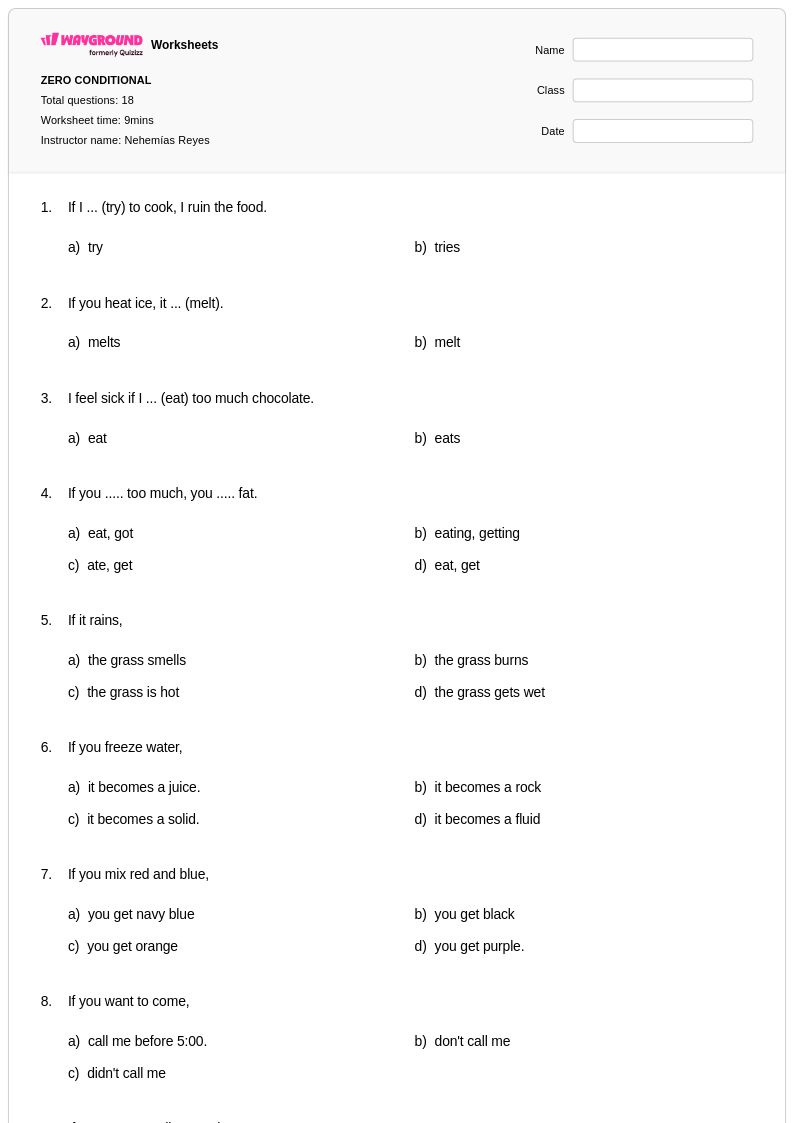
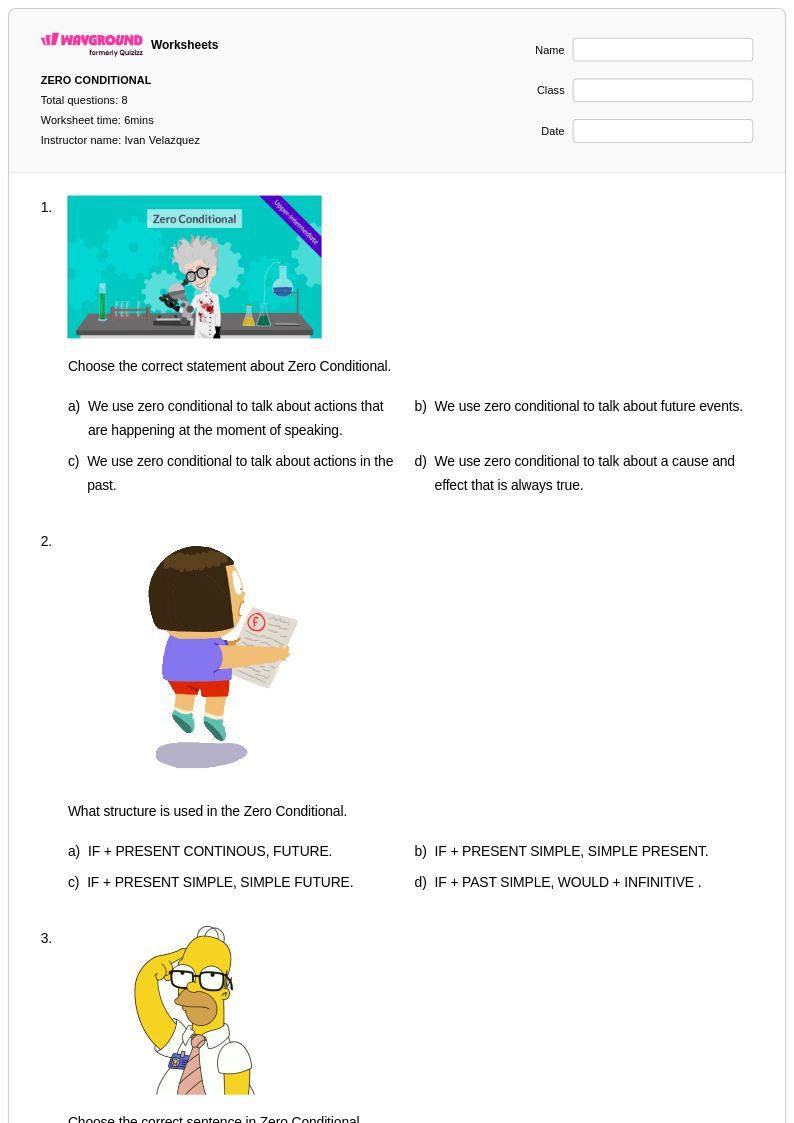
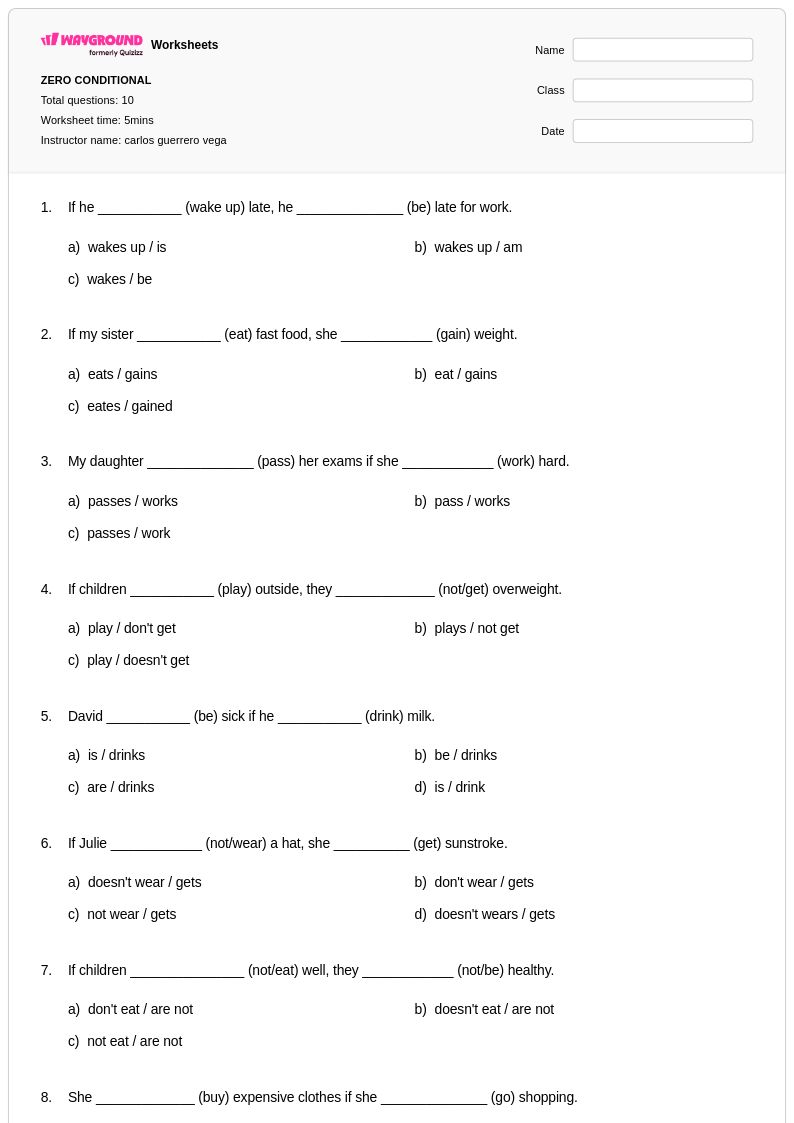
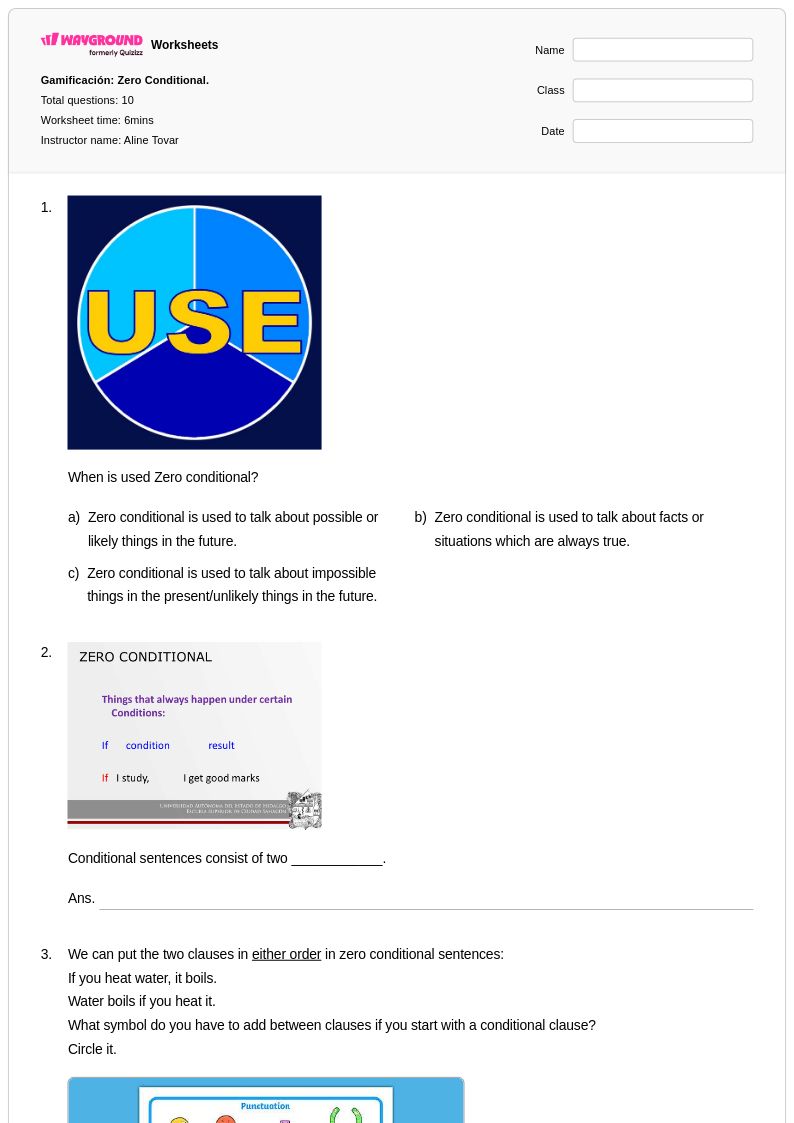
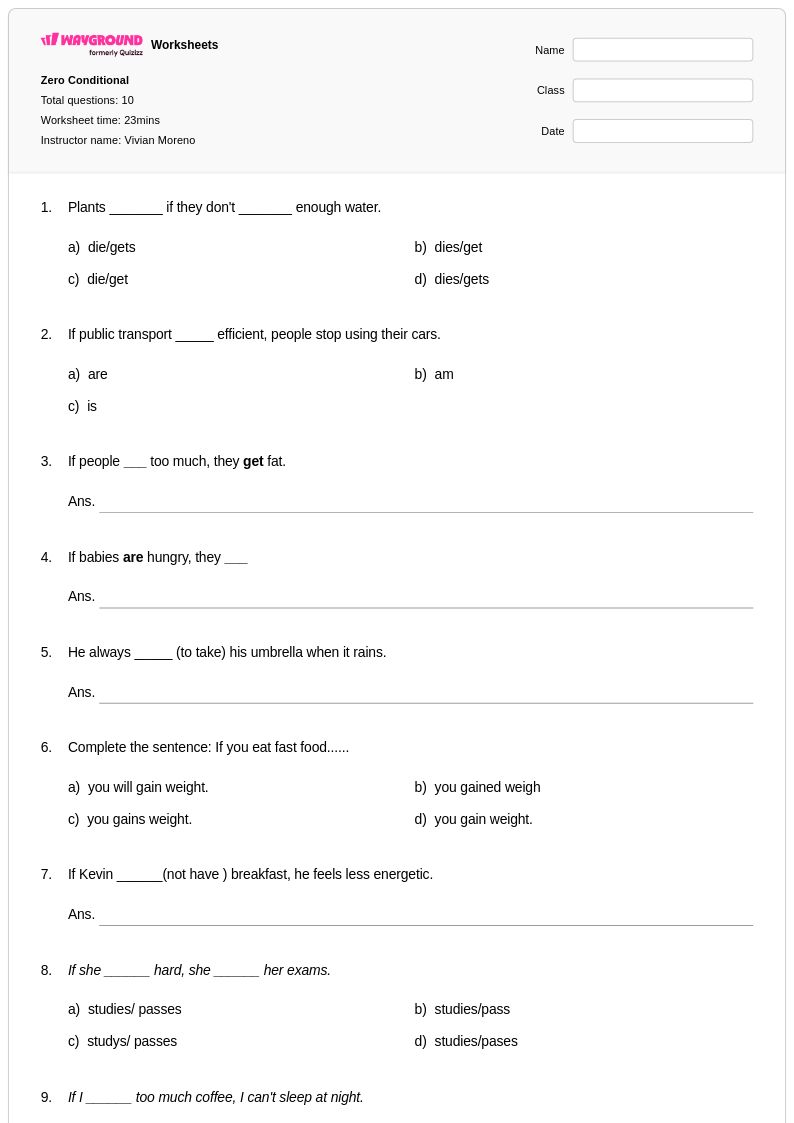
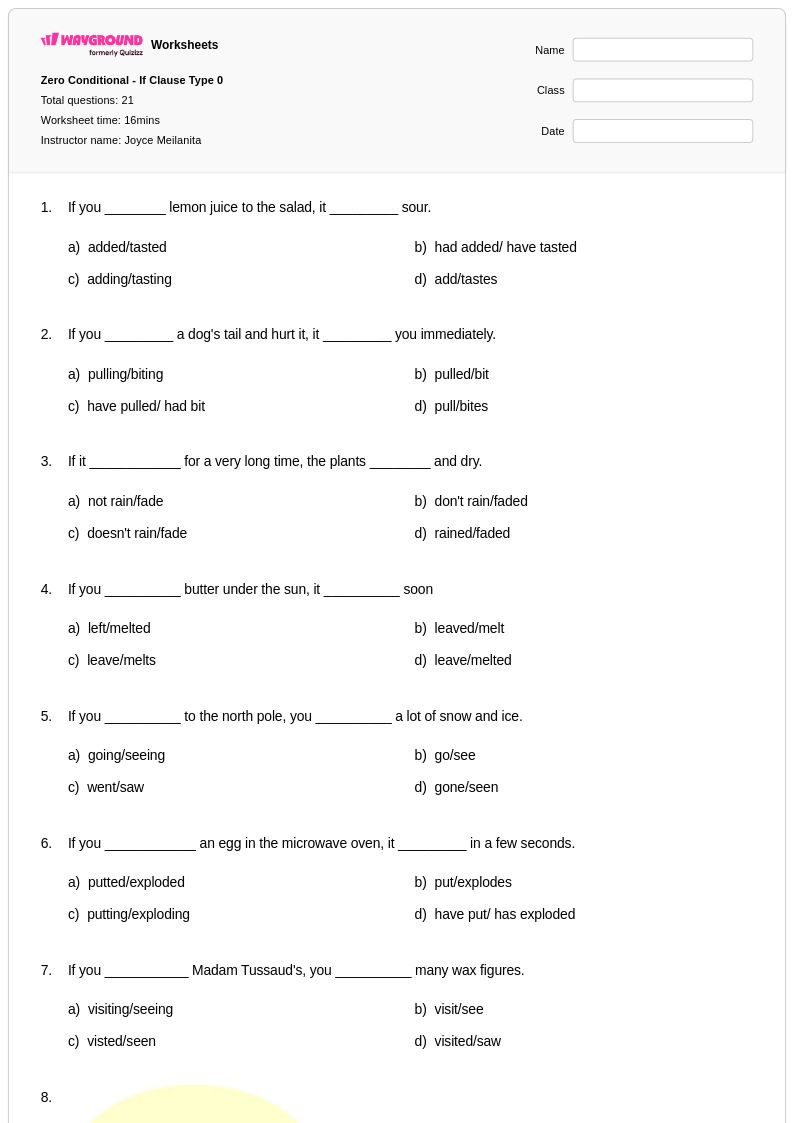
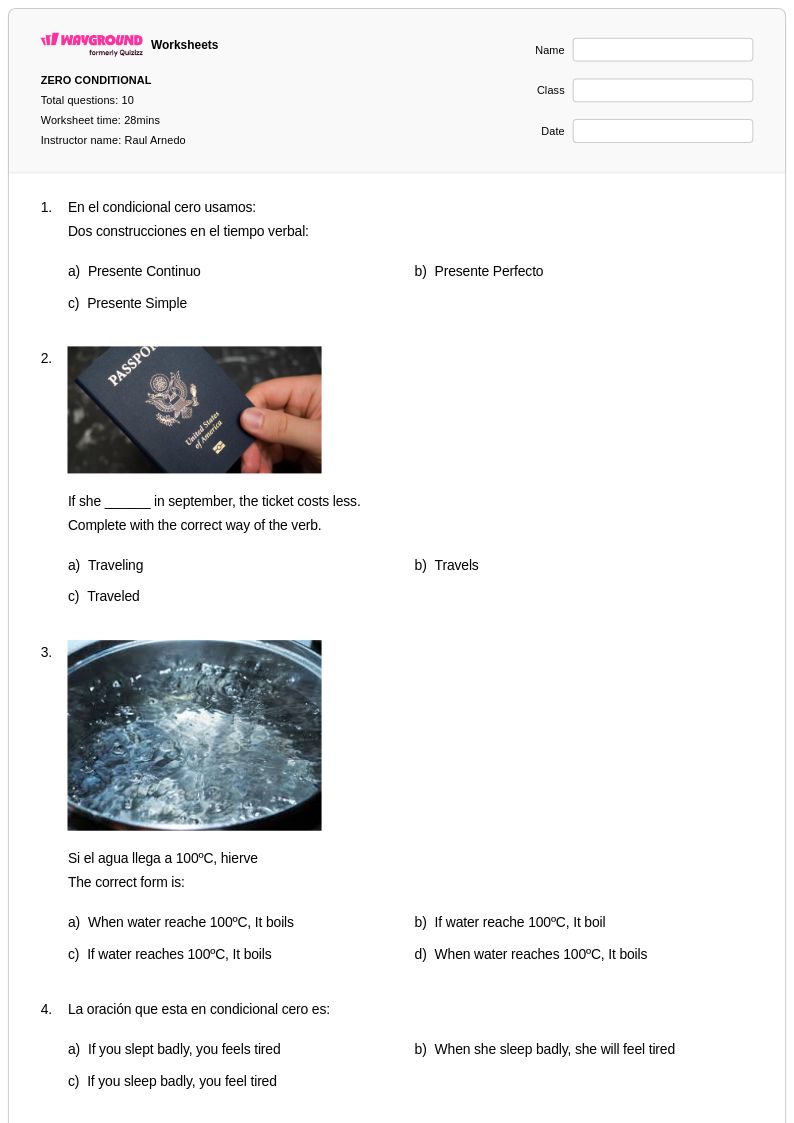
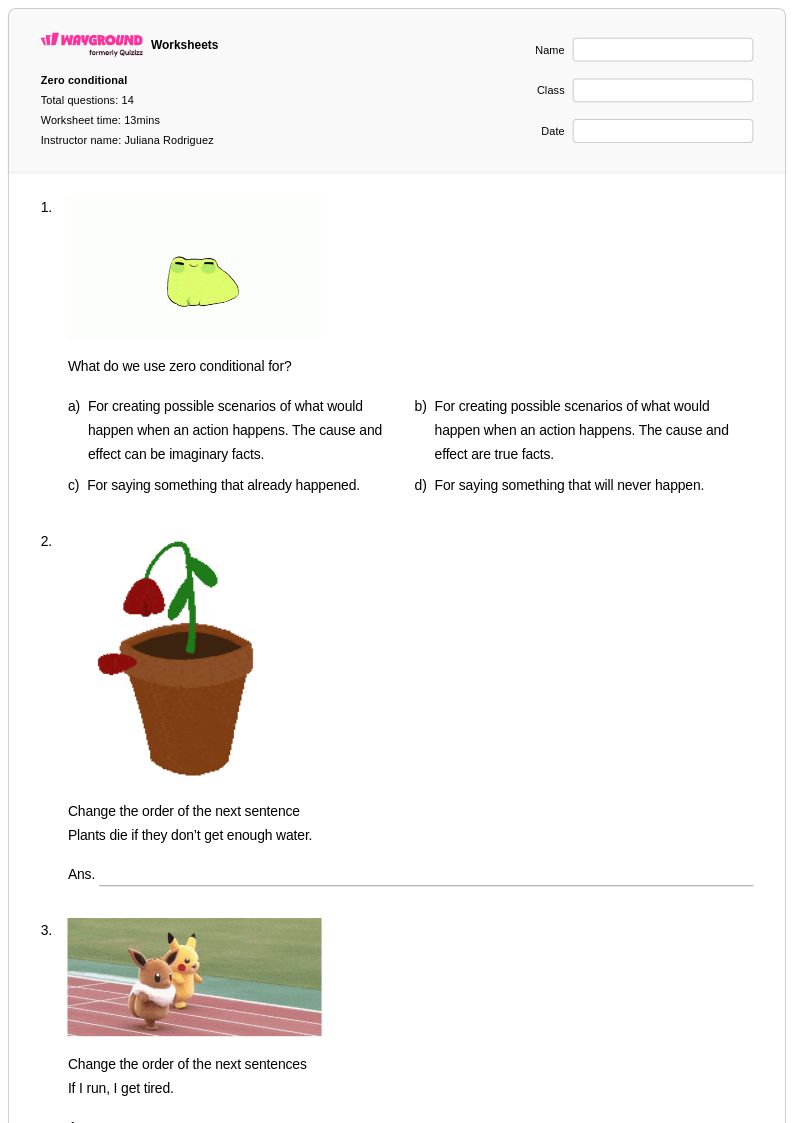
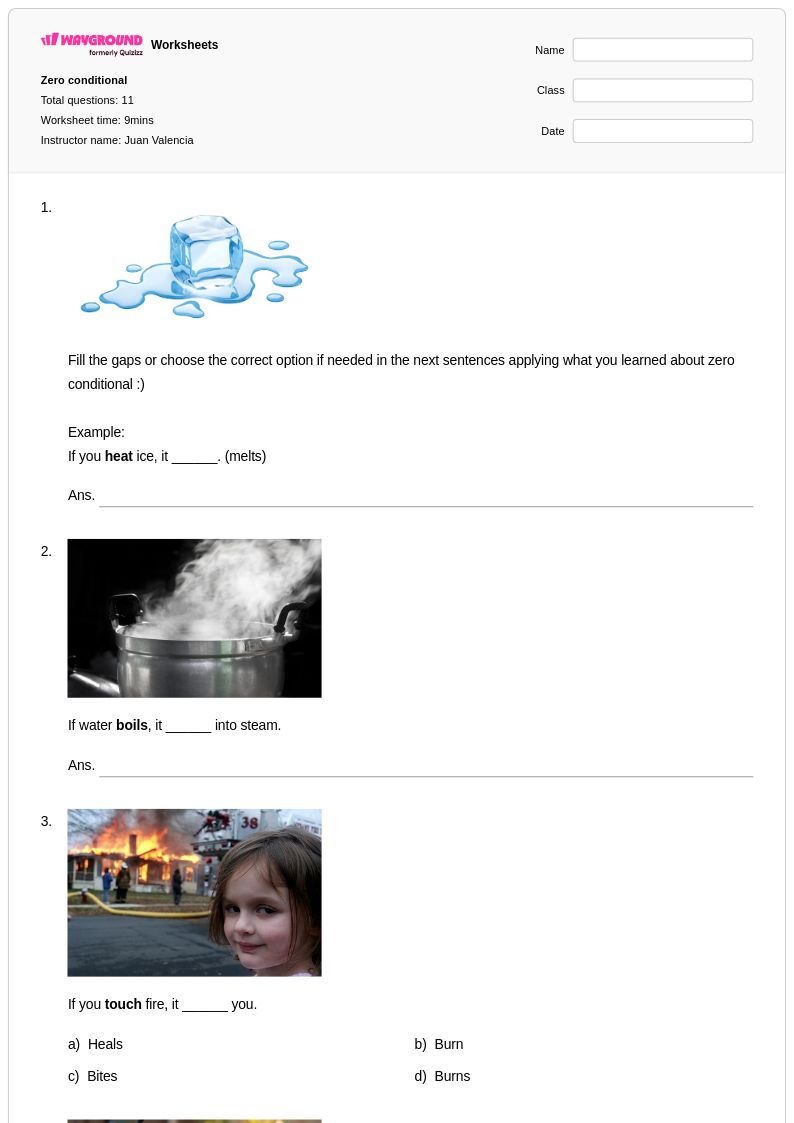
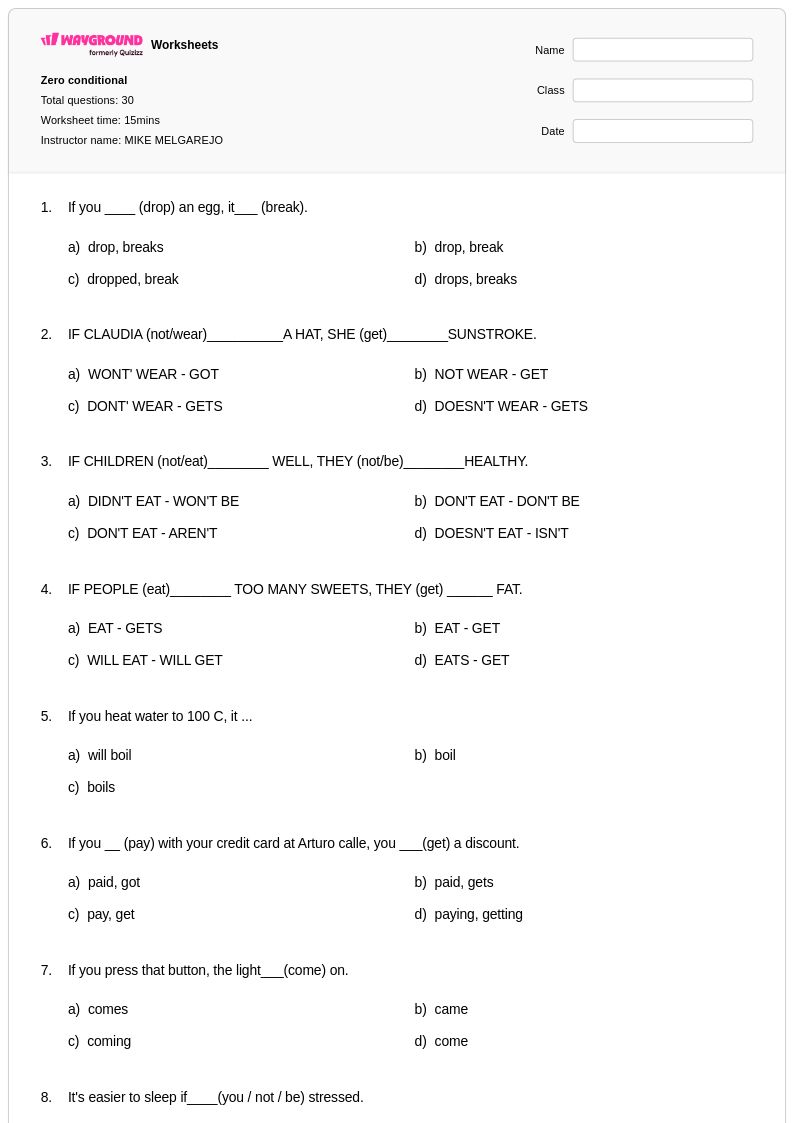
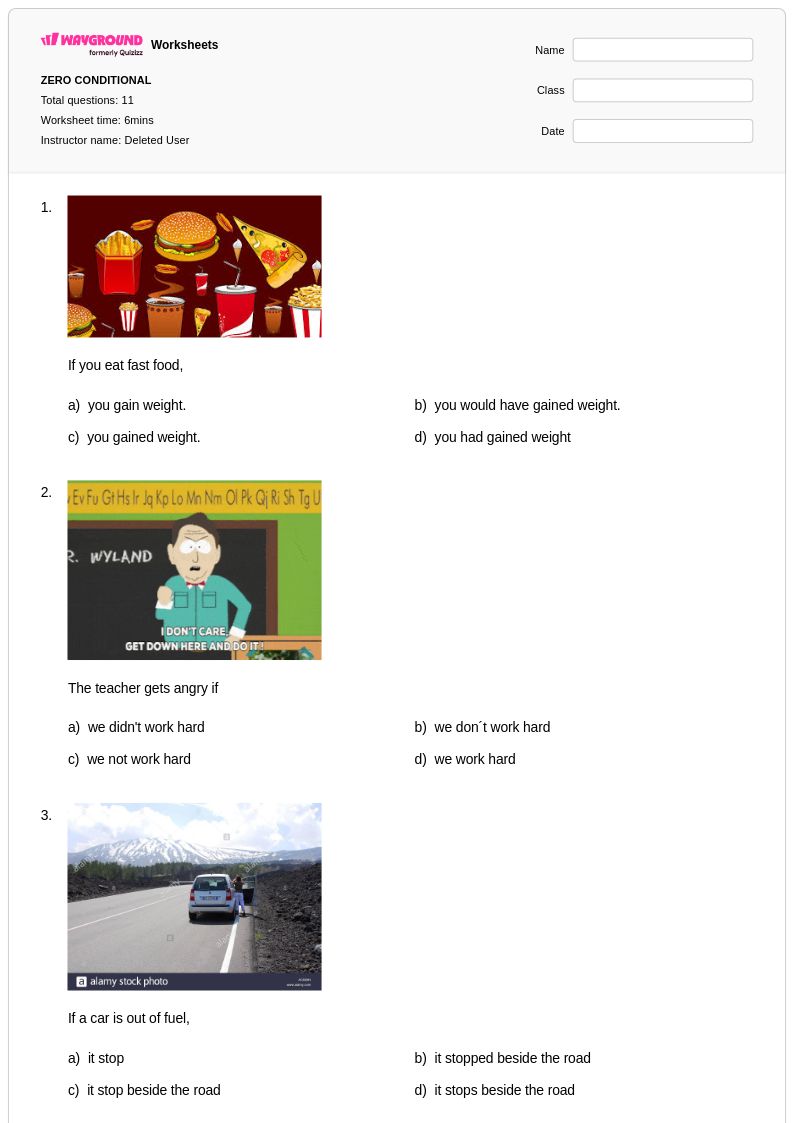
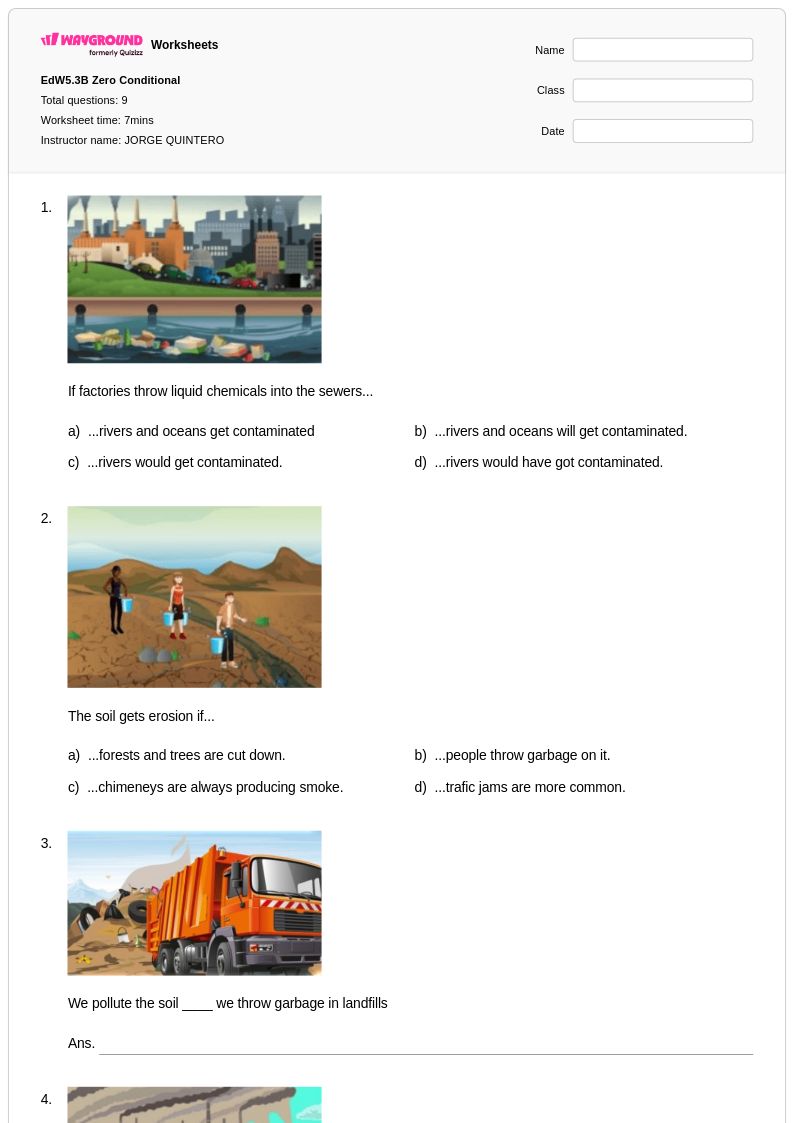
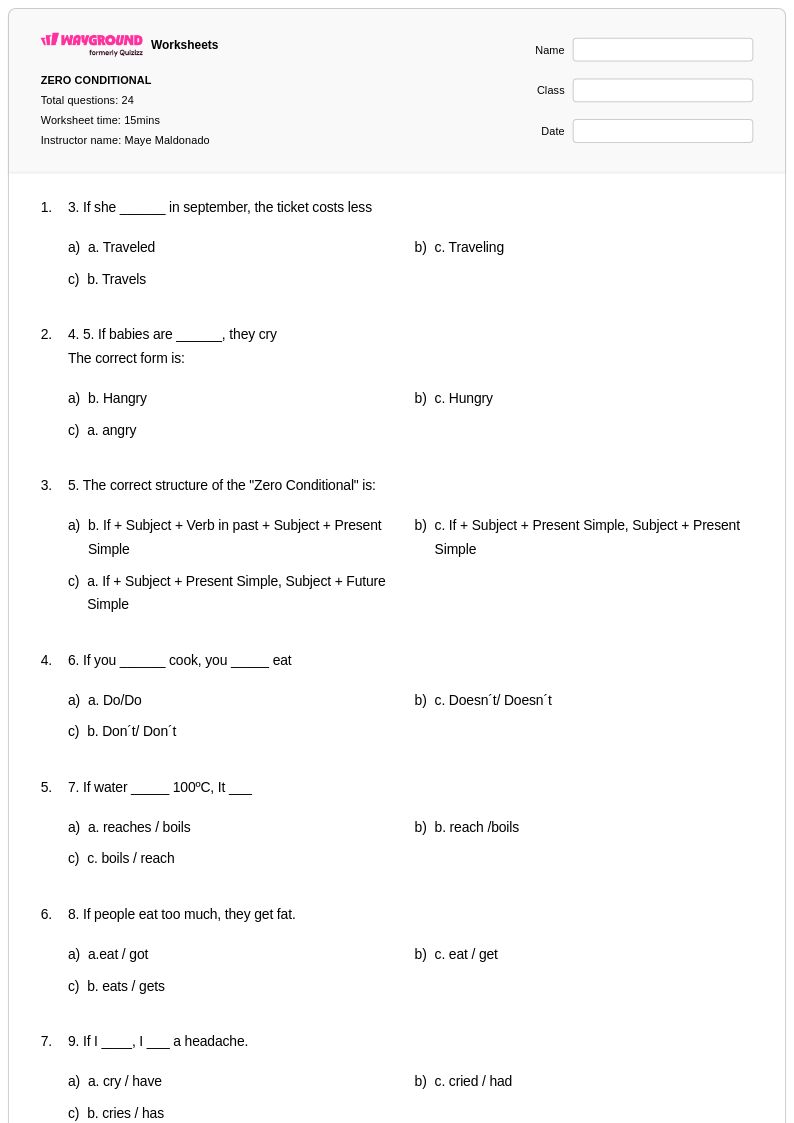
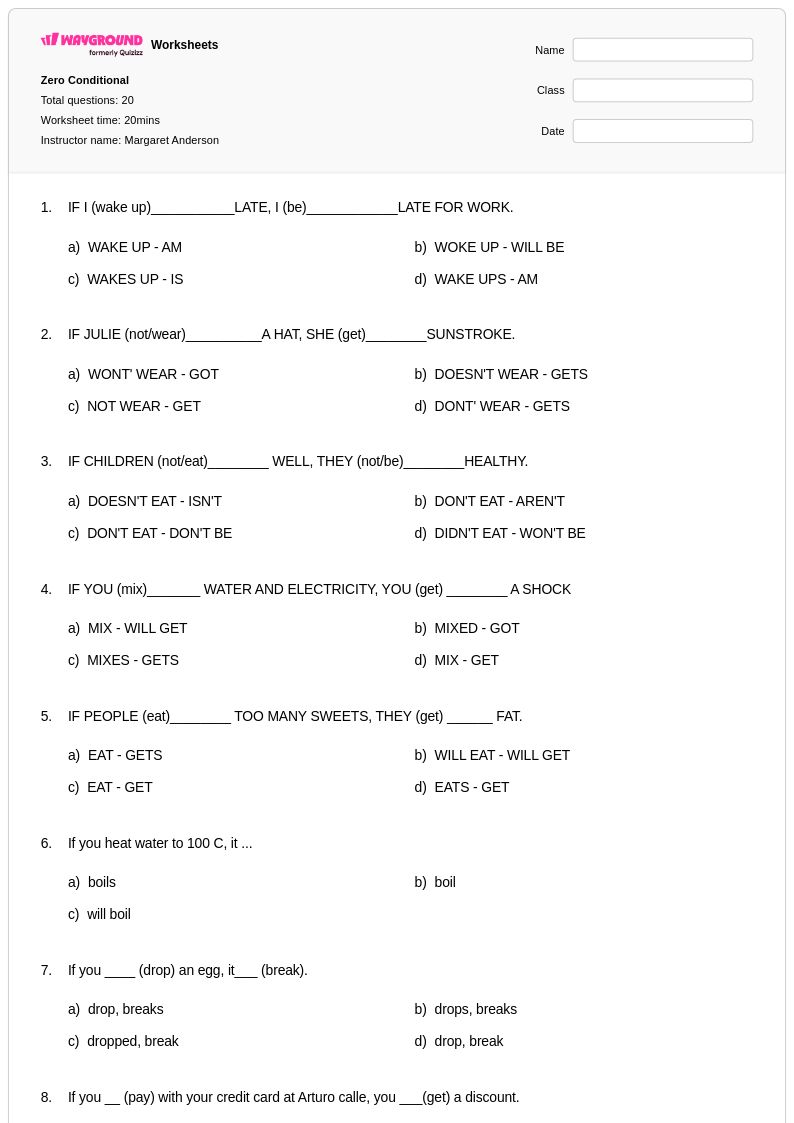
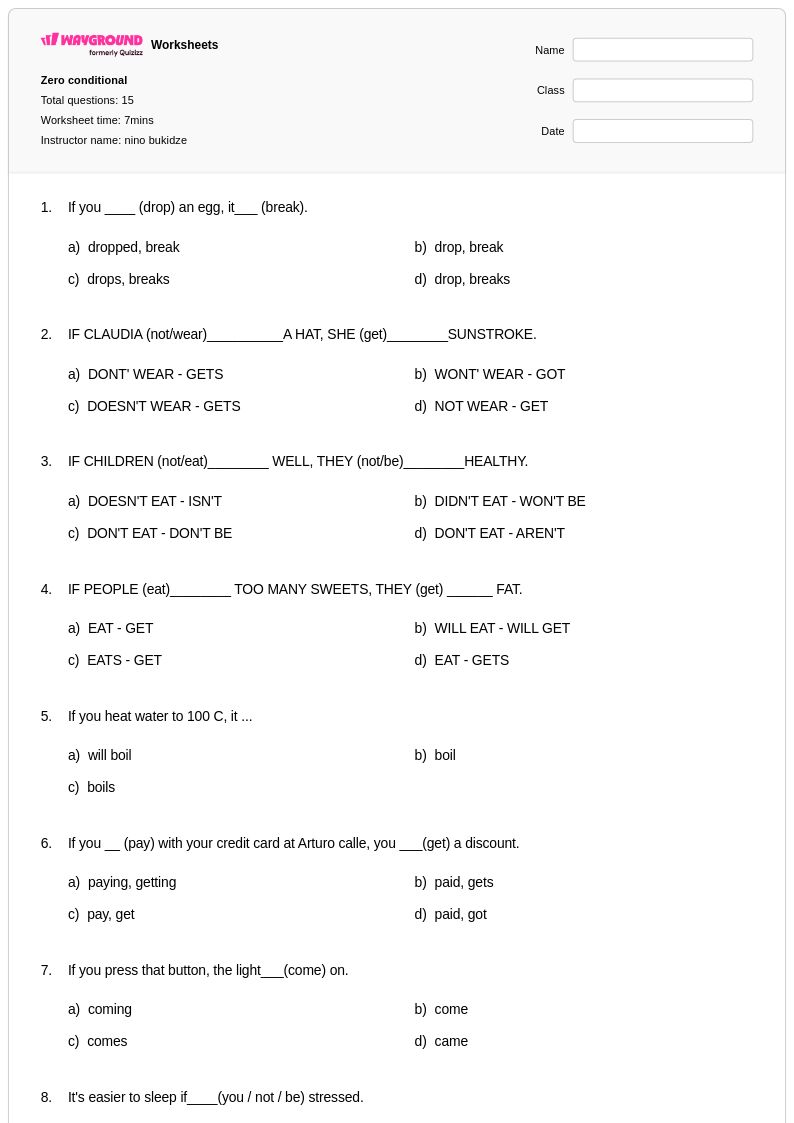
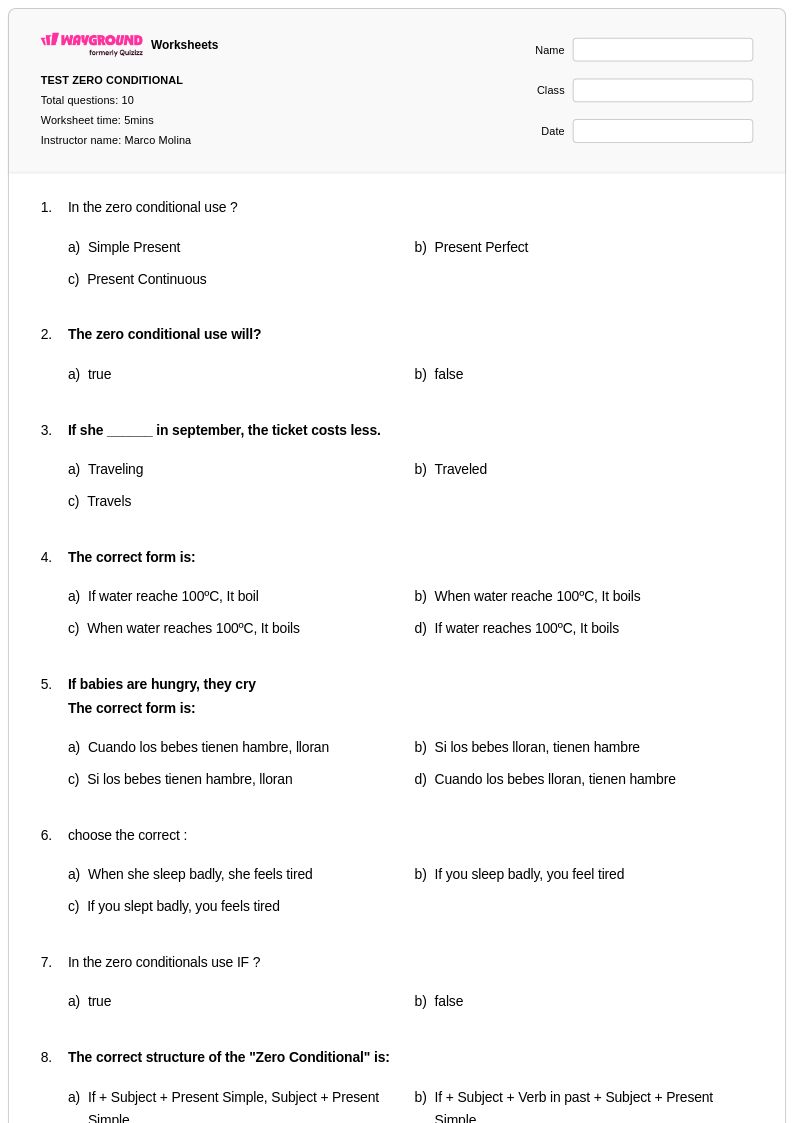
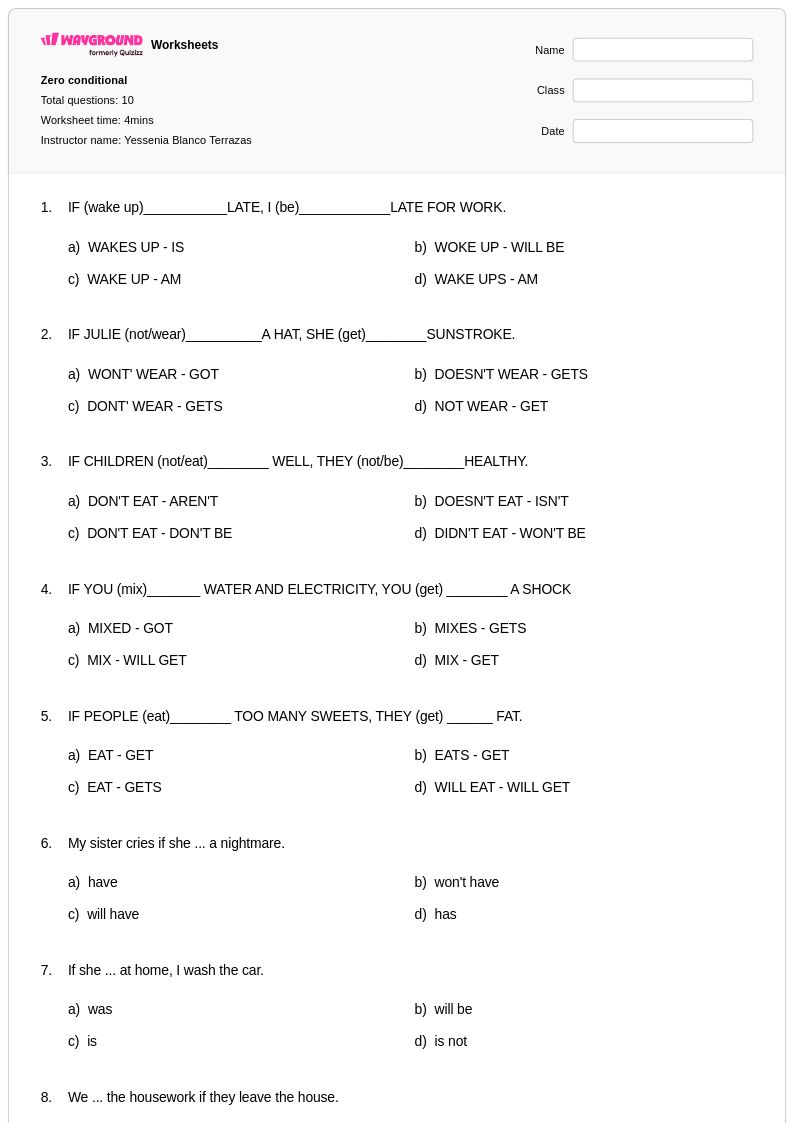
Zero conditional worksheets for Year 11 students available through Wayground (formerly Quizizz) provide comprehensive practice with this fundamental English grammar structure that expresses universal truths, scientific facts, and general statements. These carefully designed printable resources strengthen students' understanding of the zero conditional's formation using "if" clauses paired with simple present tense in both conditions, helping eleventh graders master constructions like "If you heat water to 100 degrees Celsius, it boils." The worksheets include varied practice problems that challenge students to identify, complete, and construct zero conditional sentences across different contexts, from scientific principles to everyday situations. Each resource comes with a detailed answer key and is available as a free PDF download, making it easy for educators to incorporate immediate feedback and assessment into their grammar instruction.
Wayground (formerly Quizizz) supports English teachers with an extensive collection of millions of teacher-created zero conditional worksheets specifically tailored for Year 11 grammar and mechanics instruction. The platform's robust search and filtering capabilities enable educators to quickly locate resources that align with curriculum standards and match their students' specific learning needs, whether for initial skill introduction, remediation, or advanced practice. Teachers can easily customize these digital and printable materials to differentiate instruction, adapting content difficulty and format to accommodate diverse learning styles and proficiency levels within their classrooms. The flexibility to access these resources in both interactive digital formats and traditional PDF printables allows educators to seamlessly integrate zero conditional practice into various instructional settings, from individual student work to collaborative learning activities, ensuring comprehensive skill development in this essential area of English grammar.
FAQs
How do I teach the zero conditional to English language learners?
Start by grounding the zero conditional in real-world facts students already know, such as scientific truths or natural laws (e.g., 'If you freeze water, it turns to ice'). Emphasize that both the 'if' clause and the result clause use simple present tense, and that the outcome is always true when the condition is met. Using examples from science, everyday routines, and universal facts helps students distinguish zero conditionals from first or second conditionals, which express hypothetical or future scenarios.
What exercises help students practice zero conditional sentences?
Effective practice activities include sentence completion tasks where students fill in missing clauses, error correction exercises that target tense misuse, and sentence construction prompts tied to scientific or real-world contexts. Matching activities that pair 'if' clauses with their logical results are also useful for reinforcing the automatic cause-and-effect logic of this structure. Mixing these exercise types across a worksheet builds both recognition and productive use of the zero conditional.
What mistakes do students commonly make with the zero conditional?
The most frequent error is using future tense ('will') in the result clause instead of simple present tense, often due to confusion with the first conditional. Students also sometimes use past tense verbs when describing scientific facts, or they misread the zero conditional as expressing personal opinions rather than universal truths. Explicitly contrasting zero and first conditional structures, and using clearly factual prompts, helps students internalize the correct tense pattern.
How is the zero conditional different from the first conditional?
The zero conditional describes situations that are always true, using simple present tense in both clauses (e.g., 'If you mix red and blue, you get purple'). The first conditional, by contrast, describes probable future outcomes using present tense in the 'if' clause and 'will' in the result clause (e.g., 'If it rains, I will stay home'). Teaching this distinction explicitly is key to preventing tense confusion, especially for students who are learning multiple conditional structures at the same time.
How can I use zero conditional worksheets effectively in my classroom?
Zero conditional worksheets on Wayground are available as printable PDFs for traditional classroom use and in digital formats for technology-integrated learning environments, and they can also be hosted as a quiz directly on Wayground. Each worksheet includes a complete answer key, which allows teachers to provide immediate feedback or have students self-check their work. Using the worksheets as guided practice after direct instruction, or as independent review tasks, ensures students get structured exposure to the grammar pattern before moving on to more complex conditional forms.
How do I support struggling students when teaching the zero conditional?
For students who need additional support, reducing the complexity of sentence prompts and focusing first on scientific or natural-law examples can lower the cognitive load of learning this structure. On Wayground, teachers can apply individual accommodations such as read-aloud support for students who need questions read to them, reduced answer choices to simplify decision-making, and extended time to allow for more careful processing. These settings can be assigned to specific students without affecting the rest of the class.