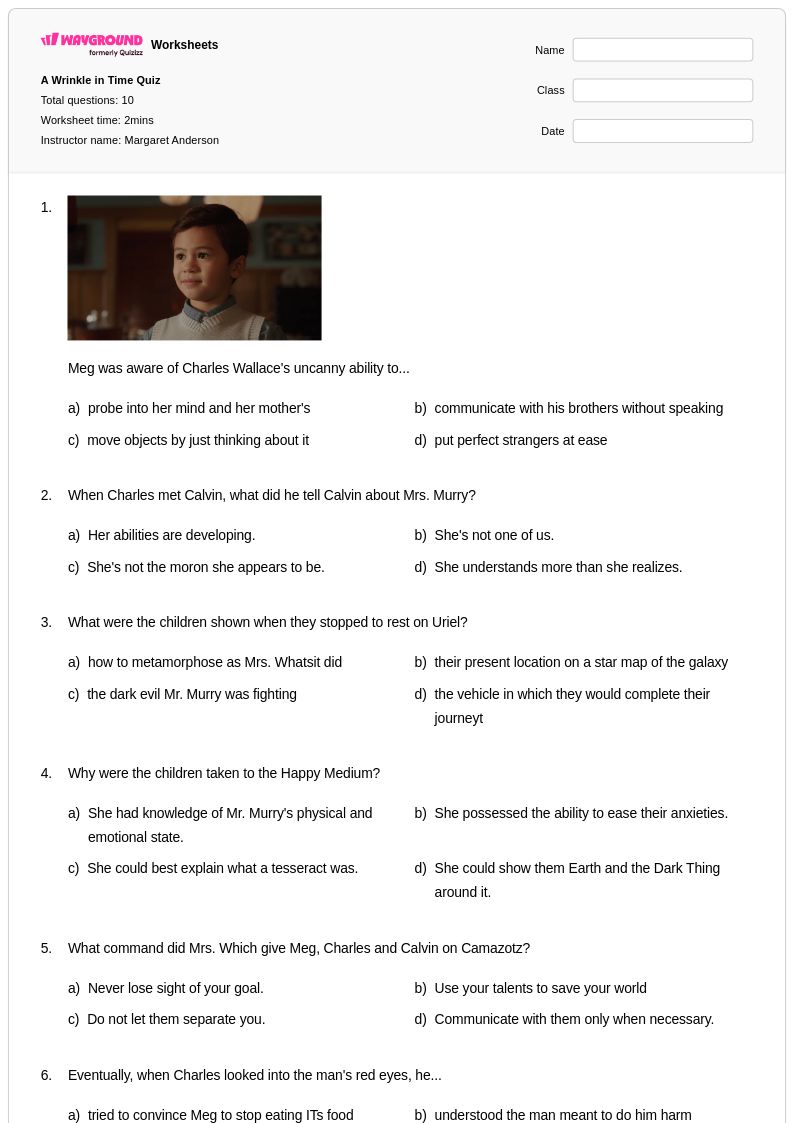
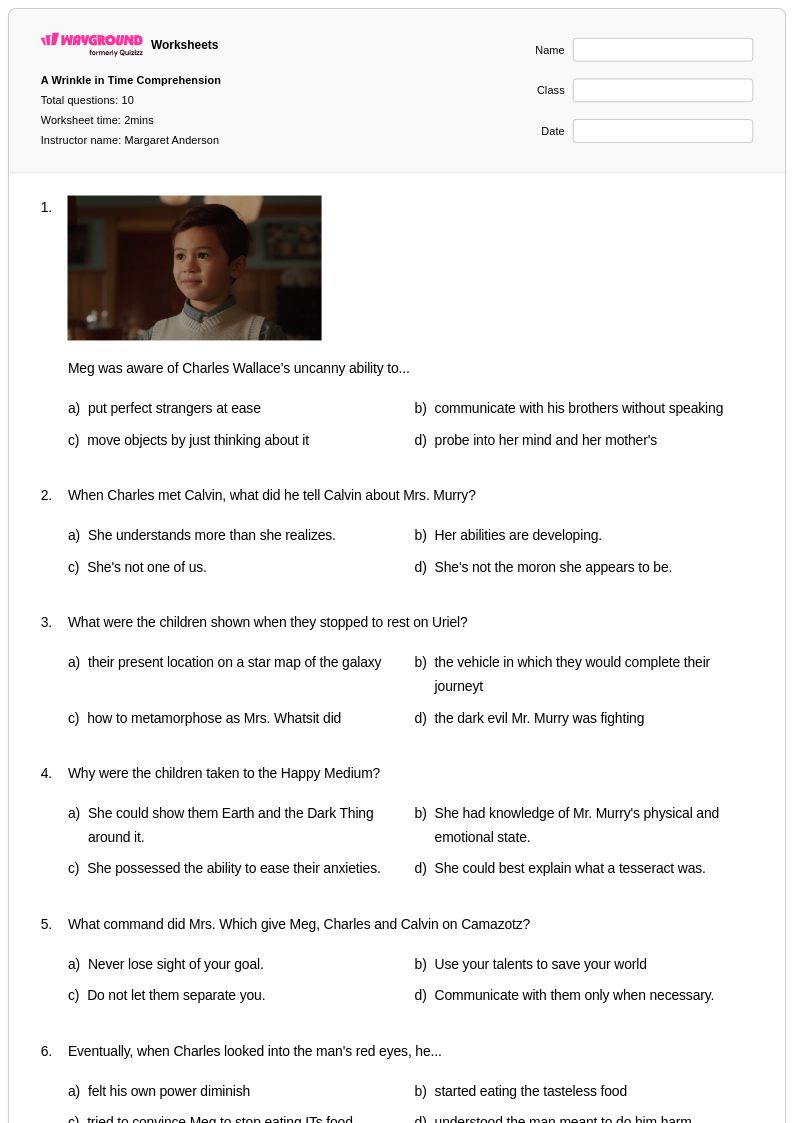
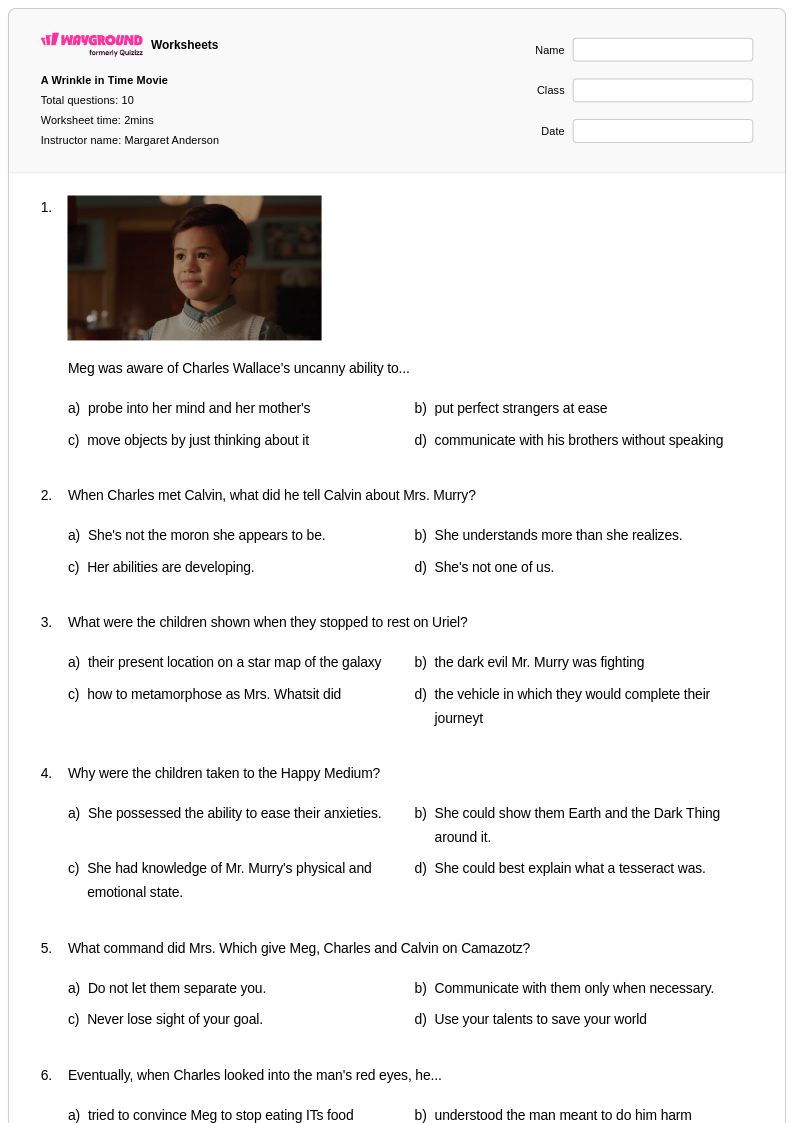
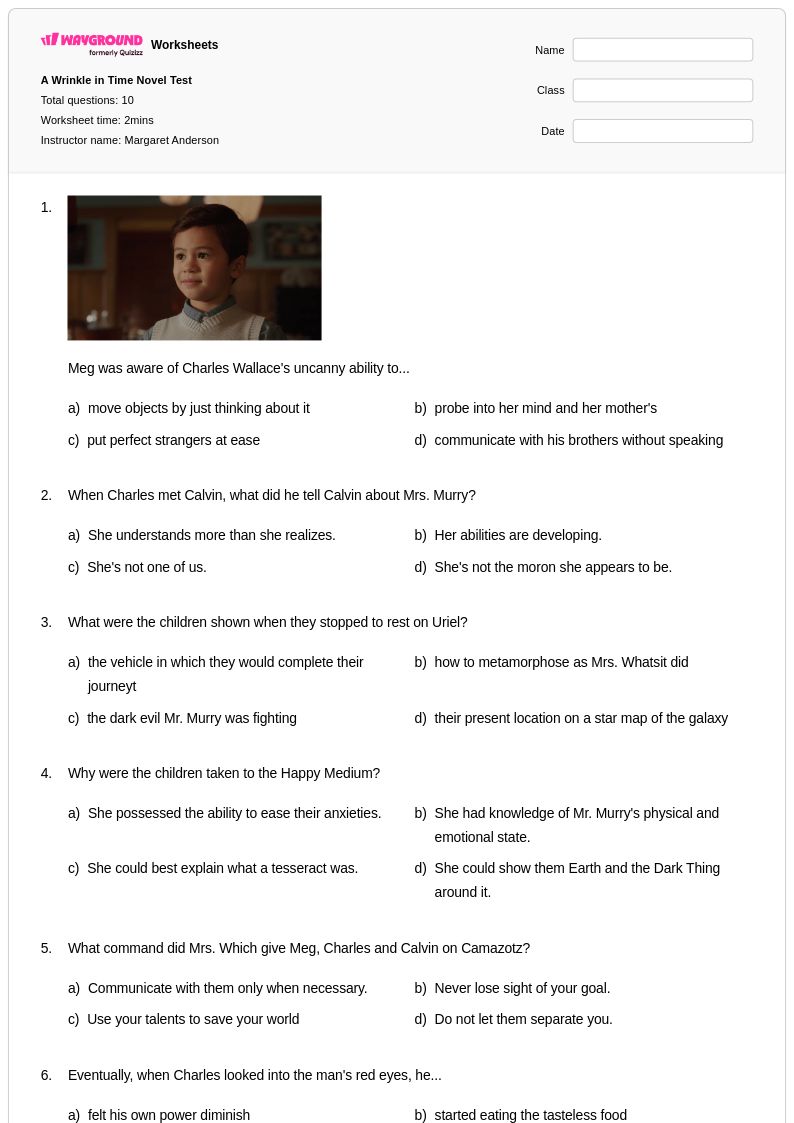
Free Printable A Wrinkle in Time Worksheets for Class 4
Enhance Class 4 students' understanding of A Wrinkle in Time with Wayground's comprehensive collection of free worksheets, printables, and practice problems featuring detailed answer keys for effective novel study.
Explore printable A Wrinkle in Time worksheets for Class 4
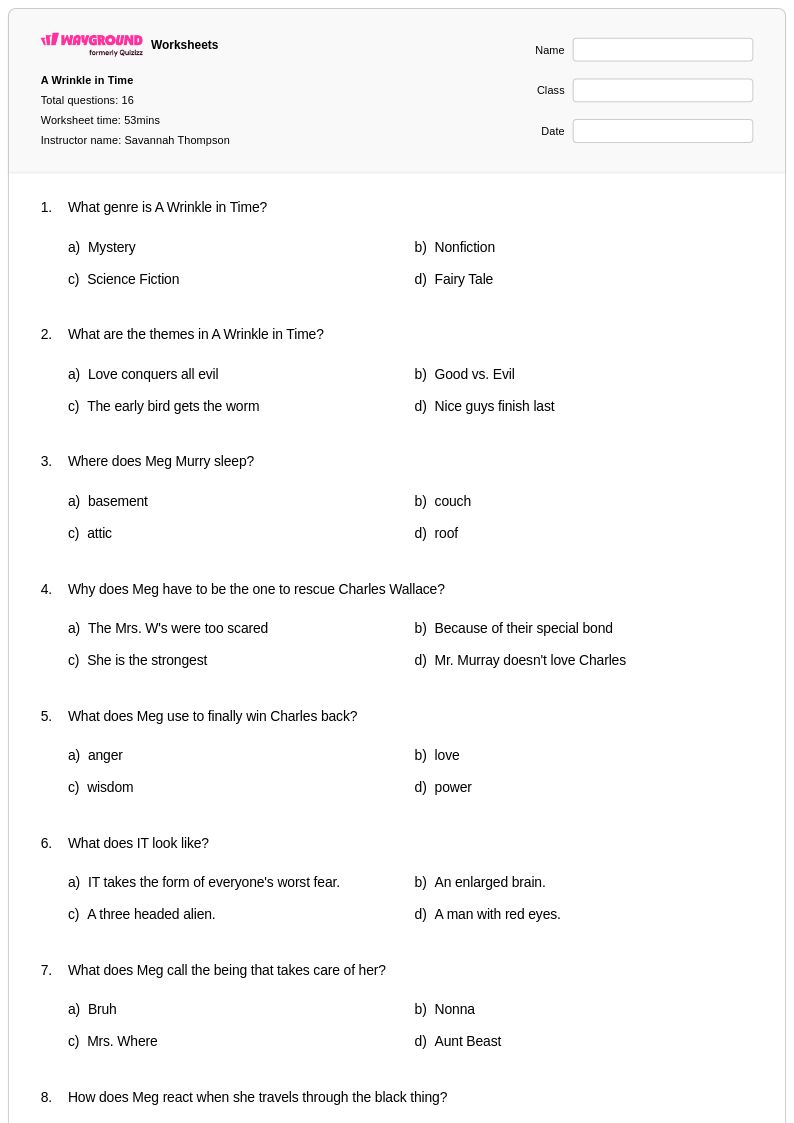
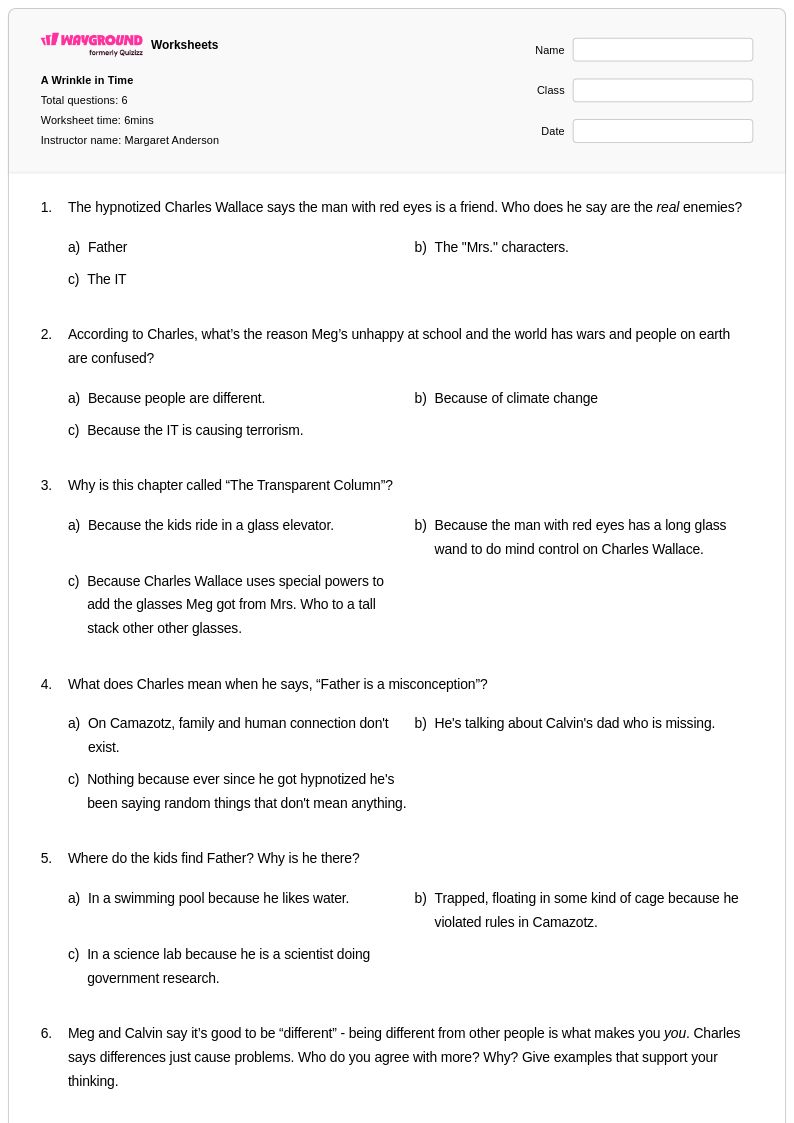
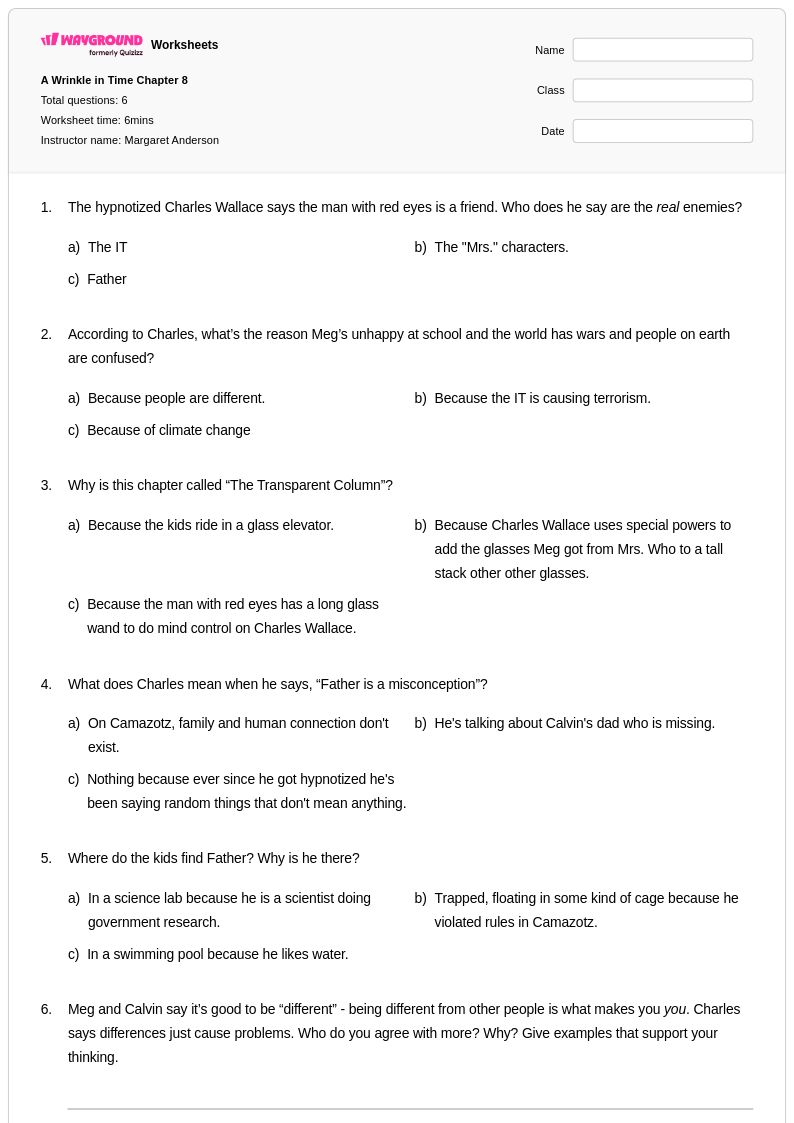
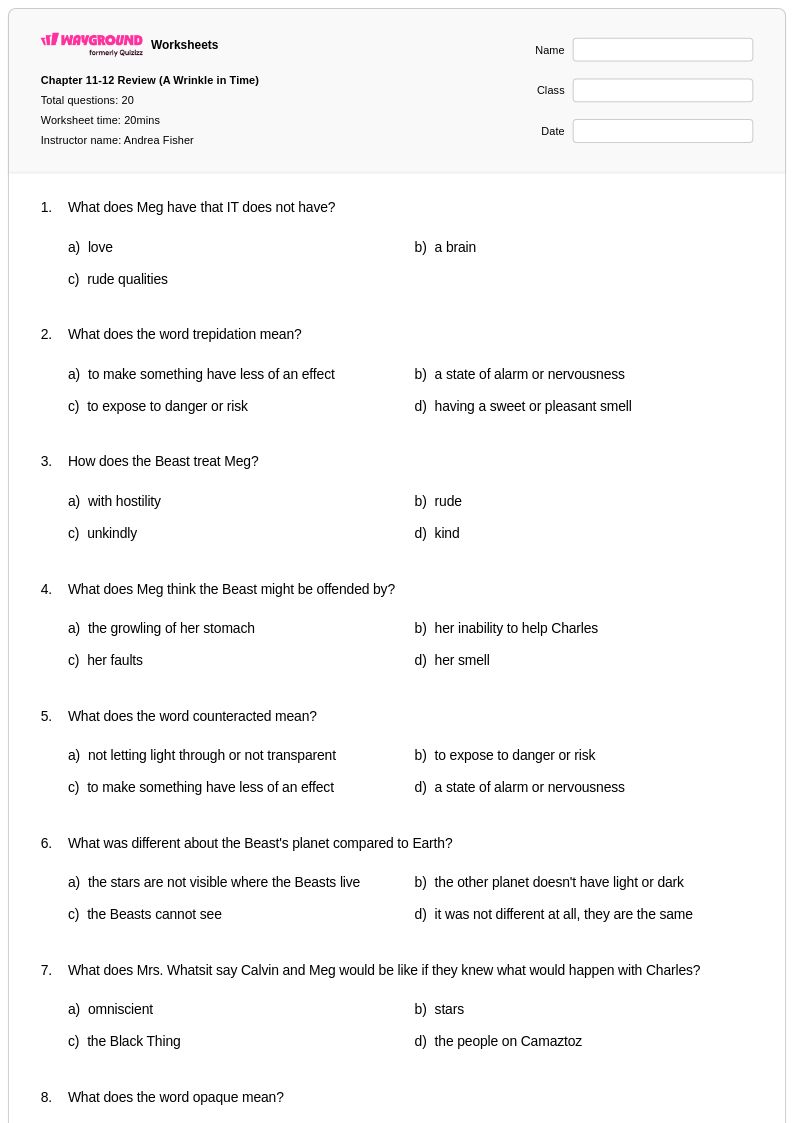
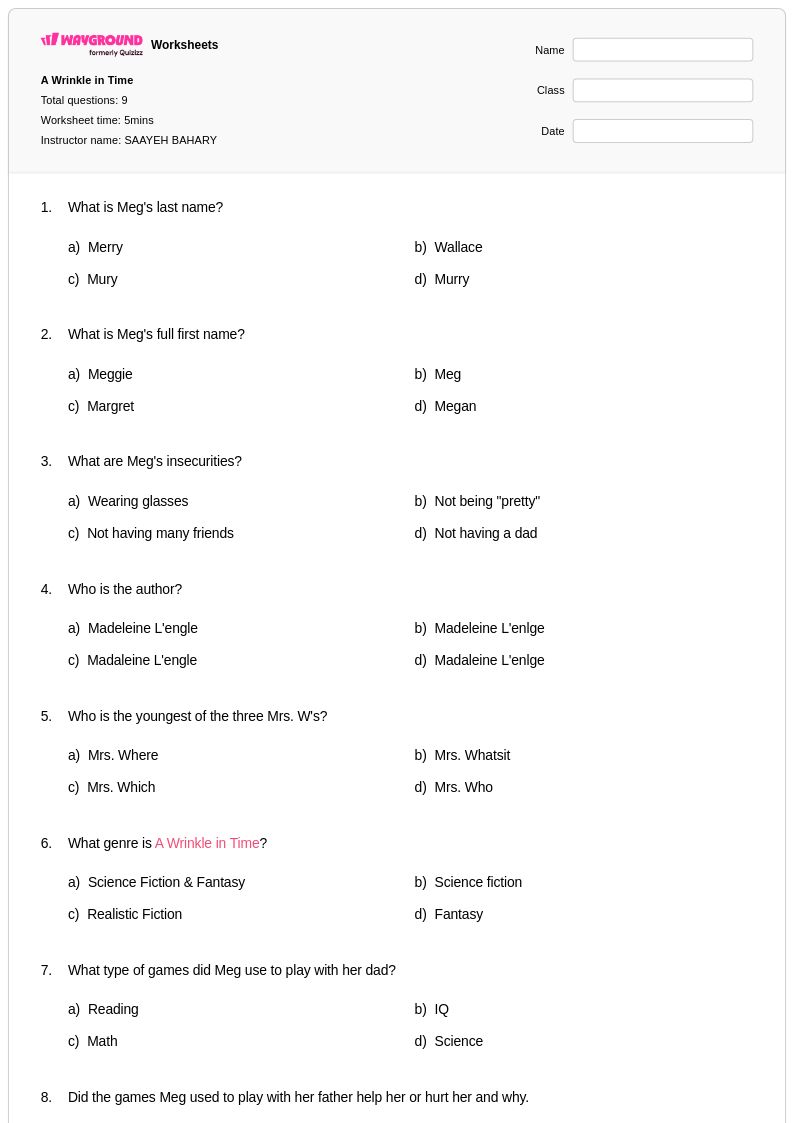
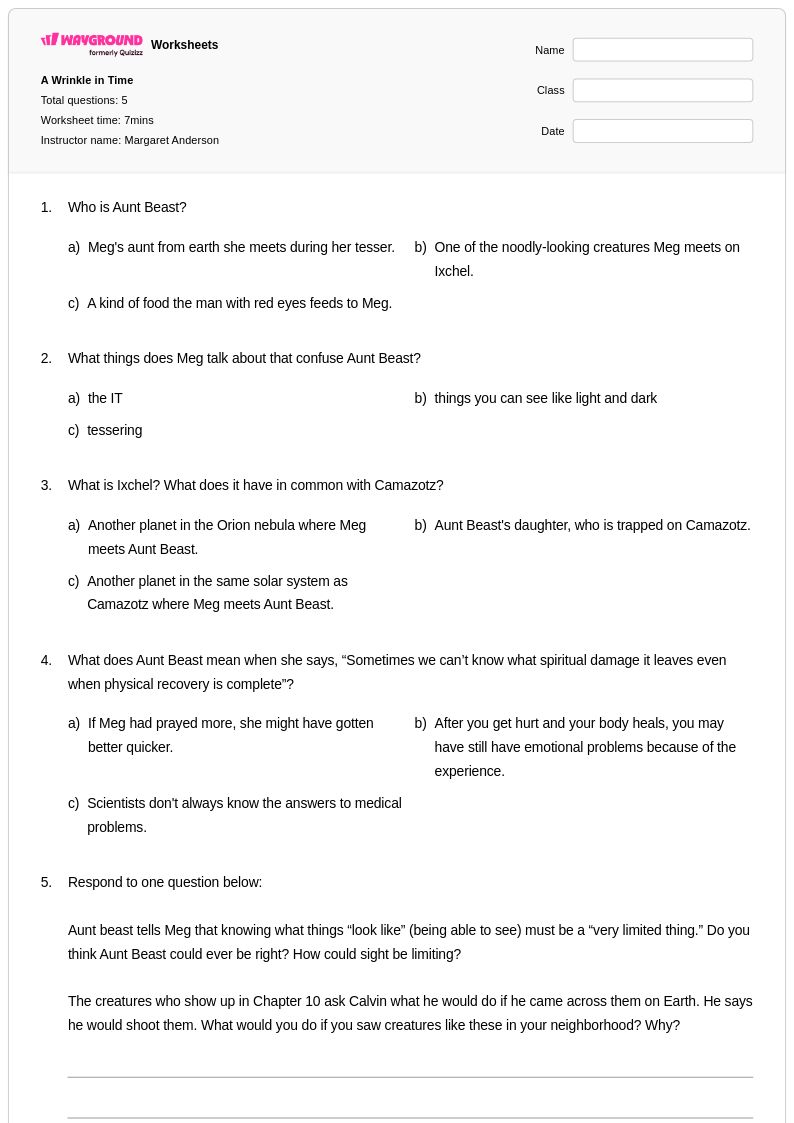
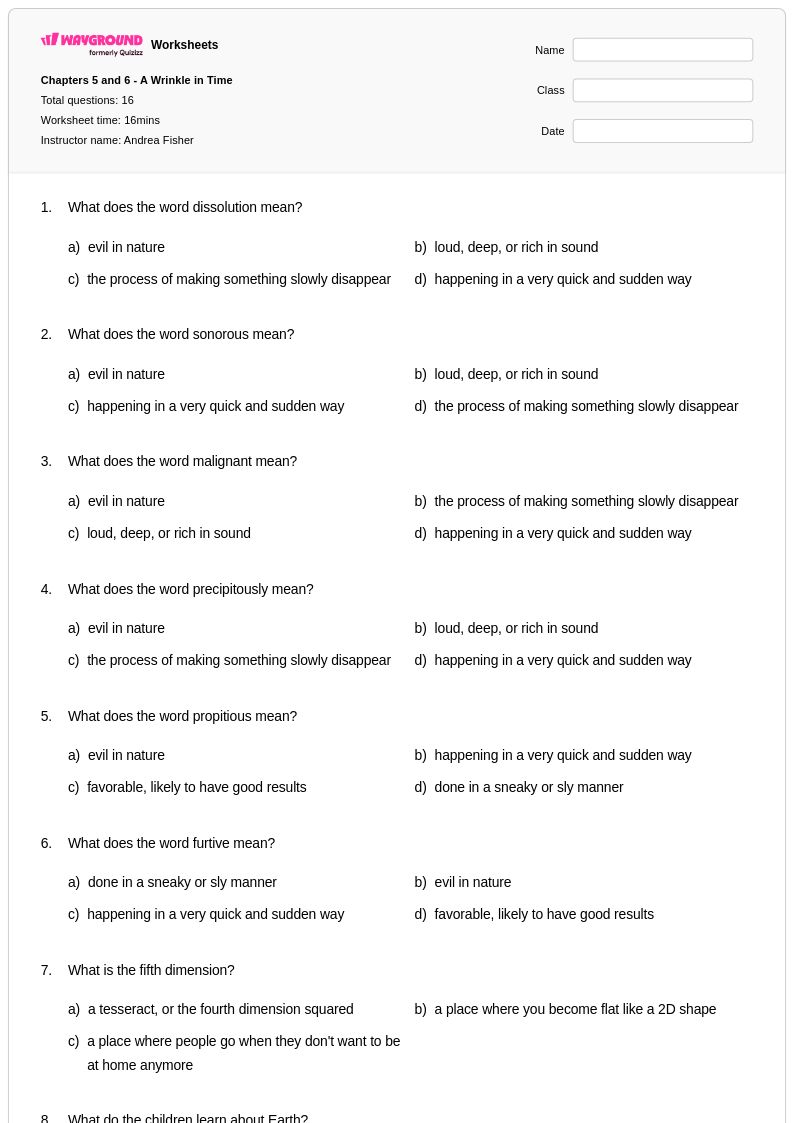
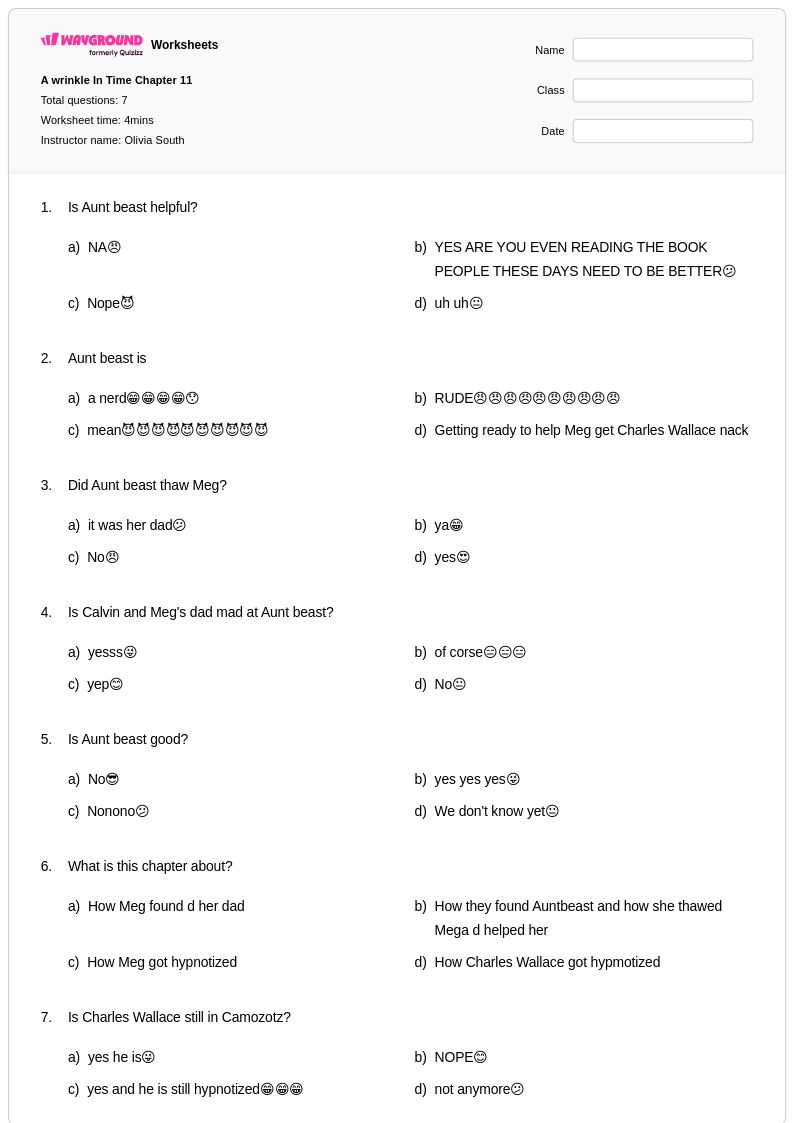
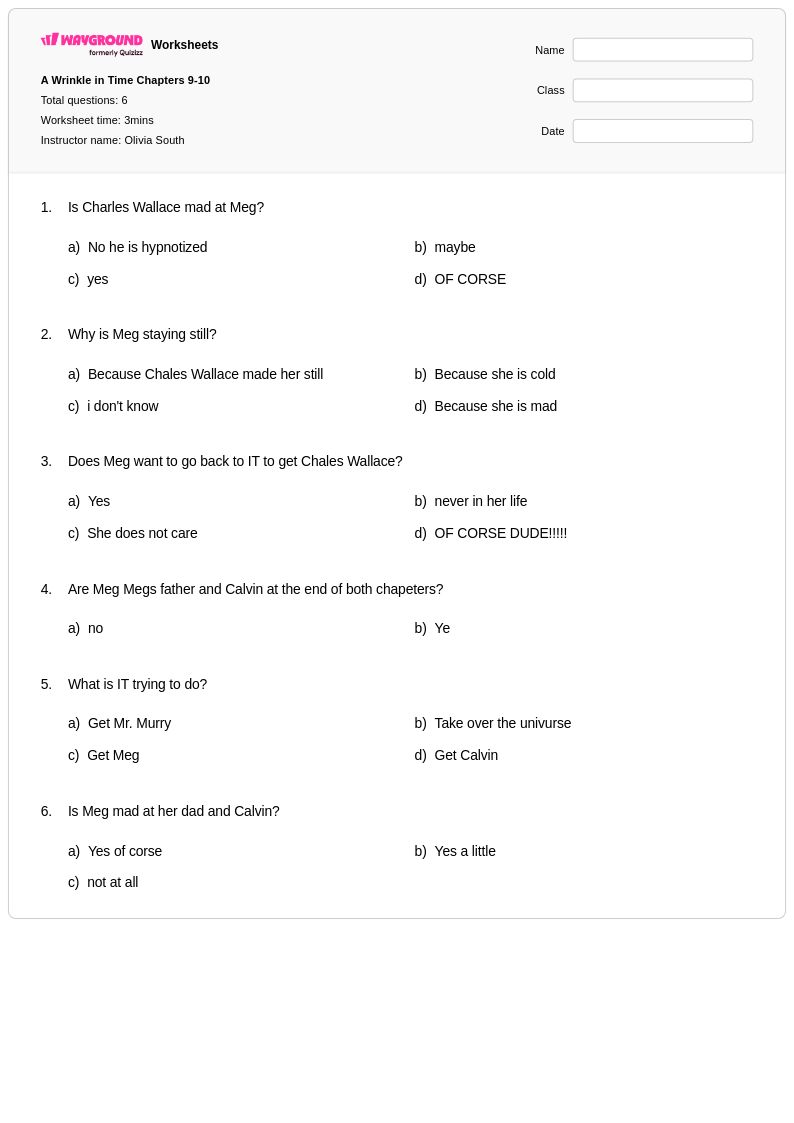
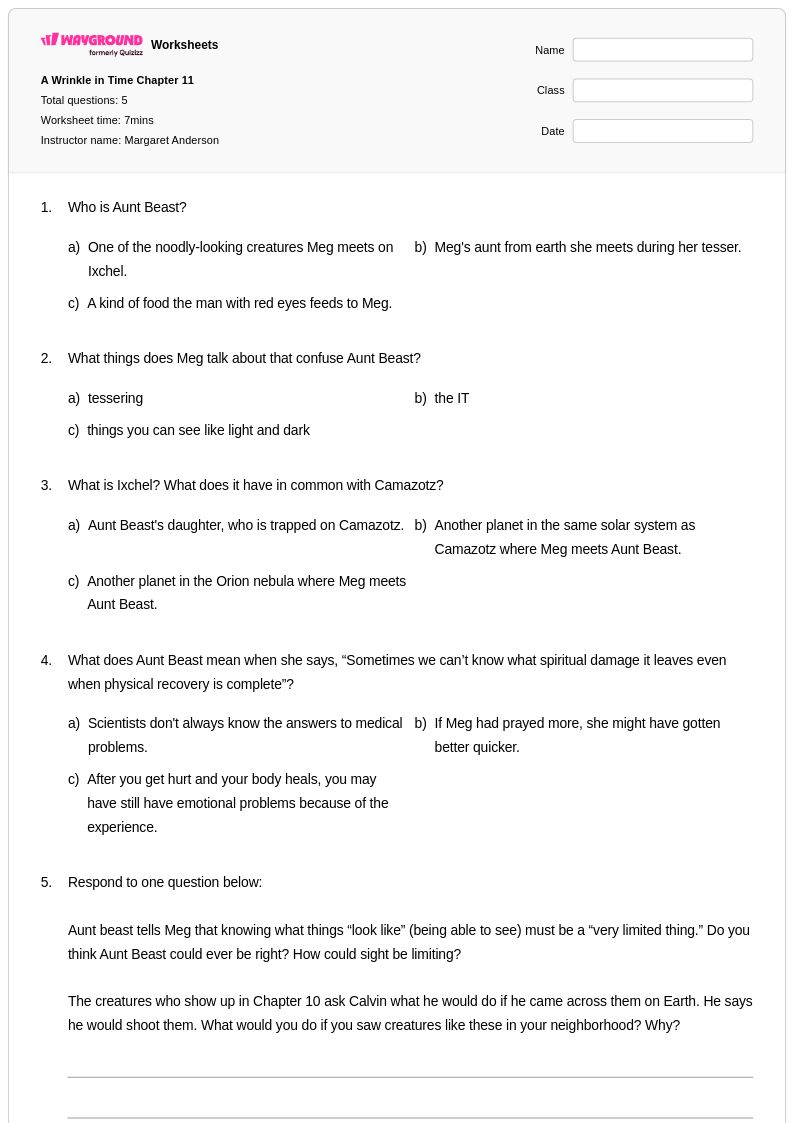
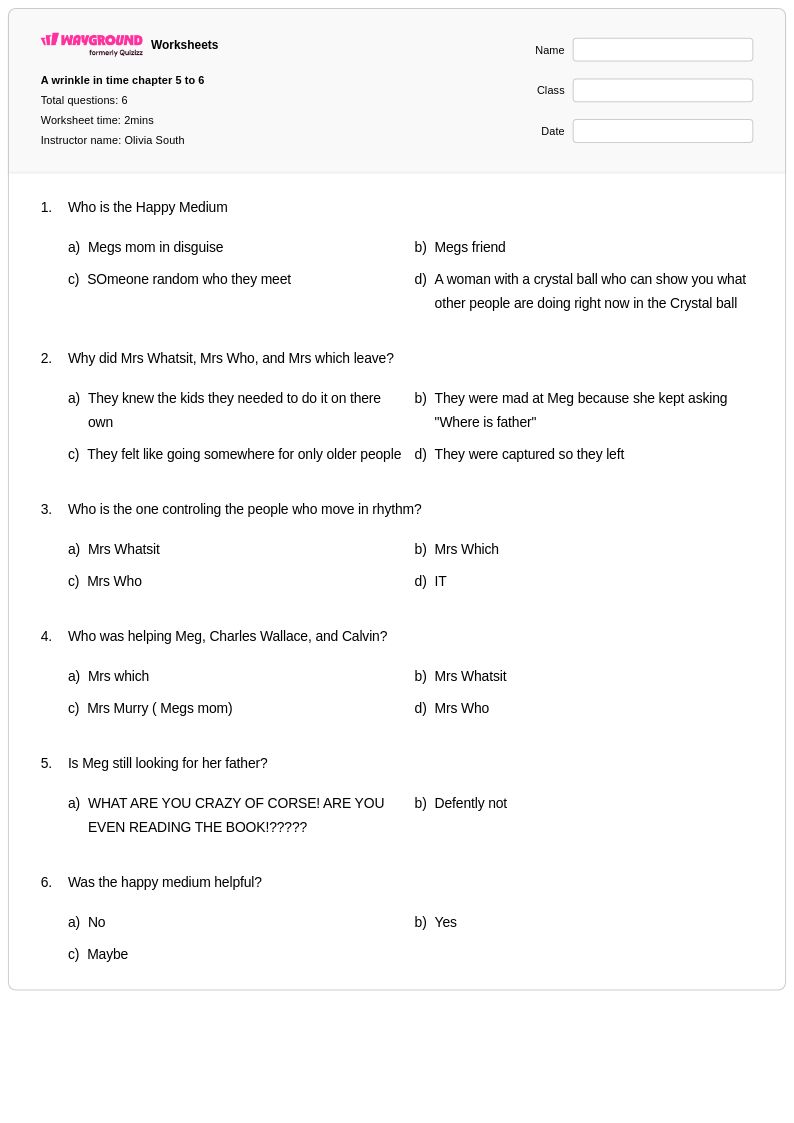
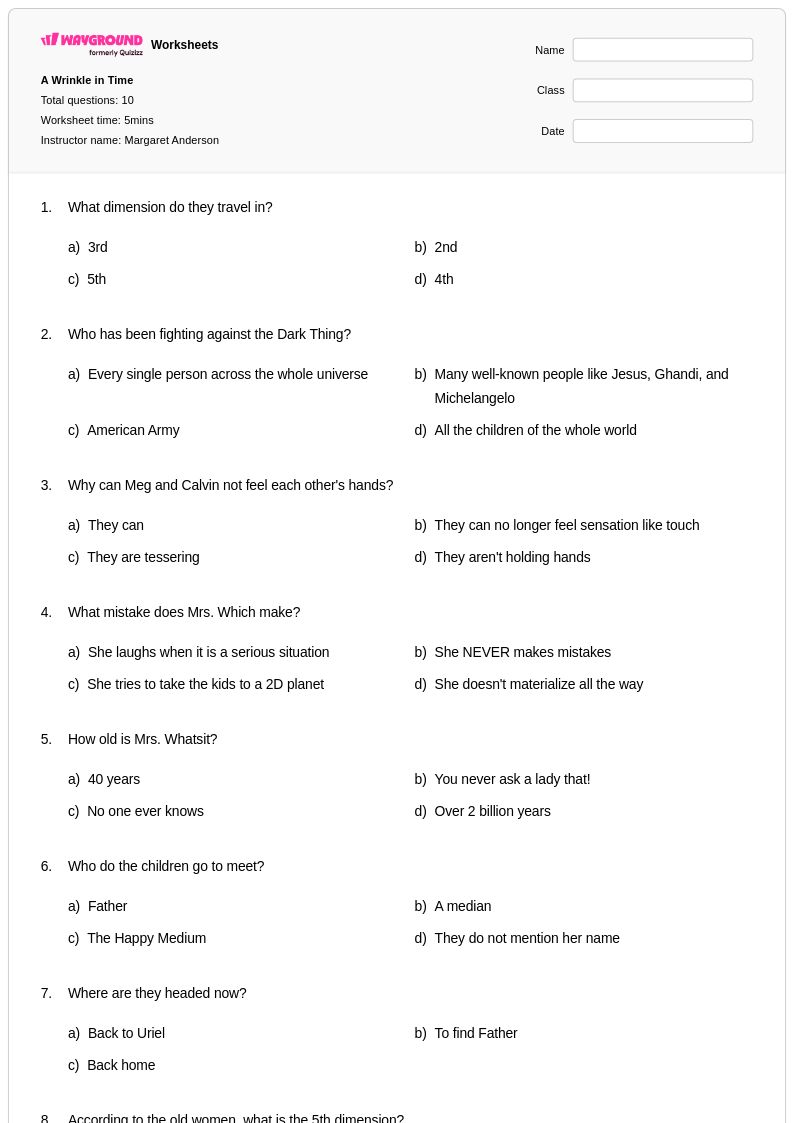
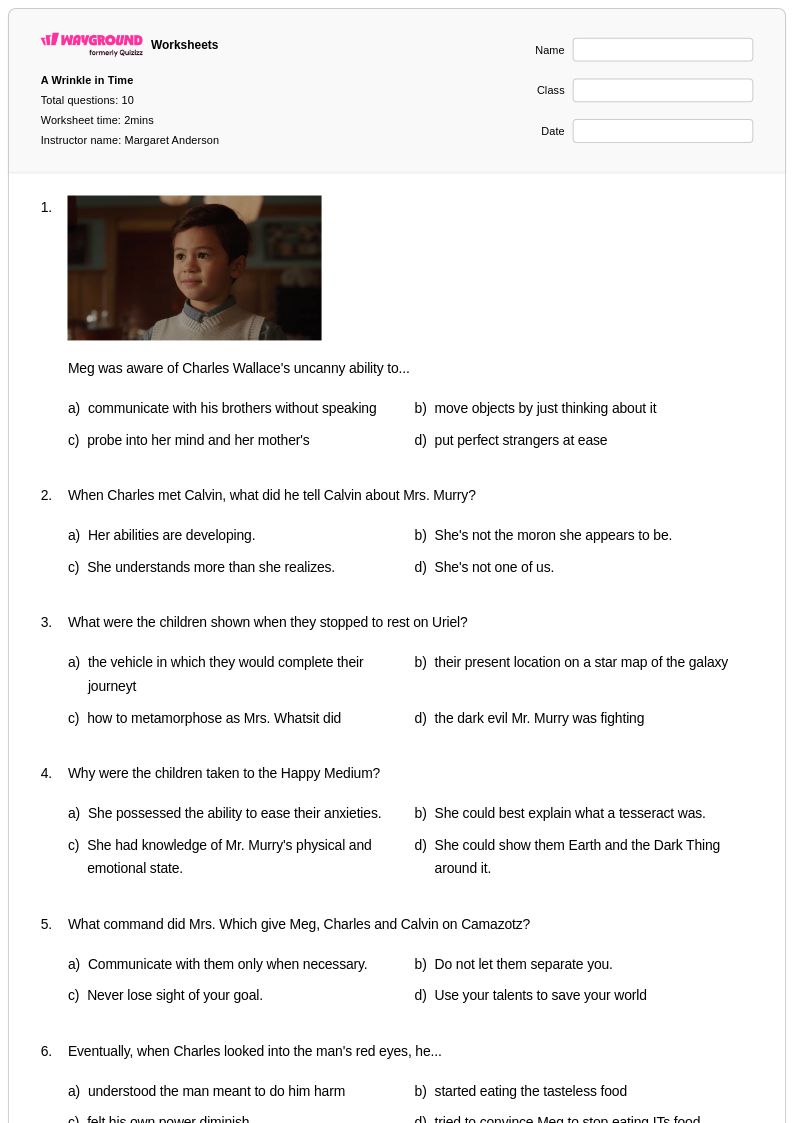
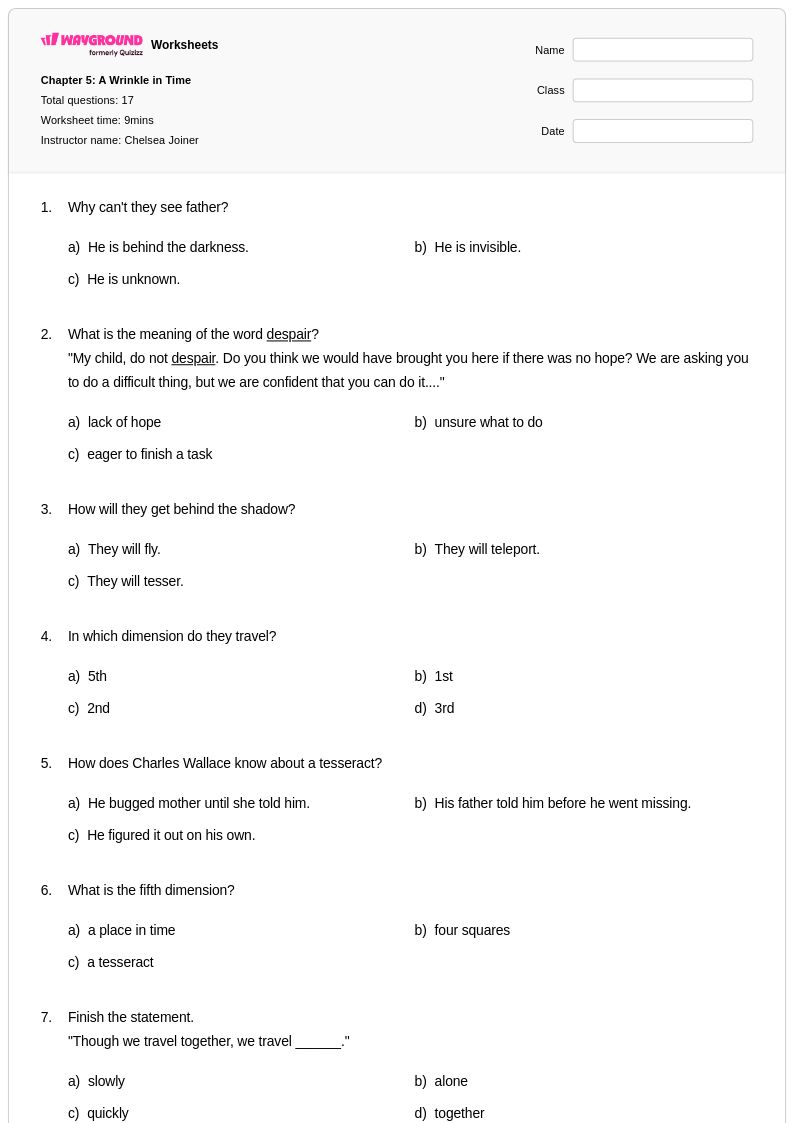
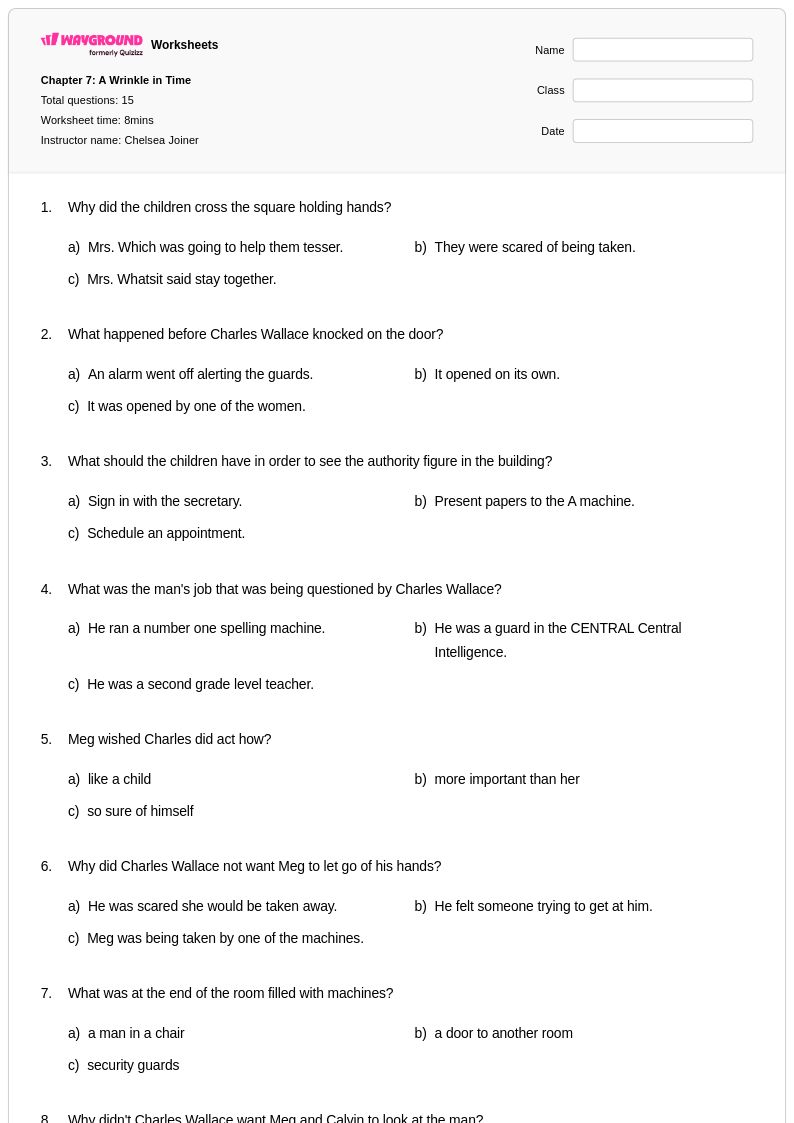
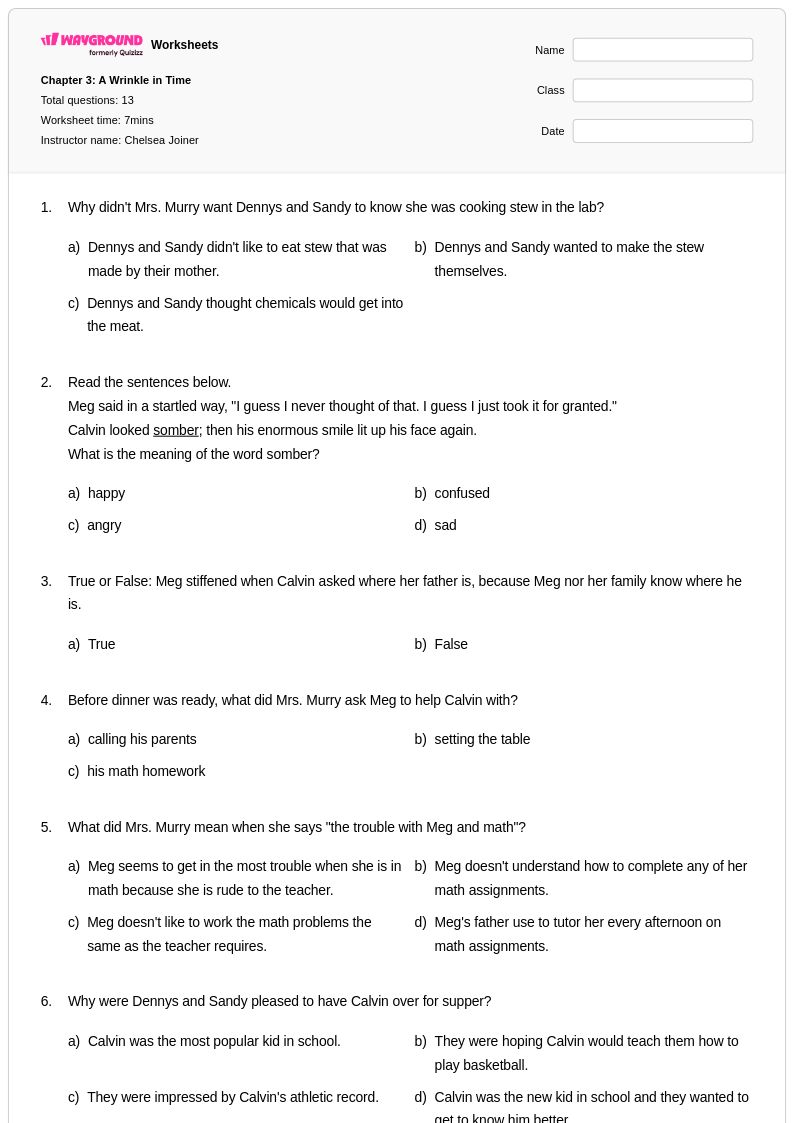
A Wrinkle in Time worksheets for Class 4 students available through Wayground provide comprehensive support for this beloved science fantasy novel study. These carefully crafted educational resources help fourth-grade readers develop critical thinking skills, improve reading comprehension, and explore complex themes like good versus evil, self-acceptance, and the power of love. The worksheet collection includes character analysis activities, plot sequence organizers, vocabulary practice problems focusing on the novel's unique terminology, and discussion prompts that encourage students to connect Madeleine L'Engle's timeless story to their own experiences. Teachers can access these materials as free printables in convenient pdf format, complete with detailed answer keys that streamline grading and provide immediate feedback for student learning.
Wayground's extensive library features millions of teacher-created resources specifically designed to support novel study instruction across all grade levels. The platform's robust search and filtering capabilities allow educators to quickly locate Class 4 appropriate A Wrinkle in Time materials that align with state reading standards and literacy benchmarks. Teachers benefit from sophisticated differentiation tools that enable them to customize worksheets for diverse learning needs, whether providing remediation support for struggling readers or enrichment activities for advanced students. These versatile resources are available in both printable and digital formats, giving educators the flexibility to seamlessly integrate novel study activities into classroom instruction, independent practice sessions, or homework assignments while maintaining consistent skill development throughout the reading unit.
FAQs
How do I teach A Wrinkle in Time as a novel study?
Teaching A Wrinkle in Time works best when structured around its central themes — good versus evil, self-acceptance, and the power of love — alongside its science fantasy elements. Begin with pre-reading activities that introduce students to concepts like tesseracts and conformity, then guide chapter-by-chapter analysis using plot sequencing, character tracking, and thematic journals. Pairing close reading with structured discussion helps students navigate the novel's complexity without losing the narrative thread.
What literary devices should students focus on when analyzing A Wrinkle in Time?
Students should focus on symbolism (light versus darkness as representations of good and evil), characterization (particularly Meg's arc from self-doubt to confidence), and foreshadowing throughout L'Engle's narrative. The novel also offers strong examples of allegory and motif, especially around conformity and individuality, making it rich material for literary analysis at the middle school level. Worksheets that ask students to cite textual evidence when identifying these devices help build analytical precision.
What exercises help students practice comprehension and analysis of A Wrinkle in Time?
Effective practice exercises include character analysis activities that track Meg, Charles Wallace, and Calvin across chapters, plot sequence organizers that reinforce narrative structure, and thematic exploration tasks that ask students to connect events to the novel's core ideas. Vocabulary development exercises tied to L'Engle's scientific and fantastical language also strengthen reading comprehension. These structured activities give students repeated, scaffolded contact with the text rather than passive reading alone.
What mistakes do students commonly make when analyzing A Wrinkle in Time?
One of the most common errors is treating the science fantasy elements as purely decorative rather than thematically significant — for instance, missing how the tesseract concept connects to ideas about transcending limitations. Students also tend to oversimplify the central conflict as purely physical rather than moral and emotional. Another frequent mistake is underdeveloping Meg as a protagonist, focusing on her flaws without tracing her growth as the novel's central arc.
How do I use A Wrinkle in Time worksheets from Wayground in my classroom?
Wayground's A Wrinkle in Time worksheets are available as printable PDFs for traditional classroom use and in digital formats for technology-integrated environments, so they work whether students are at desks or on devices. Teachers can also host worksheets as a quiz directly on Wayground, enabling real-time student responses and instant feedback. The collection spans pre-reading, chapter-by-chapter analysis, and post-reading assessment materials, making it practical to integrate at any point in a novel study unit.
How can I differentiate A Wrinkle in Time materials for struggling readers or advanced students?
For struggling readers, scaffolding strategies like graphic organizers, sentence starters on analysis questions, and read-aloud support can reduce barriers to engagement with the text's complexity. Advanced learners benefit from enrichment tasks that push beyond plot comprehension into evaluative or comparative analysis, such as connecting L'Engle's themes to other works or historical contexts. On Wayground, teachers can apply accommodations including Read Aloud, reduced answer choices, and extended time to individual students without disrupting the rest of the class.