Free Printable Absolute Location Worksheets for Kindergarten
Help kindergarten students learn absolute location concepts with Wayground's free printable geography worksheets featuring engaging practice problems and complete answer keys in PDF format.
Explore printable Absolute Location worksheets for Kindergarten
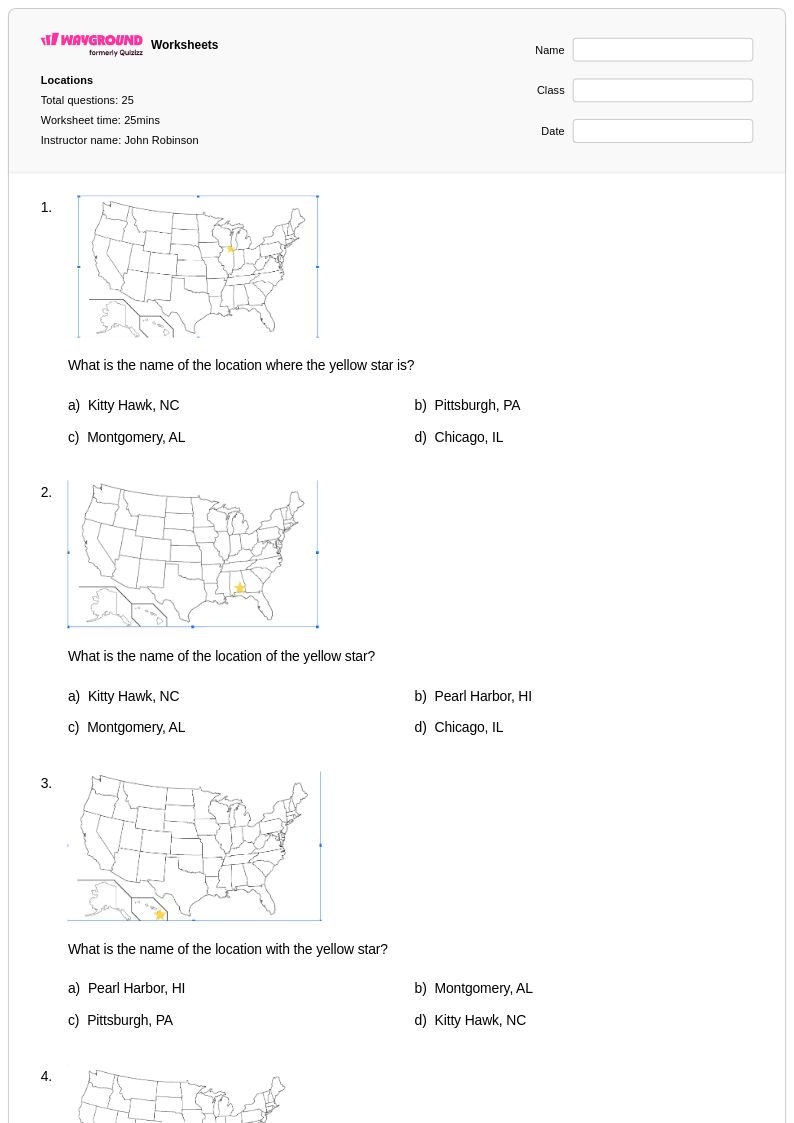
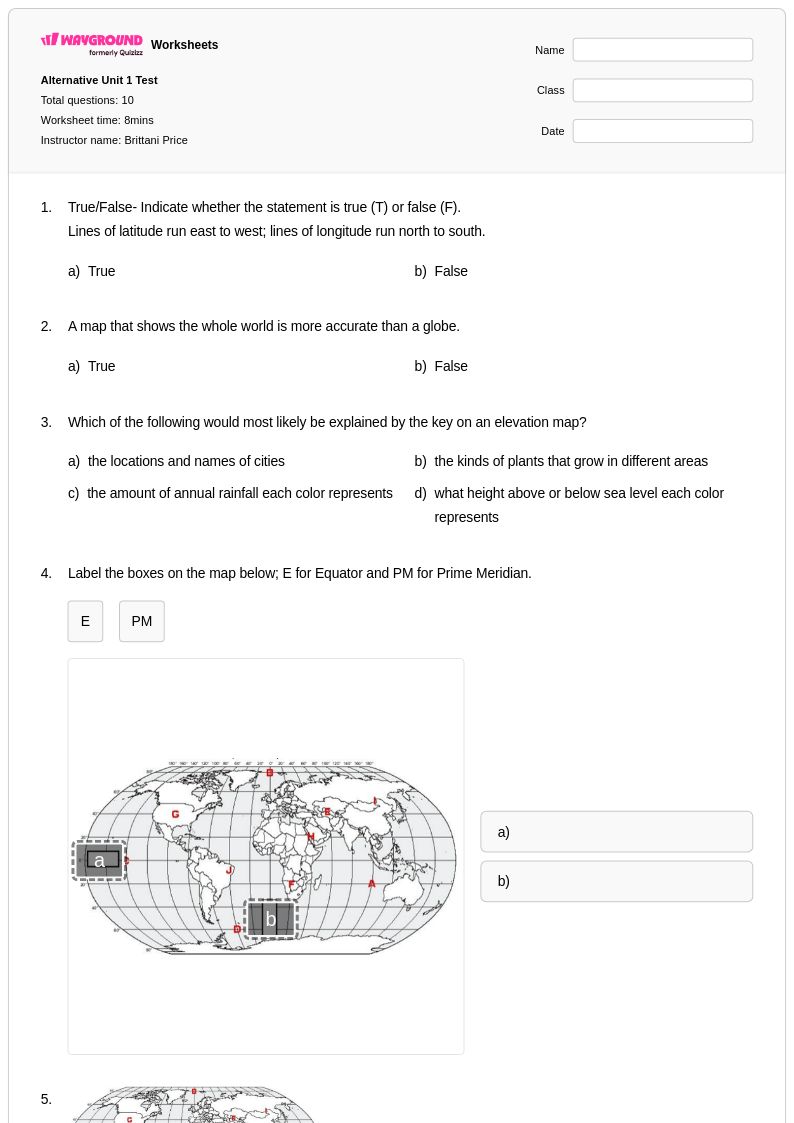
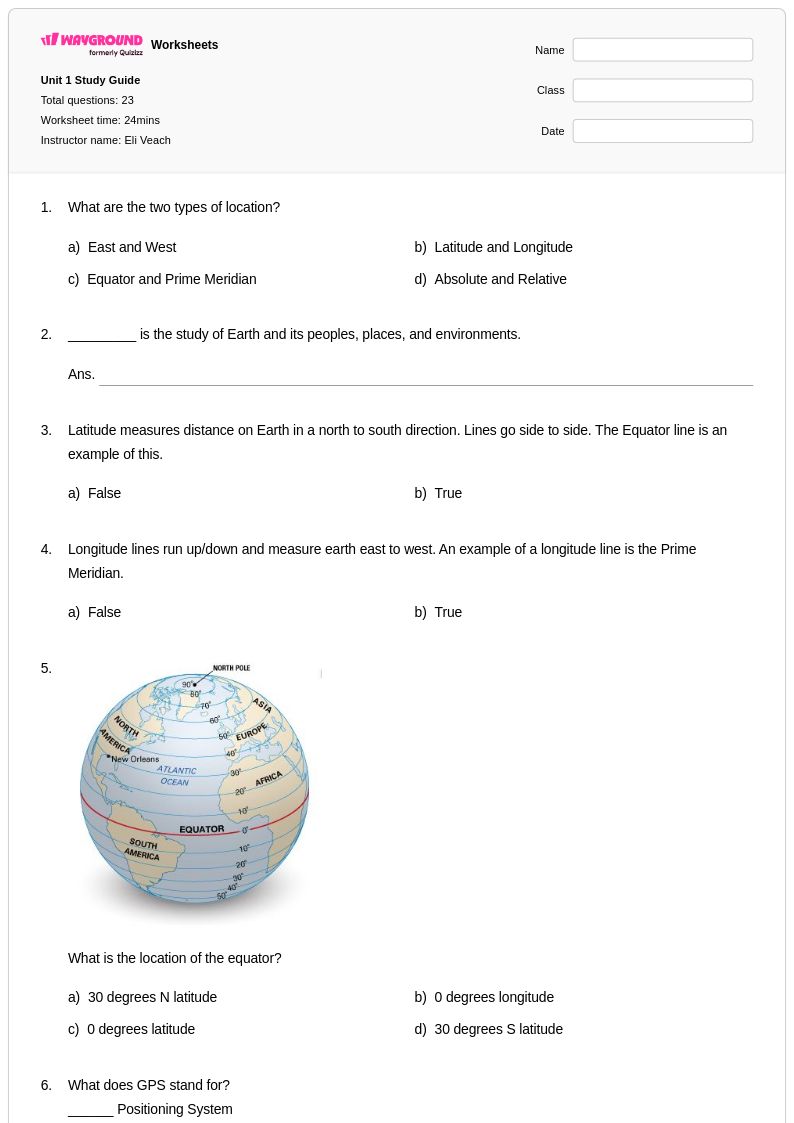
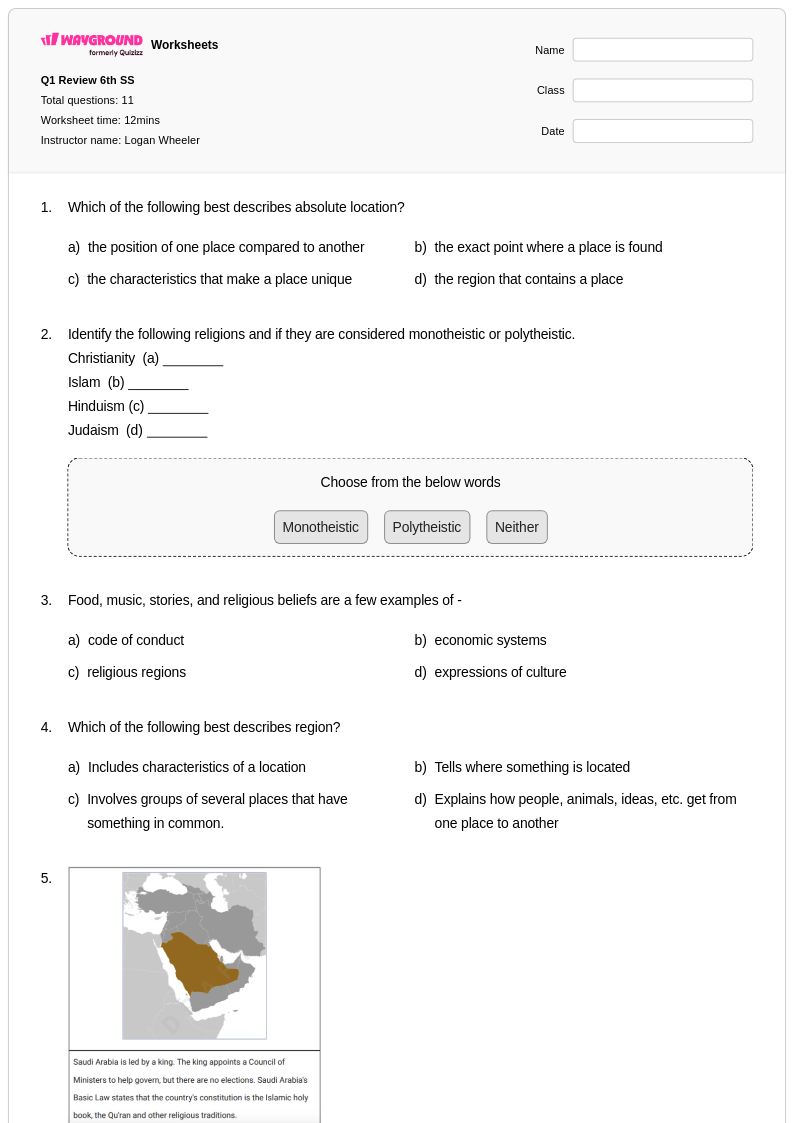
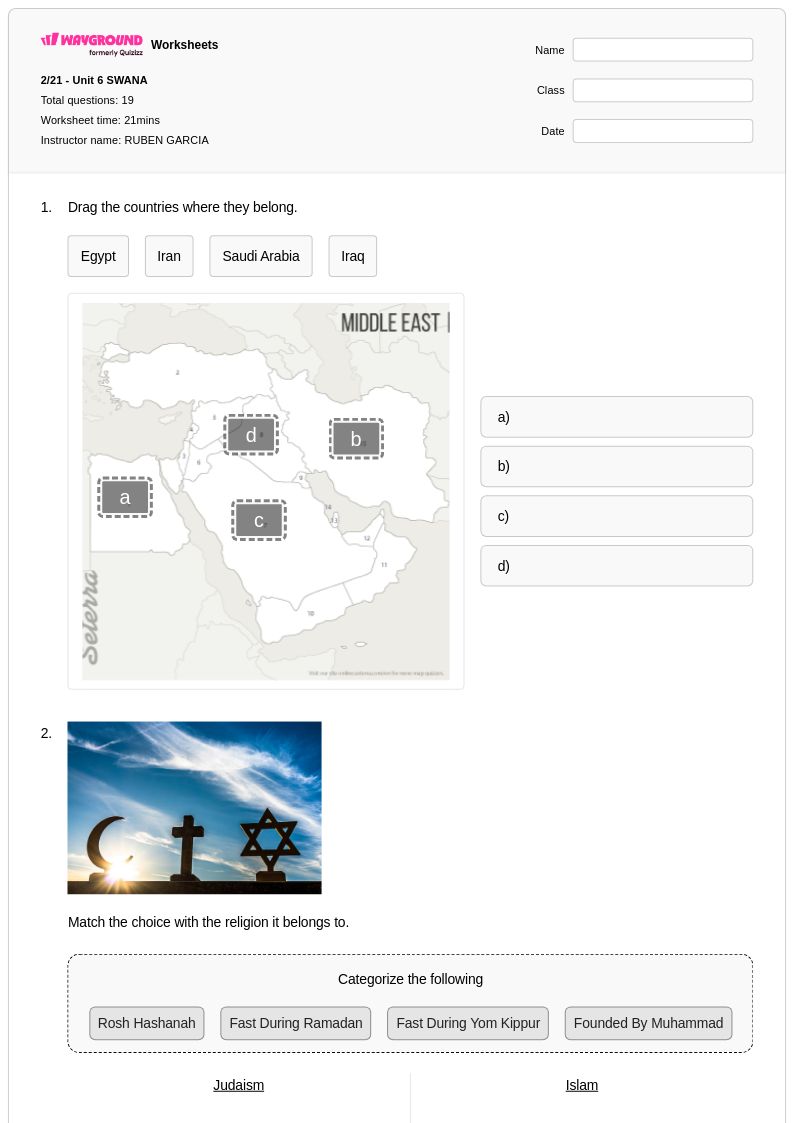
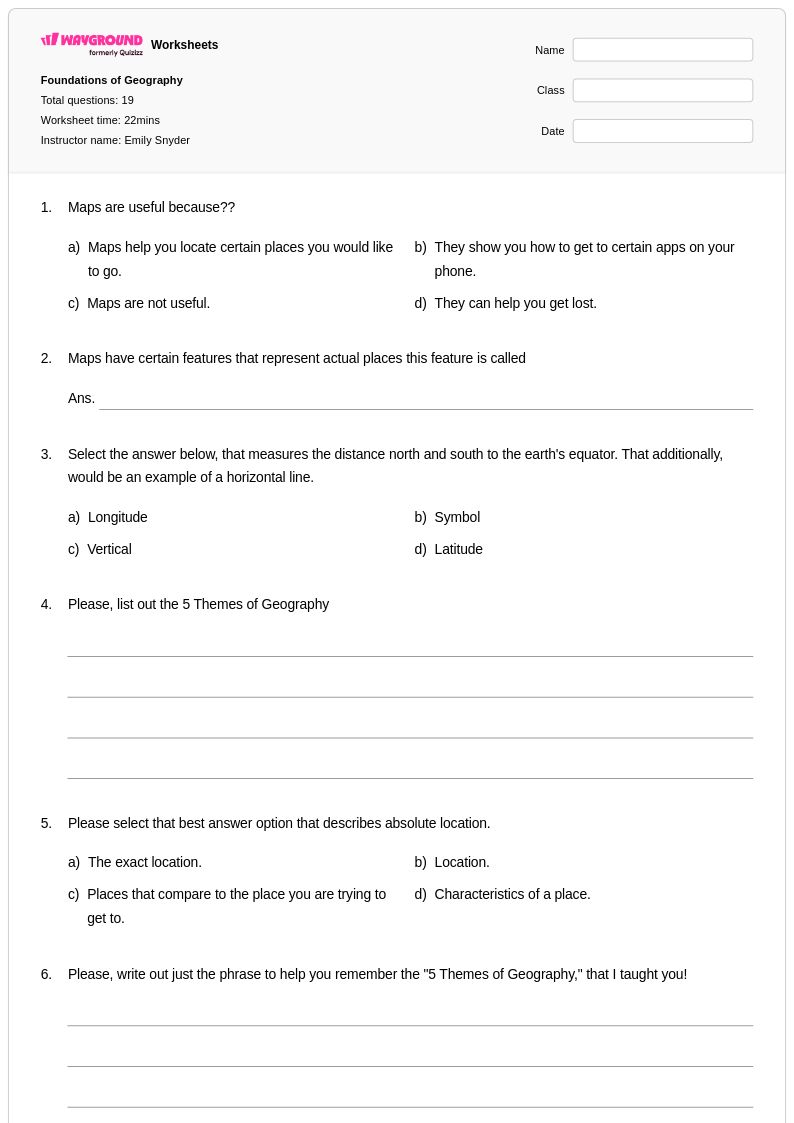
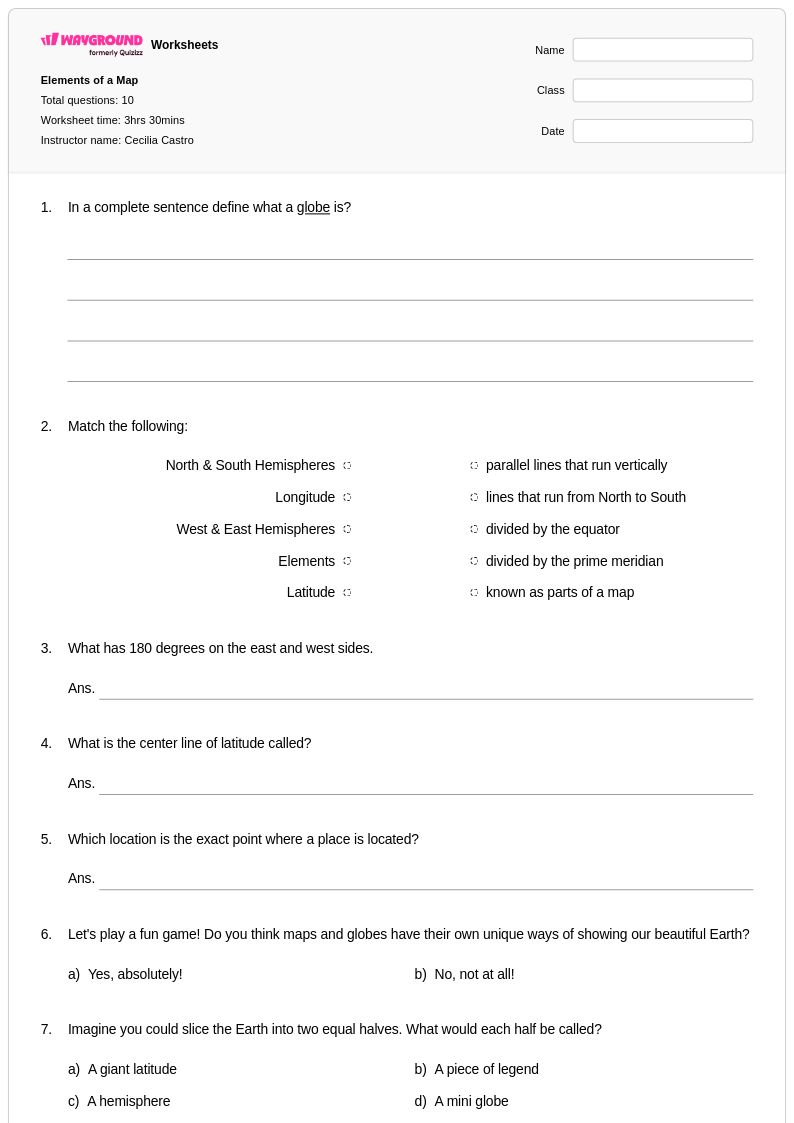
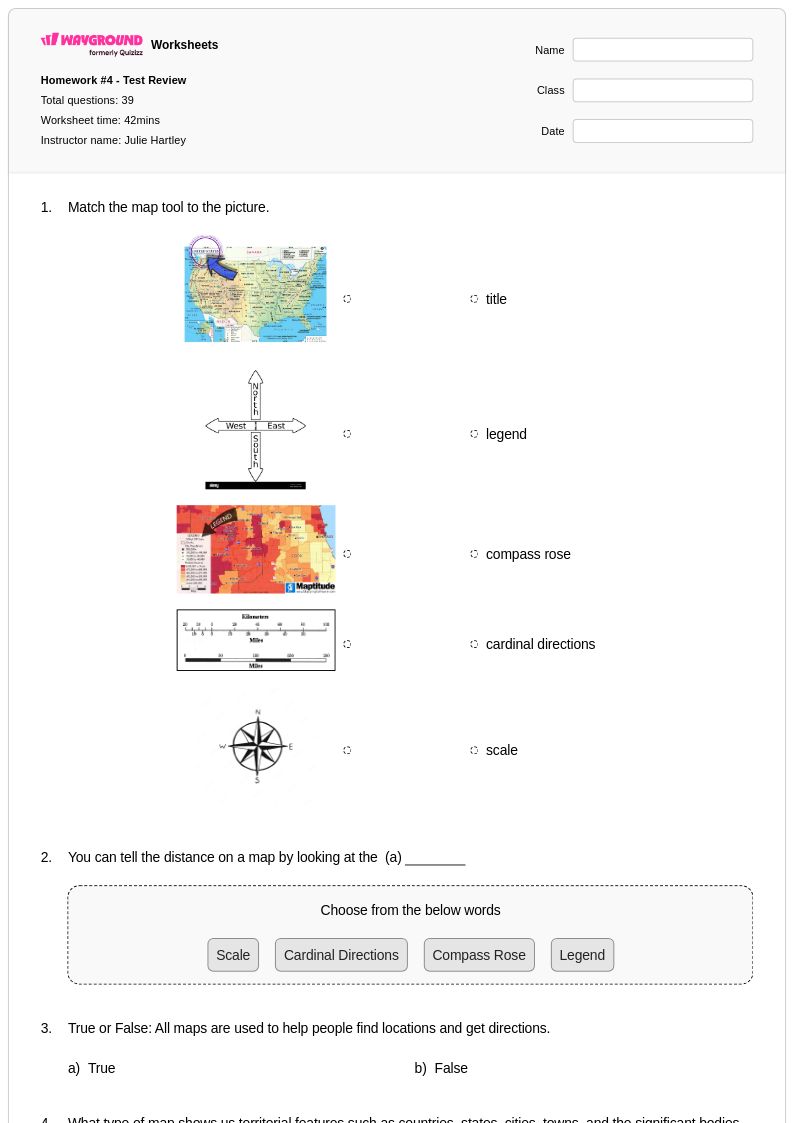
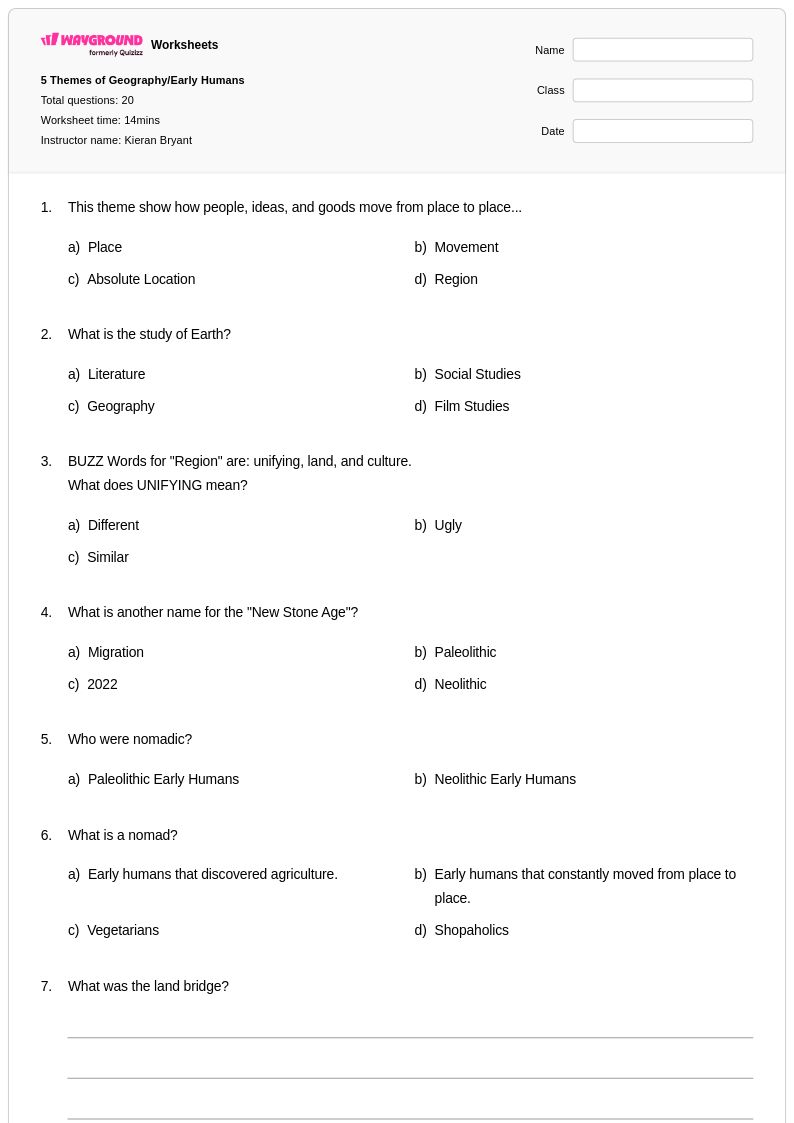
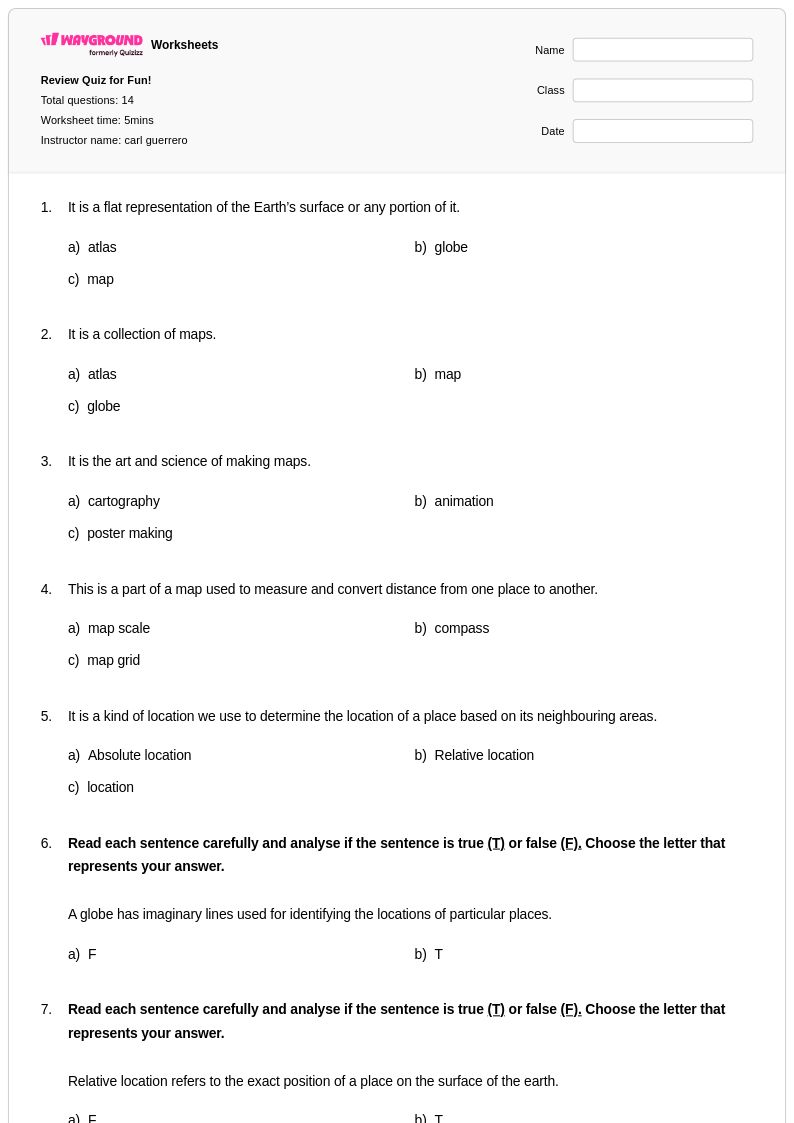
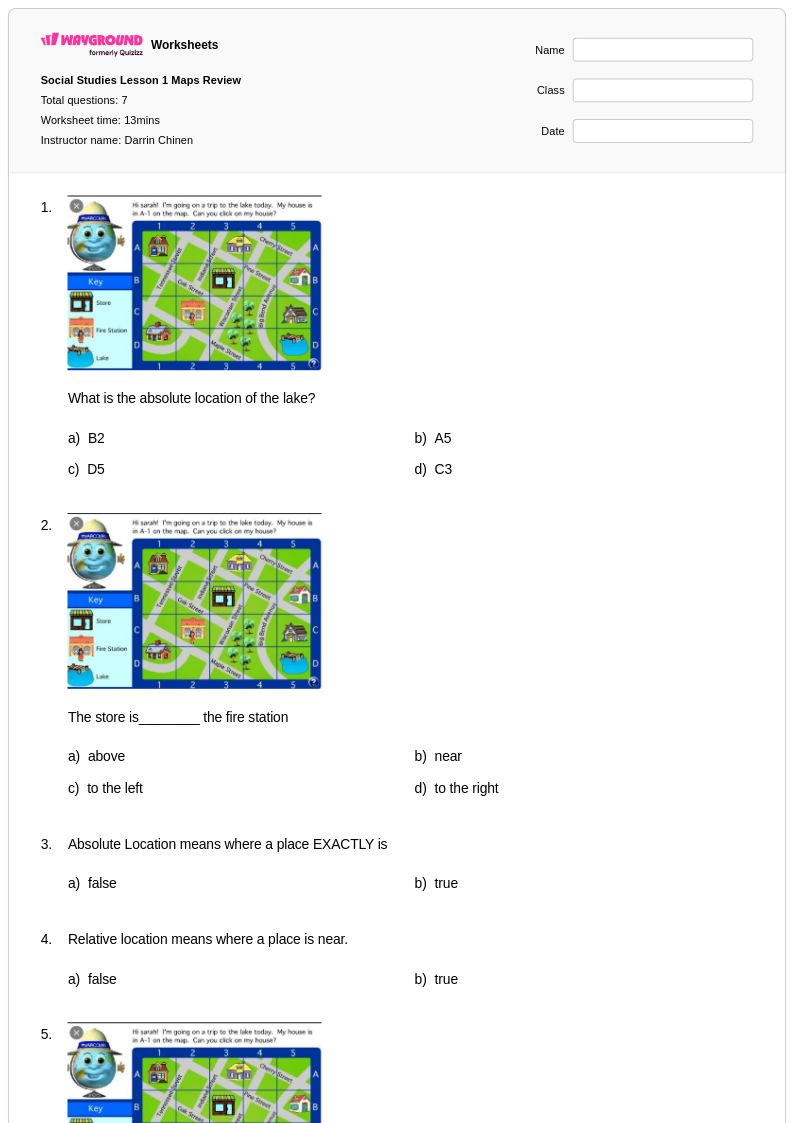
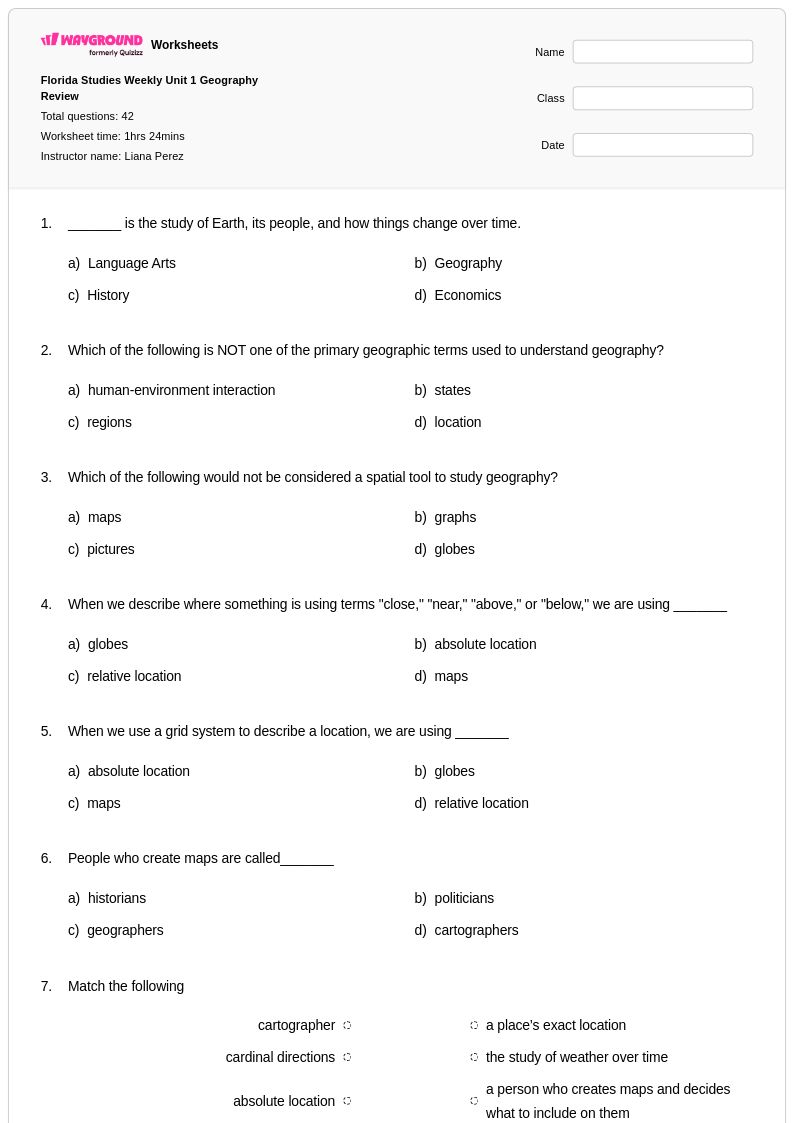
Absolute location worksheets for kindergarten students through Wayground (formerly Quizizz) introduce young learners to fundamental geographic concepts through age-appropriate activities and visual exercises. These carefully designed printables help kindergarteners develop spatial awareness by teaching them to identify and describe specific places using basic address concepts, simple maps, and familiar landmarks in their community. The worksheets strengthen essential pre-geography skills including recognizing street names, house numbers, and neighborhood features while building vocabulary related to location and place. Each free resource includes clear instructions and visual cues that support early readers, with accompanying answer keys that enable teachers and parents to guide learning effectively. These practice problems use familiar contexts like home, school, and local businesses to make abstract location concepts concrete and meaningful for five and six-year-old students.
Wayground (formerly Quizizz) empowers educators with millions of teacher-created absolute location resources specifically tailored for kindergarten geography instruction, offering robust search and filtering capabilities that help teachers quickly locate materials aligned with early childhood learning standards. The platform's differentiation tools allow educators to customize worksheets based on individual student needs, supporting both remediation for struggling learners and enrichment opportunities for advanced students. Teachers can access these materials in both printable pdf formats for traditional classroom use and digital versions for interactive learning experiences, providing flexibility for diverse instructional settings. This comprehensive collection streamlines lesson planning by offering ready-to-use practice activities that reinforce absolute location concepts through systematic skill-building exercises, enabling teachers to focus on instruction while ensuring students receive consistent, standards-based practice in foundational geographic thinking.
FAQs
How do I teach absolute location to students?
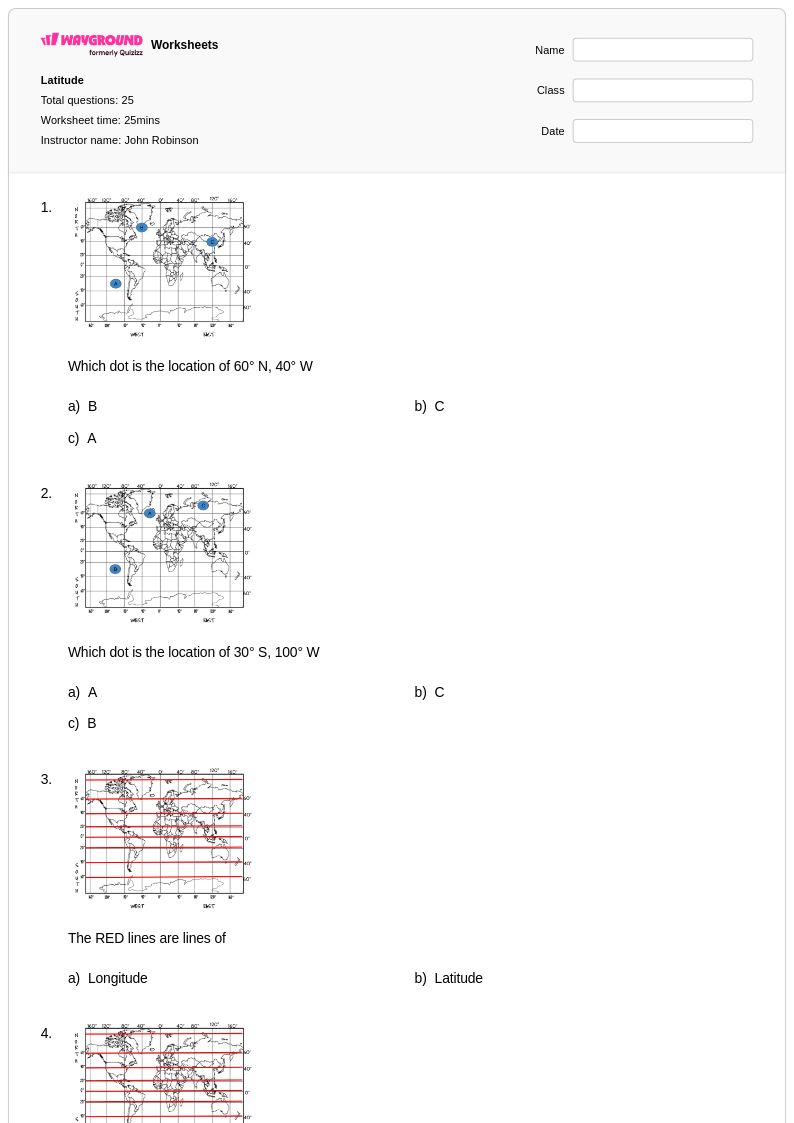
Absolute location is best taught by first establishing what latitude and longitude lines represent on a globe or flat map, then having students practice reading coordinates in degrees. Start with well-known landmarks or capital cities so students can verify their answers intuitively. Once students grasp the coordinate system, introduce the distinction between absolute location and relative location to deepen geographic reasoning.
What exercises help students practice absolute location and coordinate systems?
Effective practice involves having students both read given coordinates to identify a place and reverse the process by finding the coordinates of a named location. Grid-based worksheets that require locating cities, landmarks, and geographic features using latitude and longitude reinforce both directions of the skill. Varied problem formats, including multiple choice, fill-in, and map-marking tasks, help build fluency across different question types.
What mistakes do students commonly make when working with latitude and longitude?
The most frequent error is reversing latitude and longitude, writing coordinates in the wrong order or confusing which axis each value describes. Students also commonly misread the degree scale on maps, especially when grid lines are spaced in increments larger than one degree. Another persistent misconception is conflating absolute location with relative location, using directional or landmark-based descriptions when a precise coordinate is required.
How do I differentiate absolute location instruction for students at different skill levels?
For students who are still developing map-reading skills, begin with simple whole-number coordinates on large-scale grids before introducing decimal degrees or minutes. More advanced students can work with coordinates that fall between labeled grid lines, requiring interpolation. On Wayground, teachers can apply accommodations such as reduced answer choices or read-aloud support to individual students, allowing the rest of the class to work with standard settings without any disruption.
How can I use Wayground's absolute location worksheets in my classroom?
Wayground's absolute location worksheets are available as printable PDFs for traditional classroom use and in digital formats for technology-integrated or remote learning environments. Teachers can also host the worksheets as a live quiz on Wayground, making it easy to assign as a formative check or graded activity. Each worksheet includes a complete answer key, which supports independent practice, homework assignments, and self-paced review.
How is absolute location different from relative location, and how do I teach both?
Absolute location identifies a place using a fixed coordinate system, specifically latitude and longitude, giving it a precise position that never changes regardless of perspective. Relative location describes where a place is in relation to other places, using language like 'north of' or 'near the river.' Teaching both concepts together is effective because the contrast clarifies why coordinates are necessary for precision, and comparing the two helps students recognize when each type of description is appropriate.