
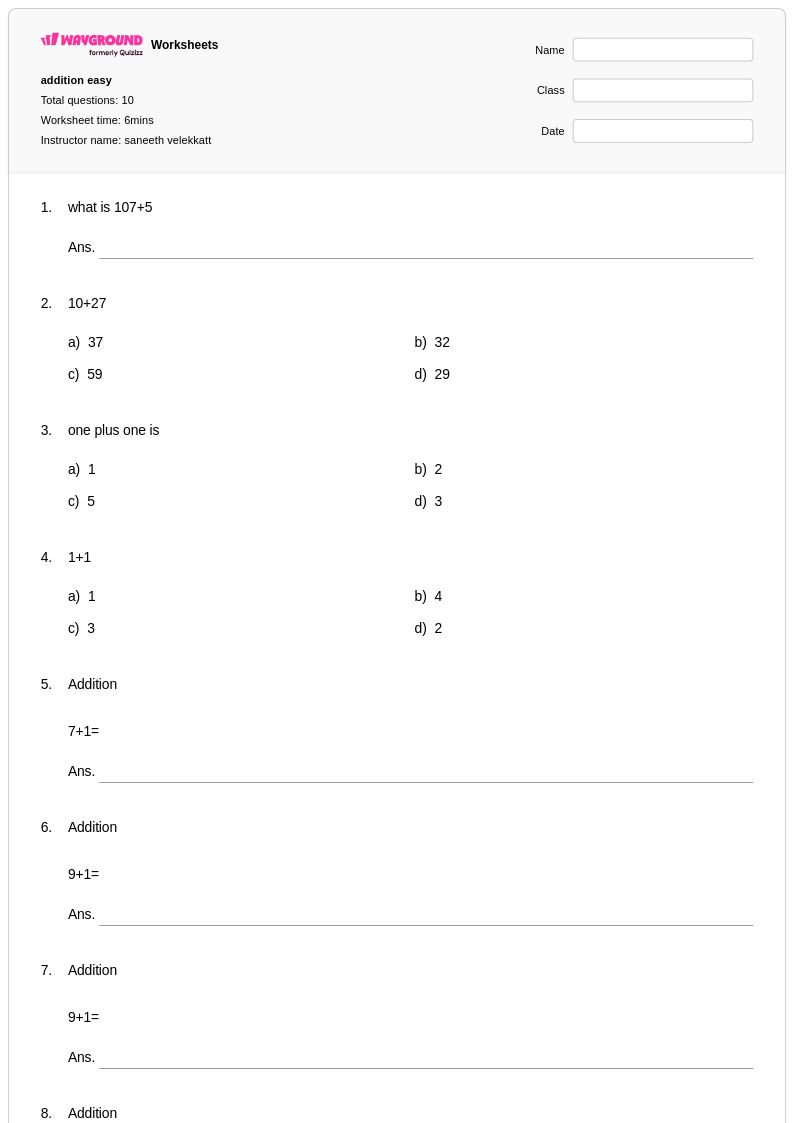
10 Q
2nd
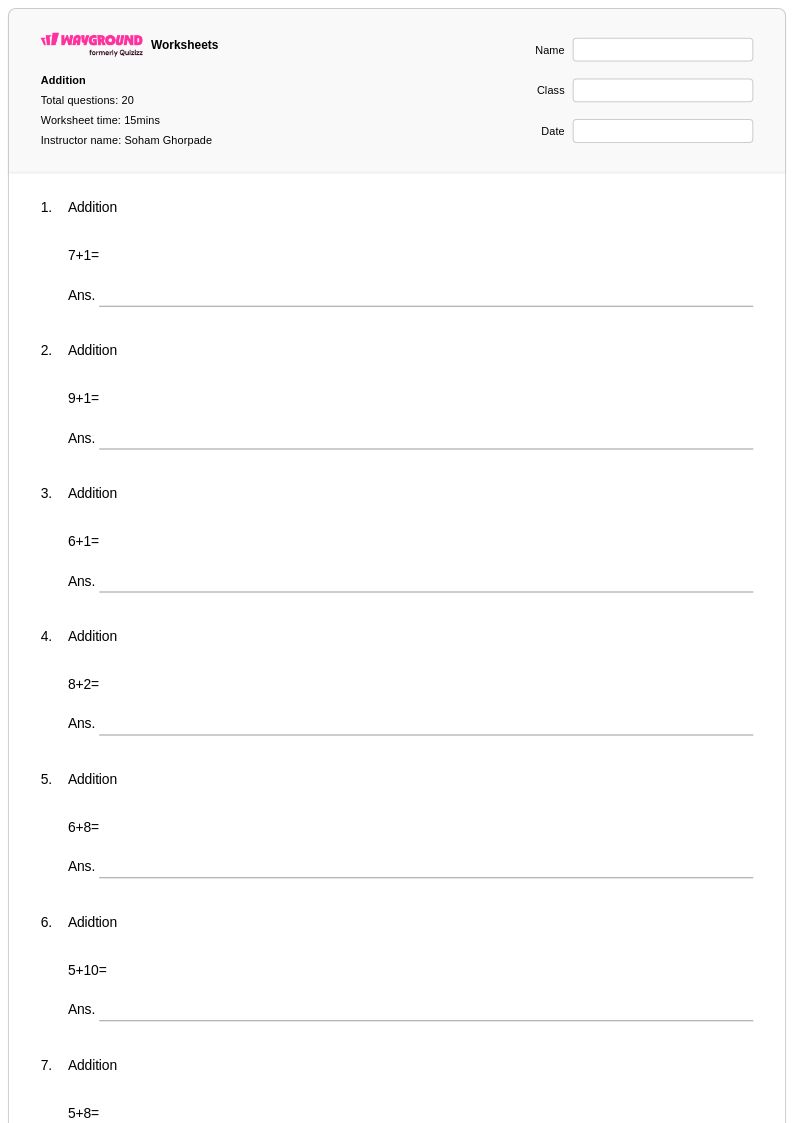
20 Q
1st - 3rd
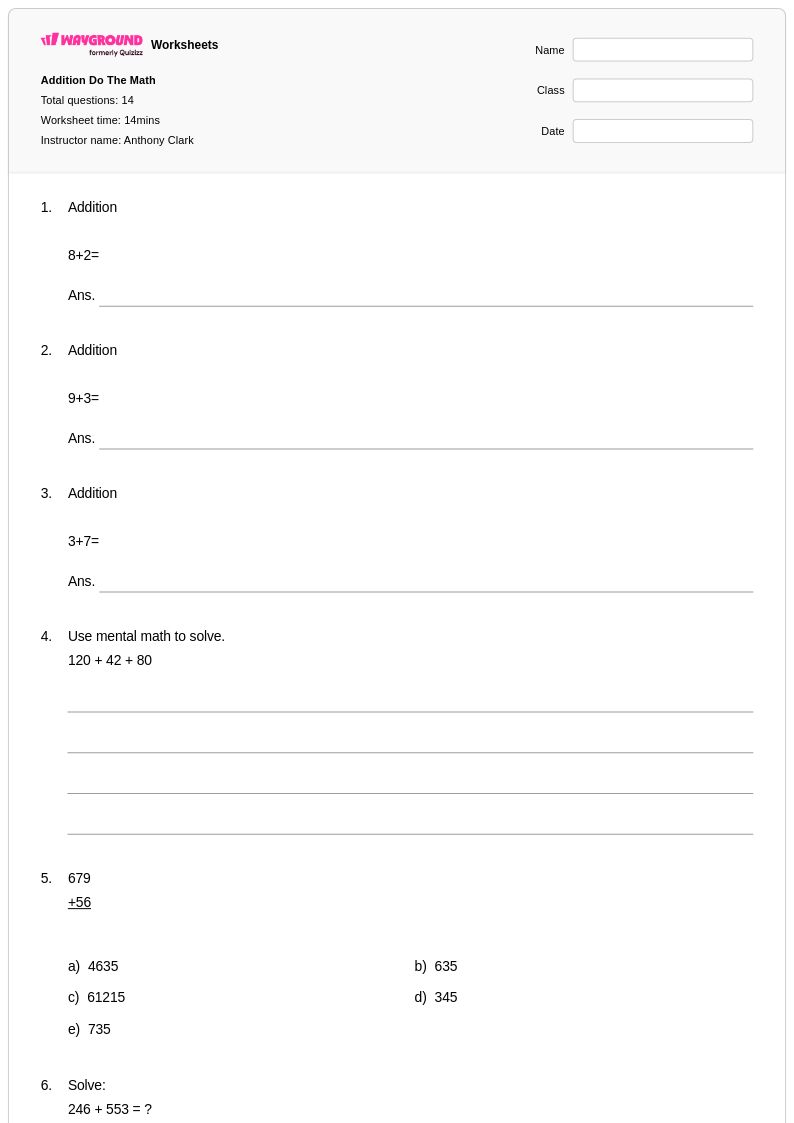
14 Q
2nd - Uni
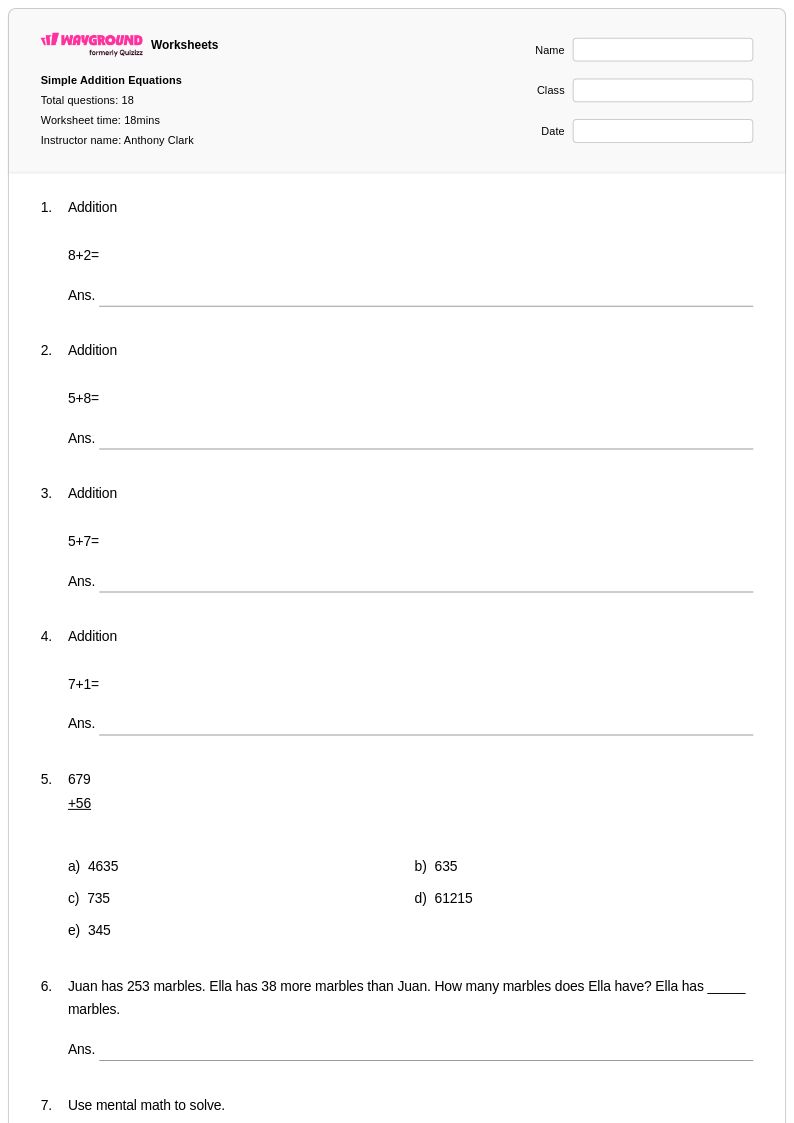
18 Q
2nd - Uni
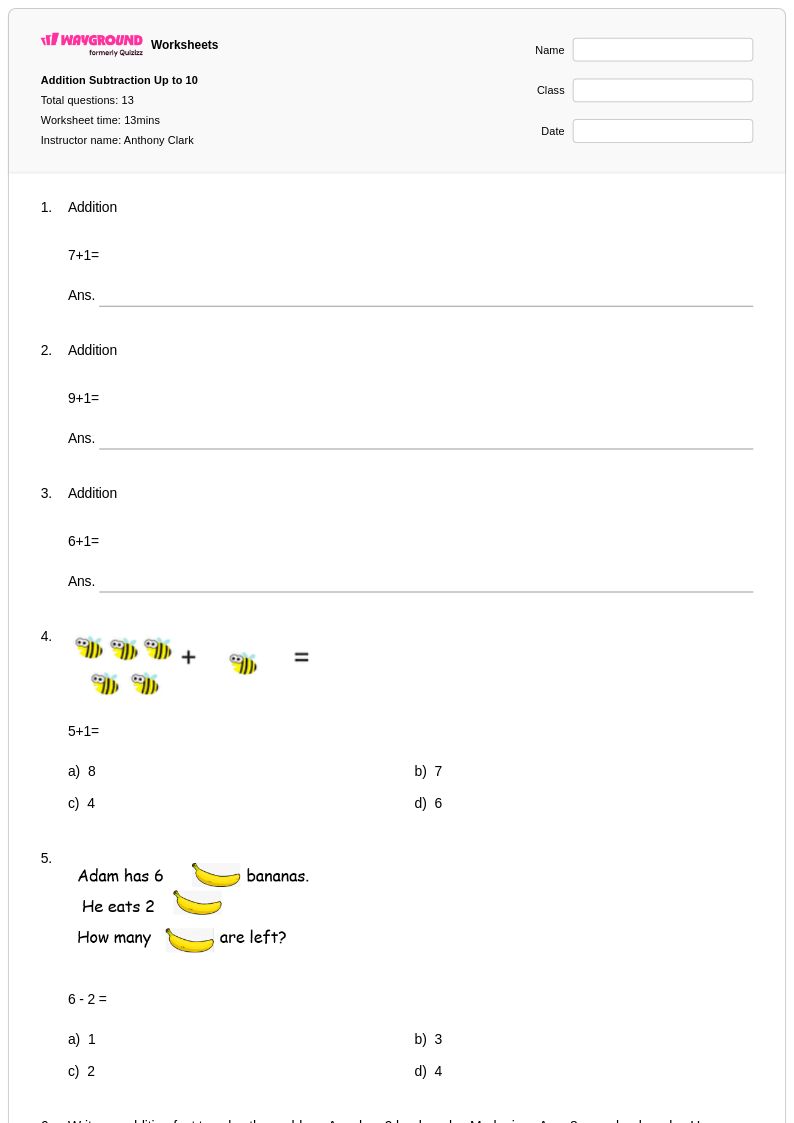
13 Q
1st - Uni
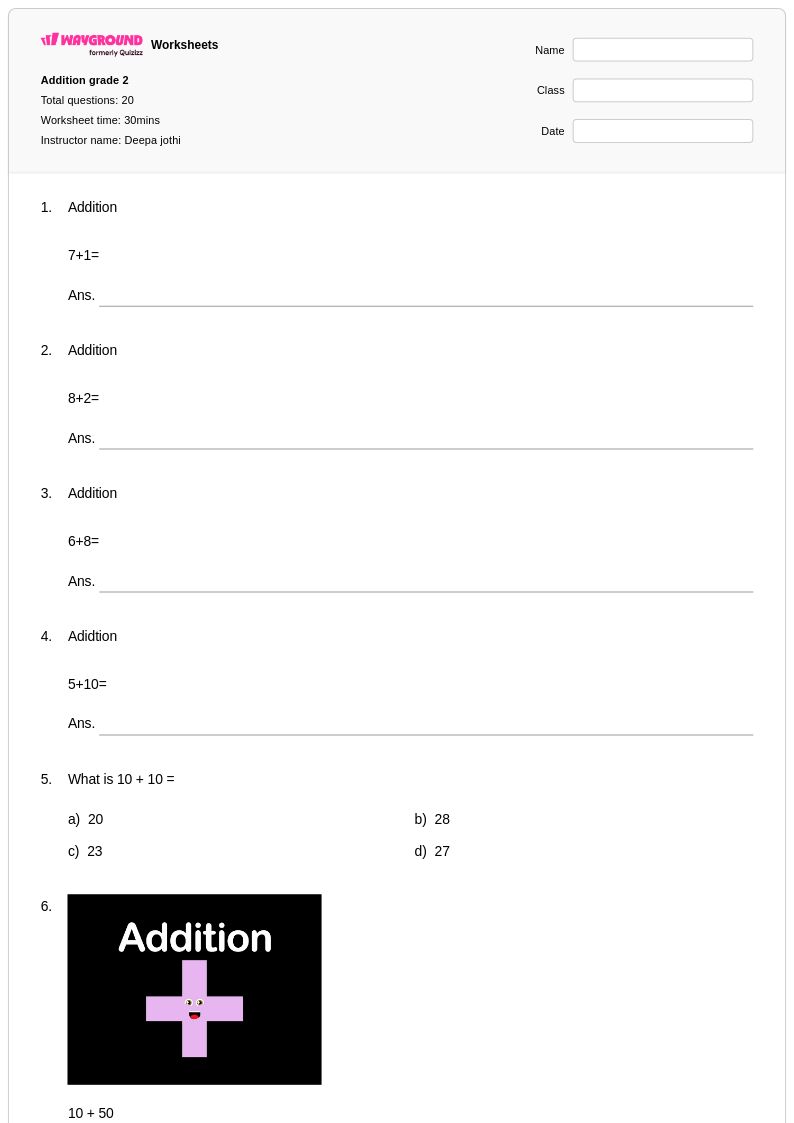
20 Q
2nd
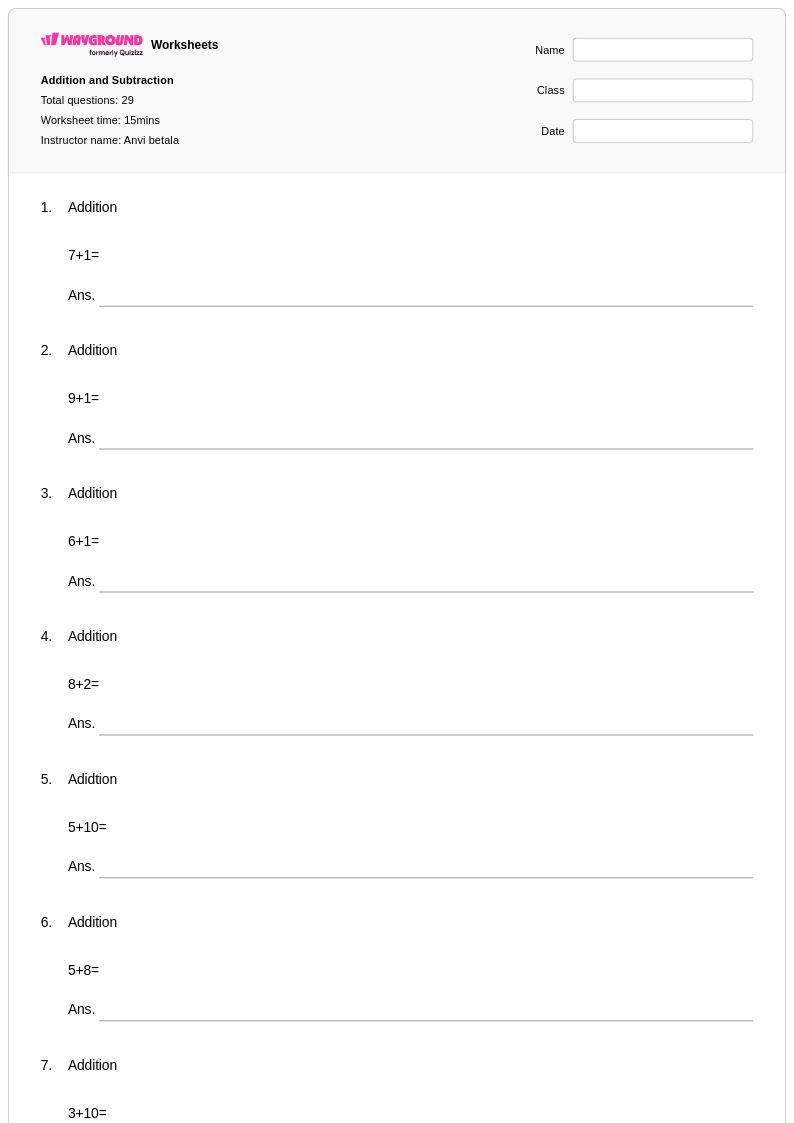
29 Q
KG - 3rd
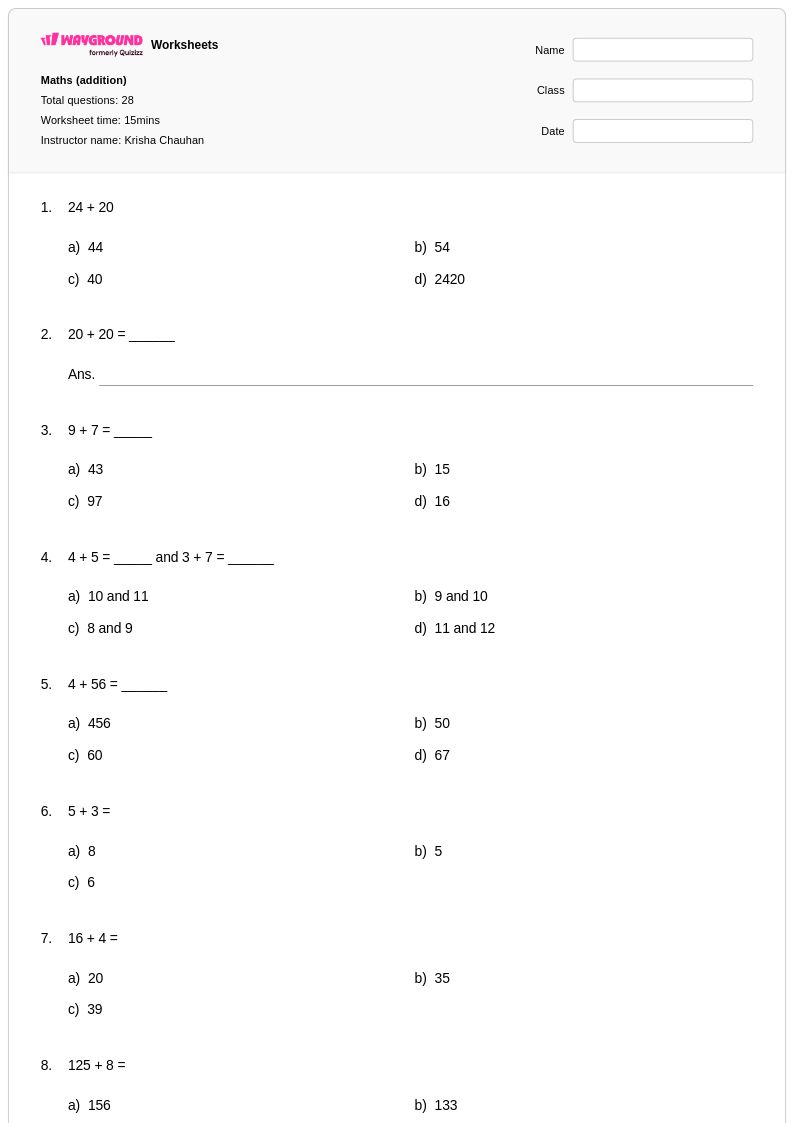
28 Q
1st - 3rd
16 Q
1st - Uni
20 Q
2nd
17 Q
2nd - Uni
13 Q
1st - Uni
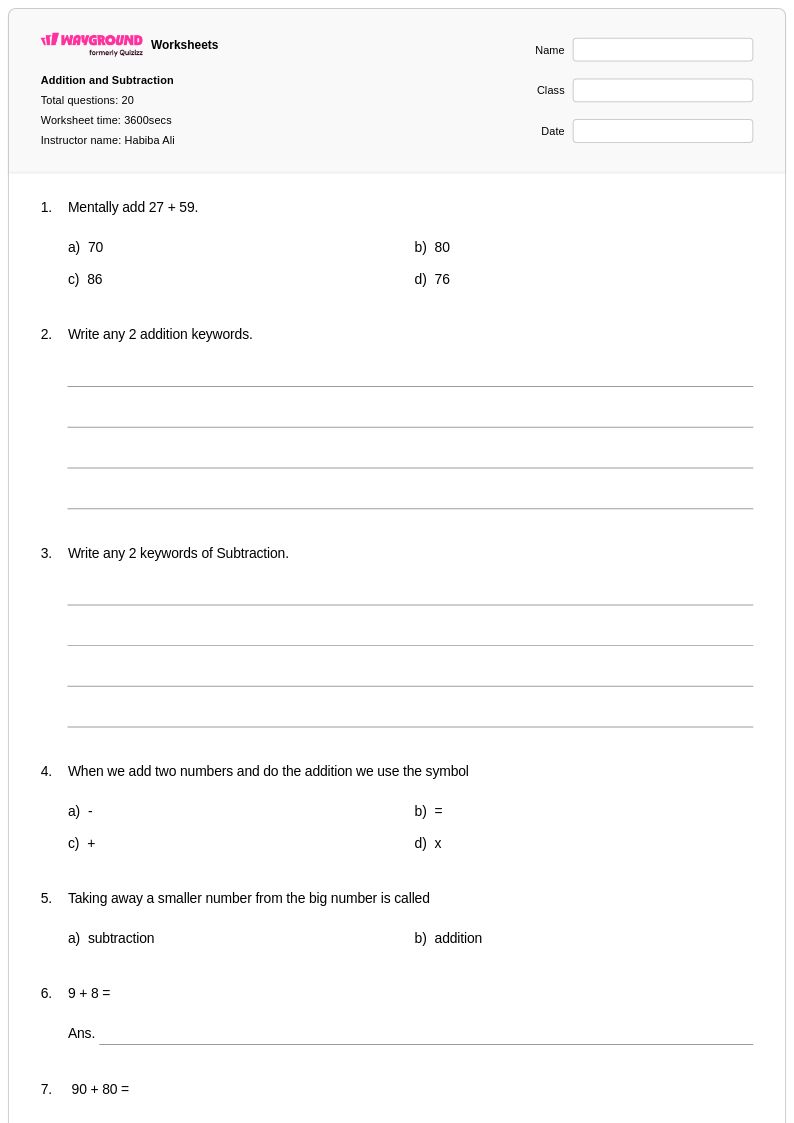
20 Q
2nd
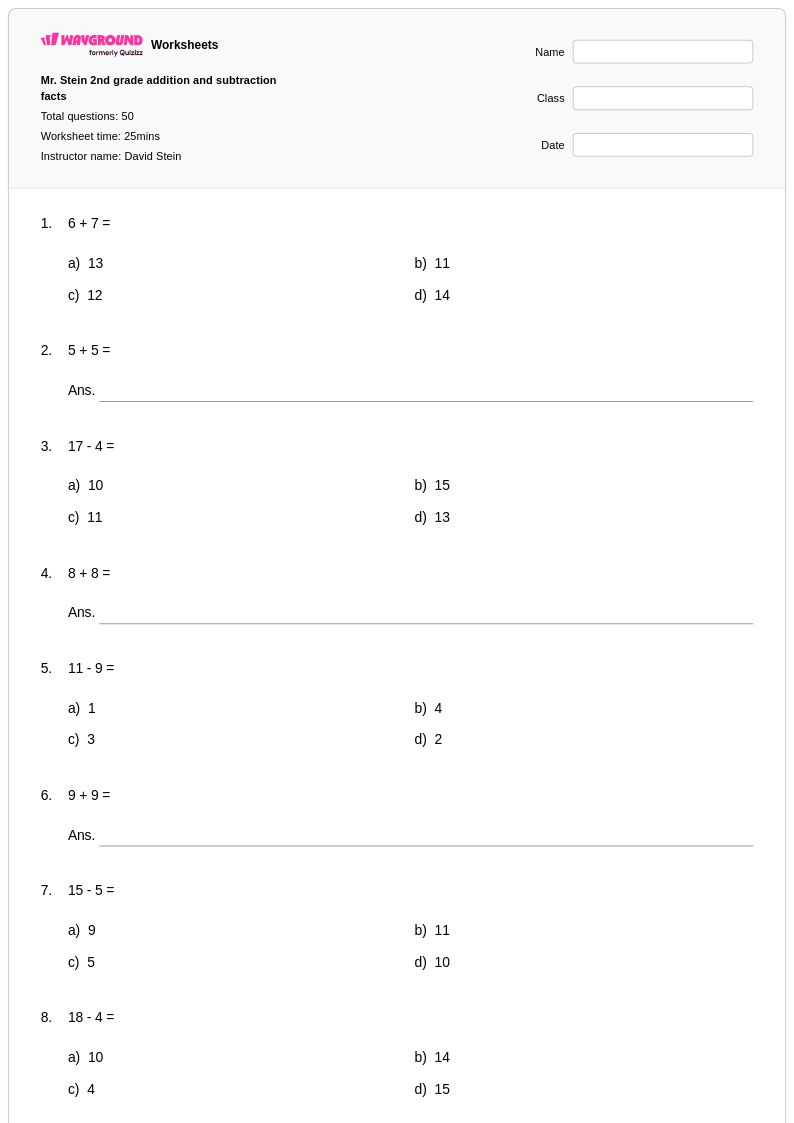
50 Q
2nd
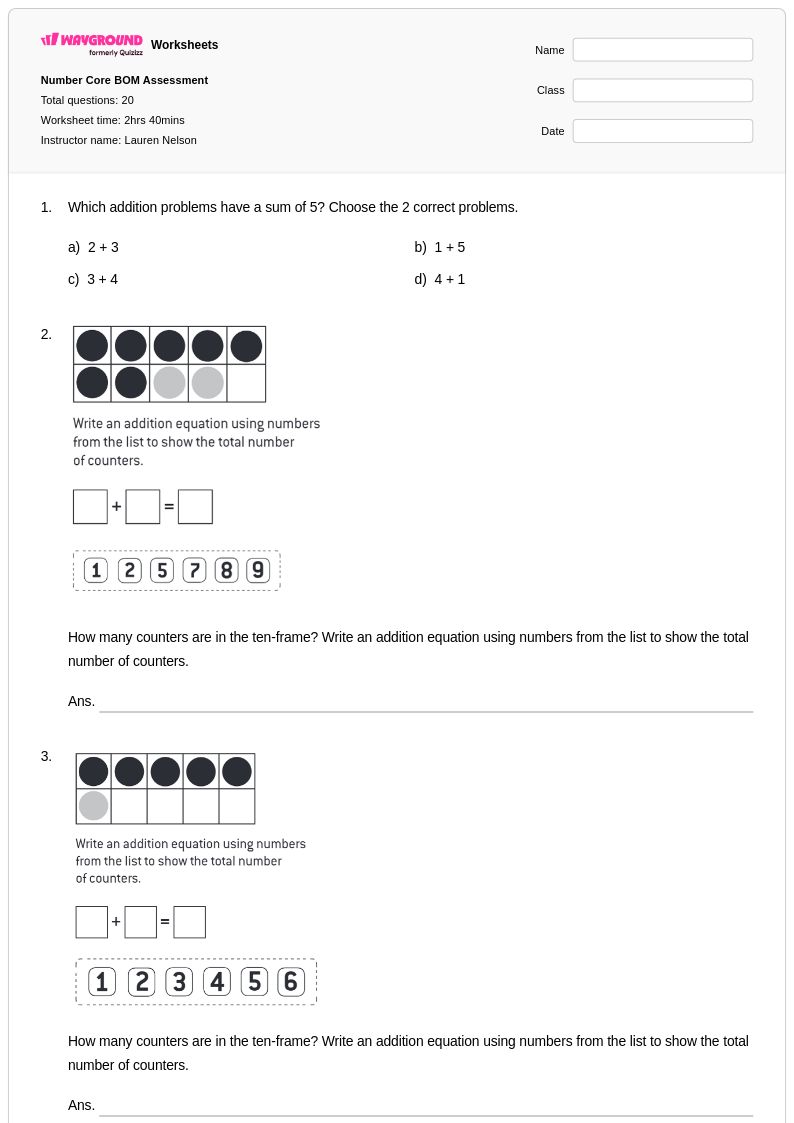
20 Q
1st - Uni
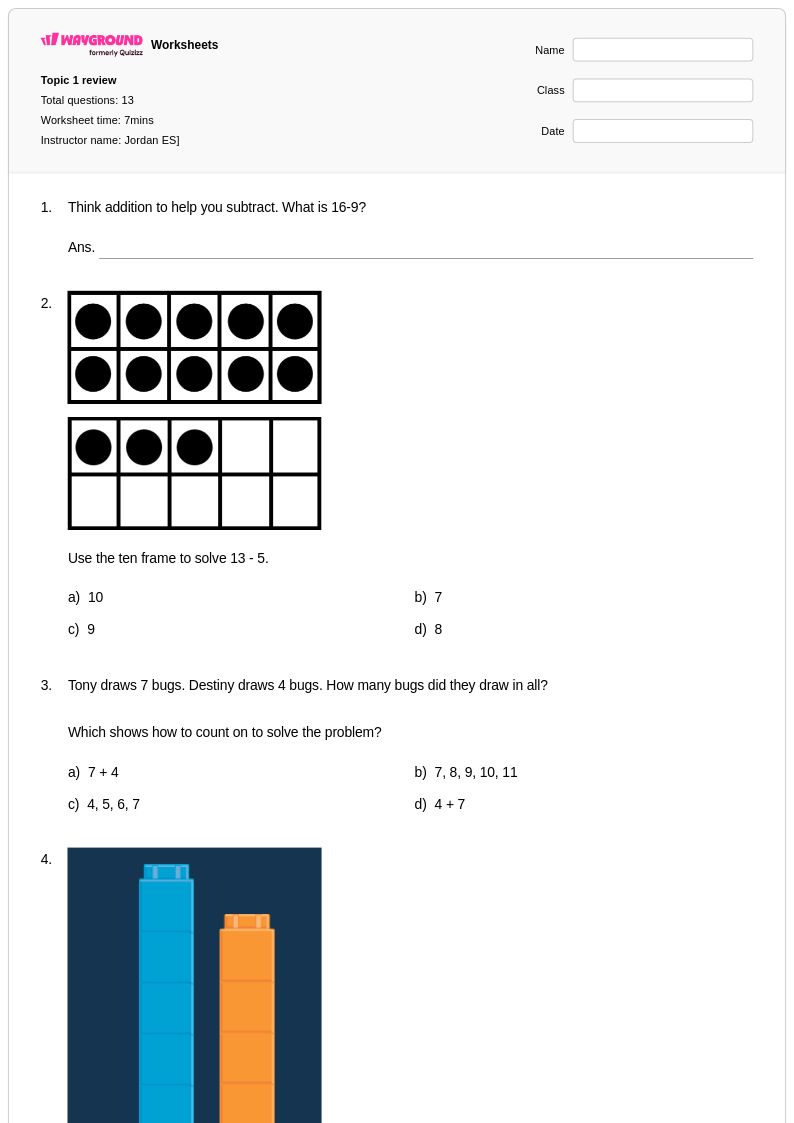
13 Q
2nd
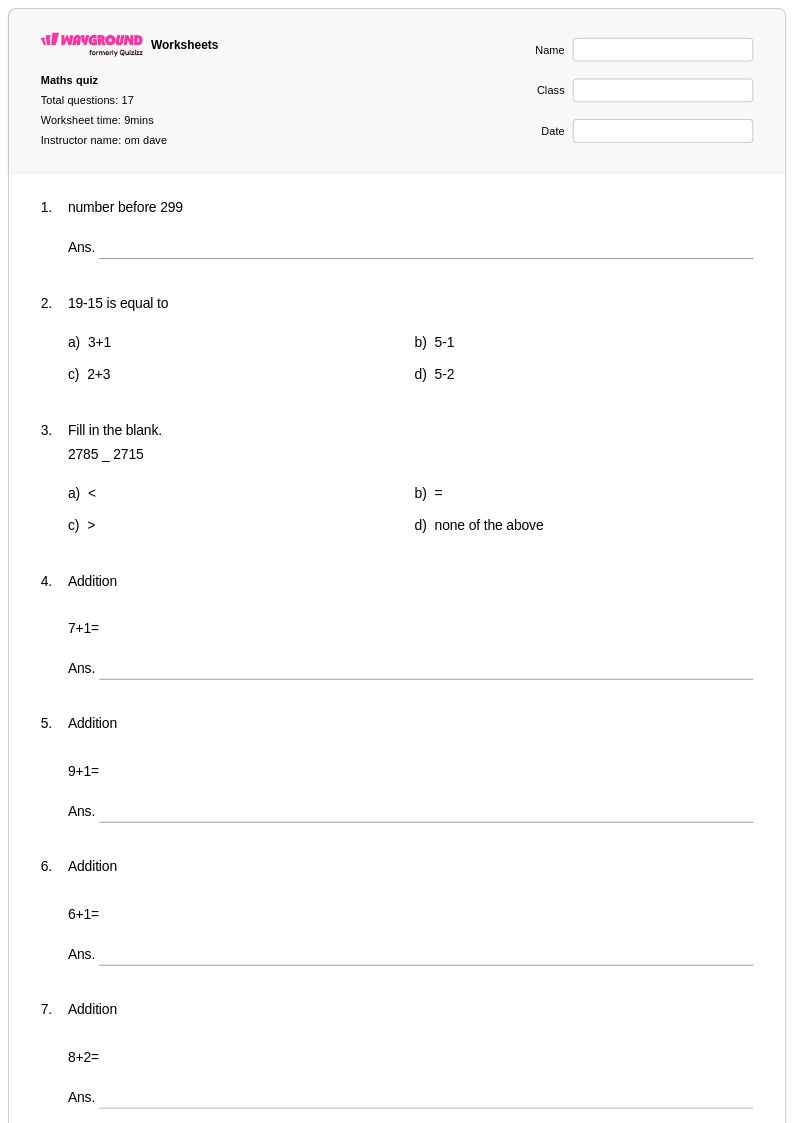
17 Q
2nd
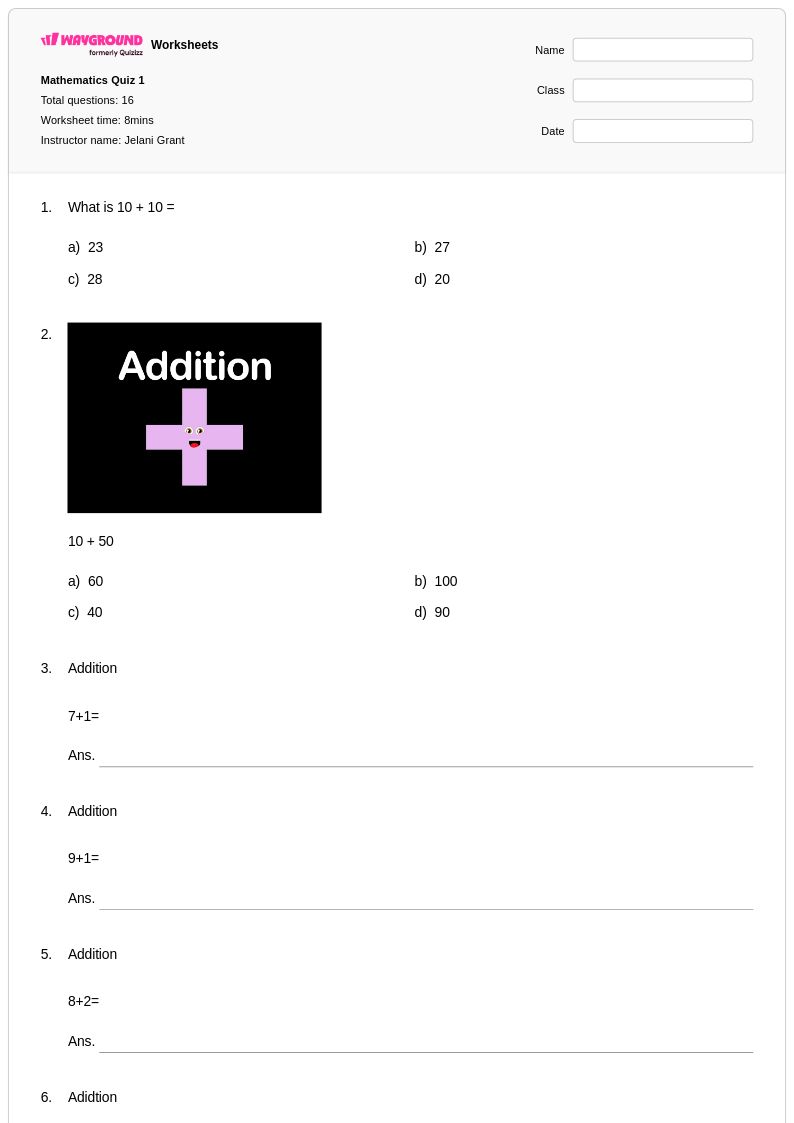
16 Q
2nd - 4th
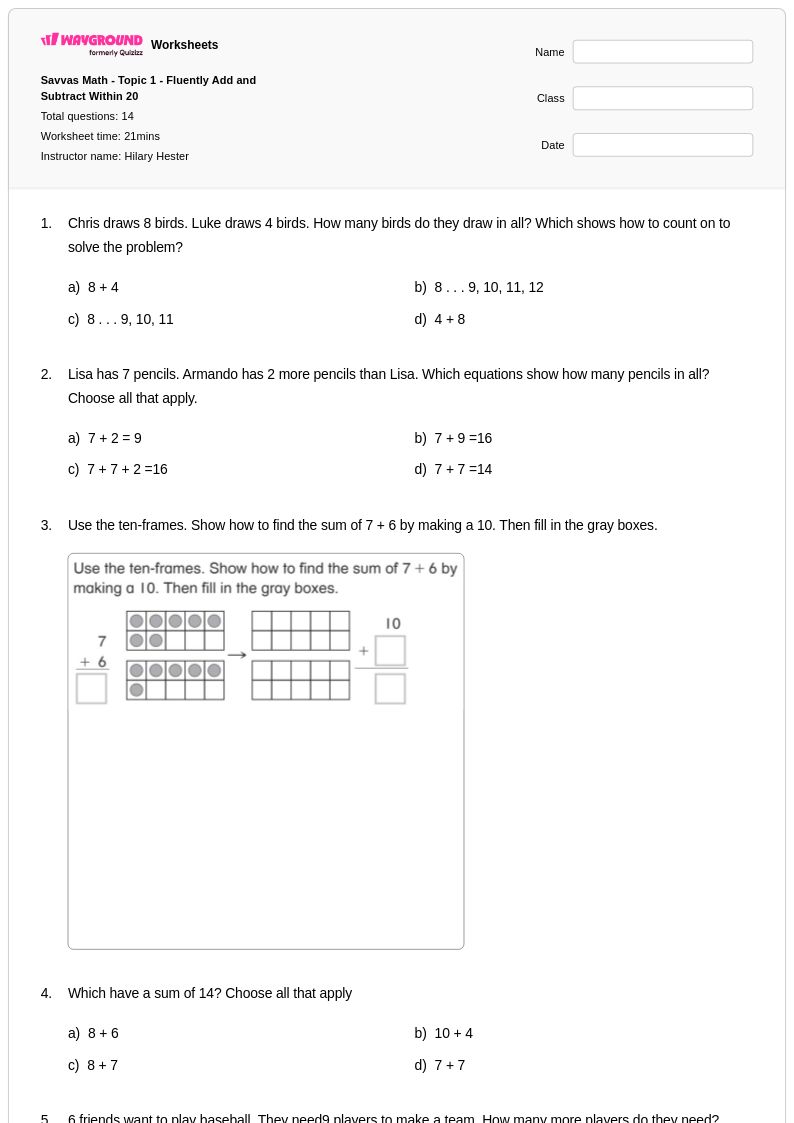
14 Q
2nd
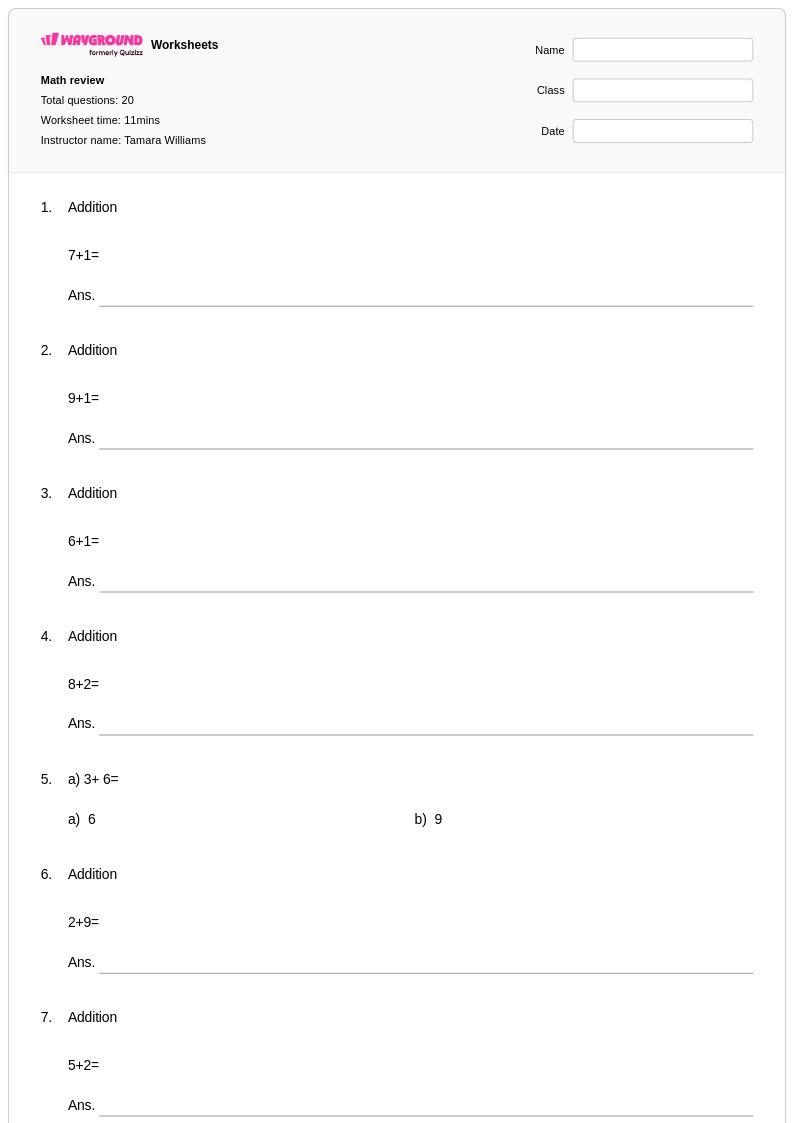
20 Q
1st - 2nd
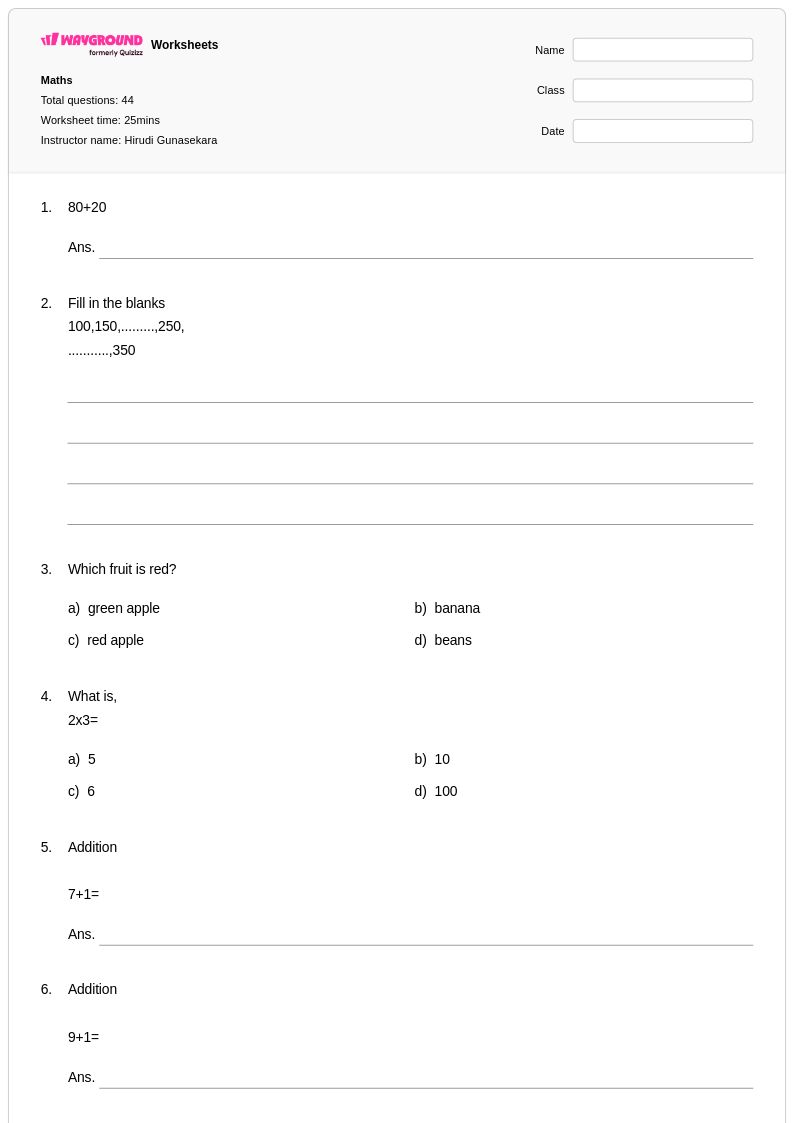
44 Q
2nd - 3rd
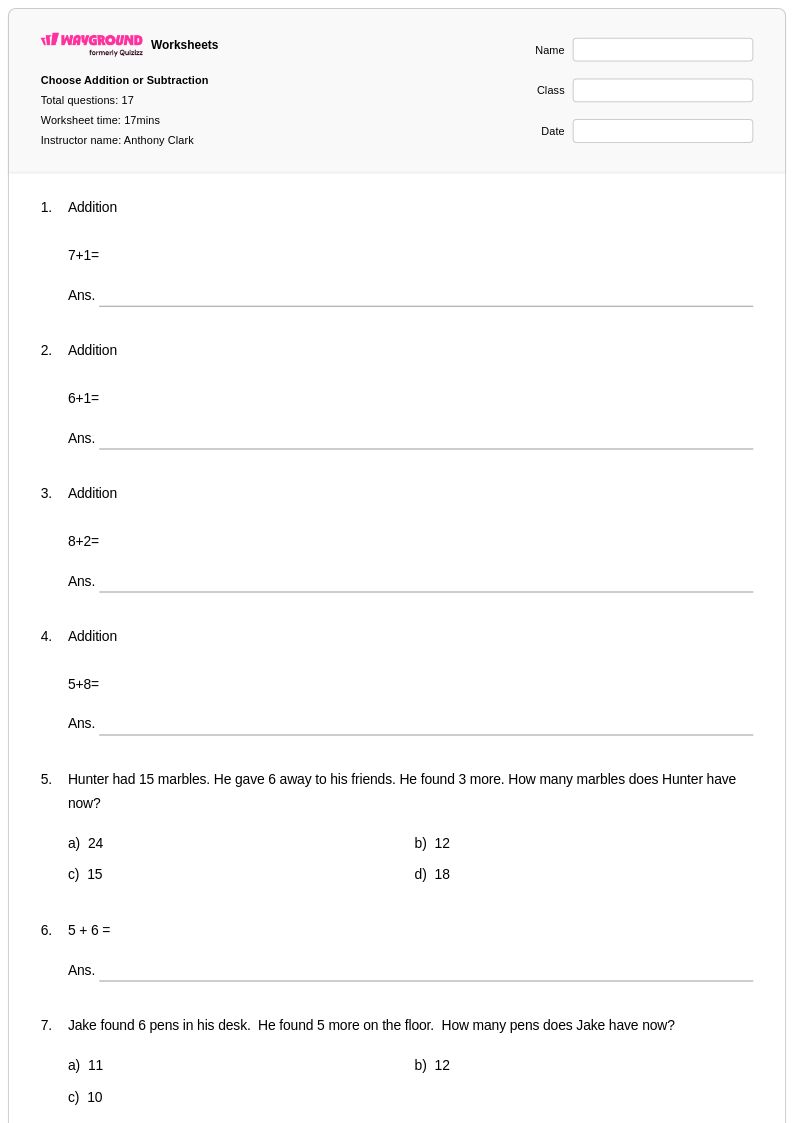
17 Q
1st - Uni
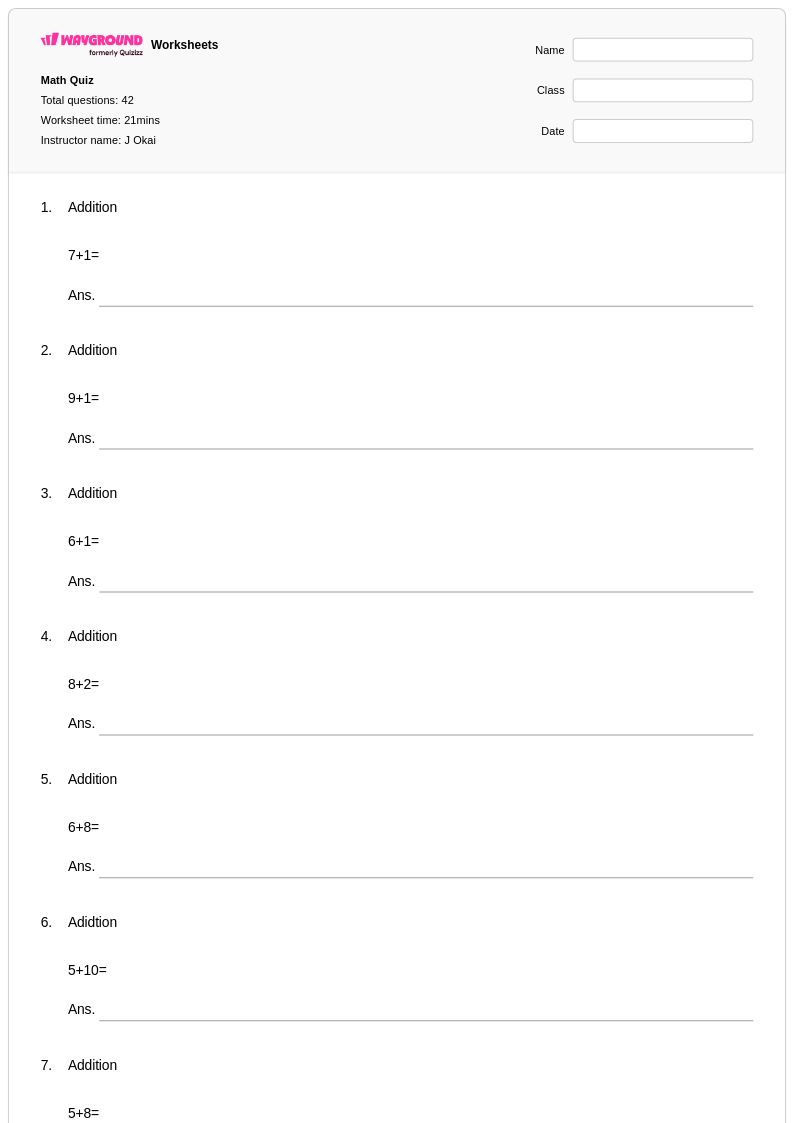
42 Q
1st - 5th
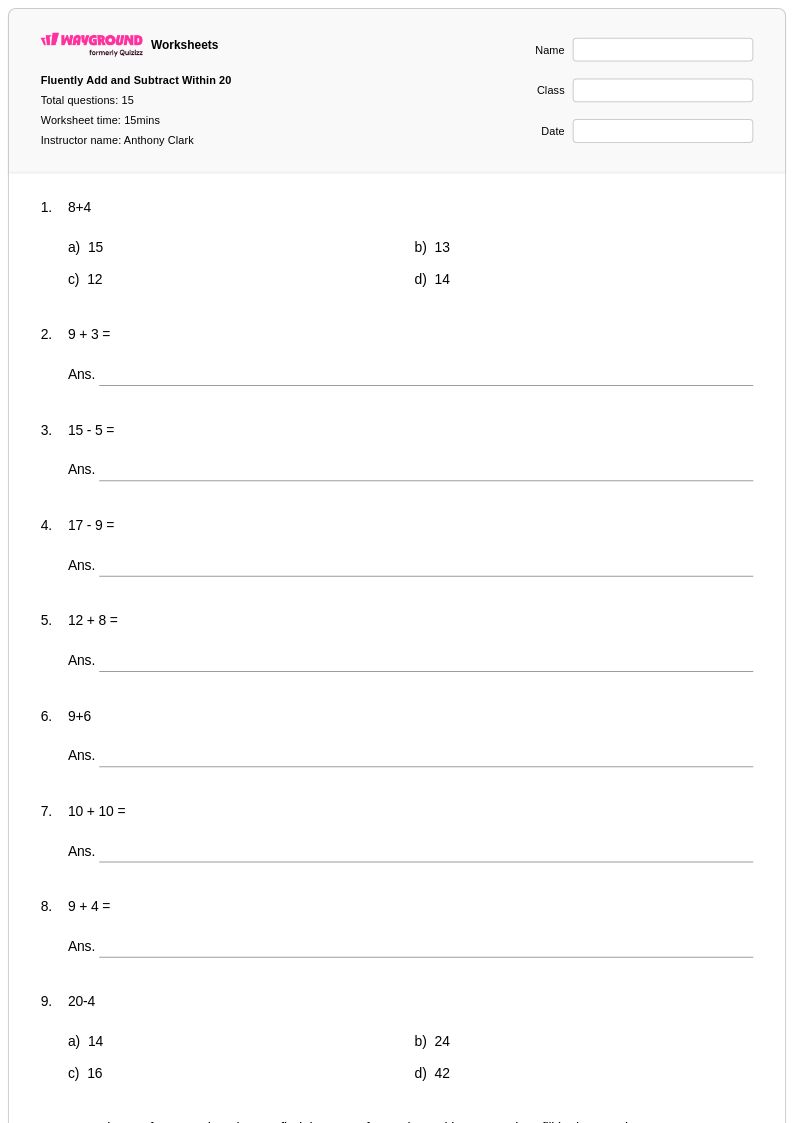
15 Q
2nd - Uni
Explore Addition and Ten Frames Worksheets by Grades
Explore Other Subject Worksheets for class 2
Explore printable Addition and Ten Frames worksheets for Class 2
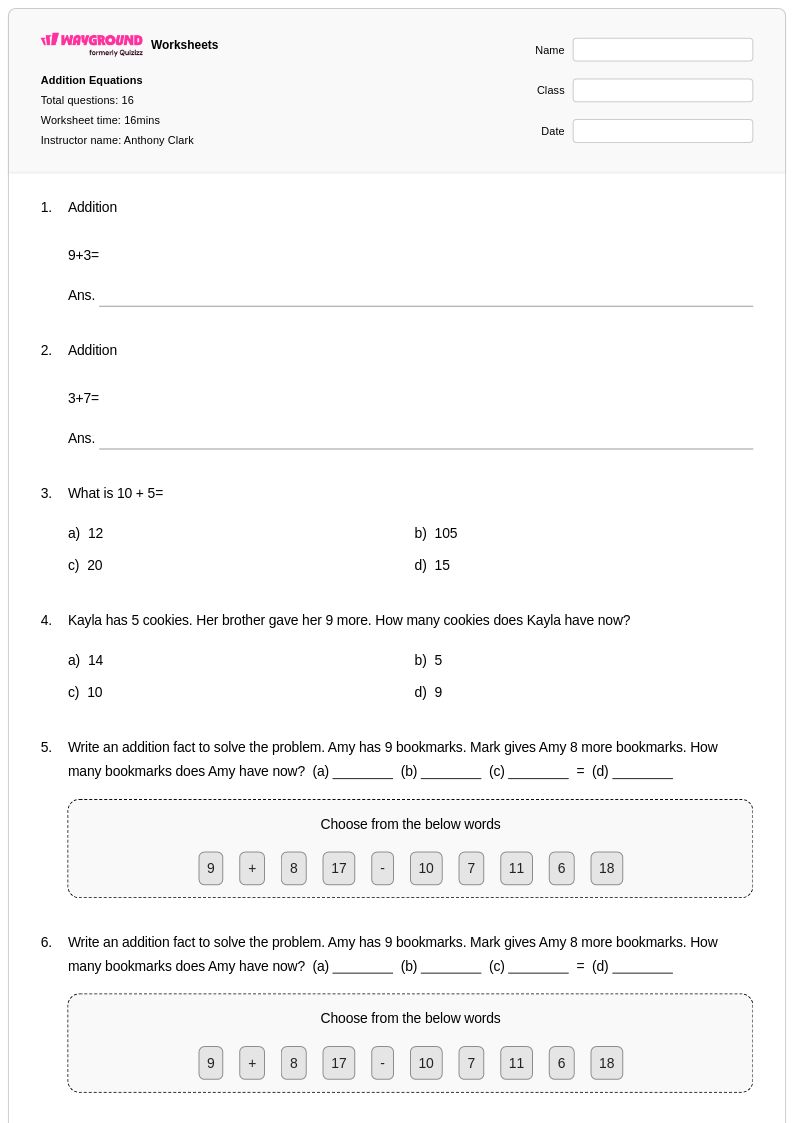
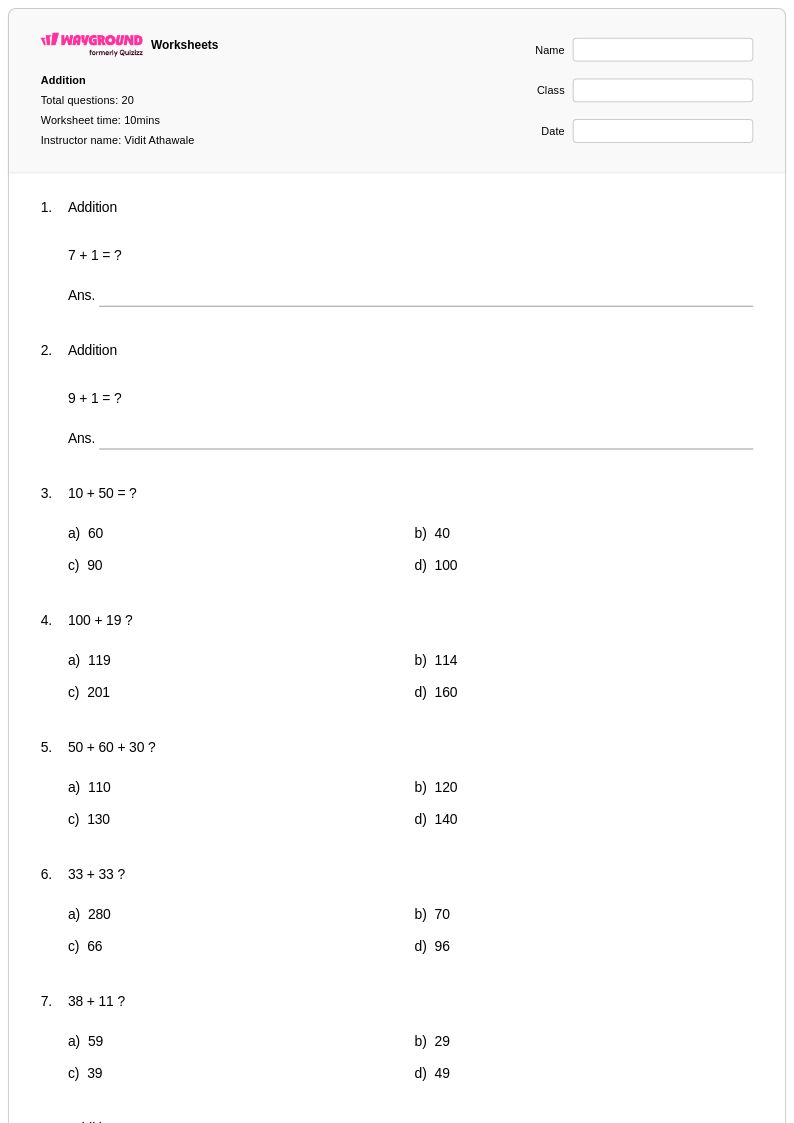
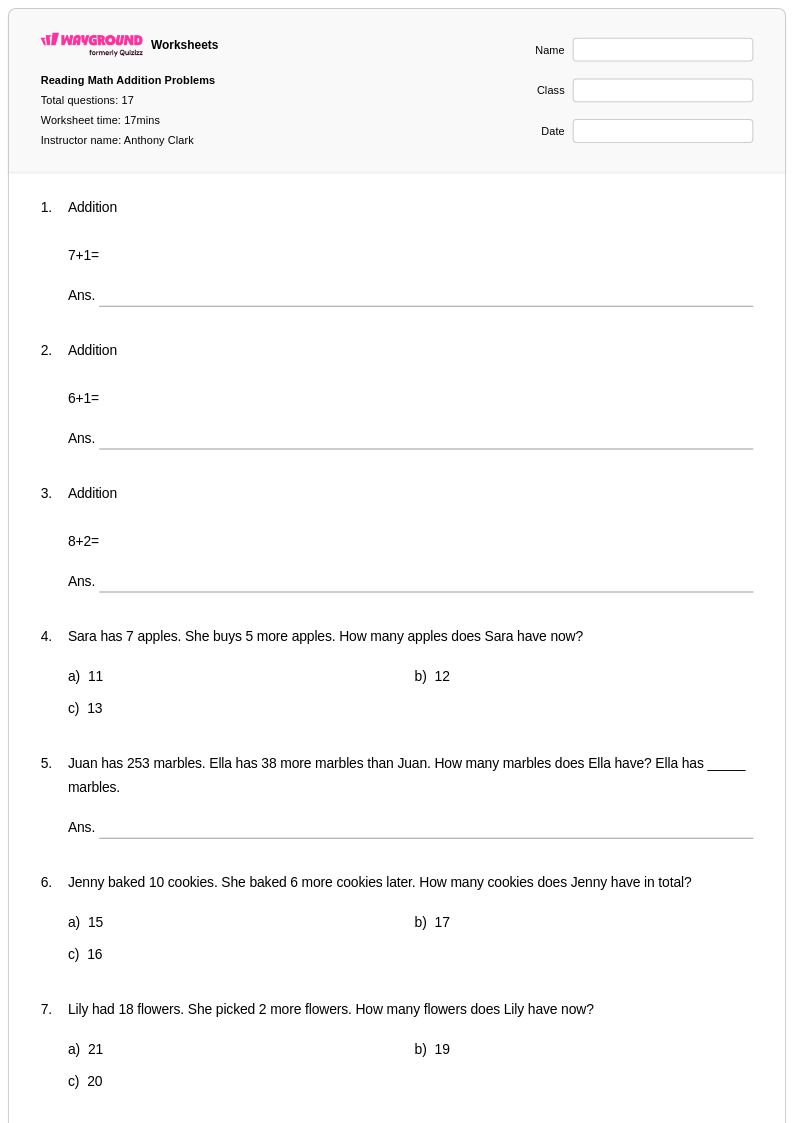
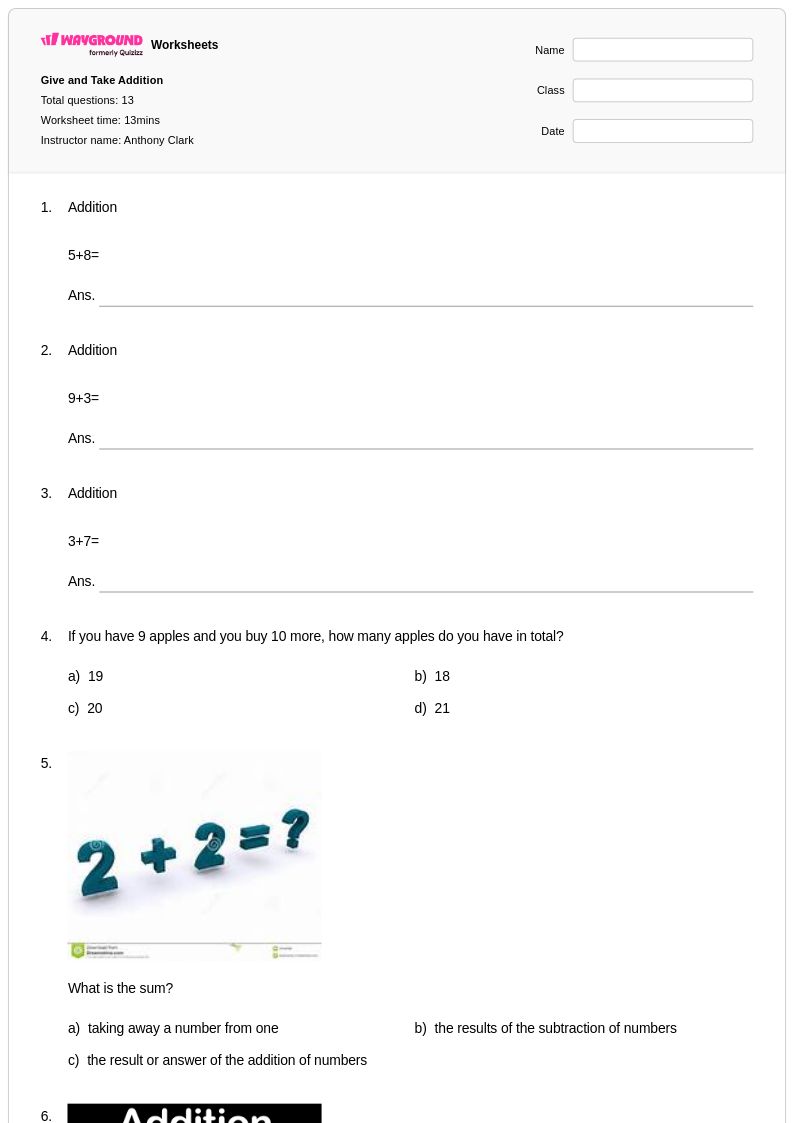
Addition and ten frames worksheets for Class 2 provide essential visual learning tools that help young mathematicians develop number sense and computational fluency. These comprehensive practice resources from Wayground (formerly Quizizz) focus on using ten frame models to represent addition problems, allowing students to visualize number relationships and develop mental math strategies. The worksheets strengthen foundational skills including subitizing, counting on, making ten, and understanding place value concepts through hands-on manipulation of dots within frame structures. Each printable resource includes varied practice problems that progress from simple single-digit addition to more complex combinations, with answer keys provided to support independent learning and quick assessment of student understanding.
Wayground (formerly Quizizz) empowers educators with millions of teacher-created addition and ten frames resources that streamline lesson planning and differentiated instruction for Class 2 mathematics. The platform's robust search and filtering capabilities enable teachers to quickly locate worksheets aligned with specific learning standards and student needs, whether for initial skill introduction, targeted remediation, or advanced enrichment activities. Flexible customization tools allow educators to modify existing materials or combine multiple resources to create comprehensive practice sets, while both digital and printable pdf formats accommodate diverse classroom environments and learning preferences. These extensive worksheet collections support systematic skill development, provide immediate feedback opportunities, and help teachers track student progress in mastering critical early addition concepts through visual representation strategies.
FAQs
How do I teach addition with ten frames in second grade?
What exercises help second graders practice addition with ten frames?
What mistakes do second graders make when using ten frames for addition?
How can I use these Grade 2 addition and ten frames worksheets?
How do ten frames fit into the Grade 2 Common Core progression?
How can I differentiate ten-frame addition practice in Grade 2?
What grade levels use ten frames for addition?