
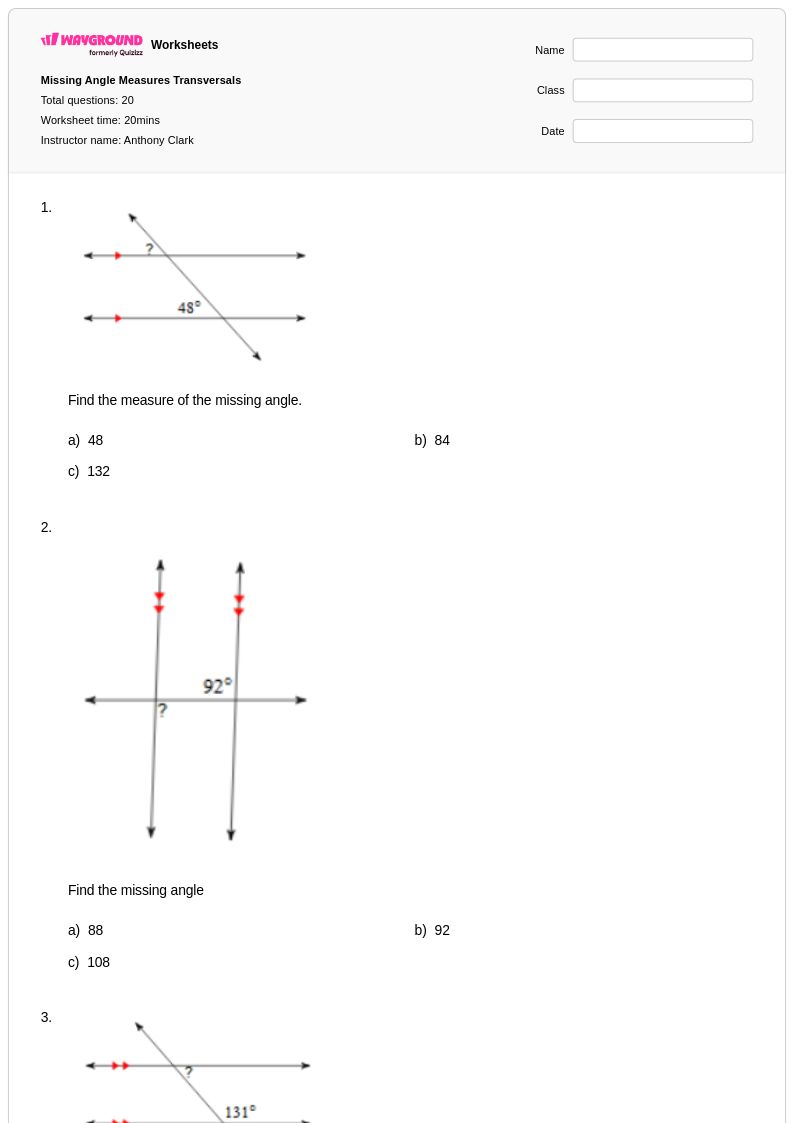
20 Q
8th - Uni
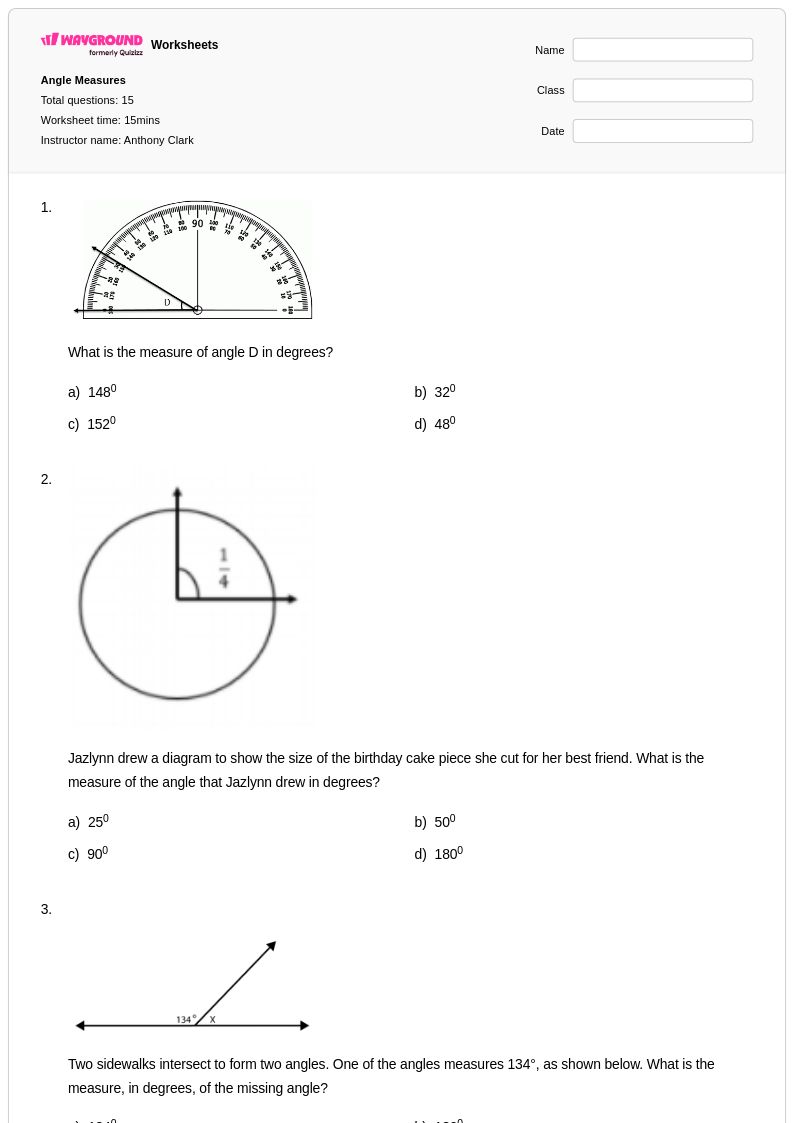
15 Q
4th - Uni
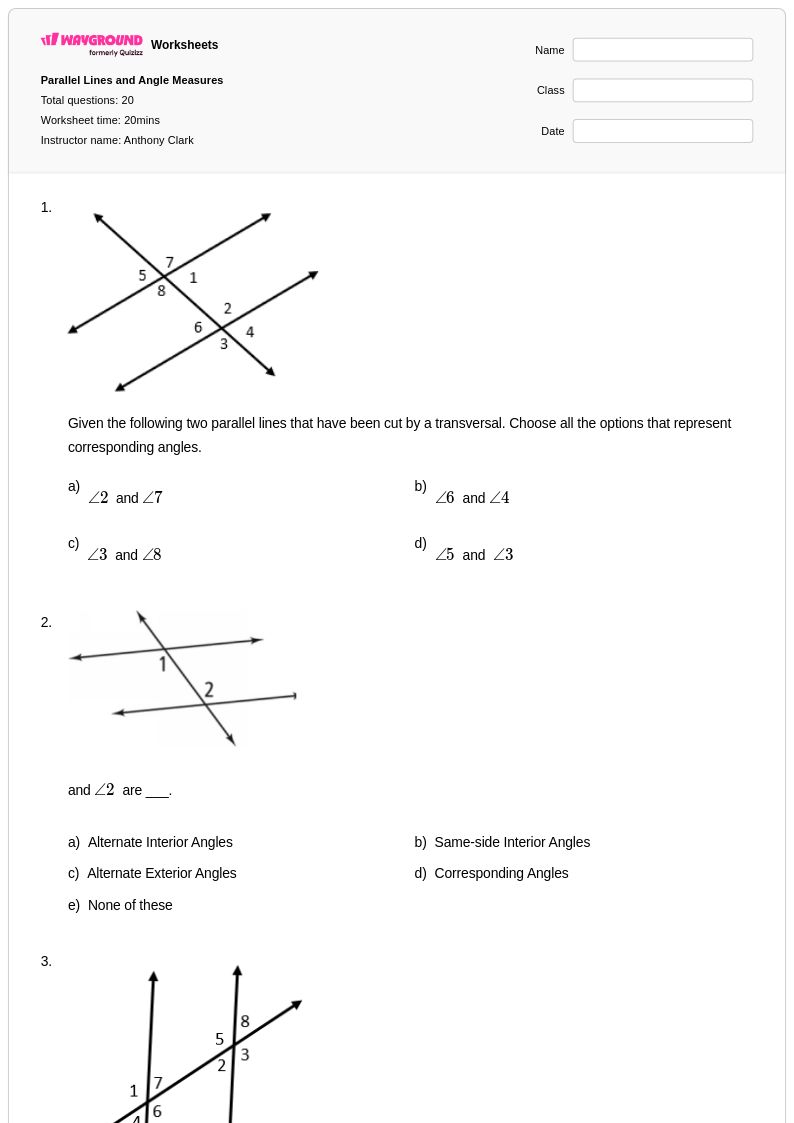
20 Q
8th - Uni
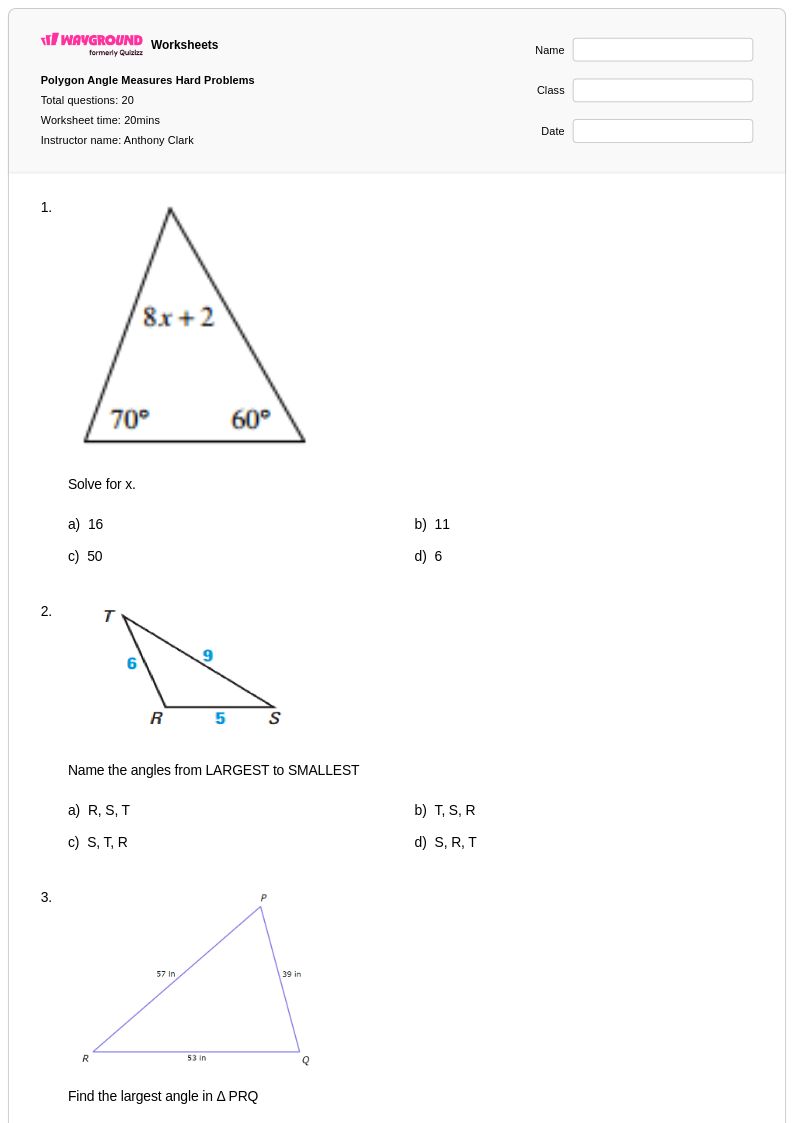
20 Q
8th - Uni
20 Q
8th - Uni
20 Q
8th - Uni
20 Q
8th - Uni
20 Q
8th - Uni
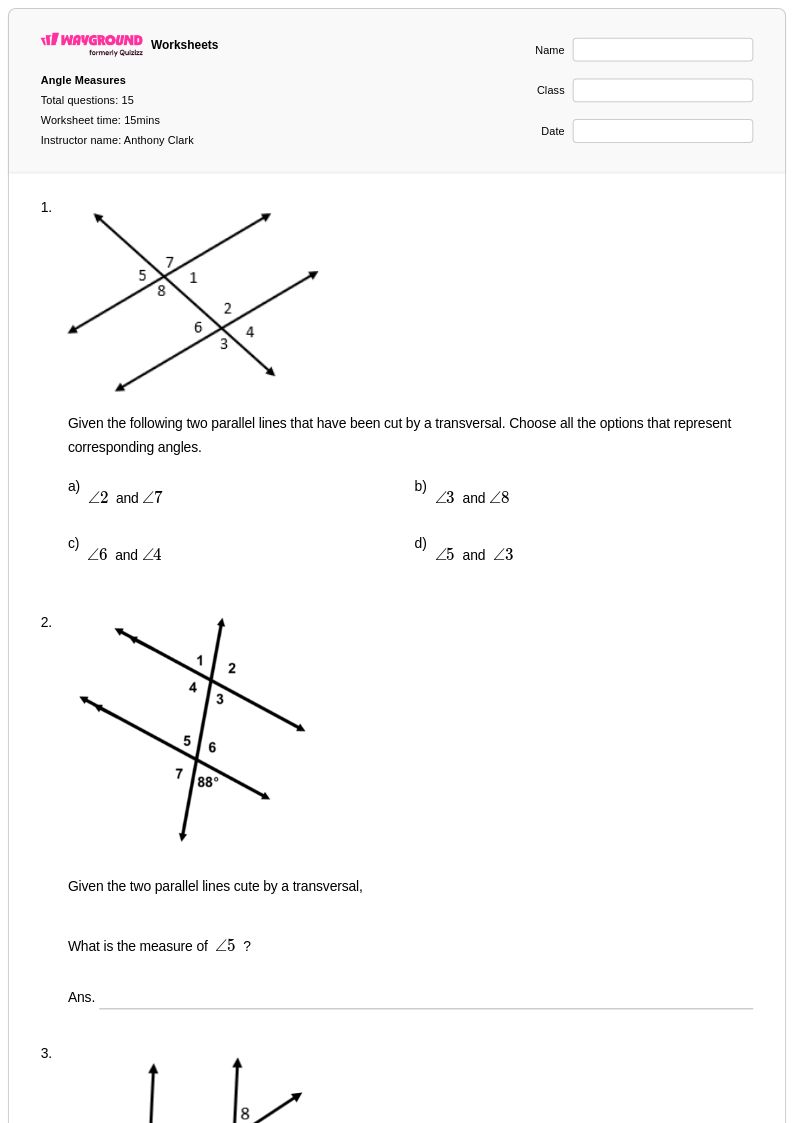
15 Q
8th - Uni
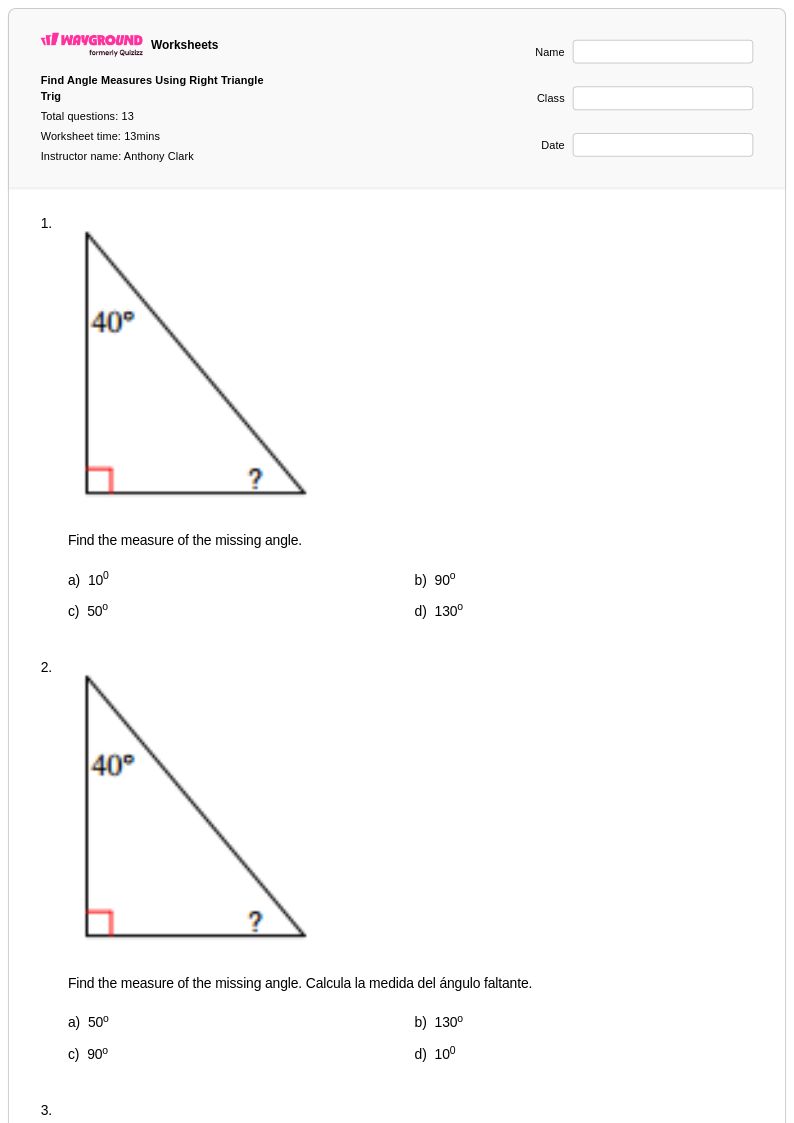
13 Q
8th - Uni
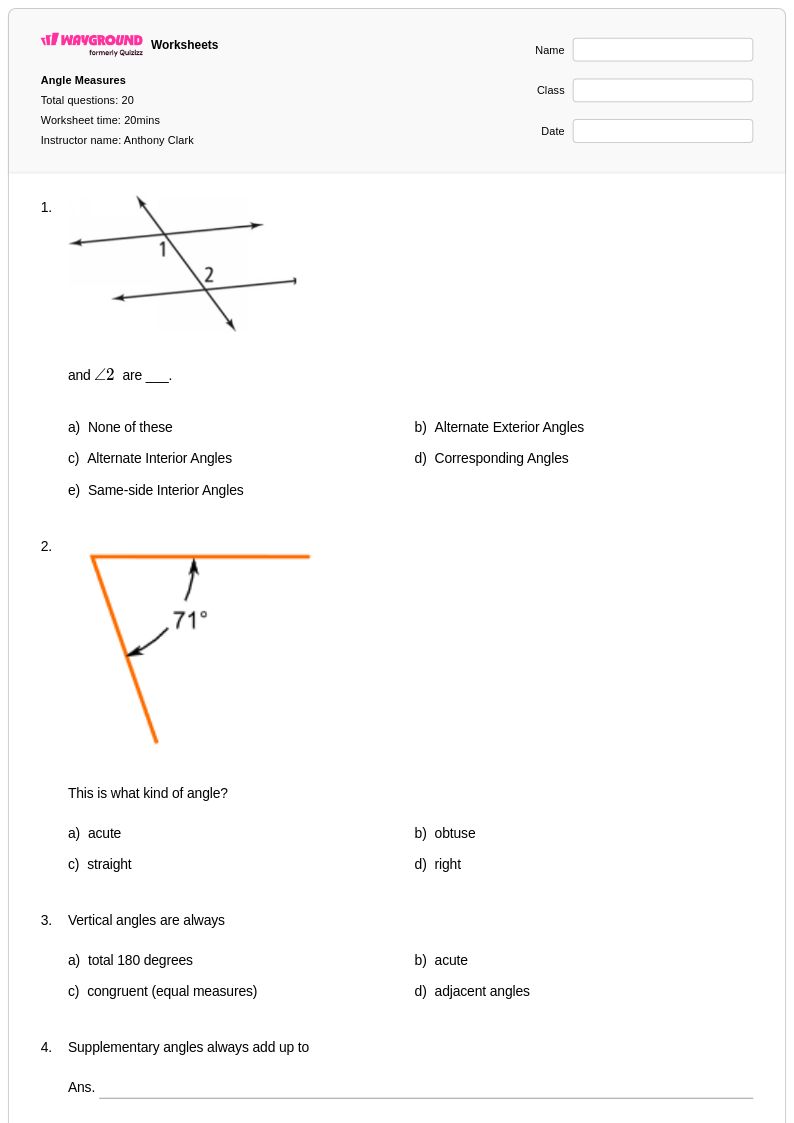
20 Q
8th - Uni
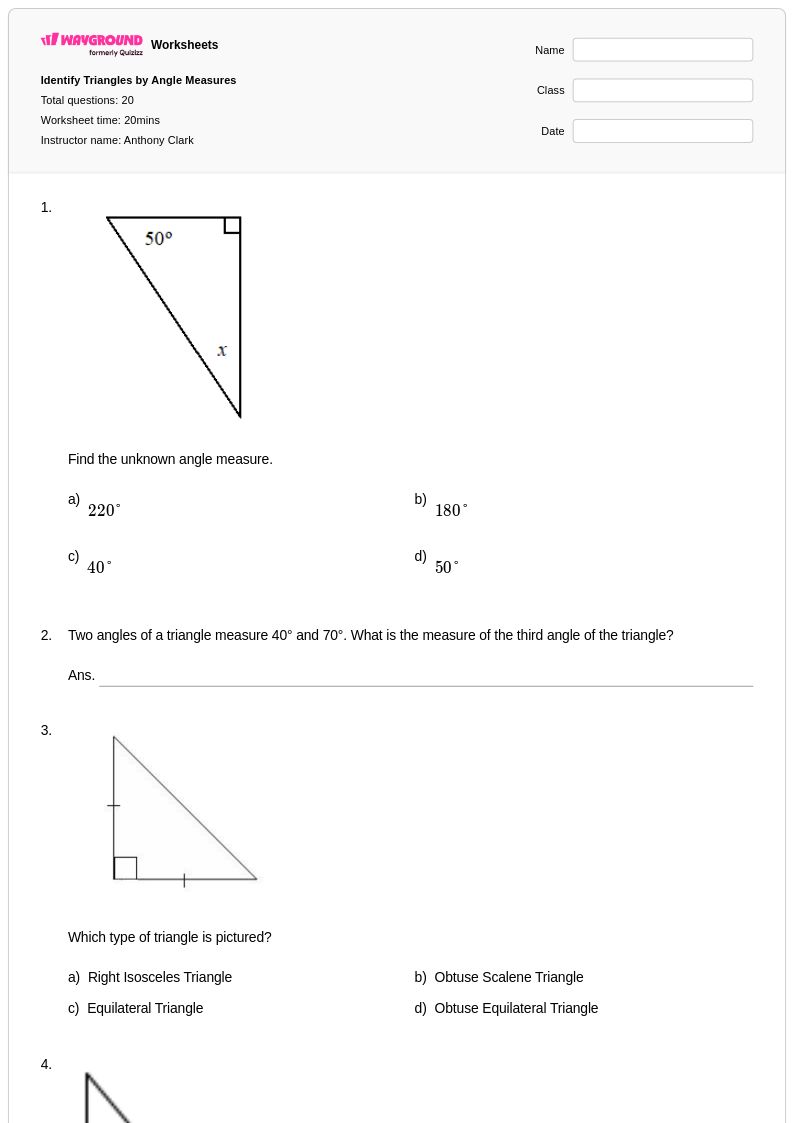
20 Q
8th - Uni
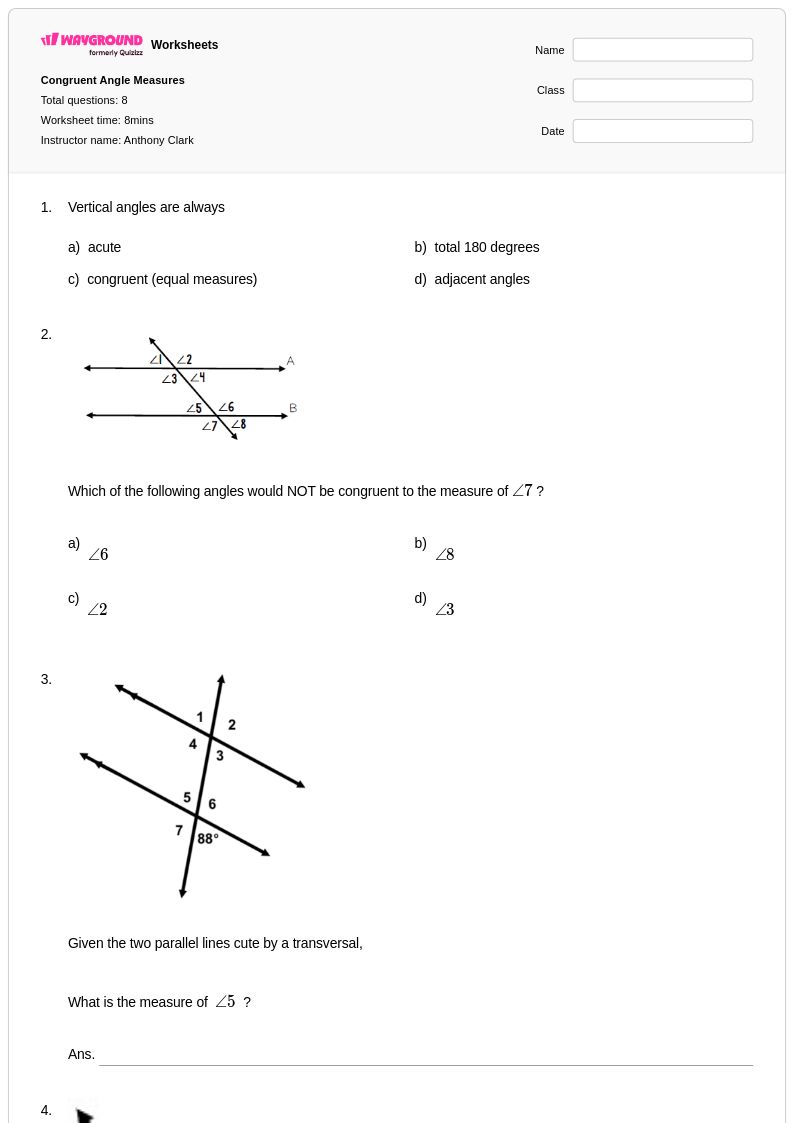
8 Q
8th - Uni
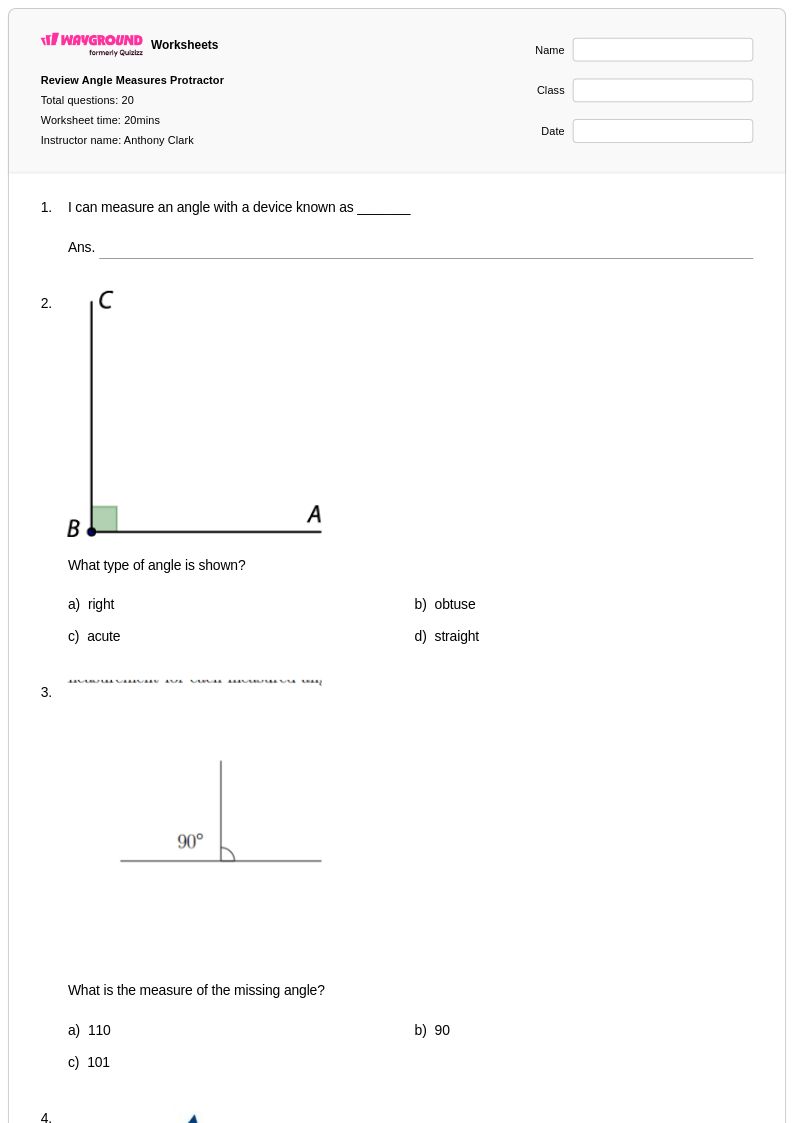
20 Q
4th - Uni
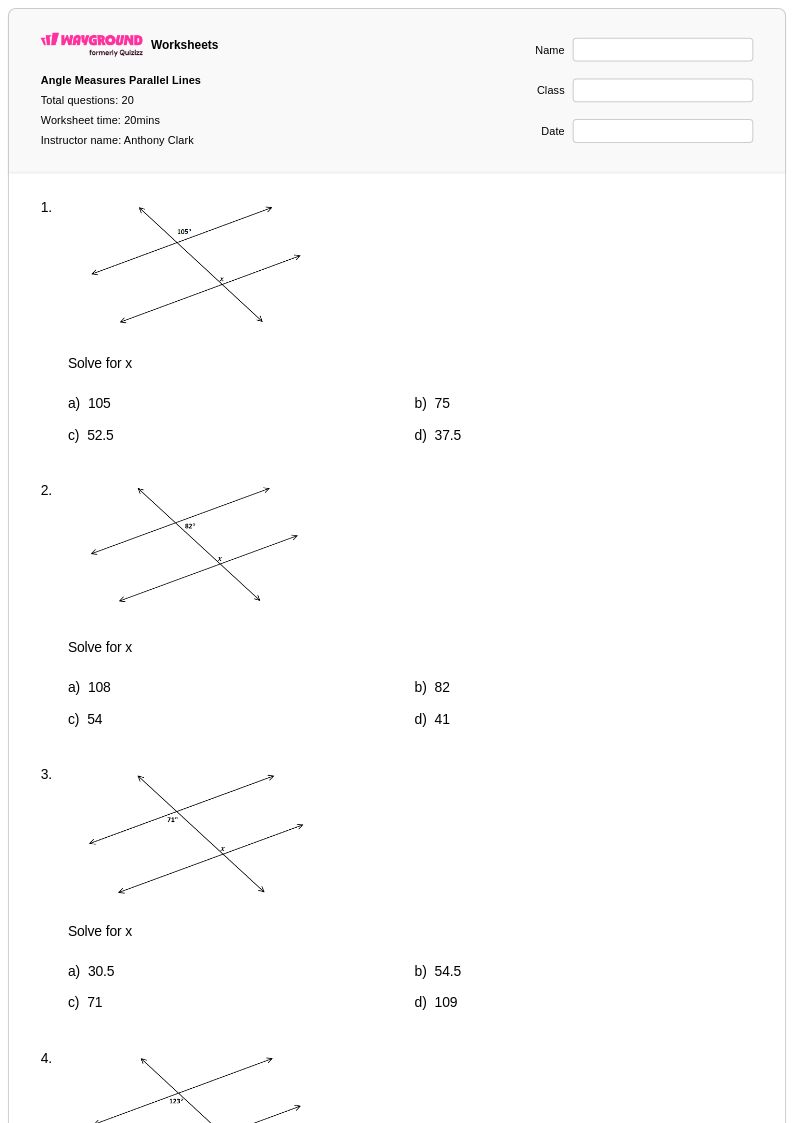
20 Q
8th - Uni
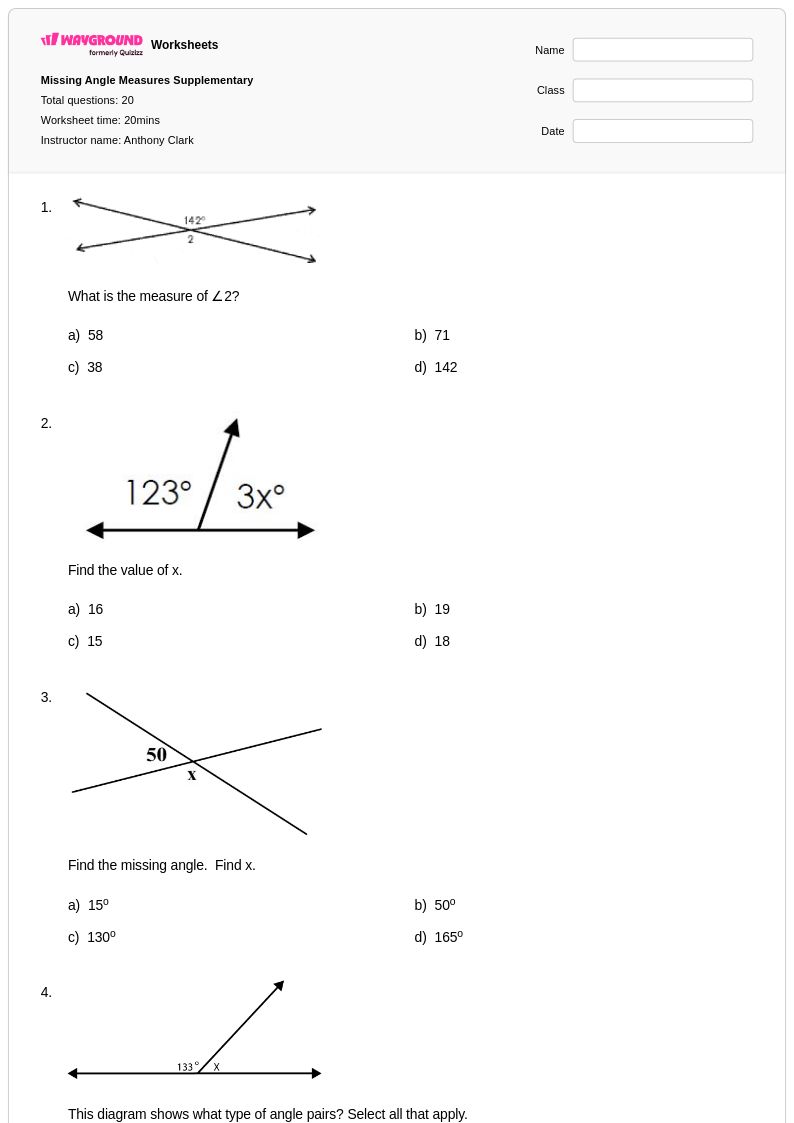
20 Q
7th - Uni
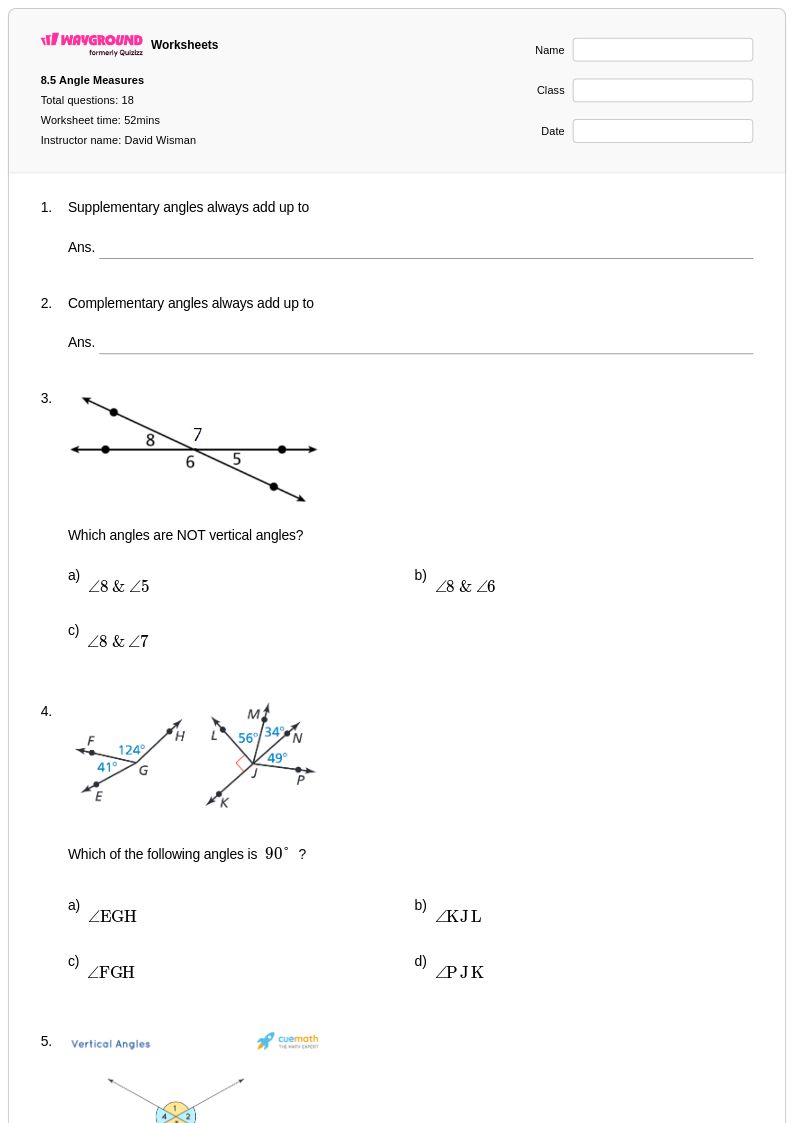
18 Q
8th
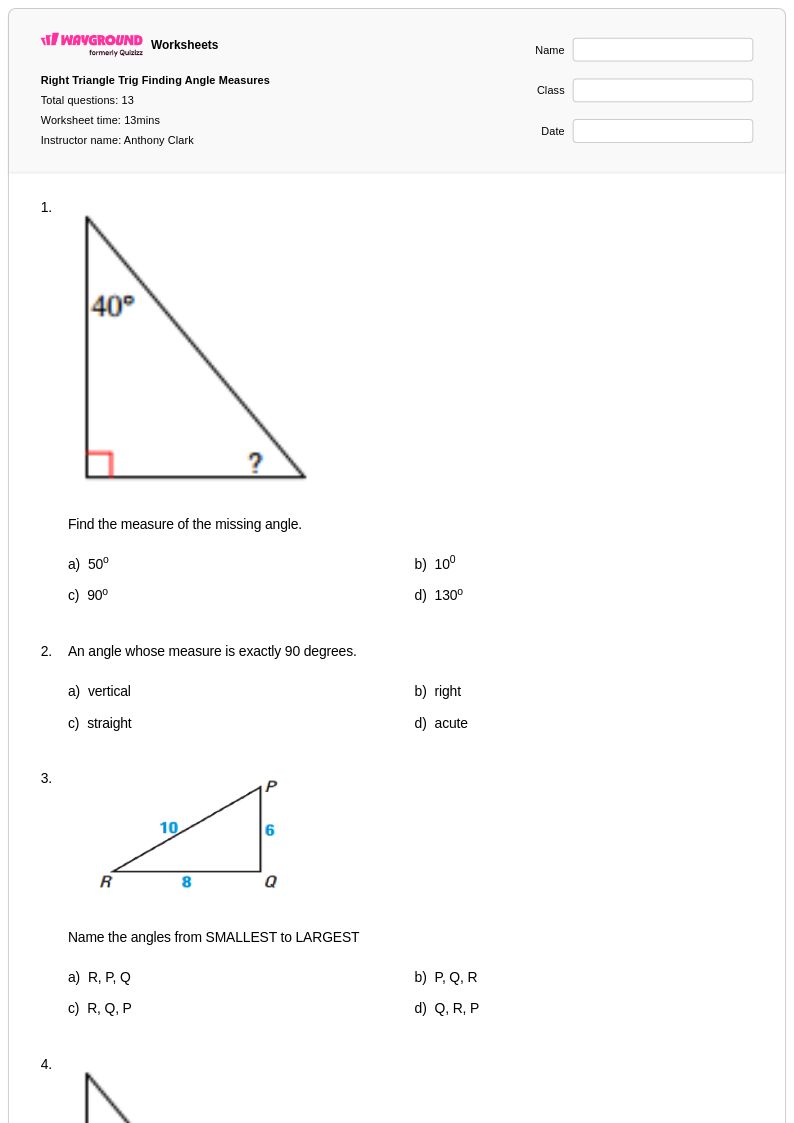
13 Q
8th - Uni
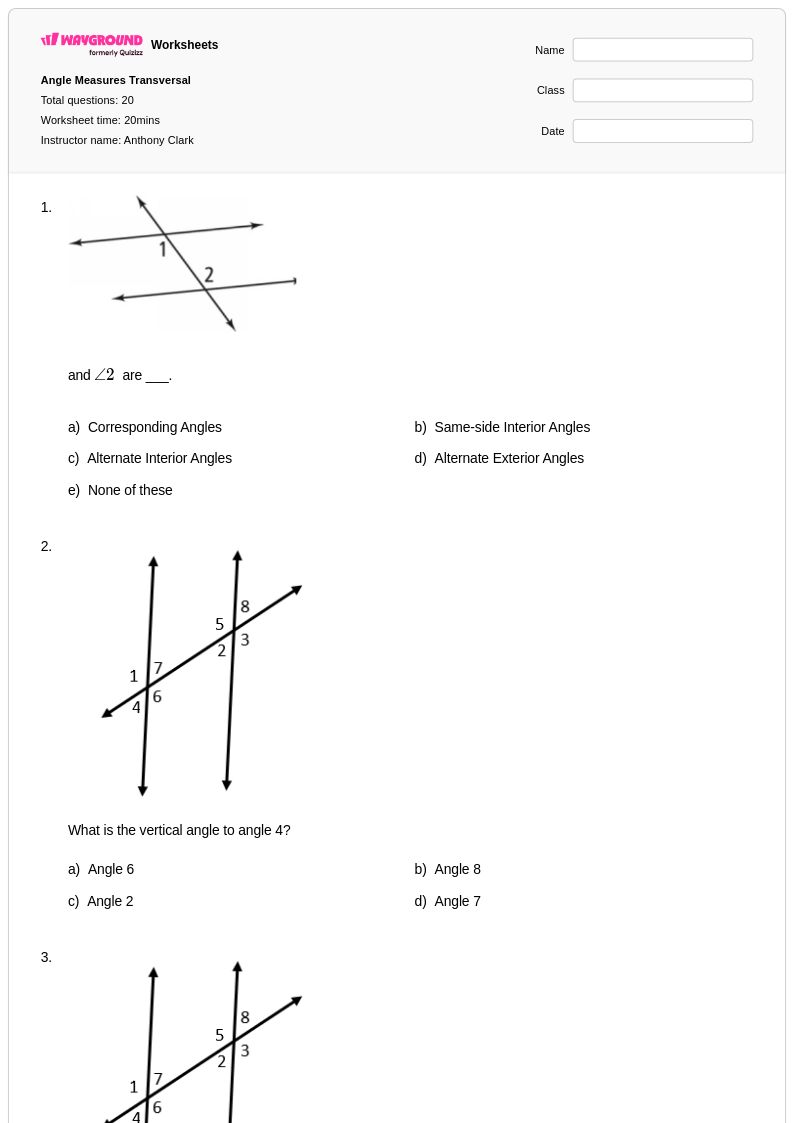
20 Q
8th - Uni
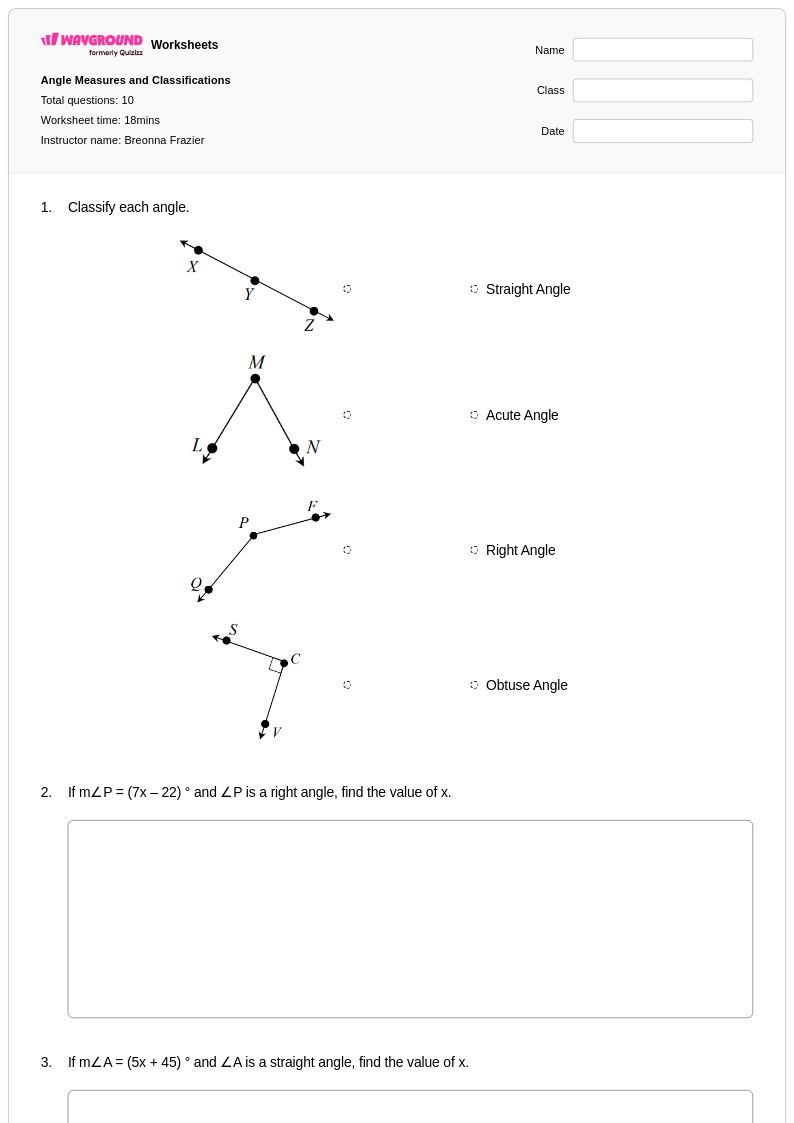
10 Q
6th - 8th
12 Q
8th - 10th
20 Q
8th - Uni
20 Q
5th - 8th
15 Q
8th
Explore Other Subject Worksheets for class 8
Explore printable Angle Measures worksheets for Class 8
Angle measures worksheets for Class 8 students through Wayground (formerly Quizizz) provide comprehensive practice with calculating, identifying, and working with various angle measurements in geometric contexts. These expertly designed resources strengthen students' understanding of acute, obtuse, right, and straight angles while developing proficiency with angle relationships including complementary, supplementary, and vertical angles. The worksheet collections feature systematic practice problems that guide eighth graders through measuring angles with protractors, calculating missing angle measures using algebraic methods, and applying angle theorems in polygon contexts. Each printable resource includes detailed answer keys that support independent learning and self-assessment, with free pdf formats ensuring easy classroom distribution and homework assignments.
Wayground (formerly Quizizz) empowers mathematics educators with millions of teacher-created angle measures resources specifically aligned to Class 8 mathematical standards and learning objectives. The platform's robust search and filtering capabilities allow instructors to quickly locate worksheets targeting specific angle measurement concepts, from basic protractor skills to complex angle relationship problems in triangles and quadrilaterals. Teachers can differentiate instruction effectively by accessing multiple difficulty levels within the same topic, customizing existing worksheets to match individual student needs, and selecting between printable pdf versions for traditional classroom use or digital formats for interactive learning experiences. These versatile tools streamline lesson planning while providing targeted resources for remediation, skill reinforcement, and enrichment activities that help students master the critical angle measurement concepts essential for success in high school geometry.
FAQs
How do I teach angle measures to eighth graders?
What exercises help Grade 8 students practice angle measures?
What mistakes do students commonly make when finding angle measures?
How can I use an Angle Measures worksheet on Wayground?
How do angle measures fit into the Grade 8 Common Core progression?
How can I differentiate angle-measure practice for a mixed-ability class?
What grade do students learn angle measures?