Free Printable Annotated Bibliography Worksheets for Class 11
Class 11 annotated bibliography worksheets and printables help students master citation skills and source evaluation through comprehensive practice problems, free PDF resources, and detailed answer keys available on Wayground.
Explore printable Annotated Bibliography worksheets for Class 11
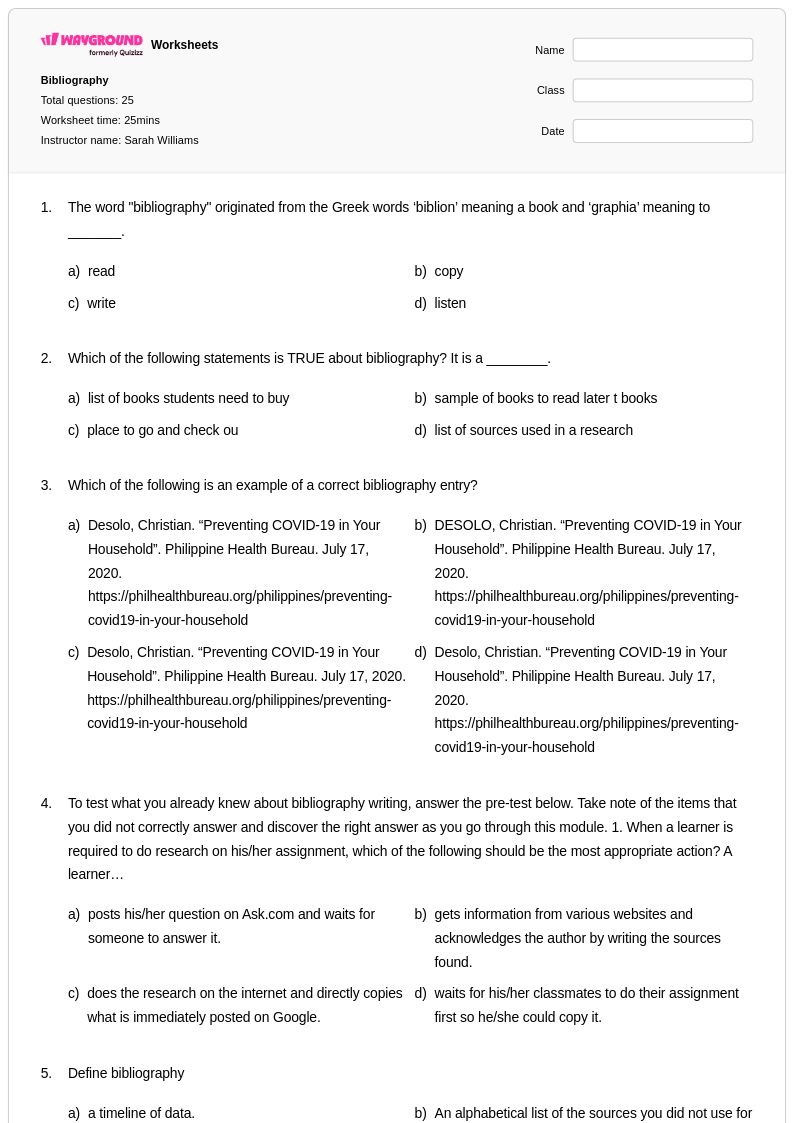
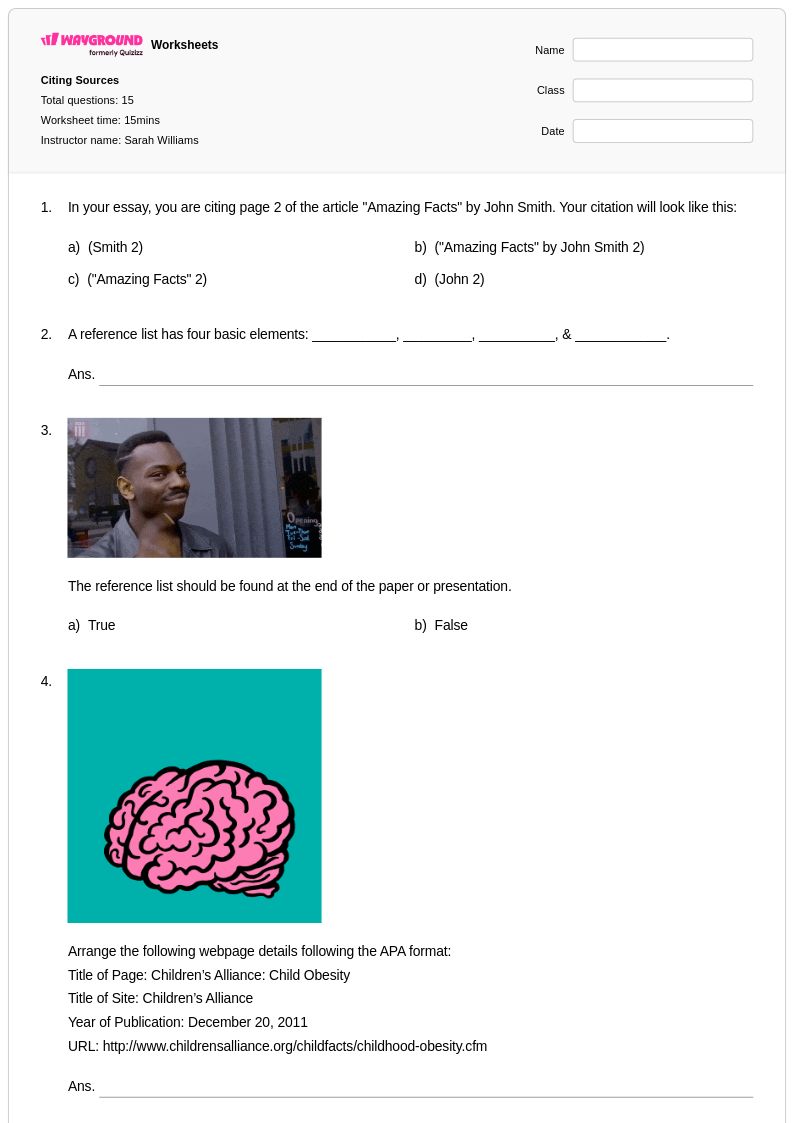
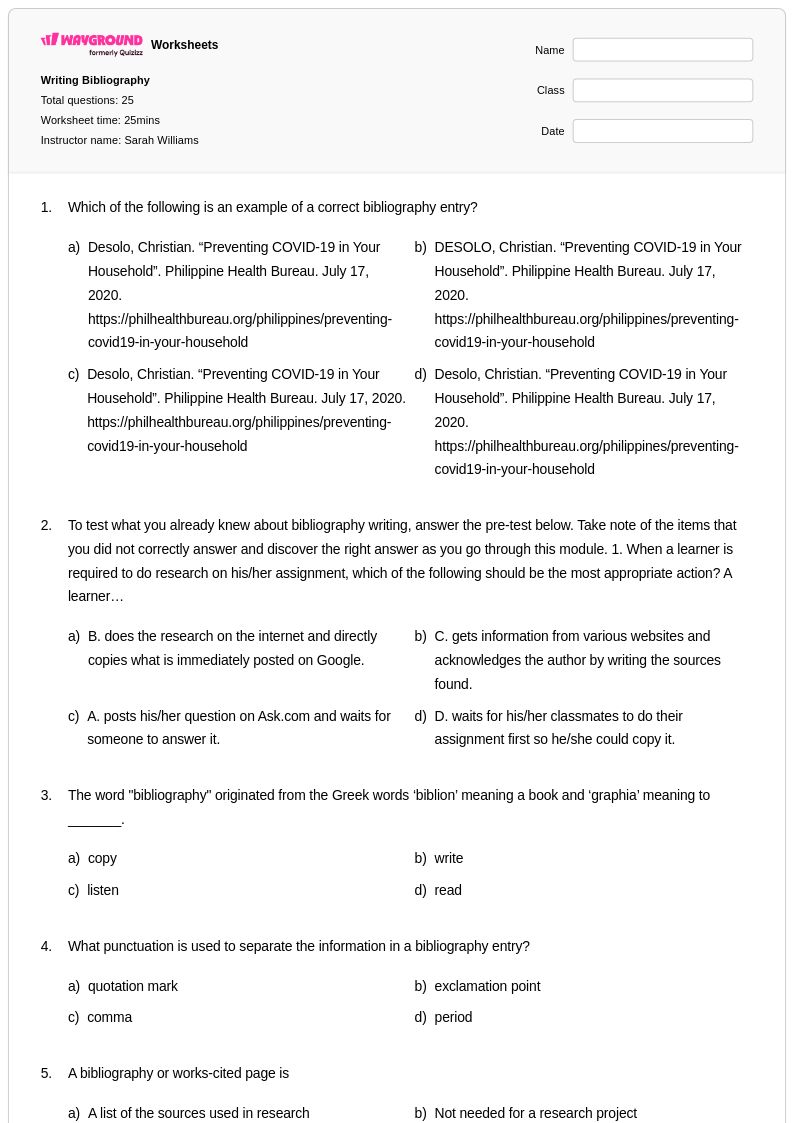
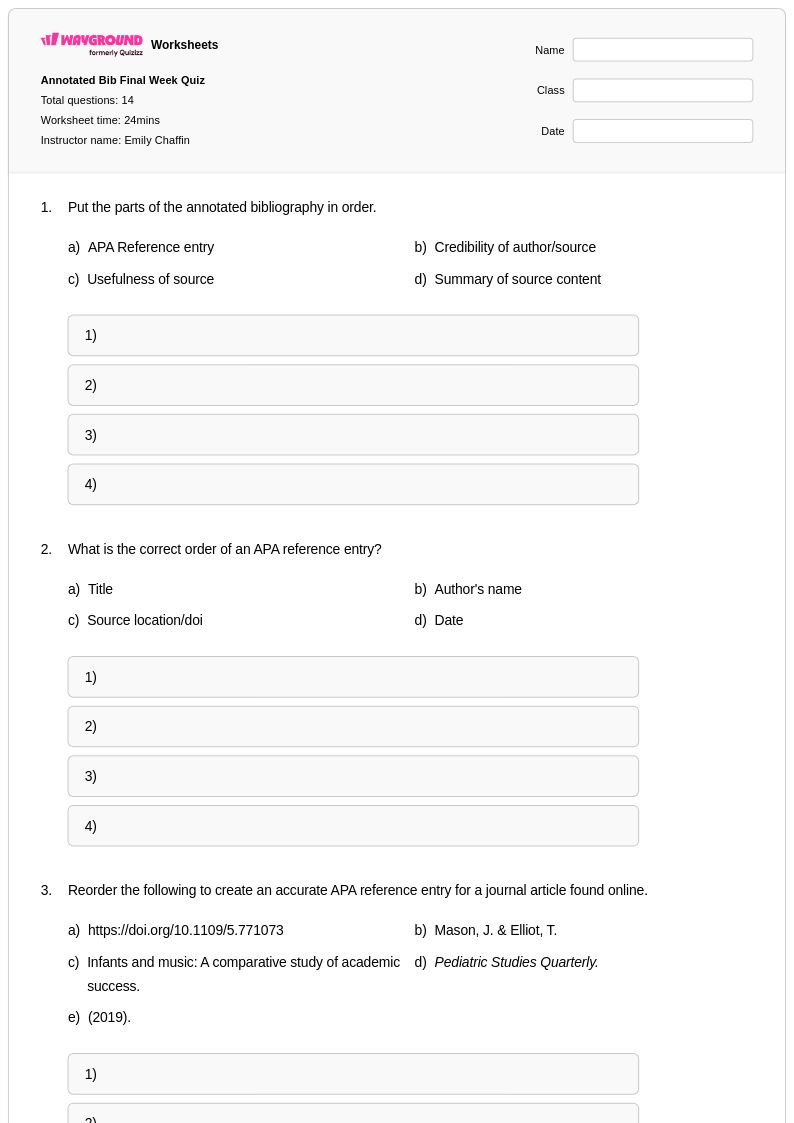
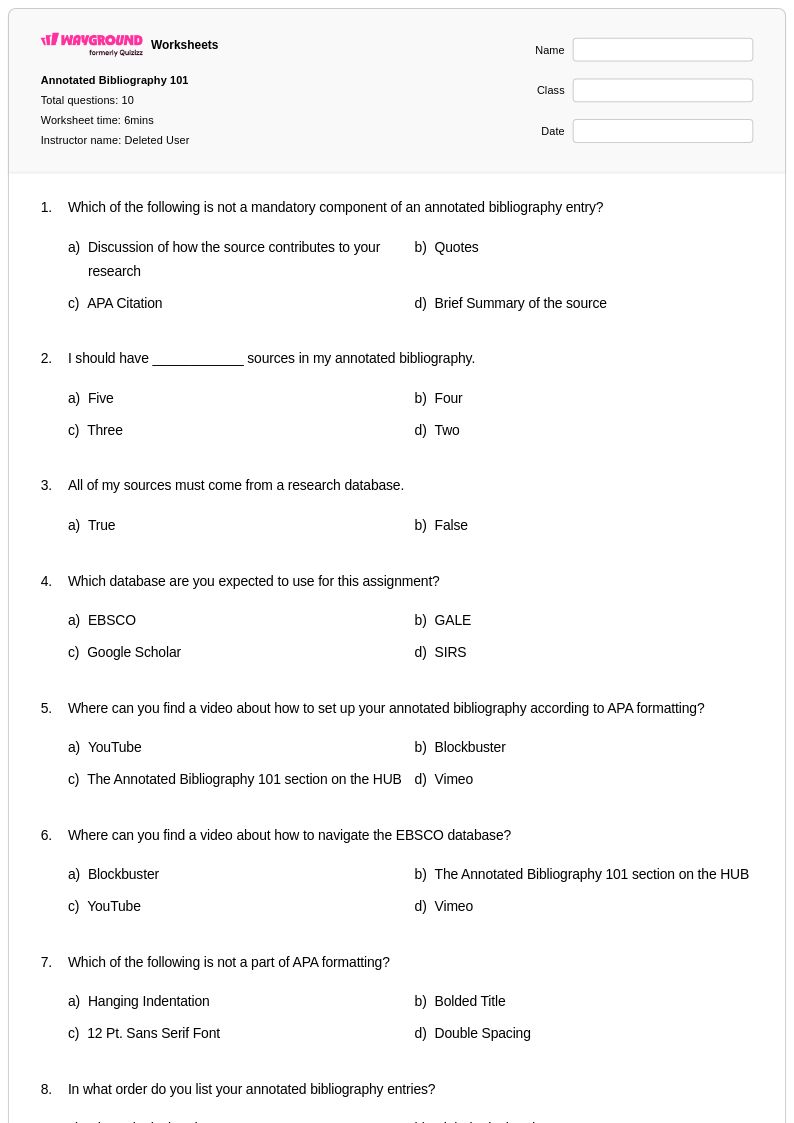
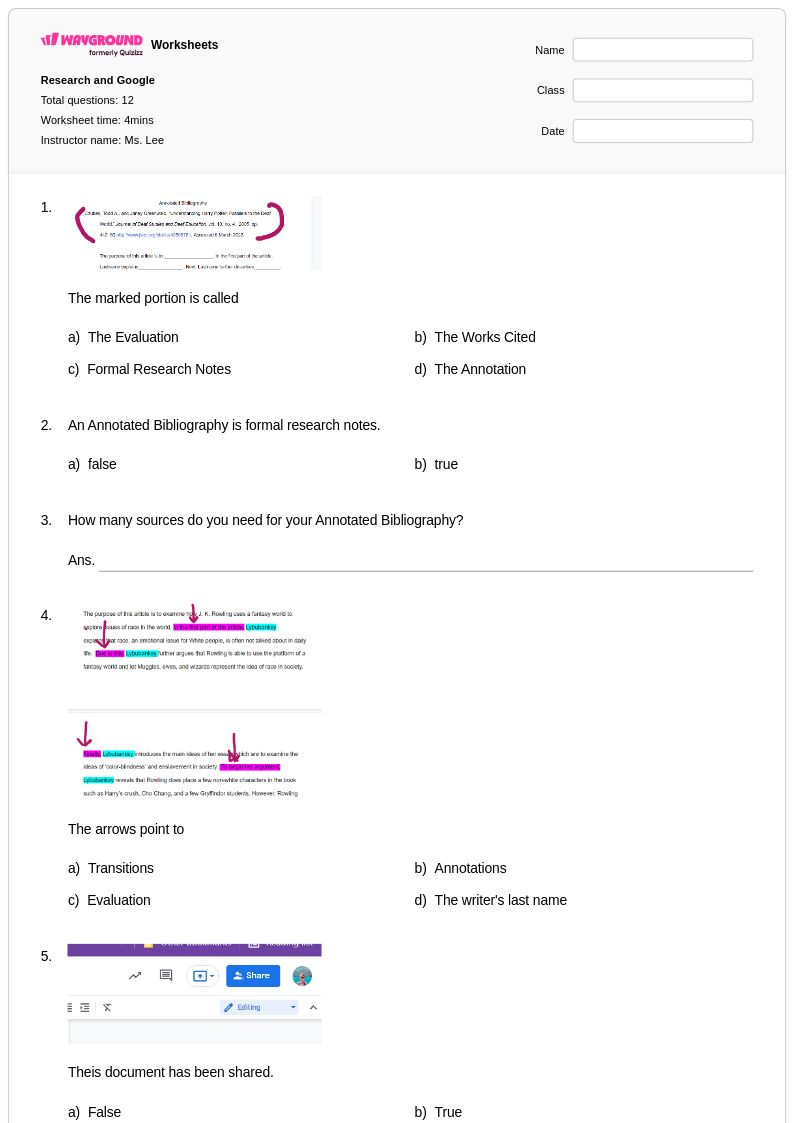
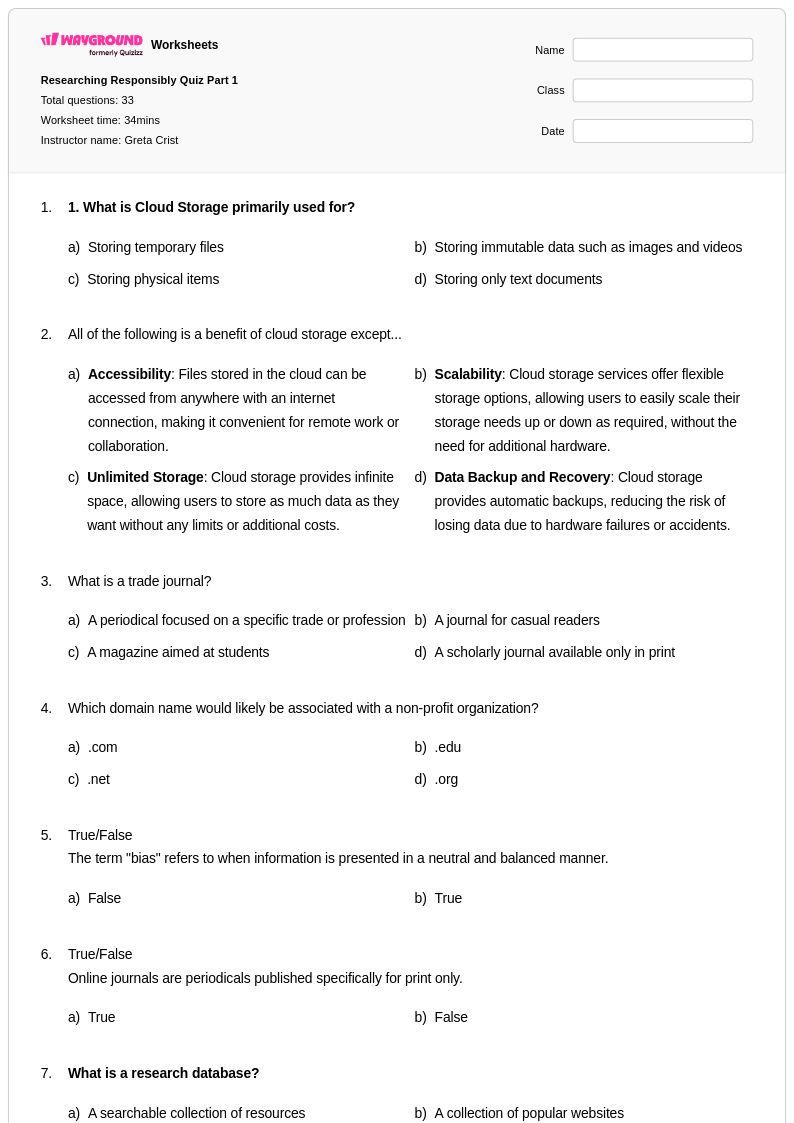
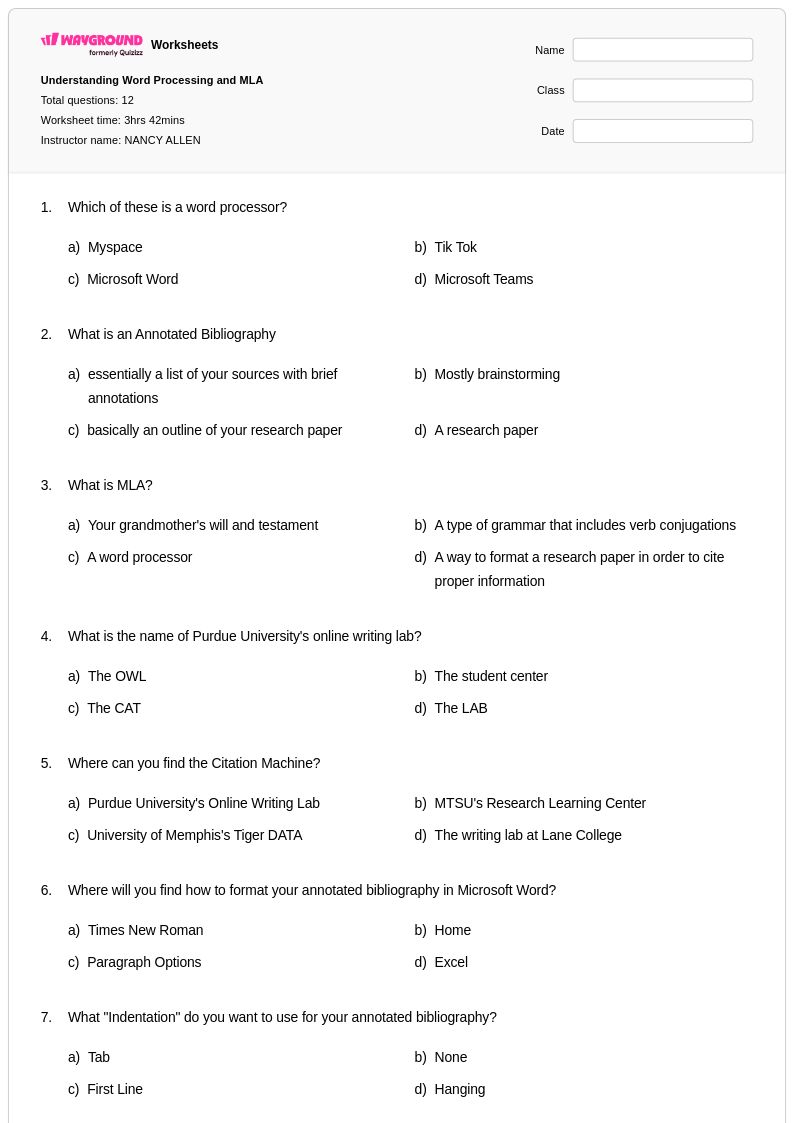
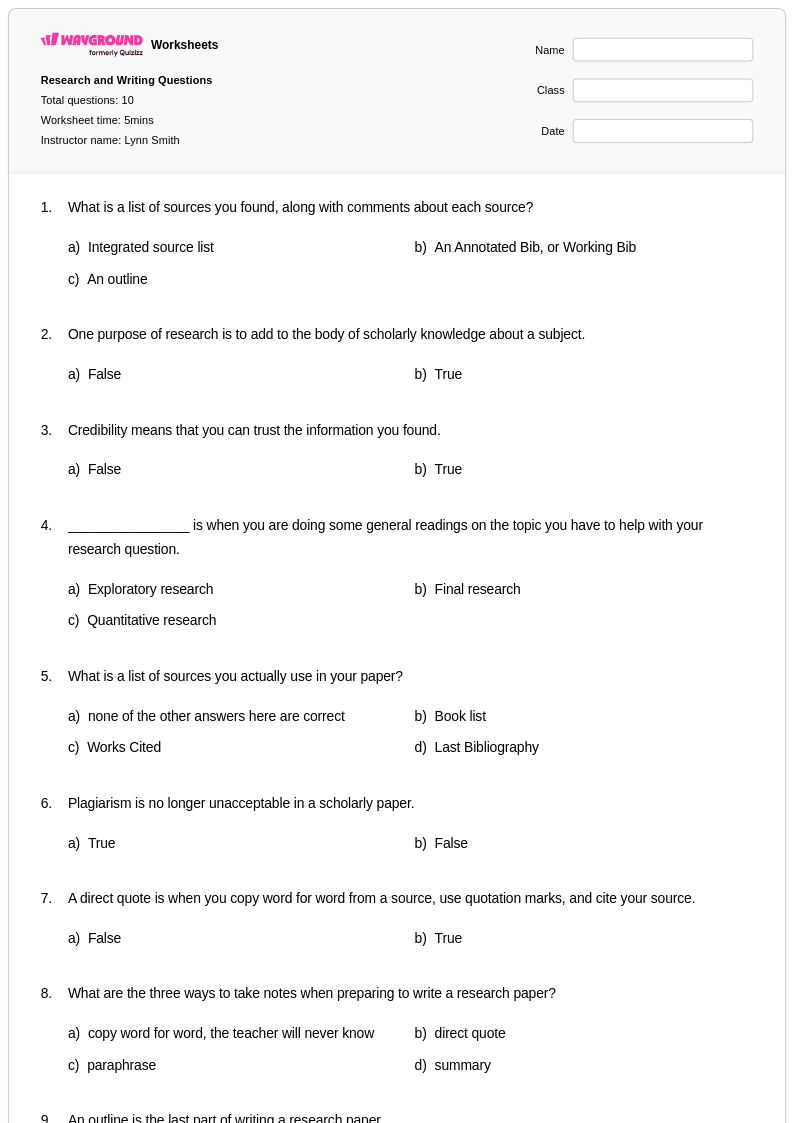
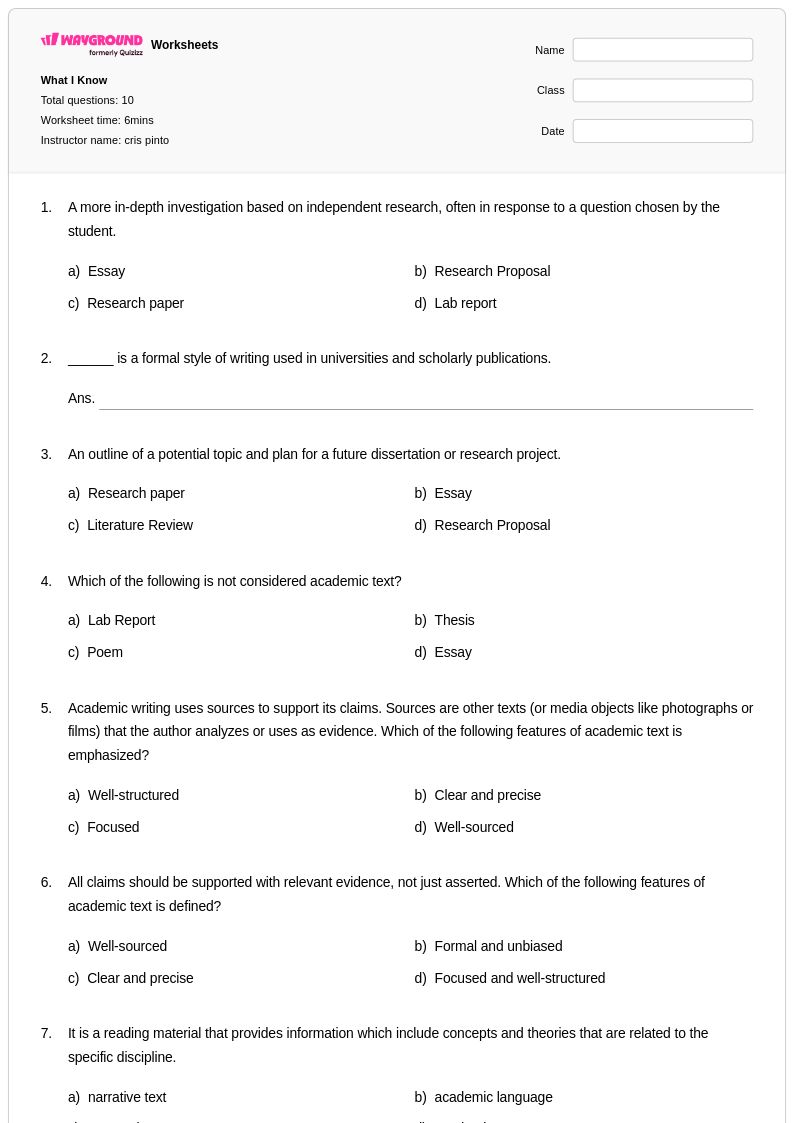
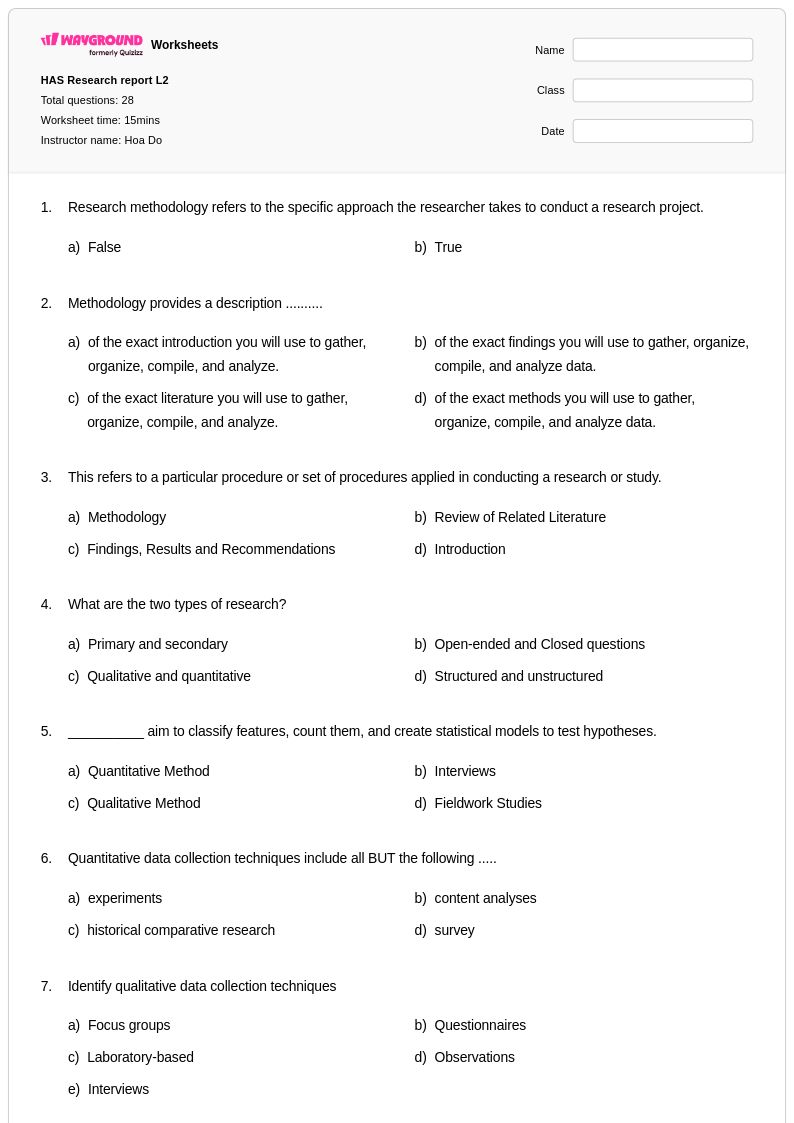
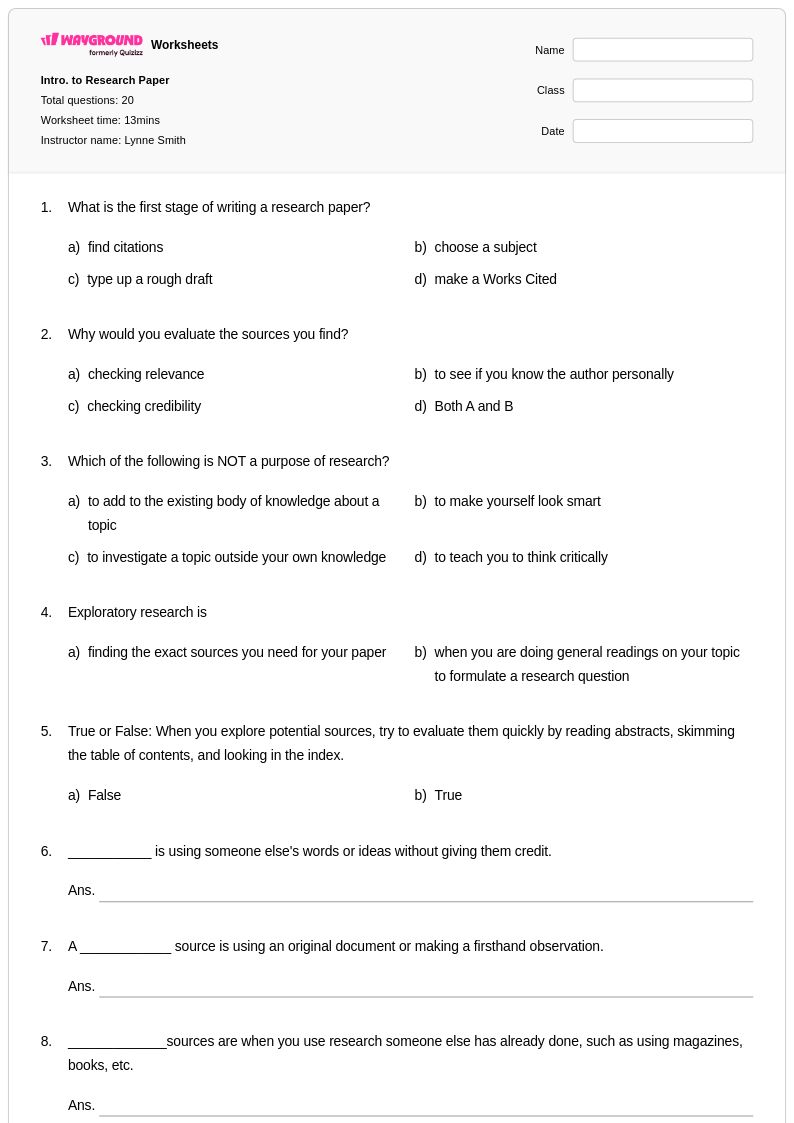
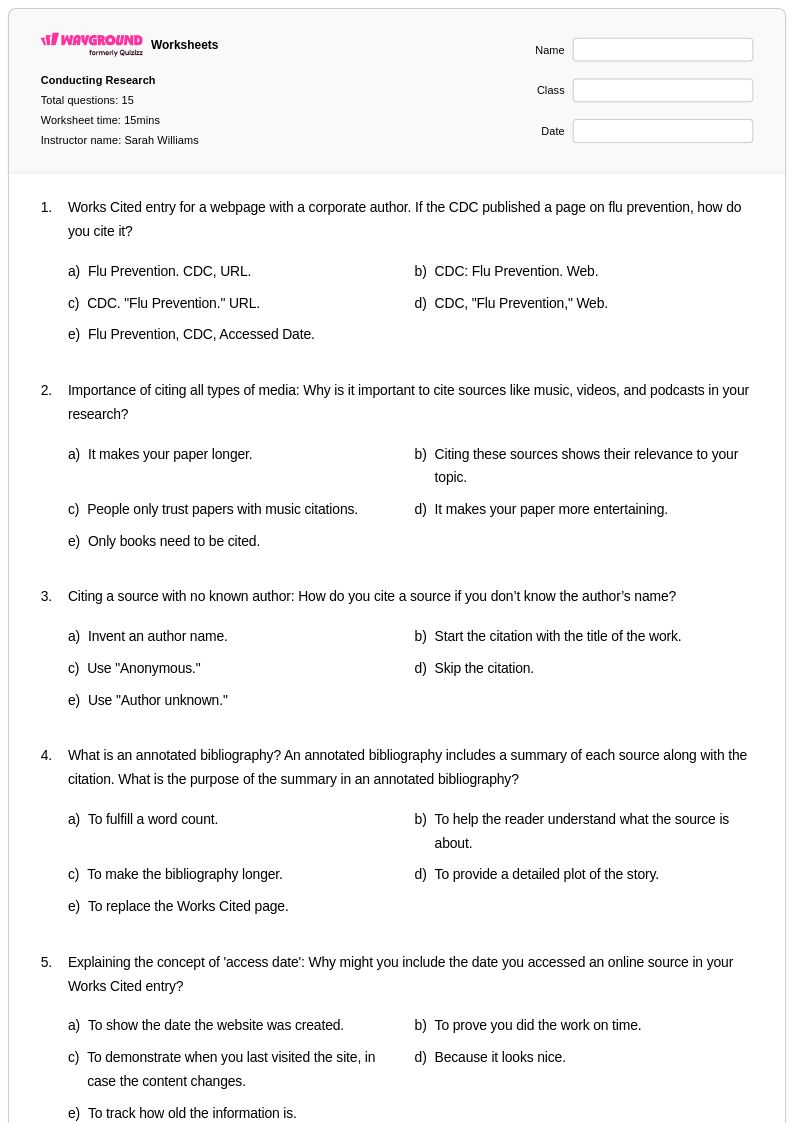
Annotated bibliography worksheets for Class 11 students available through Wayground (formerly Quizizz) provide comprehensive practice in advanced research documentation and critical source evaluation skills. These expertly designed worksheets guide students through the complex process of creating scholarly annotations that summarize, assess, and reflect on academic sources, preparing them for college-level research demands. Students develop essential skills in citation formatting, source credibility analysis, and synthesizing information from multiple perspectives while working through structured practice problems that reinforce proper MLA and APA documentation standards. The collection includes printables with detailed answer keys that help students understand the nuances of writing evaluative versus descriptive annotations, and free pdf resources that demonstrate how to effectively analyze an author's credentials, publication context, and relevance to specific research questions.
Wayground (formerly Quizizz) supports educators with an extensive collection of millions of teacher-created annotated bibliography worksheets specifically designed for Class 11 English instruction. The platform's robust search and filtering capabilities allow teachers to quickly locate resources aligned with state standards and specific curriculum requirements, while differentiation tools enable customization for students at varying skill levels within advanced secondary English courses. These versatile worksheets are available in both printable and digital formats, including downloadable pdf versions that facilitate seamless integration into hybrid learning environments. Teachers can efficiently plan research units, provide targeted remediation for students struggling with citation mechanics, offer enrichment opportunities for advanced learners ready to tackle complex scholarly sources, and deliver consistent skill practice that builds toward independent research competency essential for post-secondary academic success.
FAQs
How do I teach students to write an annotated bibliography?
Start by breaking the task into two distinct skills: accurate bibliographic citation and meaningful source annotation. Teach students to first format a citation correctly using the required style guide (MLA, APA, or Chicago), then write a structured annotation that summarizes the source's main argument, evaluates its credibility, and explains its relevance to their research question. Modeling the process with a shared source before students practice independently helps demystify what can feel like an overwhelming dual task.
What exercises help students practice writing annotated bibliographies?
The most effective practice exercises give students authentic sources and ask them to complete each component of an annotation in sequence: summarize the main argument, assess the author's credibility and methodology, and explain how the source connects to a specific research topic. Structured templates that scaffold each step reduce cognitive overload and help students internalize the format before writing independently. Comparing and evaluating sample annotations of varying quality also builds critical judgment about what strong source analysis looks like.
What mistakes do students commonly make when writing an annotated bibliography?
The most common error is writing annotations that simply restate the title or abstract rather than critically evaluating the source's argument, methodology, and relevance. Students also frequently confuse summarizing with analyzing, producing descriptions that lack any evaluative stance. Citation formatting errors are another persistent issue, particularly when students switch between style guides or omit required elements such as DOIs, publication dates, or edition numbers.
How do I differentiate annotated bibliography instruction for students at different skill levels?
For struggling students, provide pre-selected sources and a structured annotation template that prompts each required component with a sentence starter. Advanced learners can be challenged to compare multiple sources on the same topic and evaluate competing methodologies or perspectives. On Wayground, teachers can apply accommodations such as read aloud support and reduced answer choices to individual students, allowing the same core assignment to serve diverse skill levels without singling anyone out.
How can I use Wayground's annotated bibliography worksheets in my classroom?
Wayground's annotated bibliography worksheets are available as printable PDFs for traditional pen-and-paper practice and in digital formats for technology-integrated classrooms, making them flexible for homework, in-class practice, or research lab sessions. Teachers can also host the worksheets as a live or self-paced quiz on Wayground, allowing them to monitor student progress in real time. Each worksheet includes a complete answer key, so teachers can use them for guided instruction, independent practice, or self-assessment.
How do I help students evaluate source credibility when writing annotations?
Teach students a consistent credibility checklist: Who is the author, and what are their credentials? Where was this published, and is that publication peer-reviewed or editorially vetted? When was it published, and is the information current enough for the research context? Practicing this evaluation process repeatedly with varied source types, including websites, journal articles, and books, builds the analytical habit that makes annotations substantive rather than superficial.