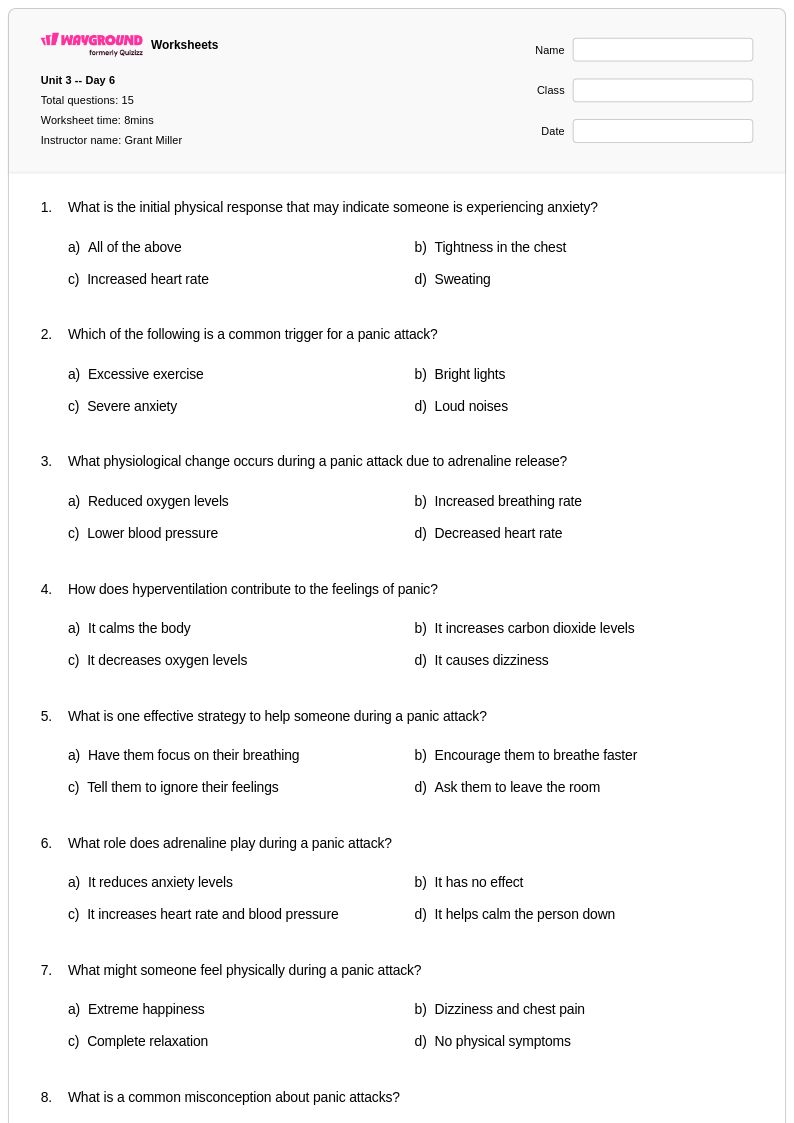
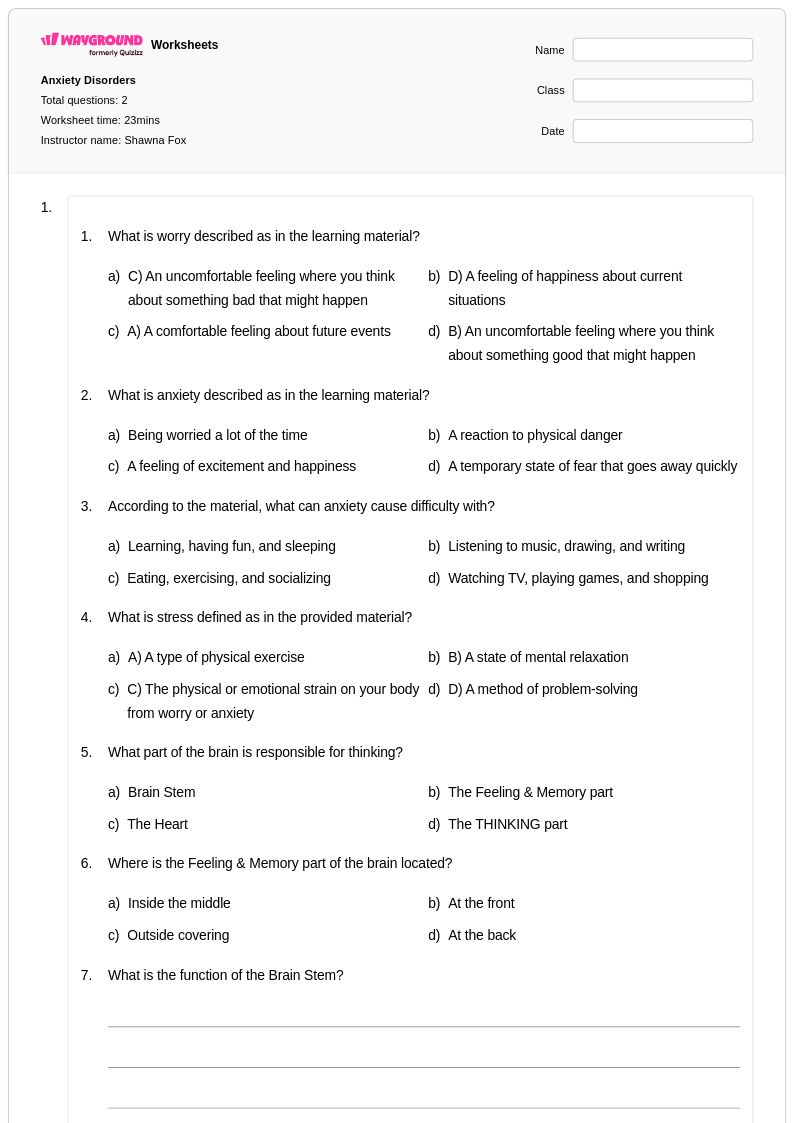
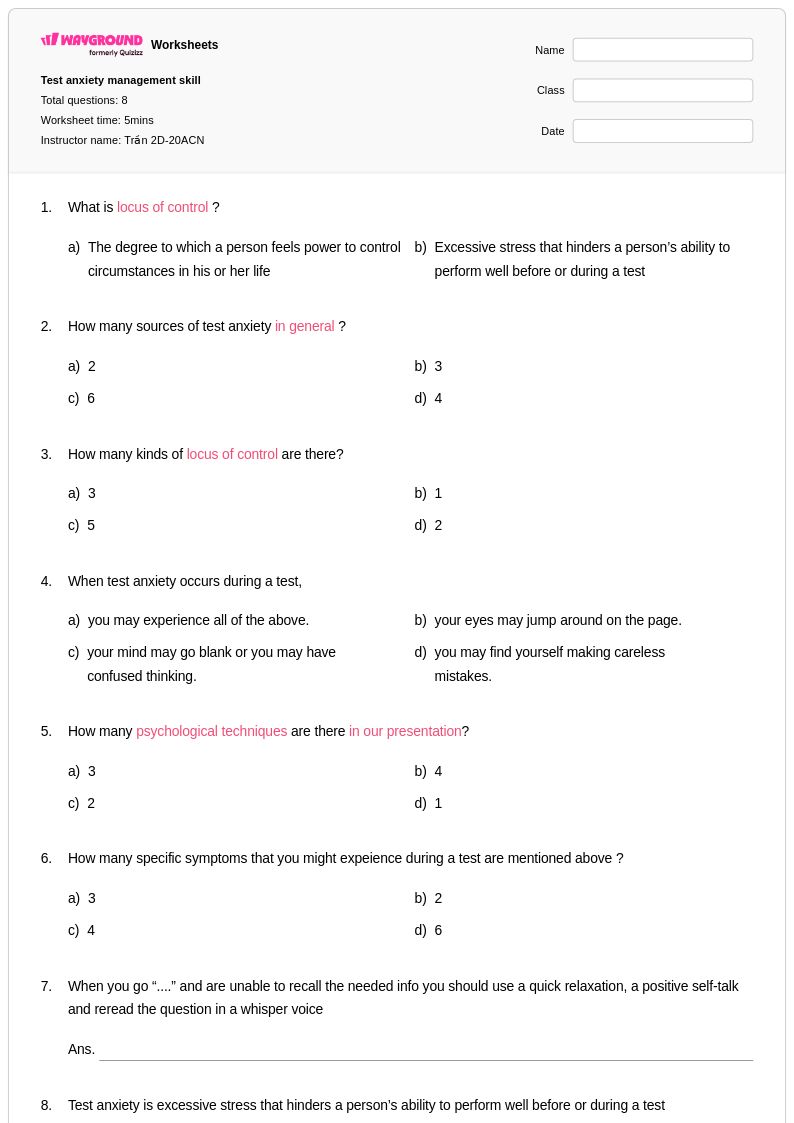
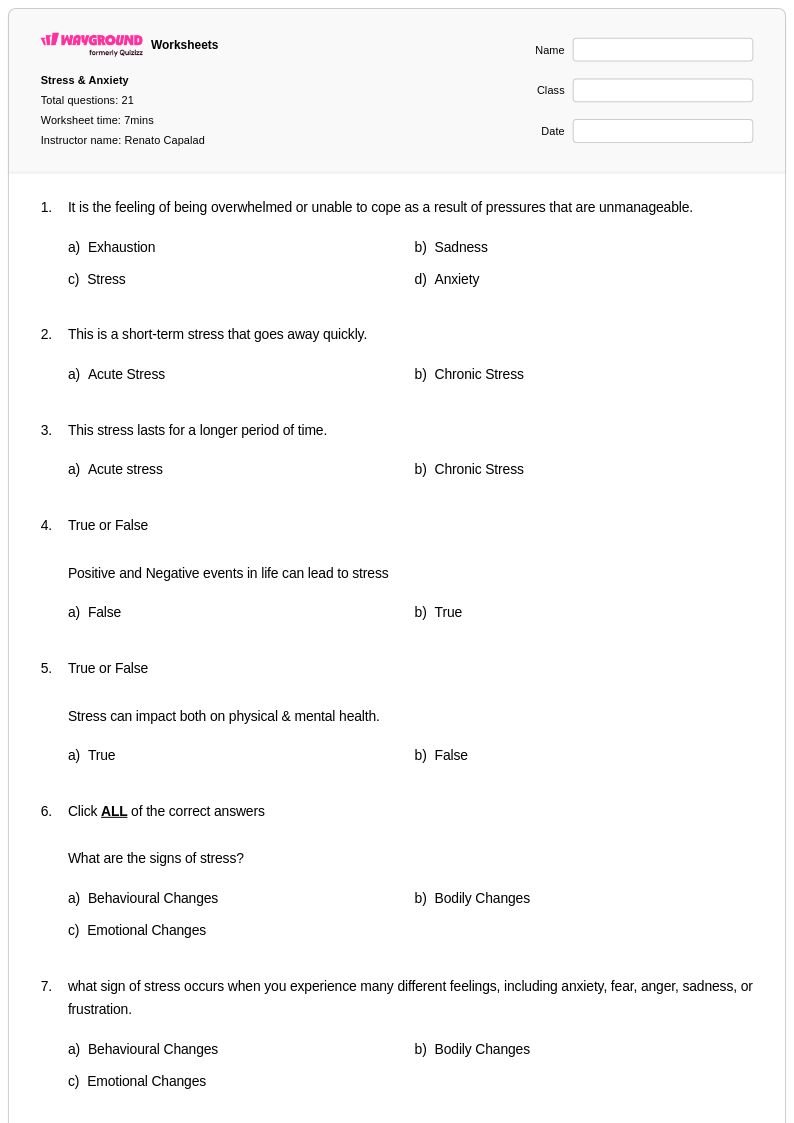
Discover free anxiety management worksheets and printables from Wayground that help students develop essential coping strategies and stress-reduction techniques through engaging practice problems and comprehensive answer keys.
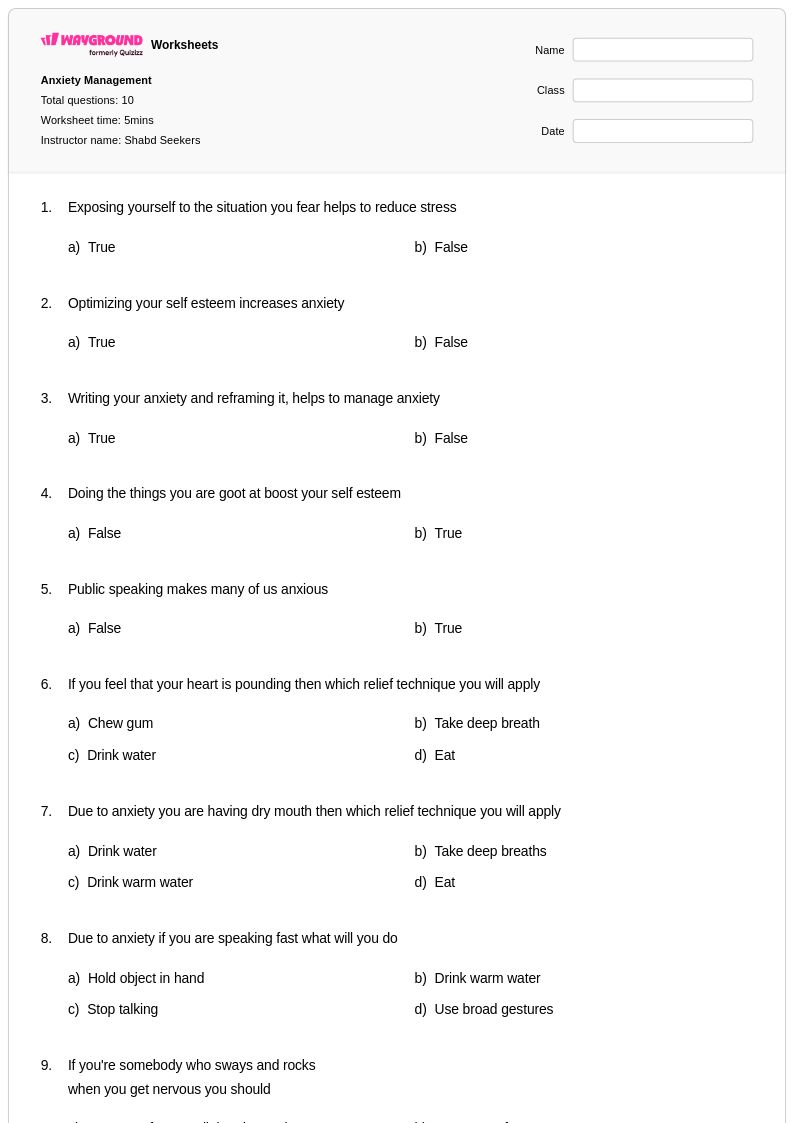
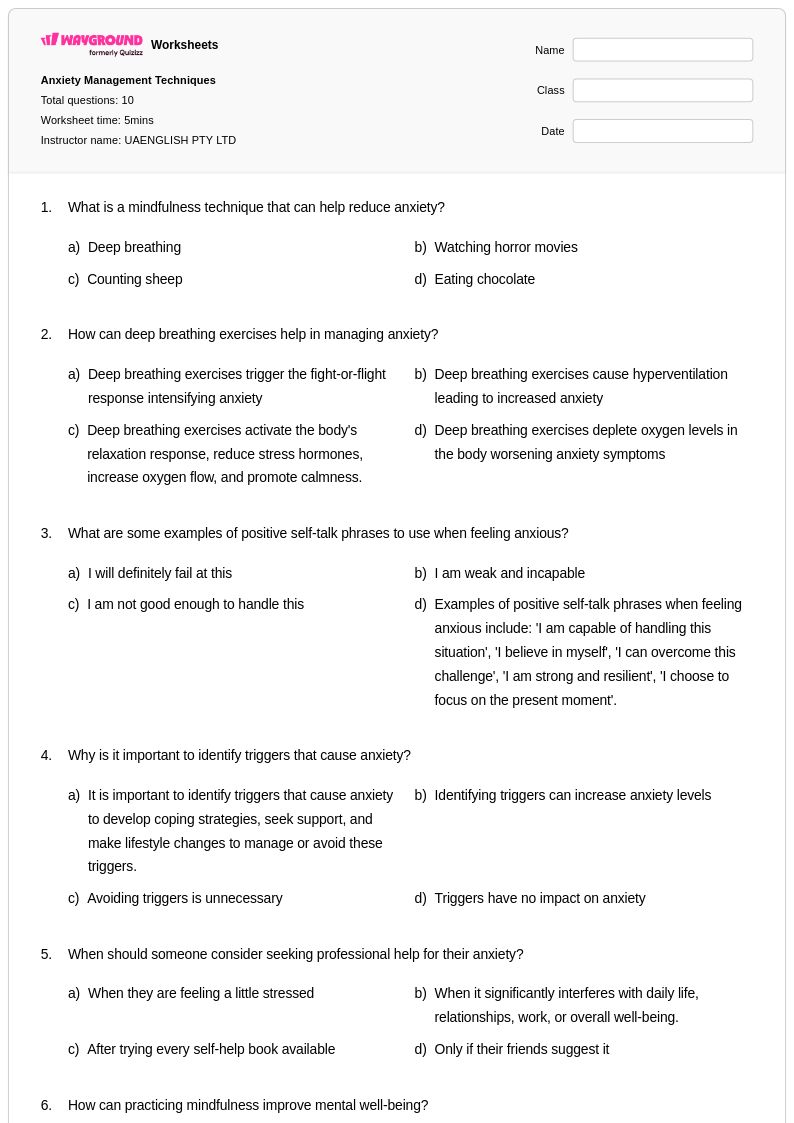
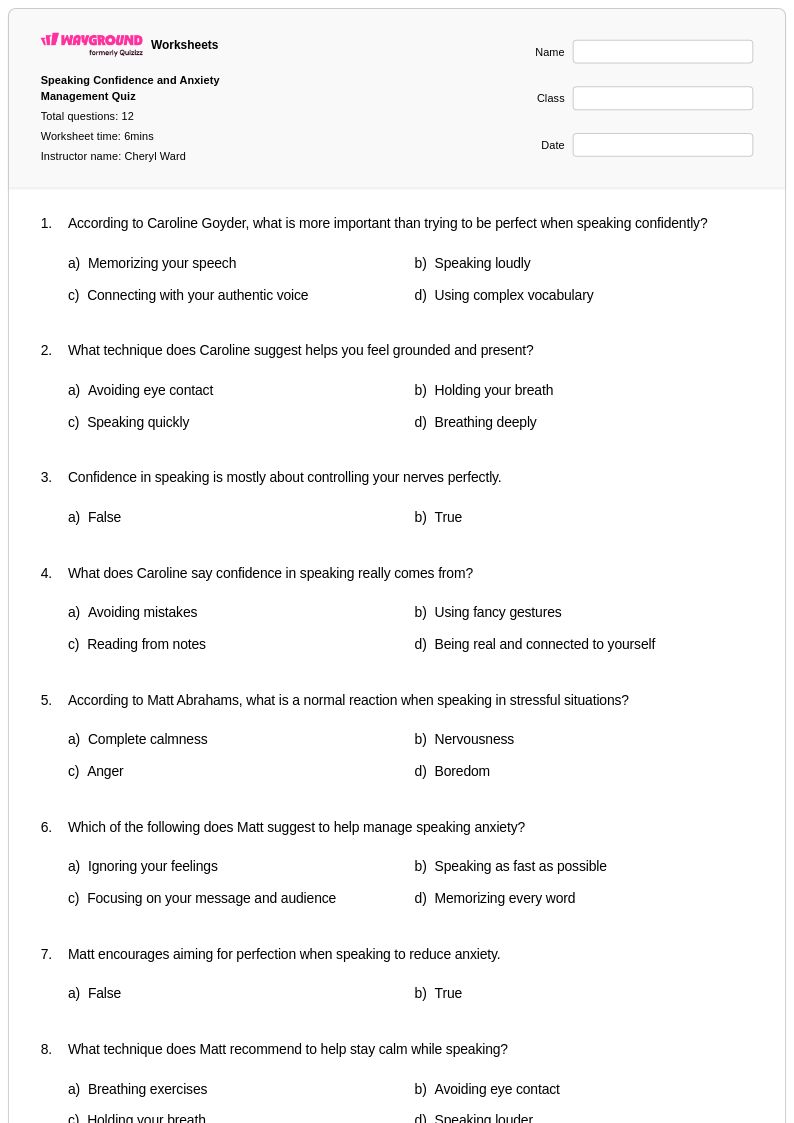
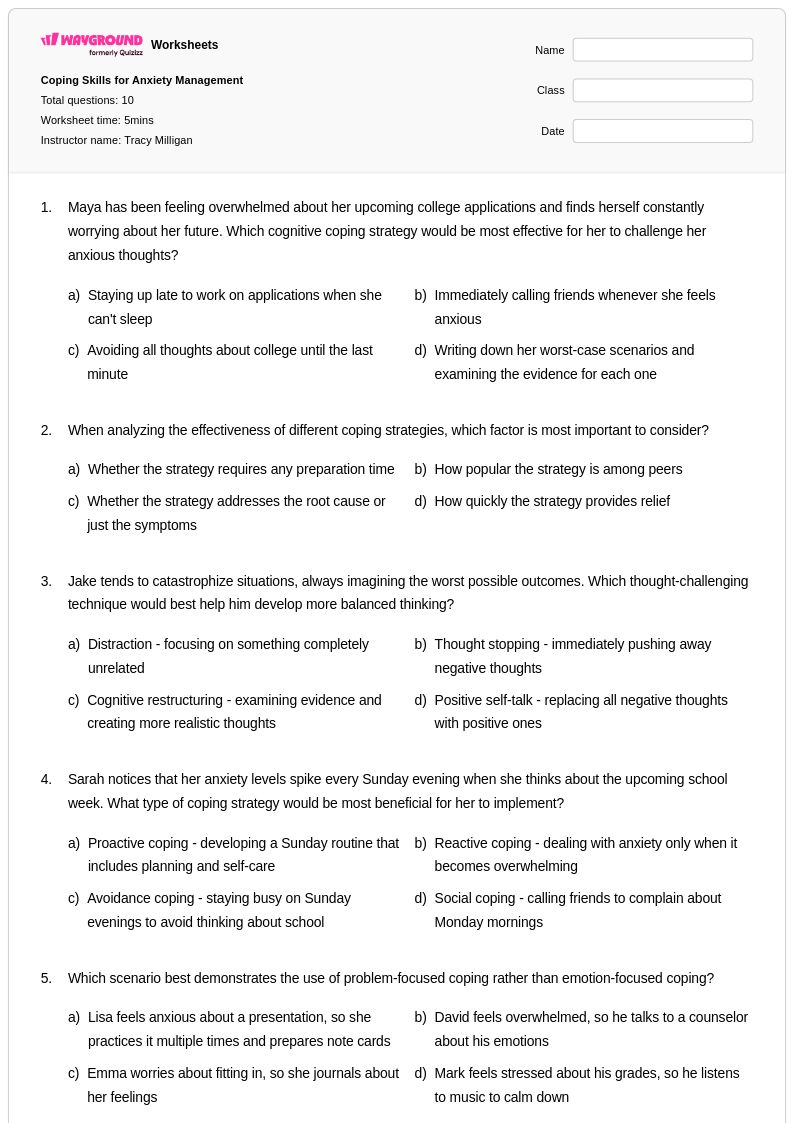
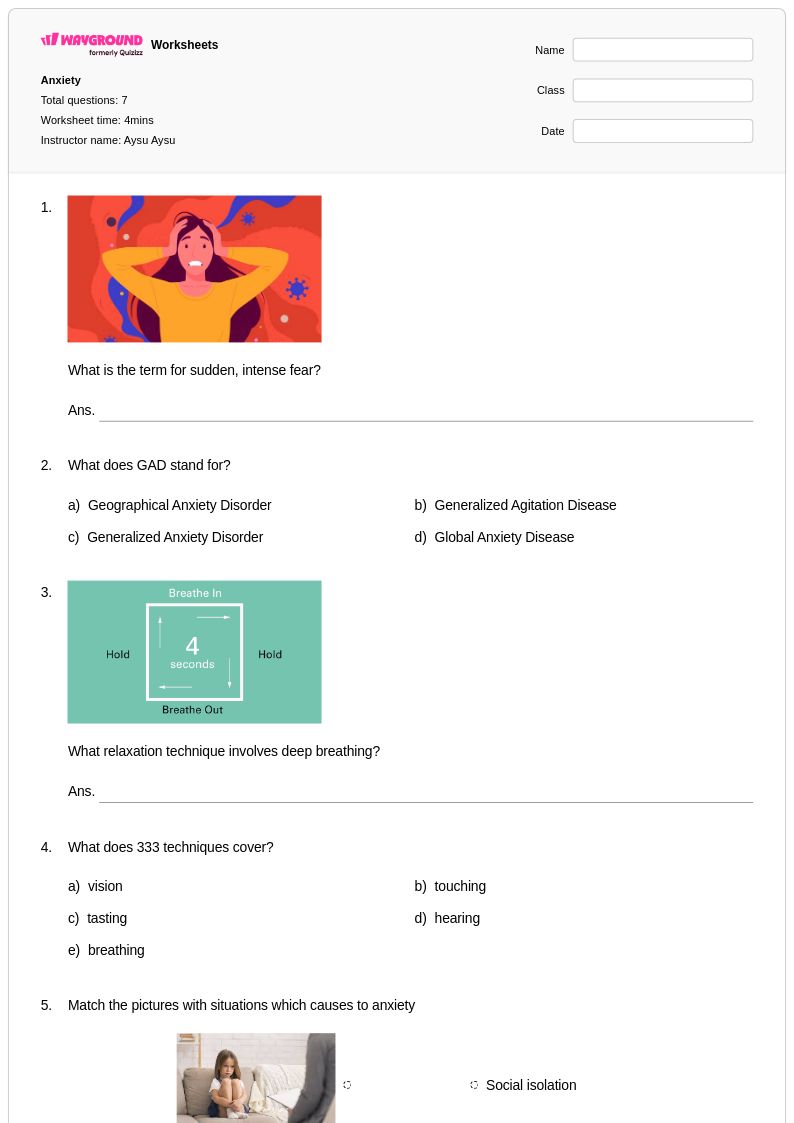
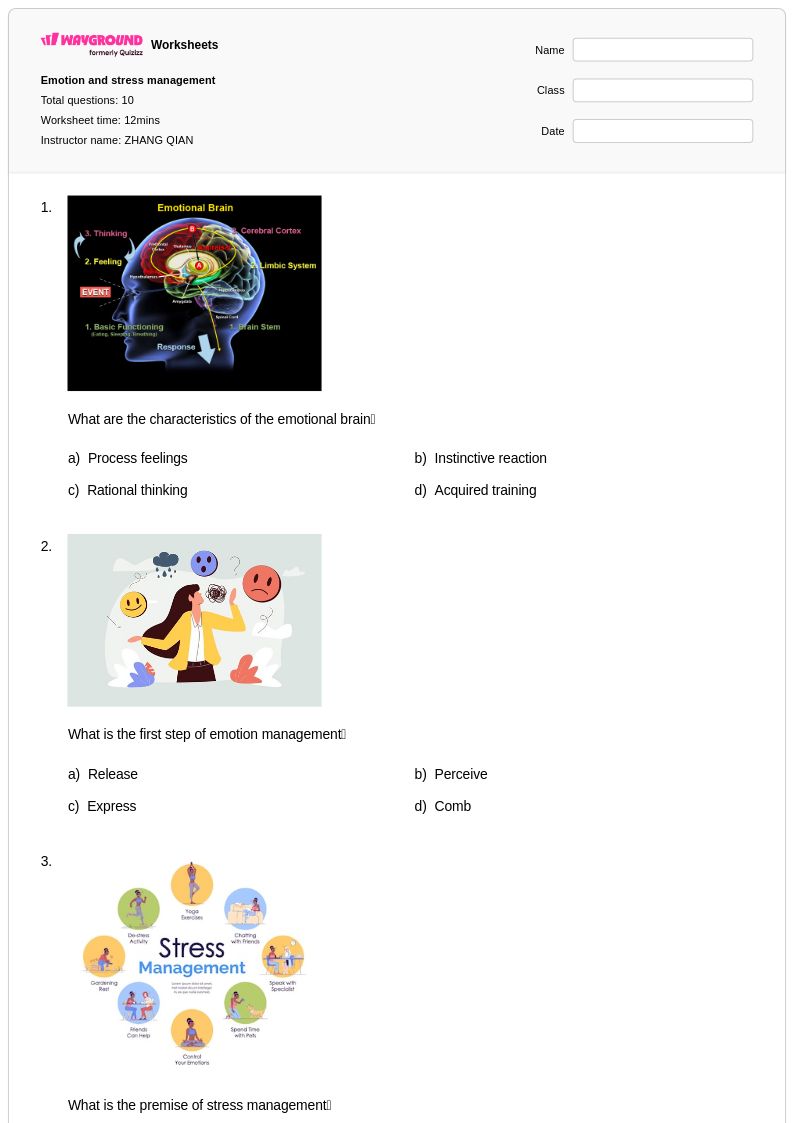
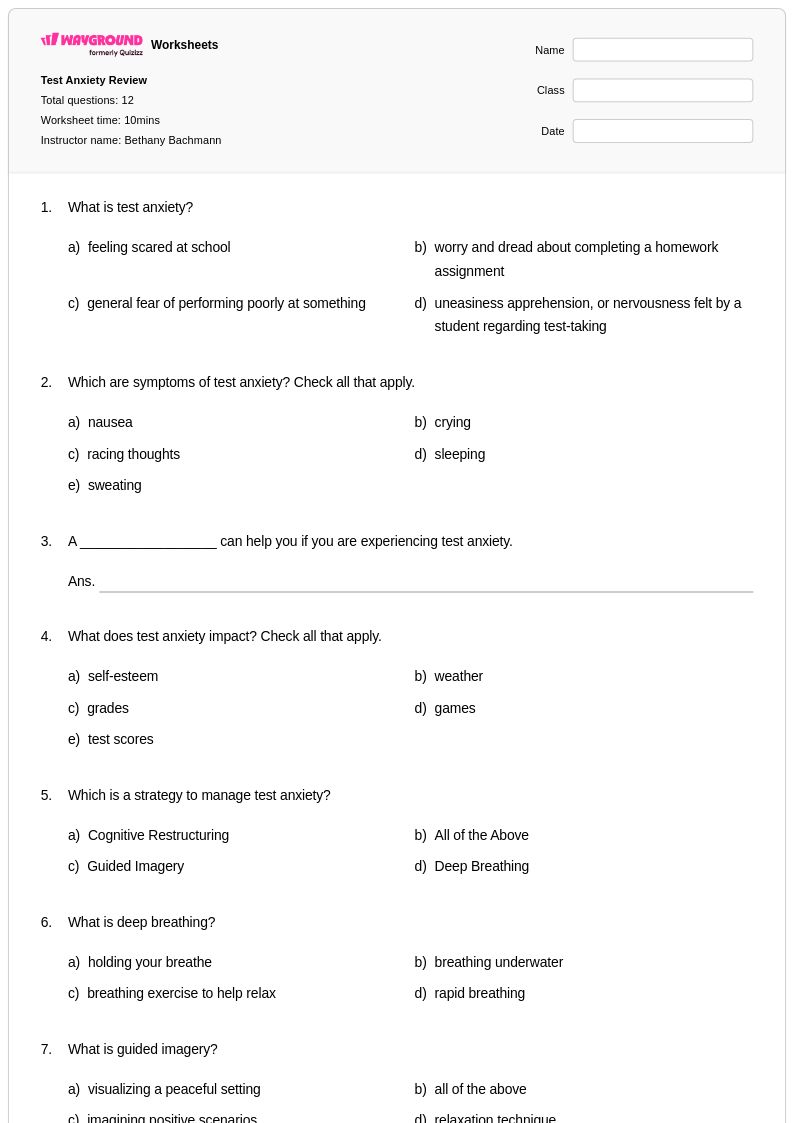
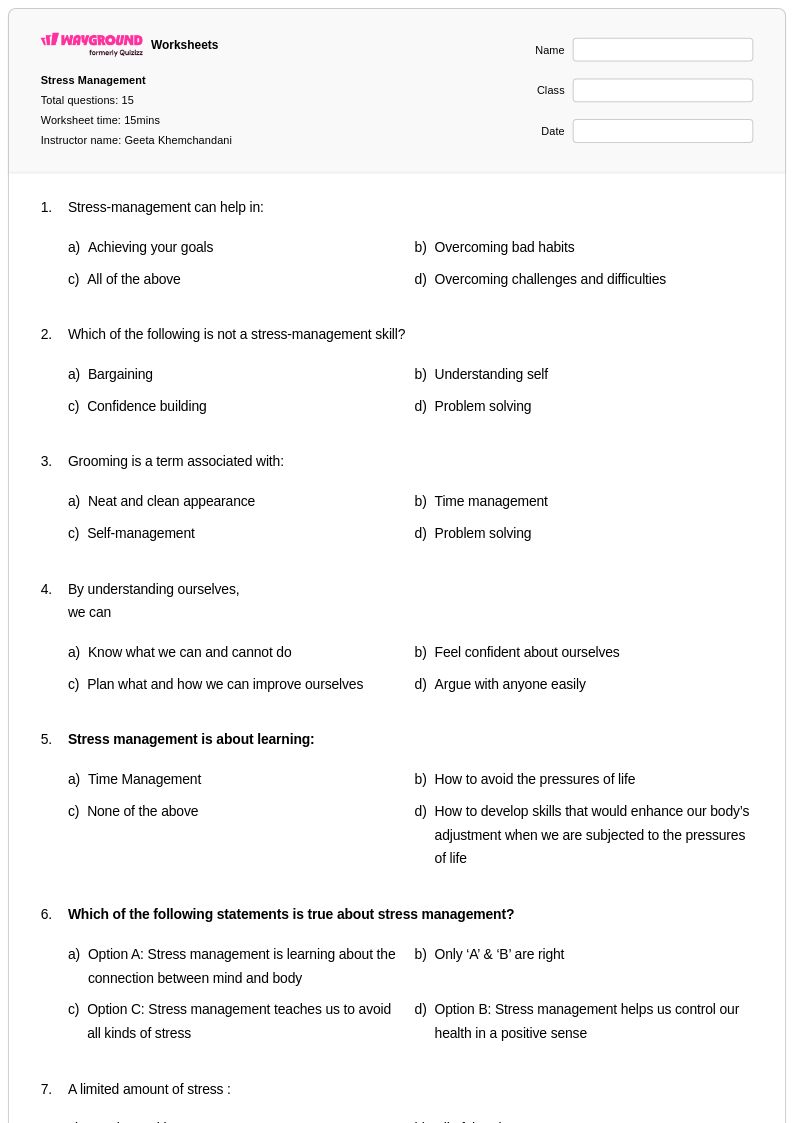
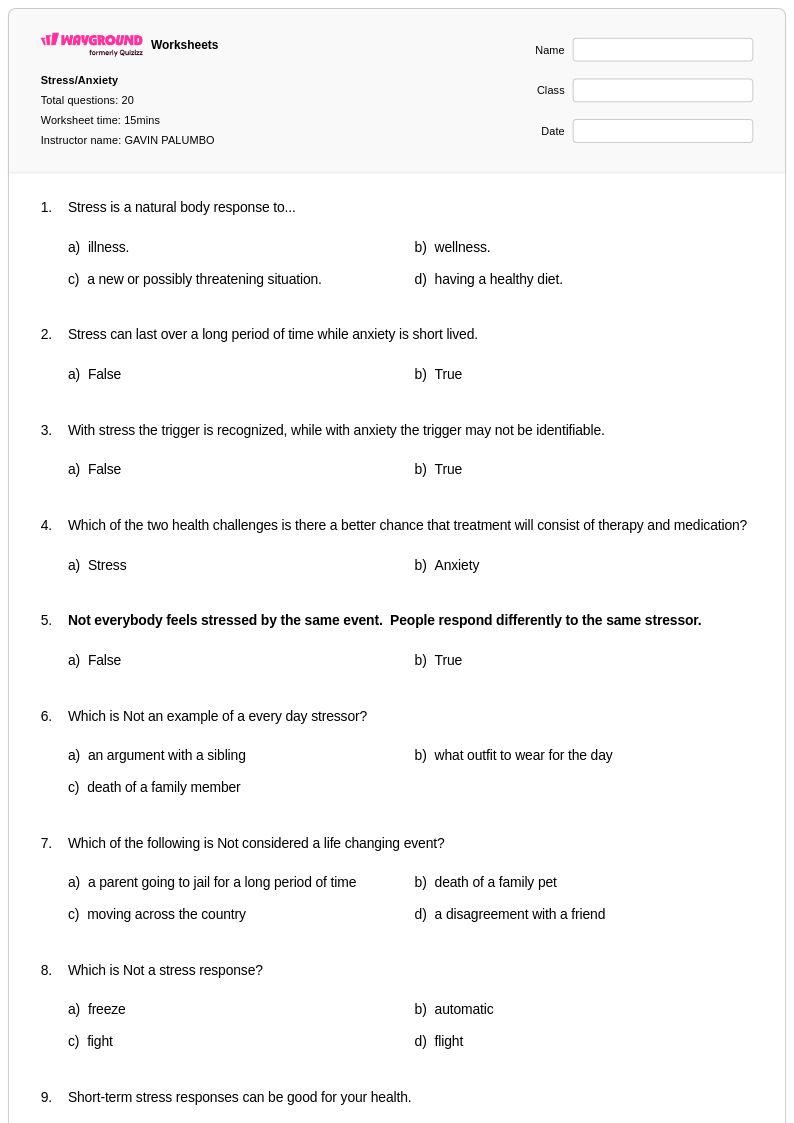
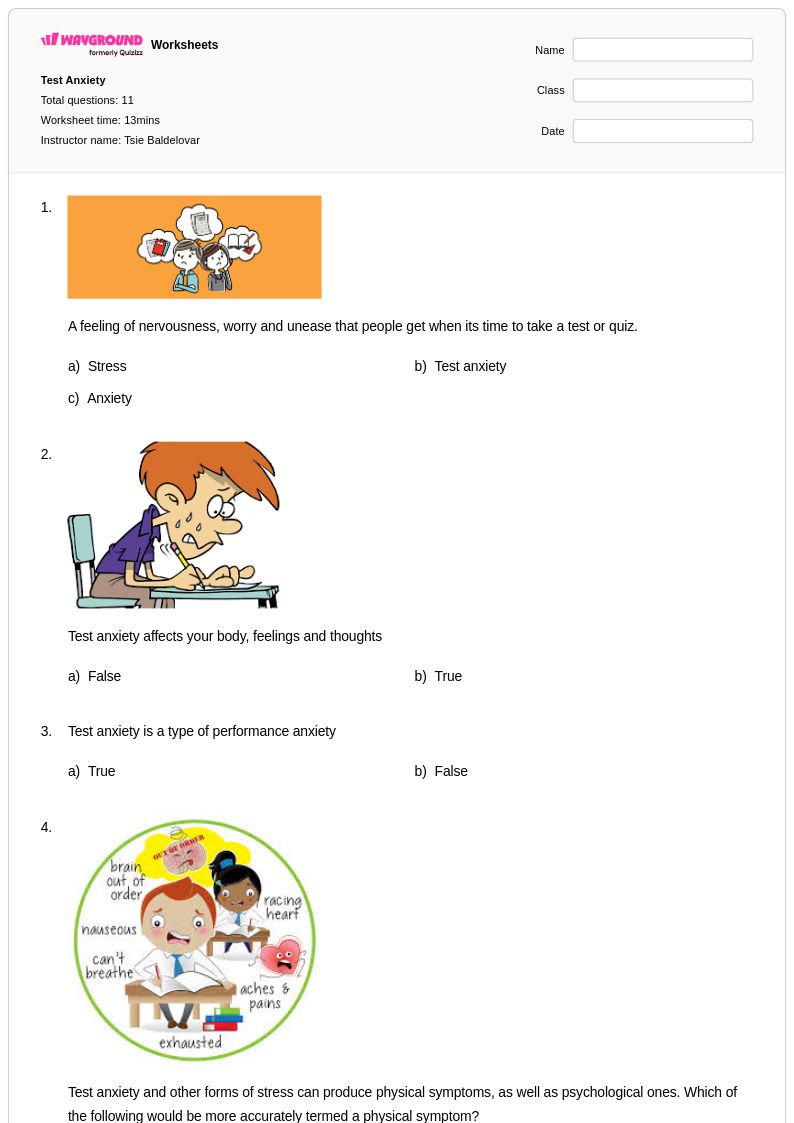
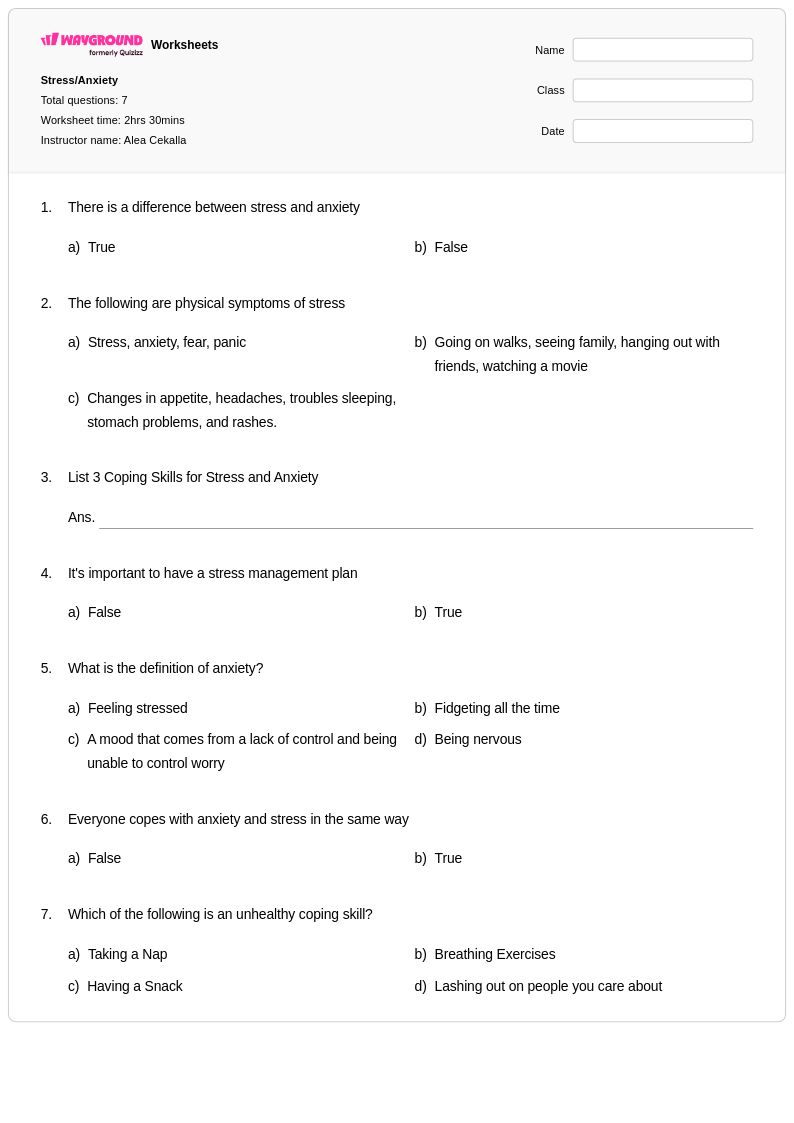
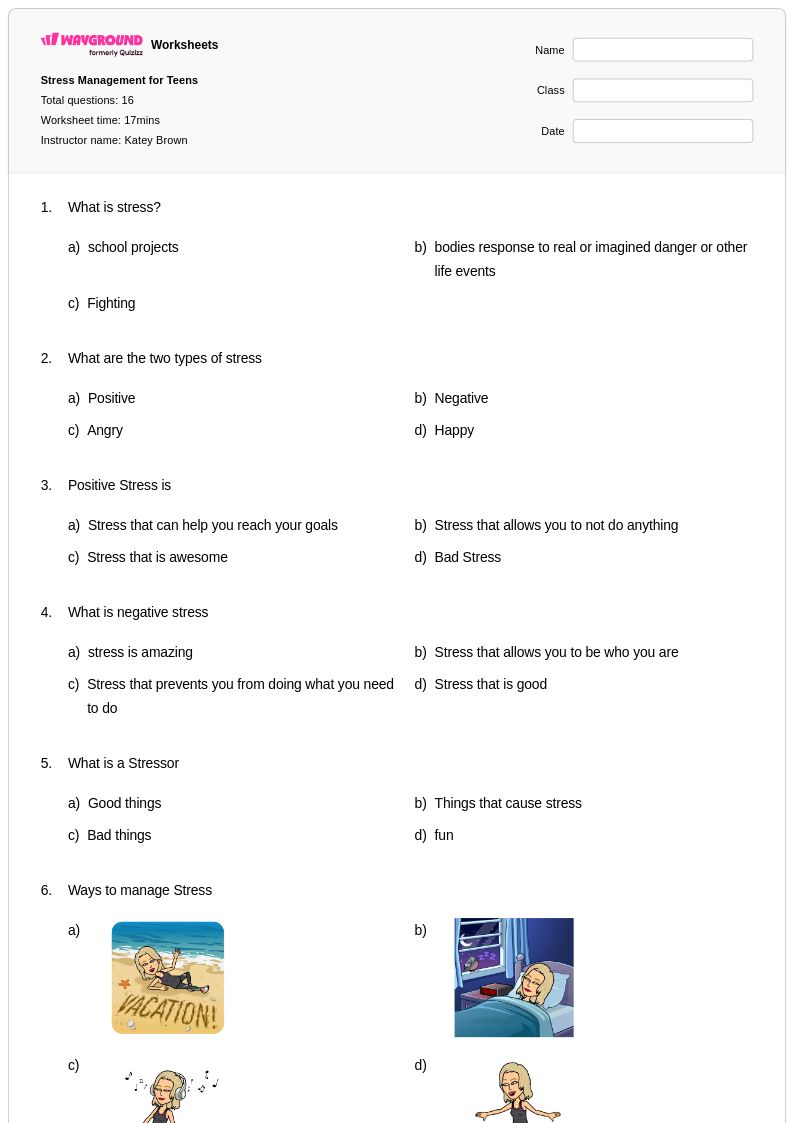
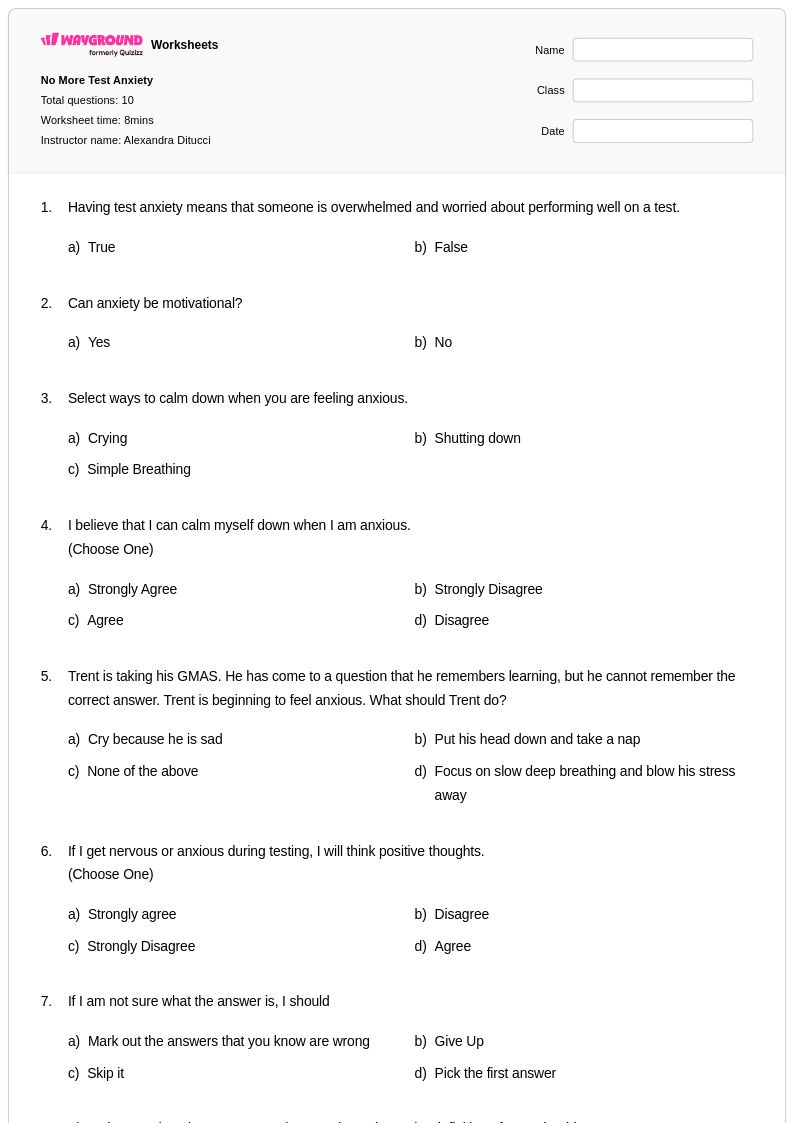
Anxiety management worksheets available through Wayground (formerly Quizizz) provide essential resources for addressing mental health awareness within physical education curricula. These comprehensive materials help students develop crucial coping strategies and self-regulation techniques that directly impact their physical performance and overall well-being. The worksheets focus on teaching students how to recognize anxiety symptoms, implement breathing techniques, practice mindfulness exercises, and build confidence in competitive and group physical activities. Each resource includes detailed answer keys and practice problems that allow students to work through real-world scenarios they might encounter in sports, fitness activities, or team-based exercises. These free printables serve as valuable tools for reinforcing classroom discussions about the mind-body connection and establishing healthy mental habits that support lifelong physical activity participation.
Wayground (formerly Quizizz) empowers educators with millions of teacher-created anxiety management resources specifically designed for physical education contexts. The platform's robust search and filtering capabilities enable teachers to quickly locate worksheets that align with their specific curriculum standards and student needs, whether addressing pre-competition nerves, social anxiety in team sports, or performance-related stress. Teachers can easily customize these materials to match their students' developmental levels and differentiate instruction for various learning styles, with resources available in both printable pdf formats and interactive digital versions. This flexibility supports comprehensive lesson planning while providing targeted tools for remediation when students struggle with anxiety-related barriers to physical activity, enrichment opportunities for those ready to explore advanced stress management techniques, and consistent skill practice that builds emotional resilience alongside physical fitness.
FAQs
How do I teach anxiety management strategies to students in a physical education setting?
Teaching anxiety management in PE works best when you connect mental strategies directly to physical experiences students already encounter, such as pre-game nerves or fear of failure in front of peers. Start by helping students identify their personal anxiety triggers and physical symptoms, then introduce concrete coping tools like diaphragmatic breathing, progressive muscle relaxation, and positive self-talk. Embedding these strategies into regular warm-ups or cool-downs normalizes the conversation and gives students repeated, low-stakes practice before they need to apply the skills in high-pressure moments.
What exercises help students practice coping strategies for anxiety?
Structured worksheets that walk students through real-world scenarios, such as preparing for a competitive event or joining a new team activity, are especially effective for practicing coping strategies. Exercises that ask students to identify anxiety symptoms, select an appropriate technique, and reflect on the outcome build both self-awareness and decision-making skills. Breathing logs, mindfulness reflection prompts, and confidence-building scenario analyses give students consistent, repeatable practice that transfers to actual physical activity settings.
What common mistakes do students make when learning anxiety management techniques?
A frequent misconception is that anxiety is always harmful and must be eliminated, when in fact moderate arousal can enhance performance. Students often misapply breathing techniques by rushing through them rather than sustaining a slow, controlled rhythm, which reduces their effectiveness. Another common error is treating coping strategies as one-size-fits-all fixes rather than understanding that different techniques work better for different students or situations, so instruction should emphasize self-monitoring and flexible strategy selection.
How can I differentiate anxiety management instruction for students with different needs?
Differentiation in anxiety management instruction means offering varying levels of scenario complexity, adjusting the abstract versus concrete nature of reflection prompts, and providing additional scaffolding for students who struggle with self-regulation. On Wayground, teachers can support individual students with built-in accommodations such as Read Aloud for students who benefit from audio delivery of content, reduced answer choices to lower cognitive load, and extended time settings for students who need more processing time. These accommodations can be assigned to specific students without notifying the rest of the class, so differentiation stays seamless and private.
How do I use Wayground's anxiety management worksheets in my classroom?
Wayground's anxiety management worksheets are available as printable PDFs for traditional classroom or take-home use and in digital formats for technology-integrated learning environments, giving teachers flexibility based on their setup. Digital versions can also be hosted as a quiz directly on Wayground, which allows for immediate feedback and easy progress monitoring. Each worksheet includes a complete answer key, so teachers can use them for independent practice, guided group discussion, or formative assessment without additional preparation time.
How do I address social anxiety specifically in team sports or group fitness activities?
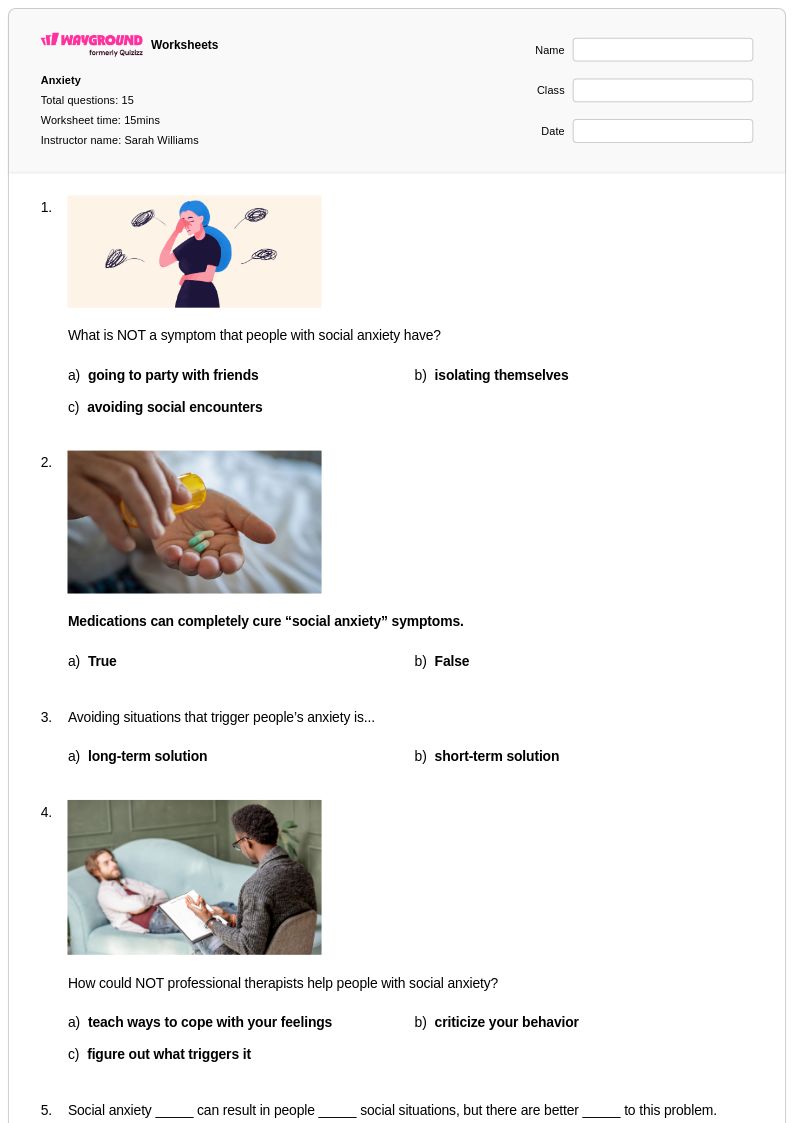
Social anxiety in group physical activities often stems from fear of judgment, making mistakes publicly, or not belonging, so instruction should explicitly name these concerns rather than address anxiety only in the abstract. Structured activities that gradually increase social exposure, paired with worksheets that help students identify triggers and rehearse coping responses, build tolerance for group settings over time. Teaching students that discomfort in social situations is normal and manageable, rather than a signal to avoid the activity, is a critical reframe that supports long-term participation in team-based physical education.