
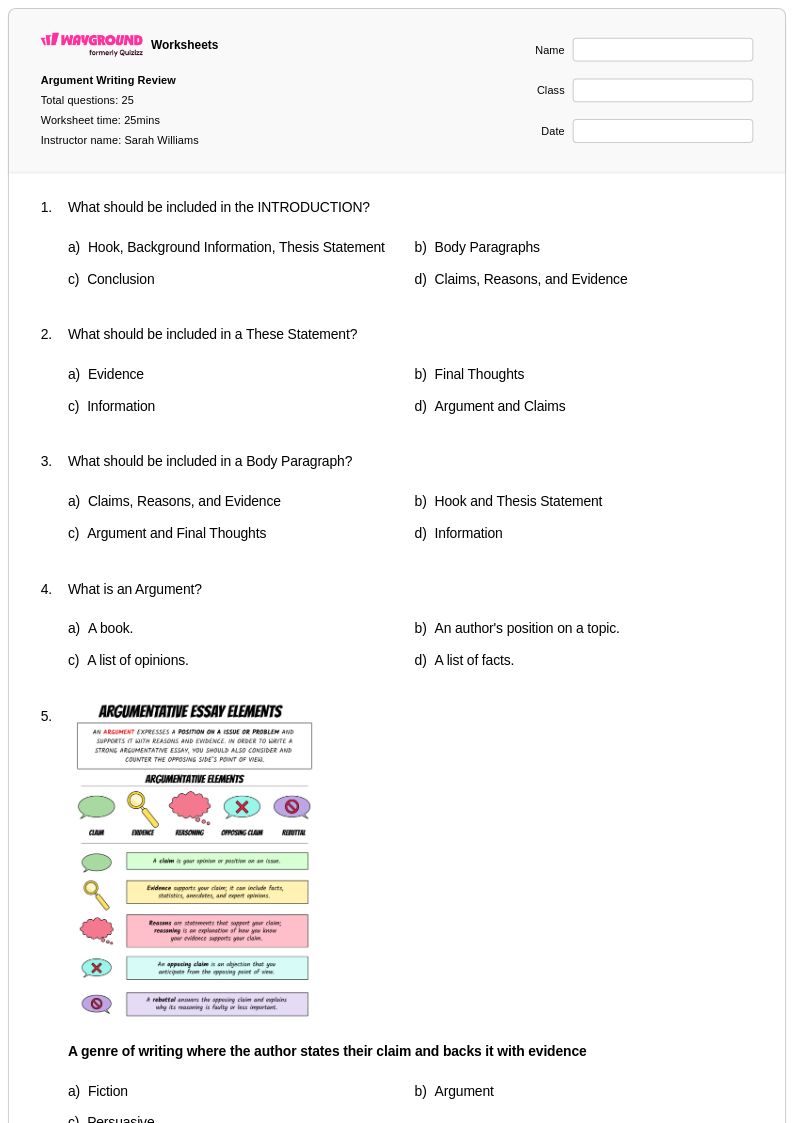
25 Q
7th - Uni
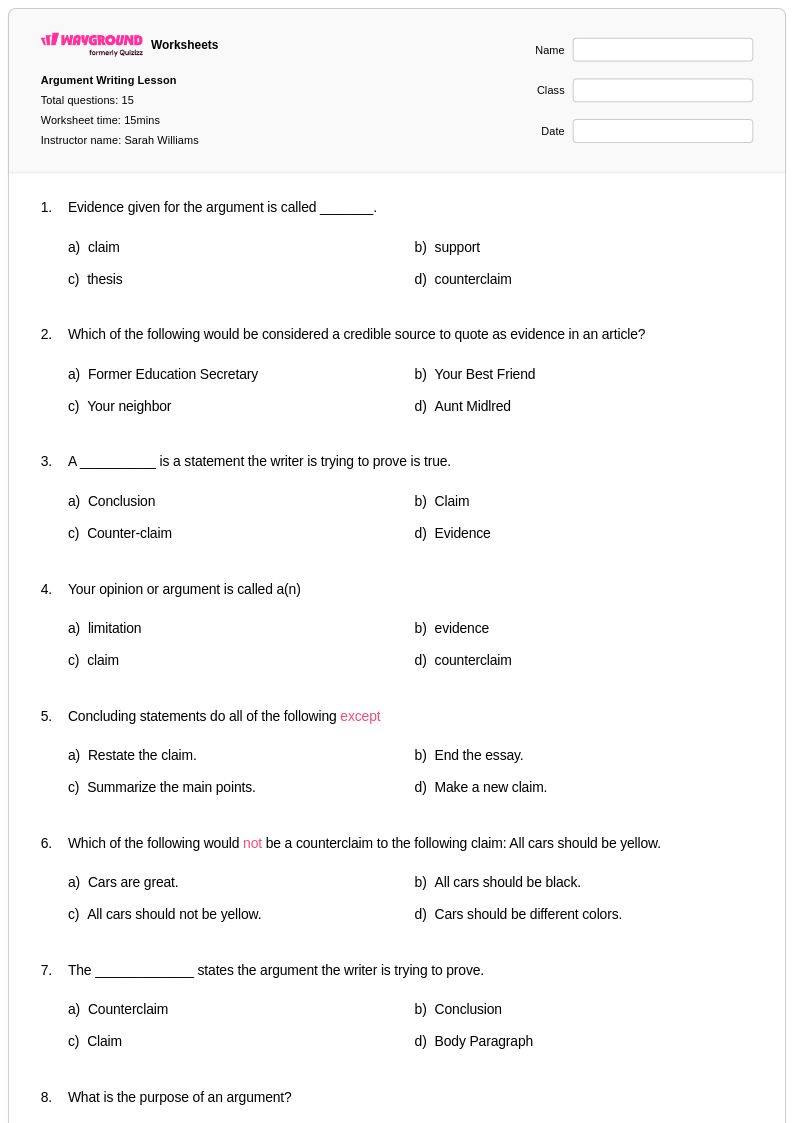
15 Q
6th - Uni
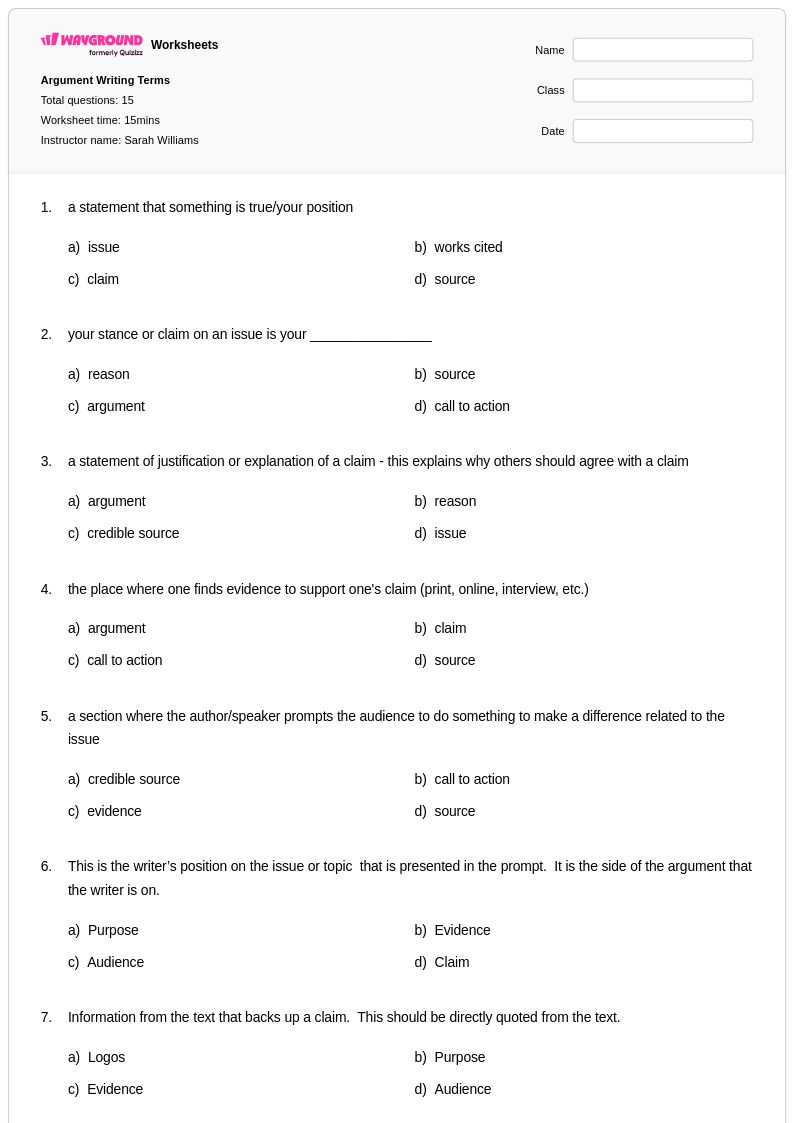
15 Q
7th - Uni
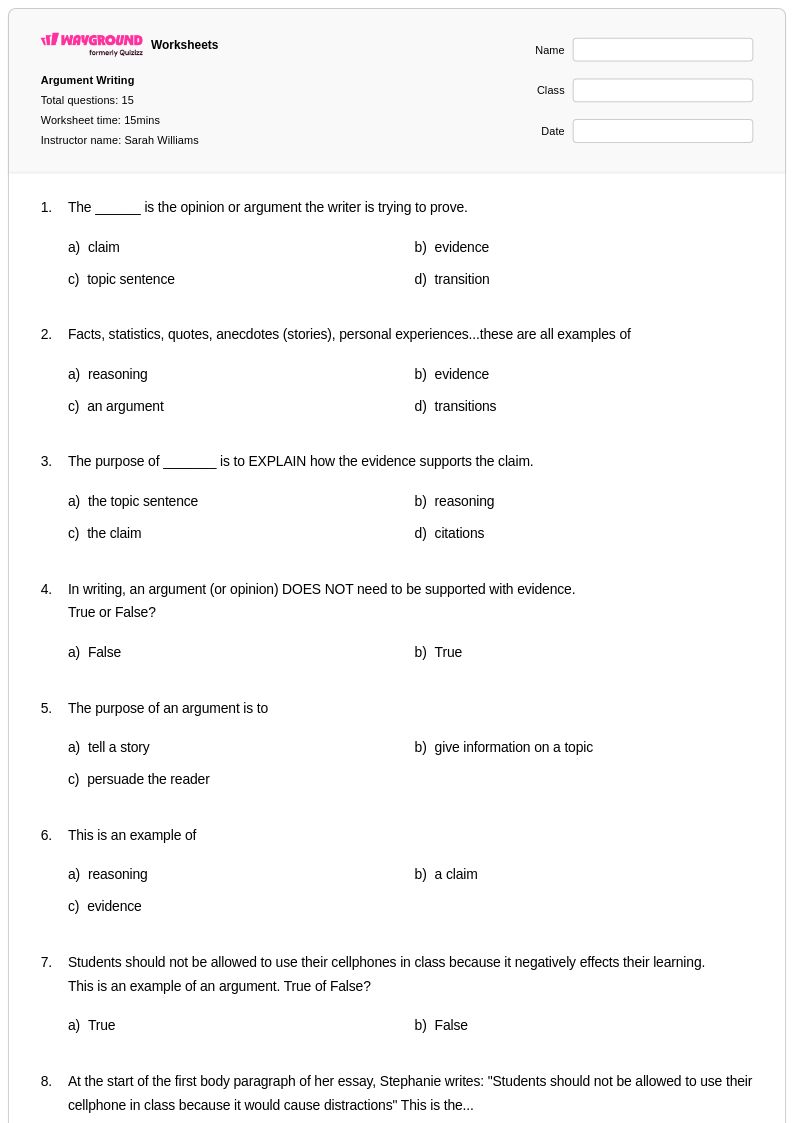
15 Q
7th - Uni
8 Q
KG - Uni
25 Q
7th - Uni
10 Q
6th - Uni
15 Q
7th - Uni
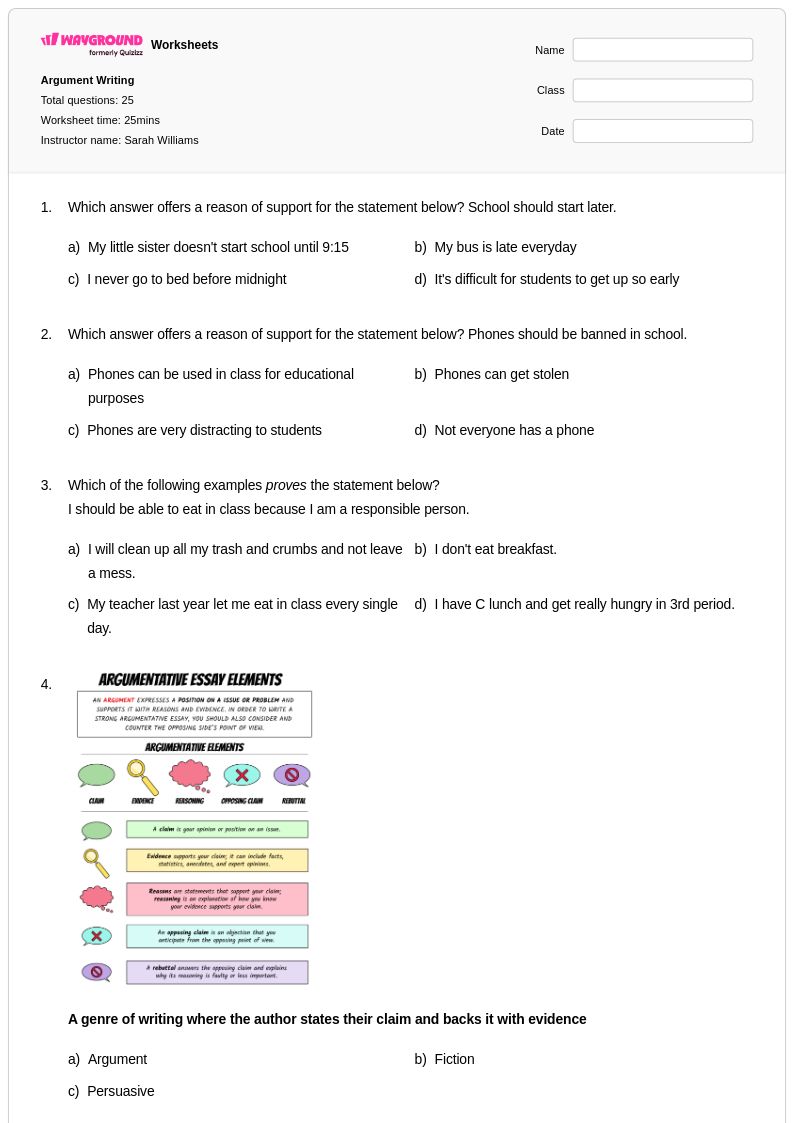
25 Q
7th - Uni
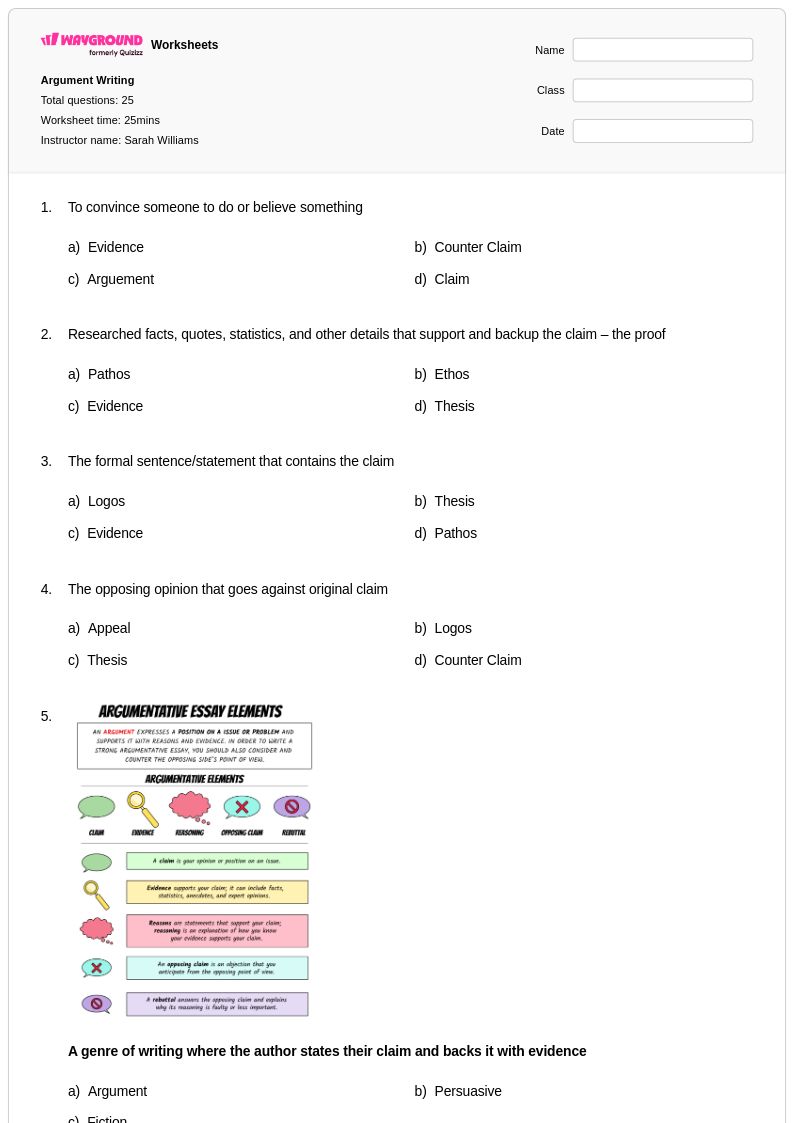
25 Q
6th - Uni
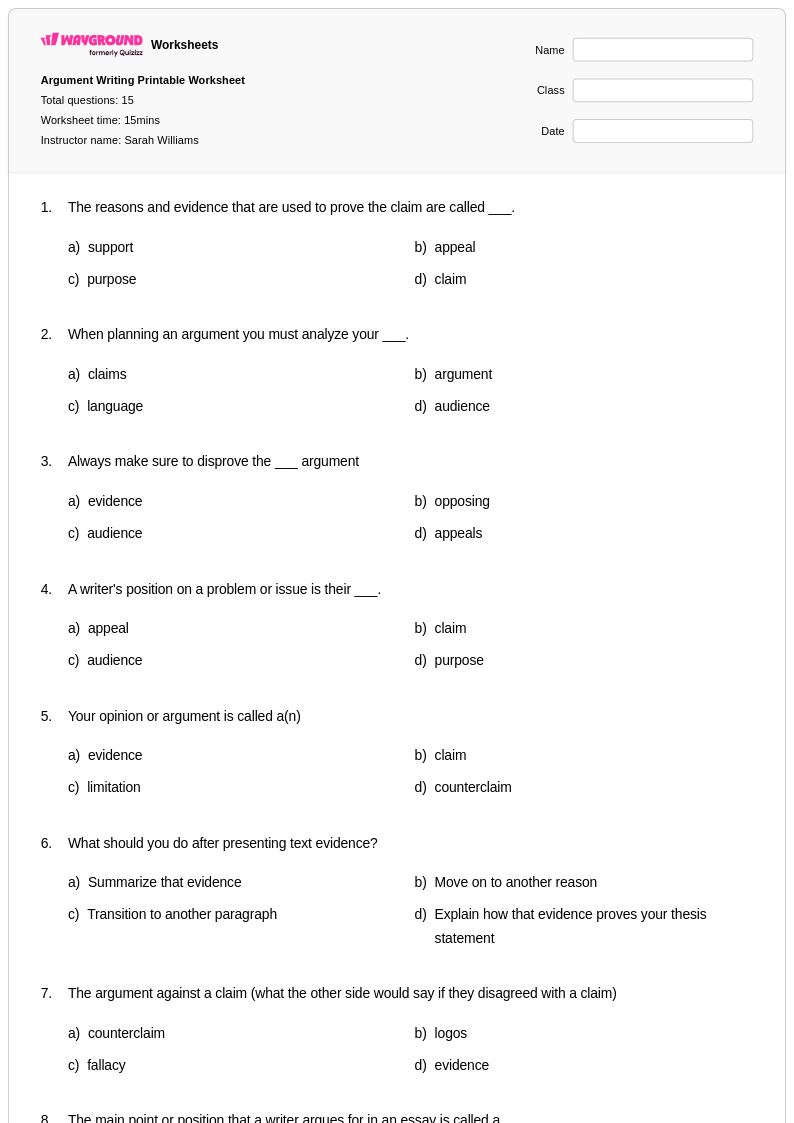
15 Q
8th - Uni
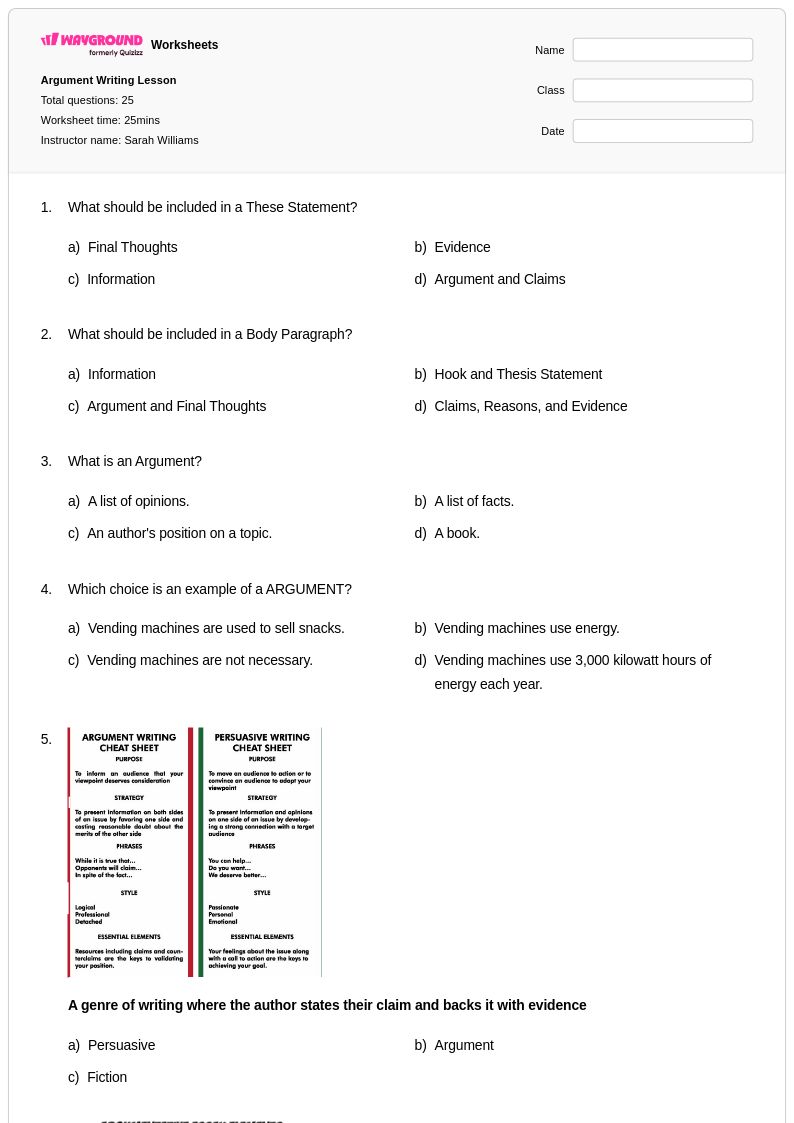
25 Q
6th - Uni
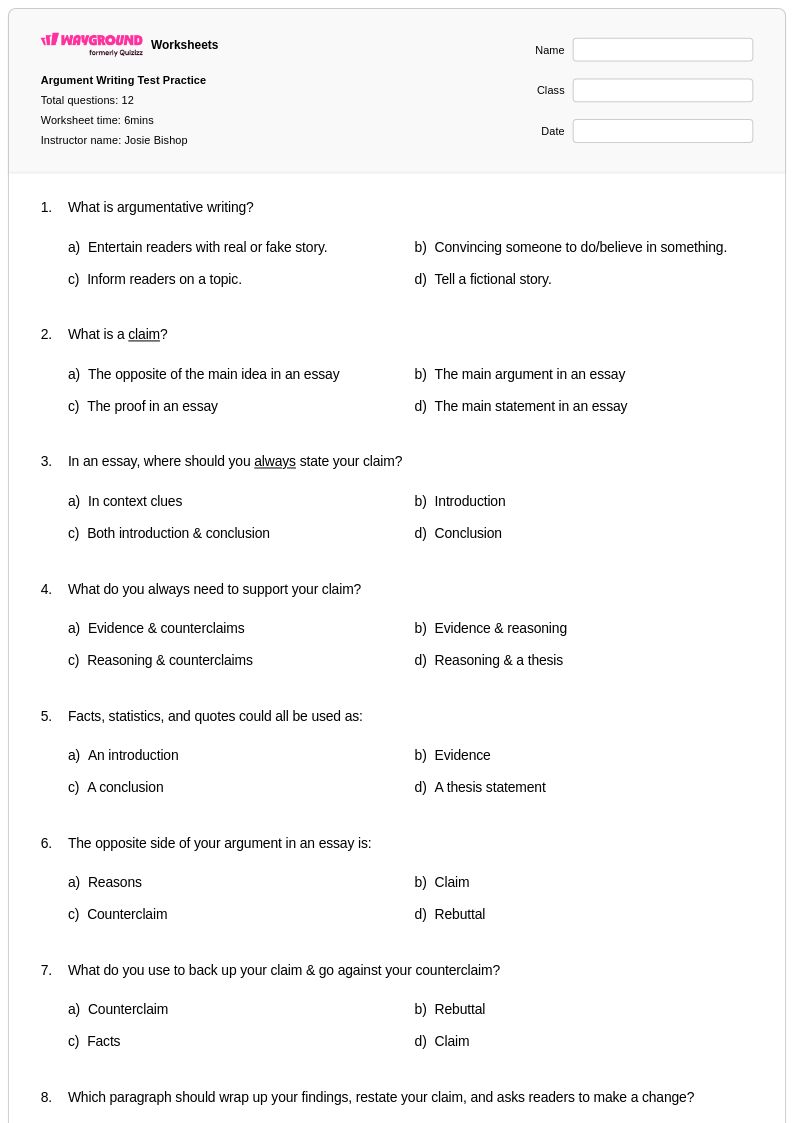
12 Q
4th - 12th
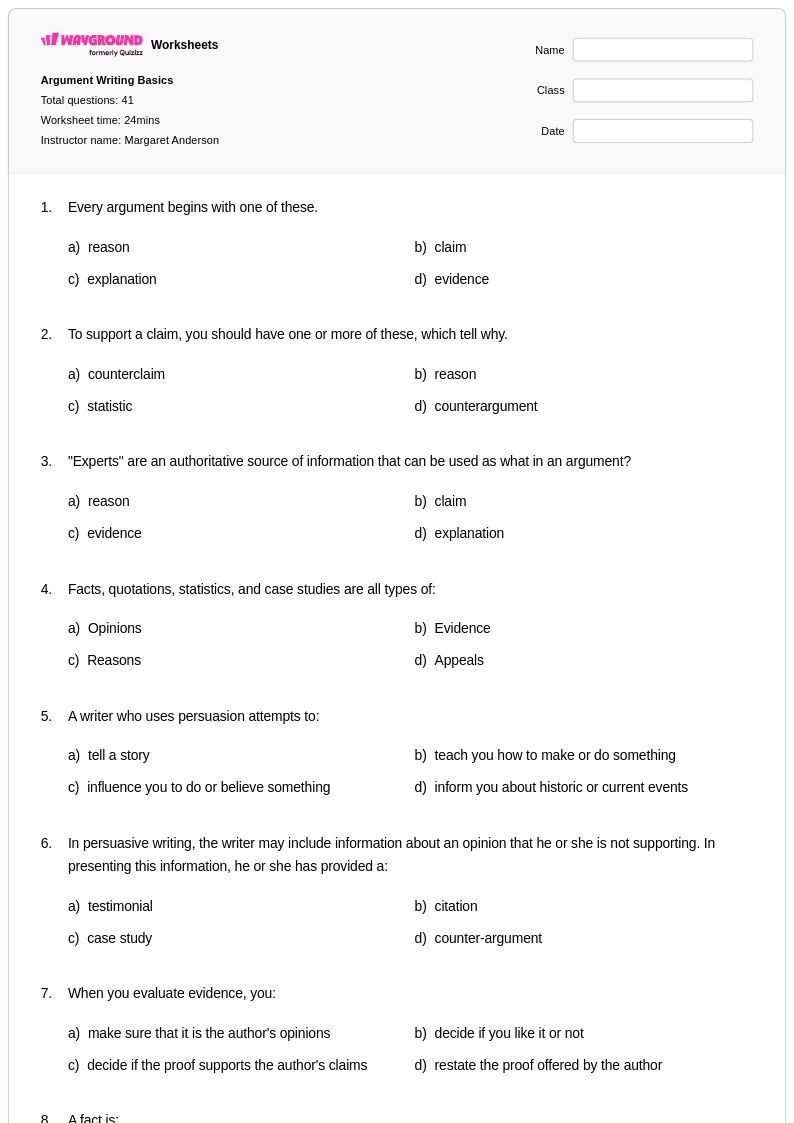
41 Q
6th - 12th
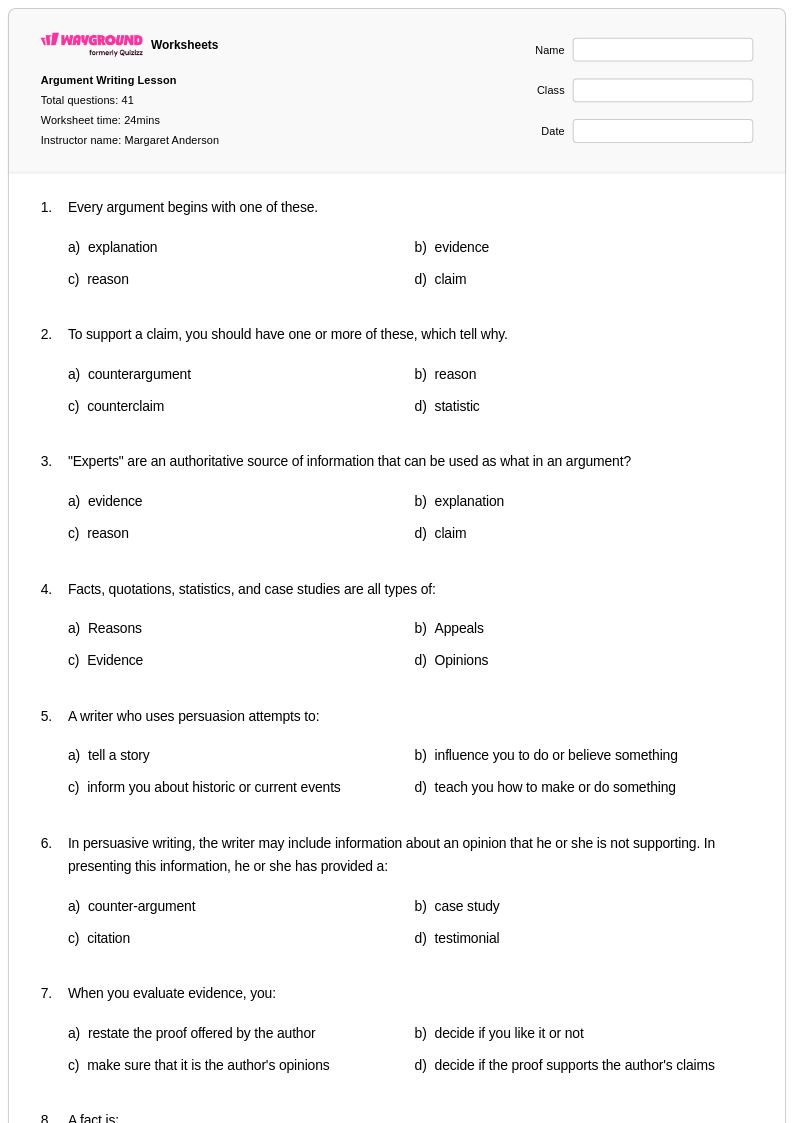
41 Q
6th - 12th
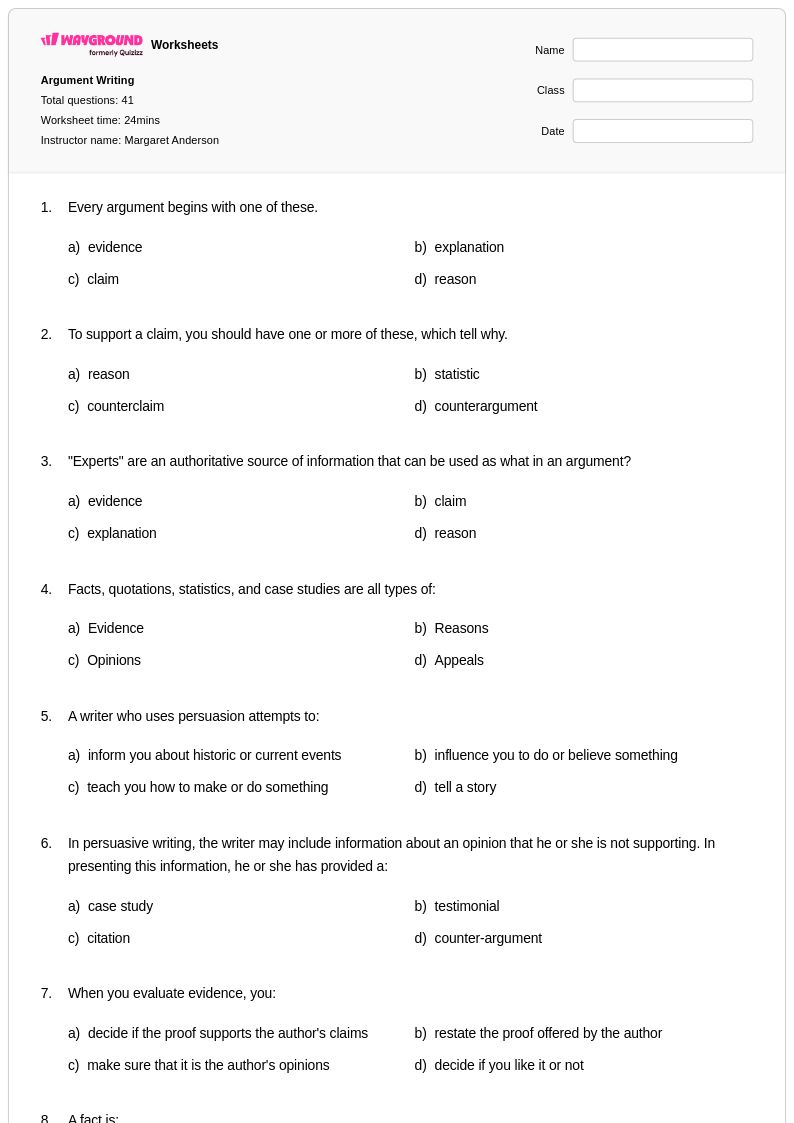
41 Q
6th - 12th
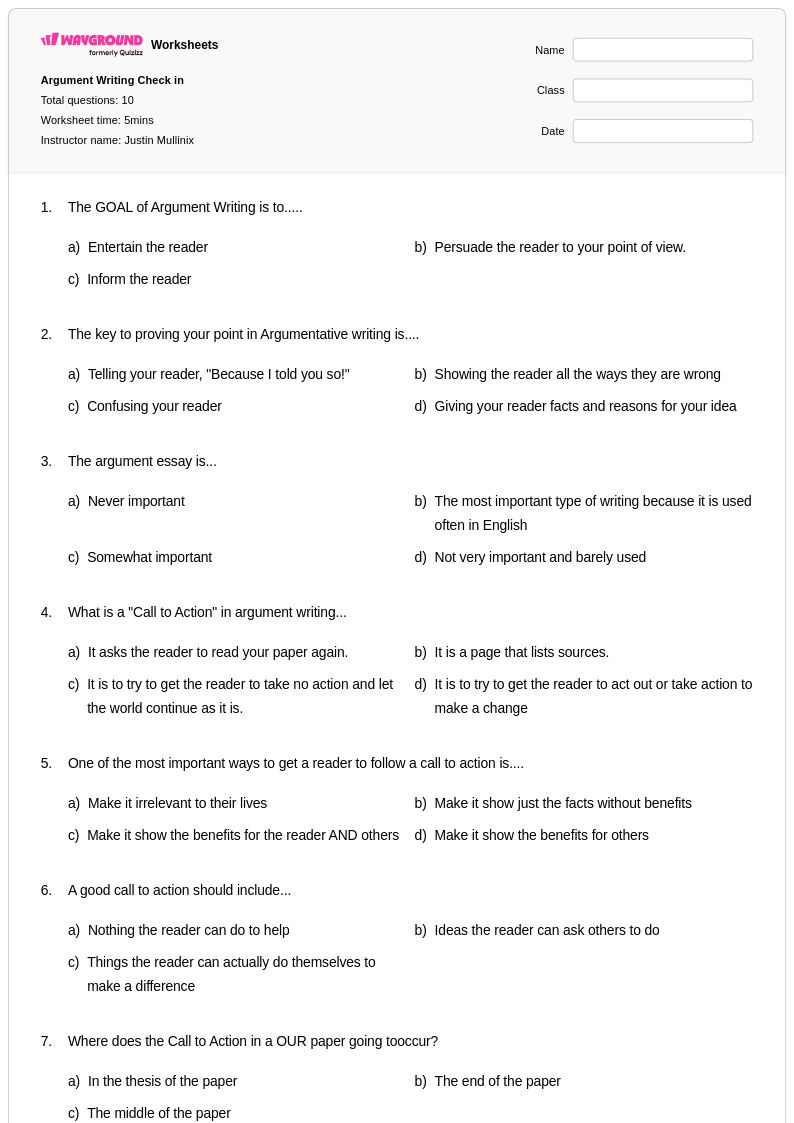
10 Q
9th - 12th
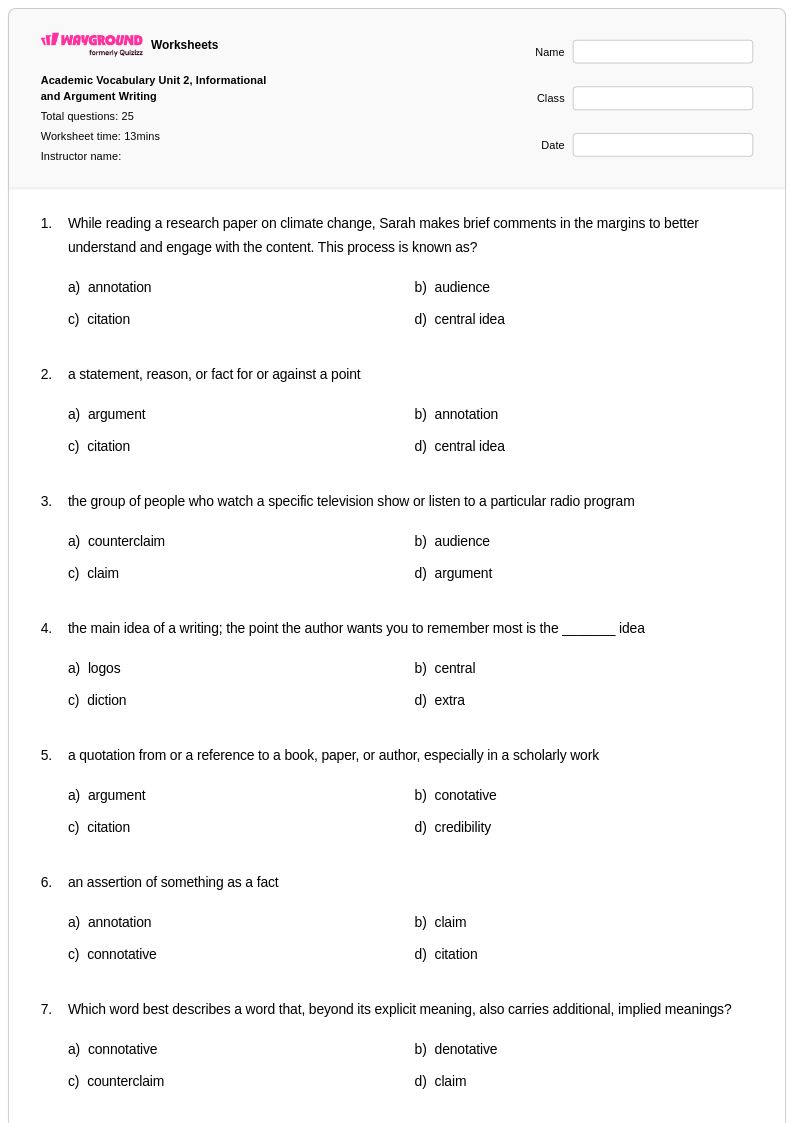
25 Q
9th - 12th
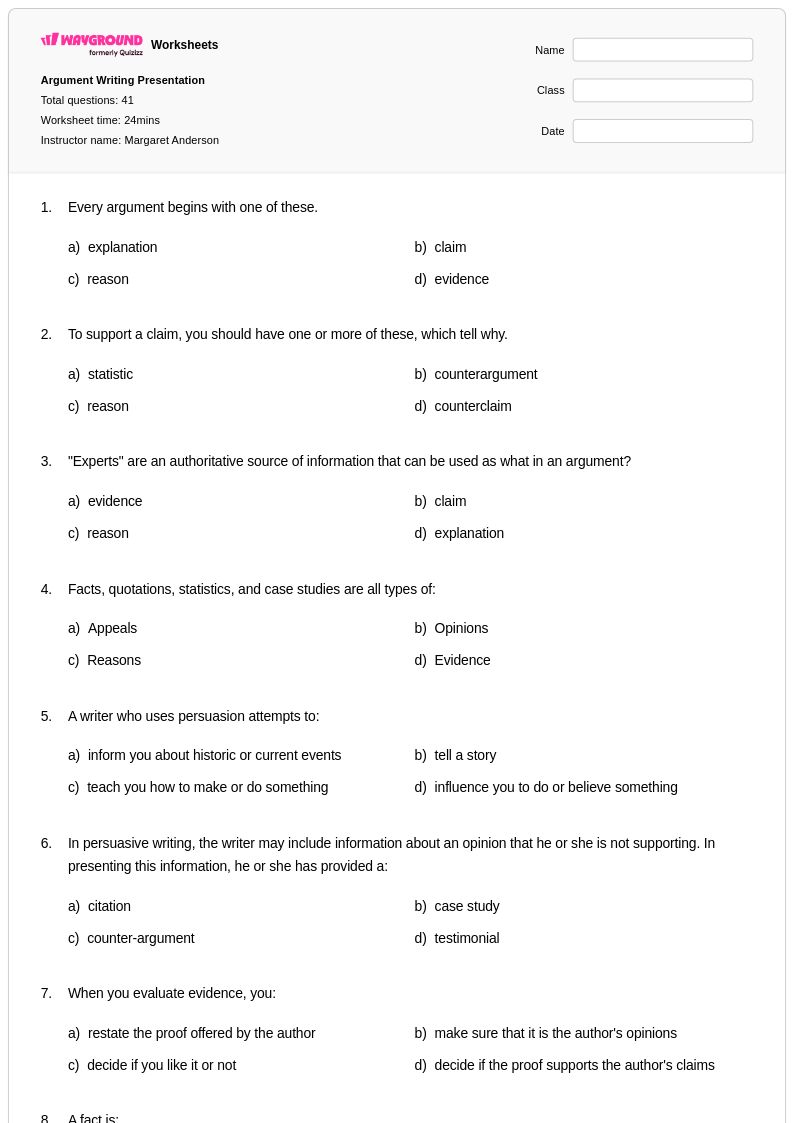
41 Q
6th - 12th
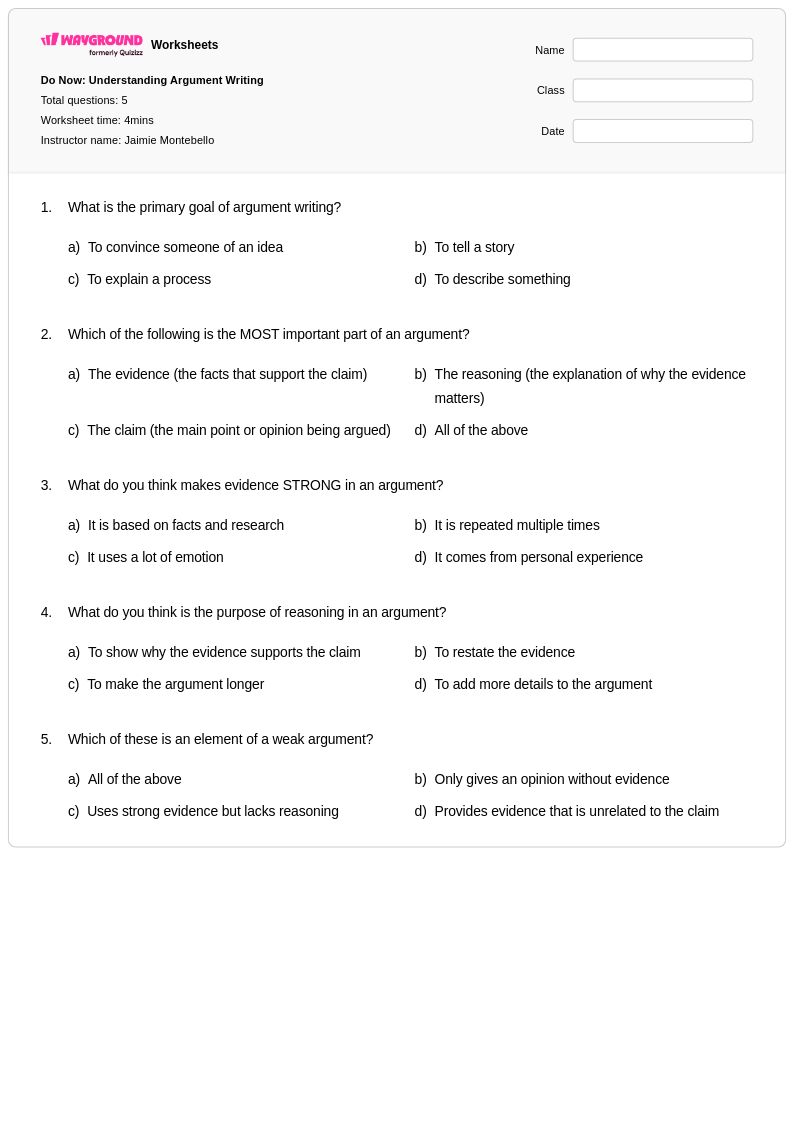
5 Q
6th - Uni
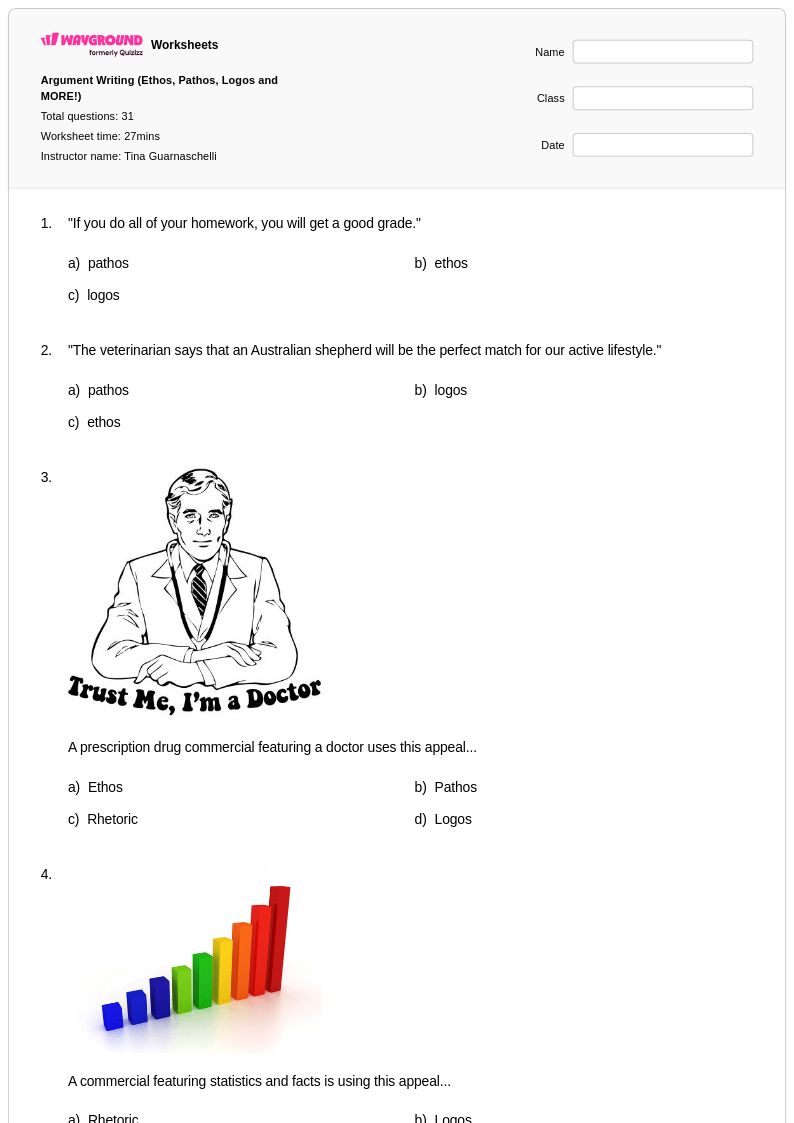
31 Q
7th - 12th
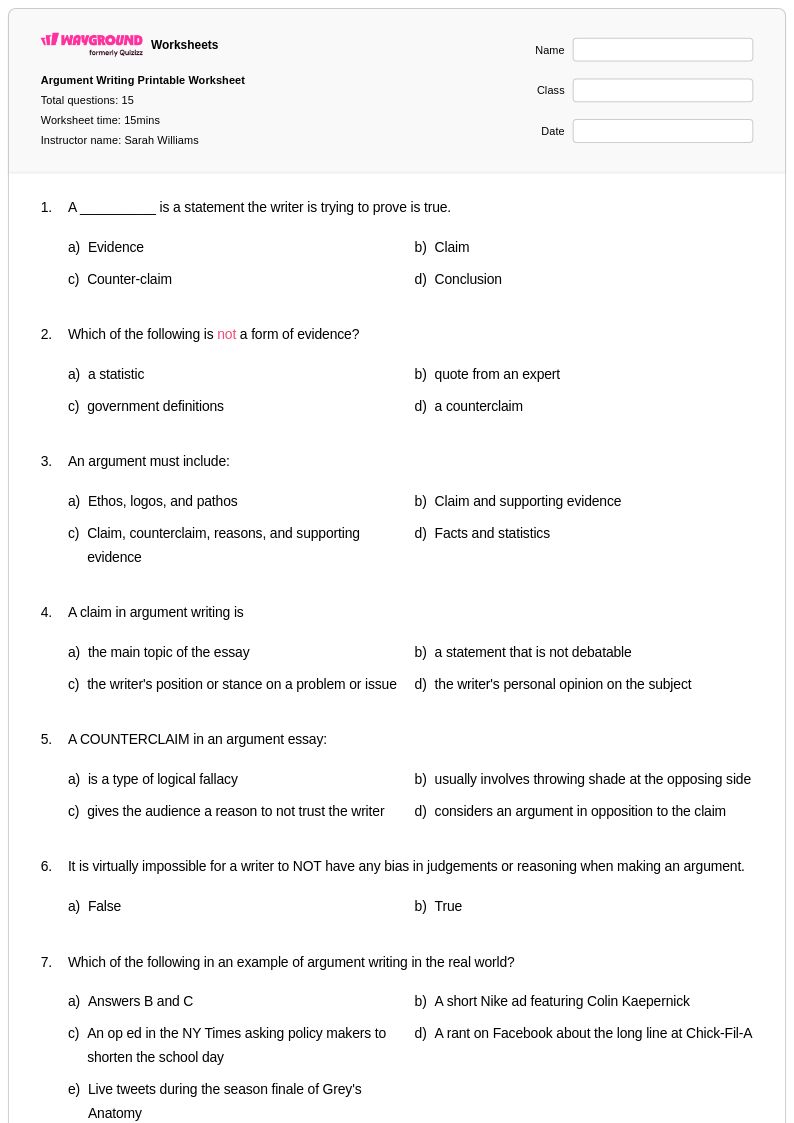
15 Q
8th - Uni
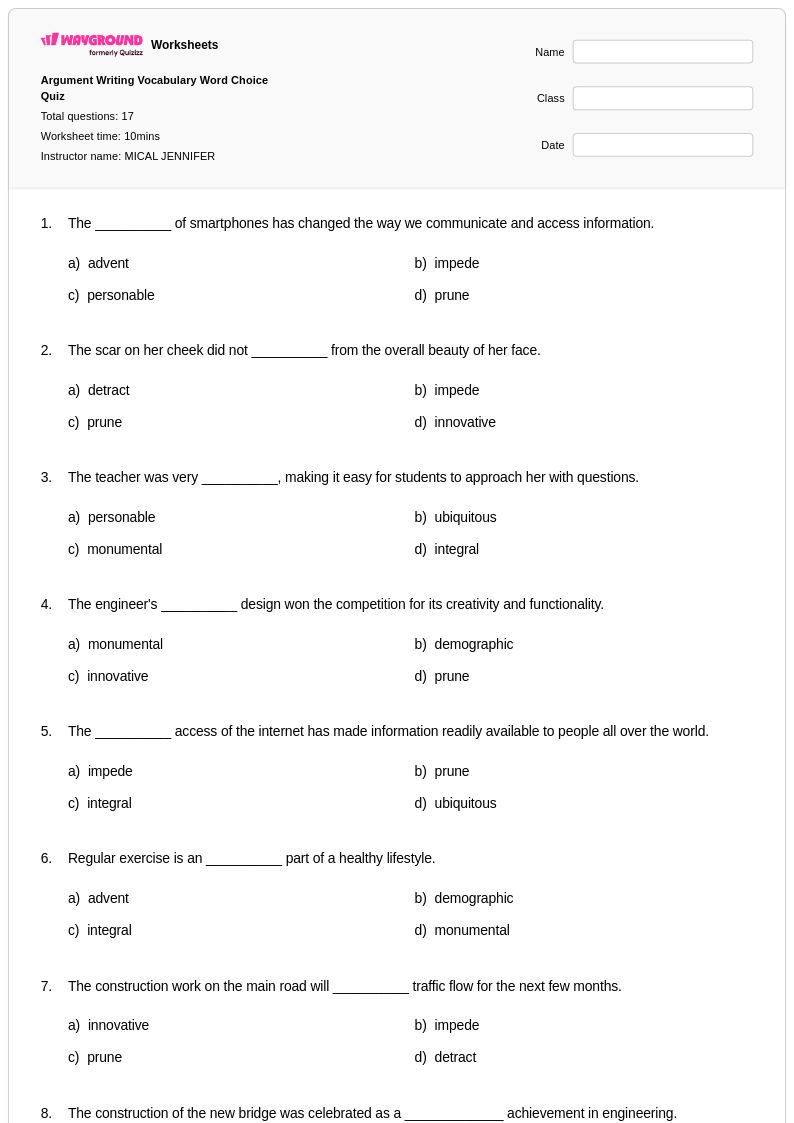
17 Q
8th - Uni
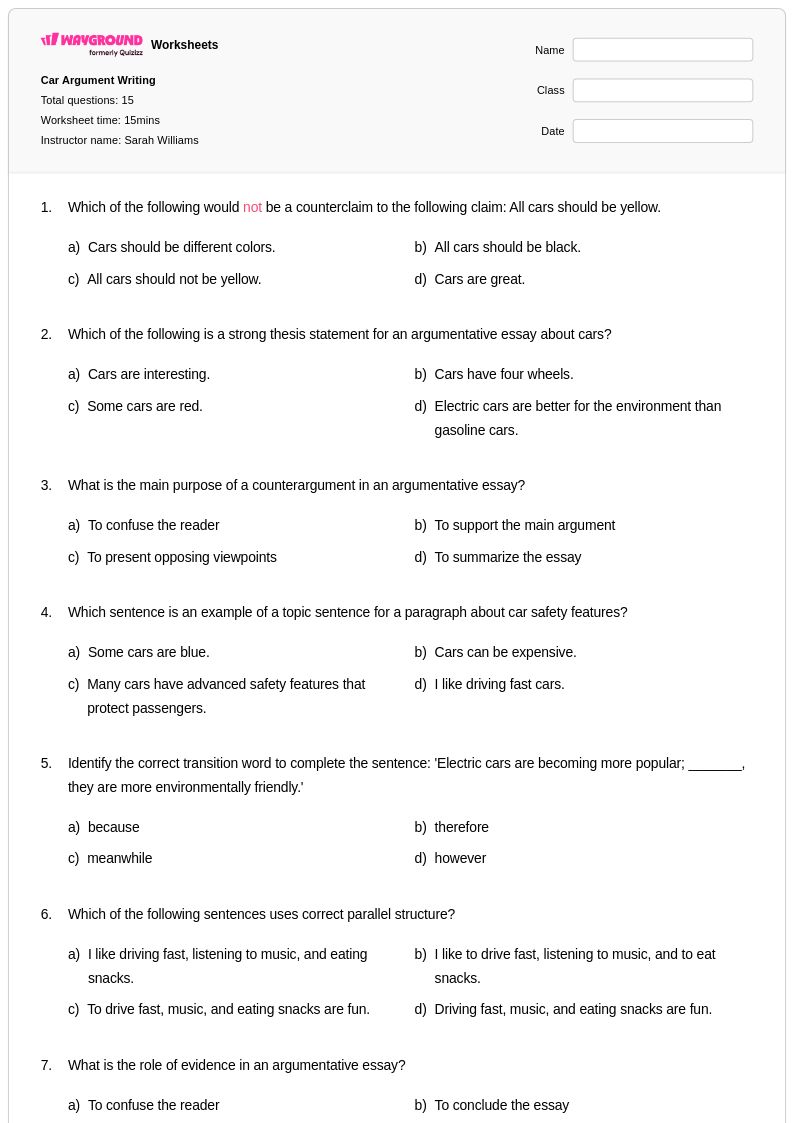
15 Q
8th - Uni
Explore Other Subject Worksheets for class 12
Explore printable Argument Writing worksheets for Class 12
Argument writing worksheets for Class 12 students available through Wayground (formerly Quizizz) provide comprehensive practice in developing sophisticated persuasive compositions that meet college and career readiness standards. These expertly crafted resources guide twelfth-grade students through the complex process of constructing compelling arguments by teaching essential skills including thesis development, evidence evaluation, counterargument acknowledgment, and logical reasoning structures. Students engage with practice problems that challenge them to analyze primary and secondary sources, synthesize multiple perspectives, and craft coherent argumentative essays using advanced rhetorical strategies. Each worksheet collection includes detailed answer keys that help students understand effective argument construction techniques, and the free printables offer flexible pdf formats that support both independent practice and collaborative learning environments.
Wayground (formerly Quizizz) empowers educators with millions of teacher-created argument writing resources specifically designed for Class 12 instruction, featuring robust search and filtering capabilities that allow teachers to locate materials aligned with specific standards and learning objectives. The platform's differentiation tools enable instructors to customize worksheets based on individual student needs, supporting both remediation for struggling writers and enrichment opportunities for advanced learners. Teachers can seamlessly integrate these digital and printable pdf resources into their lesson planning, using them for formative assessment, skill-building practice, and targeted intervention strategies. The comprehensive collection supports instructional flexibility by offering various argument writing formats, from traditional five-paragraph essays to sophisticated research-based argumentative compositions, ensuring that educators have access to appropriate materials for developing critical thinking and persuasive writing proficiency in their twelfth-grade students.
FAQs
How do I teach argument writing to students who struggle with organizing their ideas?
What exercises help students practice building a strong argument with evidence?
What are the most common mistakes students make in argument writing?
How do I teach students to write a strong thesis statement for an argumentative essay?
How can I use argument writing worksheets to differentiate instruction for students at different skill levels?
How do I use Wayground's argument writing worksheets in my classroom?