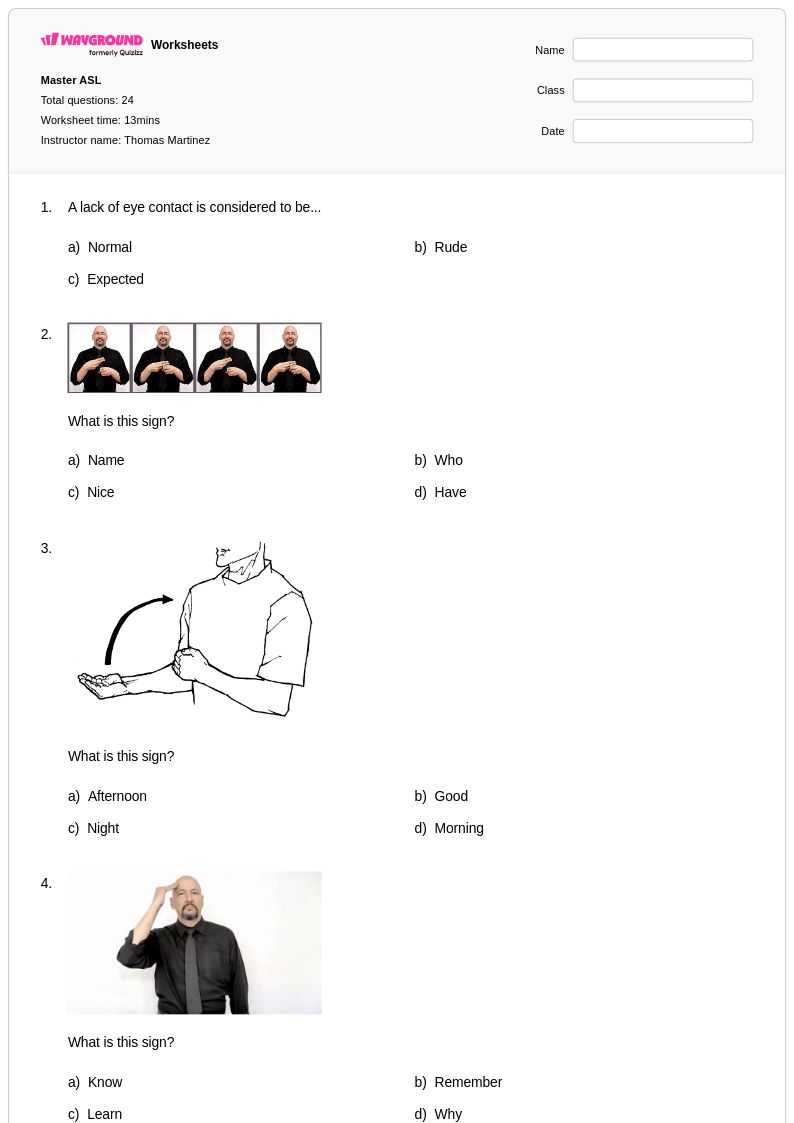
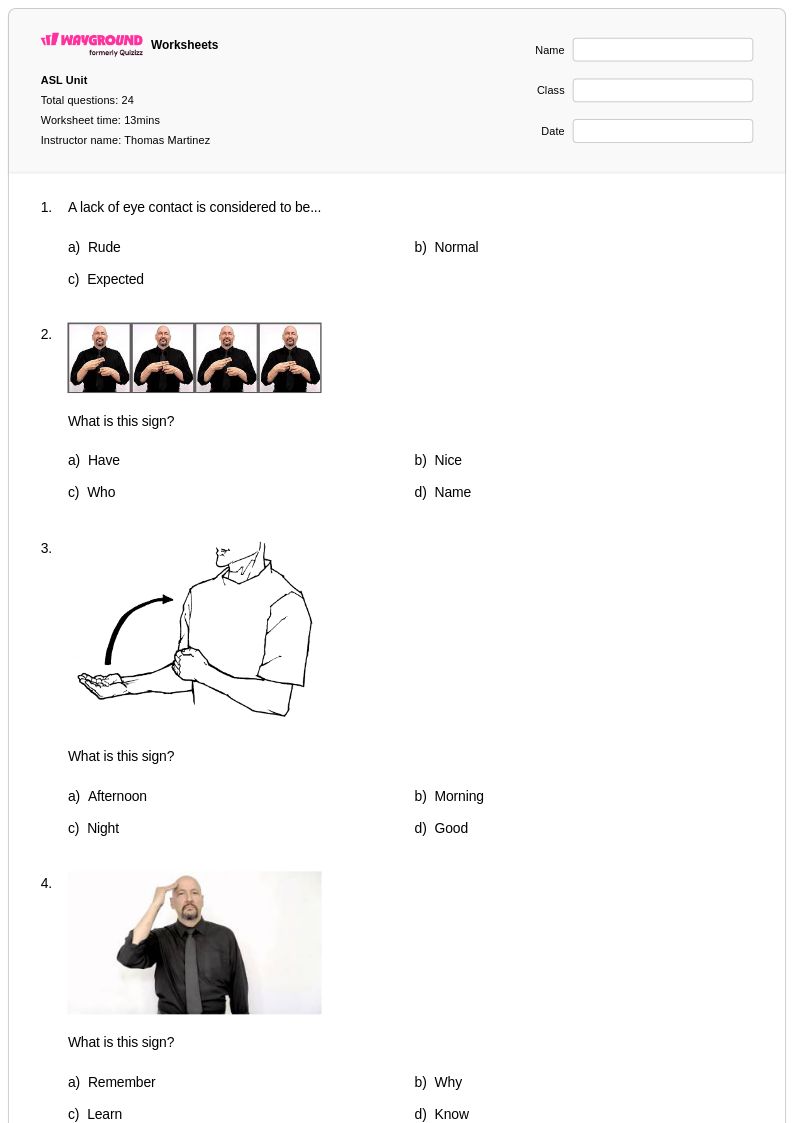
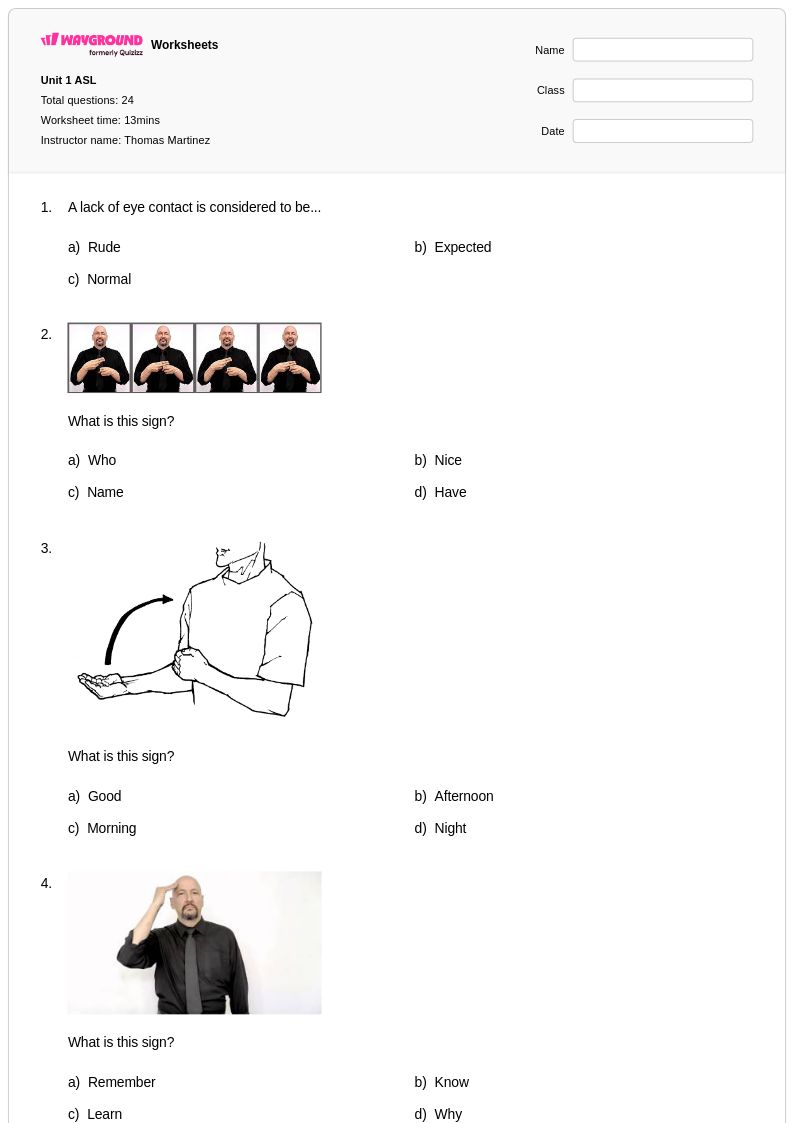
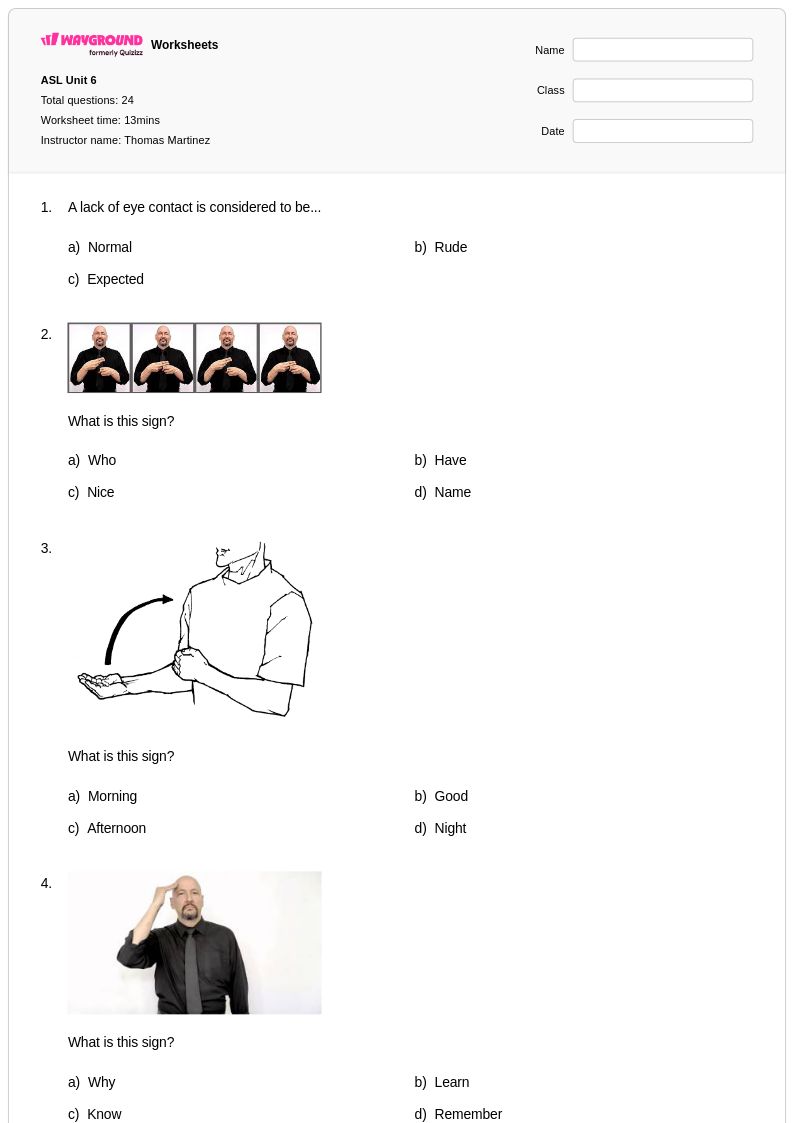
Free Printable ASL Fingerspelling Worksheets for Kindergarten
Explore Wayground's free ASL fingerspelling worksheets and printables designed to help kindergarten students practice American Sign Language alphabet skills through engaging activities, complete with answer keys and downloadable PDFs.
Explore printable ASL Fingerspelling worksheets for Kindergarten
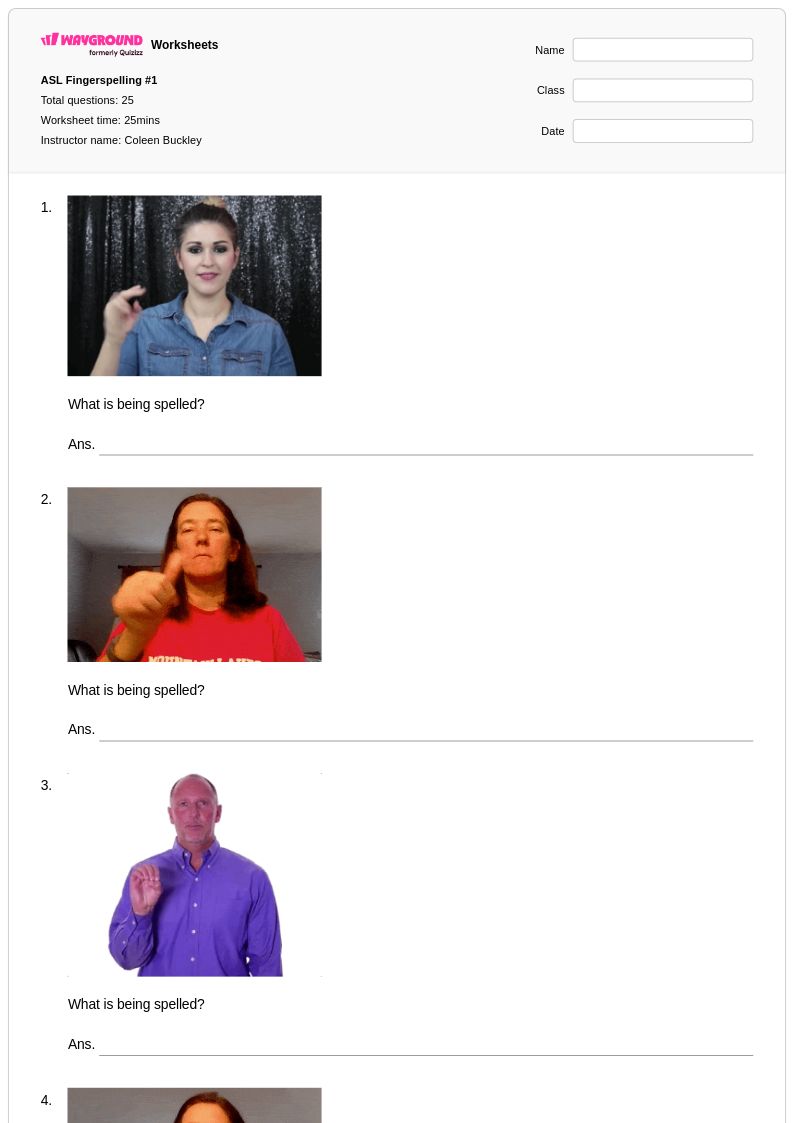
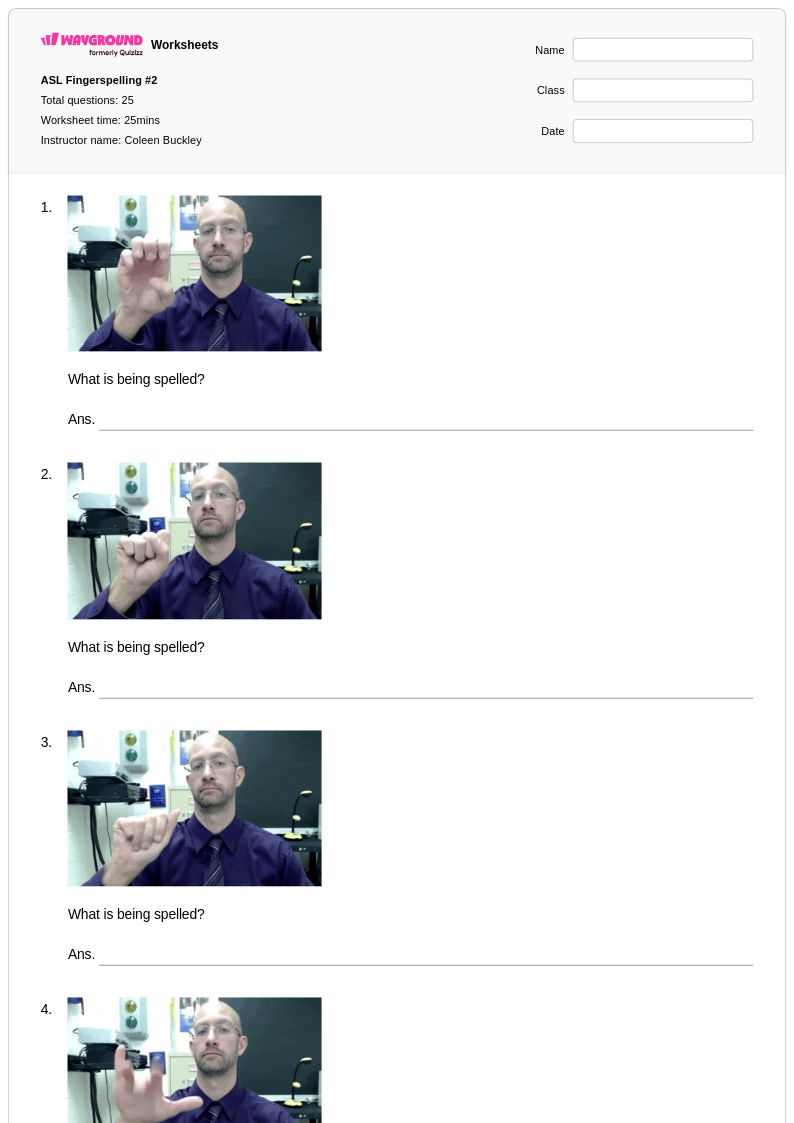
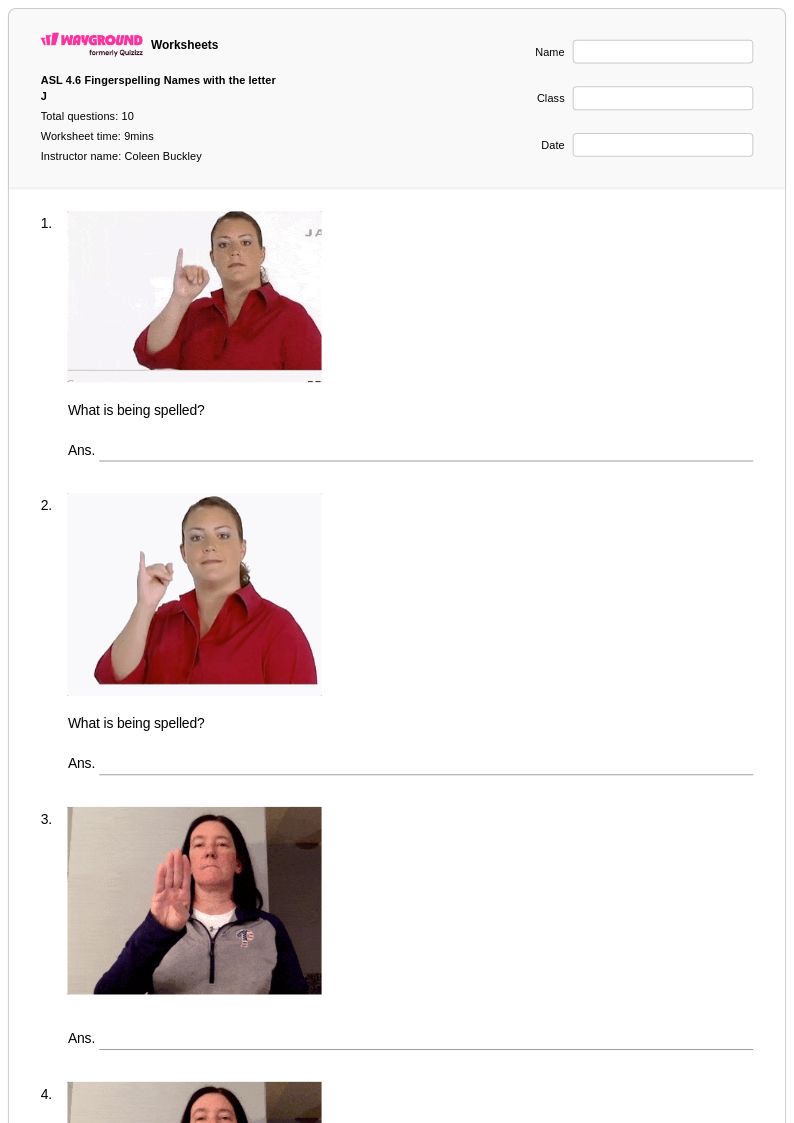
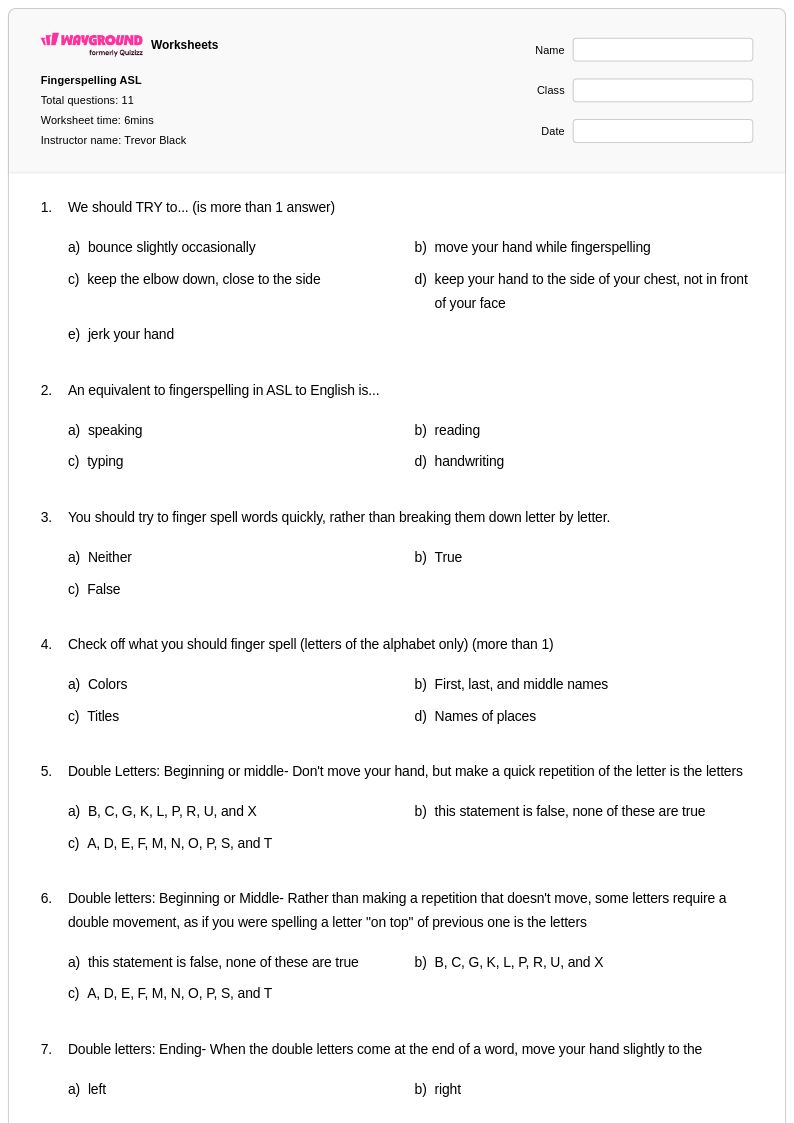
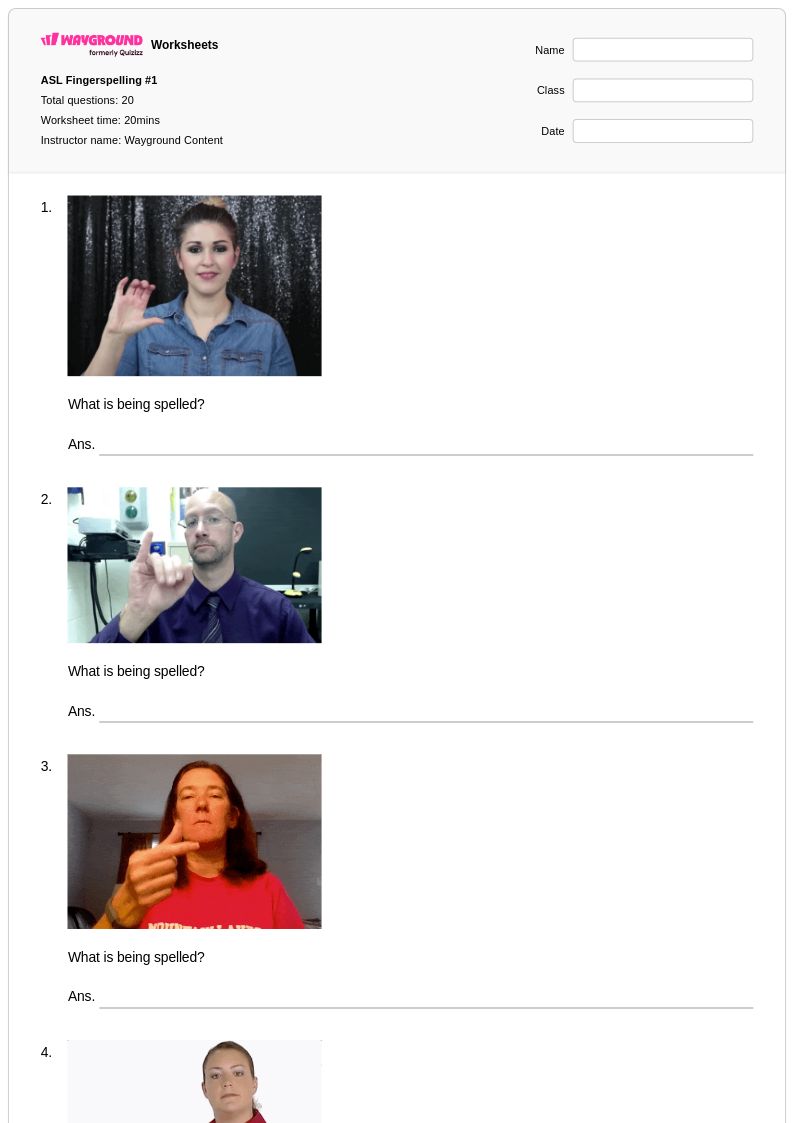
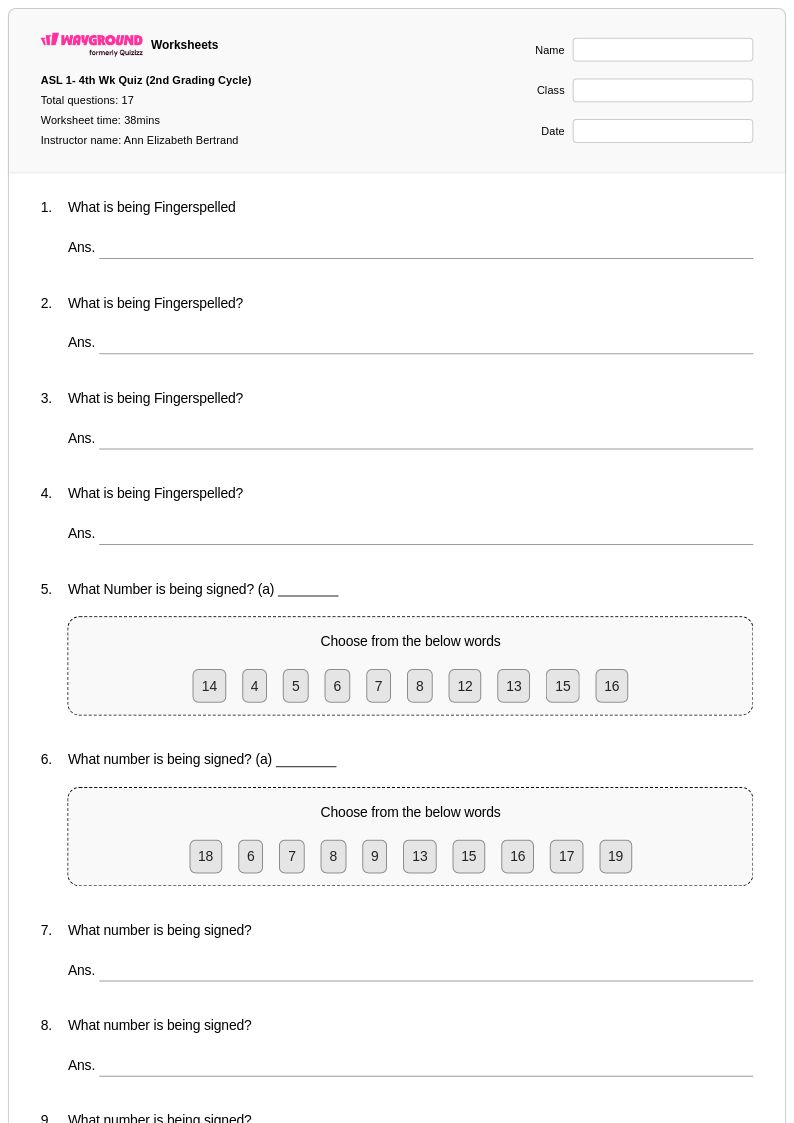
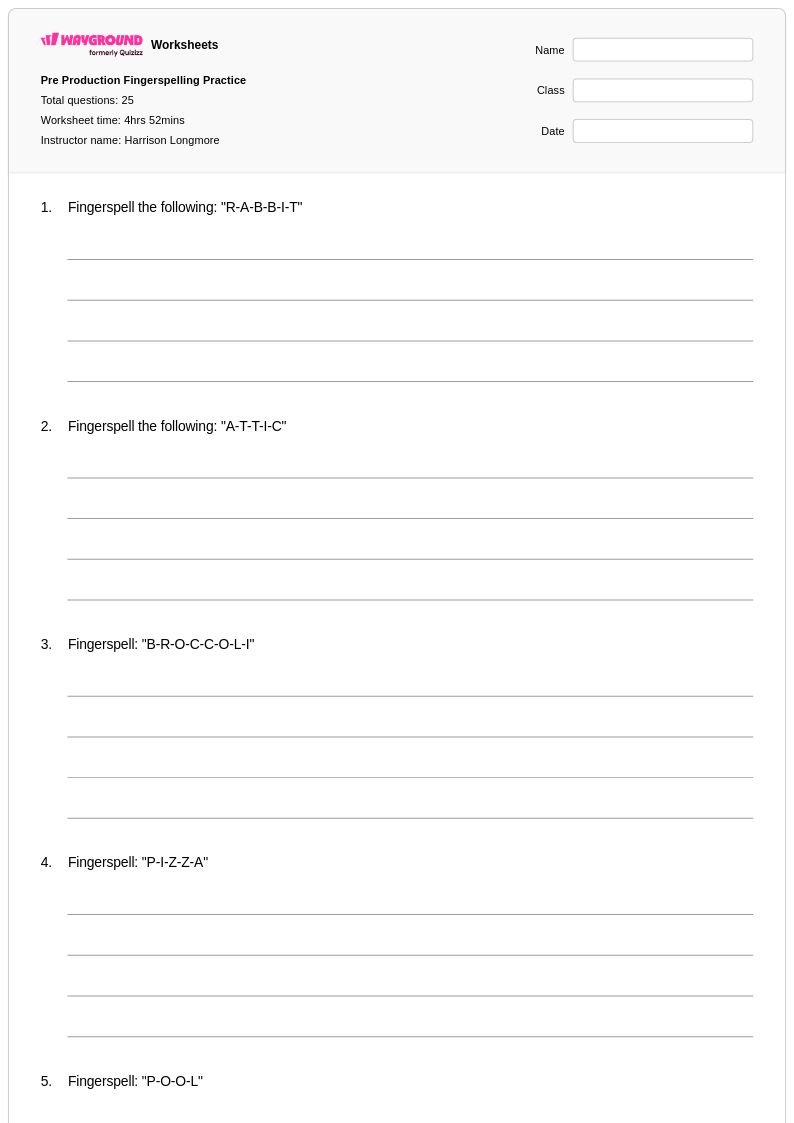
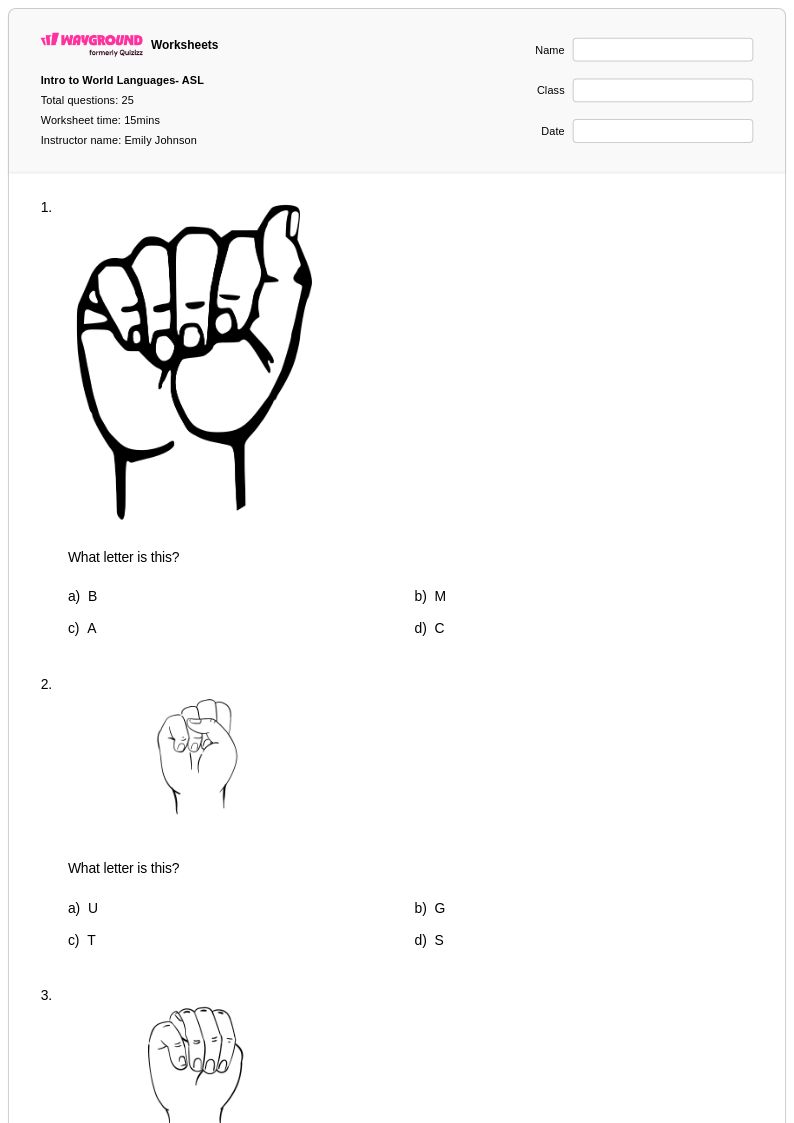
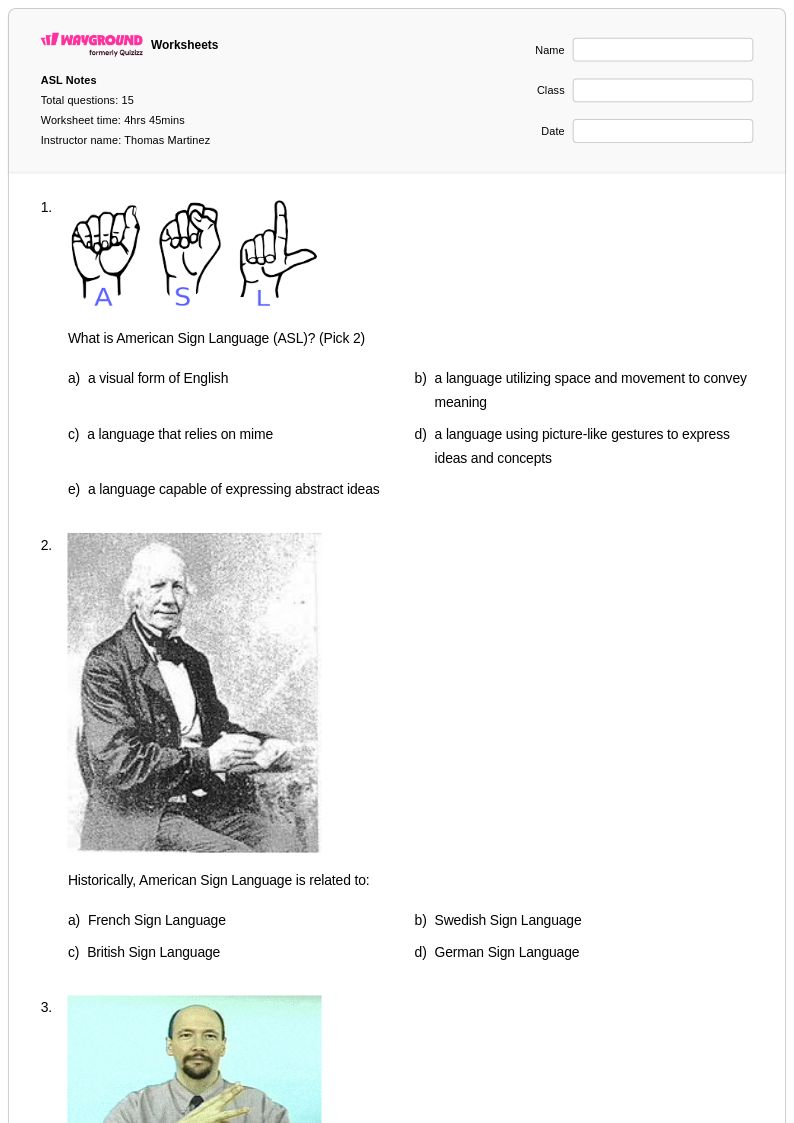
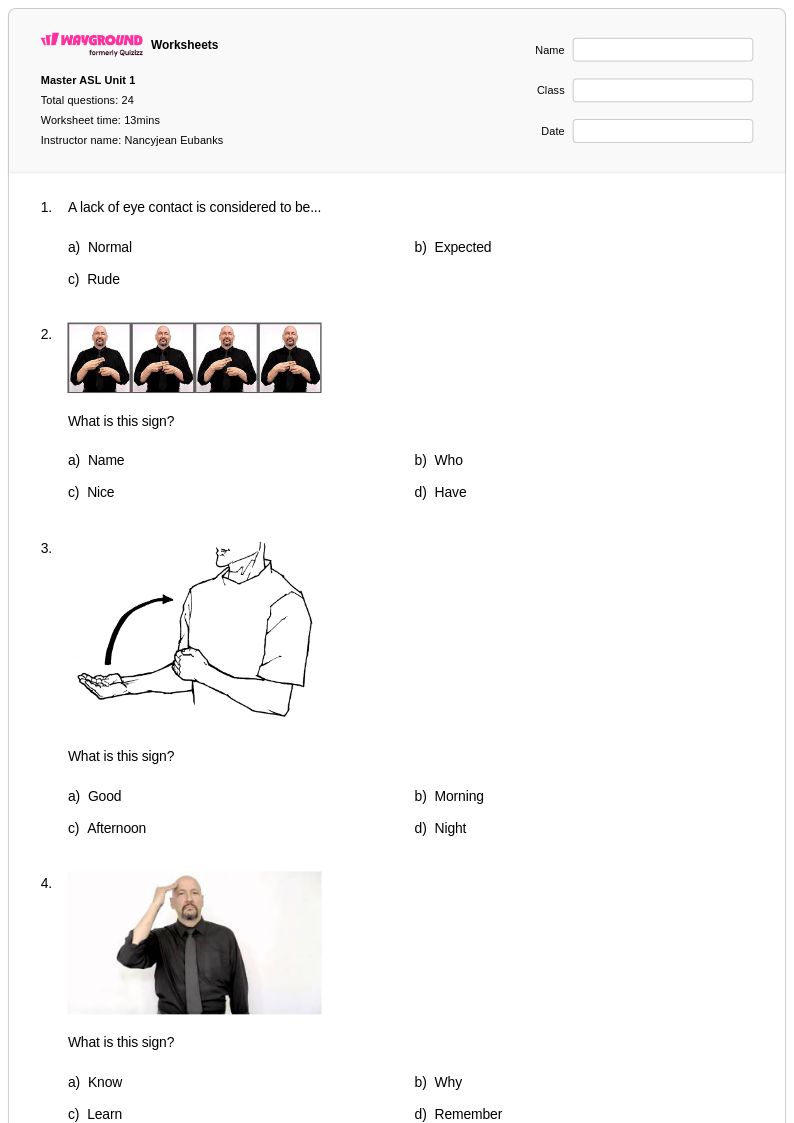
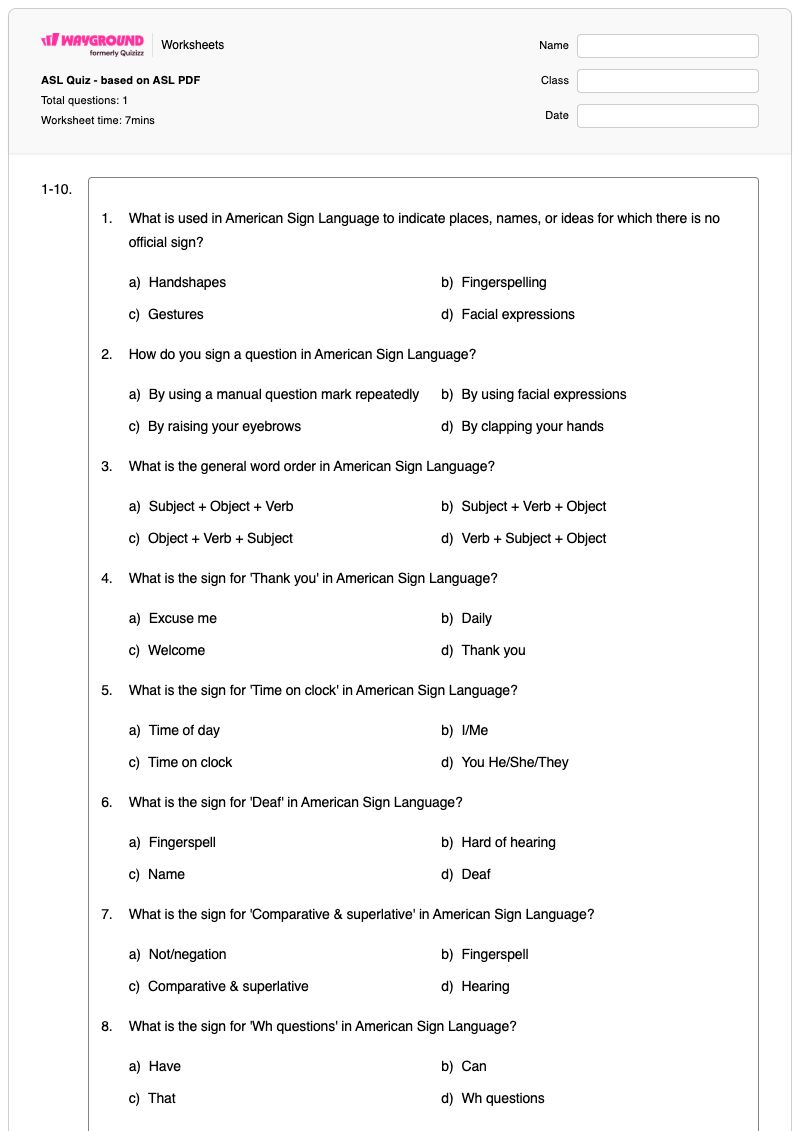
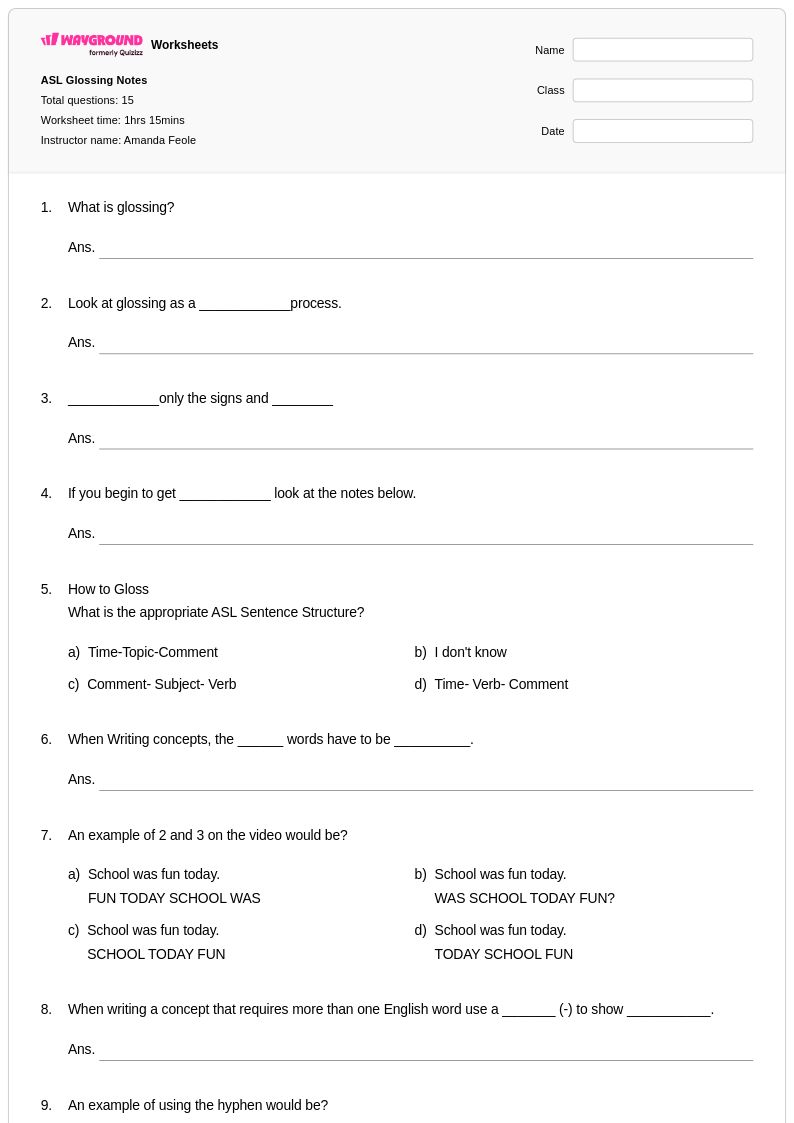
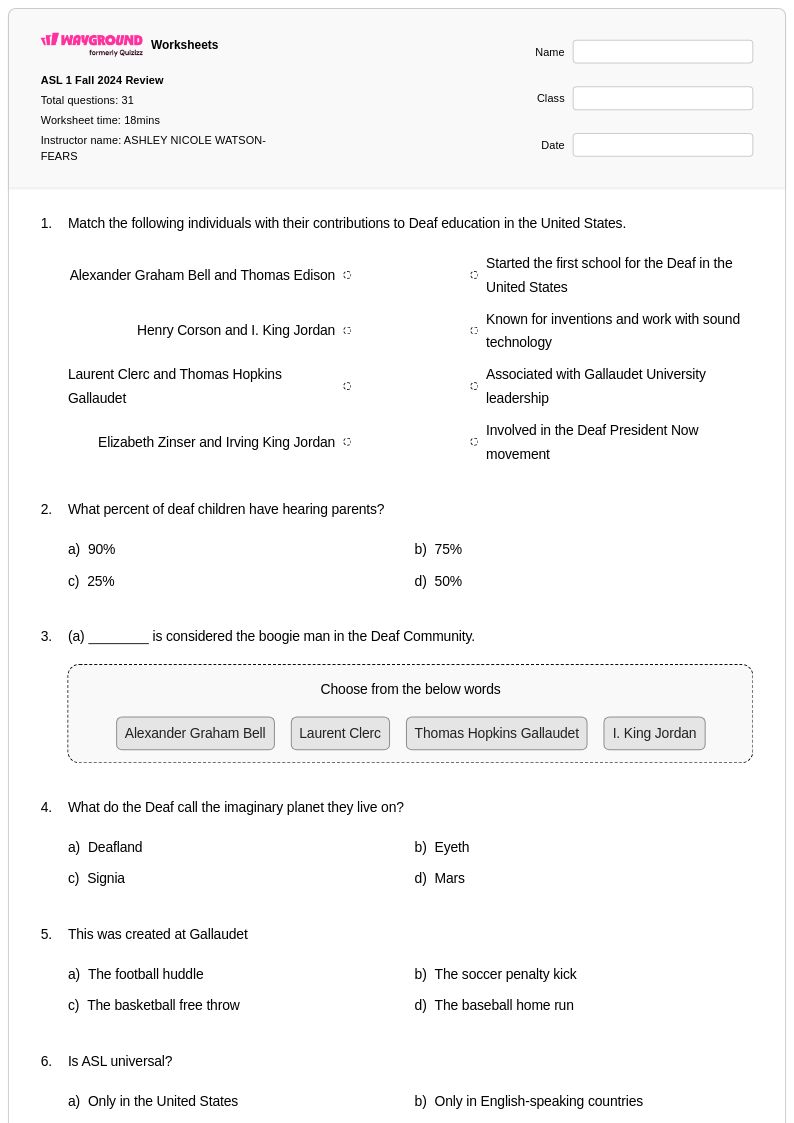
ASL fingerspelling worksheets for kindergarten students available through Wayground provide essential foundation-building practice for young learners beginning their journey into American Sign Language communication. These carefully designed printables focus on helping kindergarteners master the 26 handshapes that correspond to each letter of the alphabet, developing both visual recognition skills and proper hand formation techniques. The worksheets incorporate age-appropriate activities such as tracing letter shapes, matching fingerspelled letters to printed text, and simple word-building exercises that strengthen fine motor skills while introducing basic ASL vocabulary. Each practice problem is structured to reinforce letter-to-handshape correspondence, and many resources include answer keys to support independent learning and quick assessment of student progress. These free pdf resources serve as invaluable tools for building the foundational fingerspelling competency that kindergarten students need before advancing to more complex ASL concepts.
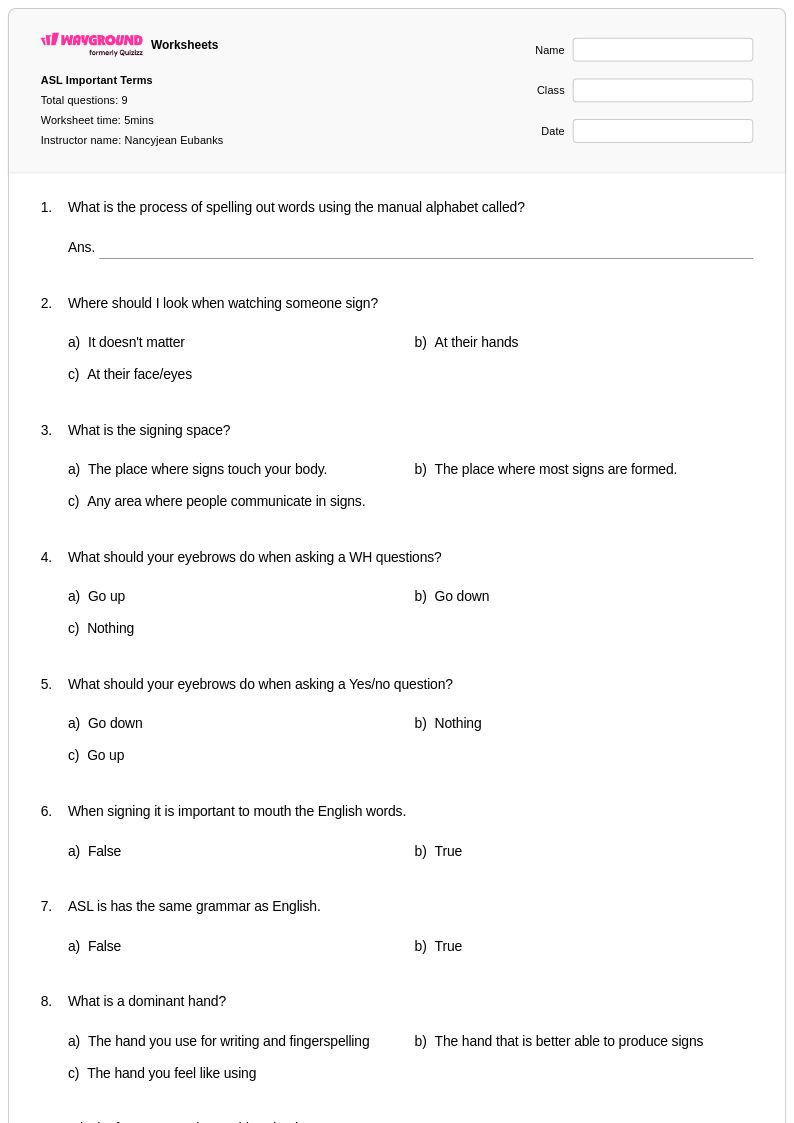
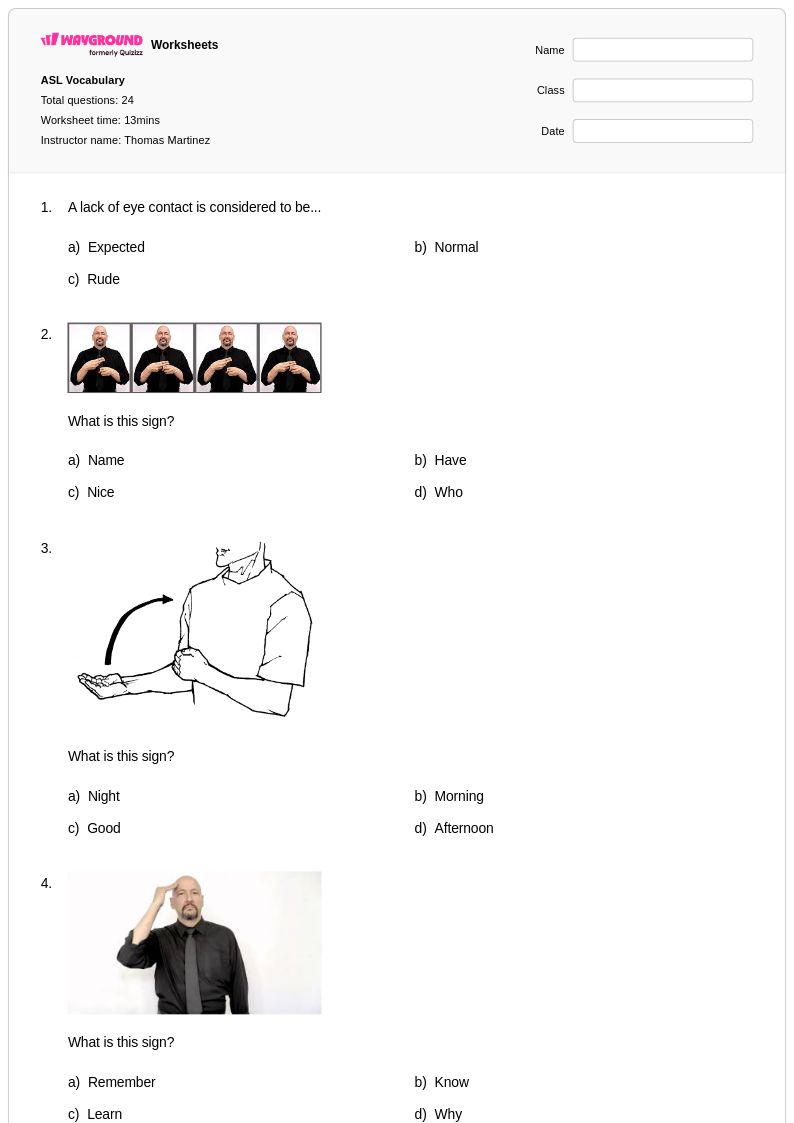
Wayground's extensive collection of teacher-created ASL fingerspelling worksheets offers educators access to millions of resources specifically designed to support kindergarten-level instruction in American Sign Language fundamentals. The platform's robust search and filtering capabilities allow teachers to quickly locate materials that align with their specific curriculum standards and student needs, while built-in differentiation tools enable seamless customization for varying skill levels within the classroom. These printable and digital worksheet collections support comprehensive lesson planning by providing ready-to-use materials for skill practice, targeted remediation for struggling learners, and enrichment opportunities for advanced students. Teachers can easily adapt the pdf format worksheets for both in-person and remote learning environments, creating flexible learning experiences that accommodate diverse instructional settings. The platform's emphasis on standards alignment ensures that kindergarten ASL fingerspelling practice remains academically rigorous while maintaining developmentally appropriate expectations for young language learners.
FAQs
How do I teach ASL fingerspelling to beginners?
Start by introducing the manual alphabet one handshape at a time, grouping visually similar letters (like A, E, S, T) to build discrimination skills before introducing them together. Use mirrored practice so students can compare their hand position to a model, and reinforce each letter with high-frequency words that begin with that letter. Consistent short practice sessions are more effective than long infrequent ones, as fingerspelling fluency depends heavily on muscle memory built over time.
What exercises help students practice ASL fingerspelling?
Effective practice exercises include letter identification drills, receptive fingerspelling tasks where students decode words spelled by a partner or video, and expressive tasks where students fingerspell vocabulary lists independently. Progressing from single-letter recognition to complete word spelling mirrors how fluency develops in real ASL communication. Worksheets that move students through these stages systematically are especially useful for building both visual recognition and handshape accuracy.
What mistakes do students commonly make when learning ASL fingerspelling?
The most common errors include incorrect handshape formation, inconsistent palm orientation, and moving the hand excessively between letters instead of keeping it stable in the signing space. Students also frequently confuse visually similar letters such as A, S, and E, or D and G, because small differences in finger placement distinguish them. Providing clear visual references and structured comparison exercises helps students isolate and correct these specific errors.
How can I differentiate ASL fingerspelling practice for students at different skill levels?
For beginning students, focus on letter identification and single-letter drills with strong visual supports before introducing word-level tasks. Advanced students can practice receptive fluency with longer words and phrases, or work on speed and smoothness of transitions between letters. Wayground's differentiation tools allow teachers to customize worksheets and digital activities based on individual student needs, supporting both remediation for struggling learners and enrichment for those who are ready to progress further.
How do I use ASL fingerspelling worksheets from Wayground in my classroom?
Wayground's ASL fingerspelling worksheets are available as printable PDFs for traditional classroom use and in digital formats for technology-integrated learning environments, including the option to host them as a quiz directly on Wayground. This flexibility makes them suitable for in-class instruction, independent practice stations, or homework assignments. Each worksheet includes a complete answer key, which supports self-assessment and allows students to review their work independently.
Can ASL fingerspelling worksheets support students with different learning needs?
Yes. When using ASL fingerspelling worksheets digitally on Wayground, teachers can apply individual accommodations such as Read Aloud for students who benefit from audio support, extended time for students who need additional processing time, and reduced answer choices to lower cognitive load during identification tasks. These settings are saved per student and apply automatically in future sessions, so teachers can consistently support diverse learners without disrupting the rest of the class.