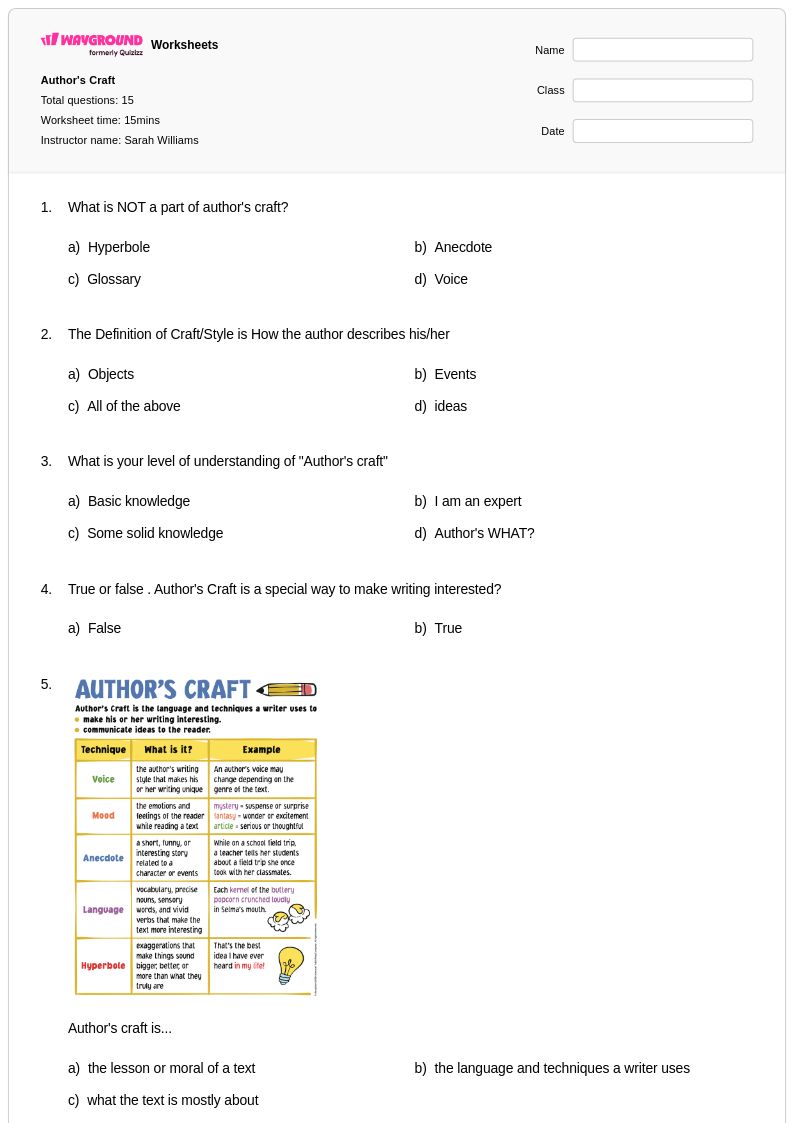
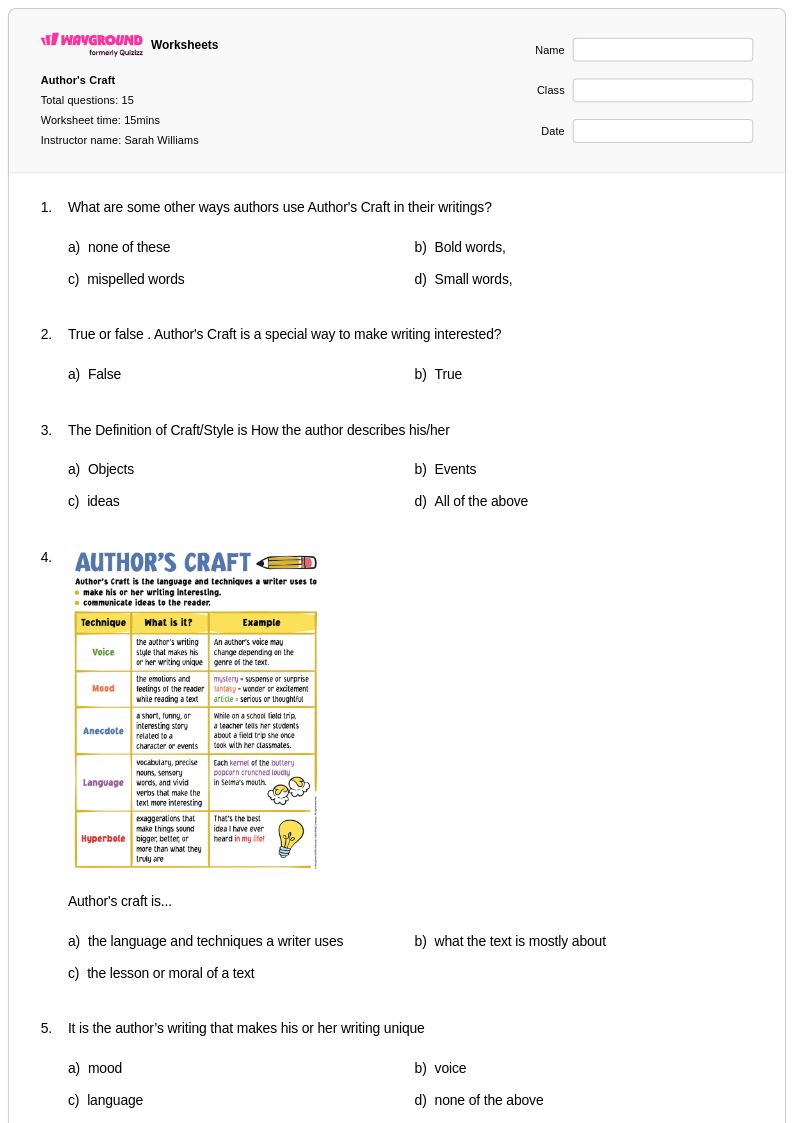
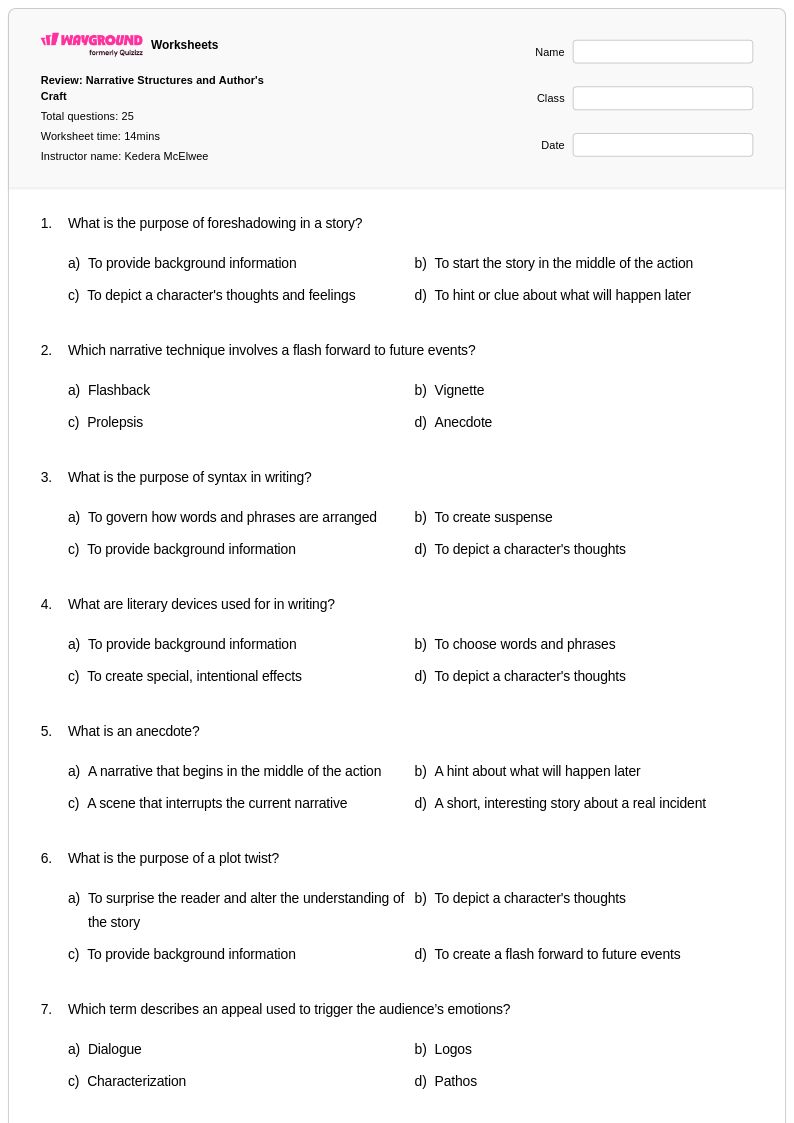
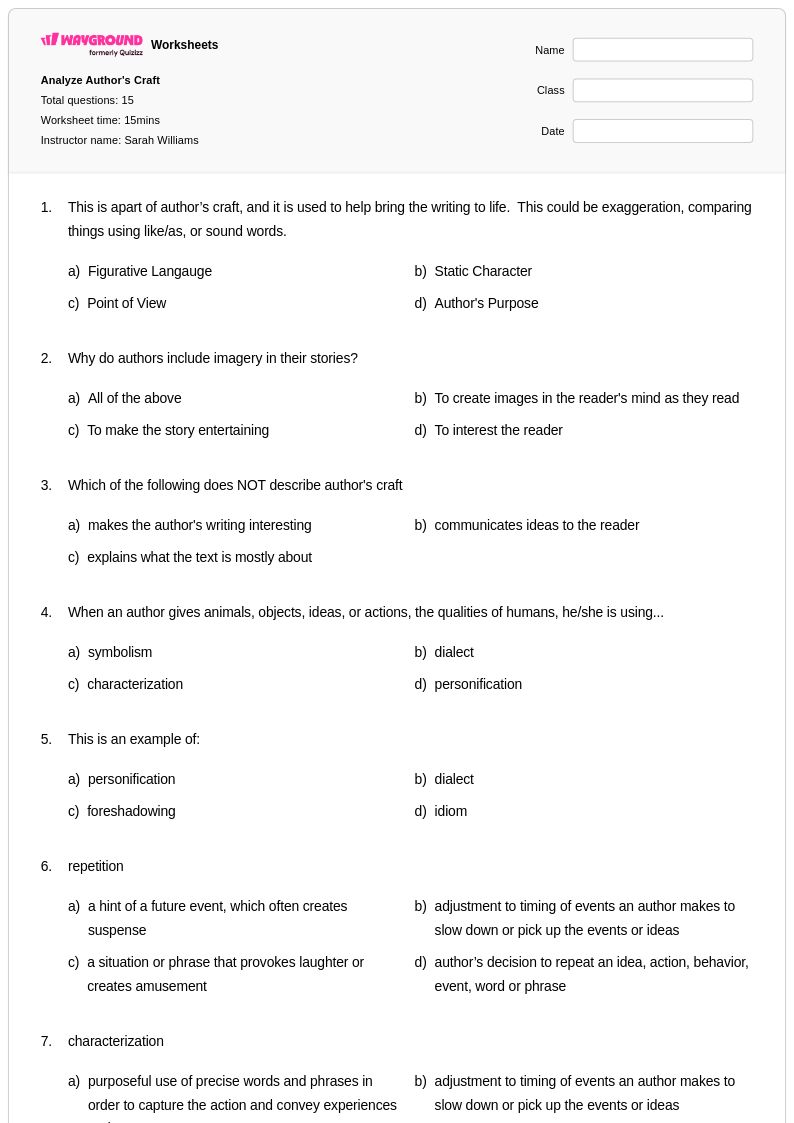
Free Printable Author's Craft Worksheets for Class 12
Develop Class 12 students' understanding of author's craft with our comprehensive collection of free reading comprehension worksheets, featuring printable PDFs, practice problems, and answer keys to master literary techniques and writing strategies.
Explore printable Author's Craft worksheets for Class 12
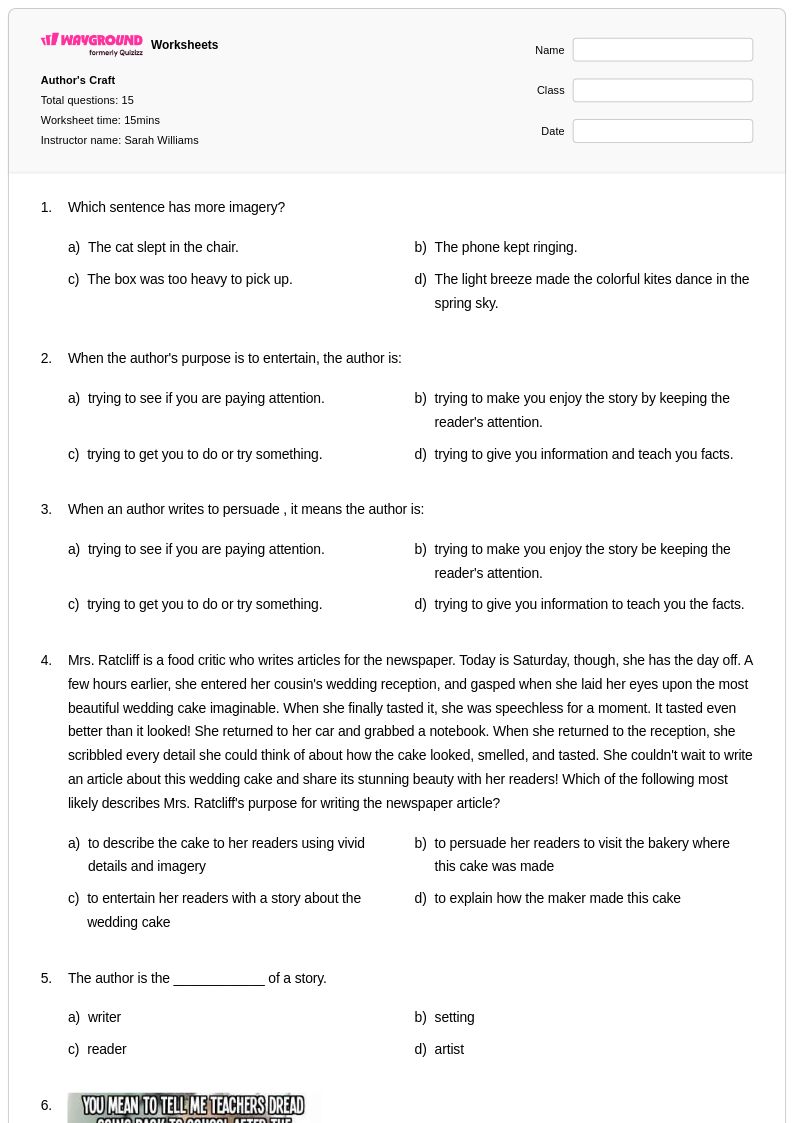
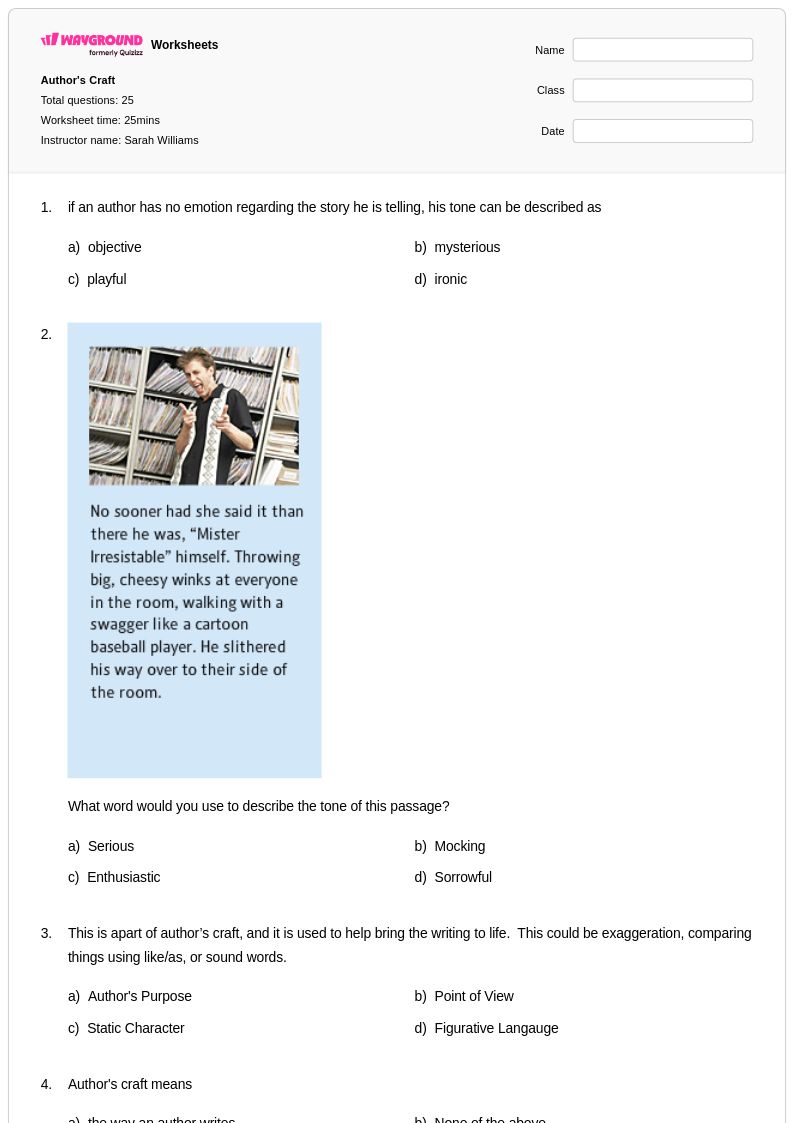
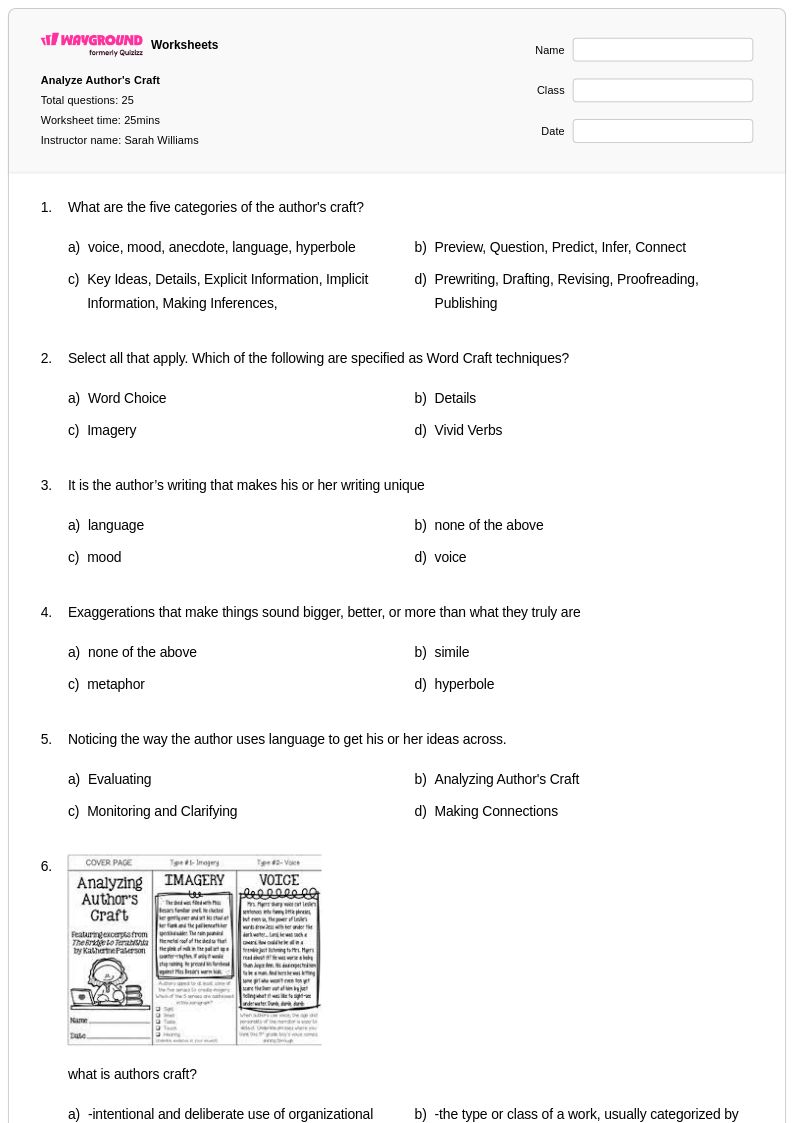
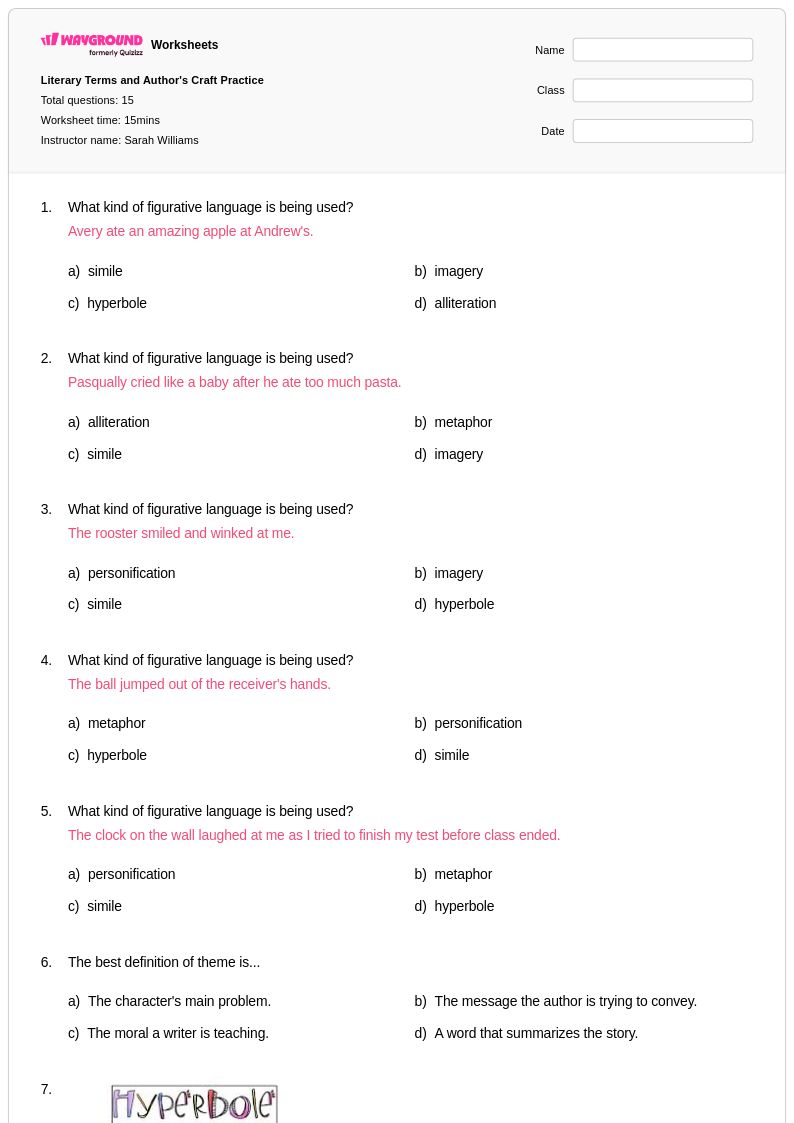
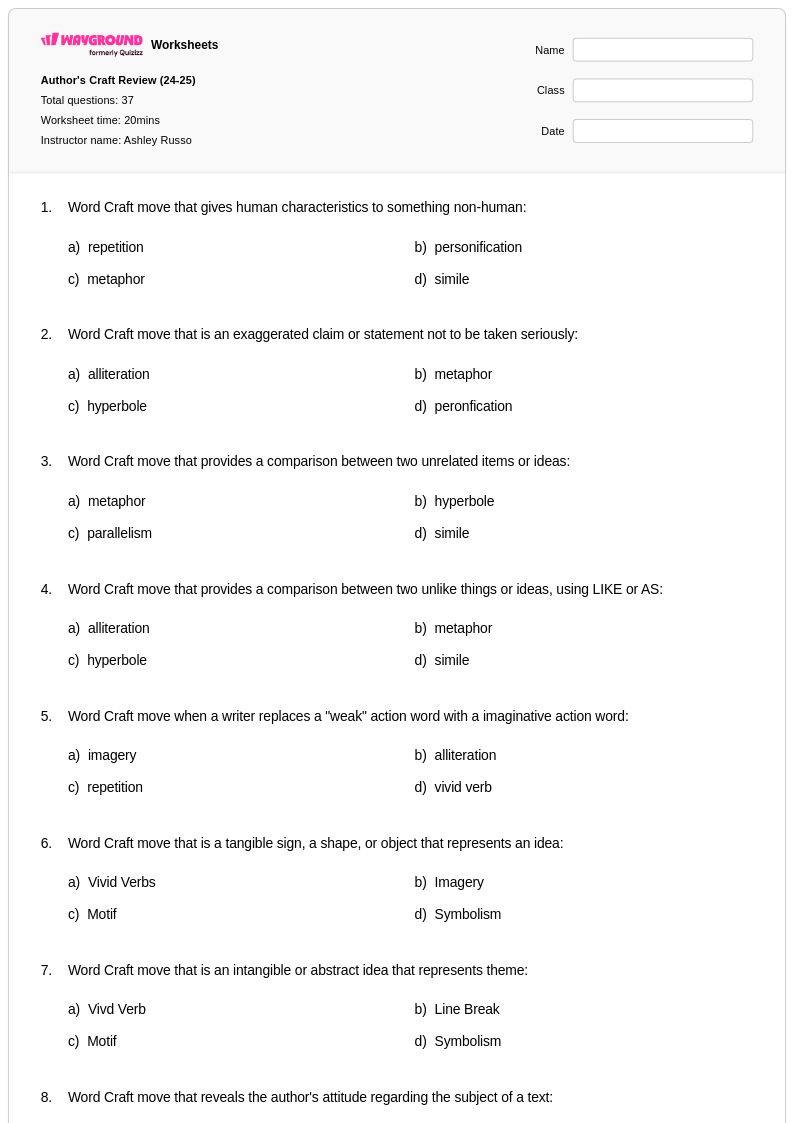
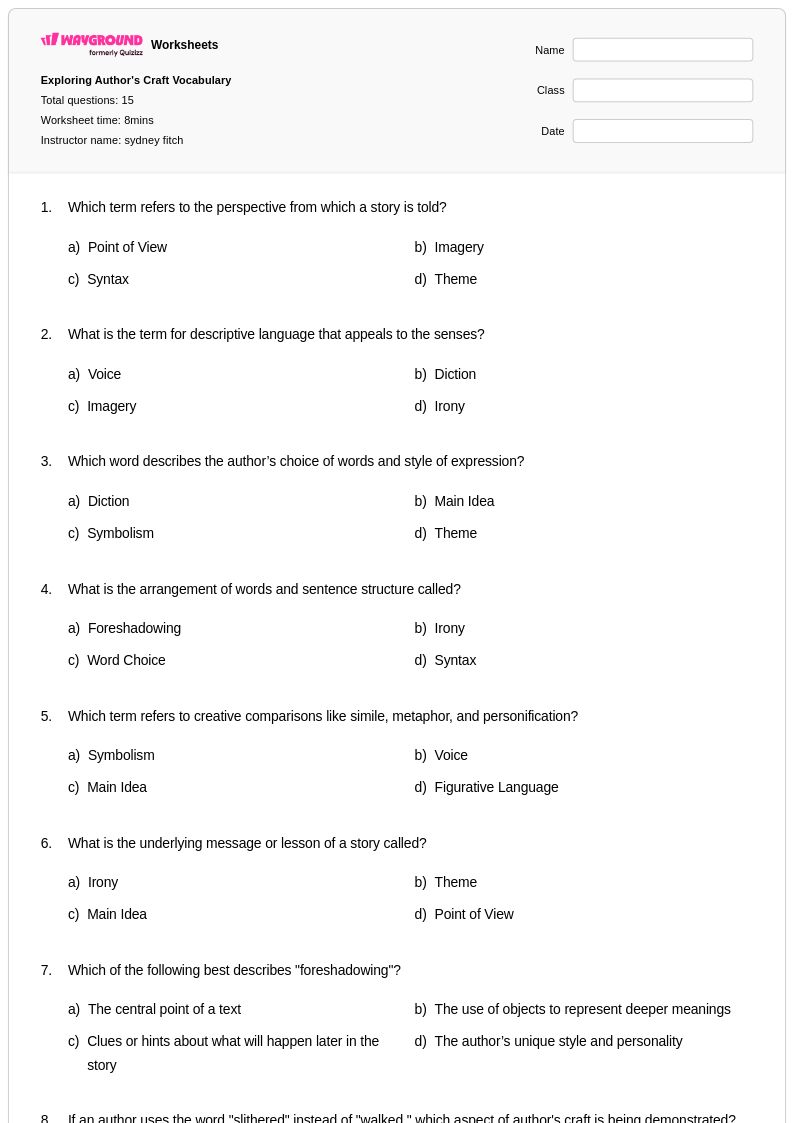
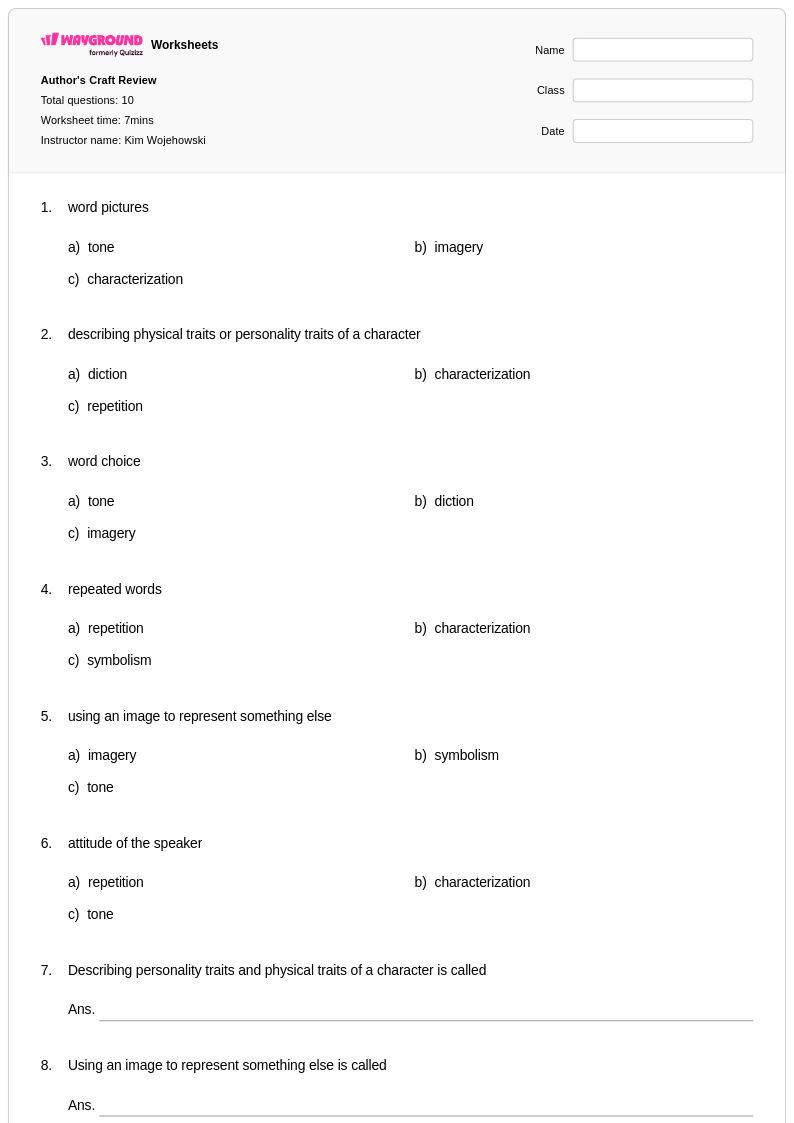
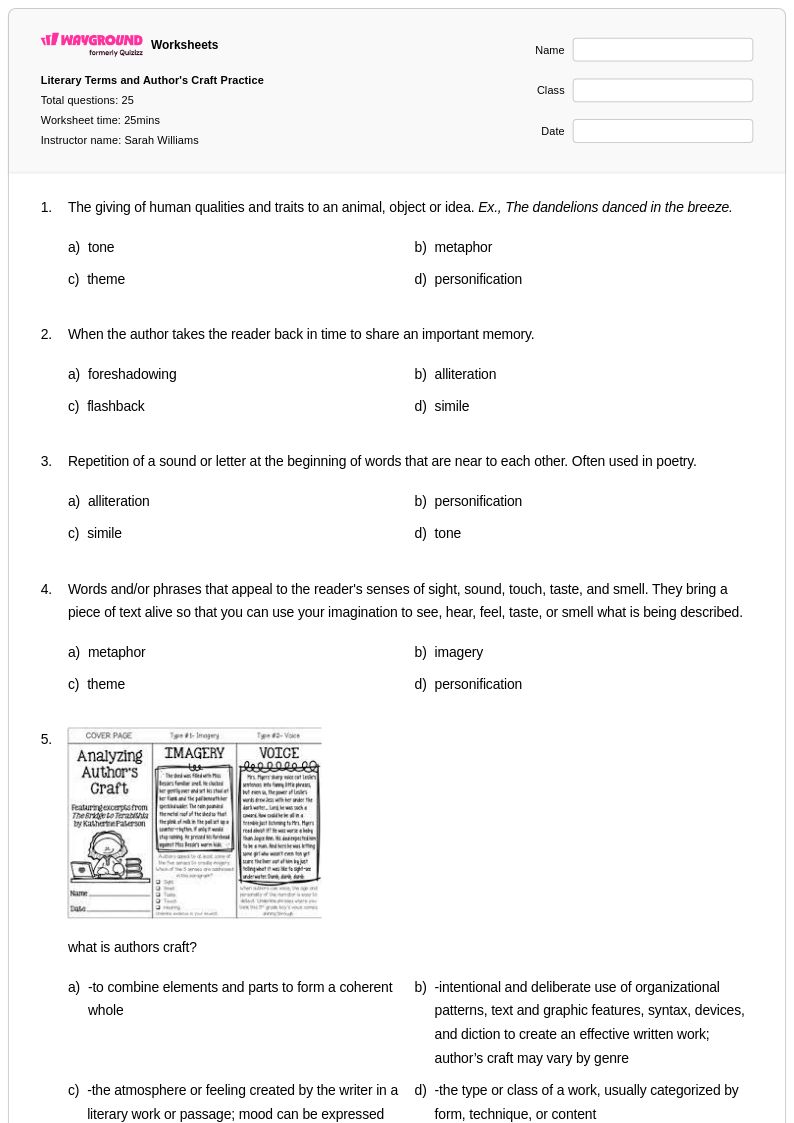
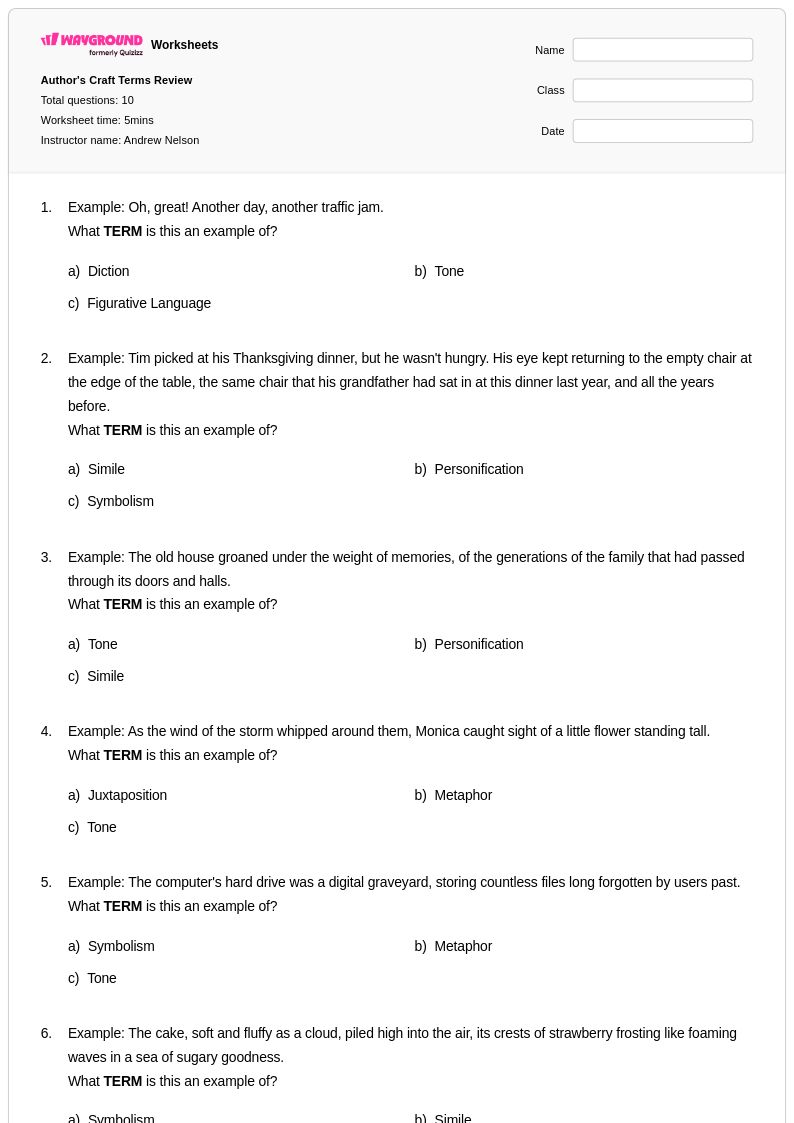
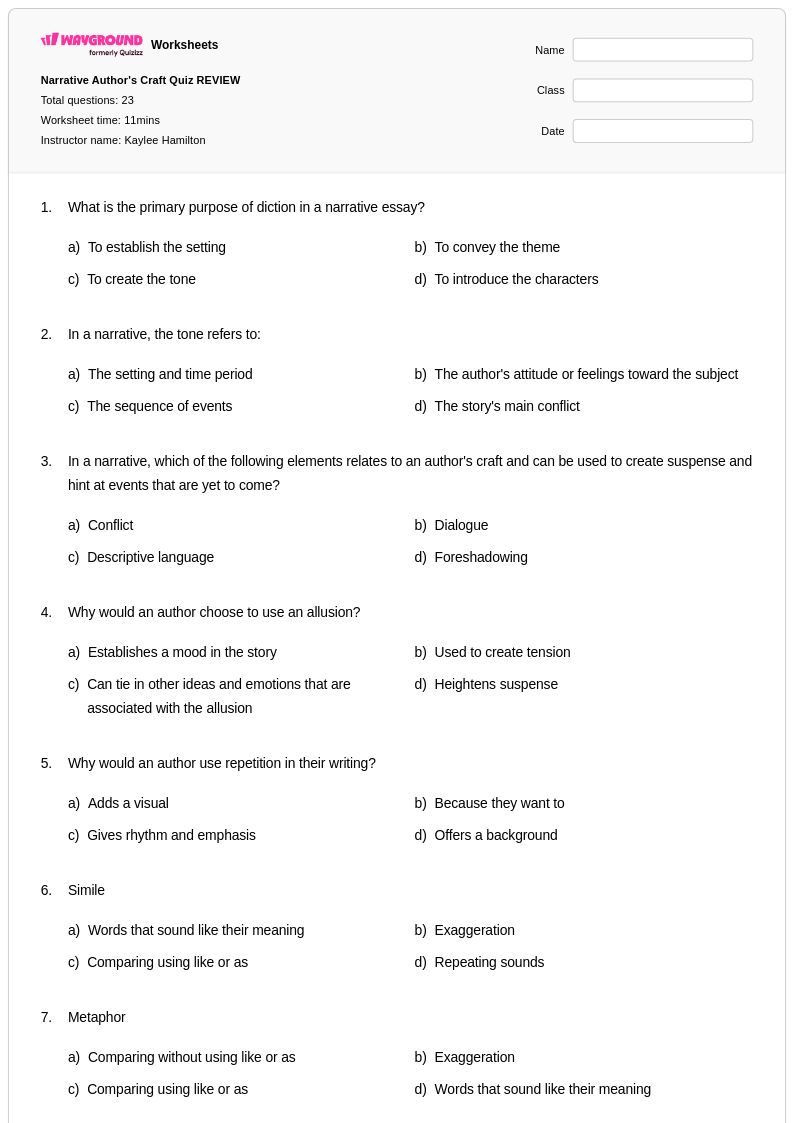
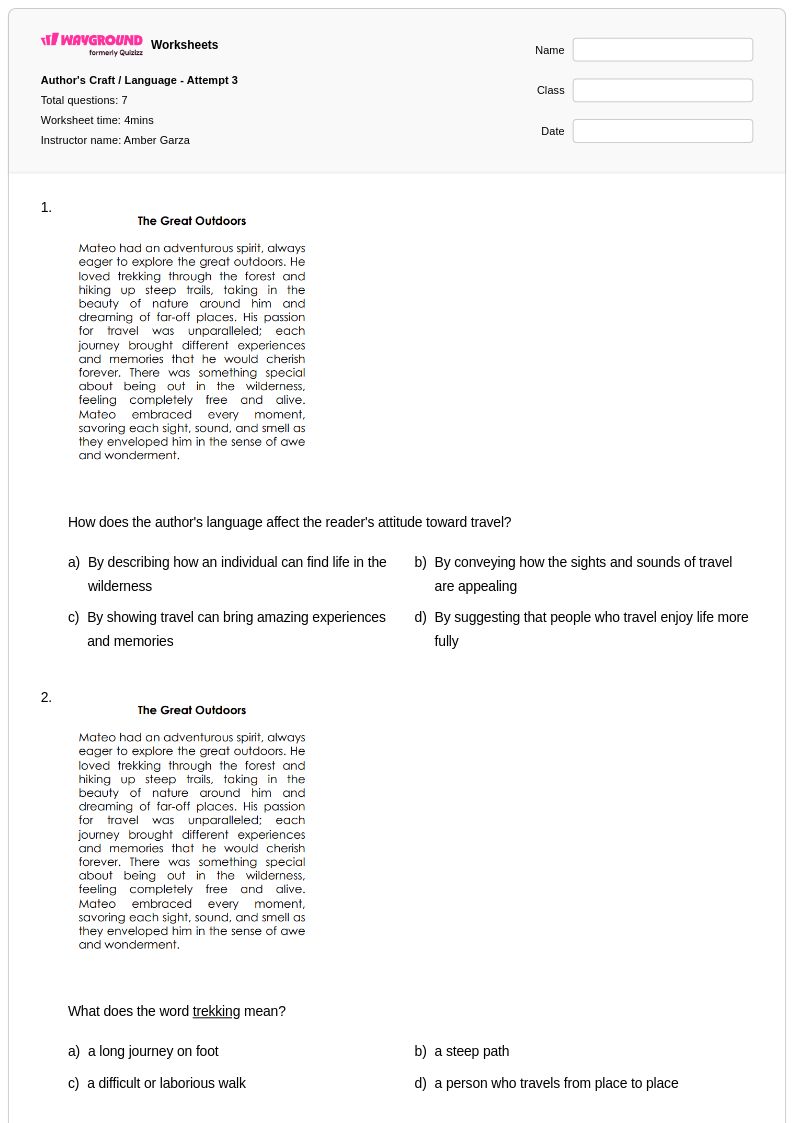
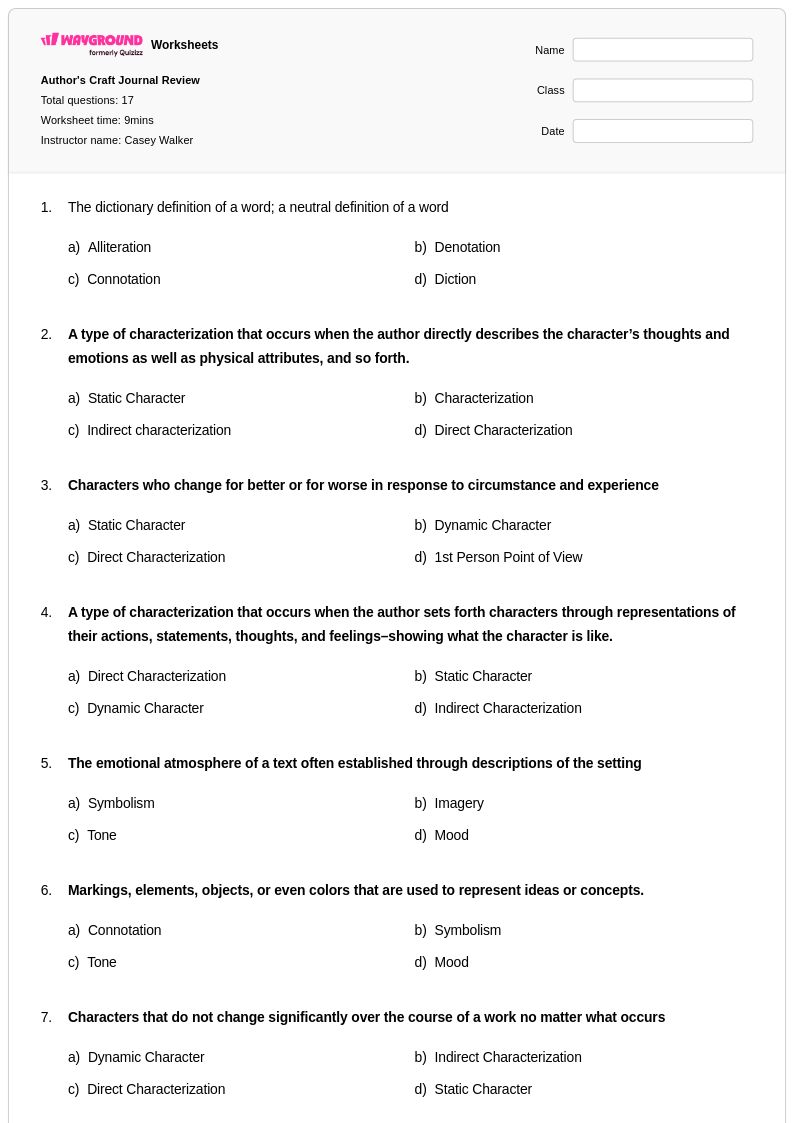
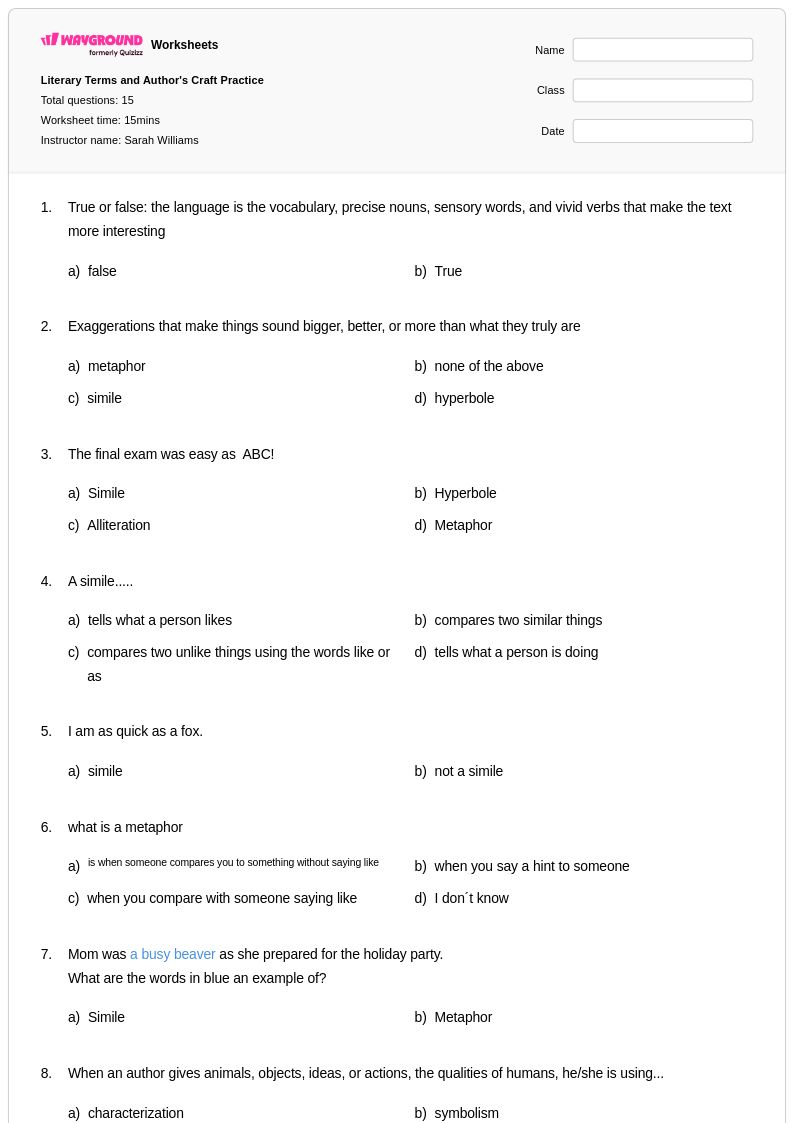
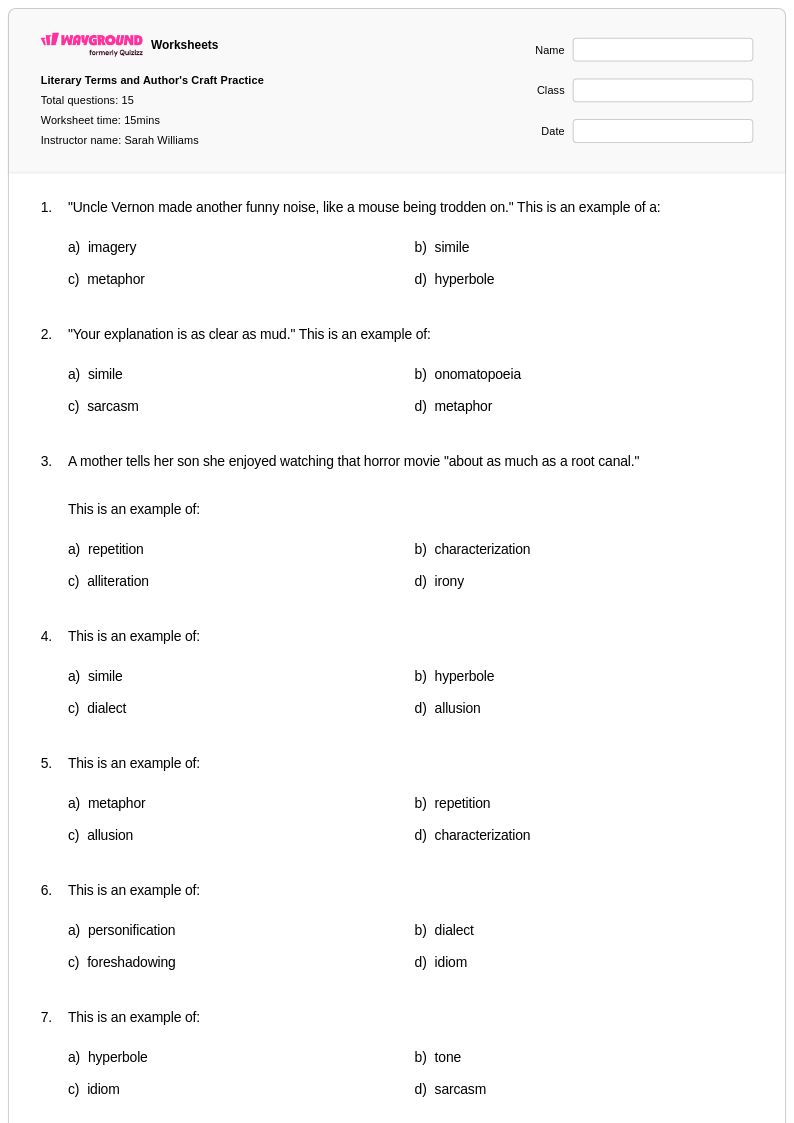
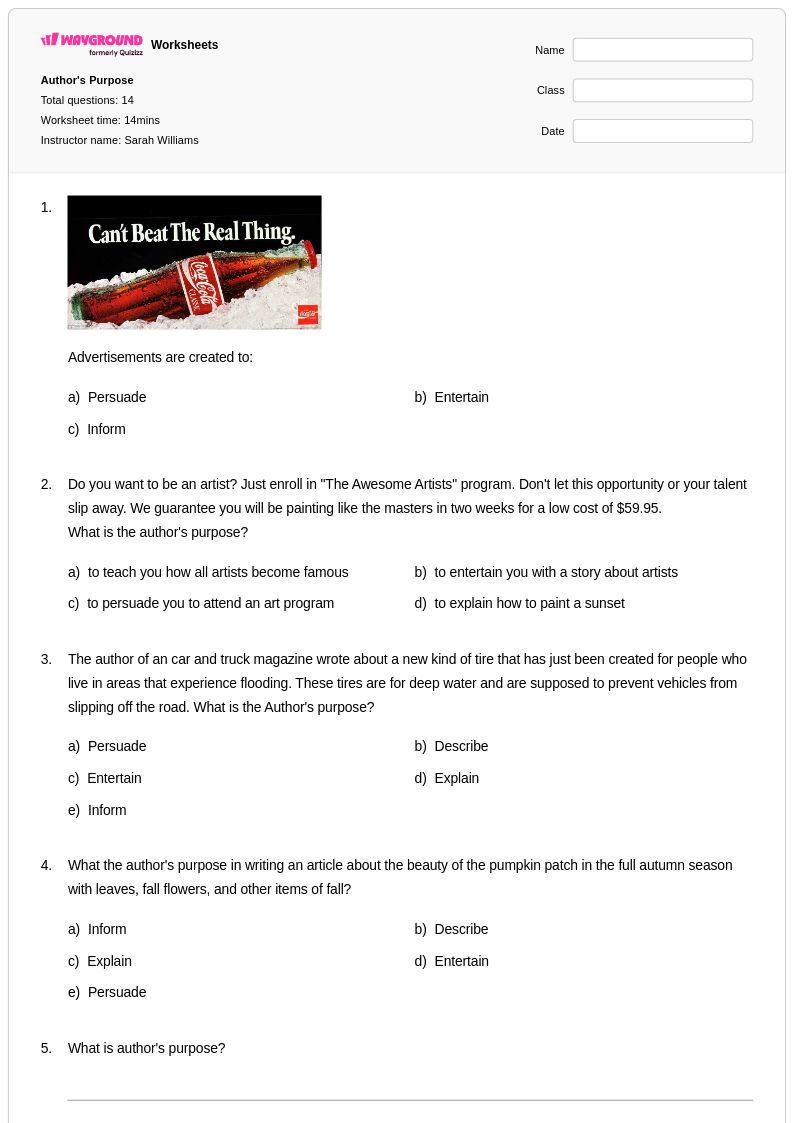
Author's Craft worksheets for Class 12 students available through Wayground (formerly Quizizz) provide comprehensive practice in analyzing sophisticated literary techniques and authorial decisions that shape meaning in complex texts. These carefully designed resources help students develop critical thinking skills by examining how authors deliberately employ narrative structure, point of view, tone, symbolism, figurative language, and stylistic choices to achieve specific effects and convey deeper themes. Each worksheet includes detailed practice problems that guide students through the process of identifying, analyzing, and evaluating these craft elements, with accompanying answer keys that support both independent study and classroom instruction. The free printable materials offer structured approaches to understanding how authors manipulate language and literary devices to influence reader response, preparing students for advanced literary analysis required in college-level coursework.
Wayground's extensive collection of Author's Craft resources draws from millions of teacher-created materials, providing educators with robust search and filtering capabilities to locate worksheets that align with specific curriculum standards and learning objectives. Teachers can easily differentiate instruction by selecting from various difficulty levels and analytical approaches, while the platform's customization tools allow for modifications that meet individual student needs and classroom requirements. These comprehensive resources are available in both digital and printable PDF formats, enabling flexible implementation whether for in-class analysis, homework assignments, test preparation, or targeted remediation. The platform's organizational features streamline lesson planning by offering coherent progressions of skills practice, from basic identification of craft elements to sophisticated evaluation of their cumulative effects, supporting teachers in developing students' analytical writing abilities and preparing them for advanced placement examinations and college-level literary study.
FAQs
How do I teach author's craft in the classroom?
Teaching author's craft effectively means guiding students to move beyond what a text says and toward how and why an author made specific choices. Start by modeling close reading with short mentor texts, drawing attention to concrete decisions like word choice, sentence length, narrative perspective, and structural patterns. Once students can identify these elements, push them to analyze the effect each choice has on the reader. Building this habit of noticing and questioning authorial intent is the foundation of literary analysis at every grade level.
What exercises help students practice analyzing author's craft?
The most effective practice exercises ask students to do more than identify a literary device — they should explain why the author used it and what effect it creates. Strong practice activities include annotating passages for specific craft elements, comparing two texts on the same topic to analyze how craft choices shift meaning, and rewriting sentences to see how a change in word choice or structure alters tone. Worksheets that pair a short excerpt with targeted analysis questions are especially useful for building this skill incrementally.
What mistakes do students commonly make when analyzing author's craft?
The most common error is labeling a technique without analyzing its purpose — students will identify that a metaphor is present but stop short of explaining how it shapes the reader's understanding. A second frequent mistake is treating all craft elements as interchangeable, rather than recognizing that word choice, structure, and perspective each contribute differently to a text's meaning. Students also tend to focus exclusively on literary devices and overlook structural decisions like paragraph order, sentence variation, or point of view shifts, which are equally important aspects of author's craft.
How do I differentiate author's craft instruction for struggling and advanced readers?
For struggling readers, focus on single, concrete craft elements within shorter texts — a well-chosen paragraph is more productive than a full chapter when students are still building the skill. Reduce cognitive load by providing sentence frames that scaffold the analysis process, such as 'The author chose ___ in order to ___.' For advanced learners, increase complexity by asking them to compare how two authors handle the same craft element differently, or to evaluate whether a specific technique is effective in a given context. Wayground supports individual student accommodations including reduced answer choices and read aloud features, which can help make author's craft analysis more accessible for students who need additional support.
How can I use Wayground's author's craft worksheets in my classroom?
Wayground's author's craft worksheets are available as free printable PDF downloads for traditional classroom use and in digital formats for technology-integrated environments, including the option to host them as a quiz directly on the Wayground platform. Teachers can use the printable versions for independent practice, small-group work, or homework, while the digital format supports remote learning and immediate feedback. Each worksheet includes a detailed answer key, making them suitable for self-assessment, peer review, or teacher-led discussion. The ability to search and filter by skill or complexity level means you can quickly find a worksheet that matches your current instructional focus.
How do I help students understand the difference between literary devices and broader author's craft?
Literary devices like metaphor, alliteration, and foreshadowing are one component of author's craft, but craft is a broader concept that includes every deliberate decision a writer makes — including sentence structure, organizational pattern, point of view, pacing, and tone. A useful classroom approach is to ask students to think about craft at three levels: word level (diction, figurative language), sentence level (syntax, rhythm, length), and text level (structure, perspective, genre choices). Framing it this way helps students see that analyzing craft means examining the whole architecture of a text, not just spotting devices.