Free Printable Citing Textual Evidence Worksheets for Class 12
Enhance Class 12 students' ability to cite textual evidence with Wayground's comprehensive collection of free worksheets, printables, and practice problems that include detailed answer keys for effective reading comprehension skill development.
Explore printable Citing Textual Evidence worksheets for Class 12
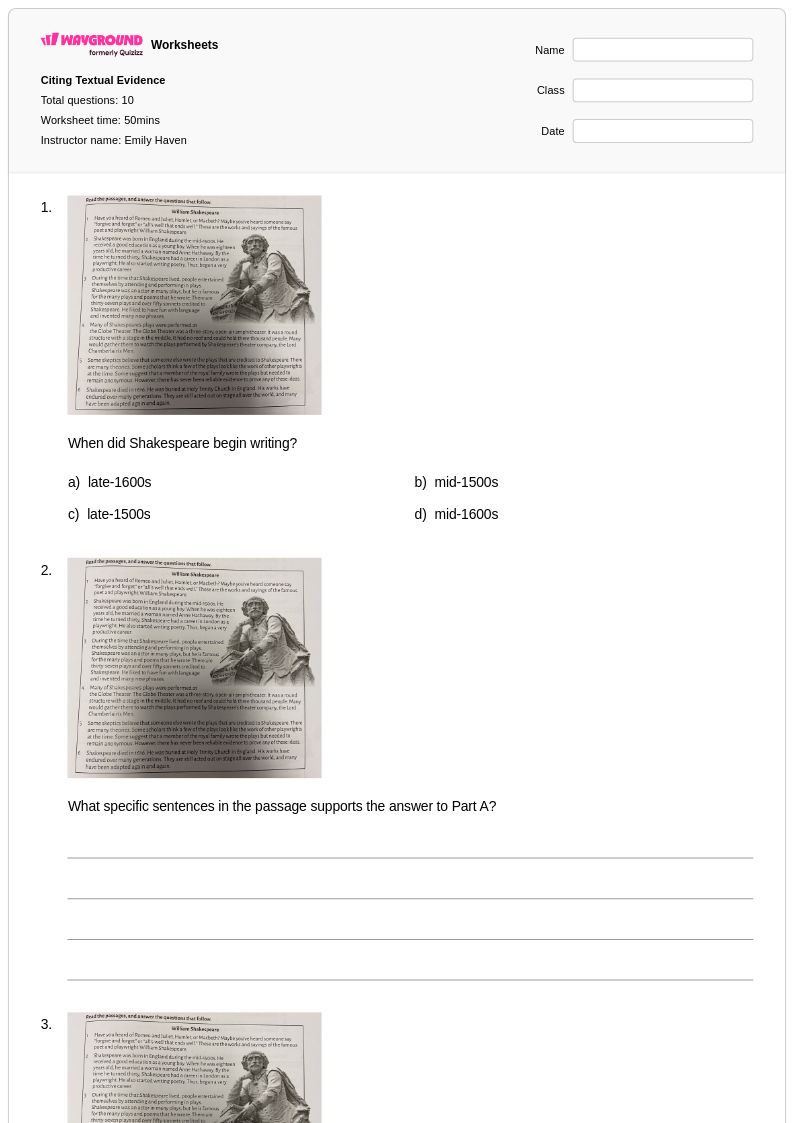
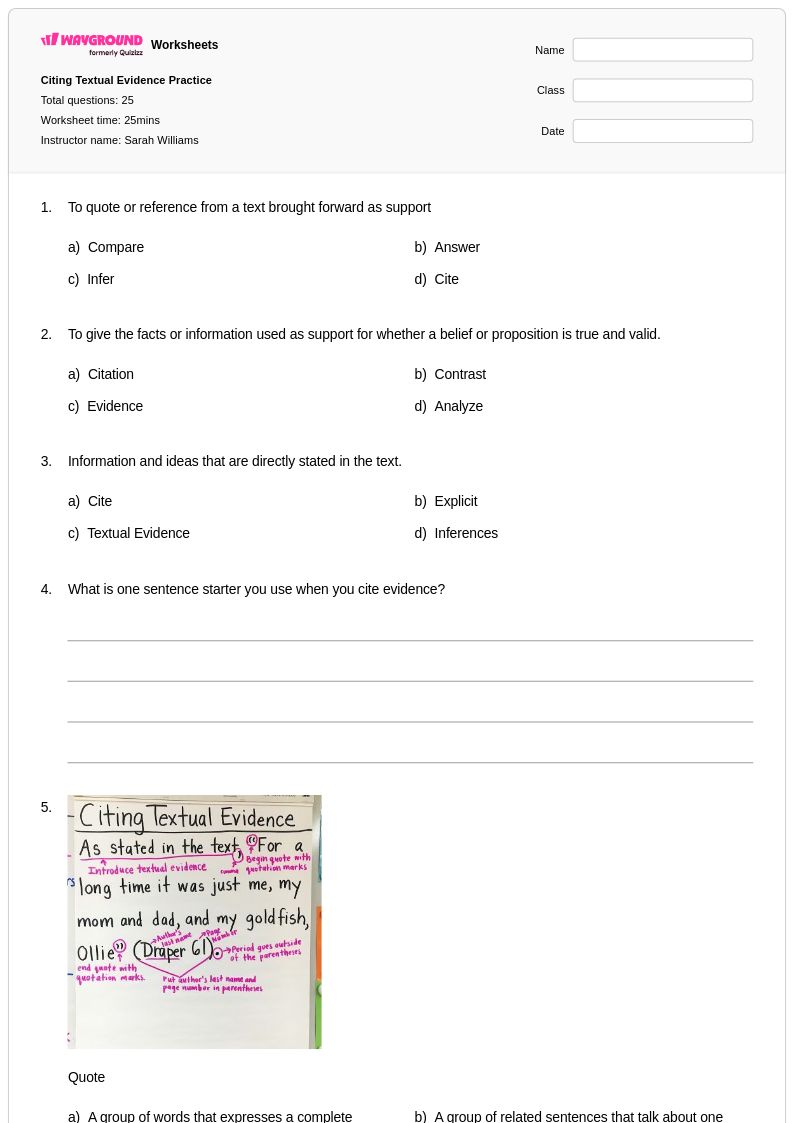
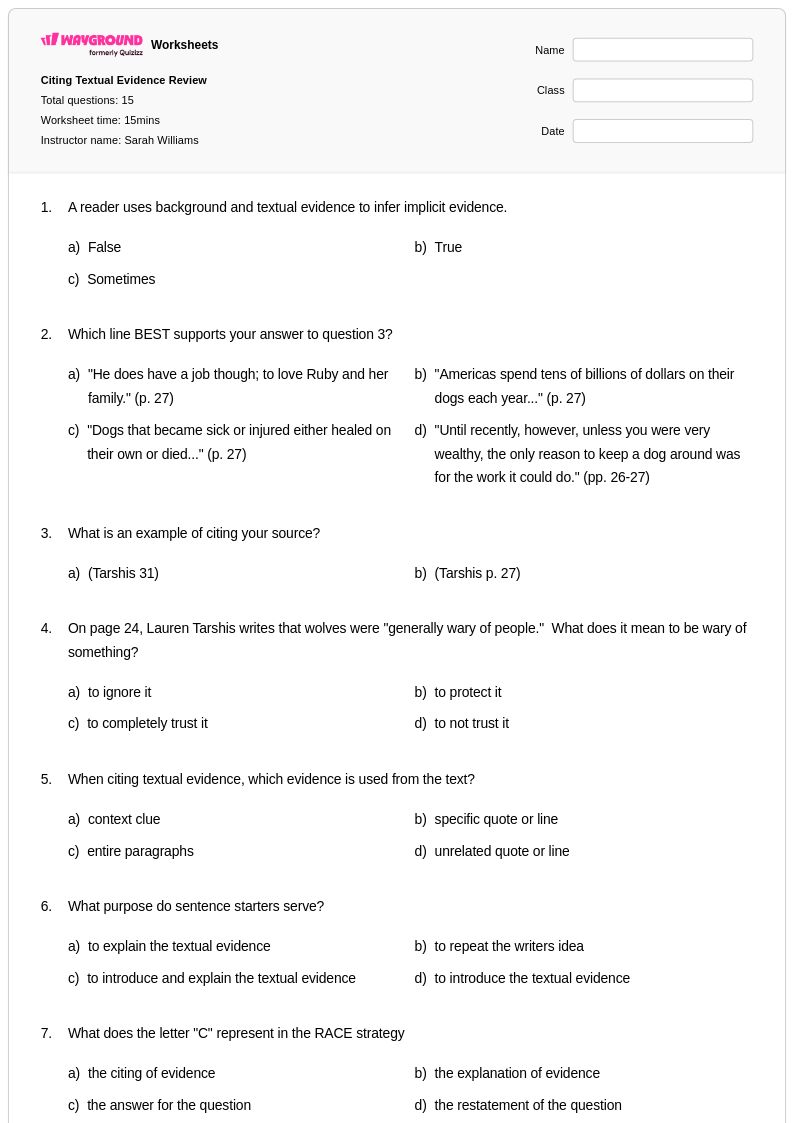
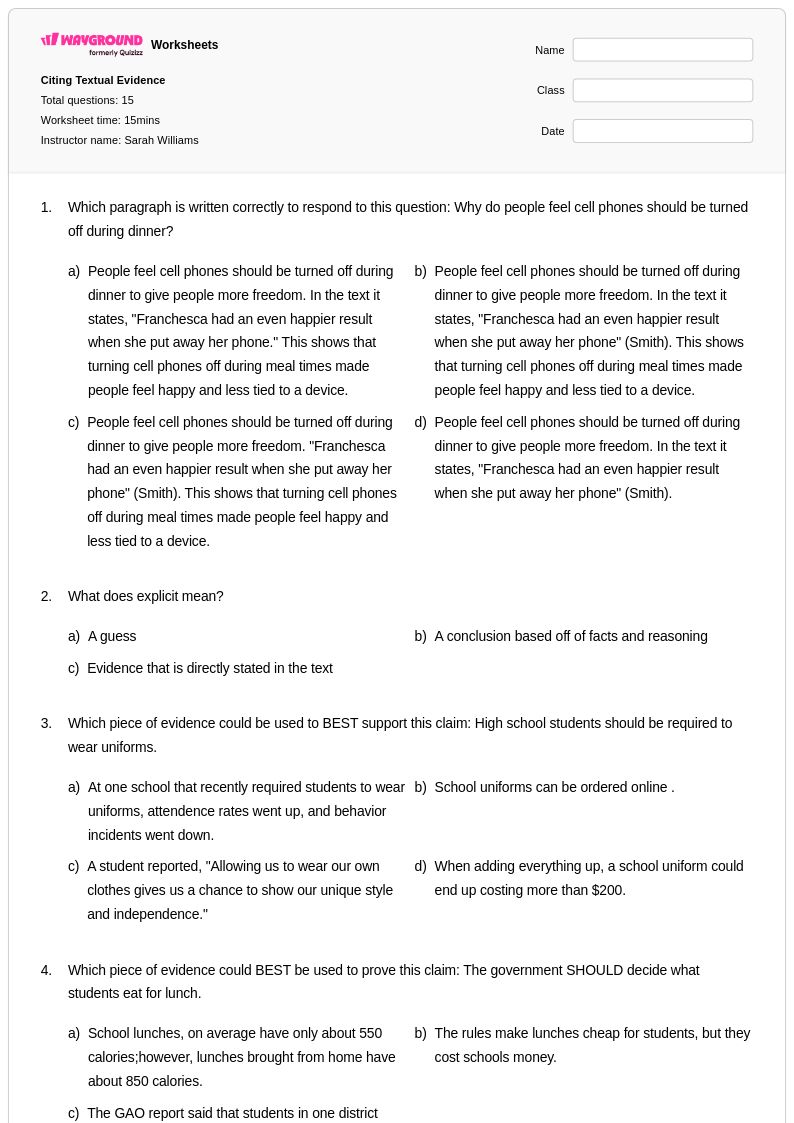
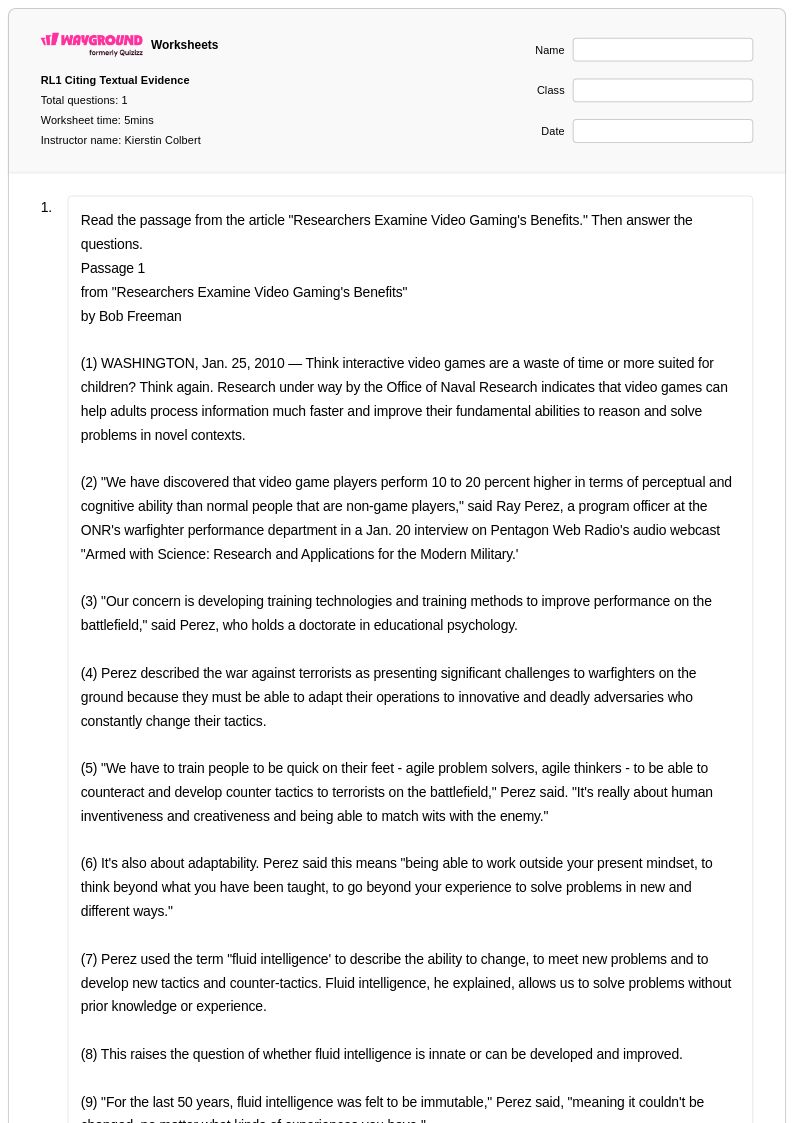
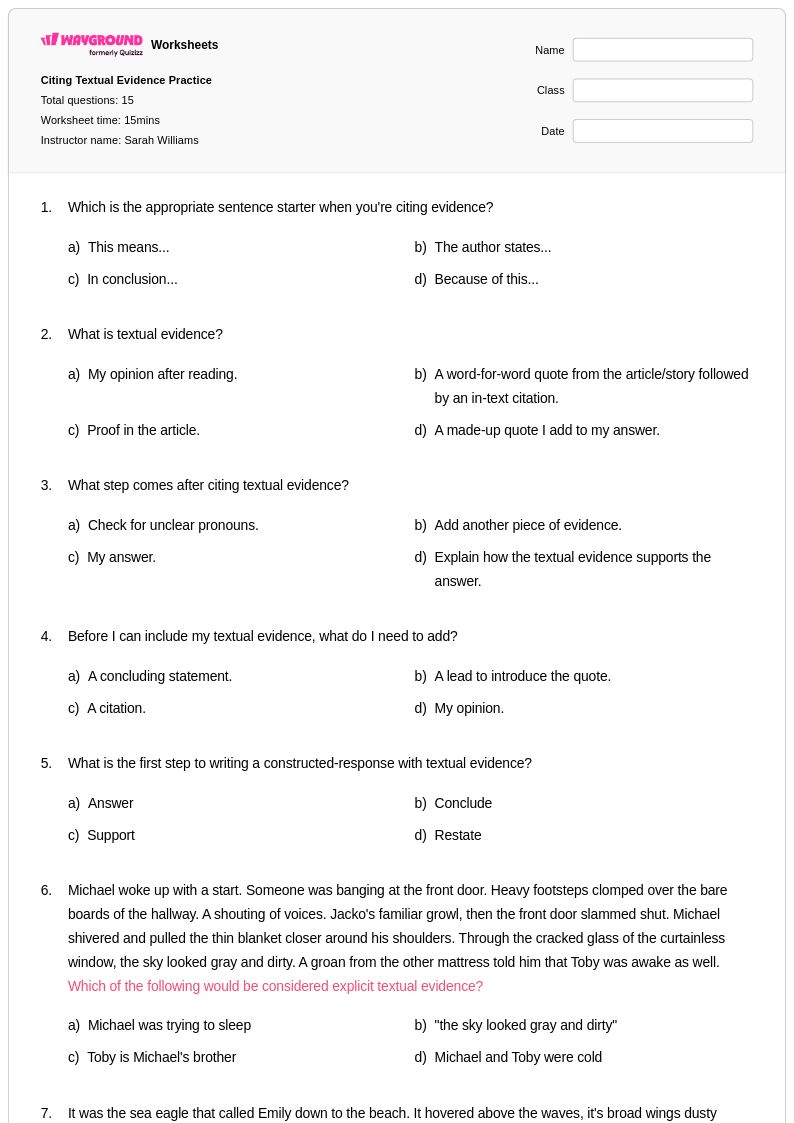
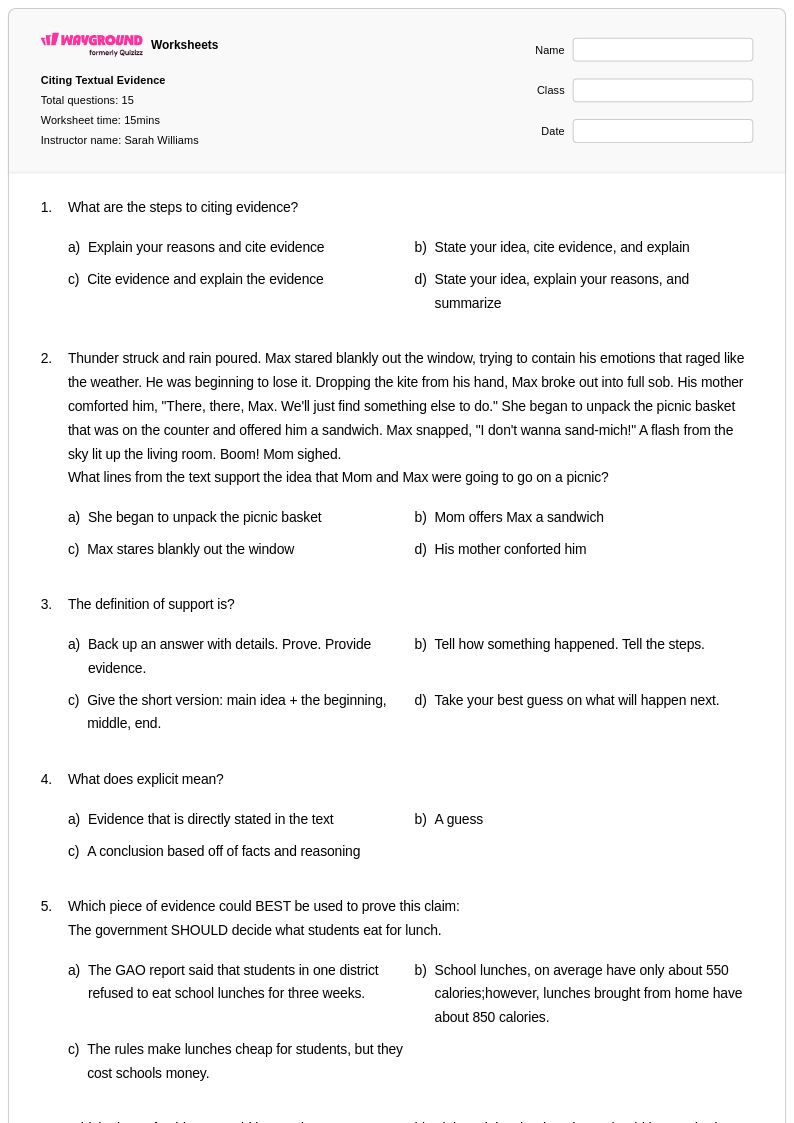
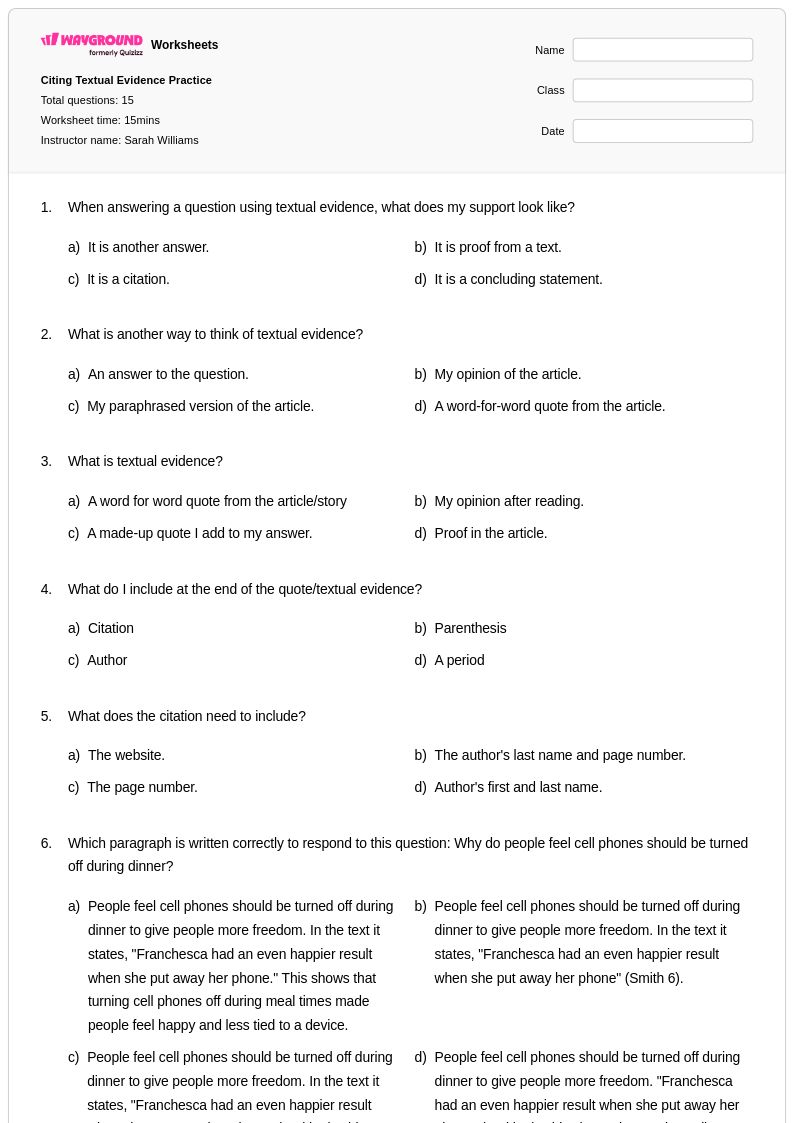
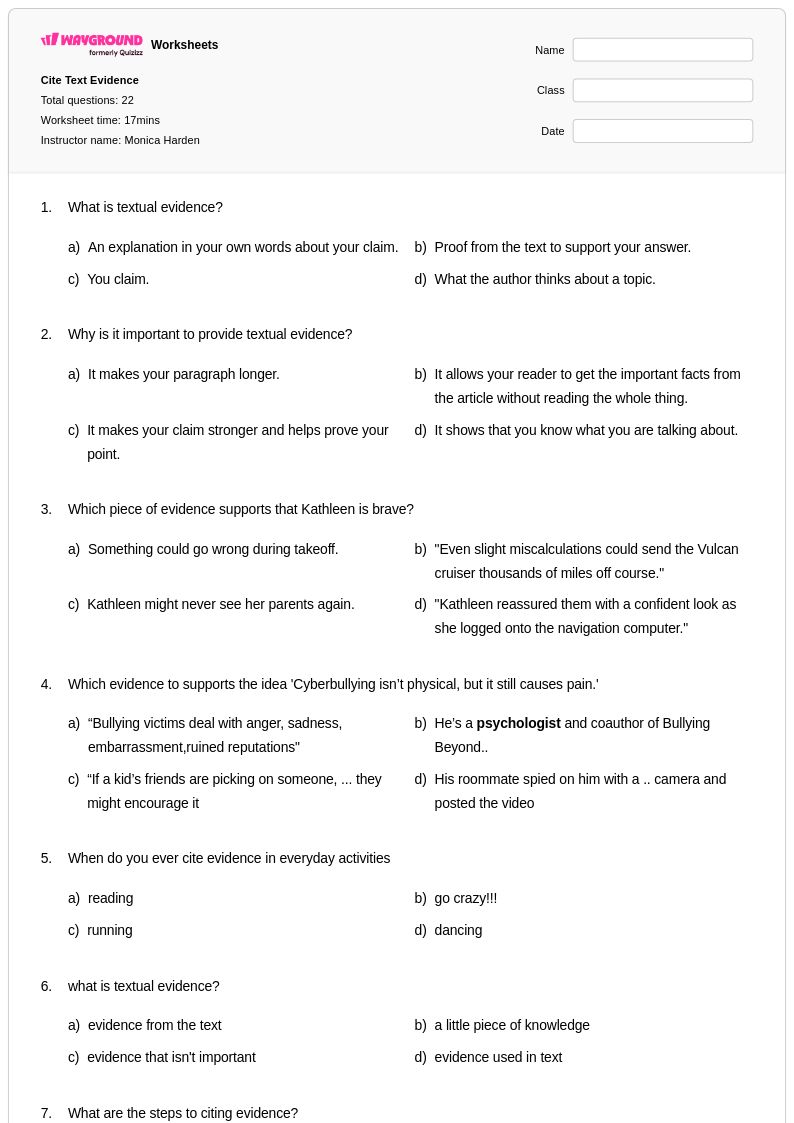
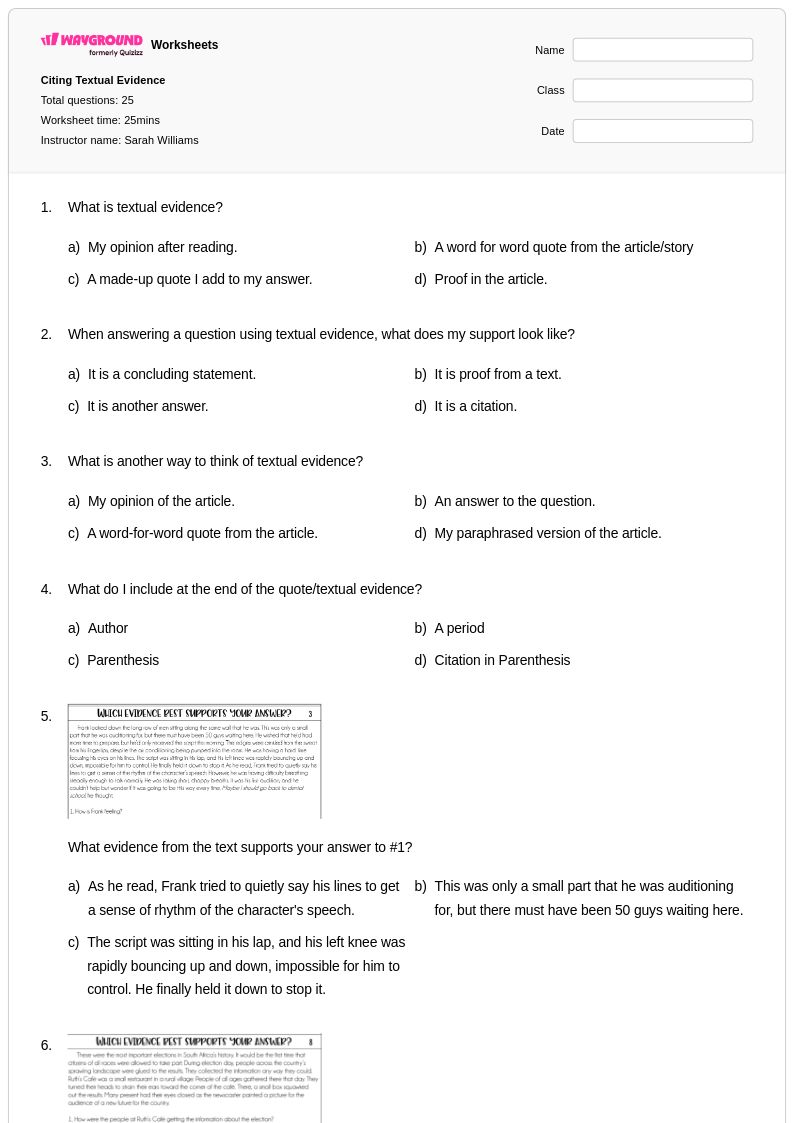
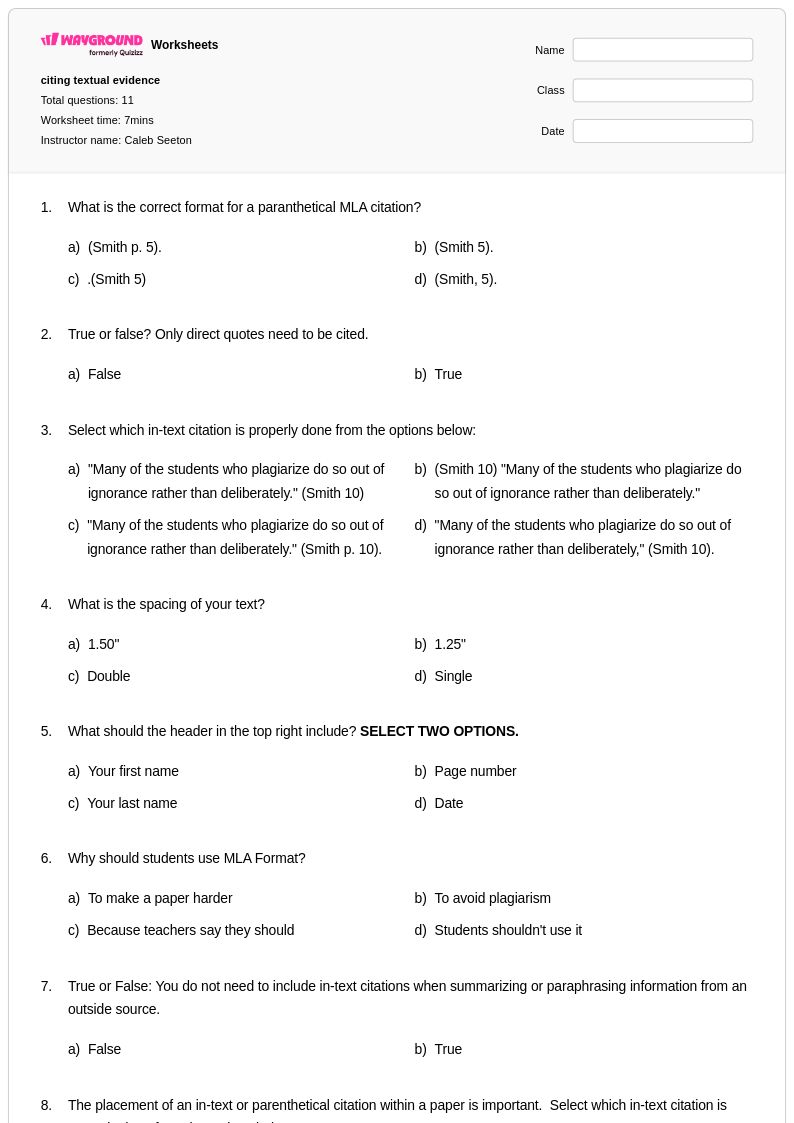
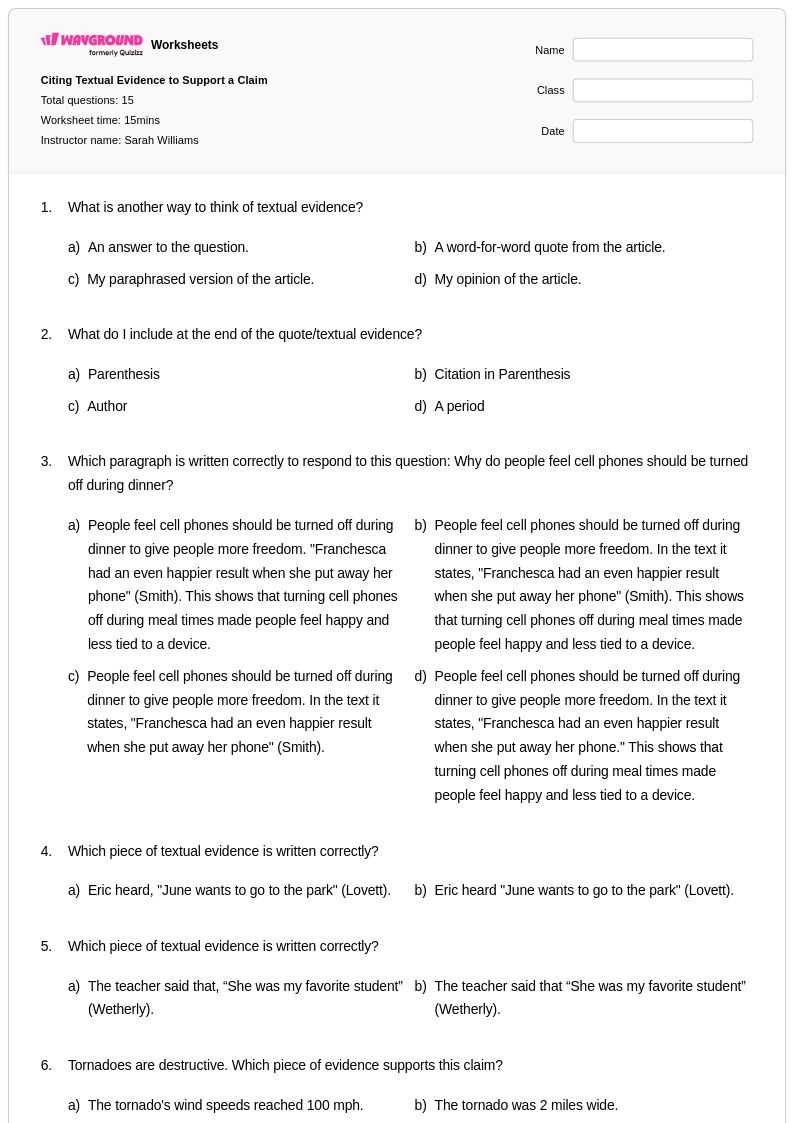
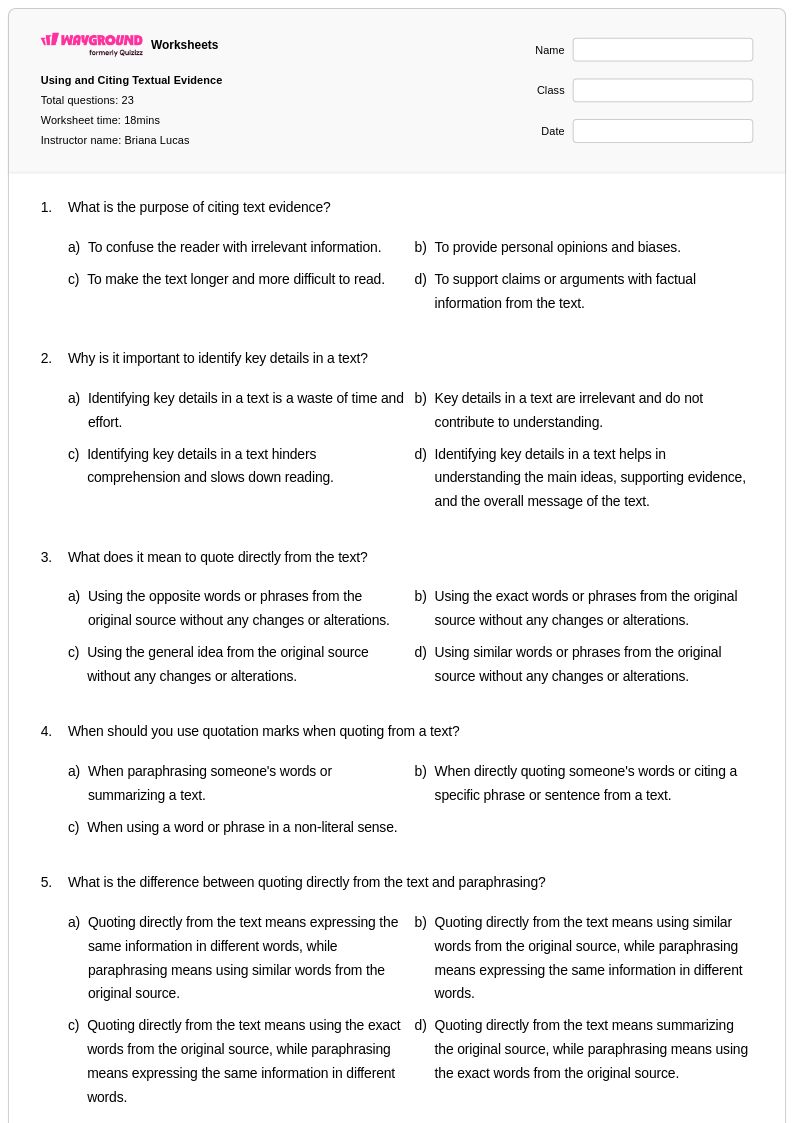
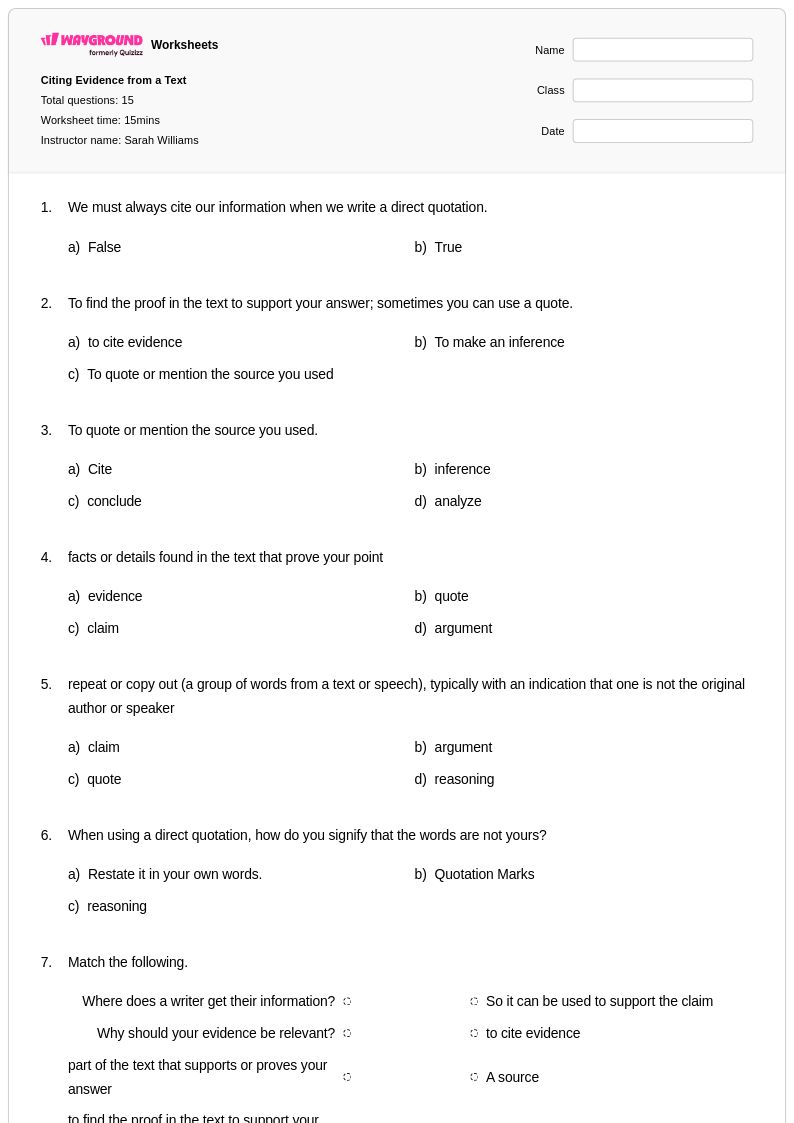
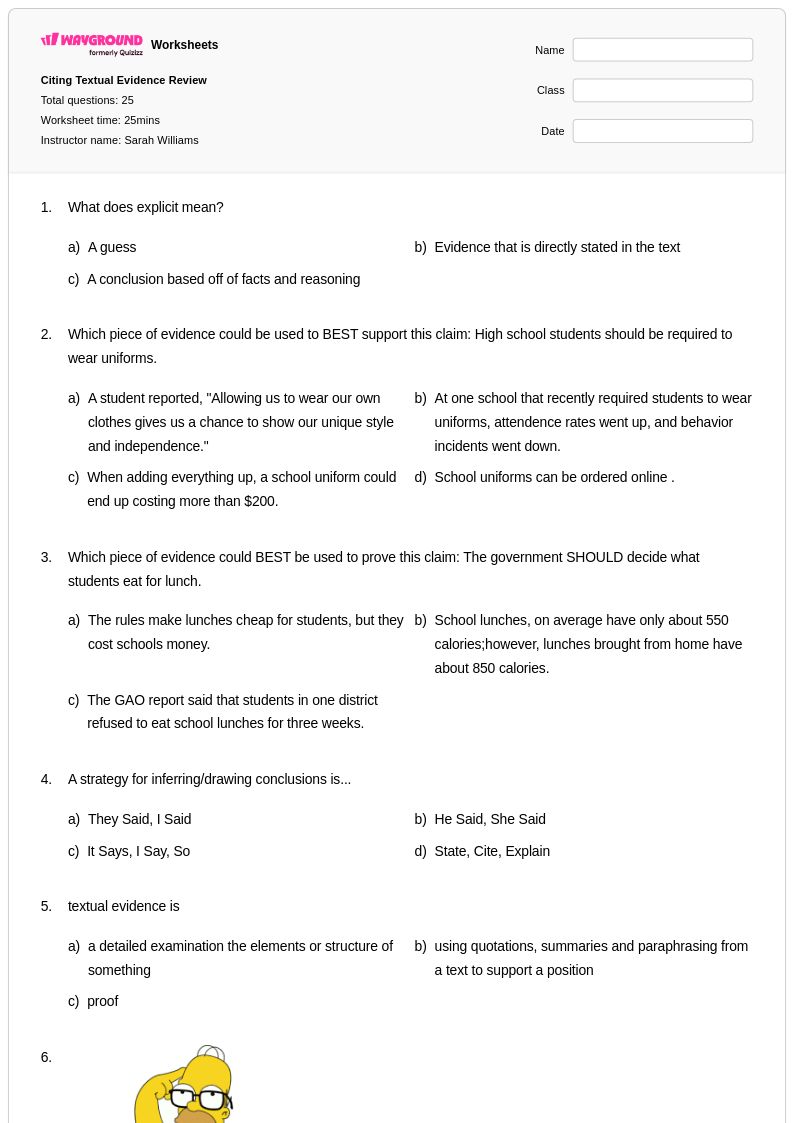
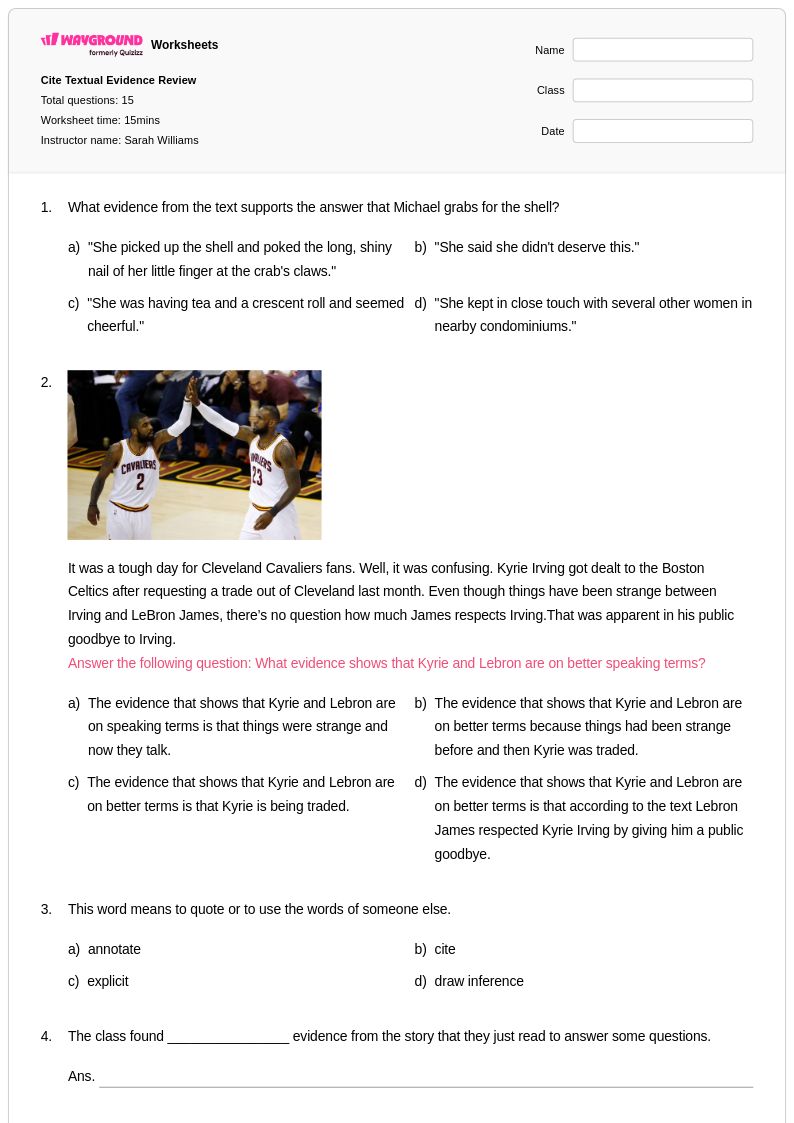
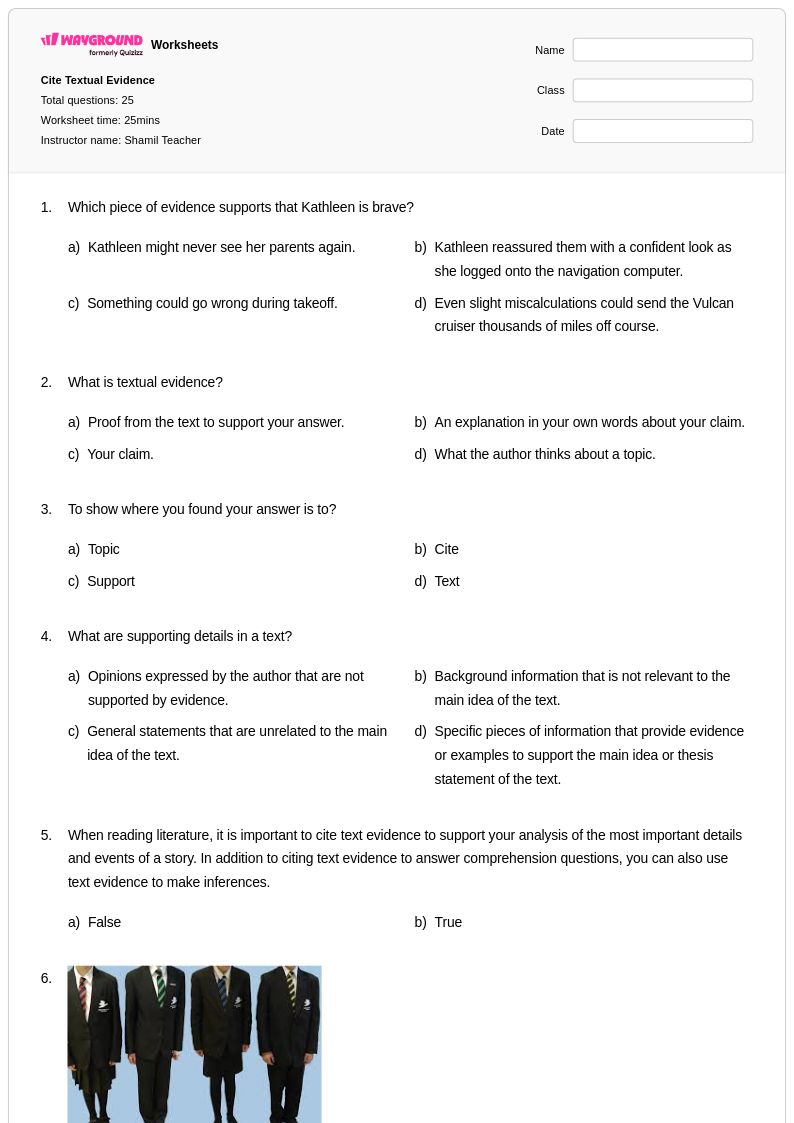
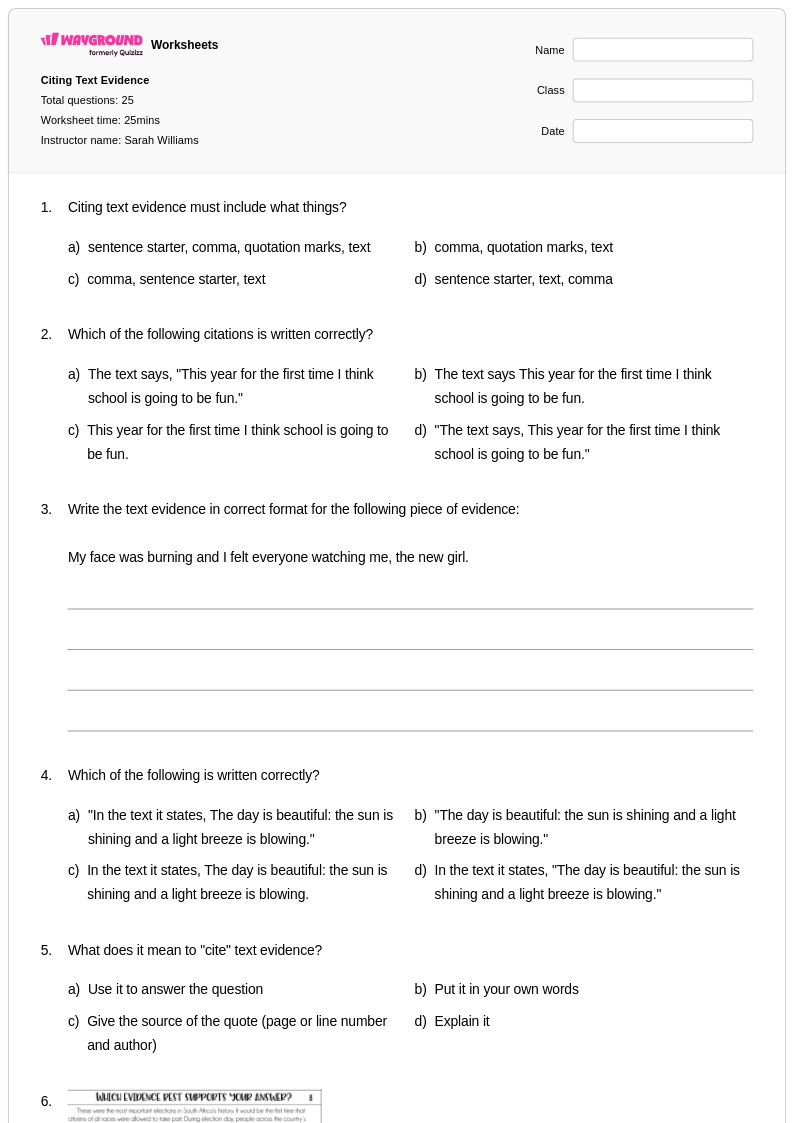
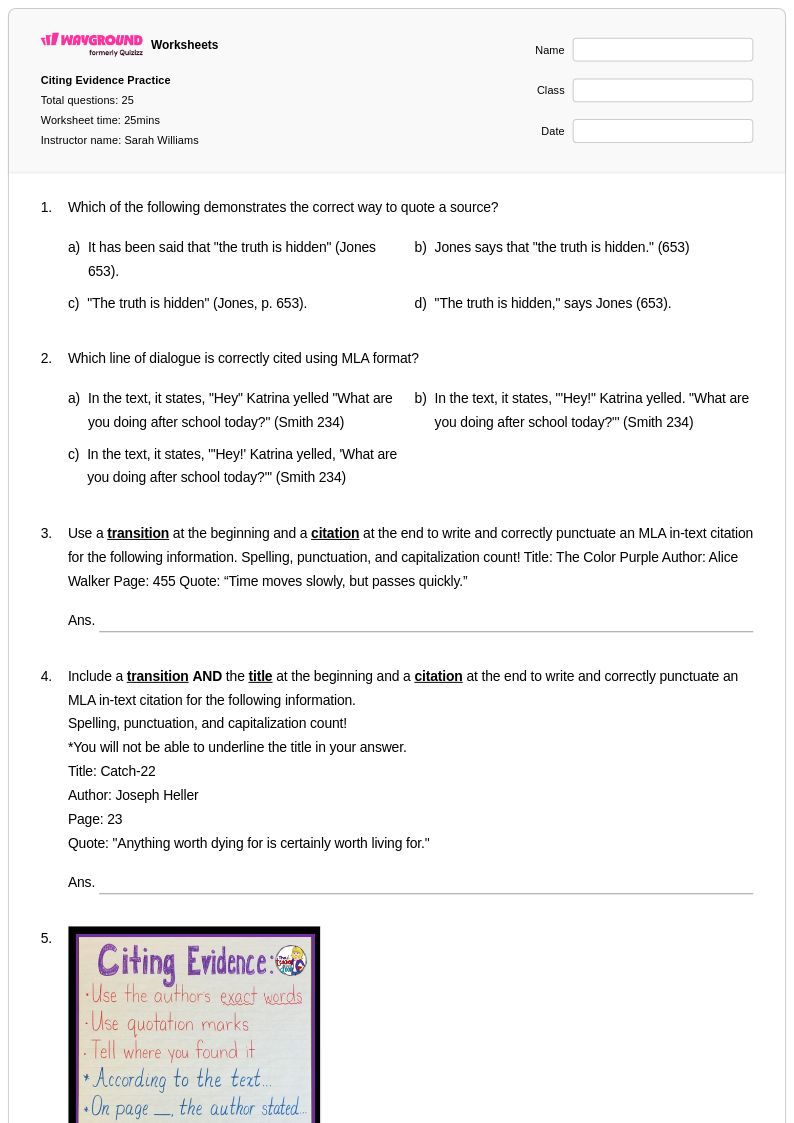
Citing textual evidence worksheets for Class 12 students available through Wayground (formerly Quizizz) provide comprehensive practice in one of the most critical advanced reading comprehension skills. These carefully designed printable resources guide students through the sophisticated process of locating, selecting, and incorporating relevant quotations and examples from complex texts to support their analytical arguments and interpretations. Each worksheet includes varied practice problems that challenge students to distinguish between strong and weak evidence, evaluate the credibility of sources, and seamlessly integrate textual support into their own writing. The accompanying answer key enables students to self-assess their evidence selection and citation techniques, while the free pdf format ensures easy access for both classroom and independent study sessions.
Wayground (formerly Quizizz) empowers educators with millions of teacher-created worksheet collections specifically targeting textual evidence skills, complete with robust search and filtering capabilities that align with state standards for Class 12 English language arts. Teachers can efficiently locate age-appropriate materials that match their curriculum requirements, then customize worksheets to address individual student needs through built-in differentiation tools. The platform's flexible format options, including printable pdf versions and interactive digital worksheets, accommodate diverse learning preferences and classroom technologies. These comprehensive resources streamline lesson planning while providing targeted remediation for struggling readers, enrichment opportunities for advanced students, and consistent skill practice that builds the analytical thinking abilities essential for college-level coursework and standardized assessments.
FAQs
How do I teach students to cite textual evidence effectively?
Start by modeling the process explicitly: show students how to identify a claim, locate a relevant passage, and connect the two with an explanatory sentence. Use anchor texts with guided annotation so students practice distinguishing between evidence that directly supports a claim and details that are tangential or inferential. Gradually release responsibility by moving from whole-class modeling to partner practice to independent application across both literary and informational texts.
What exercises help students practice citing textual evidence?
Effective practice exercises include claim-and-evidence matching tasks, short-answer prompts requiring students to quote and explain a passage, and error-analysis activities where students evaluate weak or unsupported citations. Scaffolded worksheets that progress from basic evidence identification to multi-step analytical tasks help students build the skill incrementally rather than jumping straight to open-ended writing.
What mistakes do students commonly make when citing textual evidence?
The most frequent errors are selecting evidence that is too broad, relying on personal opinion rather than the text, and failing to explain how the evidence connects to the claim. Students also commonly misquote or paraphrase inaccurately, losing the precision the argument requires. Targeted practice distinguishing between strong and weak evidence, along with explicit instruction on the 'quote, then explain' structure, helps address these patterns directly.
How can I differentiate citing textual evidence instruction for struggling readers?
For struggling readers, reduce the length and complexity of the source text and provide sentence frames that scaffold the evidence-integration process. Wayground supports student-level accommodations including Read Aloud, which lets students hear questions and text read to them, and reduced answer choices to lower cognitive load during practice. These settings can be applied to individual students without notifying the rest of the class, so differentiation stays seamless.
How do I use Wayground's citing textual evidence worksheets in my classroom?
Wayground's citing textual evidence worksheets are available as printable PDFs for traditional classroom use and in digital formats for technology-integrated environments, including the option to host them as a quiz directly on Wayground. Teachers can use them for guided practice, formative assessment, or targeted intervention, and each worksheet includes a complete answer key to streamline grading and feedback. The digital format also allows teachers to apply individual accommodations such as extended time or Read Aloud for students who need additional support.
How do I assess whether students have mastered citing textual evidence?
Look for three indicators: the student selects evidence that is specific and directly relevant to the claim, accurately quotes or paraphrases the source text, and provides a clear explanation of how the evidence supports the argument. Common signs that mastery has not yet been reached include vague or off-topic citations, dropped quotes with no follow-up explanation, and over-reliance on plot summary rather than analytical support. Using answer-key-aligned worksheets as formative checks helps teachers identify these gaps early and plan targeted re-teaching.