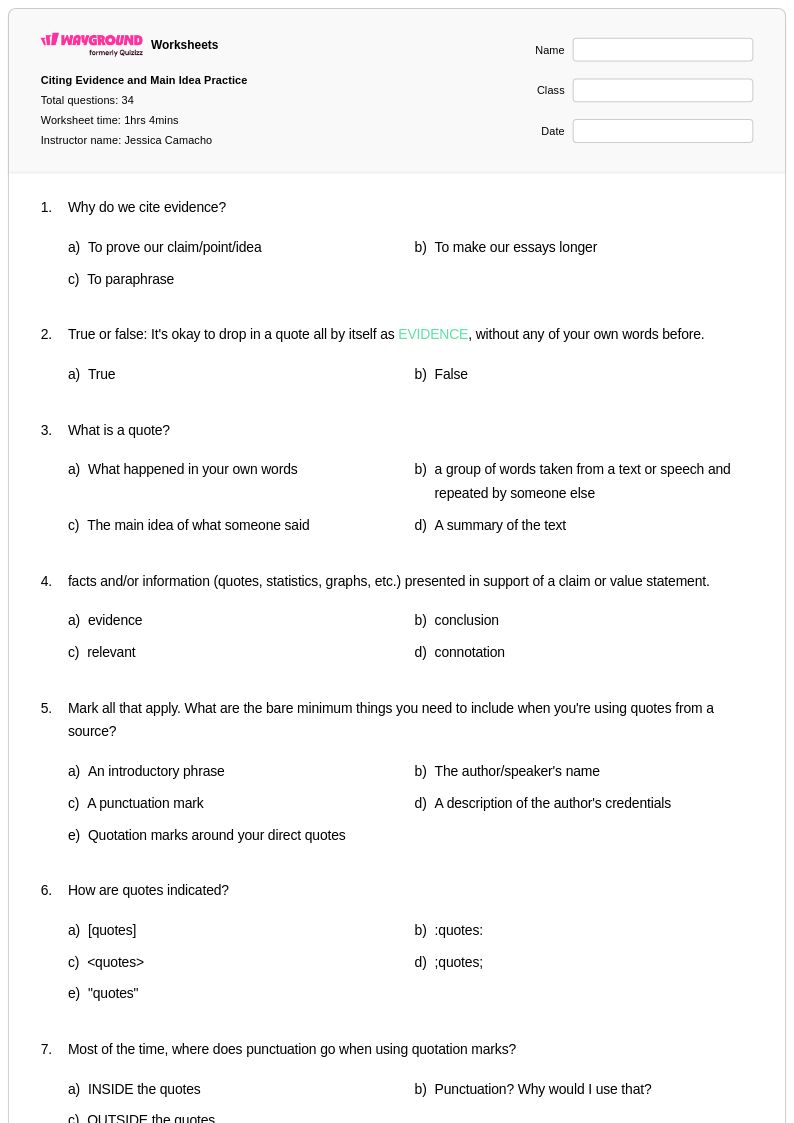
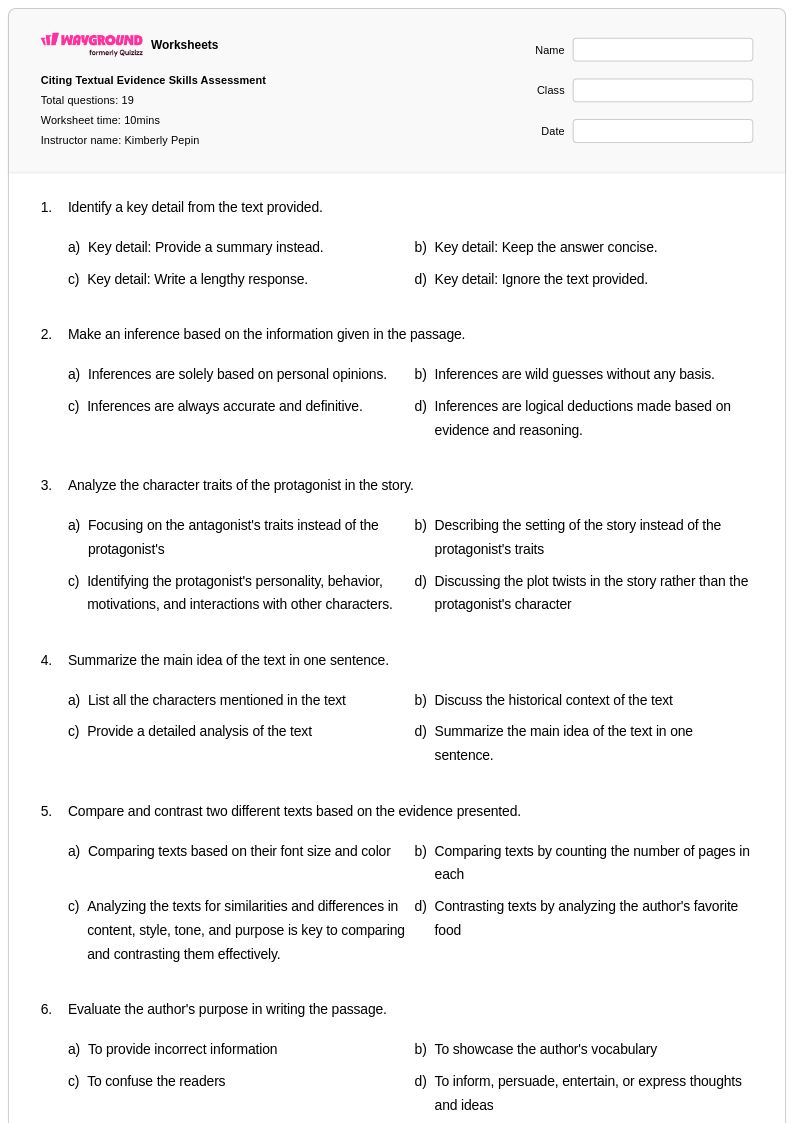
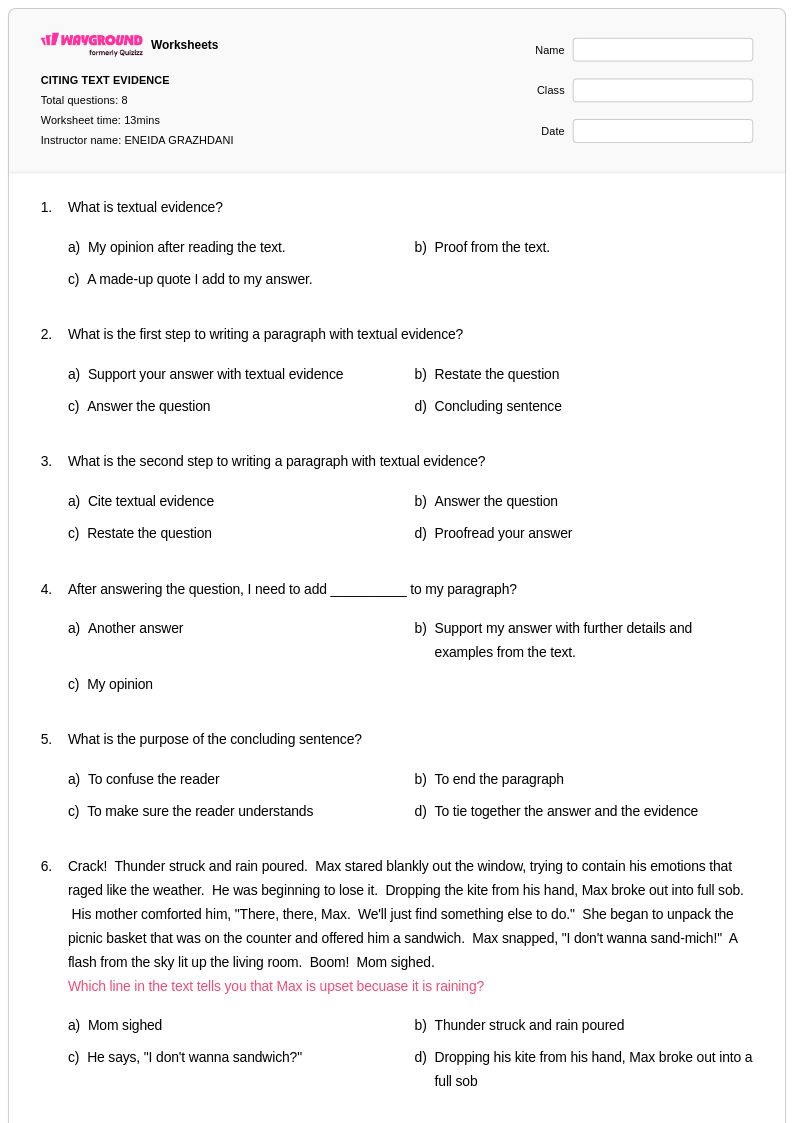
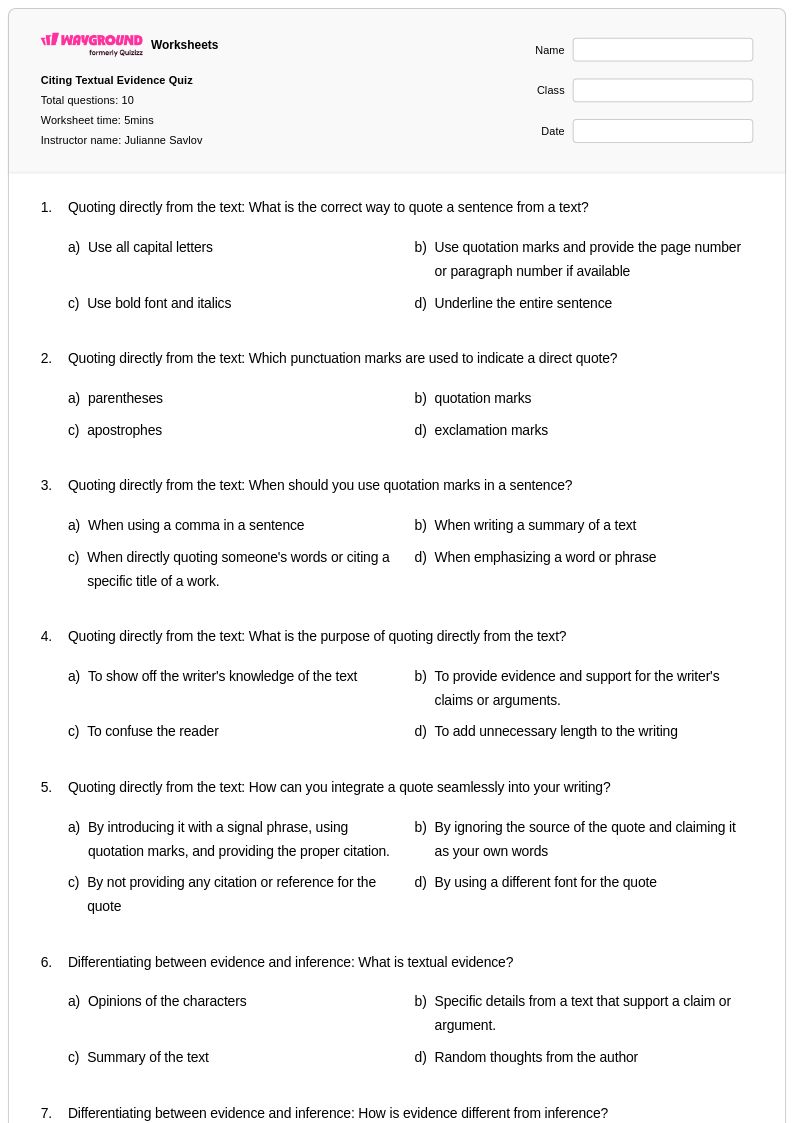
Free Printable Citing Textual Evidence Worksheets for Class 5
Class 5 students master citing textual evidence with Wayground's comprehensive collection of free worksheets, printables, and PDF practice problems complete with answer keys to strengthen reading comprehension skills.
Explore printable Citing Textual Evidence worksheets for Class 5
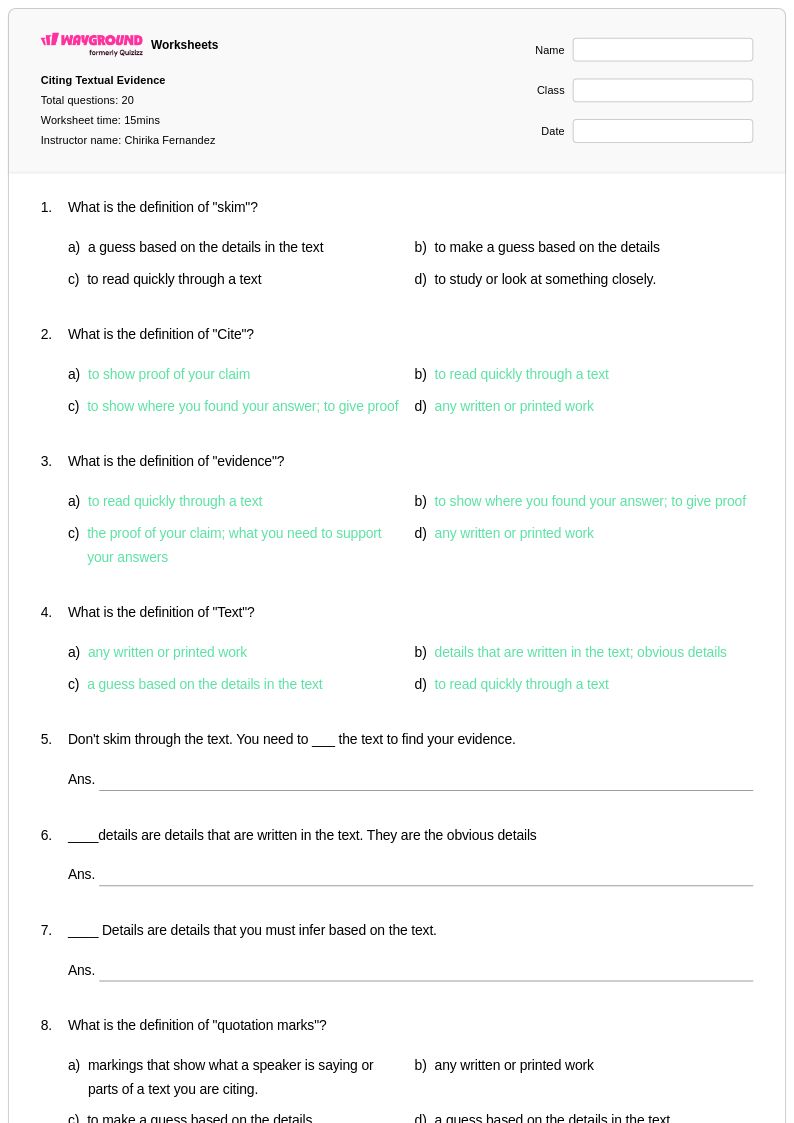
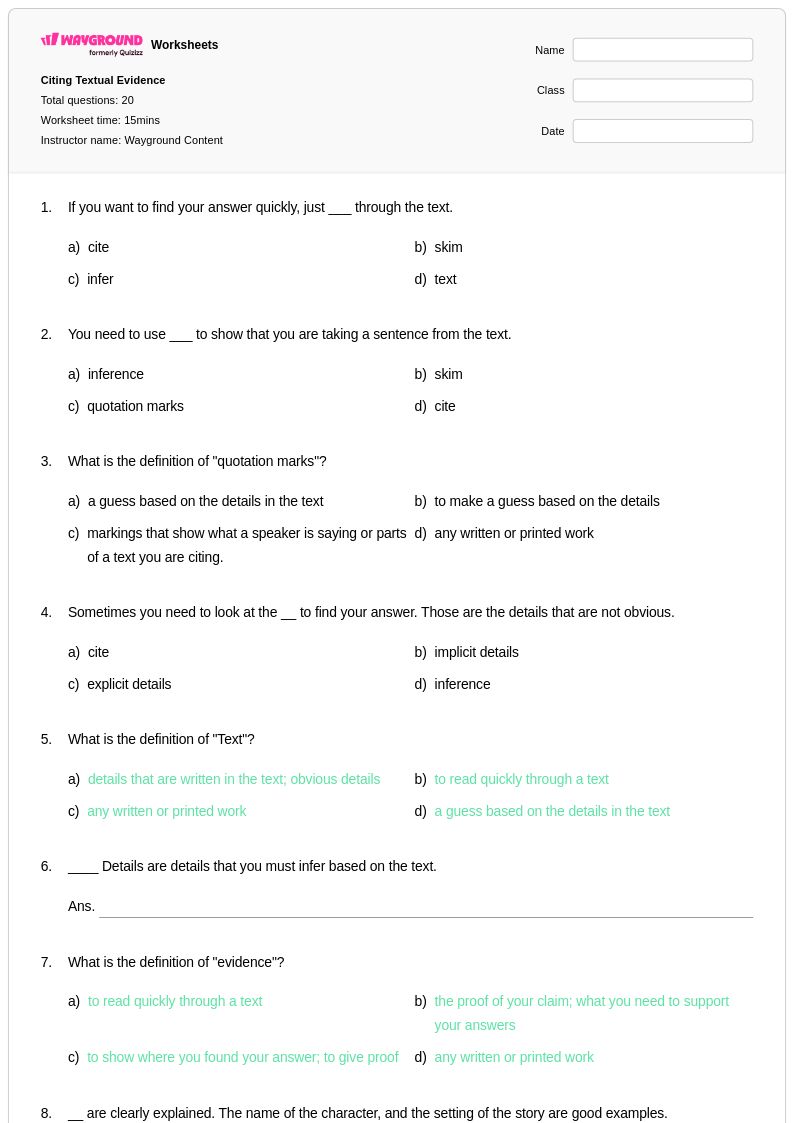
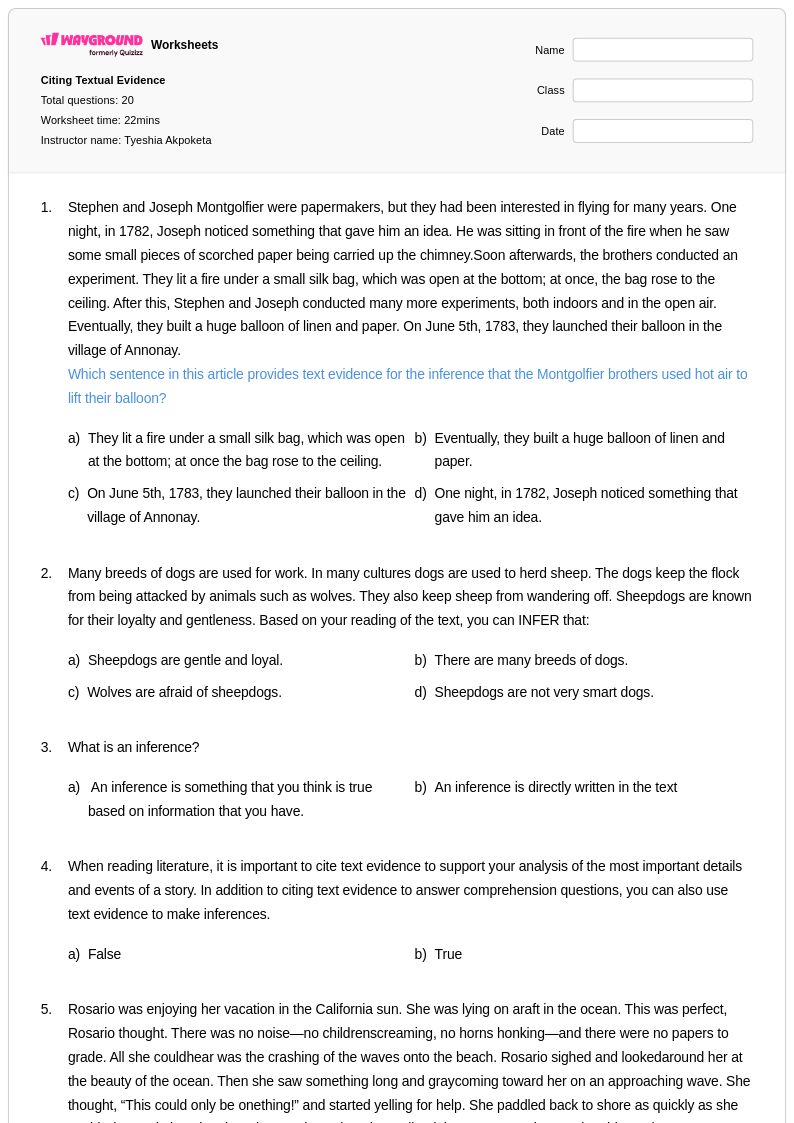
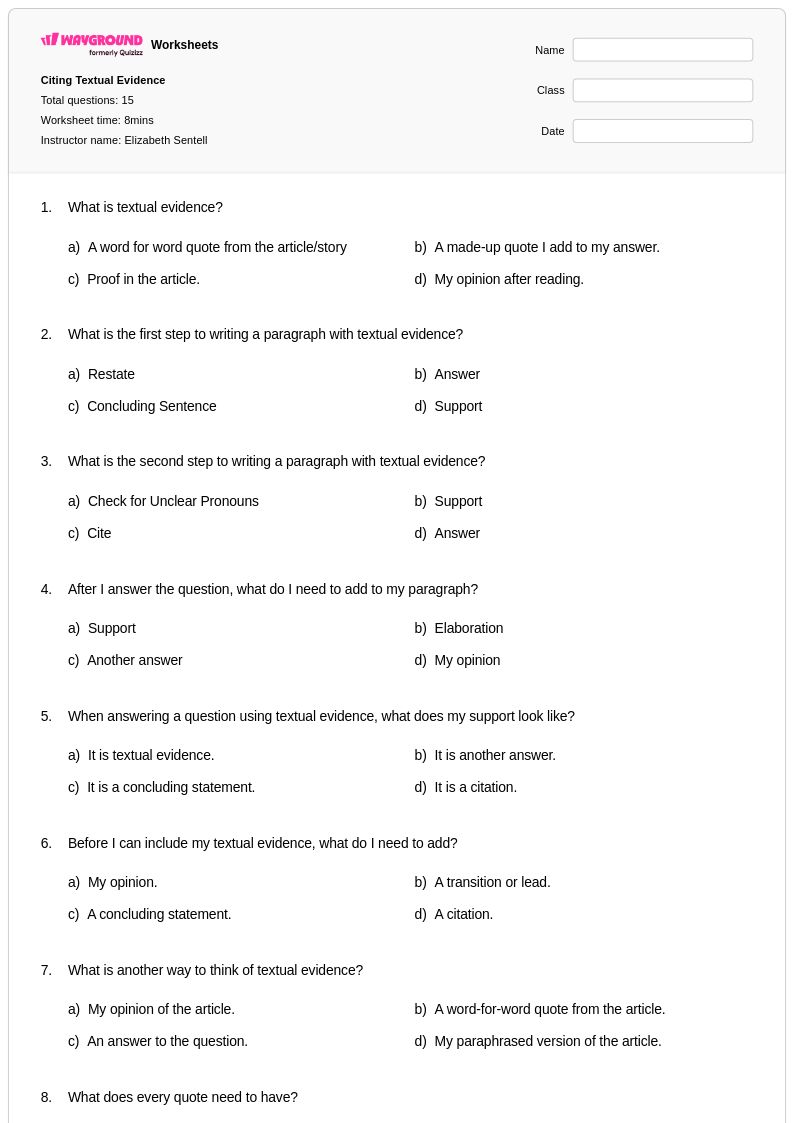
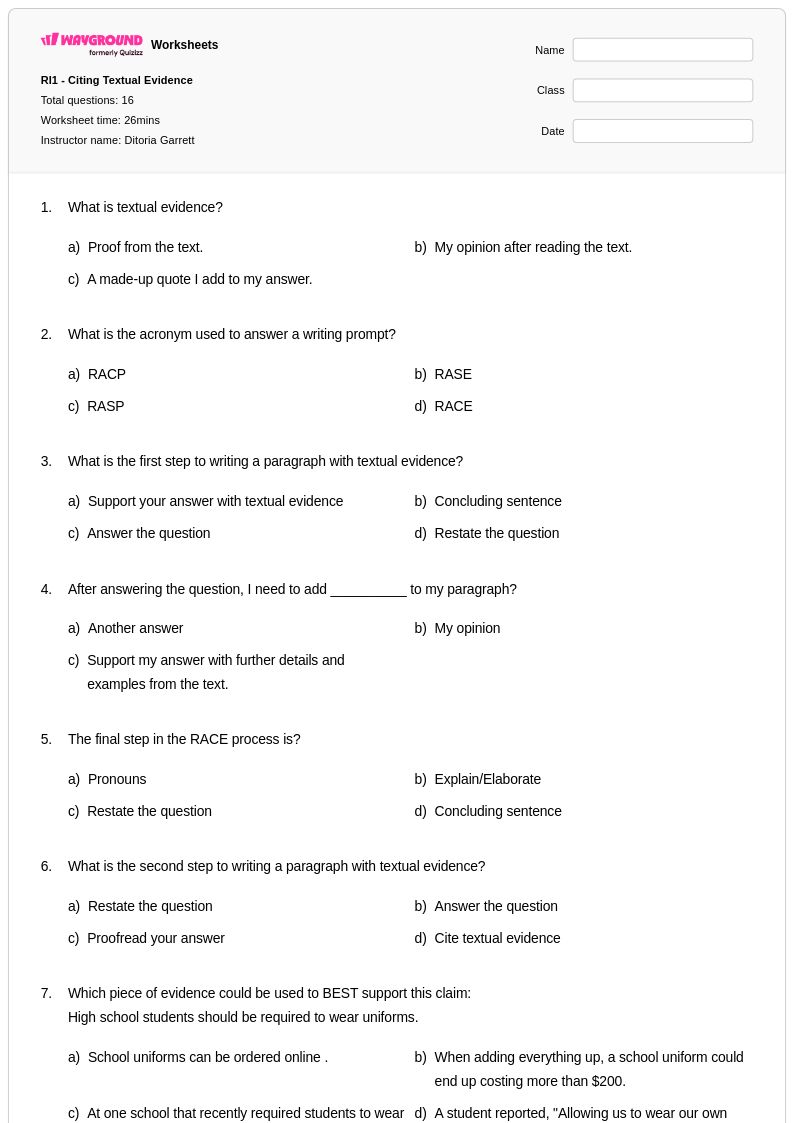
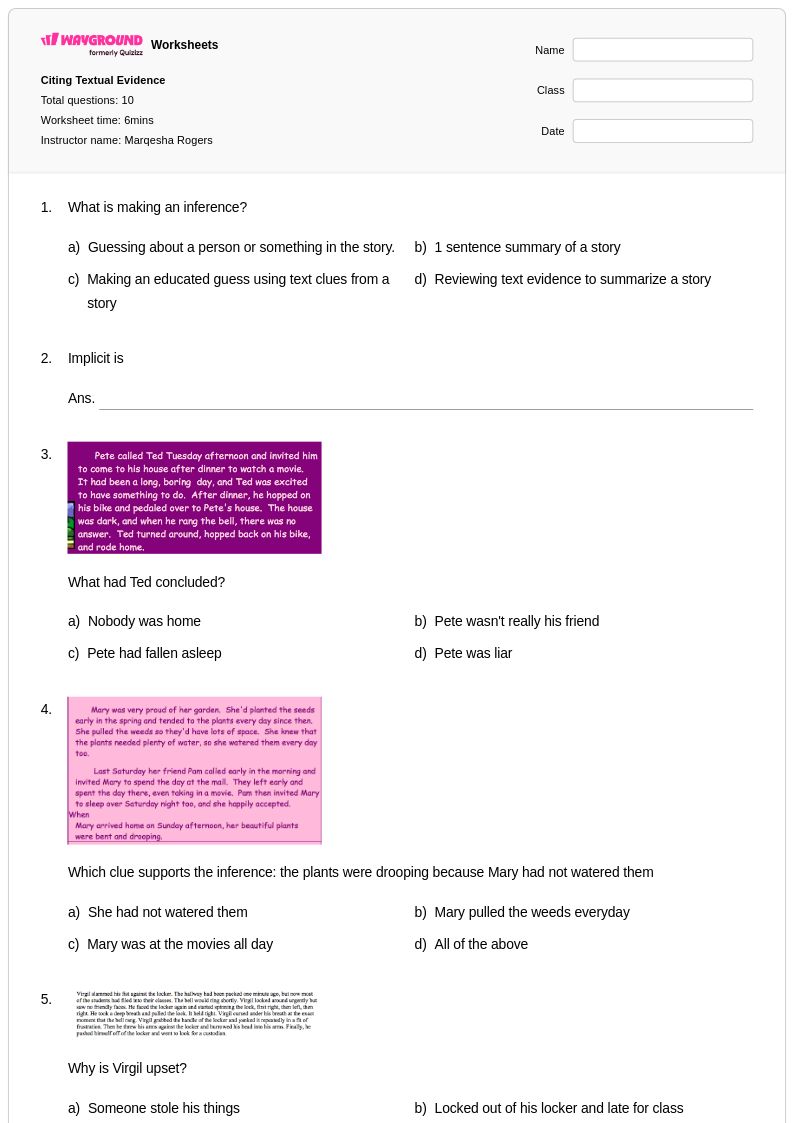
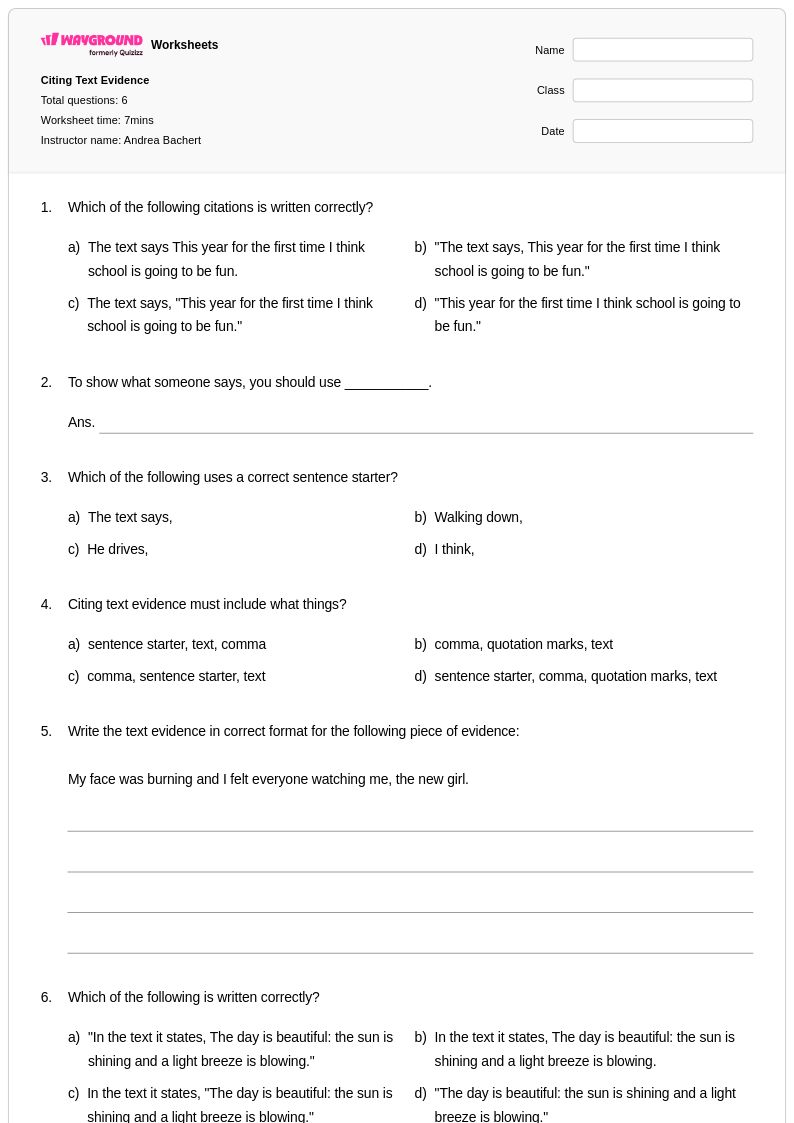
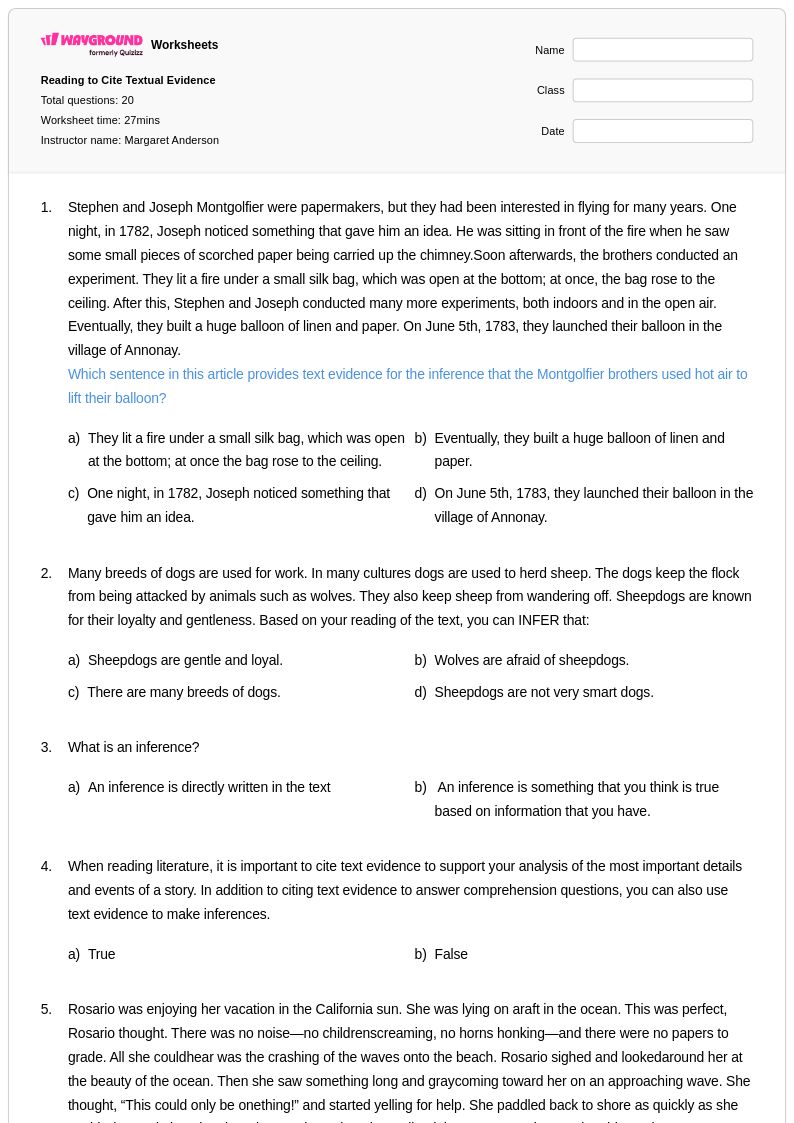
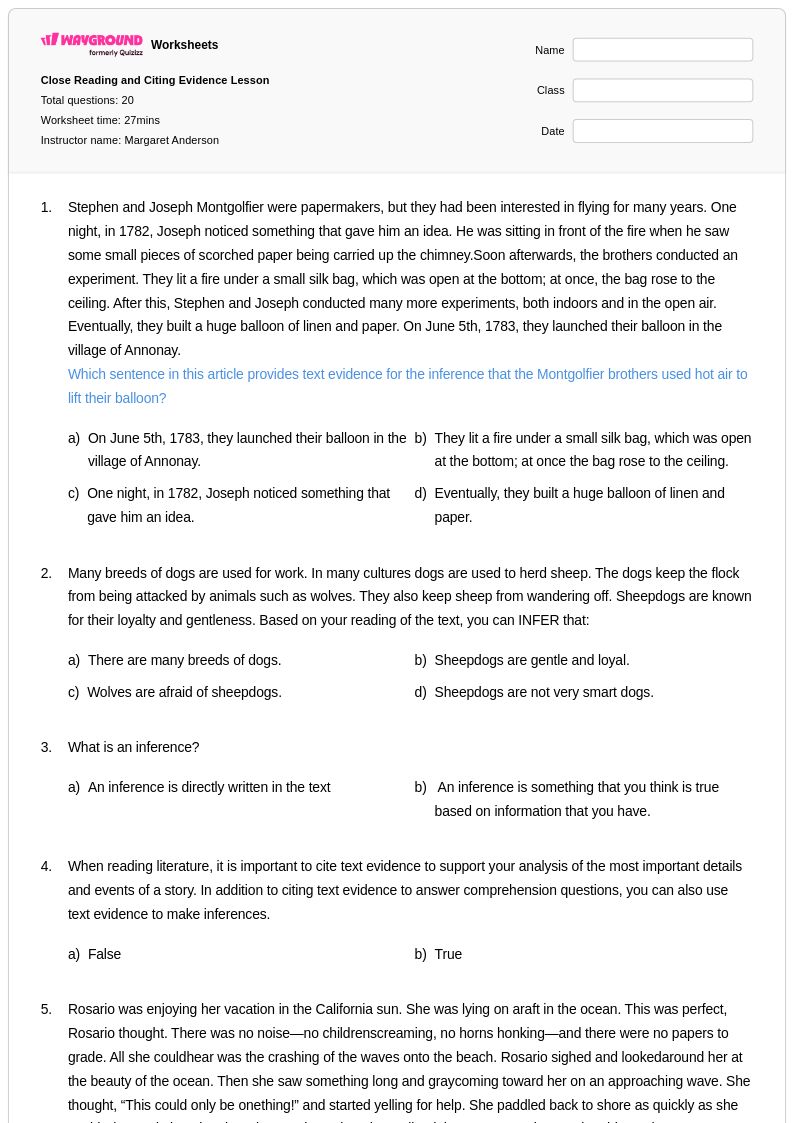
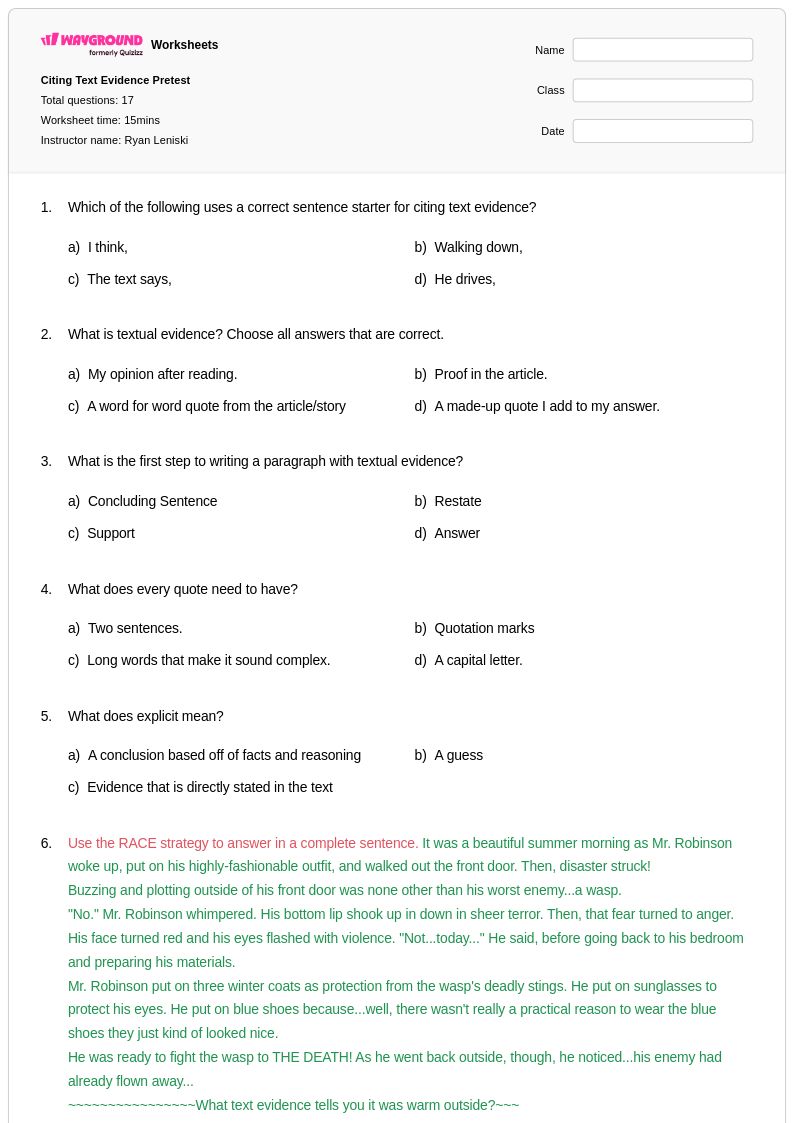
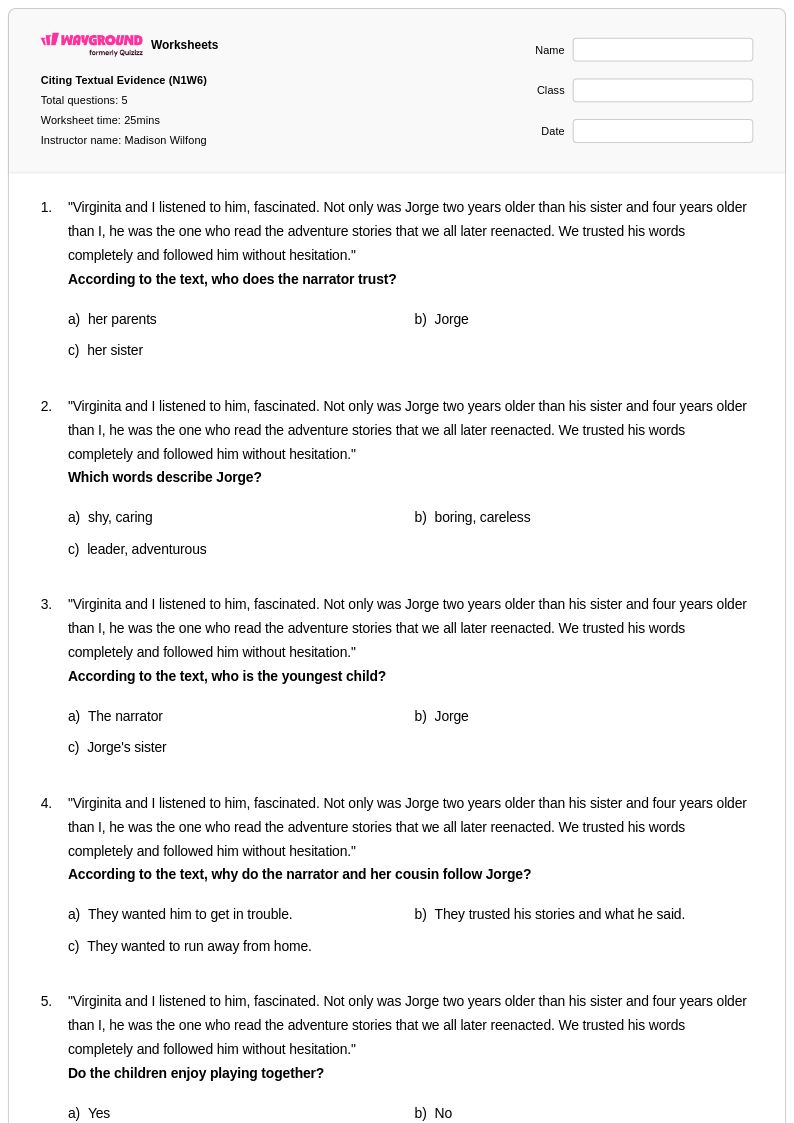
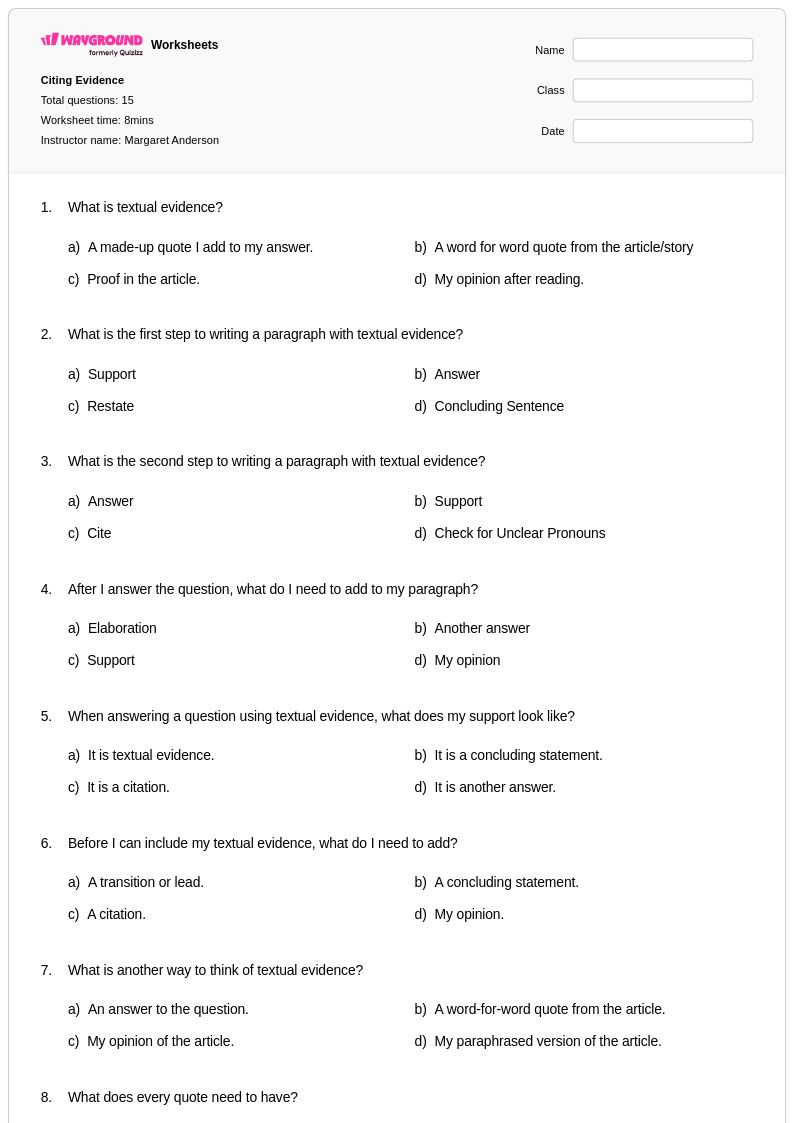
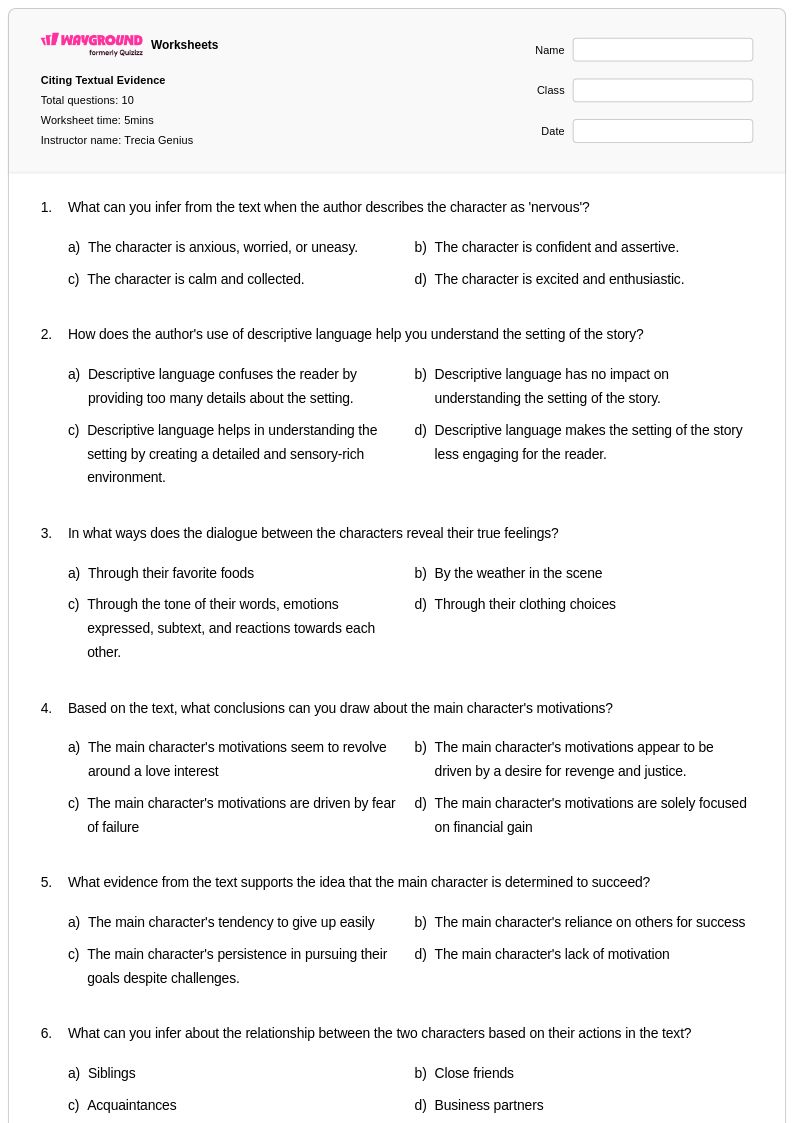
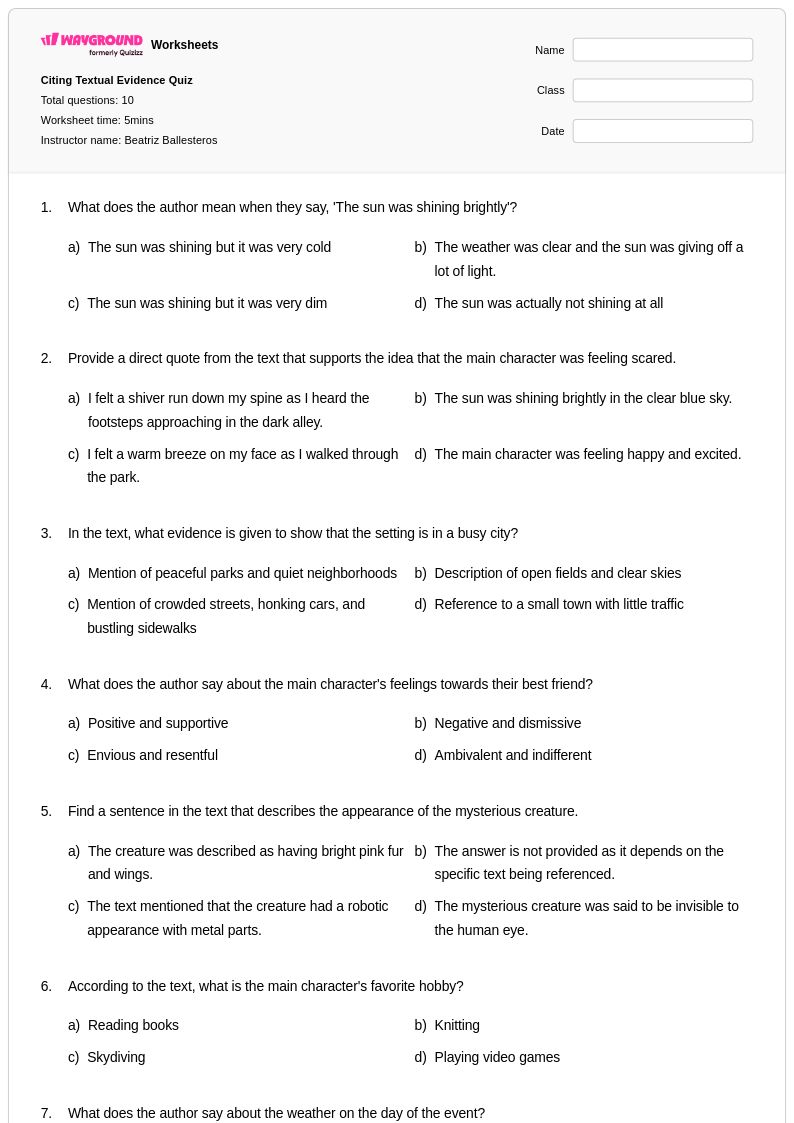
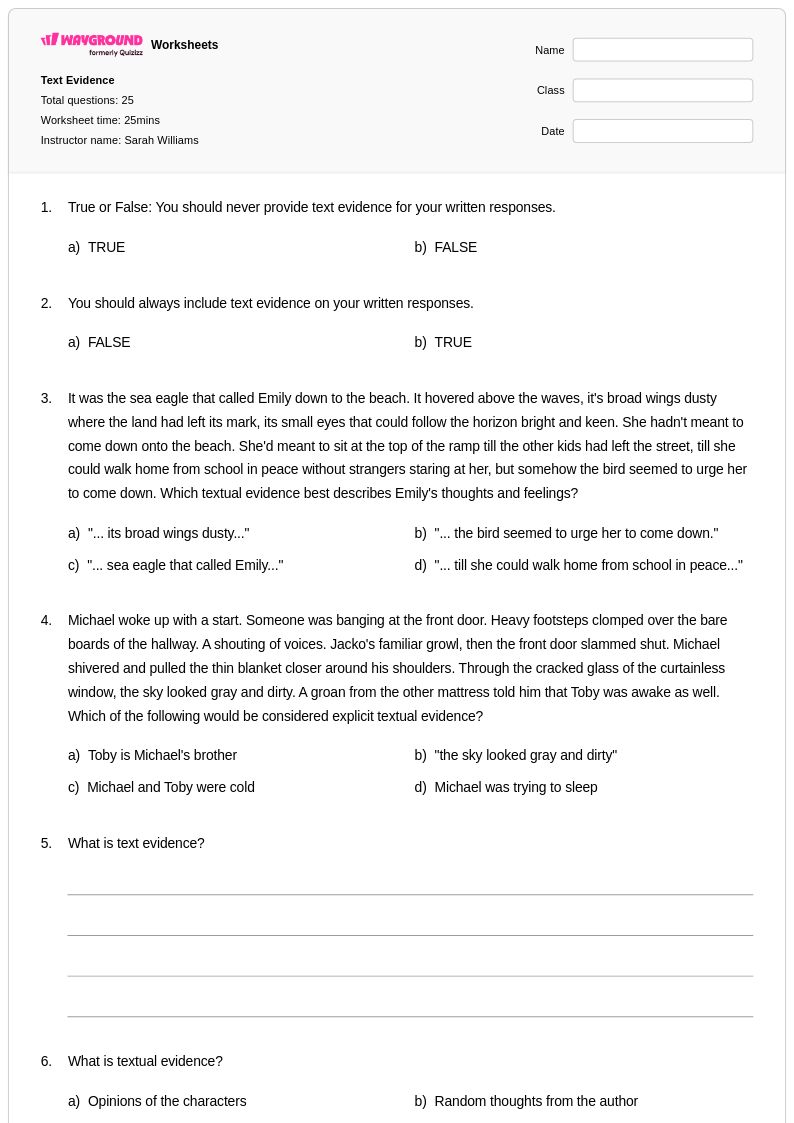
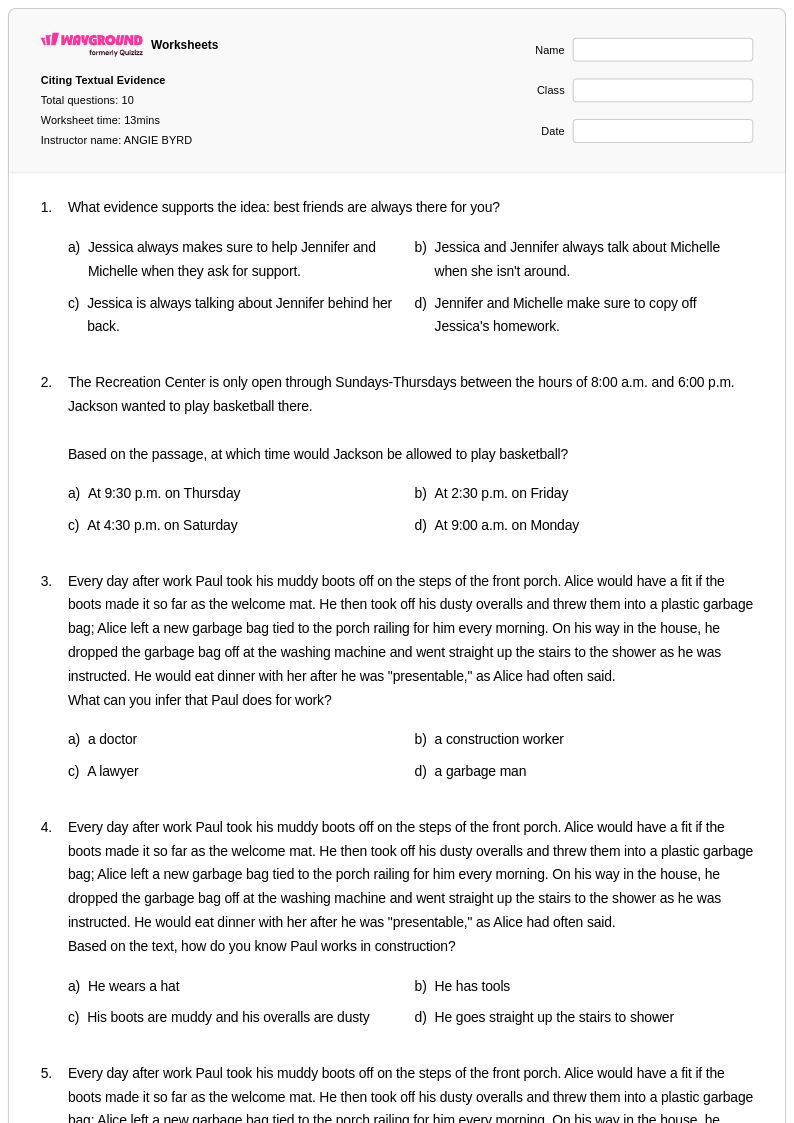
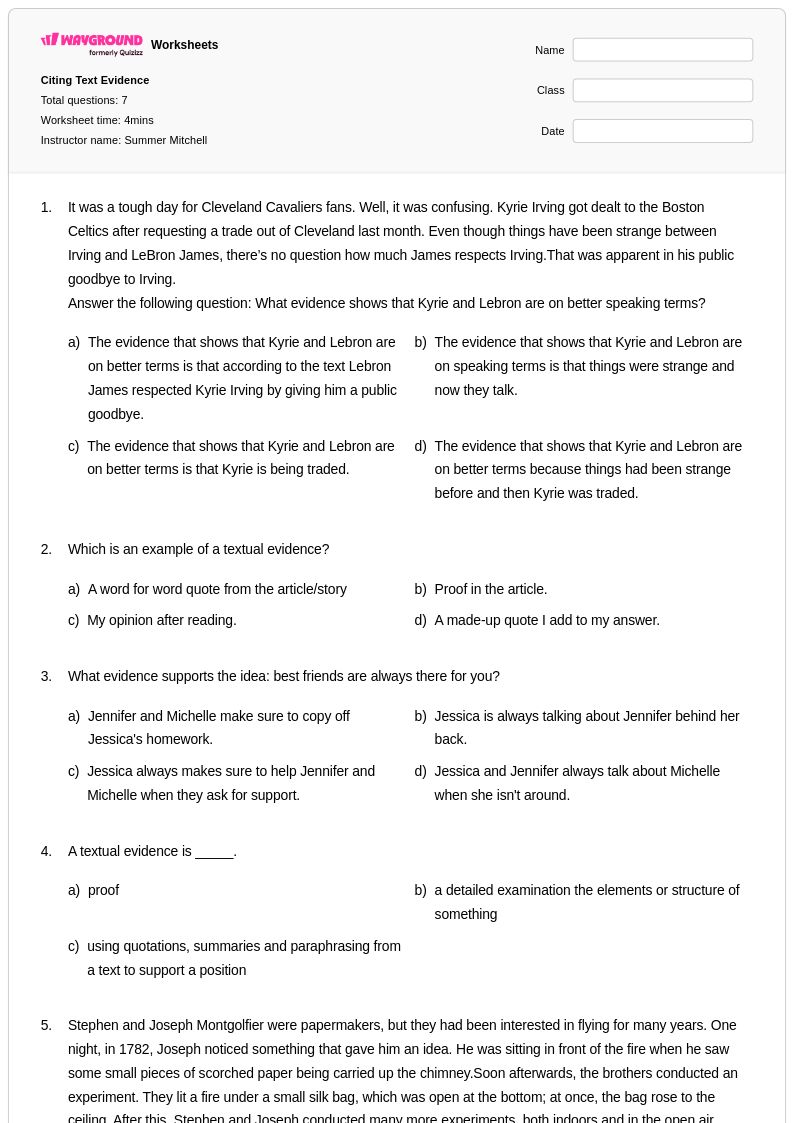
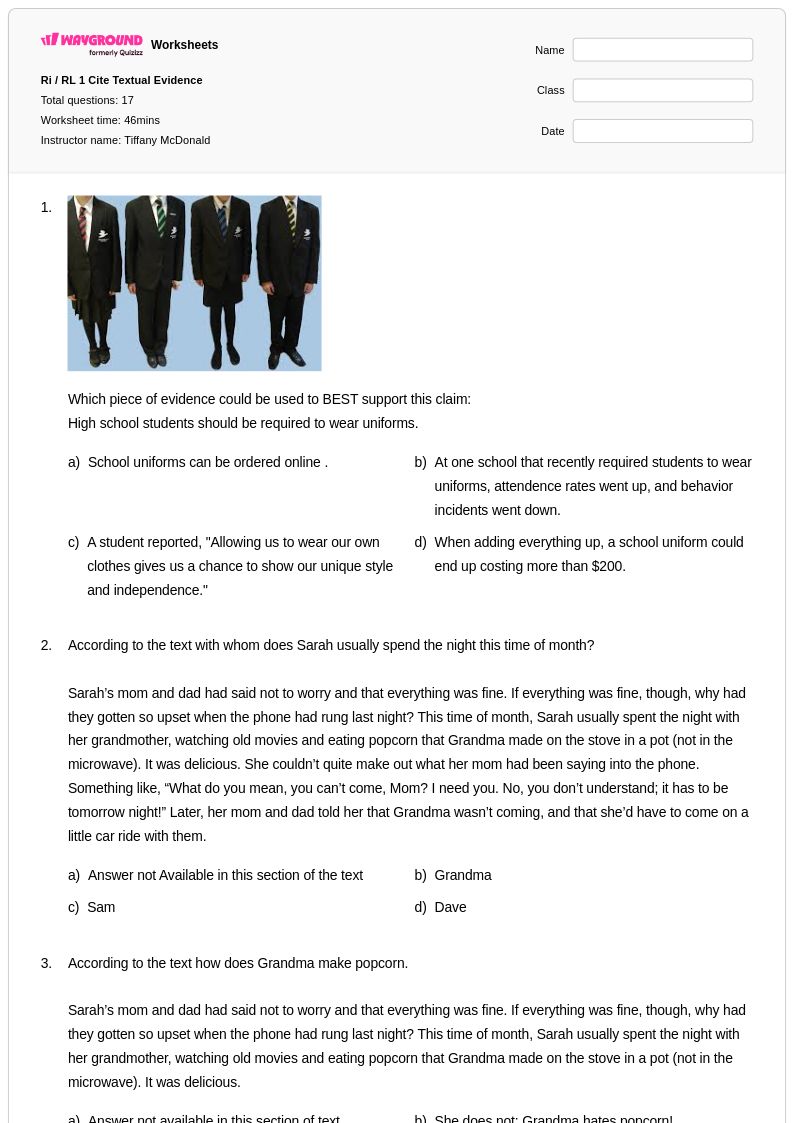
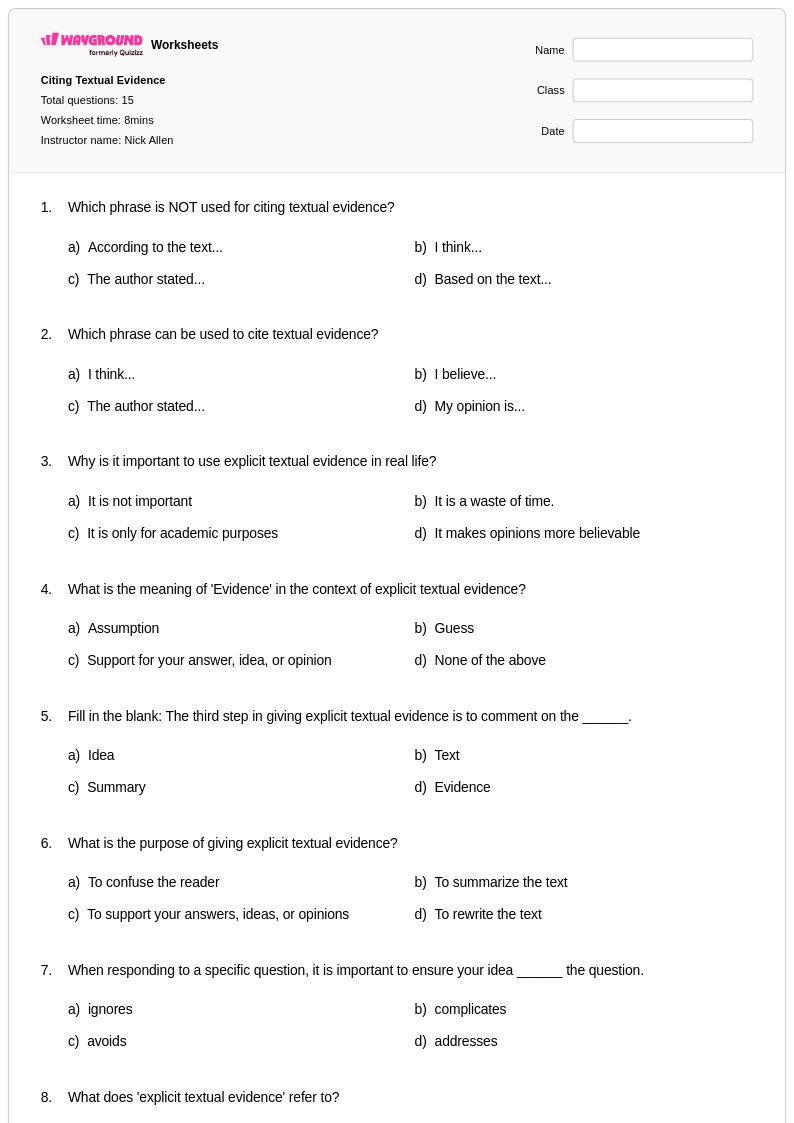
Citing textual evidence worksheets for Class 5 students available through Wayground (formerly Quizizz) provide comprehensive practice in one of the most fundamental reading comprehension skills. These expertly designed resources guide fifth-grade learners through the process of locating, extracting, and properly referencing specific details from texts to support their understanding and analysis. Students engage with practice problems that require them to identify relevant quotes, paraphrase key information, and connect evidence directly to comprehension questions across various genres including fiction, nonfiction, and poetry. Each worksheet comes with a detailed answer key that not only provides correct responses but also explains the reasoning behind effective evidence selection, making these free printables valuable tools for both independent practice and guided instruction in developing critical analytical skills.
Wayground (formerly Quizizz) empowers educators with millions of teacher-created citing textual evidence worksheets specifically aligned to Class 5 reading standards and learning objectives. The platform's robust search and filtering capabilities allow teachers to quickly locate resources that match their specific curriculum needs, student reading levels, and instructional goals. These differentiation tools enable seamless customization of worksheets to support struggling readers while providing enrichment opportunities for advanced students, ensuring every learner can develop proficiency in supporting their ideas with textual evidence. Available in both printable PDF format and interactive digital versions, these worksheet collections streamline lesson planning while providing teachers with flexible options for remediation, skill practice, and formative assessment in this essential reading comprehension strategy.
FAQs
How do I teach students to cite textual evidence effectively?
Start by modeling the process explicitly: show students how to identify a claim, locate a relevant passage, and connect the two with an explanatory sentence. Use anchor texts with guided annotation so students practice distinguishing between evidence that directly supports a claim and details that are tangential or inferential. Gradually release responsibility by moving from whole-class modeling to partner practice to independent application across both literary and informational texts.
What exercises help students practice citing textual evidence?
Effective practice exercises include claim-and-evidence matching tasks, short-answer prompts requiring students to quote and explain a passage, and error-analysis activities where students evaluate weak or unsupported citations. Scaffolded worksheets that progress from basic evidence identification to multi-step analytical tasks help students build the skill incrementally rather than jumping straight to open-ended writing.
What mistakes do students commonly make when citing textual evidence?
The most frequent errors are selecting evidence that is too broad, relying on personal opinion rather than the text, and failing to explain how the evidence connects to the claim. Students also commonly misquote or paraphrase inaccurately, losing the precision the argument requires. Targeted practice distinguishing between strong and weak evidence, along with explicit instruction on the 'quote, then explain' structure, helps address these patterns directly.
How can I differentiate citing textual evidence instruction for struggling readers?
For struggling readers, reduce the length and complexity of the source text and provide sentence frames that scaffold the evidence-integration process. Wayground supports student-level accommodations including Read Aloud, which lets students hear questions and text read to them, and reduced answer choices to lower cognitive load during practice. These settings can be applied to individual students without notifying the rest of the class, so differentiation stays seamless.
How do I use Wayground's citing textual evidence worksheets in my classroom?
Wayground's citing textual evidence worksheets are available as printable PDFs for traditional classroom use and in digital formats for technology-integrated environments, including the option to host them as a quiz directly on Wayground. Teachers can use them for guided practice, formative assessment, or targeted intervention, and each worksheet includes a complete answer key to streamline grading and feedback. The digital format also allows teachers to apply individual accommodations such as extended time or Read Aloud for students who need additional support.
How do I assess whether students have mastered citing textual evidence?
Look for three indicators: the student selects evidence that is specific and directly relevant to the claim, accurately quotes or paraphrases the source text, and provides a clear explanation of how the evidence supports the argument. Common signs that mastery has not yet been reached include vague or off-topic citations, dropped quotes with no follow-up explanation, and over-reliance on plot summary rather than analytical support. Using answer-key-aligned worksheets as formative checks helps teachers identify these gaps early and plan targeted re-teaching.