Free Printable Biblical Stories Worksheets for Class 3
Discover Wayground's free Class 3 Biblical Stories worksheets and printables that help students explore important religious narratives while developing reading comprehension and cultural understanding through engaging practice problems with answer keys.
Explore printable Biblical Stories worksheets for Class 3
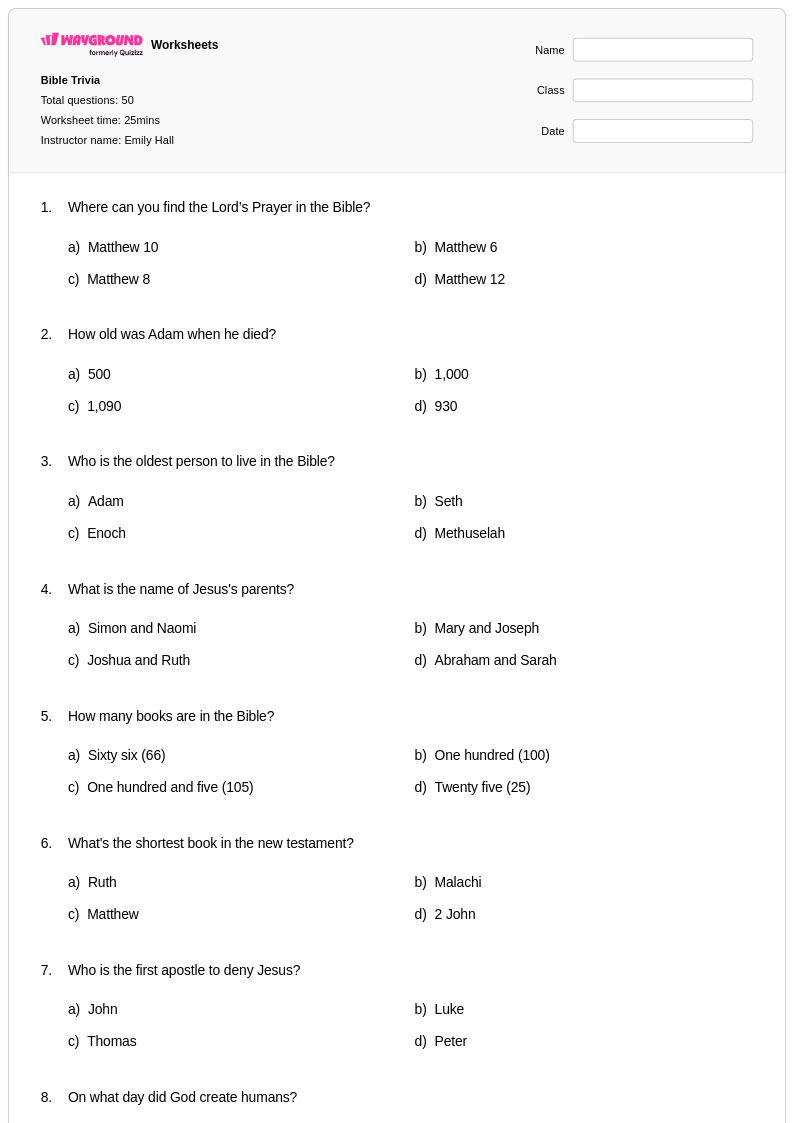
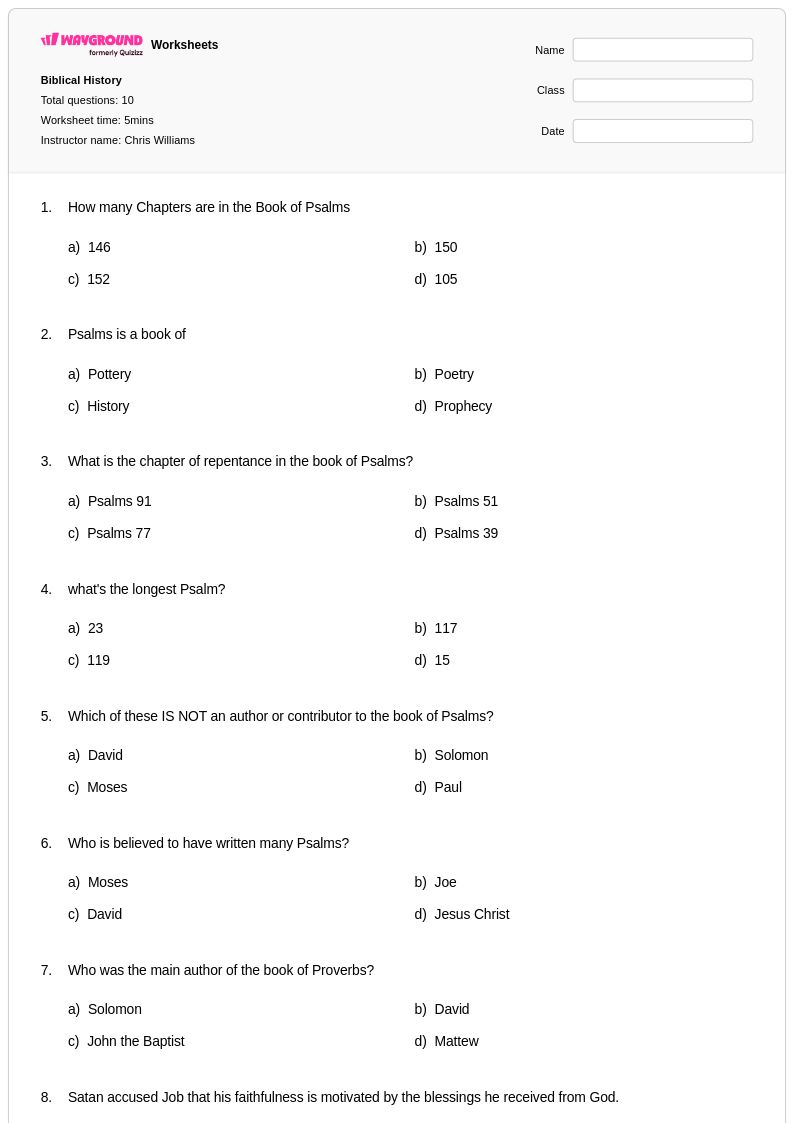
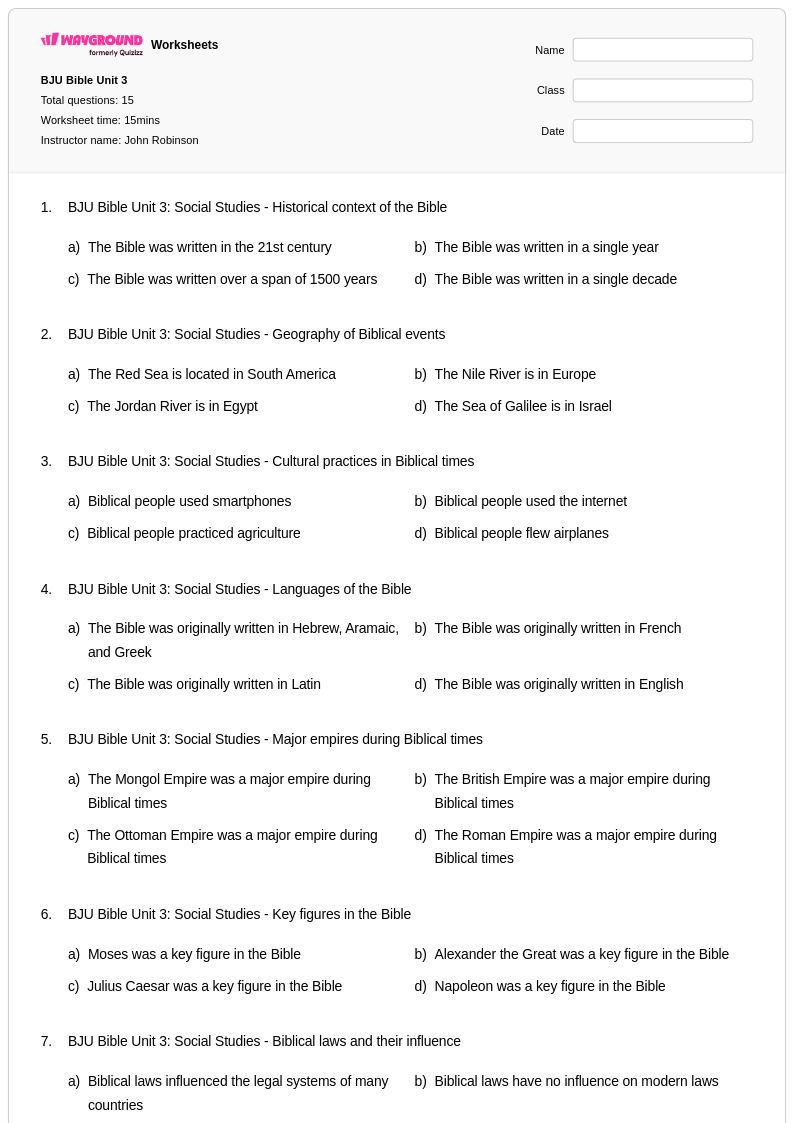
Biblical Stories worksheets for Class 3 provide an engaging way to explore foundational narratives while developing critical thinking and comprehension skills within the social studies curriculum. These educational resources help young learners examine how biblical narratives have shaped communities and cultures throughout history, encouraging students to analyze character motivations, identify moral lessons, and understand the cultural context of ancient stories. The worksheets feature age-appropriate practice problems that guide students through story sequences, character analysis, and connections between biblical accounts and modern community values. Teachers can access comprehensive materials including detailed answer keys, free printables in pdf format, and varied question types that accommodate different learning styles while reinforcing reading comprehension and analytical thinking skills.
Wayground, formerly Quizizz, supports educators with an extensive collection of teacher-created biblical stories resources specifically designed for elementary social studies instruction. The platform's robust search and filtering capabilities allow teachers to quickly locate materials that align with curriculum standards and match their students' developmental needs. With millions of educational resources available, teachers can easily find differentiated worksheets that provide appropriate challenges for diverse learners, whether for remediation, standard practice, or enrichment activities. The flexible customization tools enable educators to modify existing content or create personalized materials, while the availability of both printable and digital formats, including downloadable pdfs, ensures seamless integration into any classroom environment or instructional model.
FAQs
How do I teach biblical stories in a classroom setting?
Teaching biblical stories is most effective when framed within a cultural and historical context rather than a strictly religious one, which makes the content accessible in diverse classroom environments. Teachers typically anchor lessons around a core narrative such as Noah's Ark, David and Goliath, or the Exodus story, then guide students to analyze the moral lessons, community values, and historical significance embedded in each account. Connecting these ancient narratives to their ongoing influence on modern cultures and traditions helps students build meaningful context and critical thinking skills.
What are good activities for helping students practice analyzing biblical stories?
Structured worksheet activities are particularly effective for practicing analysis of biblical stories because they prompt students to move beyond retelling and toward interpretation. Useful exercise types include identifying the central moral lesson of a narrative, comparing cultural contexts across different stories, and tracing how a specific story has influenced modern communities or traditions. These activities build the close-reading and inferencing skills that anchor deeper literary and social studies work.
What common mistakes do students make when analyzing biblical stories?
A frequent error is treating biblical stories as purely literal historical accounts or, conversely, dismissing them as fictional without engaging with their cultural significance. Students also commonly struggle to distinguish between the narrative itself and its broader moral or community implications, summarizing plot details instead of analyzing meaning. Prompting students with guiding questions about why a story has persisted across civilizations and what values it reinforces helps redirect this surface-level thinking.
How can I use biblical stories worksheets to support different learners in my class?
Biblical stories worksheets on Wayground can be assigned digitally, which allows teachers to apply individual accommodations such as Read Aloud for students who need audio support, reduced answer choices to lower cognitive load, and extended time for students who require it. These settings are configured per student and apply automatically without notifying other students, so the class experience remains cohesive. This flexibility makes it straightforward to differentiate a single worksheet activity across a range of reading levels and learning needs.
How do I use Wayground's biblical stories worksheets in my classroom?
Wayground's biblical stories worksheets are available as printable PDFs for traditional classroom use and in digital formats for technology-integrated environments, including the option to host them as a live quiz on Wayground. Teachers can assign them as guided in-class activities, independent practice, or homework, and each worksheet includes a complete answer key to simplify grading and review. The digital format also supports accommodation settings that can be applied to individual students, making the same worksheet usable across varied learning needs without creating separate materials.
How do biblical stories fit into a social studies curriculum?
Biblical stories are commonly incorporated into social studies curricula as primary examples of how foundational narratives shape cultural identity, community structures, and shared values across civilizations. Stories such as the Exodus account or David and Goliath illustrate themes of leadership, justice, and collective survival that recur across world cultures, making them useful anchors for comparative cultural analysis. Framing these narratives as cultural artifacts rather than religious doctrine keeps the content curriculum-aligned and accessible to all students.