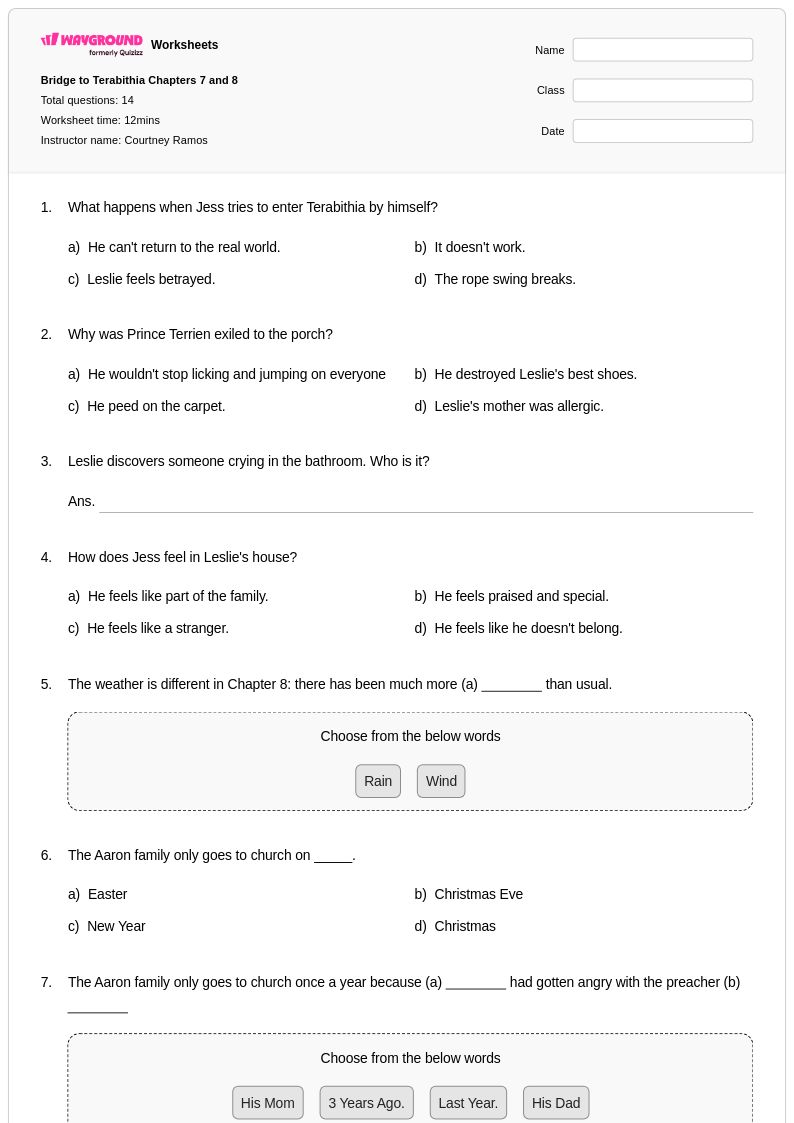
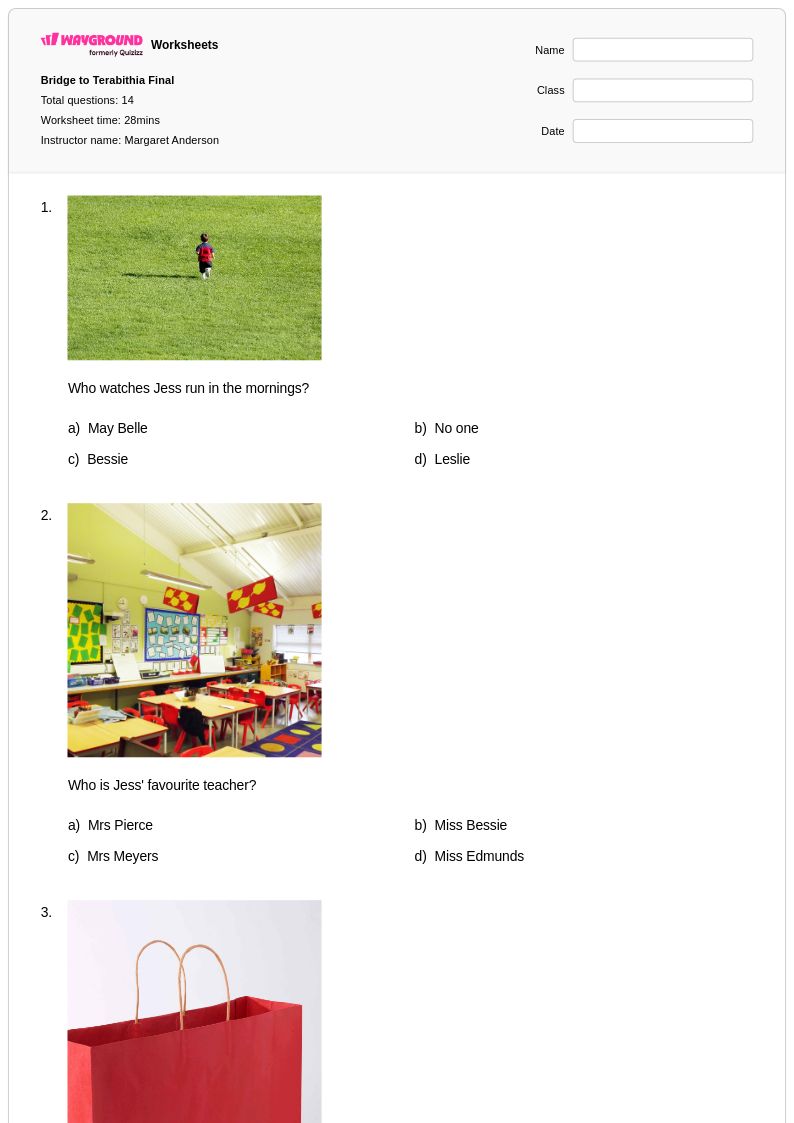
Explore Bridge to Terabithia with Wayground's comprehensive collection of free worksheets and printables that help students analyze this beloved novel through engaging practice problems and detailed answer keys.
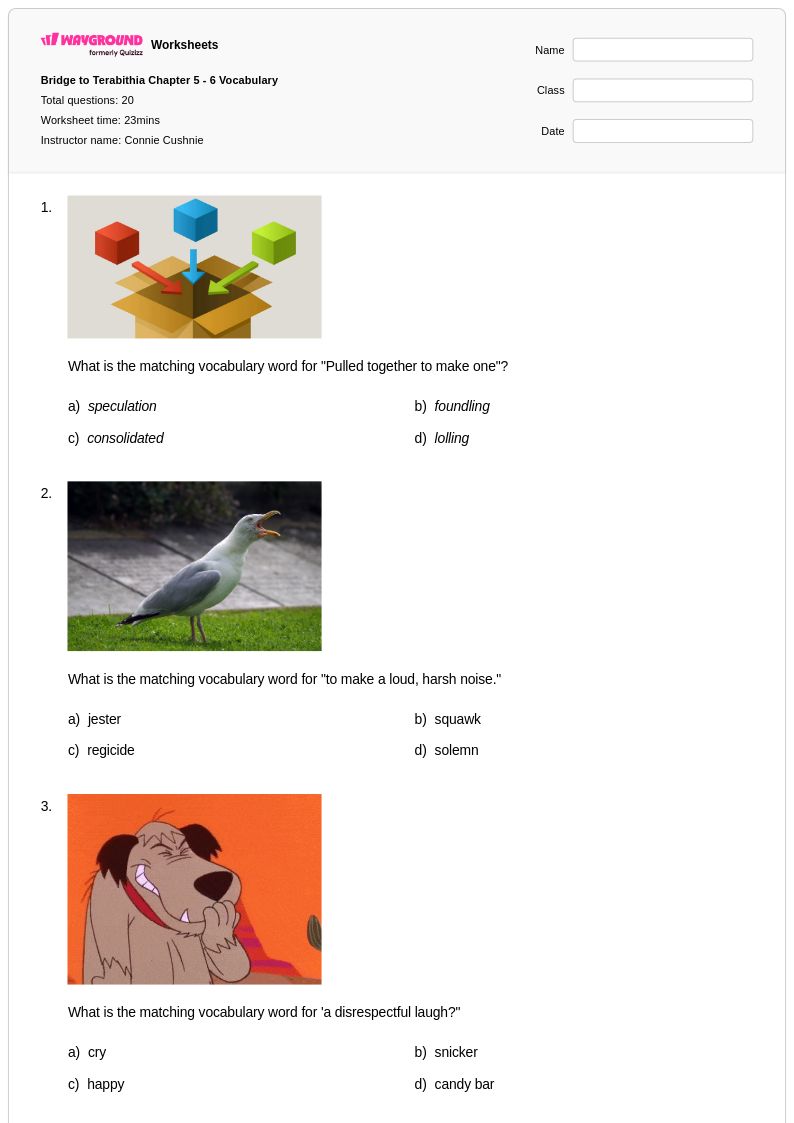
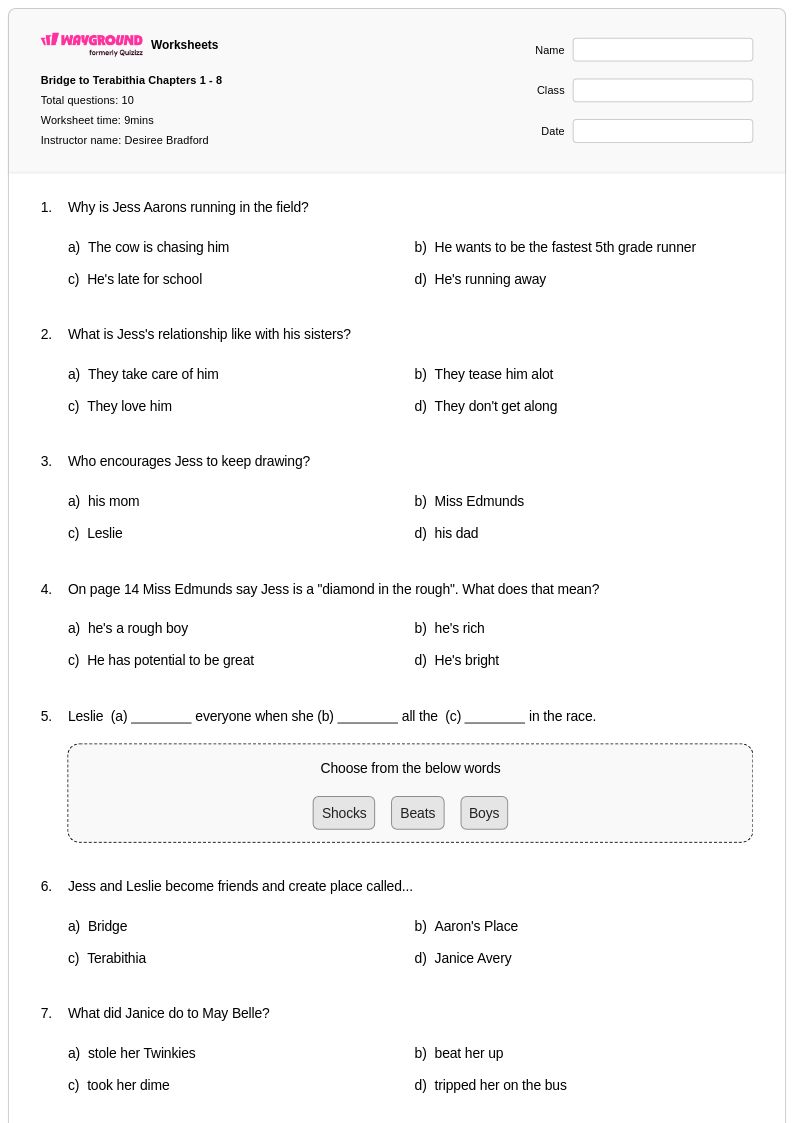
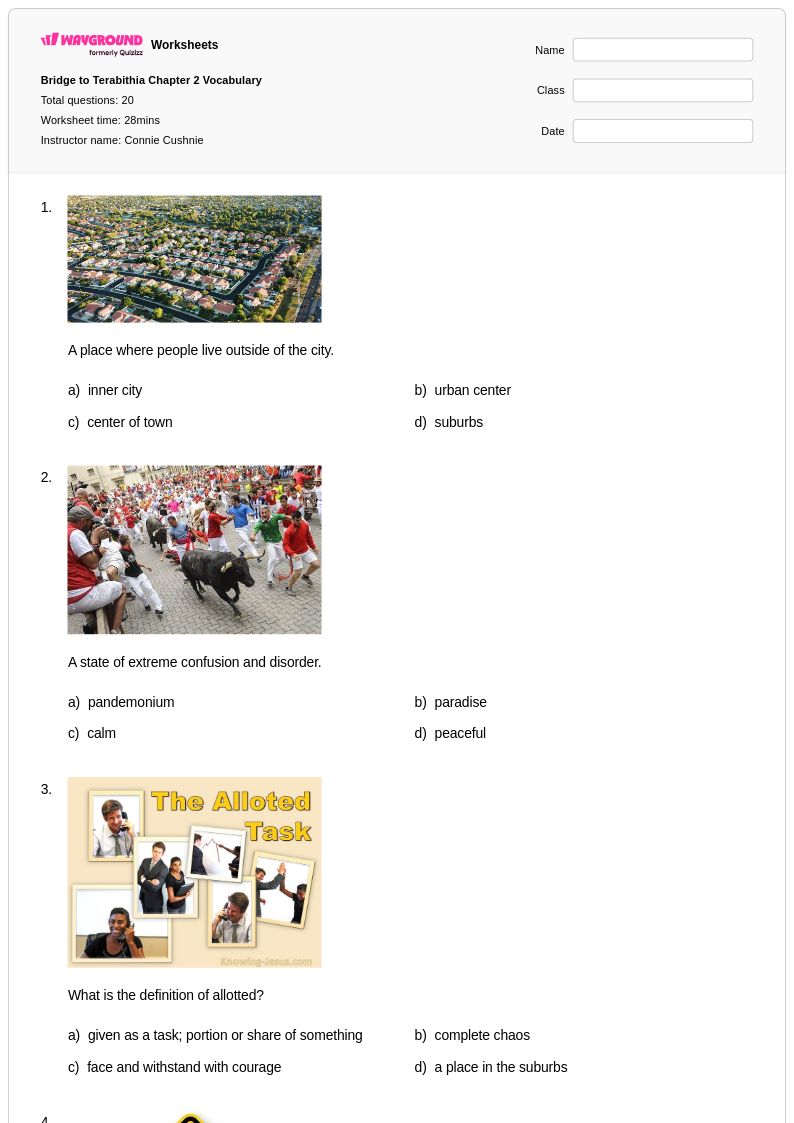
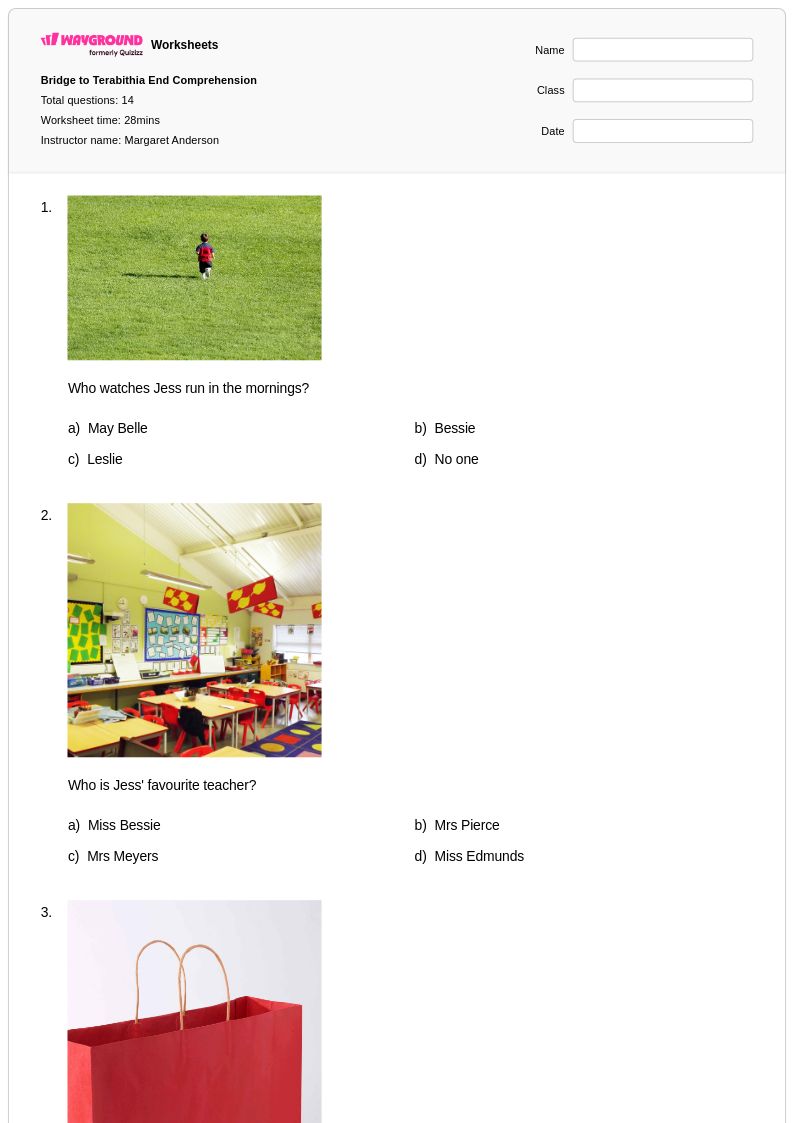
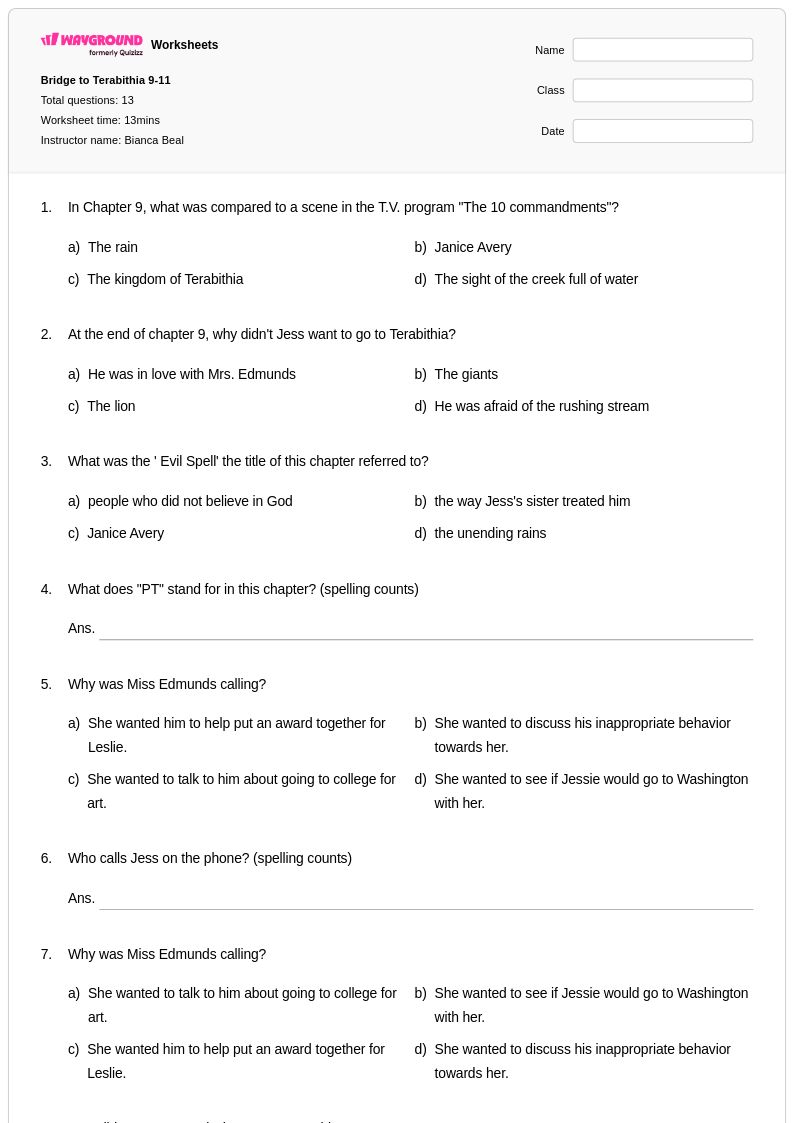
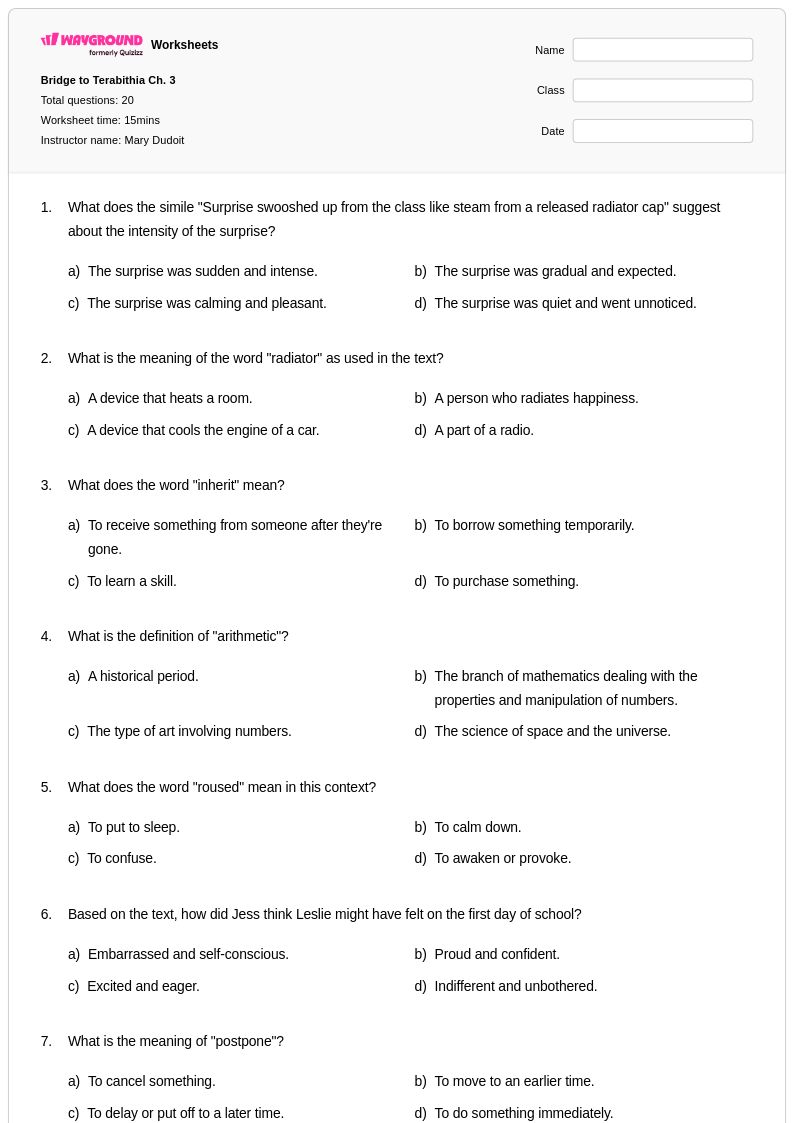
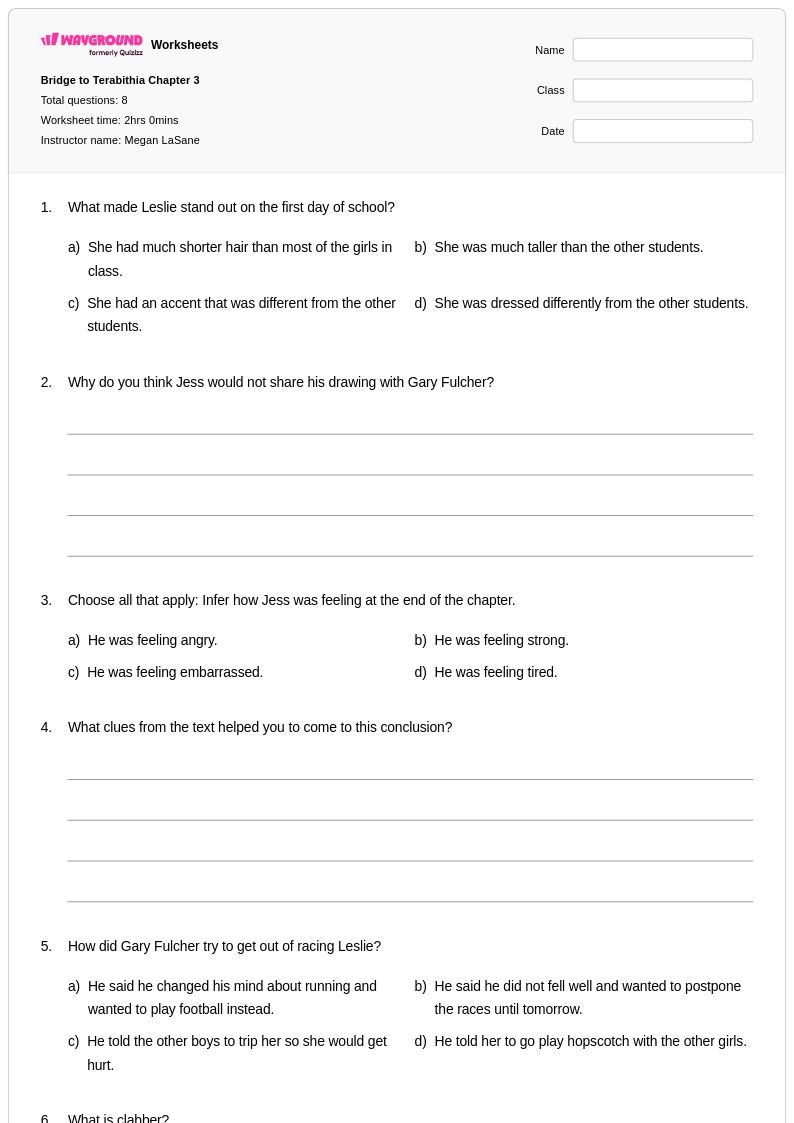
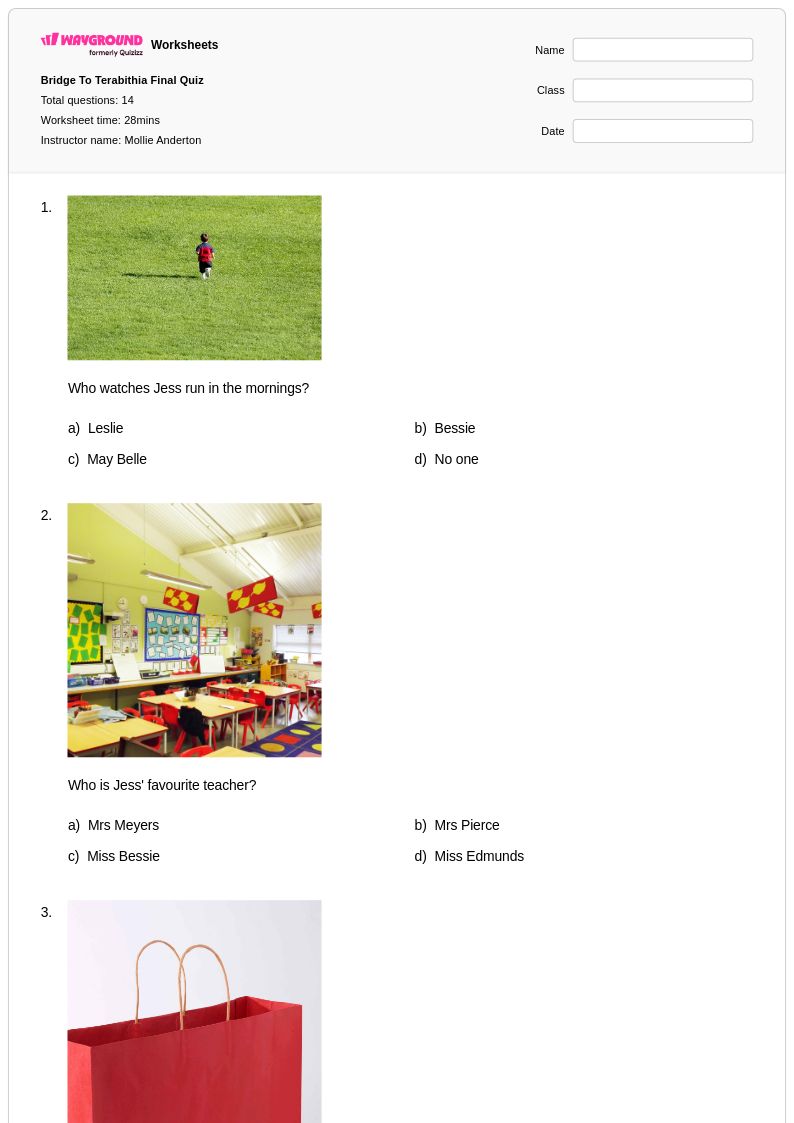
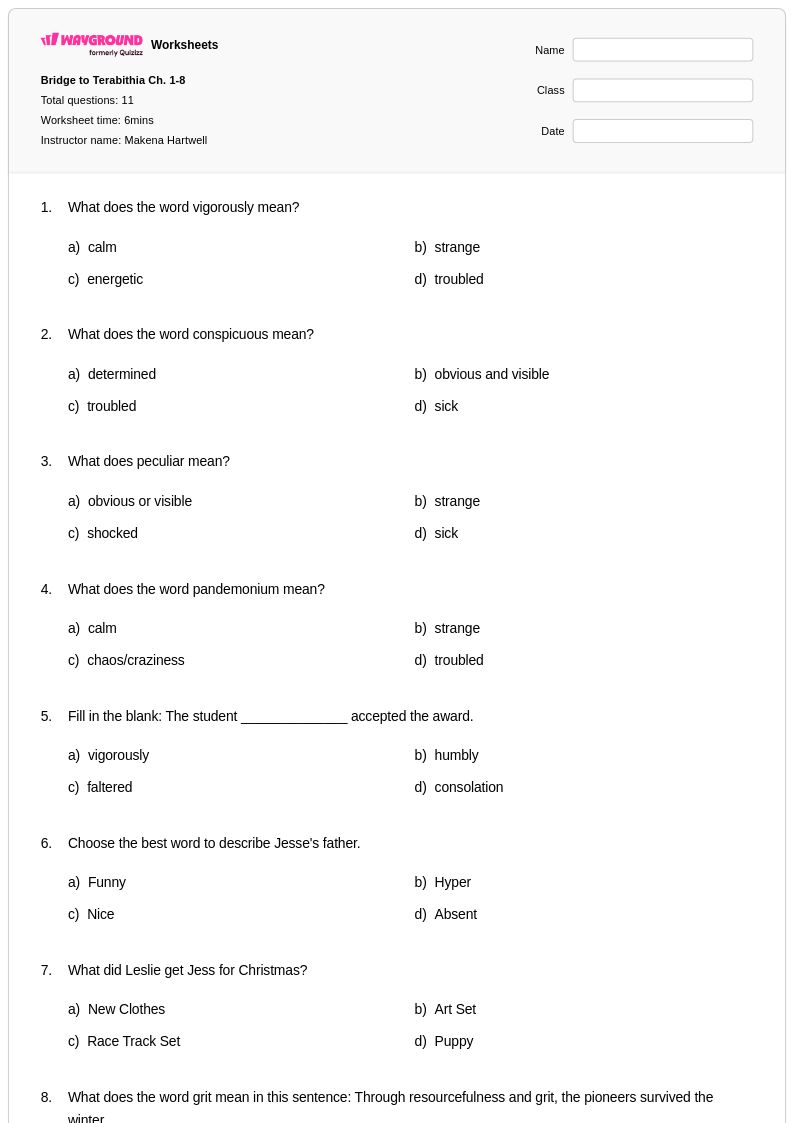
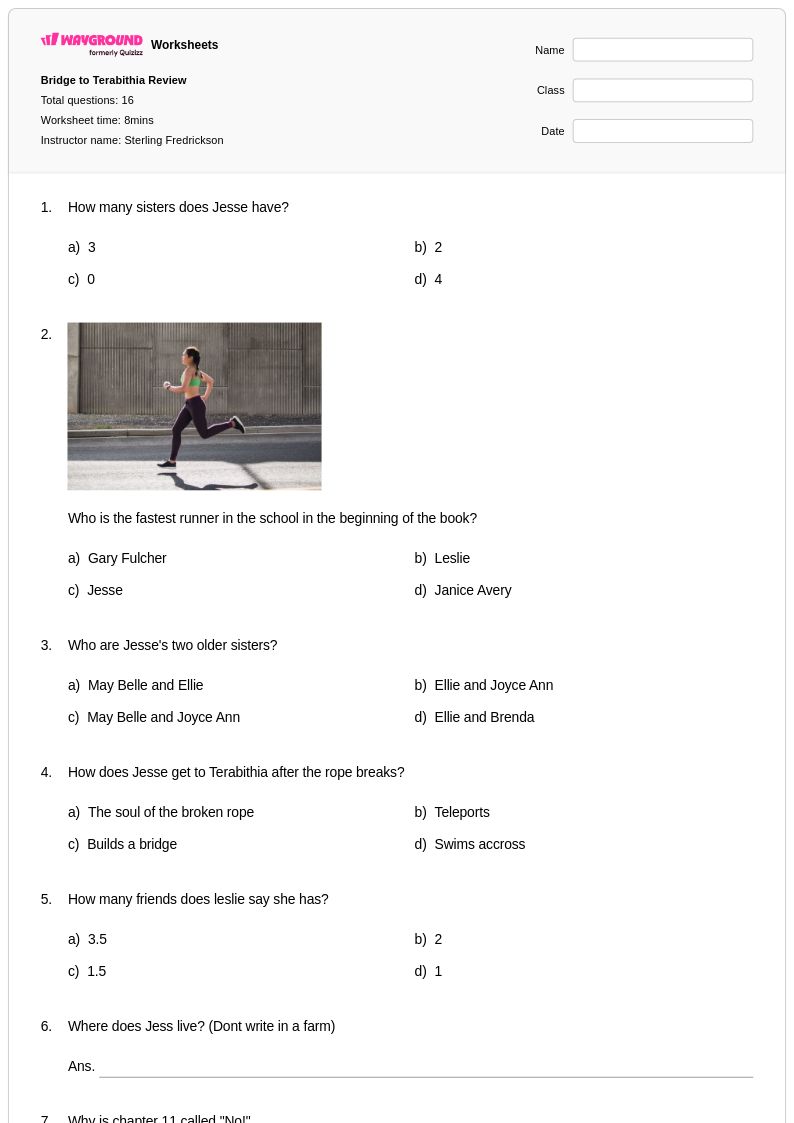
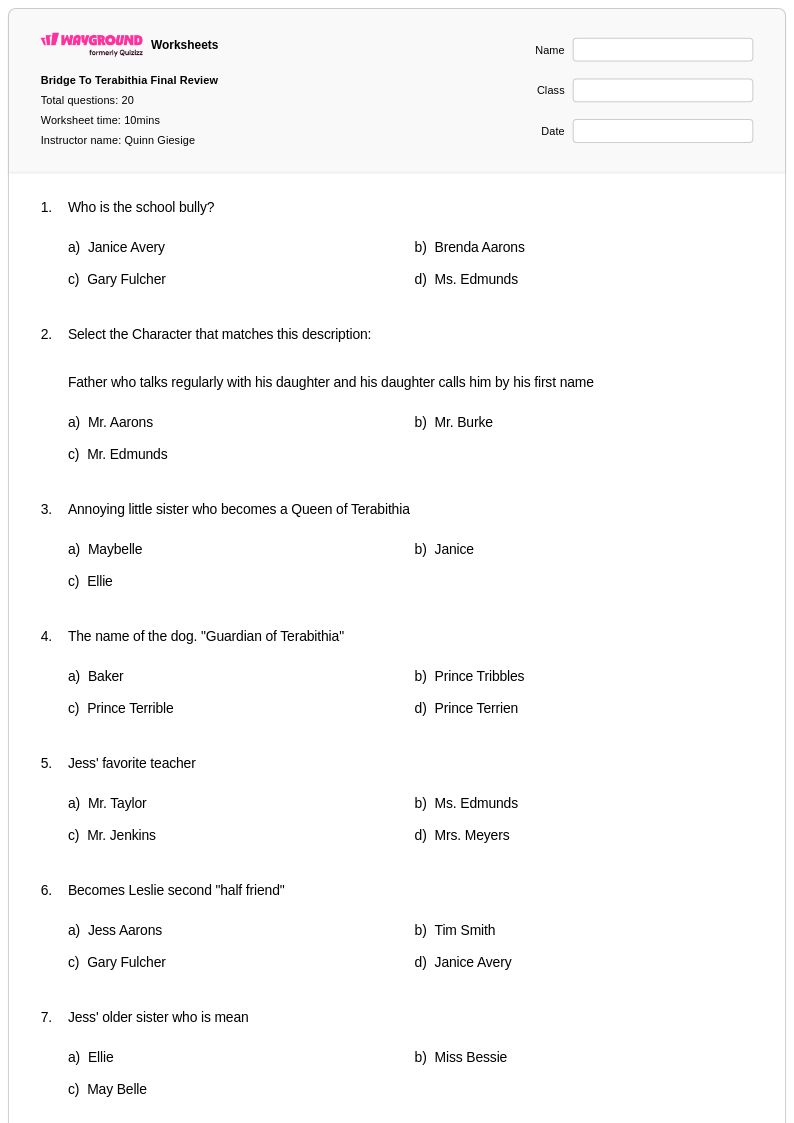
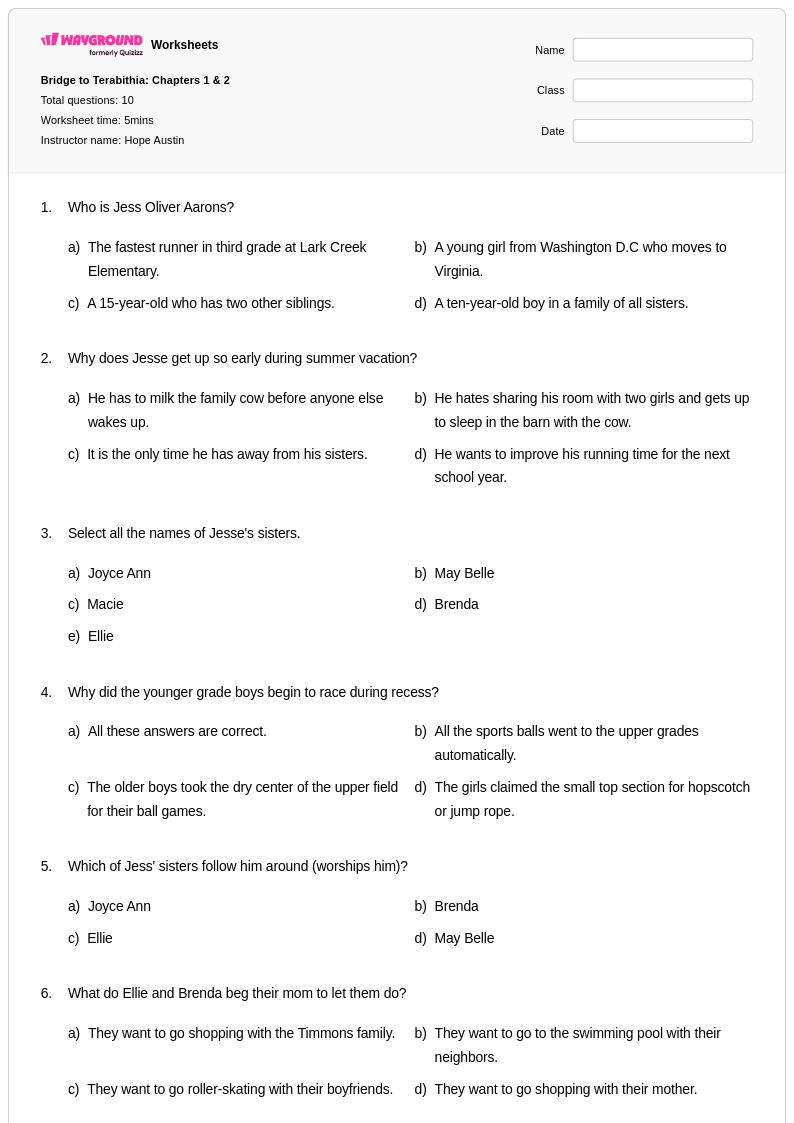
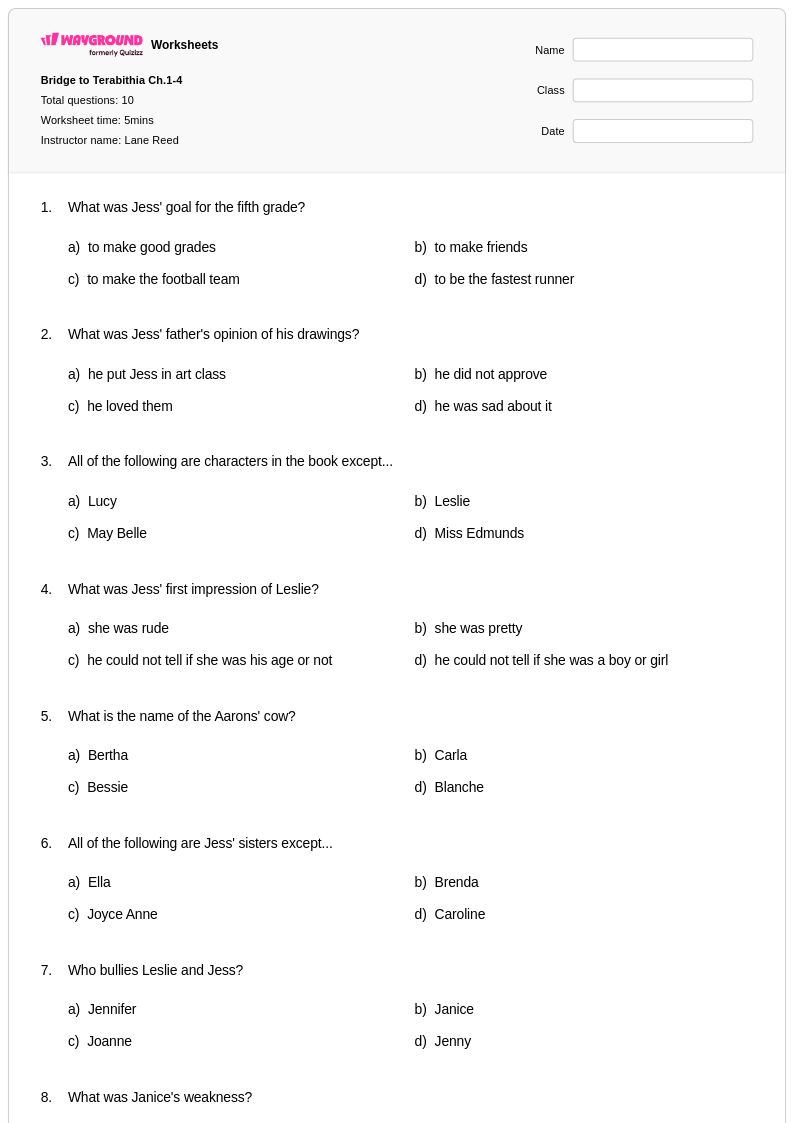
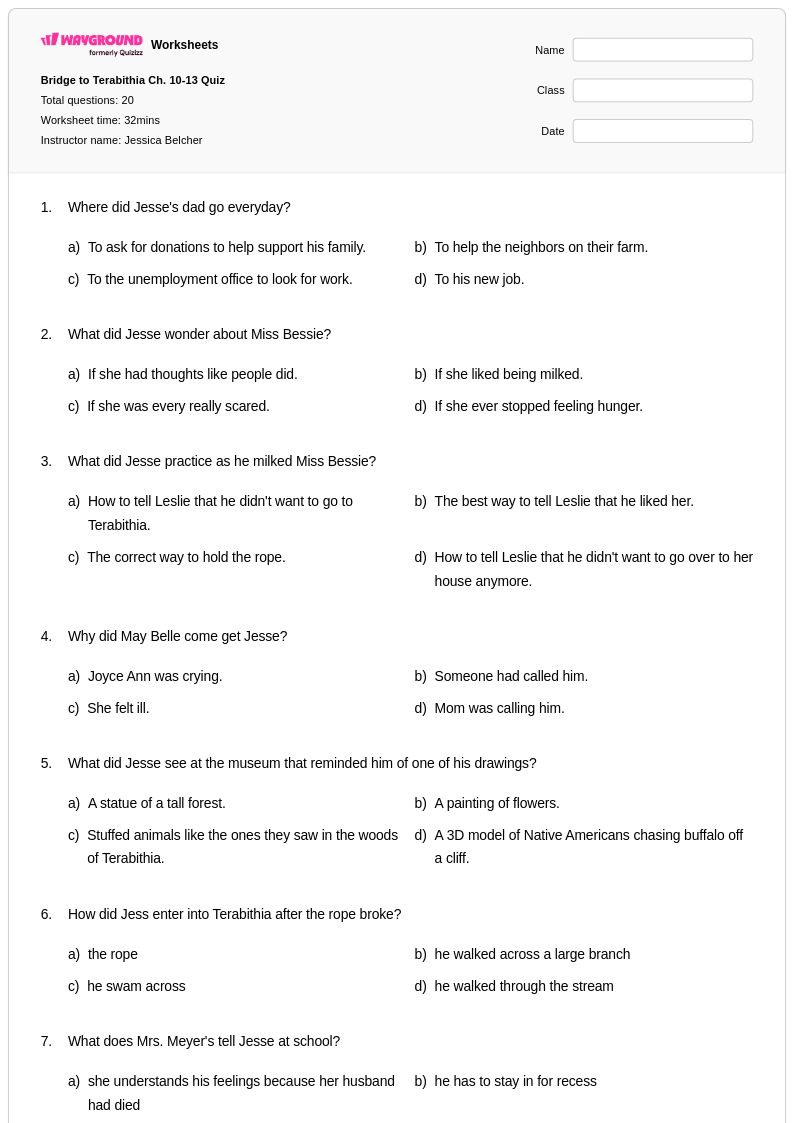
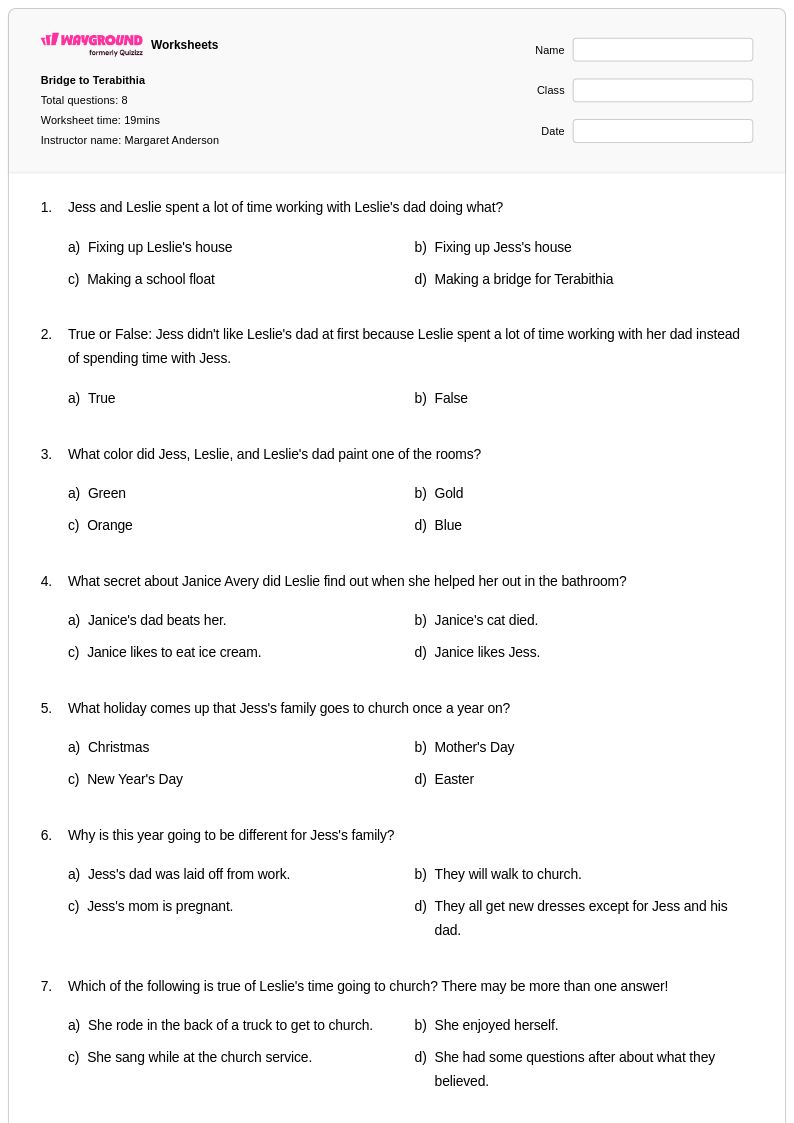
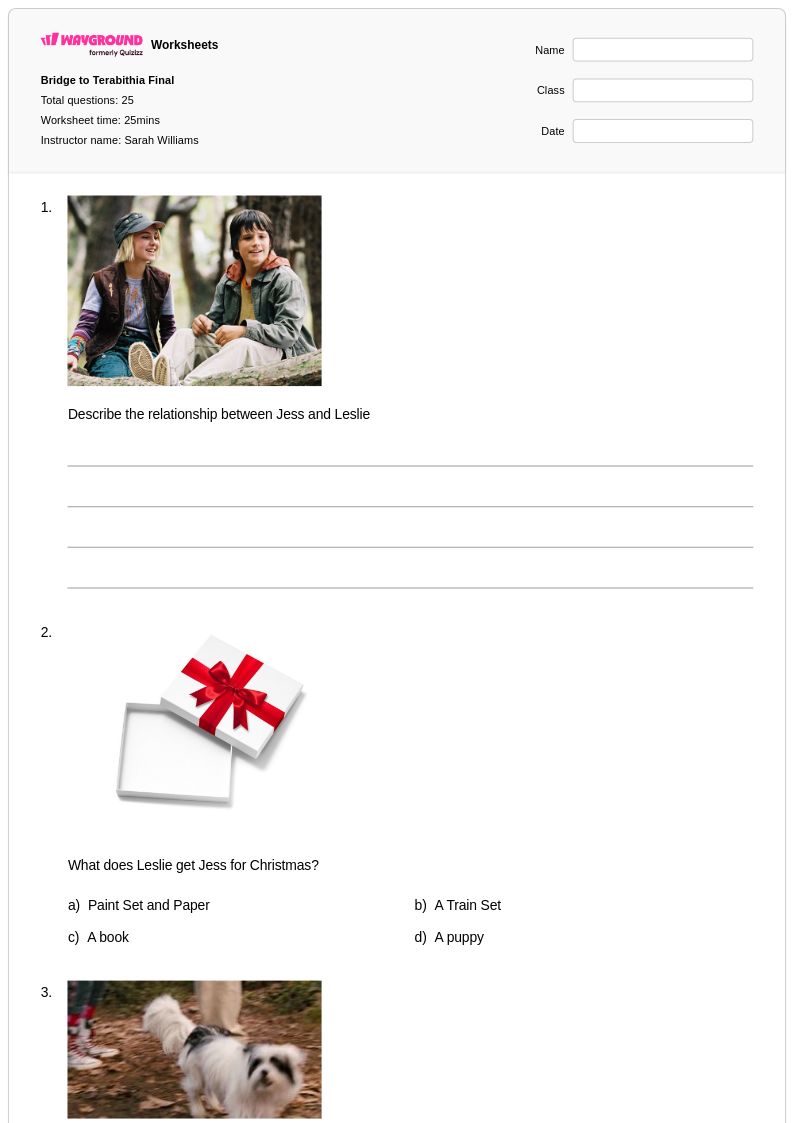
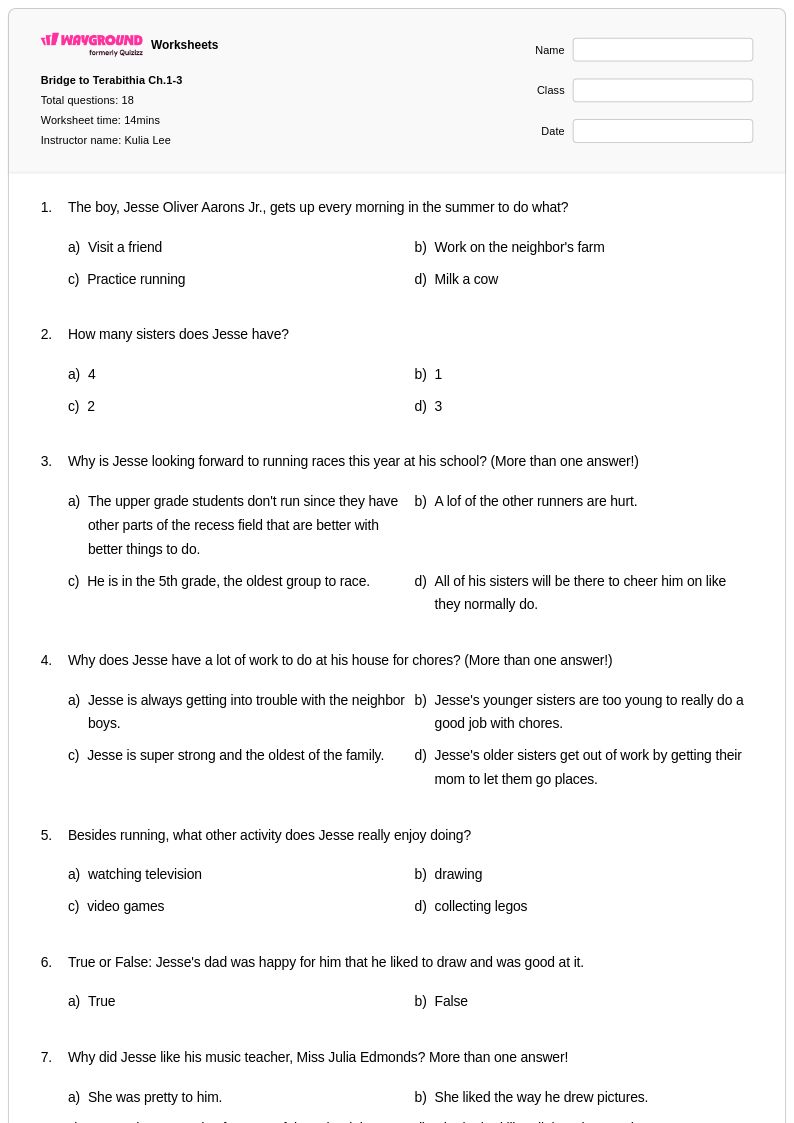
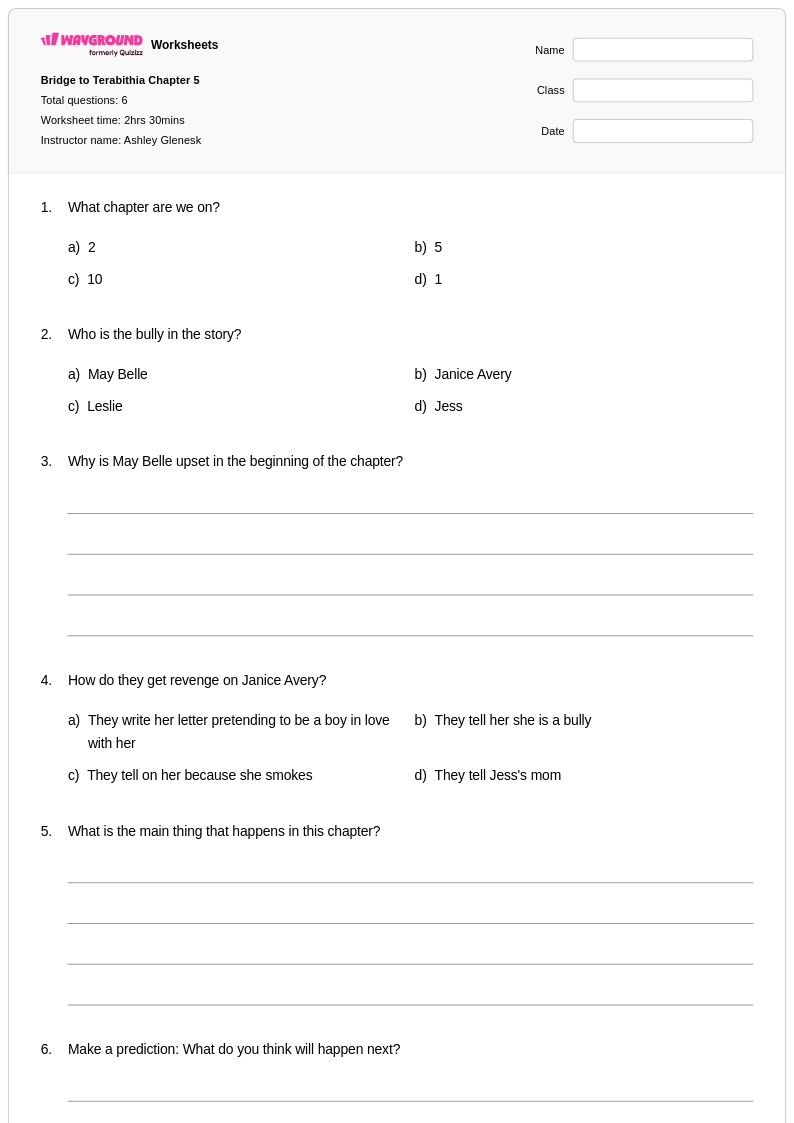
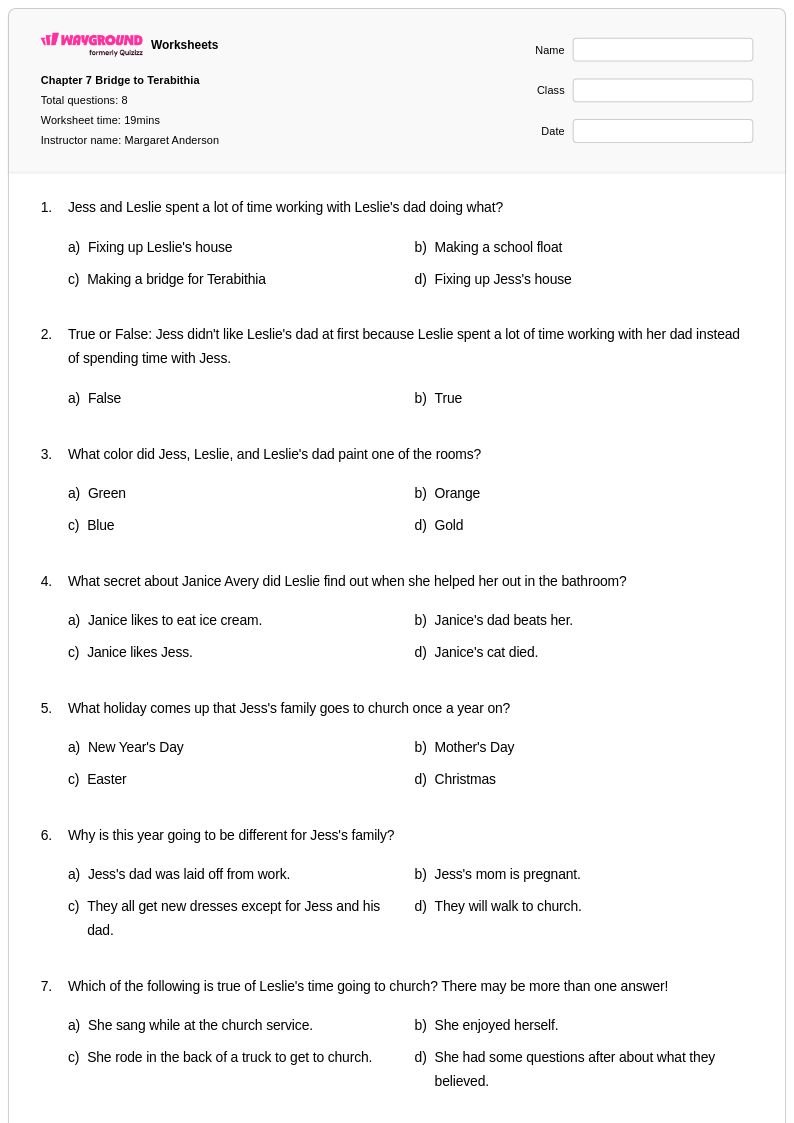
Bridge to Terabithia worksheets available through Wayground (formerly Quizizz) provide comprehensive educational resources that help students analyze Katherine Paterson's beloved novel while developing critical reading and literary analysis skills. These carefully crafted materials guide learners through character development, theme exploration, plot analysis, and comprehension activities that deepen understanding of this powerful coming-of-age story. Students engage with practice problems that examine the friendship between Jesse and Leslie, the symbolism of the magical kingdom of Terabithia, and the novel's exploration of imagination, loss, and personal growth. Each worksheet includes detailed answer keys and is available as free printable resources, allowing educators to seamlessly incorporate these materials into their literature curriculum while supporting students' ability to identify literary devices, make text connections, and articulate thoughtful responses to complex themes.
Wayground (formerly Quizizz) empowers teachers with millions of educator-created Bridge to Terabithia resources that can be easily discovered through robust search and filtering capabilities designed to match specific classroom needs and learning objectives. The platform's comprehensive collection offers both printable pdf formats and interactive digital versions, enabling flexible implementation whether for in-class activities, homework assignments, or differentiated instruction approaches. Teachers benefit from standards-aligned materials that support curriculum goals while utilizing built-in customization tools to modify worksheets for various skill levels, ensuring appropriate challenge and support for all learners. These versatile resources streamline lesson planning and provide targeted options for remediation, enrichment, and ongoing skill practice, helping educators create engaging literary experiences that foster deep comprehension and analytical thinking about this acclaimed novel's enduring themes and literary merit.
FAQs
How do I teach Bridge to Terabithia in a way that helps students engage with difficult themes like grief and loss?
Anchor instruction in the friendship between Jesse and Leslie before introducing the novel's themes of loss and personal growth, so students have an emotional foothold when the narrative shifts. Structured discussion protocols, journal prompts, and close-reading activities around key scenes help students process grief as a literary and human experience rather than a plot point. Pairing these with text-to-self connection activities encourages students to articulate how the novel's themes connect to their own lives without requiring them to share personally vulnerable responses.
What literary devices should students focus on when analyzing Bridge to Terabithia?
Students should focus on symbolism (particularly the role of Terabithia as an imaginative space representing freedom, friendship, and escapism), imagery, foreshadowing, and point of view. The rope swing, the creek, and the kingdom itself function as recurring symbols that carry thematic weight throughout the novel. Teaching students to identify how Paterson uses these devices to develop themes of imagination, loss, and resilience builds transferable literary analysis skills.
What exercises help students practice comprehension and analysis of Bridge to Terabithia?
Worksheets that ask students to trace character development across chapters, map the plot's rising action and climax, and analyze specific passages for theme and literary devices are highly effective for this novel. Graphic organizers comparing Jesse and Leslie's personalities and backgrounds help students understand how contrast is used to build their relationship. Comprehension checks after key chapters ensure students are tracking plot details accurately before moving into deeper analytical work.
What mistakes do students commonly make when analyzing Bridge to Terabithia?
A common error is treating Terabithia as a literal place rather than understanding its symbolic function as a product of Jesse and Leslie's shared imagination and a representation of emotional freedom. Students also frequently summarize plot events when asked to analyze theme, writing what happens rather than what it means. Another misconception is viewing Jesse's emotional arc at the novel's end as a simple resolution rather than the beginning of a longer process of grief and growth.
How can I use Bridge to Terabithia worksheets to support students who struggle with literary analysis?
Scaffolded worksheets that break analysis into structured steps, such as identifying a passage, naming a literary device, and explaining its effect, reduce the cognitive load for students who find open-ended analysis challenging. On Wayground, teachers can apply accommodations such as read-aloud support and reduced answer choices to individual students, making the same worksheet accessible across ability levels without singling anyone out. Starting with character and plot-level questions before moving to theme and symbol analysis also gives struggling readers a concrete foundation to build from.
How do I use Bridge to Terabithia worksheets from Wayground in my classroom?
Bridge to Terabithia worksheets on Wayground are available as printable PDFs for traditional classroom use and in digital formats for technology-integrated environments, including the option to host them as a quiz directly on the Wayground platform. Teachers can use them as chapter-by-chapter comprehension checks, end-of-unit assessments, or independent practice activities. Each worksheet includes a complete answer key, which reduces grading prep time and allows teachers to focus on discussion and instruction.