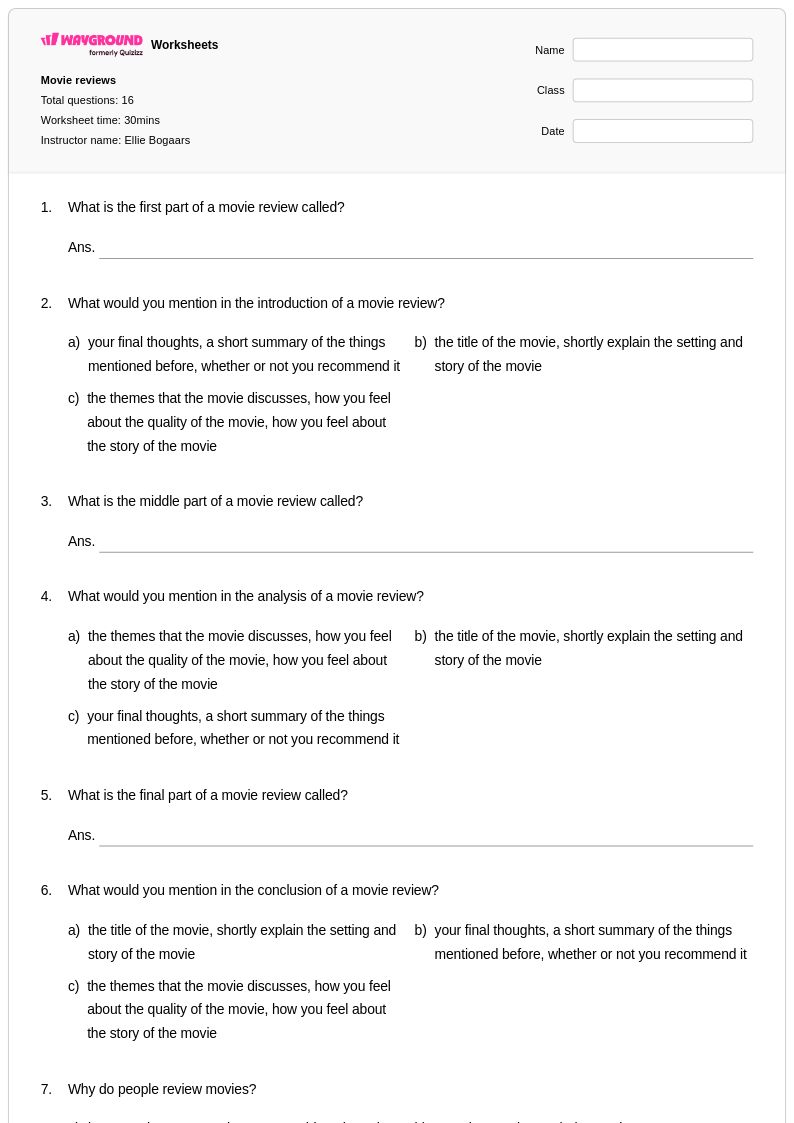
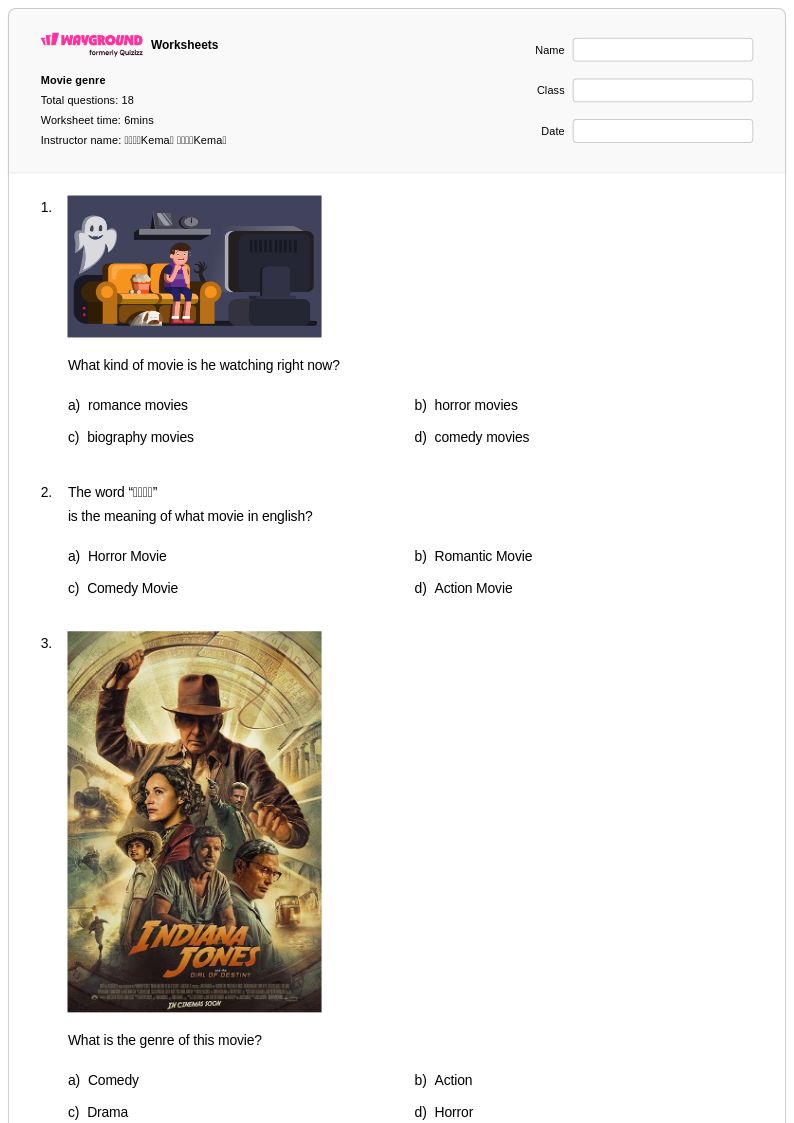
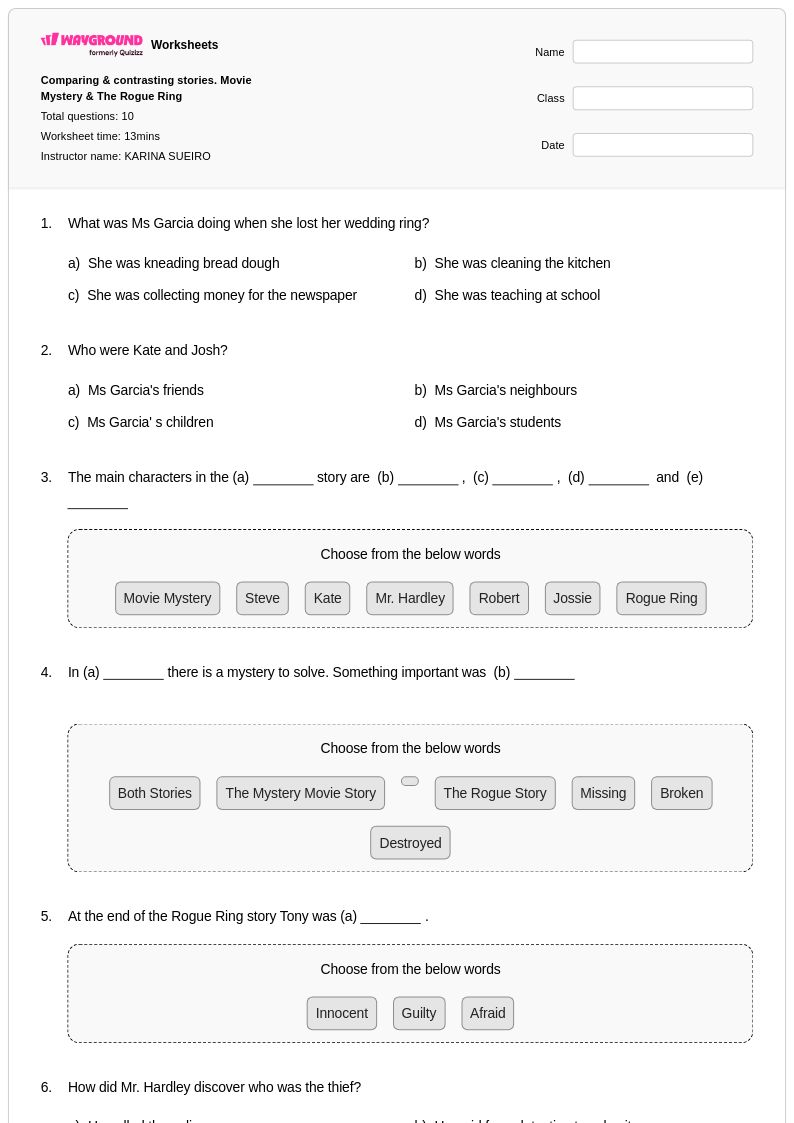
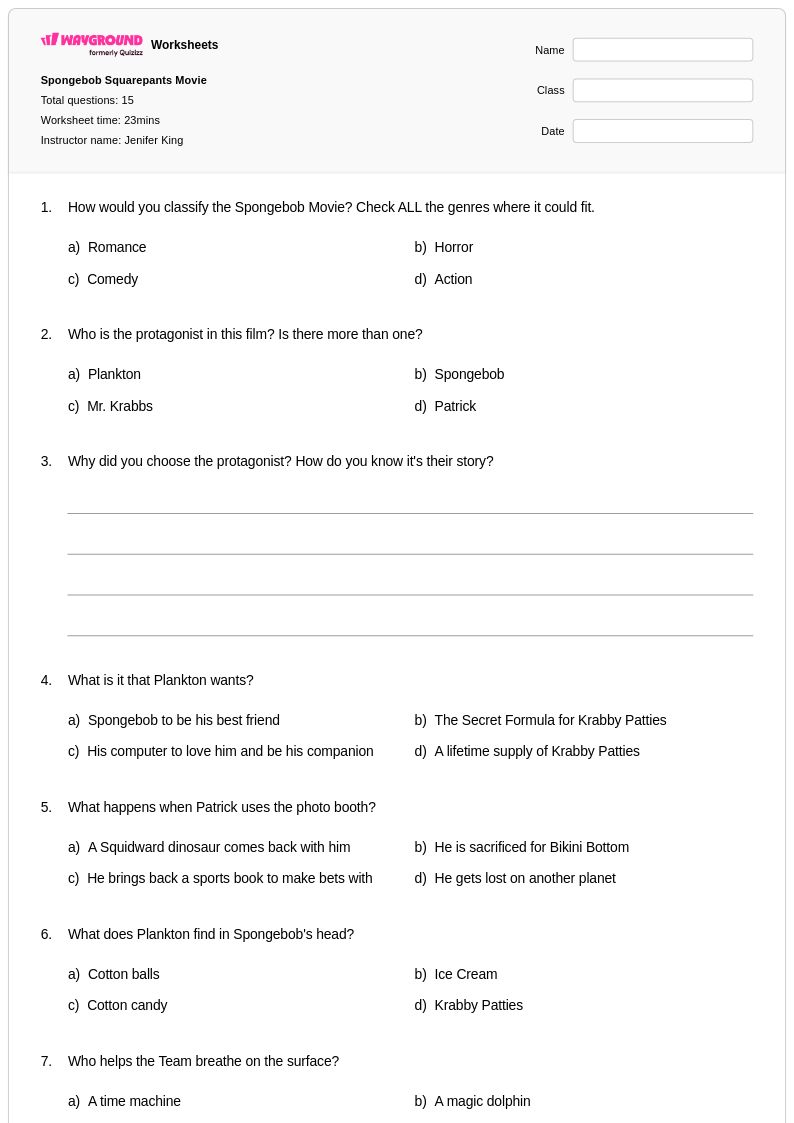
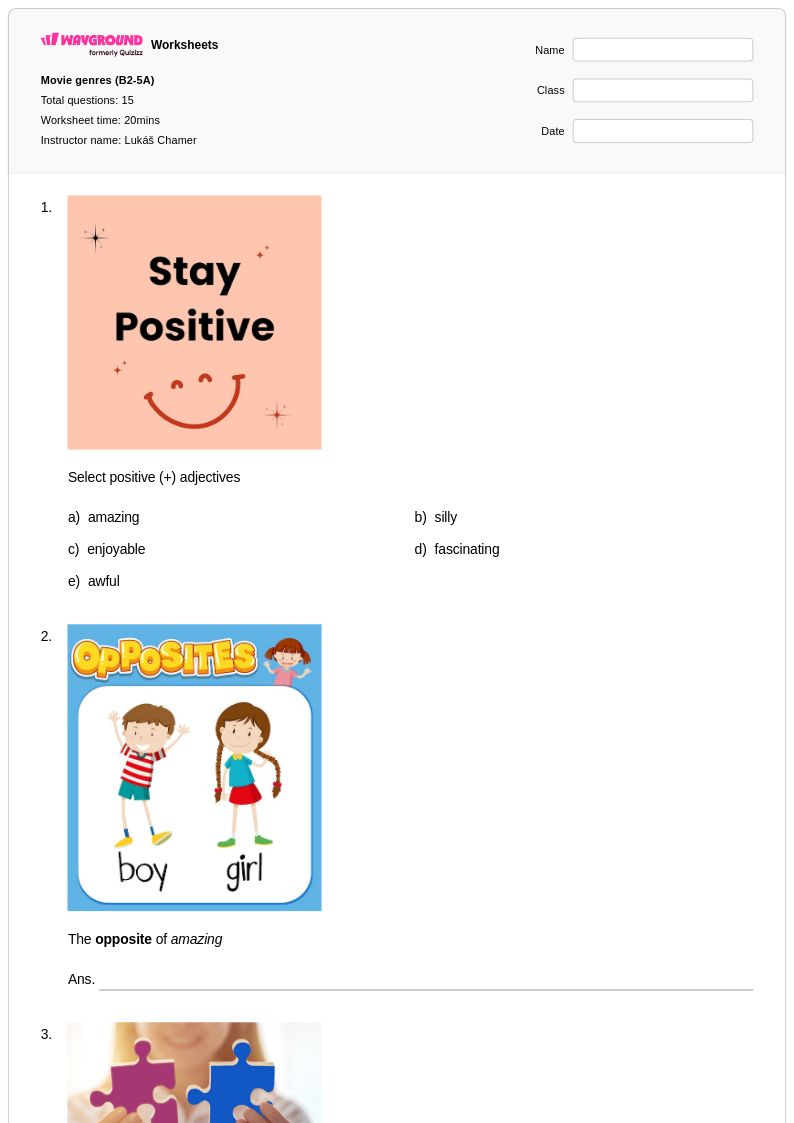
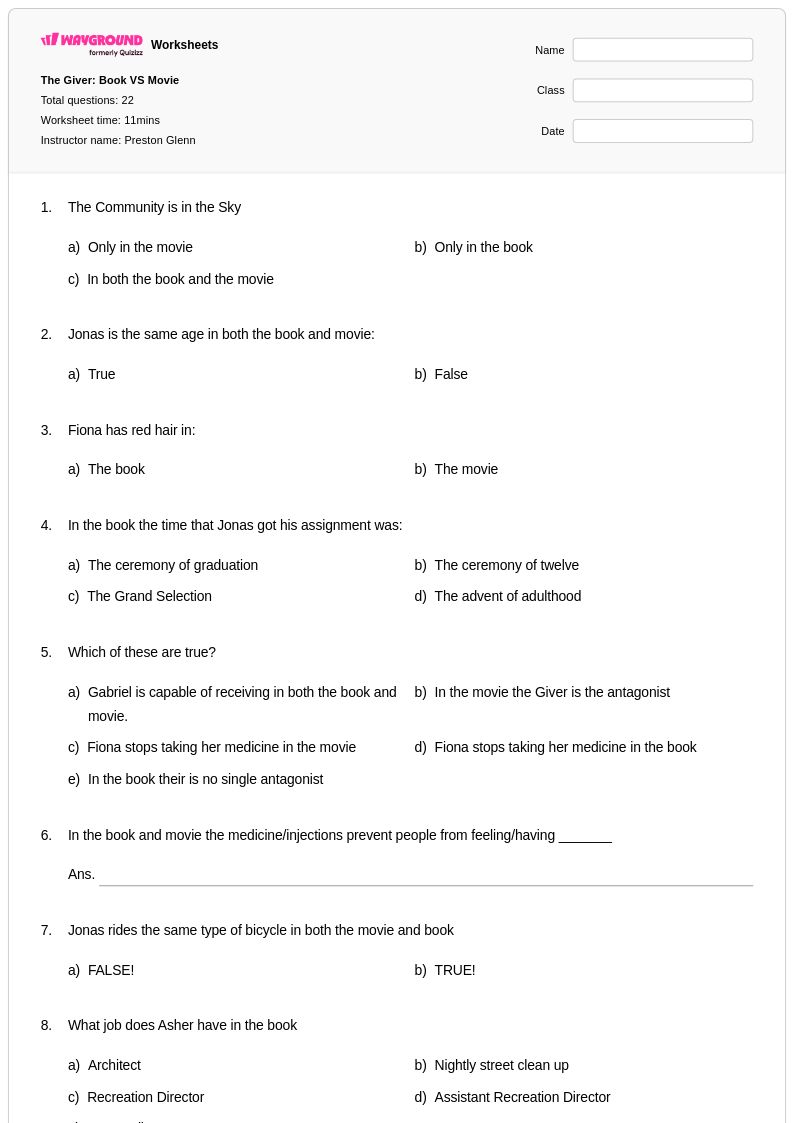
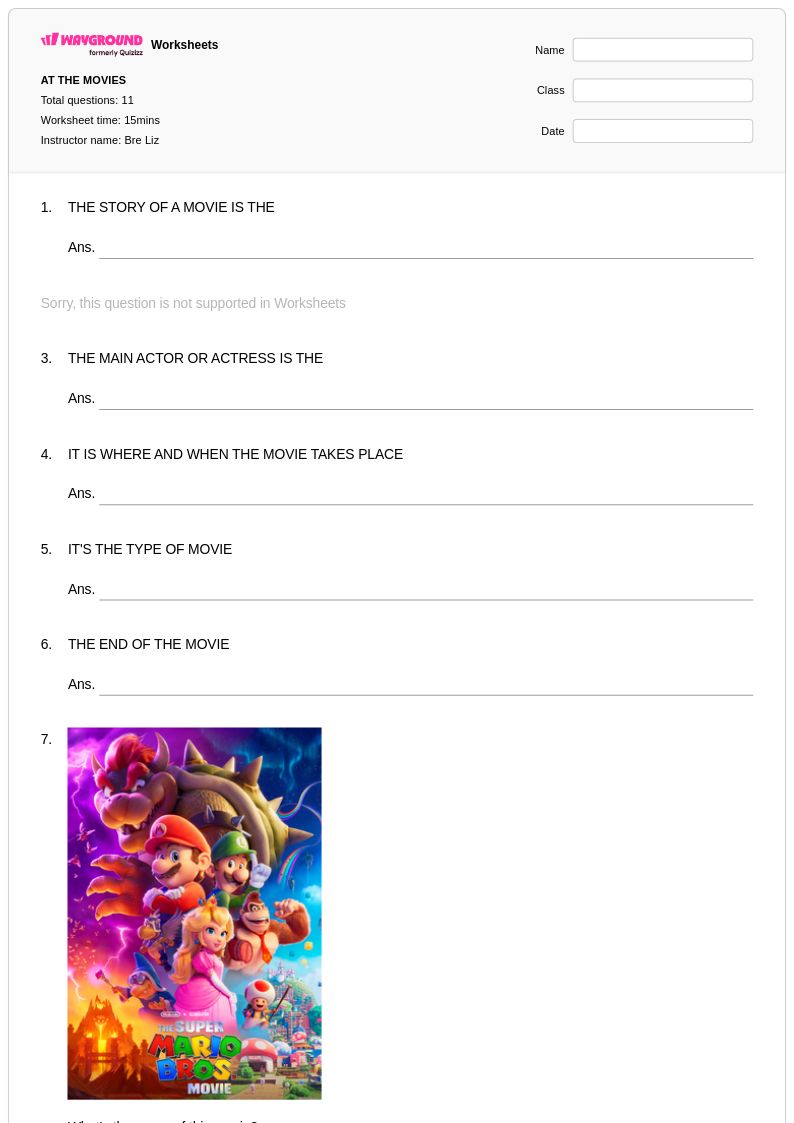
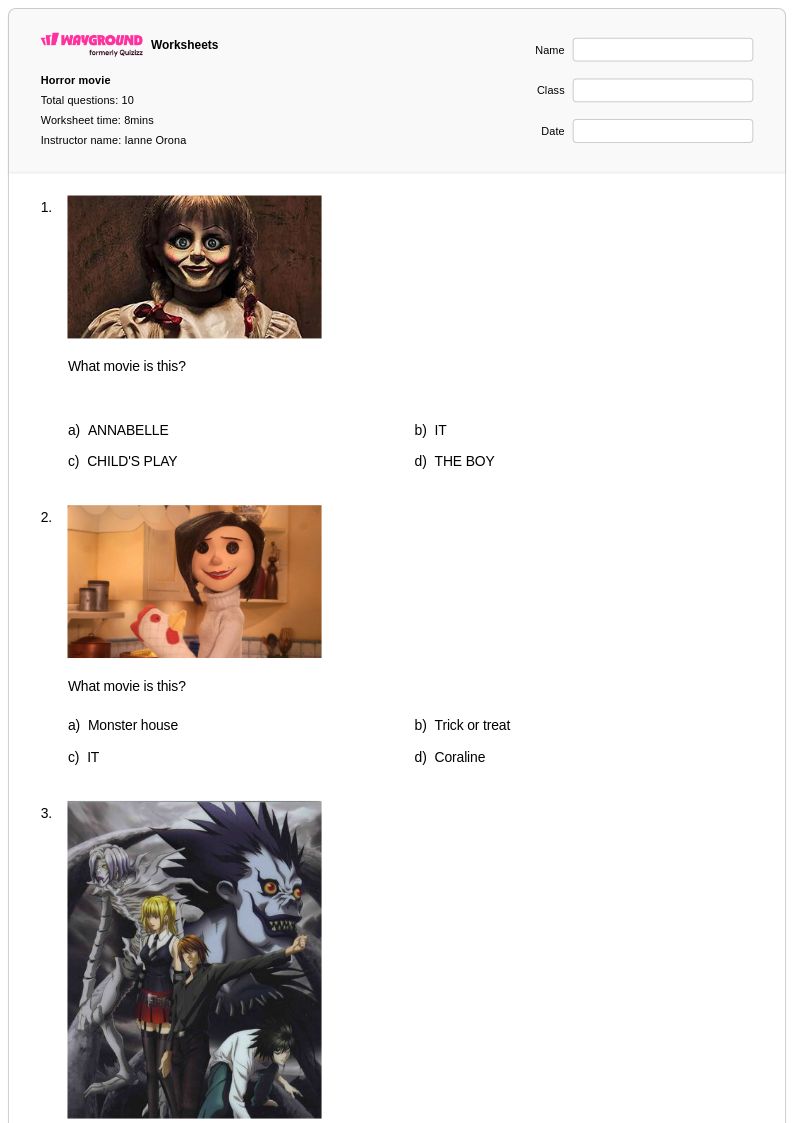
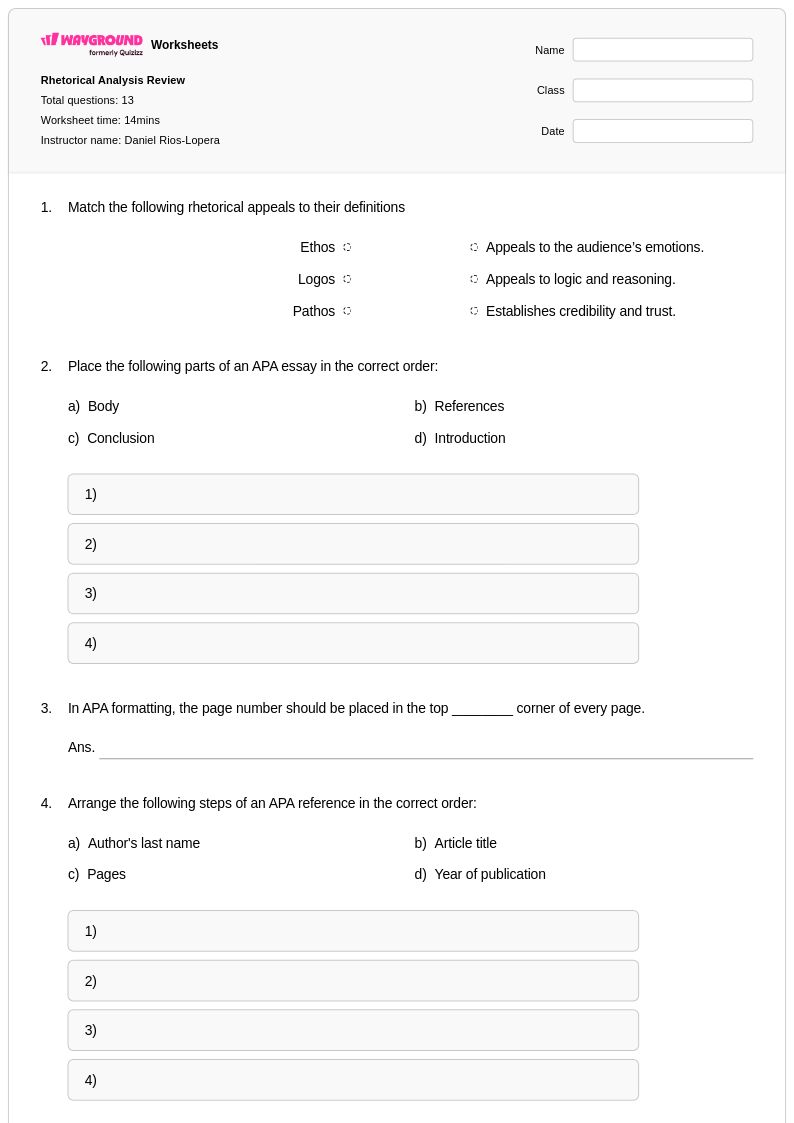
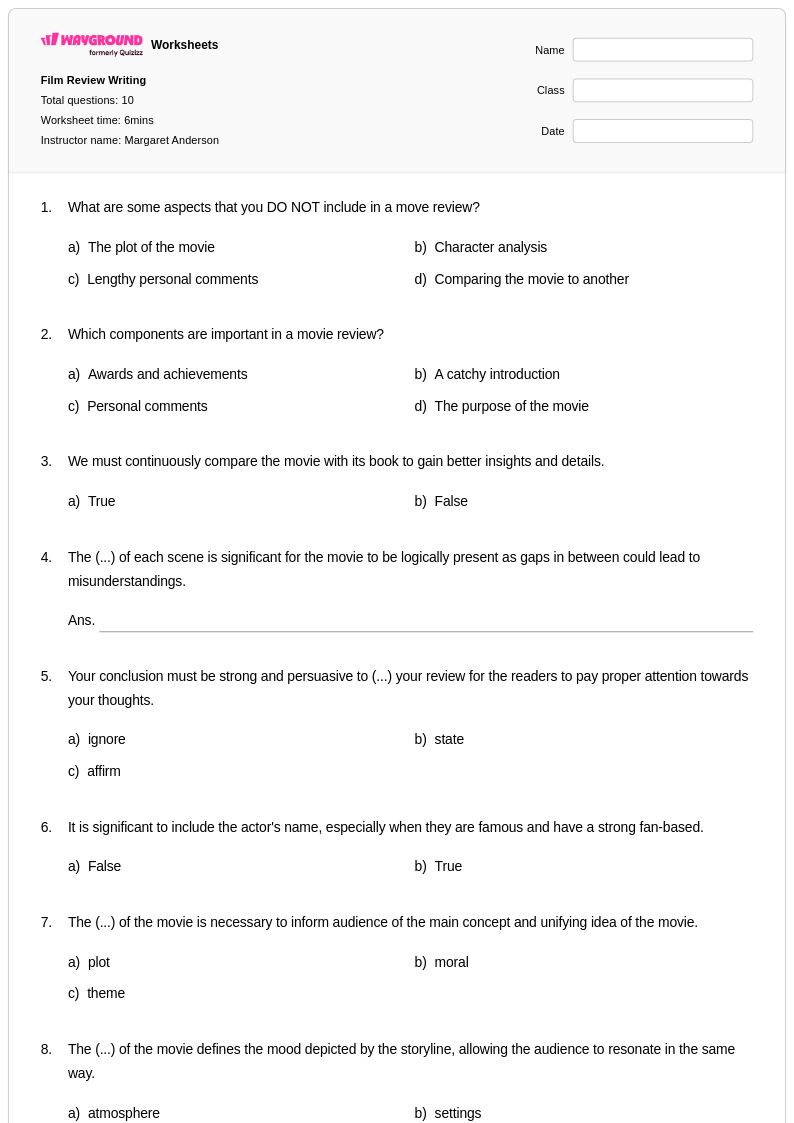
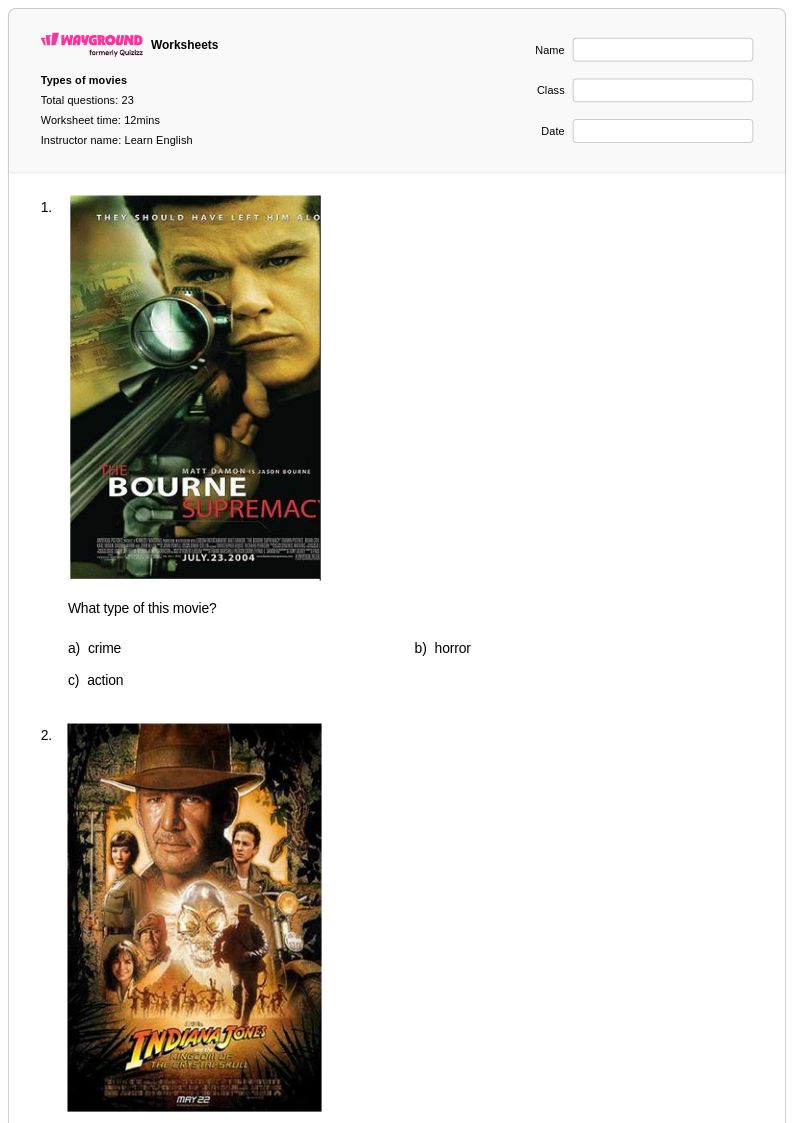
Free movie analysis worksheets and printables help students develop critical thinking skills by examining film elements, themes, and storytelling techniques through engaging practice problems with comprehensive answer keys.
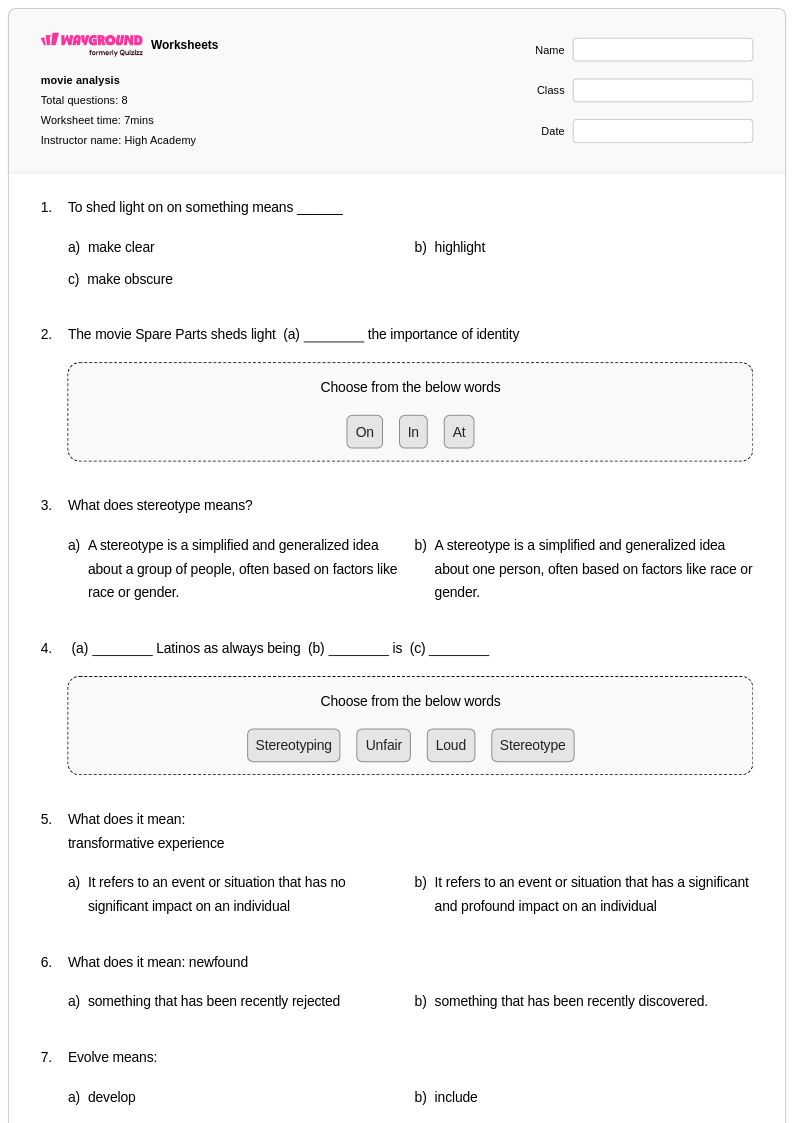
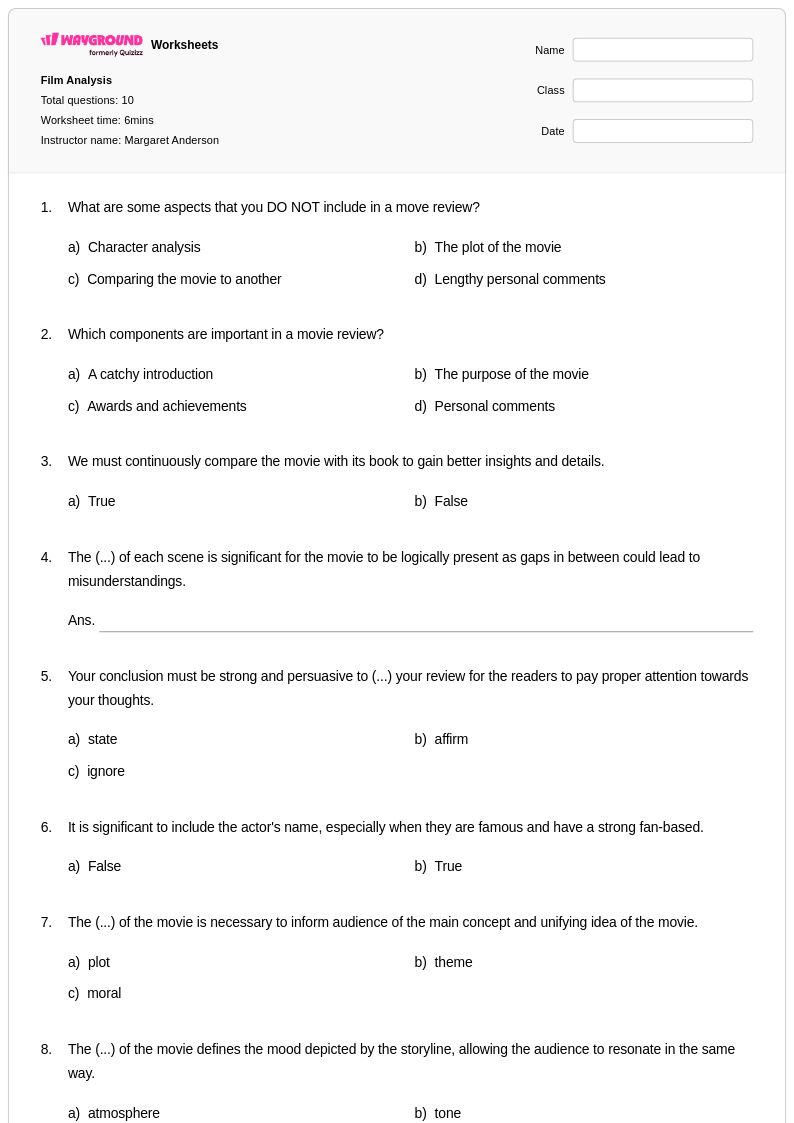
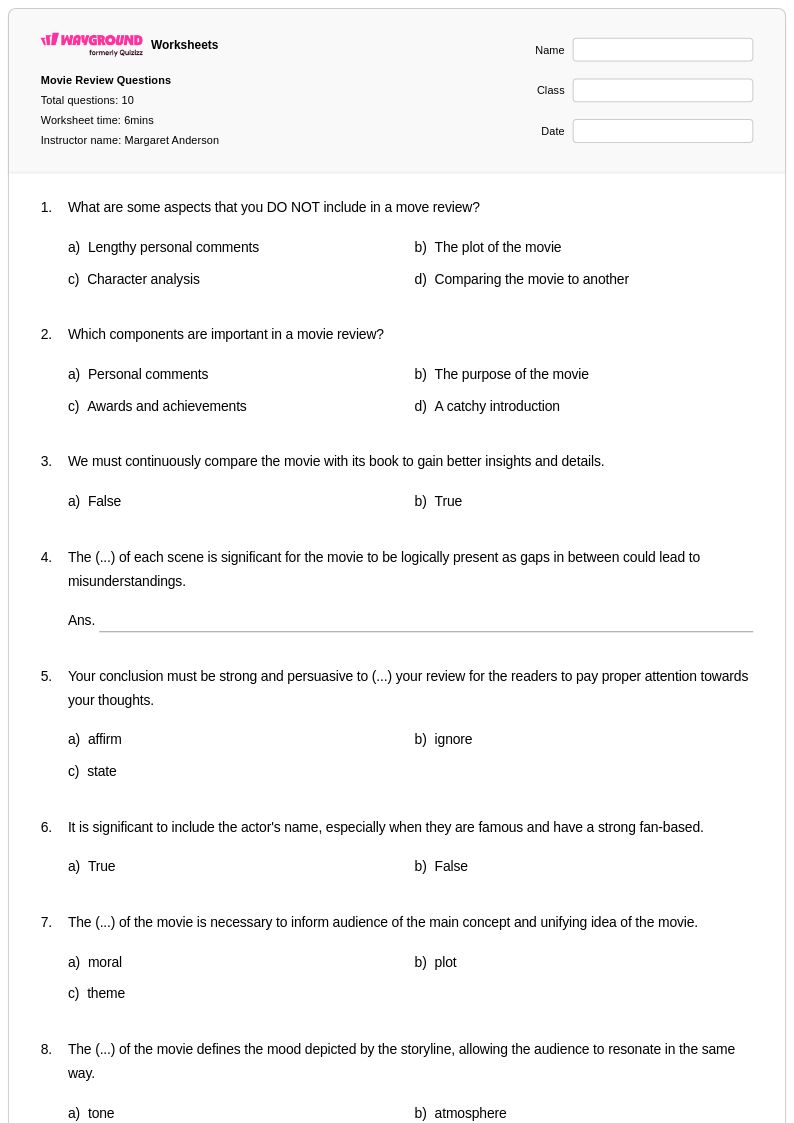
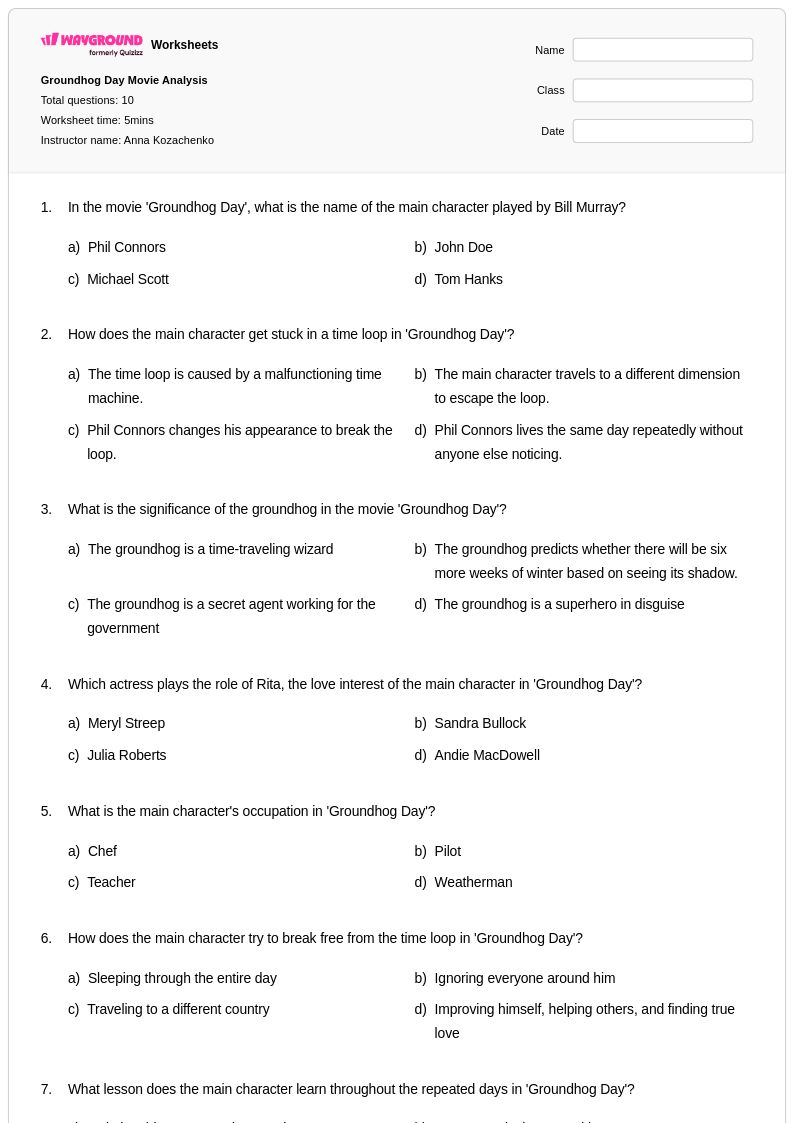
Movie analysis worksheets available through Wayground (formerly Quizizz) provide students with structured frameworks for examining films through critical thinking and literary analysis lenses. These comprehensive resources guide learners in identifying narrative elements such as plot structure, character development, themes, cinematography techniques, and directorial choices that contribute to a film's overall impact and meaning. Students develop essential analytical skills by working through practice problems that require them to evaluate visual storytelling methods, compare film adaptations to source materials, and articulate their interpretations using evidence from the movie. Each worksheet includes detailed answer keys that help educators assess student understanding while providing clear examples of thorough film analysis, and these free printable resources make it easy for teachers to incorporate multimedia learning into their English curriculum.
Wayground (formerly Quizizz) empowers educators with millions of teacher-created movie analysis worksheets that can be seamlessly integrated into lesson planning for skill practice, remediation, and enrichment activities. The platform's robust search and filtering capabilities allow teachers to locate resources aligned with specific learning standards and differentiate instruction based on individual student needs and abilities. These customizable worksheets are available in both printable pdf format and interactive digital versions, giving educators the flexibility to adapt materials for various classroom environments and learning preferences. Teachers can modify existing resources or create original movie analysis activities that target specific films, genres, or analytical concepts, ensuring that students receive targeted practice in examining visual media as sophisticated texts worthy of the same critical attention as traditional literature.
FAQs
How do I teach movie analysis in an English or language arts class?
Teach movie analysis by framing film as a text students read visually, using the same critical lenses applied to literature. Start by introducing core film elements such as plot structure, character development, theme, and cinematography, then guide students to identify how directorial choices create meaning. Structured worksheets give students a consistent framework for breaking down films systematically rather than summarizing plot events.
What skills do movie analysis worksheets help students practice?
Movie analysis worksheets build skills in visual literacy, textual evidence, comparative analysis, and interpretive writing. Students practice identifying narrative elements like plot structure and character arcs, evaluating cinematography techniques, and comparing film adaptations to source texts. These exercises develop the same close-reading and argumentation skills required in traditional literary analysis.
How can I use film analysis to connect movies to literature standards?
Film analysis connects directly to literature standards by applying the same analytical framework used for written texts to visual media. Students examine character motivation, thematic development, and narrative structure in a film just as they would in a novel, and comparing film adaptations to their source materials reinforces comprehension of both. This approach positions movies as sophisticated texts worthy of the same critical attention as traditional literature.
What mistakes do students commonly make when analyzing a film?
The most common error is plot summary: students describe what happens rather than analyzing how and why specific choices create meaning. Students also tend to treat their personal reaction as analysis without grounding interpretations in evidence from the film. Prompting students to cite specific scenes, camera techniques, or dialogue as evidence shifts their responses from opinion to argument.
How do I use Wayground's movie analysis worksheets in my classroom?
Wayground's movie analysis worksheets are available as printable PDFs for traditional classroom use and in digital formats for technology-integrated environments, accommodating a range of teaching setups and student preferences. Teachers can also host worksheets as a quiz directly on Wayground, making them easy to assign, collect, and review in one place. Each worksheet includes a comprehensive answer key so educators can assess student understanding efficiently.
How can I differentiate movie analysis activities for students with different learning needs?
Wayground supports built-in student-level accommodations that can be applied individually without notifying other students, including Read Aloud for students who benefit from audio support, reduced answer choices to lower cognitive load, and extended time per question. These settings are reusable across sessions and can be configured from the Students tab, session settings, or Classes tab. Pairing accommodations with structured film analysis worksheets ensures all learners can engage with the same content at an appropriate level of support.