
20 Q
11th
10 Q
5th - Uni
20 Q
1st - 12th
14 Q
11th
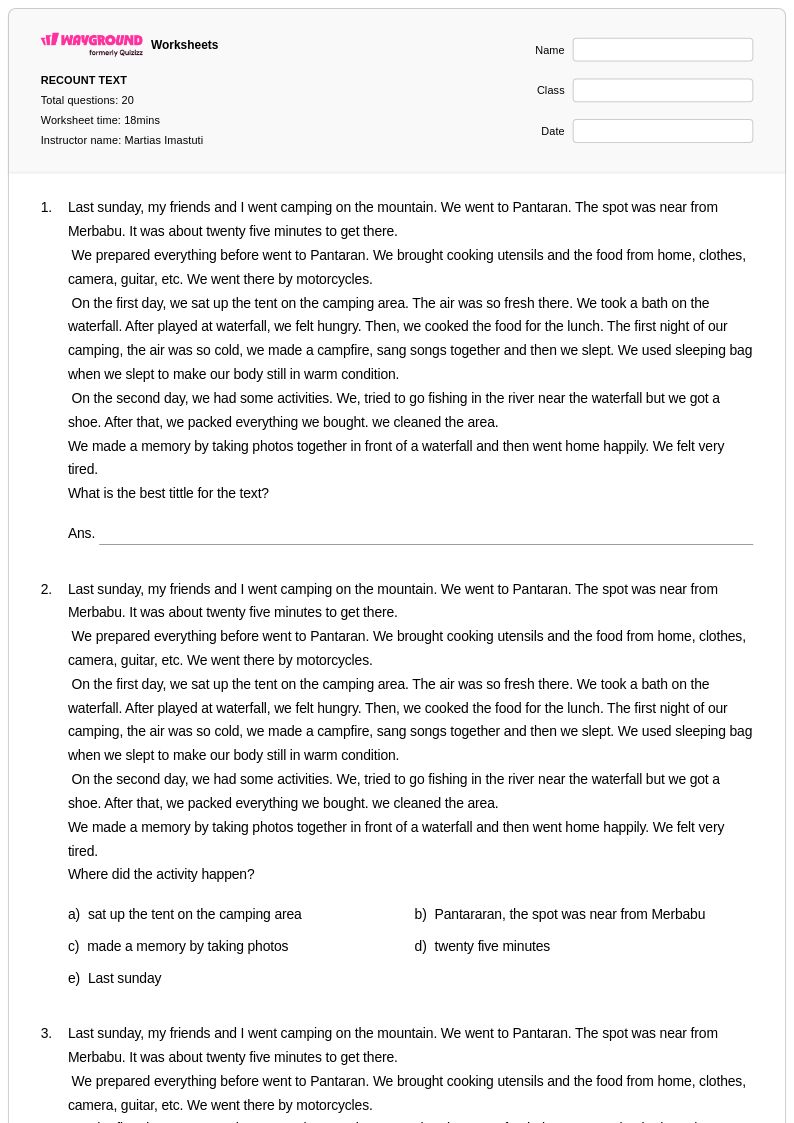
20 Q
9th - 12th
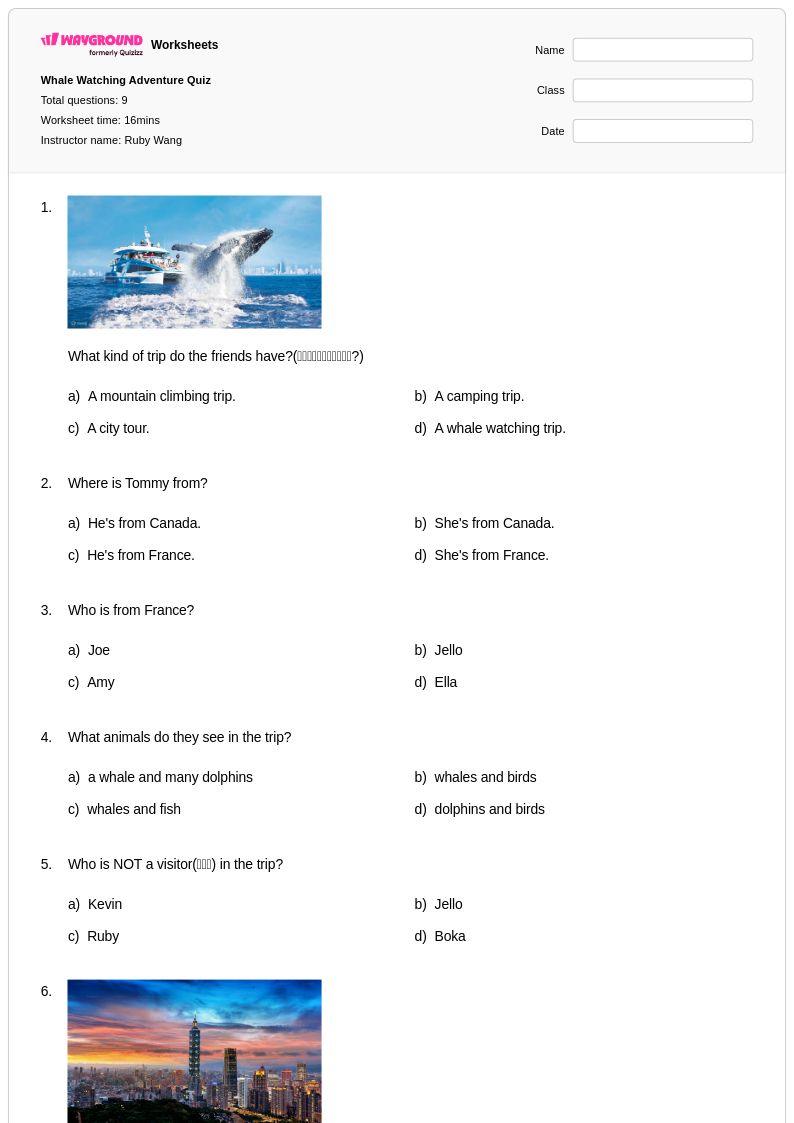
14 Q
3rd - Uni
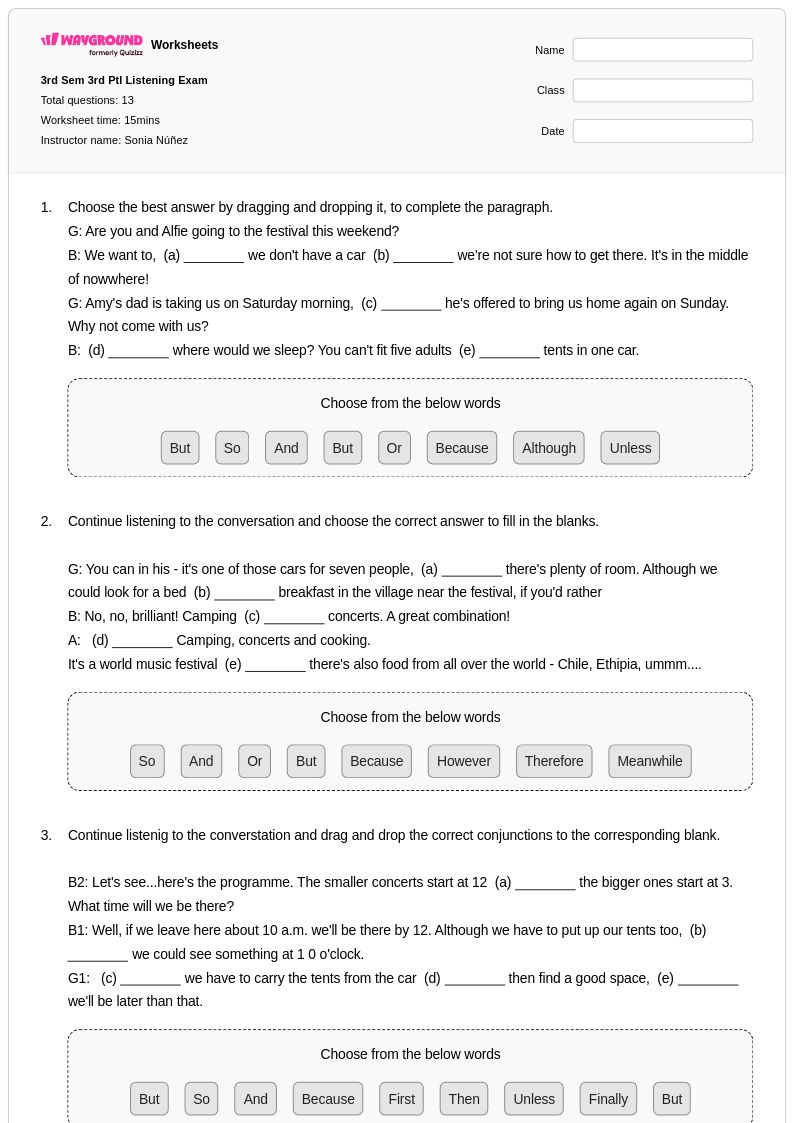
13 Q
11th
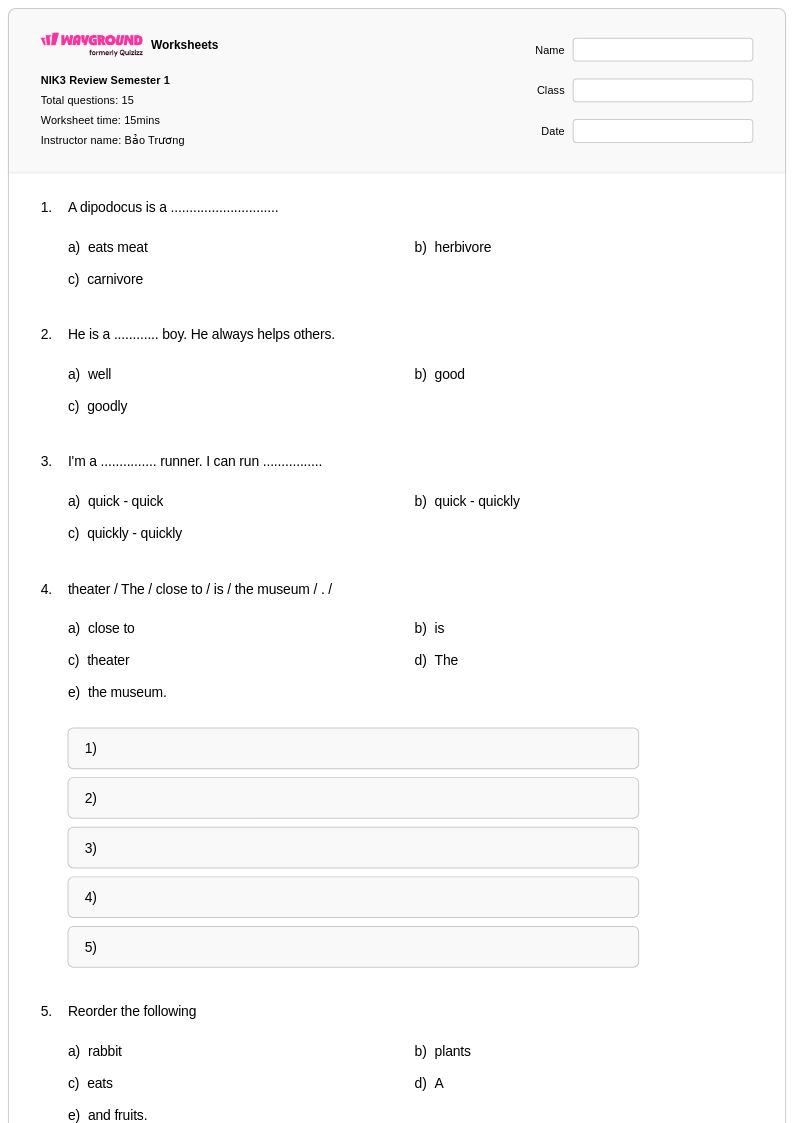
15 Q
3rd - Uni
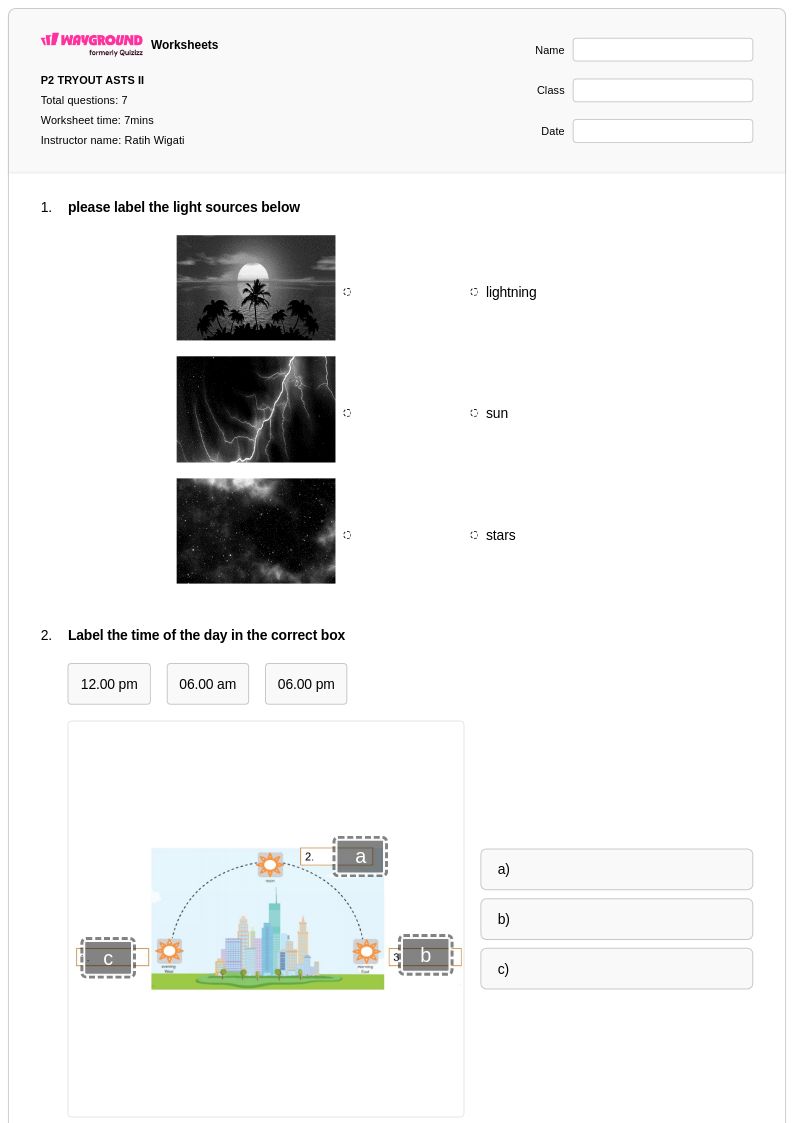
7 Q
2nd - Uni
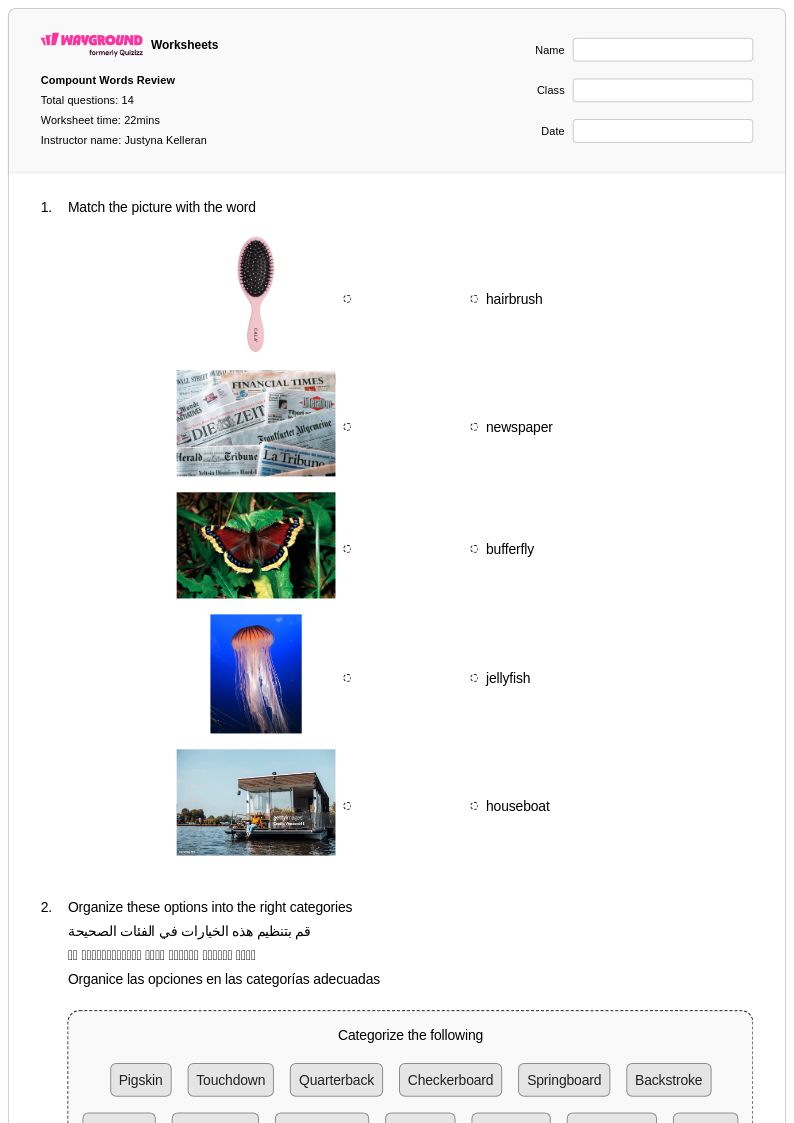
14 Q
9th - 12th
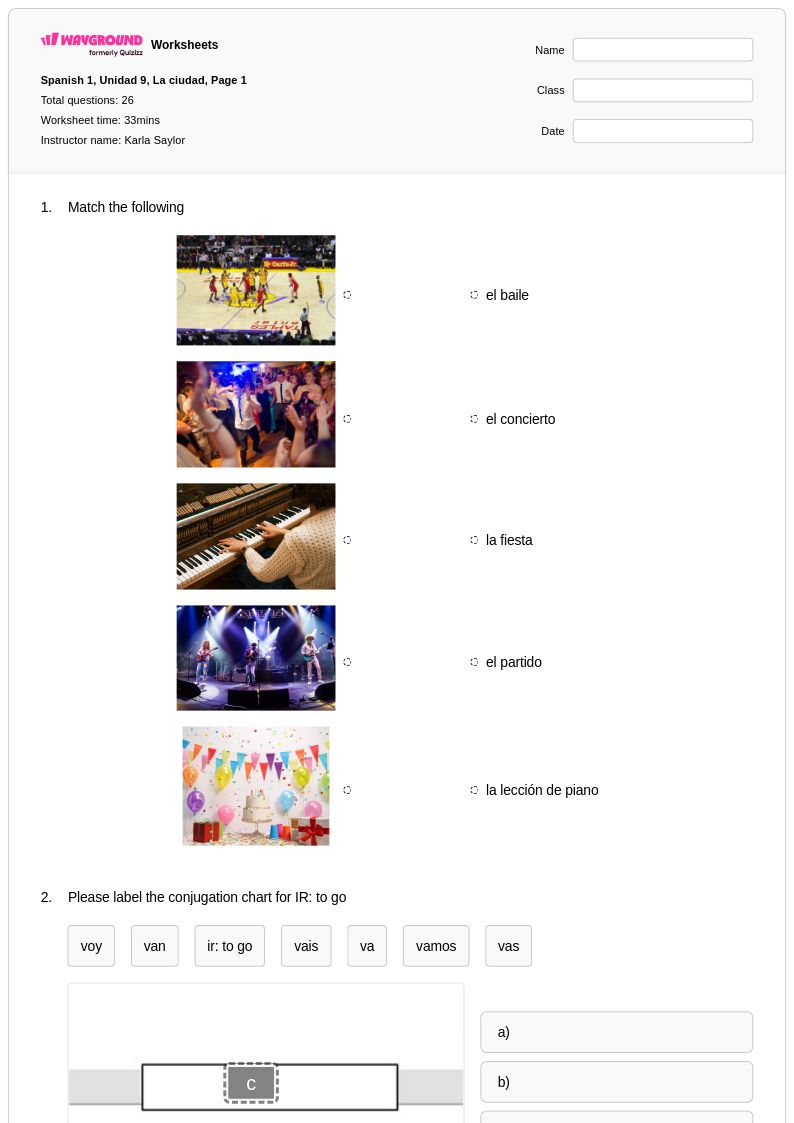
38 Q
9th - 12th
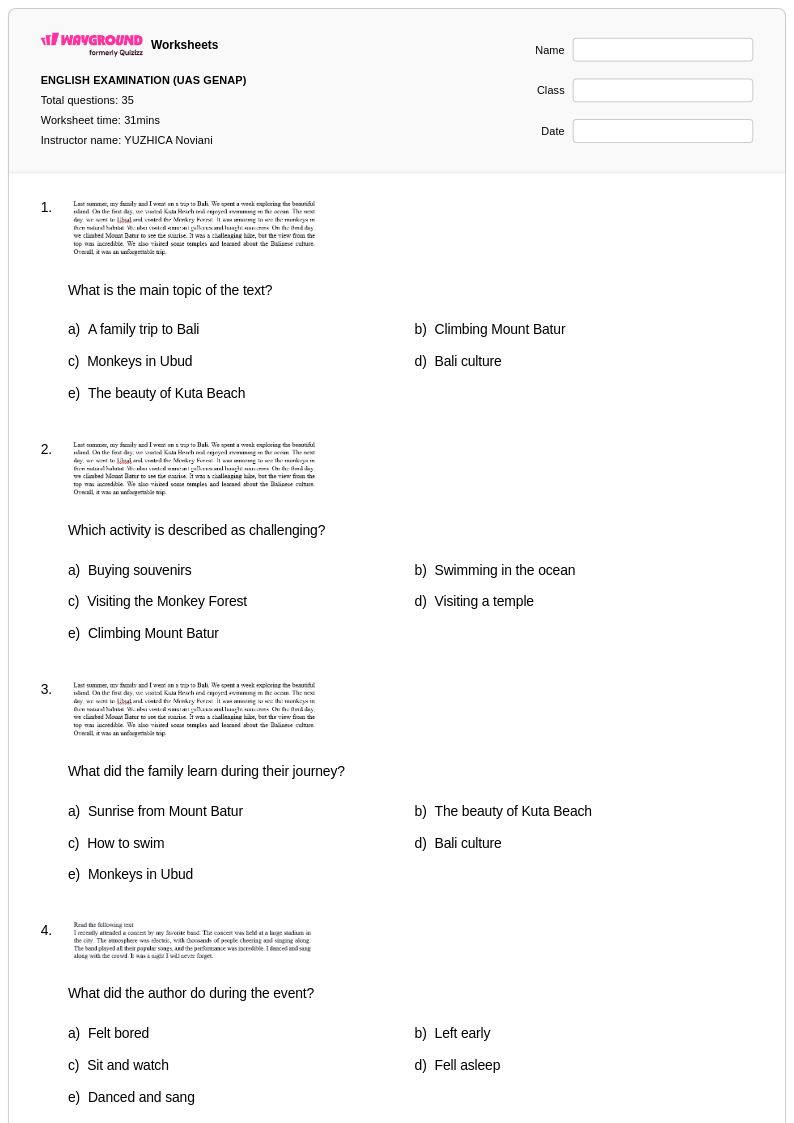
35 Q
10th - Uni
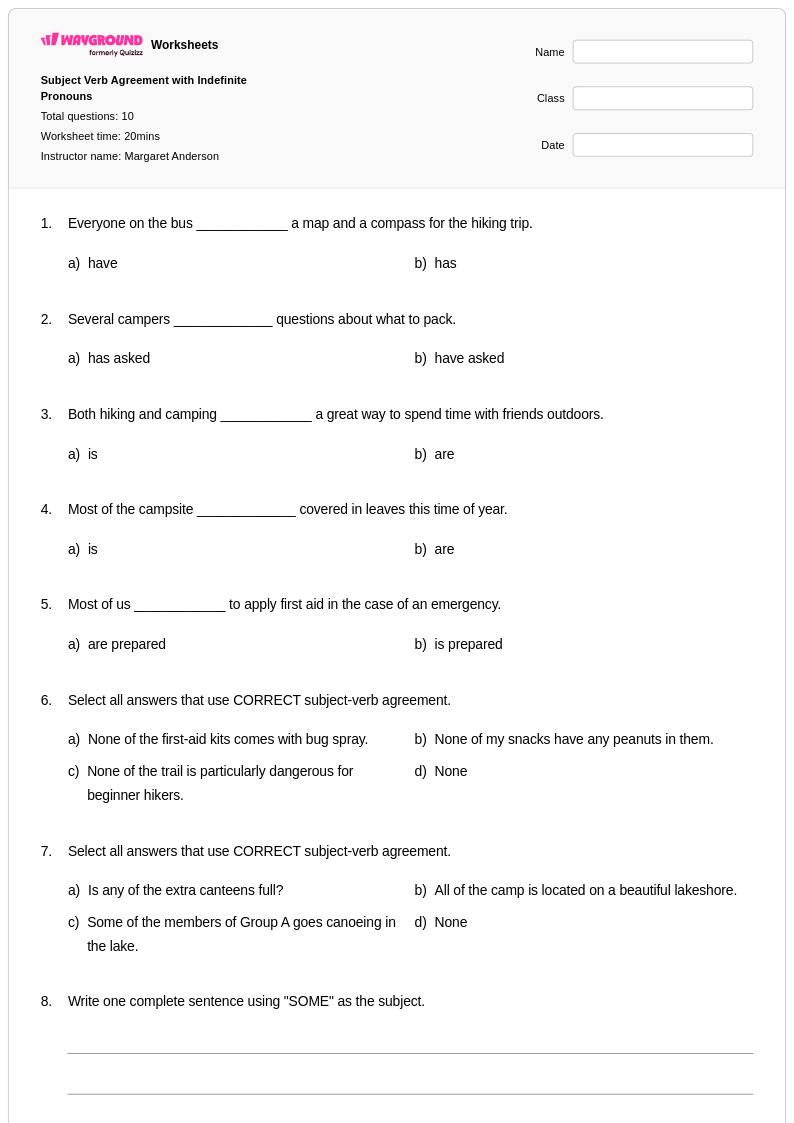
10 Q
9th - 12th
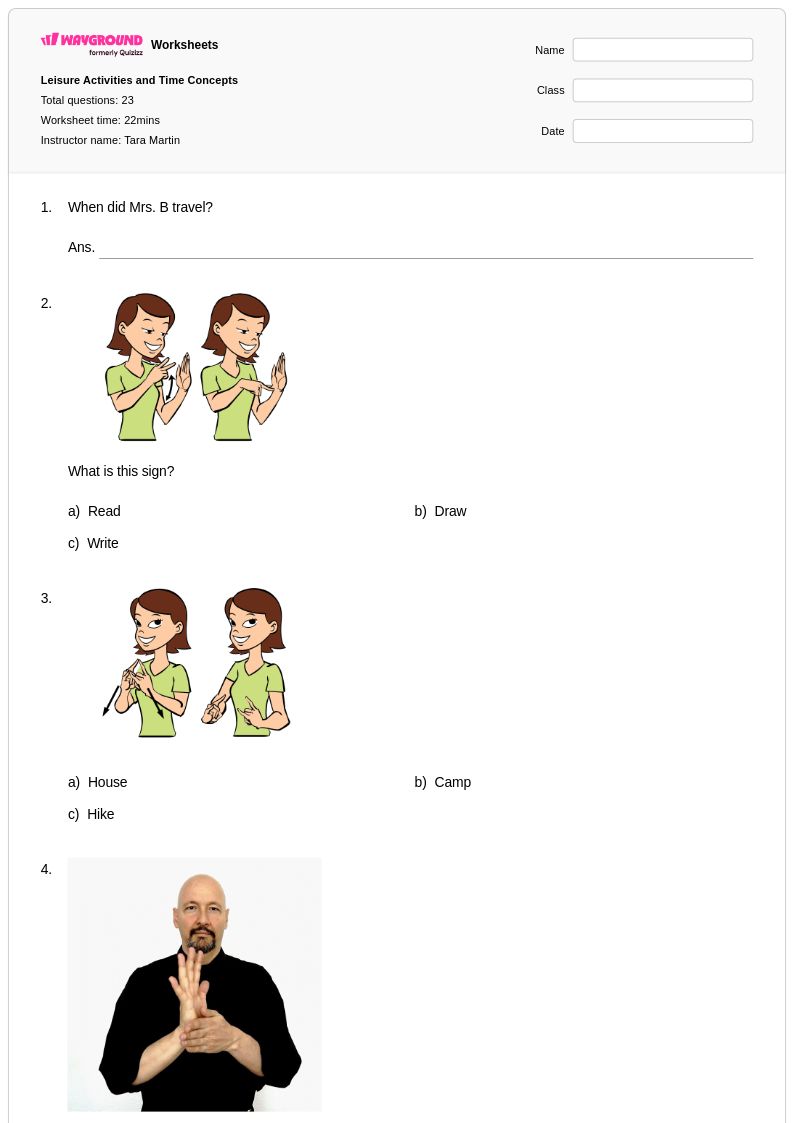
27 Q
9th - 12th
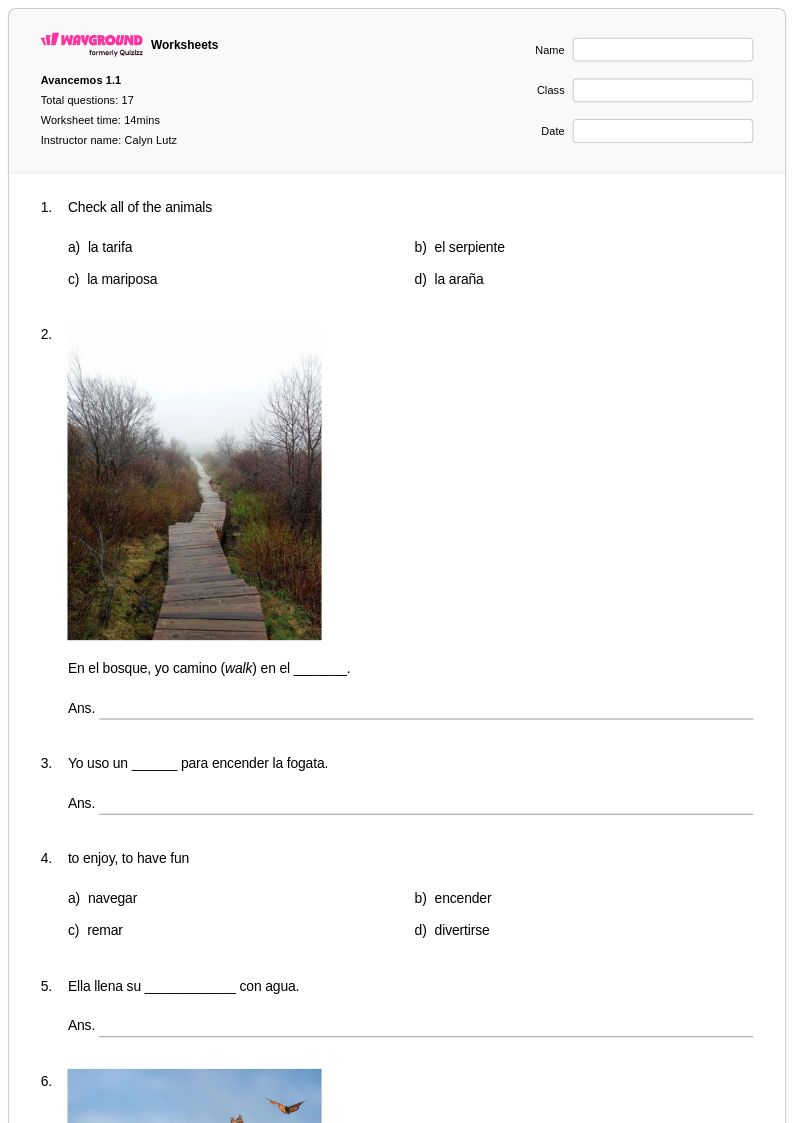
17 Q
9th - 12th
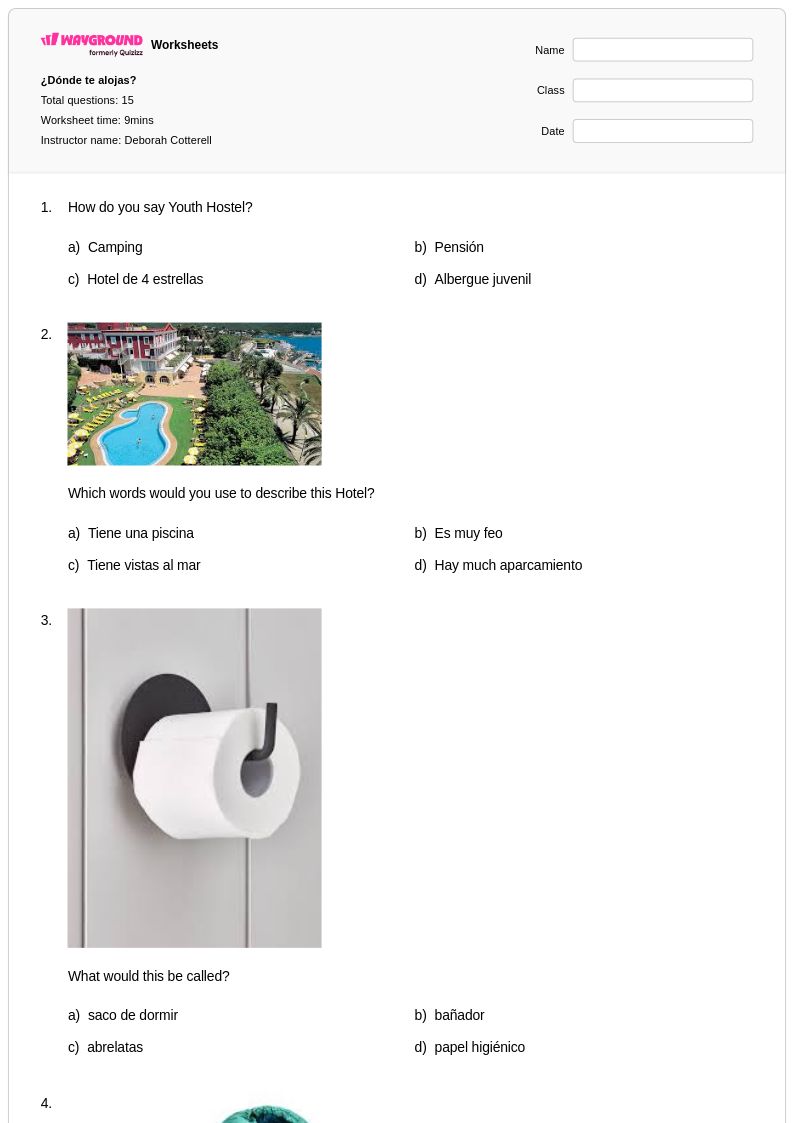
15 Q
11th
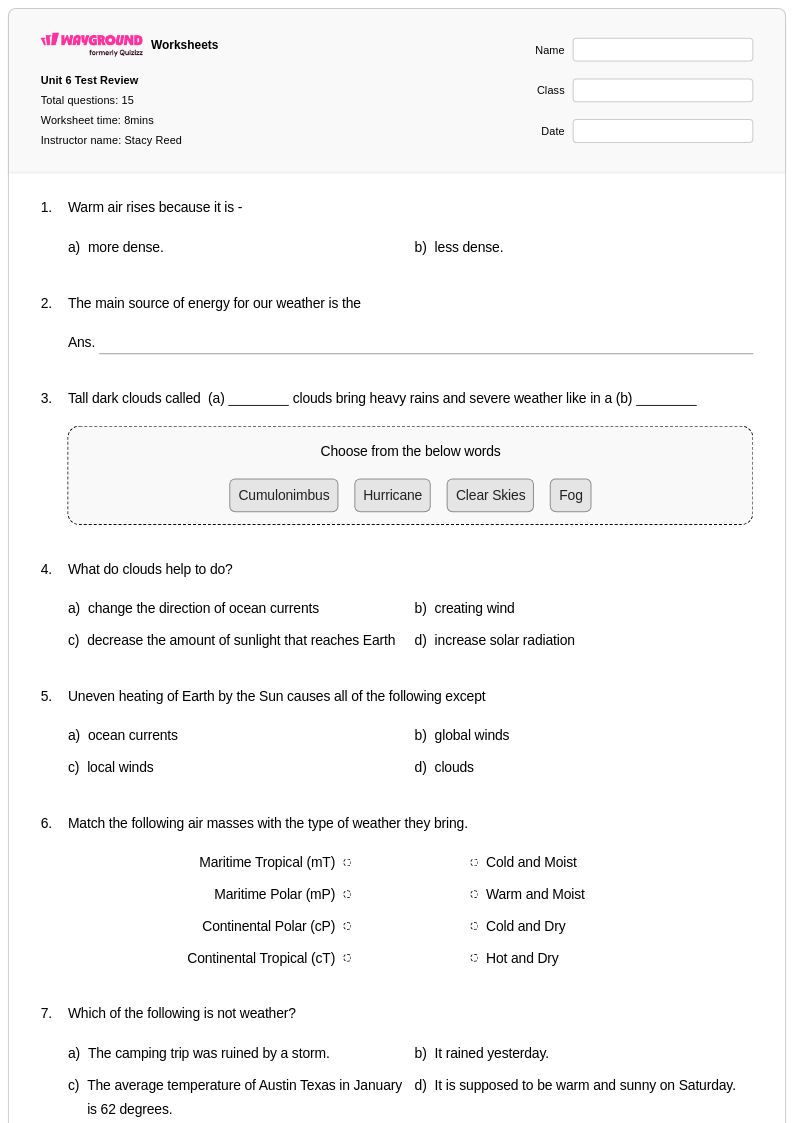
15 Q
8th - Uni
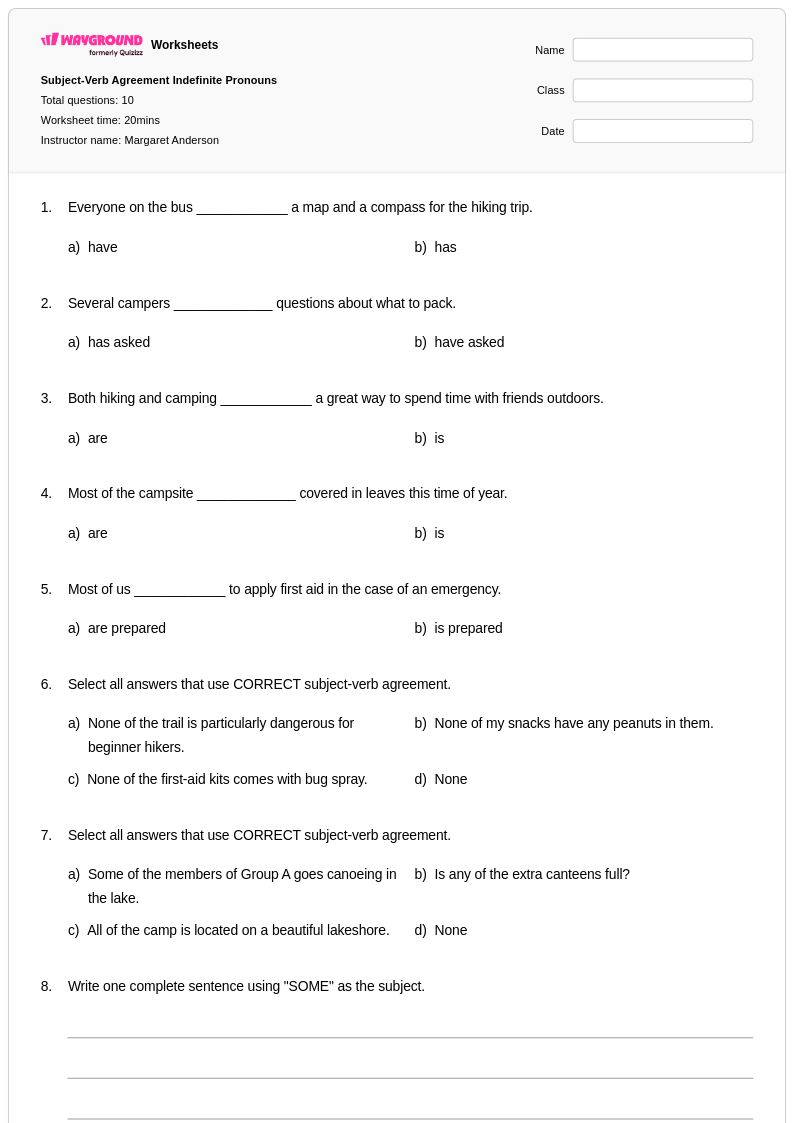
10 Q
9th - 12th
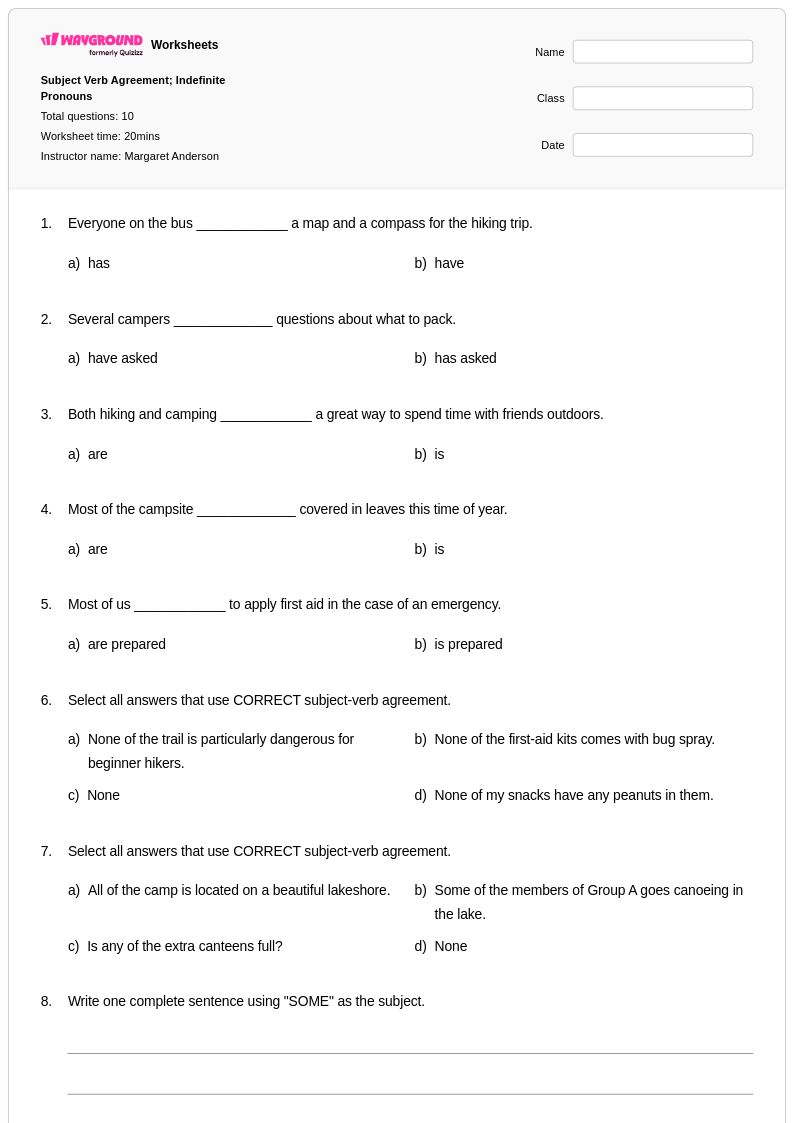
10 Q
9th - 12th
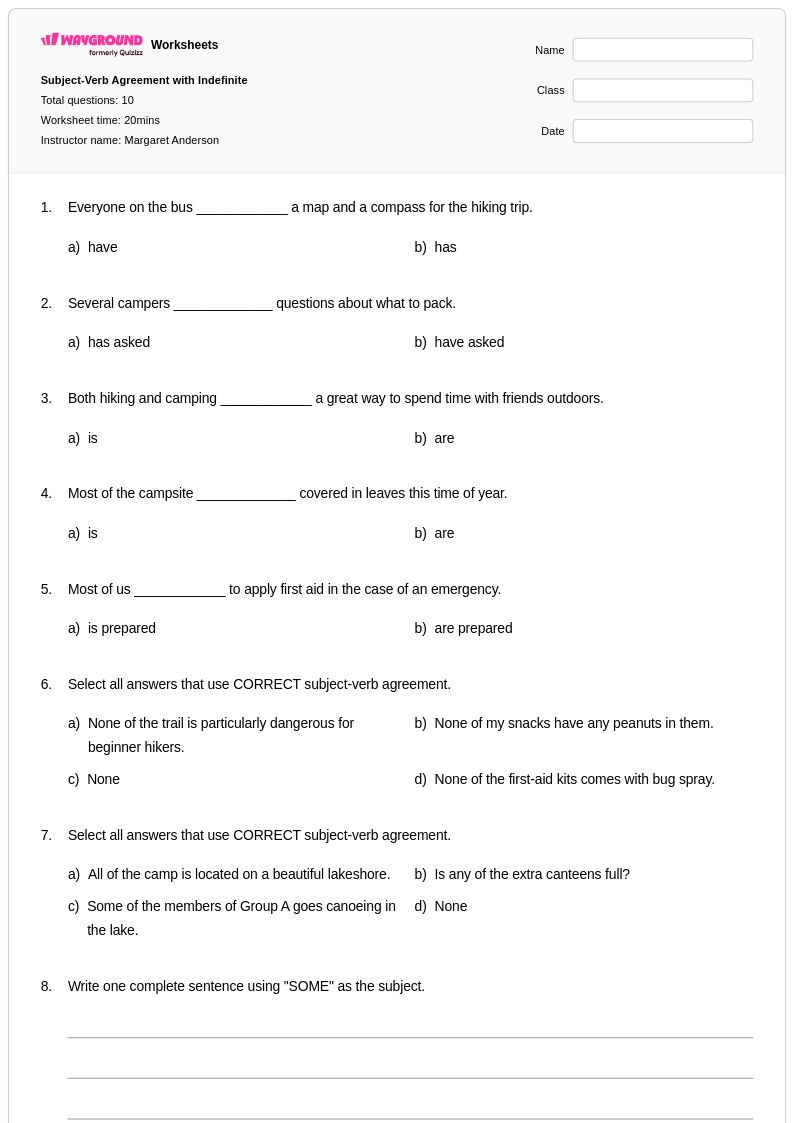
10 Q
9th - 12th
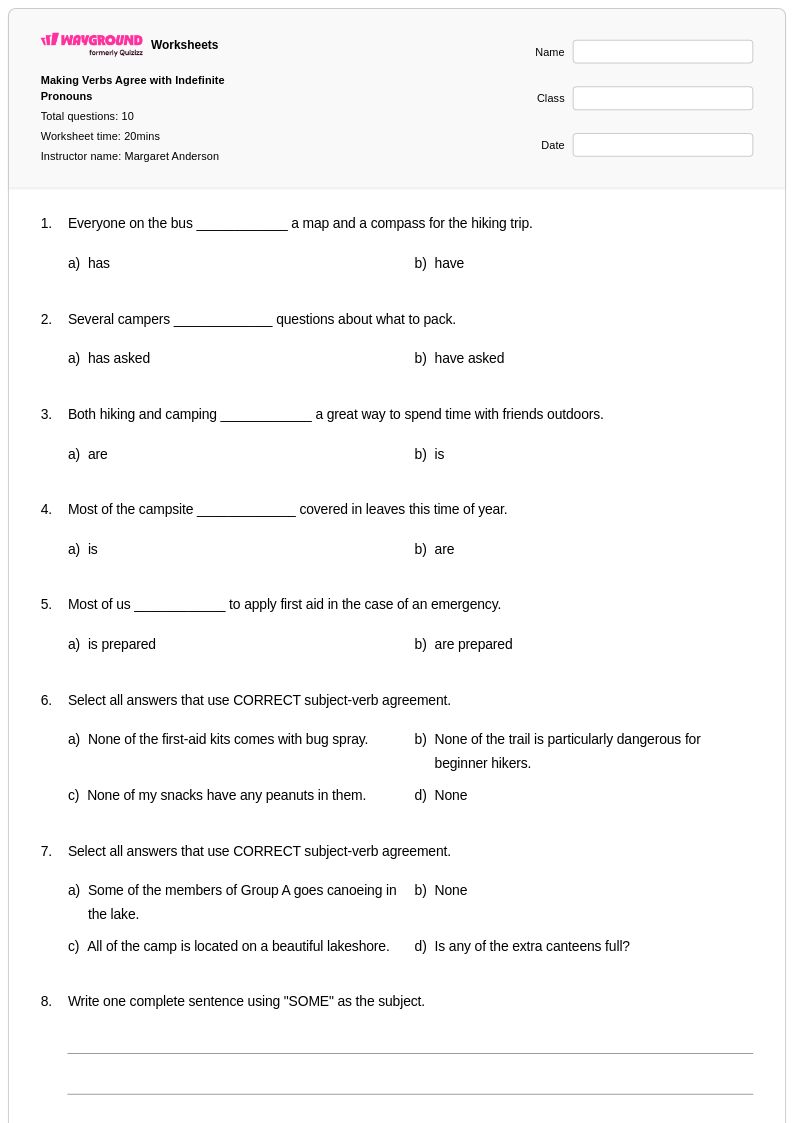
10 Q
9th - 12th
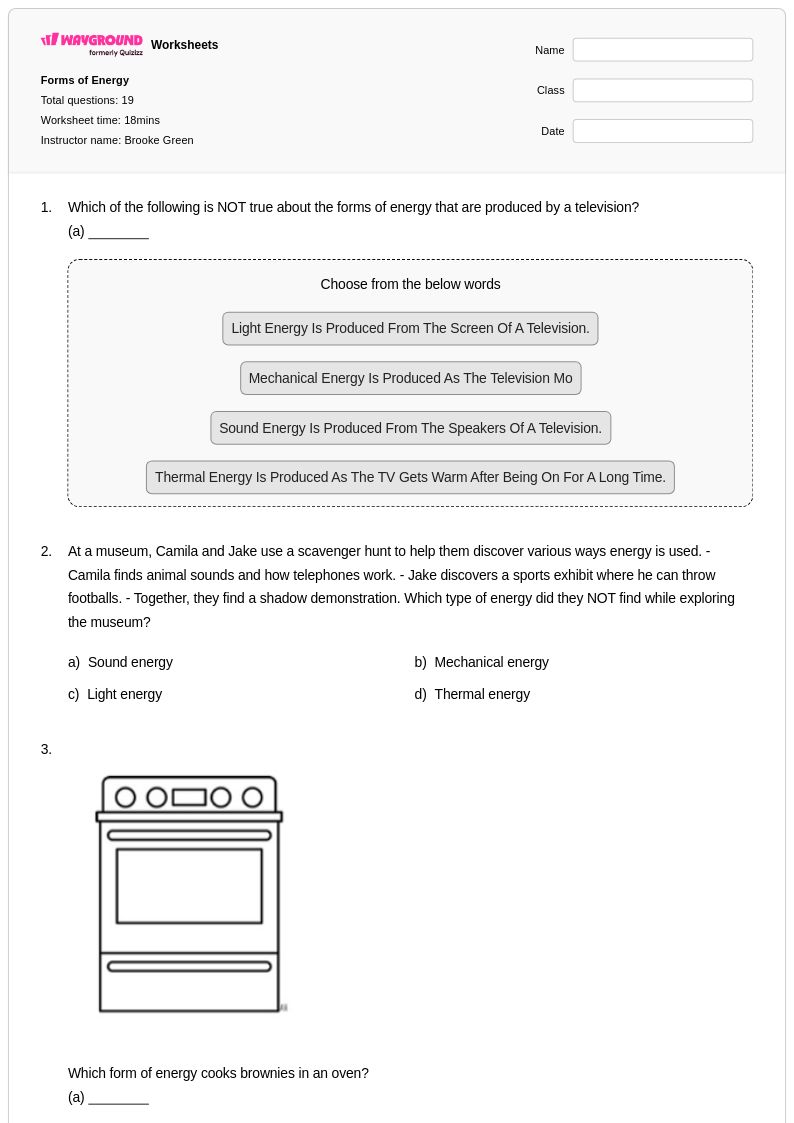
19 Q
3rd - Uni
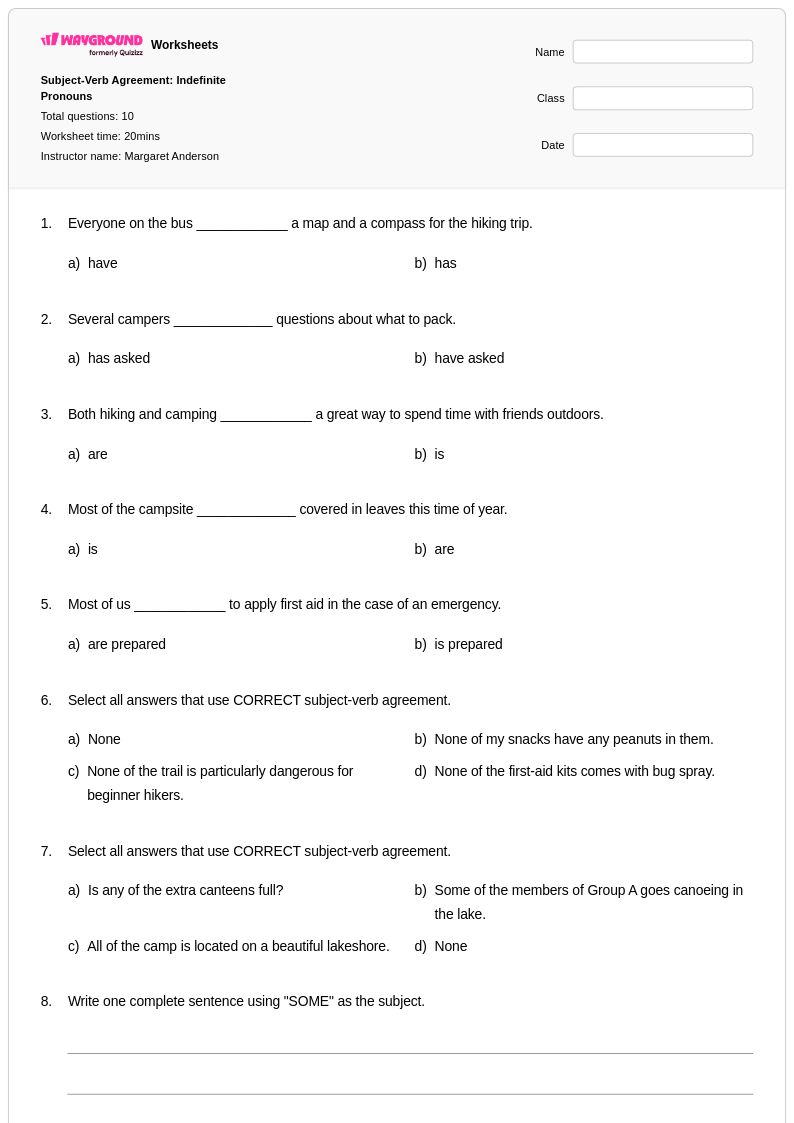
10 Q
9th - 12th
Explore Camping Worksheets by Grades
Explore Other Subject Worksheets for class 11
Explore printable Camping worksheets for Class 11
Camping worksheets for Class 11 students available through Wayground (formerly Quizizz) provide comprehensive educational resources that transform outdoor adventure learning into structured academic experiences. These expertly crafted materials focus on essential camping skills including campsite selection, equipment preparation, safety protocols, environmental stewardship, and wilderness survival techniques. Students engage with practice problems that challenge them to plan multi-day expeditions, calculate food and water requirements, interpret topographical maps, and respond to emergency scenarios. The worksheets strengthen critical thinking, risk assessment, and outdoor leadership abilities while building practical knowledge of Leave No Trace principles, weather pattern recognition, and sustainable camping practices. Available as free printables with detailed answer keys in convenient pdf format, these resources support both classroom instruction and independent study.
Wayground's extensive collection of teacher-created camping and outdoor adventure resources serves educators with millions of specialized materials designed specifically for Class 11 physical education curricula. The platform's advanced search and filtering capabilities enable teachers to locate worksheets aligned with specific learning standards and differentiate instruction based on individual student needs. Flexible customization tools allow educators to modify content difficulty, incorporate local camping regulations, or emphasize particular skill sets relevant to their regional outdoor environments. These resources are available in both digital and printable pdf formats, supporting diverse classroom technologies and teaching preferences. Teachers utilize these comprehensive materials for lesson planning, skill remediation, enrichment activities for advanced learners, and targeted practice sessions that prepare students for real-world outdoor adventures while meeting academic benchmarks for physical education and outdoor recreation competencies.
FAQs
How do I teach camping skills to students who have never been outdoors?
What topics should a camping unit cover in physical education?
What exercises help students practice outdoor safety and camping preparedness?
What mistakes do students commonly make when learning camping and outdoor safety concepts?
How can I differentiate camping worksheets for students at different skill levels?
How do I use Wayground's camping worksheets in my classroom?