Free Printable Captains of Industry Worksheets for Class 8
Class 8 Captains of Industry worksheets from Wayground help students explore influential American industrialists through engaging printables, practice problems, and comprehensive answer keys that examine their impact on U.S. economic development.
Explore printable Captains of Industry worksheets for Class 8
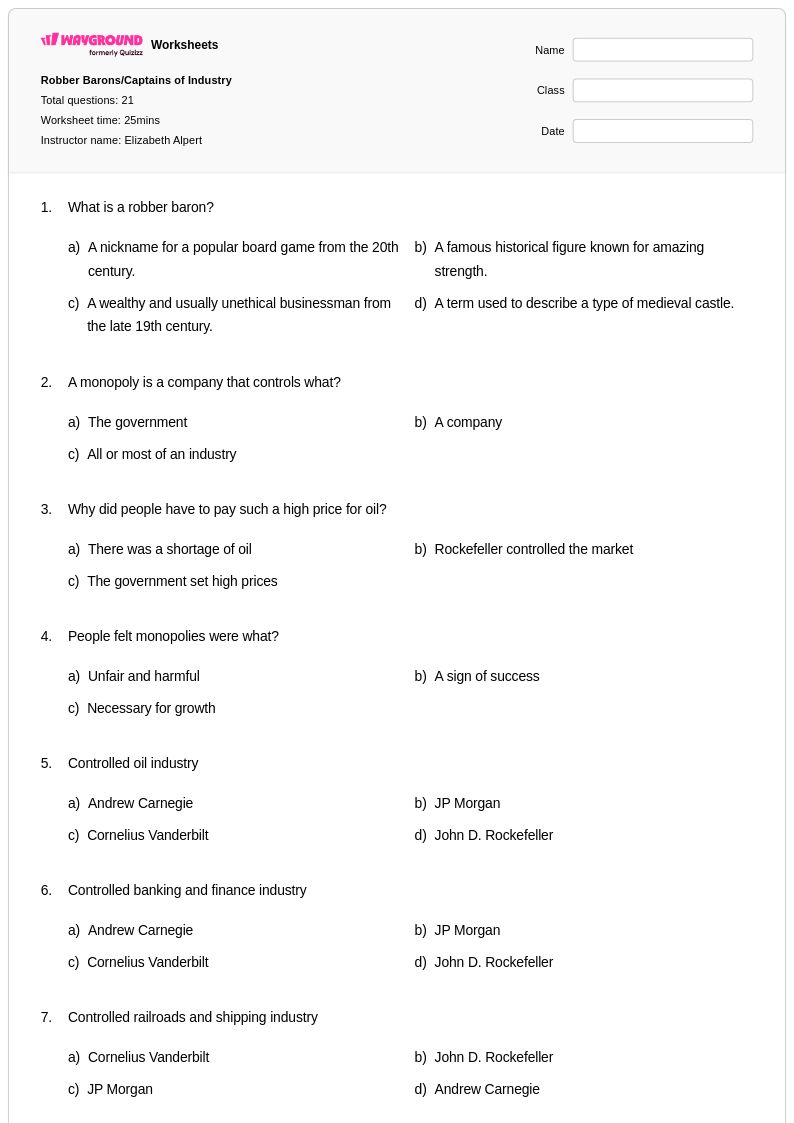
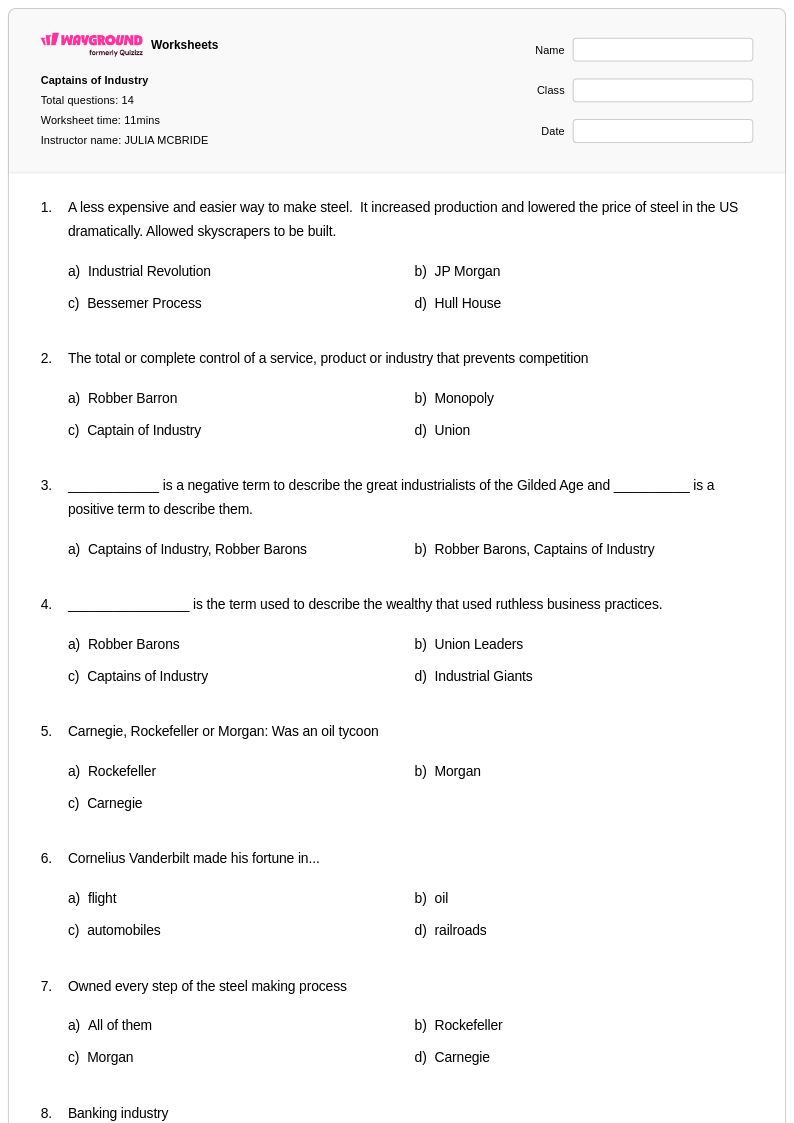
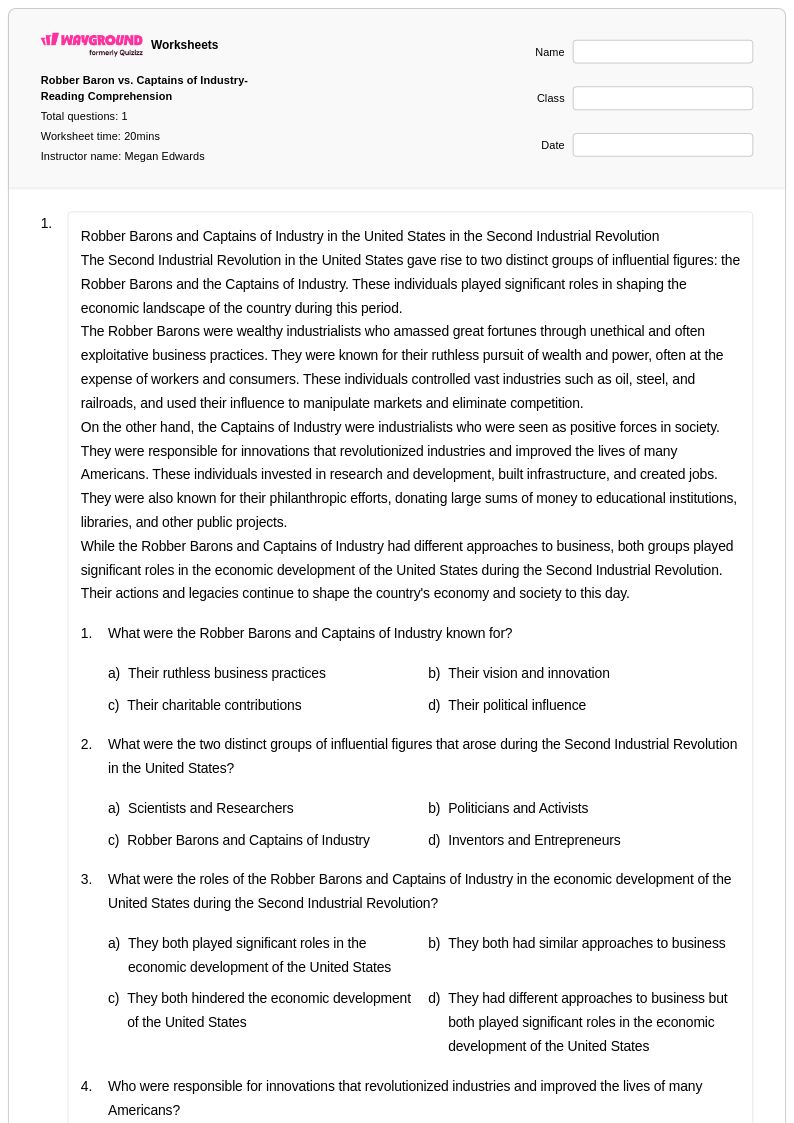
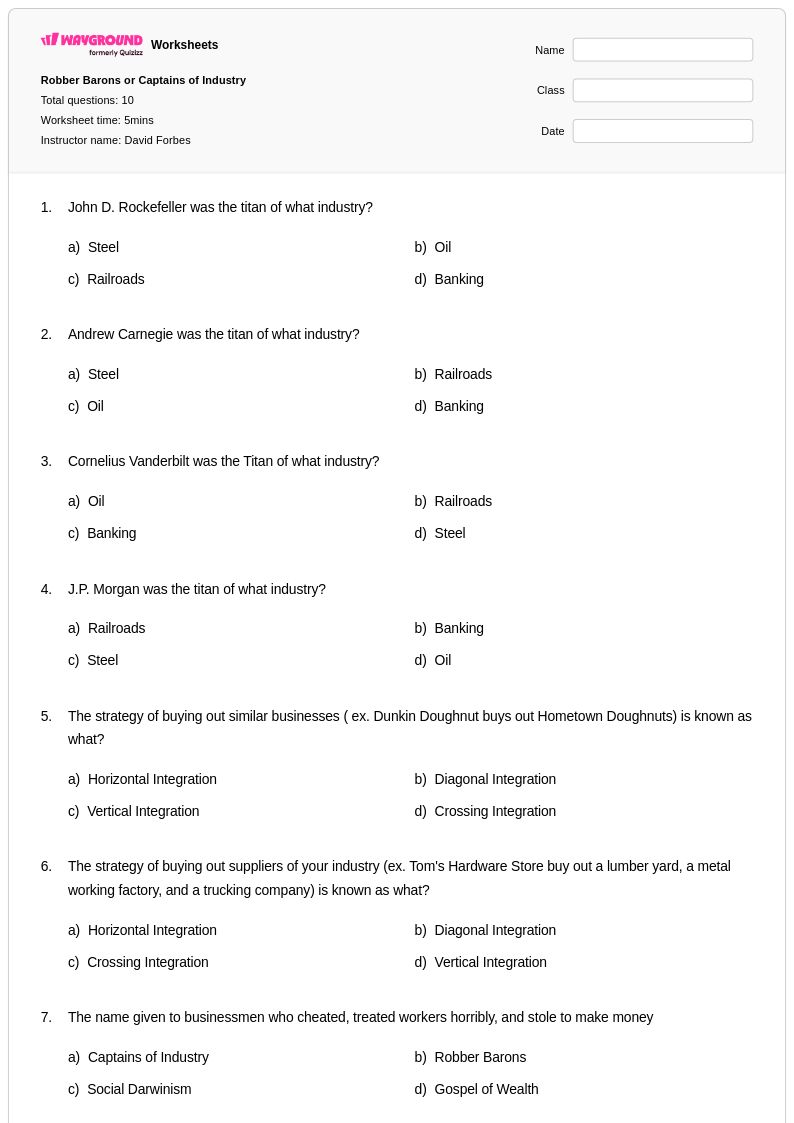
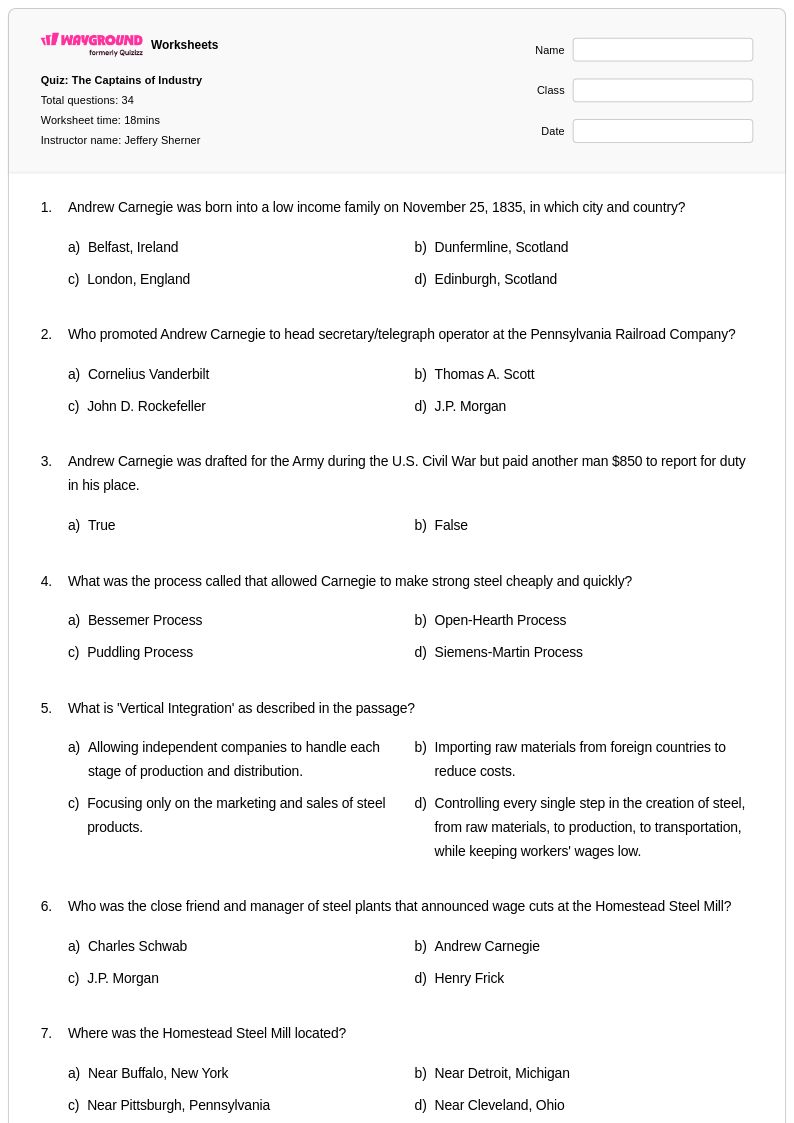
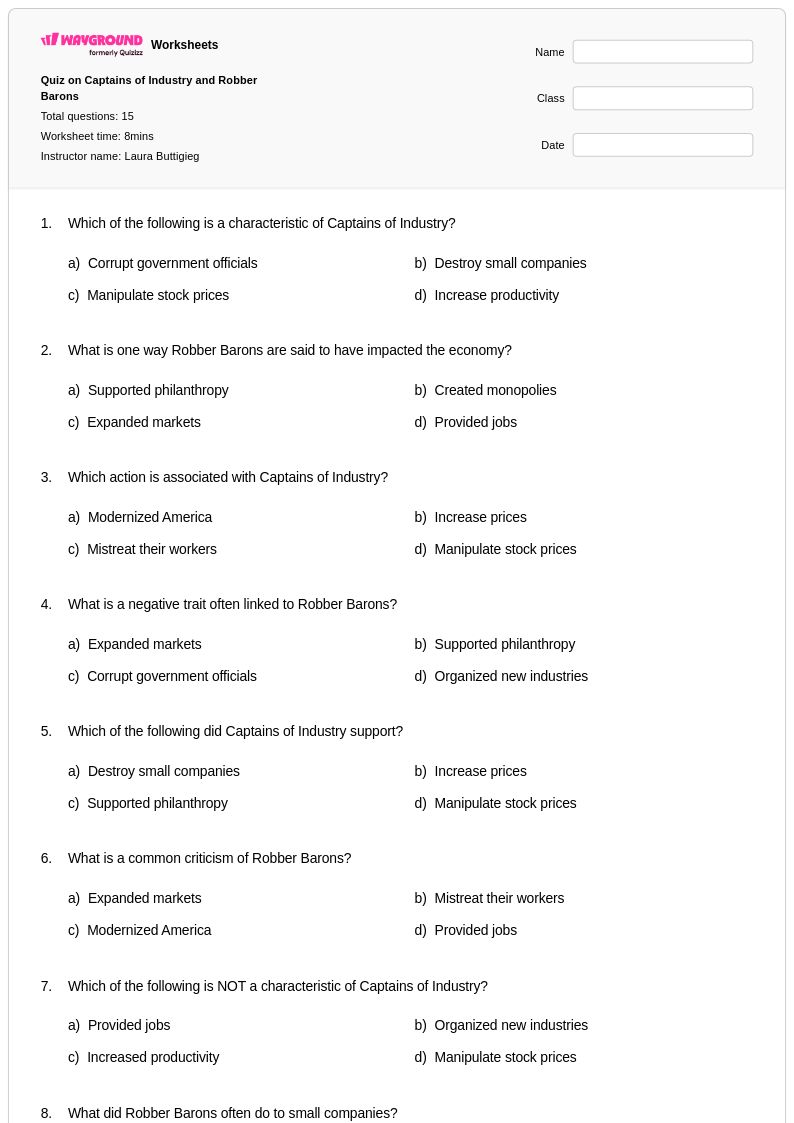
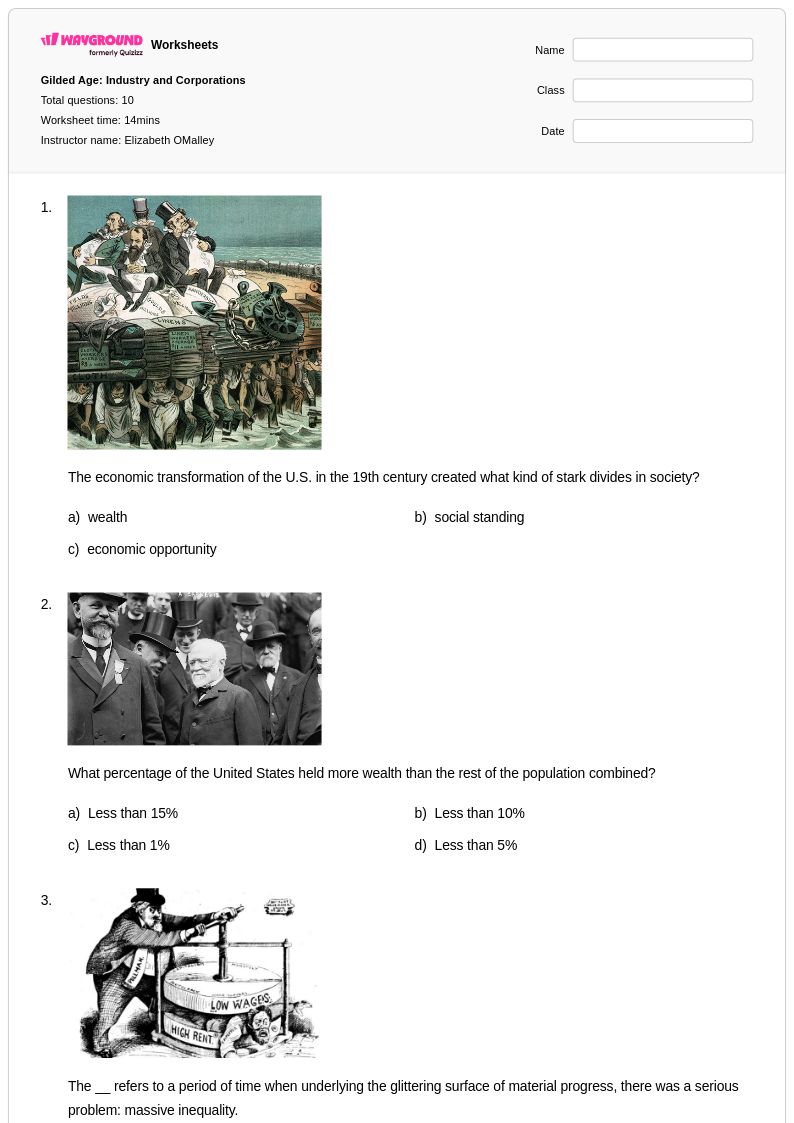
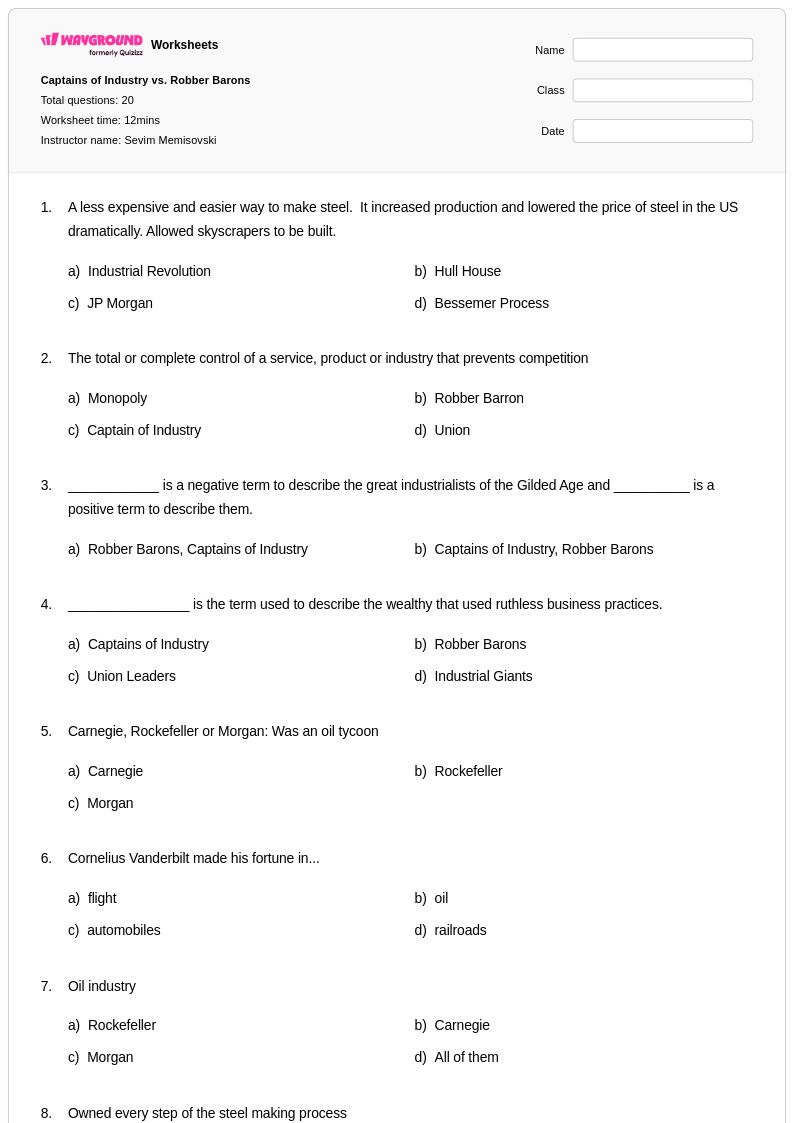
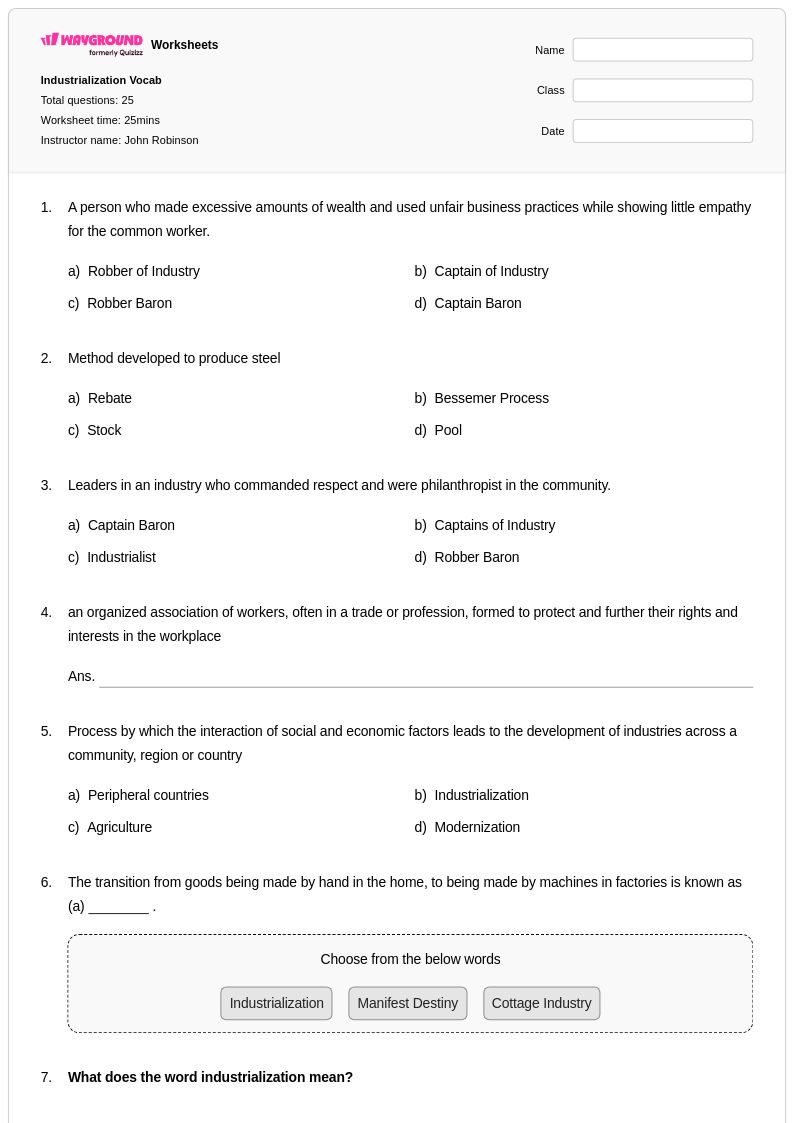
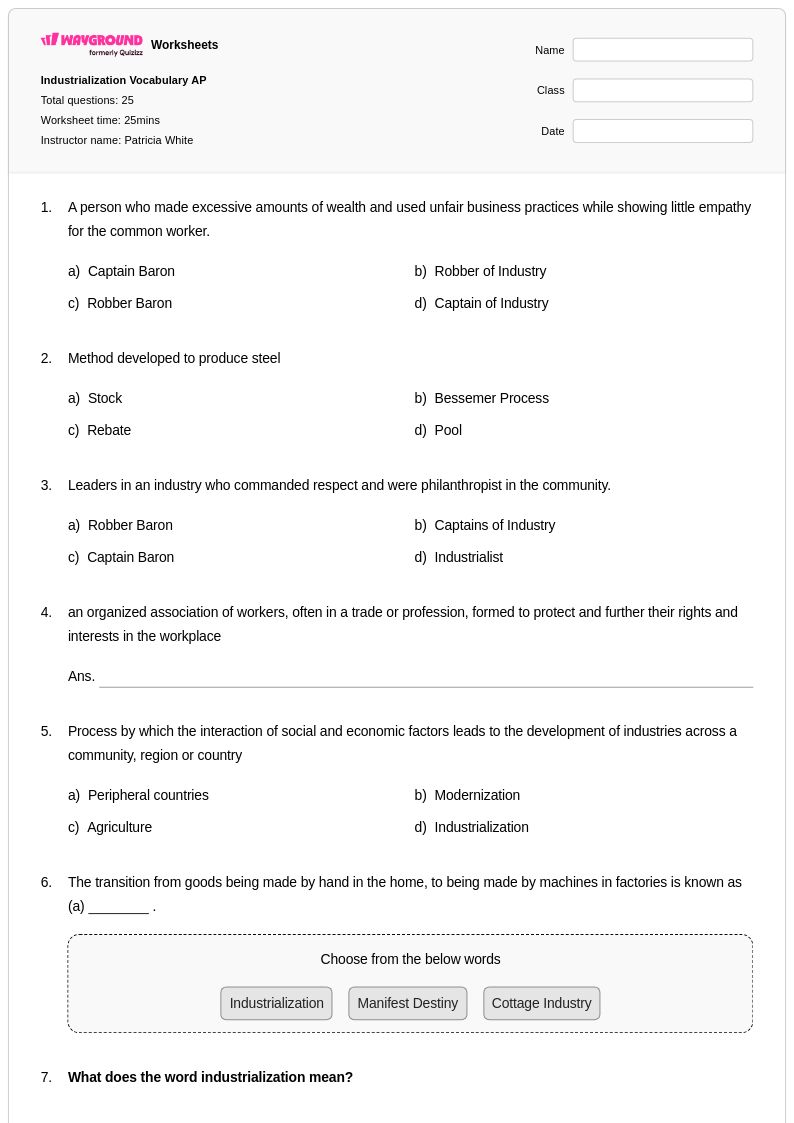
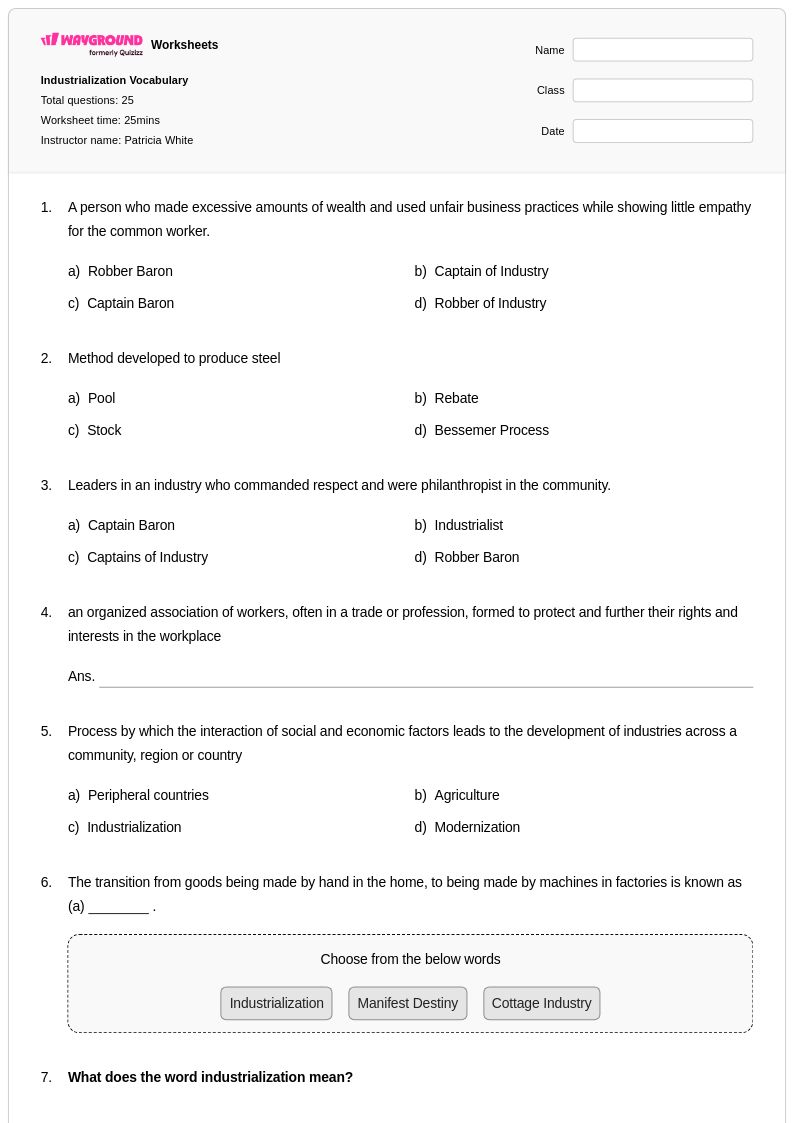
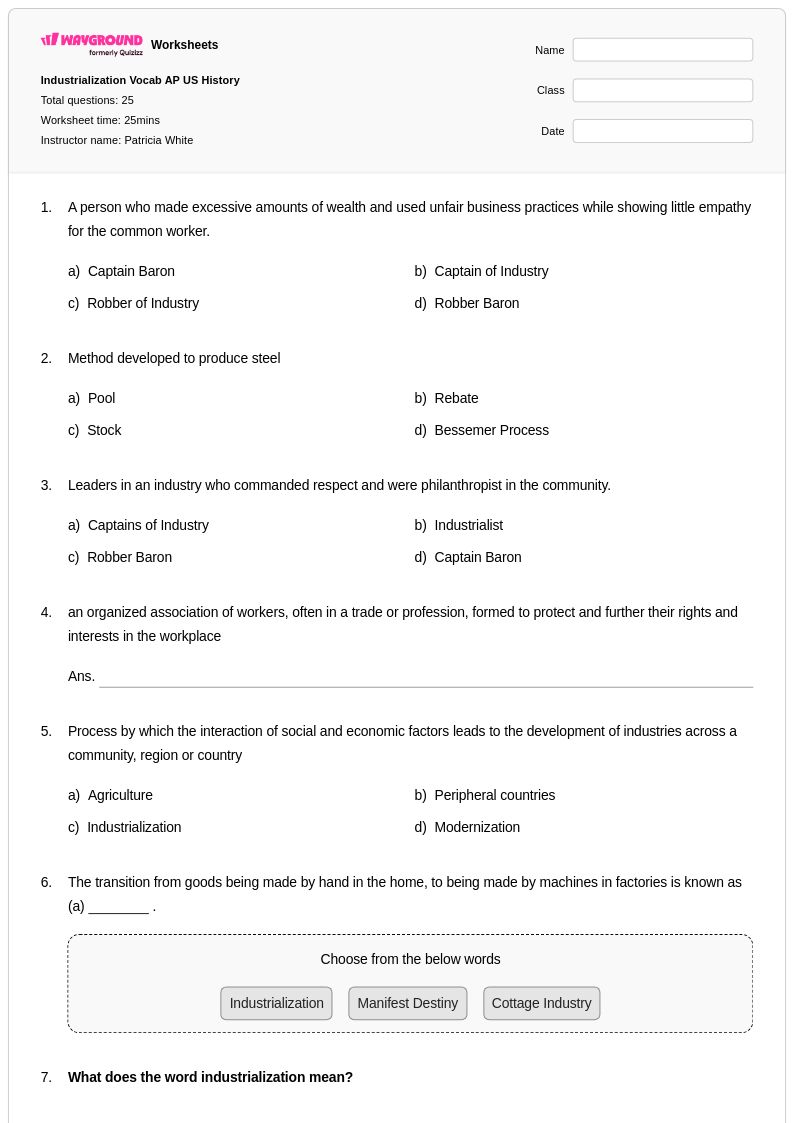
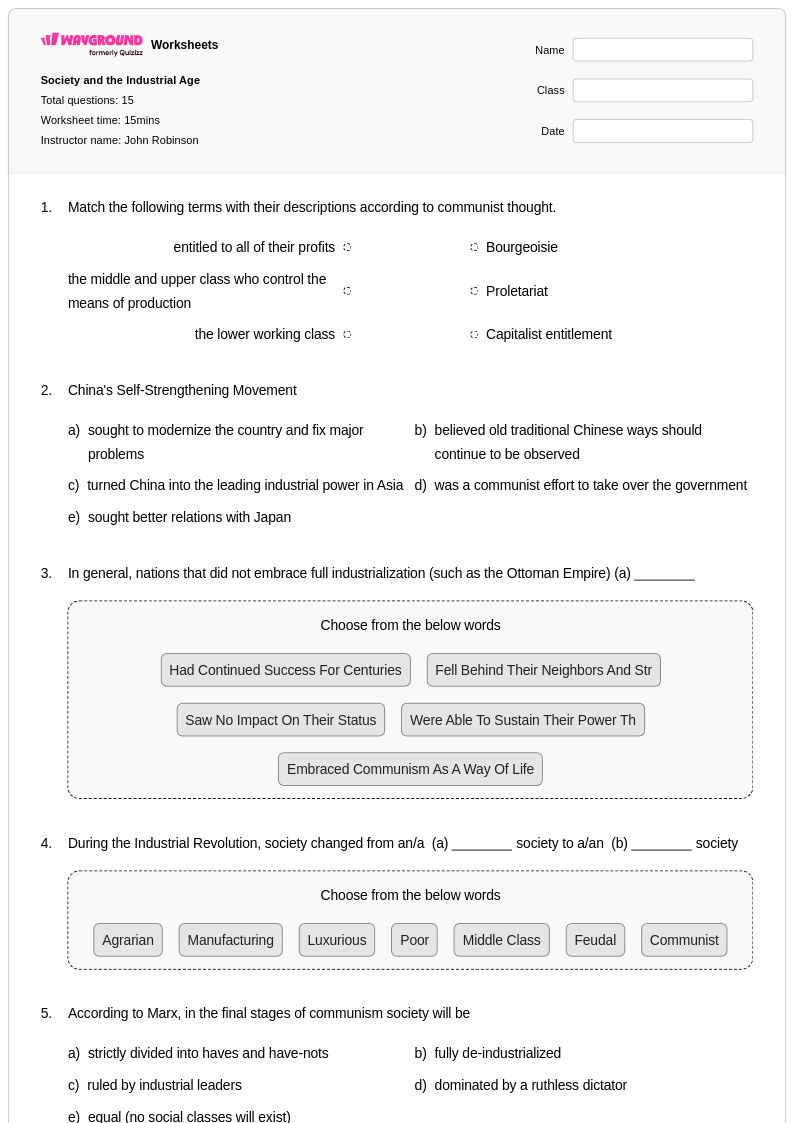
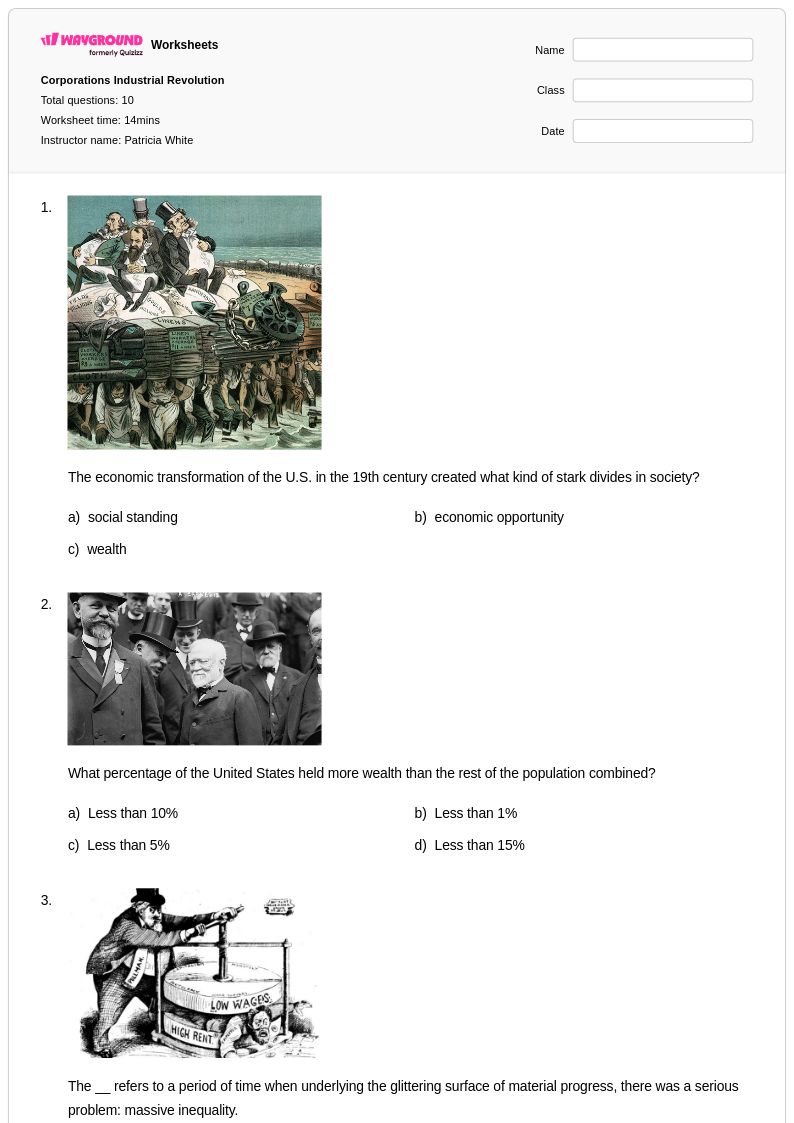
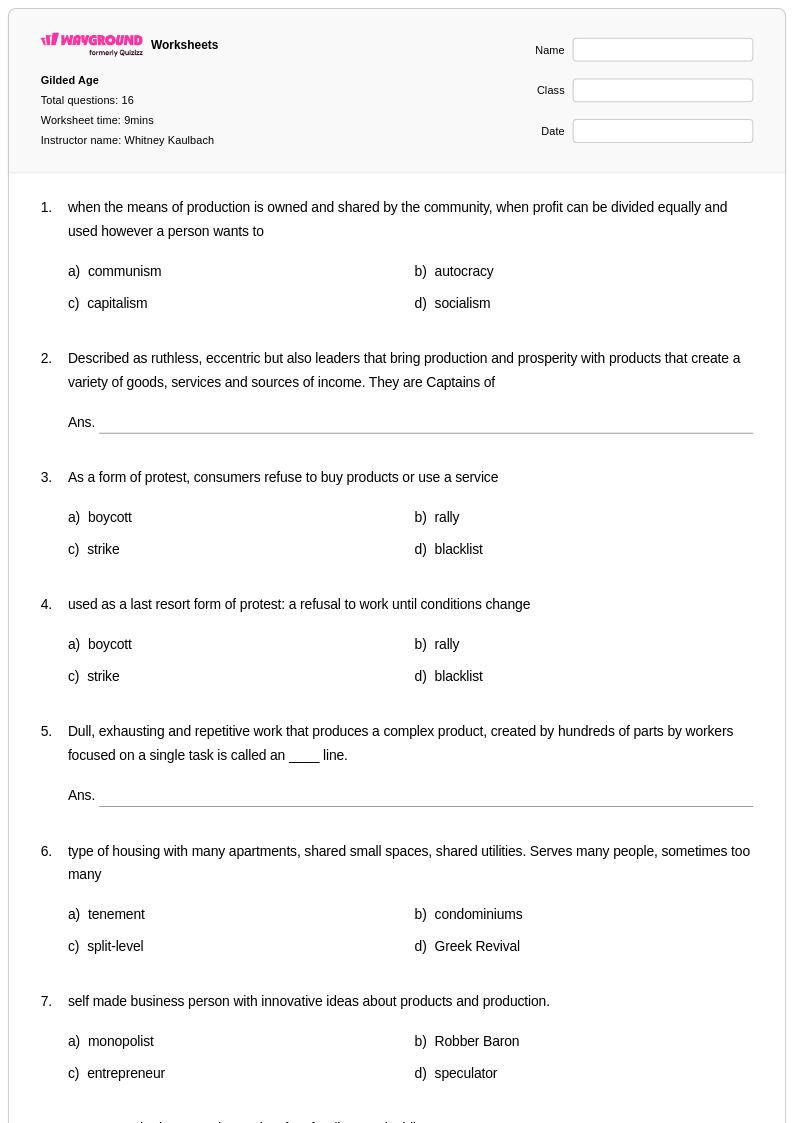
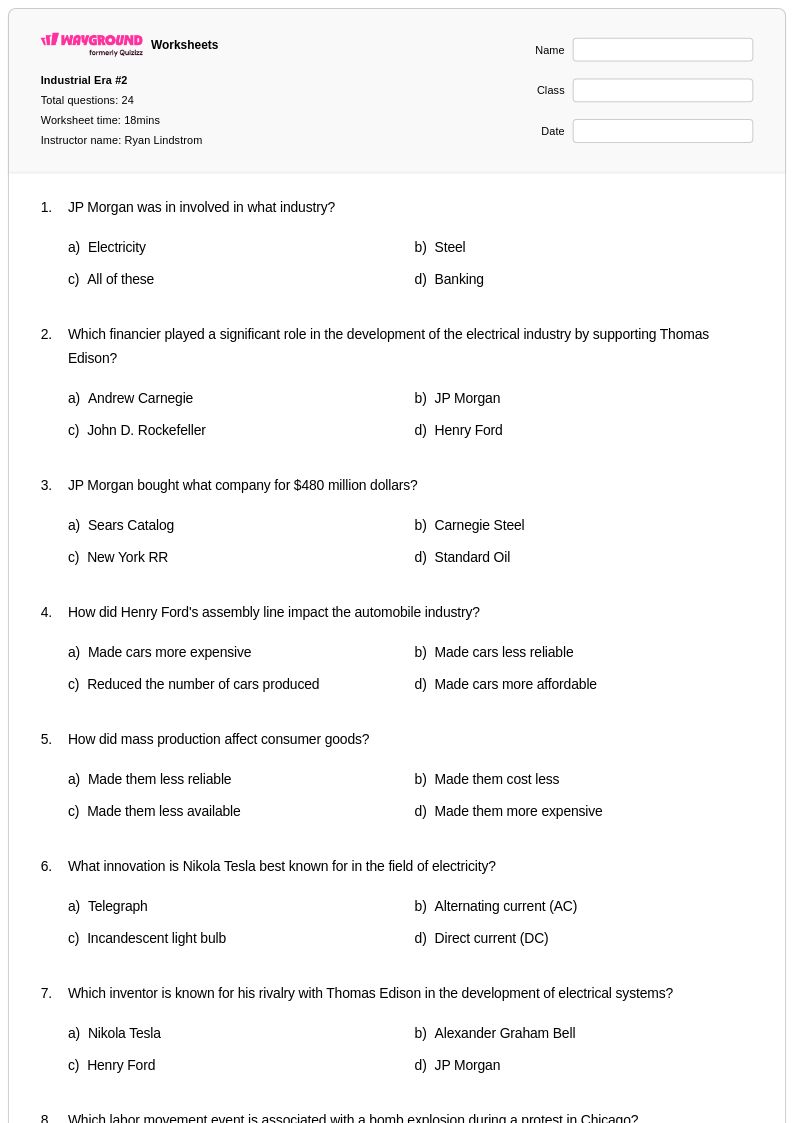
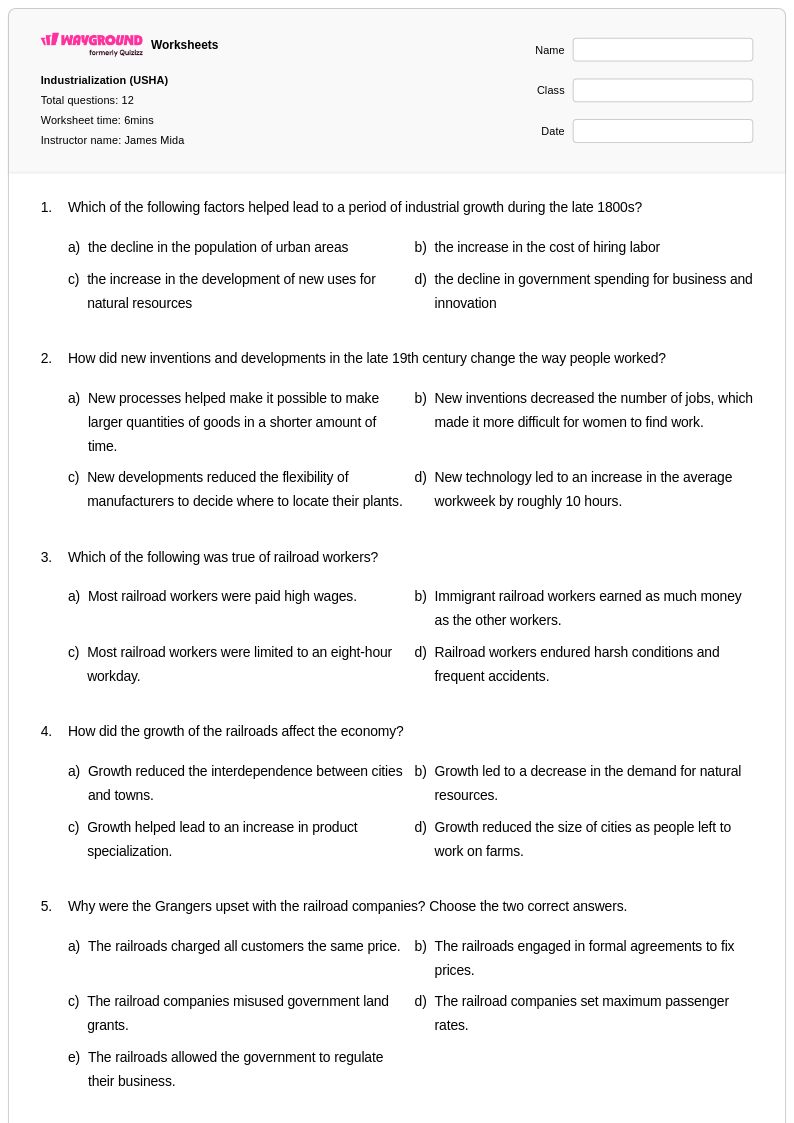
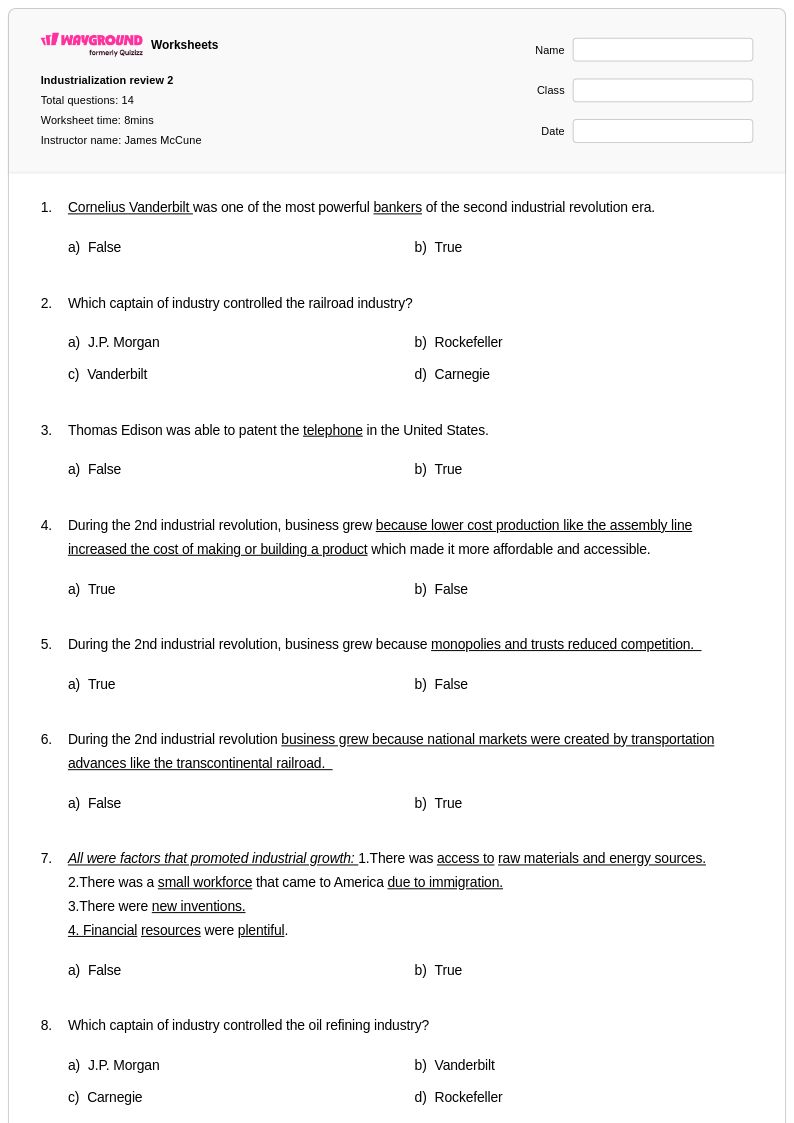
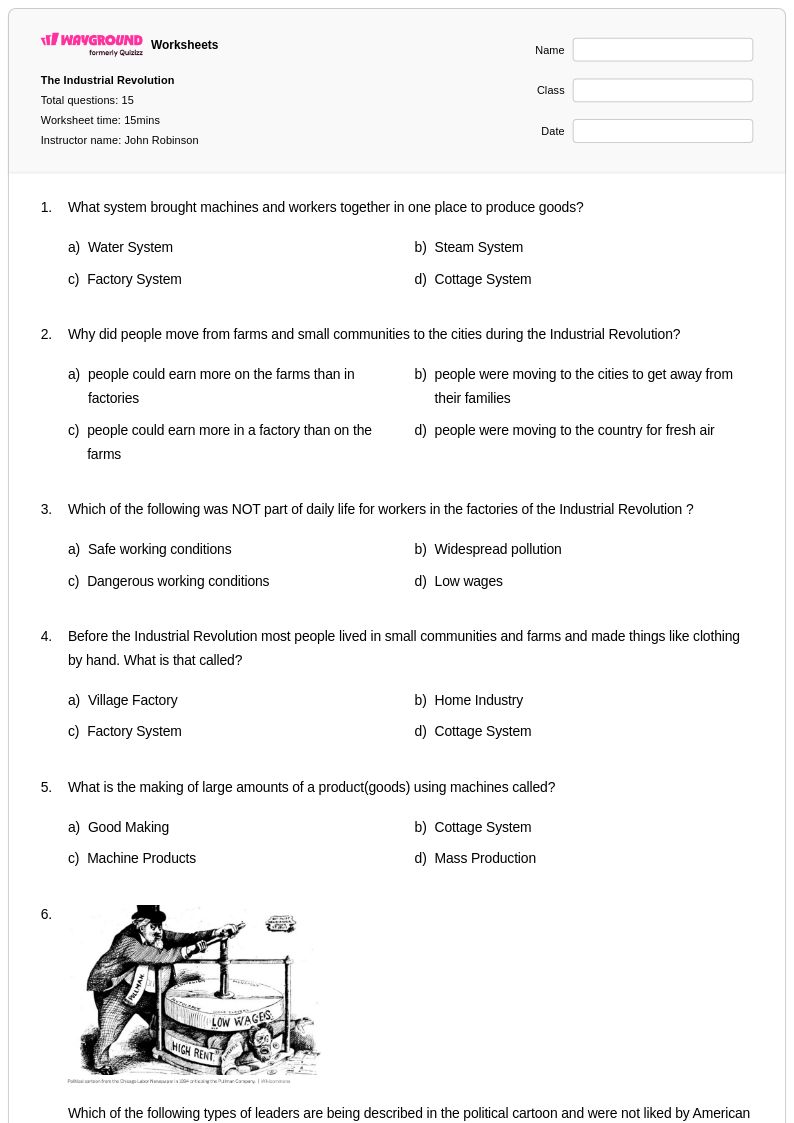
Captains of Industry worksheets for Class 8 students provide comprehensive exploration of the influential business leaders who shaped America's industrial transformation during the late 19th and early 20th centuries. These carefully crafted educational resources guide students through the complex legacies of figures like Andrew Carnegie, John D. Rockefeller, Cornelius Vanderbilt, and J.P. Morgan, examining their revolutionary business practices, monopolistic strategies, and lasting impact on American society. The worksheets strengthen critical thinking skills by encouraging students to analyze primary sources, evaluate the distinction between "robber barons" and "captains of industry," and assess how these entrepreneurs influenced labor relations, economic growth, and social change. Each printable resource includes detailed answer keys and practice problems that help students master key concepts about industrial capitalism, while free pdf formats ensure accessibility for diverse classroom needs.
Wayground, formerly Quizizz, empowers educators with an extensive collection of teacher-created Captains of Industry worksheets that transform Class 8 Social Studies instruction. The platform's millions of resources include standards-aligned materials that support differentiated learning through customizable content, allowing teachers to modify worksheets based on individual student needs and reading levels. Advanced search and filtering capabilities enable quick identification of specific topics within industrial history, from Carnegie's steel empire to Rockefeller's Standard Oil monopoly, while both printable and digital formats provide flexible implementation options for traditional and technology-enhanced classrooms. These comprehensive tools facilitate effective lesson planning by offering ready-to-use materials for skill practice, targeted remediation for struggling learners, and enrichment opportunities for advanced students exploring the nuanced debate surrounding America's industrial titans.
FAQs
How do I teach the Captains of Industry to middle or high school students?
Teaching the Captains of Industry works best when students are asked to evaluate competing interpretations rather than accept a single narrative. Anchor instruction around the central debate: were figures like Andrew Carnegie, John D. Rockefeller, and Cornelius Vanderbilt visionary contributors to American growth or exploitative monopolists who harmed workers and consumers? Use primary sources, political cartoons, and cause-and-effect analysis to help students build evidence-based arguments. Framing the lesson as a historical controversy rather than a biography unit sustains engagement and develops critical thinking.
What exercises help students practice analyzing the Captains of Industry?
Effective practice exercises for this topic include primary source analysis, cause-and-effect mapping of industrial decisions on workers and consumers, and structured written responses that require students to take and defend a position. Compare-and-contrast tasks that examine multiple industrialists side by side also build analytical depth. Worksheets that integrate document-based questions push students beyond recall and into the kind of historical reasoning expected at the secondary level.
What misconceptions do students commonly have about the Captains of Industry?
A common misconception is that the Captains of Industry were straightforwardly heroic or straightforwardly villainous, when the historical record supports a more complex evaluation. Students often conflate philanthropic activity, such as Carnegie's libraries or Rockefeller's charitable foundations, with ethical business conduct, without recognizing that the two can coexist with labor exploitation and anti-competitive practices. Another frequent error is treating monopolies as purely abstract economic concepts rather than connecting them to concrete impacts on wages, prices, and worker conditions.
How can I differentiate Captains of Industry instruction for struggling and advanced students?
For struggling students, scaffold primary source analysis by providing guiding questions and simplified document excerpts before expecting independent interpretation. For advanced learners, assign more sophisticated tasks such as evaluating historiographical debates or writing position papers that weigh the long-term economic versus social costs of industrialization. On Wayground, teachers can apply accommodations such as read aloud support, reduced answer choices, and extended time to individual students without disrupting the experience of the rest of the class.
How do I use Captains of Industry worksheets from Wayground in my classroom?
Wayground's Captains of Industry worksheets are available as free printable PDFs for traditional classroom use and in digital formats for technology-integrated environments, including the option to host them as an interactive quiz on the platform. Each worksheet includes a comprehensive answer key, making them practical for independent student work, small group instruction, or whole-class review. Teachers can filter resources by standard or skill focus to quickly find materials that fit their unit sequence.
How do I connect the Captains of Industry to broader themes in U.S. history?
The Captains of Industry sit at the intersection of several major U.S. history themes: industrialization, immigration and labor, the rise of big business, and Progressive Era reform. Connecting these figures to the labor movement, antitrust legislation like the Sherman Antitrust Act, and the eventual rise of government regulation helps students see the period as a turning point rather than an isolated unit. Building these connections explicitly through cause-and-effect analysis strengthens students' ability to contextualize events across time periods.