Free Printable Missouri Compromise Worksheets for Class 8
Free Class 8 Missouri Compromise worksheets and printables help students master this pivotal U.S. History topic through engaging practice problems, comprehensive PDFs, and detailed answer keys from Wayground's expert collection.
Explore printable Missouri Compromise worksheets for Class 8
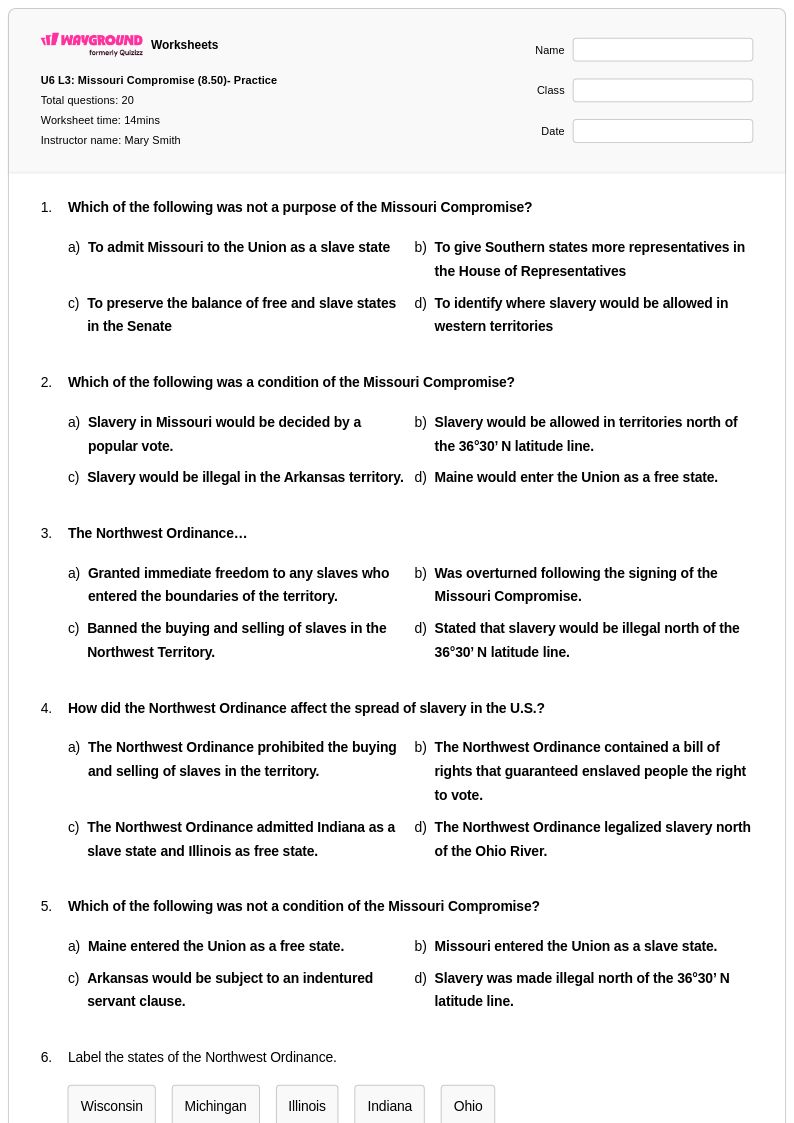
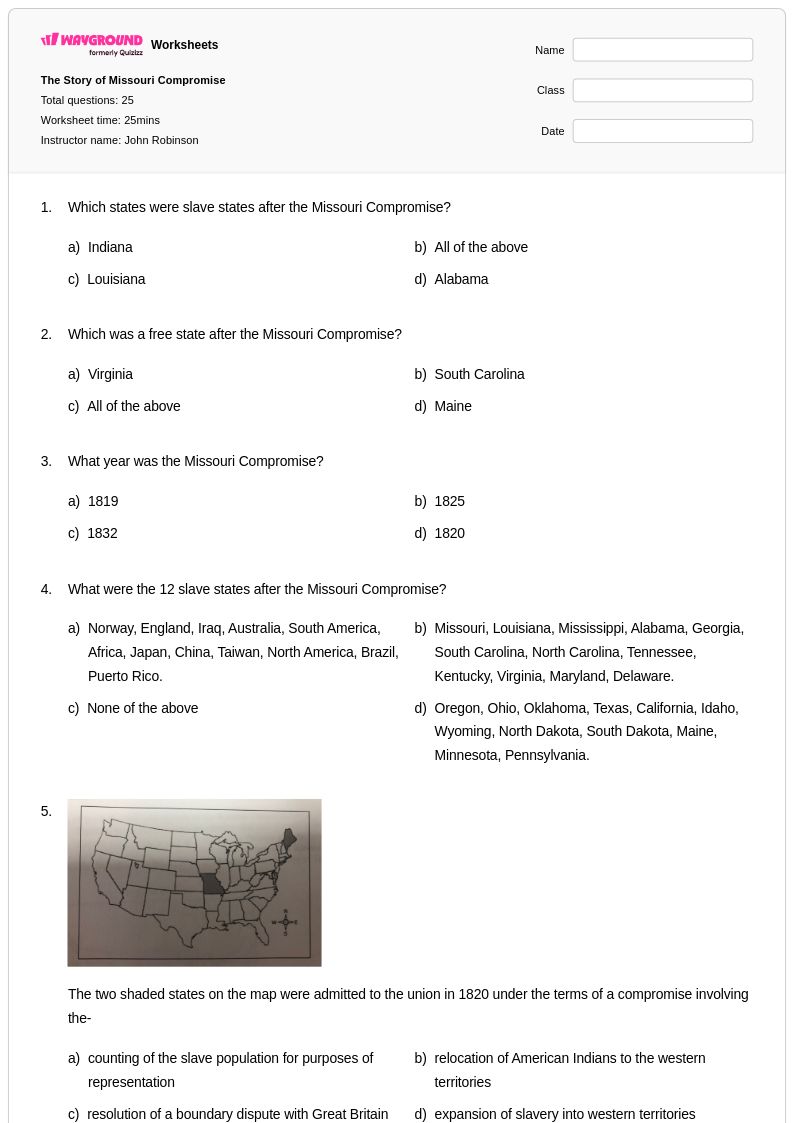
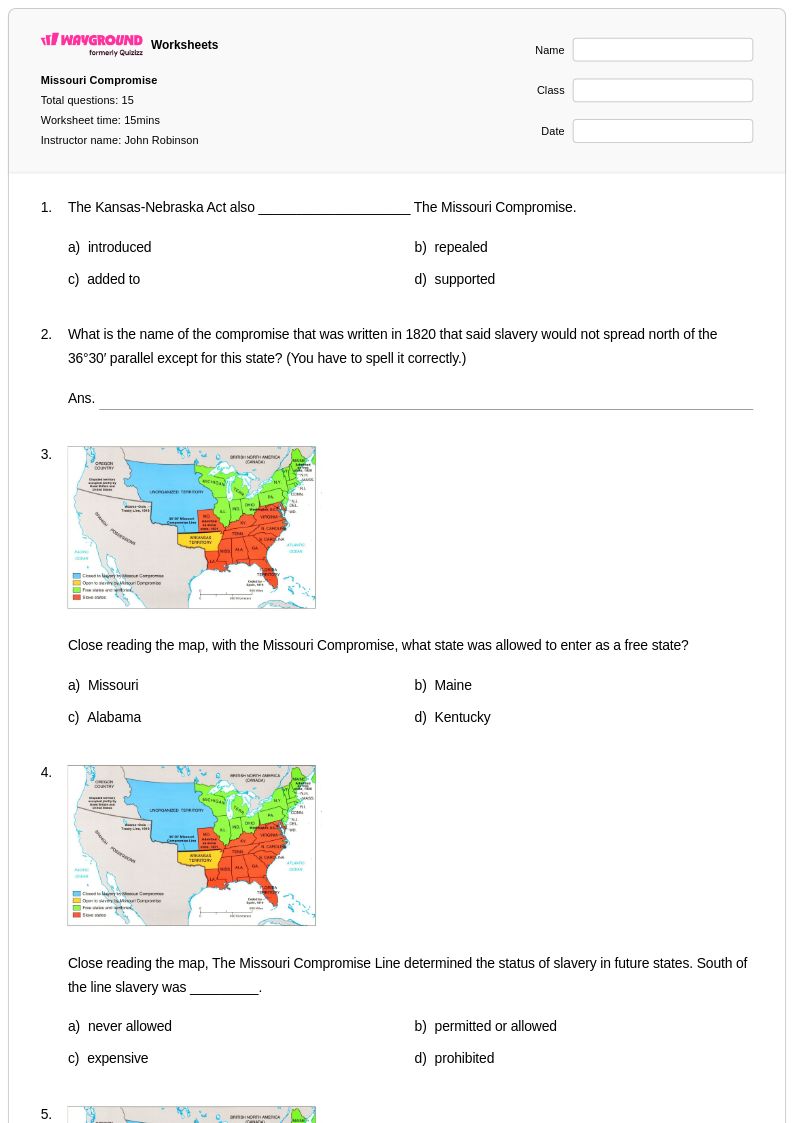
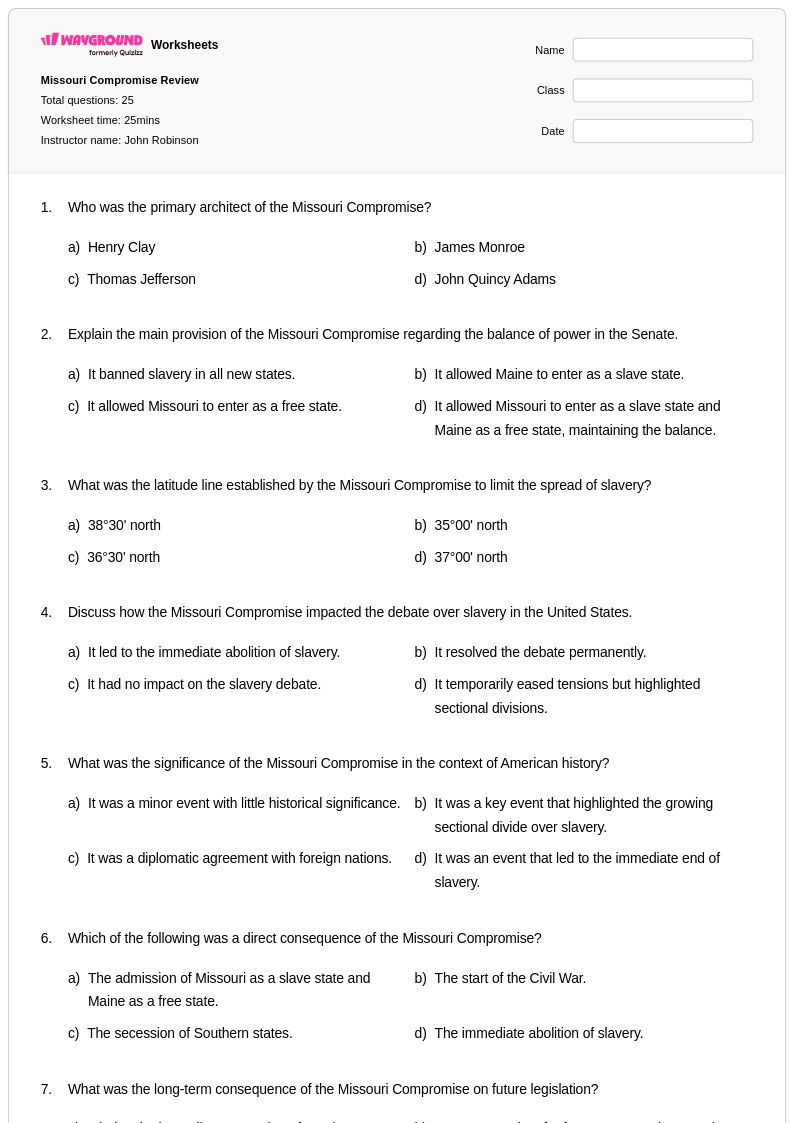
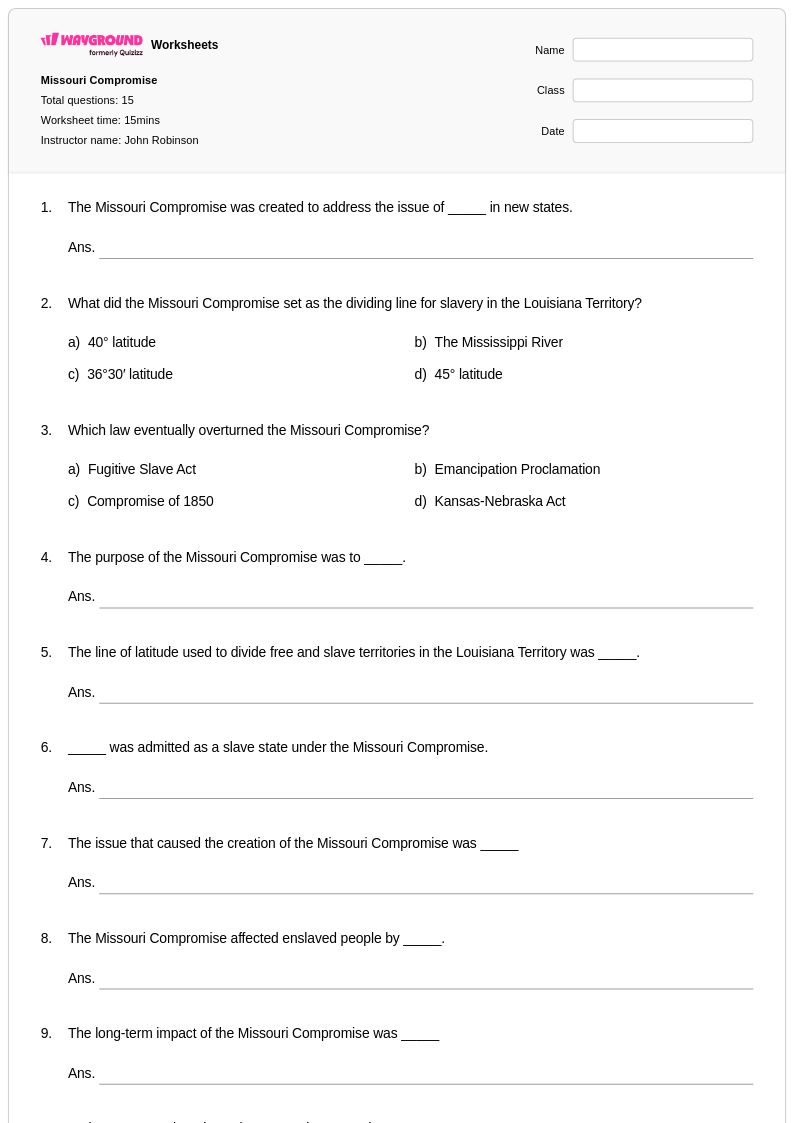
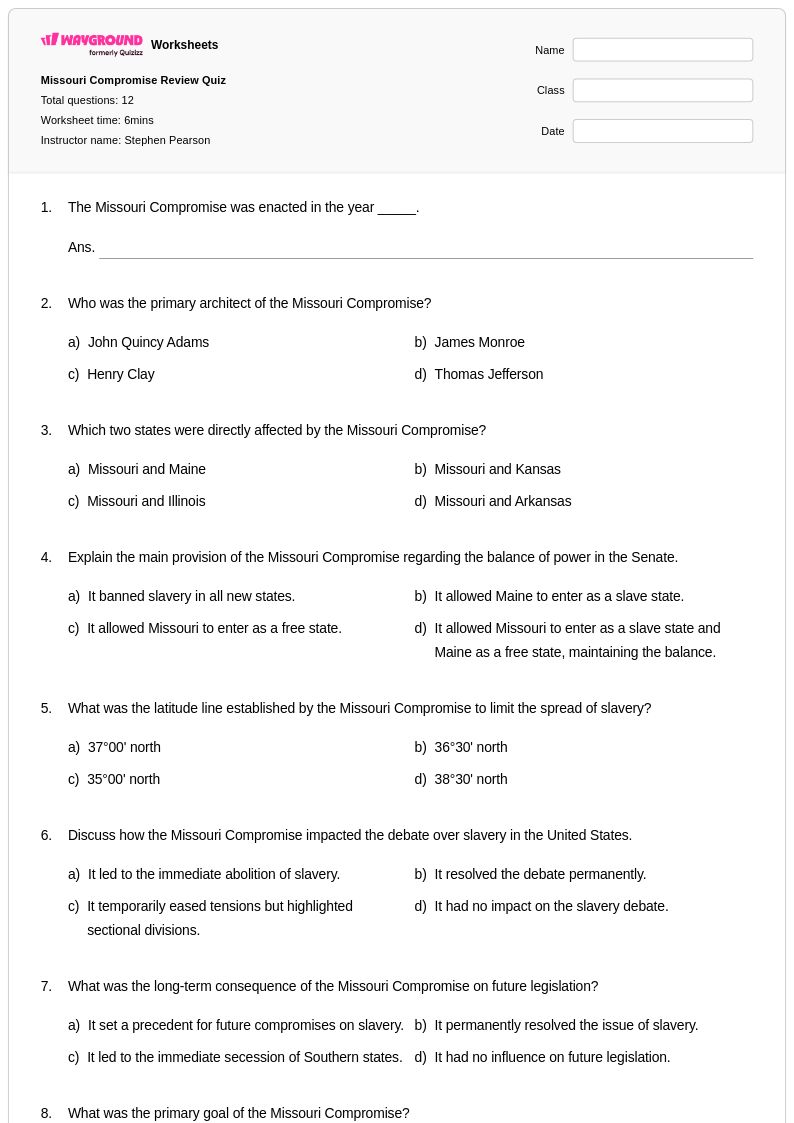
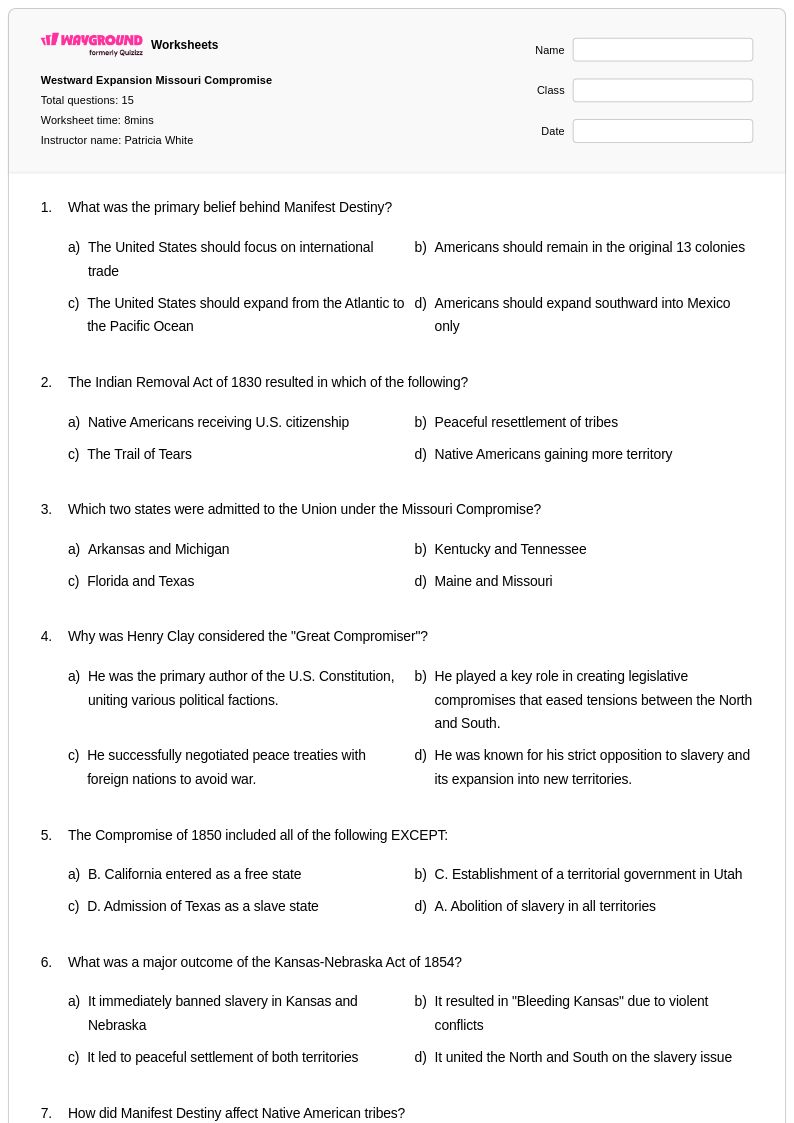
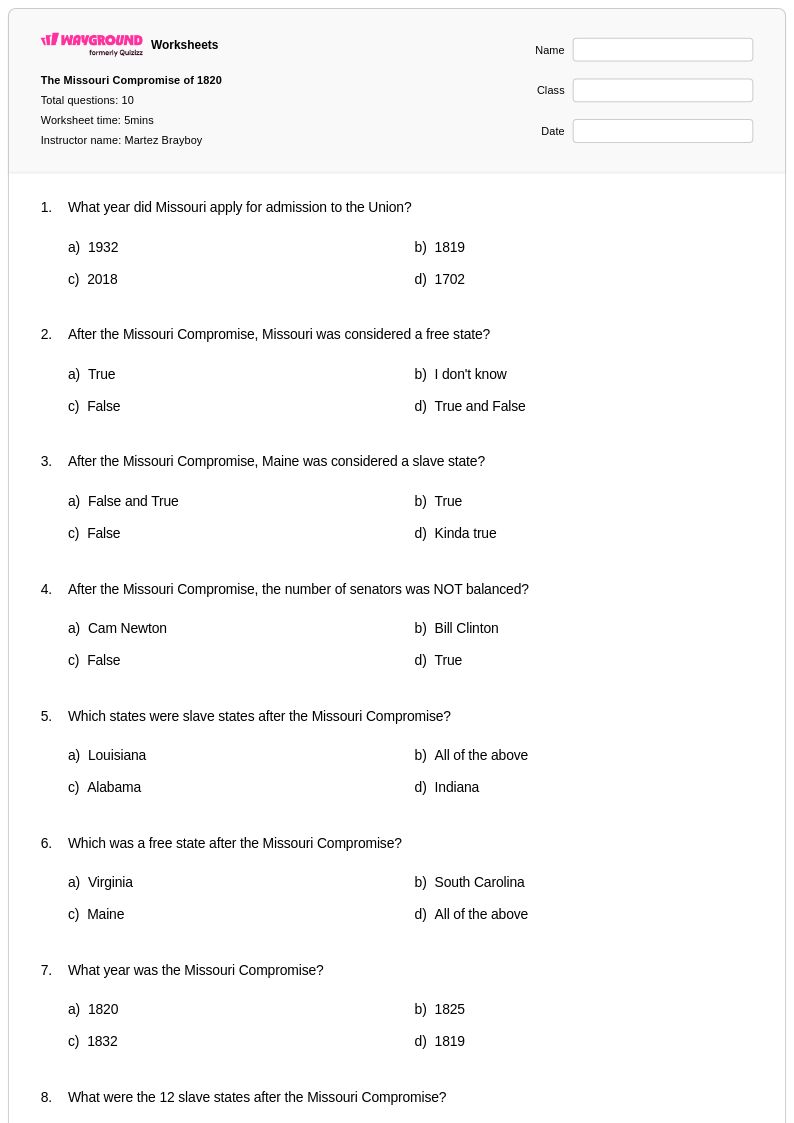
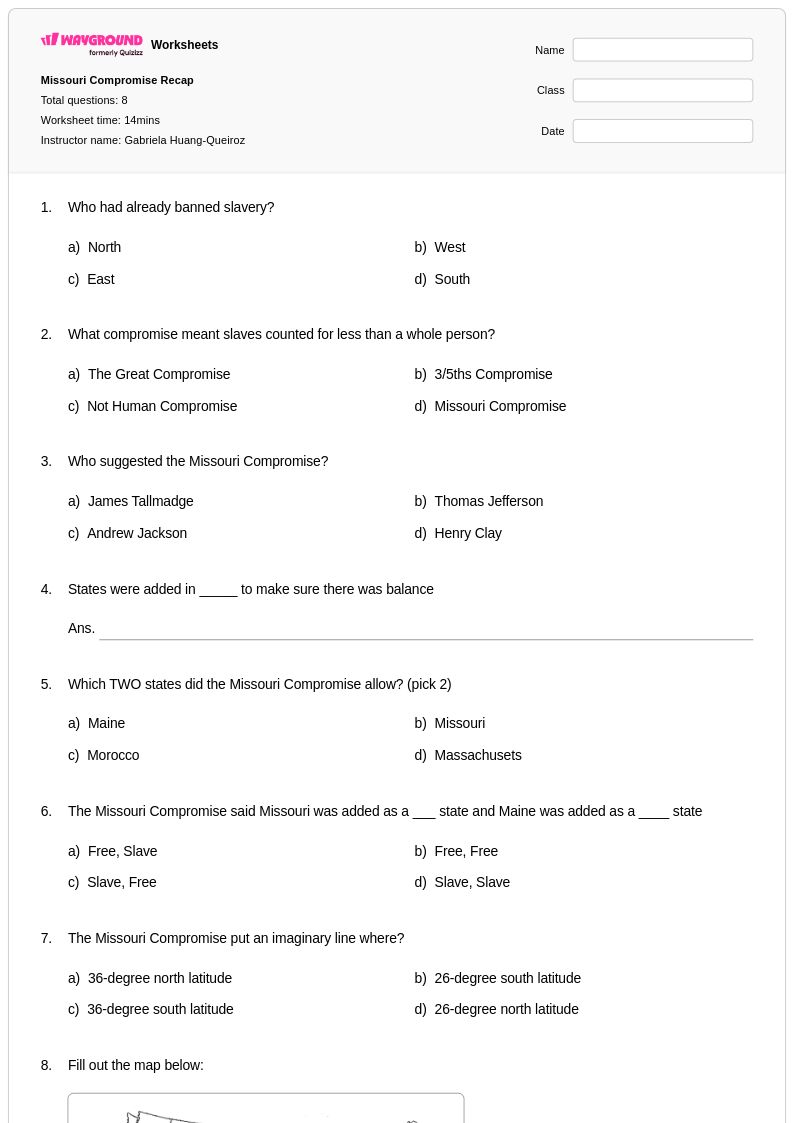
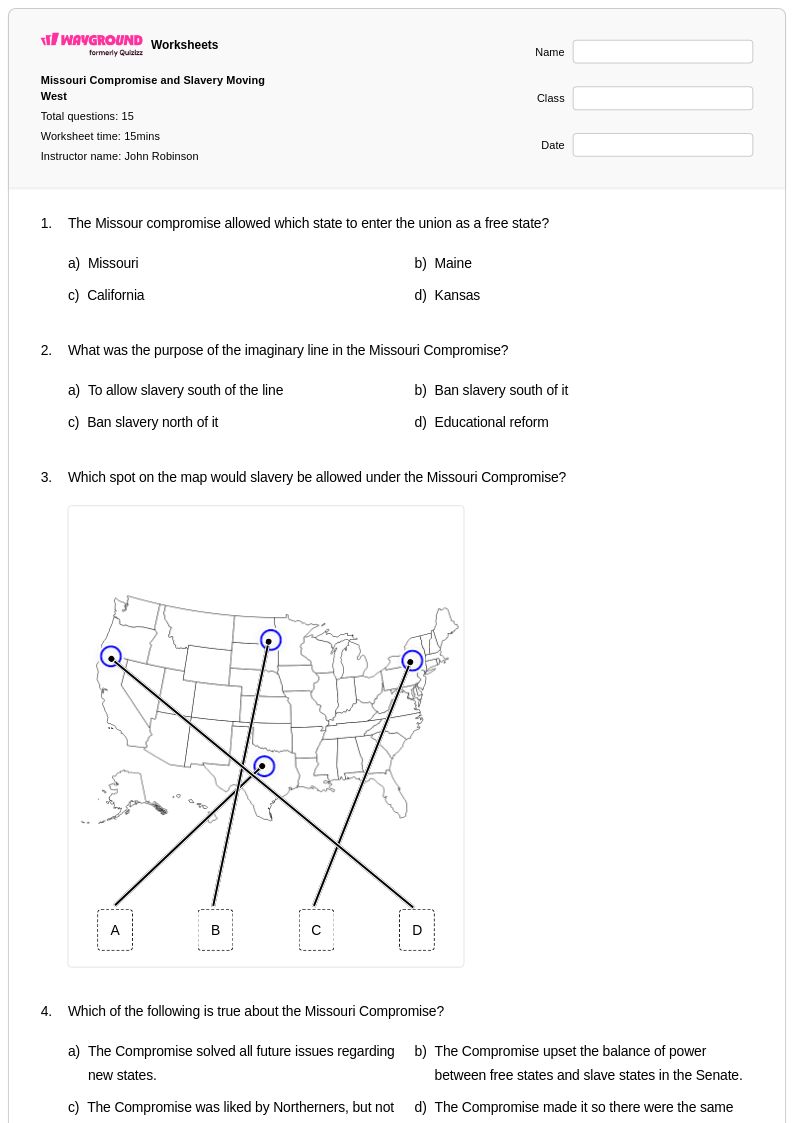
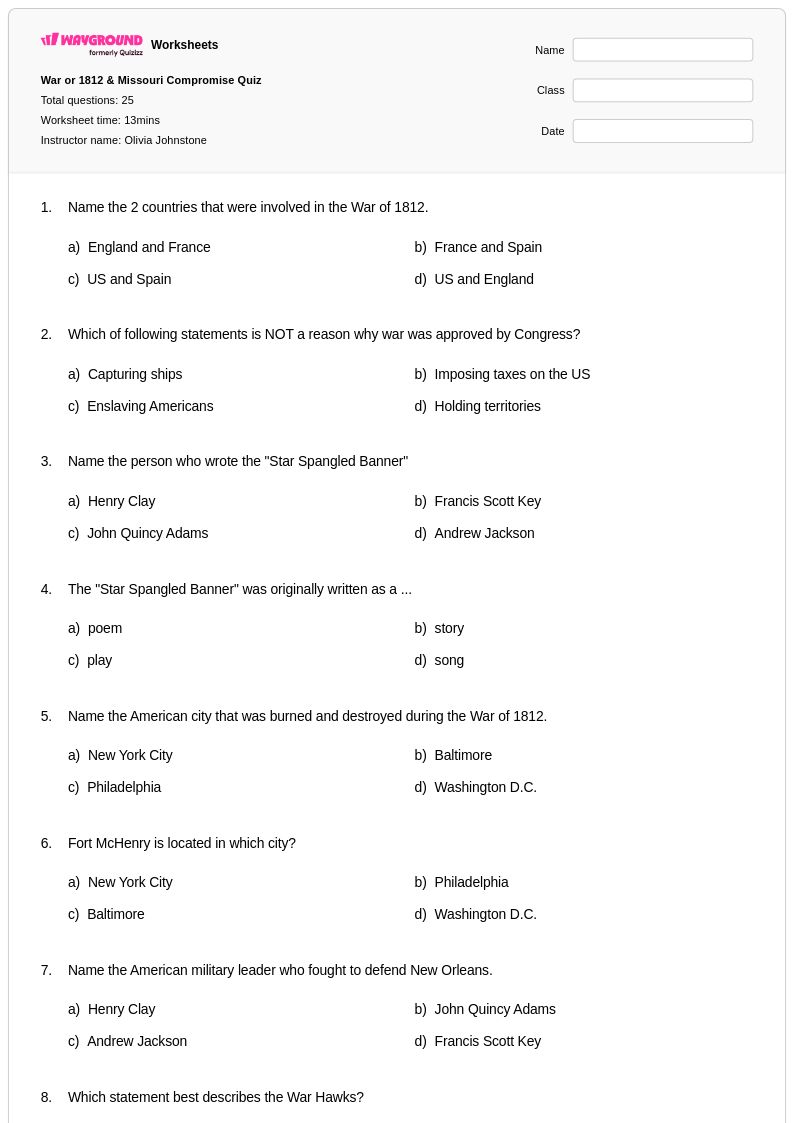
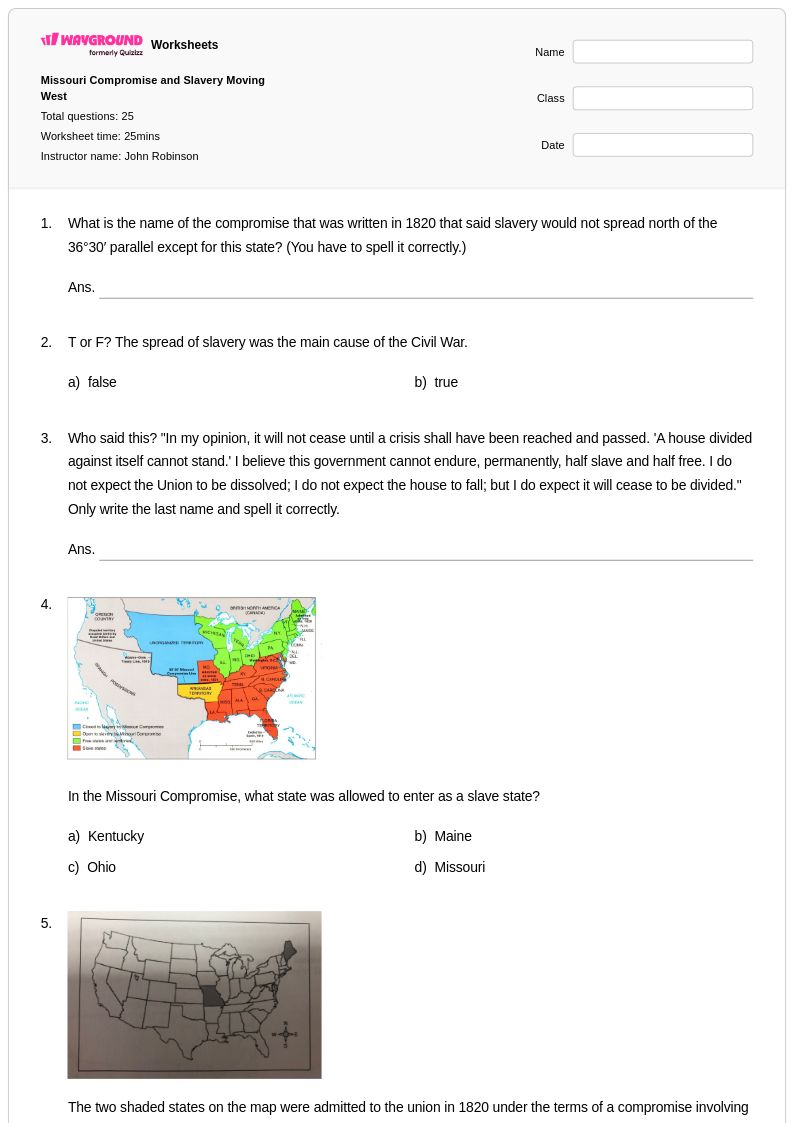
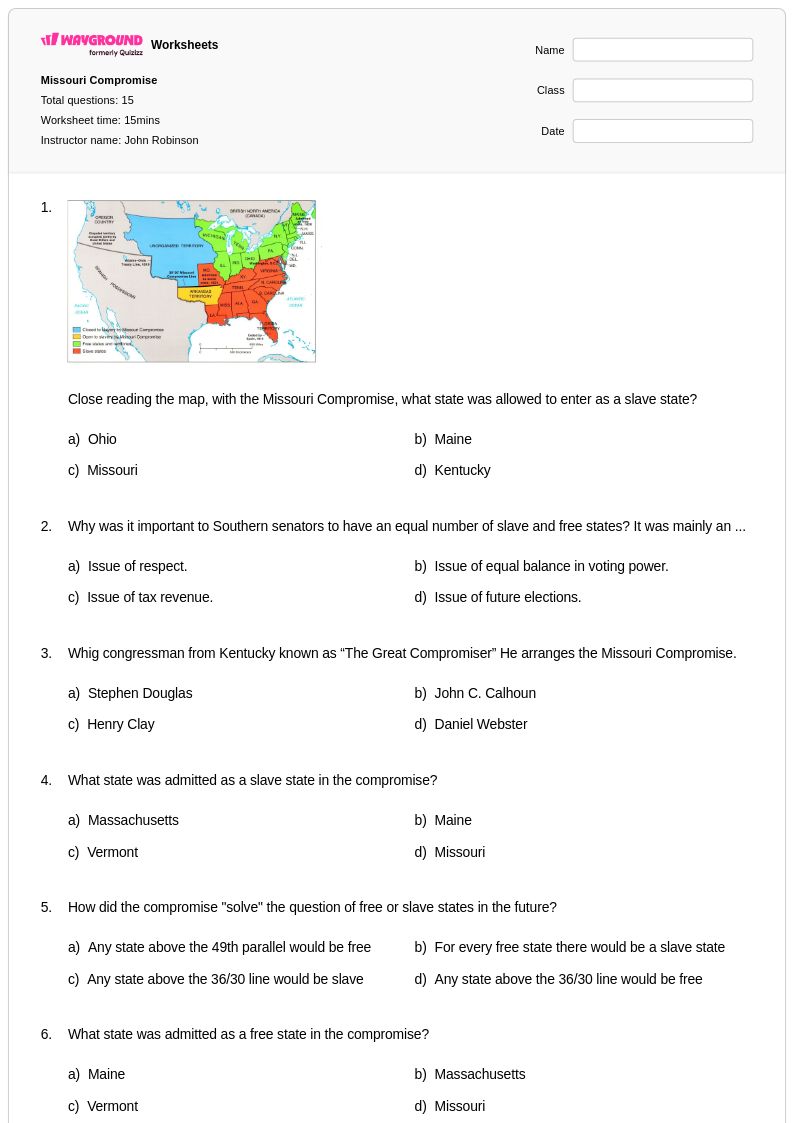
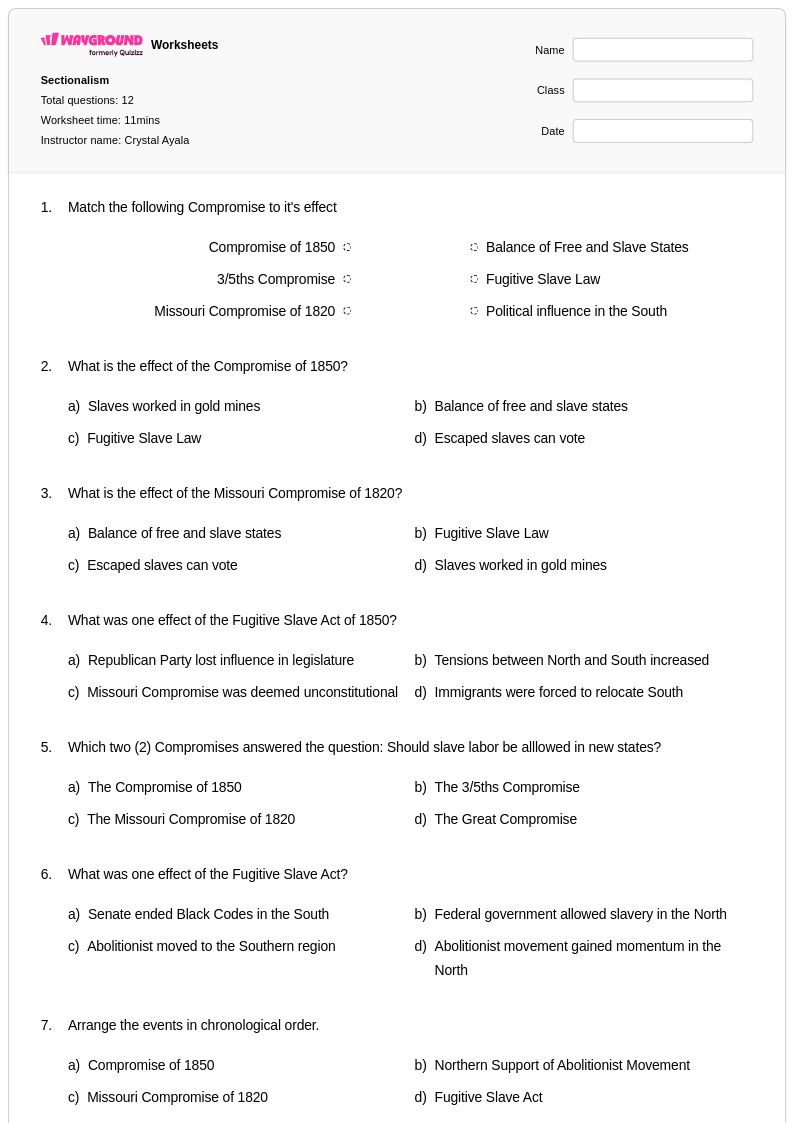
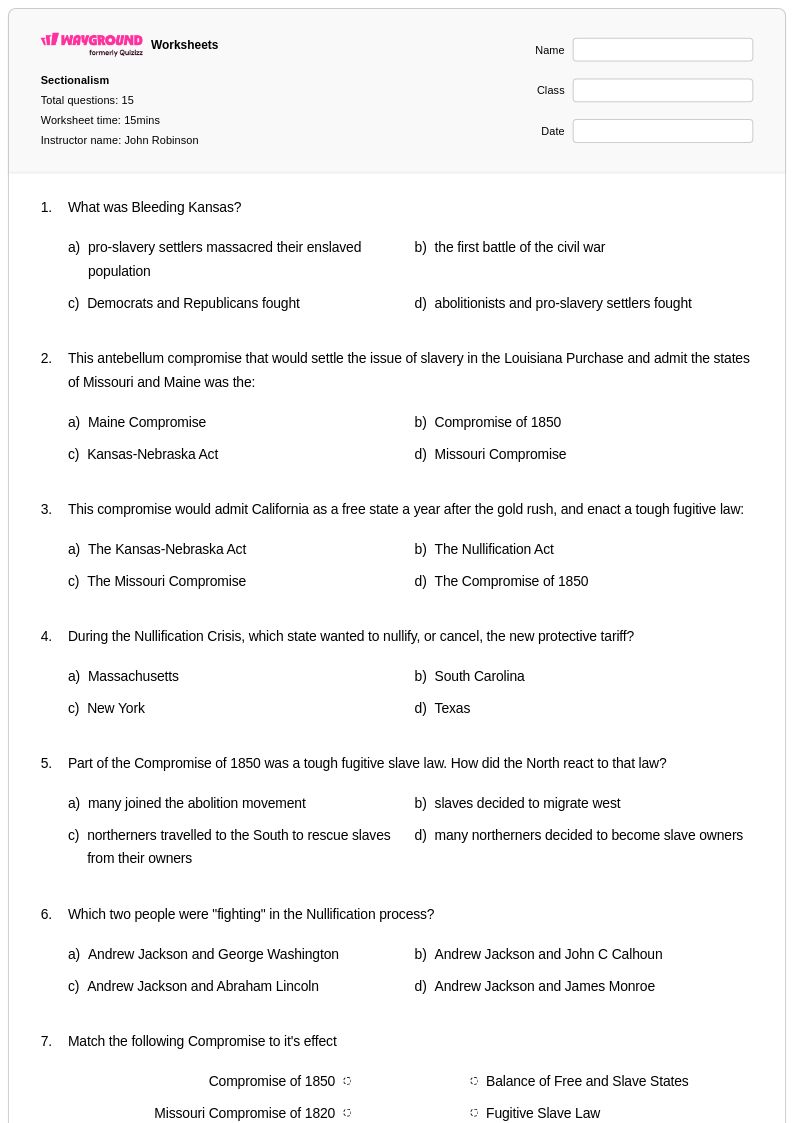
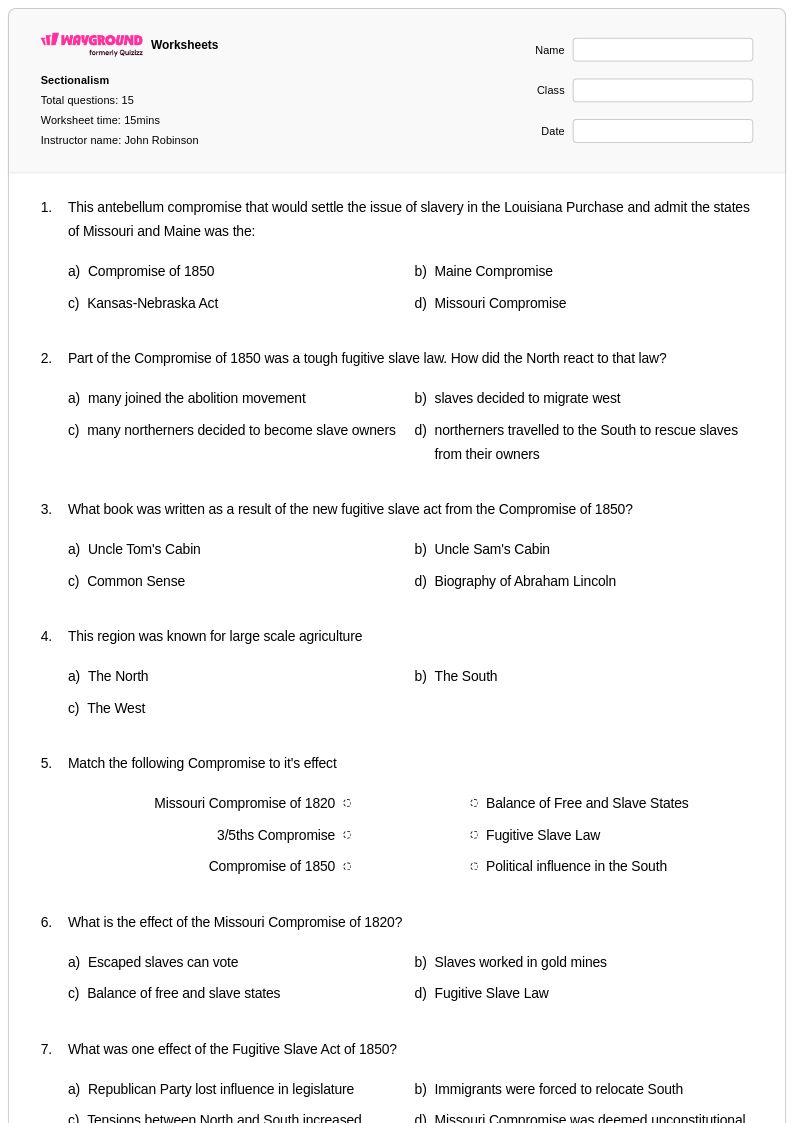
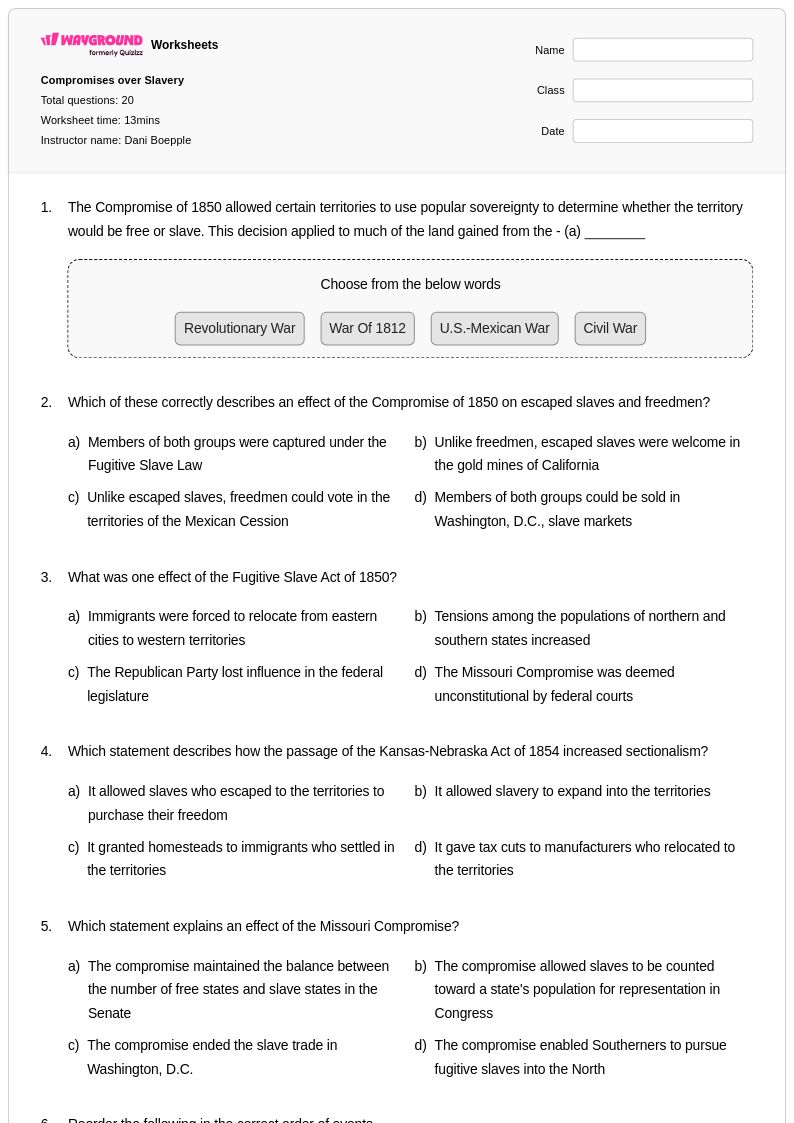
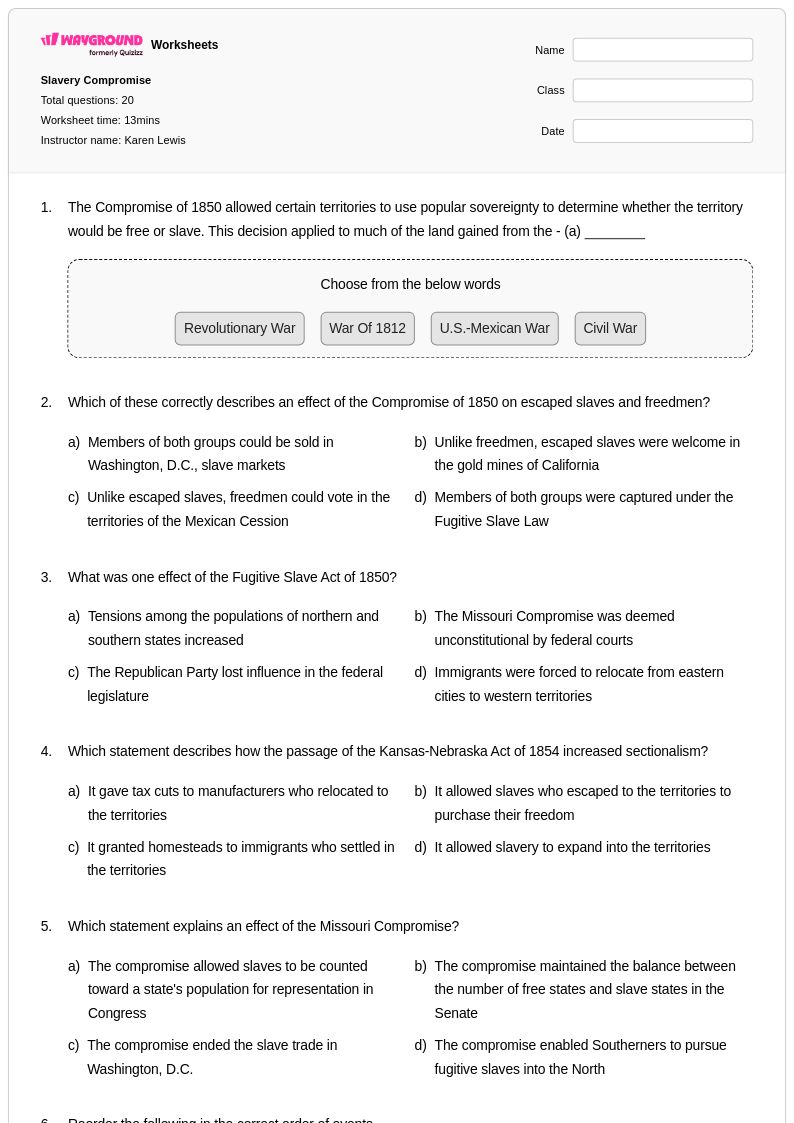
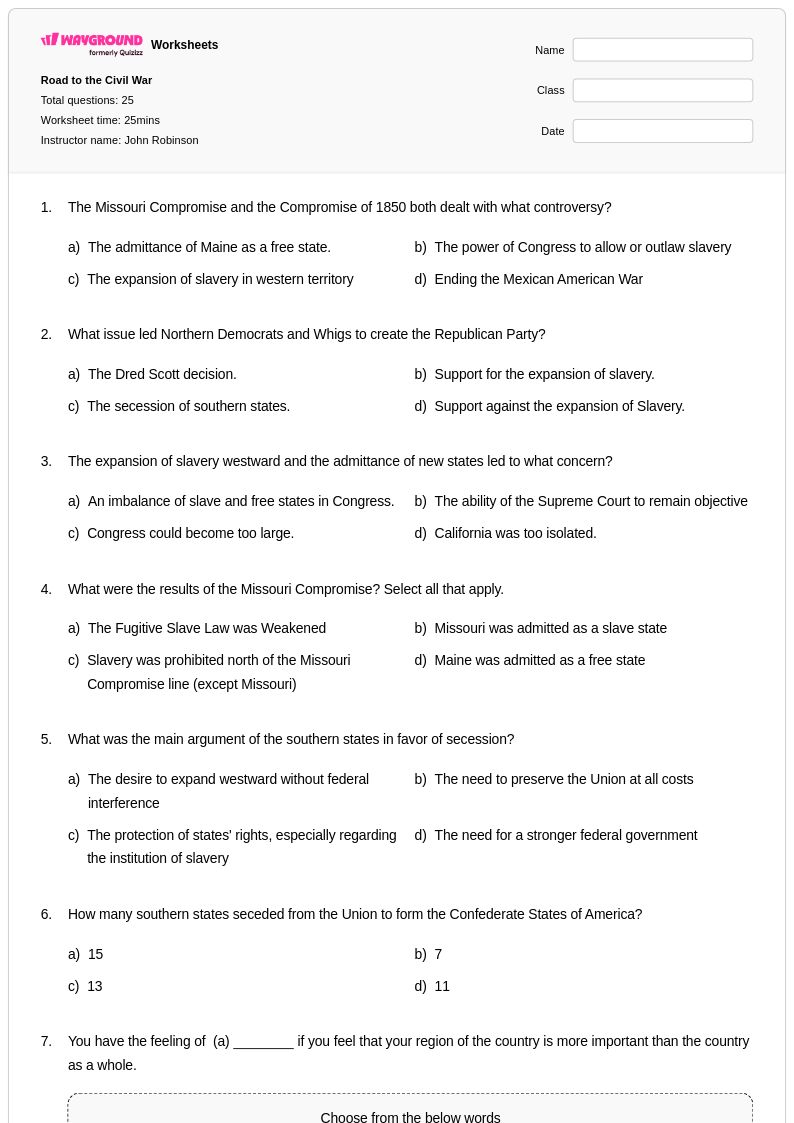
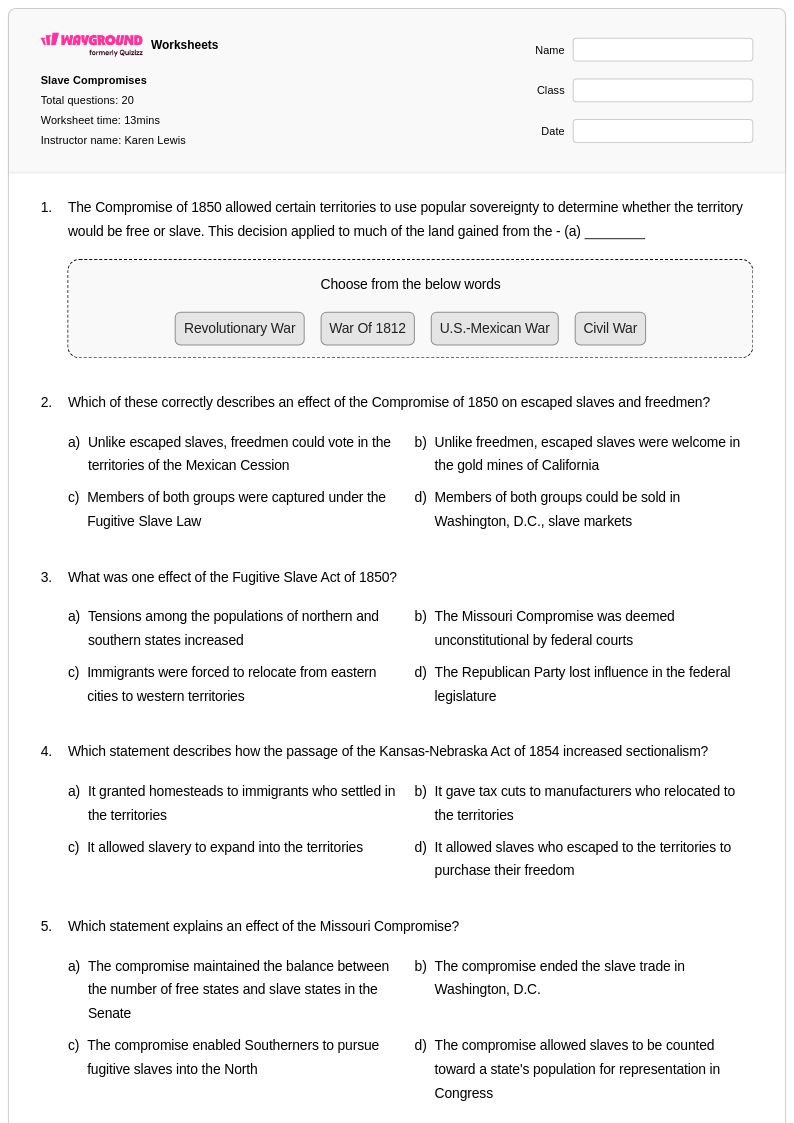
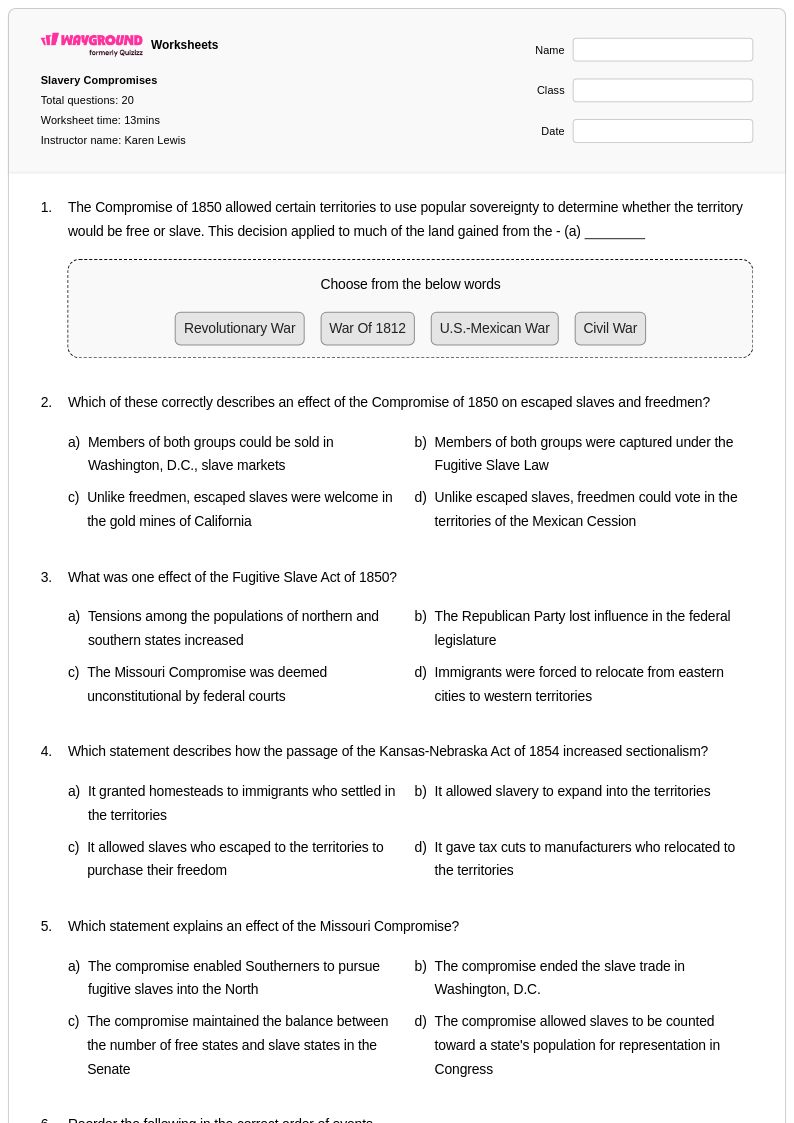
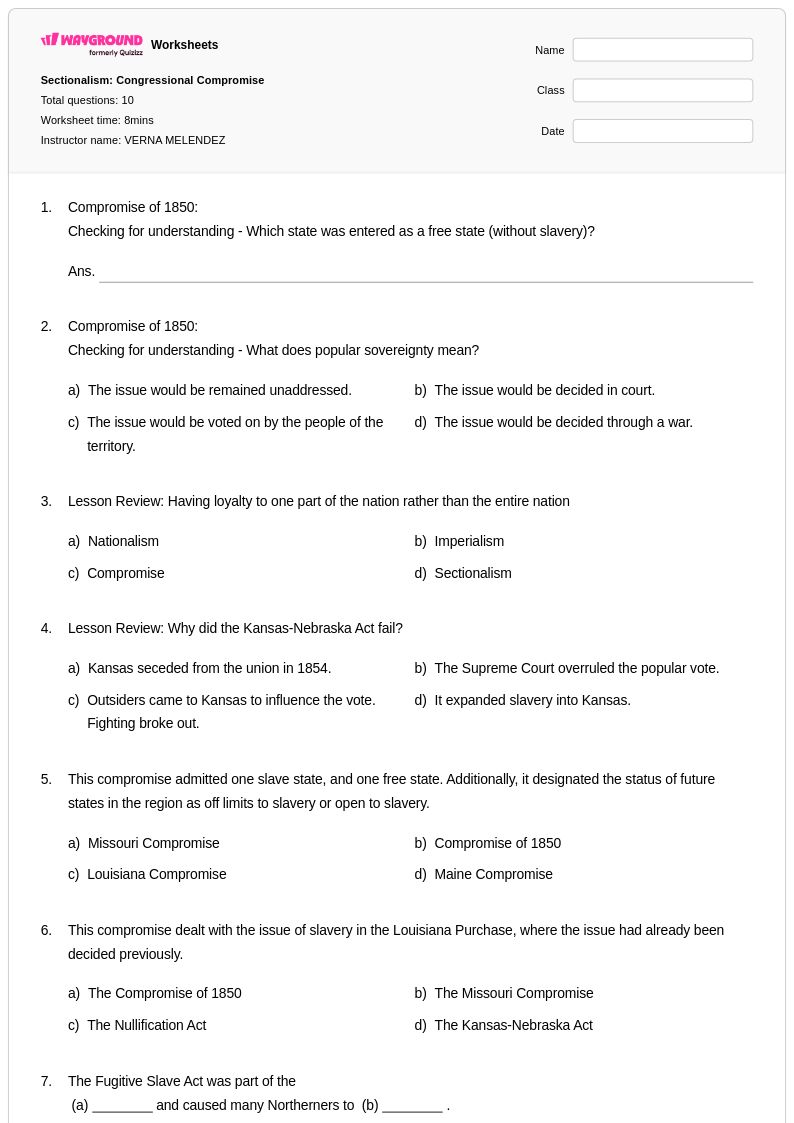
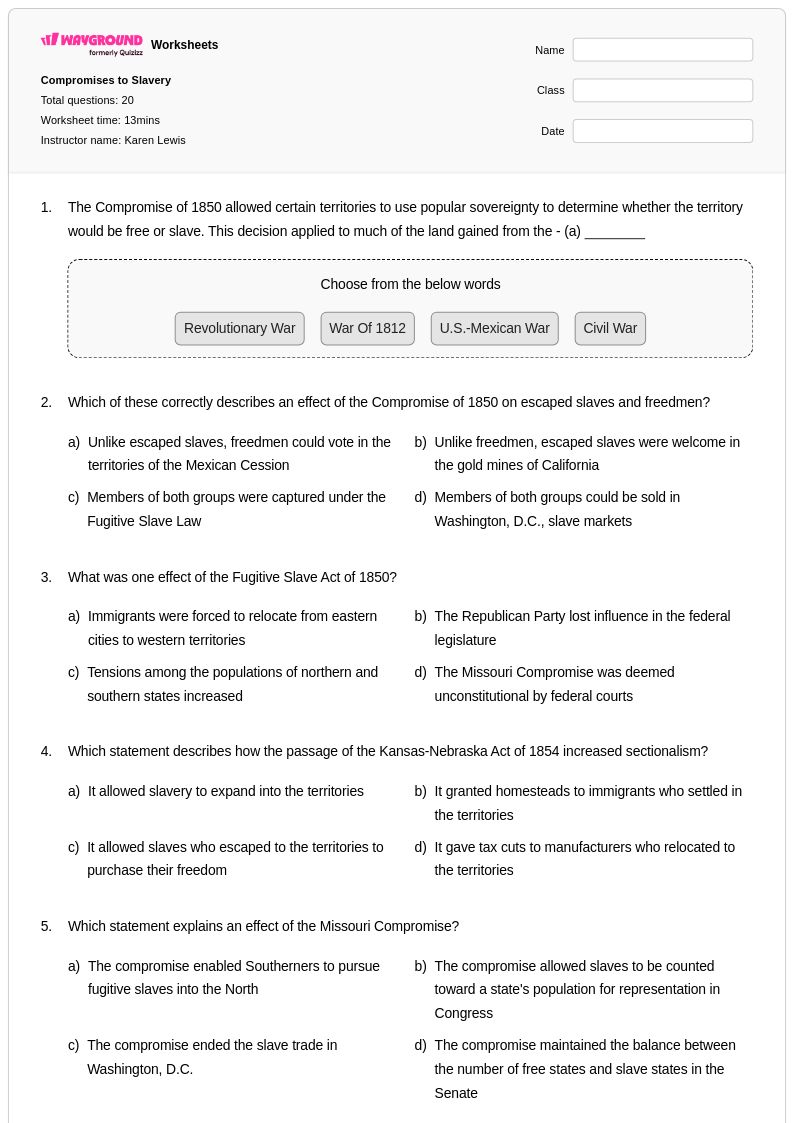
Missouri Compromise worksheets for Class 8 students available through Wayground (formerly Quizizz) provide comprehensive coverage of this pivotal 1820 legislative agreement that temporarily resolved the heated debate over slavery's expansion into new territories. These educational resources strengthen students' understanding of how the compromise admitted Missouri as a slave state while Maine entered as a free state, maintaining the delicate balance in the Senate, and established the 36°30' parallel as the boundary line for future slavery decisions in the Louisiana Territory. The worksheets include detailed practice problems that challenge students to analyze primary source documents, maps, and political cartoons from the era, while answer keys and free printables ensure teachers can efficiently assess student comprehension of this complex constitutional and moral crisis that foreshadowed the Civil War.
Wayground (formerly Quizizz) supports educators with an extensive collection of teacher-created Missouri Compromise resources drawn from millions of educational materials developed by classroom professionals nationwide. The platform's robust search and filtering capabilities allow teachers to quickly locate age-appropriate content that aligns with state social studies standards, while differentiation tools enable customization for diverse learning needs and skill levels. These Missouri Compromise worksheets are available in both printable pdf format and interactive digital versions, providing flexibility for in-class instruction, homework assignments, remediation sessions, and enrichment activities. Teachers can seamlessly integrate these resources into their lesson planning to reinforce critical thinking skills about sectional tensions, political compromise, and the growing divide between North and South in antebellum America.
FAQs
How do I teach the Missouri Compromise to middle or high school students?
Teaching the Missouri Compromise effectively means grounding students in the specific political tensions of 1820 before introducing the legislative details. Start by establishing why Missouri's application for statehood triggered a national crisis over the balance of slave and free states in Congress. From there, walk students through the three key provisions: Missouri admitted as a slave state, Maine as a free state, and the 36°30' parallel as the dividing line for future territories carved from the Louisiana Purchase. Map activities and primary source excerpts help students visualize and contextualize these decisions.
What exercises help students practice and retain key facts about the Missouri Compromise?
Effective practice exercises for the Missouri Compromise include map interpretation tasks where students label the 36°30' boundary line and identify free versus slave territories, as well as cause-and-effect graphic organizers connecting the compromise to earlier sectional tensions. Primary source analysis questions push students beyond recall by asking them to evaluate the perspectives of Northern and Southern legislators. Critical thinking prompts that ask students to assess why the compromise was considered temporary rather than a permanent solution deepen historical reasoning skills.
What mistakes do students commonly make when learning about the Missouri Compromise?
A frequent misconception is that the Missouri Compromise permanently resolved the slavery debate, when in fact it only postponed the crisis by drawing a geographic line rather than addressing the underlying political and moral conflict. Students also commonly confuse which state entered as free versus slave, mixing up Missouri and Maine. Another common error is misidentifying the 36°30' parallel as applying to all U.S. territories rather than specifically to those acquired through the Louisiana Purchase.
How does the Missouri Compromise connect to other events in U.S. history?
The Missouri Compromise is a direct precursor to the Kansas-Nebraska Act of 1854, which repealed the 36°30' boundary and reignited the sectional conflict it had suppressed. Teaching the compromise in sequence helps students trace the escalating tensions that led to Bleeding Kansas, the formation of the Republican Party, and ultimately the Civil War. It also connects backward to the Northwest Ordinance of 1787, giving students a framework for how Congress repeatedly attempted to manage slavery's expansion through legislation.
How can I use Missouri Compromise worksheets in my classroom?
Missouri Compromise worksheets on Wayground are available as printable PDFs for traditional classroom use and in digital formats for technology-integrated or hybrid learning environments, including the ability to host them as a quiz directly on Wayground. Teachers can use them for homework assignments, in-class practice, small group review, or assessment preparation. The included answer keys make grading efficient and allow students to self-check their work during guided practice sessions.