Free Printable Career Research Worksheets for Class 9
Free Class 9 career research worksheets and printables help students explore professional pathways, develop workplace readiness skills, and practice essential career planning through engaging PDF activities with complete answer keys.
Explore printable Career Research worksheets for Class 9
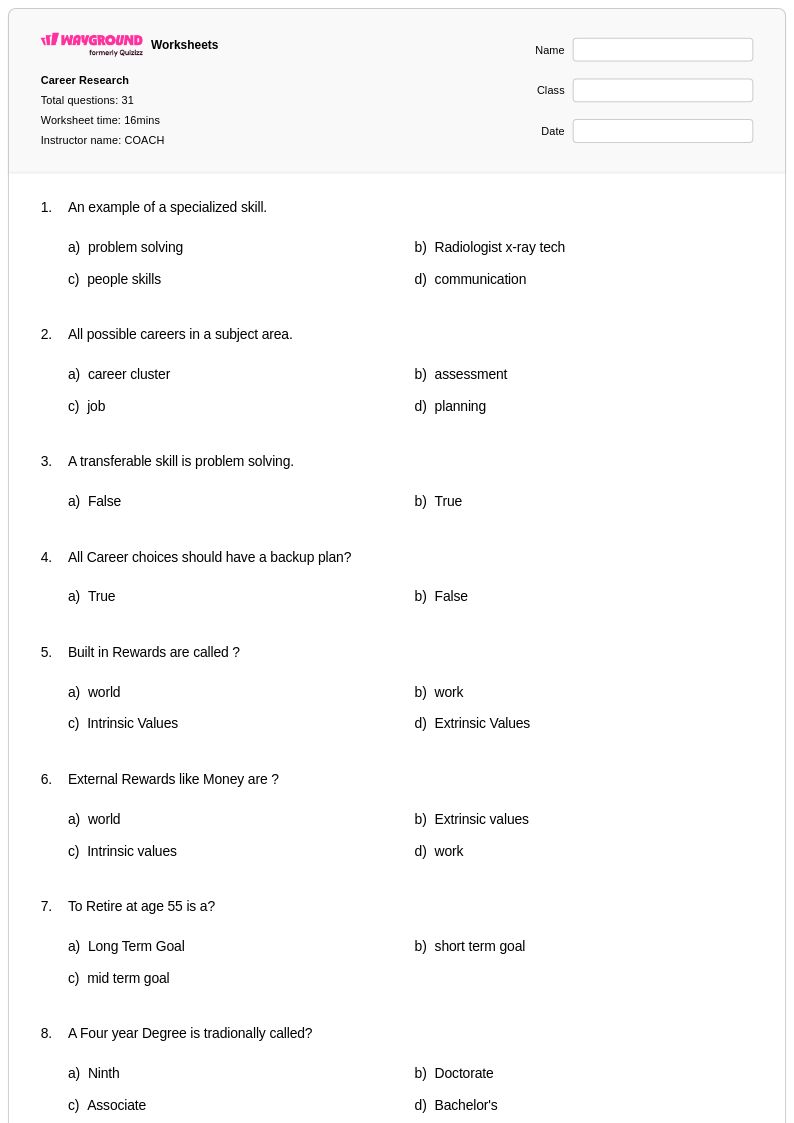
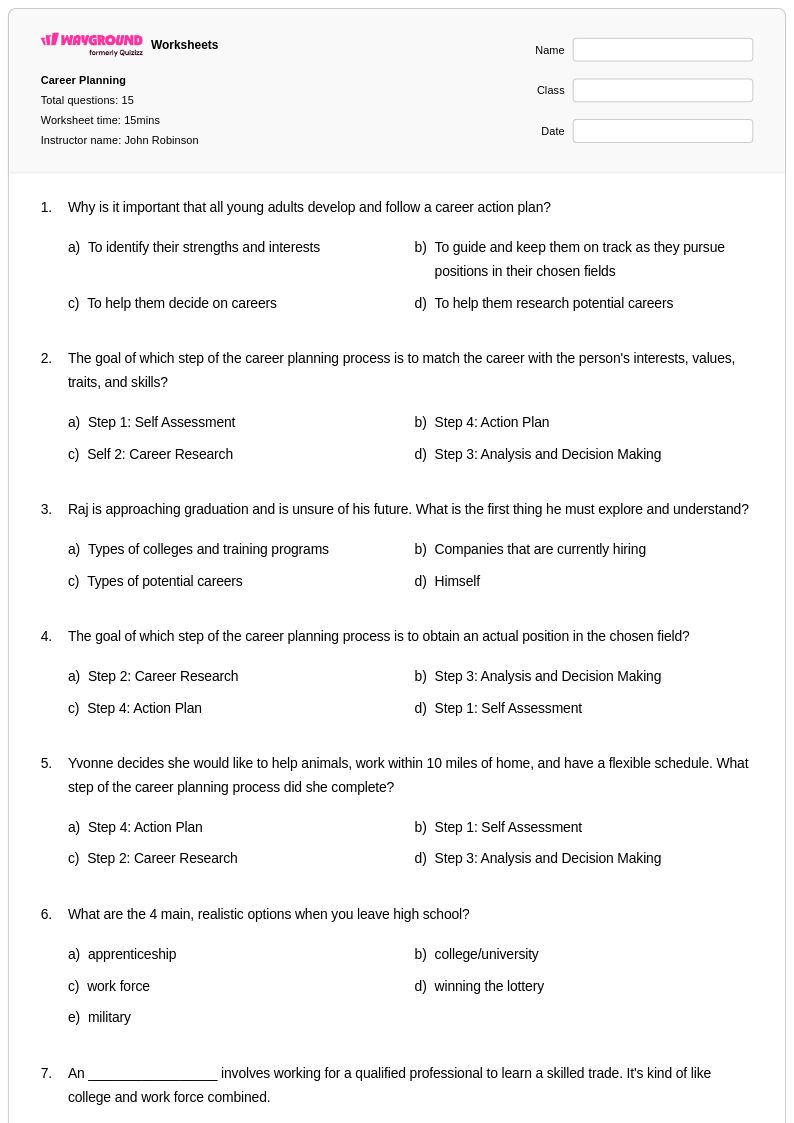
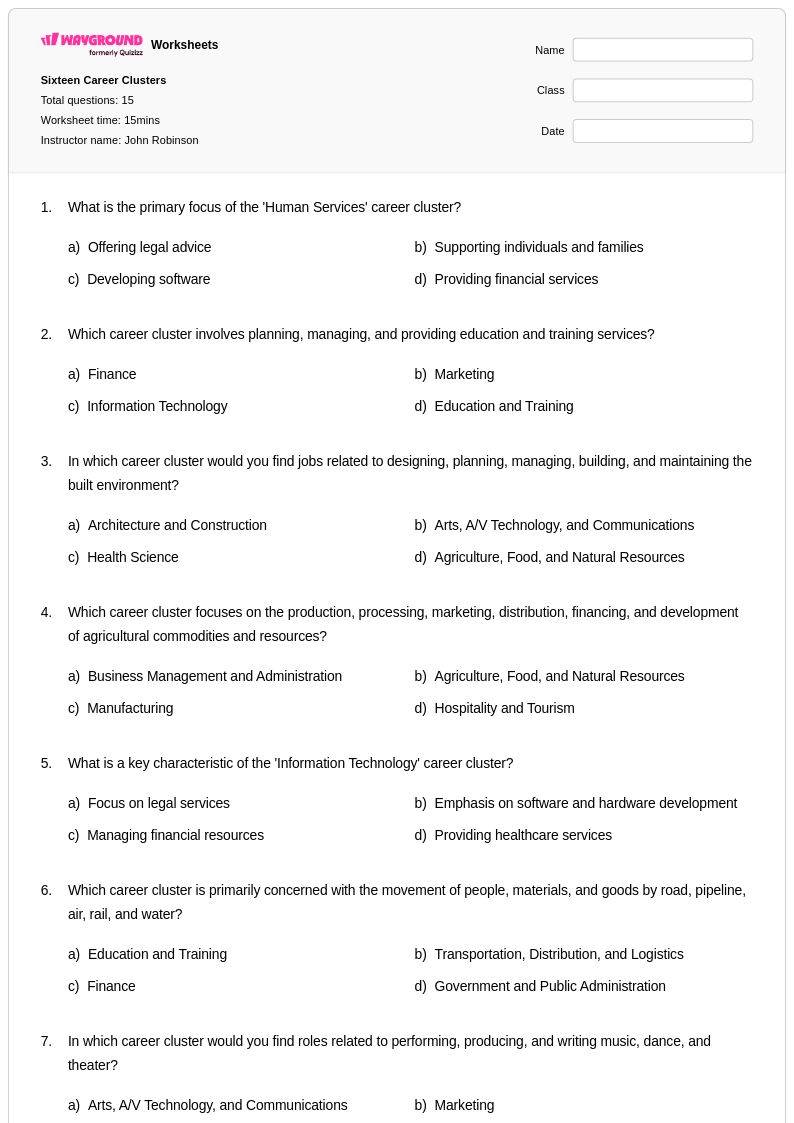
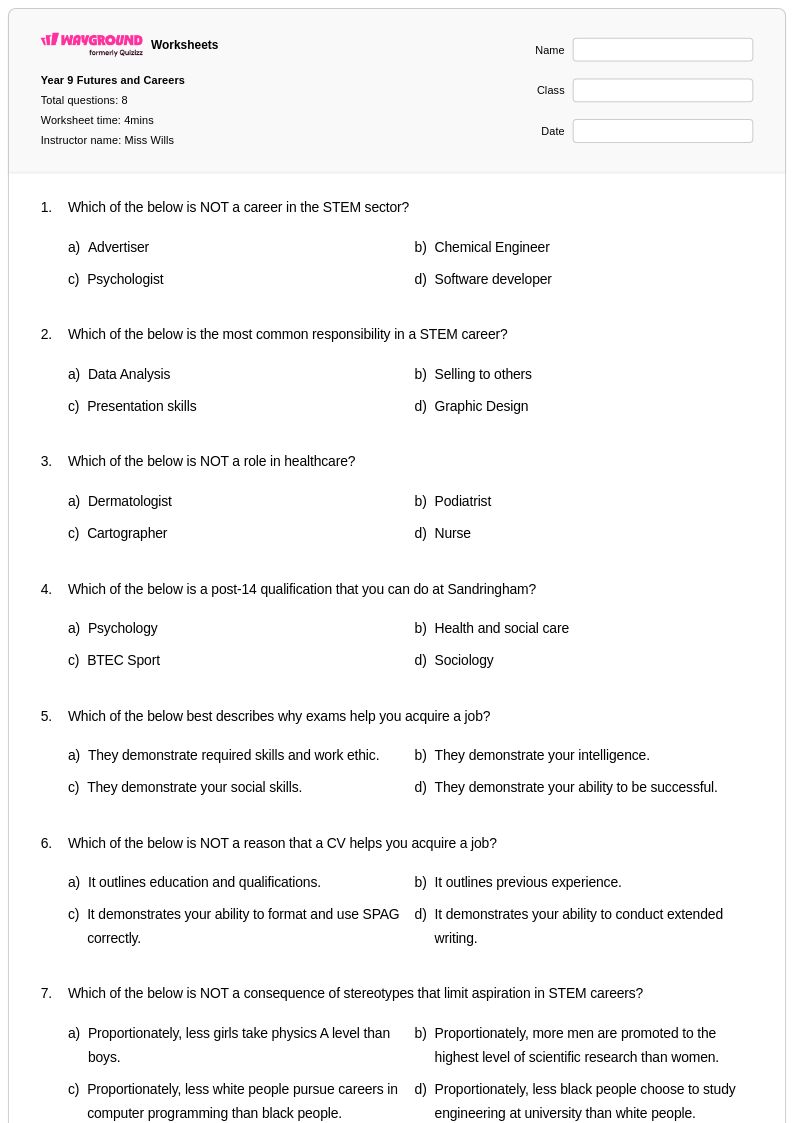
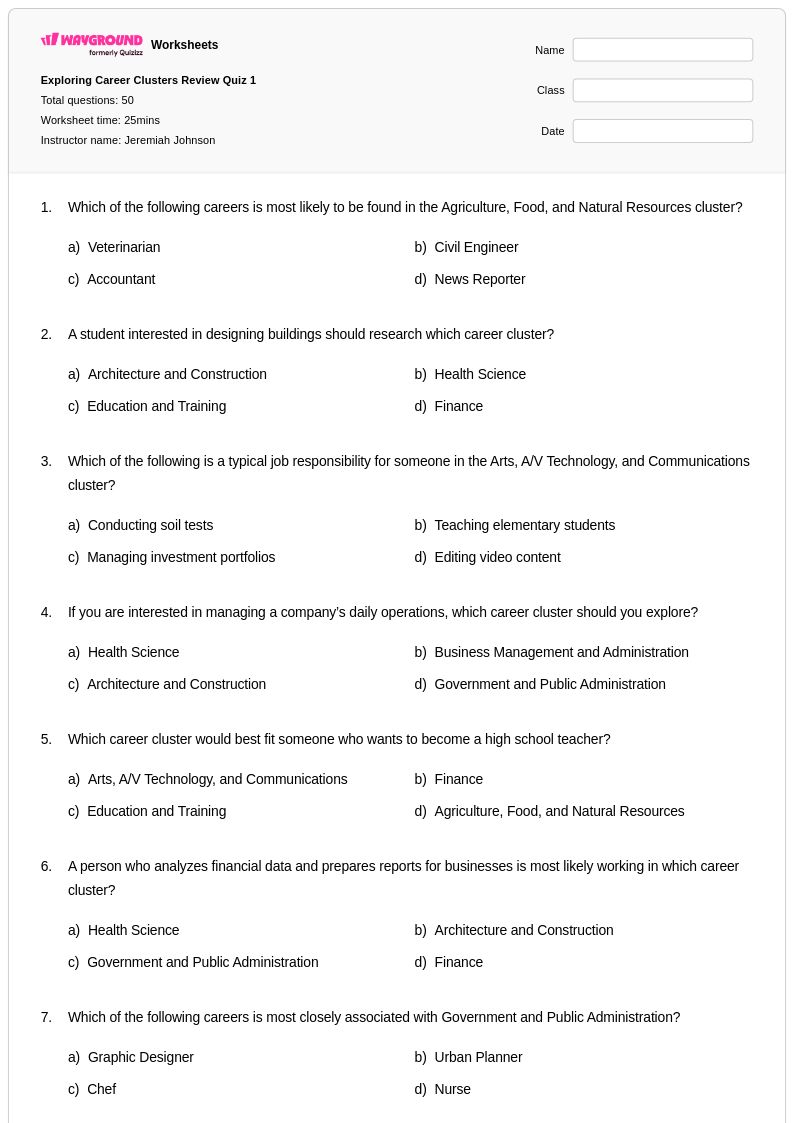
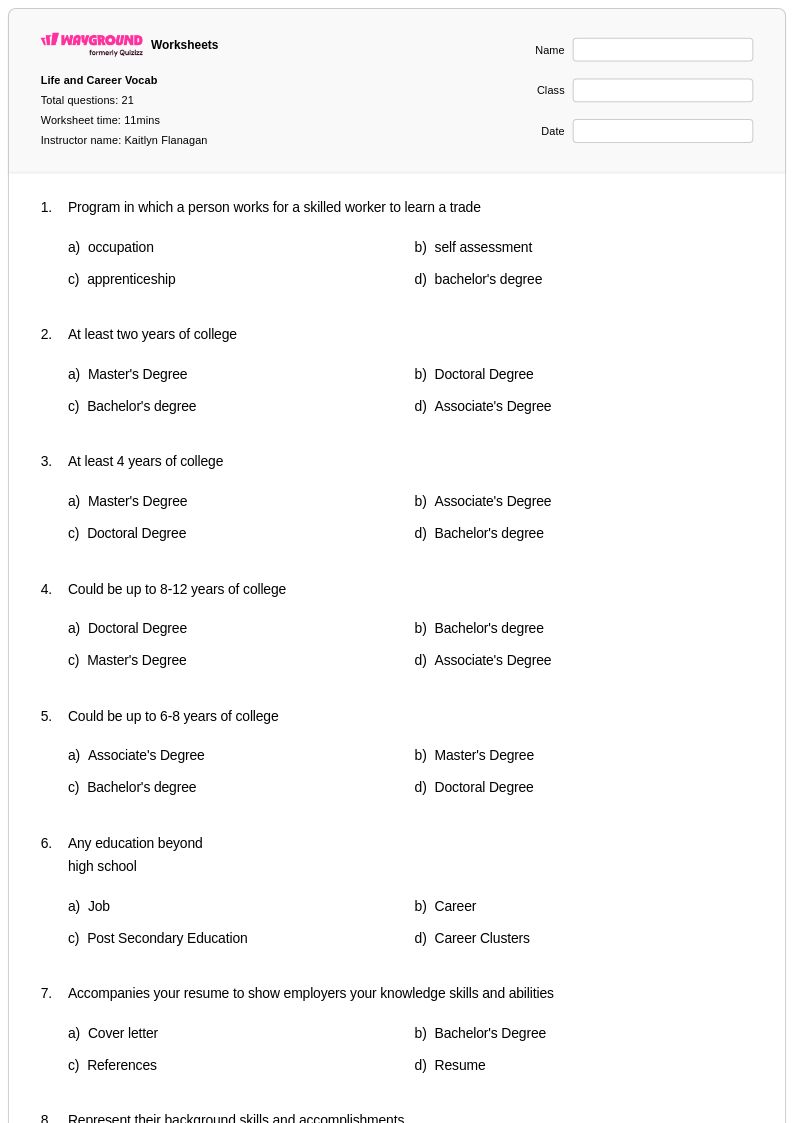
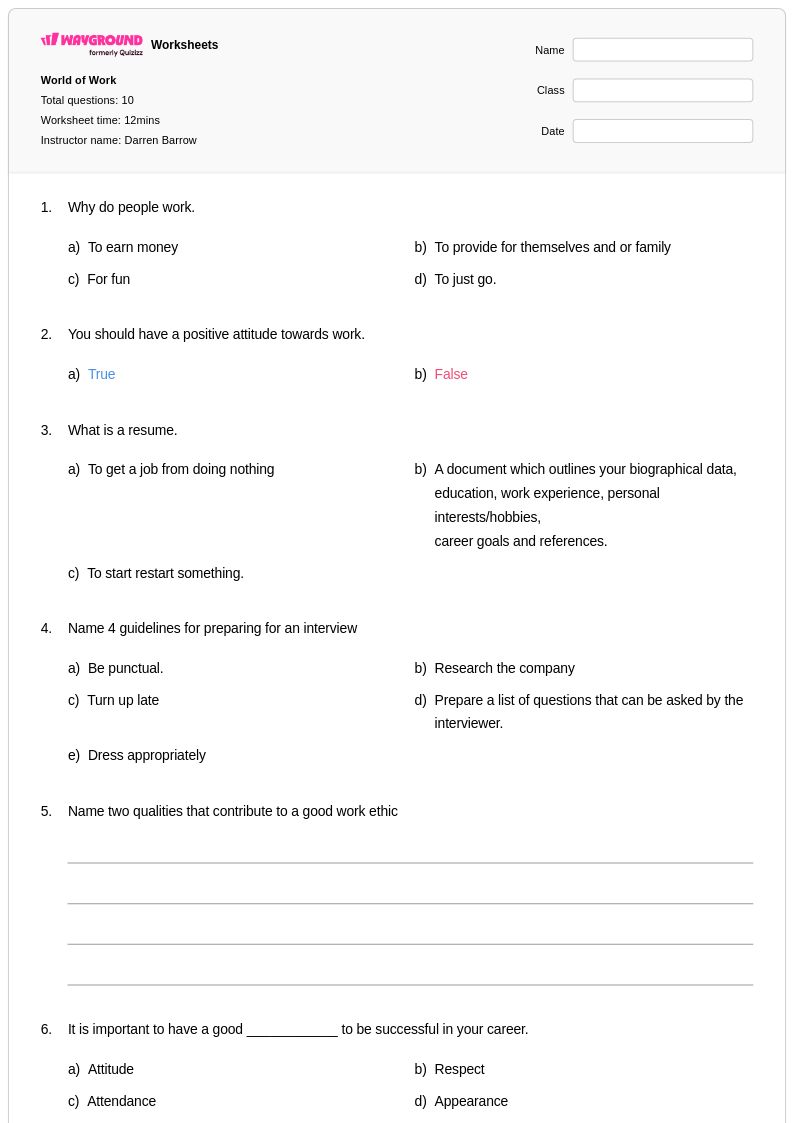
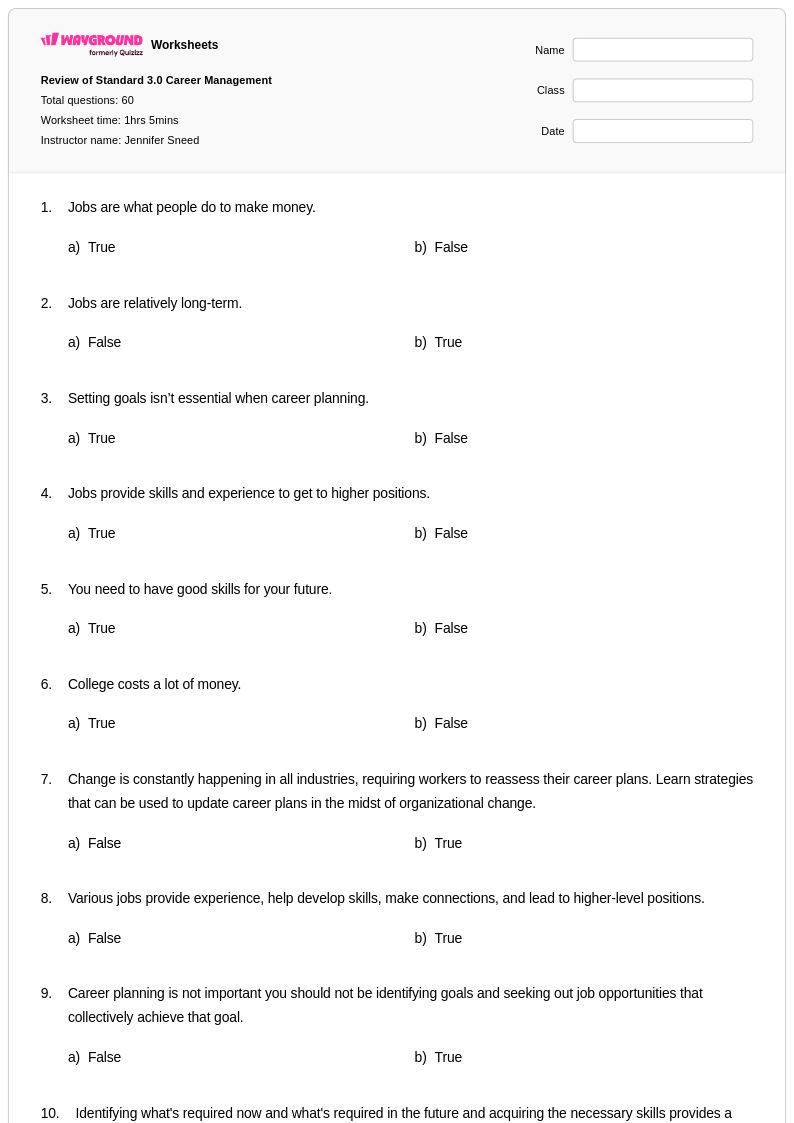
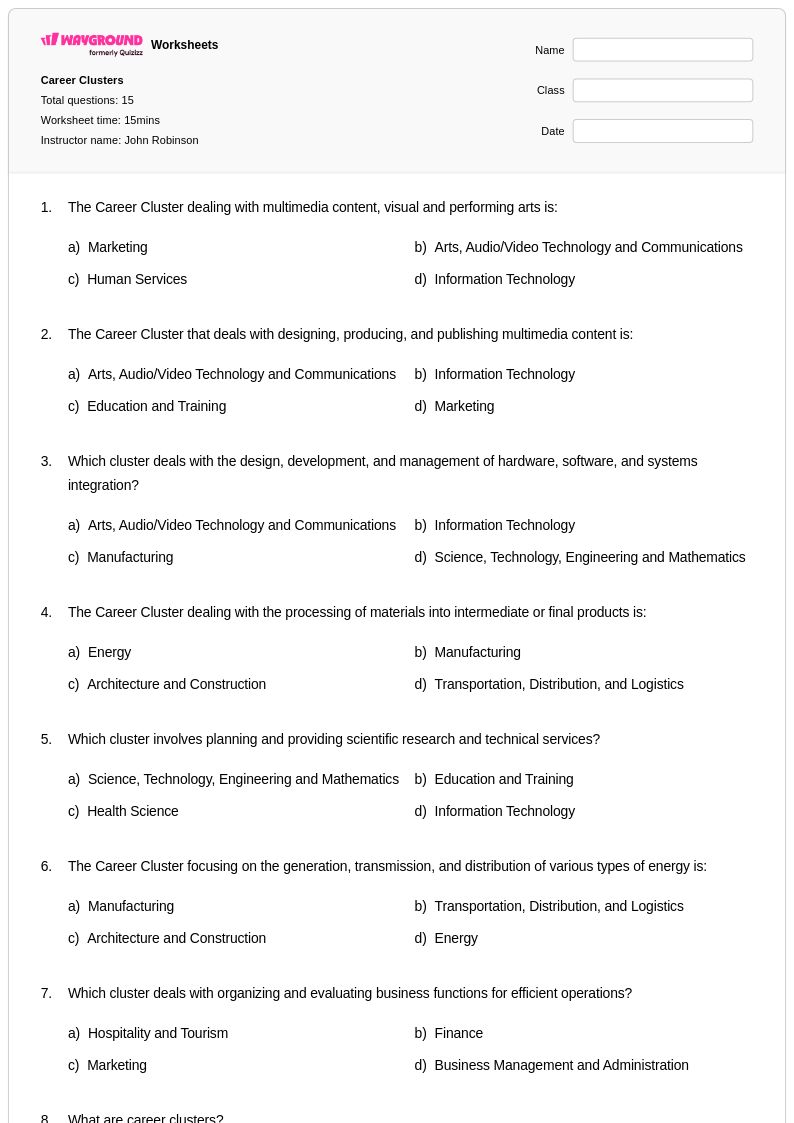
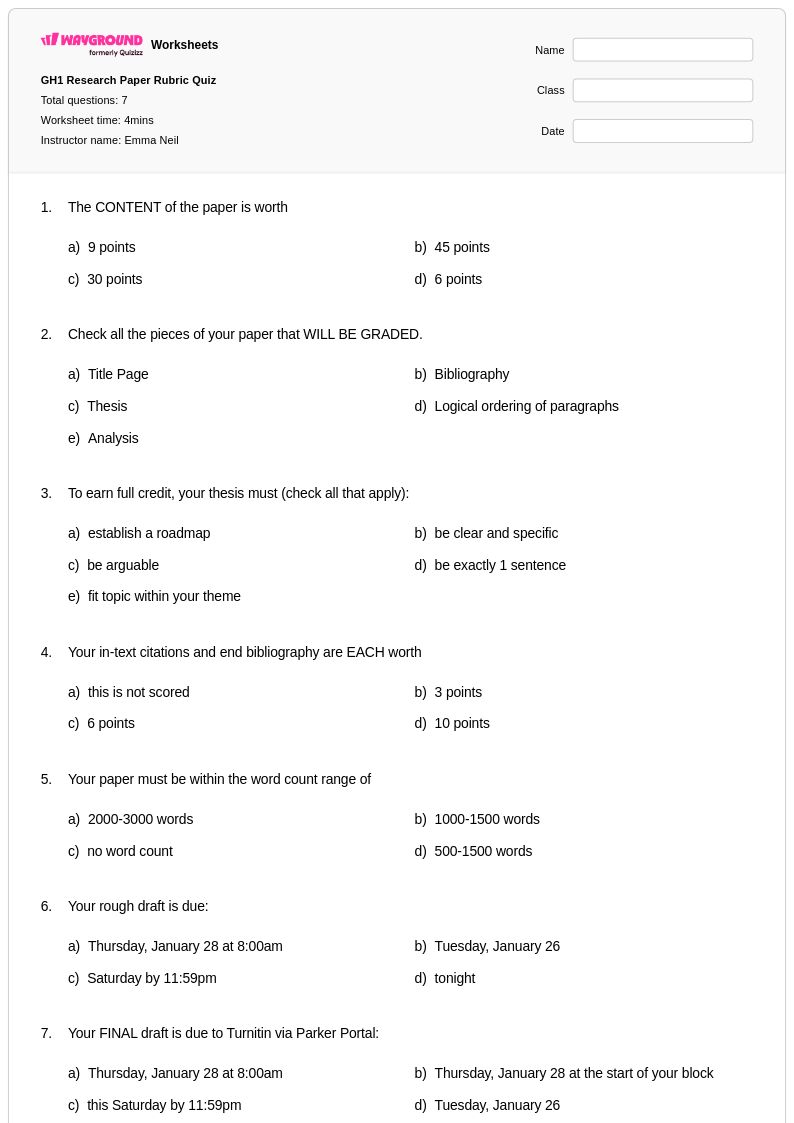
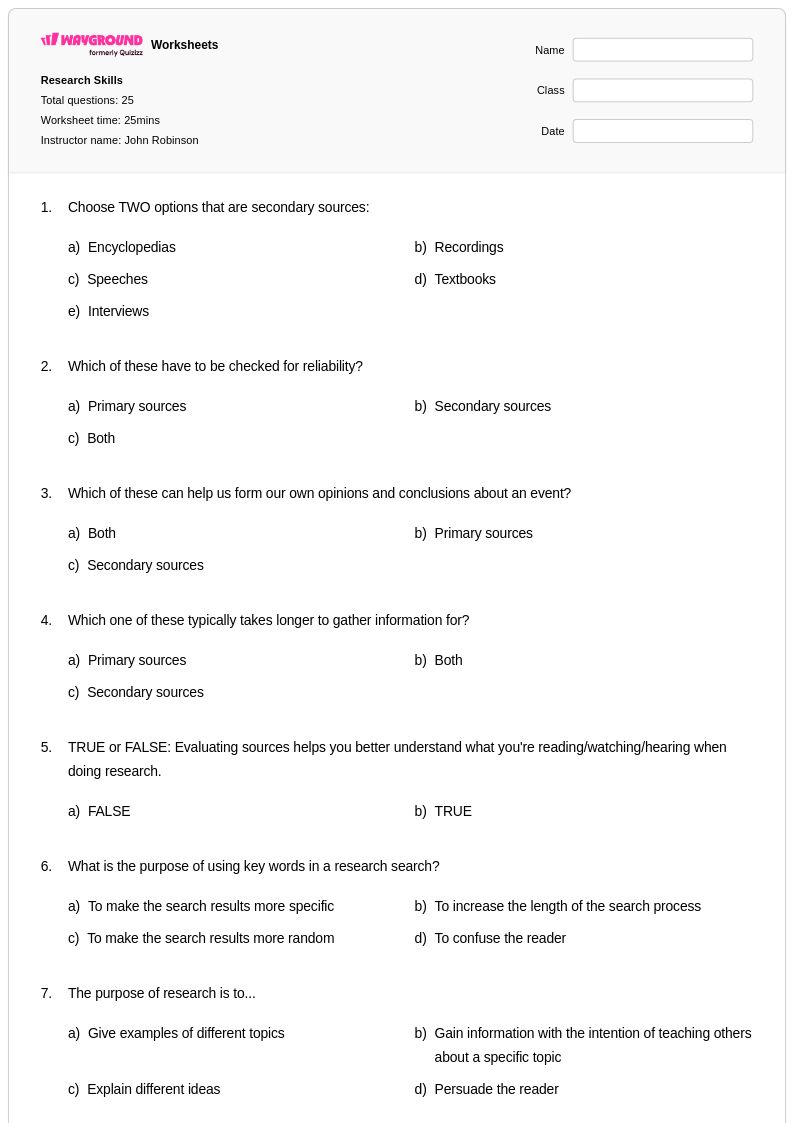
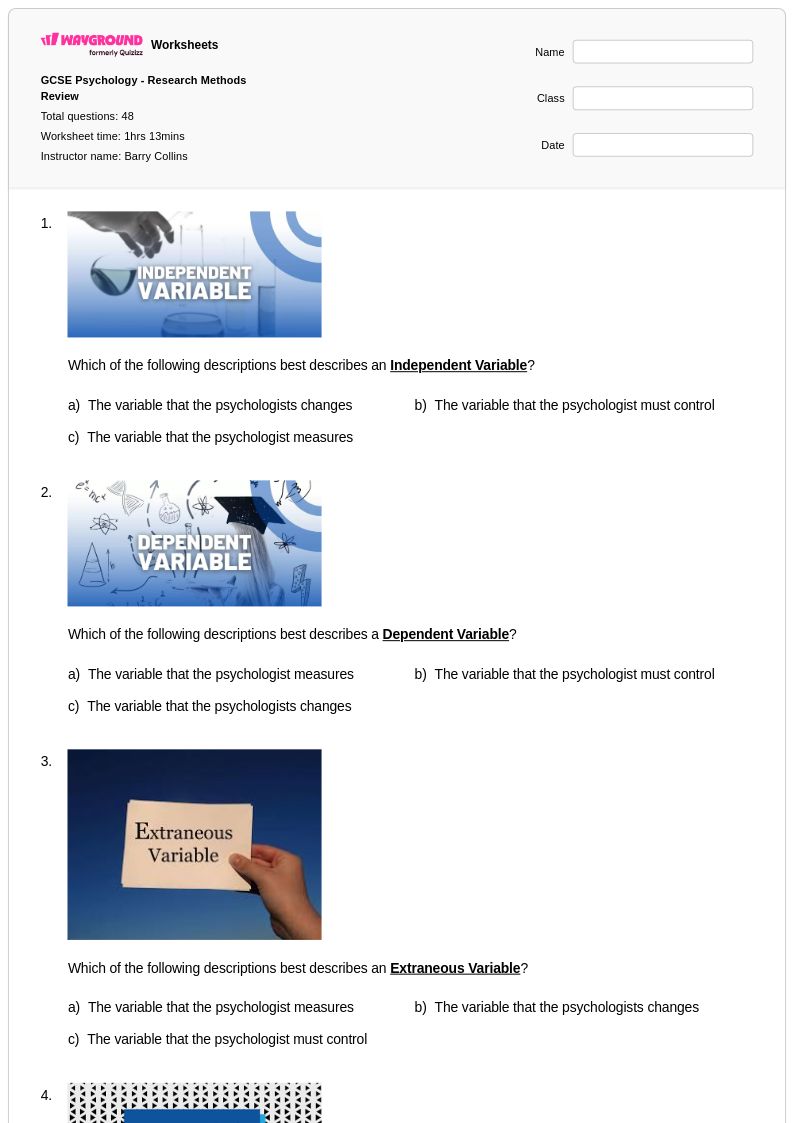
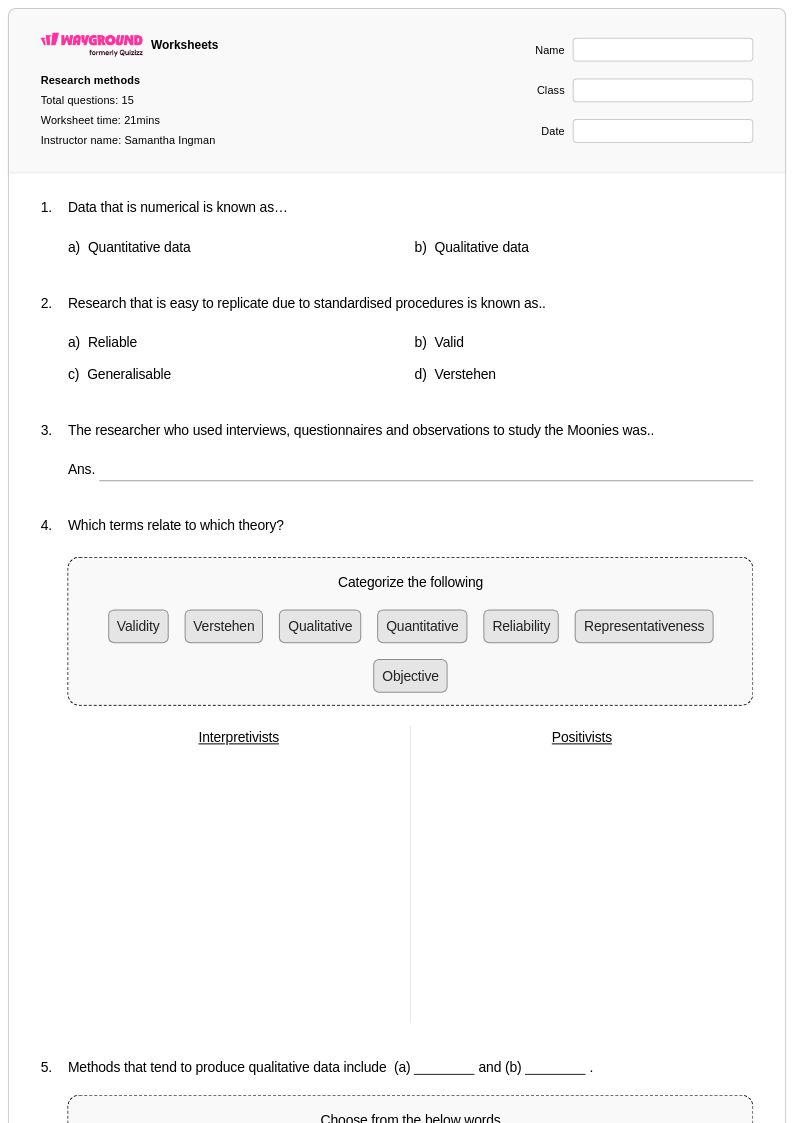
Career research worksheets for Class 9 social studies provide students with structured opportunities to explore professional pathways and develop essential workplace readiness skills. These comprehensive resources guide ninth-grade students through systematic investigation of various career fields, helping them understand educational requirements, salary expectations, job responsibilities, and growth potential across different industries. The worksheets strengthen critical thinking abilities as students analyze labor market trends, compare career options, and connect their personal interests and aptitudes to potential professional paths. Each resource includes detailed practice problems that challenge students to research specific occupations, conduct informational interviews, and create career action plans, with accompanying answer keys that help educators assess student understanding. These free printable materials serve as valuable tools for developing research skills, information literacy, and self-awareness while building foundational knowledge about the modern workforce.
Wayground, formerly Quizizz, offers educators access to millions of teacher-created career research resources specifically designed for Class 9 social studies instruction. The platform's robust search and filtering capabilities allow teachers to quickly locate worksheets aligned with state standards and curriculum objectives, ensuring that career exploration activities meet specific learning goals. Advanced differentiation tools enable educators to customize content difficulty levels and modify assignments to accommodate diverse learning needs within the classroom. These versatile resources are available in both printable PDF format for traditional classroom use and digital formats for online learning environments, providing maximum flexibility for lesson planning and implementation. Teachers can utilize these comprehensive worksheet collections for targeted skill practice, remediation support for struggling learners, and enrichment activities for advanced students, creating a well-rounded approach to career education that prepares ninth-grade students for informed decision-making about their academic and professional futures.
FAQs
How do I teach career research skills to students?
Teaching career research effectively starts with guiding students through structured investigation frameworks that cover job requirements, required education, salary ranges, and industry growth trends. Begin with a shared model where students analyze one career together as a class, then gradually release responsibility so they can independently research professions that align with their own interests and aptitudes. Connecting the research process to labor market data and real-world decision-making helps students understand why these skills matter beyond the classroom.
What exercises help students practice career research skills?
Effective practice exercises include career comparison activities where students evaluate two or more professions across consistent criteria such as education requirements, salary expectations, and job outlook. Reflection prompts that ask students to connect personal strengths and interests to specific career paths deepen engagement and make the research feel purposeful. Structured worksheets that walk students through each research category systematically build the analytical habits they need for independent career exploration.
What mistakes do students commonly make when researching careers?
One of the most common errors is confusing a job title with a career pathway, leading students to research surface-level information without exploring the education, licensing, or experience required to actually enter the field. Students also frequently rely on a single source, overlooking the value of cross-referencing labor market data with industry-specific resources. Another frequent misconception is assuming salary is the only meaningful criterion for evaluating a career, which worksheets can address by prompting students to weigh multiple factors including work environment, growth potential, and alignment with personal values.
How can I differentiate career research activities for students at different skill levels?
For students who need additional support, simplifying the research framework to focus on two or three key career attributes reduces cognitive load without sacrificing the core skill. Advanced learners can be challenged to analyze labor market trends, compare industry sectors, or build a multi-career portfolio with deeper reflection components. On Wayground, teachers can apply accommodations such as reduced answer choices and read-aloud support to individual students, ensuring that differentiation is managed at the platform level without disrupting the rest of the class.
How do I use career research worksheets effectively in the classroom?
Career research worksheets work best when they are integrated into a broader unit that connects academic content to real-world professional pathways, rather than used as standalone activities. Wayground's career research worksheets are available as printable PDFs for traditional classroom use and in digital formats for technology-integrated environments, and teachers can also host them as a quiz directly on Wayground. Answer keys are included with each worksheet, making it easy to use them for both guided instruction and independent practice.
How do career research worksheets support workplace readiness skills?
Career research worksheets build workplace readiness by developing the same analytical and decision-making skills students will use throughout their professional lives, including evaluating options, gathering information from multiple sources, and reflecting on personal fit. Structured activities that require students to investigate job requirements and educational pathways also build career-specific vocabulary and familiarity with how professional environments are organized. Over time, repeated practice with these frameworks helps students approach career planning with confidence rather than guesswork.