Free Printable Central Message Worksheets for Class 3
Access free Class 3 central message worksheets and printables from Wayground to help students practice identifying main ideas in reading passages through engaging PDF activities with answer keys.
Explore printable Central Message worksheets for Class 3
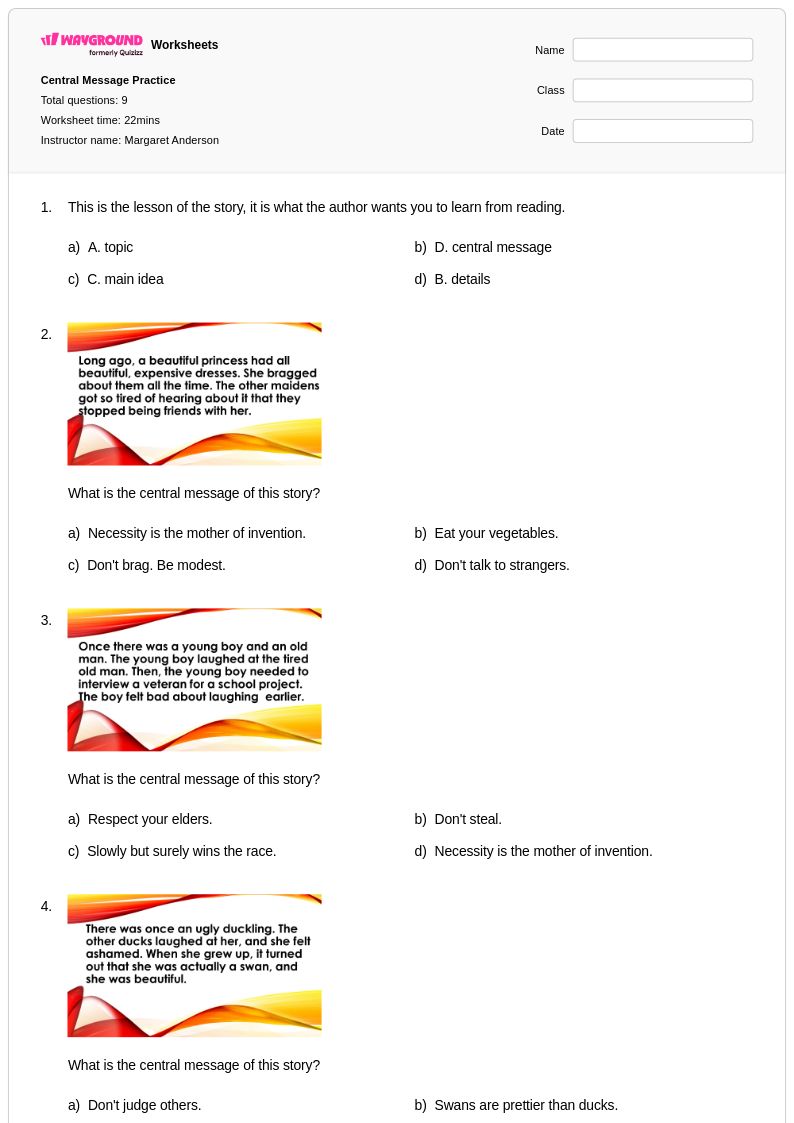
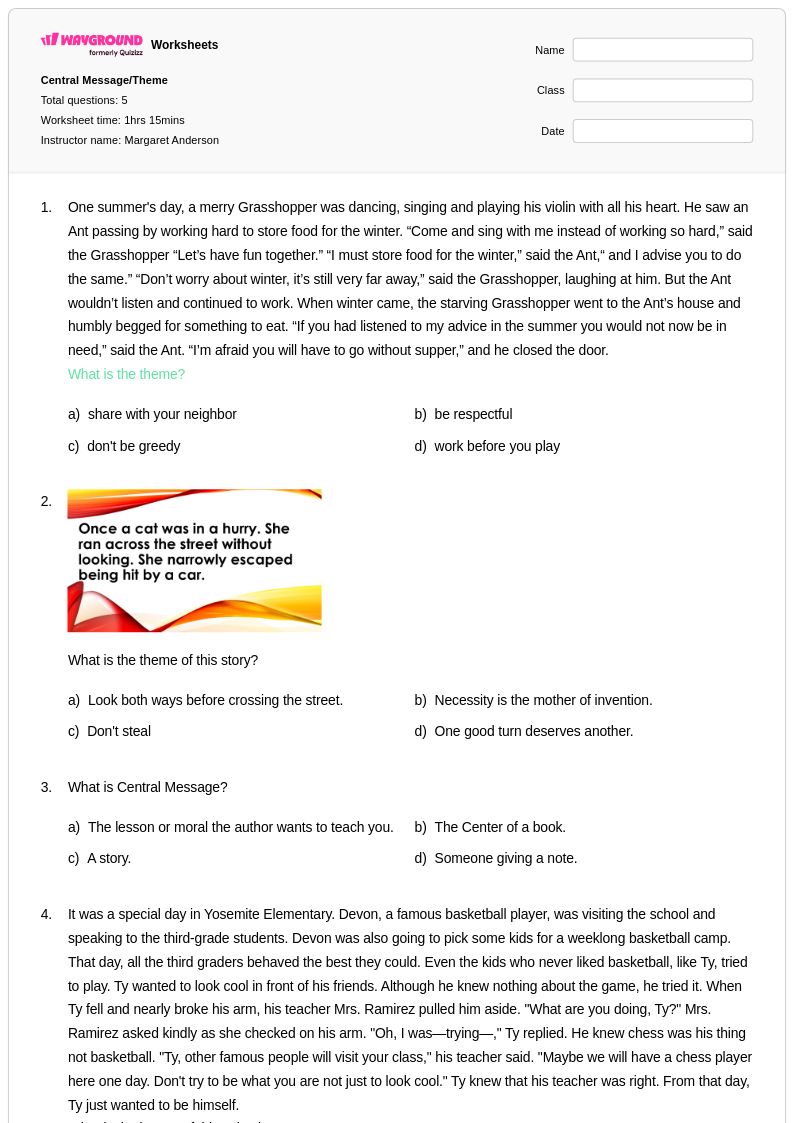
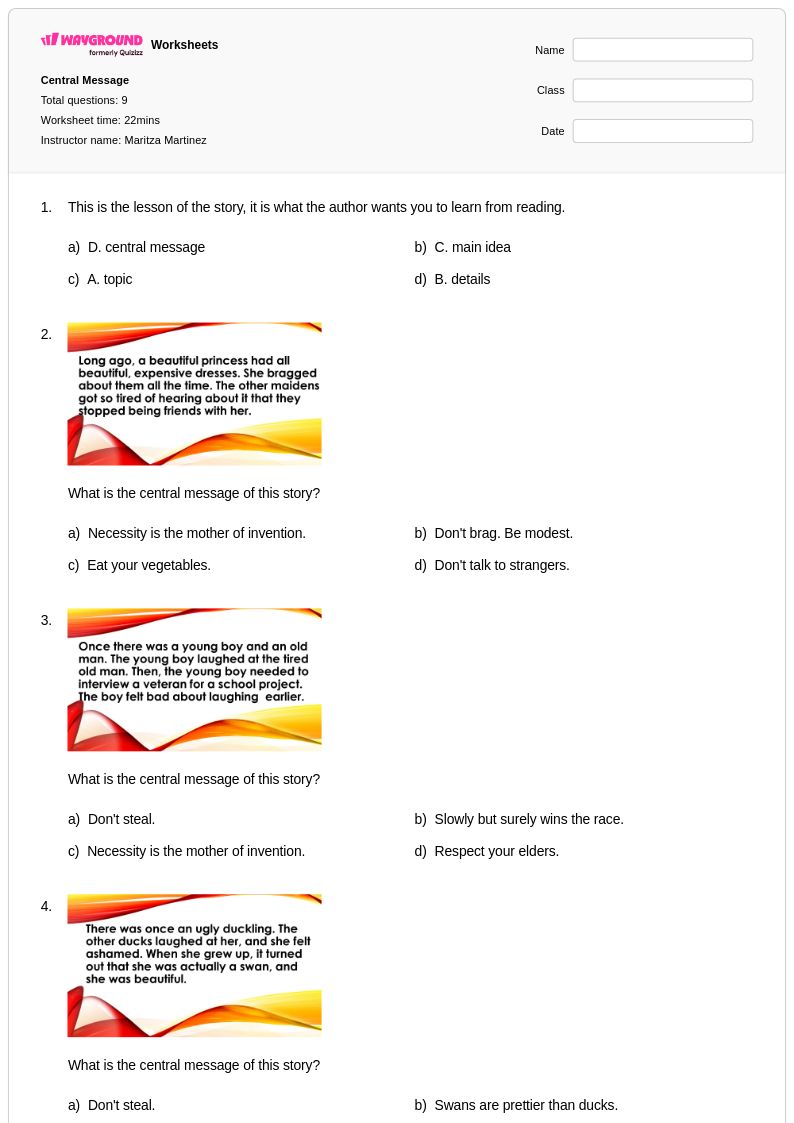
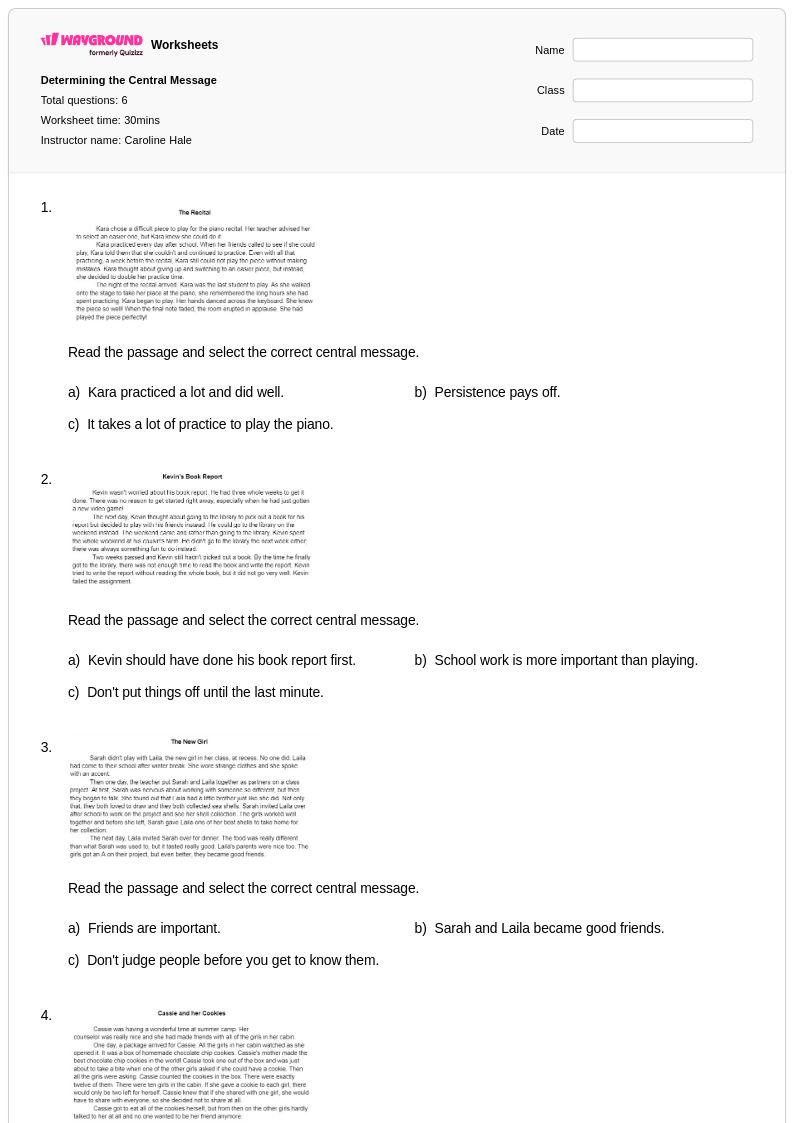
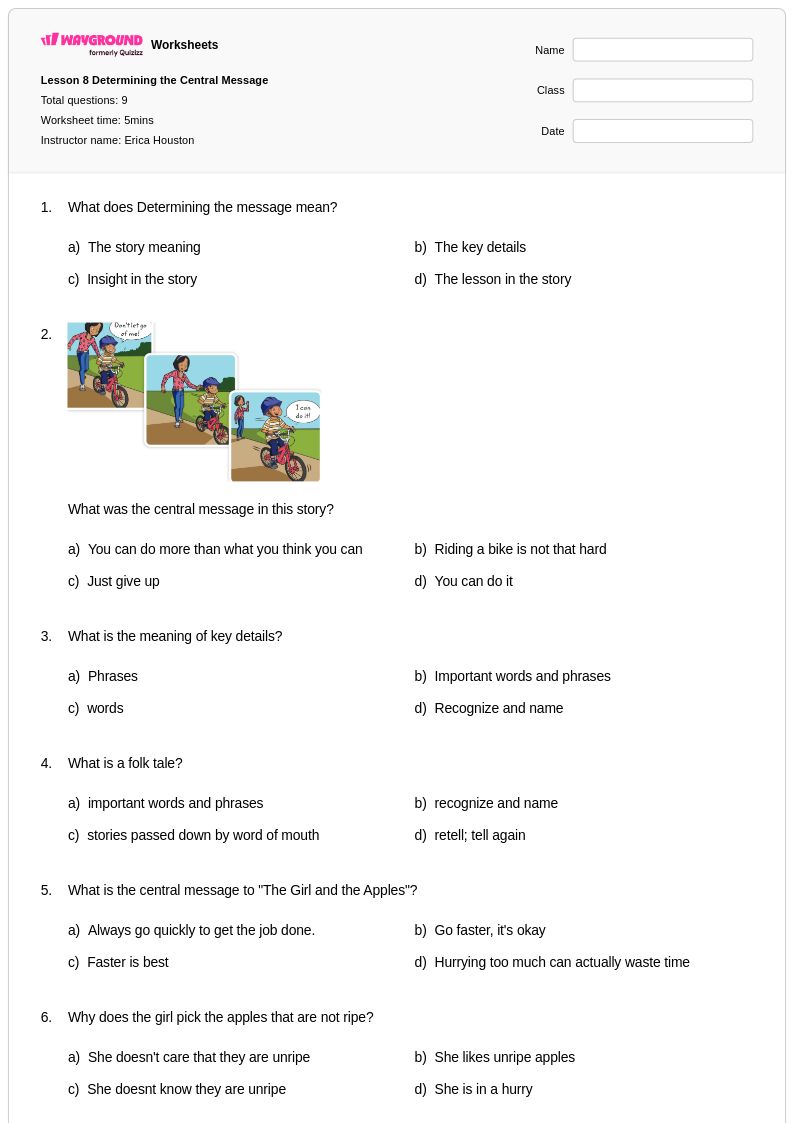
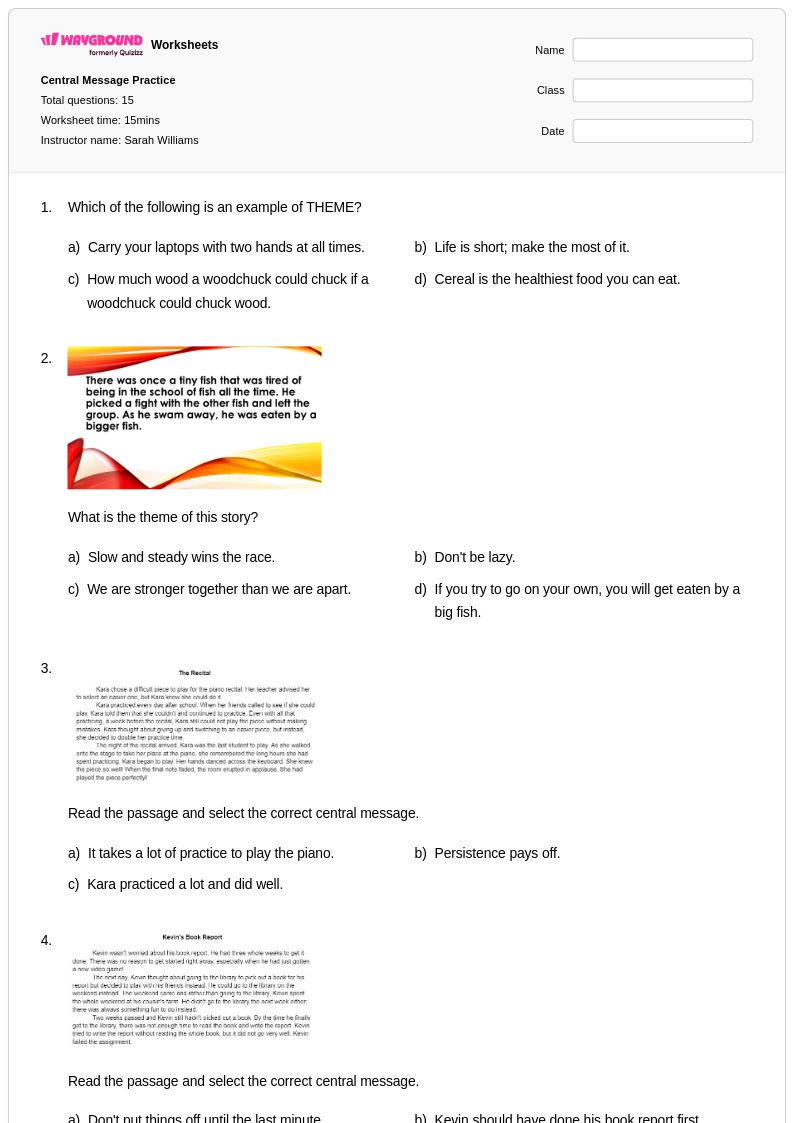
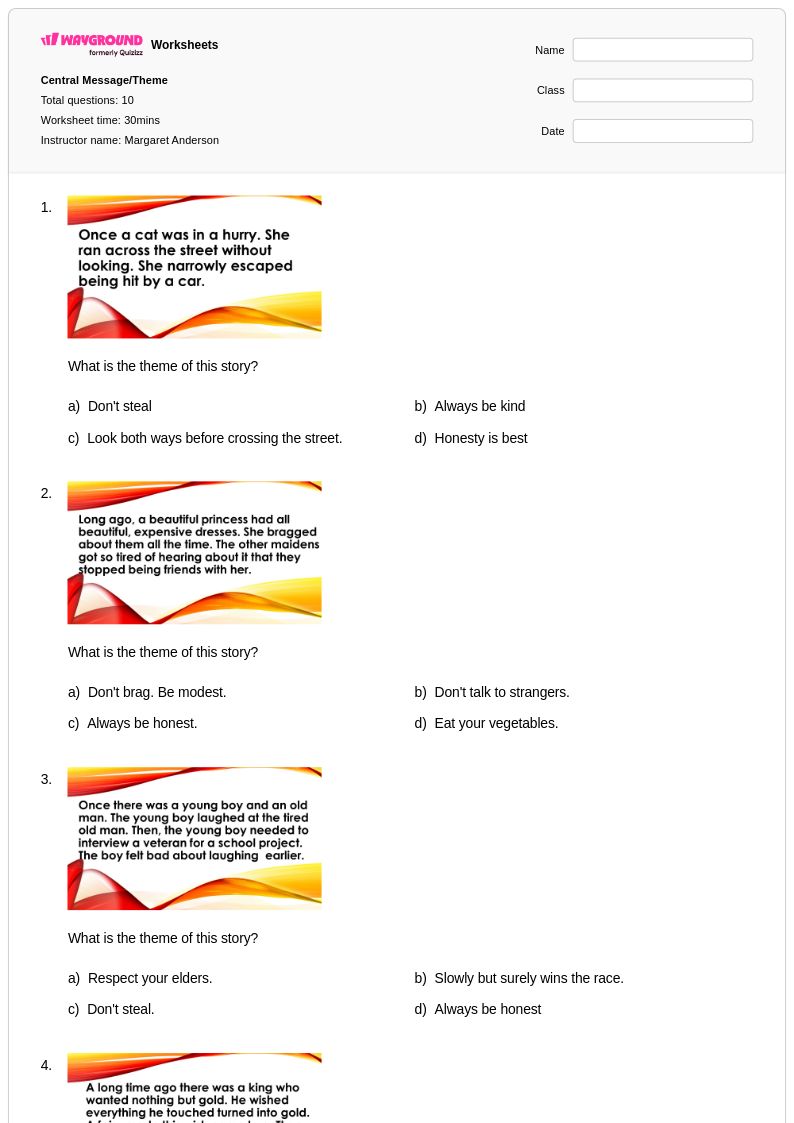
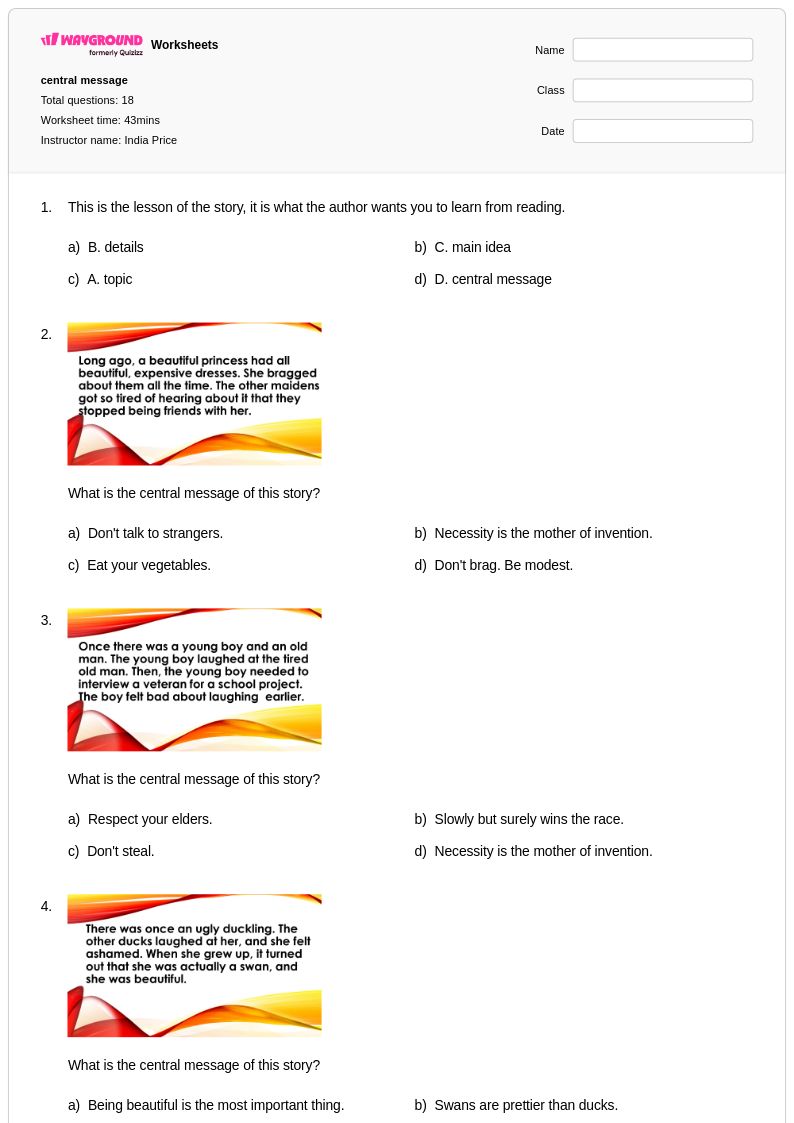
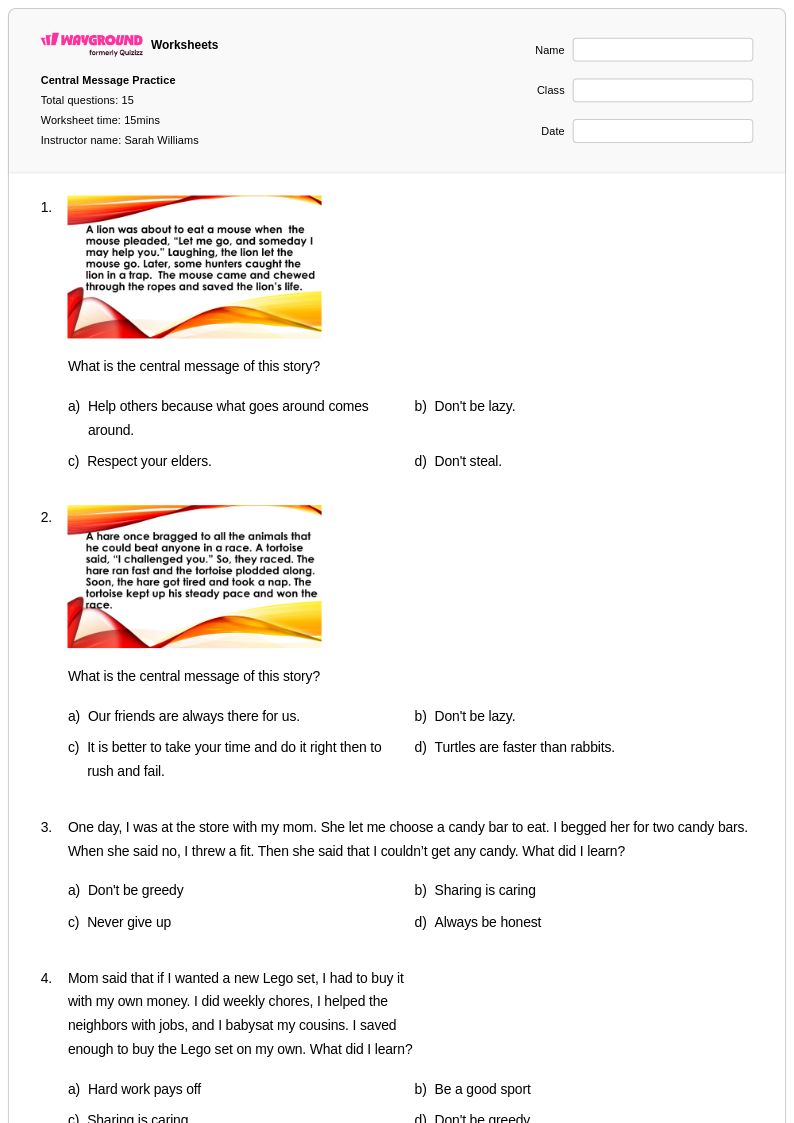
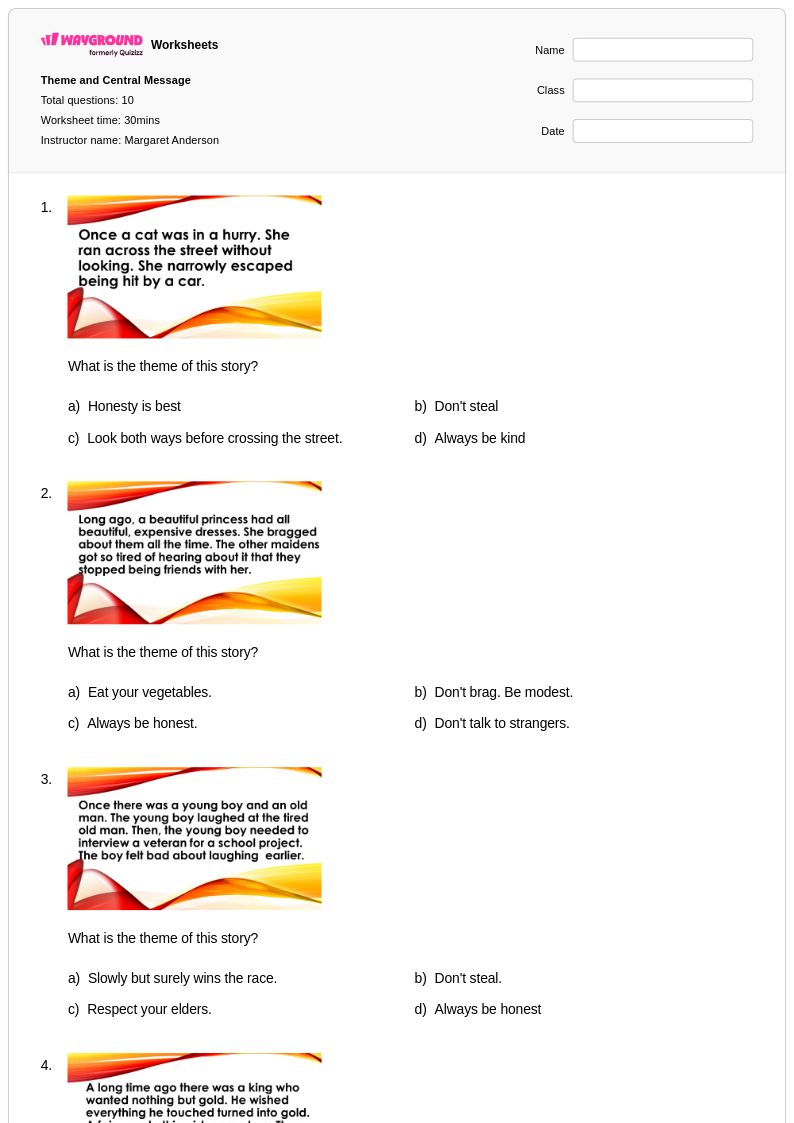
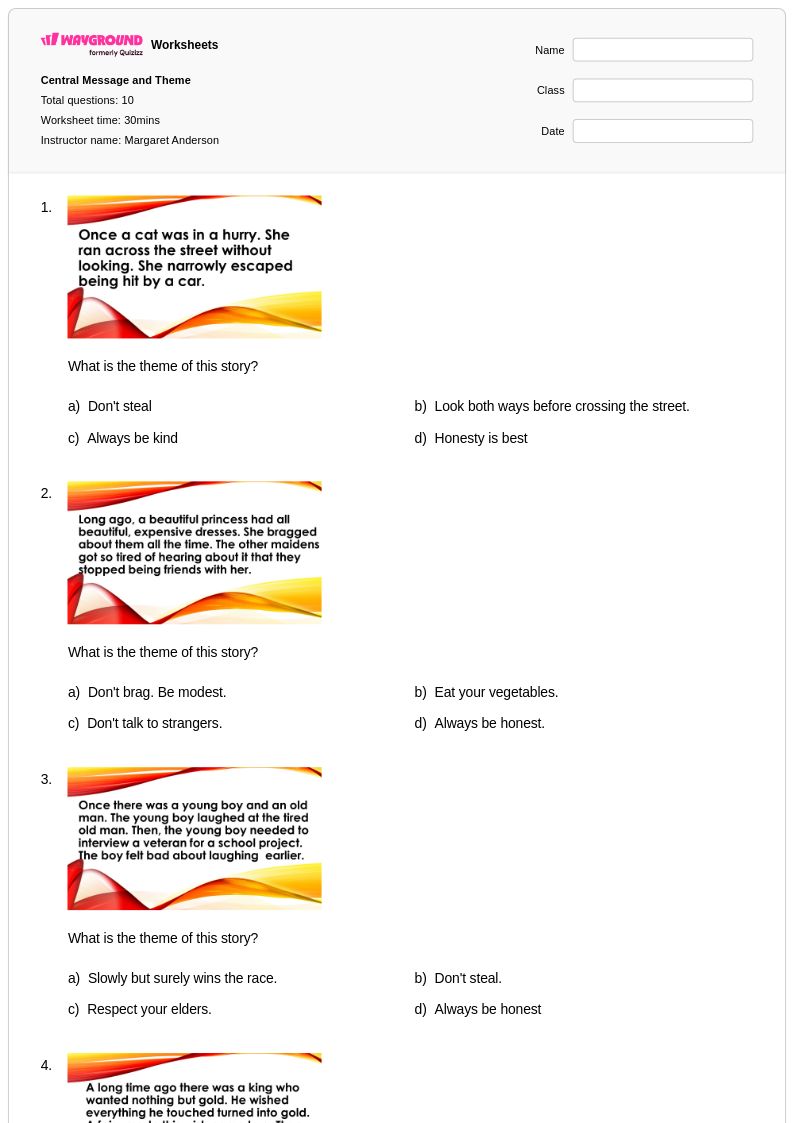
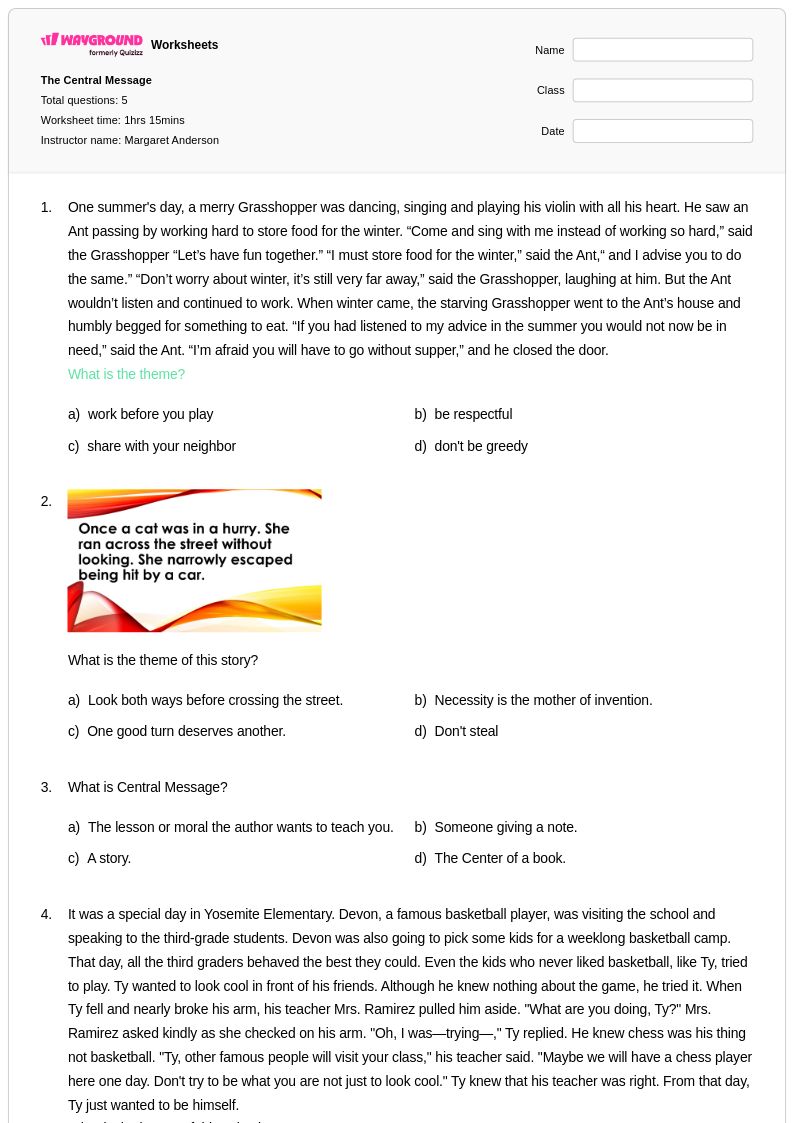
Central message worksheets for Class 3 students through Wayground (formerly Quizizz) provide targeted practice in identifying and articulating the main idea or lesson within literary texts. These carefully crafted resources help third-grade learners develop critical reading comprehension skills by analyzing stories, fables, and other narrative texts to determine what the author wants readers to understand or learn. Each worksheet includes engaging passages followed by practice problems that guide students through the process of distinguishing between supporting details and the overarching central message. Teachers can access comprehensive answer keys alongside these free printables, making assessment and feedback more efficient while ensuring students receive accurate guidance in mastering this fundamental reading skill.
Wayground (formerly Quizizz) empowers educators with millions of teacher-created central message worksheets specifically designed for Class 3 reading comprehension instruction. The platform's robust search and filtering capabilities allow teachers to quickly locate resources that align with specific learning standards and match their students' individual needs. These versatile materials are available in both printable pdf format and digital versions, supporting diverse classroom environments and learning preferences. Teachers can customize worksheets to provide differentiated instruction, using them for initial skill introduction, targeted remediation for struggling readers, or enrichment activities for advanced students, while the extensive collection ensures fresh practice opportunities that keep students engaged in developing their ability to identify central messages across various text types.
FAQs
How do I teach students to identify the central message of a text?
Teaching central message begins with helping students distinguish between a story's topic and its deeper meaning or lesson. Start by modeling with familiar texts, asking students what the author wants readers to take away, not just what happened. Gradually release responsibility by having students annotate passages for repeated ideas, character changes, and the consequences of key events, which together point toward the central message. Moving from concrete summaries to abstract theme statements is the core progression students need to internalize.
What exercises help students practice finding the central message in a text?
Effective practice exercises pair short reading passages with targeted questions that require students to cite textual evidence supporting the central message they identified. Scaffolded worksheets that move from literal comprehension questions to deeper analysis of authorial intent help students build this skill progressively. Having students compare the central message across two texts on a similar topic strengthens both analytical thinking and academic vocabulary around theme and main idea.
What mistakes do students commonly make when identifying a central message?
The most common error is confusing the topic of a text with its central message — students often write a single word or subject (e.g., 'friendship') rather than a complete thematic statement (e.g., 'true friendship requires sacrifice'). Another frequent mistake is basing the central message on only one part of the text rather than synthesizing evidence across the whole passage. Students also sometimes restate a single character's action rather than the broader lesson or insight the author intends for all readers.
How do I differentiate central message instruction for students reading below grade level?
For struggling readers, begin with shorter, familiar texts where the central message is explicit rather than implied, reducing the cognitive load of decoding while building the analytical skill. Graphic organizers that prompt students to list key events and then ask 'what does this teach us?' provide structured scaffolding. On Wayground, teachers can enable the Read Aloud accommodation so passages are read to students who need it, and Reduced Answer Choices can be applied to individual students to lower the difficulty of multiple-choice questions without affecting the rest of the class.
How can I use central message worksheets in my classroom?
Central message worksheets on Wayground are available as printable PDFs for traditional classroom use and in digital formats for technology-integrated or remote learning environments, giving teachers flexibility in how they deploy them. Teachers can also host these worksheets as a live quiz on Wayground, making it easy to gather real-time data on how well students are identifying central messages. The included answer keys allow for efficient grading, and the range of fiction and nonfiction passages means the same worksheet set can serve multiple instructional purposes, from direct instruction to independent practice.
How is central message different from main idea, and why does the distinction matter for teaching?
Main idea typically refers to the most important point in an informational text and is often stated explicitly, while central message refers to the broader lesson, moral, or theme an author conveys, most commonly in literary texts where it must be inferred. Teaching students this distinction matters because the skills required are different: identifying main idea relies on locating and paraphrasing key information, whereas identifying central message requires inference, synthesis, and understanding of authorial intent. Mixing up these terms in instruction can cause persistent confusion on assessments, so being precise in classroom language from the start is essential.