Free Printable Understanding Feelings Worksheets for Class 3
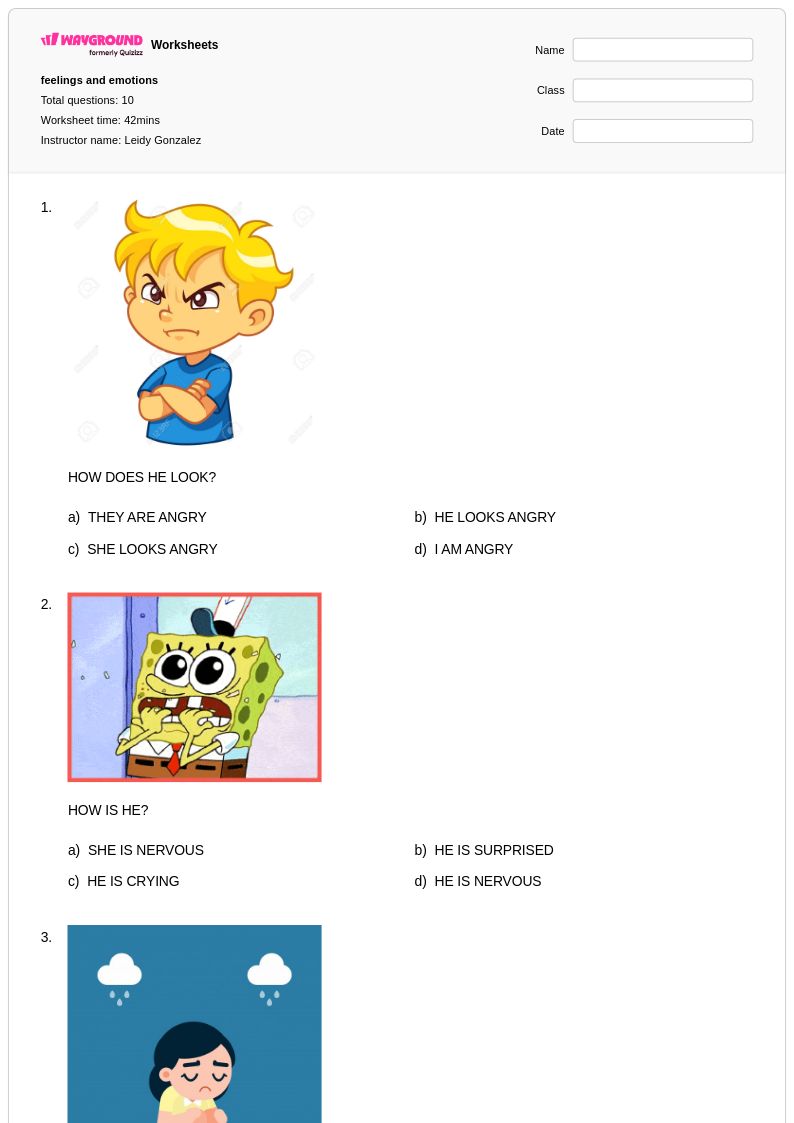
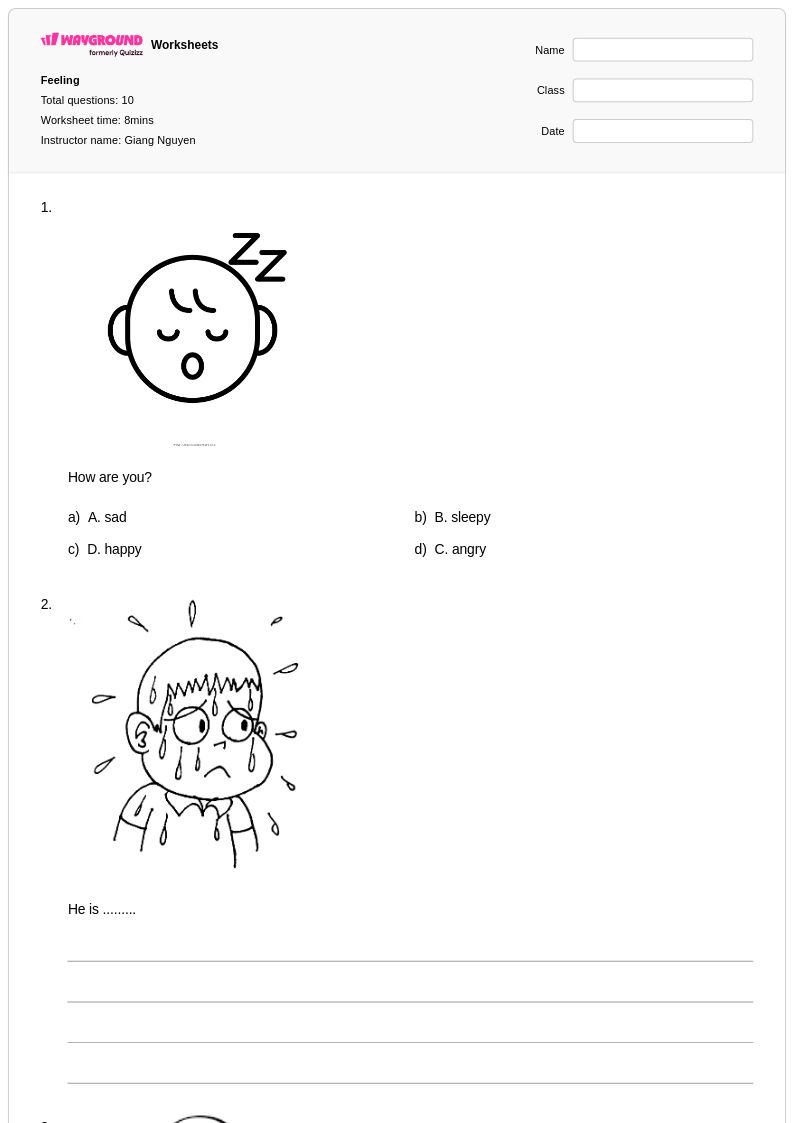
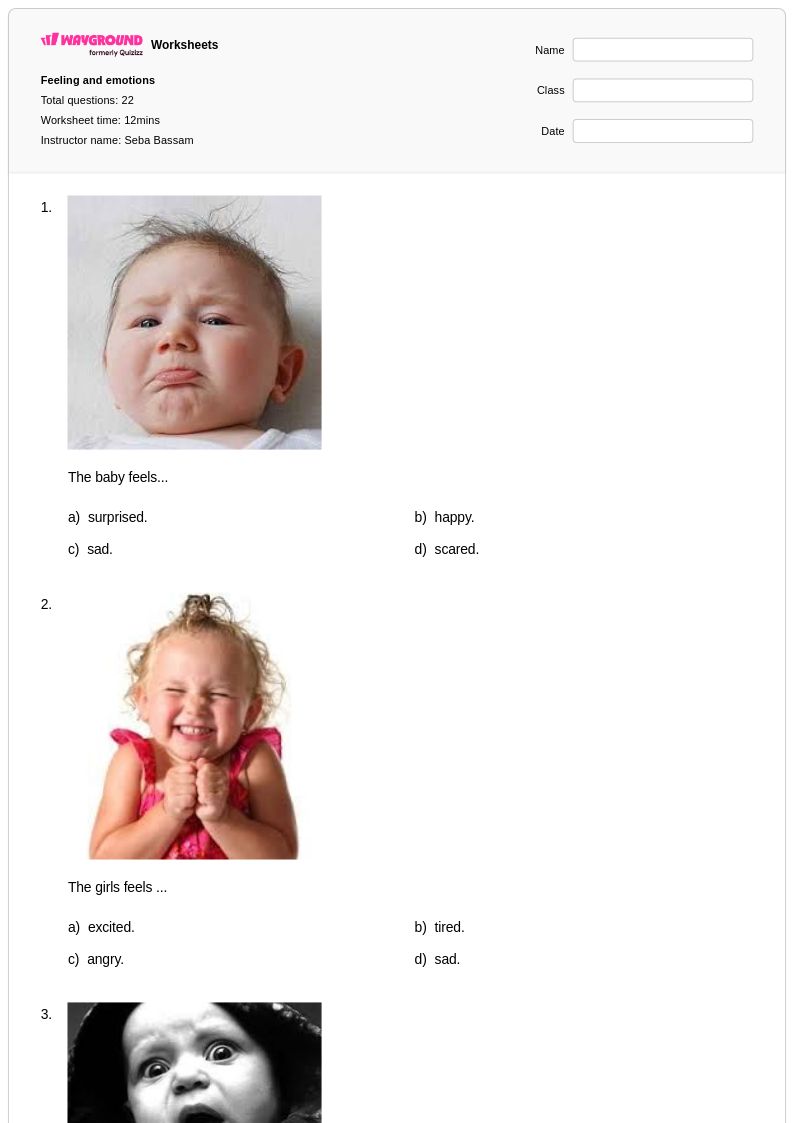
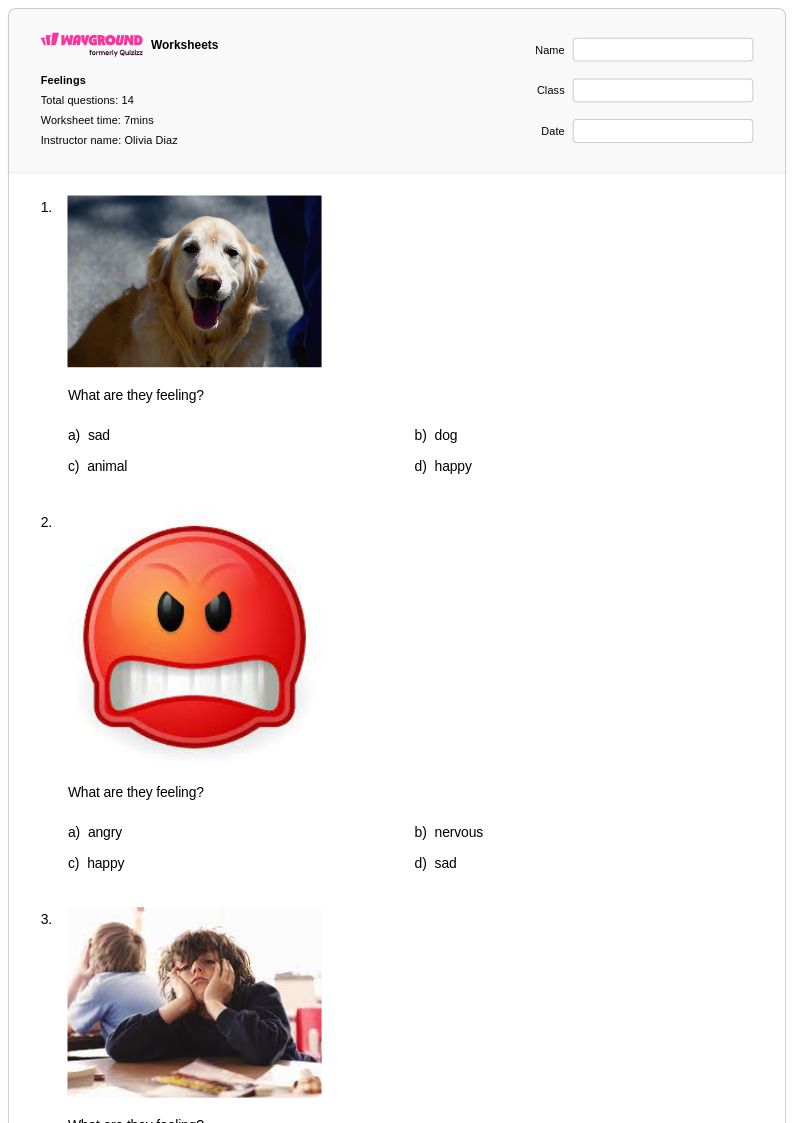
Class 3 understanding feelings worksheets help students develop emotional literacy through engaging reading comprehension activities, featuring printable PDFs with practice problems and answer keys for effective learning.
Explore printable Understanding Feelings worksheets for Class 3
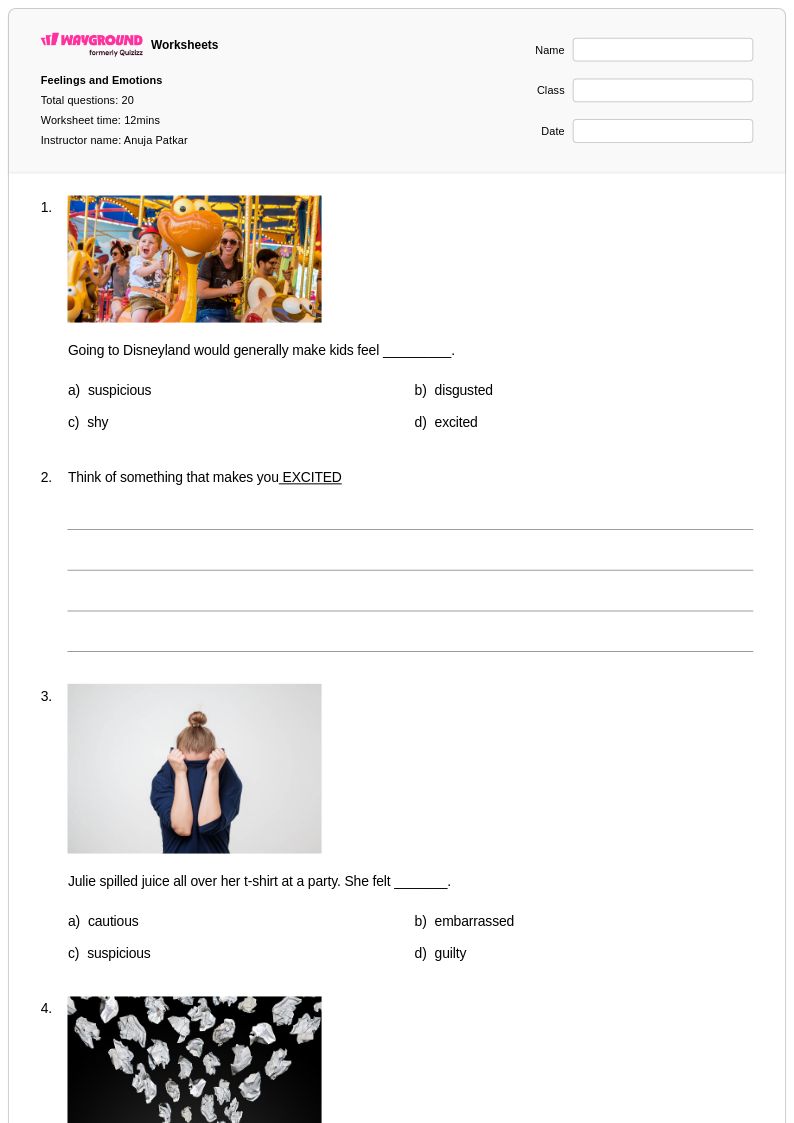
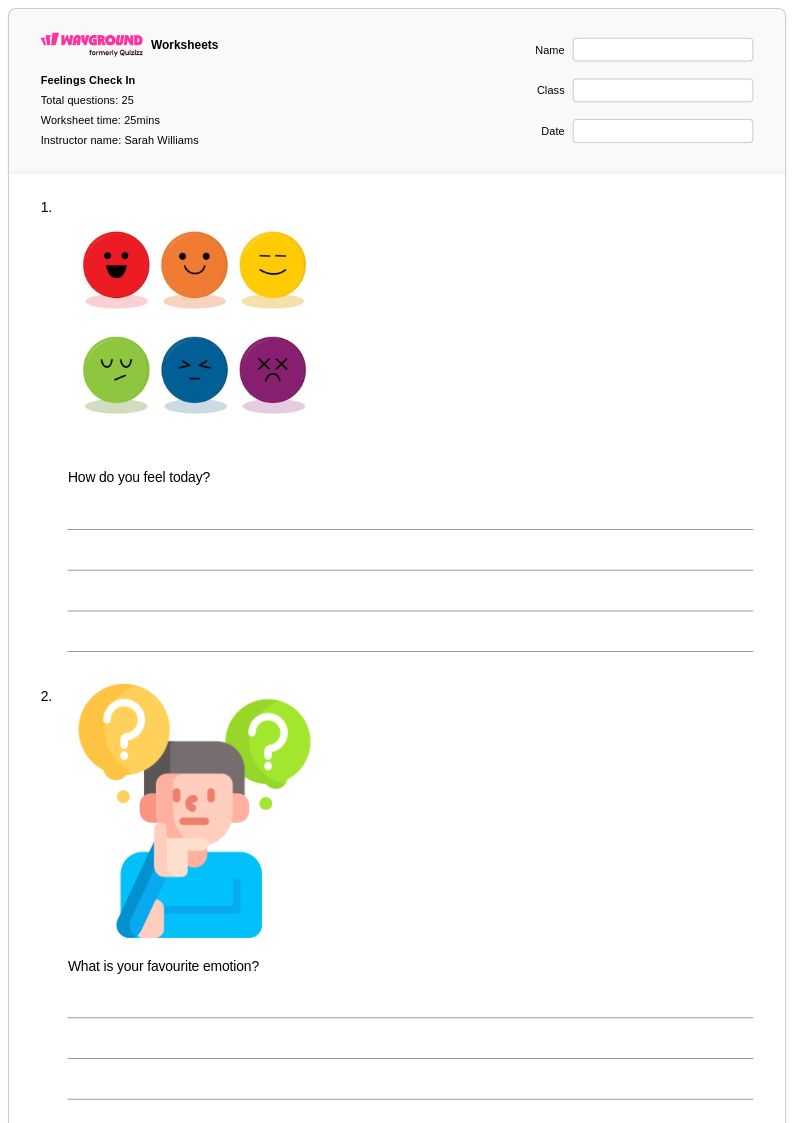
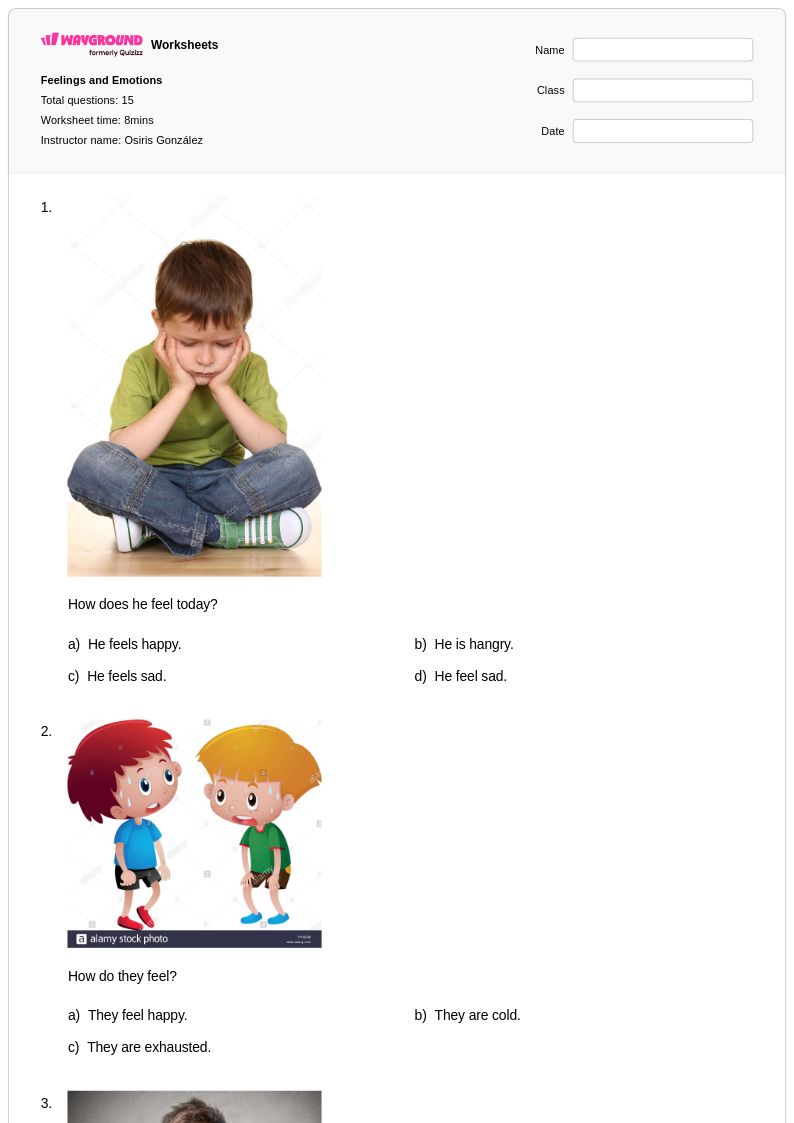
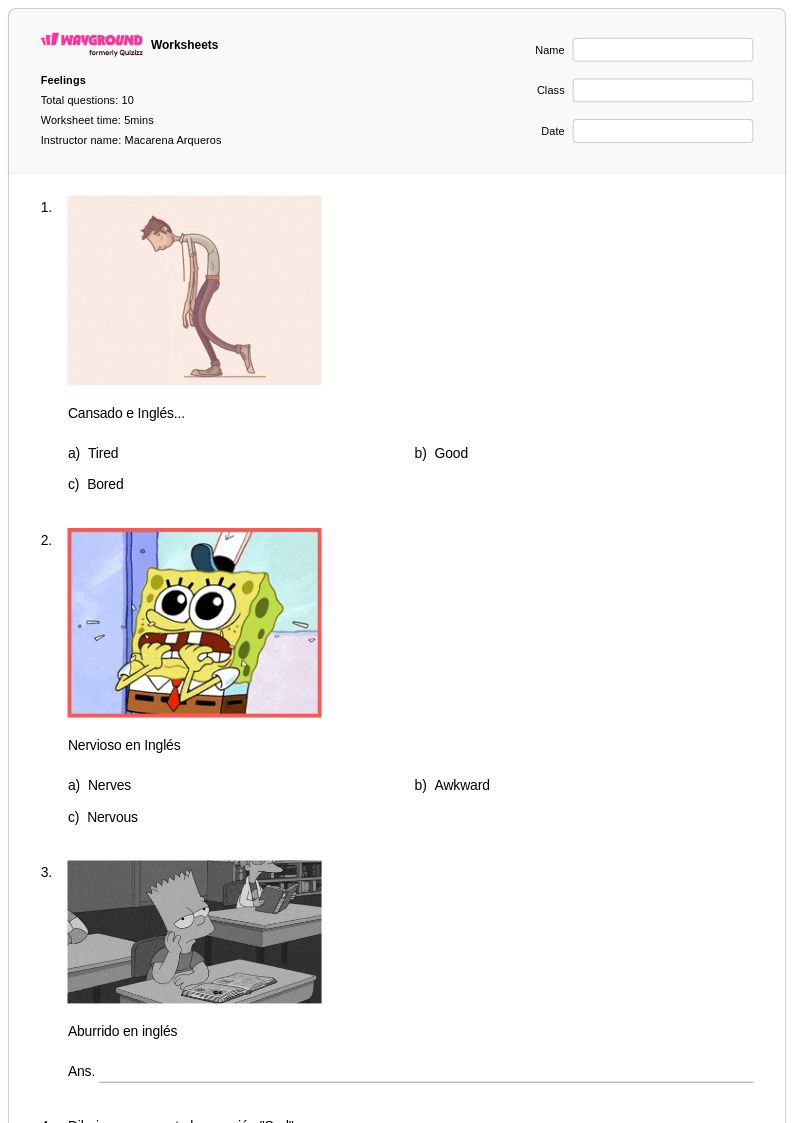
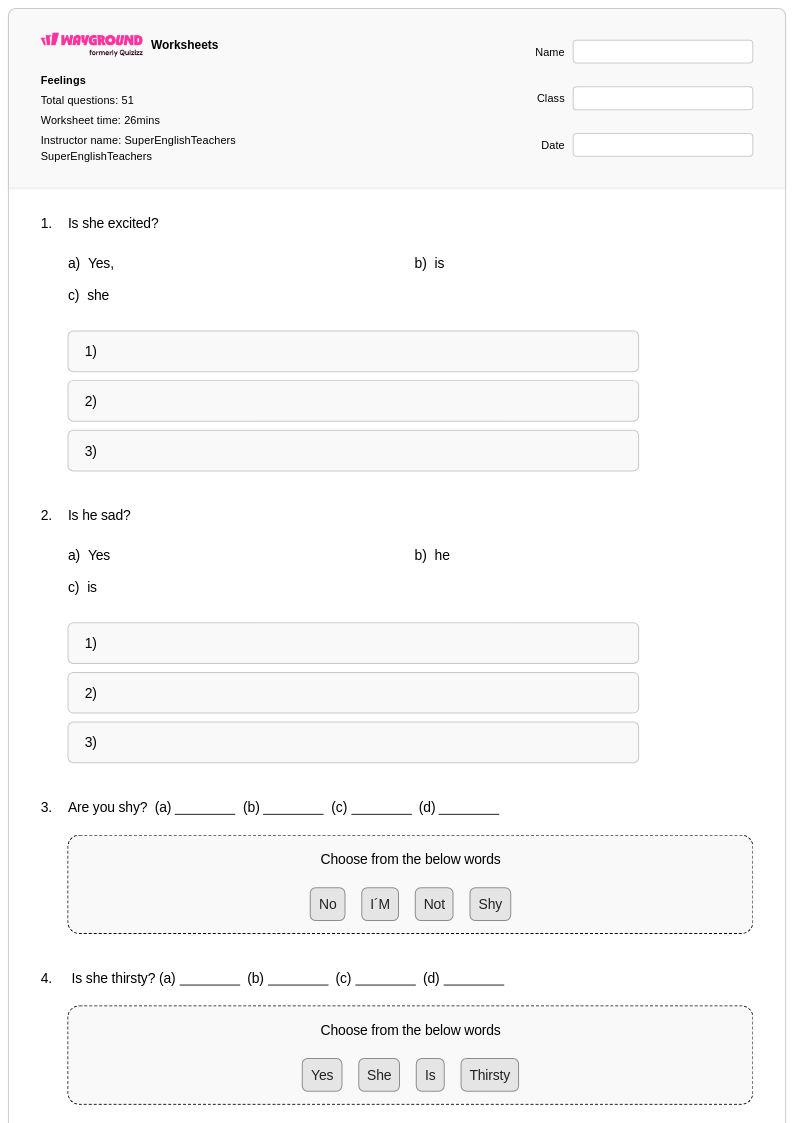
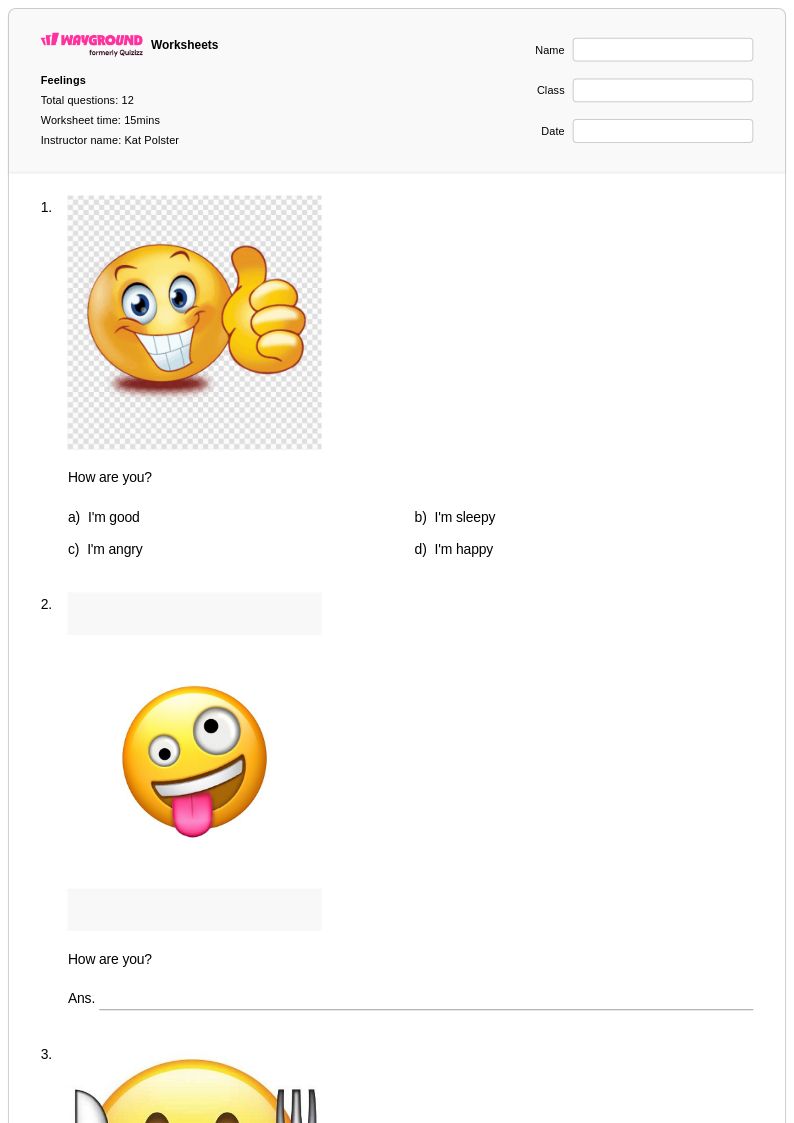
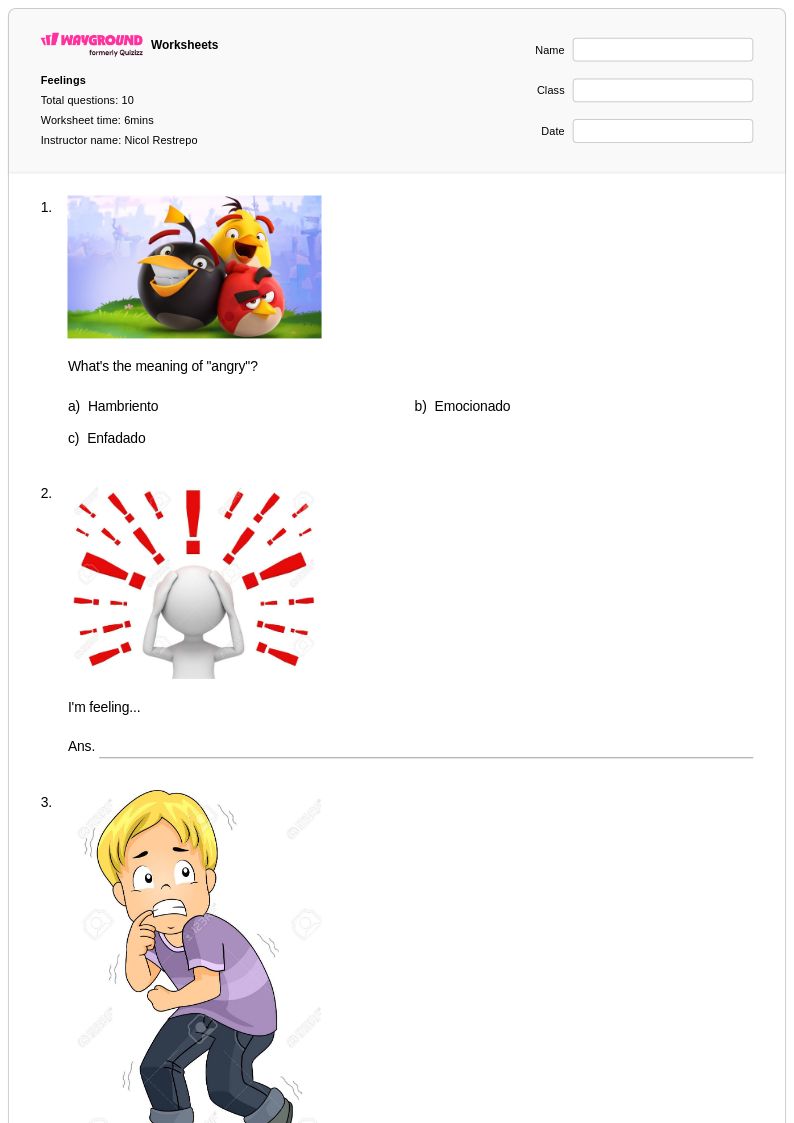
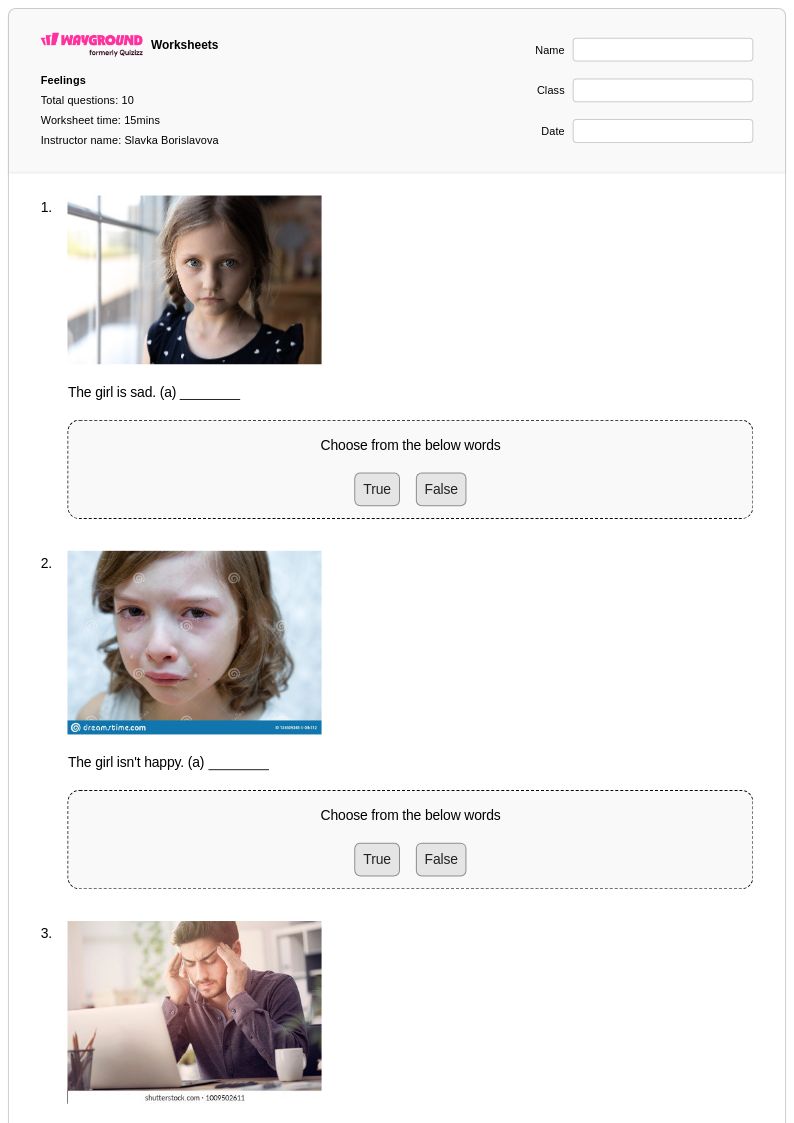
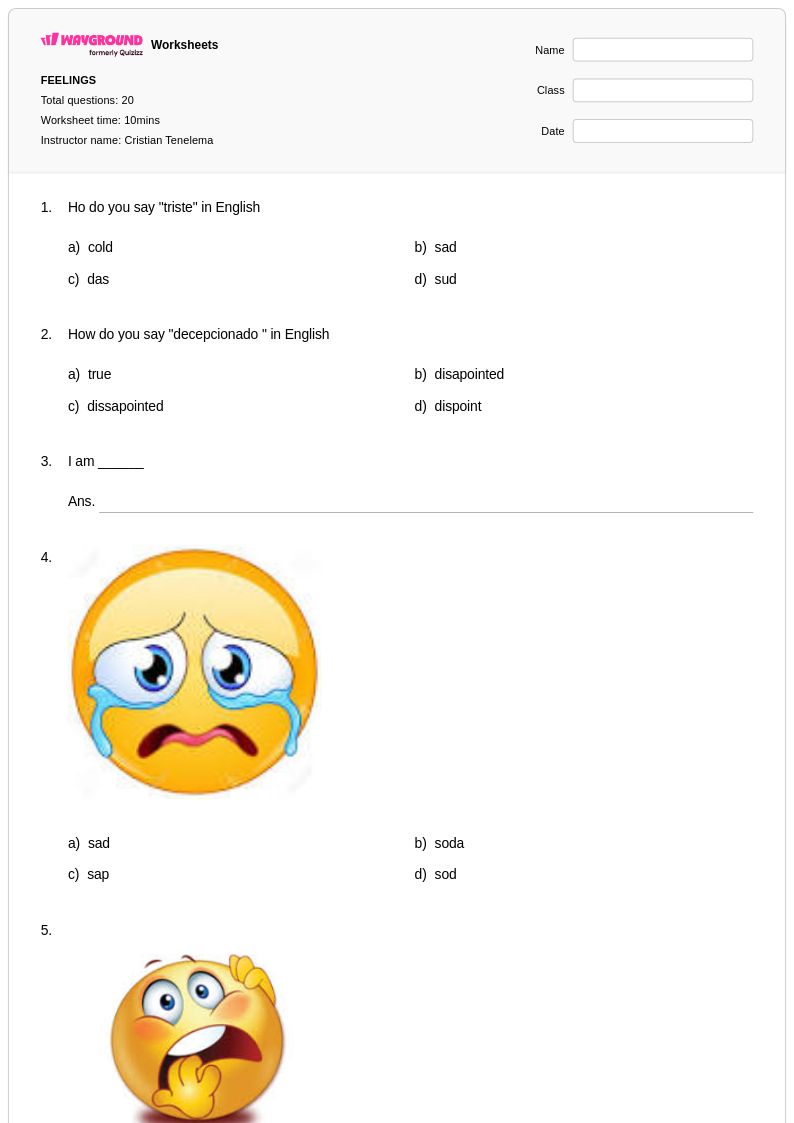
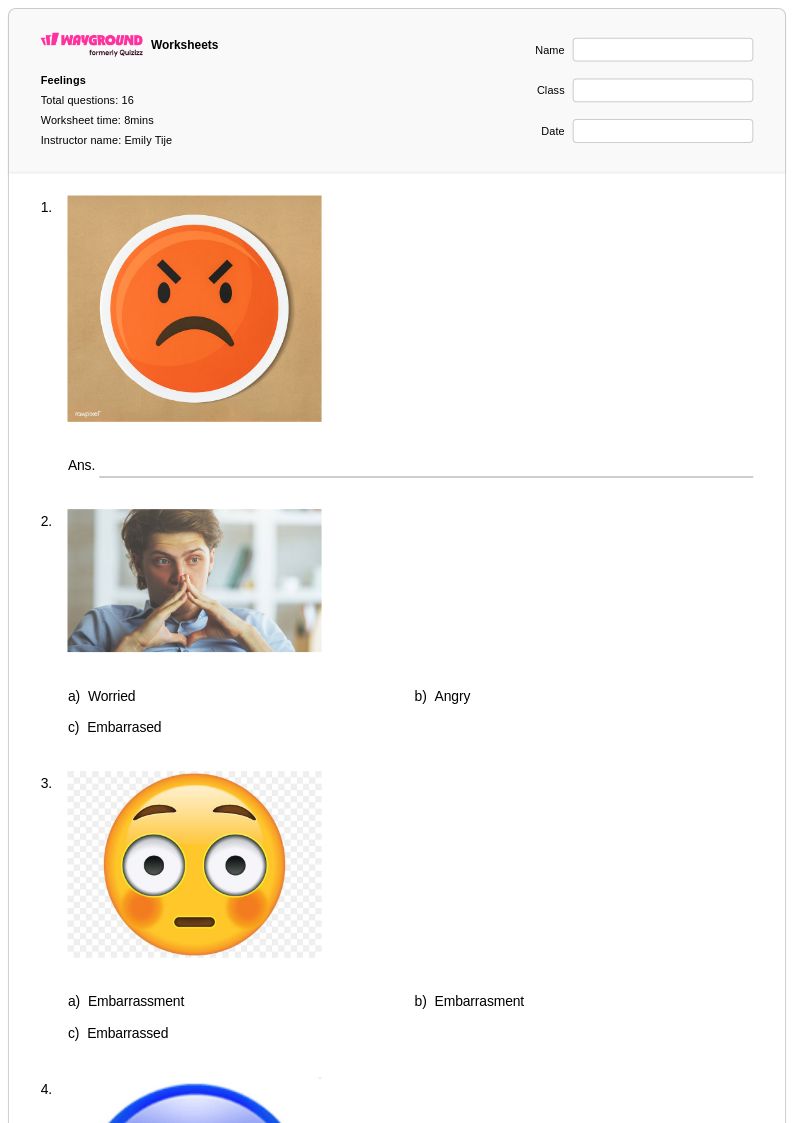
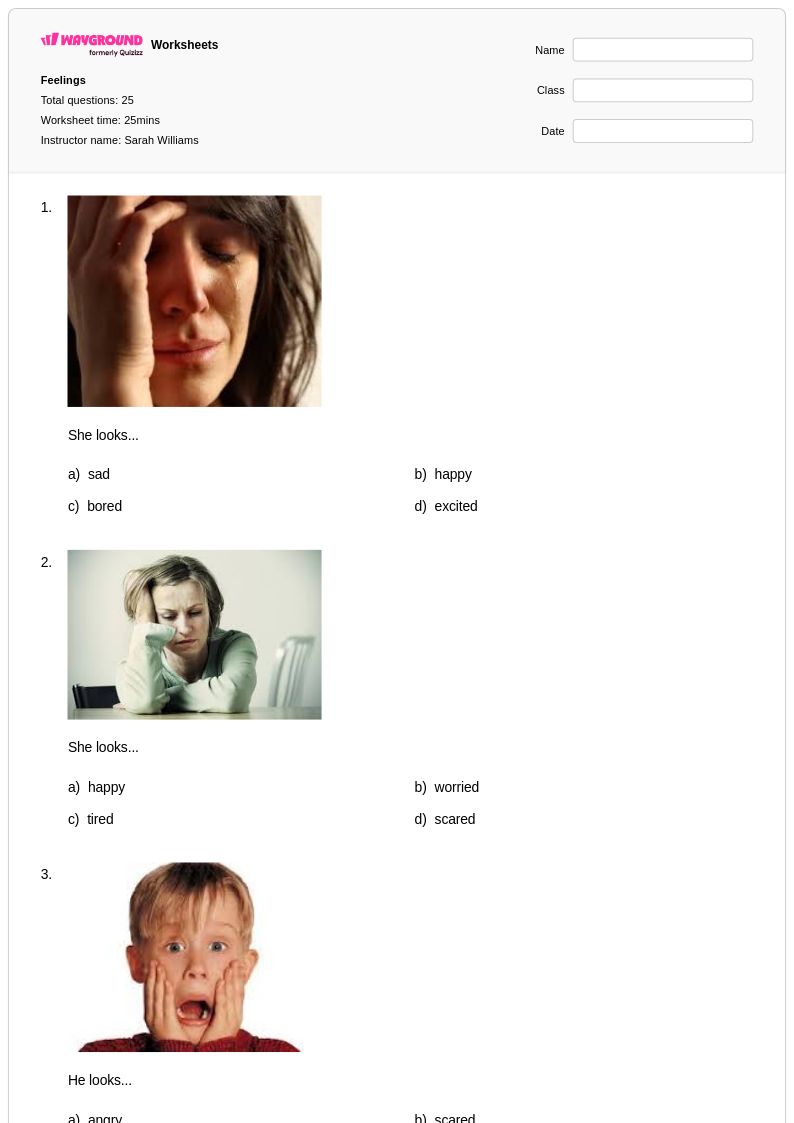
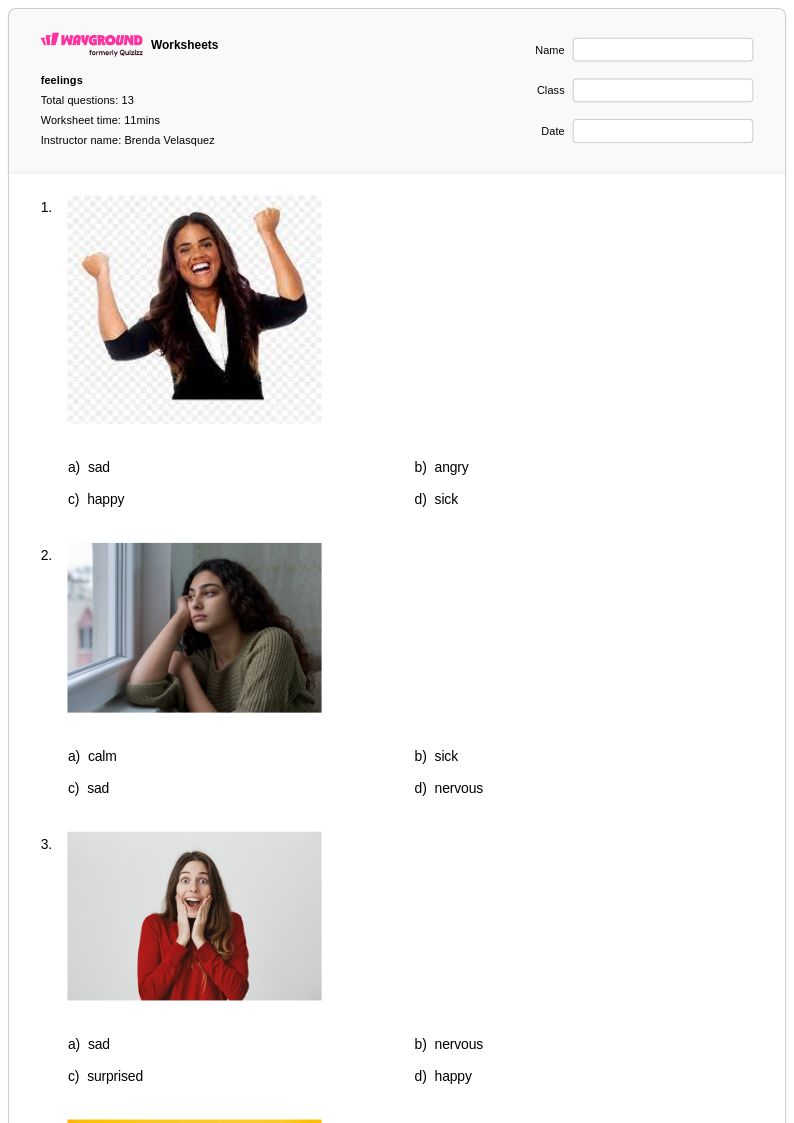
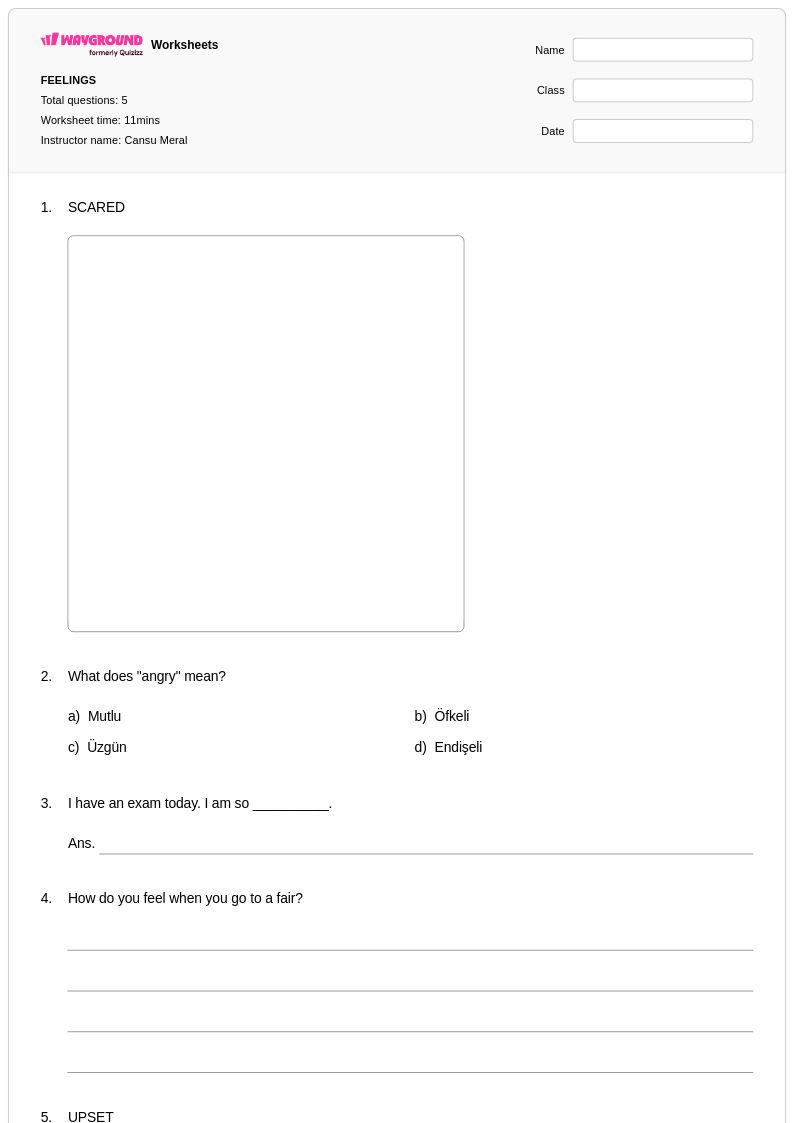
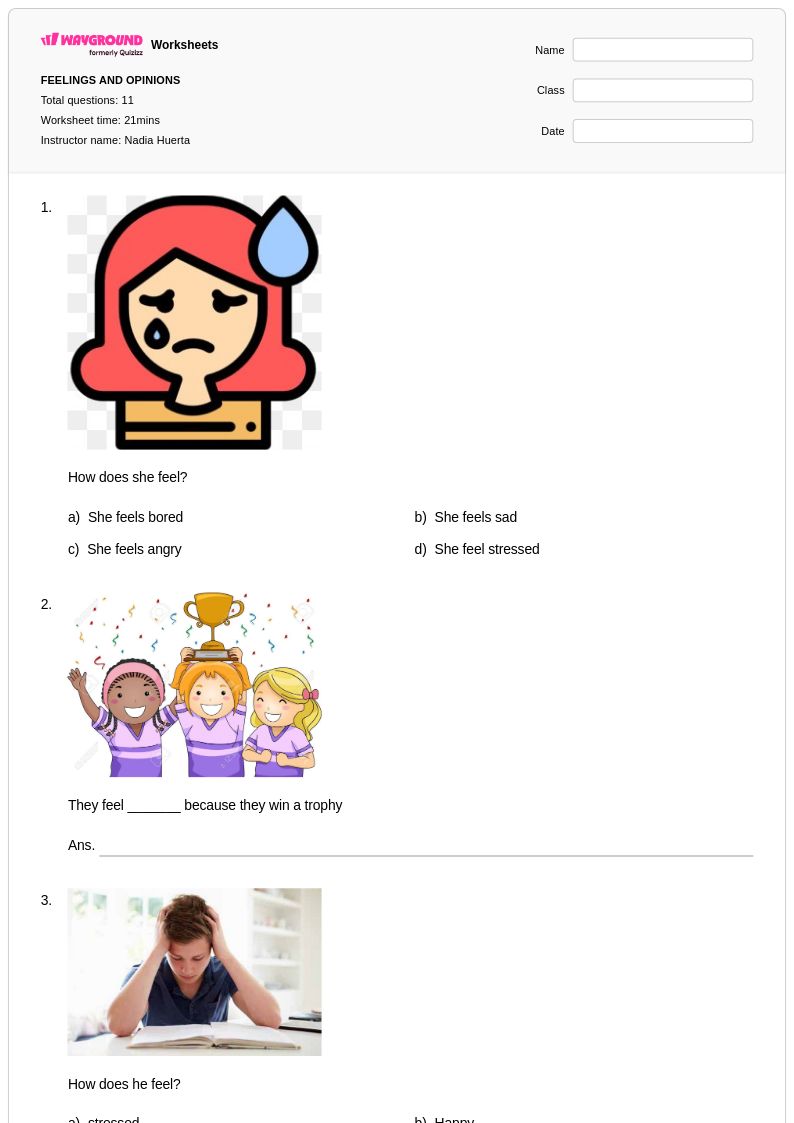
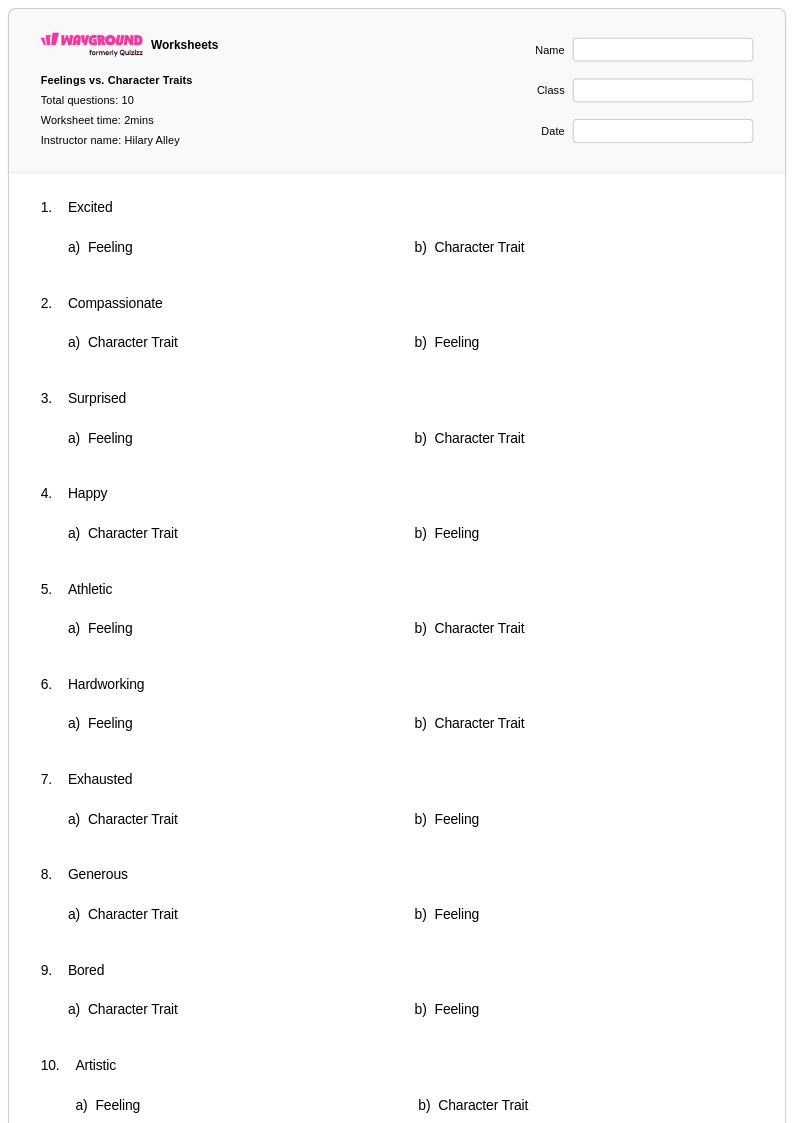
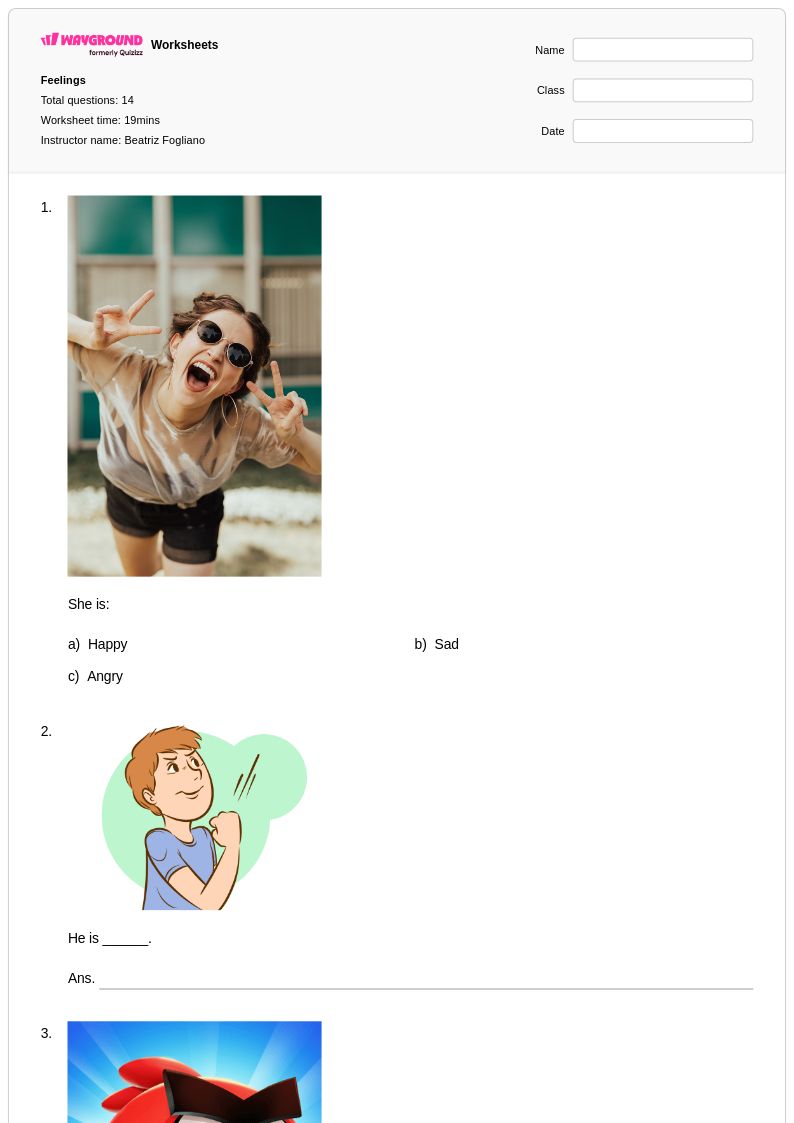
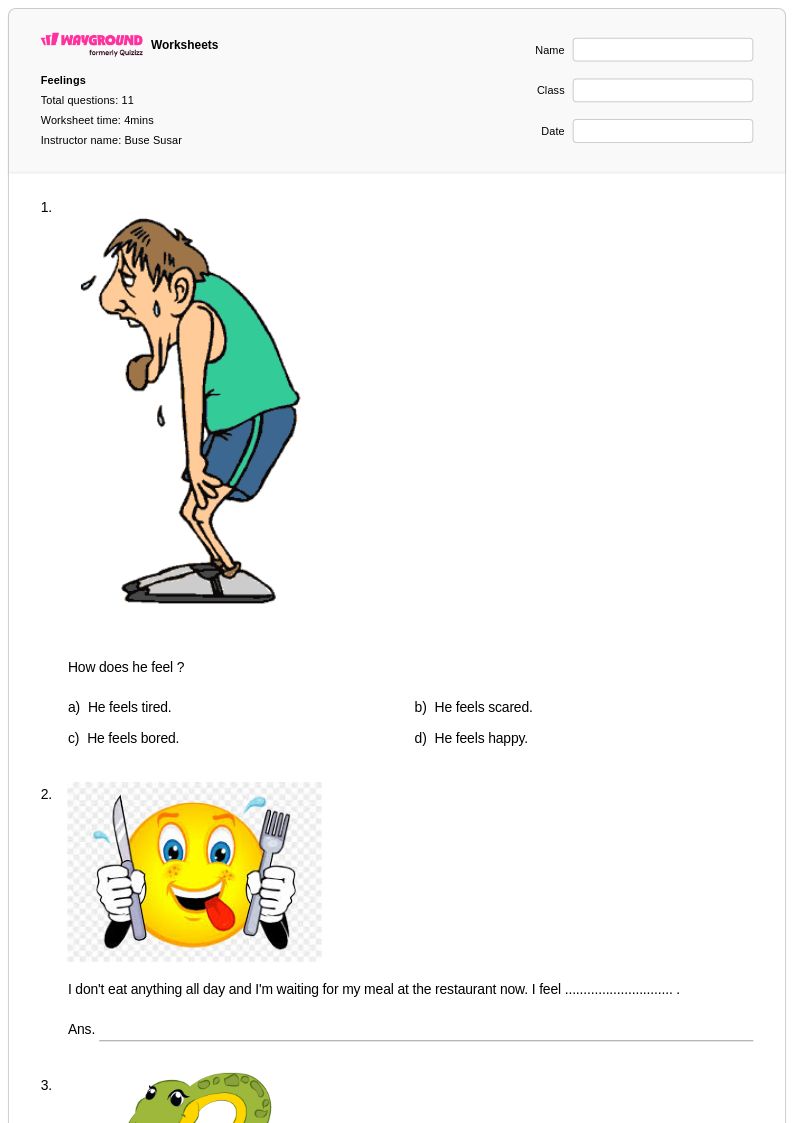
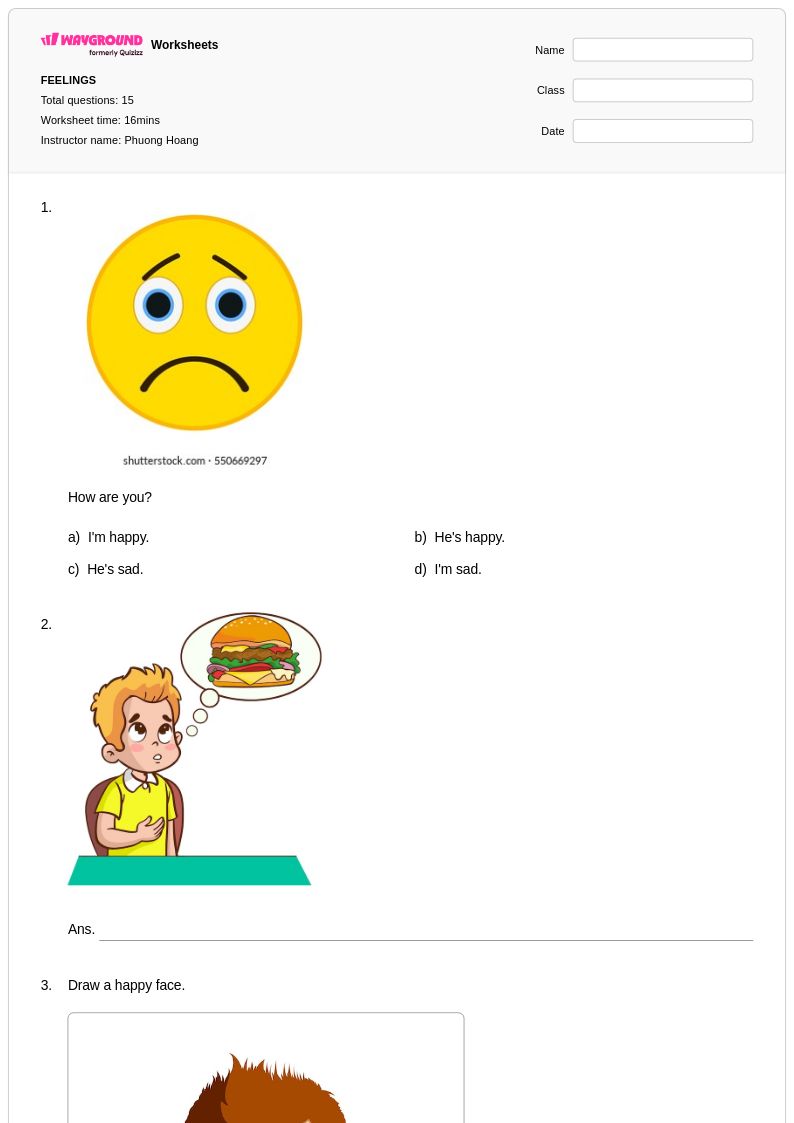
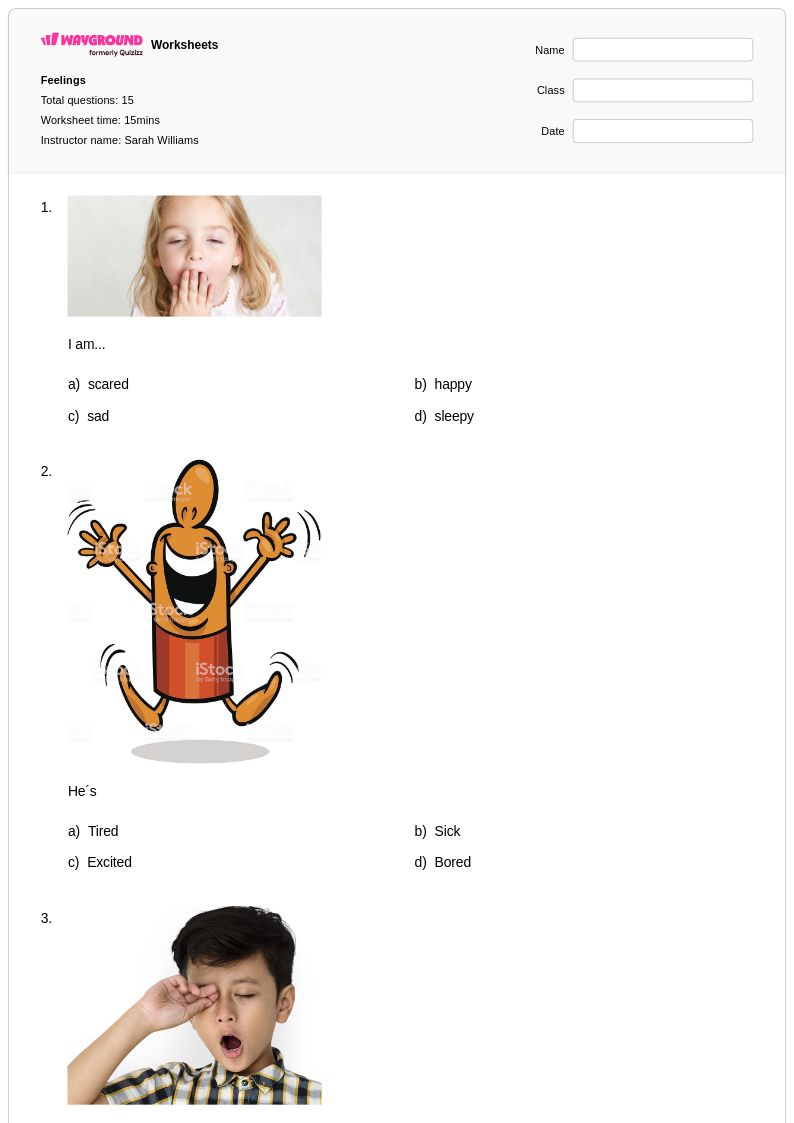
Understanding feelings worksheets for Class 3 from Wayground (formerly Quizizz) provide young learners with essential tools to develop emotional literacy alongside their reading comprehension skills. These carefully designed resources help third-grade students identify, analyze, and interpret characters' emotions within various texts, strengthening their ability to make deeper connections between narrative events and emotional responses. Each worksheet includes structured activities that guide students through recognizing facial expressions, body language cues, and contextual clues that reveal how characters feel throughout different story situations. The comprehensive collection features practice problems that range from basic emotion identification to more complex emotional reasoning tasks, with each resource including a detailed answer key to support both independent learning and guided instruction. These free printables offer educators flexible pdf formats that can be easily integrated into literacy centers, homework assignments, or whole-class discussions about emotional awareness in literature.
Wayground's extensive platform supports teachers with millions of educator-created resources specifically designed to enhance reading comprehension through emotional understanding activities. The robust search and filtering capabilities allow instructors to quickly locate Class 3 appropriate materials that align with state literacy standards while addressing diverse learning needs within their classrooms. Teachers can customize these digital and printable worksheet collections to provide targeted remediation for students who struggle with emotional inference skills or create enrichment opportunities for advanced learners ready to explore more nuanced character analysis. The platform's differentiation tools enable educators to modify content difficulty levels, adjust visual supports, and personalize instruction to meet individual student requirements during reading comprehension lessons. This comprehensive approach to emotional literacy skill practice helps teachers create meaningful learning experiences that build both academic competency and social-emotional awareness through systematic, standards-aligned instruction.
FAQs
How do I teach students to identify feelings in a text?
Start by teaching students to look for explicit emotional vocabulary, such as words characters use to name their feelings, and then move toward inferring emotions from actions, dialogue, and context. Anchor instruction in specific textual evidence by modeling think-alouds where you narrate how you connect a character's behavior to an underlying emotion. Gradually release students to practice this process independently using short, manageable passages before applying it to longer texts.
What exercises help students practice recognizing character emotions?
Effective practice exercises include emotion-labeling activities where students match character actions or dialogue to a feelings word bank, as well as short-answer tasks that ask students to cite textual evidence supporting their emotional interpretation. Exercises that ask students to distinguish between a character's stated feelings and their implied feelings push deeper analytical thinking. Regular exposure to varied text types, including fiction, poetry, and informational text, helps students generalize the skill across contexts.
What mistakes do students commonly make when analyzing feelings in a text?
The most common error is surface-level labeling, where students name a generic emotion like 'sad' or 'happy' without grounding it in specific textual evidence. Students also frequently confuse their own emotional response to a text with the character's feeling, which conflates personal reaction with textual analysis. Another common misconception is treating mood and a character's individual emotion as interchangeable concepts, when in fact they refer to distinct elements of a text.
How can I differentiate understanding feelings worksheets for students at different reading levels?
For struggling readers, provide shorter passages with more explicit emotional language and a supported feelings word bank to reduce cognitive load. More advanced students can work with complex texts where emotions are entirely implied through subtext, requiring them to build multi-step inferences. On Wayground, teachers can apply accommodations such as Read Aloud, which audio-reads questions and content aloud, and reduced answer choices for individual students, making the same worksheet accessible across a range of learners without separate materials.
How do I use understanding feelings worksheets on Wayground in my classroom?
Wayground's understanding feelings worksheets are available as printable PDFs for traditional classroom use and in digital formats for technology-integrated environments, including the ability to host them as a live quiz directly on the platform. Teachers can assign worksheets for independent practice, use them as warm-up or exit ticket activities, or project them for whole-class guided instruction. Each worksheet includes a complete answer key, making it straightforward to use for self-paced learning, peer review, or direct teacher-led correction.
How do understanding feelings worksheets support reading comprehension development?
Emotional literacy and reading comprehension are deeply connected because understanding how and why characters feel the way they do requires students to synthesize details, track narrative development, and read between the lines. Worksheets that require students to identify mood and tone, interpret emotional subtext, and connect feelings to plot events build the same inferencing skills that underpin strong overall comprehension. Consistent practice with this type of emotional analysis makes students more attentive, purposeful readers across all genres.