Free Printable Character Types Worksheets for Class 7
Class 7 character types reading comprehension worksheets provide free printables and practice problems with answer keys to help students analyze protagonists, antagonists, and supporting characters in literary texts.
Explore printable Character Types worksheets for Class 7
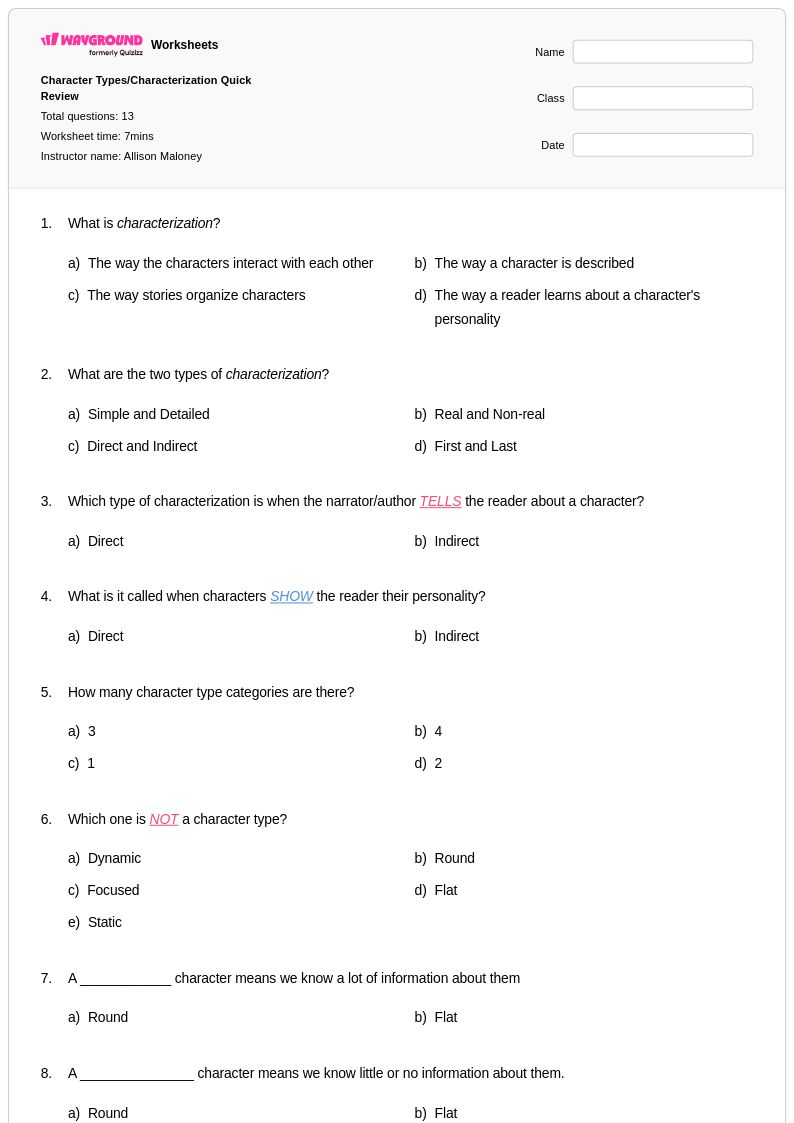
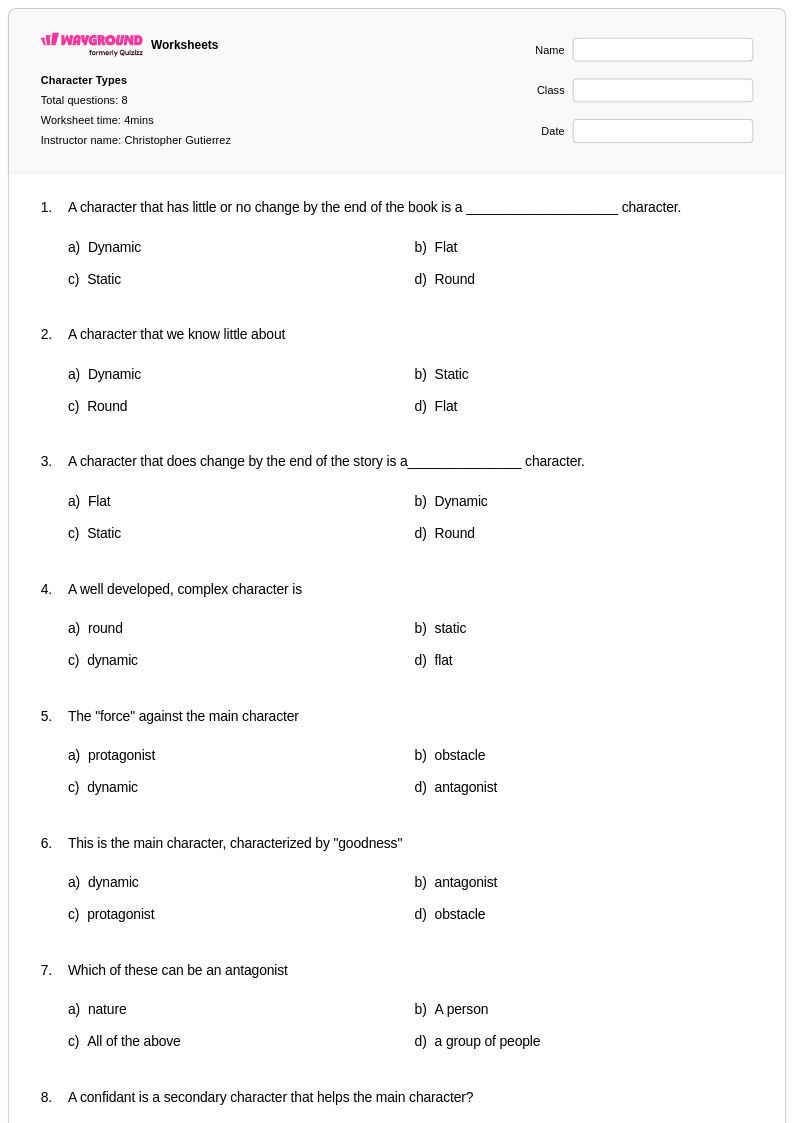
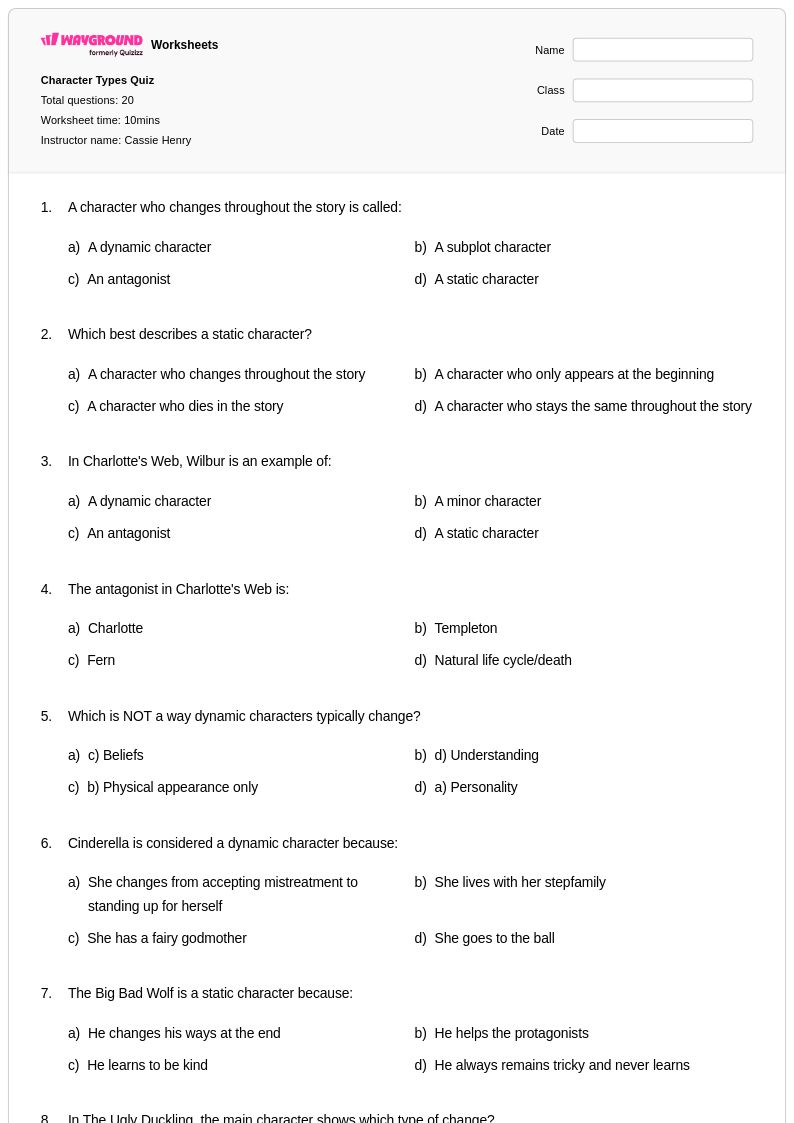
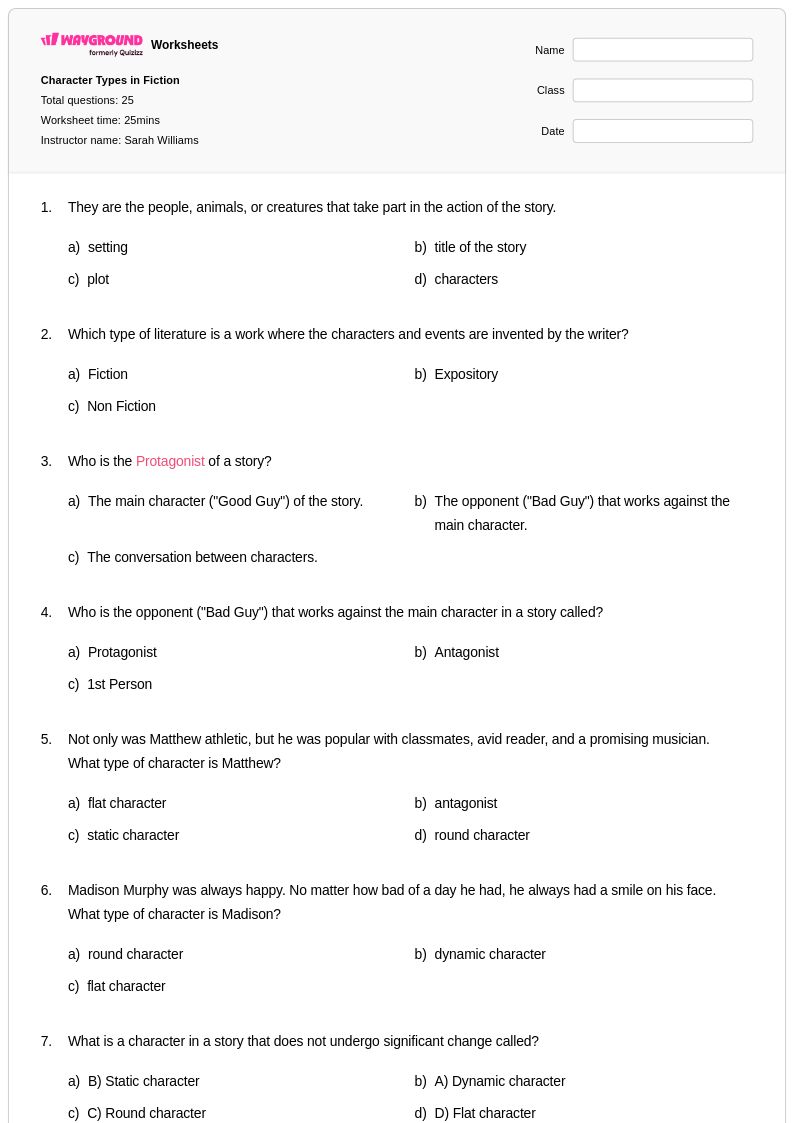
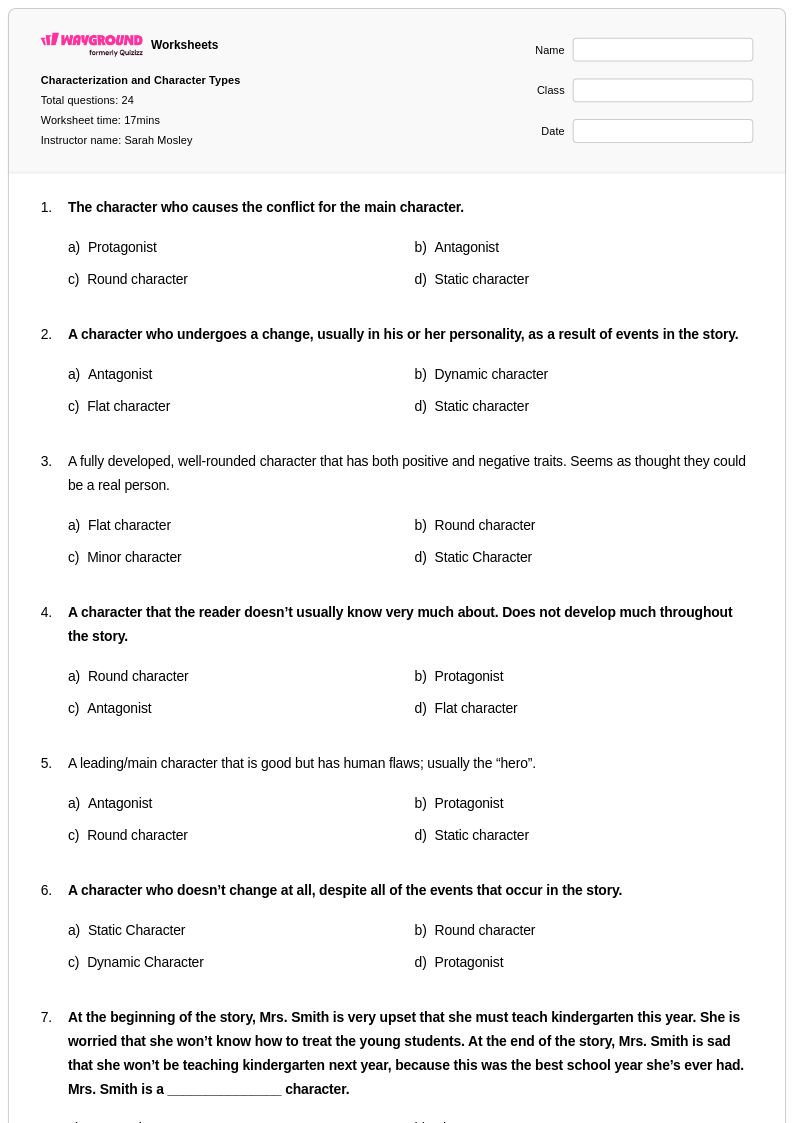
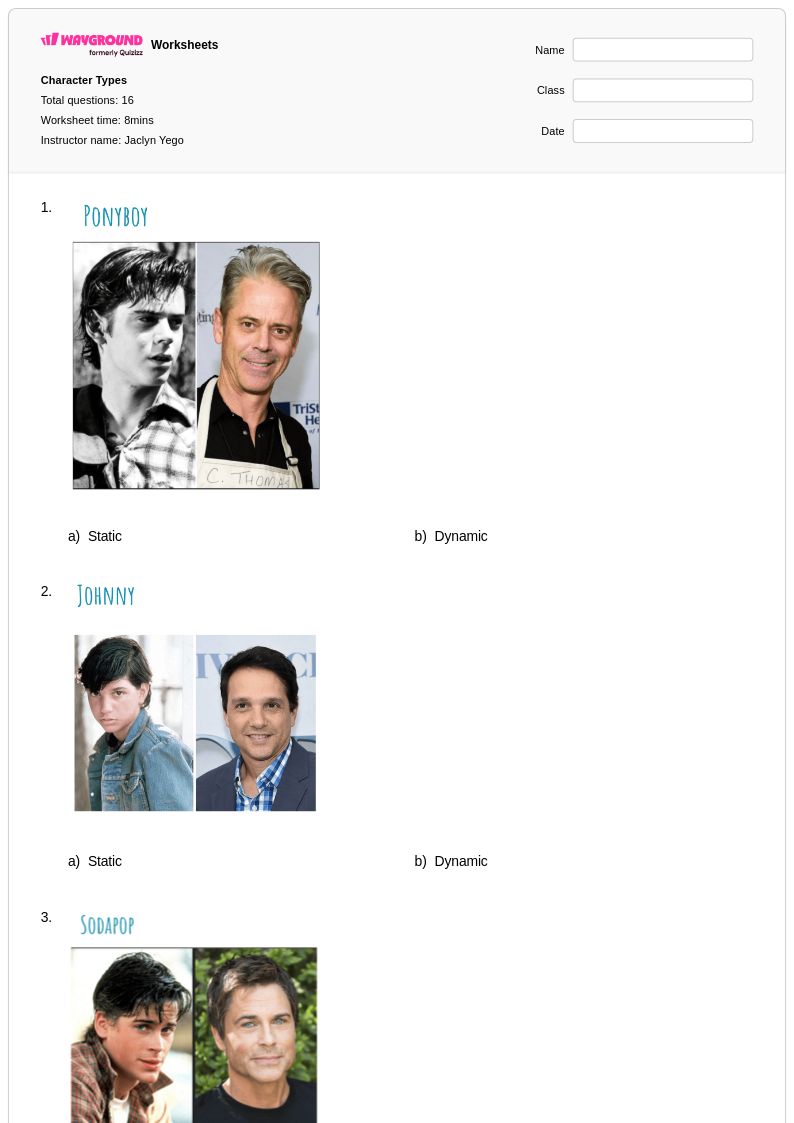
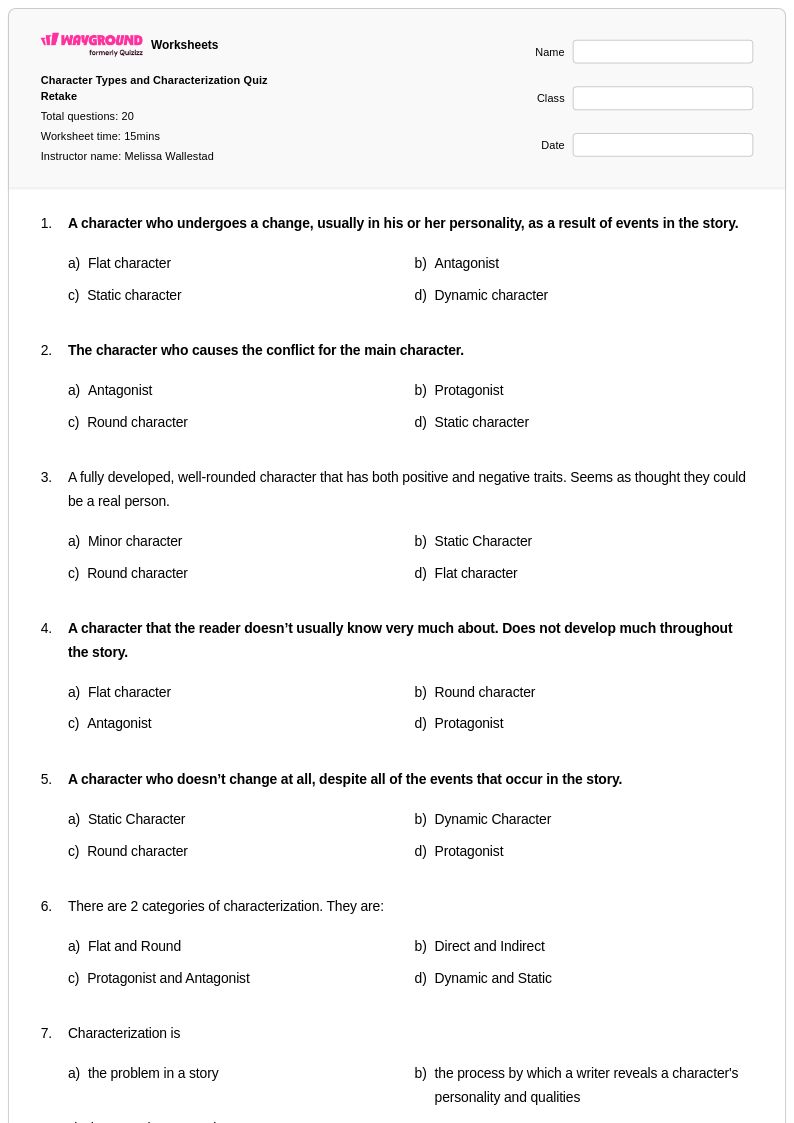
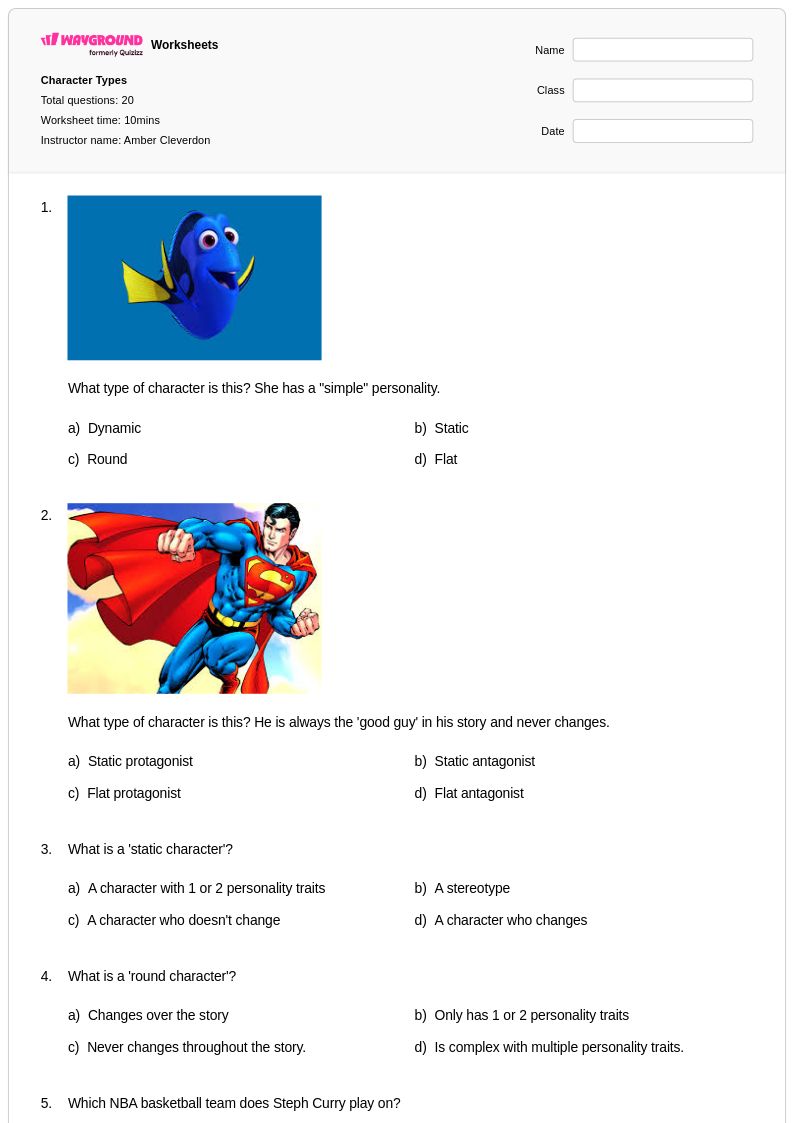
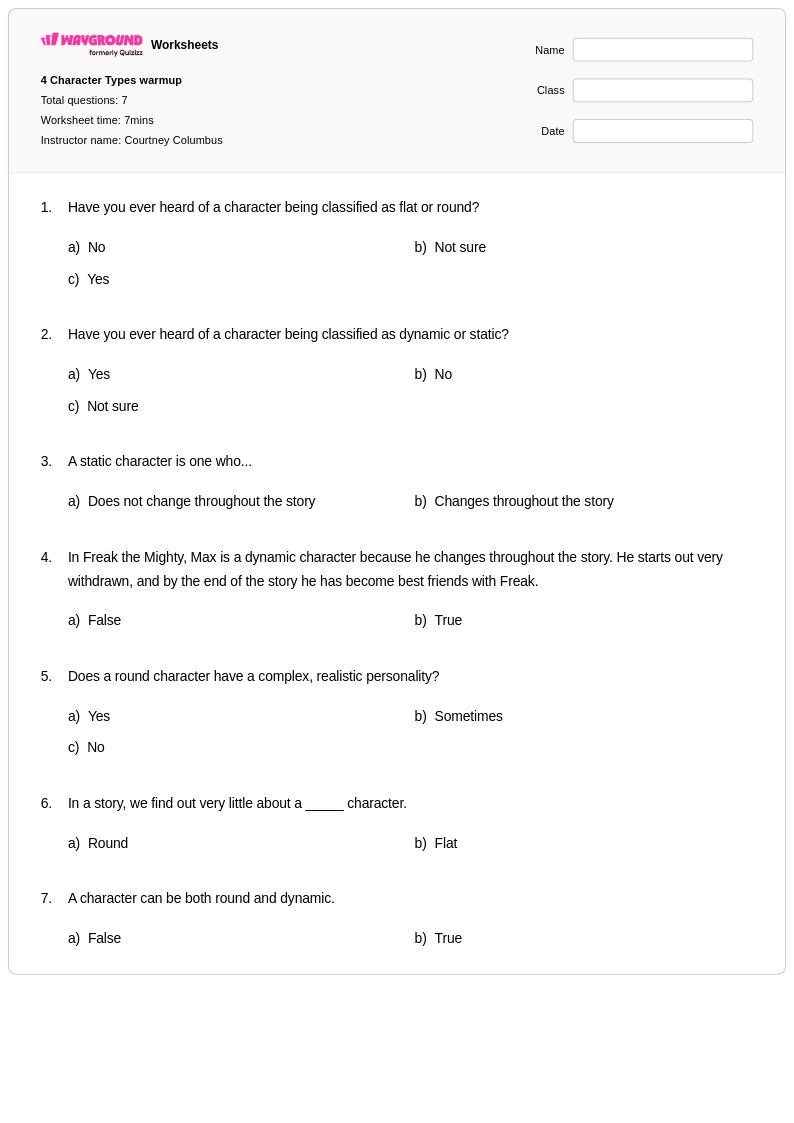
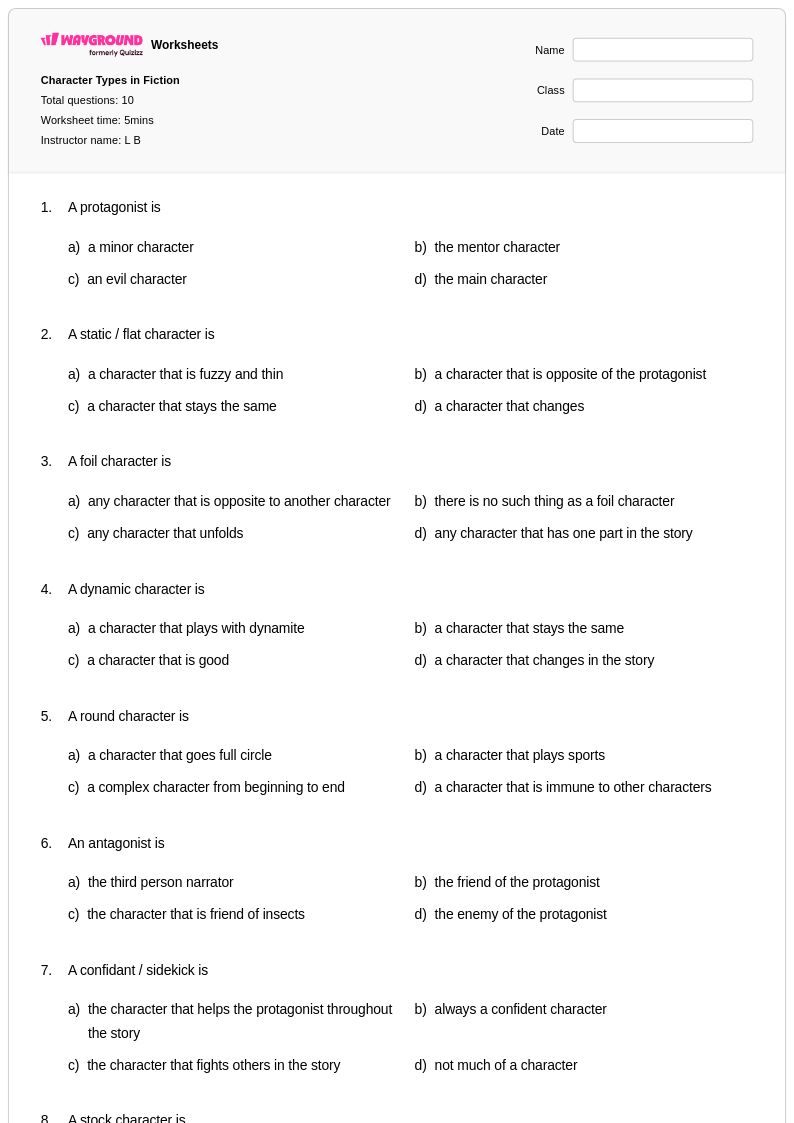
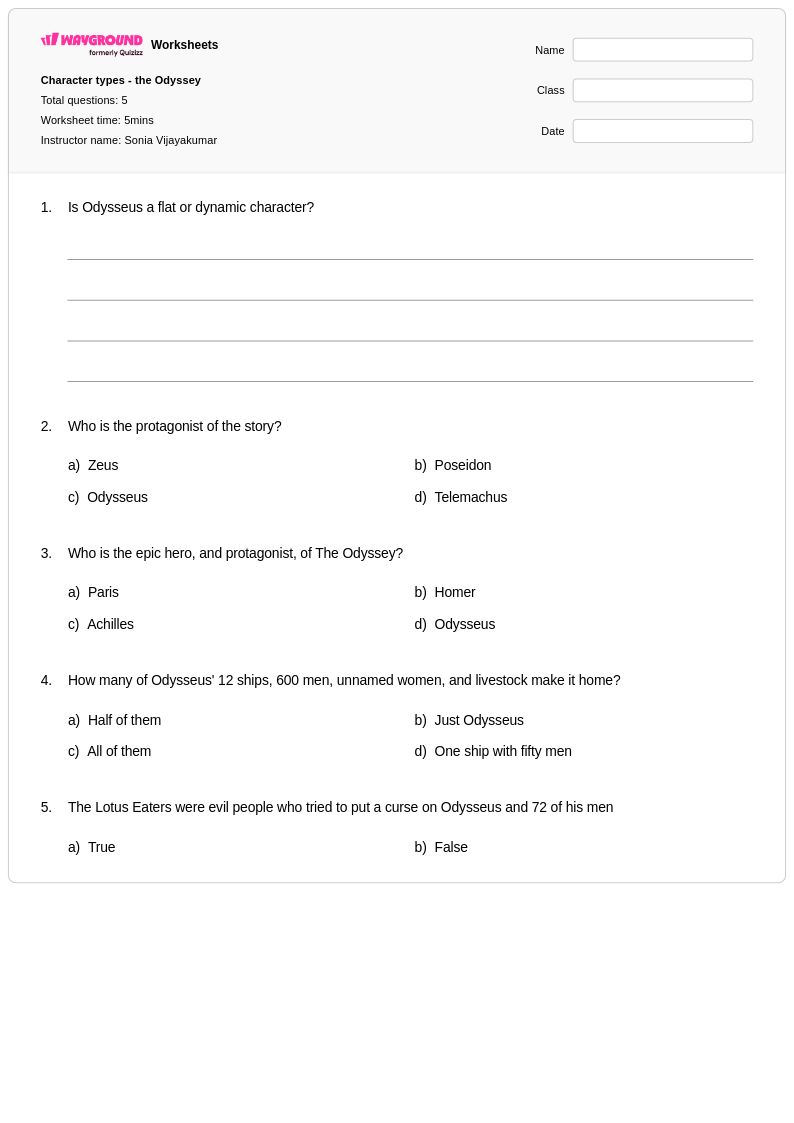
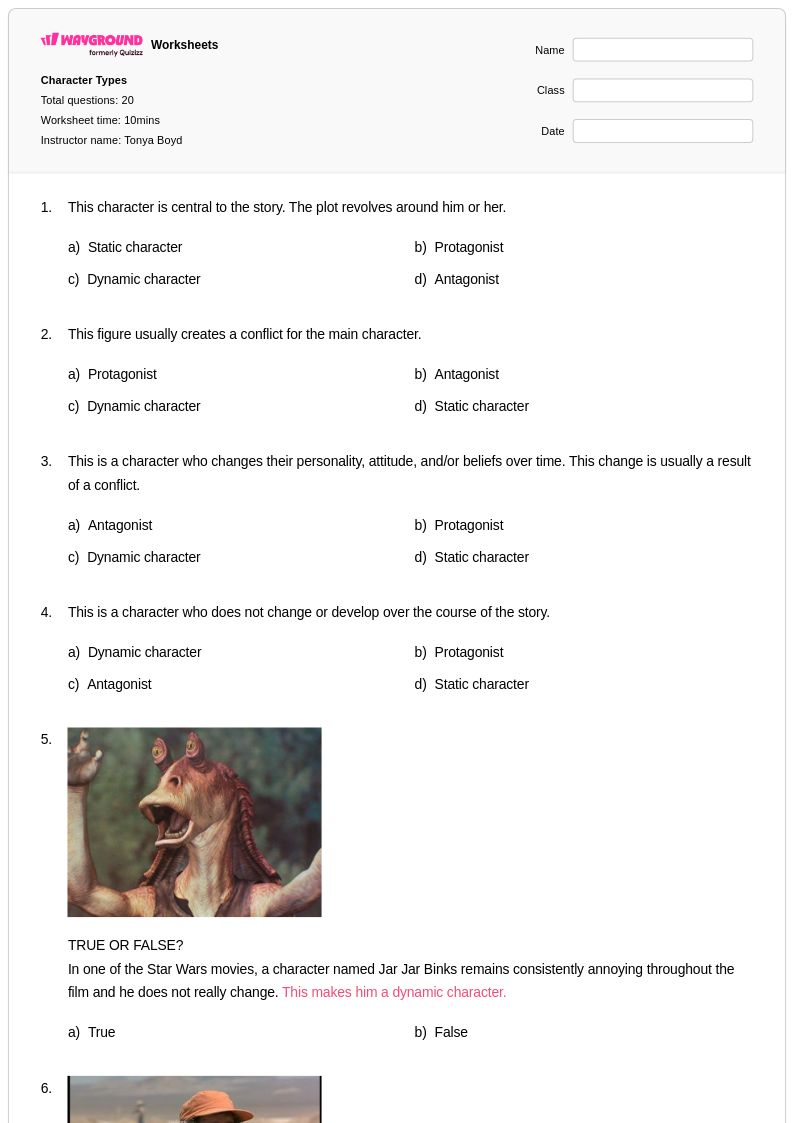
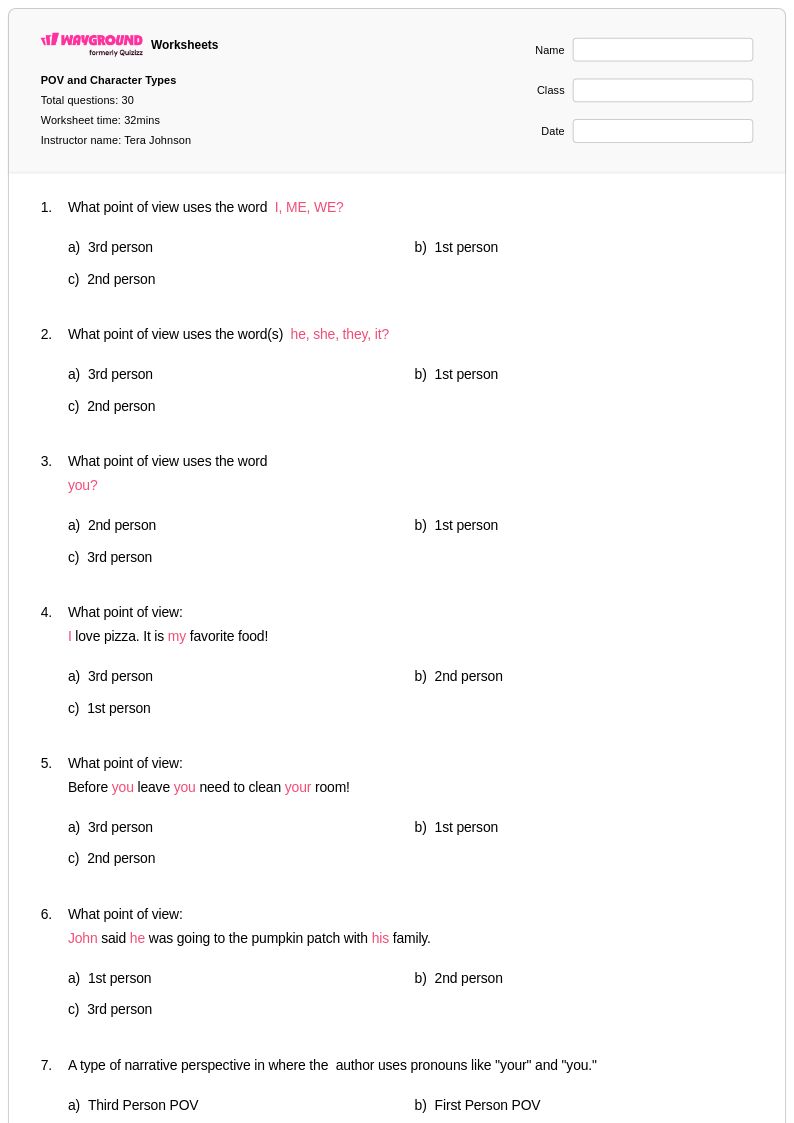
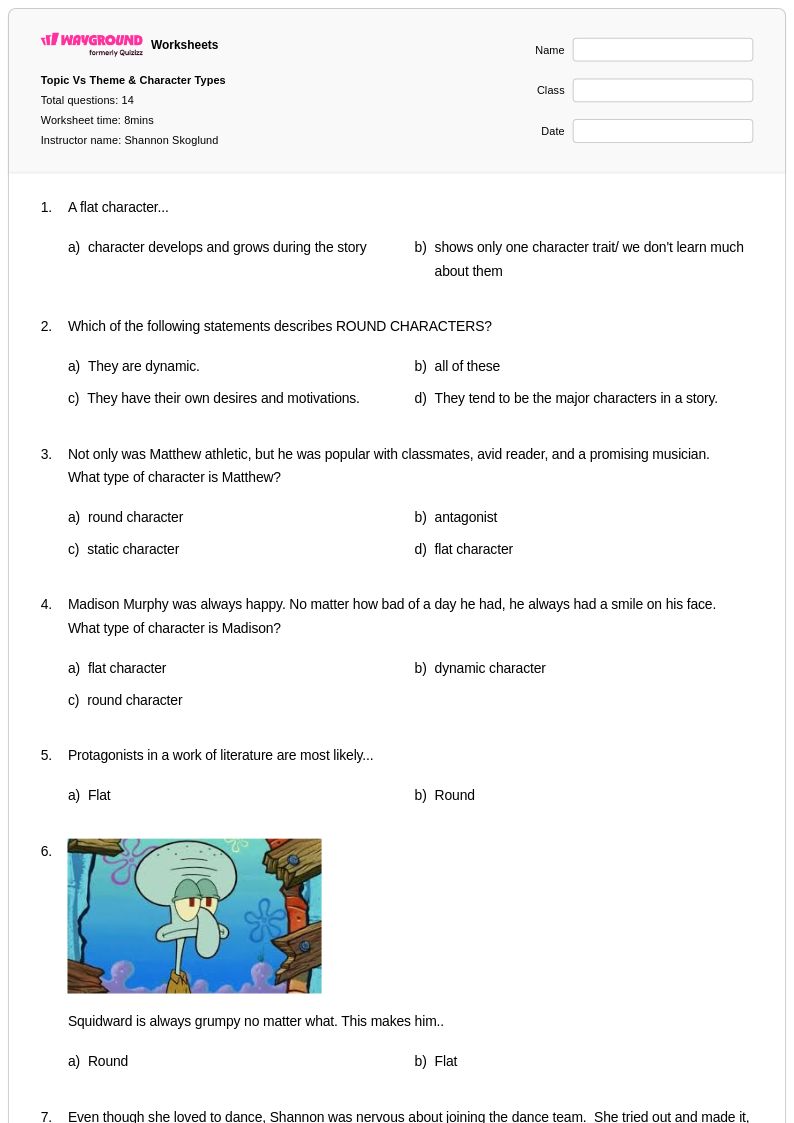
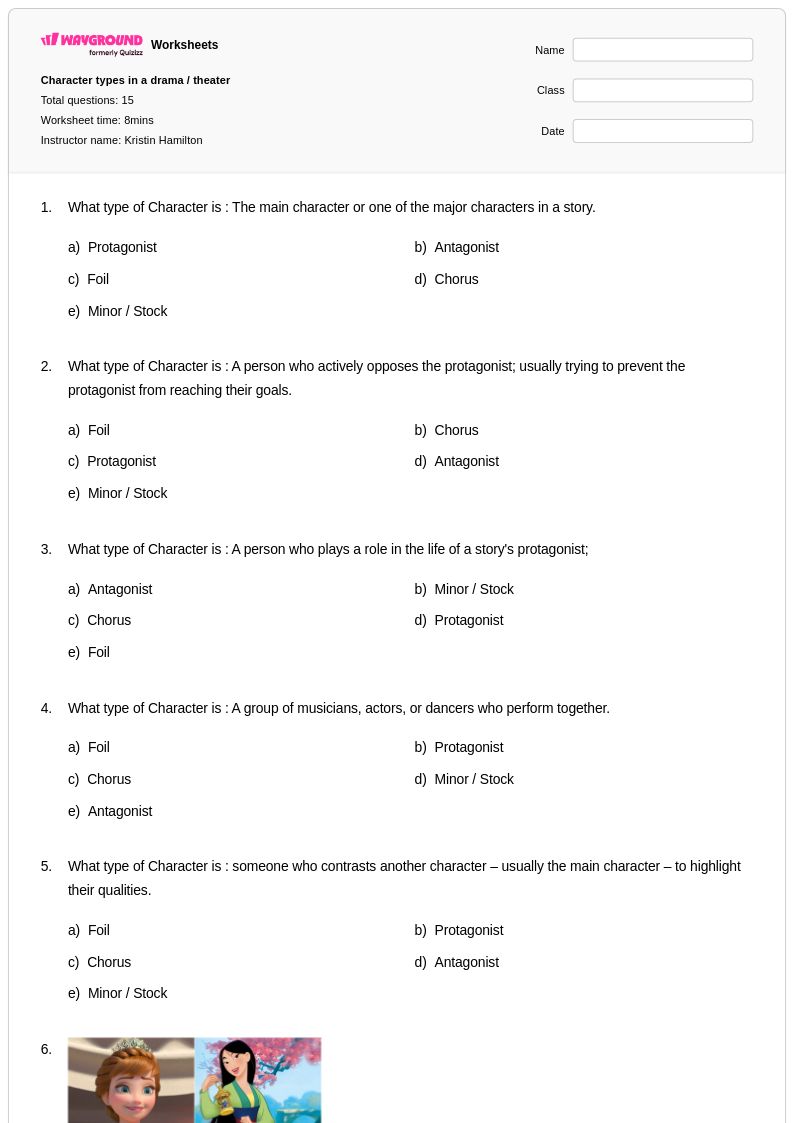
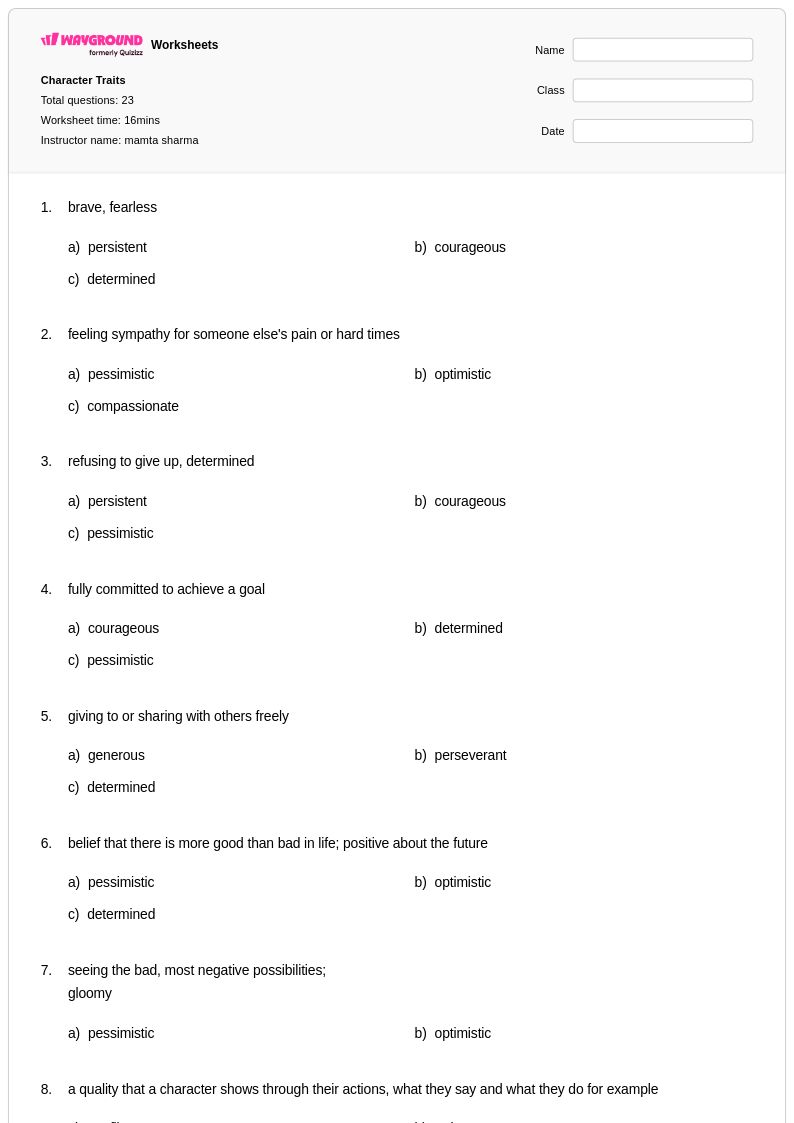
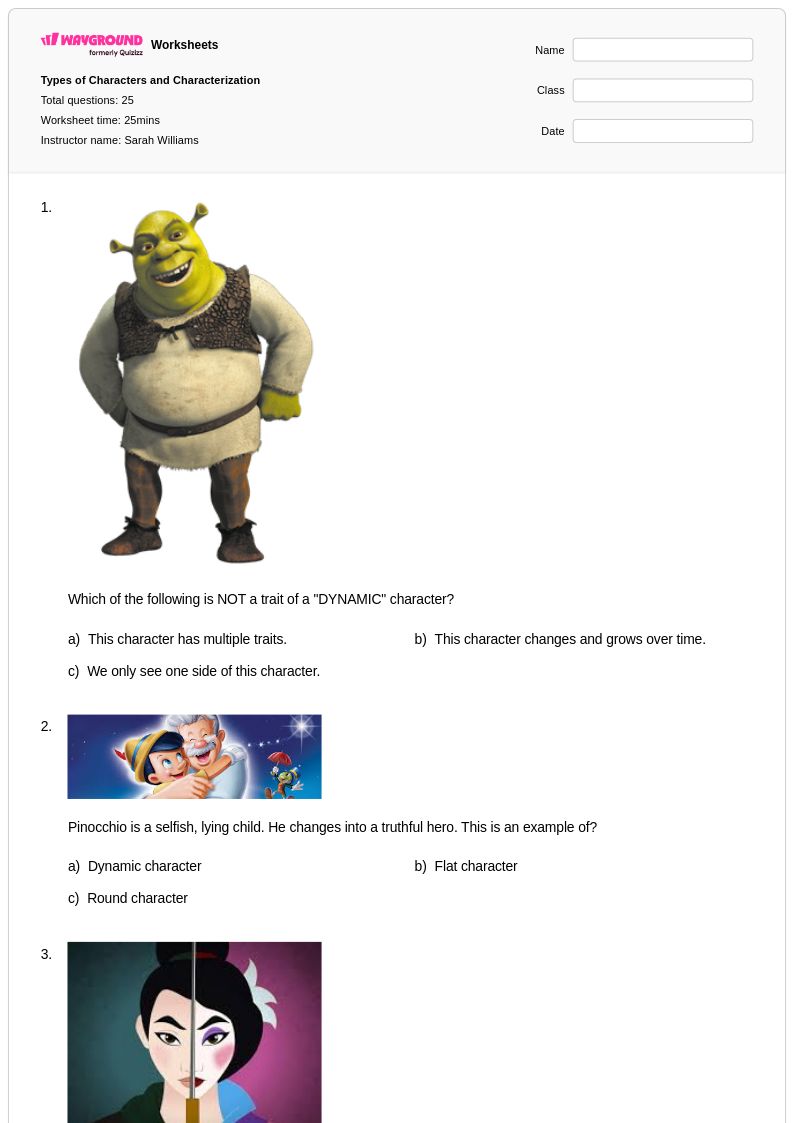
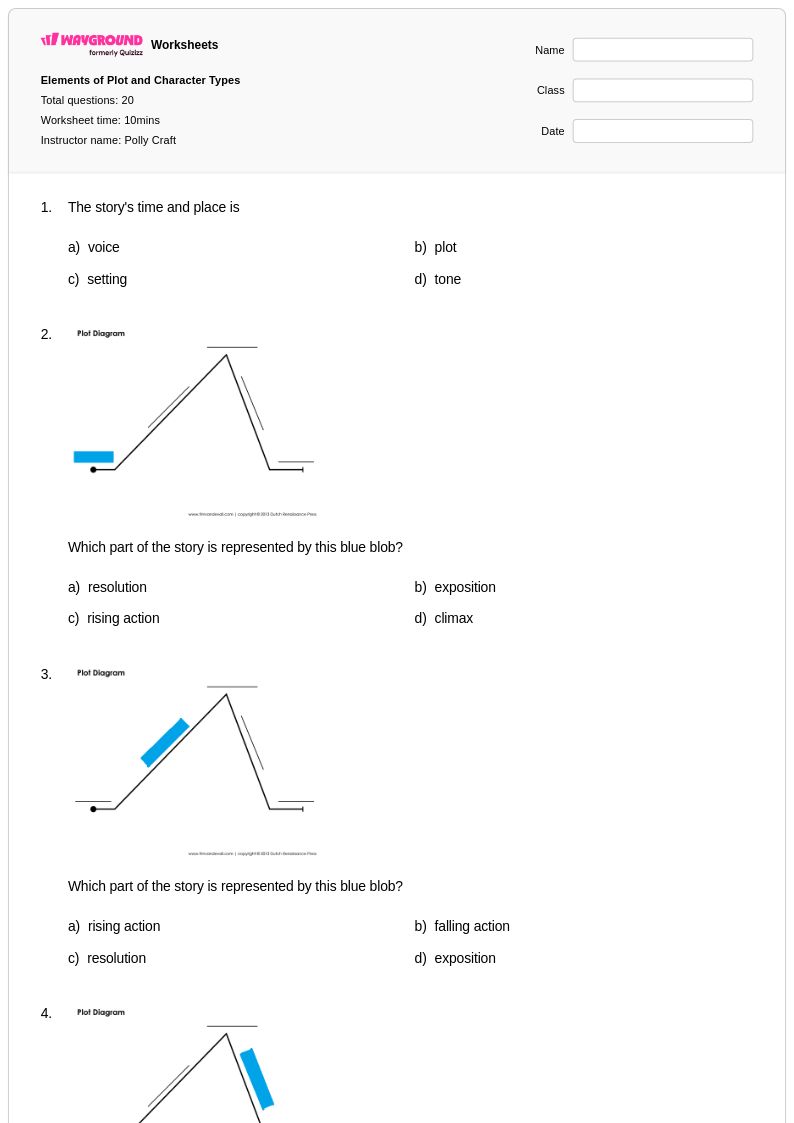
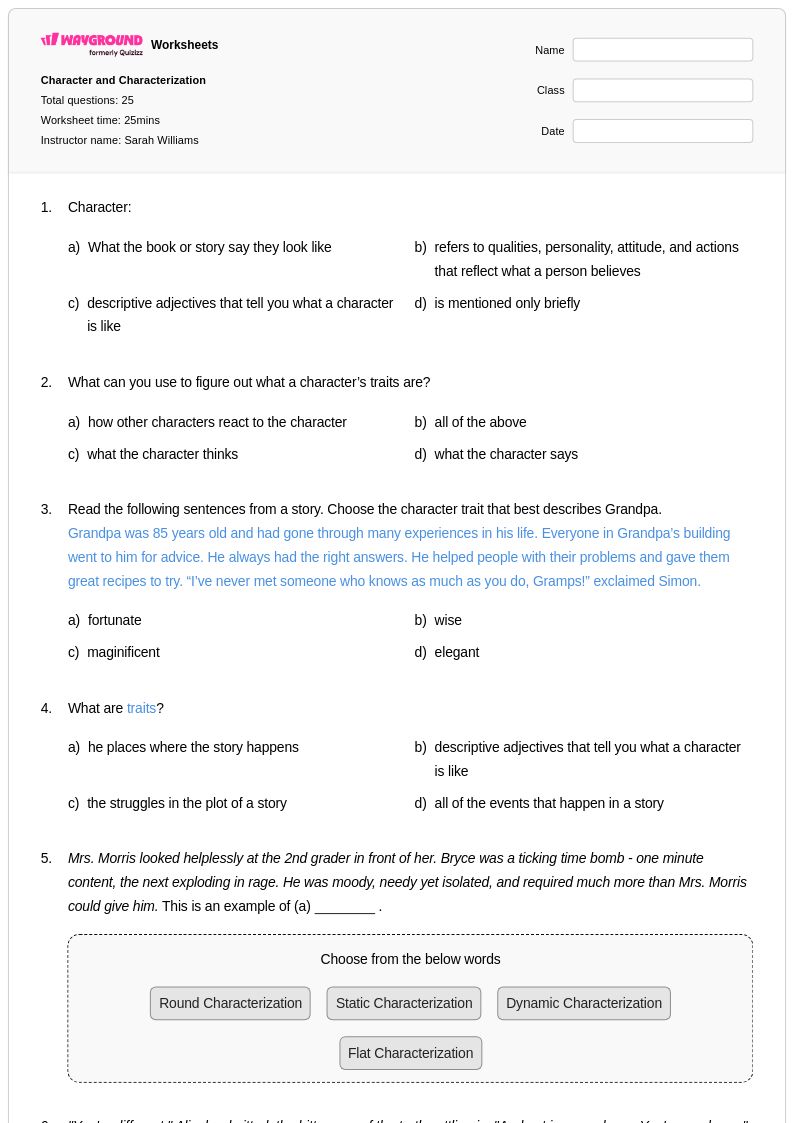
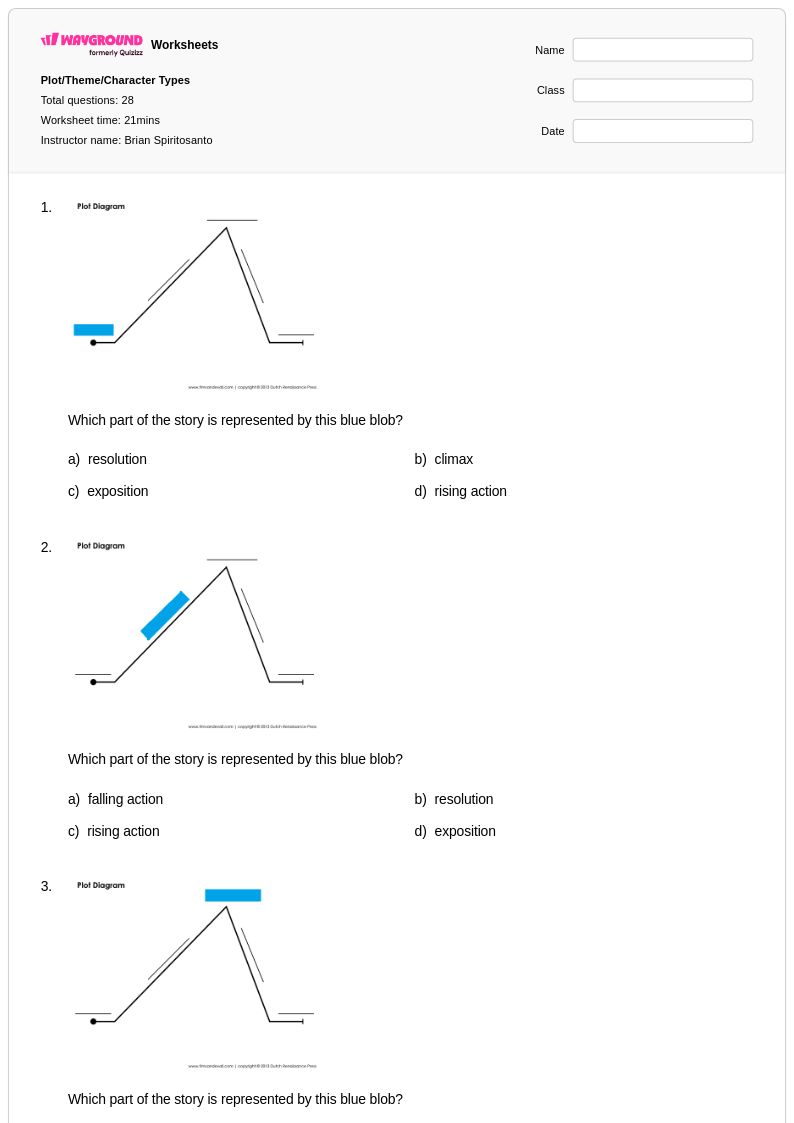
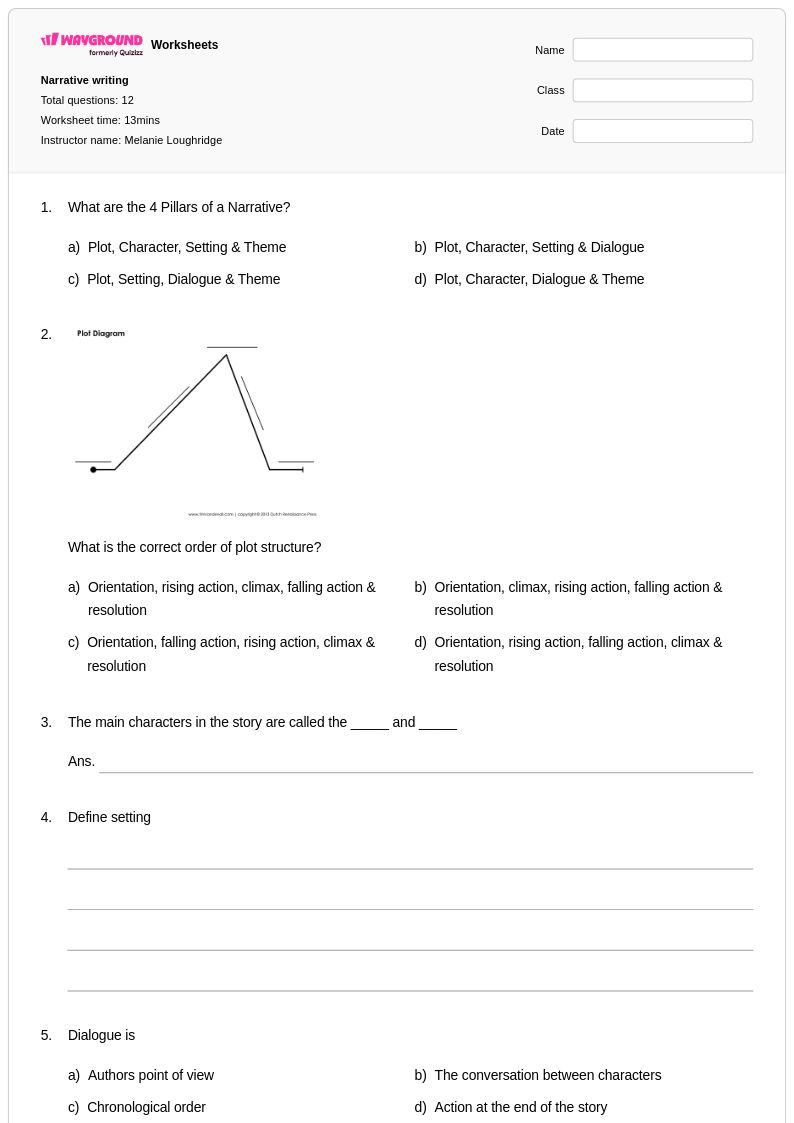
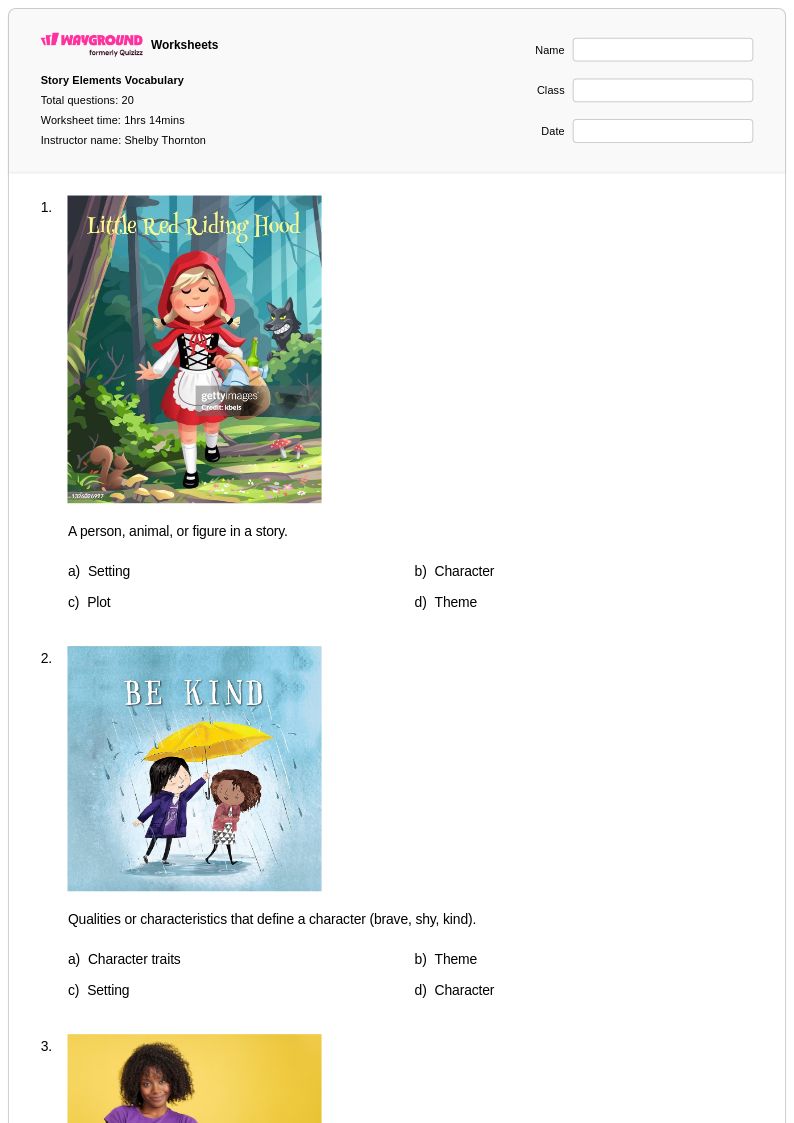
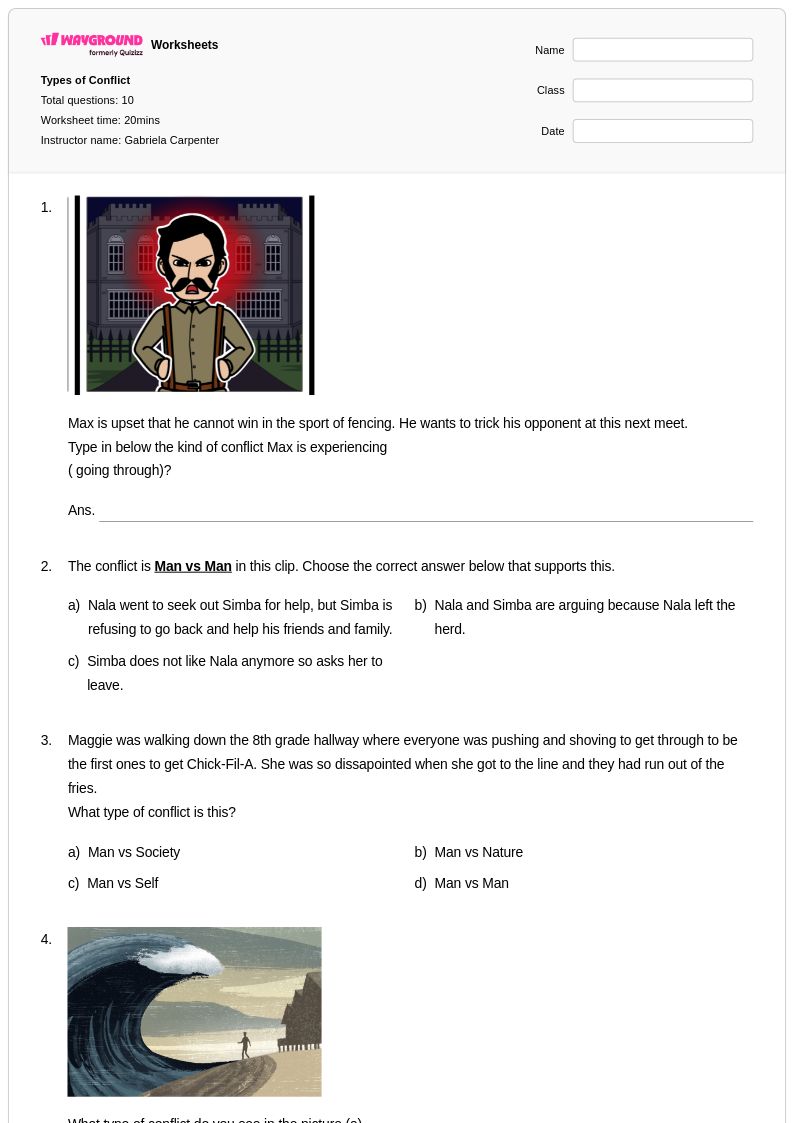
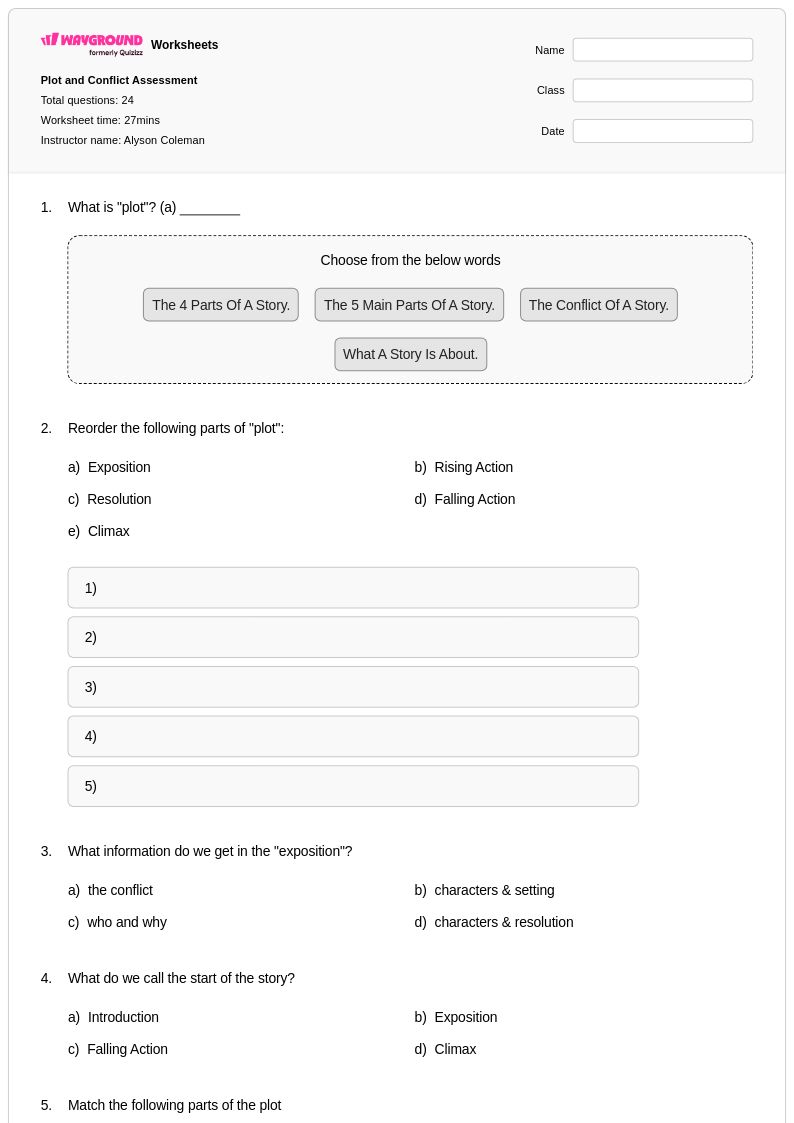
Character types worksheets for Class 7 students available through Wayground (formerly Quizizz) provide comprehensive practice in identifying and analyzing the diverse range of characters that populate literary works. These expertly crafted resources strengthen students' ability to distinguish between protagonists, antagonists, static characters, dynamic characters, round characters, and flat characters while developing critical thinking skills essential for deeper textual analysis. Each worksheet collection includes detailed answer keys and is available as free printable PDFs, offering structured practice problems that guide seventh-grade students through character analysis exercises ranging from basic identification tasks to complex comparative studies of character development and motivation across different literary genres.
Wayground's extensive library of millions of teacher-created character types resources empowers educators with sophisticated search and filtering capabilities that align with grade-level standards and diverse classroom needs. Teachers can seamlessly customize these materials for differentiated instruction, selecting from printable PDF formats for traditional classroom use or digital versions for interactive learning environments. The platform's robust organizational tools support comprehensive lesson planning by enabling educators to quickly locate resources for remediation with struggling readers, enrichment activities for advanced students, and targeted skill practice that reinforces character analysis concepts. This flexibility allows teachers to address varying proficiency levels while maintaining rigorous academic expectations for Class 7 reading comprehension development.
FAQs
How do I teach character types in a literature class?
Start by introducing the core distinctions: protagonists drive the story forward, antagonists create conflict, dynamic characters undergo meaningful change, and static characters remain essentially the same throughout. Round characters feel fully developed with complex motivations, while flat characters serve a single, defined purpose. Anchor each type to a familiar text students have already read so the categories feel concrete rather than abstract, then gradually apply the same framework to new, unfamiliar works.
What exercises help students practice identifying character types?
The most effective practice tasks ask students to justify their classifications rather than simply label characters. Give students a short passage and ask them to identify a character type, then cite specific textual evidence explaining why that label applies. Comparing two characters from the same text and arguing which is more dynamic or more round deepens analytical thinking and mirrors the kind of reasoning expected in literary essays.
What mistakes do students commonly make when analyzing character types?
The most frequent error is conflating dynamic with protagonist and static with antagonist, assuming the hero always changes and the villain never does. Students also struggle to distinguish round from dynamic: a round character is complex and multidimensional, but that complexity does not require visible change across the plot. Addressing these distinctions explicitly and providing counterexamples, such as a static protagonist or a round antagonist, helps students develop more precise analytical habits.
How can I differentiate character types instruction for struggling readers?
For students who find character analysis overwhelming, reduce the number of character types introduced at one time and anchor each type to a single, memorable example before adding complexity. On Wayground, teachers can enable reduced answer choices for selected students to lower cognitive load during digital practice, as well as the Read Aloud feature so passage text and questions are accessible to students who struggle with independent reading. These accommodations can be assigned to individual students without notifying the rest of the class.
How do I use Wayground's character types worksheets in my classroom?
Wayground's character types worksheets are available as printable PDFs for traditional classroom use and in digital formats for technology-integrated environments, giving teachers flexibility regardless of their classroom setup. Teachers can also host worksheets directly as a quiz on Wayground for real-time data and immediate student feedback. Each worksheet includes a complete answer key, making it straightforward to assess student work efficiently and return targeted feedback.