Free Printable Chemical Elements Worksheets for Kindergarten
Explore free kindergarten chemical elements worksheets and printables that introduce young learners to basic science concepts through engaging activities, practice problems, and comprehensive answer keys available as downloadable PDFs.
Explore printable Chemical Elements worksheets for Kindergarten
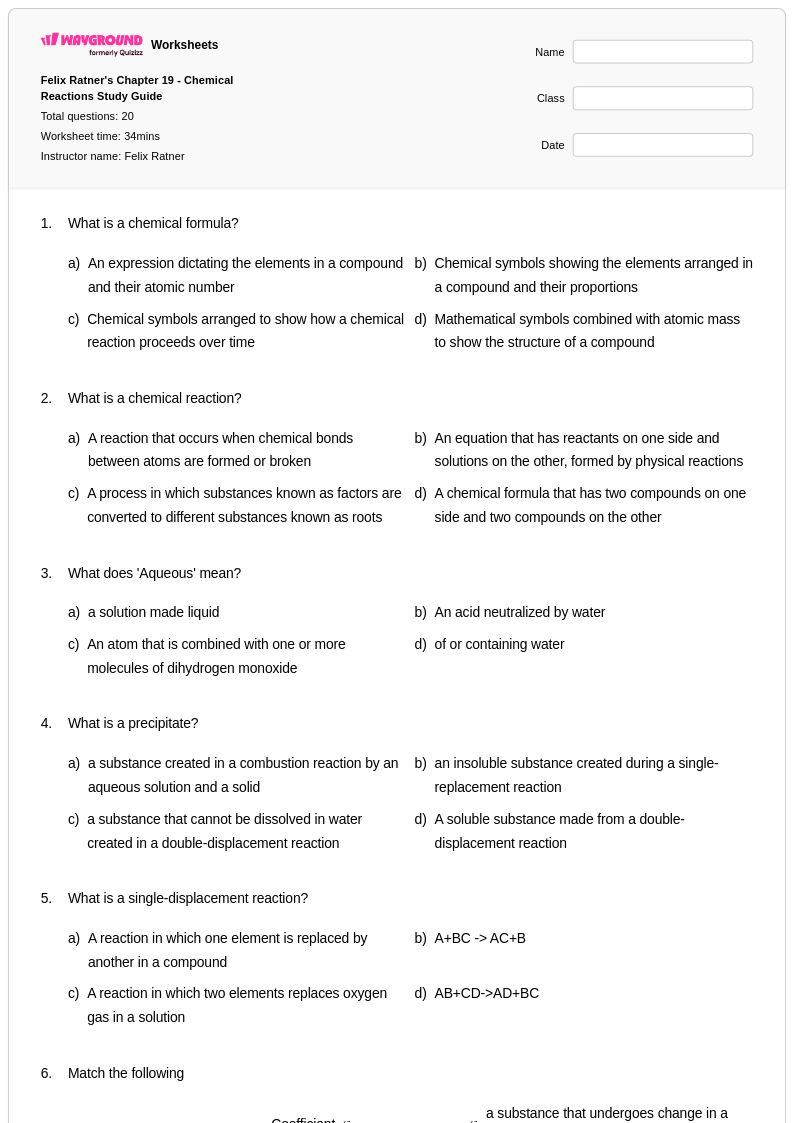
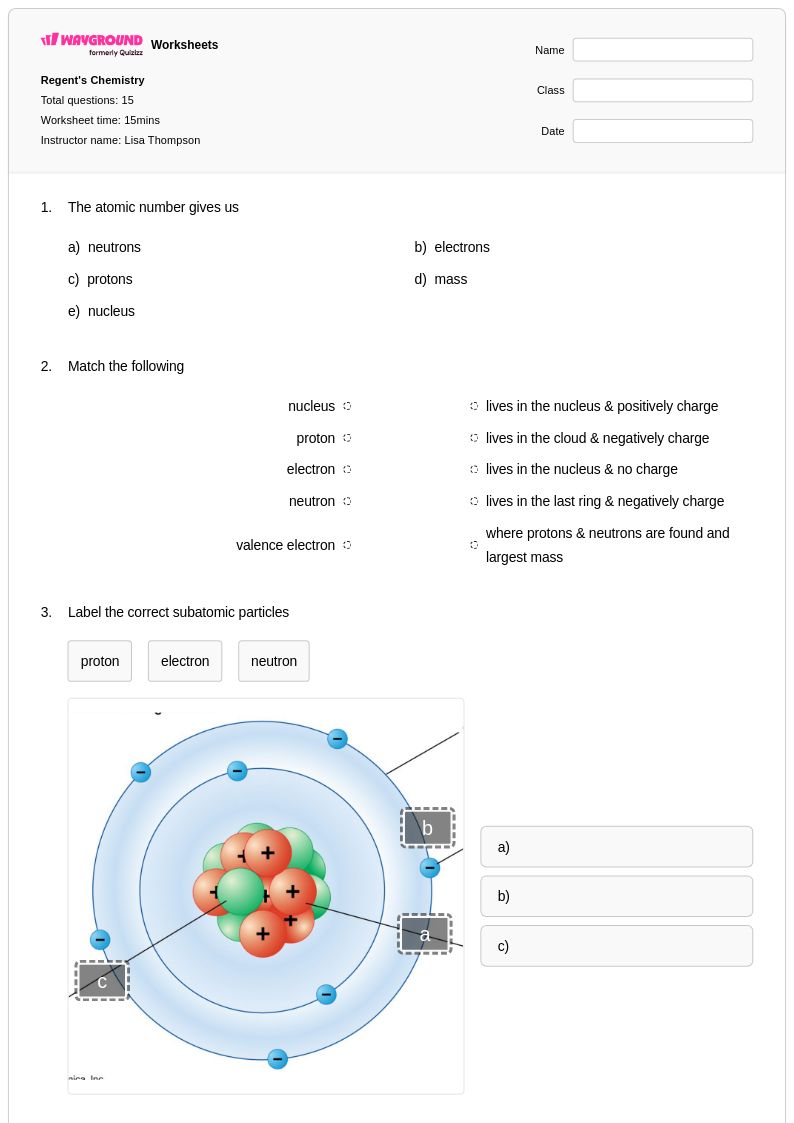
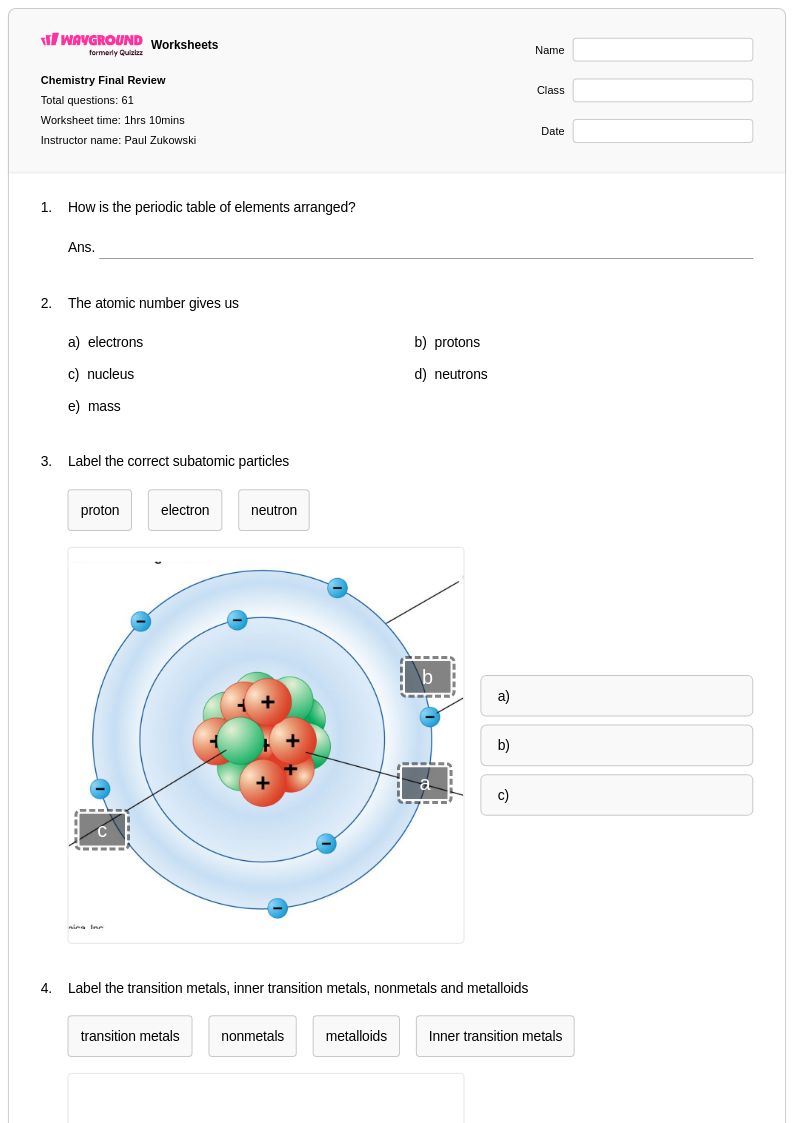
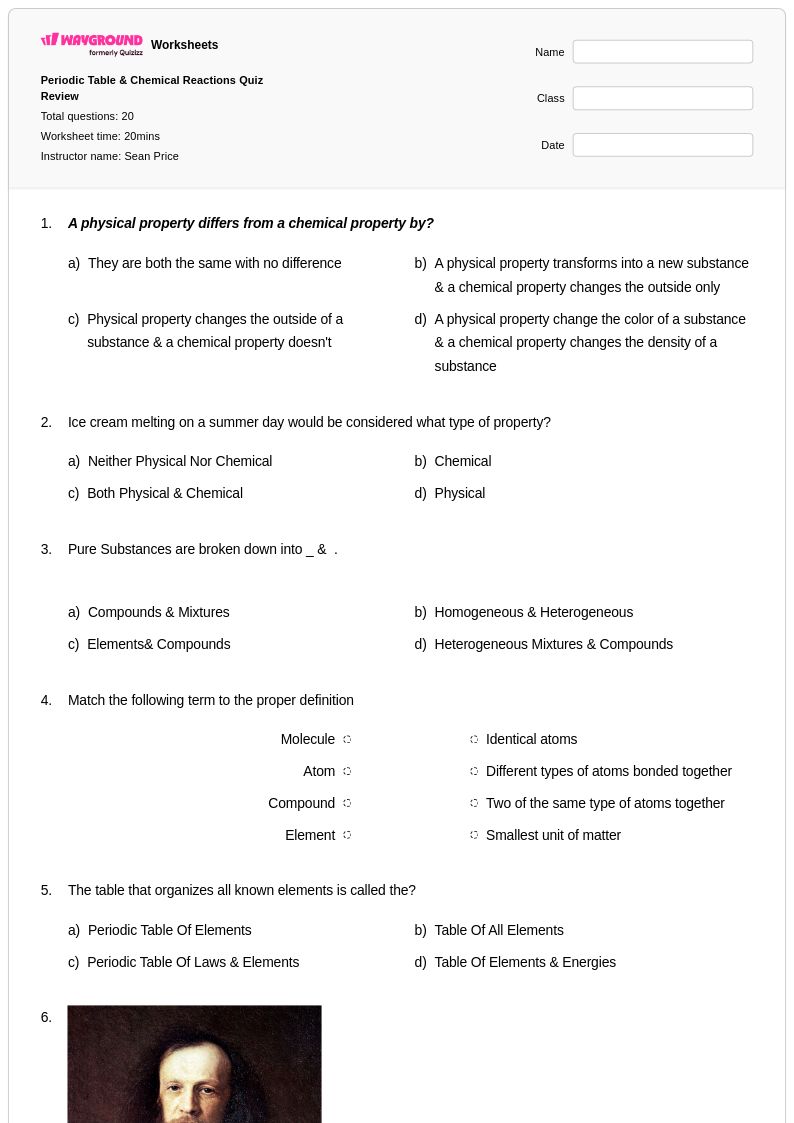
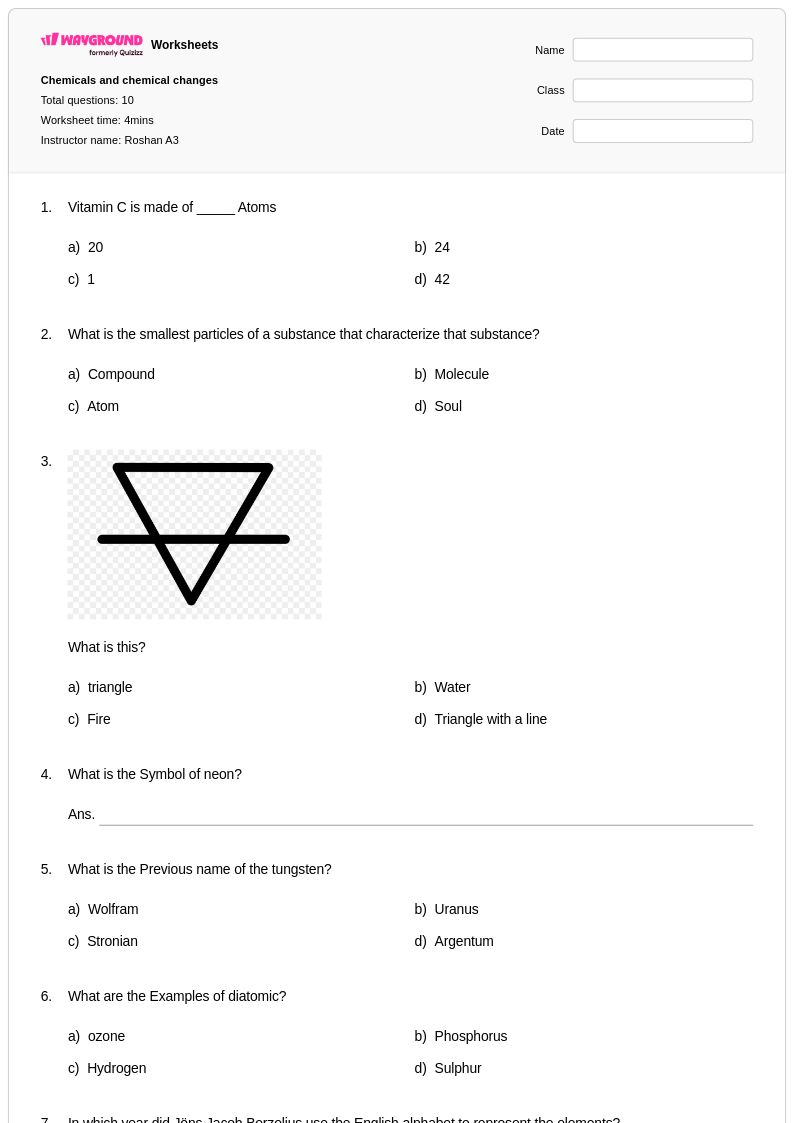
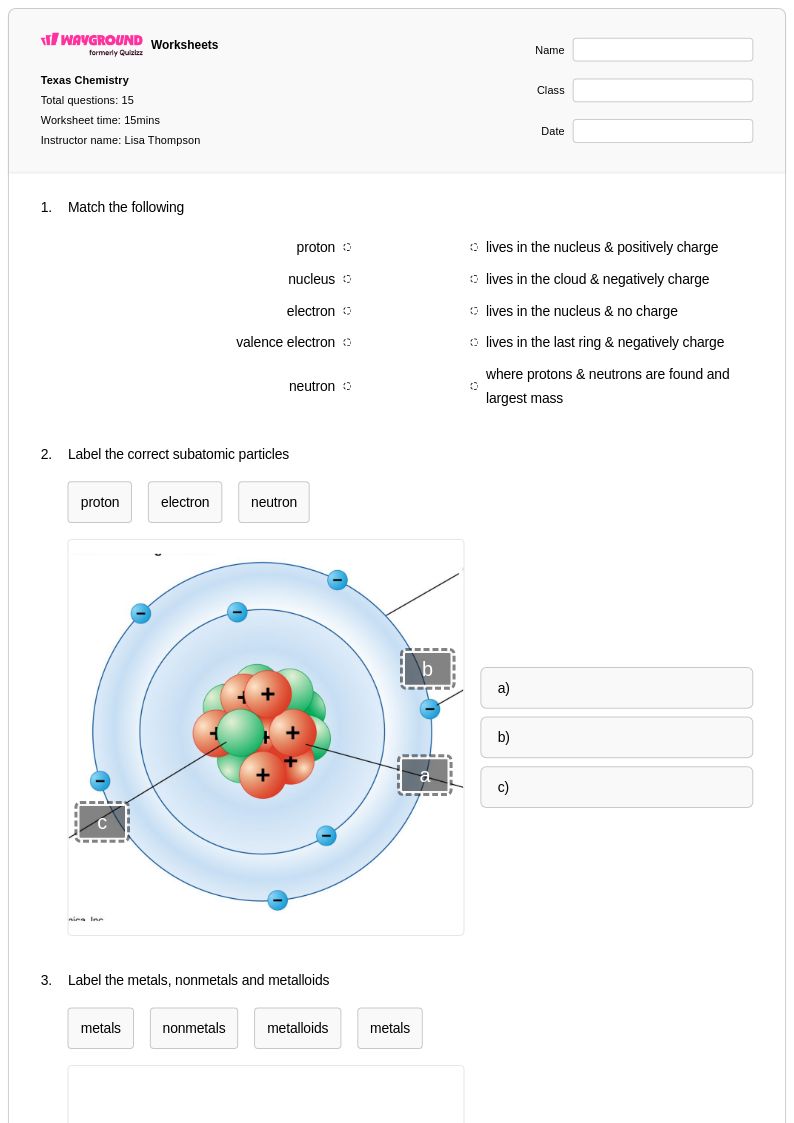
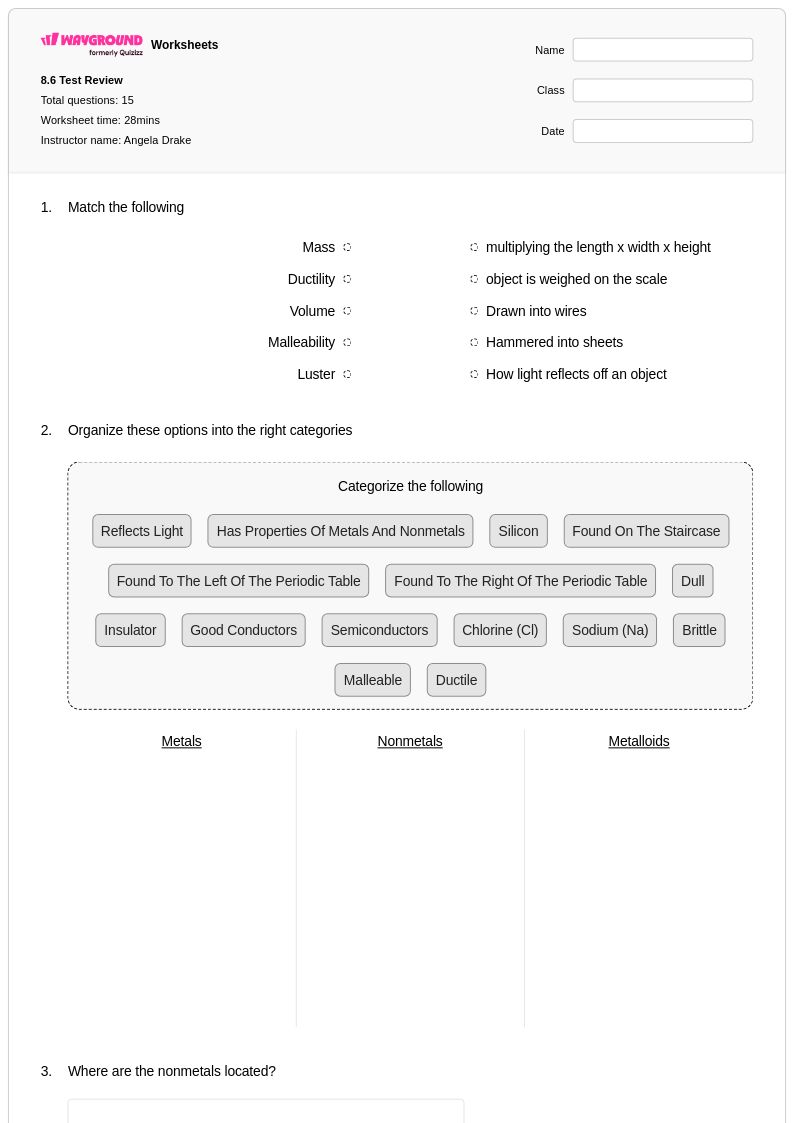
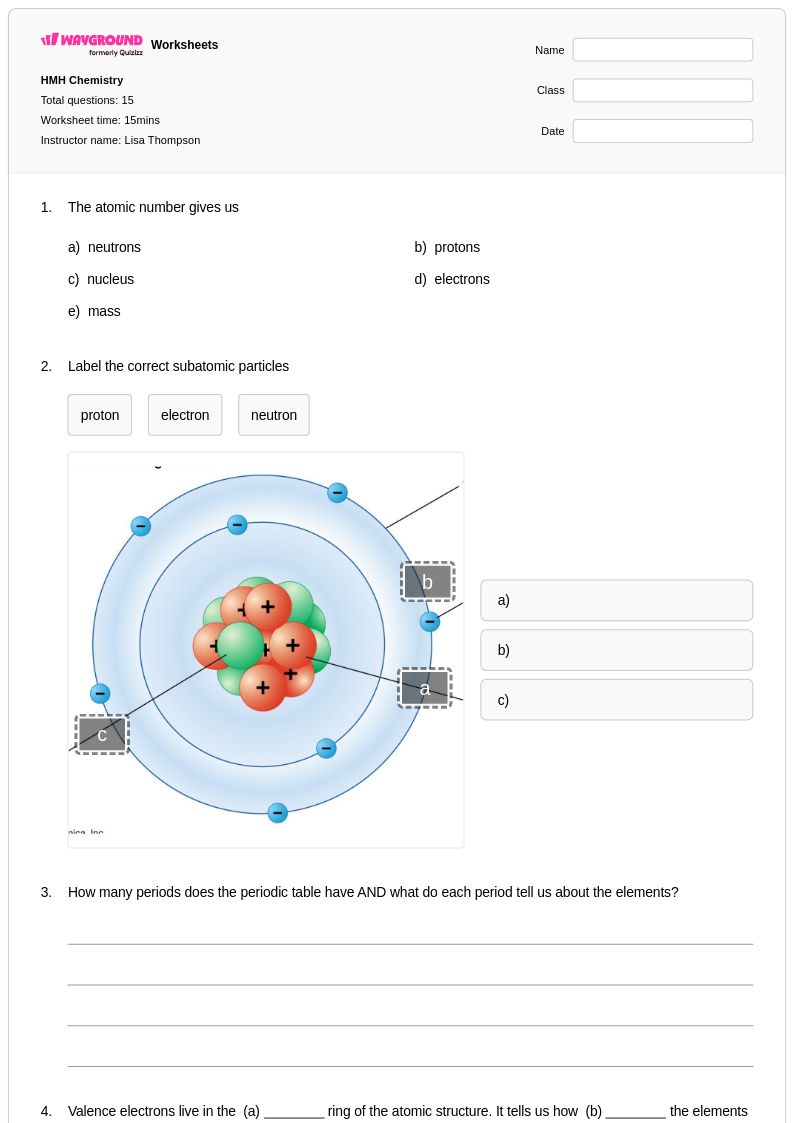
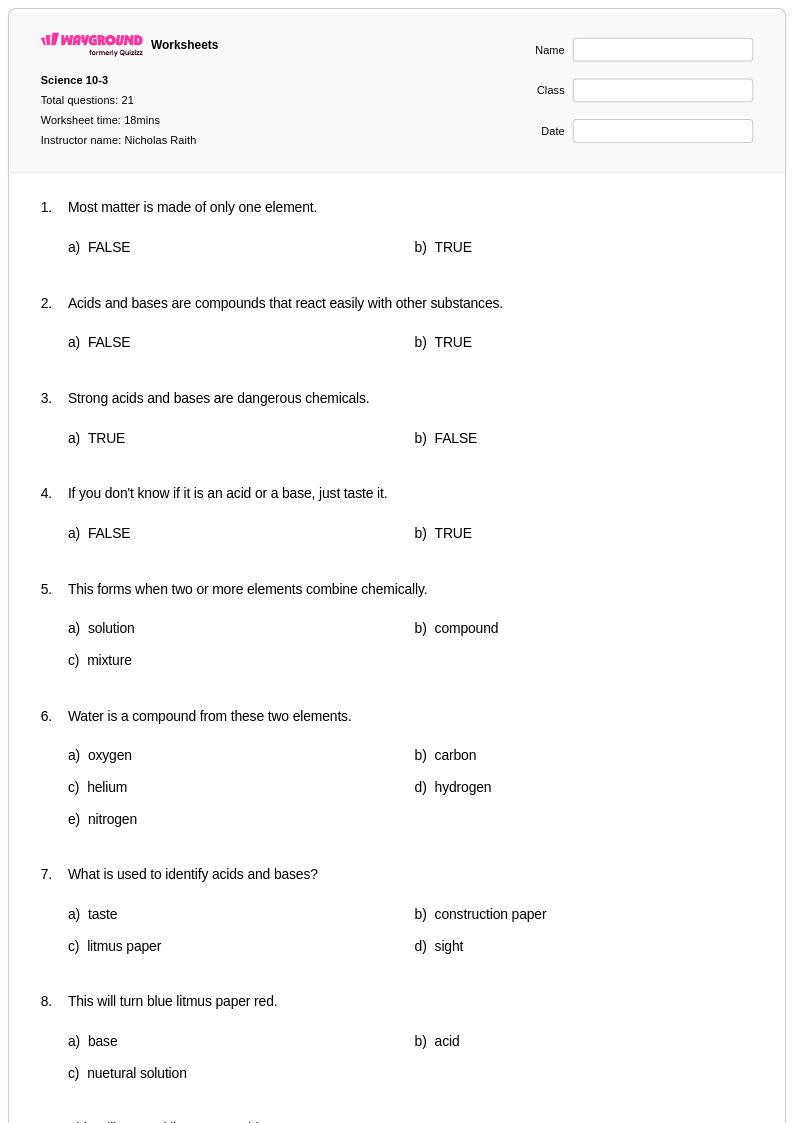
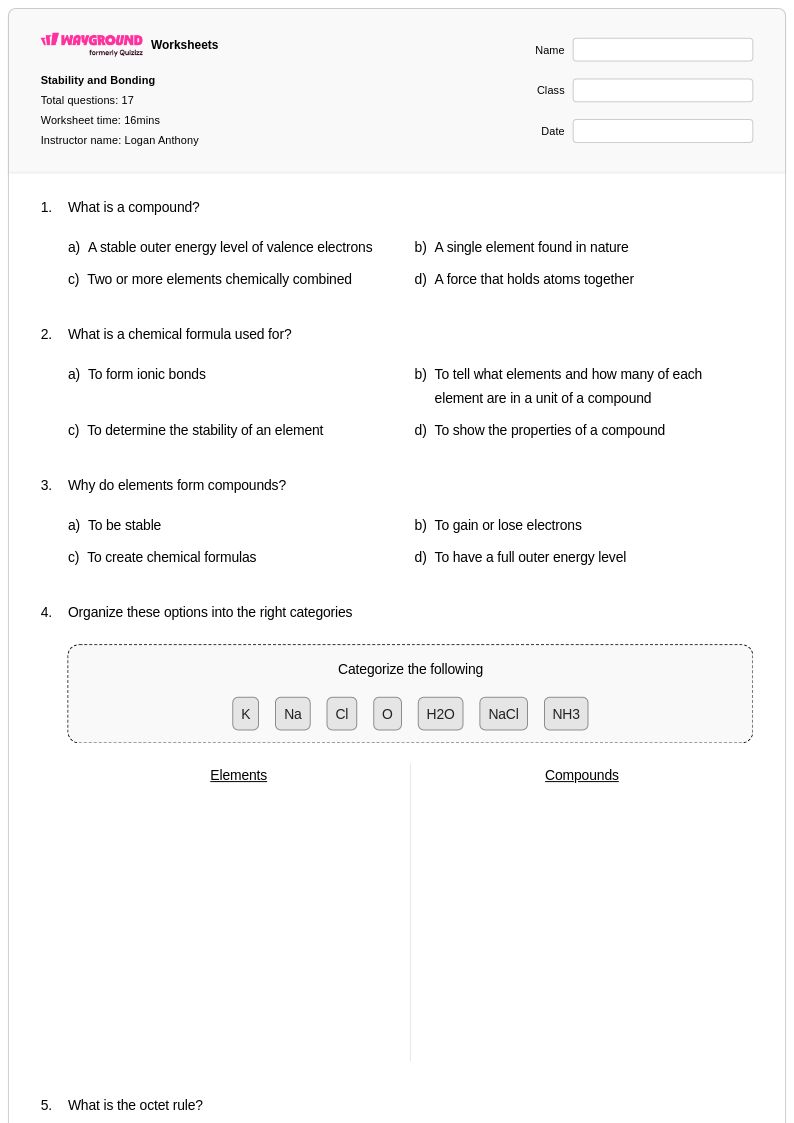
Chemical elements worksheets for kindergarten students available through Wayground (formerly Quizizz) introduce young learners to the fundamental building blocks of matter through age-appropriate activities and visual exercises. These educational resources help kindergarteners develop early scientific observation skills, basic categorization abilities, and foundational vocabulary related to common elements they encounter in their daily lives. The worksheets feature engaging practice problems that encourage students to identify familiar elements like oxygen in the air they breathe and iron in everyday objects, while building essential pre-literacy and critical thinking skills. Teachers can access comprehensive answer keys and free printables that support structured learning experiences, ensuring that complex scientific concepts are presented in developmentally appropriate ways that capture young children's natural curiosity about the world around them.
Wayground (formerly Quizizz) empowers educators with an extensive collection of millions of teacher-created chemical elements resources specifically designed for kindergarten learners, offering robust search and filtering capabilities that allow instructors to quickly locate materials aligned with early childhood science standards. The platform's differentiation tools enable teachers to customize worksheets based on individual student needs, whether for remediation support or enrichment opportunities, while maintaining the engaging visual and hands-on approaches that work best for this age group. Available in both printable and digital formats including convenient pdf downloads, these versatile resources streamline lesson planning by providing educators with ready-to-use materials that can be seamlessly integrated into science centers, whole-group instruction, or independent practice sessions that build kindergarteners' foundational understanding of the scientific world.
FAQs
How do I teach chemical elements and the periodic table effectively?
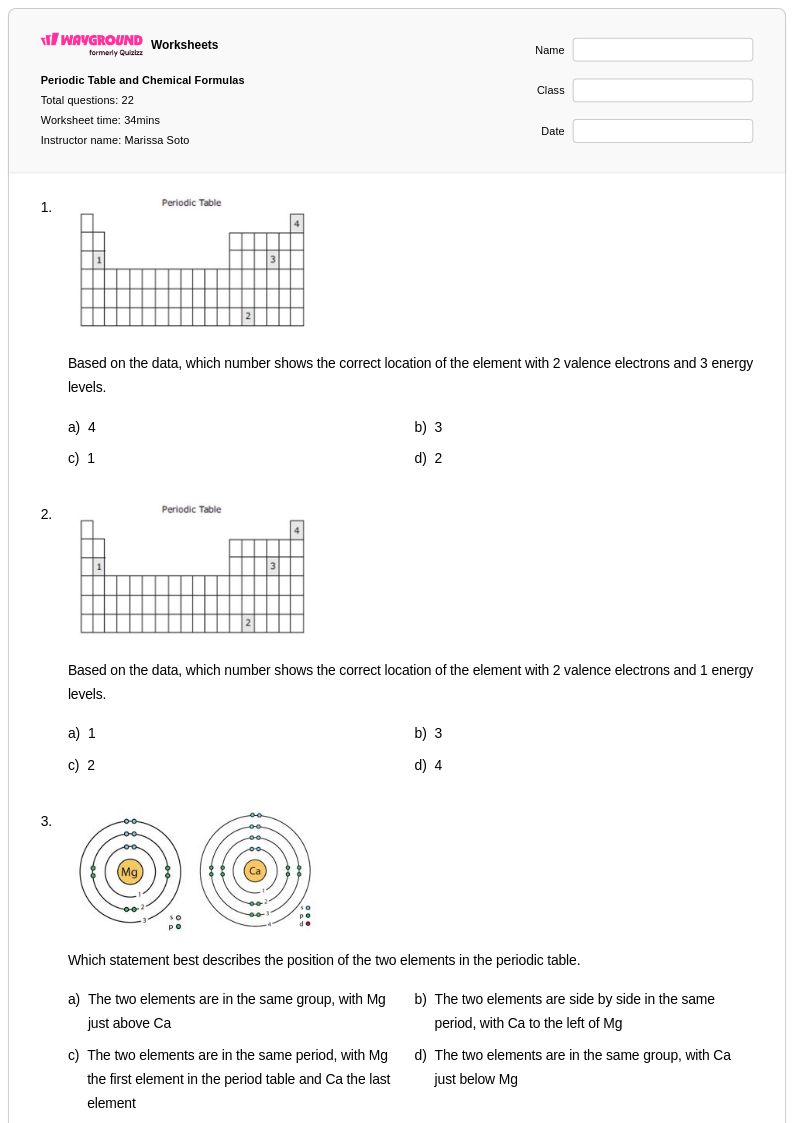
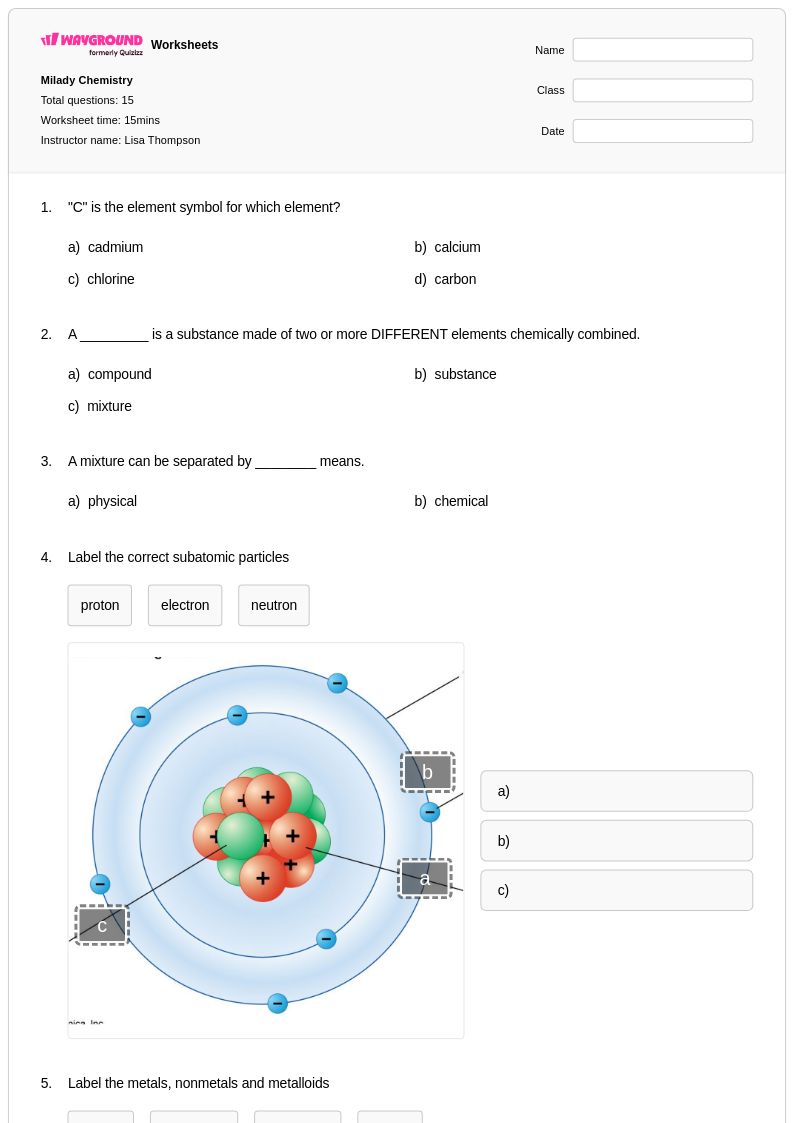
Effective chemical elements instruction builds from atomic structure outward, starting with atomic number, mass number, and electron configuration before moving into periodic trends like electronegativity, ionization energy, and atomic radius. Teachers should explicitly connect an element's position on the periodic table to its predicted chemical behavior, helping students see the table as a tool for reasoning rather than a list to memorize. Using practice problems that ask students to identify elements by their properties reinforces this analytical thinking and prepares them for more complex chemical relationship analysis.
What exercises help students practice identifying elements and their properties?
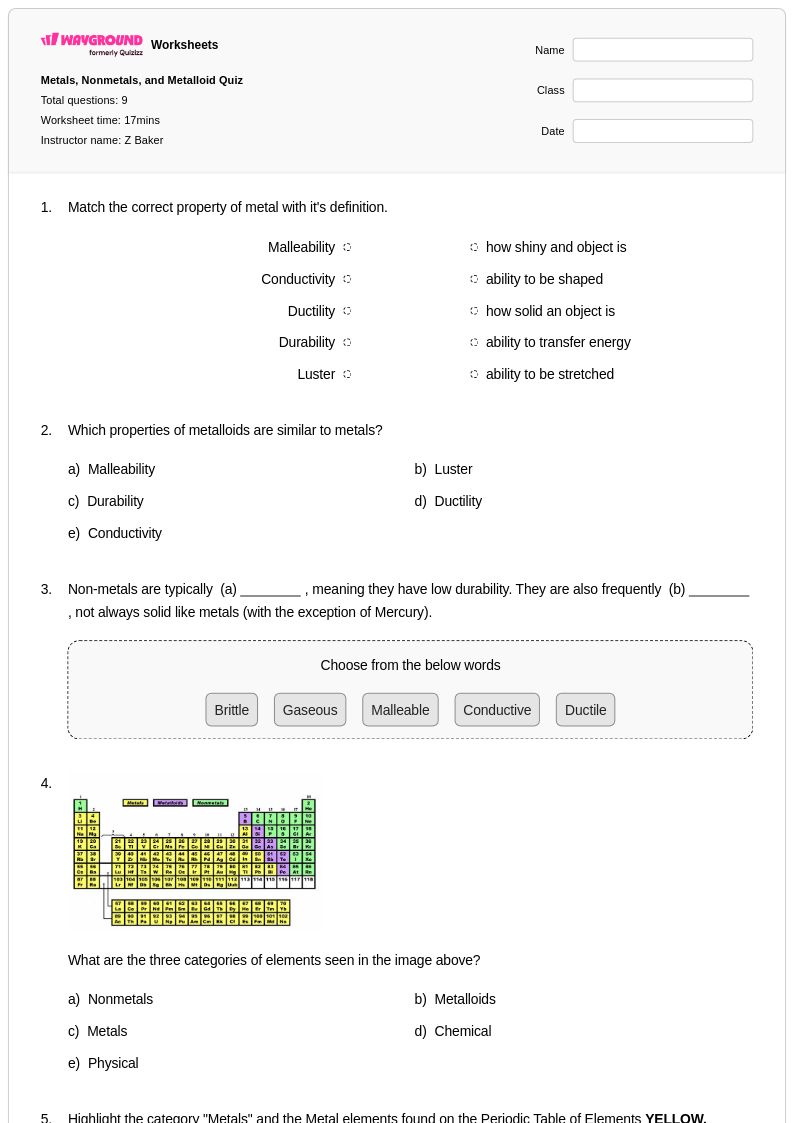
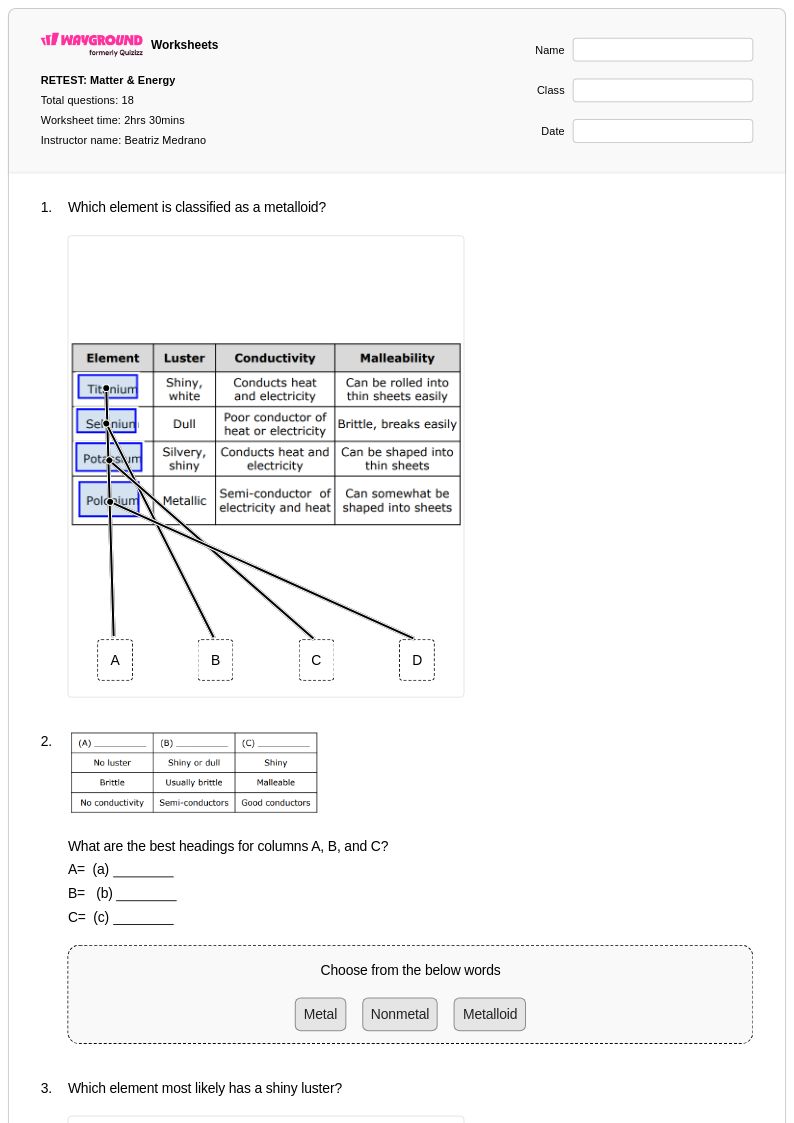
Practice exercises that require students to identify elements from clues such as atomic number, group, period, or electron configuration are highly effective for reinforcing periodic table fluency. Problems that ask students to predict reactivity or classify elements as metals, nonmetals, or metalloids based on periodic position build the critical thinking skills needed for chemistry coursework. Worksheets that mix identification, classification, and trend-analysis tasks give students varied practice across the full scope of chemical elements concepts.
What common mistakes do students make when learning about chemical elements?
One of the most frequent errors is confusing atomic number with mass number, leading to incorrect identification of elements and miscalculation of neutron counts. Students also commonly misread periodic trends, for example assuming that atomic radius always increases left to right across a period, rather than understanding the role of increasing nuclear charge. Another persistent misconception is treating electron configuration as a memorization task rather than a pattern governed by energy levels, which causes errors when predicting the configurations of unfamiliar elements.
How can I differentiate chemical elements worksheets for students at different skill levels?
For struggling learners, scaffolded worksheets that focus on basic element identification before introducing periodic trends allow students to build confidence incrementally. Advanced students benefit from open-ended problems that ask them to explain why elements in the same group share chemical properties or to compare reactivity across periods. On Wayground, teachers can apply accommodations such as reduced answer choices or read-aloud support to individual students, ensuring that differentiation is built into the digital experience without requiring separate materials for each learner.
How do I use Wayground's chemical elements worksheets in my classroom?
Wayground's chemical elements worksheets are available as printable PDFs for traditional classroom use and in digital formats for technology-integrated environments, giving teachers flexibility depending on their setup. Teachers can also host worksheets as a quiz directly on Wayground, making it easy to assign practice digitally and review student responses in one place. Each worksheet includes a complete answer key, which reduces grading time and allows teachers to focus on targeted follow-up instruction based on where students struggled.
How do I align chemical elements worksheets to specific learning standards?
Wayground's search and filtering capabilities allow educators to quickly locate chemical elements materials aligned with specific learning standards and objectives, making it easier to match practice resources to curriculum requirements. When planning a unit, teachers can filter by concept, such as atomic structure or periodic trends, to ensure worksheets address the exact skills outlined in their standards. This targeted approach reduces lesson planning time while maintaining alignment across the full scope of chemical elements instruction.