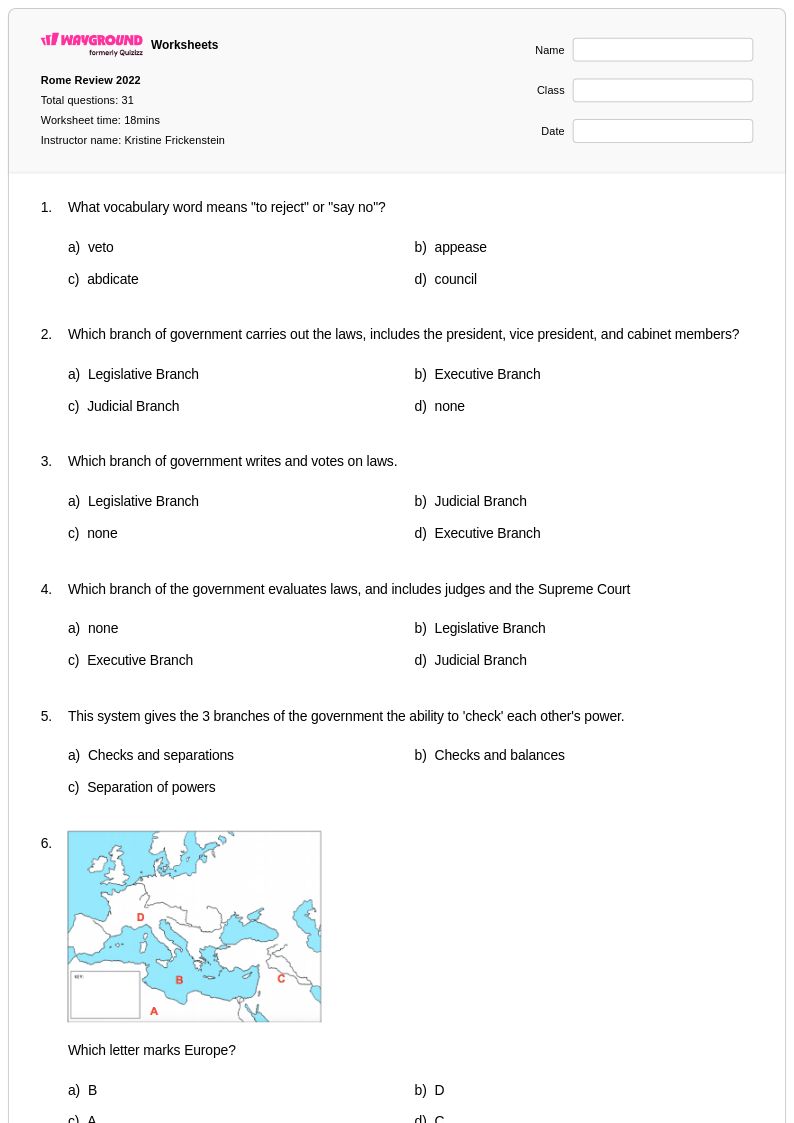
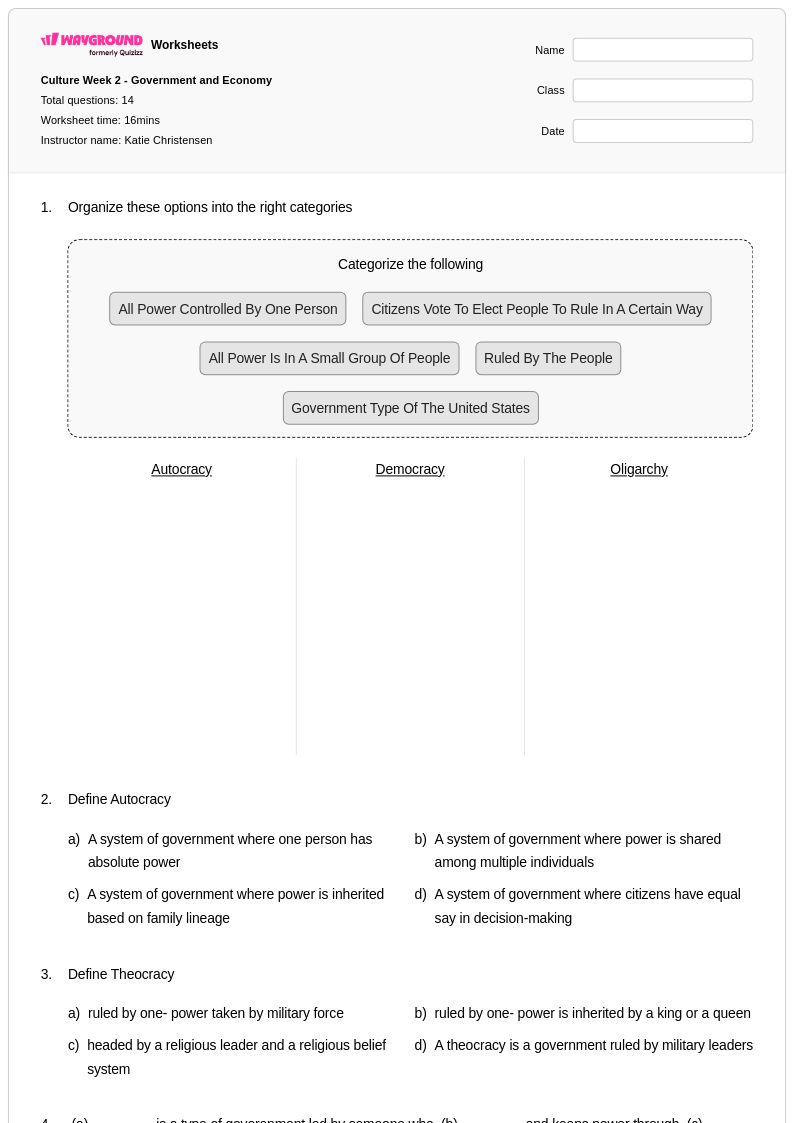
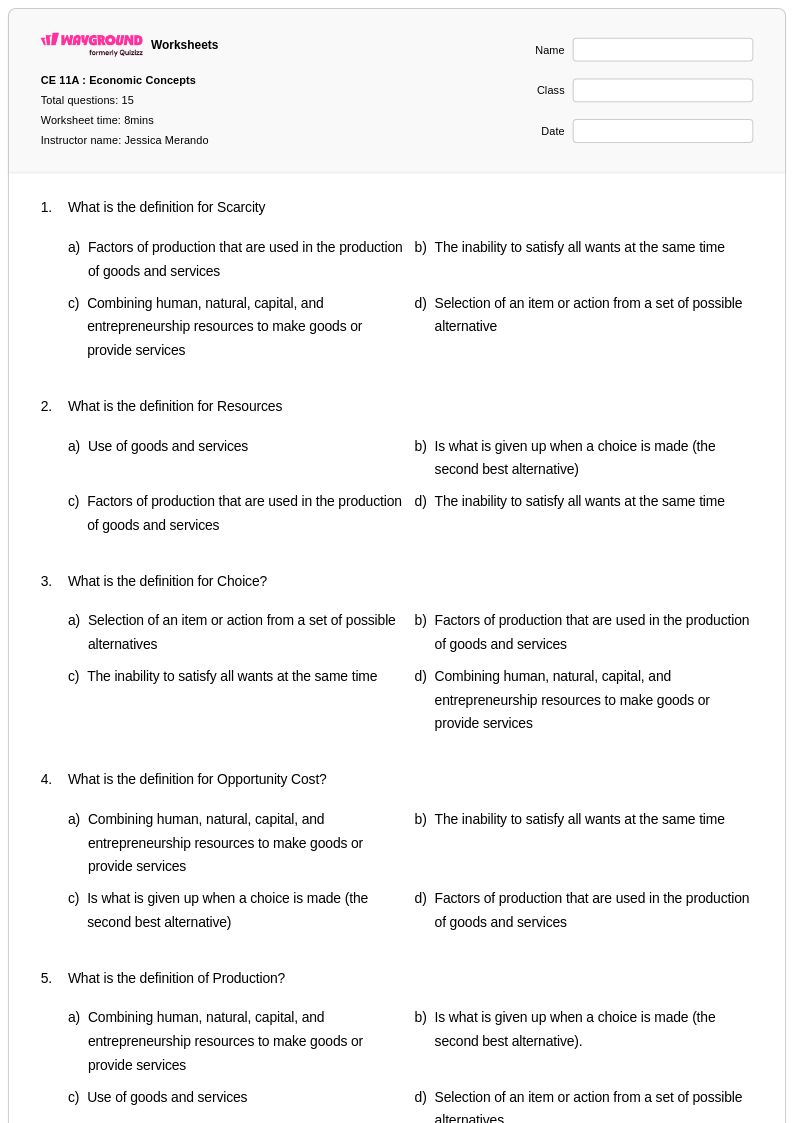
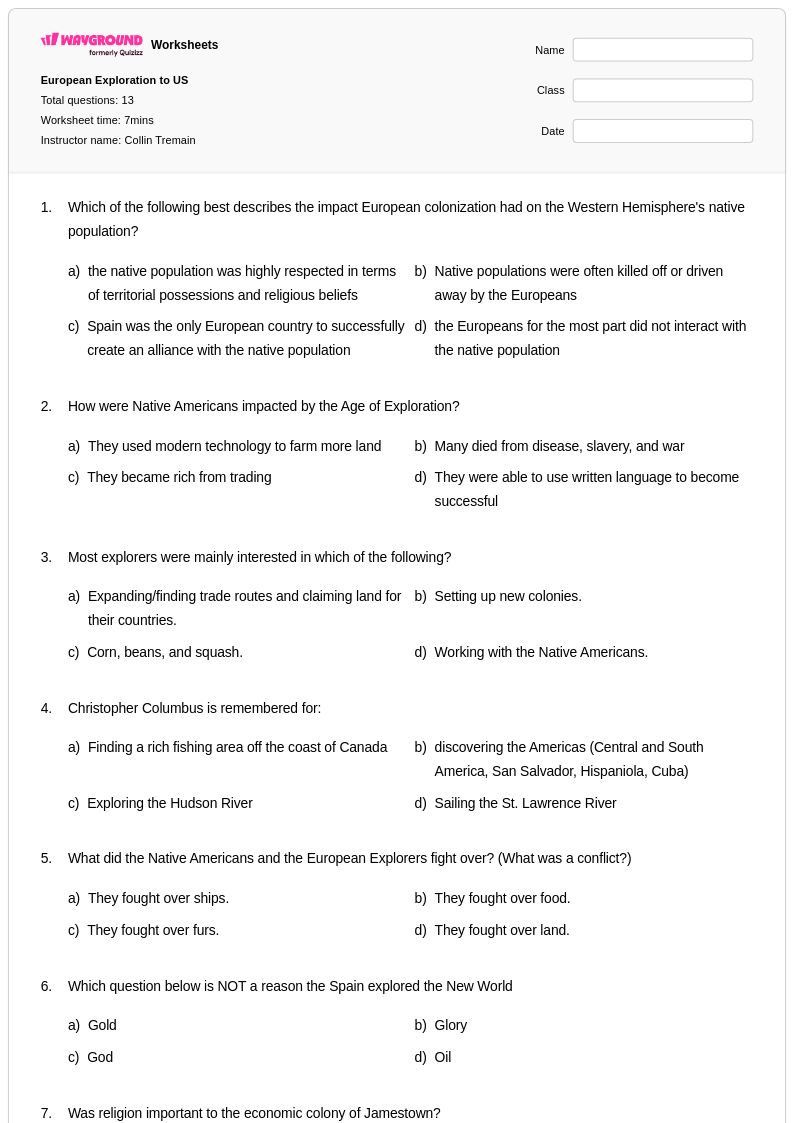
Free Printable Choices and Consequences Worksheets for Class 6
Explore Wayground's free Class 6 choices and consequences worksheets that help students understand decision-making through engaging printables, practice problems, and comprehensive answer keys in PDF format.
Explore printable Choices and Consequences worksheets for Class 6
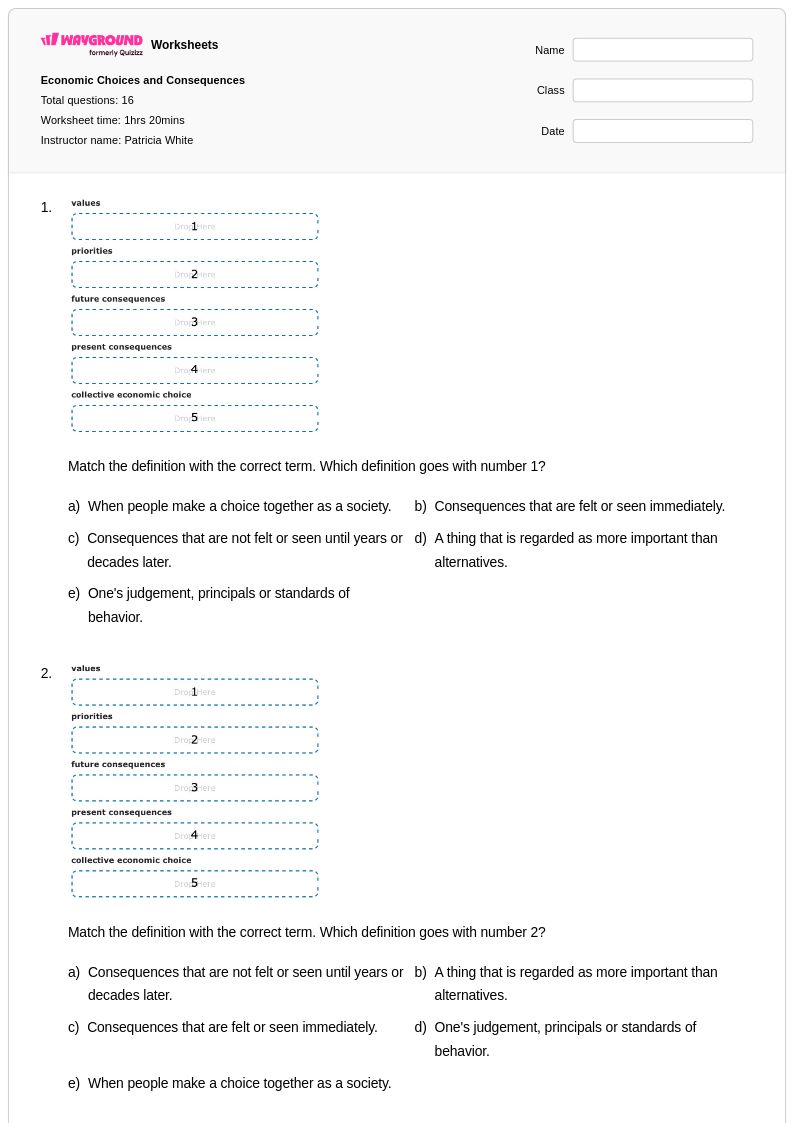
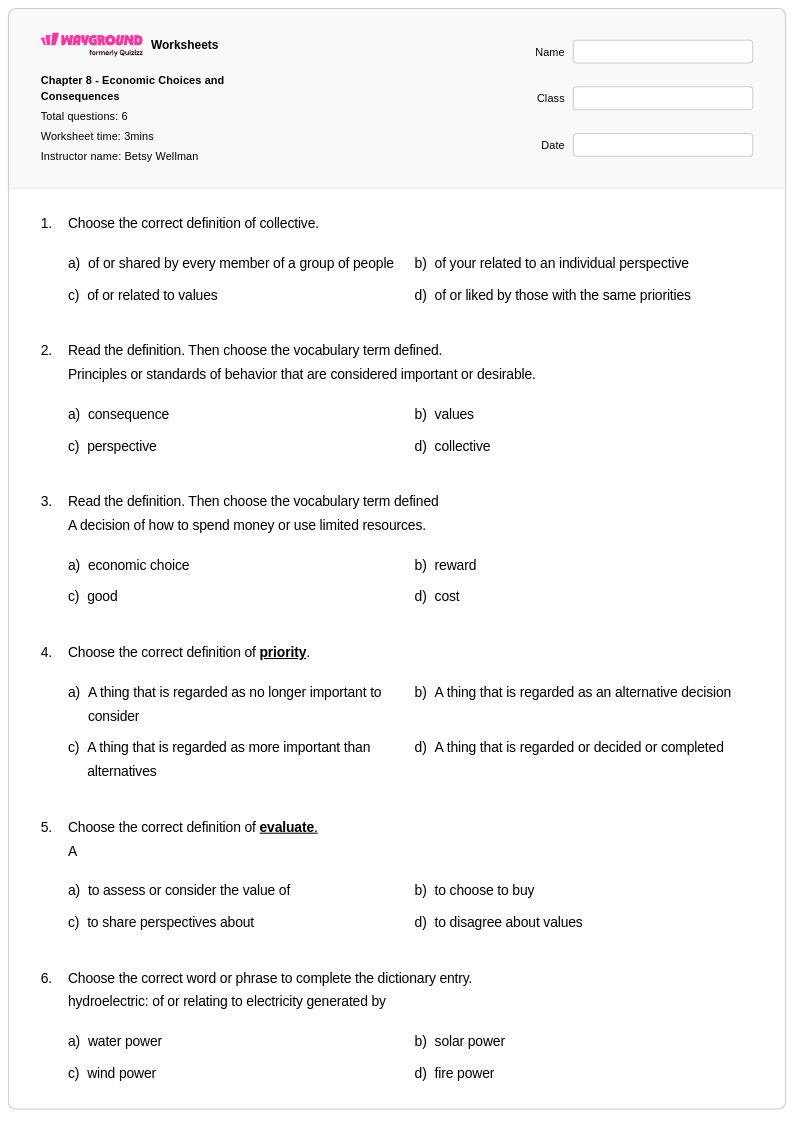
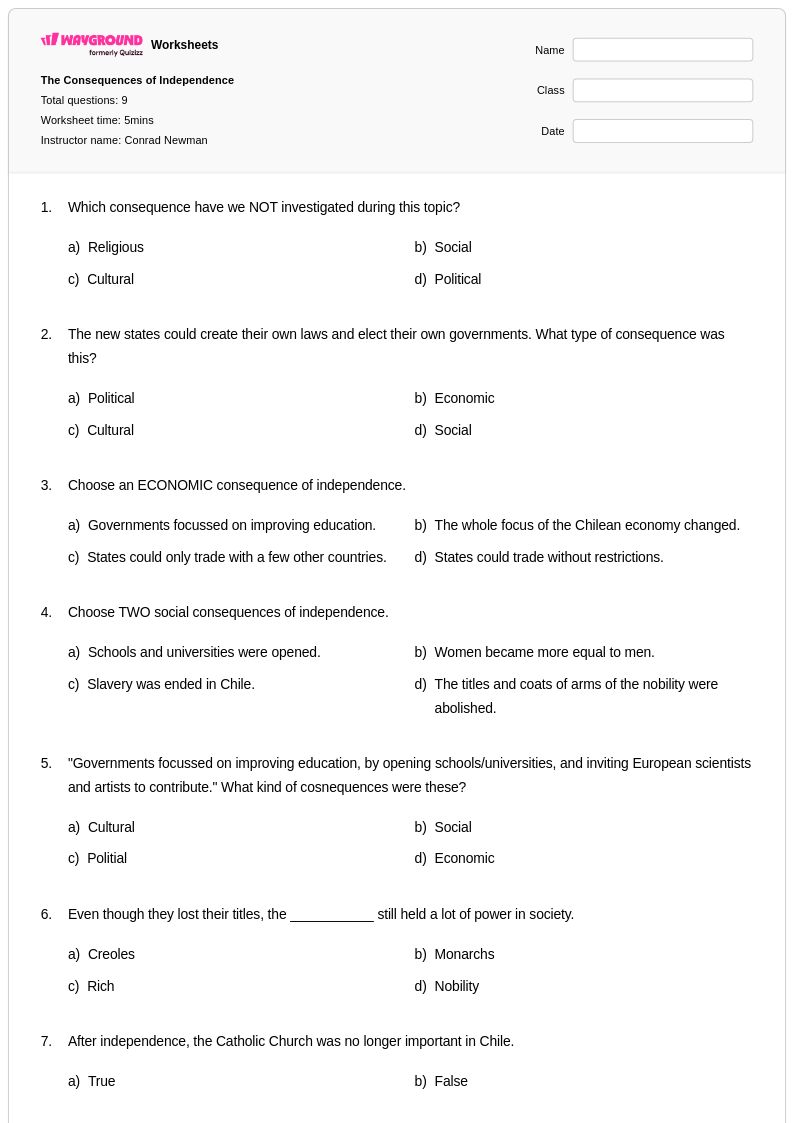
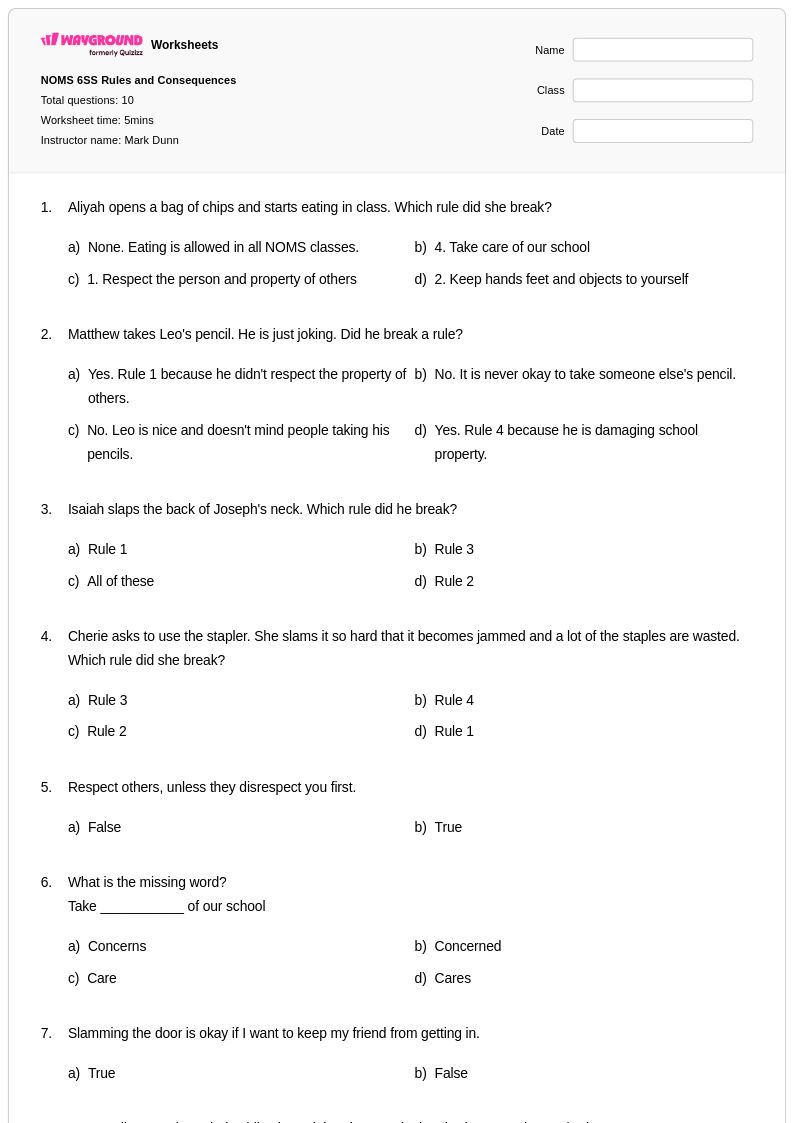
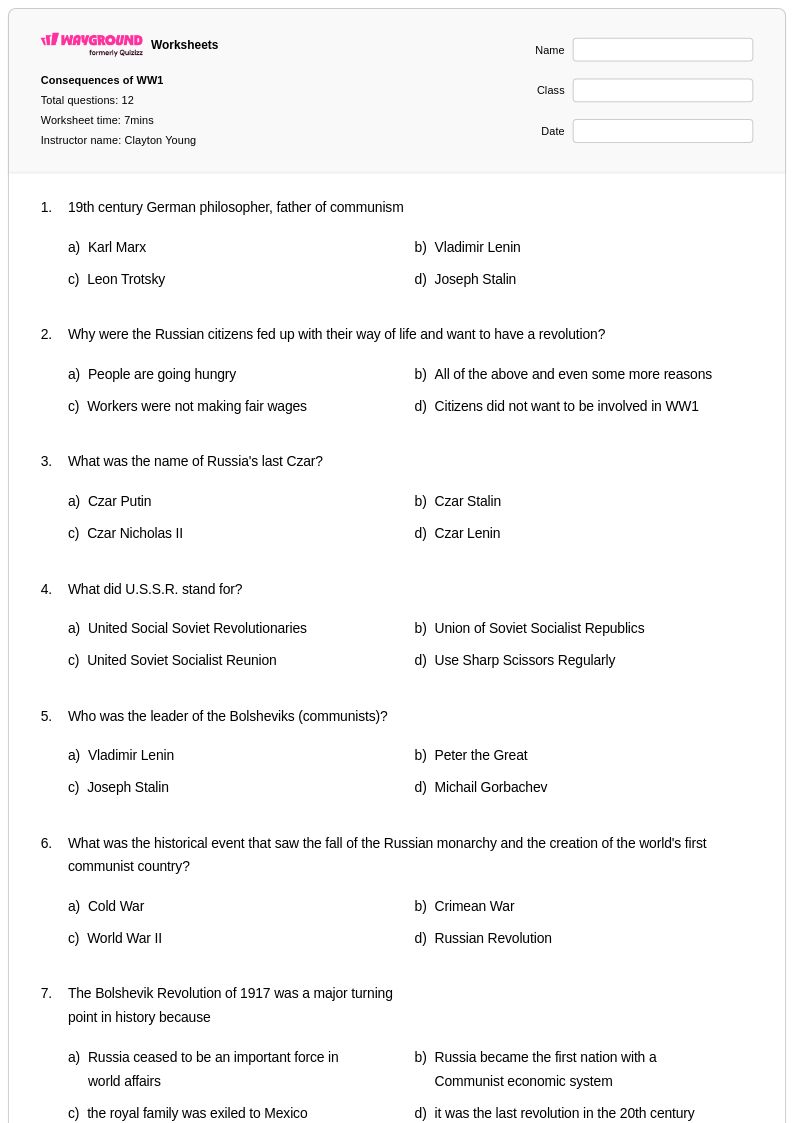
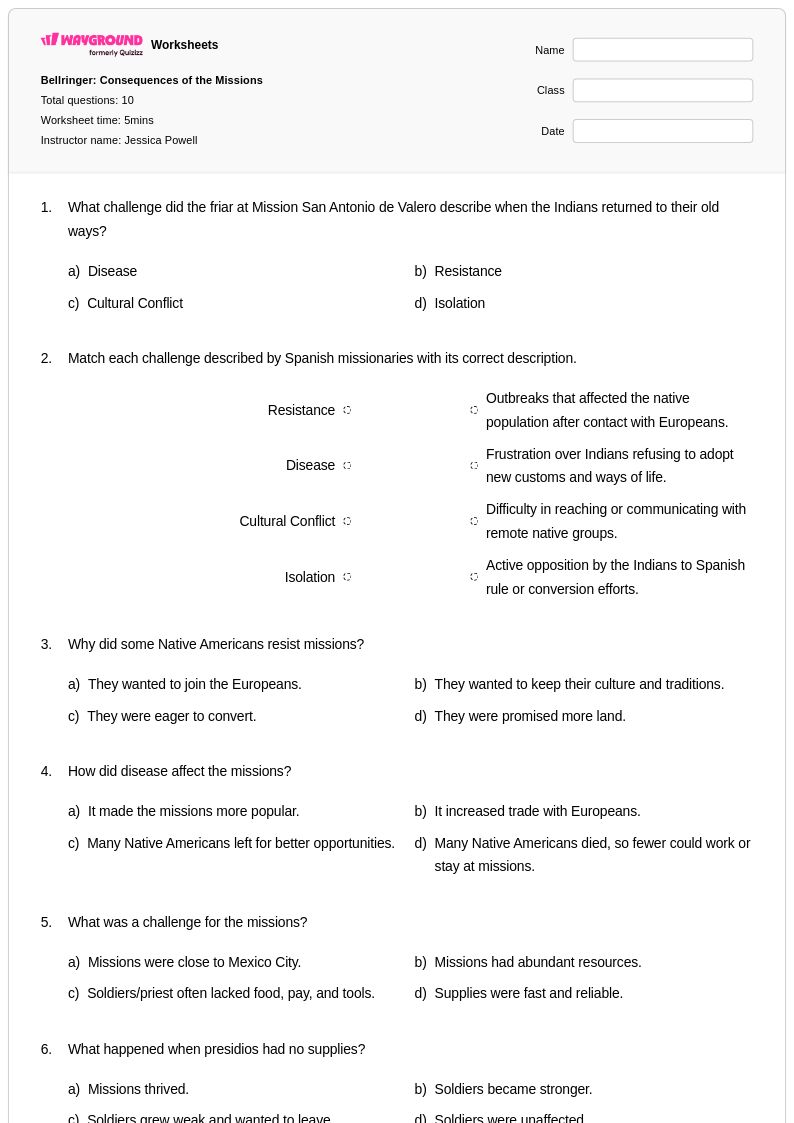
Choices and Consequences worksheets for Class 6 students available through Wayground (formerly Quizizz) provide comprehensive social skills instruction that helps young learners understand the relationship between their decisions and the outcomes that follow. These educational resources strengthen critical thinking abilities, decision-making skills, and personal responsibility through engaging scenarios and reflective exercises that mirror real-world situations sixth graders encounter daily. The worksheets include practice problems featuring peer conflicts, academic challenges, and social dilemmas, allowing students to explore different choices and analyze potential consequences in a safe learning environment. Teachers can access complete materials including detailed answer keys, printable pdf formats, and free resources that support both individual reflection and group discussions about responsible decision-making.
Wayground (formerly Quizizz) empowers educators with millions of teacher-created resources specifically designed for social skills instruction, featuring robust search and filtering capabilities that help locate age-appropriate choices and consequences materials aligned with curriculum standards. The platform's differentiation tools enable teachers to customize worksheets based on individual student needs, whether providing additional scaffolding for struggling learners or offering enrichment opportunities for advanced students. These flexible resources are available in both printable and digital pdf formats, making them ideal for traditional classroom instruction, homework assignments, or remote learning situations. Teachers utilize these comprehensive worksheet collections for lesson planning, targeted remediation of social skills gaps, and ongoing practice that reinforces students' understanding of how personal choices impact themselves and their communities.
FAQs
How do I teach choices and consequences to elementary students?
Start with concrete, relatable scenarios from students' daily lives, such as choosing whether to share materials or how to respond to a conflict on the playground. Use think-aloud modeling to walk through the decision-making process step by step, asking students to predict what might happen next. Introducing a simple cause-and-effect framework, such as 'If I choose ___, then ___ might happen,' helps students internalize the connection between decisions and outcomes before moving to more complex social dilemmas.
What kinds of exercises help students practice decision-making and understanding consequences?
Scenario-based exercises are the most effective, presenting students with realistic situations and asking them to identify possible choices, predict consequences, and evaluate which decision best aligns with positive outcomes for themselves and others. Cause-and-effect graphic organizers, role-play activities, and short-answer reflection prompts all reinforce decision-making frameworks. Practicing across a range of scenarios, from simple daily choices to more complex social dilemmas, builds the analytical confidence students need to apply these skills independently.
What misconceptions do students commonly have about choices and consequences?
A common misconception is that consequences are always immediate and obvious, which leads students to underestimate delayed or indirect outcomes of their decisions. Students also frequently focus only on consequences for themselves, overlooking how their choices affect others in their community or social environment. Another error pattern is assuming that unintended consequences are not their responsibility, so explicit instruction on personal accountability is essential when teaching this topic.
How can I differentiate choices and consequences activities for students at different levels?
For students who need additional support, simplify scenarios to single-step decisions with clearly contrasting outcomes and reduce the number of answer choices they must evaluate. More advanced learners can tackle multi-step dilemmas involving competing values or community-level impacts. On Wayground, teachers can apply individual accommodations such as reduced answer choices and read-aloud support, so students who need scaffolding receive it without disrupting the experience of the rest of the class.
How do I use Wayground's choices and consequences worksheets in my classroom?
Wayground's choices and consequences worksheets are available as printable PDFs for traditional classroom use and in digital formats for technology-integrated environments, including the option to host them as a quiz directly on Wayground. Each worksheet includes a complete answer key, which supports guided discussion and teacher-led debriefs after students complete the activity. The digital format is particularly useful for assigning independent practice or homework, while the printable version works well for small group discussions or whole-class instruction.
How do choices and consequences worksheets connect to social studies standards?
Choices and consequences is a foundational concept in social studies, connecting directly to learning objectives around civic responsibility, personal decision-making, and community impact. Worksheets that present real-world scenarios help students apply abstract standards about responsible citizenship to concrete situations they can understand and discuss. Using standards-aligned materials ensures that classroom time spent on decision-making activities contributes meaningfully to documented learning goals.