Free Printable Conflict Management Worksheets for Class 6
Class 6 conflict management worksheets from Wayground help students develop essential social skills through engaging printables and practice problems, complete with answer keys for effective learning.
Explore printable Conflict Management worksheets for Class 6
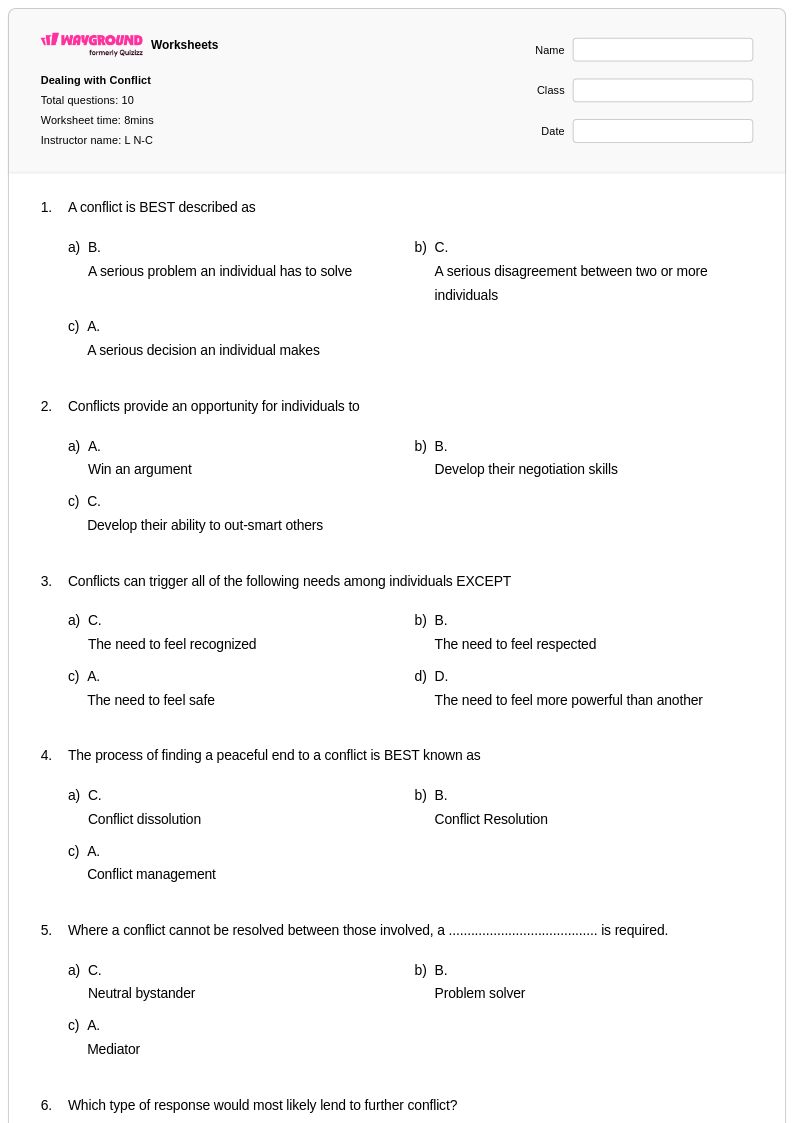
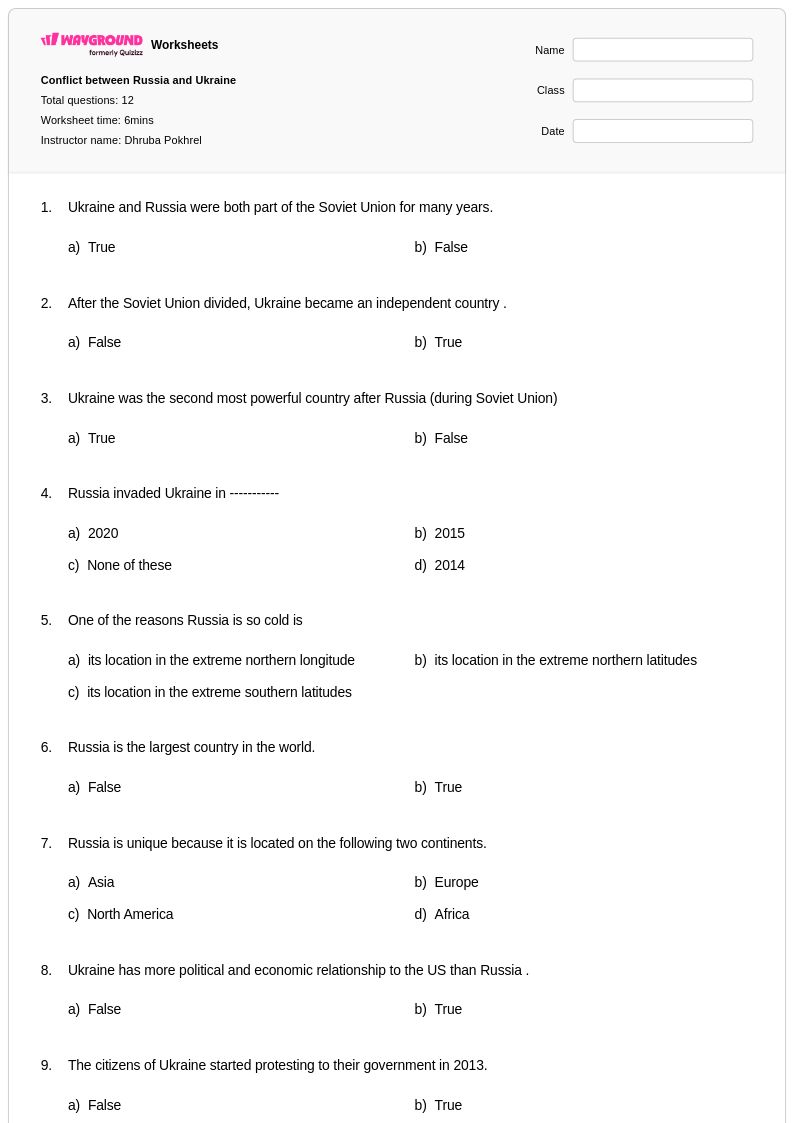
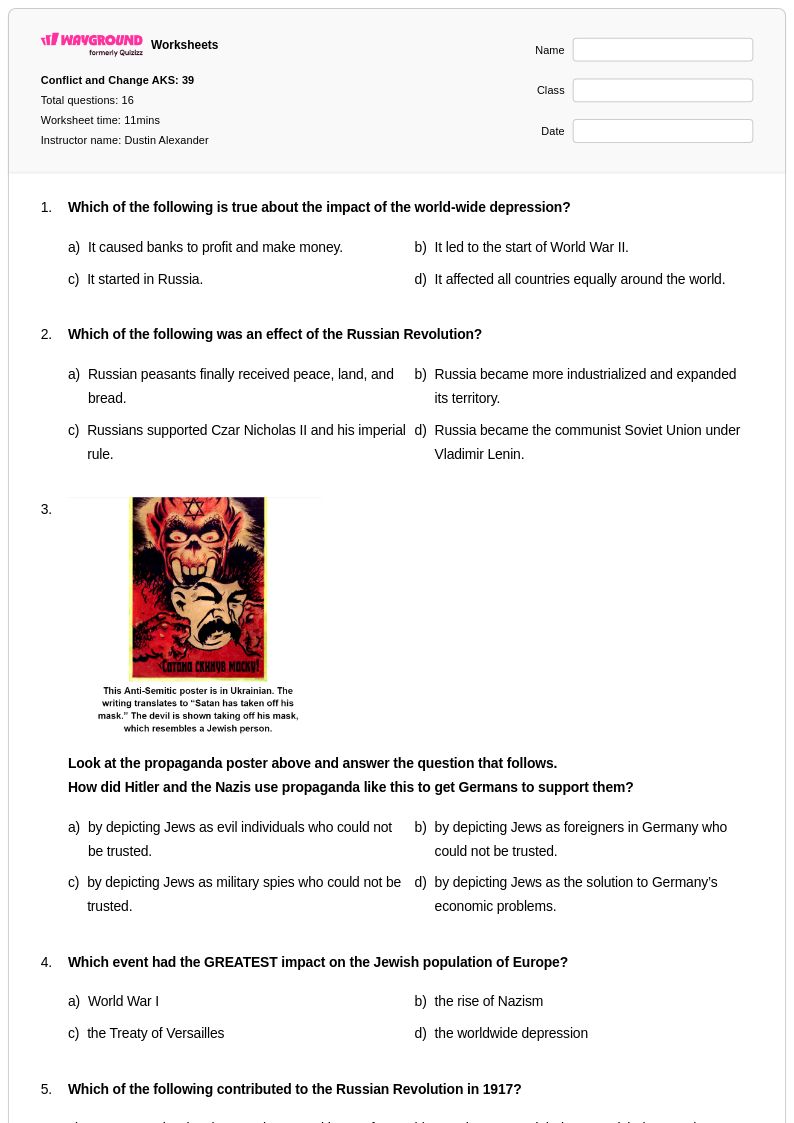
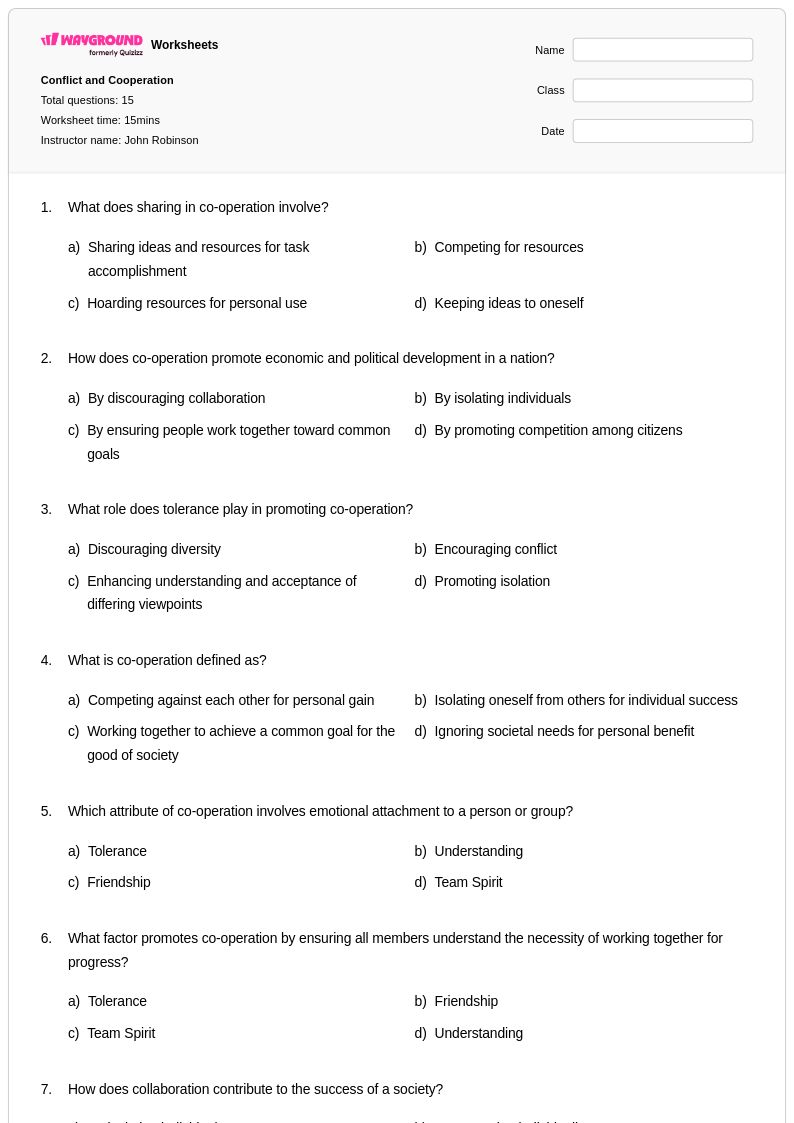
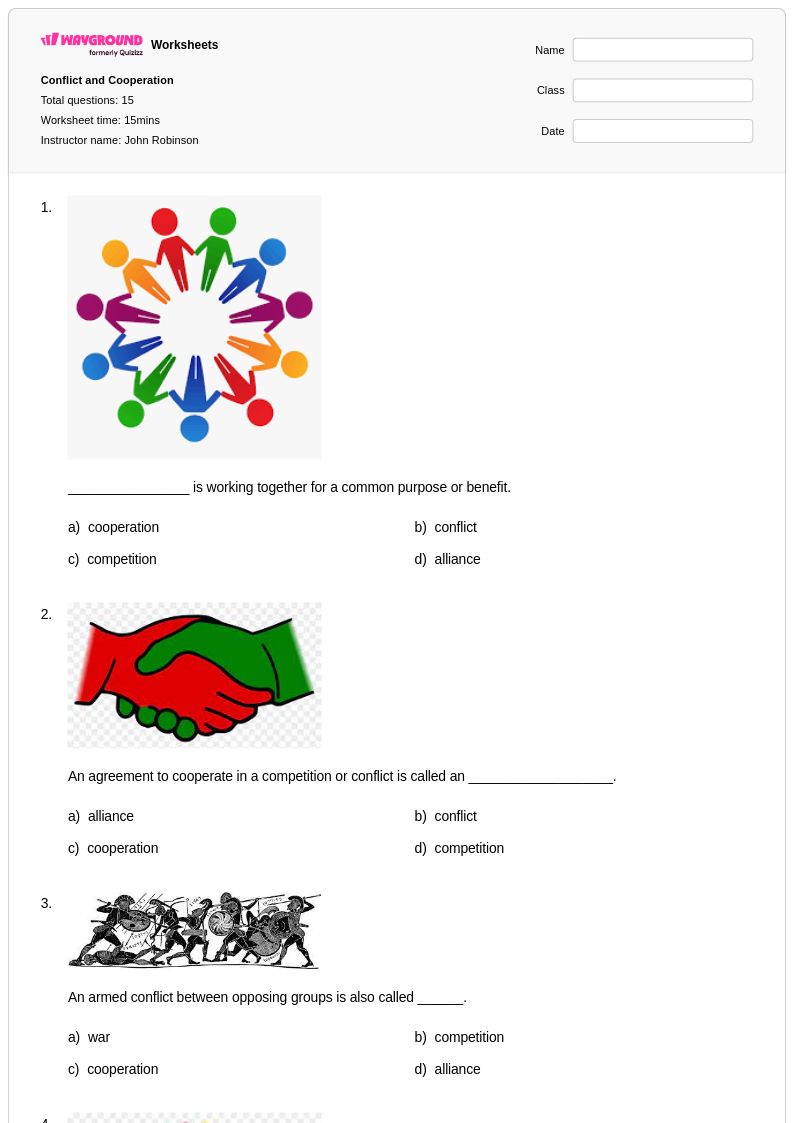
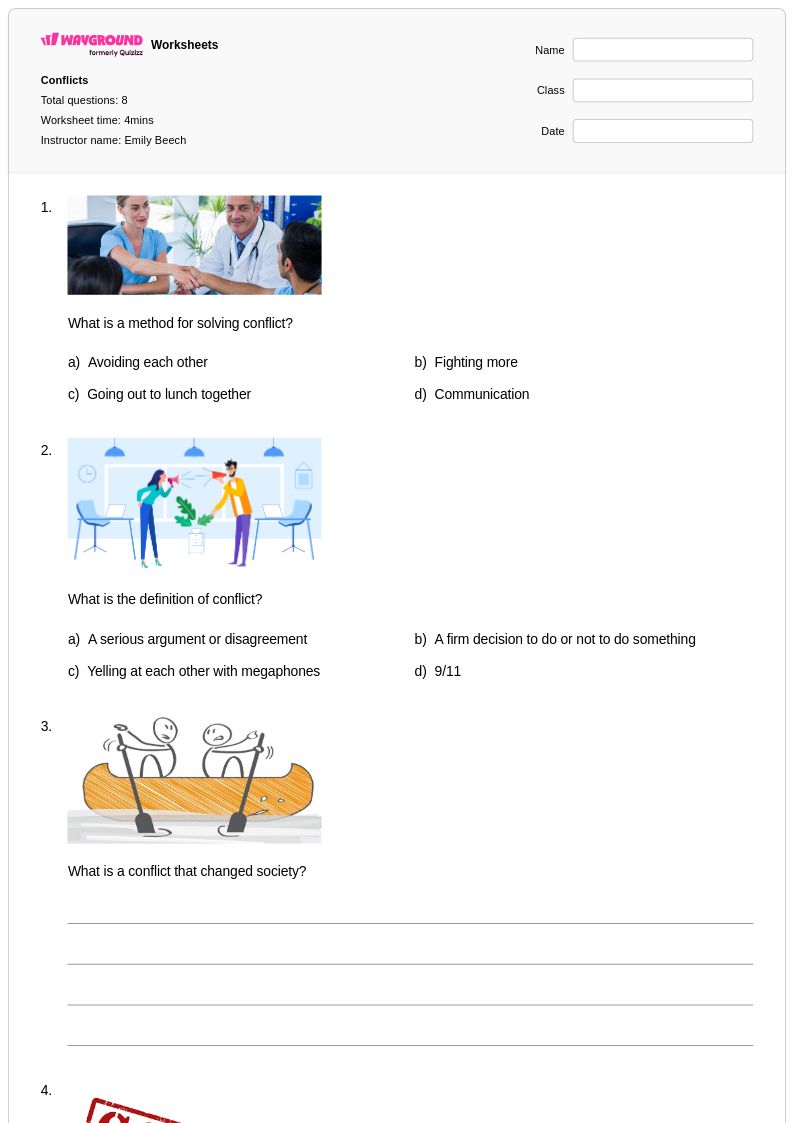
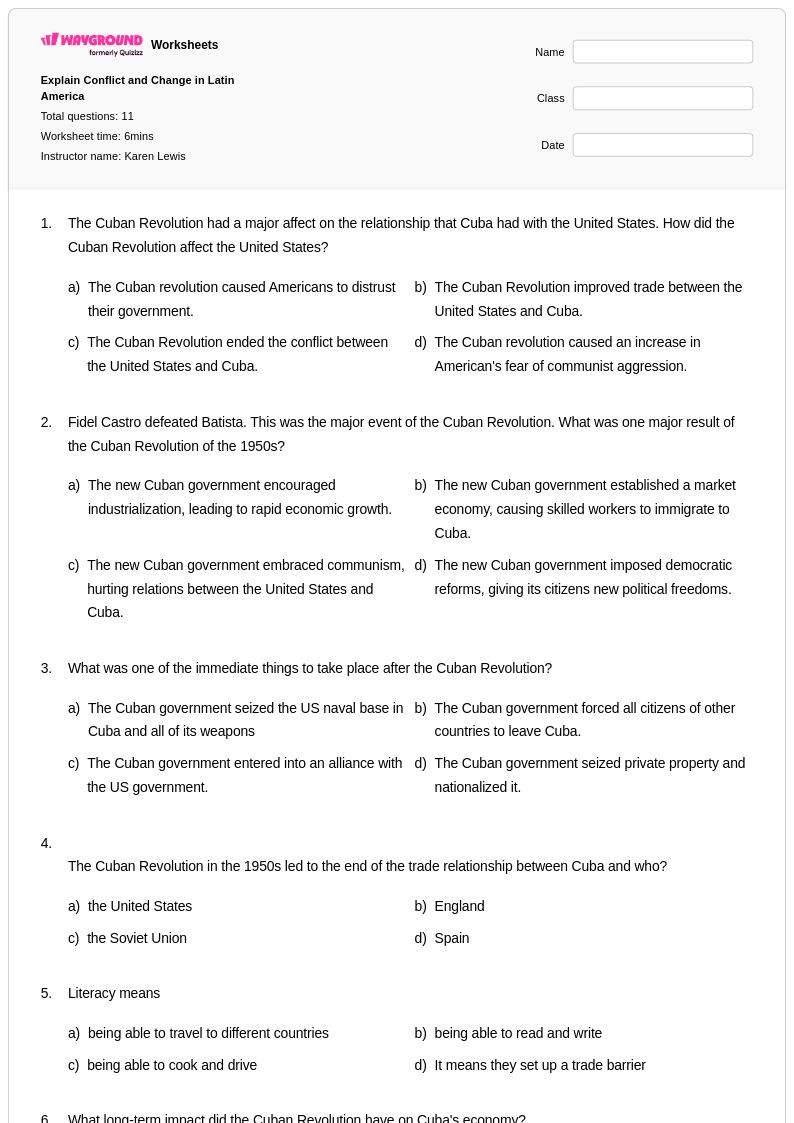
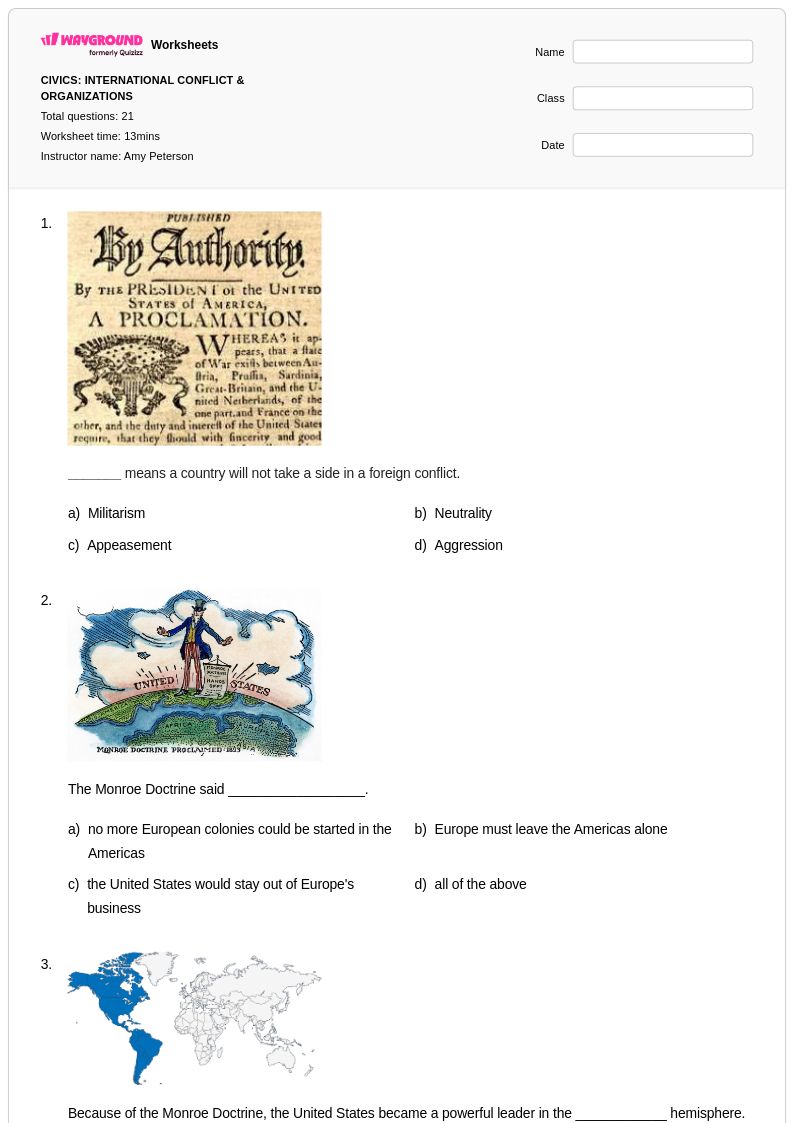
Conflict management worksheets for Class 6 students available through Wayground (formerly Quizizz) provide comprehensive practice in essential social skills that help young adolescents navigate interpersonal challenges effectively. These carefully designed resources strengthen critical abilities including identifying conflict triggers, understanding different perspectives, practicing active listening techniques, and developing constructive problem-solving strategies. Students work through realistic scenarios involving peer disagreements, family tensions, and classroom disputes while learning to differentiate between healthy and unhealthy conflict resolution approaches. Each worksheet includes structured practice problems that guide students through step-by-step conflict analysis, with accompanying answer keys that reinforce proper techniques and provide clear explanations of effective resolution strategies. These free printable resources in convenient PDF format allow students to develop emotional regulation skills, practice empathy-building exercises, and master communication techniques essential for successful social interactions throughout middle school and beyond.
Wayground (formerly Quizizz) empowers educators with an extensive collection of millions of teacher-created conflict management resources specifically designed to support Class 6 social studies curricula and social-emotional learning objectives. The platform's robust search and filtering capabilities enable teachers to quickly locate worksheets aligned with specific state standards and classroom needs, while built-in differentiation tools allow for seamless customization based on individual student readiness levels and learning profiles. These versatile resources are available in both printable and digital formats, including downloadable PDFs that facilitate flexible classroom implementation and remote learning environments. Teachers leverage these comprehensive worksheet collections for targeted skill practice, remediation of challenging concepts like perspective-taking and compromise, and enrichment activities that extend learning for advanced students, ultimately supporting effective lesson planning that addresses the diverse social-emotional development needs of middle school learners.
FAQs
How do I teach conflict management skills to students?
Effective conflict management instruction begins with helping students recognize conflict triggers and understand that disagreement is a normal part of social life. Teachers typically introduce frameworks like the "stop, think, act" model before moving into role-play scenarios that require students to practice active listening, perspective-taking, and compromise. Grounding lessons in realistic peer situations makes the skills more transferable to students' actual social interactions.
What exercises help students practice conflict resolution?
Scenario-based worksheets are among the most effective tools for practicing conflict resolution because they require students to identify the source of a disagreement, consider multiple perspectives, and evaluate possible solutions before choosing a response. Activities that involve analyzing fictional conflicts between characters — then role-playing or writing out resolutions — help students internalize strategies like empathy, compromise, and assertive communication. Repeated practice with varied scenarios builds the kind of flexible thinking students need to manage real conflicts constructively.
What are common mistakes students make when learning conflict management?
A frequent error is conflating "conflict resolution" with simply avoiding conflict altogether — students often default to withdrawal rather than engaging constructively. Another common misconception is assuming one party must "win," which undermines the compromise and empathy skills at the core of healthy conflict management. Students also tend to skip perspective-taking, jumping straight to solutions without first understanding what the other party needs or feels.
How can I differentiate conflict management worksheets for students at different skill levels?
For students who are newer to social-emotional learning, simplified scenarios with fewer variables and guided sentence starters help scaffold the decision-making process. More advanced students can be challenged with multi-party conflicts, ambiguous situations, or tasks that require them to evaluate the long-term consequences of different resolution strategies. On Wayground, teachers can also apply accommodations such as reduced answer choices or read-aloud support for individual students, ensuring all learners can access the material without disrupting the rest of the class.
How do I use Wayground's conflict management worksheets in my classroom?
Wayground's conflict management worksheets are available as printable PDFs for traditional classroom use and in digital formats for technology-integrated environments, making them flexible enough for in-person, hybrid, or remote settings. Teachers can also host the worksheets as a live or self-paced quiz on Wayground, which allows for real-time monitoring of student responses. Each worksheet includes a detailed answer key, so teachers can efficiently assess student understanding of conflict resolution principles without additional preparation.
How do conflict management worksheets support social-emotional learning standards?
Conflict management worksheets directly address core SEL competencies including self-awareness, social awareness, relationship skills, and responsible decision-making — all of which appear in frameworks like CASEL. Well-designed worksheets move students through the full arc of a conflict: identifying triggers, analyzing perspectives, weighing solutions, and reflecting on outcomes. This structured practice helps students build the emotional intelligence and communication competencies that SEL standards require across grade levels.