Free Printable Comparing and Contrasting Characters Worksheets for Class 6
Class 6 comparing and contrasting characters worksheets from Wayground offer free printables and practice problems that help students analyze character traits, relationships, and development with comprehensive answer keys.
Explore printable Comparing and Contrasting Characters worksheets for Class 6
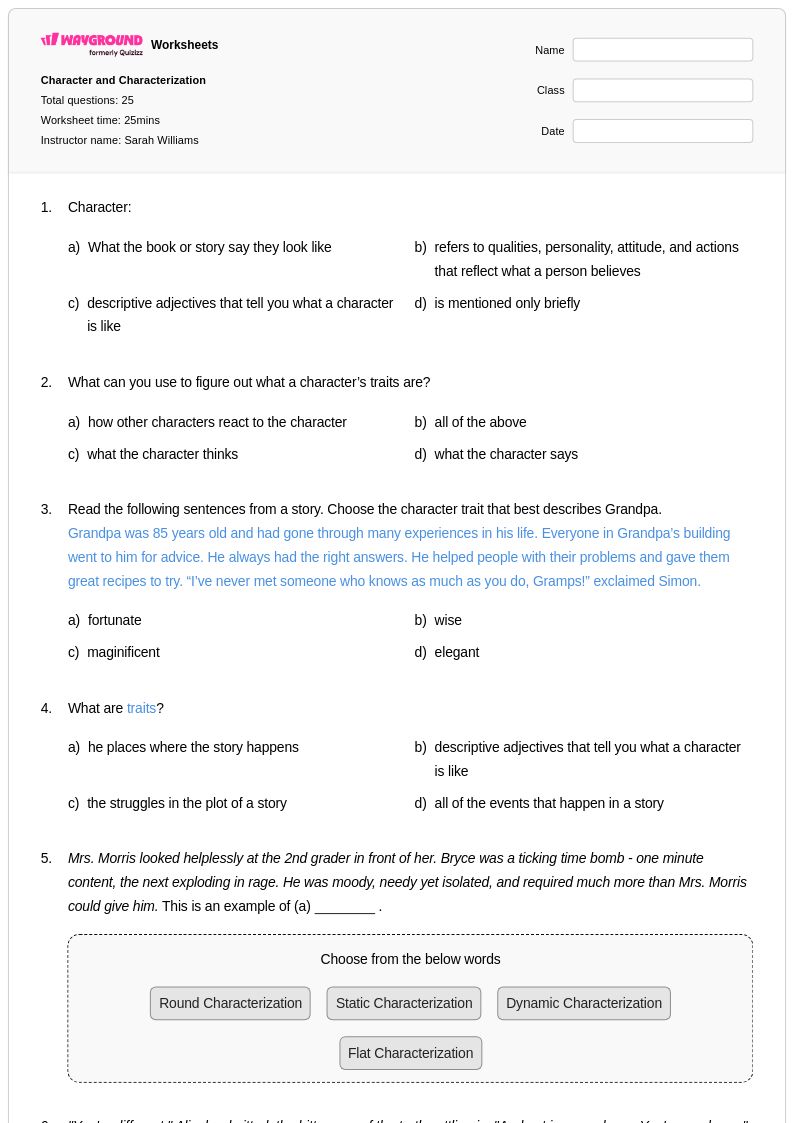
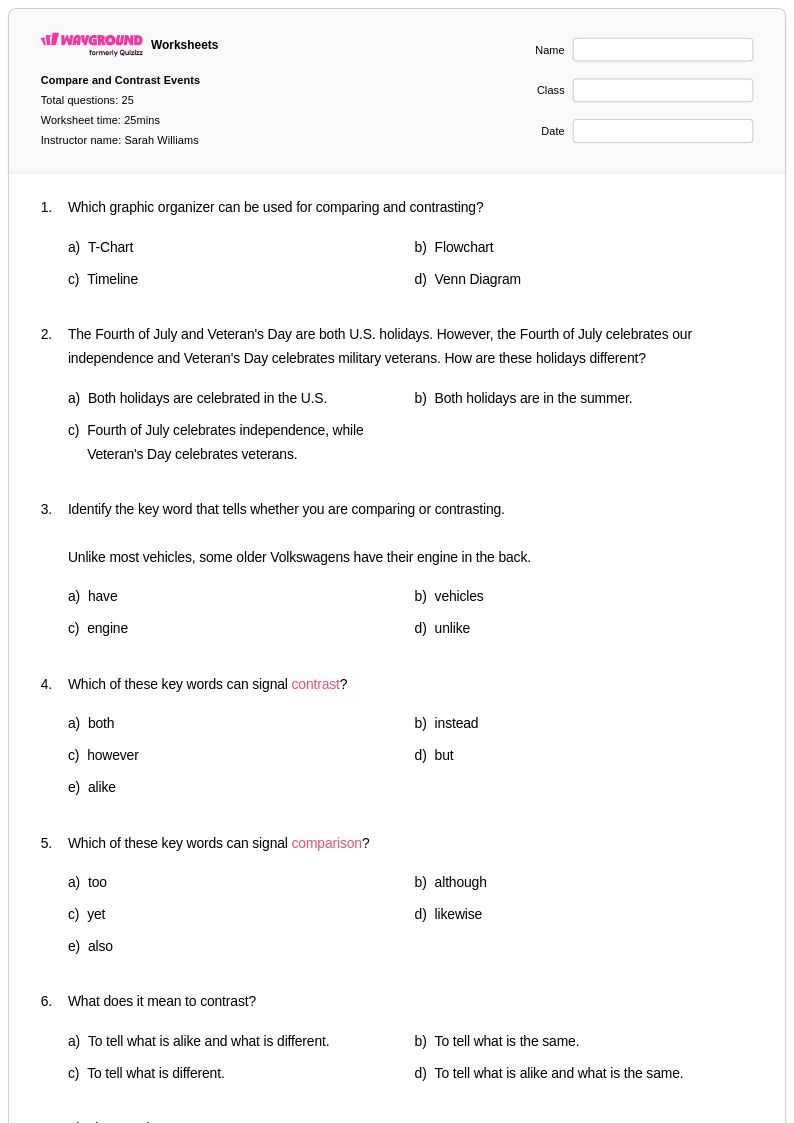
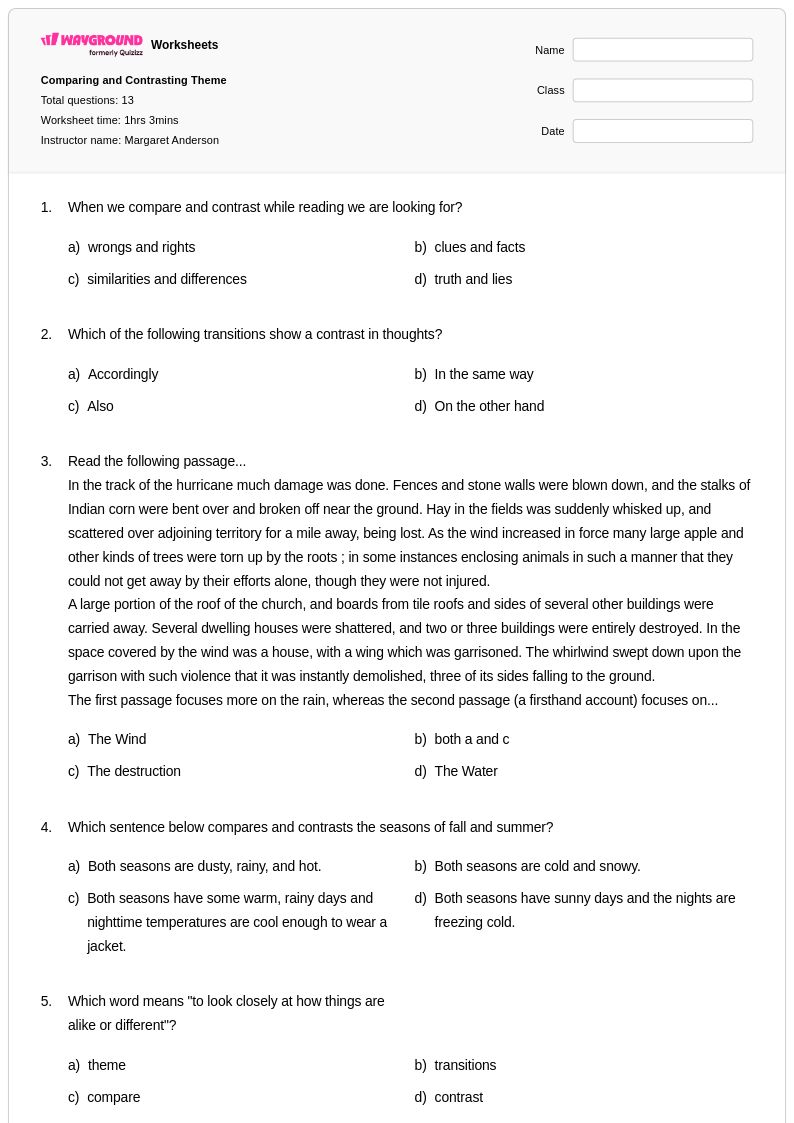
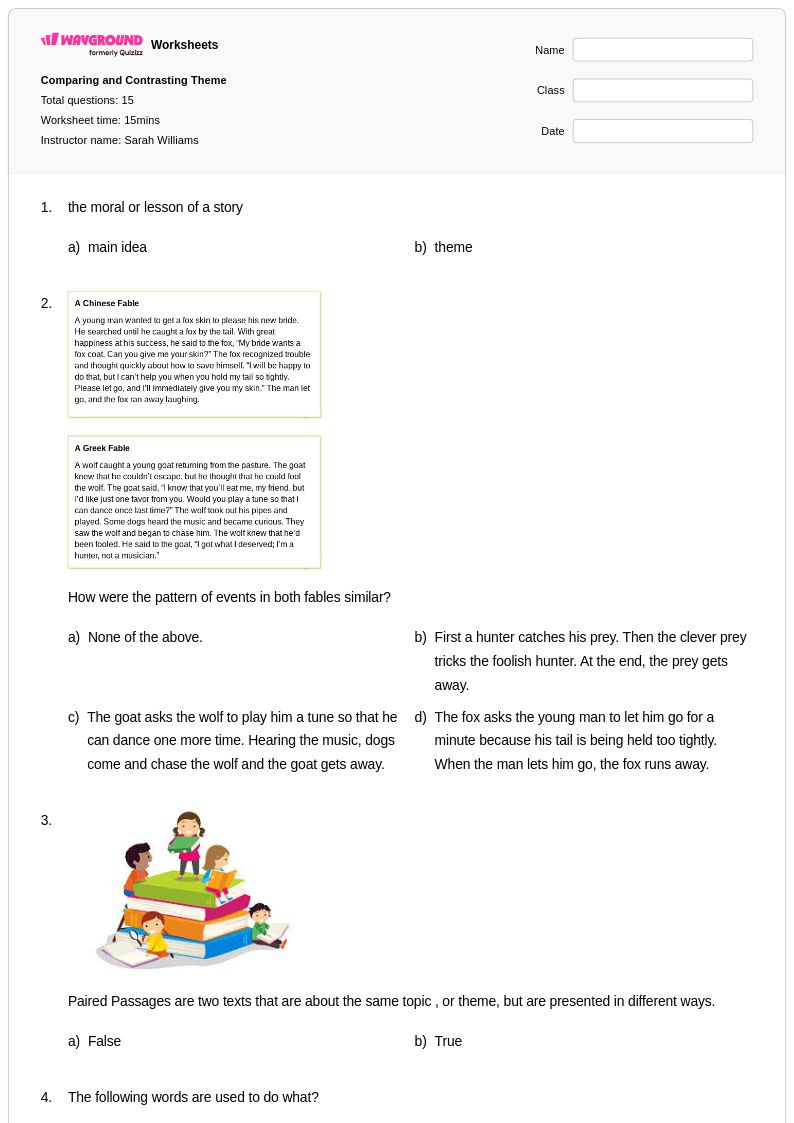
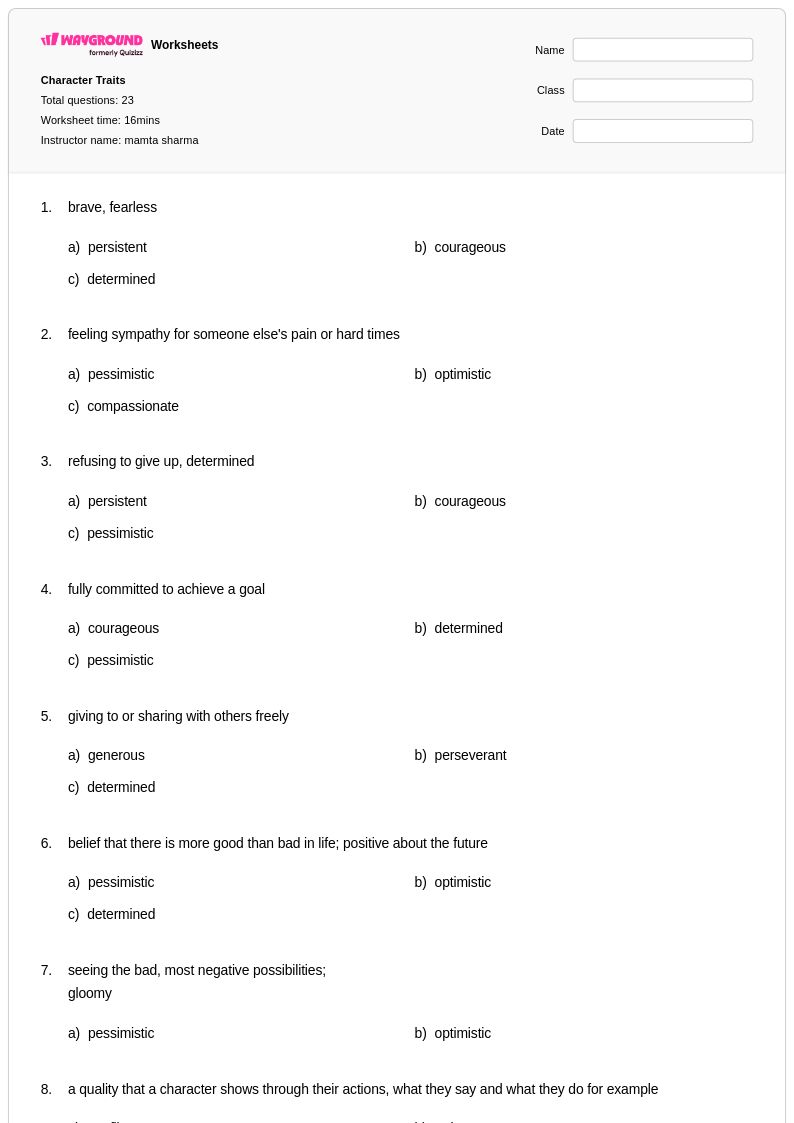
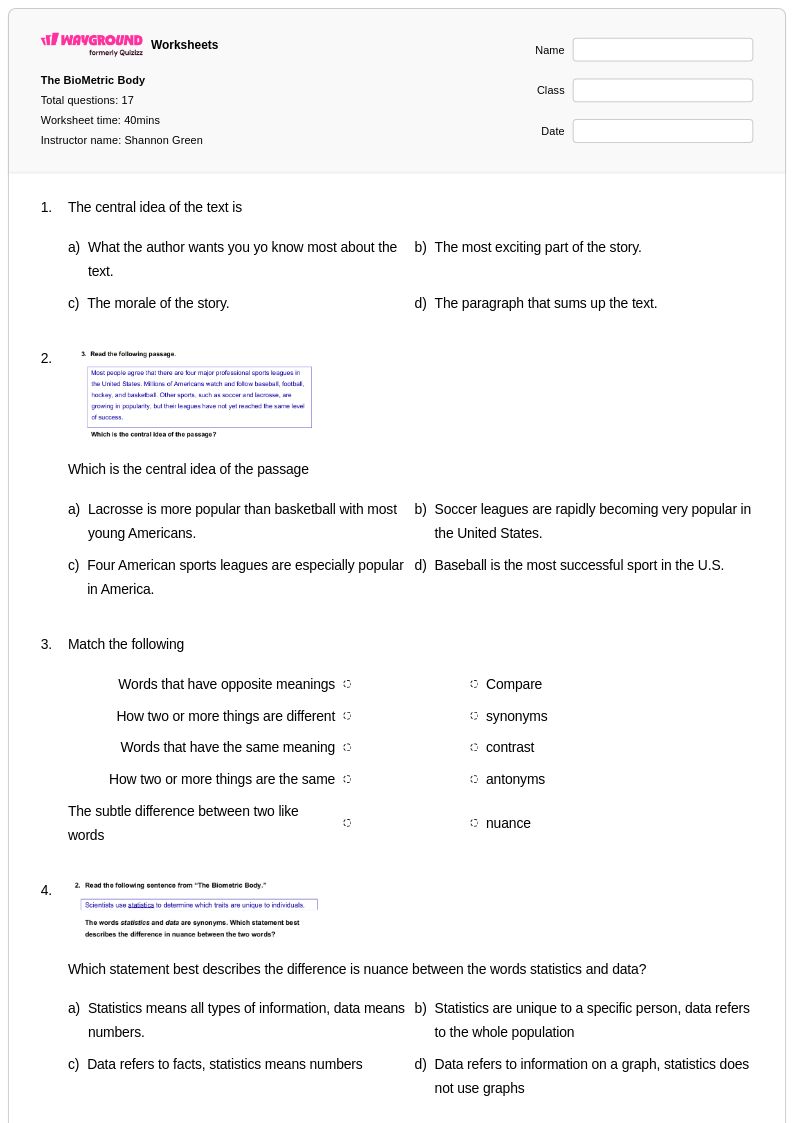
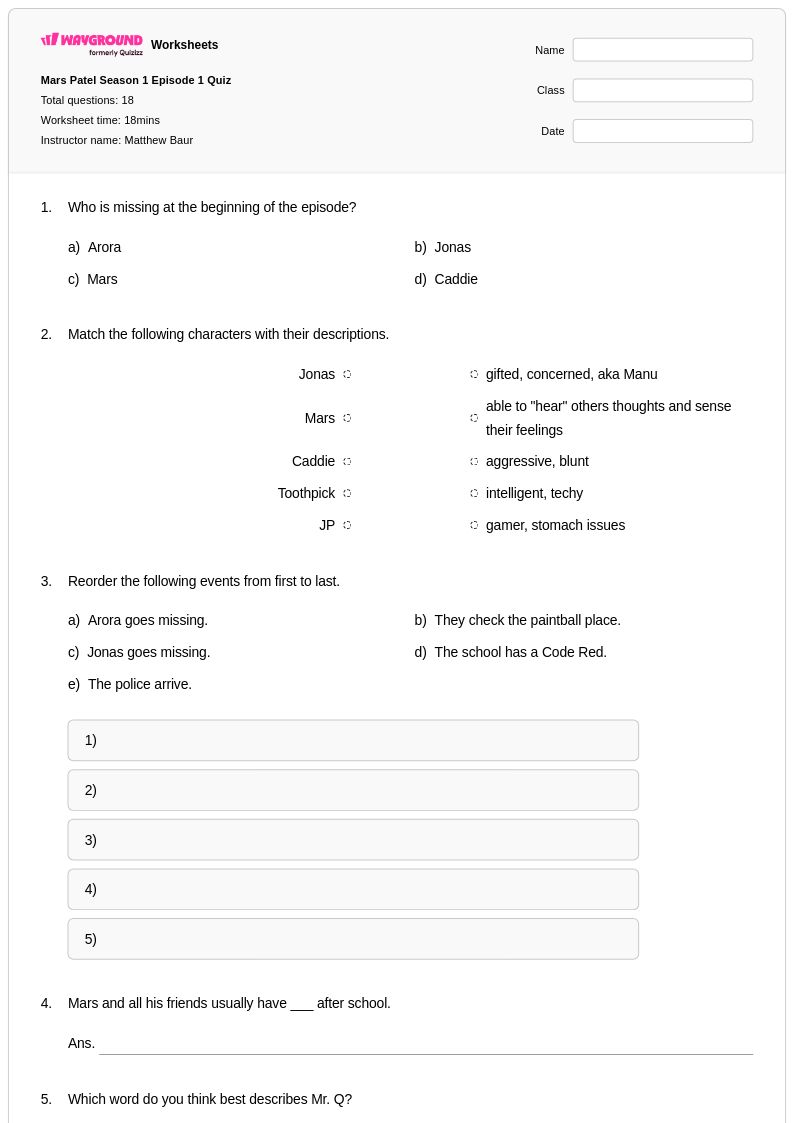
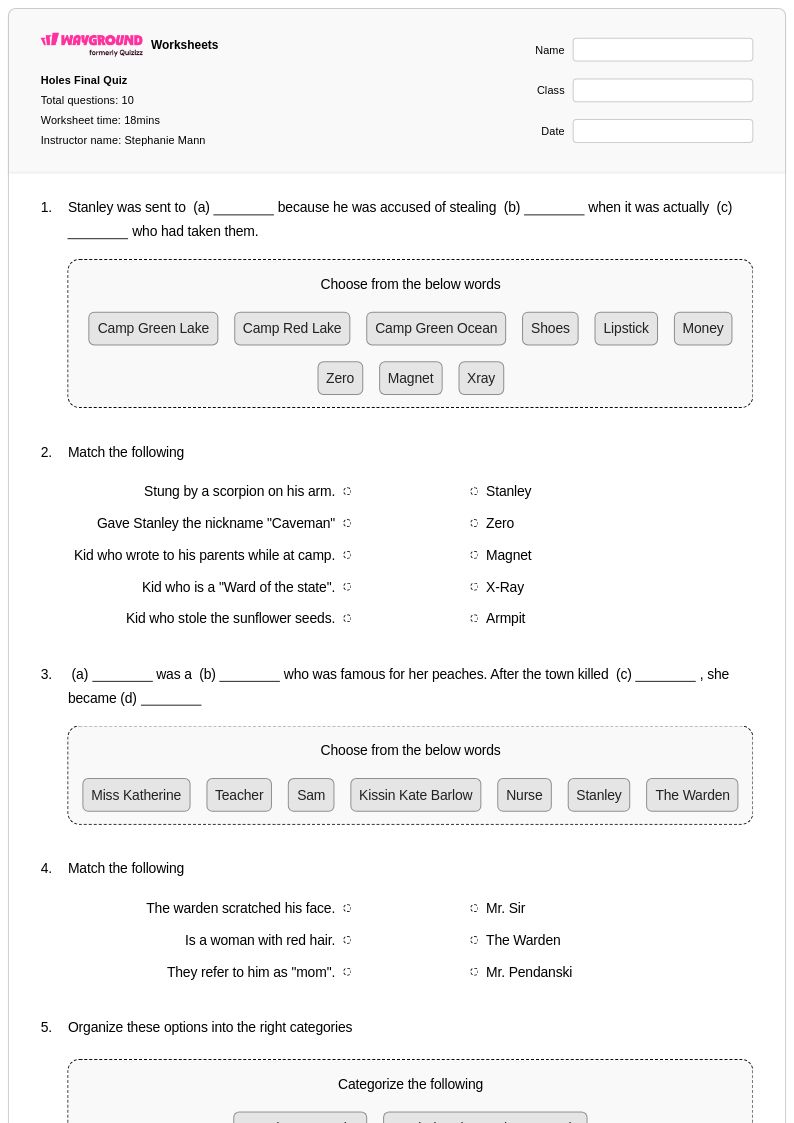
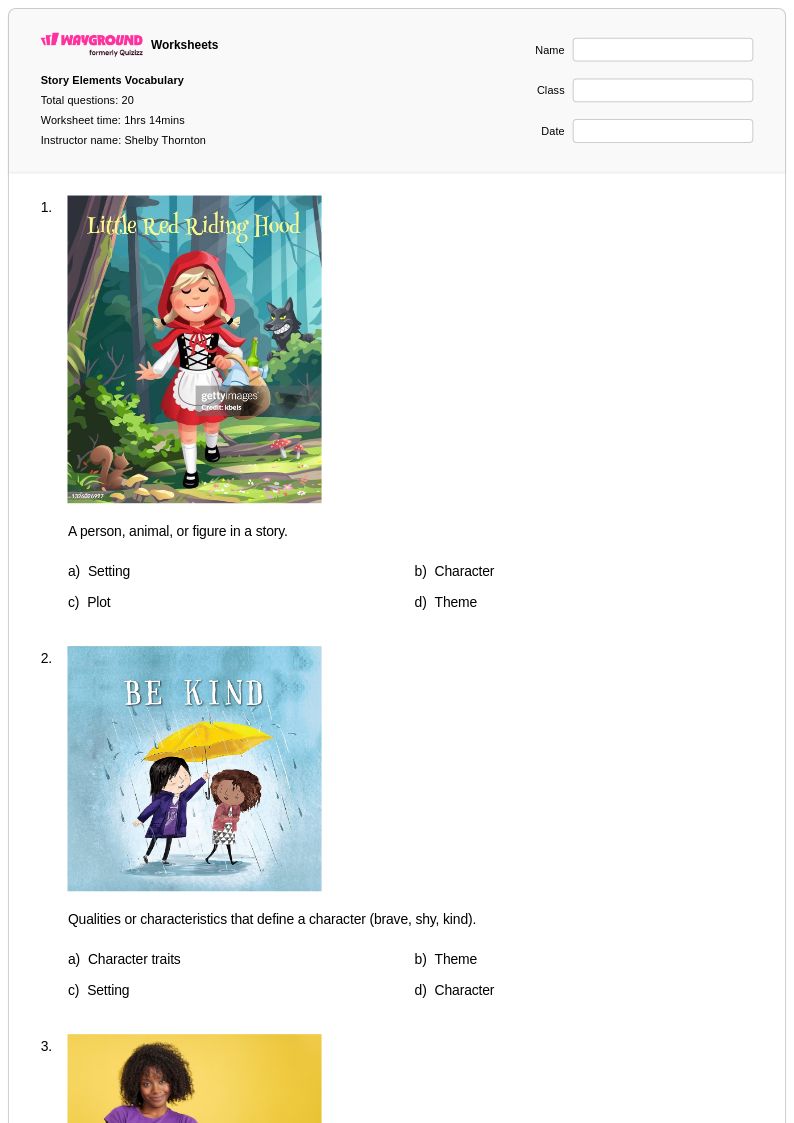
Comparing and contrasting characters worksheets for Class 6 students available through Wayground (formerly Quizizz) provide comprehensive practice in analyzing literary figures across various texts. These worksheets strengthen critical thinking skills by guiding students to identify similarities and differences between characters' traits, motivations, actions, and development throughout stories. Students engage with practice problems that require them to examine character relationships, compare protagonists and antagonists, and analyze how different characters respond to similar situations or conflicts. The free printables include detailed answer keys that help educators assess student understanding of character analysis techniques, while the pdf format ensures easy classroom distribution and homework assignments that build essential reading comprehension skills.
Wayground (formerly Quizizz) supports teachers with an extensive collection of character comparison resources drawn from millions of teacher-created materials that align with grade-level standards for literary analysis. The platform's robust search and filtering capabilities enable educators to quickly locate worksheets that match specific novels, character types, or complexity levels needed for their Class 6 classrooms. Teachers can customize these digital and printable resources to differentiate instruction for diverse learners, adapting content for both remediation and enrichment purposes. The flexible pdf format allows seamless integration into lesson planning, whether teachers need quick skill practice activities, comprehensive assessment tools, or structured homework assignments that reinforce character analysis concepts taught during class discussions and reading activities.
FAQs
How do I teach students to compare and contrast characters in a text?
Start by anchoring comparison in specific character attributes: traits, motivations, actions, and how each character changes over the course of the story. Introduce a structured framework, such as a Venn diagram or T-chart, so students organize observations before writing. Then require students to support every comparison with direct textual evidence, which moves analysis beyond surface-level opinion and builds the habit of close reading.
What exercises help students practice comparing and contrasting characters?
Effective practice exercises ask students to examine two characters side by side across specific categories, such as motivation, response to conflict, and relationship to the theme, rather than making open-ended general comparisons. Structured worksheets that prompt textual evidence for each observation are particularly effective because they train students to connect claims to the text. Comparing characters across different genres or texts also challenges students to transfer analytical skills beyond a single story.
What mistakes do students commonly make when comparing and contrasting characters?
The most common error is listing surface-level traits, such as physical descriptions or basic personality labels, without explaining how those traits drive the character's actions or conflict in the story. Students also frequently compare characters in isolation rather than in relation to each other, missing opportunities to analyze how their differences create narrative tension. Another recurring mistake is making unsupported claims, where students state that two characters are similar or different without citing textual evidence.
How do I help struggling readers participate in character comparison activities?
For students who struggle with reading fluency or comprehension, reduce the cognitive load by pre-selecting the passages and limiting the comparison to two clearly defined attributes. On Wayground, the Read Aloud accommodation can audio-read questions and content aloud for students who need it, and Reduced Answer Choices can decrease the number of options displayed for students who find open-ended analysis overwhelming. Extended time settings can also be configured per student so that pacing does not become a barrier to demonstrating analytical thinking.
How can I use comparing and contrasting characters worksheets in my classroom?
These worksheets are available as printable PDFs for traditional classroom use and in digital formats for technology-integrated learning environments, and teachers can also host them as a quiz directly on Wayground. Printable versions work well as independent practice, small-group work, or take-home assignments, while the digital format supports self-paced review and immediate feedback. Answer keys are included with each worksheet, giving teachers a reliable grading reference and saving preparation time.
How do I differentiate character comparison activities for advanced learners?
Advanced learners benefit from comparisons that require higher-order thinking, such as analyzing how two characters embody contrasting themes, or comparing an author's characterization choices across two different texts. Asking students to write a structured analytical paragraph, not just complete a graphic organizer, pushes them to synthesize observations into a coherent argument. Wayground's differentiation tools allow teachers to customize worksheet difficulty and modify content so that advanced students can work with more complex literary comparisons while the rest of the class works on foundational skills.