
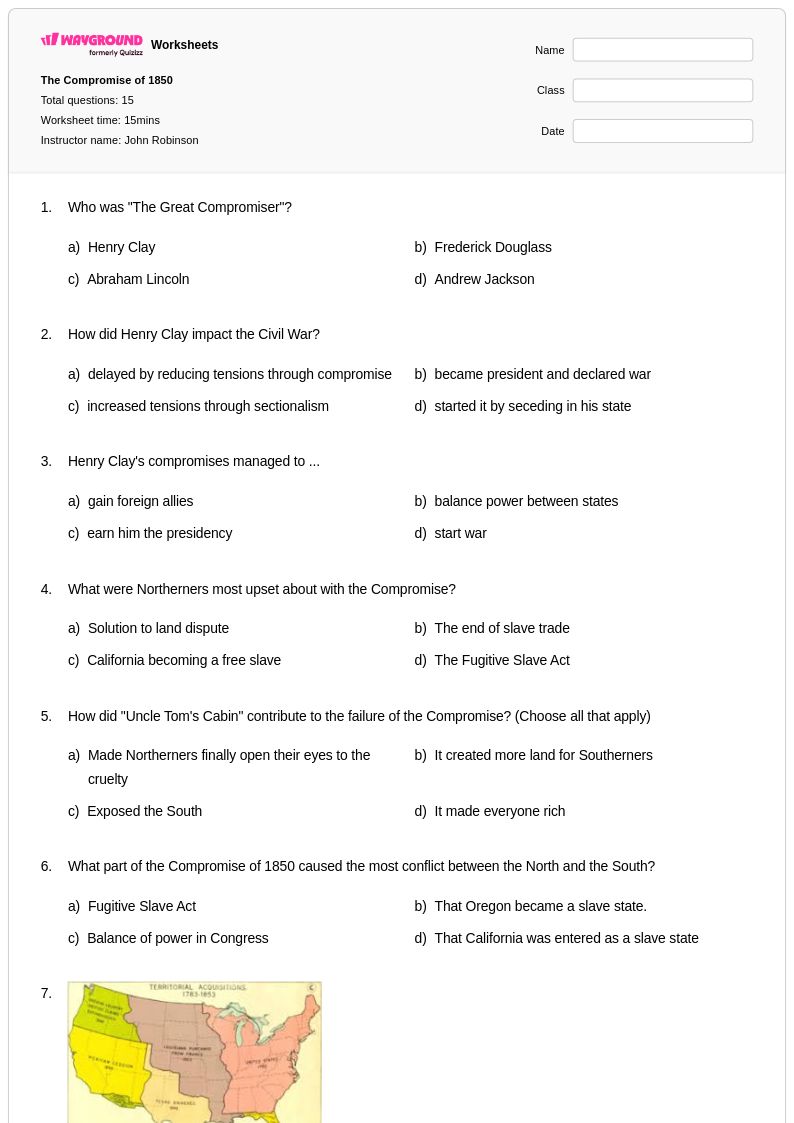
15 Q
8th - Uni
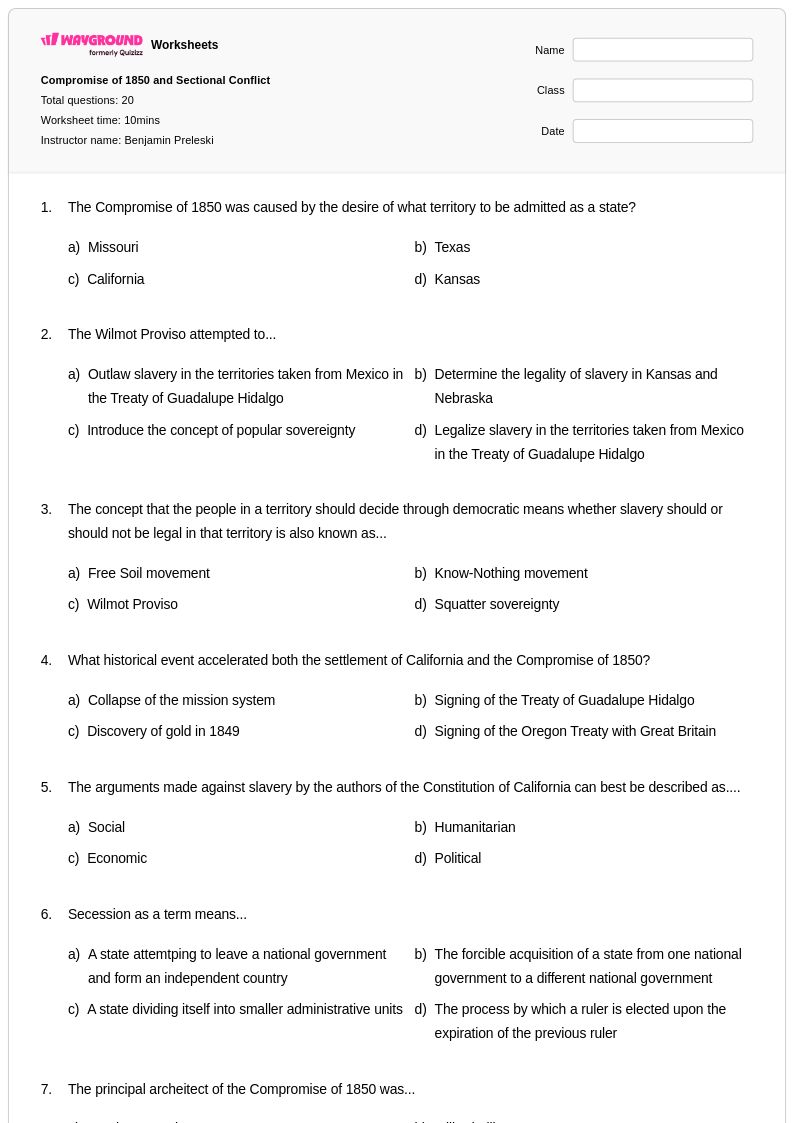
20 Q
11th
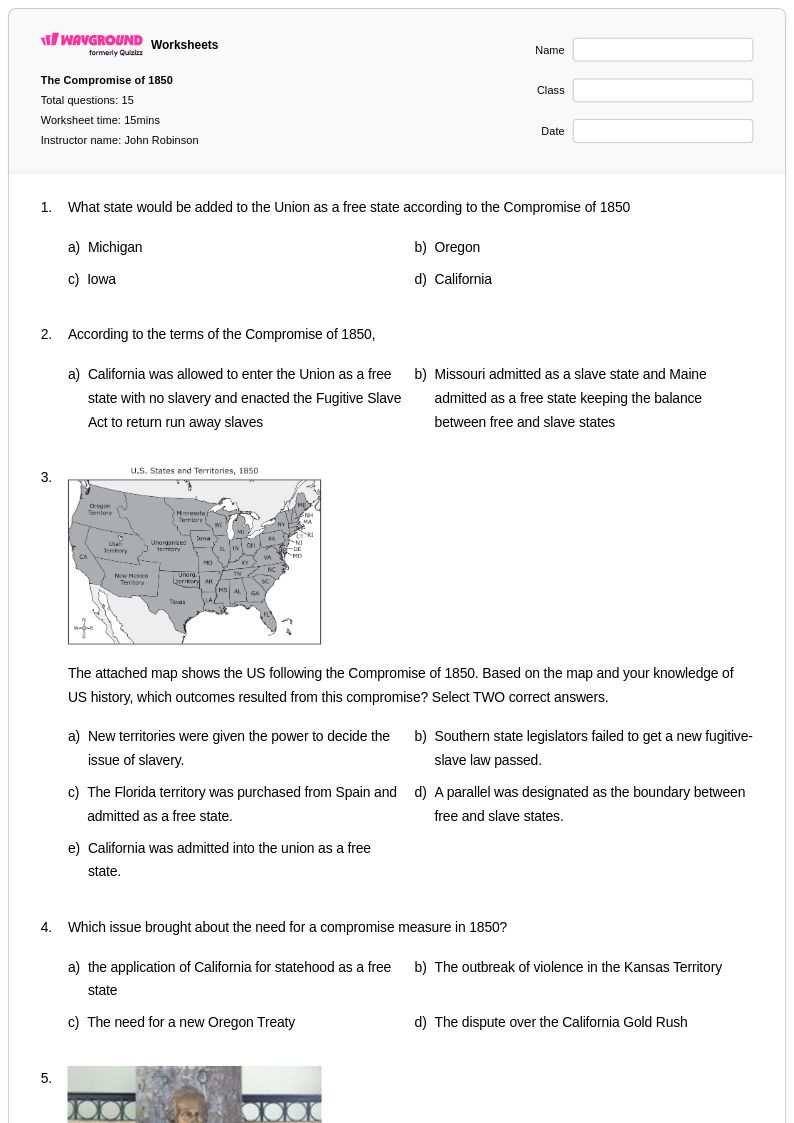
15 Q
8th - Uni
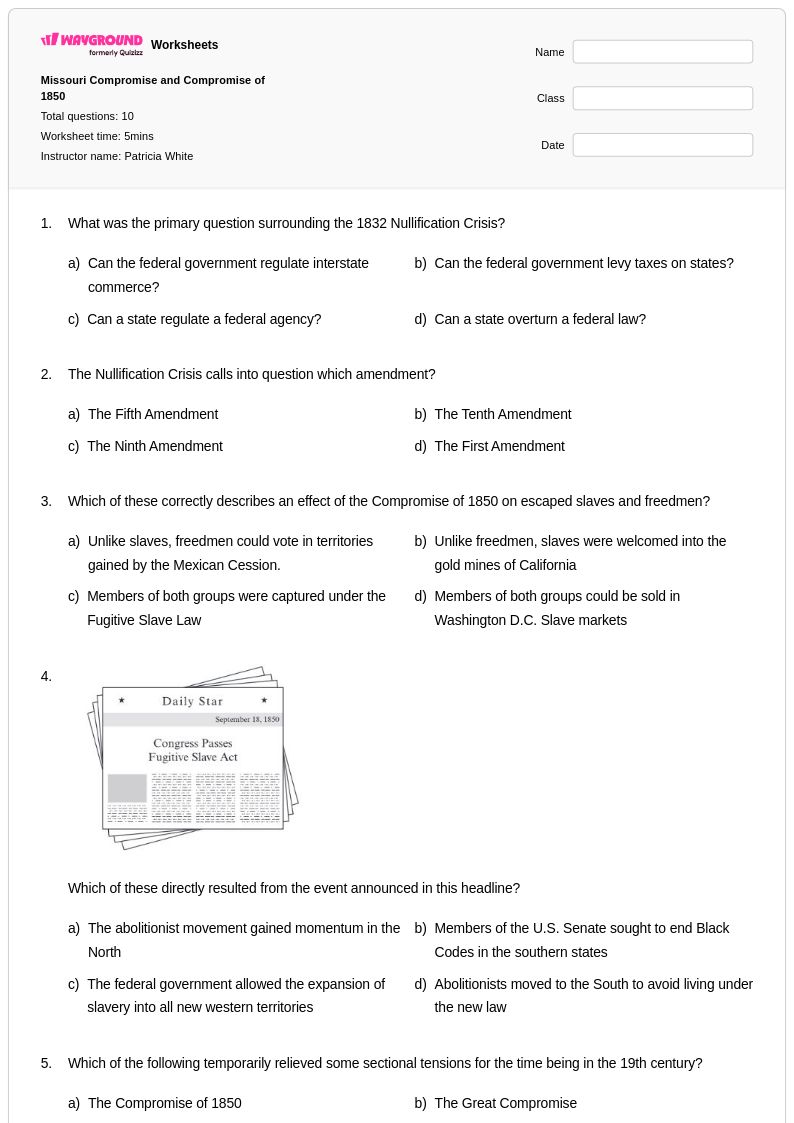
10 Q
8th - 12th
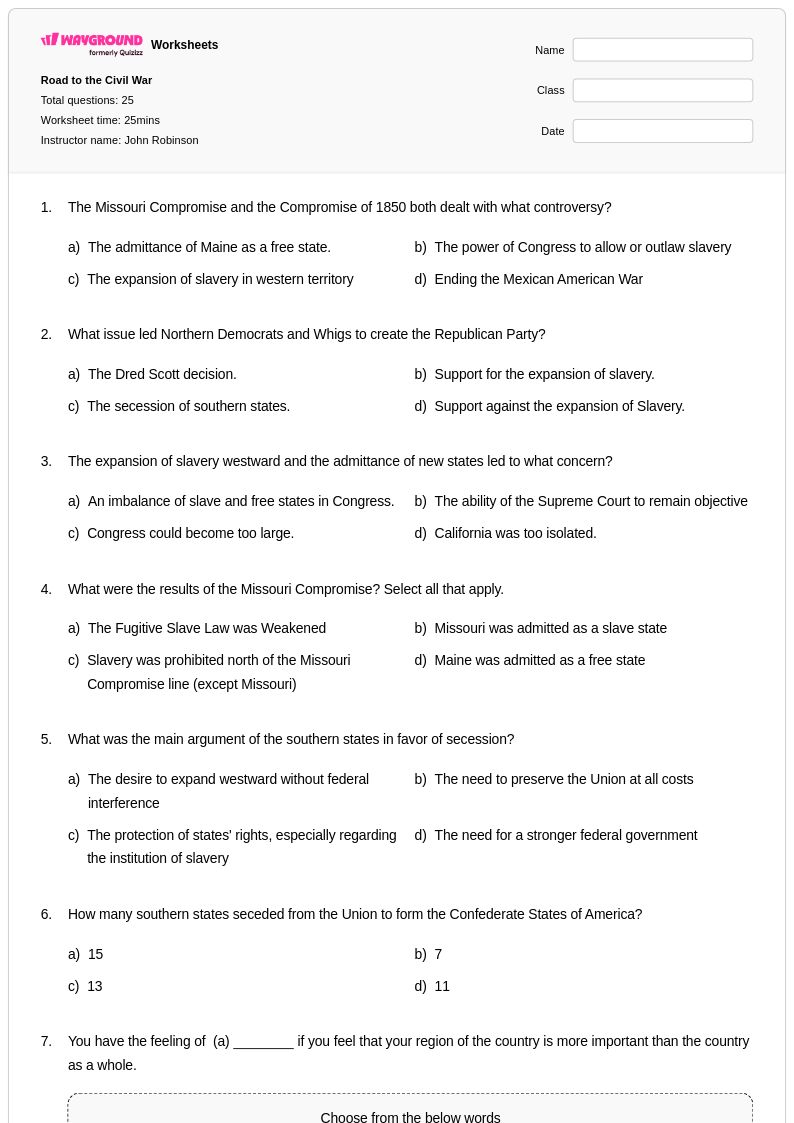
25 Q
8th - Uni
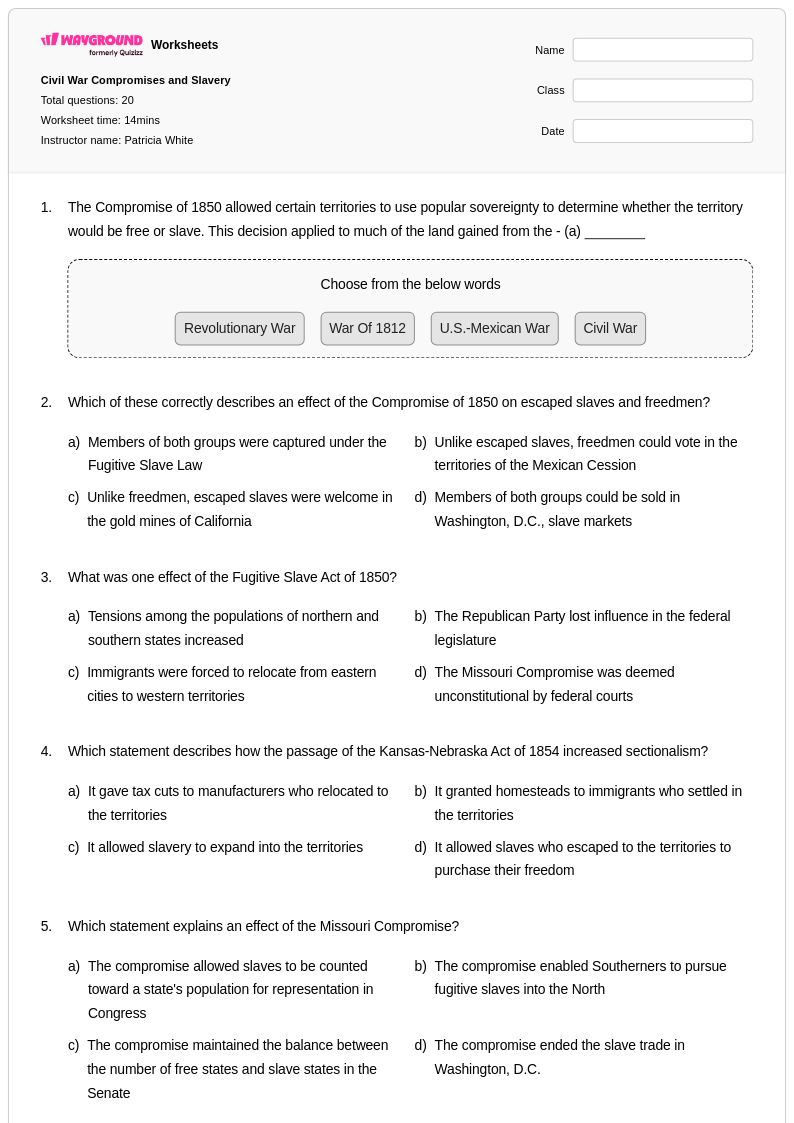
20 Q
9th - 12th
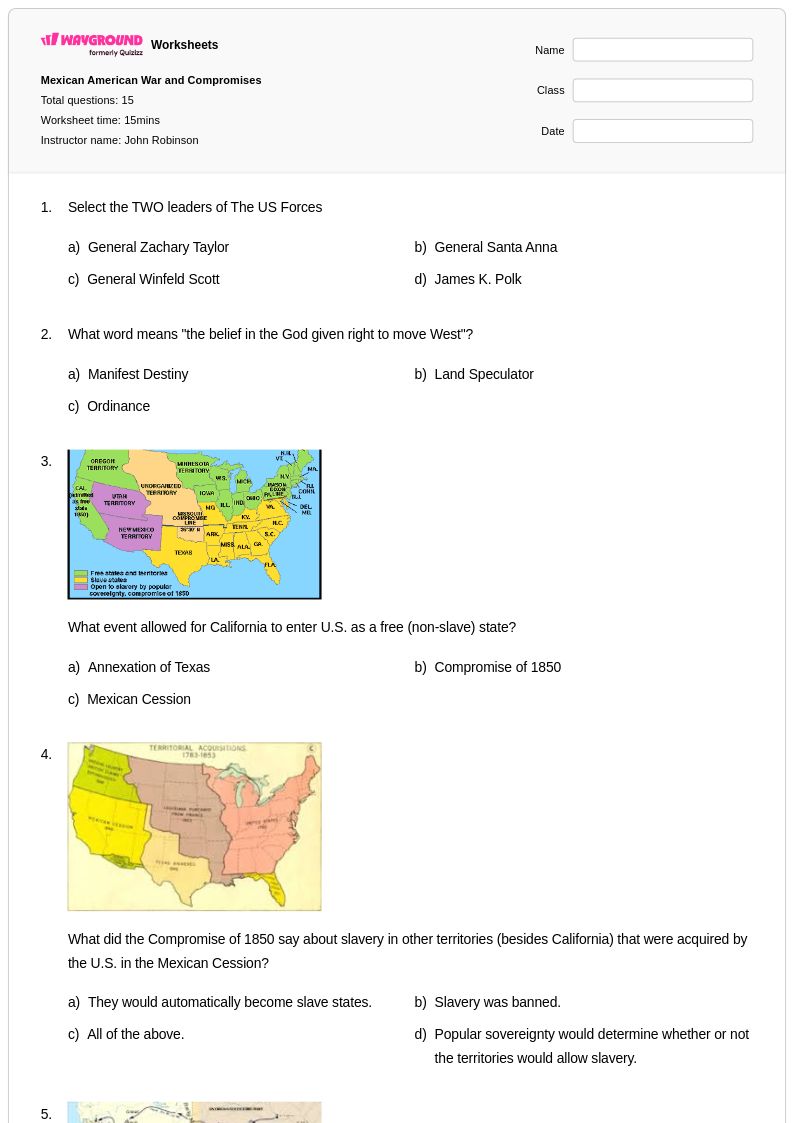
15 Q
7th - Uni
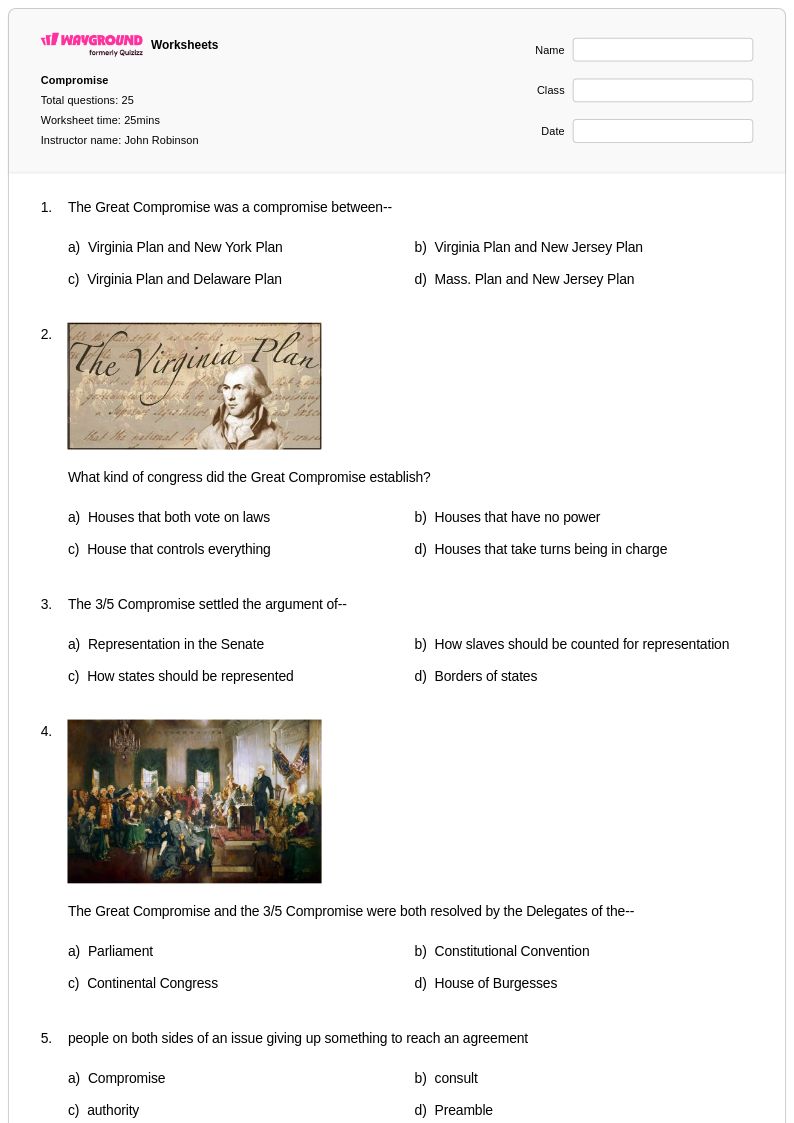
25 Q
8th - Uni
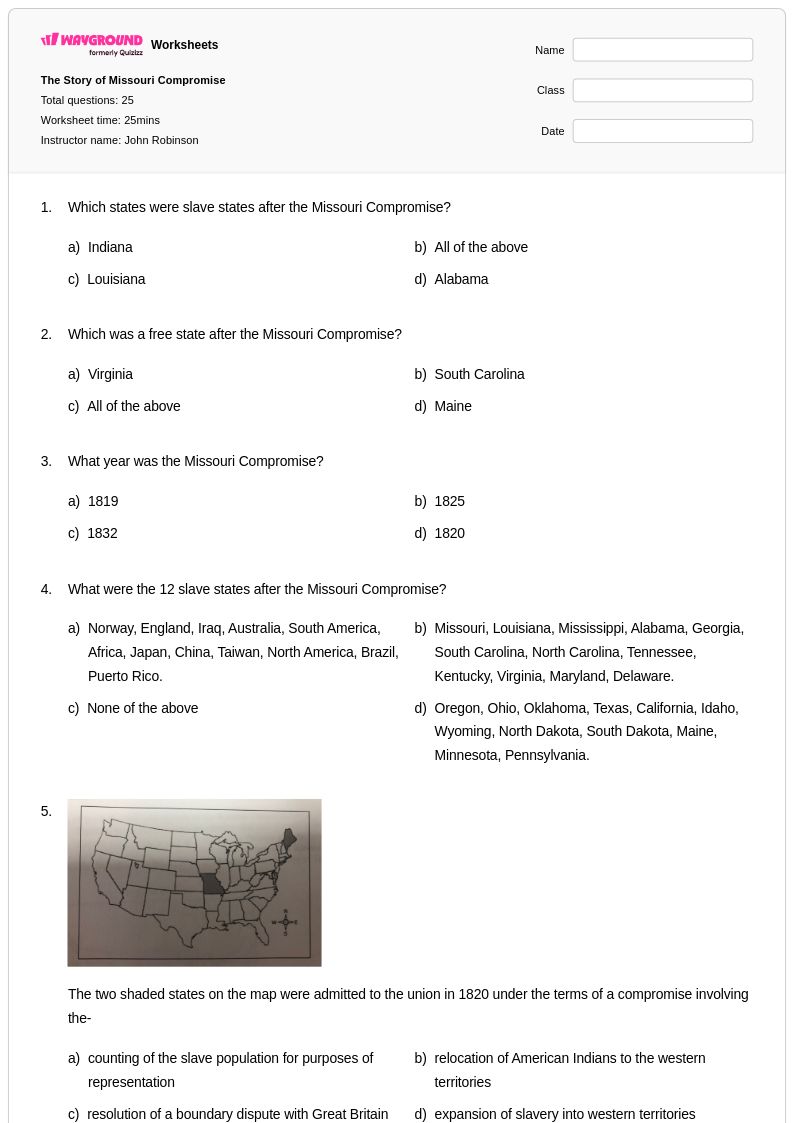
25 Q
8th - Uni
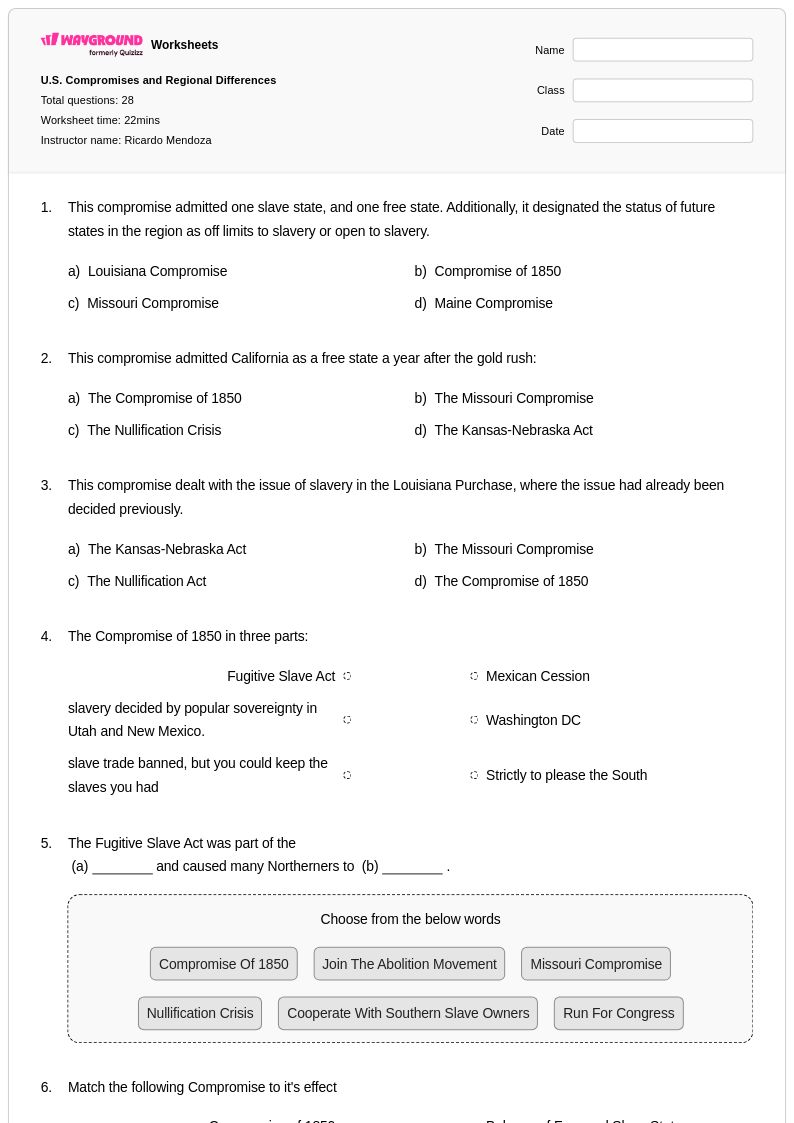
28 Q
8th - Uni
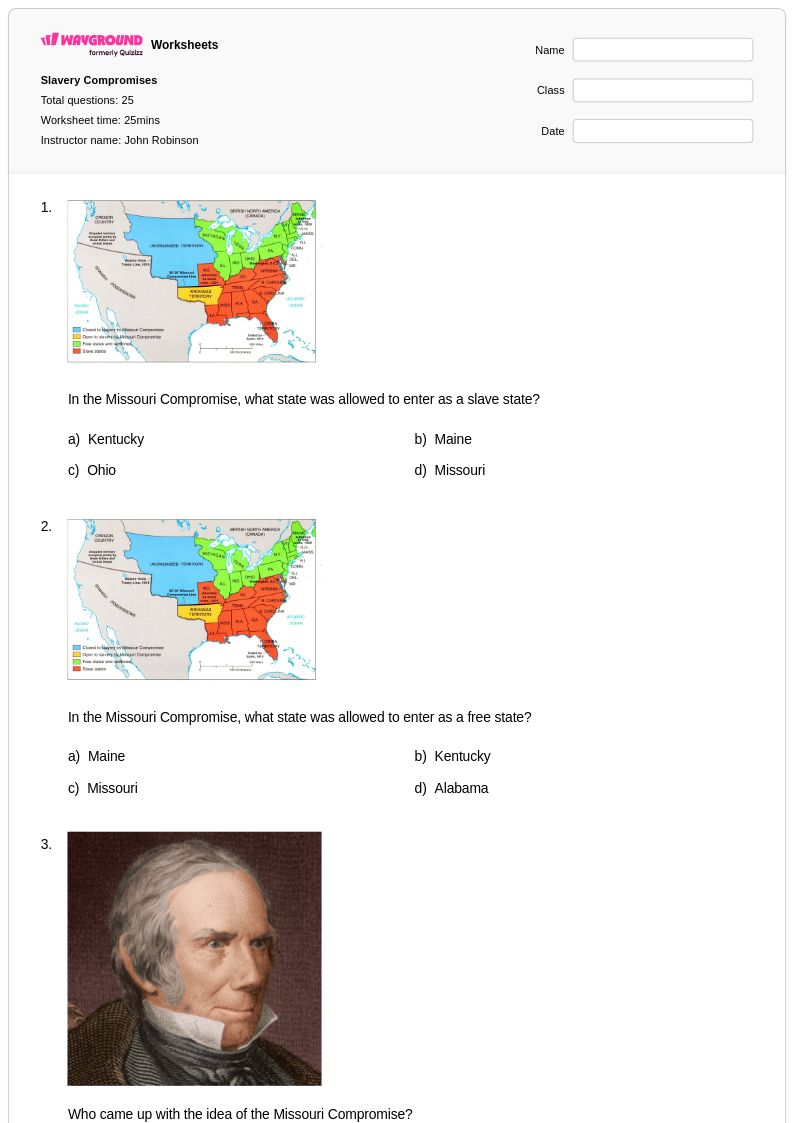
25 Q
8th - Uni
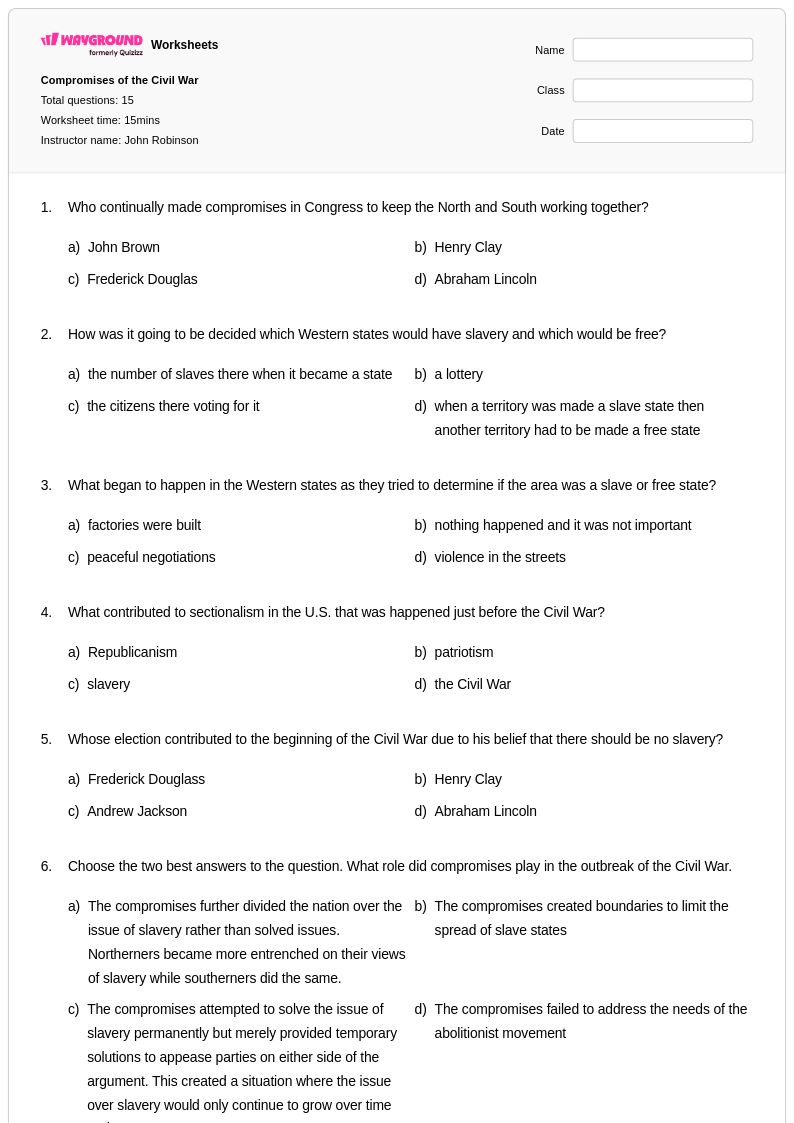
15 Q
7th - Uni
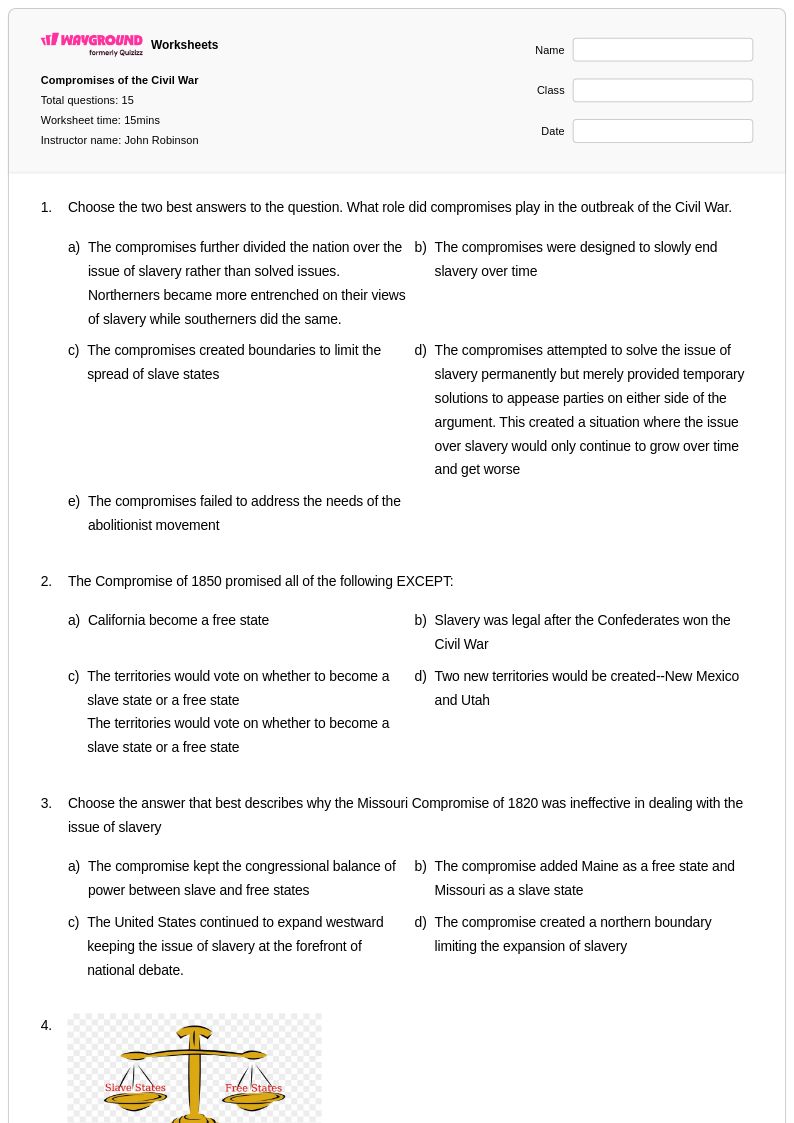
15 Q
8th - Uni
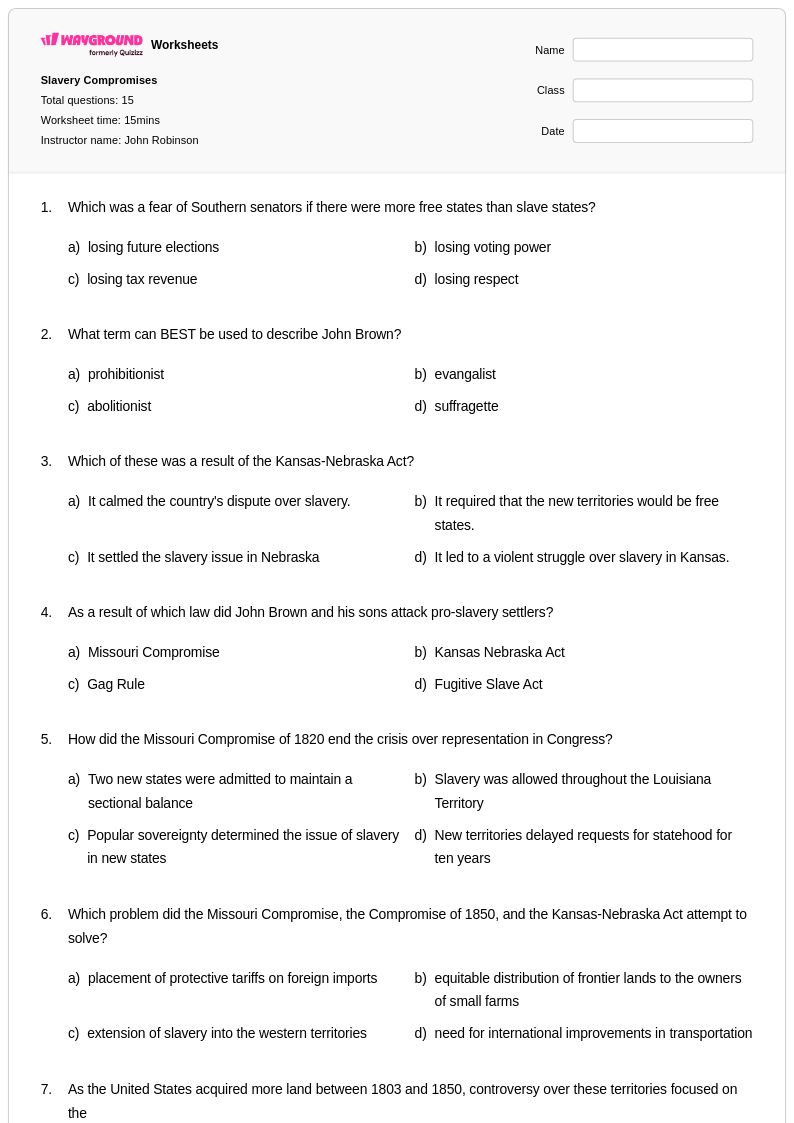
15 Q
8th - Uni
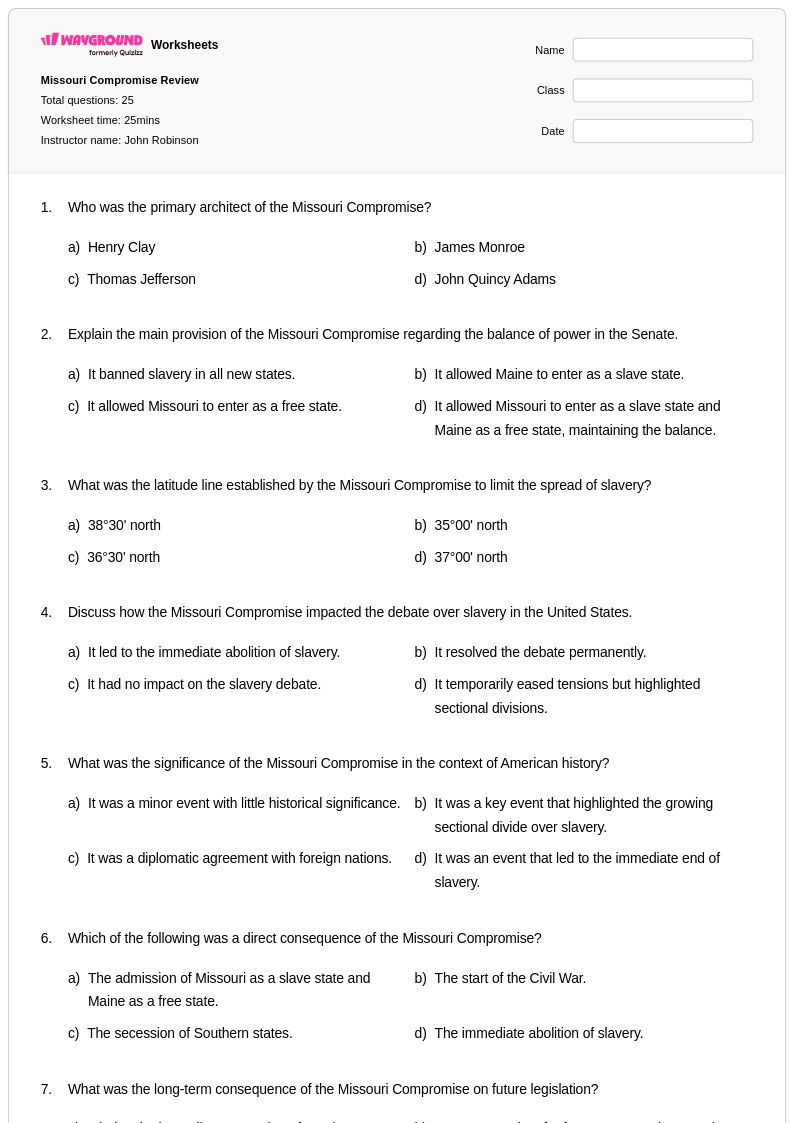
25 Q
8th - Uni
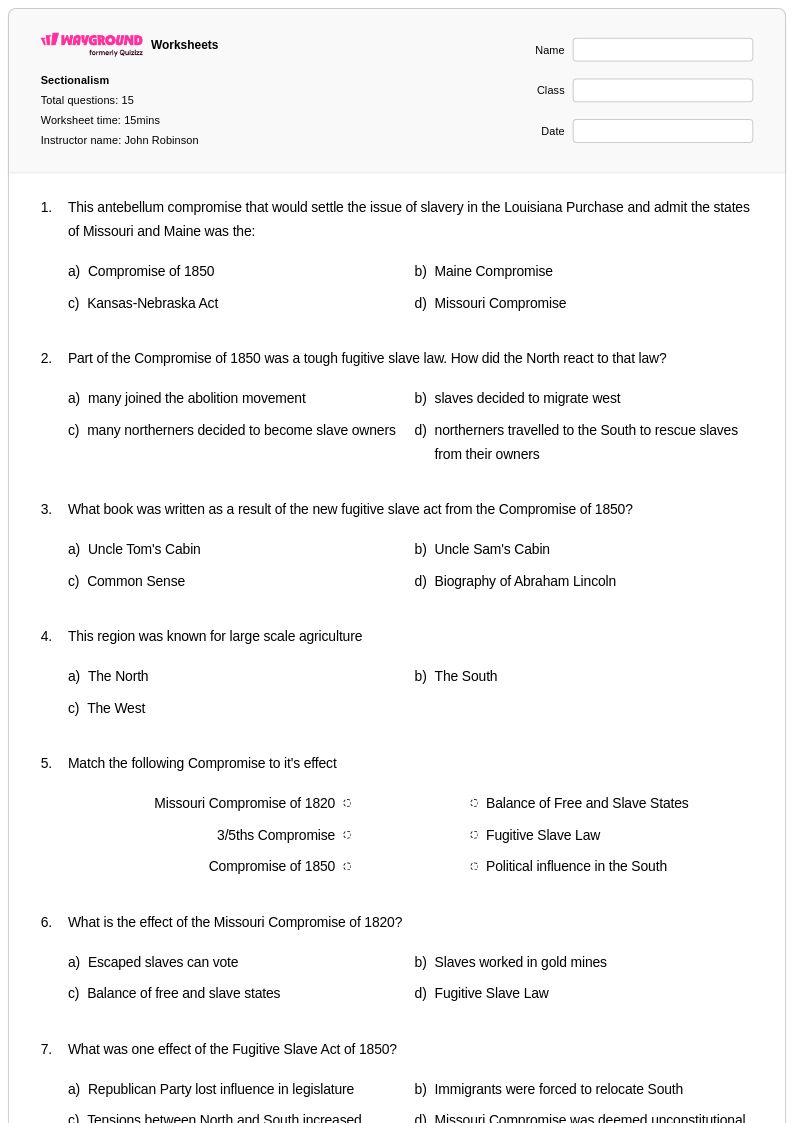
15 Q
8th - Uni
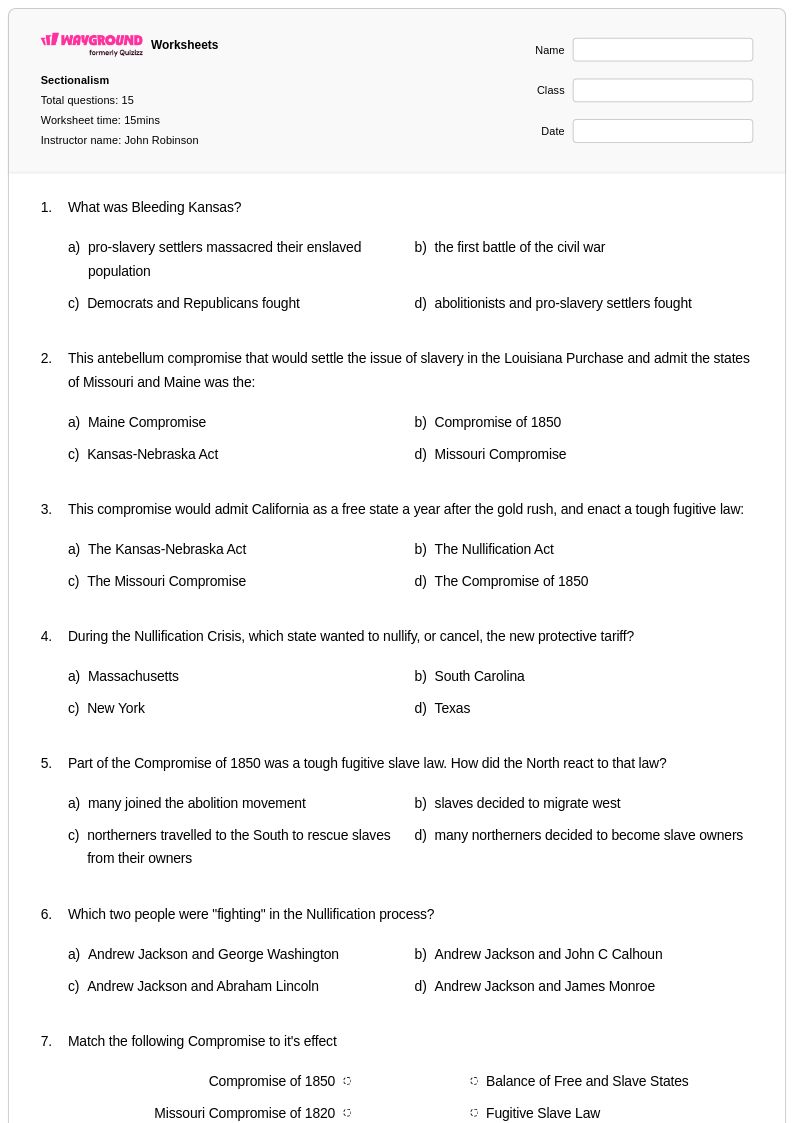
15 Q
8th - Uni
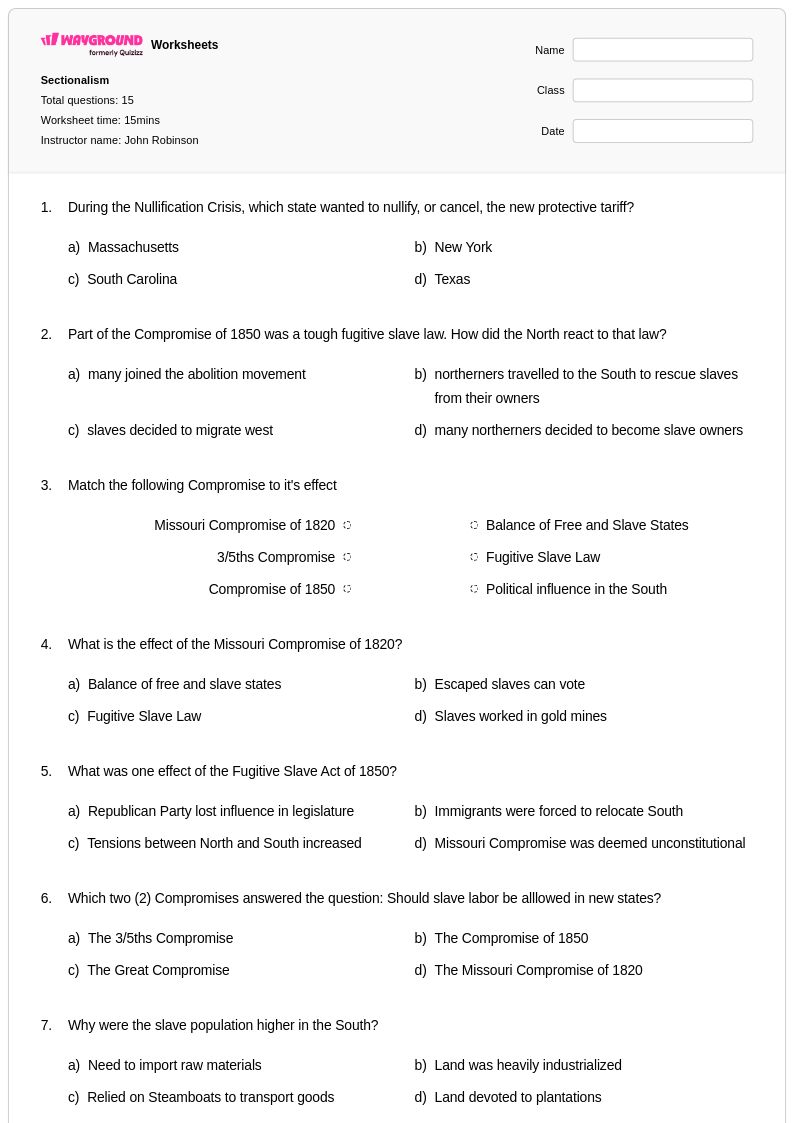
15 Q
8th - Uni
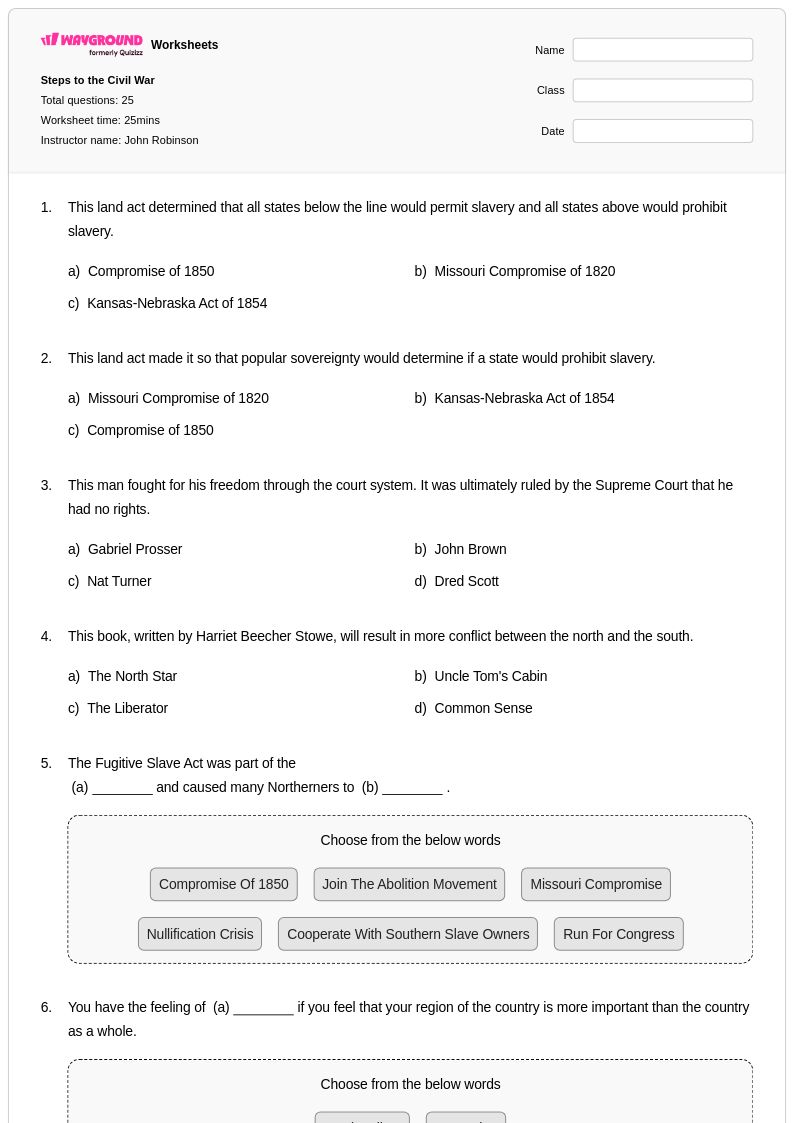
25 Q
8th - Uni
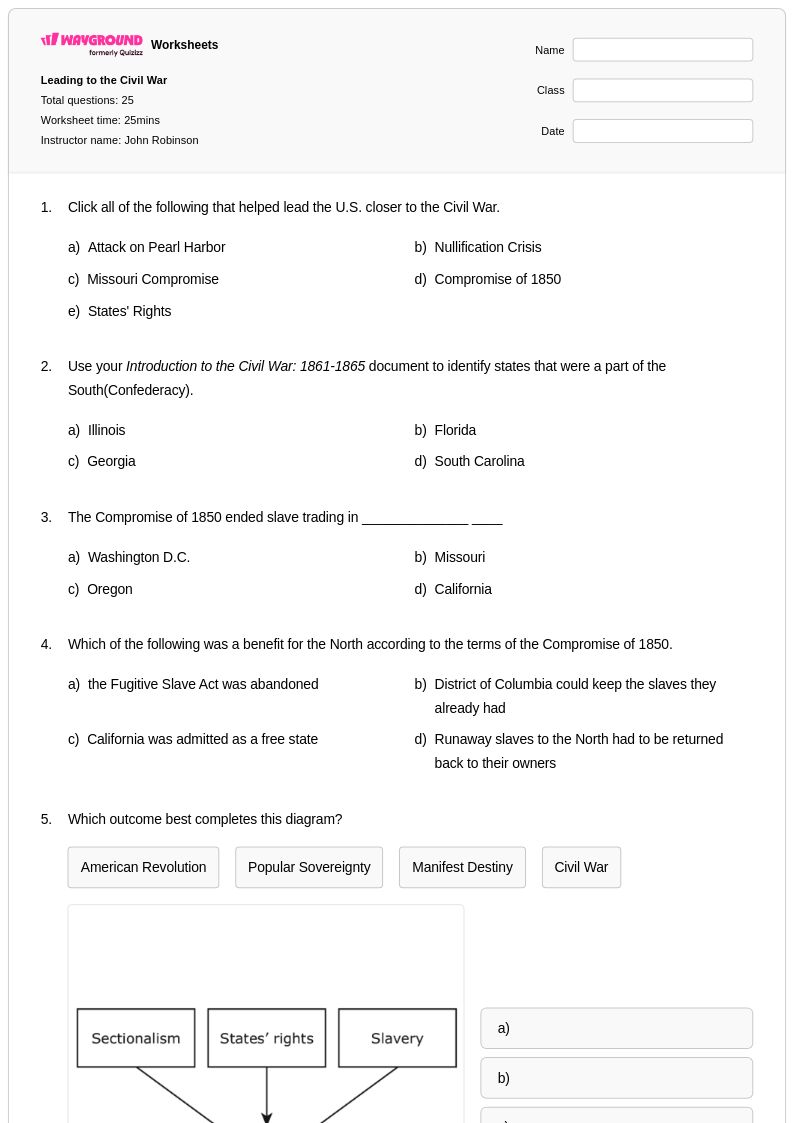
25 Q
8th - Uni
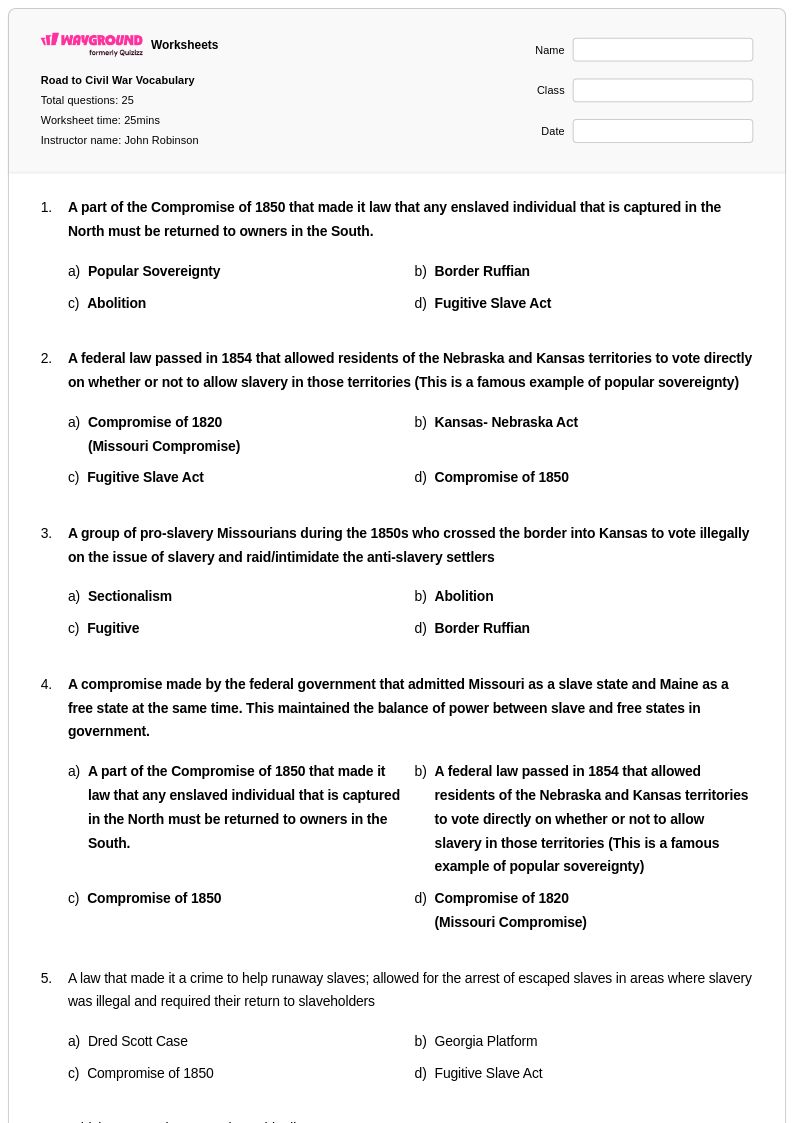
25 Q
8th - Uni
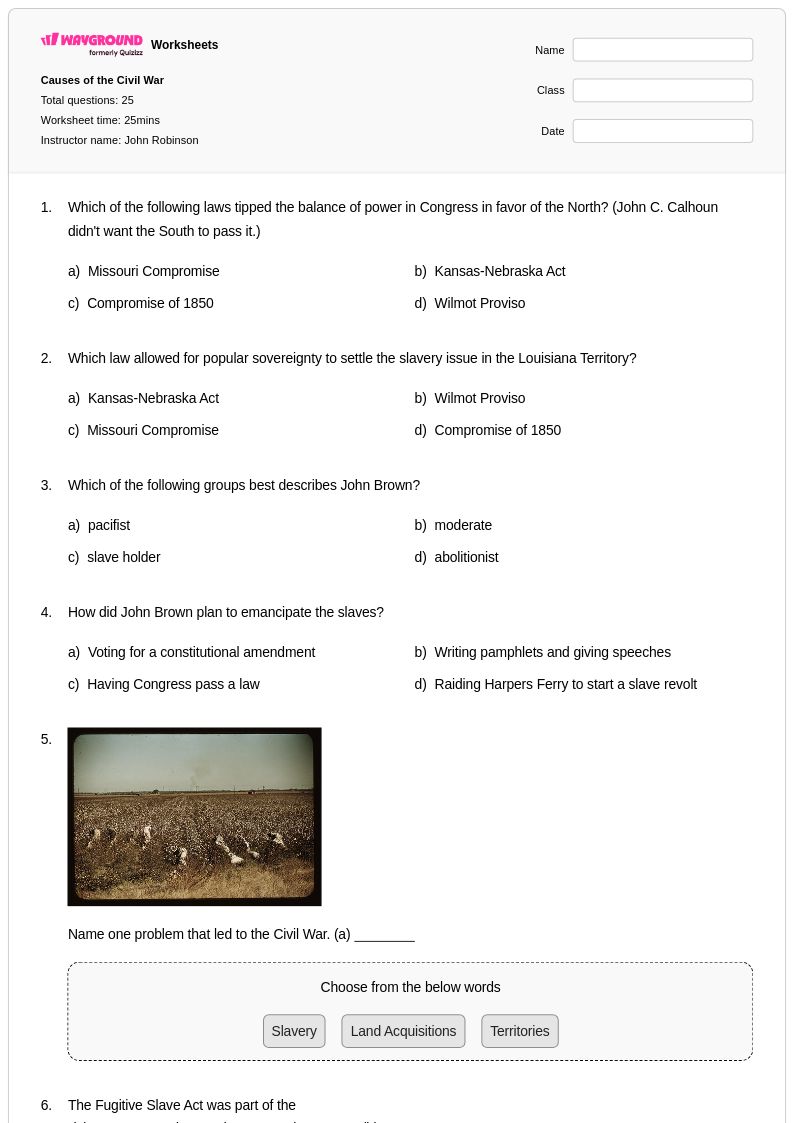
25 Q
8th - Uni
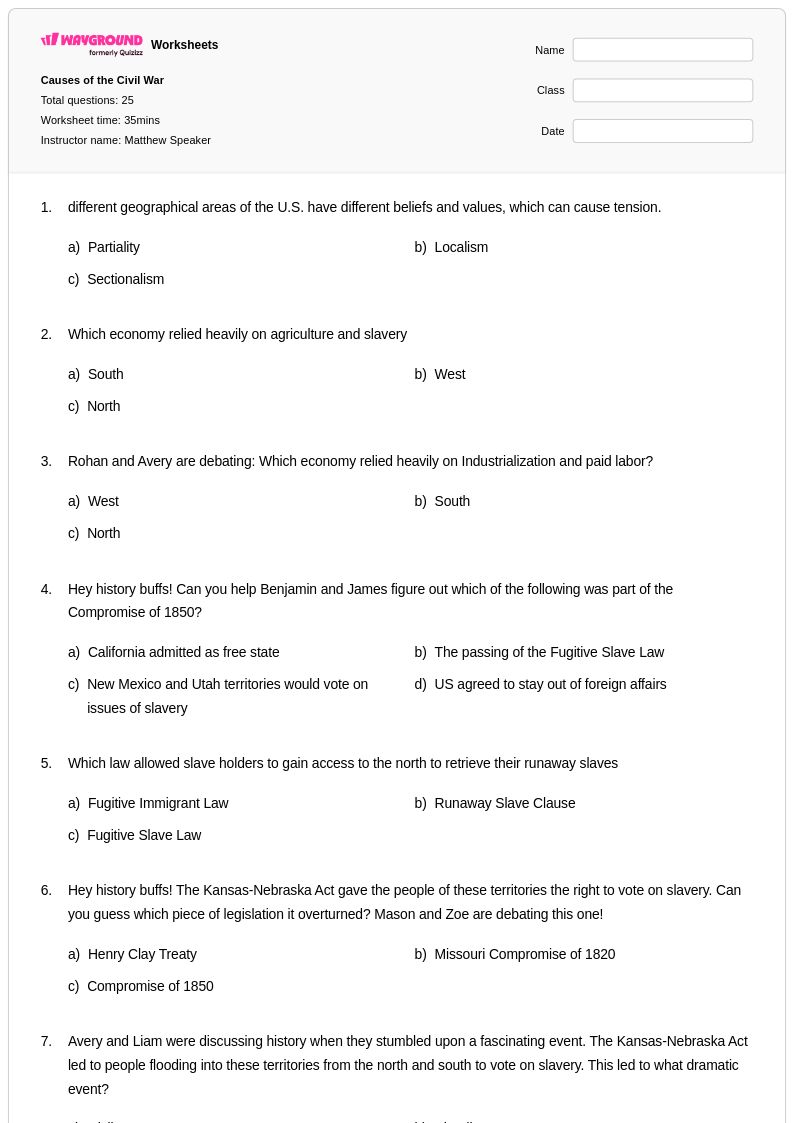
25 Q
9th - Uni
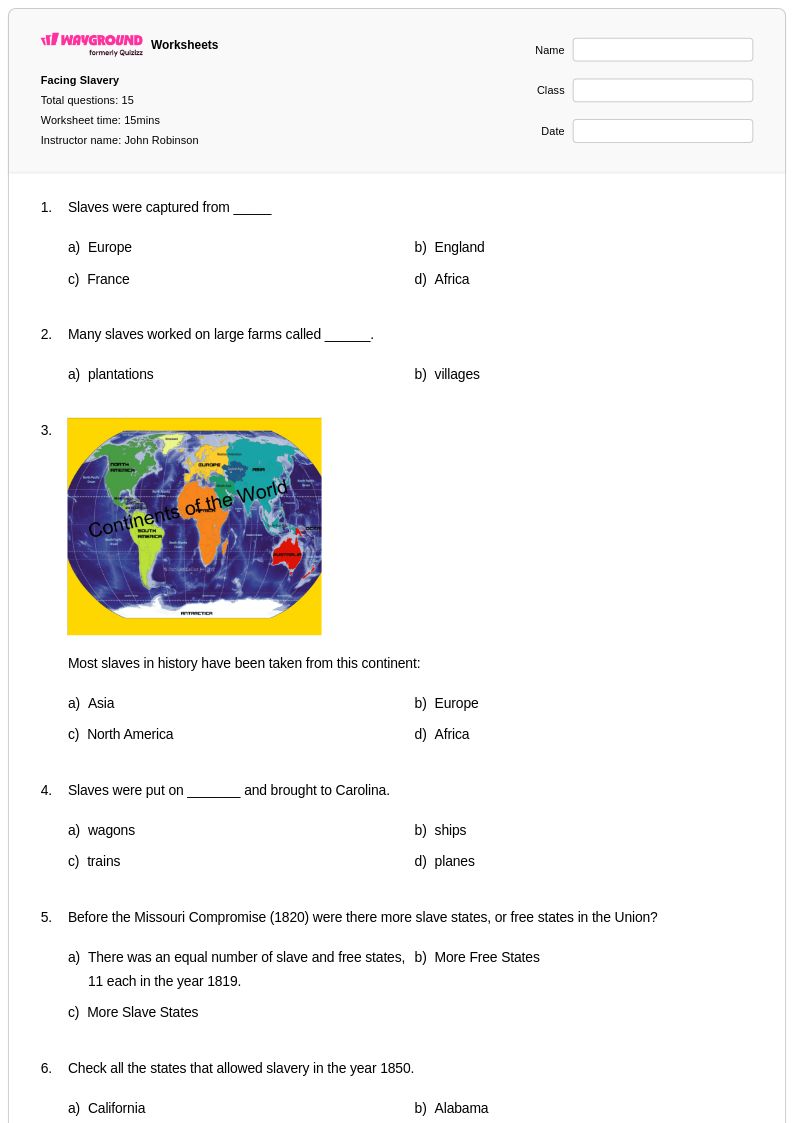
15 Q
8th - Uni
Explore Compromise of 1850 Worksheets by Grades
Explore Other Subject Worksheets for class 11
Explore printable Compromise of 1850 worksheets for Class 11
The Compromise of 1850 worksheets available through Wayground (formerly Quizizz) provide Class 11 students with comprehensive resources to examine this pivotal moment in American history when Congress attempted to resolve growing tensions between free and slave states. These expertly designed worksheets strengthen critical thinking skills by guiding students through the complex legislative package that included the admission of California as a free state, the implementation of popular sovereignty in Utah and New Mexico territories, the abolition of the slave trade in Washington D.C., and the passage of the stricter Fugitive Slave Act. Students engage with primary source documents, analyze the political compromises crafted by Henry Clay, Daniel Webster, and Stephen Douglas, and evaluate the short-term and long-term consequences of these measures on sectional divisions. Each worksheet includes detailed answer keys and practice problems that challenge students to assess how the Compromise of 1850 temporarily delayed but ultimately failed to prevent the Civil War, with free printable pdf formats ensuring easy classroom distribution and homework assignments.
Wayground (formerly Quizizz) supports social studies educators with millions of teacher-created resources specifically focused on antebellum American history and the Compromise of 1850, featuring robust search and filtering capabilities that allow instructors to quickly locate materials aligned with state and national history standards. The platform's differentiation tools enable teachers to customize worksheets for varying skill levels within their Class 11 classrooms, ensuring that advanced students can explore the constitutional implications of popular sovereignty while struggling learners receive additional scaffolding to understand basic cause-and-effect relationships. Available in both printable and digital formats including downloadable pdf files, these worksheet collections support diverse instructional approaches from traditional paper-based activities to interactive online assignments. Teachers utilize these flexible resources for lesson planning, targeted remediation for students who struggle with complex political concepts, enrichment activities that connect the Compromise of 1850 to broader themes of sectionalism and federalism, and regular skill practice that prepares students for standardized assessments and advanced placement examinations.
FAQs
How do I teach the Compromise of 1850 to middle or high school students?
What are the key provisions of the Compromise of 1850 students need to know?
What exercises help students analyze the Compromise of 1850?
What mistakes do students commonly make when learning about the Compromise of 1850?
How do I use Compromise of 1850 worksheets in my classroom?
How does the Compromise of 1850 connect to the Civil War, and how do I teach that link?