Free Printable Convection in the Mantle Worksheets for Class 12
Explore Wayground's comprehensive Class 12 convection in the mantle worksheets featuring free printables, practice problems, and detailed answer keys to help students master Earth's internal heat transfer processes and plate tectonics mechanisms.
Explore printable Convection in the Mantle worksheets for Class 12
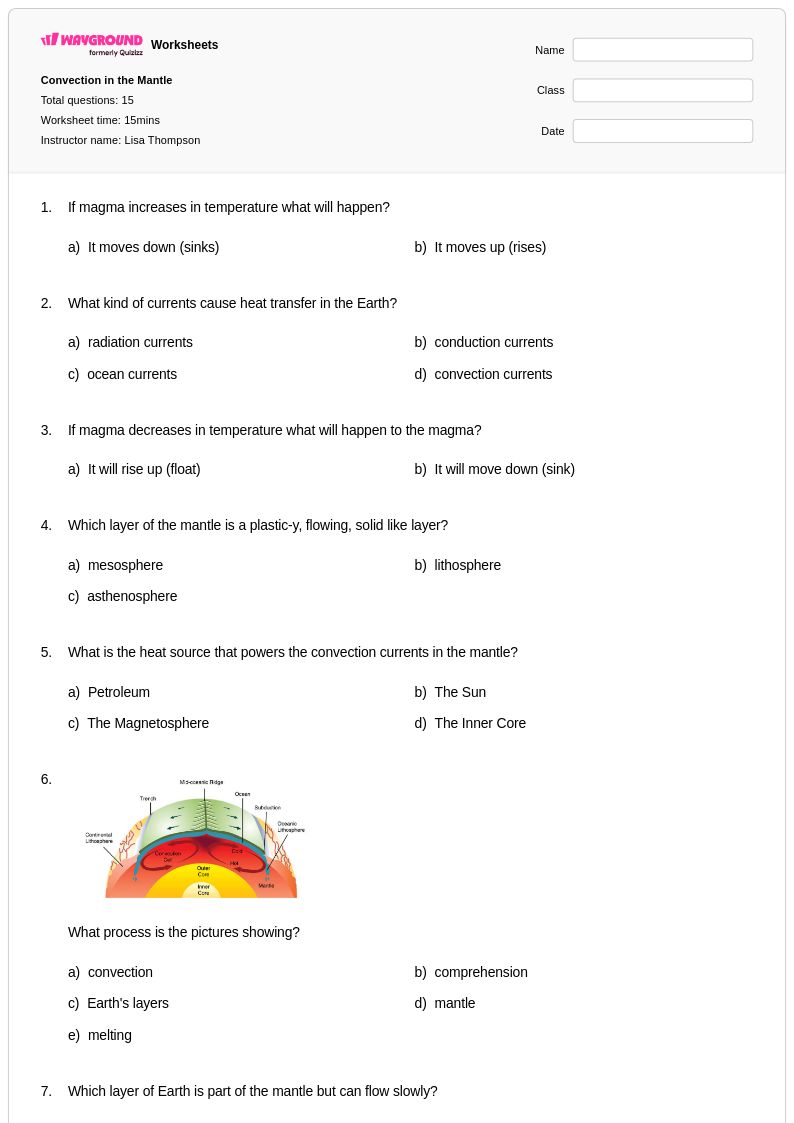
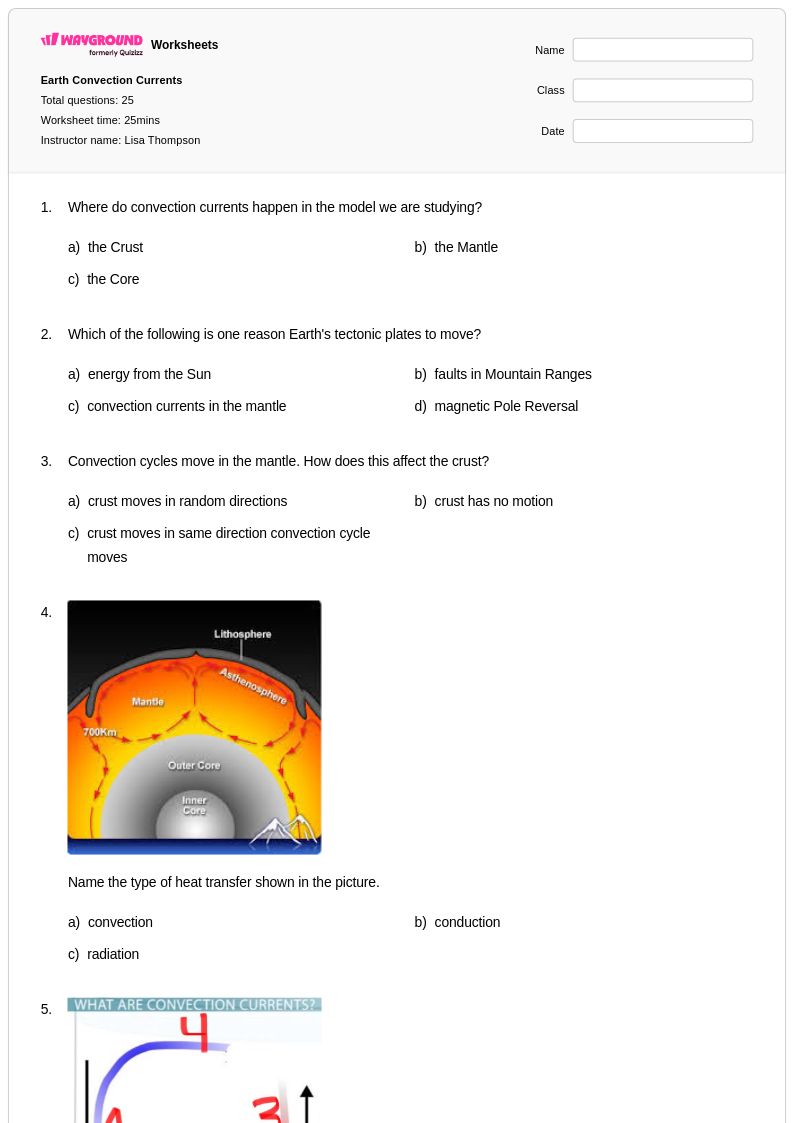
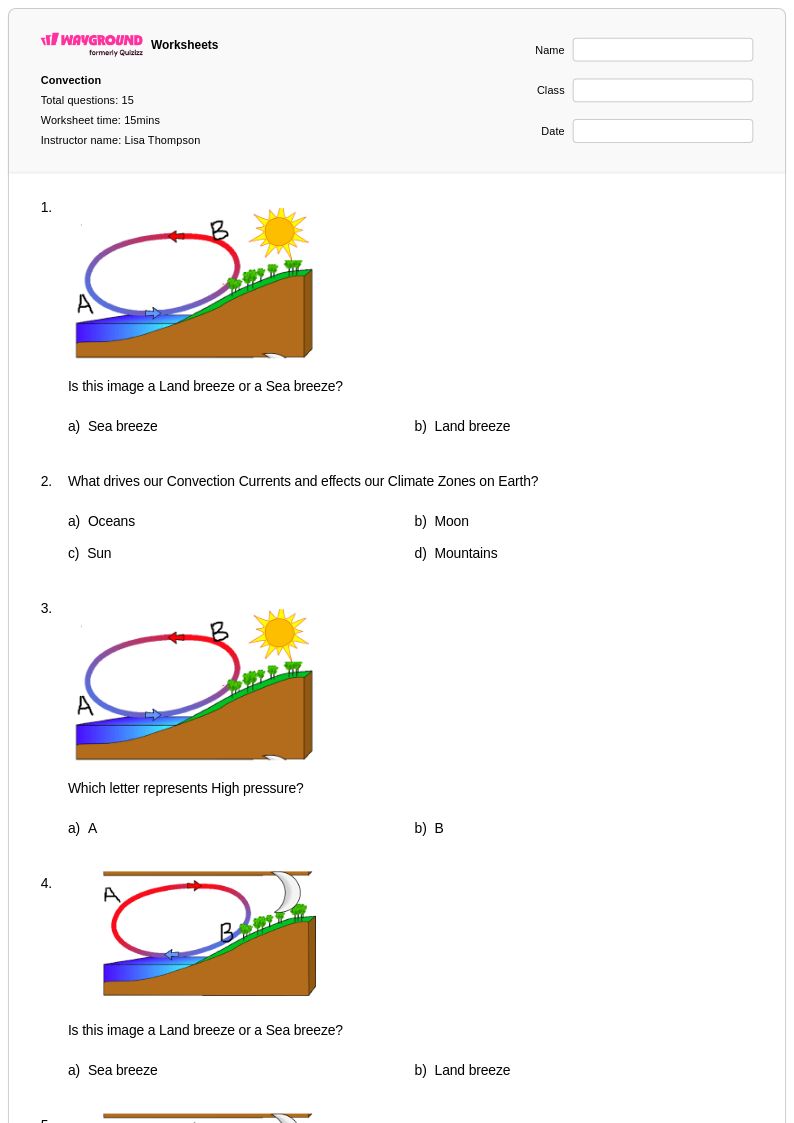
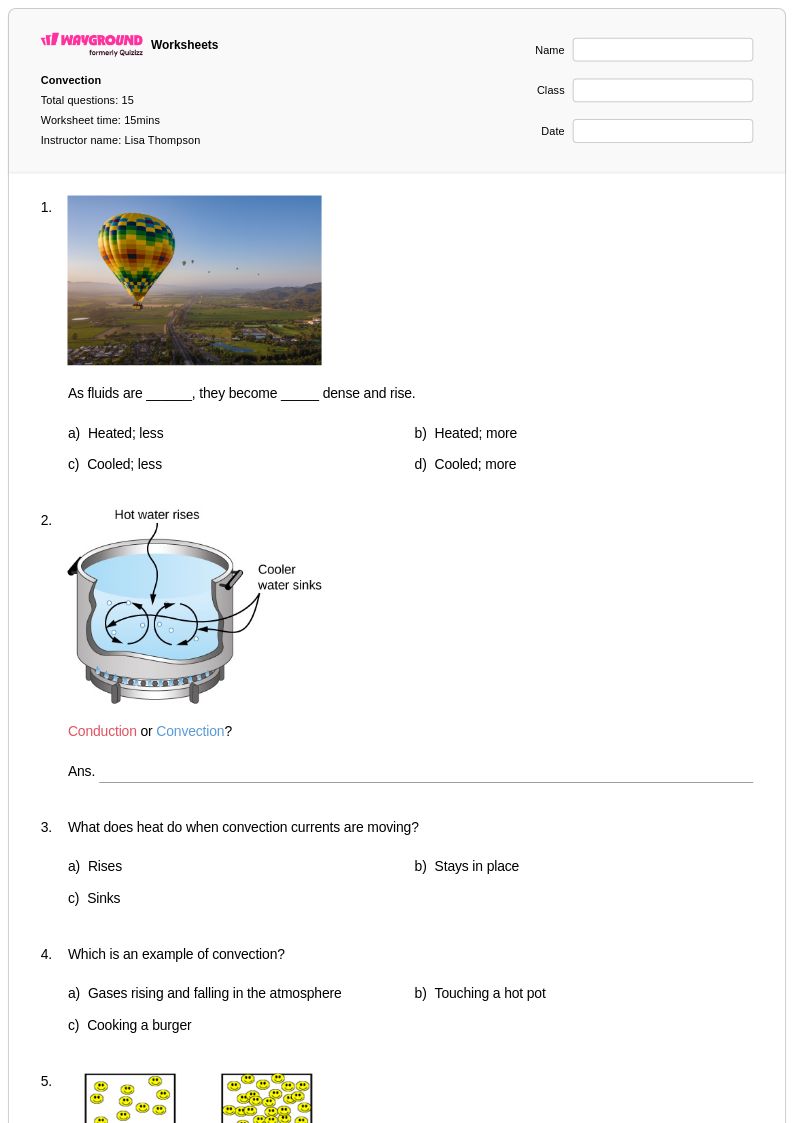
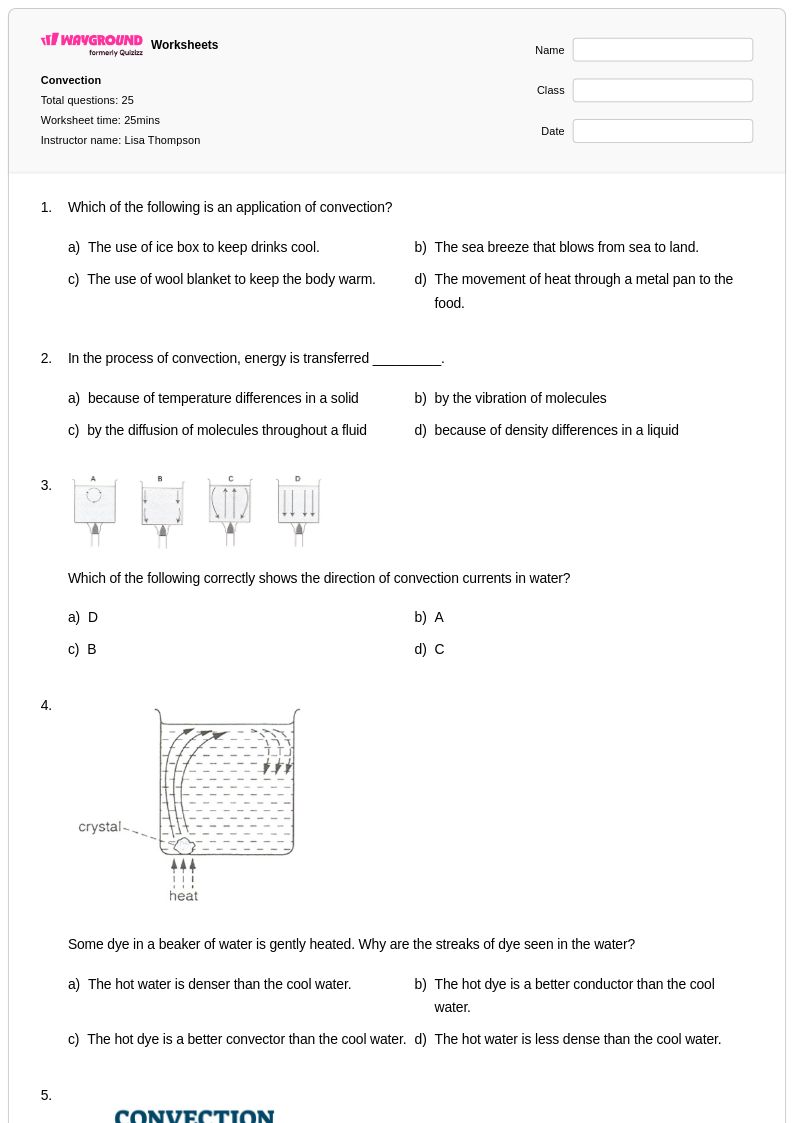
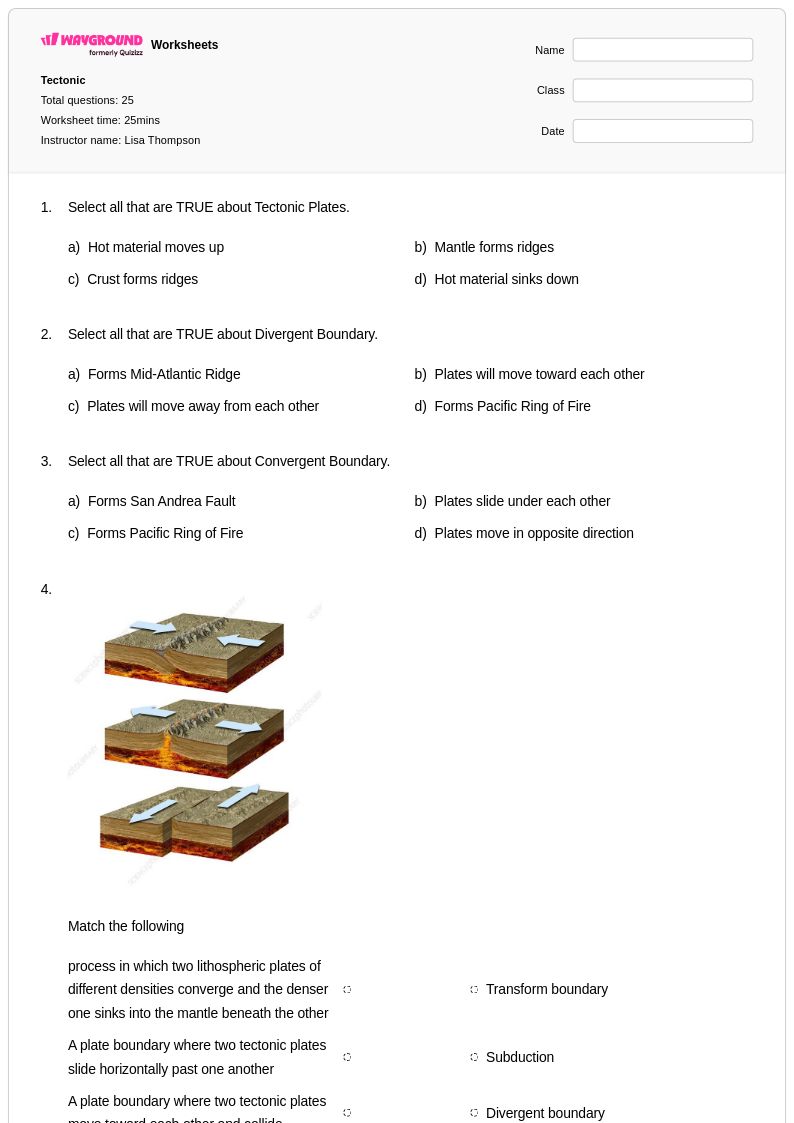
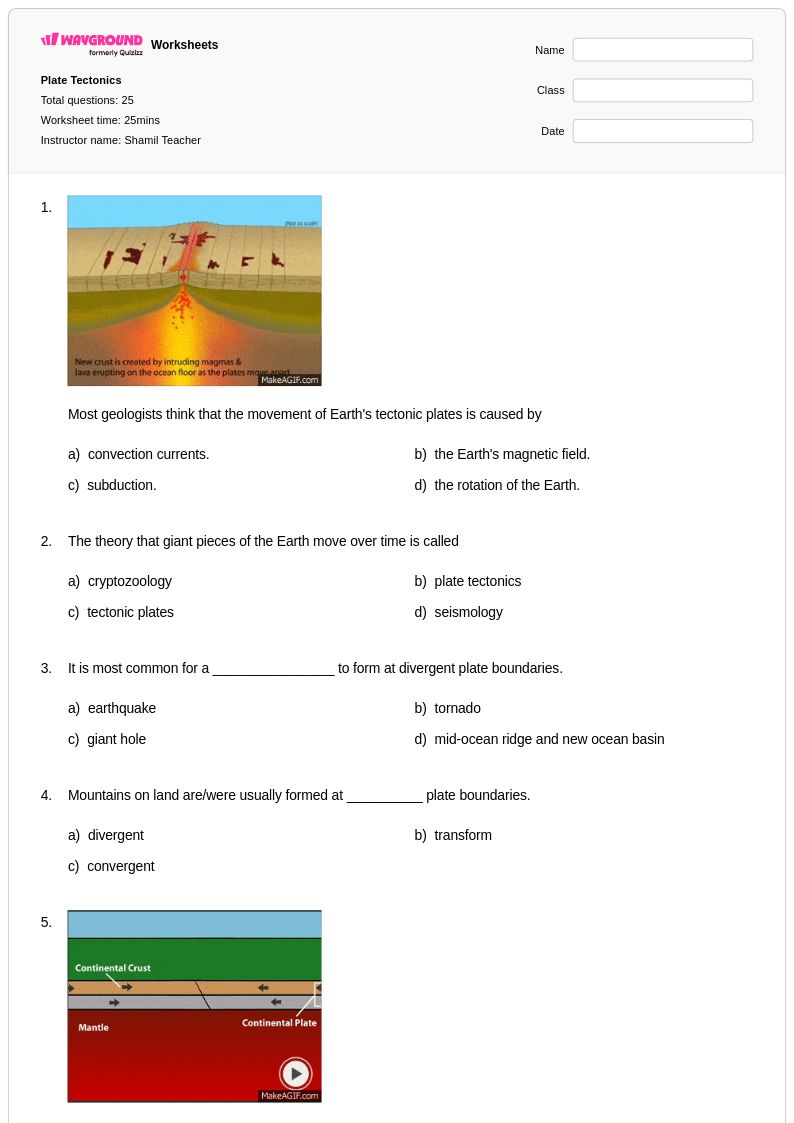
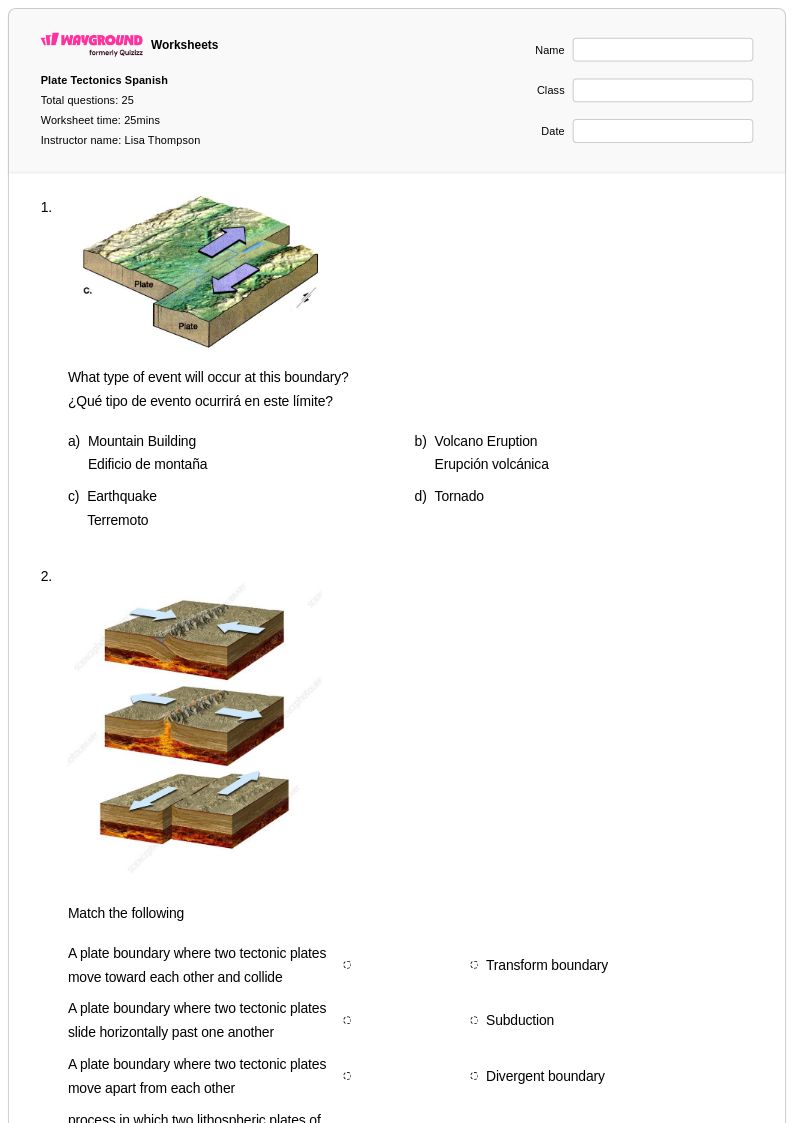
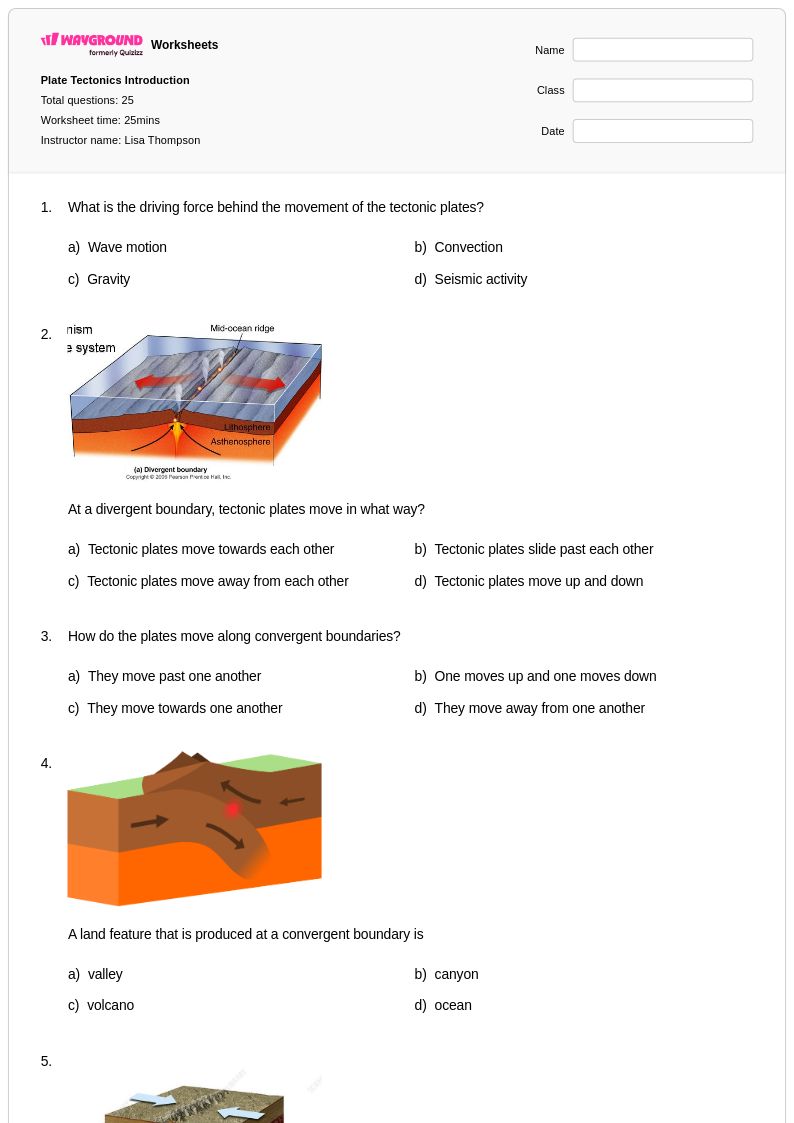
Convection in the Mantle worksheets for Class 12 students available through Wayground (formerly Quizizz) provide comprehensive exploration of the thermal processes driving Earth's internal dynamics. These expertly crafted educational materials strengthen students' understanding of heat transfer mechanisms within Earth's mantle, including the formation of convection currents, their relationship to plate tectonics, and the role of temperature and density variations in creating large-scale geological processes. The worksheets feature detailed practice problems that challenge students to analyze mantle plume behavior, calculate thermal gradients, and interpret seismic data related to convection patterns. Each resource includes a complete answer key and is available as free printable materials in convenient PDF format, allowing educators to seamlessly integrate these activities into their Earth and Space Science curriculum while reinforcing critical concepts about planetary thermal evolution.
Wayground (formerly Quizizz) supports educators with an extensive collection of teacher-created Convection in the Mantle resources, drawing from millions of high-quality materials developed by experienced science professionals. The platform's robust search and filtering capabilities enable teachers to quickly locate worksheets that align with specific learning standards and match their students' academic needs. Advanced differentiation tools allow educators to customize content difficulty levels, modify problem sets, and adapt materials for diverse learning styles, while the dual availability of printable and digital formats, including downloadable PDFs, ensures flexible classroom implementation. These comprehensive features streamline lesson planning by providing ready-to-use materials for skill practice, targeted remediation for struggling students, and enrichment opportunities for advanced learners exploring complex geophysical processes.
FAQs
How do I teach convection in the mantle to middle school students?
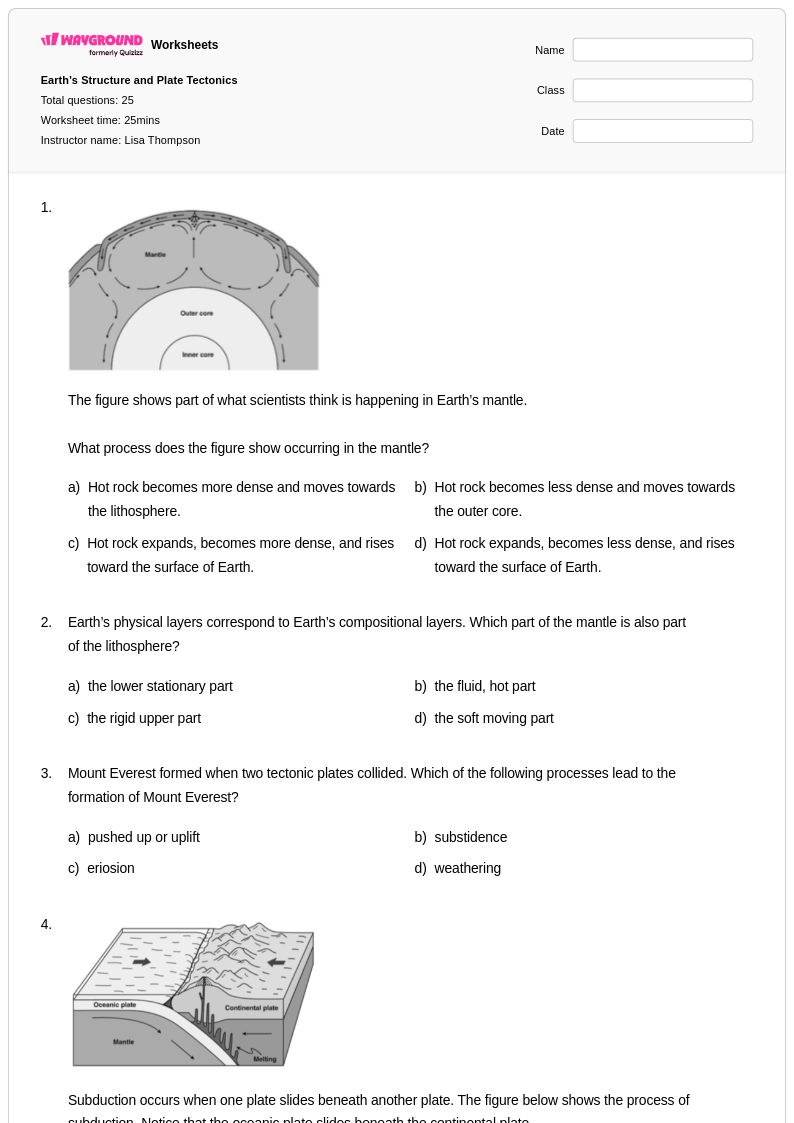
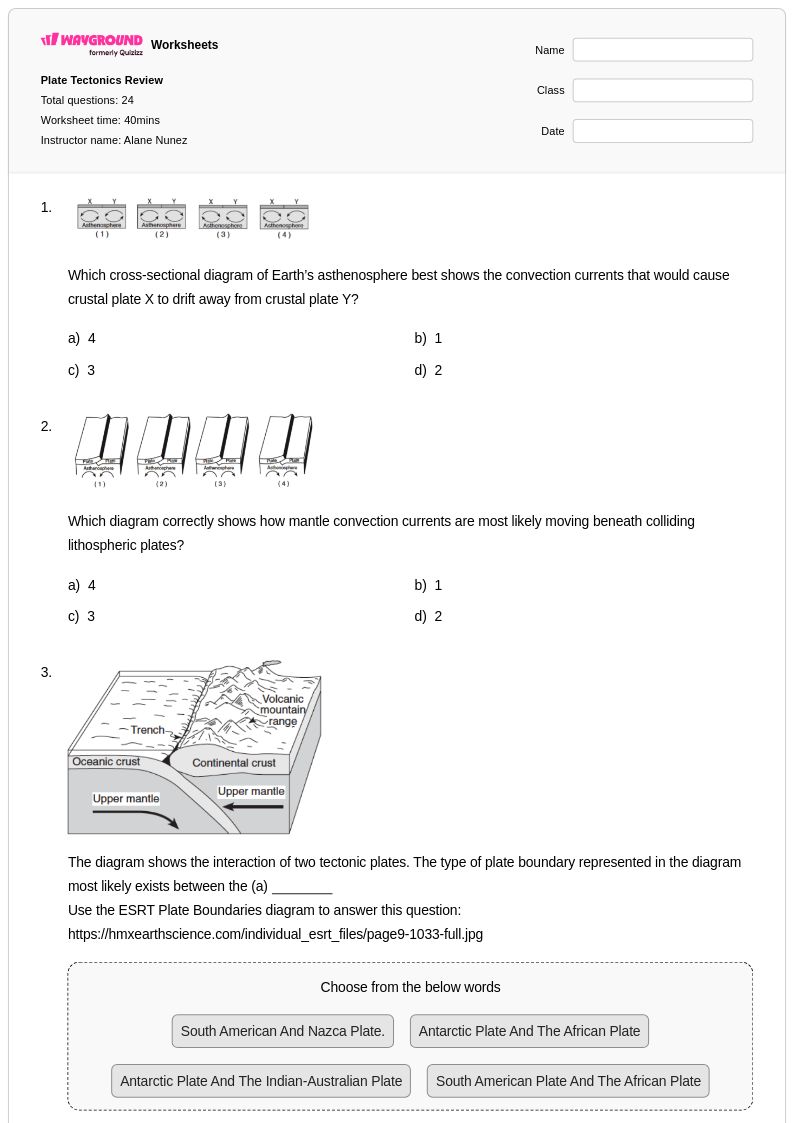
Start by building intuition with a tangible analogy: heating a pot of water produces visible circulation as hot water rises and cool water sinks, which mirrors how heat-driven rock movement works in Earth's mantle. From there, connect this mechanism to plate tectonics by explaining how convection currents in the asthenosphere drag tectonic plates, causing continental drift, seafloor spreading, and volcanic activity. Visual diagrams showing temperature gradients and density differences within the mantle help students move from the abstract concept to a concrete model of Earth's interior dynamics.
What exercises help students practice understanding convection currents in the mantle?
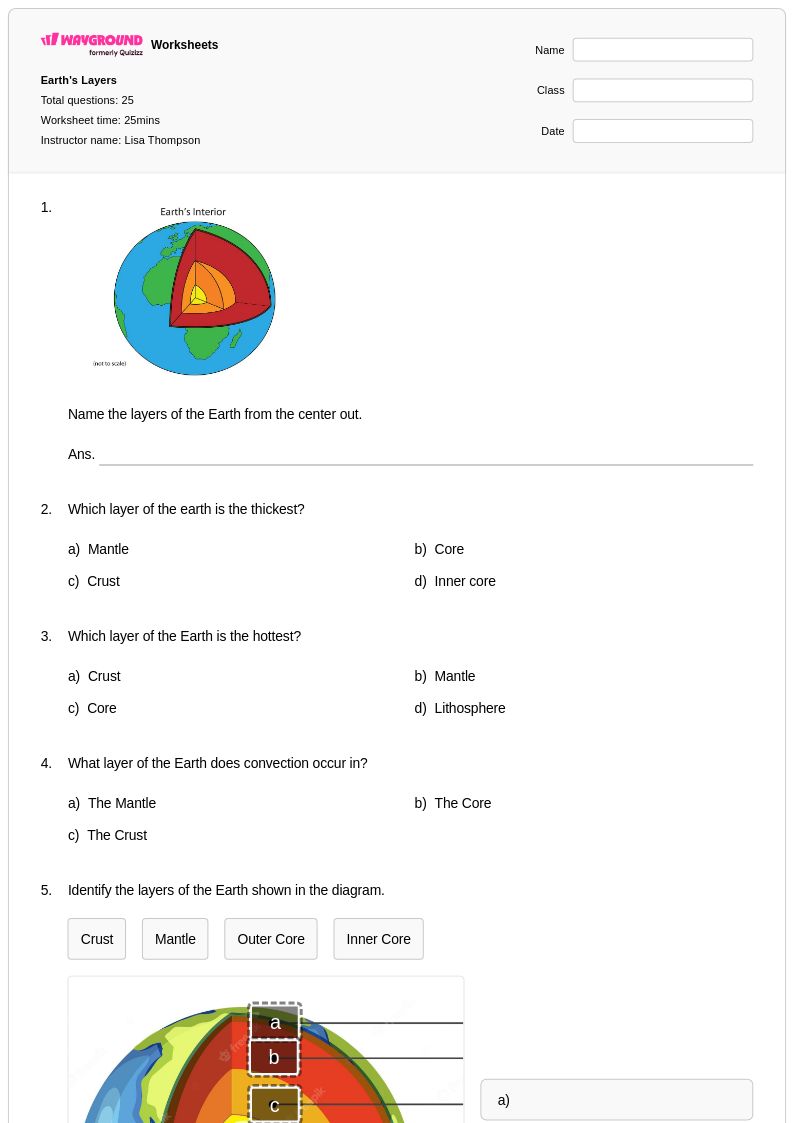
Effective practice exercises include diagram labeling tasks where students identify rising hot material, sinking cooler rock, and the asthenosphere layer, as well as cause-and-effect problems that ask students to trace how a mantle plume leads to volcanic hotspot activity. Scenario-based questions connecting convection to observable outcomes like subduction zones and mid-ocean ridges reinforce the relationship between thermal energy and tectonic movement. Practice problems involving temperature gradients and density variations challenge students to apply the underlying physics rather than simply recall definitions.
What misconceptions do students commonly have about convection in the mantle?
A common misconception is that the mantle is liquid magma, when in fact it is solid rock that behaves plastically over geological timescales, allowing it to flow very slowly under heat and pressure. Students also frequently confuse convection in the mantle with conduction, not recognizing that it is the physical movement of material, not just heat transfer through contact, that drives plate motion. Another error is treating convection currents as a fast process rather than one that operates over millions of years, which can cause students to underestimate the timescales involved in continental drift.
How does convection in the mantle relate to plate tectonics?
Convection in the mantle is the primary driver of plate tectonics: as hot rock rises from deep within the mantle and cooler rock sinks, the resulting circular currents exert drag on the tectonic plates above, moving them across Earth's surface. This movement is directly responsible for seafloor spreading at divergent boundaries, subduction at convergent boundaries, and the distribution of volcanic and seismic activity along plate edges. Teaching mantle convection and plate tectonics together helps students see tectonic activity not as isolated events but as surface expressions of a continuous internal heat engine.
How can I use convection in the mantle worksheets in my classroom?
Convection in the mantle worksheets on Wayground are available as printable PDFs for traditional classroom use and in digital formats for technology-integrated instruction, and can also be hosted as an interactive quiz directly on Wayground. Teachers can use them for guided practice during a lesson, as independent homework assignments, for targeted remediation when students confuse mantle convection with other heat transfer mechanisms, or as enrichment activities that challenge advanced learners to connect mantle dynamics to earthquake distribution and mountain formation. All worksheets include complete answer keys, making them practical for both self-paced learning and teacher-led review.
How do I differentiate convection in the mantle instruction for students with different learning needs?
For students who struggle with abstract geological concepts, Wayground's Read Aloud feature can support comprehension by reading questions and content aloud, while the reduced answer choices accommodation lowers cognitive load on multiple-choice problems. Extended time settings can be applied individually to students who need more processing time without affecting how the assignment runs for the rest of the class. For advanced learners, selecting practice problems that require students to analyze mantle plumes, subduction zone mechanics, and the connection between convection and tectonic boundary types will provide appropriate challenge.