
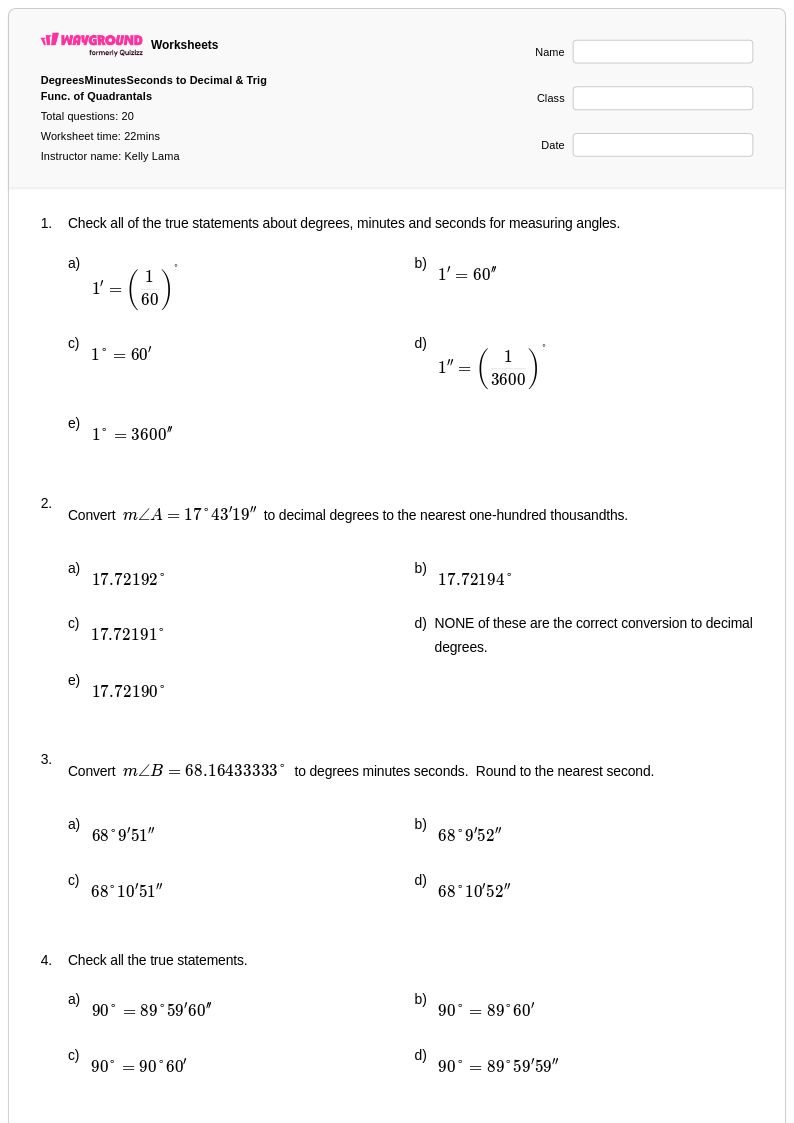
20 Q
9th - Uni
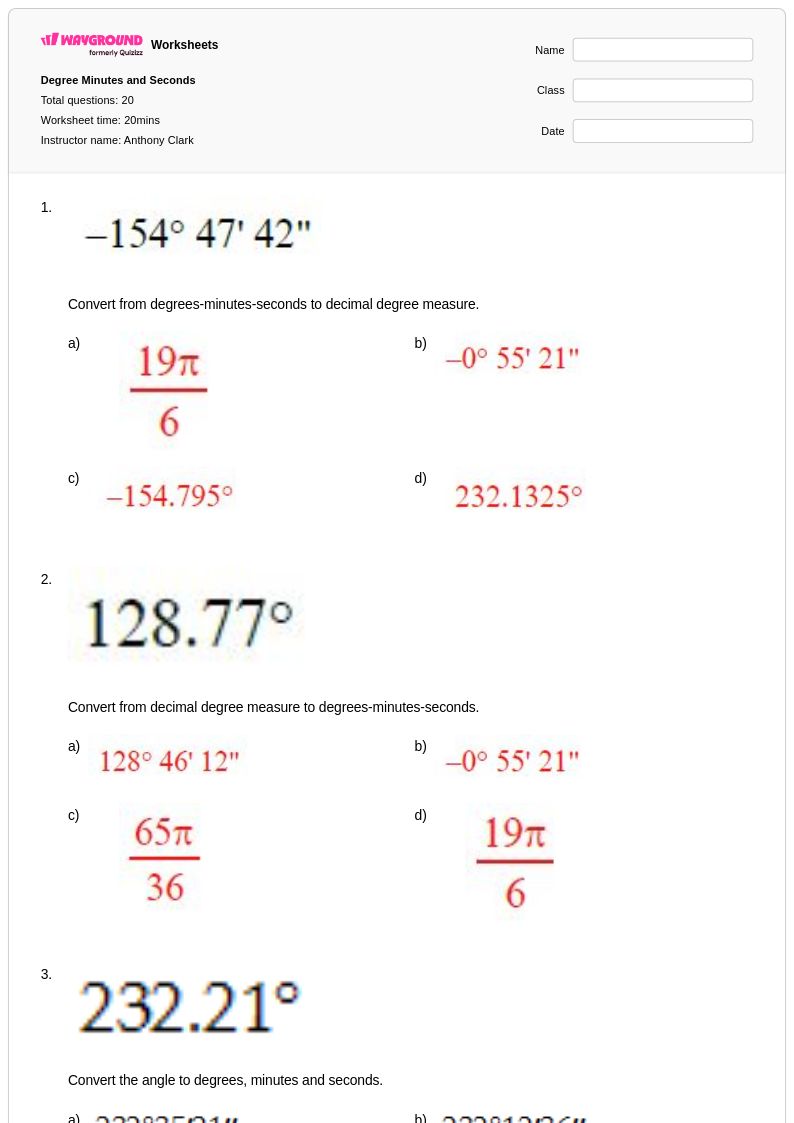
20 Q
10th - Uni
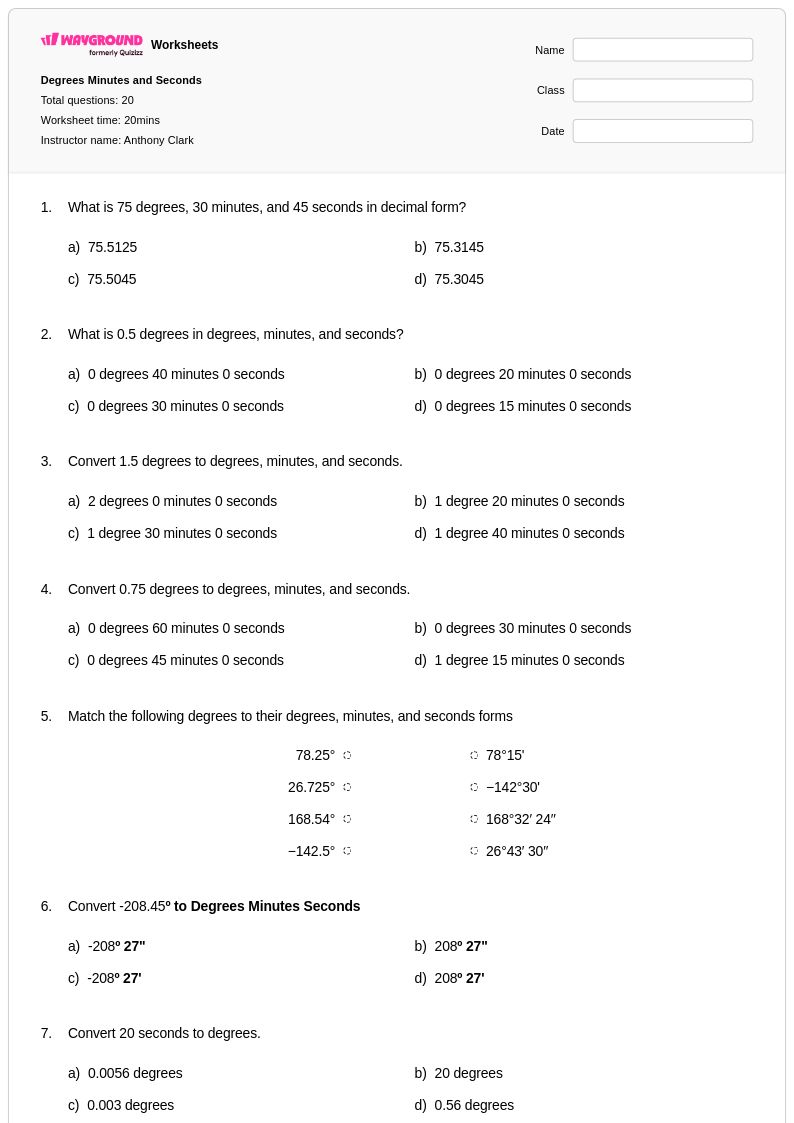
20 Q
11th - Uni
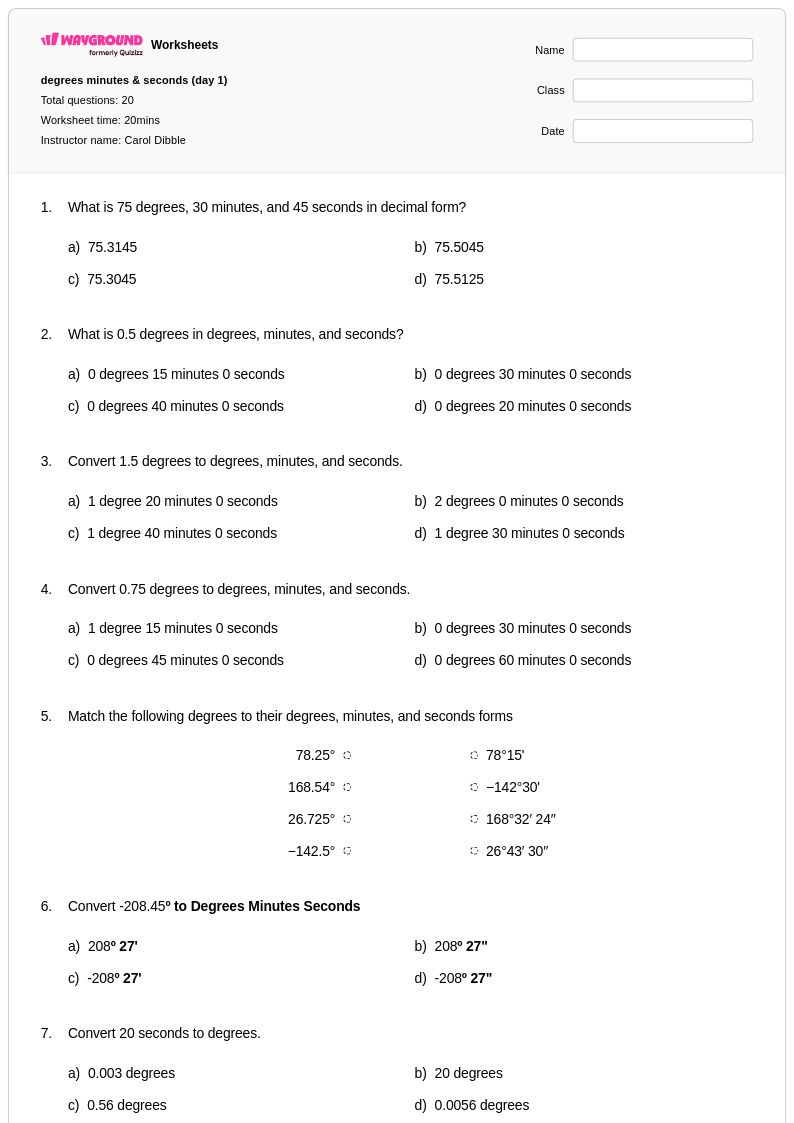
20 Q
9th - 12th
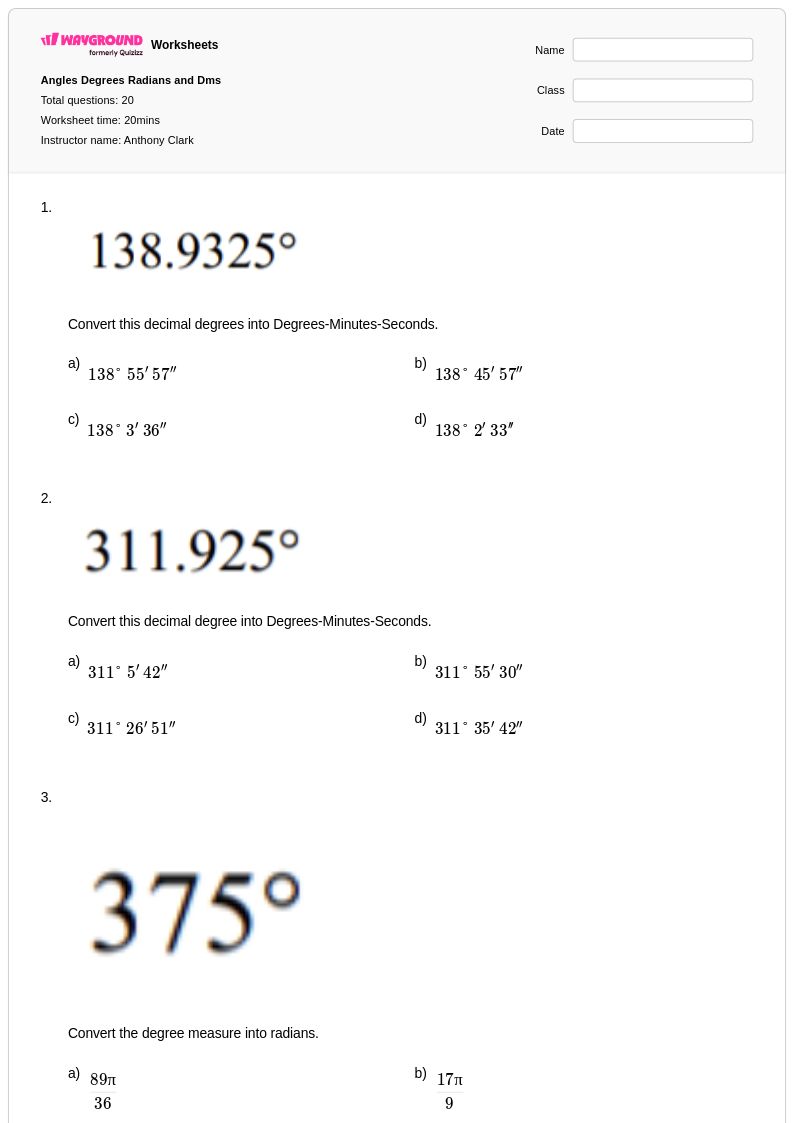
20 Q
9th - Uni
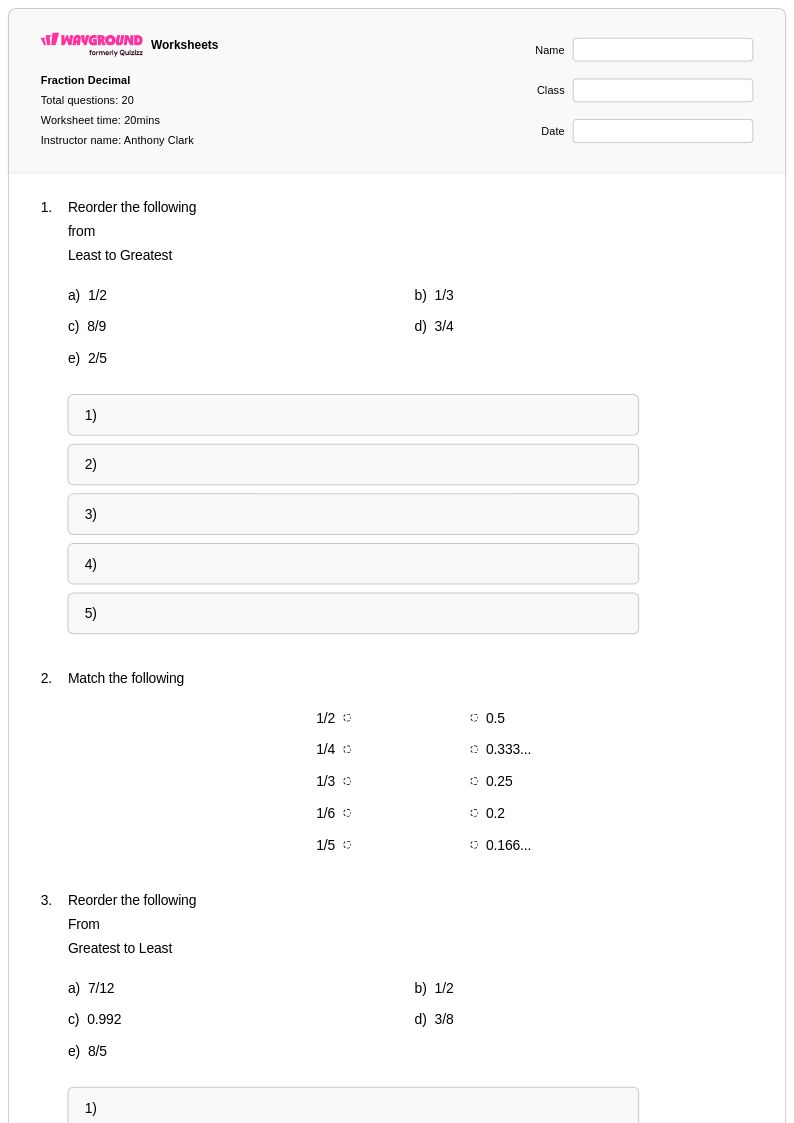
20 Q
5th - Uni
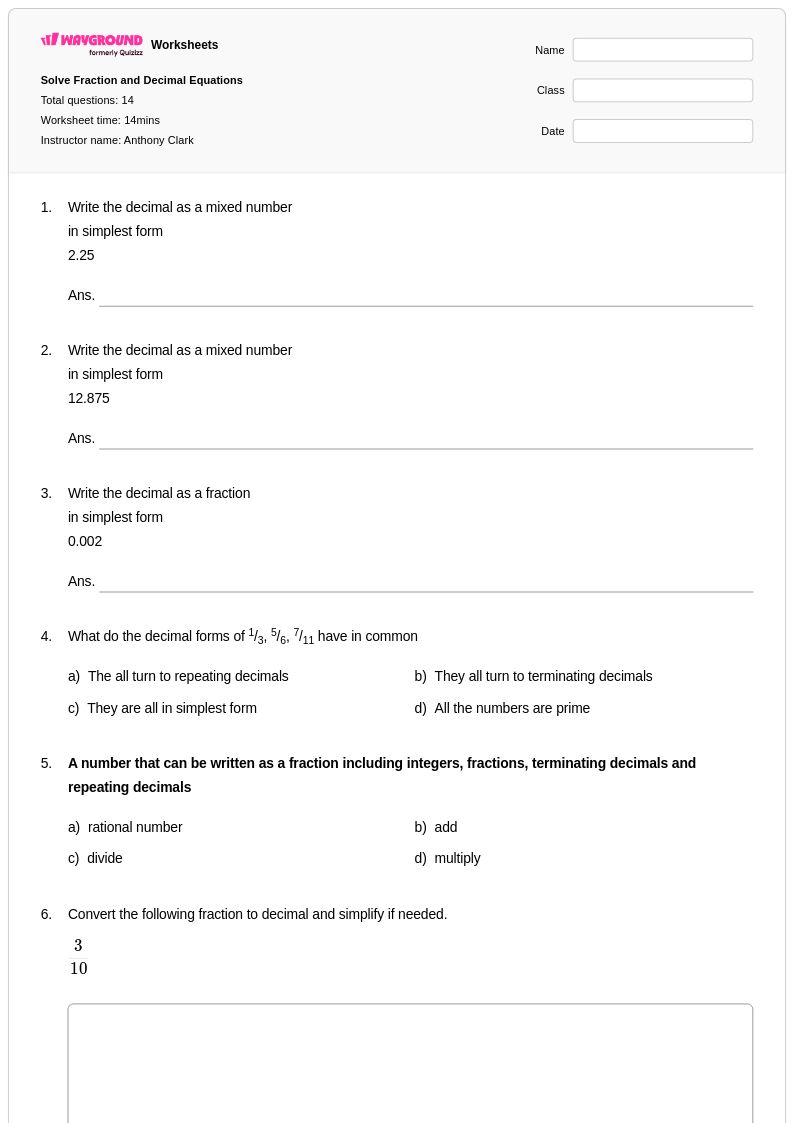
14 Q
7th - Uni
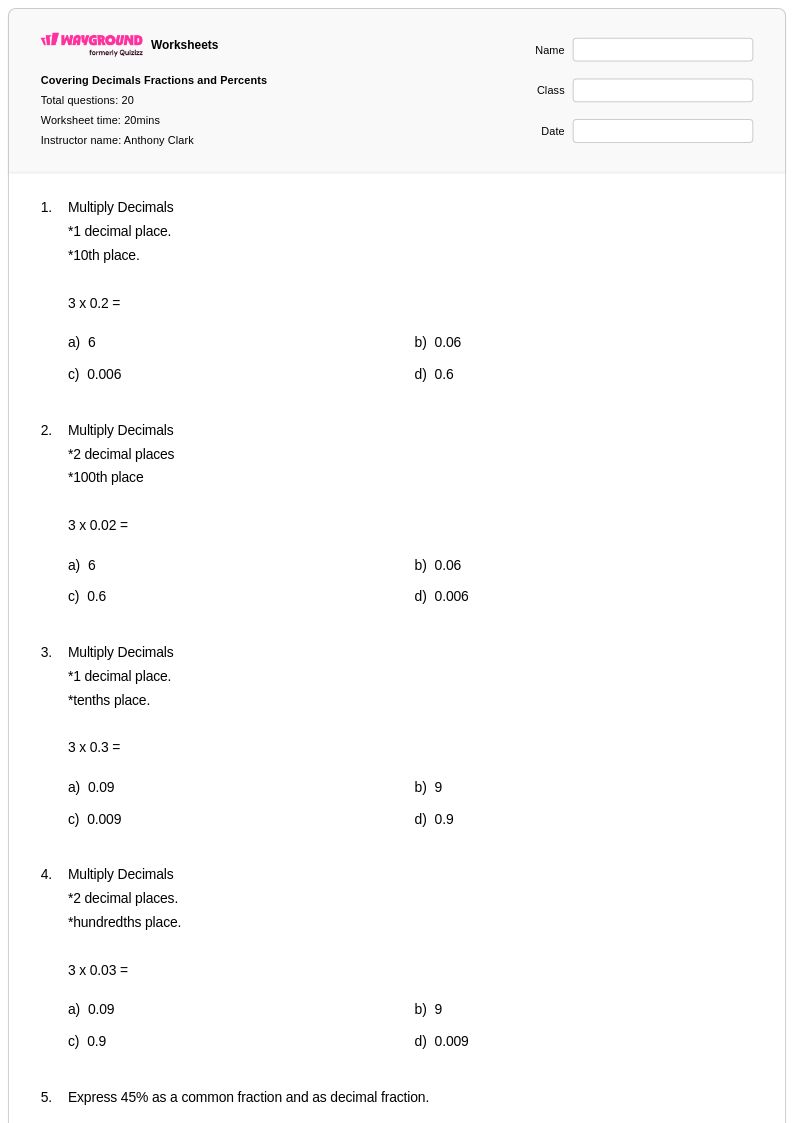
20 Q
6th - Uni
20 Q
6th - Uni
20 Q
4th - Uni
19 Q
6th - Uni
20 Q
4th - Uni
22 Q
9th - 12th
20 Q
6th - Uni
10 Q
11th
15 Q
9th - Uni
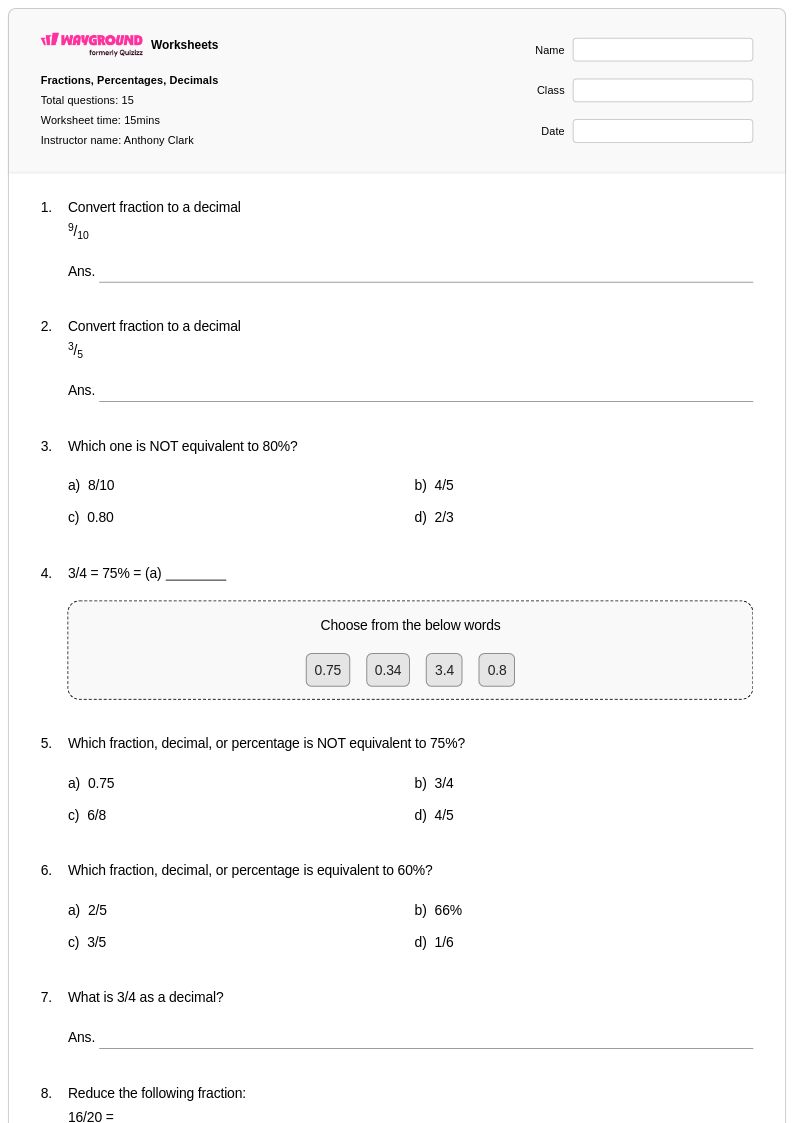
15 Q
7th - Uni
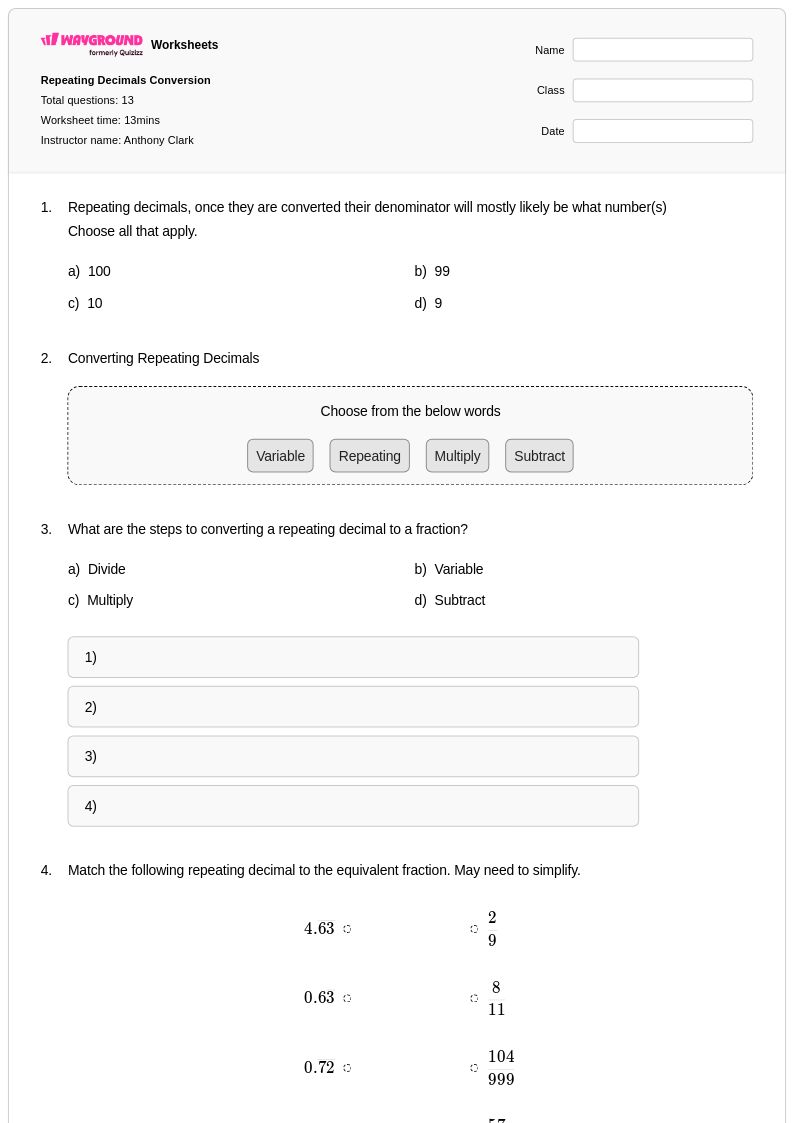
13 Q
6th - Uni
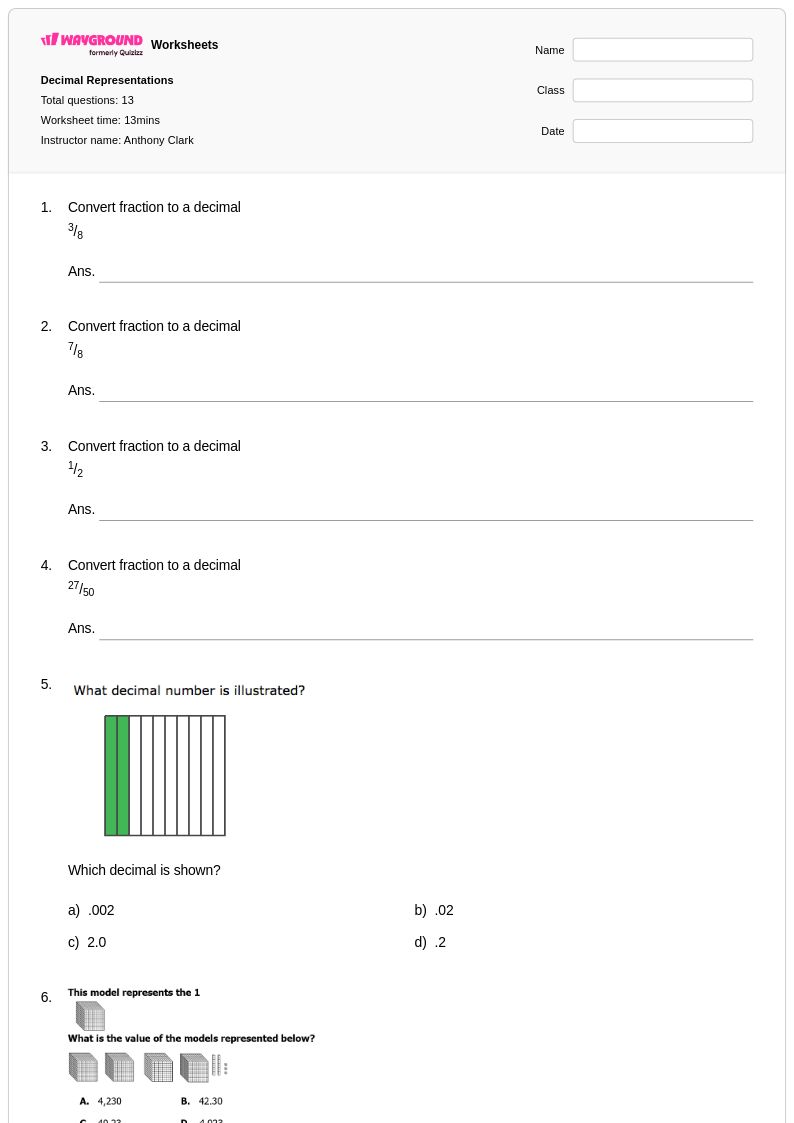
13 Q
4th - Uni
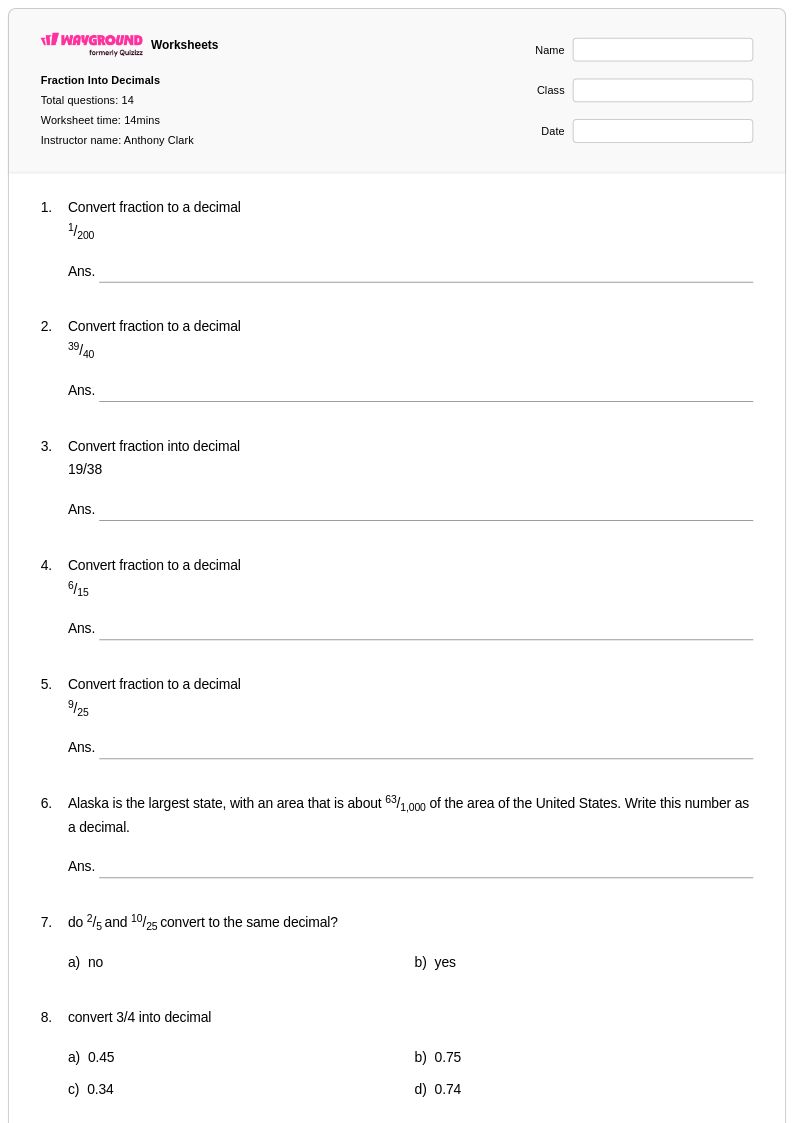
14 Q
7th - Uni
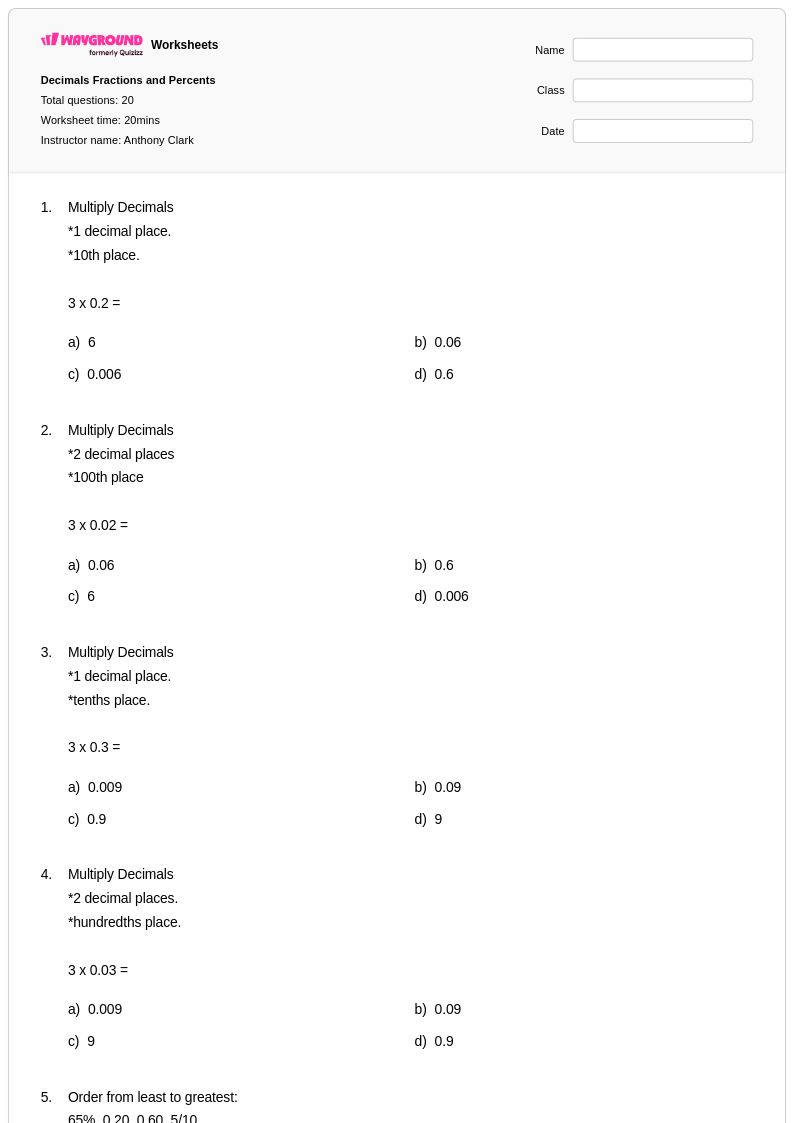
20 Q
6th - Uni
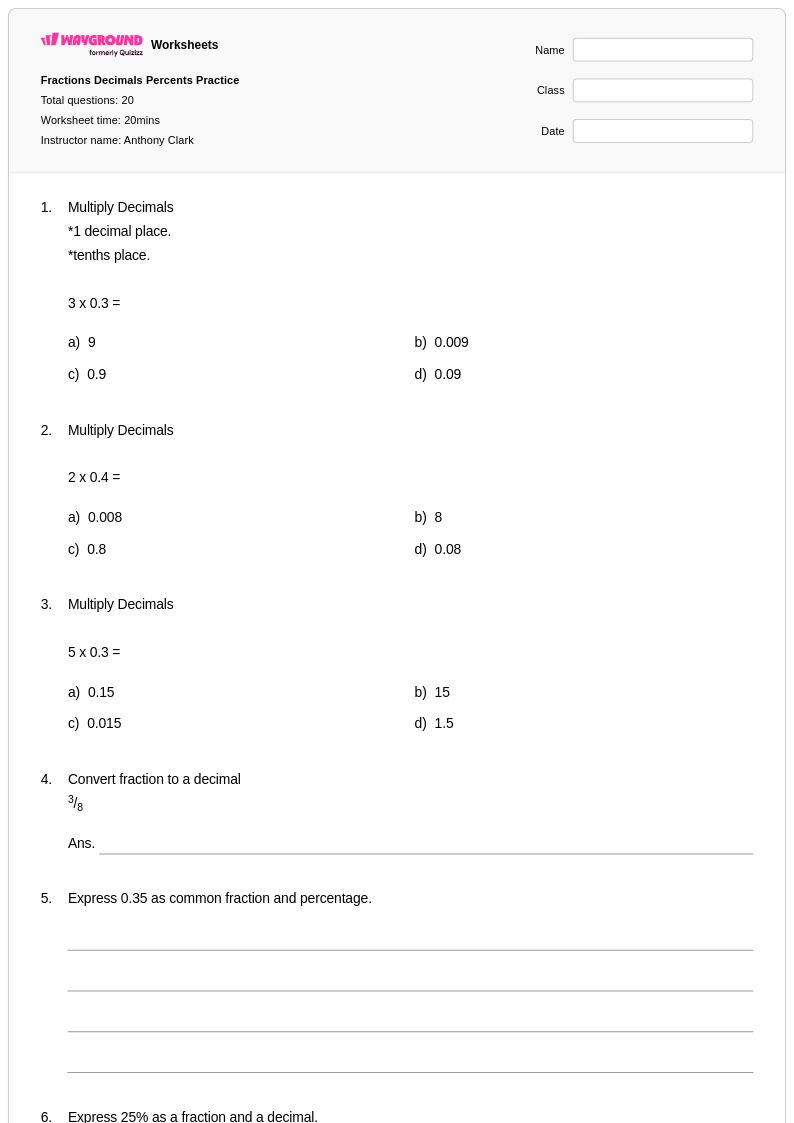
20 Q
6th - Uni
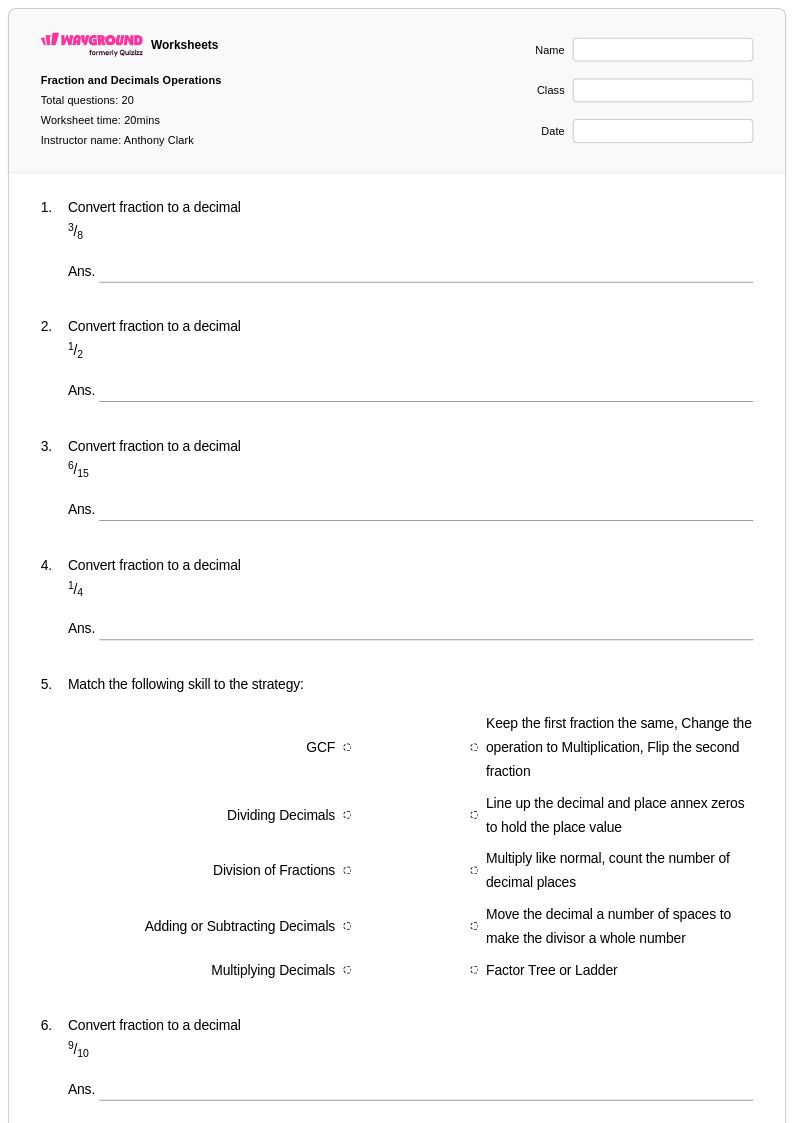
20 Q
6th - Uni
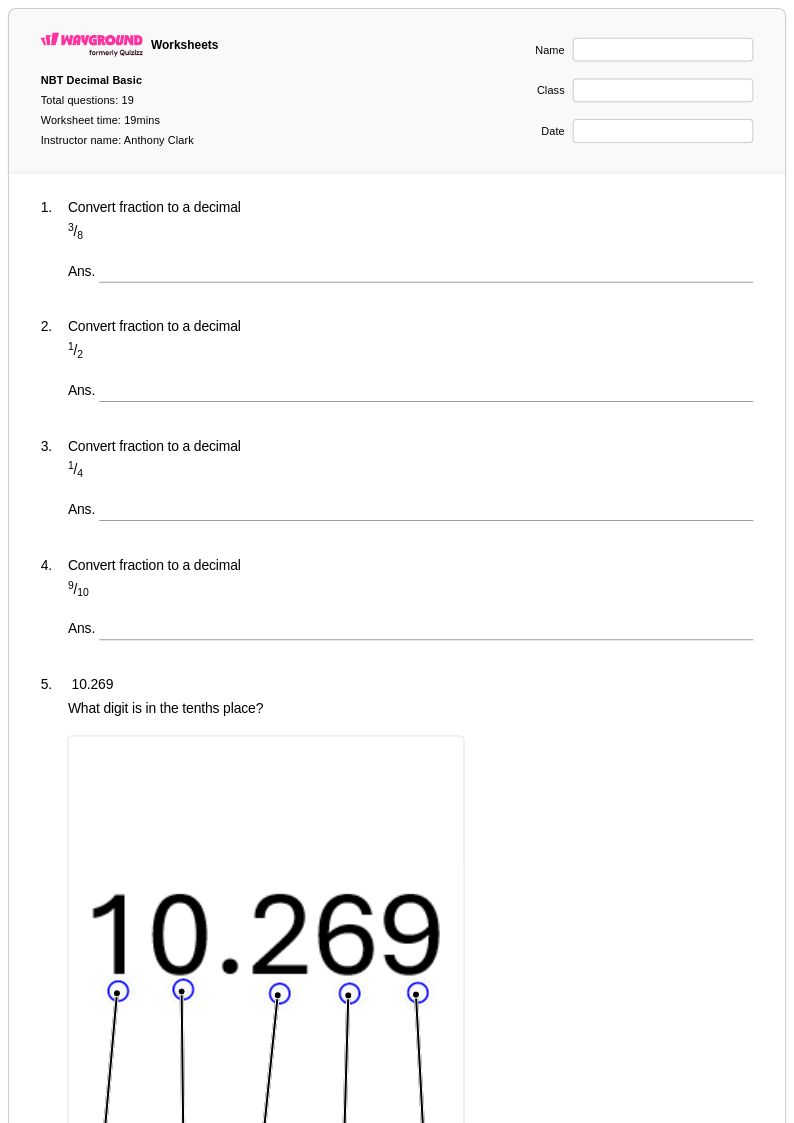
19 Q
4th - Uni
Explore Convert Degrees, Minutes and Seconds to Decimal Worksheets by Grades
Explore Other Subject Worksheets for class 11
Explore printable Convert Degrees, Minutes and Seconds to Decimal worksheets for Class 11
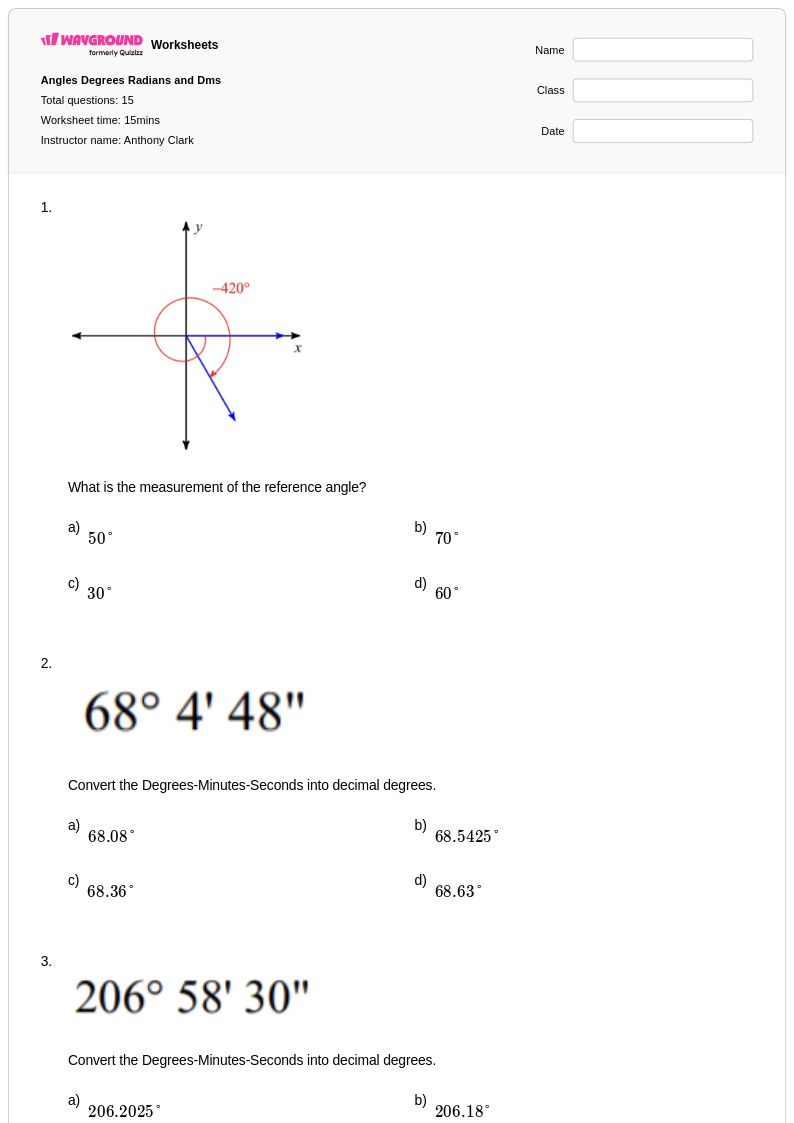
Converting degrees, minutes, and seconds to decimal form represents a crucial mathematical skill for Class 11 students, bridging the gap between traditional angle measurements and modern computational applications. Wayground's comprehensive worksheet collection focuses specifically on this conversion process, providing students with systematic practice in transforming angular measurements from the degrees-minutes-seconds (DMS) format to decimal degrees. These carefully structured worksheets strengthen students' understanding of place value relationships, fraction-to-decimal conversions, and the base-60 system used in angular measurements. Each worksheet includes detailed practice problems that progress from basic conversions to more complex scenarios, complete with answer keys that enable independent learning and self-assessment. The printable PDF format ensures accessibility for both classroom instruction and home study, while the free resources support diverse learning environments and budget constraints.
Wayground's extensive library of teacher-created resources provides educators with millions of high-quality materials specifically designed for mathematical skill development, including comprehensive collections for decimal conversions in angular measurements. The platform's advanced search and filtering capabilities allow teachers to locate Class 11 appropriate worksheets that align with curriculum standards and match their students' specific learning needs. Differentiation tools enable educators to customize worksheet difficulty levels, ensuring appropriate challenges for students across varying skill levels, from those requiring remediation in basic decimal concepts to advanced learners ready for enrichment activities. The flexible format options, including both digital and printable PDF versions, support diverse classroom management styles and technology availability, while the systematic organization facilitates efficient lesson planning and targeted skill practice sessions that reinforce this essential mathematical conversion process.
FAQs
How should I teach DMS-to-decimal conversion in Grade 11?
What worksheet practice is most effective for converting DMS to decimal degrees?
Why do students get different answers when converting degrees, minutes, and seconds?
How do I assign these Grade 11 conversion worksheets?
How can I support students who struggle with DMS conversions?
Is converting DMS to decimal degrees a Grade 11 skill?