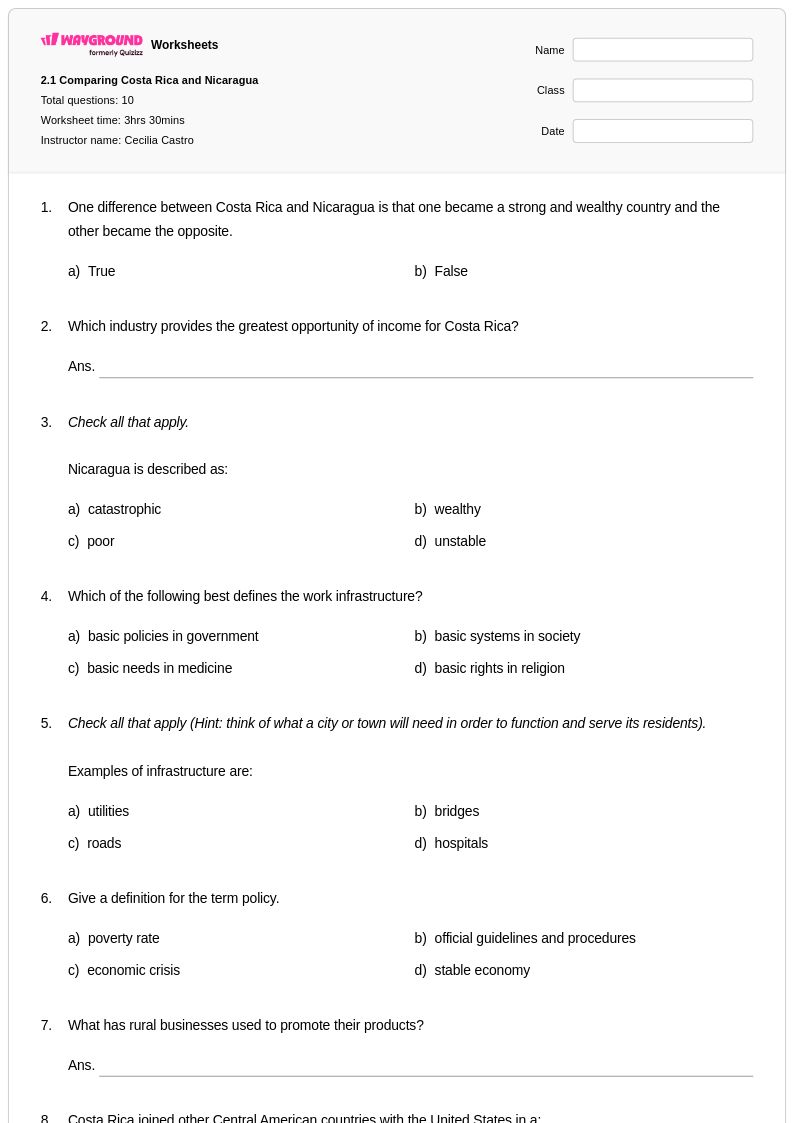
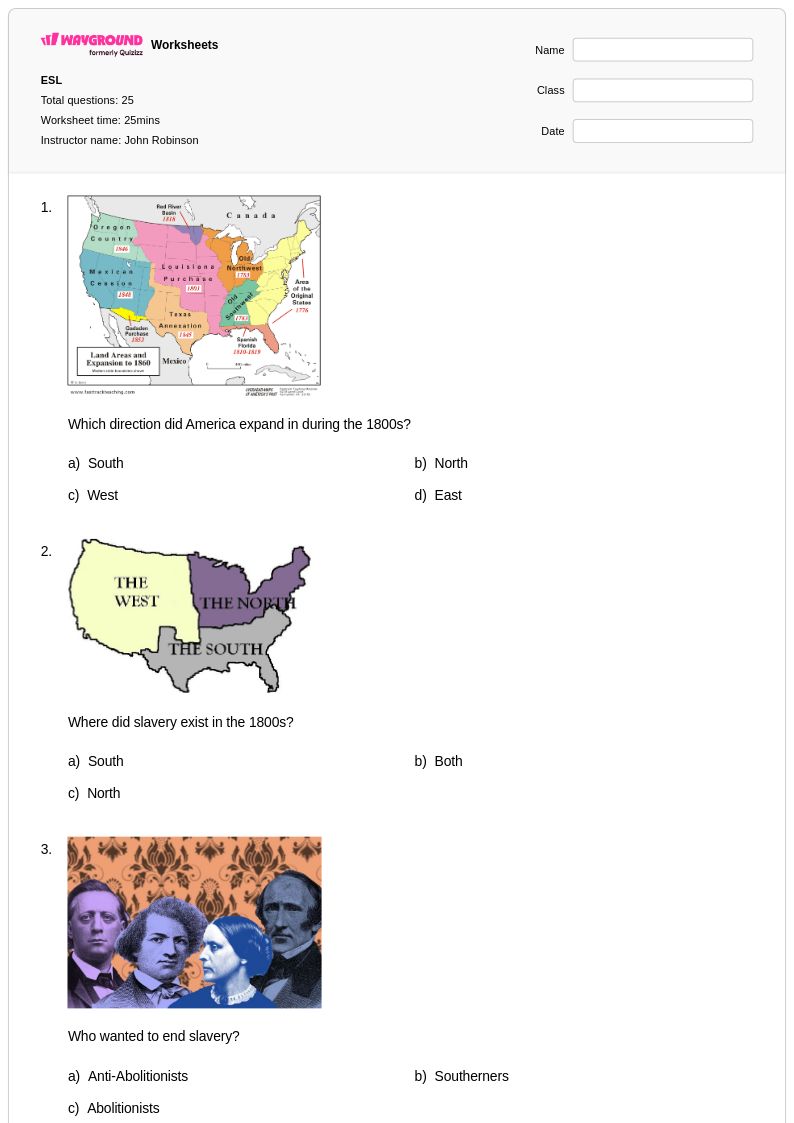
Free Printable Cost Benefit Analysis Worksheets for Class 6
Enhance Class 6 students' understanding of cost benefit analysis with our comprehensive collection of free Social Studies worksheets, featuring engaging practice problems, printable PDFs, and detailed answer keys to master economic decision-making skills.
Explore printable Cost Benefit Analysis worksheets for Class 6
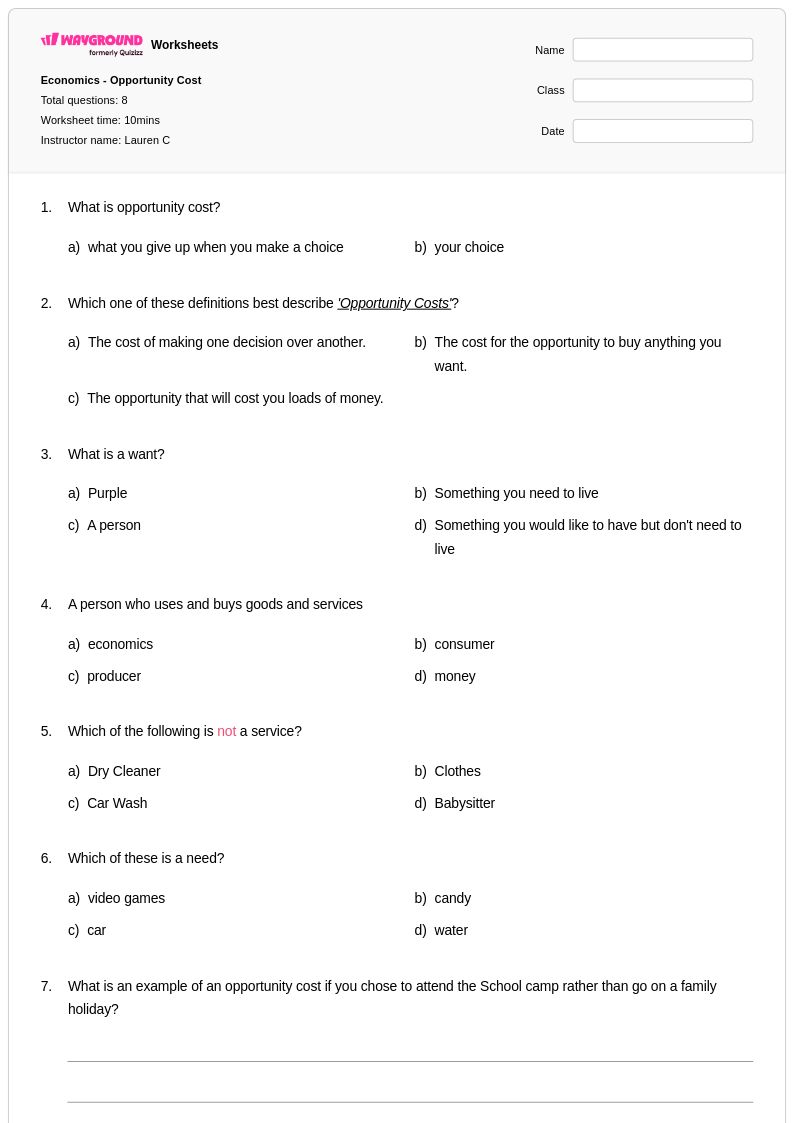
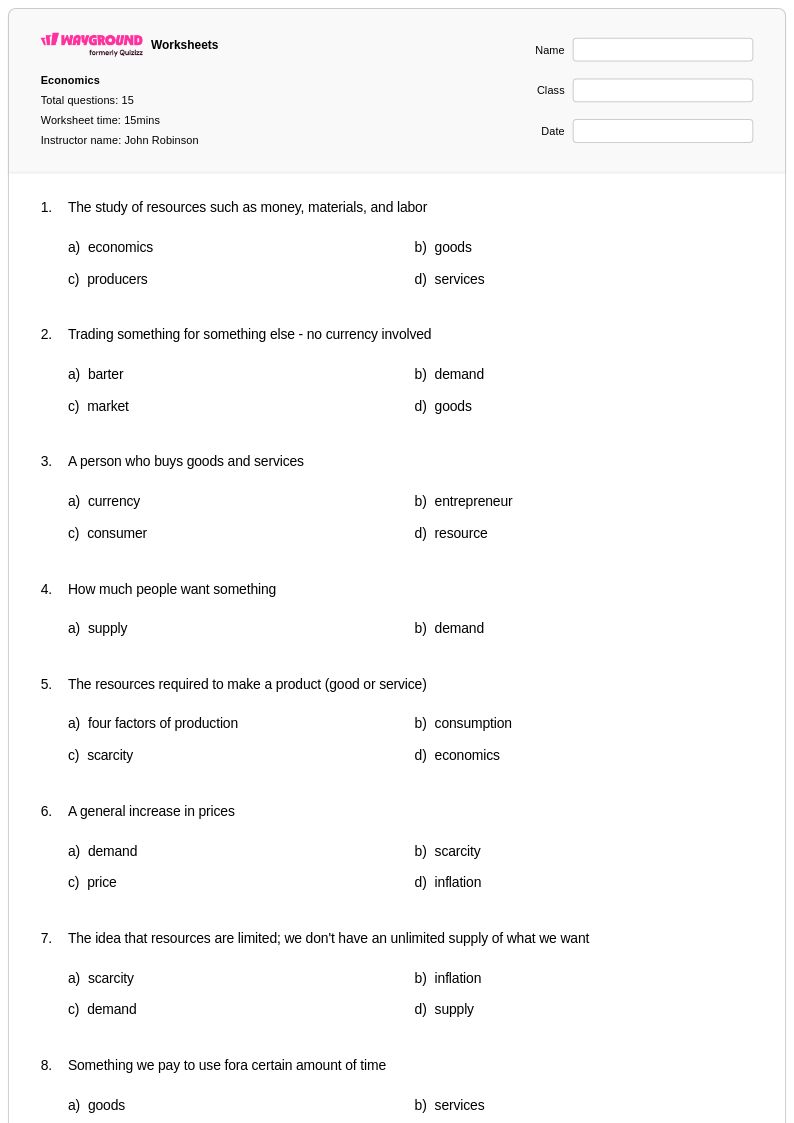
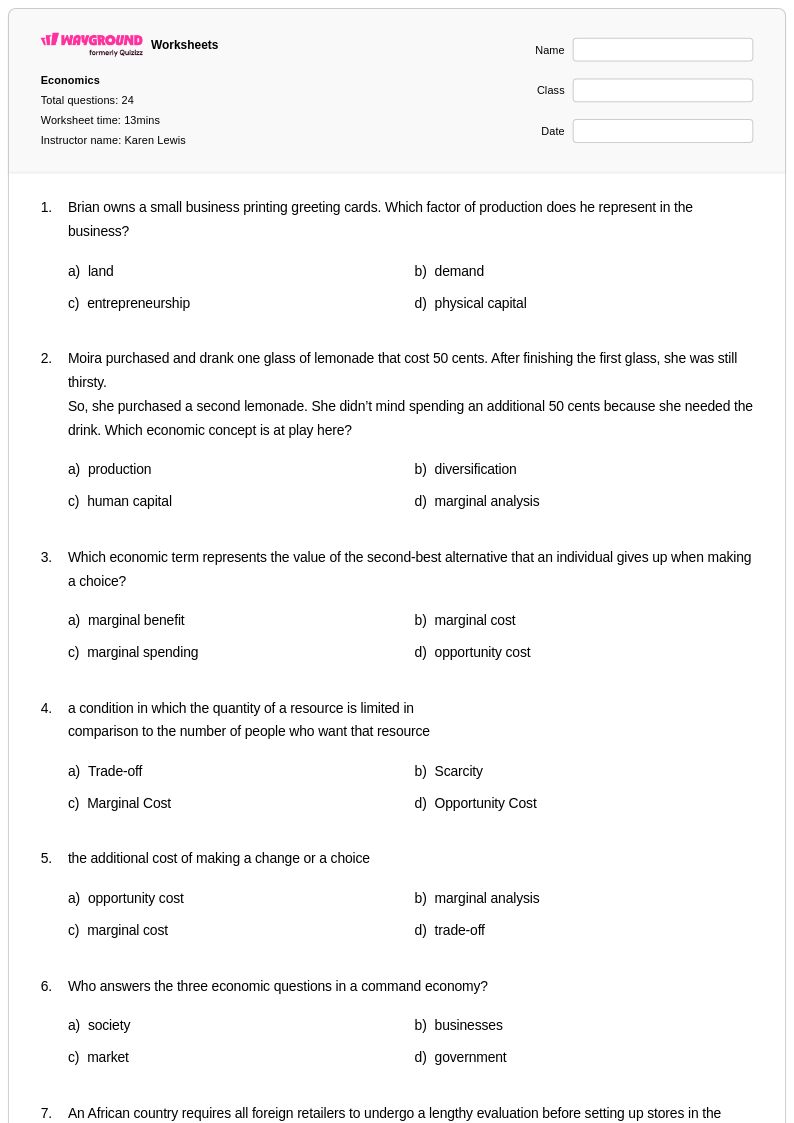
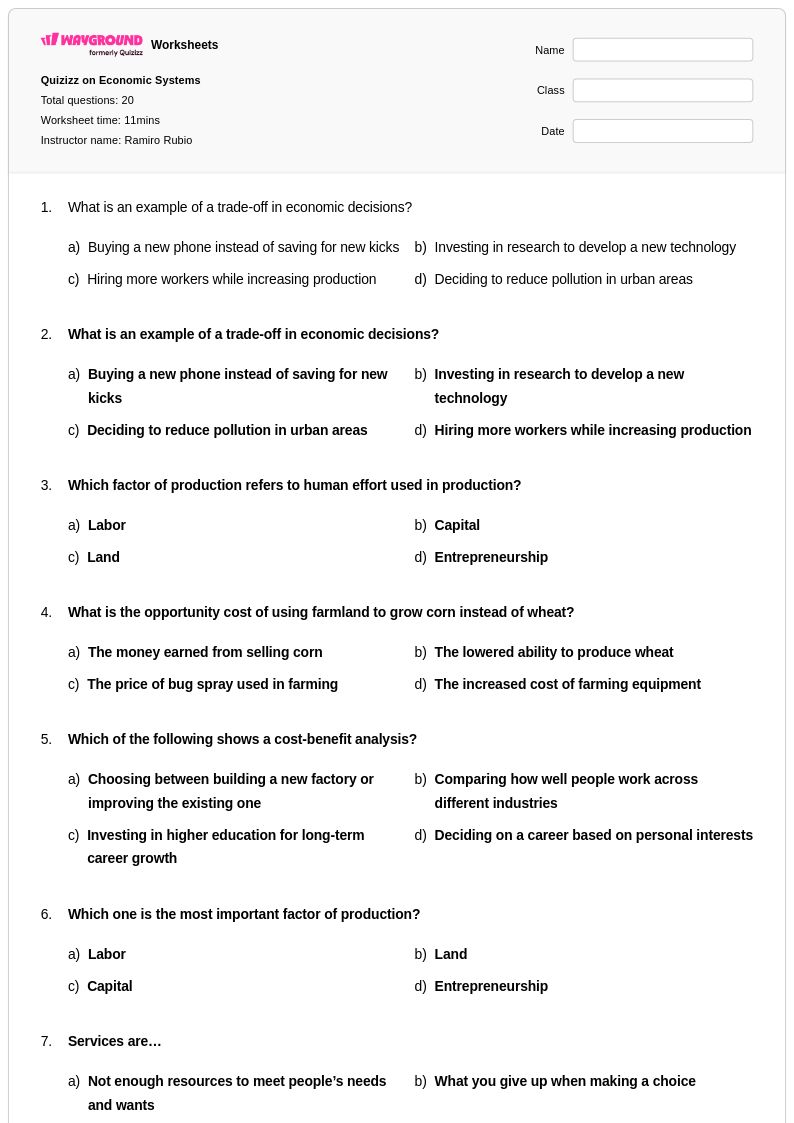
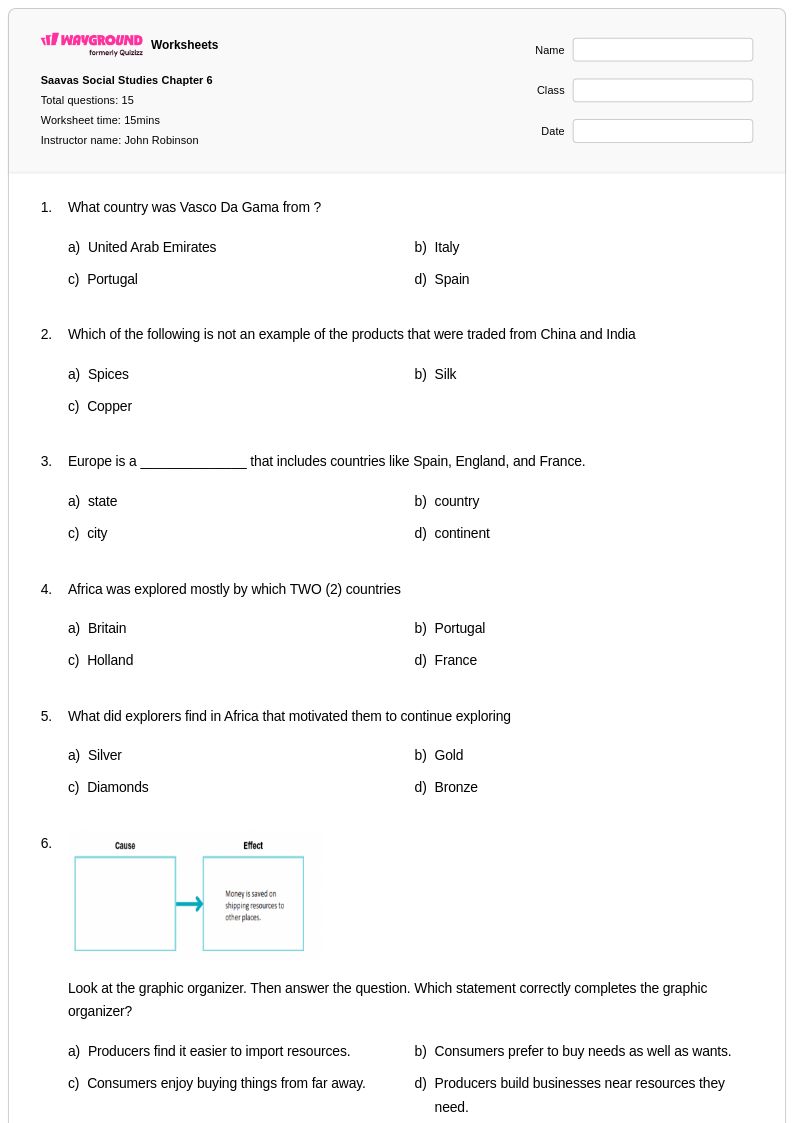
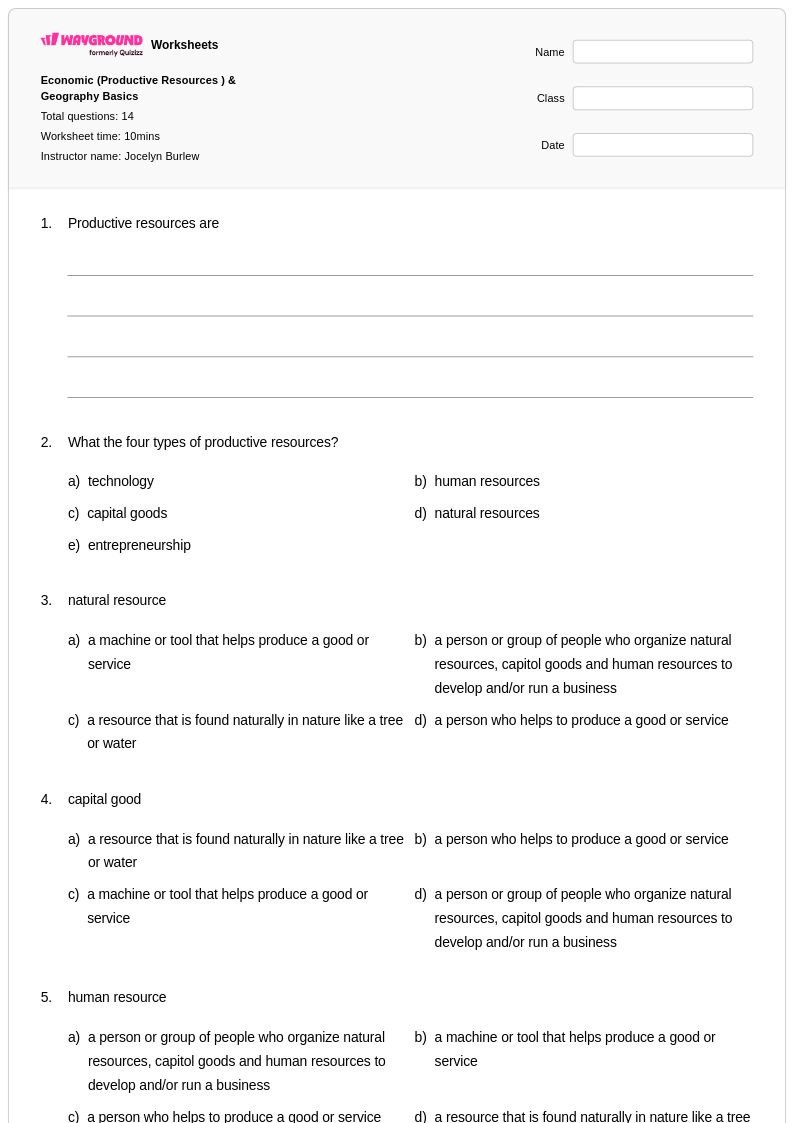
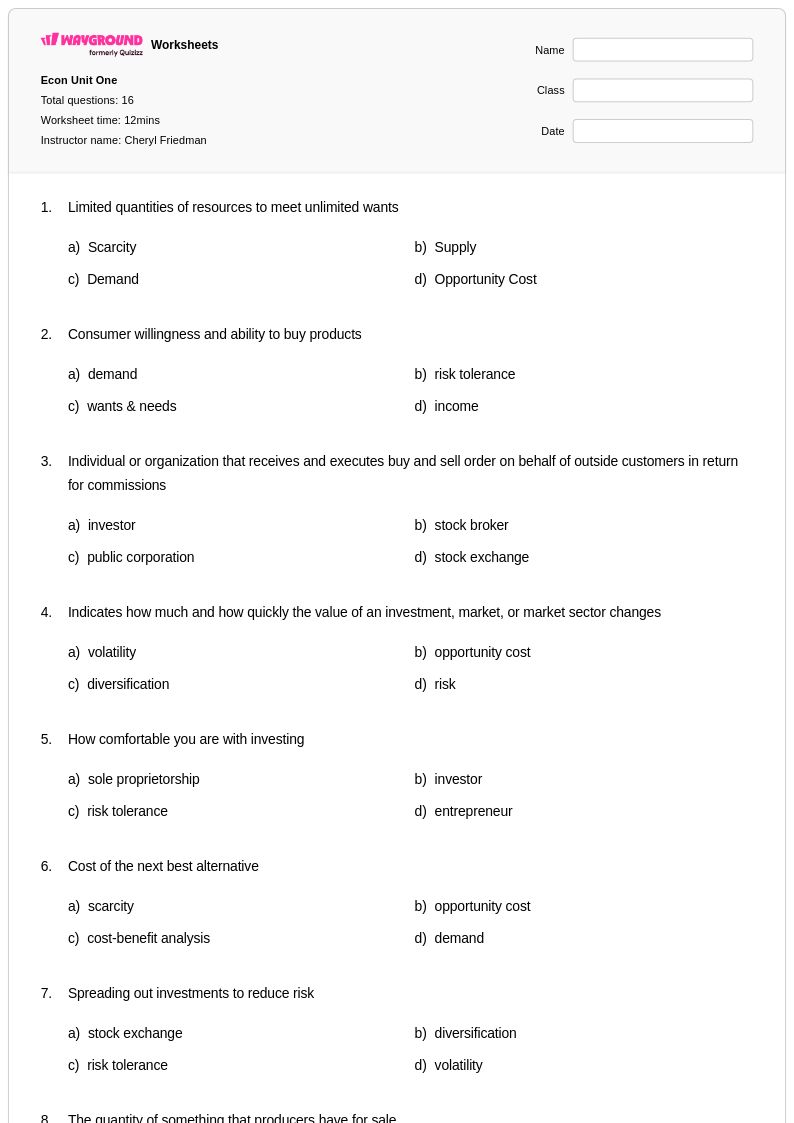
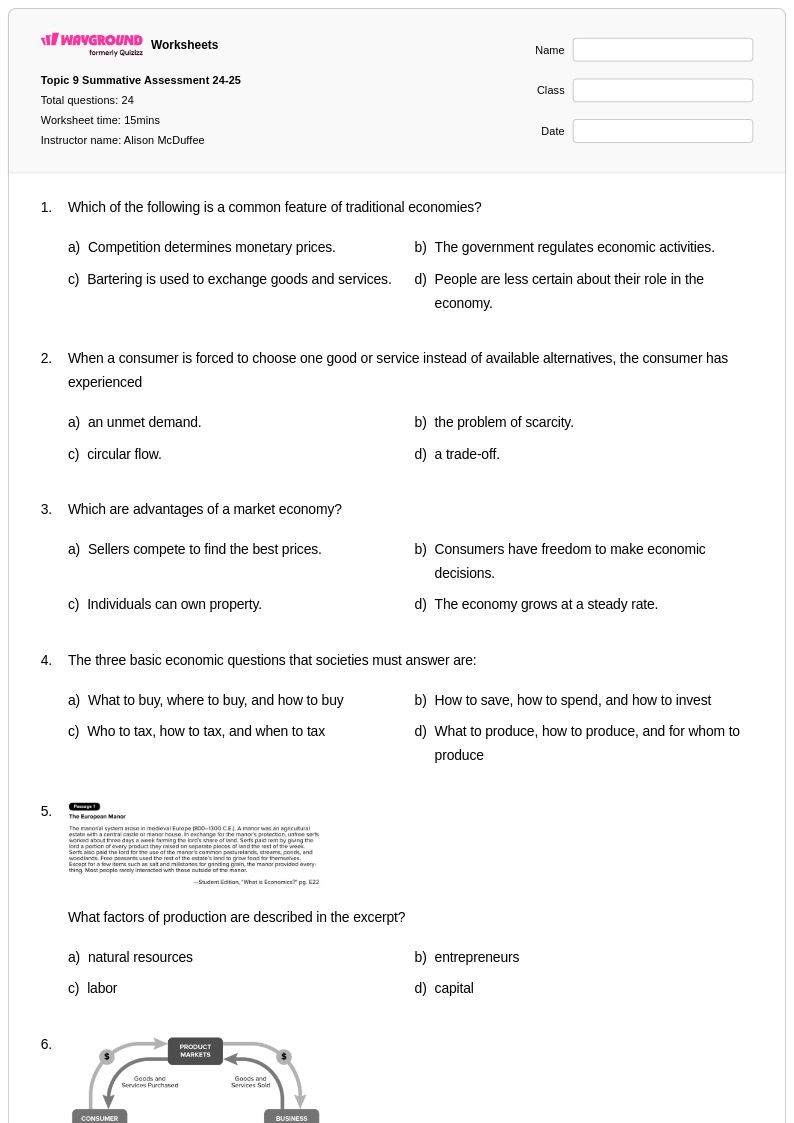
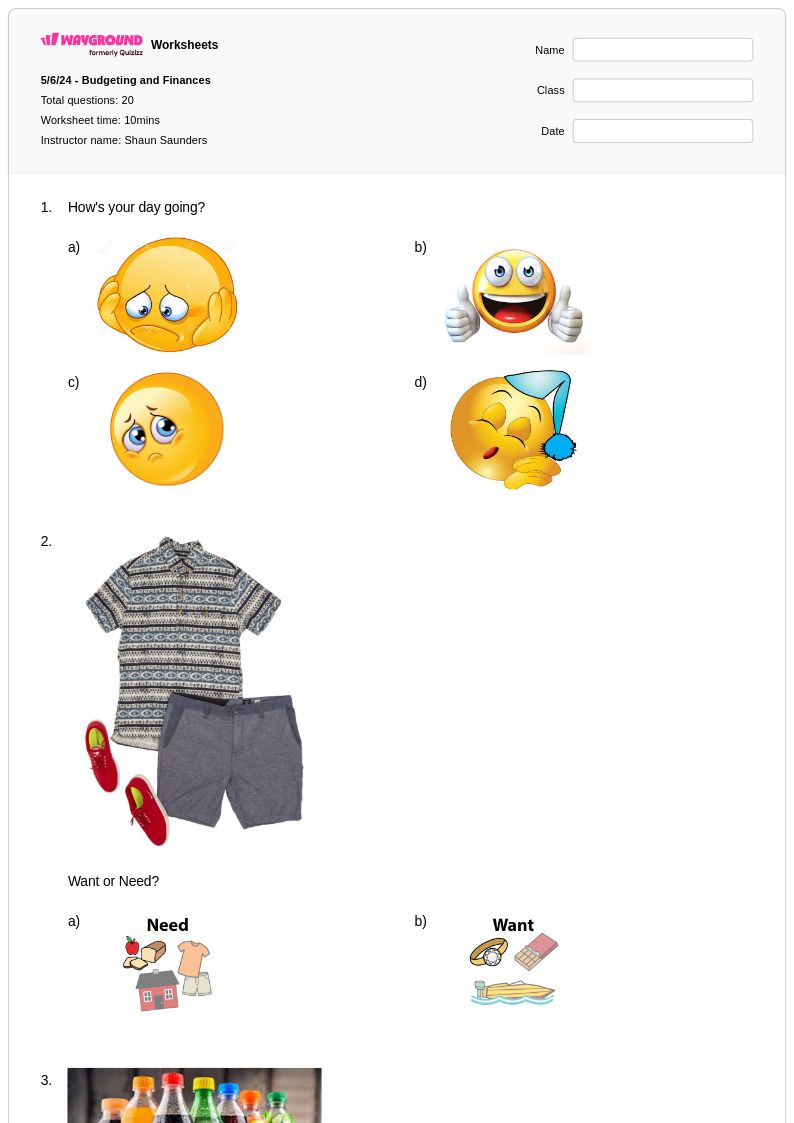
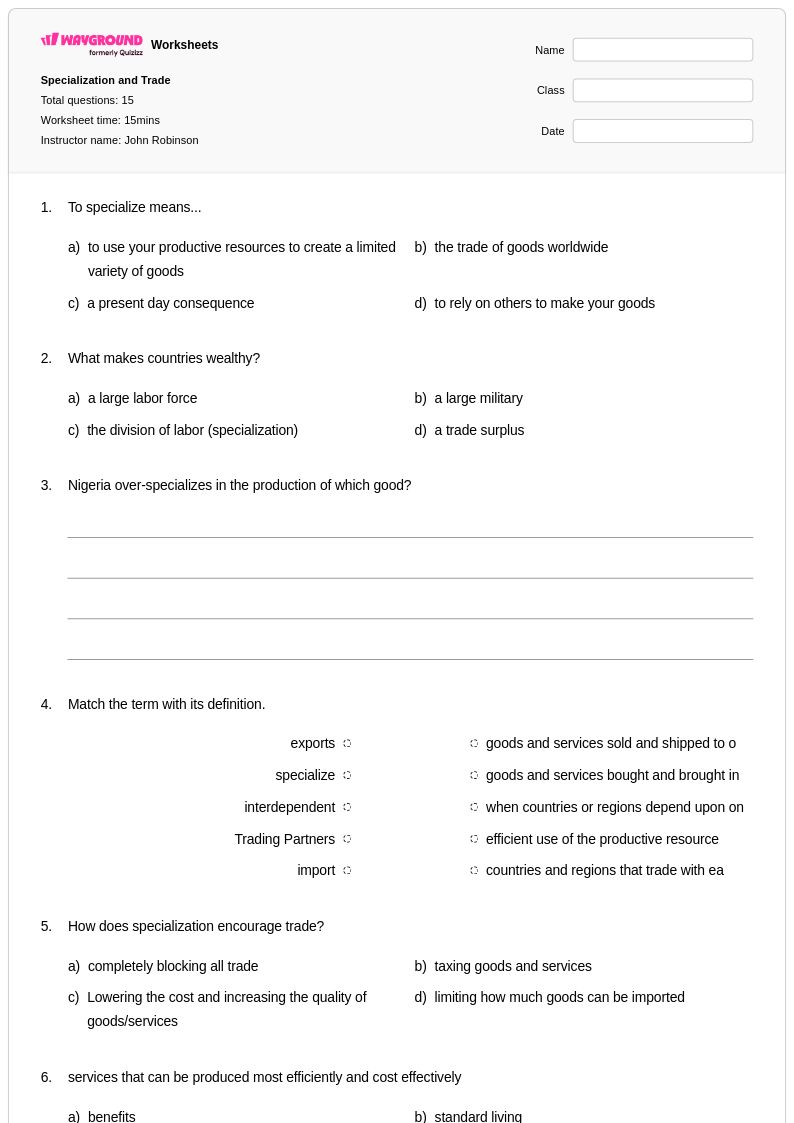
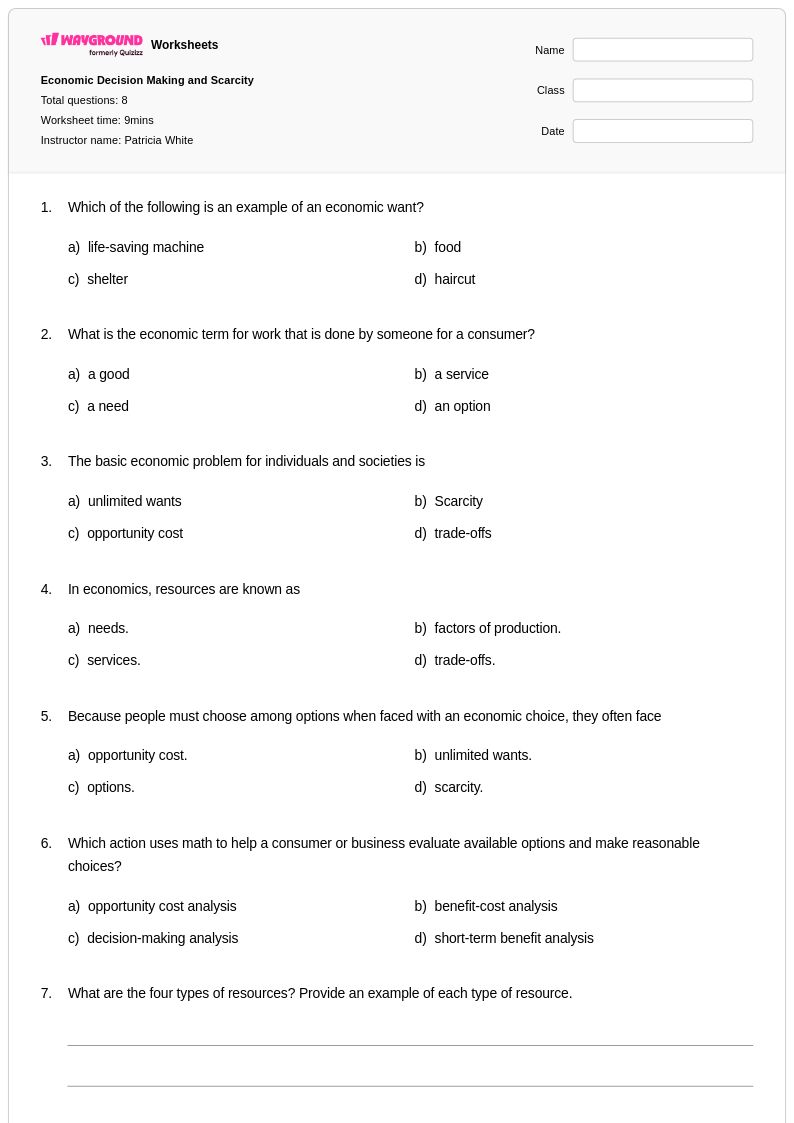
Cost benefit analysis worksheets for Class 6 students available through Wayground (formerly Quizizz) provide essential foundation-building practice in economic decision-making skills. These comprehensive resources guide sixth-grade learners through systematic evaluation of choices by weighing advantages against disadvantages in real-world scenarios relevant to their daily experiences. Students develop critical thinking abilities as they work through practice problems involving personal spending decisions, community resource allocation, and simple business choices. Each worksheet collection includes detailed answer keys and step-by-step solution guides, enabling independent learning and self-assessment. The free printable materials present age-appropriate economic concepts through engaging scenarios such as choosing between extracurricular activities, evaluating the trade-offs of different purchase options, or analyzing the benefits and costs of environmental protection measures.
Wayground's extensive library supports educators with millions of teacher-created cost benefit analysis resources specifically designed for Class 6 social studies instruction. The platform's robust search and filtering capabilities allow teachers to quickly locate materials aligned with state standards and curriculum requirements, while differentiation tools enable seamless customization for diverse learning needs and ability levels. These versatile worksheet collections are available in both printable PDF formats for traditional classroom use and interactive digital versions for technology-integrated lessons. Teachers utilize these resources for initial skill introduction, targeted remediation sessions, enrichment activities for advanced learners, and comprehensive review practice, with the flexibility to modify content, adjust difficulty levels, and incorporate additional real-world examples that resonate with their specific student populations and local economic contexts.
FAQs
How do I teach cost benefit analysis to students?
Teach cost benefit analysis by starting with relatable, low-stakes decisions students already make, such as choosing between two after-school activities or evaluating a purchase. Once students grasp the basic framework of listing and comparing costs and benefits, gradually introduce more complex scenarios involving opportunity cost, long-term versus short-term trade-offs, and business or public policy decisions. Using structured graphic organizers or T-chart worksheets helps students develop the habit of systematically weighing both sides before drawing a conclusion.
What exercises help students practice cost benefit analysis?
Effective practice exercises include real-world scenario problems where students must identify, list, and quantify both tangible and intangible costs and benefits before recommending a course of action. Worksheets that progress from personal financial decisions to business investment scenarios help students internalize the analytical framework across different contexts. Repeated practice with varied scenarios is especially important because students need exposure to cases where the 'right' answer isn't obvious, which builds genuine decision-making skill rather than rote recall.
What mistakes do students commonly make when completing a cost benefit analysis?
The most common mistake is listing only immediate, visible costs while overlooking opportunity costs and long-term consequences. Students also tend to treat all costs and benefits as equally weighted rather than considering magnitude or probability. Another frequent error is confusing a cost benefit analysis with a simple pros-and-cons list, without attempting to quantify or compare the relative value of each factor, which undermines the economic rigor the method requires.
How can I differentiate cost benefit analysis instruction for students at different skill levels?
For students who need additional support, simplify scenarios to familiar personal decisions and reduce the number of variables they must evaluate at once. More advanced students can tackle multi-variable business or public policy scenarios that require them to assign numerical values and calculate net benefit. On Wayground, teachers can apply accommodations such as reduced answer choices to lower cognitive load for individual students, or enable Read Aloud so that students with reading challenges can still engage fully with the analysis tasks.
How do I use cost benefit analysis worksheets from Wayground in my classroom?
Wayground's cost benefit analysis worksheets are available as printable PDFs for traditional classroom use and in digital formats for technology-integrated environments, making them flexible enough for in-person, hybrid, or remote instruction. Teachers can also host worksheets directly as a quiz on Wayground, allowing students to complete them digitally while the platform tracks responses. Each worksheet includes an answer key, so it can be used for guided practice, independent work, or as a formative assessment tool without requiring additional preparation.
At what grade level should students be introduced to cost benefit analysis?
Cost benefit analysis concepts can be introduced as early as upper elementary school using simplified, personal decision-making scenarios. The full analytical framework, including quantifying costs and benefits and applying economic principles like opportunity cost, is typically taught in middle and high school economics or social studies courses. Advanced applications involving business investment or public policy analysis are most appropriate for high school students with foundational economics knowledge.