Free Printable Demonstrative Pronouns Worksheets for Class 3
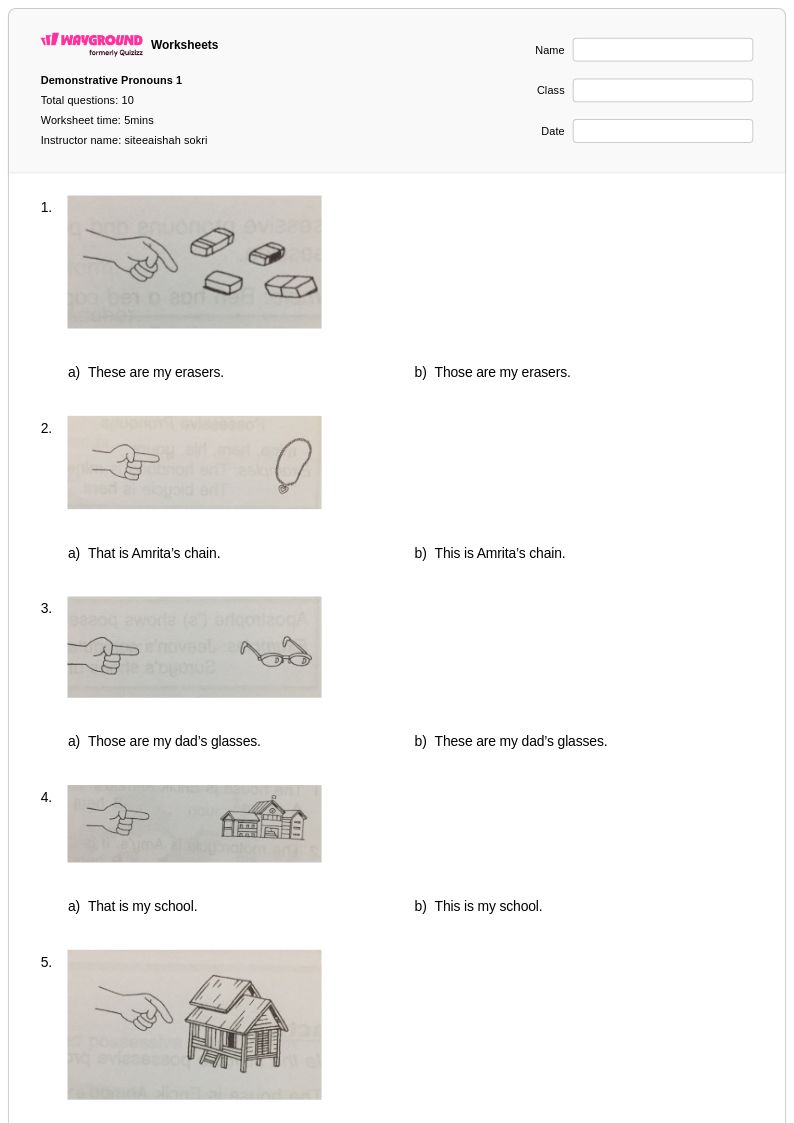
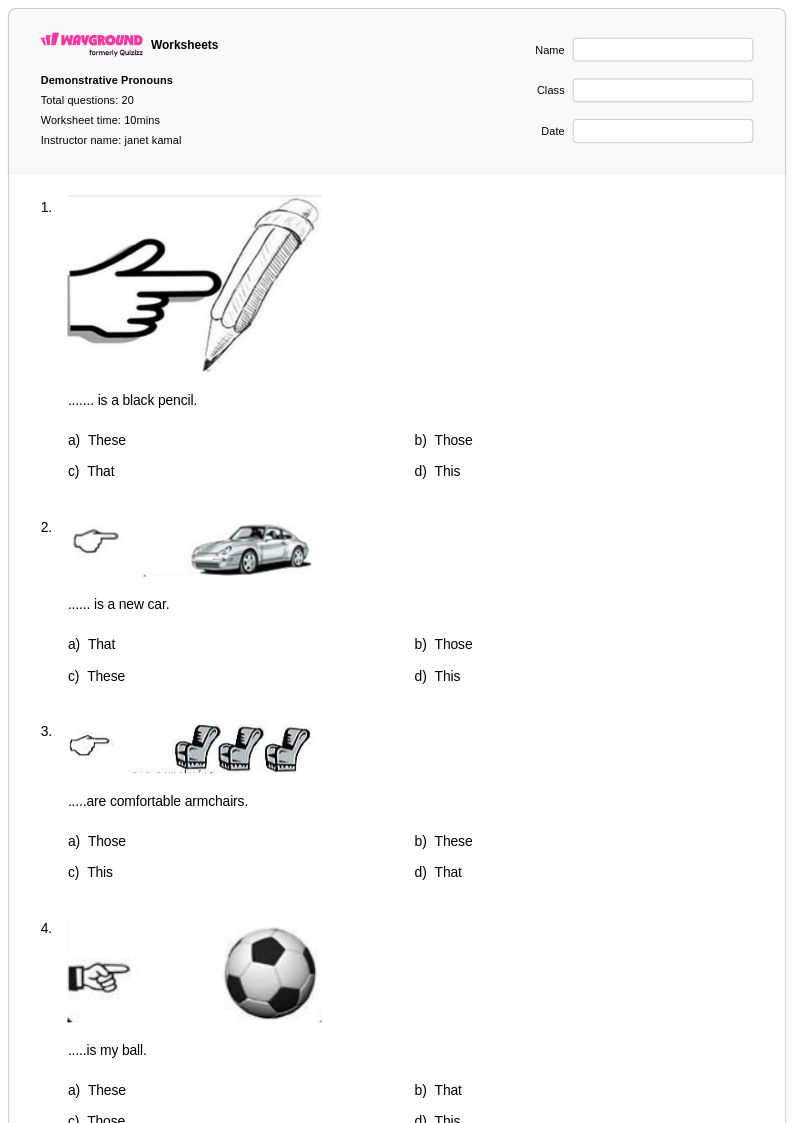
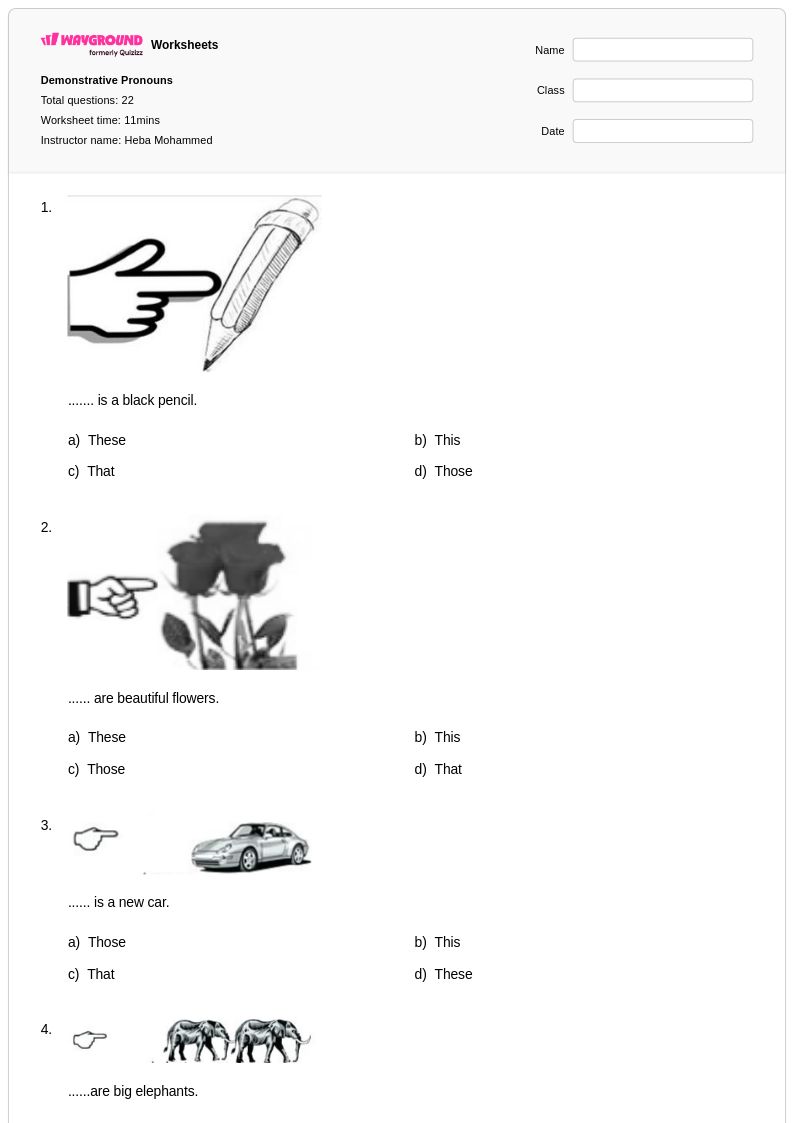
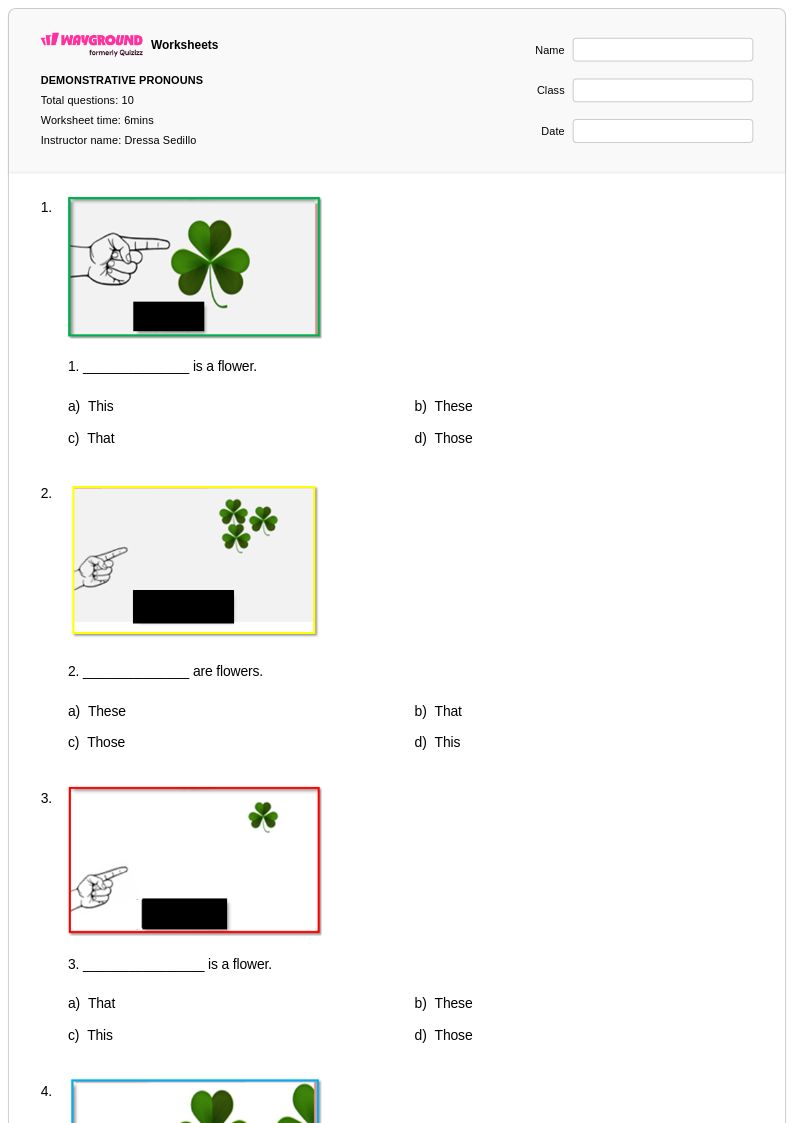
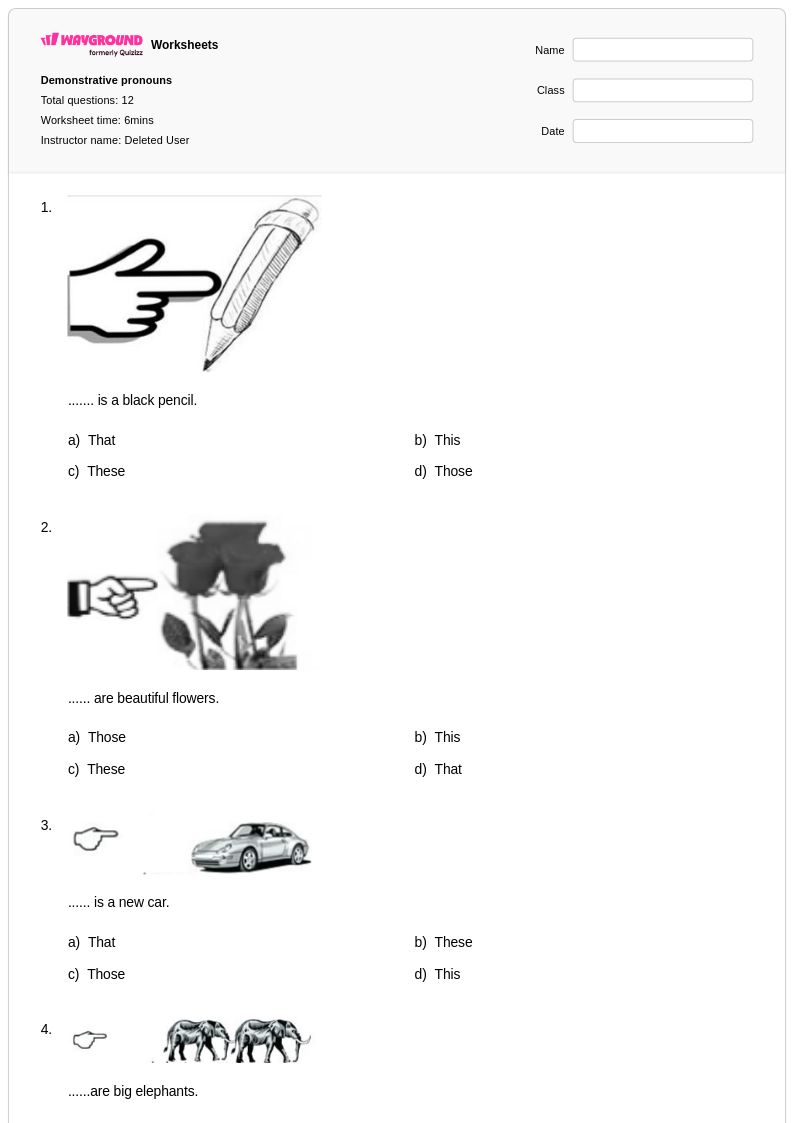
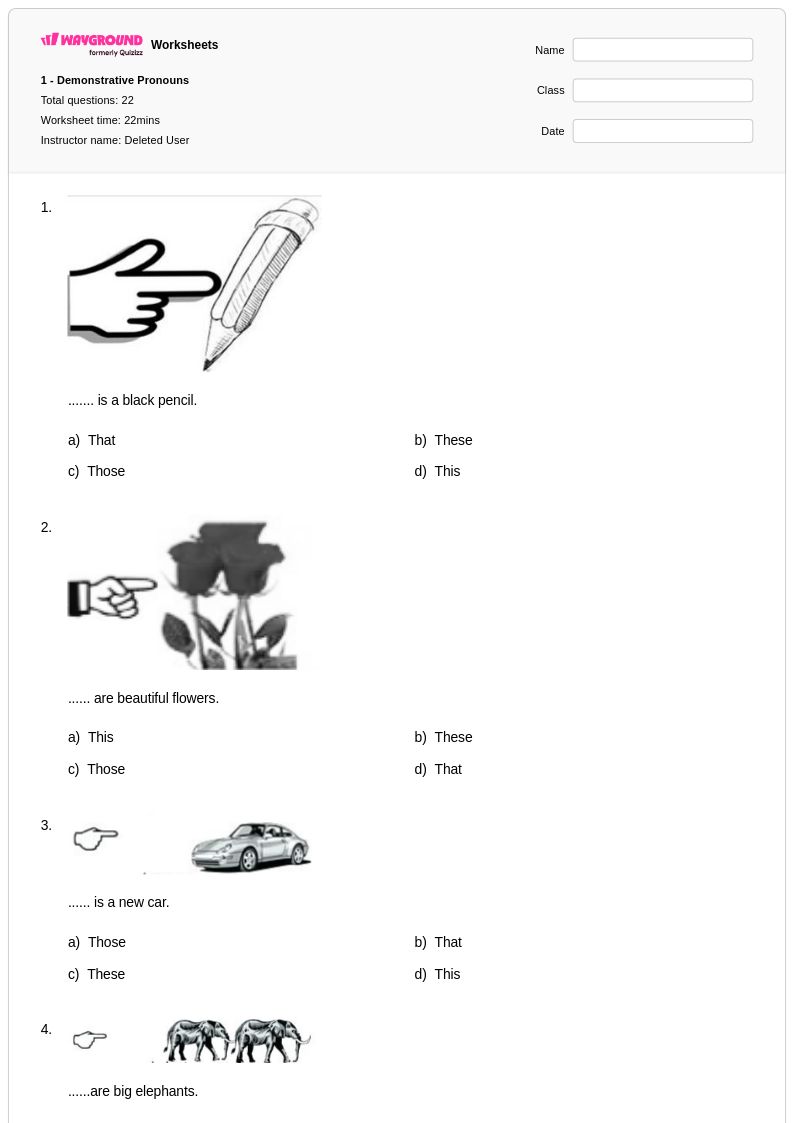
Class 3 demonstrative pronouns worksheets help students master this, that, these, and those through engaging printables and practice problems with complete answer keys available as free PDF downloads.
Explore printable Demonstrative Pronouns worksheets for Class 3
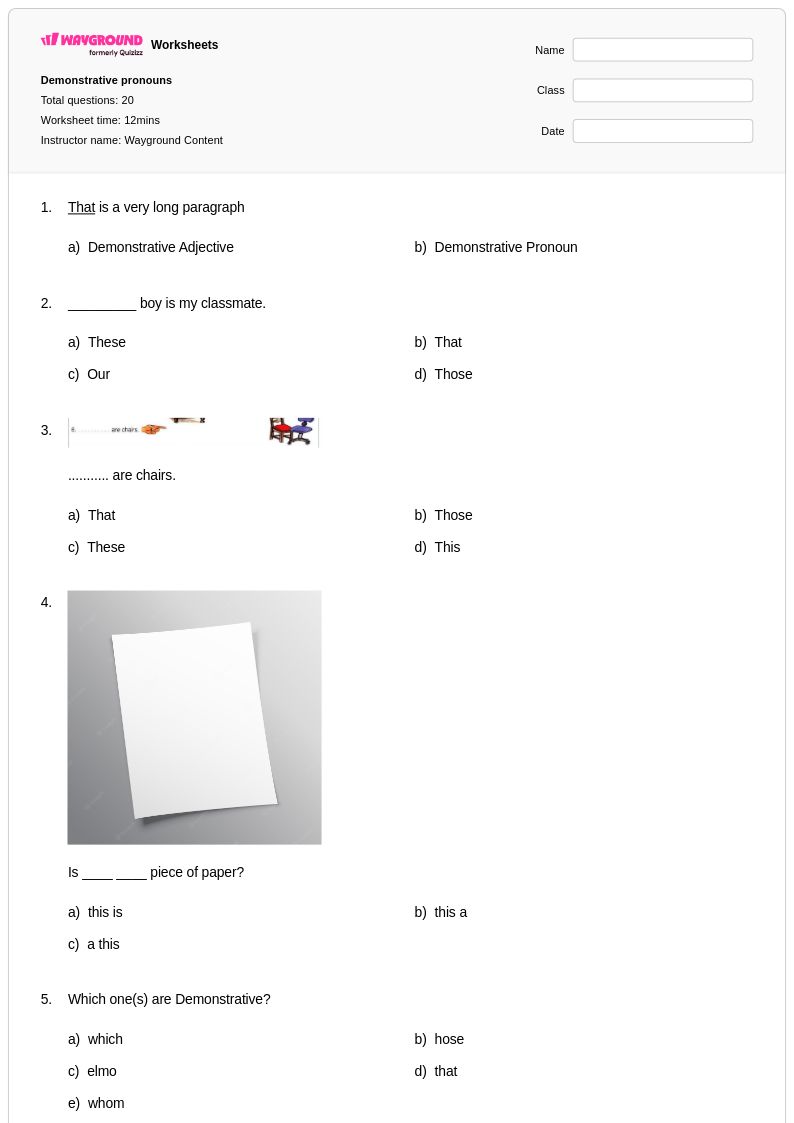
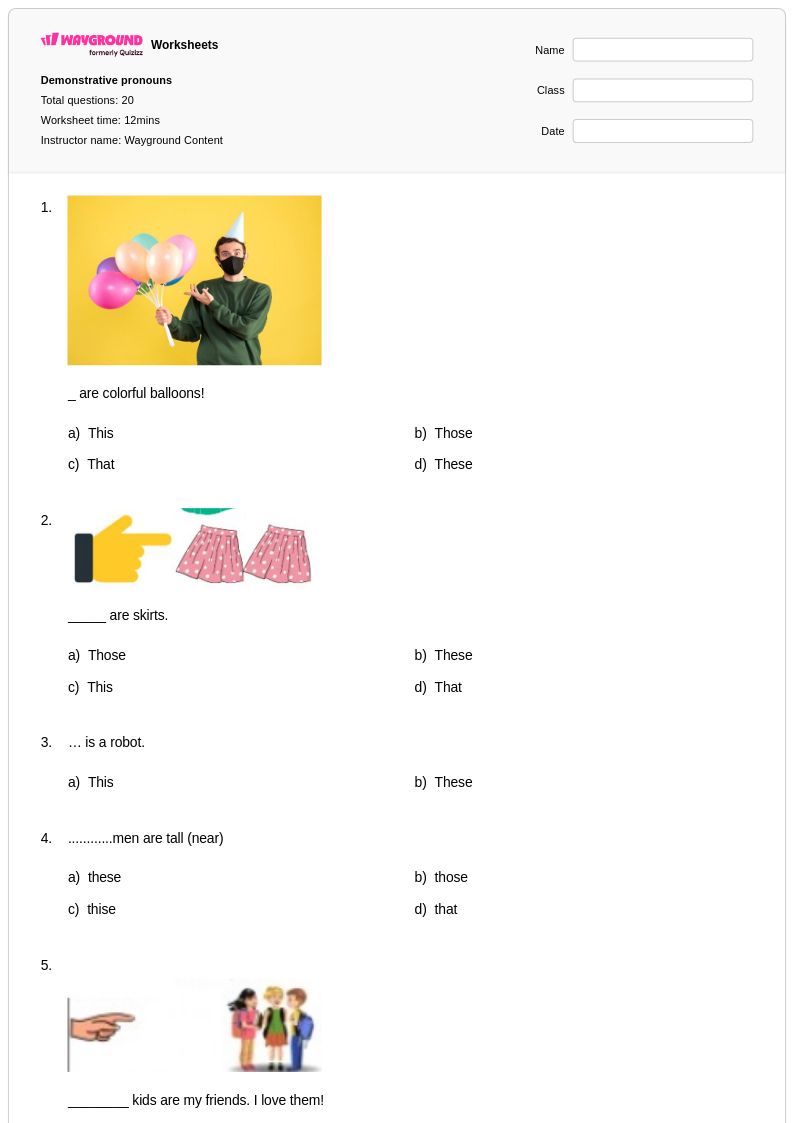
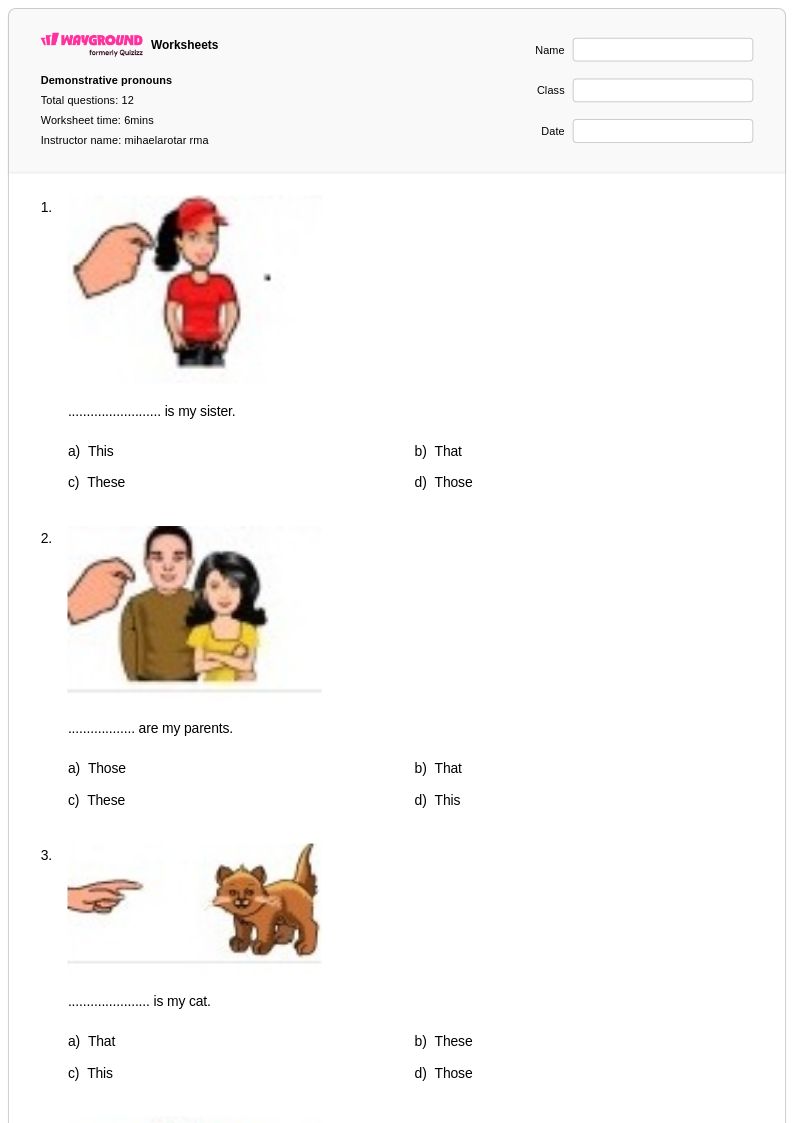
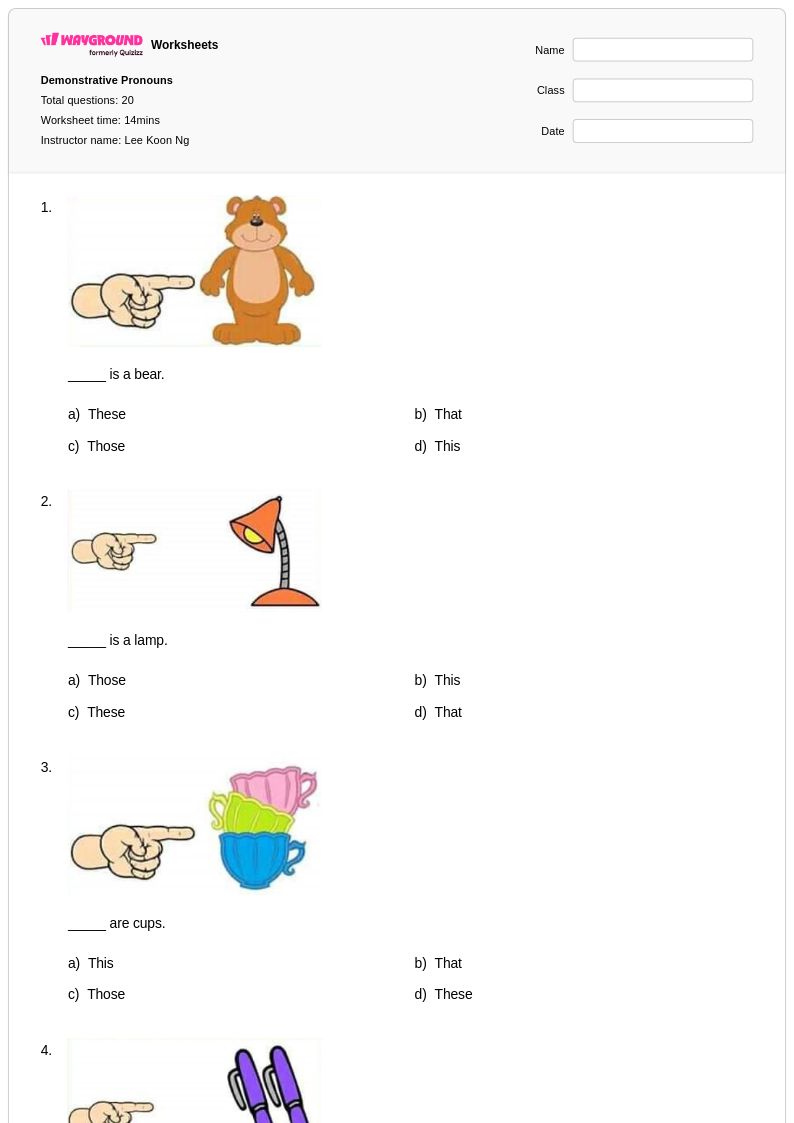
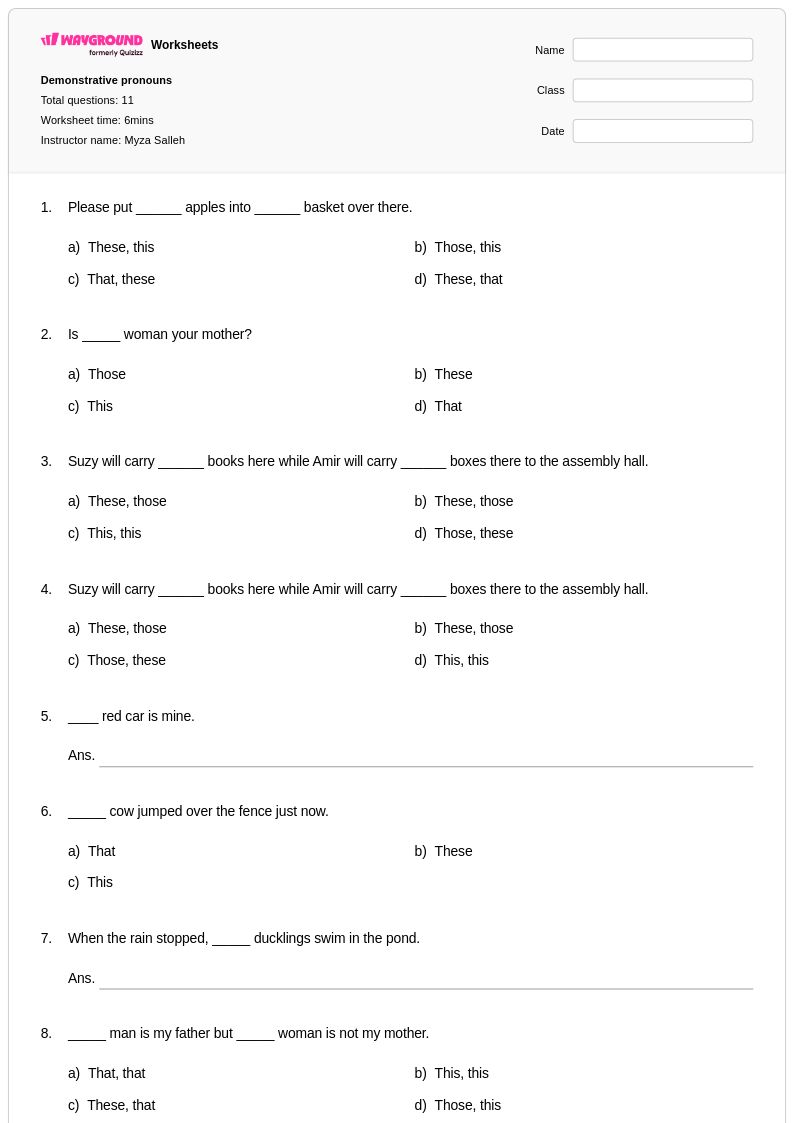
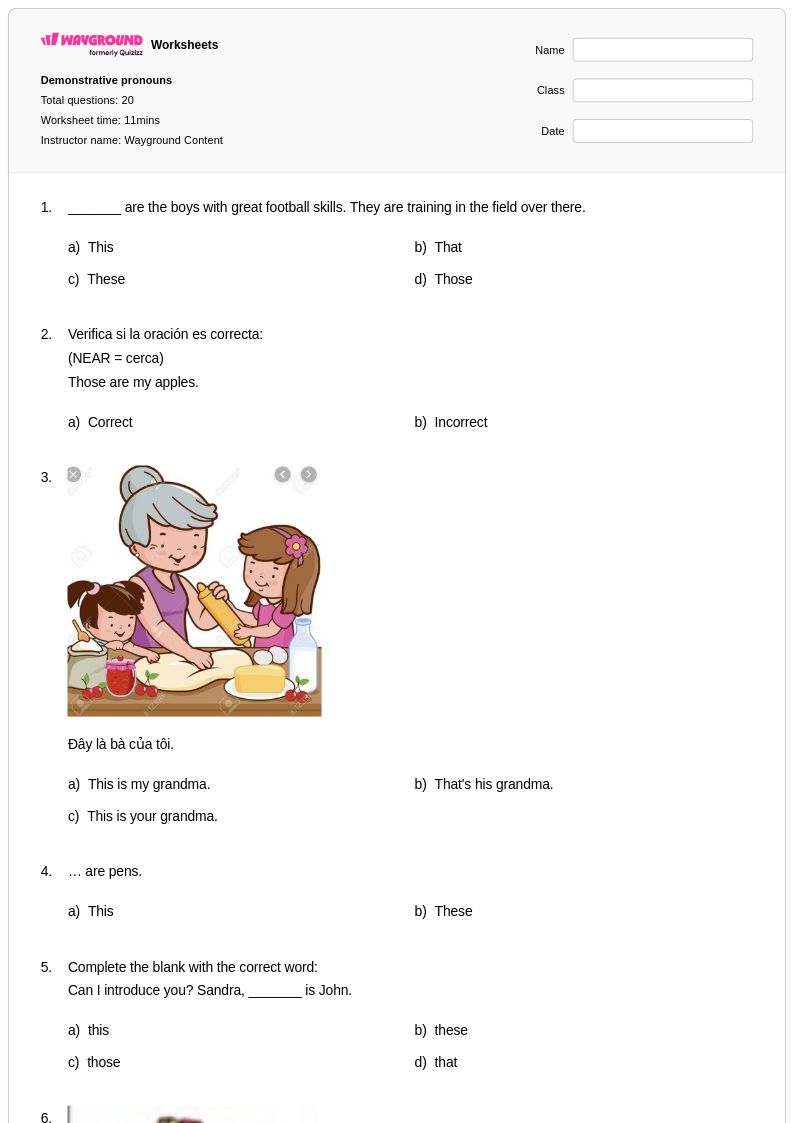
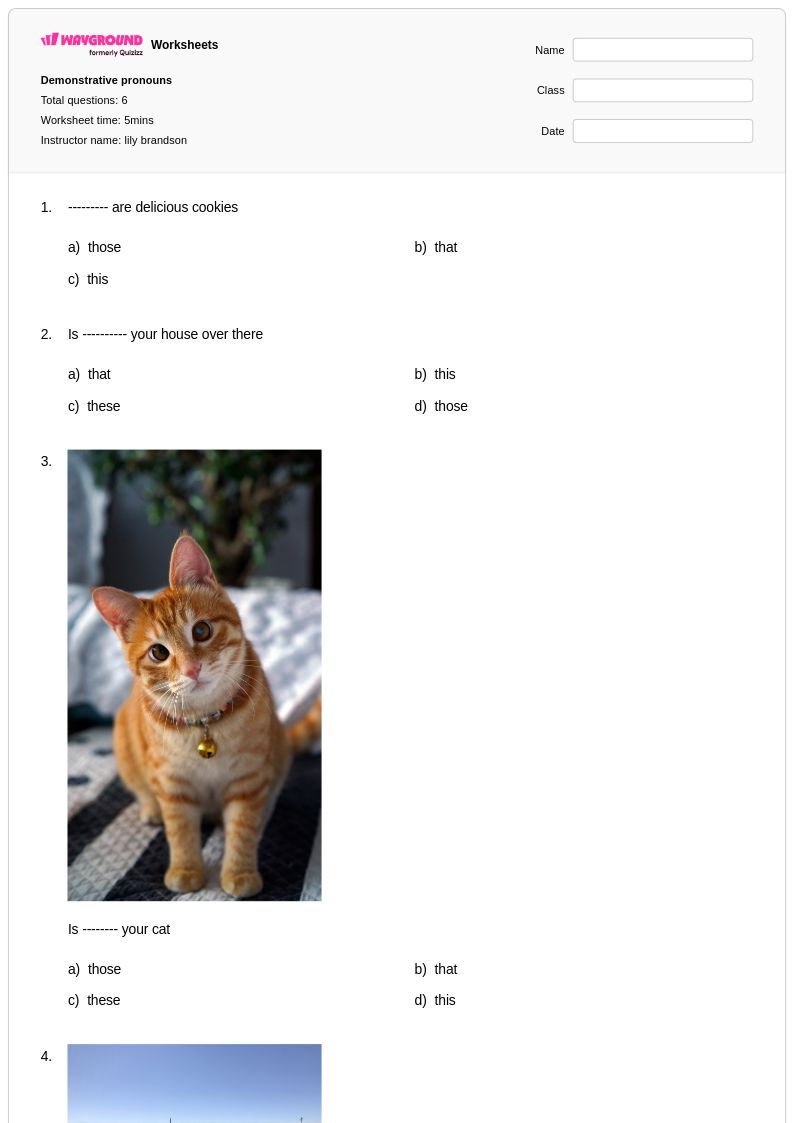
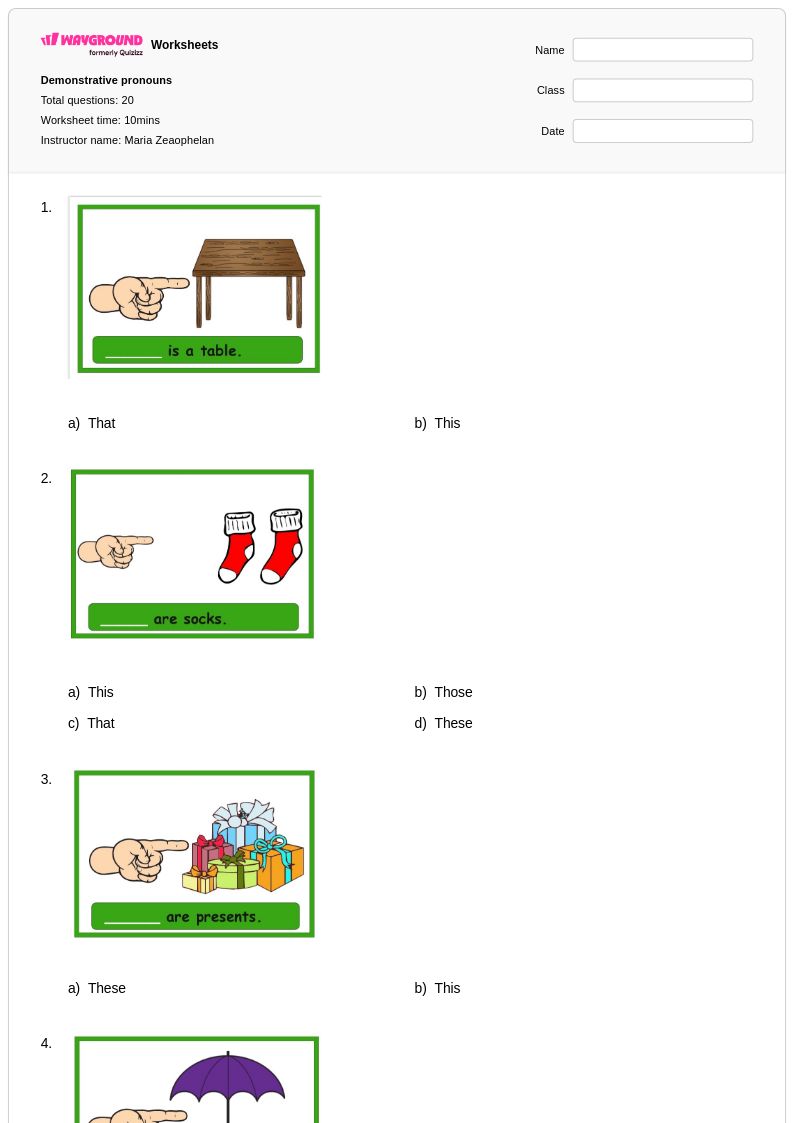
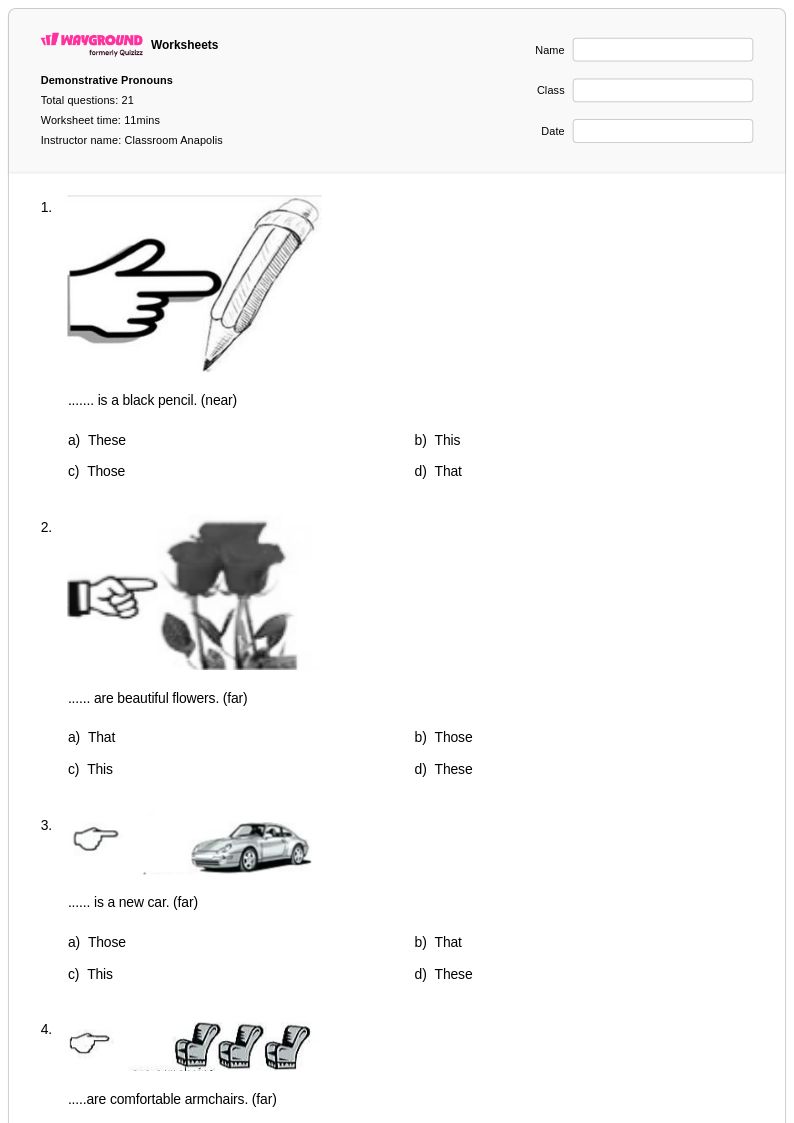
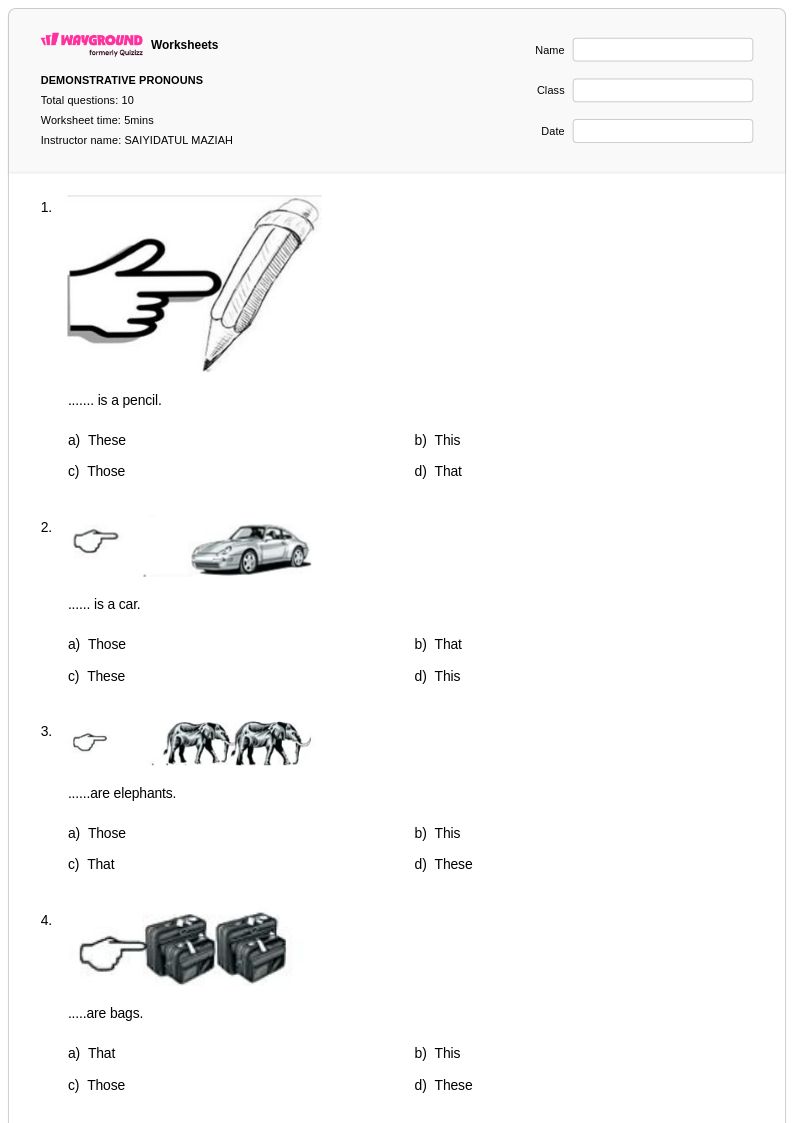
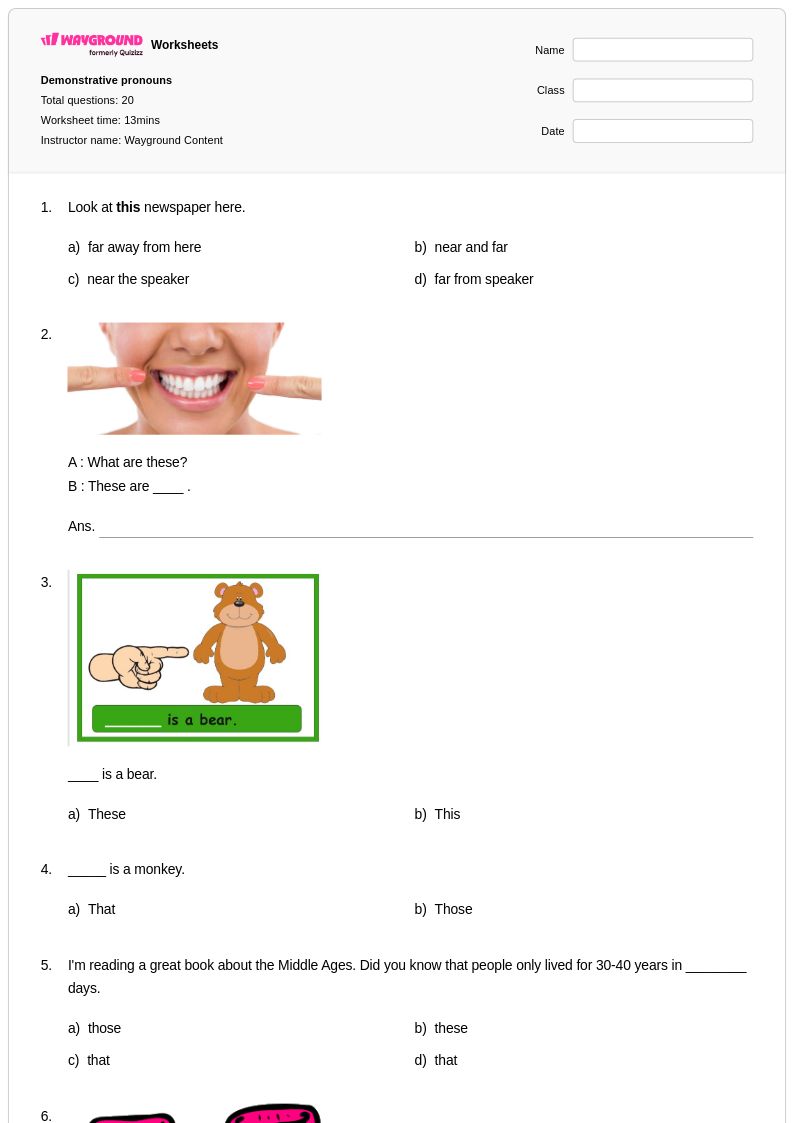
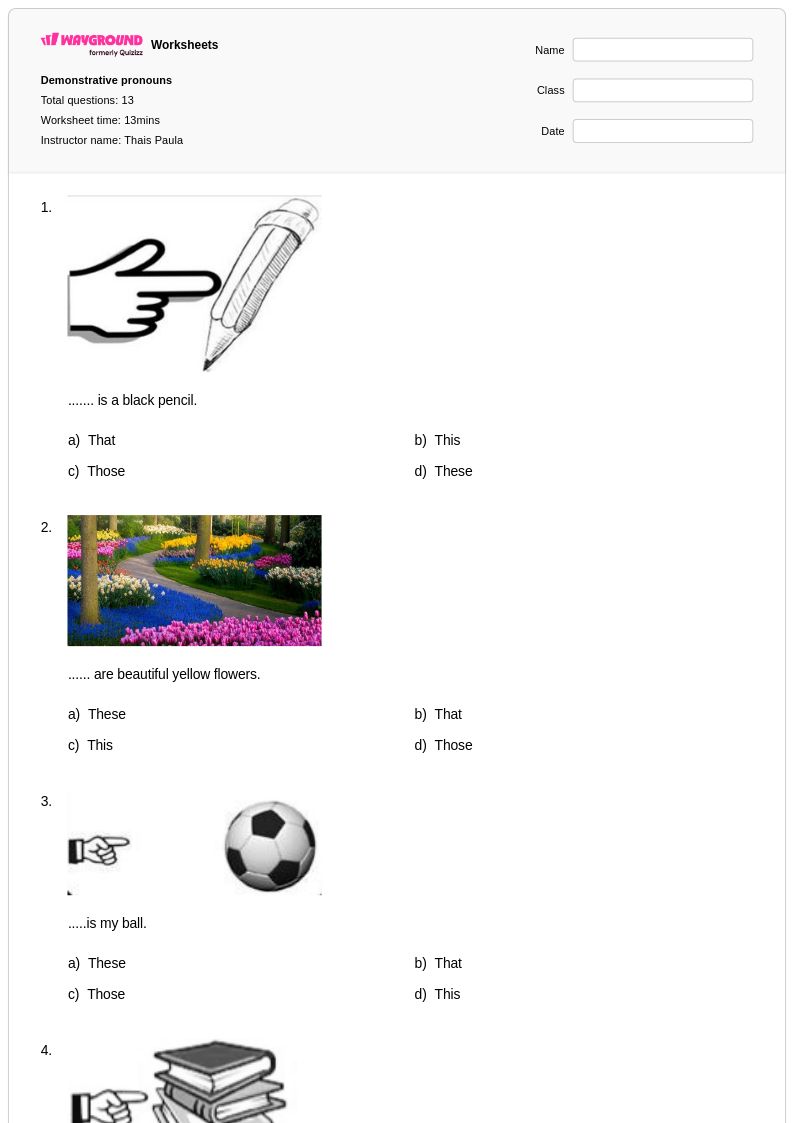
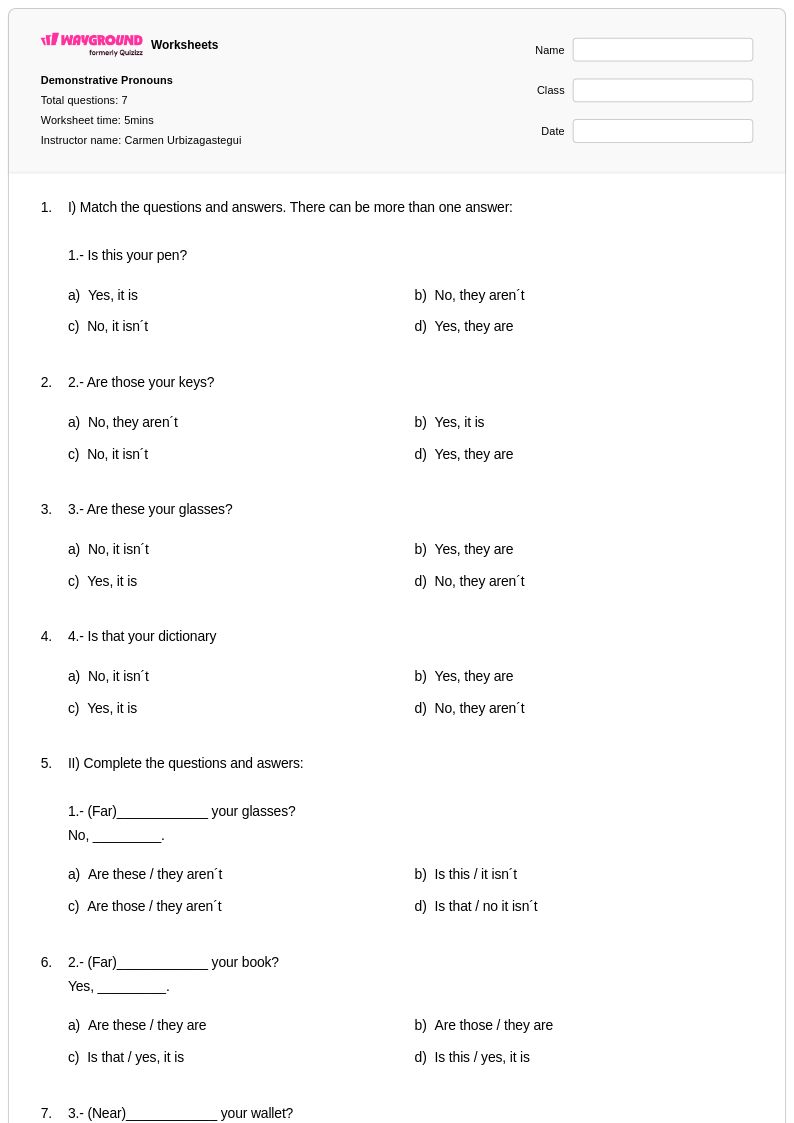
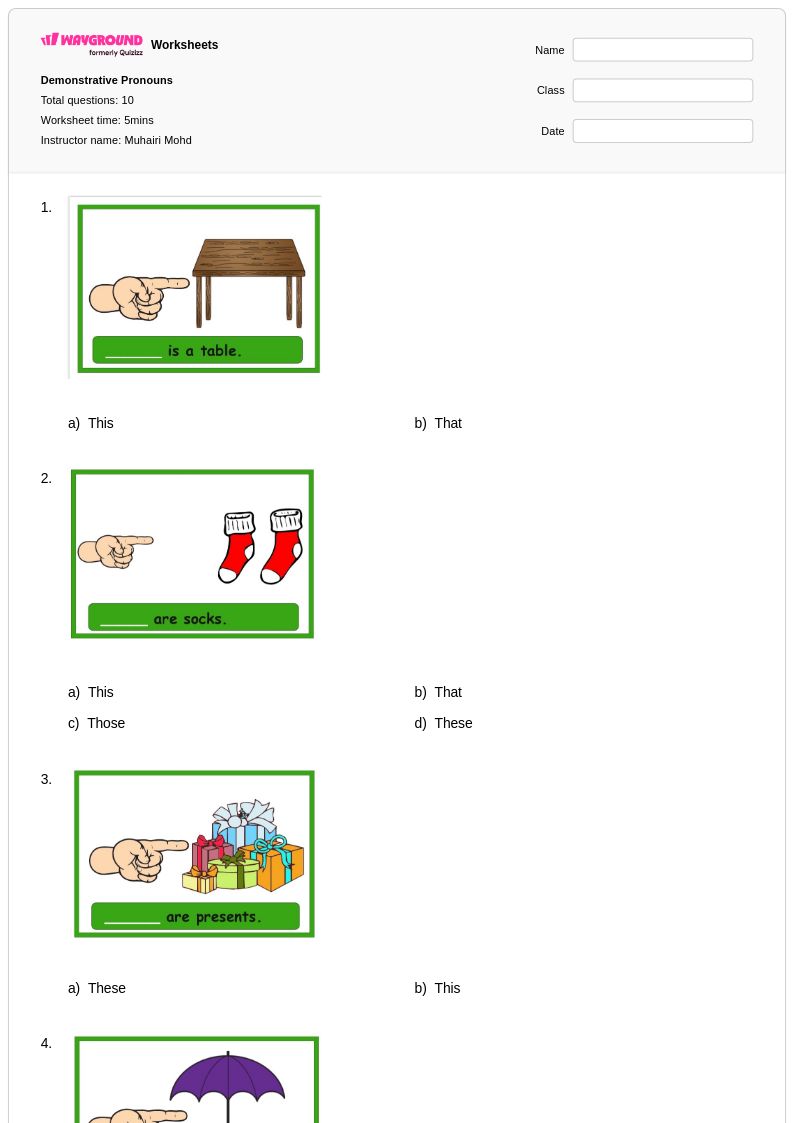
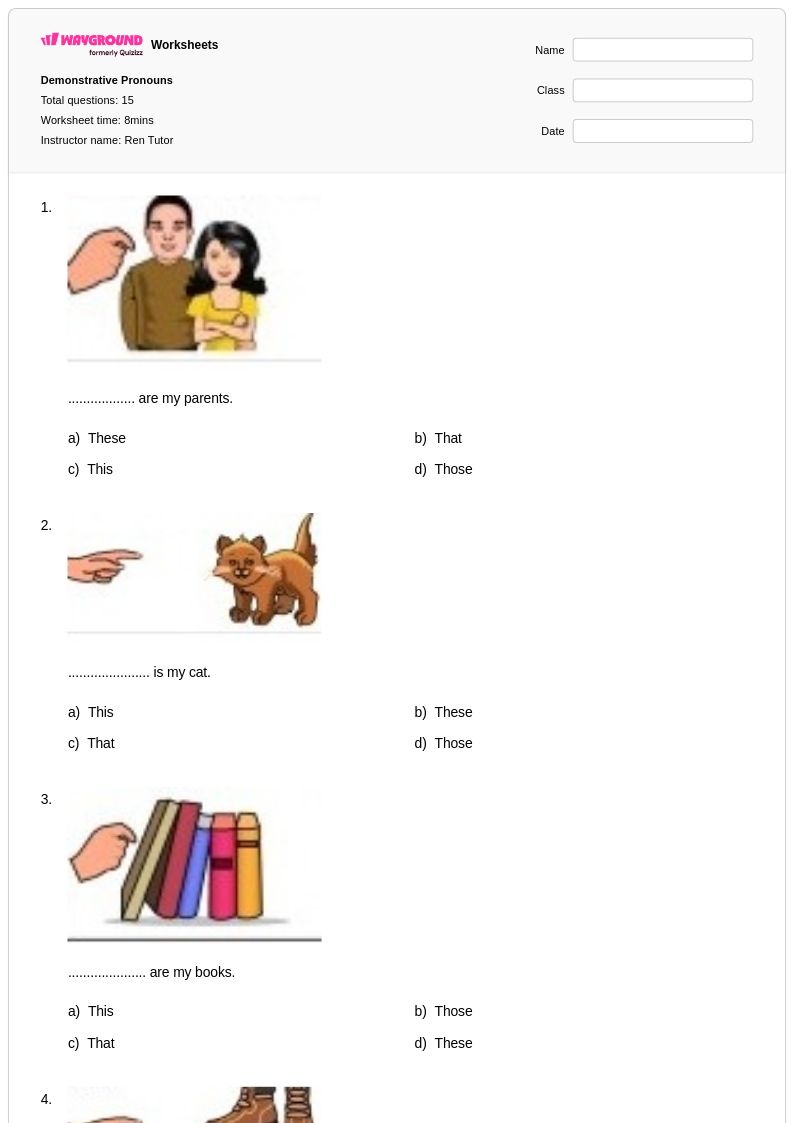
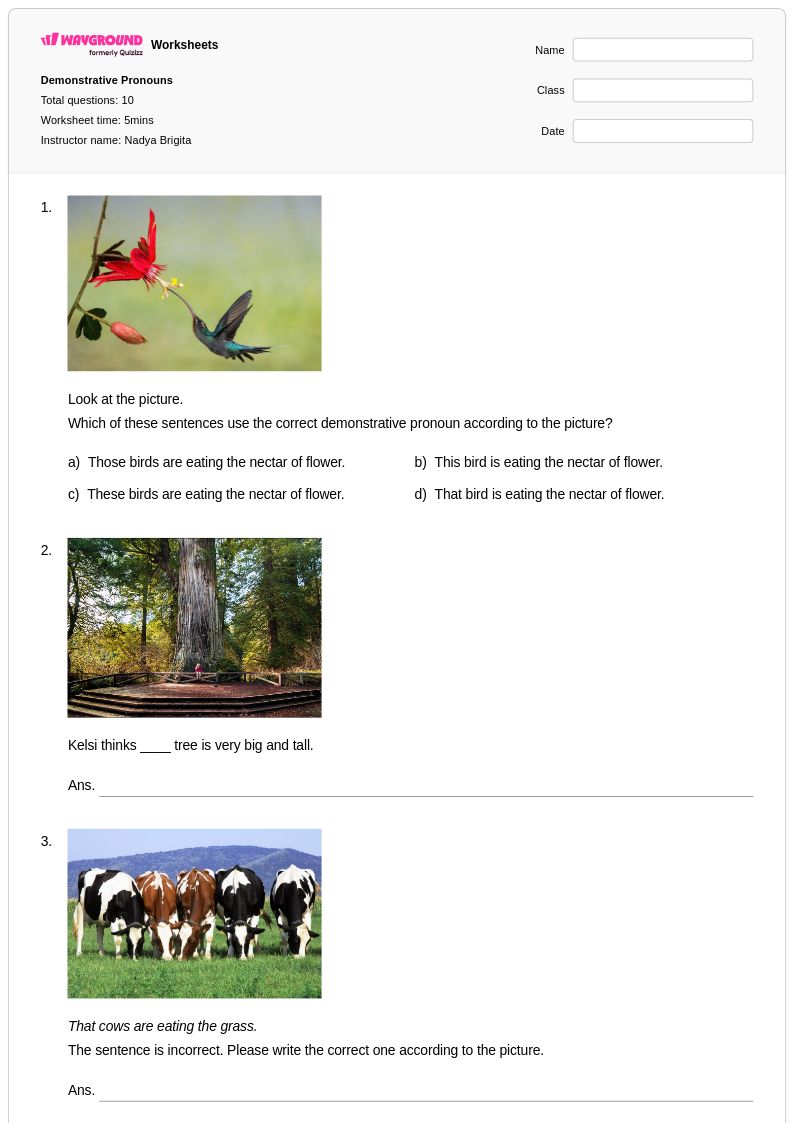
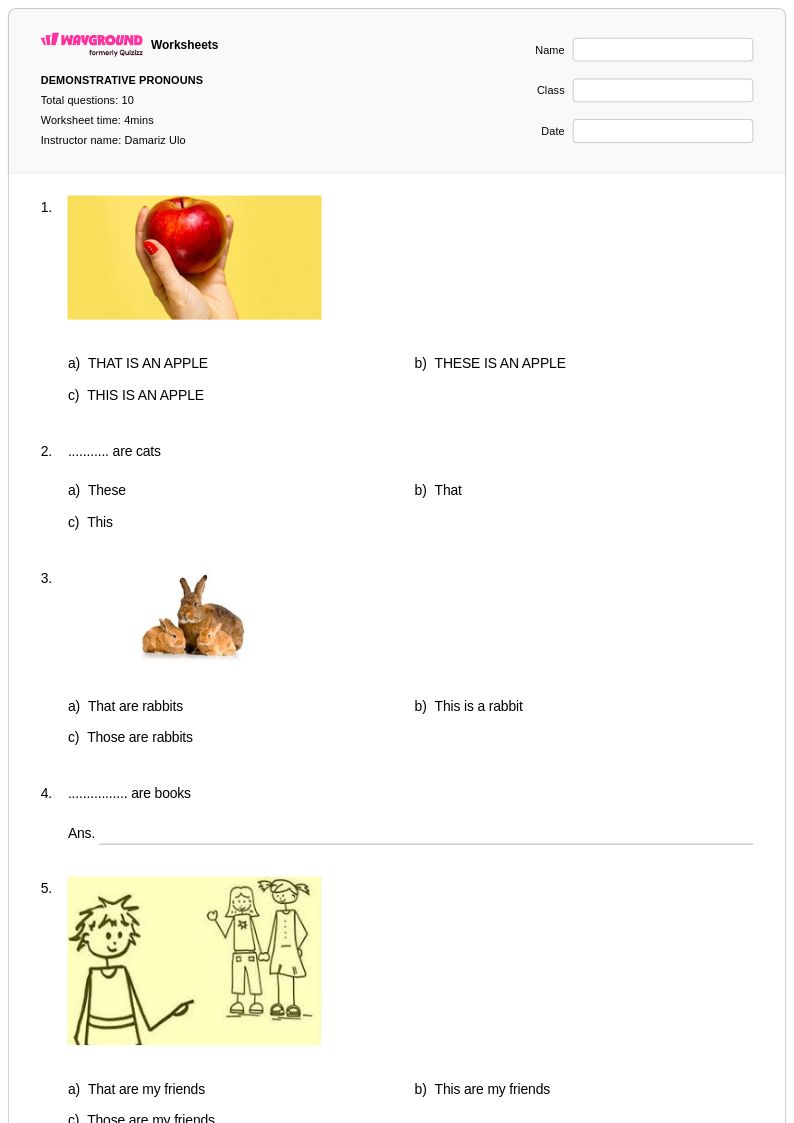
Demonstrative pronouns for Class 3 students represent a crucial building block in developing strong communication skills and grammatical understanding. Wayground's comprehensive collection of demonstrative pronoun worksheets focuses specifically on helping third-grade learners master the proper use of this, that, these, and those in various contexts. These carefully designed practice problems guide students through identifying when to use each demonstrative pronoun based on proximity and number, whether referring to singular or plural nouns that are near or far from the speaker. Each worksheet includes a detailed answer key that enables both independent learning and teacher-guided instruction, while the free printable format ensures accessibility for all classroom environments and homework assignments.
Wayground, formerly Quizizz, empowers educators with millions of teacher-created resources specifically designed for demonstrative pronoun instruction at the Class 3 level. The platform's robust search and filtering capabilities allow teachers to quickly locate worksheets that align with specific curriculum standards and learning objectives, while built-in differentiation tools enable customization for students with varying skill levels and learning needs. These versatile resources are available in both printable pdf format for traditional classroom use and digital formats for technology-integrated learning environments. Teachers can seamlessly incorporate these demonstrative pronoun worksheets into lesson planning for initial skill introduction, targeted remediation for struggling learners, enrichment activities for advanced students, or ongoing practice to reinforce grammatical concepts throughout the school year.
FAQs
How do I teach demonstrative pronouns to students?
Start by grounding the concept in physical space: use classroom objects to demonstrate how 'this' and 'these' refer to things nearby, while 'that' and 'those' refer to things farther away. Once students grasp proximity, introduce singular versus plural distinctions so they understand why 'this book' becomes 'these books' and 'that chair' becomes 'those chairs.' Pairing physical demonstrations with sentence-level practice helps students internalize both the spatial logic and grammatical function of demonstrative pronouns before moving to independent written work.
What exercises help students practice demonstrative pronouns?
Effective practice exercises include fill-in-the-blank sentences where students select the correct demonstrative pronoun based on context clues about distance and number, as well as error-correction tasks where students identify and fix incorrect pronoun usage. Sentence rewriting activities, where students replace a noun phrase with the appropriate demonstrative pronoun, reinforce both identification and application skills. Wayground's demonstrative pronouns worksheets offer targeted practice problems ranging from basic identification to sentence construction, giving students structured repetition across varied formats.
What mistakes do students commonly make with demonstrative pronouns?
The most common error is confusing proximity: students frequently use 'this' or 'these' when the context calls for 'that' or 'those,' particularly in written tasks where spatial cues are implied rather than visible. A second persistent error is a mismatch between the pronoun and the noun's number, such as writing 'these book' instead of 'these books.' Students also sometimes confuse demonstrative pronouns with demonstrative adjectives, using 'this' or 'that' before a noun when the sentence requires a standalone pronoun replacing the noun entirely.
How can I differentiate demonstrative pronoun instruction for students at different skill levels?
For students who are still building foundational skills, start with concrete, visual exercises that use pictures or classroom objects to make proximity tangible before introducing written tasks. More advanced students can be challenged with sentence construction activities that require them to produce demonstrative pronouns in context rather than select from given options. On Wayground, teachers can apply accommodations such as reduced answer choices for students who need lower cognitive load, read-aloud support for students with decoding difficulties, and extended time, all configurable per student without disrupting the rest of the class.
How do I use Wayground's demonstrative pronouns worksheets in my classroom?
Wayground's demonstrative pronouns worksheets are available as printable PDFs for traditional classroom use and in digital formats for technology-integrated environments, giving you flexibility based on your instructional setup. You can assign them as direct instruction support, independent practice, or remediation depending on where your students are in their learning. Digital versions can also be hosted as a quiz directly on Wayground, allowing you to track student responses and provide immediate feedback. Each worksheet includes a complete answer key, so grading is efficient whether you're using print or digital.
Are Wayground's demonstrative pronoun worksheets aligned to grammar standards?
Yes, Wayground offers standards-aligned demonstrative pronoun worksheets designed to support systematic skill development in grammar instruction. The platform's search and filtering tools allow teachers to quickly locate resources that match specific standards or learning objectives, reducing prep time. Because the collection includes both basic identification exercises and more complex sentence construction challenges, teachers can find appropriately leveled materials for initial instruction, remediation, or enrichment without having to create resources from scratch.