Free Printable Depreciation Worksheets for Class 10
Enhance Class 10 students' understanding of depreciation with Wayground's comprehensive collection of free worksheets, featuring printable PDFs with practice problems and answer keys to master this essential financial literacy concept.
Explore printable Depreciation worksheets for Class 10
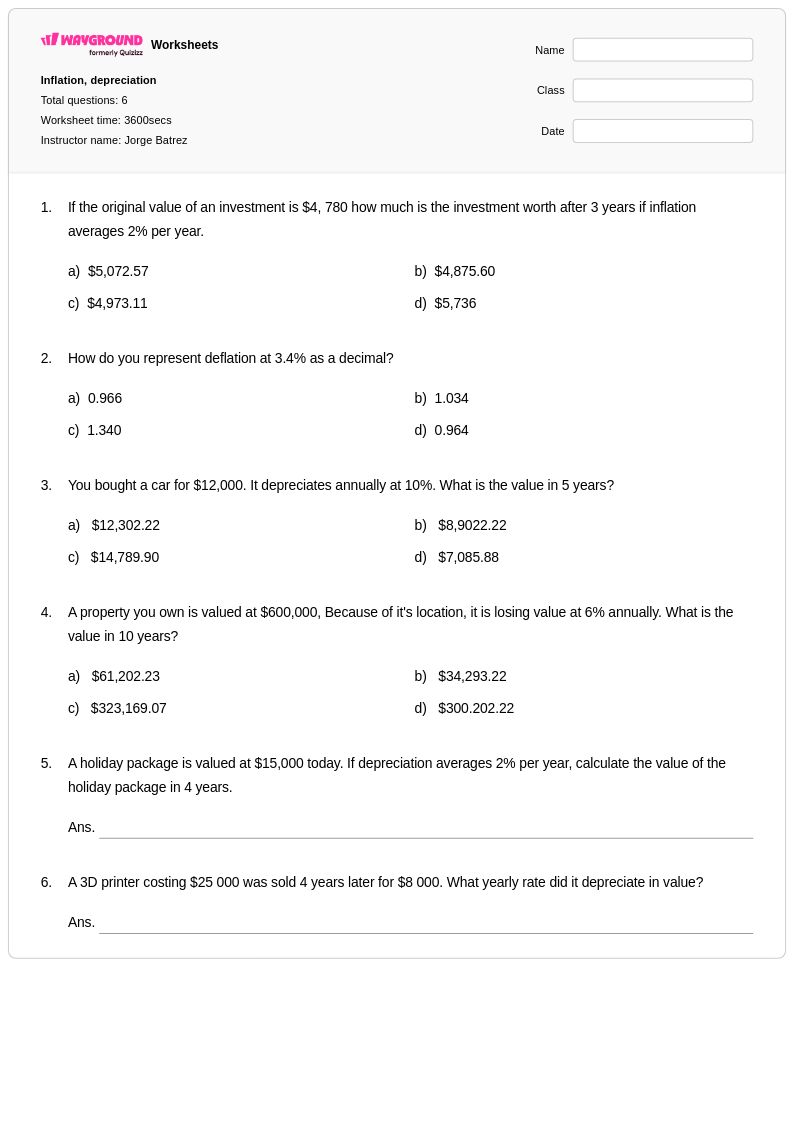
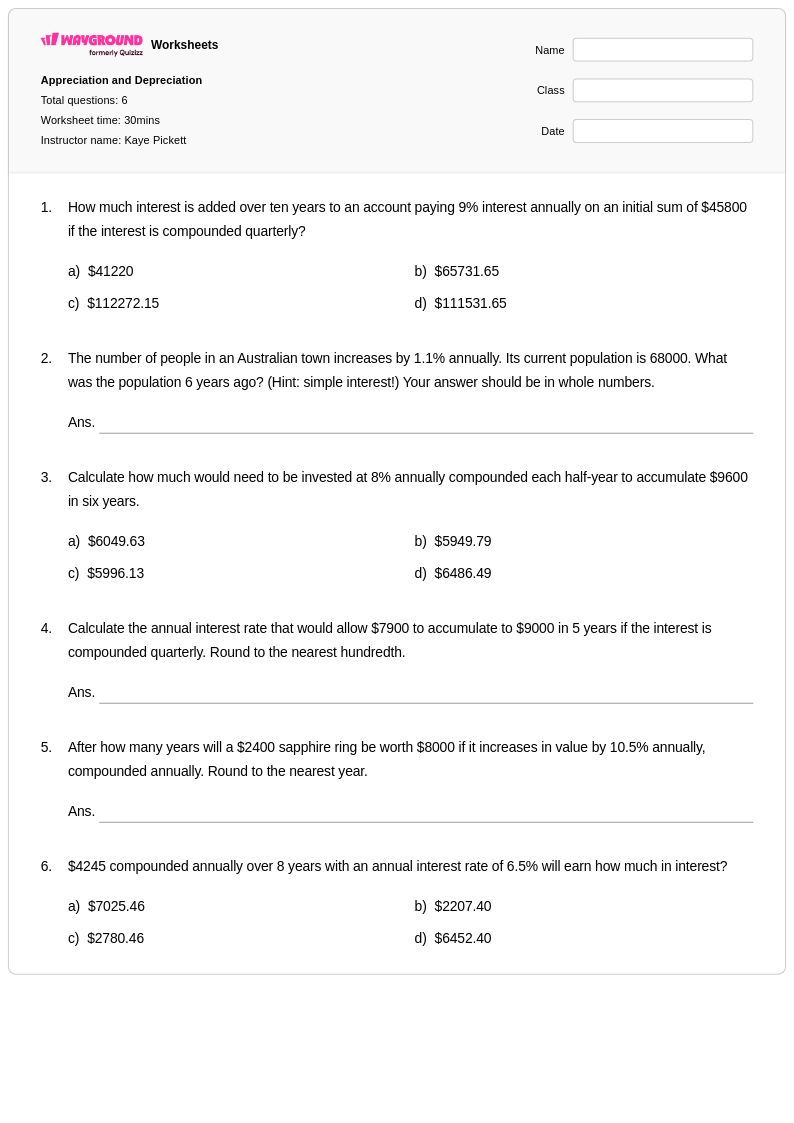
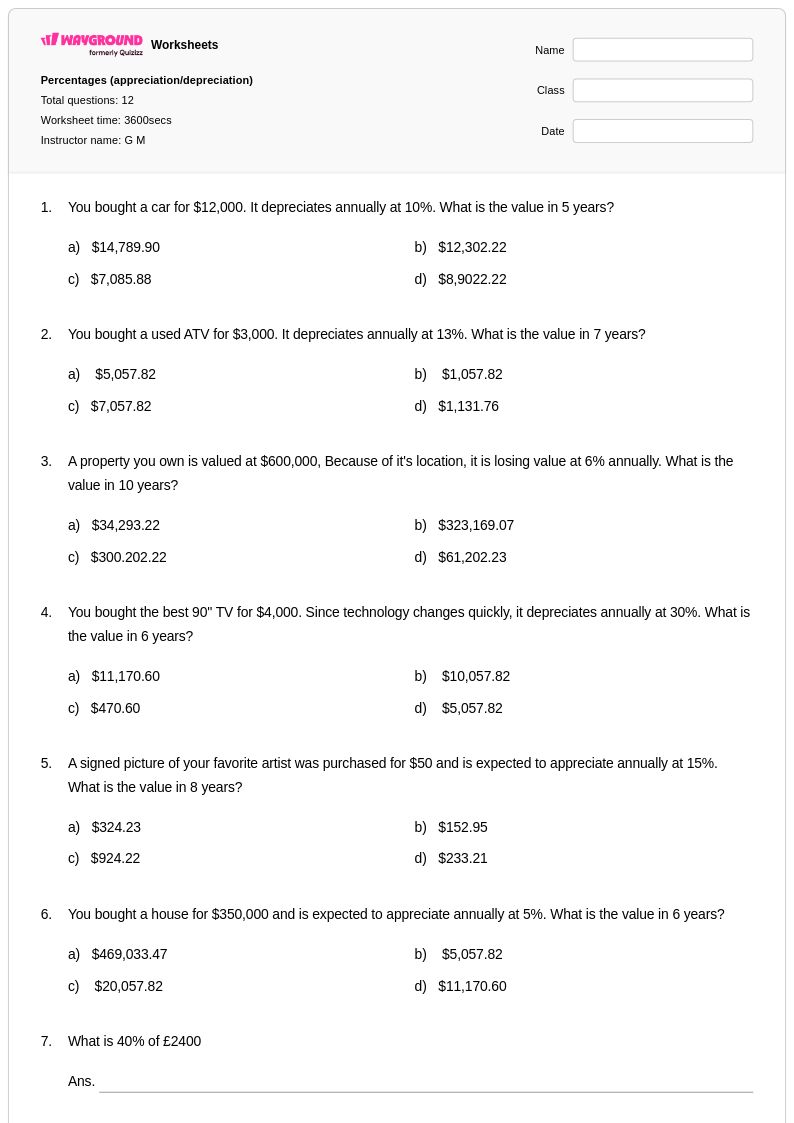
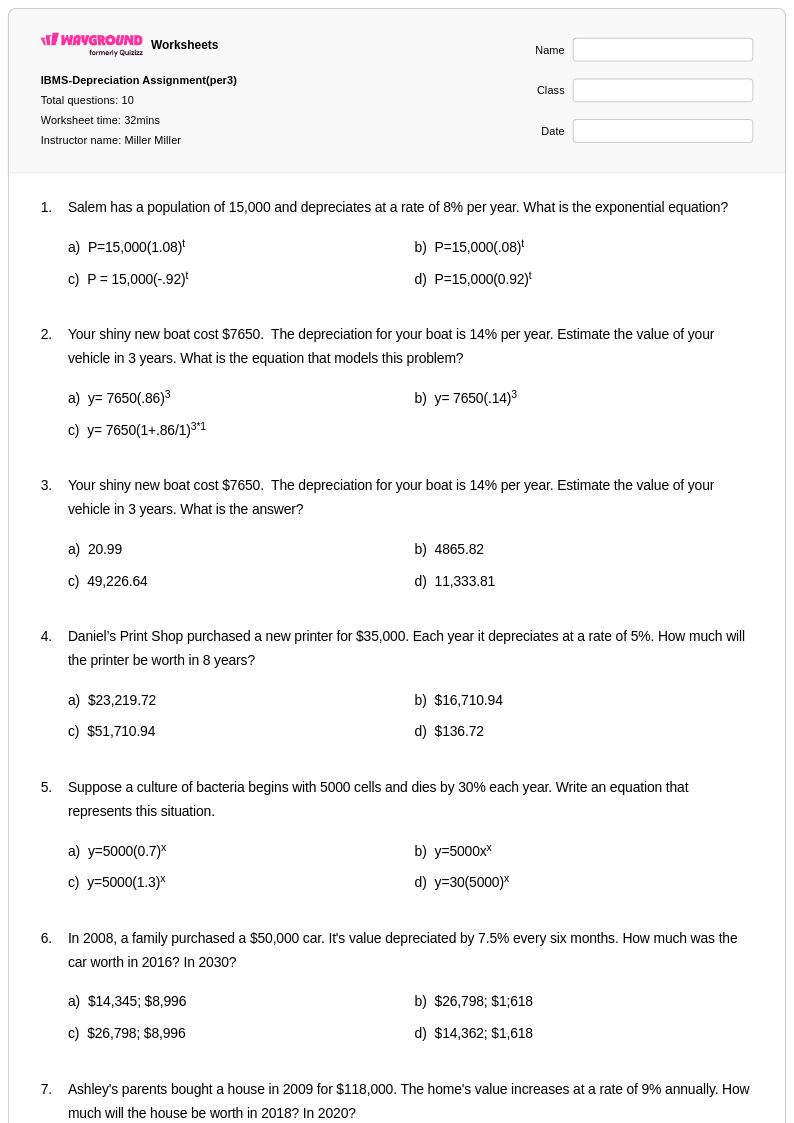
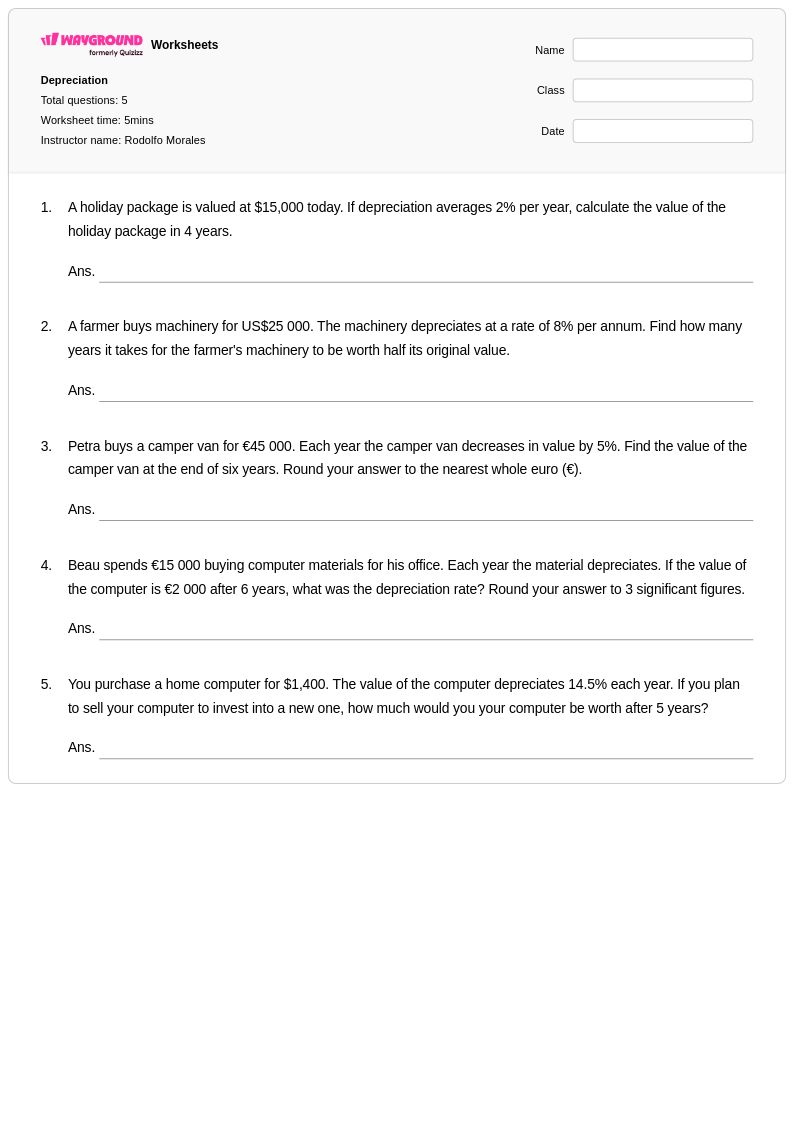
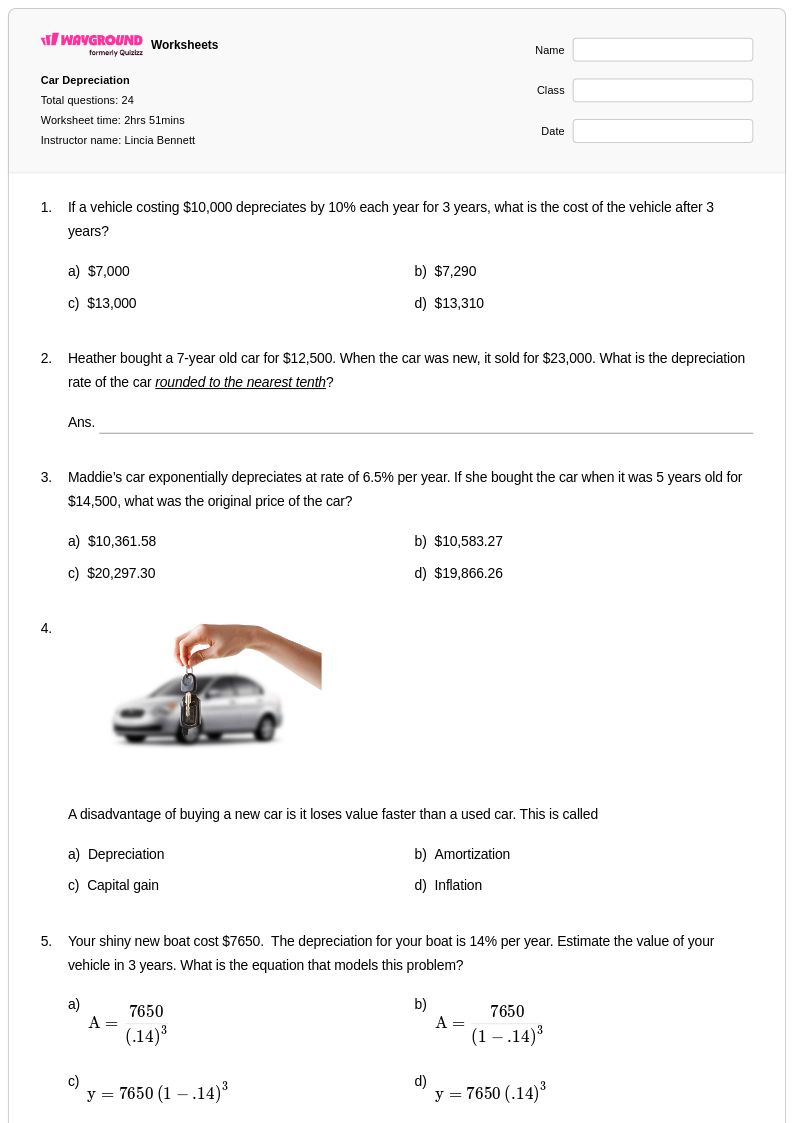
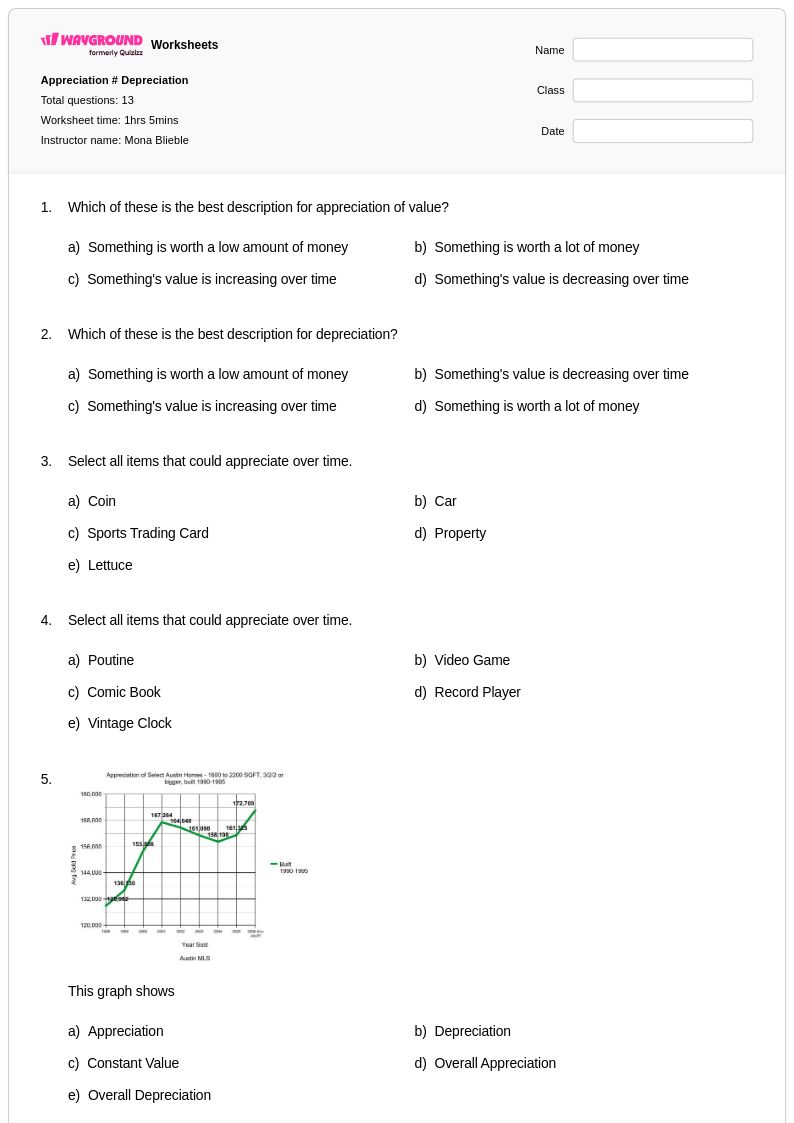
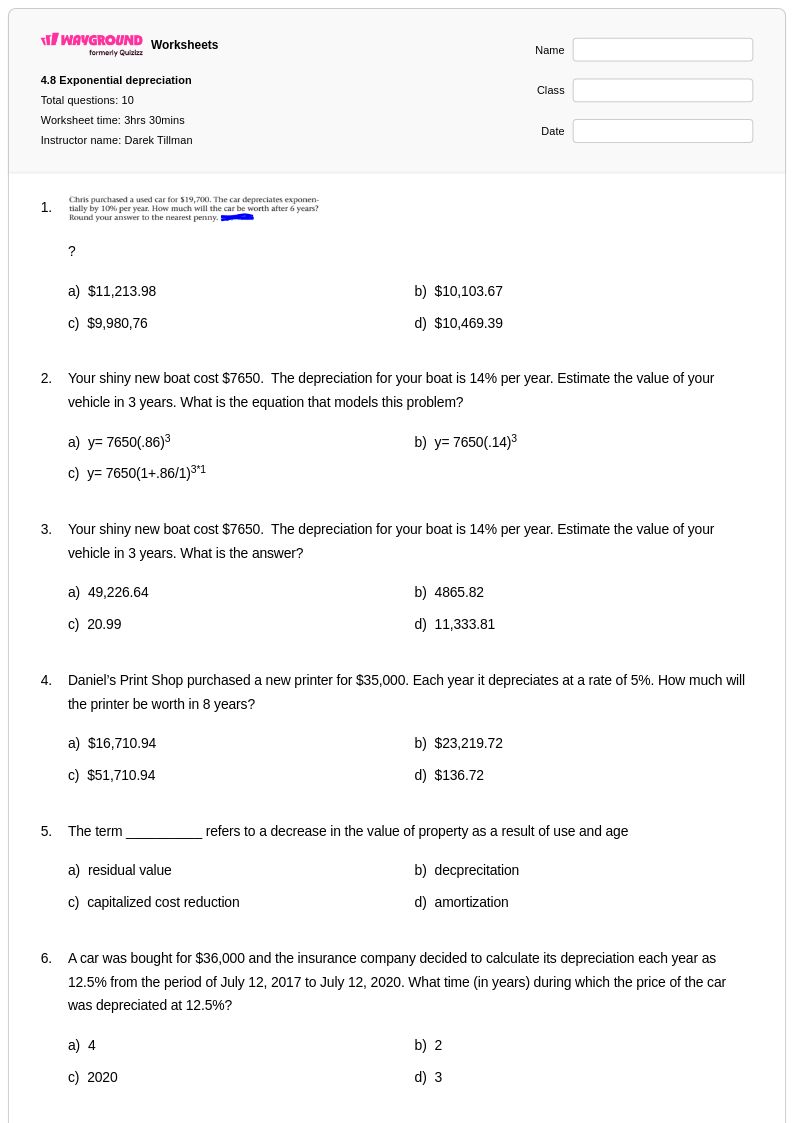
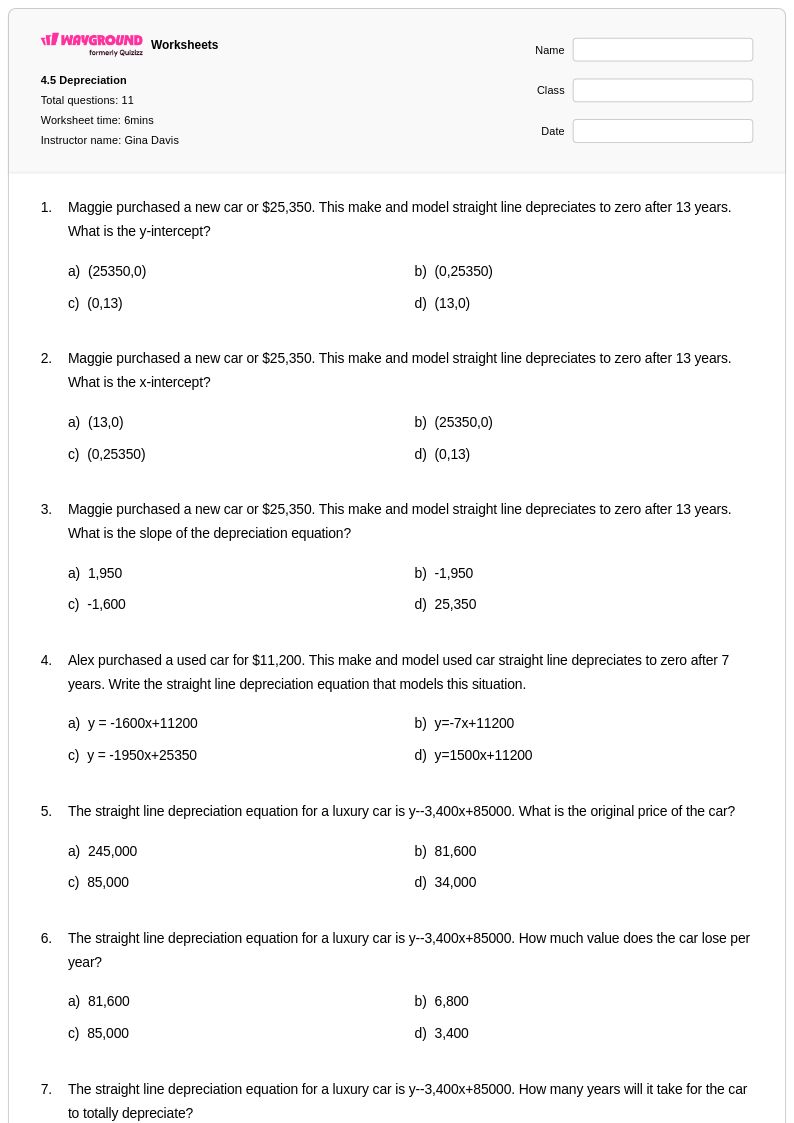
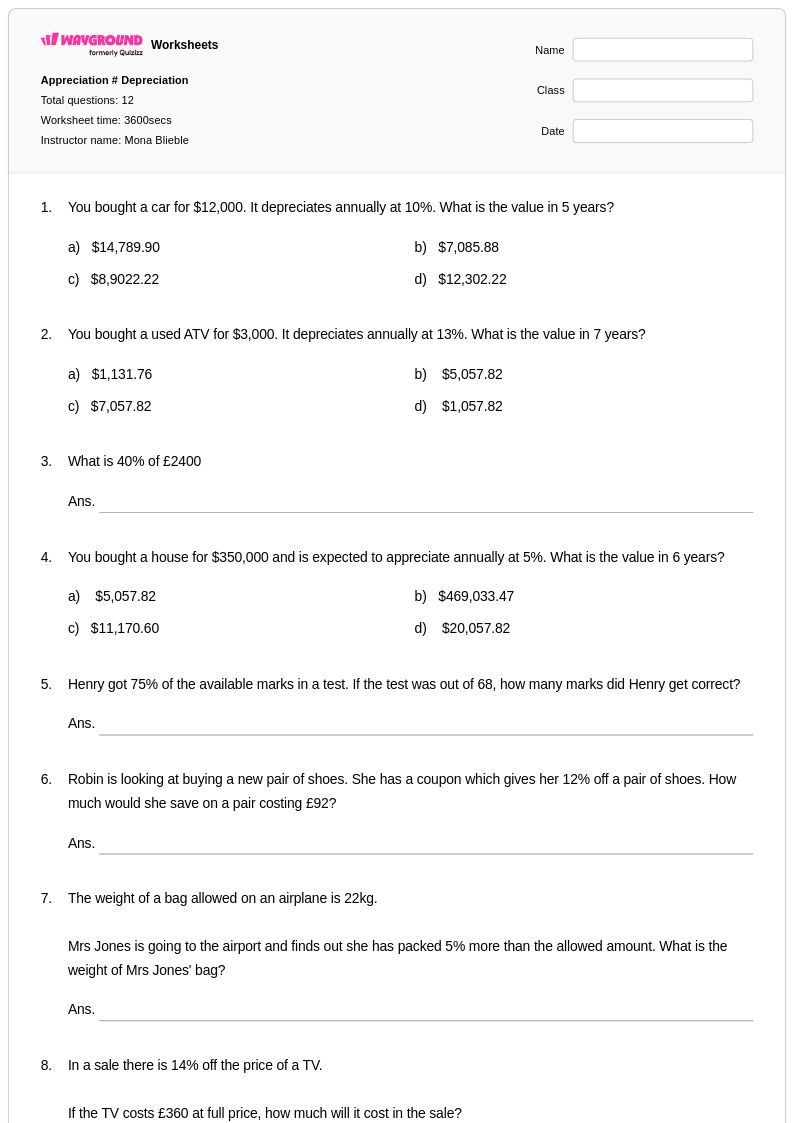
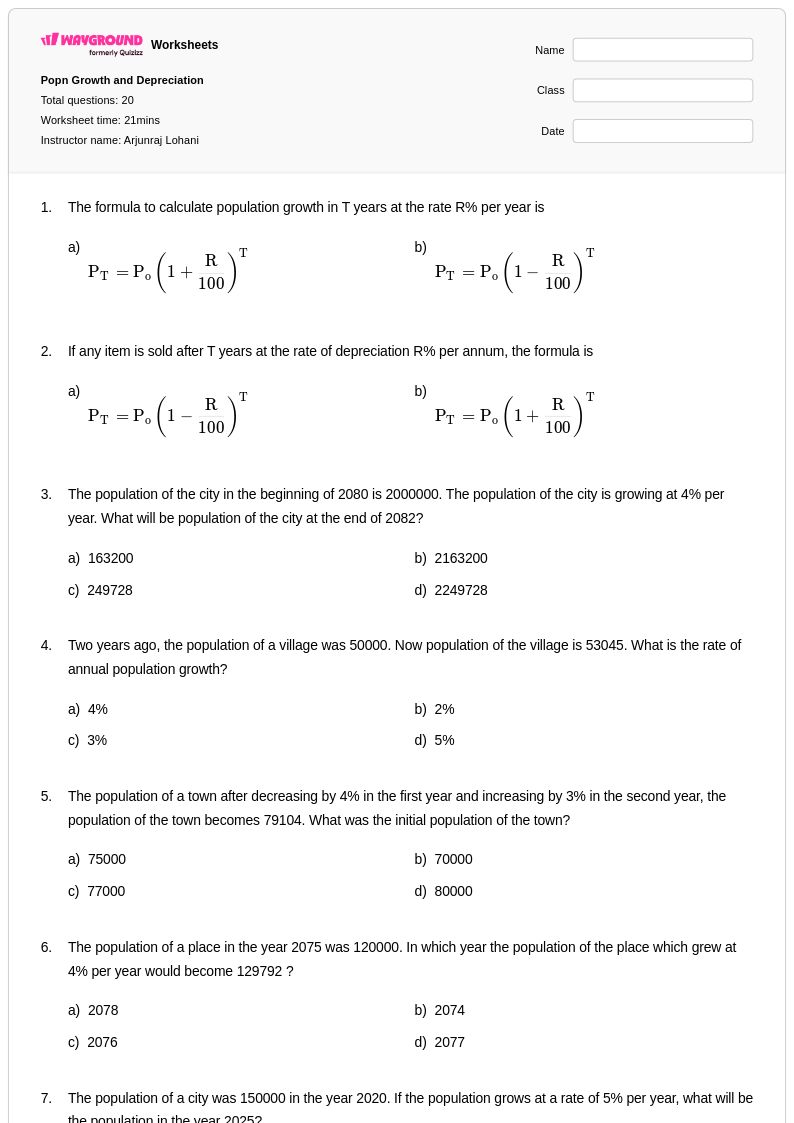
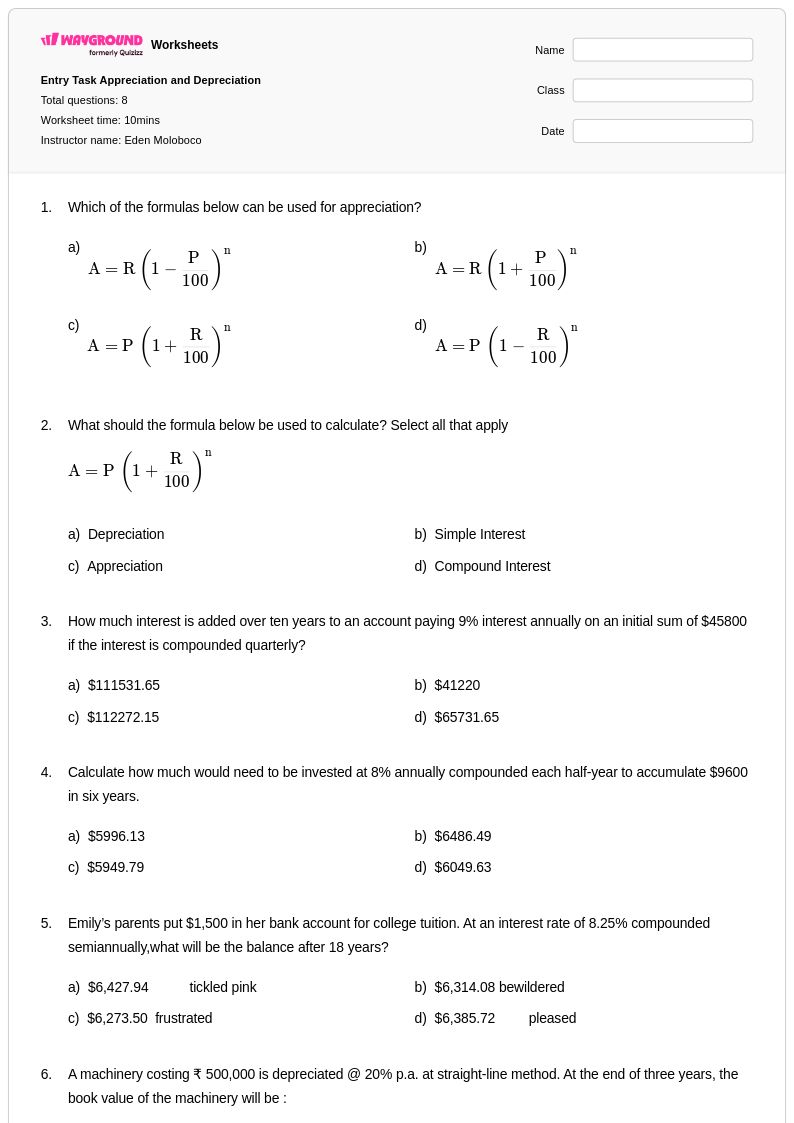
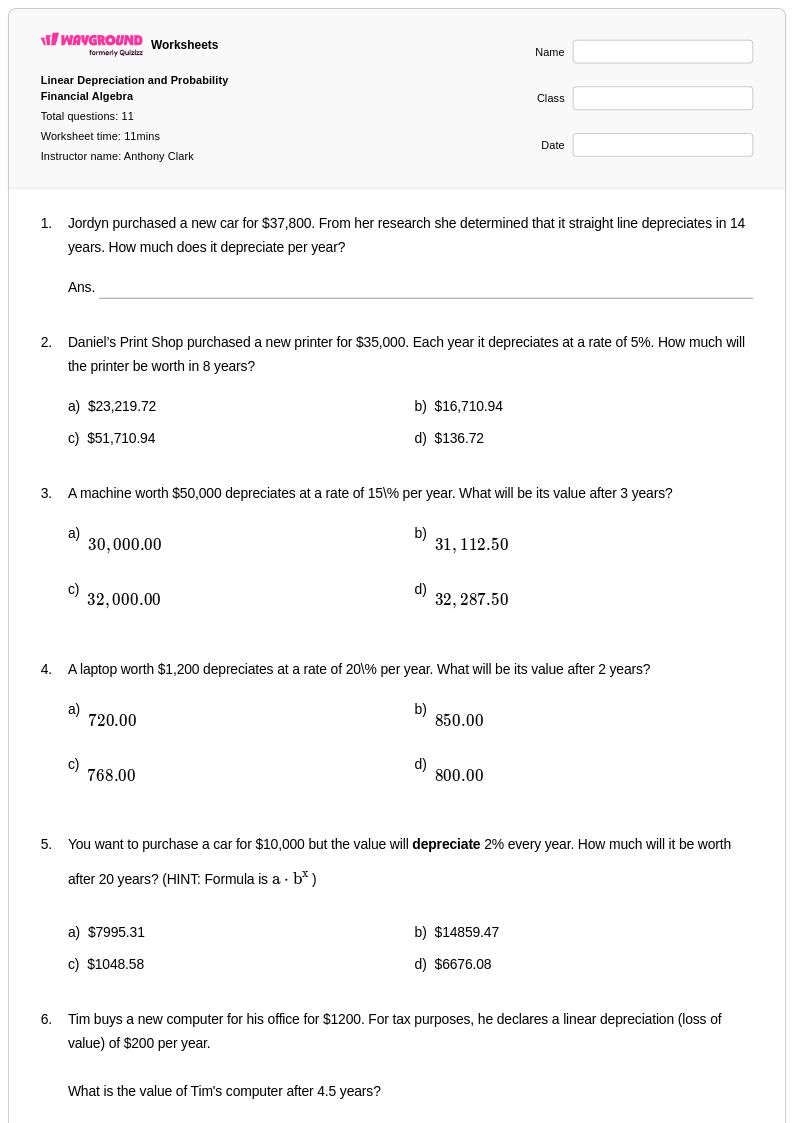
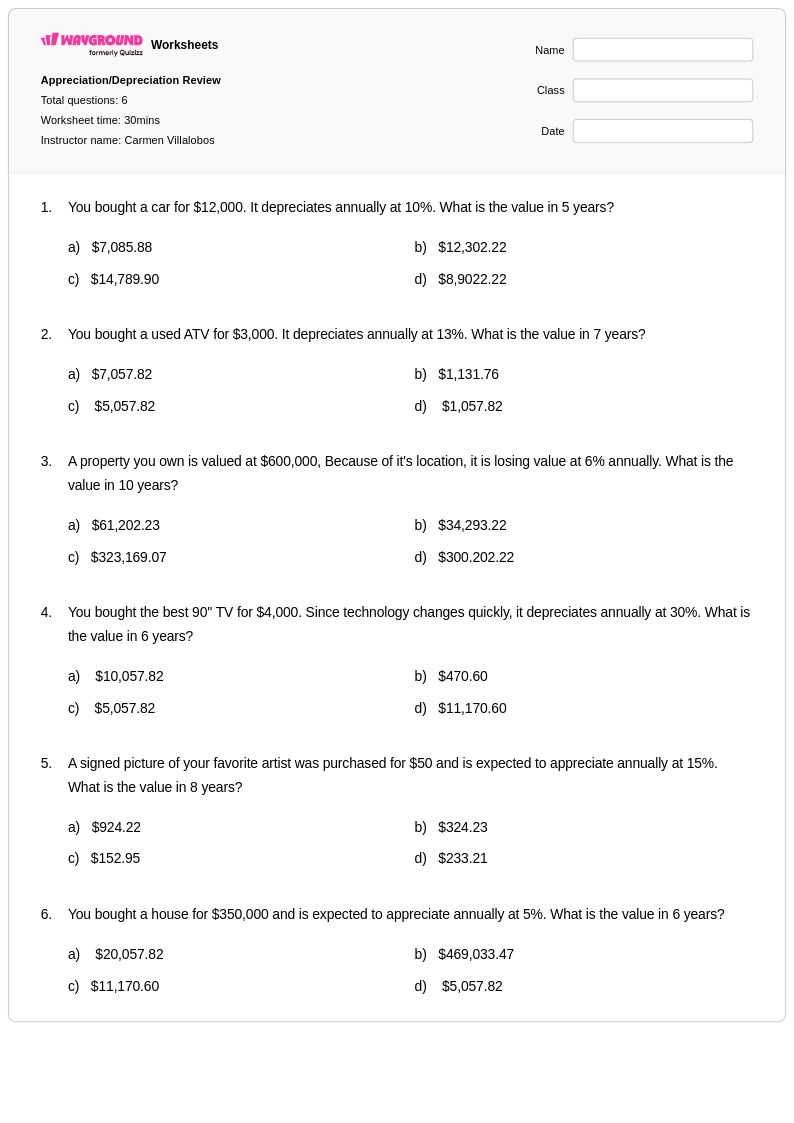
Depreciation worksheets for Class 10 students available through Wayground (formerly Quizizz) provide comprehensive practice with one of the most essential concepts in financial literacy education. These carefully designed resources help students master the mathematical calculations involved in asset depreciation, including straight-line depreciation, declining balance methods, and units of production approaches. Students work through practice problems that simulate real-world scenarios involving vehicles, equipment, and property depreciation, strengthening their ability to calculate depreciation expenses, determine book values over time, and understand the financial impact of asset value decline. Each worksheet comes with a detailed answer key and is available as a free printable pdf, making it easy for educators to incorporate authentic financial mathematics into their Class 10 curriculum while ensuring students develop critical quantitative skills needed for personal finance decision-making.
Wayground (formerly Quizizz) empowers teachers with access to millions of teacher-created depreciation worksheets specifically aligned to Class 10 financial literacy standards and learning objectives. The platform's robust search and filtering capabilities allow educators to quickly locate resources that match their specific curriculum requirements, whether focusing on basic straight-line depreciation or more advanced accelerated depreciation methods. Teachers can customize existing worksheets or create differentiated versions to support diverse learning needs, providing additional scaffolding for struggling students or enhanced challenges for advanced learners. Available in both digital and printable pdf formats, these depreciation resources seamlessly integrate into lesson planning, homework assignments, remediation sessions, and enrichment activities, giving educators the flexibility to deliver targeted skill practice that builds students' confidence with complex financial calculations and real-world mathematical applications.
FAQs
How do I teach depreciation methods to Grade 10 students?
By Grade 10, students can handle method comparisons directly. Teach straight-line first as the baseline, then introduce declining balance by showing what happens when you apply a fixed percentage to the remaining book value each year rather than a fixed dollar amount. A side-by-side table, same asset, both methods, five years, makes the difference concrete: declining balance front-loads the expense, straight-line spreads it evenly. Ask students which method a business might prefer for tax purposes and why. That question moves them from calculation to reasoning.
What depreciation exercises are most effective for Grade 10 students?
Multi-year depreciation schedules are the core practice at this level. Students should be able to complete a full schedule, initial cost, annual depreciation, accumulated depreciation, and book value, for both straight-line and declining balance methods. Adding a units-of-production problem (where depreciation depends on usage, not time) rounds out the method set and prepares students for more applied financial math. Problems involving vehicles and equipment tend to hold attention better than abstract numbers.
What errors do Grade 10 students typically make with depreciation?
With declining balance, the most persistent error is applying the depreciation rate to the original cost every year instead of the current book value. Students also frequently let book value go negative by continuing to depreciate past the salvage value. A useful classroom fix: require students to write a stopping condition at the top of every declining balance schedule, 'stop when book value = salvage value', before they begin calculating.
How do I use Wayground's Grade 10 depreciation worksheets in my classroom?
The worksheets are available as printable PDFs with complete answer keys included, so they work well for in-class practice or take-home assignments where students self-check their work. You can also run any worksheet as a digital quiz on Wayground, which gives students immediate feedback on each answer — useful when you want them to catch and correct errors in real time rather than after the fact.
How does depreciation fit into the Grade 10 math curriculum?
Depreciation sits at the intersection of financial literacy and applied mathematics. In most state curricula, Grade 10 is where students move beyond basic percentage calculations into multi-step financial models. Straight-line depreciation reinforces linear functions (a concept from Grade 9 algebra), while declining balance introduces exponential decay — connecting directly to the exponential functions many Grade 10 students encounter in algebra 2 or pre-calculus. That cross-topic link is worth making explicit in instruction.
How can I differentiate depreciation practice for my Grade 10 class?
For students who need scaffolding, start with a partially completed depreciation schedule — fill in the first year's row and ask them to continue. This reduces the setup burden and lets them focus on the calculation pattern. In Wayground, you can create an alternate version of the worksheet with wider line spacing or a dyslexia-friendly font for students who need it, and the extended time accommodation is easy to set per student for timed digital sessions. Advanced students can be pushed toward comparison problems: given two depreciation methods for the same asset, which produces a lower book value at year three, and why does that matter to a business?