Free Printable Depreciation Worksheets for Class 11
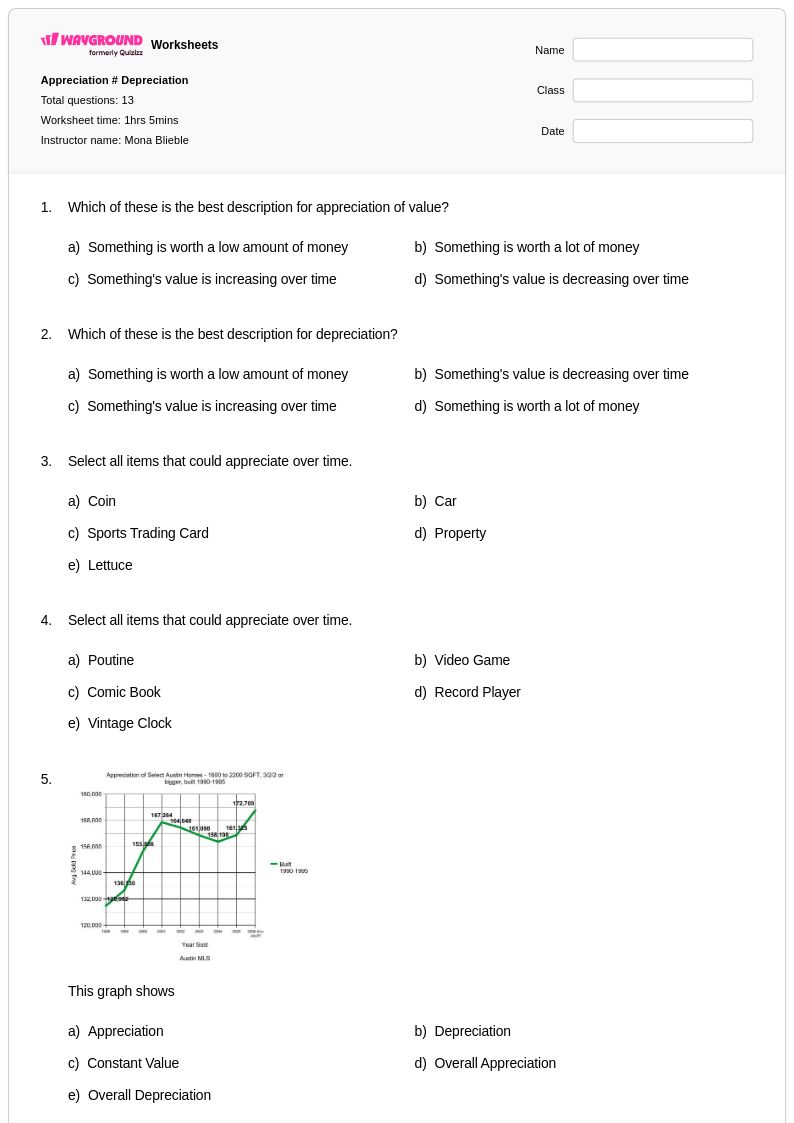
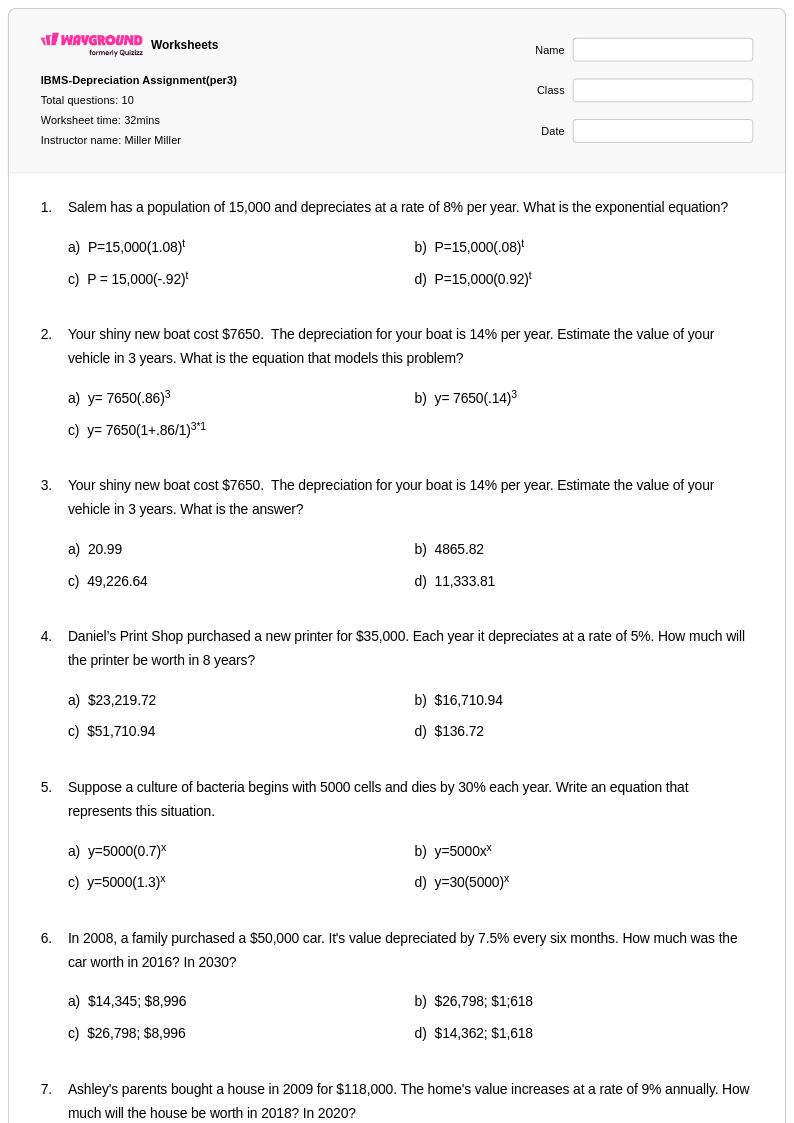
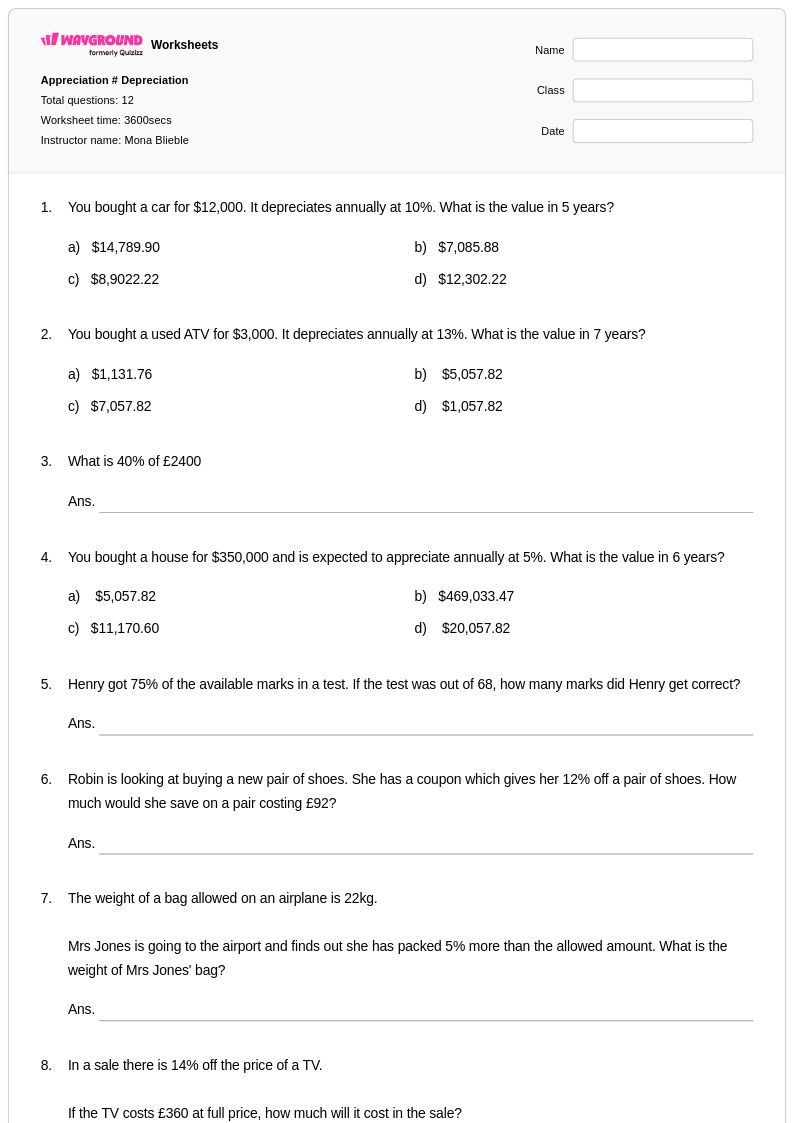
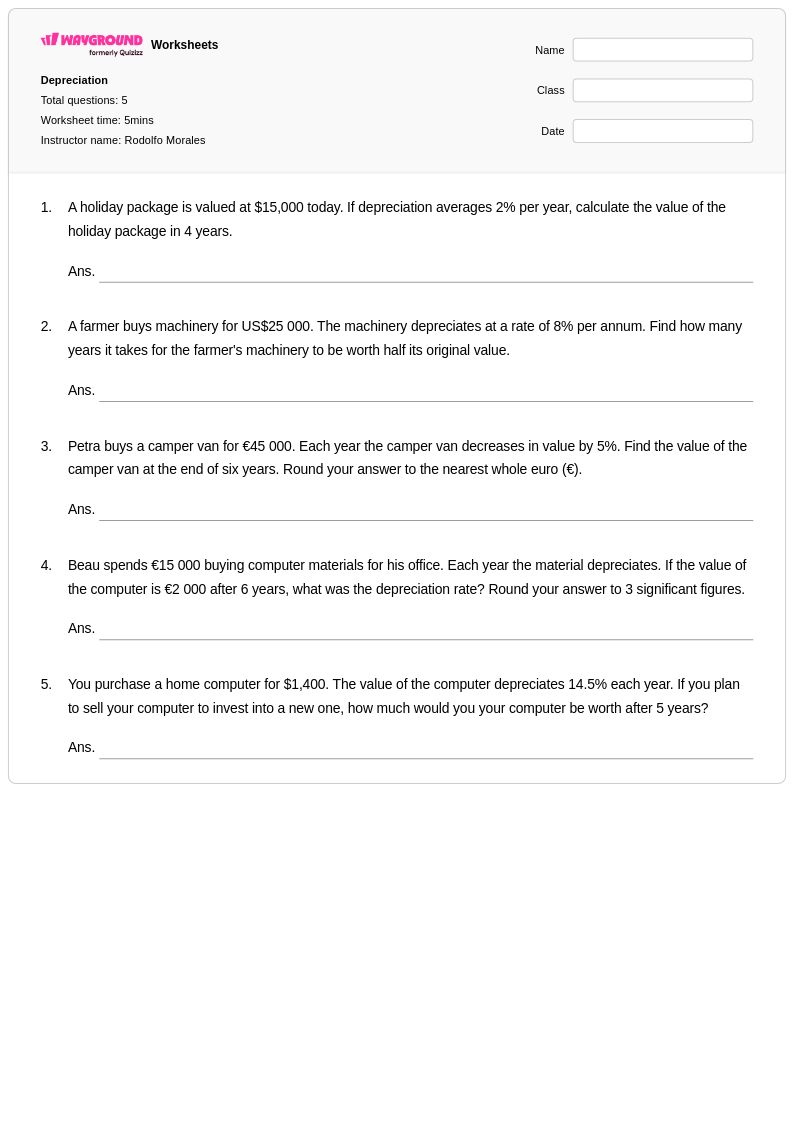
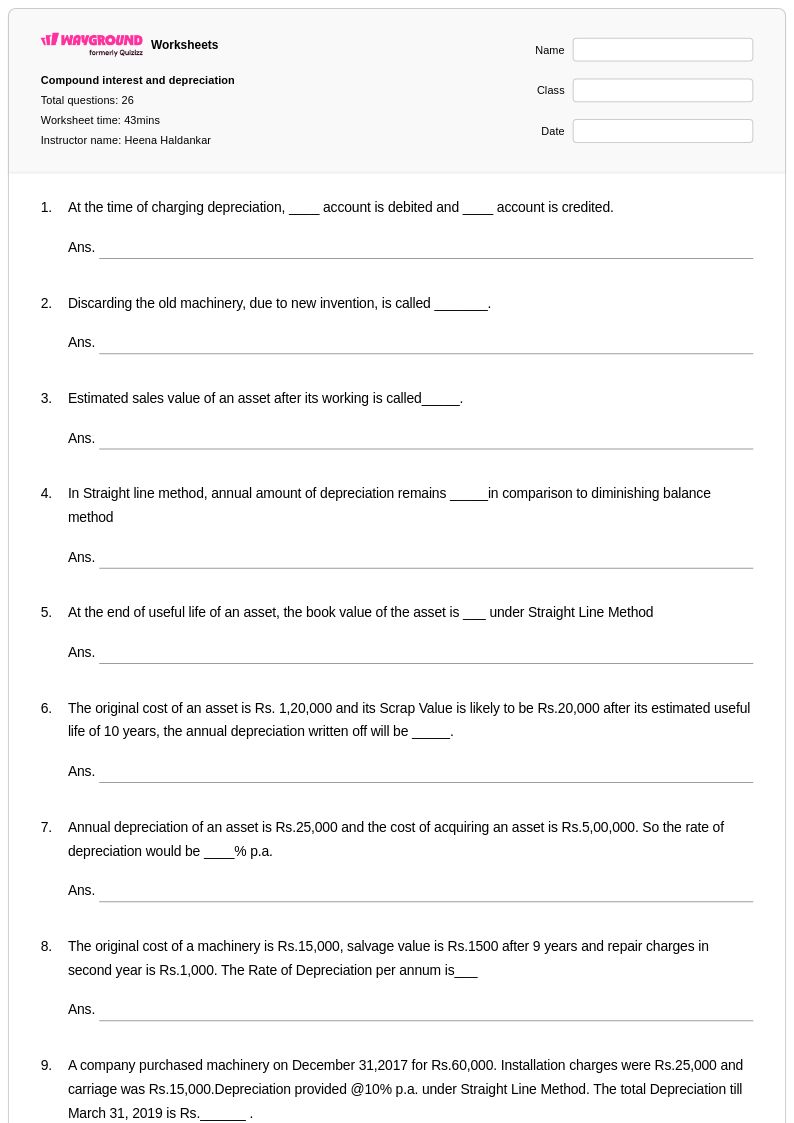
Class 11 depreciation worksheets from Wayground offer comprehensive printables and practice problems to help students master calculating asset value decline, featuring free PDF resources with complete answer keys for effective financial literacy learning.
Explore printable Depreciation worksheets for Class 11
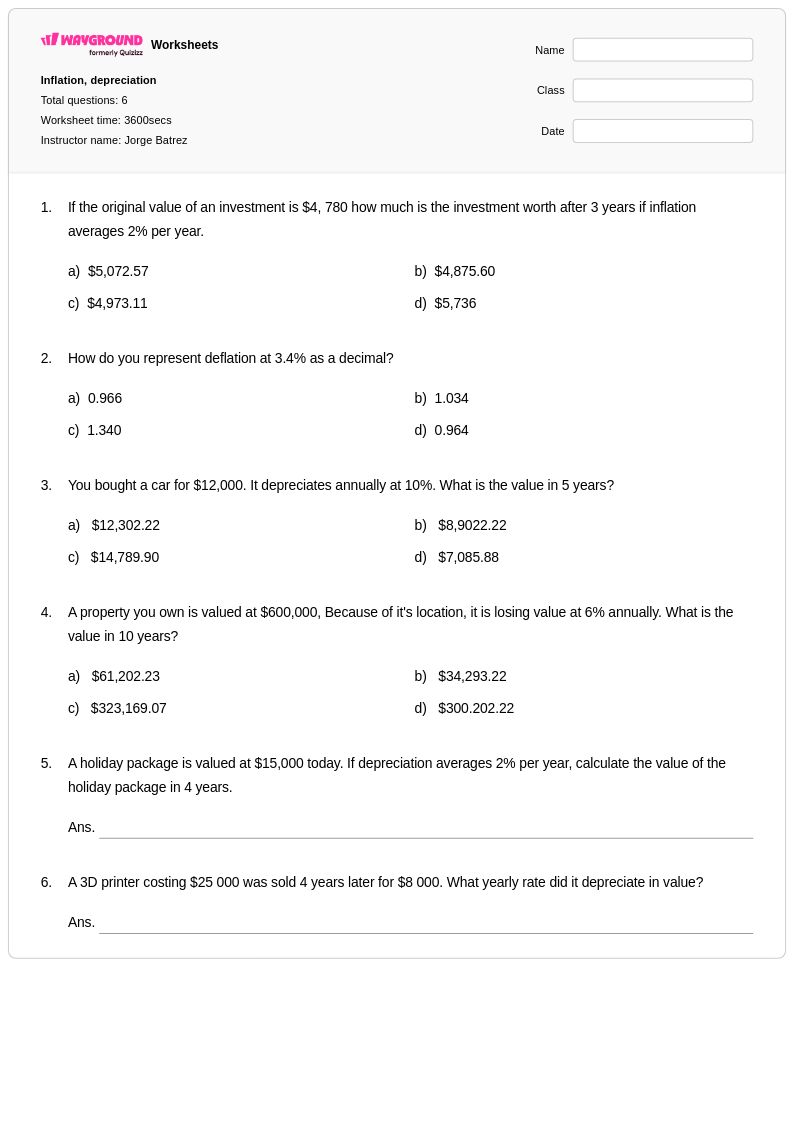
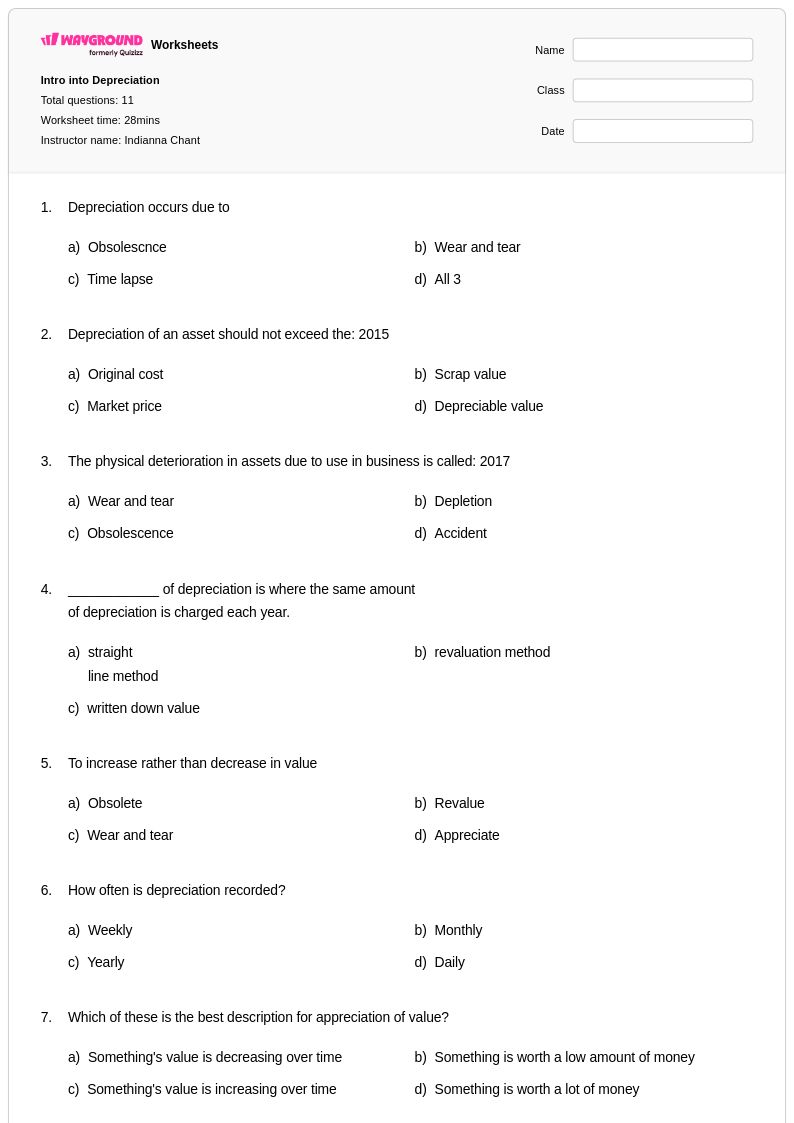
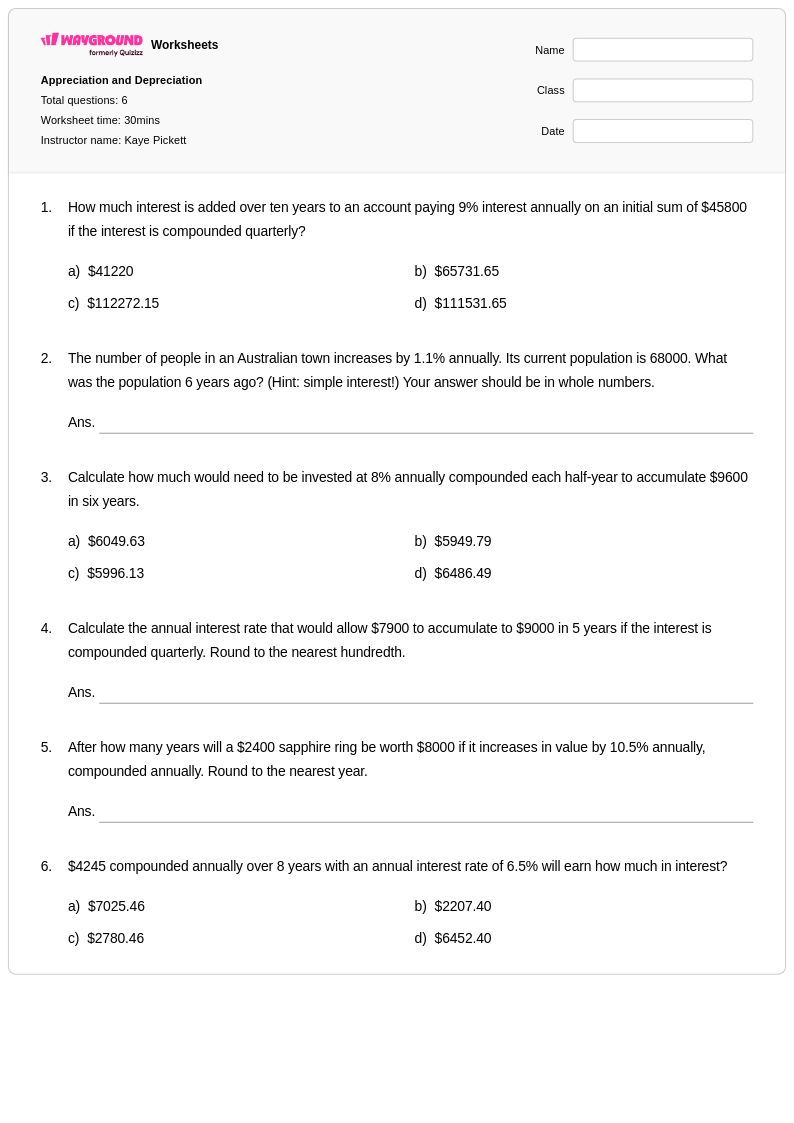
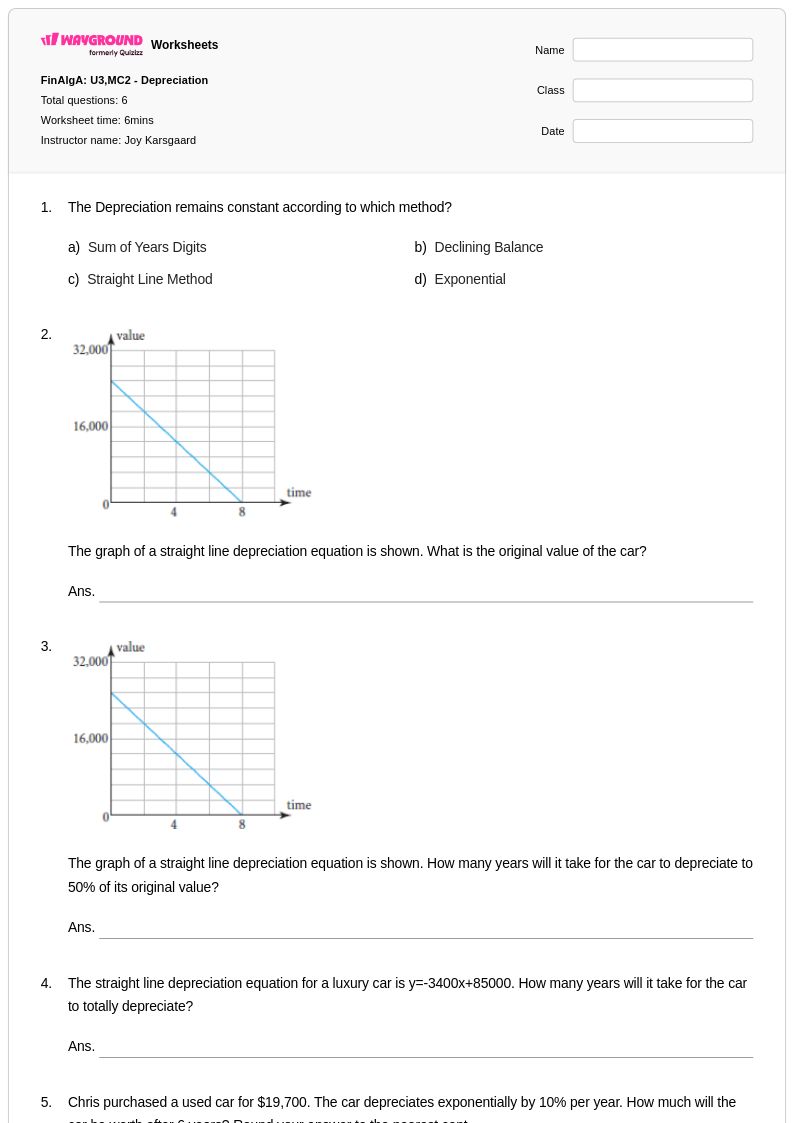
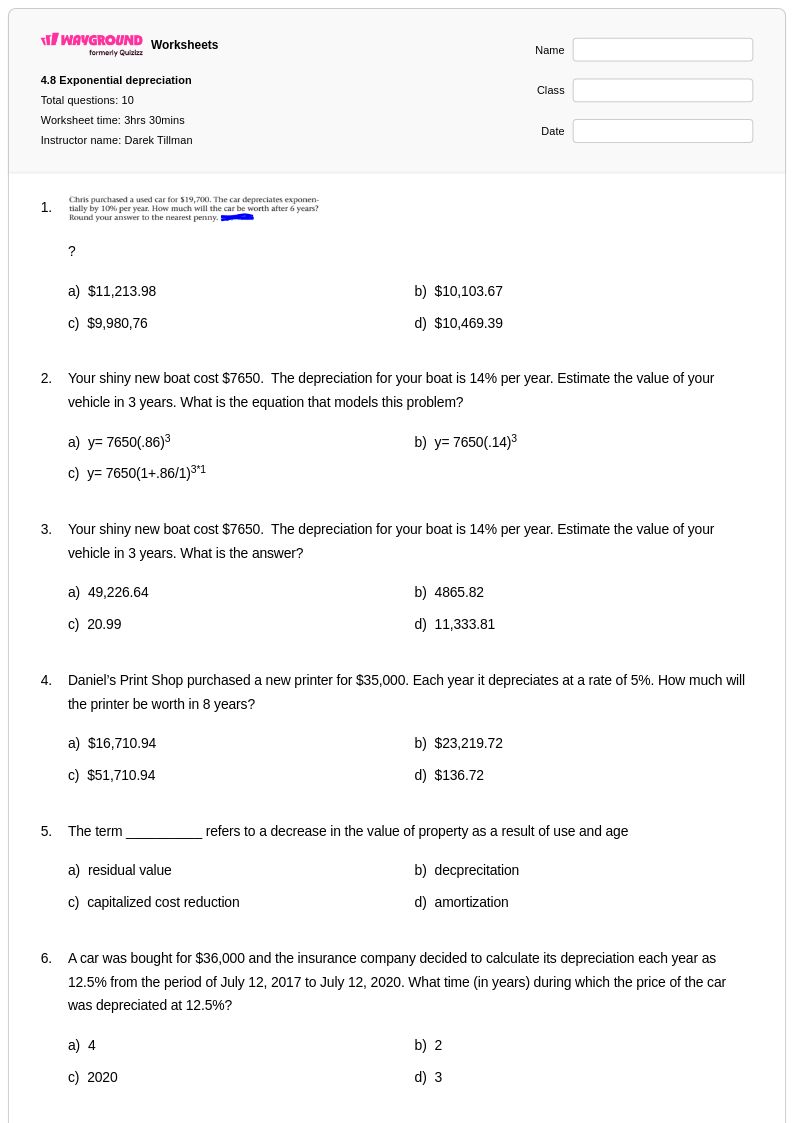
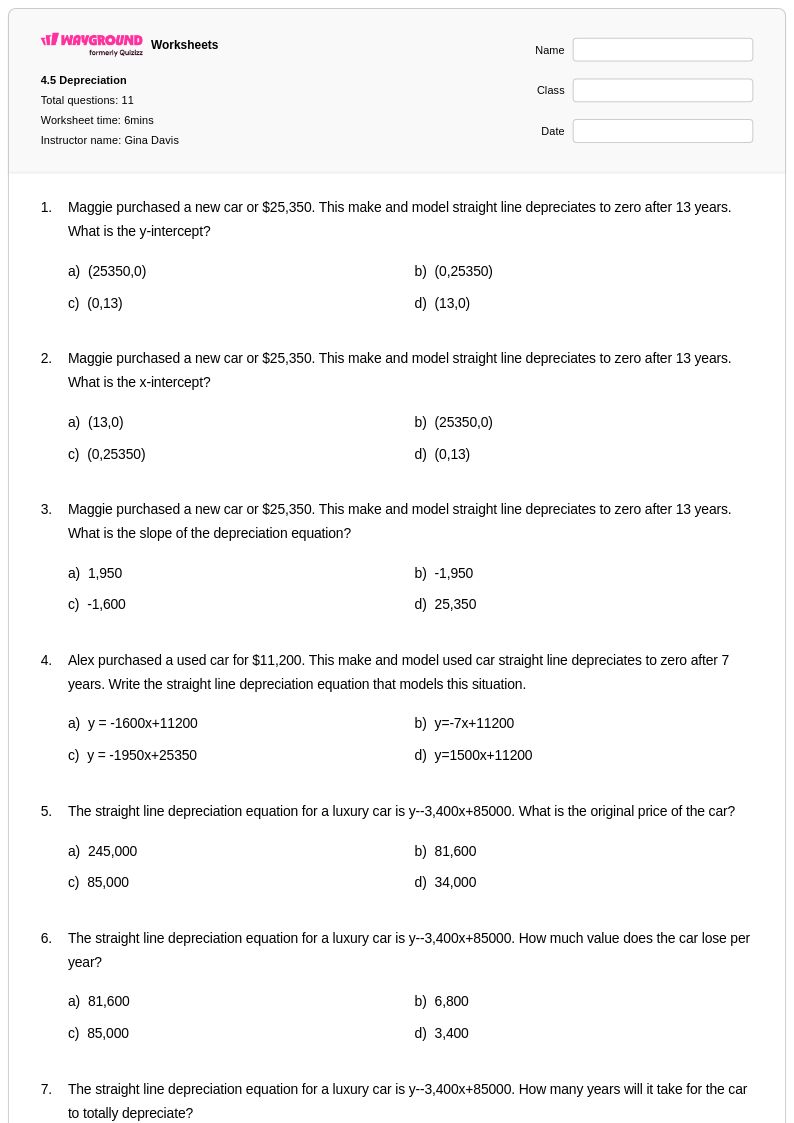
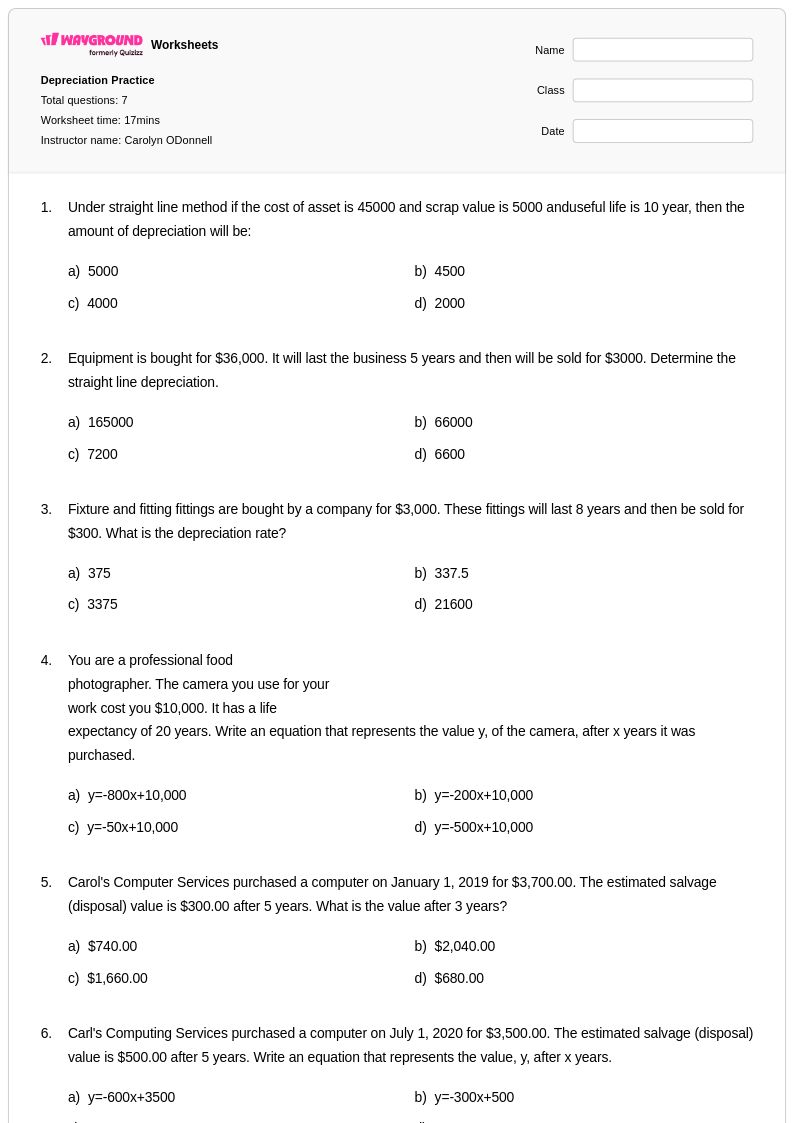
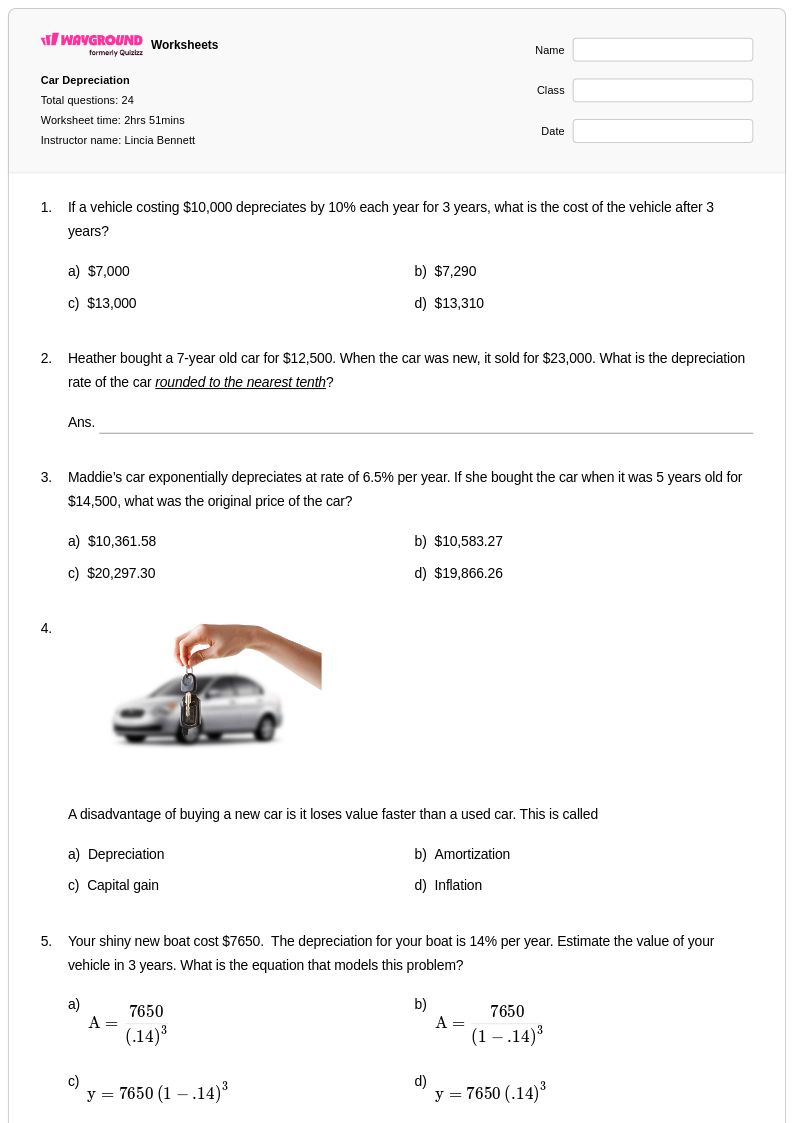
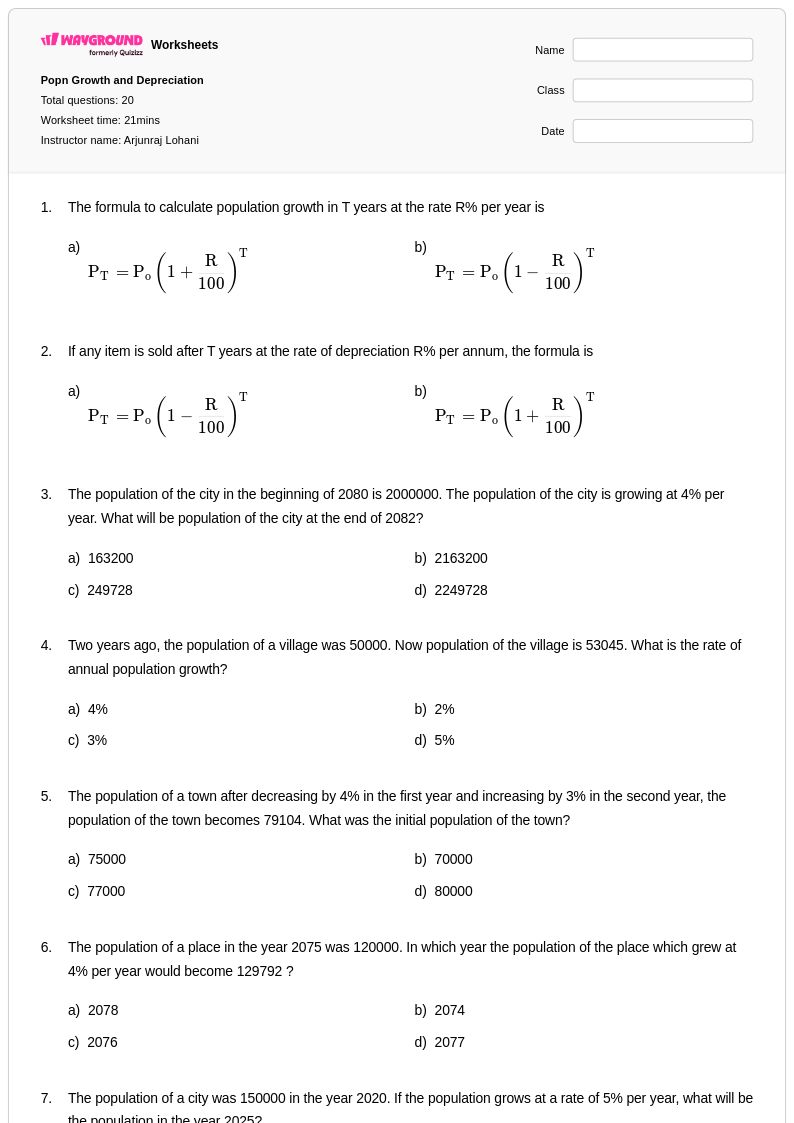
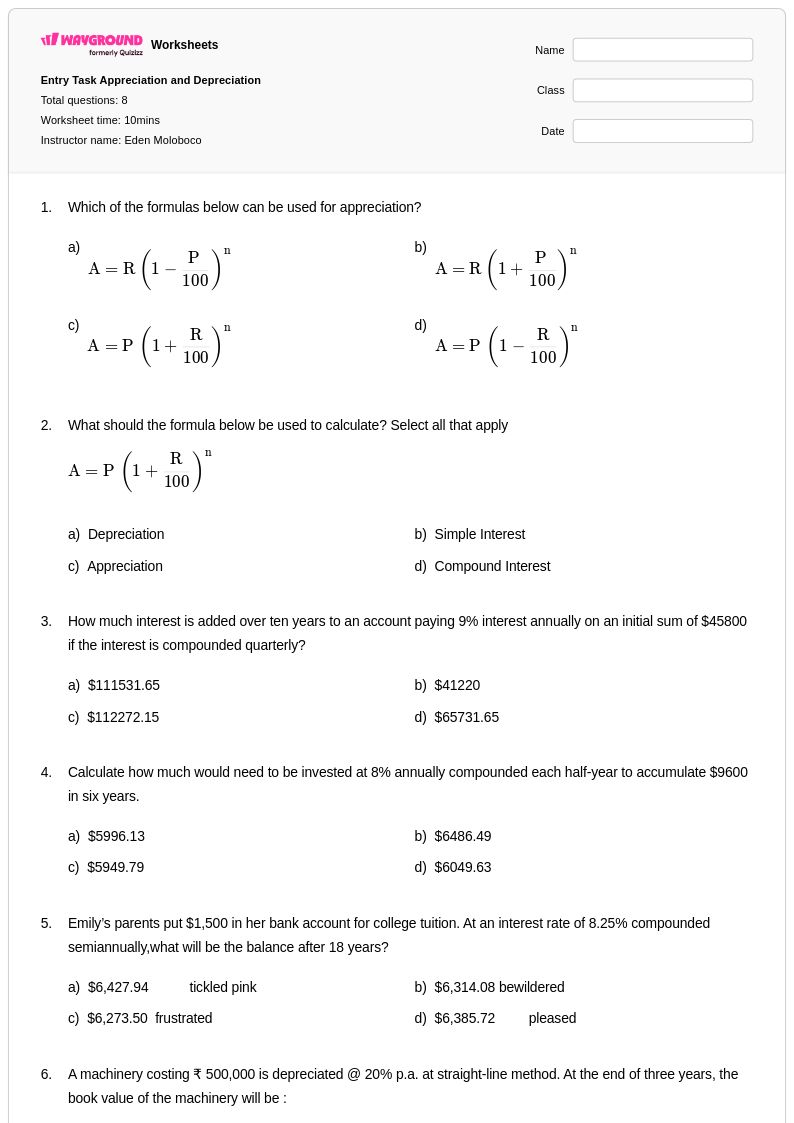
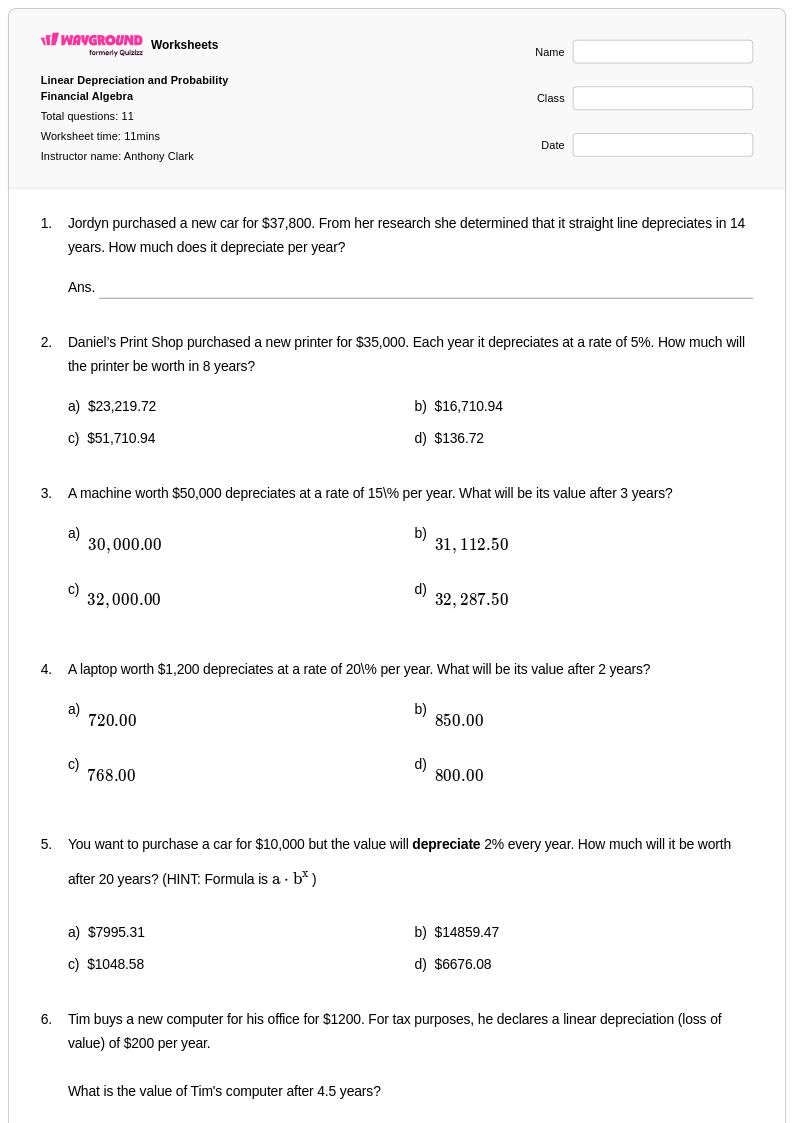
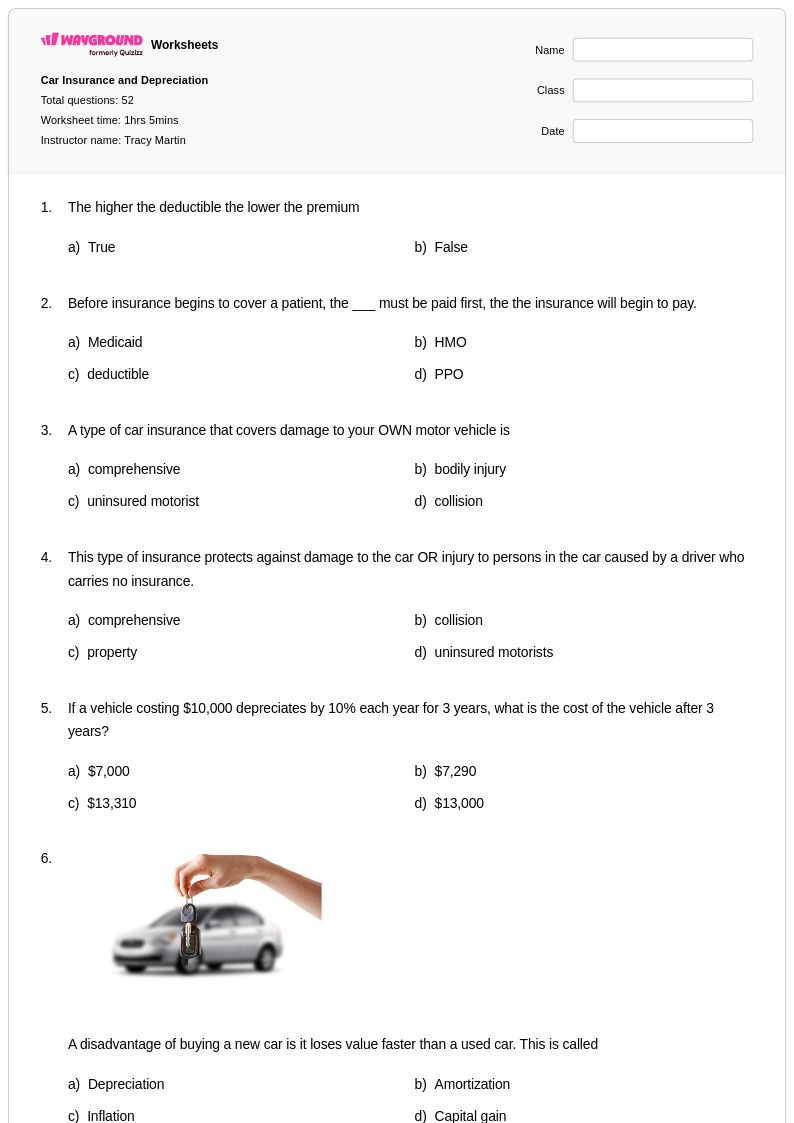
Depreciation worksheets for Class 11 mathematics through Wayground (formerly Quizizz) provide comprehensive coverage of asset value decline calculations essential for financial literacy education. These expertly crafted resources guide students through straight-line depreciation, declining balance methods, and units of production calculations while building critical thinking skills around real-world financial scenarios. Students work through practice problems involving vehicle depreciation, equipment valuation, and business asset management, developing proficiency in calculating book value, accumulated depreciation, and annual depreciation expenses. Each worksheet collection includes detailed answer keys and step-by-step solutions, with free printable pdf formats that support both classroom instruction and independent study sessions.
Wayground (formerly Quizizz) empowers educators with millions of teacher-created depreciation resources that streamline lesson planning and support differentiated instruction across varying skill levels. The platform's robust search and filtering capabilities allow teachers to quickly locate worksheets aligned with specific curriculum standards while accessing customizable templates that can be modified for remediation or enrichment purposes. Teachers benefit from flexible delivery options including printable pdf worksheets for traditional classroom settings and interactive digital formats that provide immediate feedback during skill practice sessions. These comprehensive tools enable educators to effectively assess student understanding of depreciation concepts while providing targeted support for learners who need additional practice with complex financial calculations and real-world application scenarios.
FAQs
How do I teach depreciation at the Grade 11 level?
Grade 11 students should be moving beyond formula application toward financial interpretation. After reviewing the three main methods, straight-line, declining balance, and units of production, focus instruction on why a business would choose one over another. Declining balance accelerates expense recognition, which can reduce taxable income in early years; straight-line is simpler and more predictable for reporting. Posing a scenario where students must recommend a depreciation method for a specific business asset, and justify it, builds the analytical layer that distinguishes Grade 11 work from earlier grades.
What should Grade 11 students be able to do with depreciation?
At this level, students should be able to: complete a full multi-year depreciation schedule using any of the three standard methods, calculate accumulated depreciation and book value at any point in an asset's life, and interpret what those figures mean for a business's financial position. Problems involving partial-year depreciation (an asset purchased mid-year) and disposal of a fully or partially depreciated asset are appropriate stretch challenges for Grade 11.
What misconceptions do Grade 11 students still carry about depreciation?
Even at Grade 11, two misconceptions persist. First, students conflate depreciation with market value — they assume a fully depreciated asset is worthless, when in practice it may still be in use and have real market value. Second, they treat salvage value as optional rather than as a hard floor for book value. Both misconceptions matter more at this level because students are now working with business scenarios where those distinctions have real financial consequences.
How do I use Wayground's Grade 11 depreciation worksheets?
For paper-based practice, download the printable PDF — each worksheet includes a complete answer key and step-by-step solutions, which makes them effective for independent study or test prep. When you collect paper submissions, the Wayground for Teachers app lets you scan and grade student work without manual data entry. For a more interactive session, host the worksheet as a digital quiz on Wayground so students receive immediate feedback as they work through multi-step problems.
How does depreciation connect to the broader Grade 11 math and accounting curriculum?
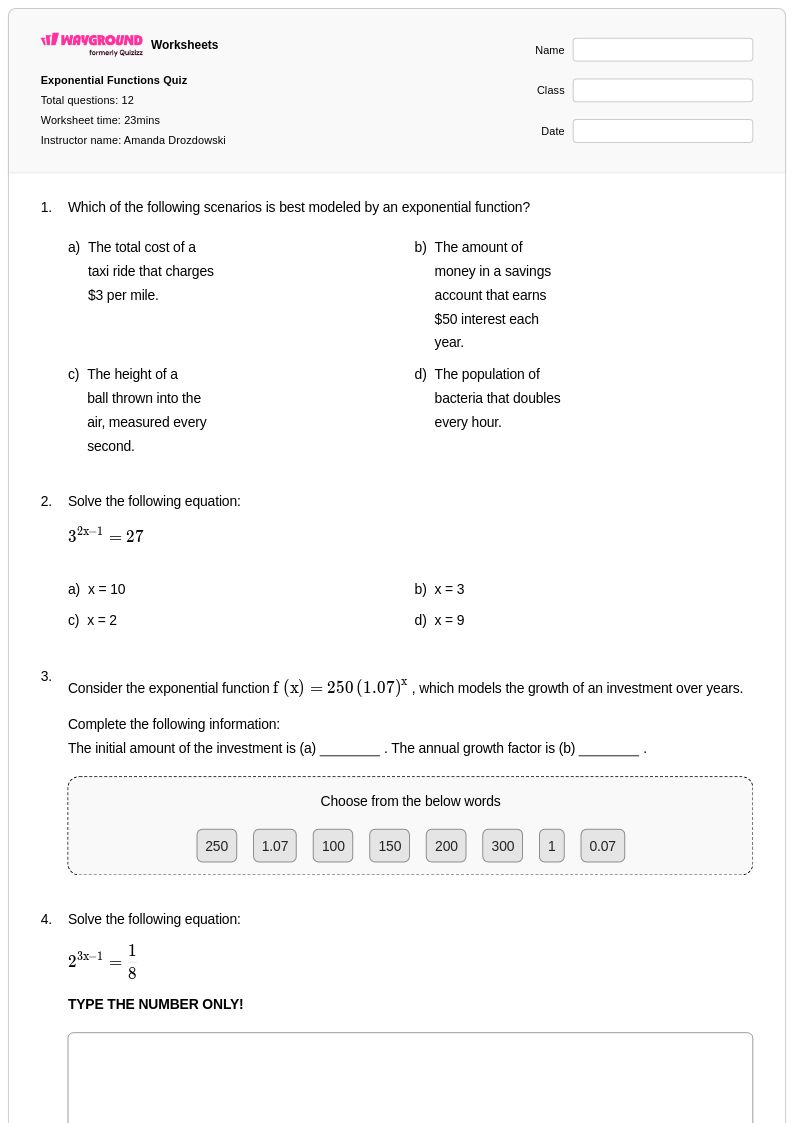
In Grade 11, depreciation bridges financial mathematics and introductory accounting. On the math side, declining balance depreciation is an application of exponential decay, the same model students use for compound interest and population decline, so it reinforces a function type they're working with across the curriculum. On the accounting side, depreciation feeds directly into concepts like net book value, asset disposal, and the relationship between the income statement and balance sheet, which students in business or accounting electives will encounter in Grade 12.
How can I accommodate diverse learners in Grade 11 depreciation practice?
Multi-step depreciation schedules are cognitively demanding, and the challenge for many students is holding multiple values in working memory simultaneously. Wayground's extended time accommodation is particularly useful here — giving certain students extra time per question on digital assignments without signaling it to the rest of the class. For students who struggle with dense text in word problems, the Read Aloud feature removes the reading barrier so they can focus on the financial reasoning. You can also generate a version of the worksheet with larger font size directly in Wayground for students who need it.