
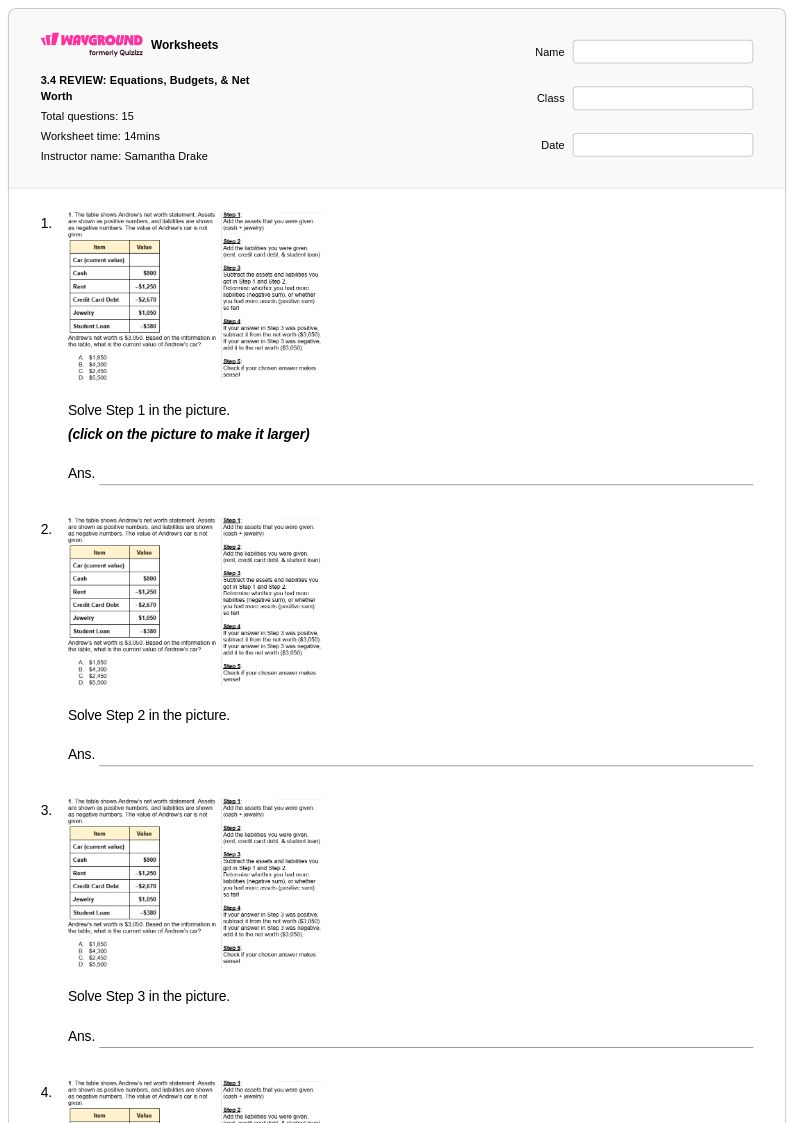
15 Q
7th - Uni
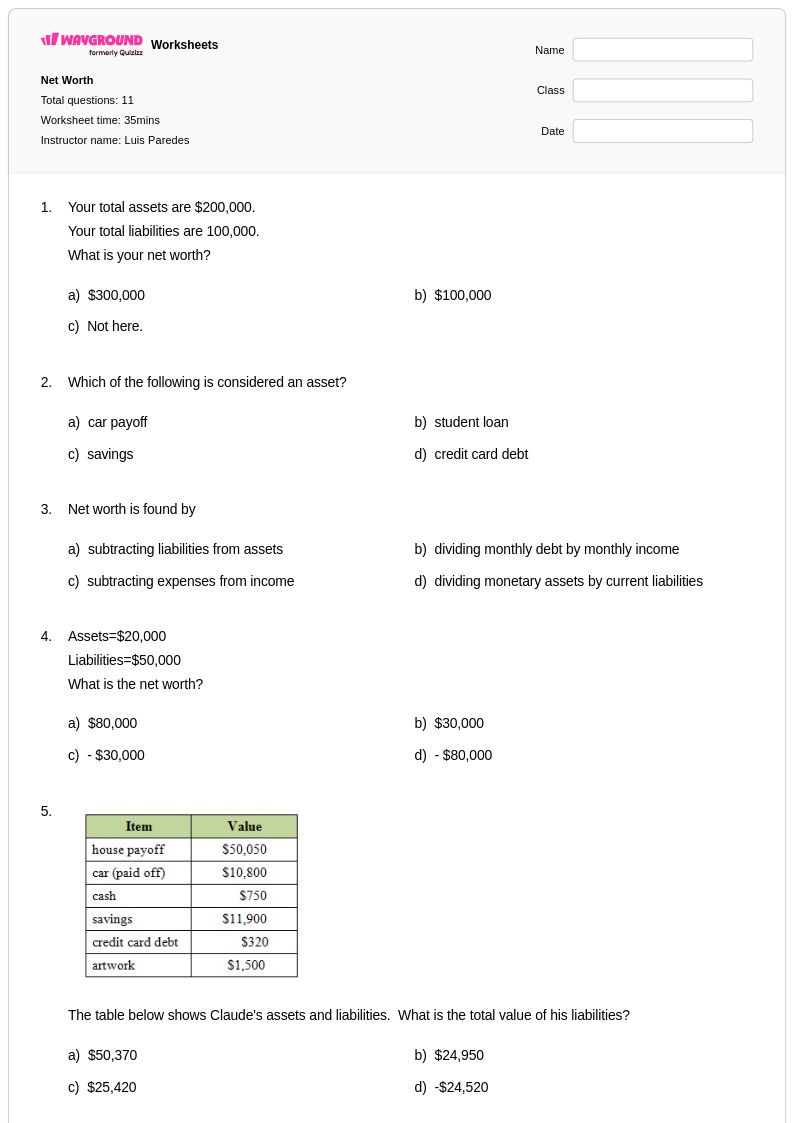
11 Q
7th - Uni
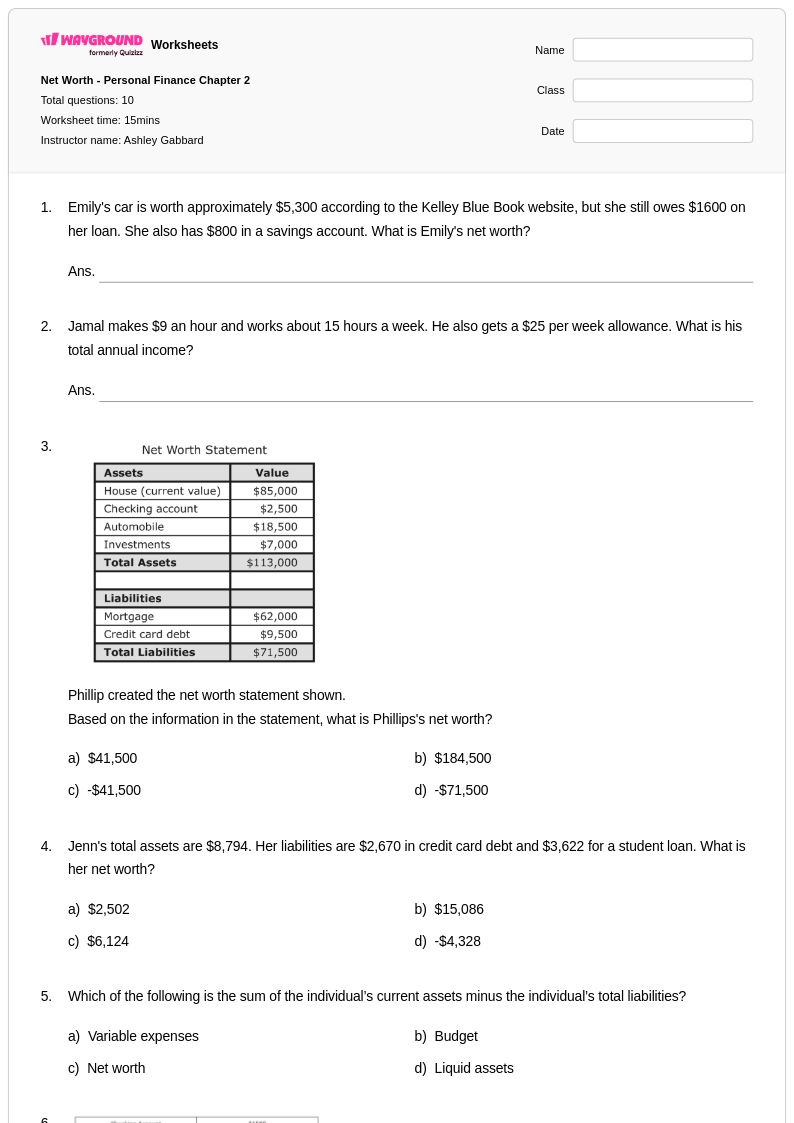
10 Q
9th - 12th
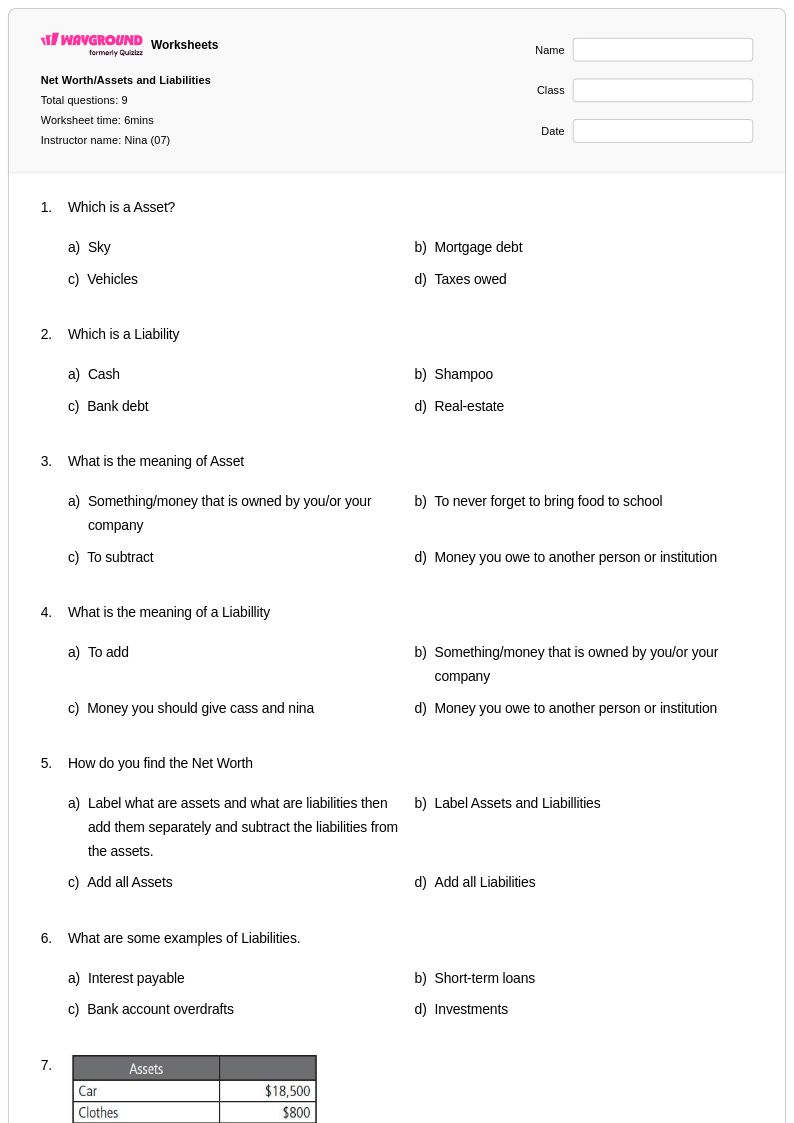
9 Q
7th - 12th
7 Q
7th - Uni
15 Q
7th - Uni
24 Q
9th - 12th
15 Q
7th - Uni

26 Q
11th
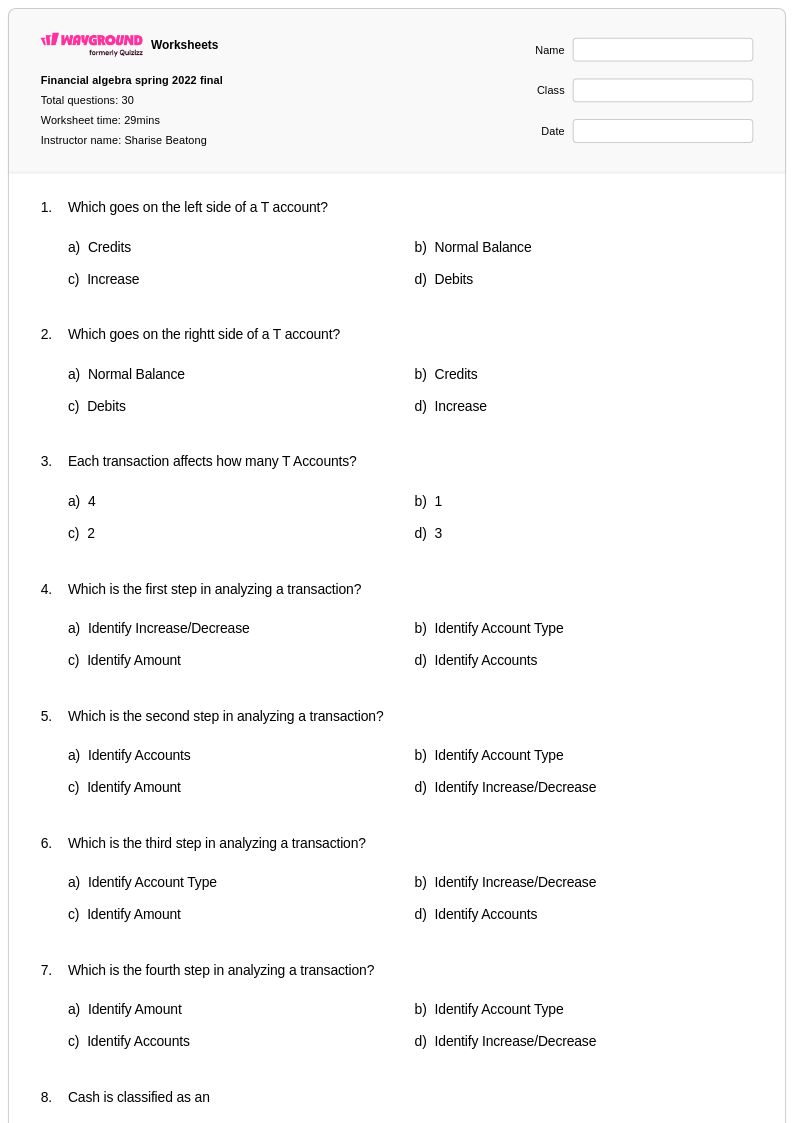
30 Q
9th - 12th
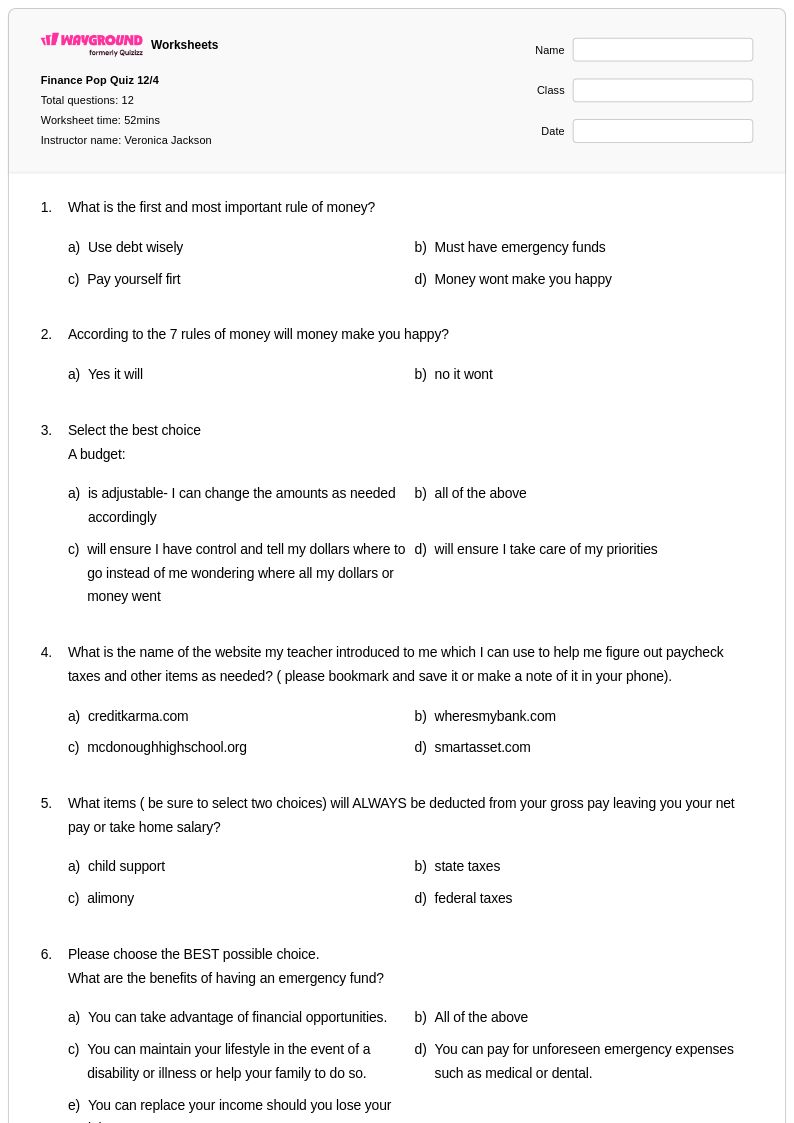
12 Q
9th - 12th
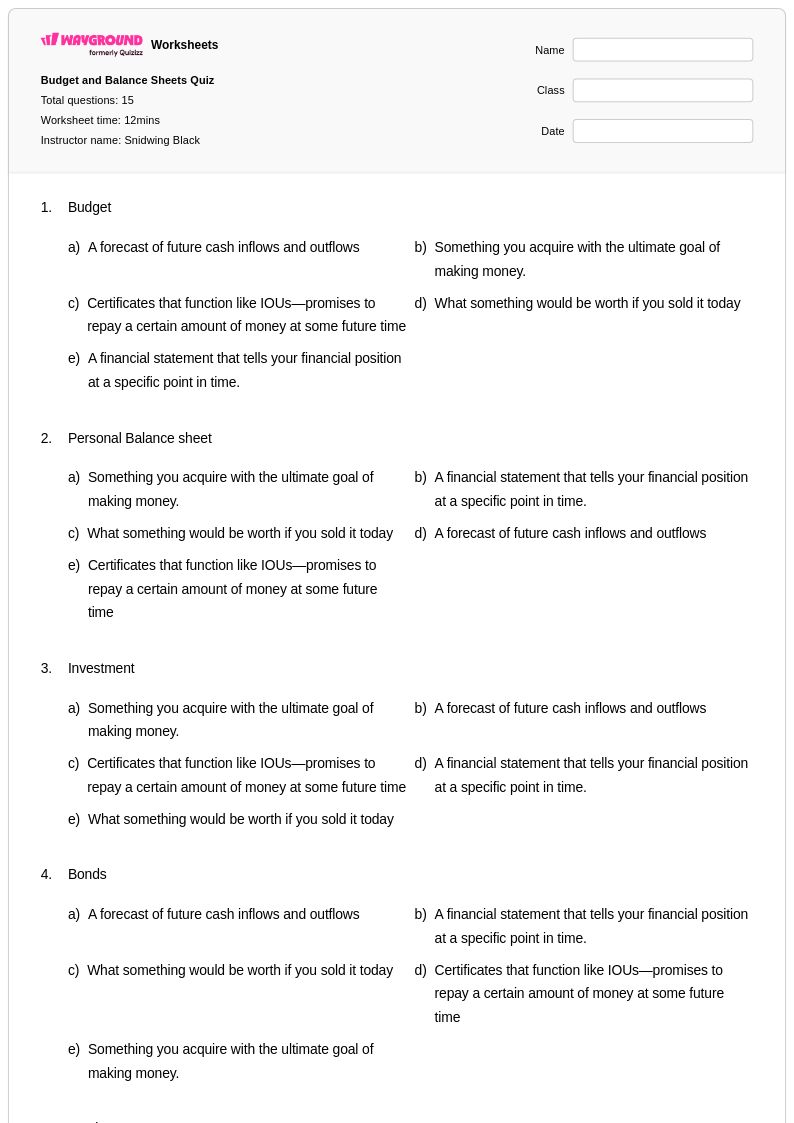
15 Q
11th - 12th
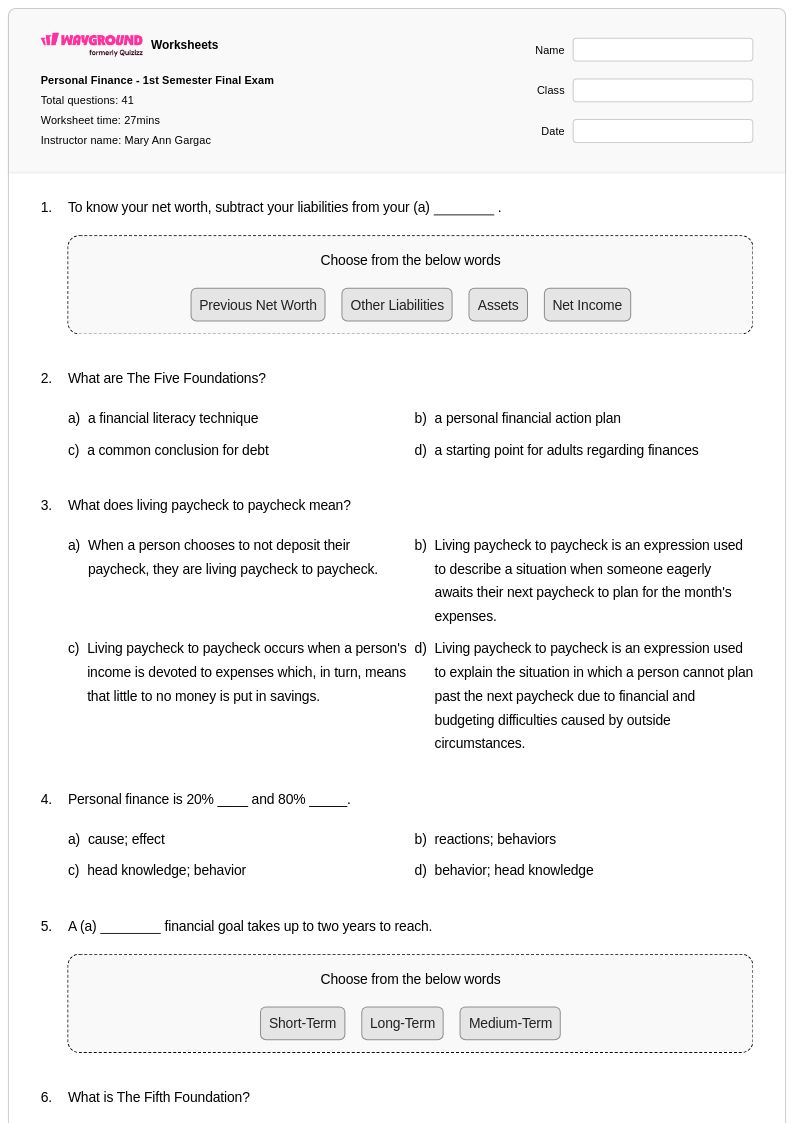
41 Q
9th - Uni
14 Q
5th - Uni
14 Q
9th - 12th
18 Q
11th - 12th
20 Q
5th - Uni
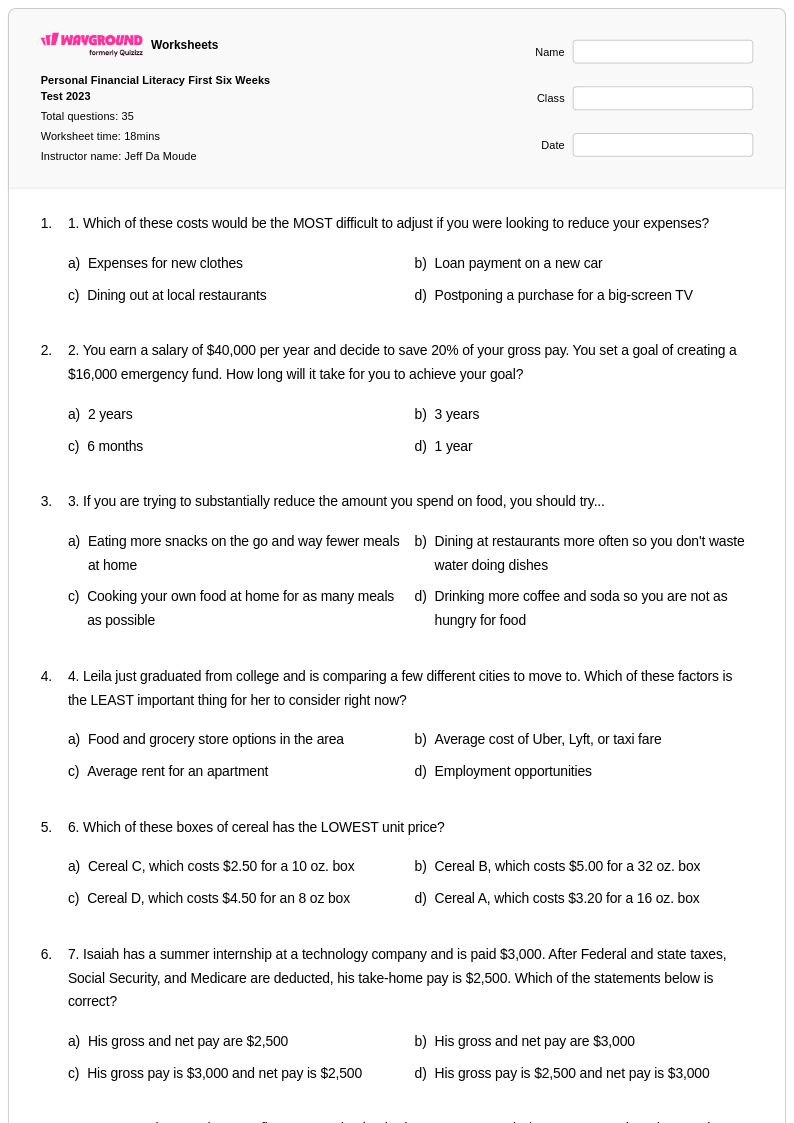
35 Q
9th - 12th
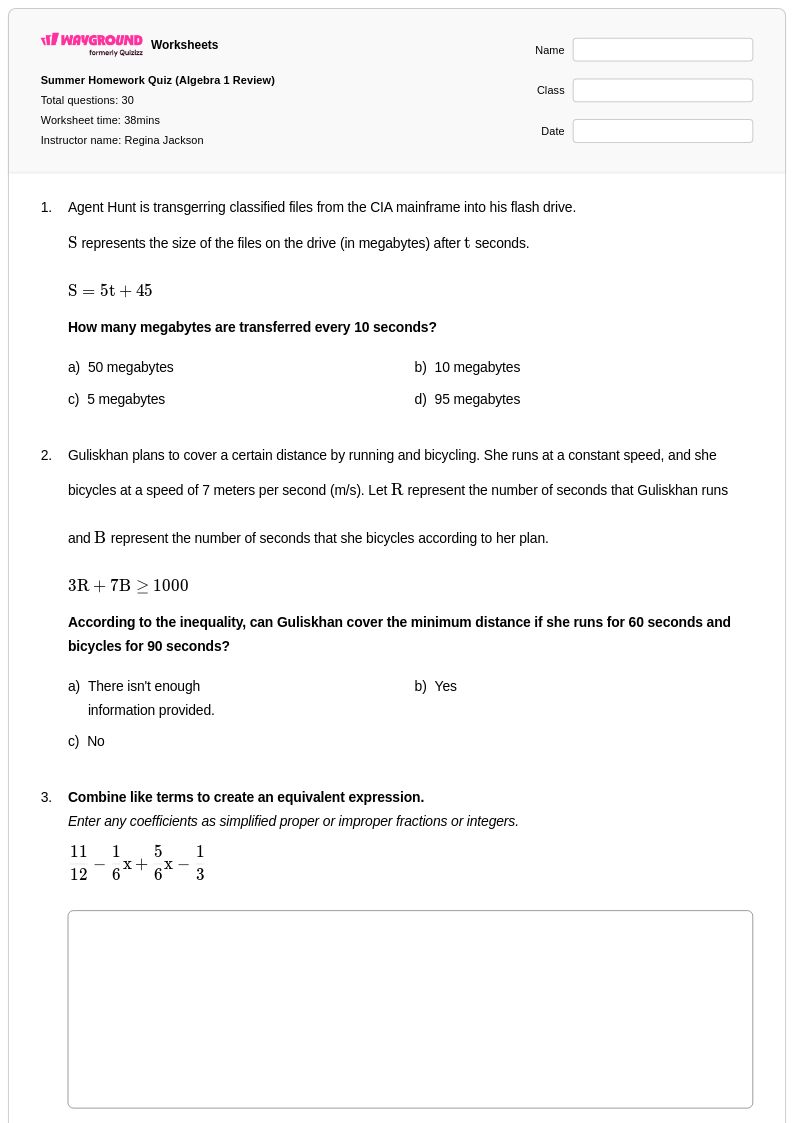
30 Q
9th - 12th
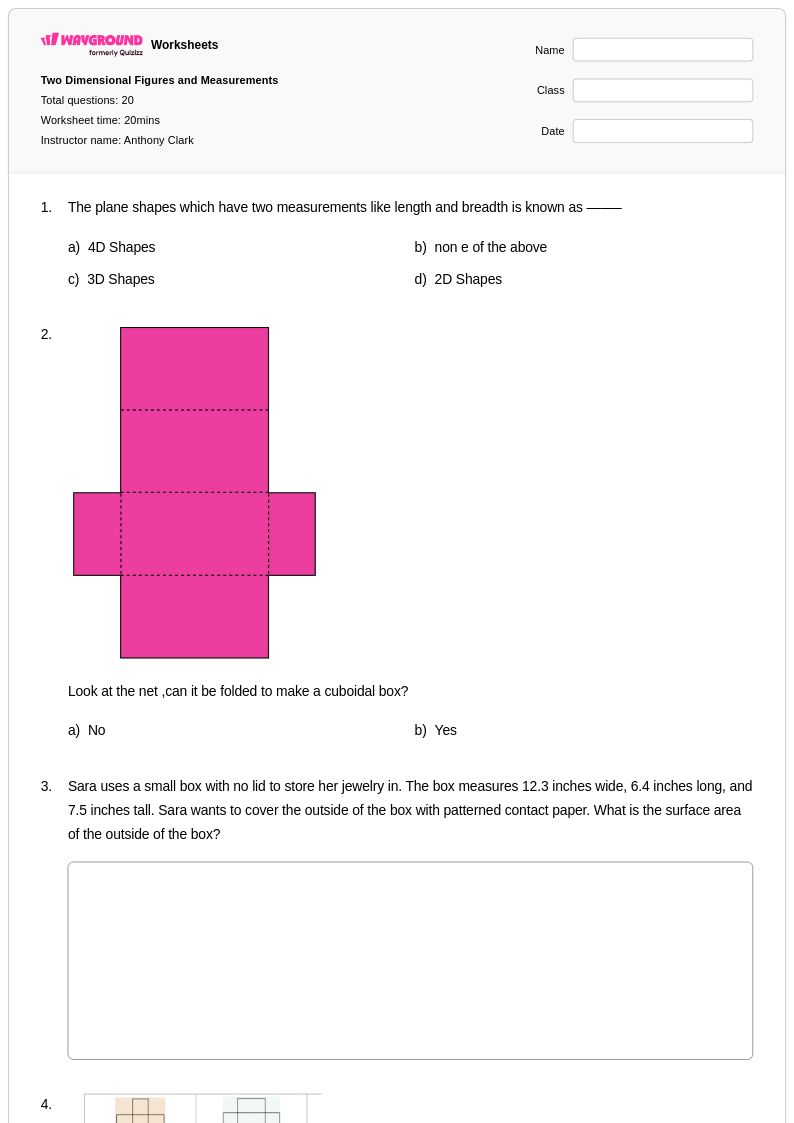
20 Q
7th - Uni
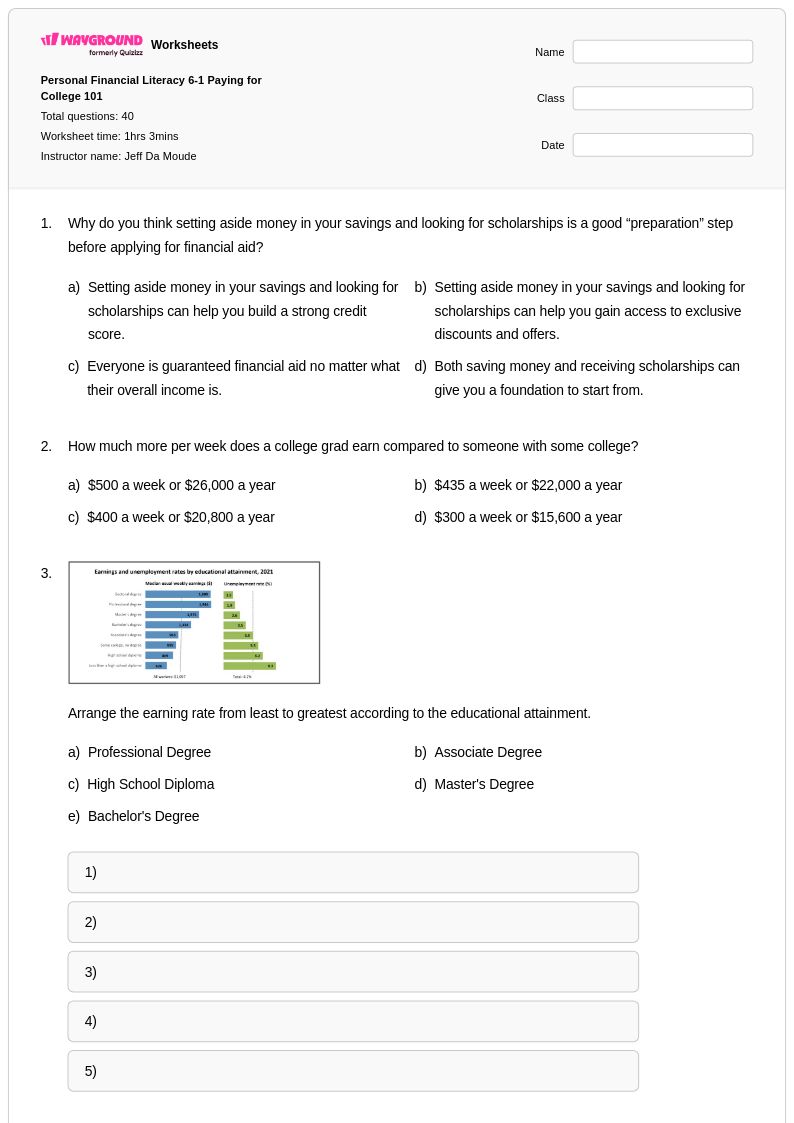
40 Q
9th - 12th

5 Q
11th
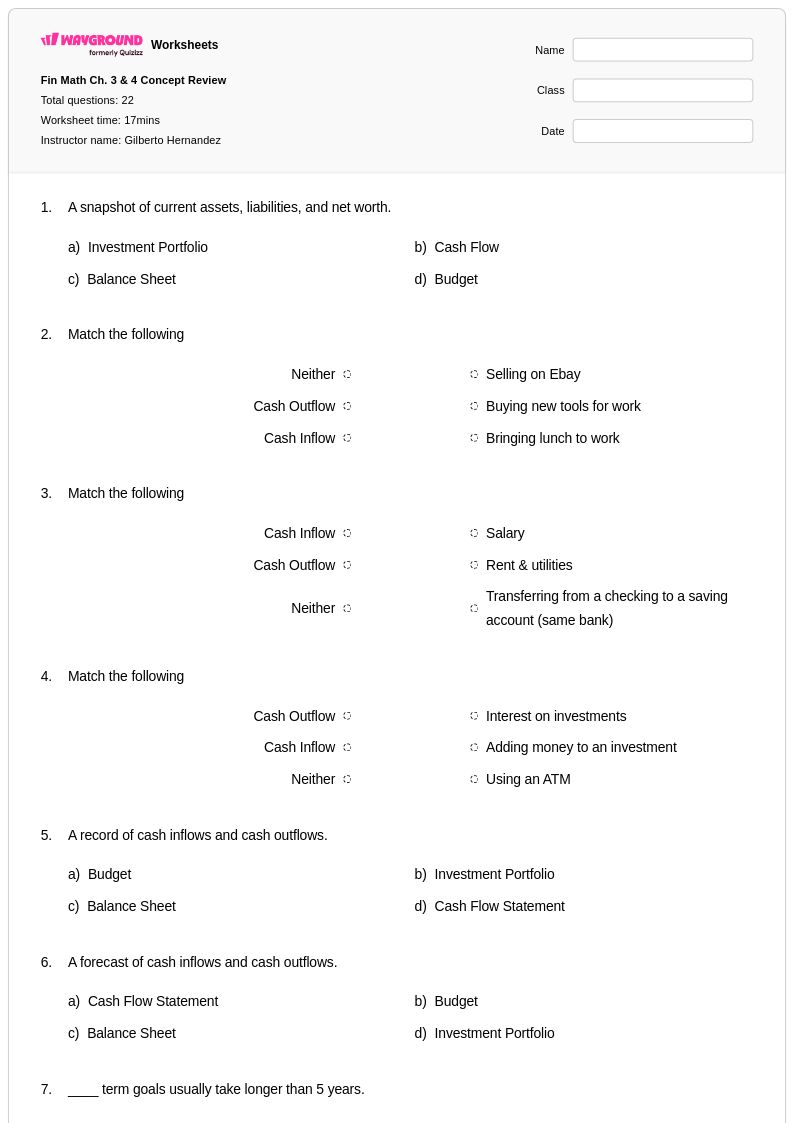
22 Q
11th - 12th
6 Q
9th - 12th
Explore Other Subject Worksheets for class 11
Explore printable Net Worth worksheets for Class 11
Net worth worksheets for Class 11 students available through Wayground (formerly Quizizz) provide comprehensive practice in calculating and analyzing personal financial position by determining the difference between assets and liabilities. These mathematics resources strengthen essential financial literacy skills including identifying different types of assets such as cash, investments, real estate, and personal property, while distinguishing them from various liability categories including credit card debt, student loans, mortgages, and other financial obligations. The worksheets feature practice problems that guide students through real-world scenarios involving net worth calculations, interpretation of financial statements, and analysis of how different financial decisions impact overall wealth. Each worksheet collection includes detailed answer keys and explanations, with materials available as free printables in pdf format to support both classroom instruction and independent study.
Wayground (formerly Quizizz) supports educators teaching Class 11 net worth concepts through millions of teacher-created worksheet resources that can be easily located using robust search and filtering capabilities aligned with mathematics and financial literacy standards. The platform's differentiation tools allow teachers to customize worksheets based on individual student needs, offering multiple difficulty levels and problem types to accommodate diverse learning styles and academic abilities. These comprehensive worksheet collections are available in both printable pdf formats for traditional classroom use and digital formats for online learning environments, making them ideal for lesson planning, targeted remediation of specific financial literacy concepts, enrichment activities for advanced learners, and regular skill practice. Teachers can efficiently organize their net worth instruction by accessing standards-aligned materials that seamlessly integrate mathematical computation skills with practical financial literacy applications, ensuring students develop both technical proficiency and real-world financial awareness.