Free Printable Dinosaur Fossils Worksheets for Class 1
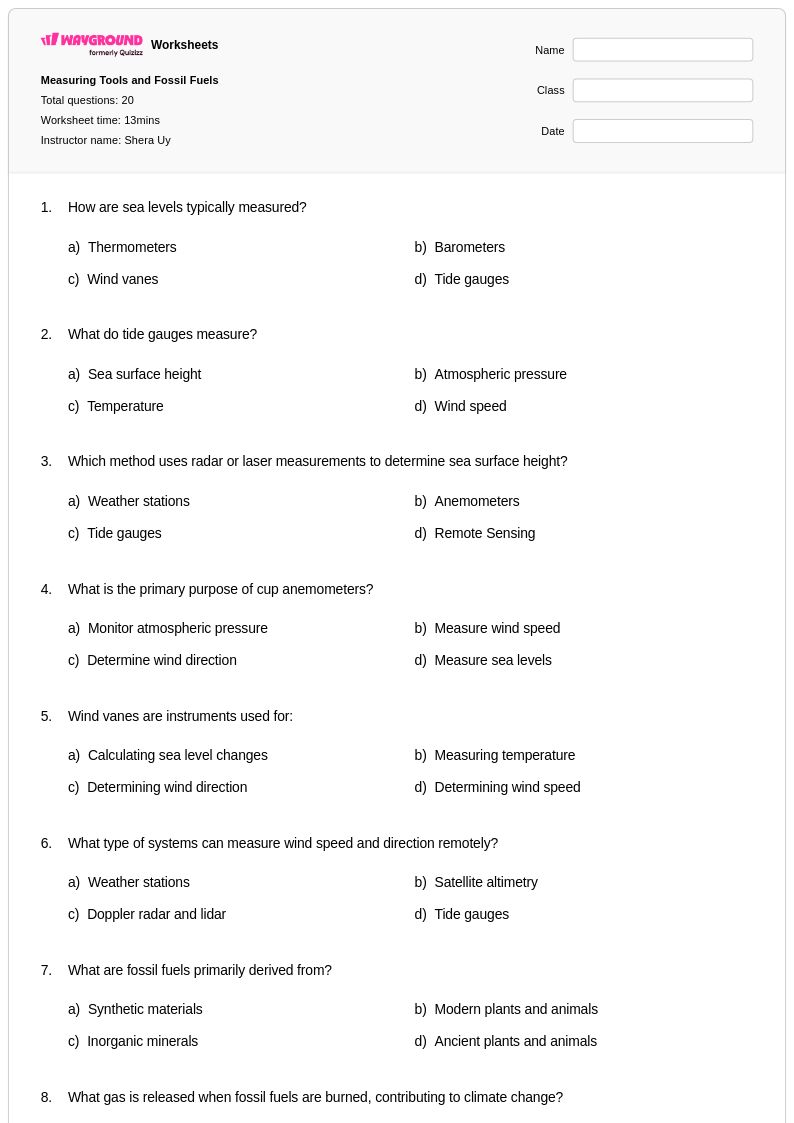
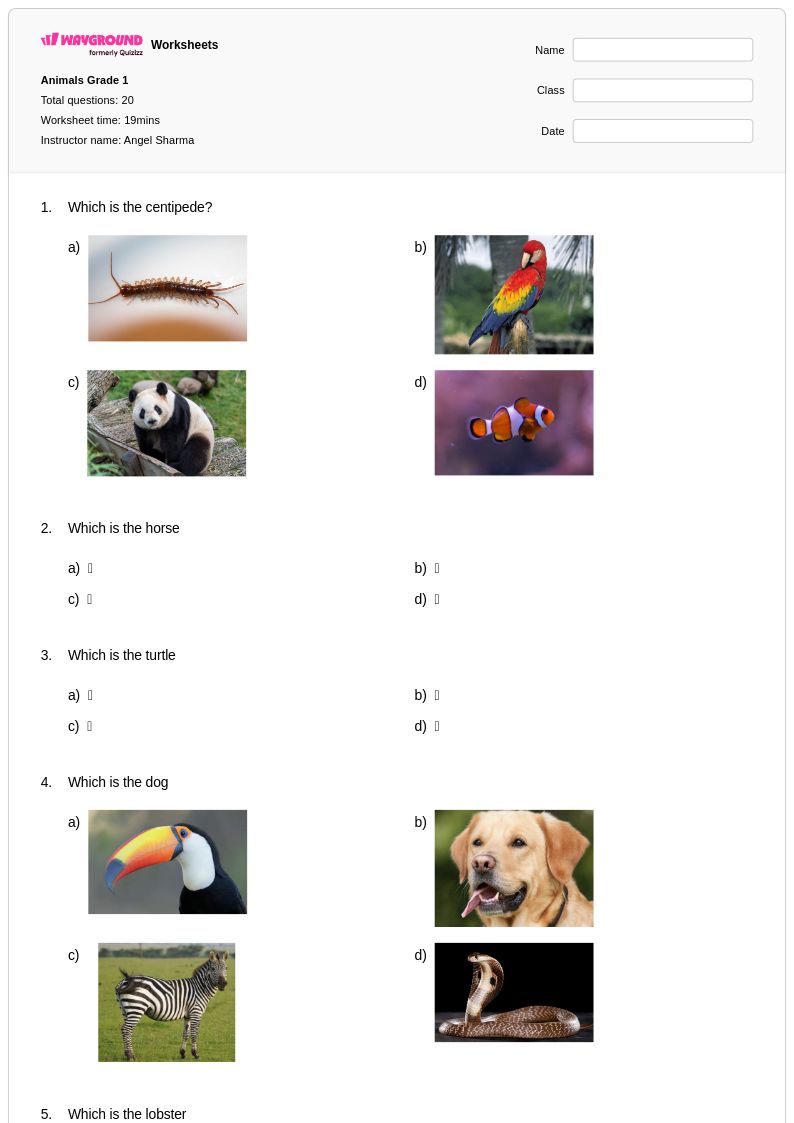
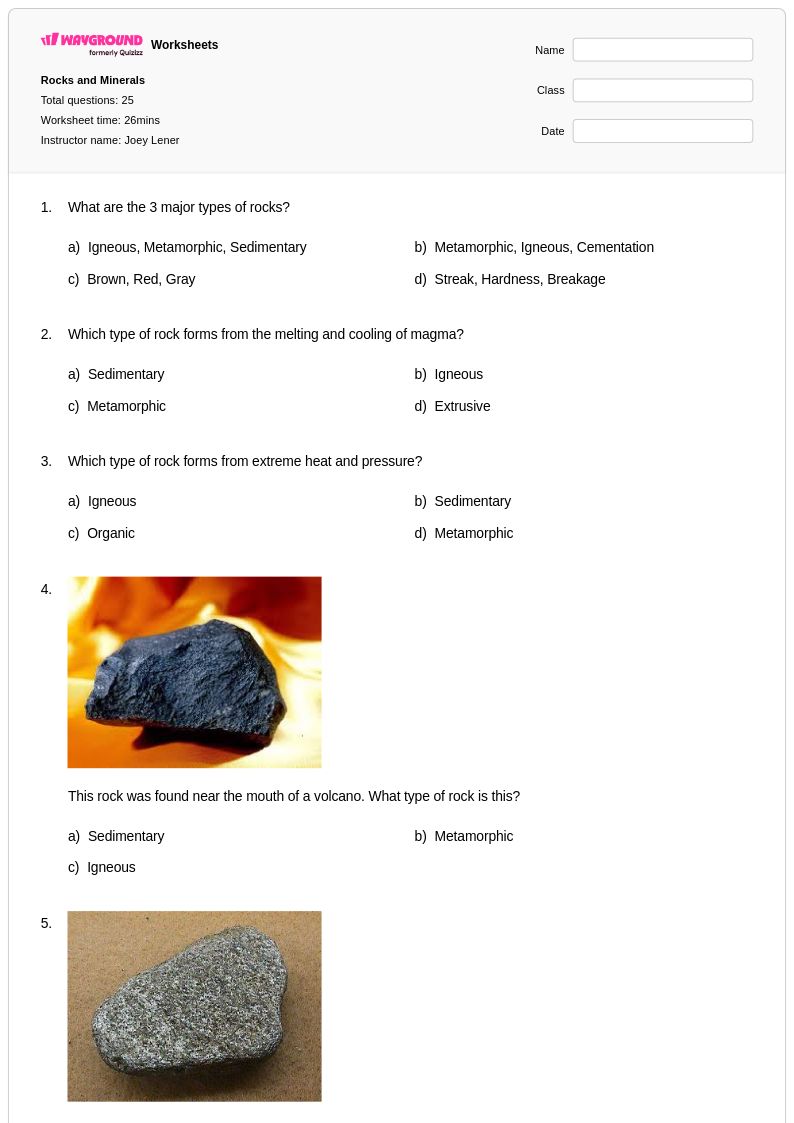
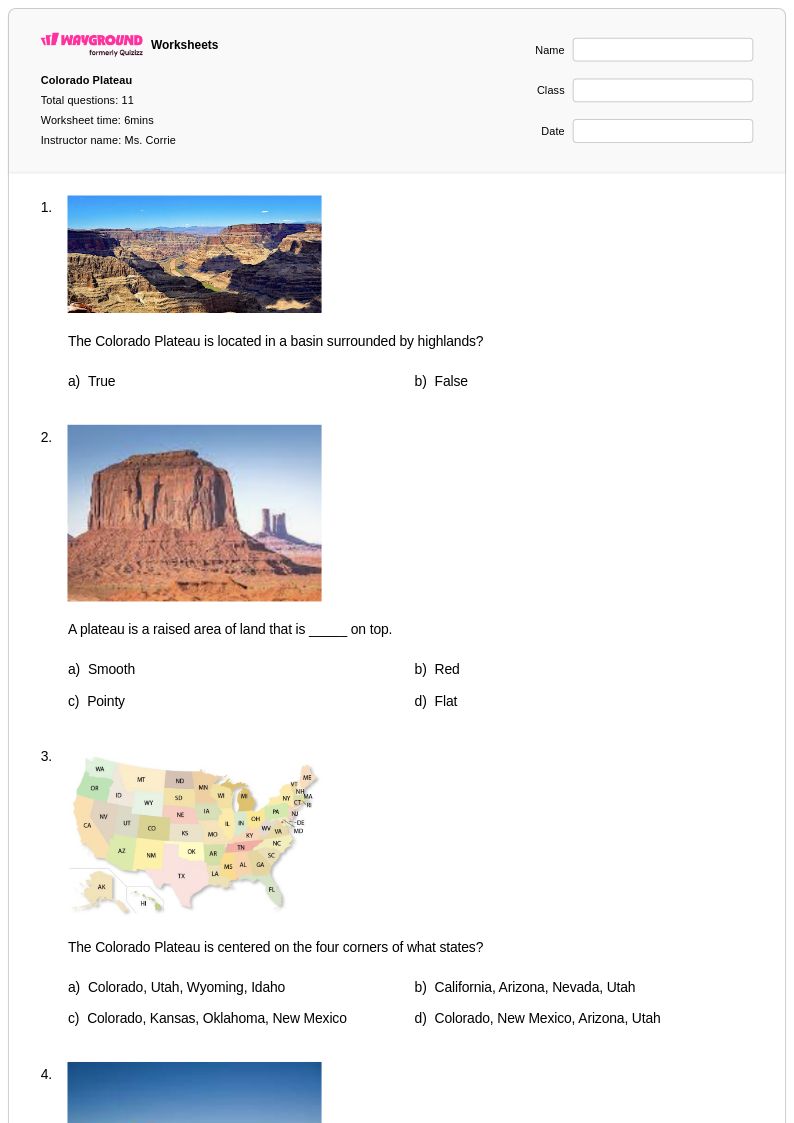
Explore Class 1 dinosaur fossils through Wayground's free worksheets and printables that help young scientists discover how fossils form and what they reveal about prehistoric life, complete with answer keys.
Explore printable Dinosaur Fossils worksheets for Class 1
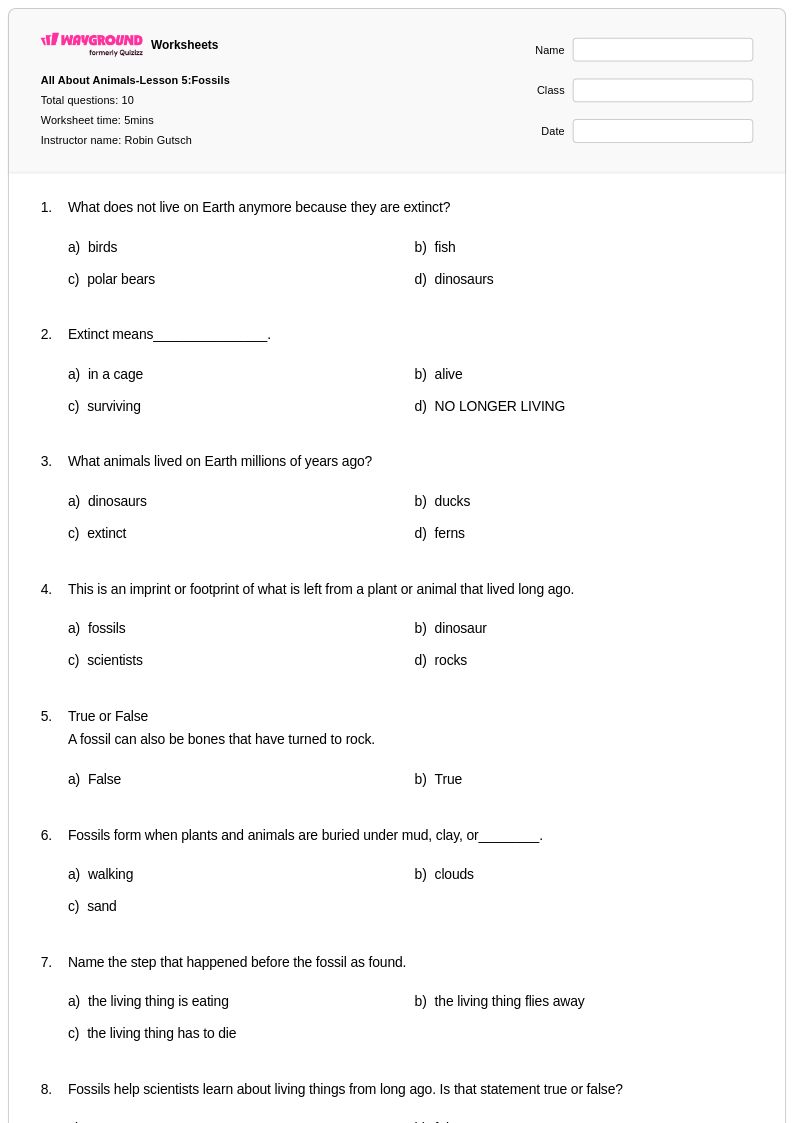
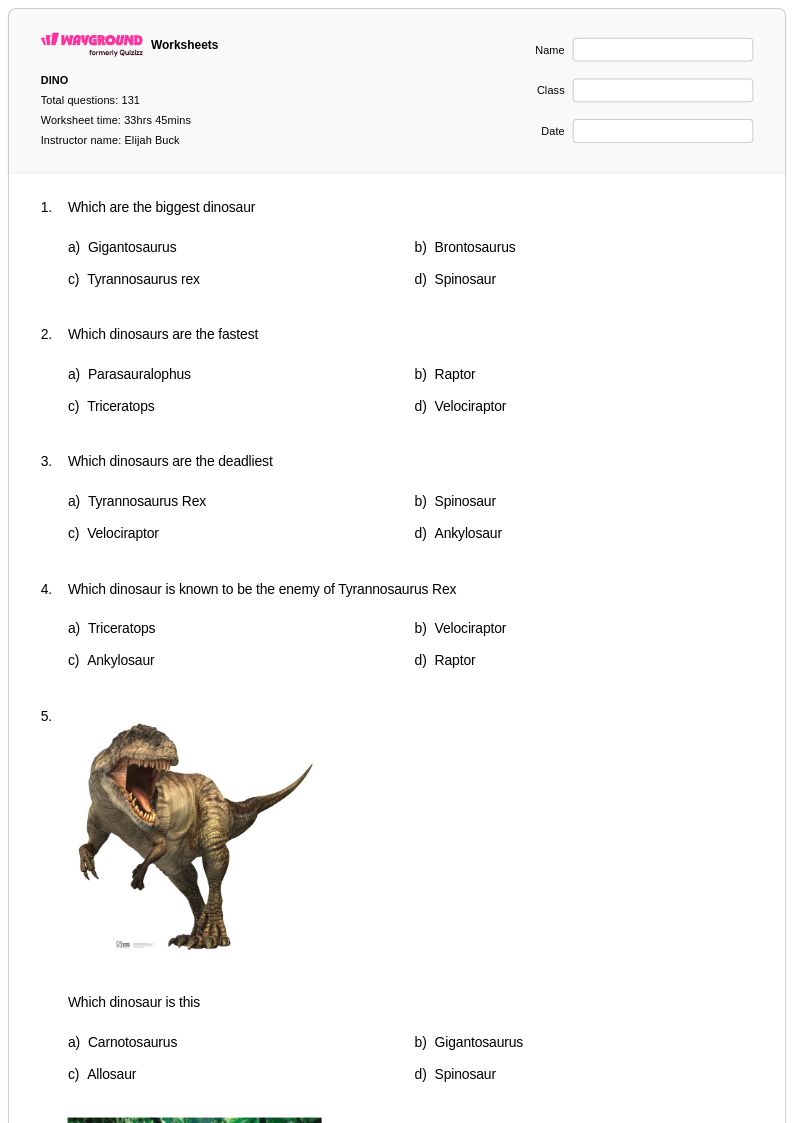
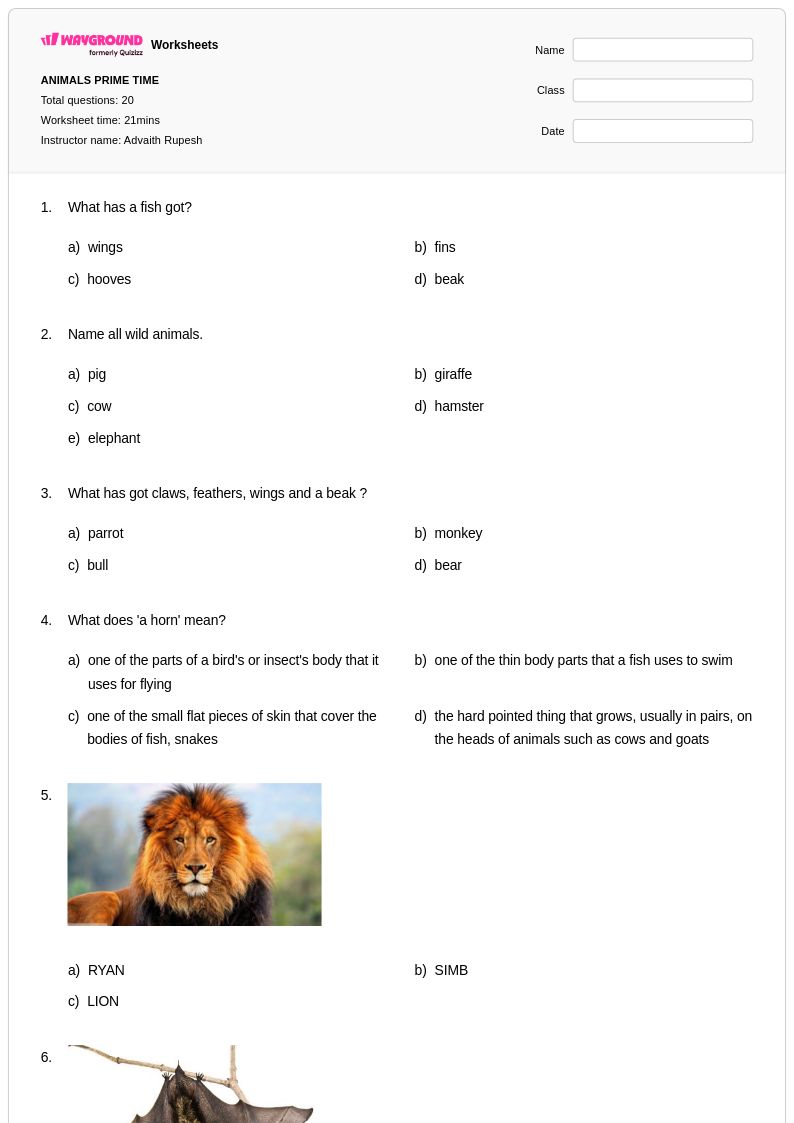
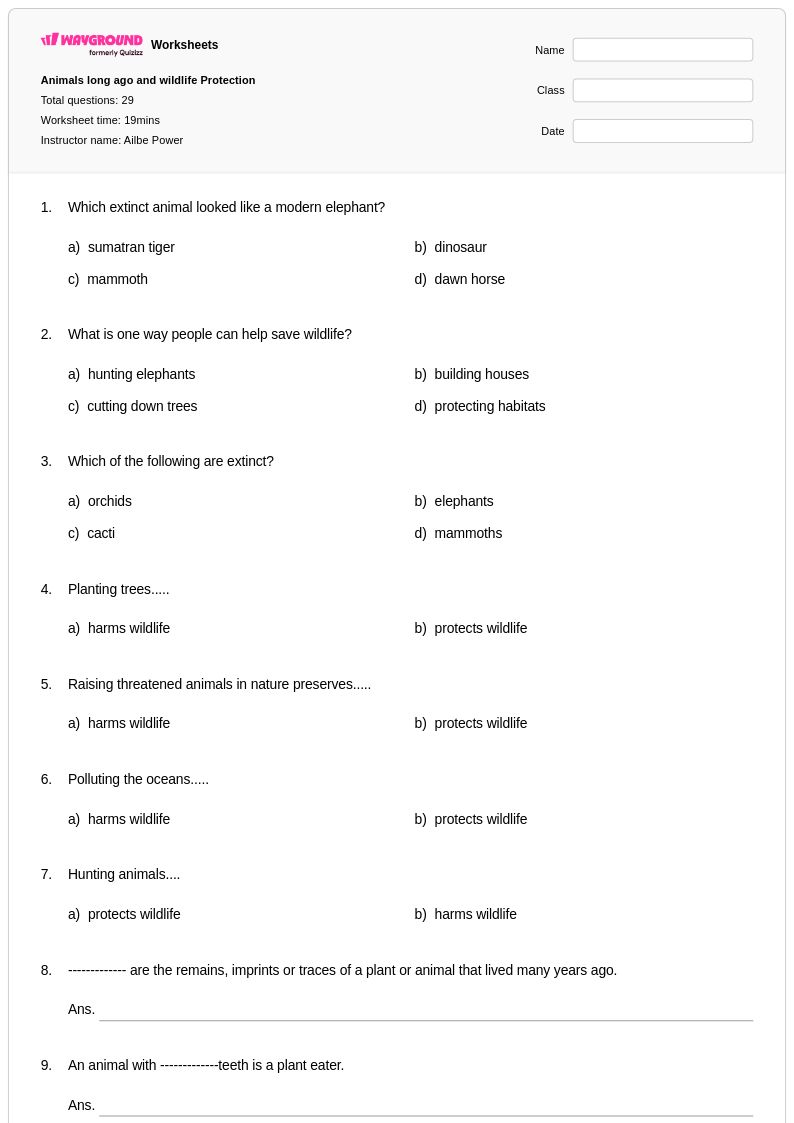
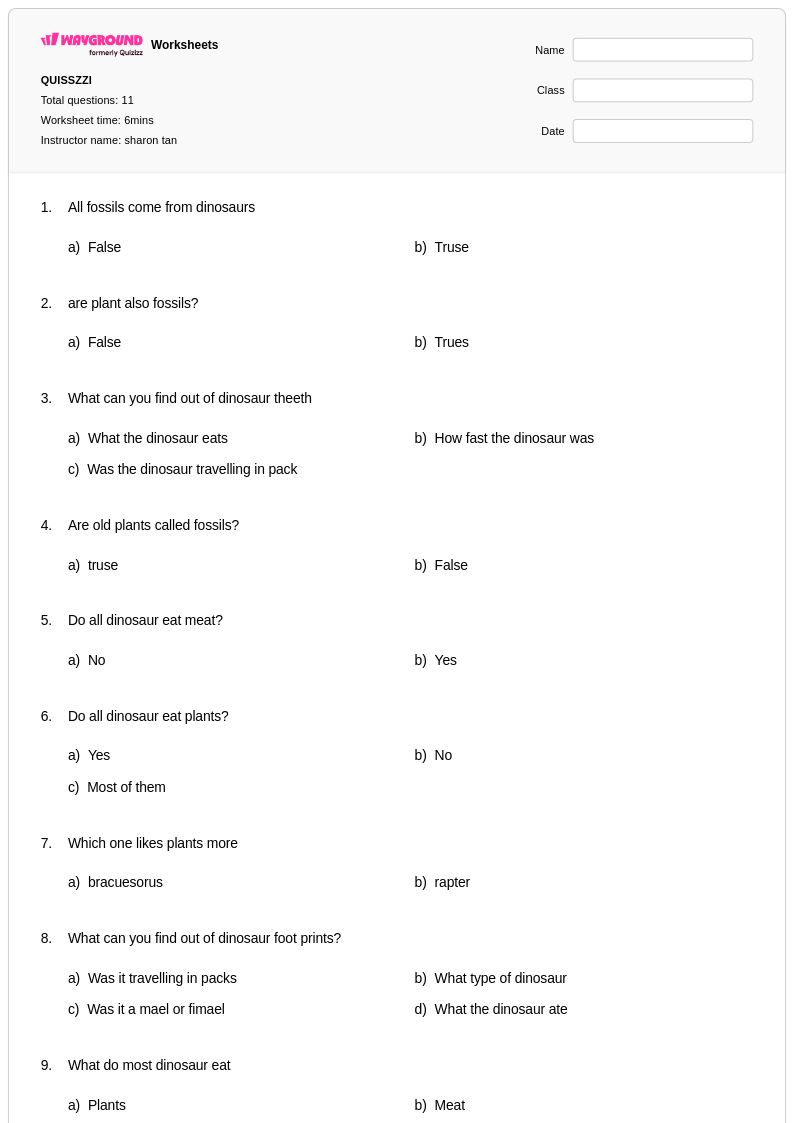
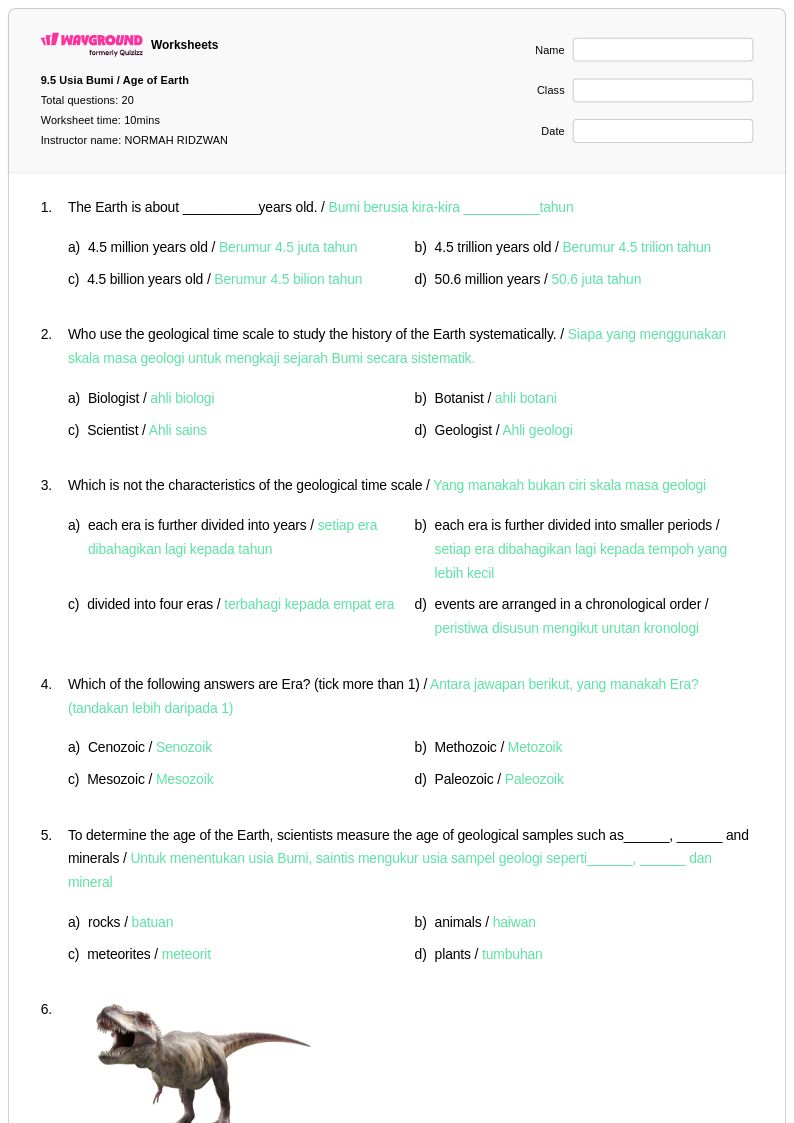
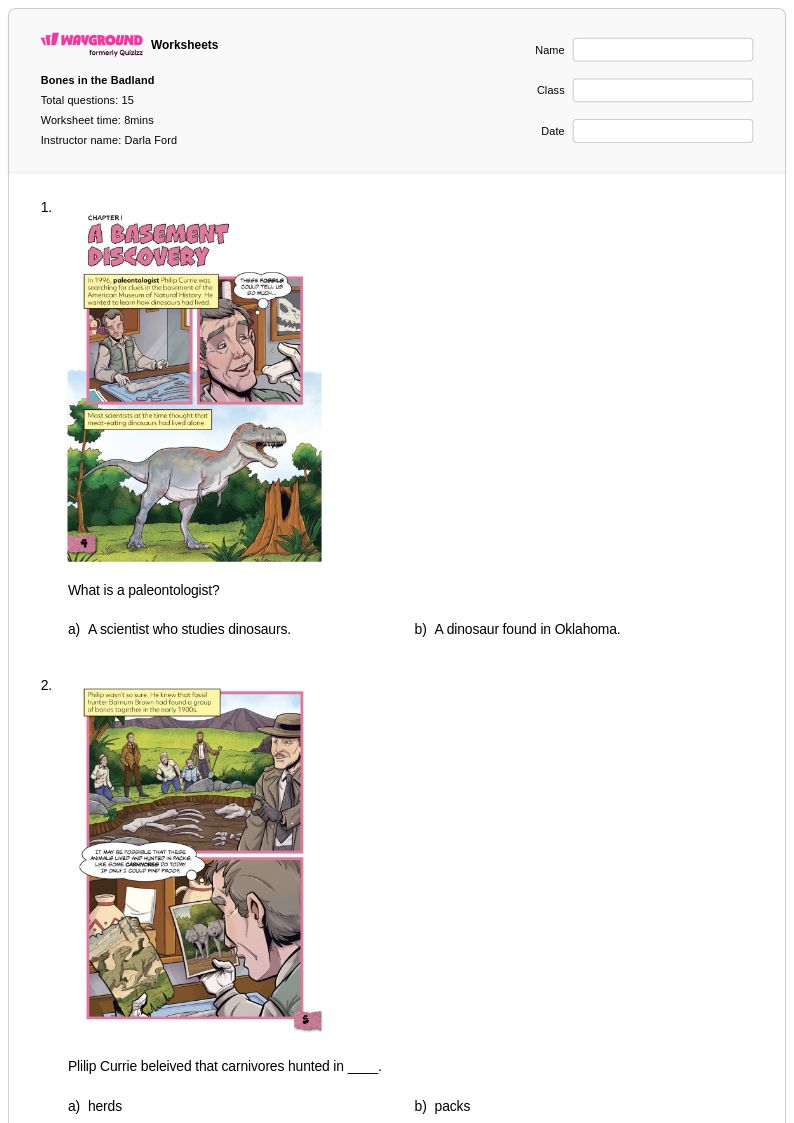
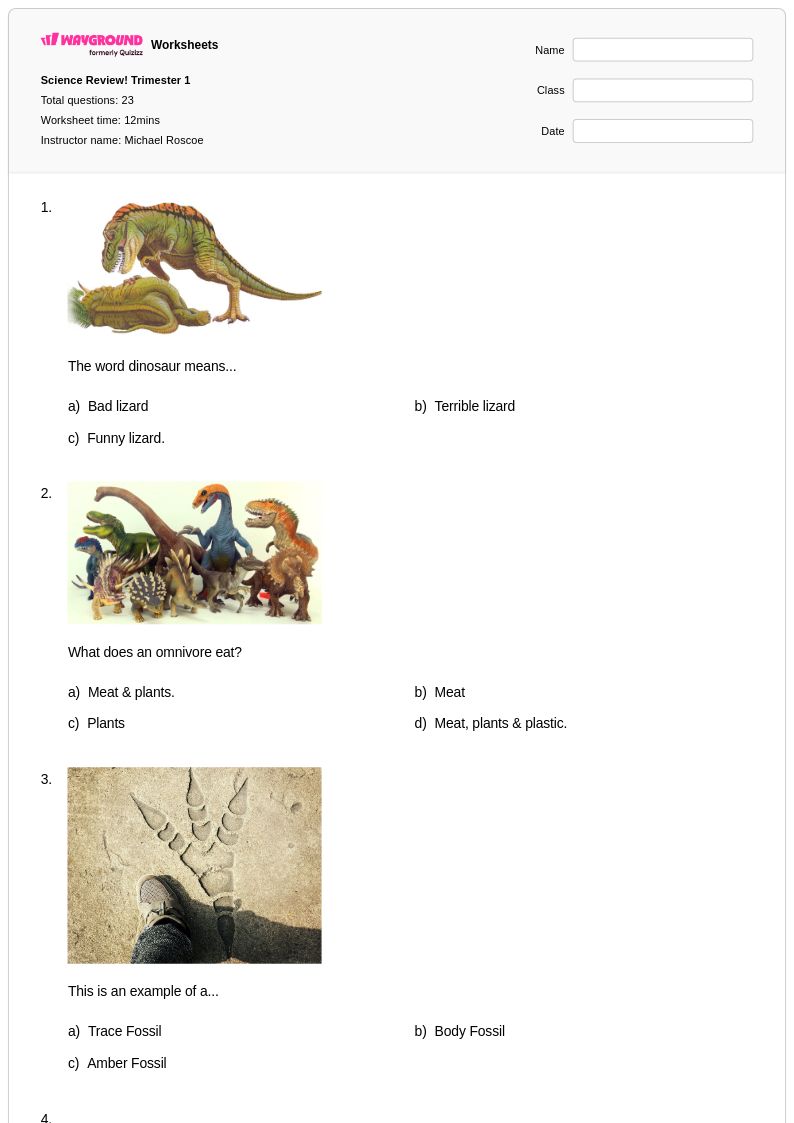
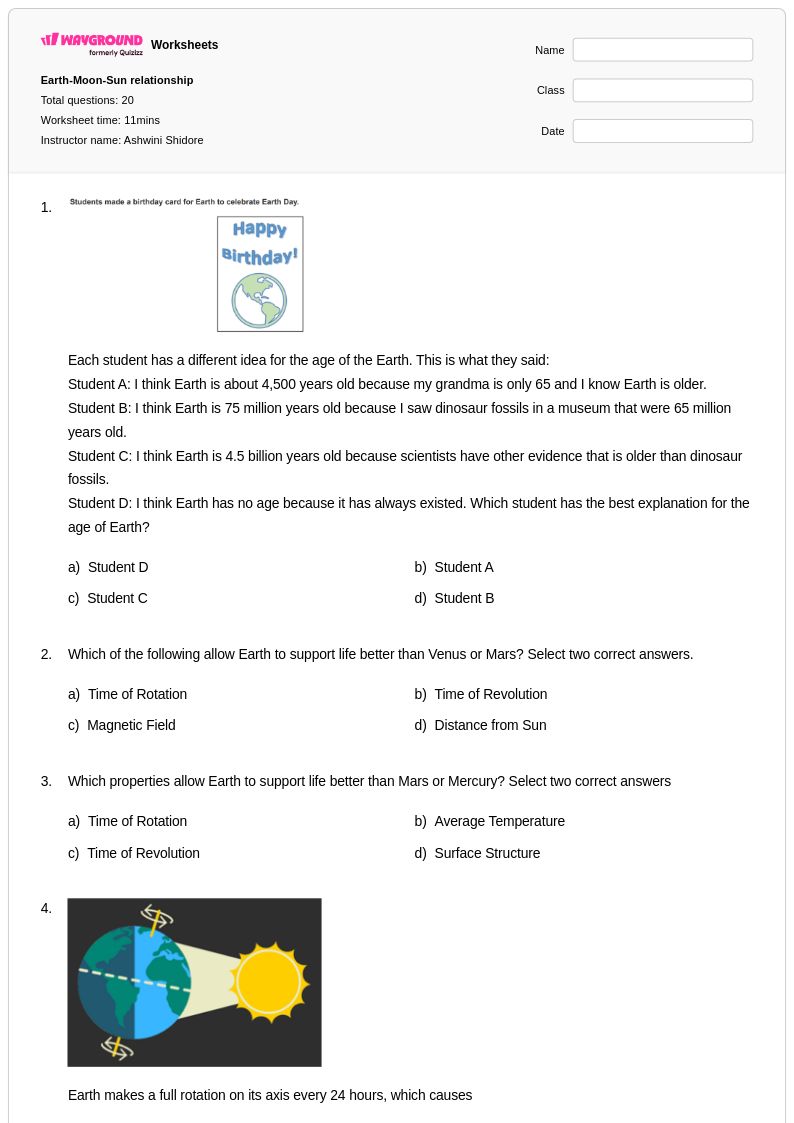
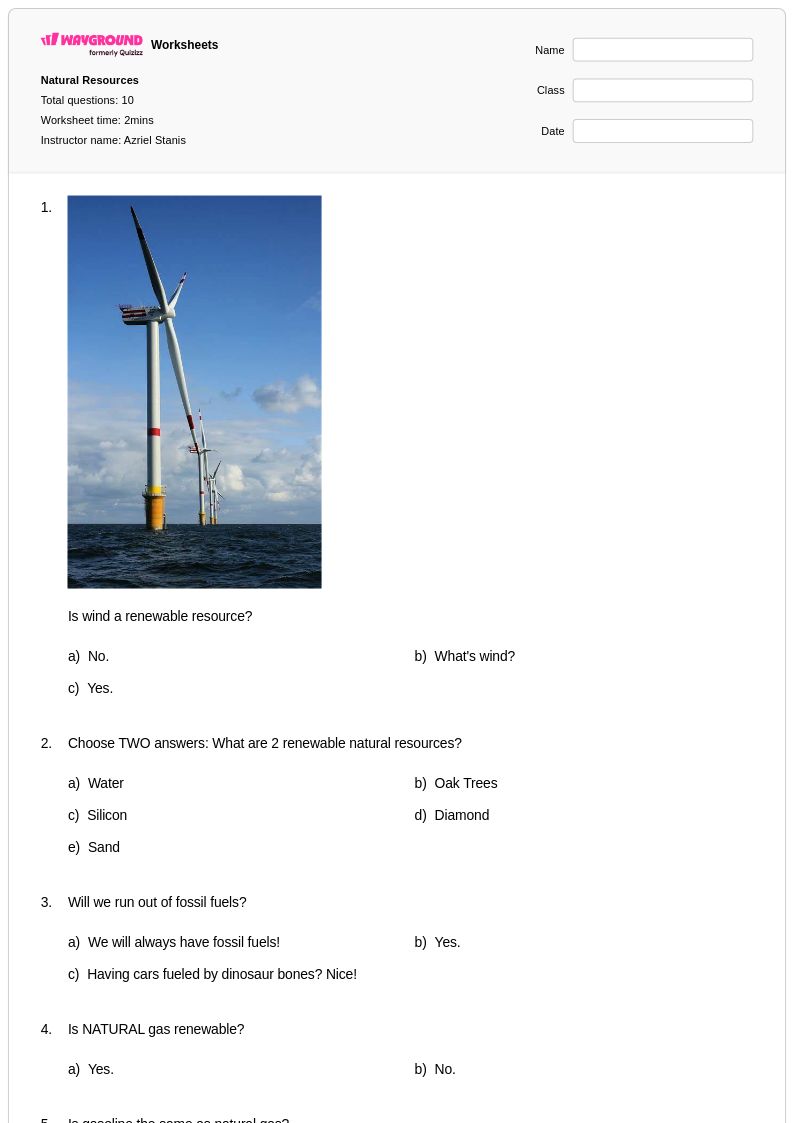
Dinosaur fossils capture the imagination of Class 1 students while introducing them to fundamental concepts in Earth and Space Science through engaging, hands-on learning experiences. Wayground's comprehensive collection of dinosaur fossil worksheets helps young learners develop critical observation skills, basic scientific vocabulary, and an understanding of how fossils form and what they reveal about prehistoric life. These carefully crafted printables guide first-grade students through age-appropriate explorations of fossil formation, different types of dinosaurs, and the work of paleontologists, with each worksheet including a complete answer key to support both independent practice and guided instruction. The free pdf resources feature colorful illustrations, simple diagrams, and practice problems that make complex geological concepts accessible to beginning readers while building foundational knowledge about Earth's ancient history.
Wayground's extensive library, built from millions of teacher-created resources, provides educators with powerful search and filtering capabilities to locate the perfect dinosaur fossil worksheets for their Class 1 Earth and Space Science curriculum. Teachers can easily customize these materials to meet diverse learning needs, whether for remediation with struggling students or enrichment activities for advanced learners, with flexible options available in both printable and digital formats including downloadable pdf versions. The platform's standards-aligned content ensures that dinosaur fossil activities support required learning objectives while the robust differentiation tools allow educators to modify complexity levels, visual supports, and assessment methods to accommodate various learning styles and abilities, making lesson planning more efficient and instruction more effective for skill practice across the entire classroom.
FAQs
How do I teach dinosaur fossils to students?
Teaching dinosaur fossils effectively starts with the process of fossilization itself — how organic remains are replaced by minerals over millions of years — before moving into how paleontologists excavate, date, and interpret fossil evidence. Connecting fossil analysis to geological time scales helps students understand deep time and the conditions that made preservation possible. Pairing direct instruction with hands-on activities, such as analyzing fossil diagrams or comparing skeletal structures across species, reinforces abstract concepts through concrete evidence.
What exercises help students practice identifying and interpreting dinosaur fossils?
Effective practice exercises include fossil identification tasks where students distinguish between body fossils and trace fossils, skeletal comparison activities that ask students to draw conclusions about locomotion or diet, and evidence-based prompts that challenge students to infer dinosaur behavior and habitat from fossil data. Practice problems that incorporate geological time scales add an additional layer of scientific reasoning, requiring students to connect fossil evidence to broader Earth history.
What common mistakes do students make when learning about dinosaur fossils?
A frequent misconception is that fossils are simply bones preserved underground, when in fact fossilization involves complex mineral replacement processes and only a tiny fraction of organisms ever become fossils. Students also commonly conflate dinosaur extinction with a single sudden event rather than understanding it within the context of geological time and mass extinction science. Another error is treating all fossils as equivalent evidence, without distinguishing between what body fossils versus trace fossils can and cannot reveal about an organism's life.
How can I use dinosaur fossil worksheets to support students with different learning needs?
Wayground's dinosaur fossil worksheets are available in both printable PDF and digital formats, making them accessible across traditional classrooms, remote learning, and hybrid environments. In digital sessions, teachers can apply individual accommodations such as Read Aloud for students who benefit from audio support, reduced answer choices to lower cognitive load, and extended time settings for students who need more processing time. These accommodations are saved per student and apply automatically in future sessions, so differentiation requires no repeated setup.
How do dinosaur fossil worksheets align with earth science standards?
Dinosaur fossil worksheets typically align with earth science standards covering the history of life on Earth, fossil evidence and geological time, and the nature of scientific inquiry in paleontology. Topics such as fossilization processes, species comparison, and evidence-based inference directly support standards related to Earth's history and biological evolution. Teachers should cross-reference specific worksheet content with their state or district standards to confirm alignment before assigning.
How do I use Wayground's dinosaur fossil worksheets in my classroom?
Wayground's dinosaur fossil worksheets are available as printable PDFs for easy classroom distribution and as digital formats for technology-integrated learning environments, including the option to host them as a quiz directly on Wayground. Each worksheet includes a complete answer key, which supports efficient grading and accurate formative assessment. Teachers can use these materials for direct instruction reinforcement, independent practice, homework assignments, or as structured review activities before assessments.