Explore printable Discriminant worksheets for Class 12
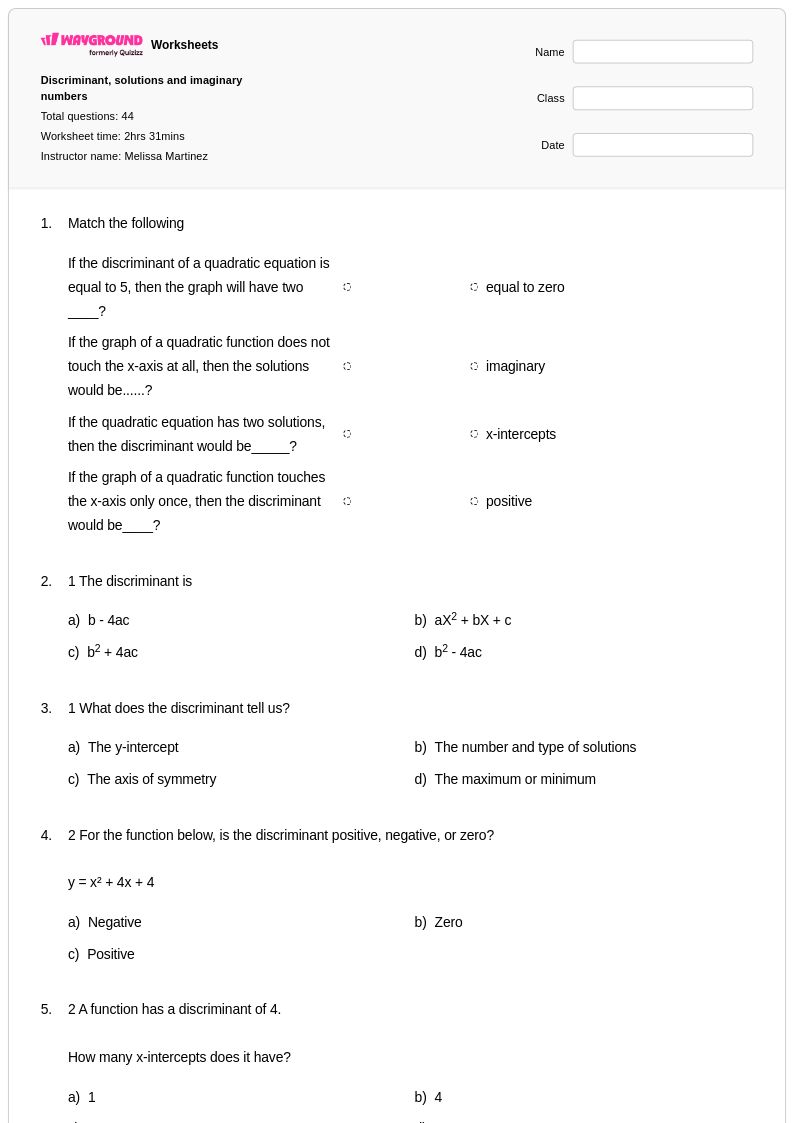
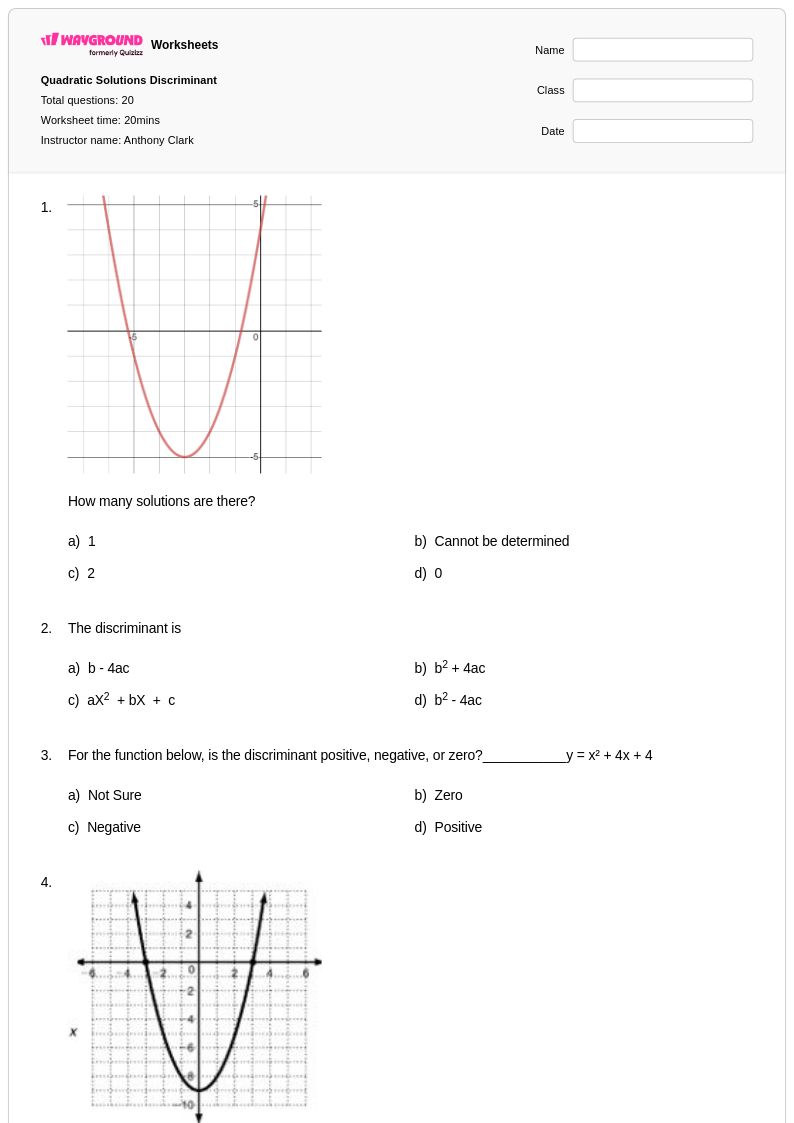
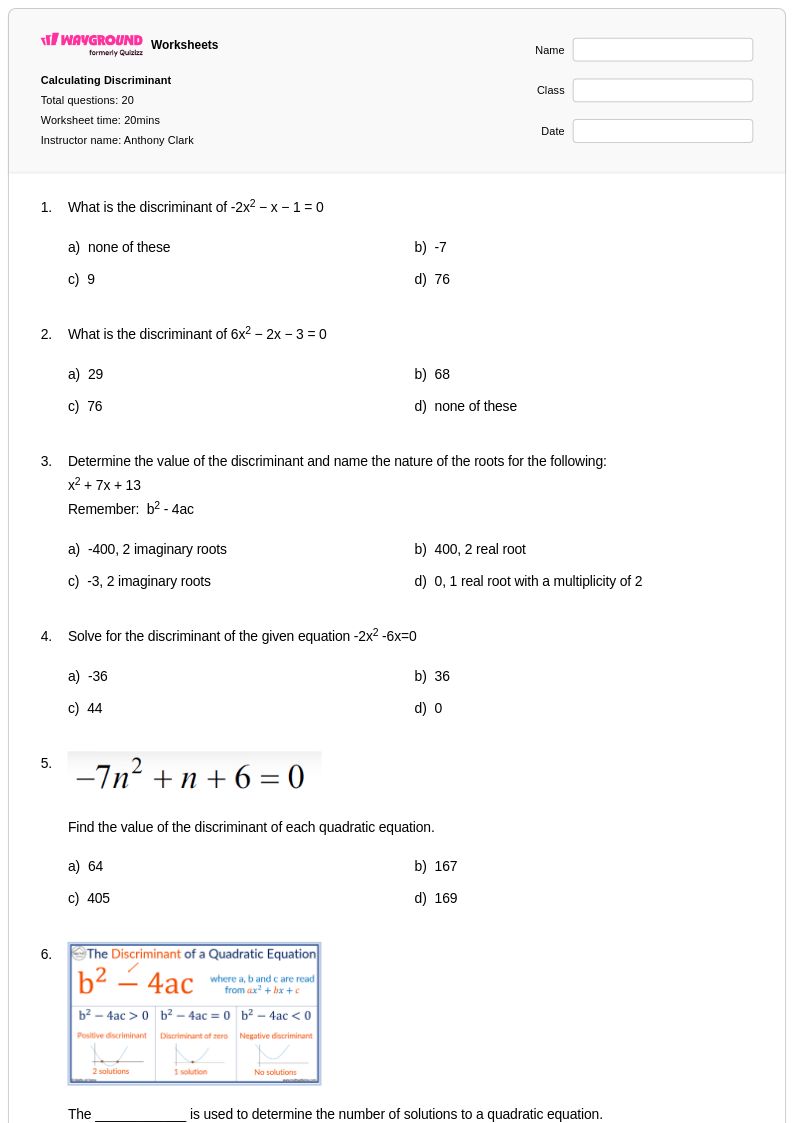
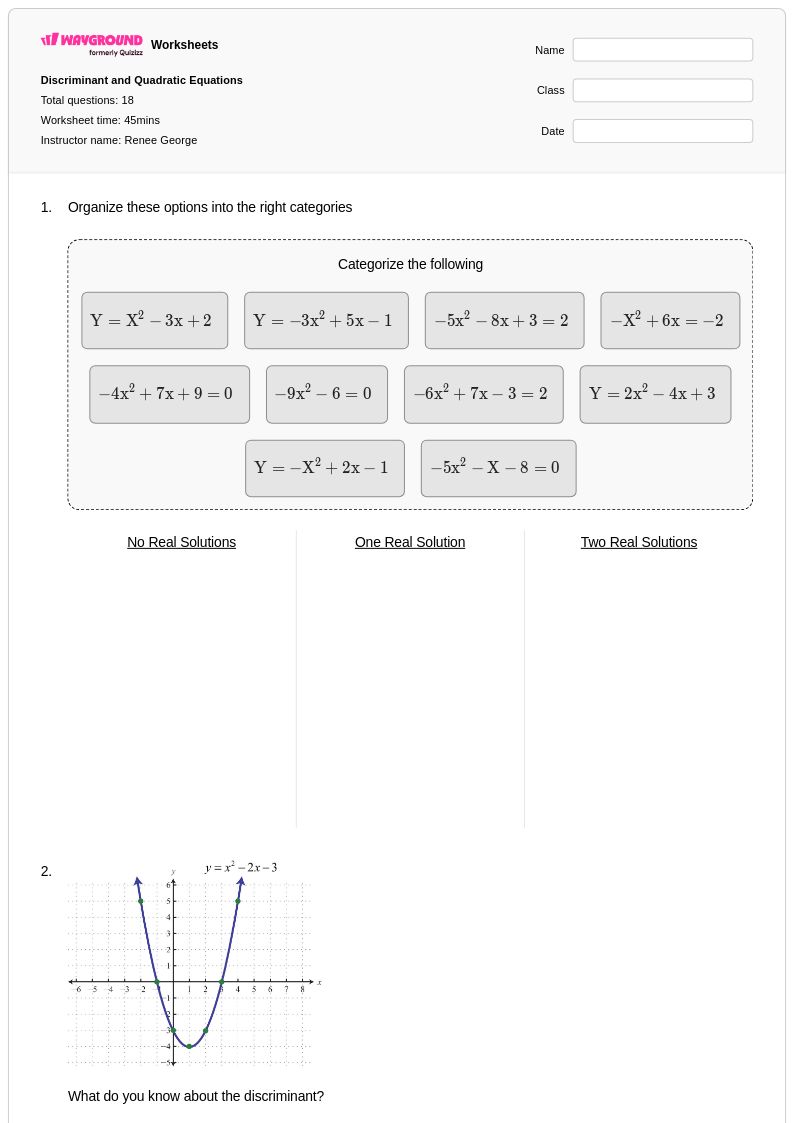
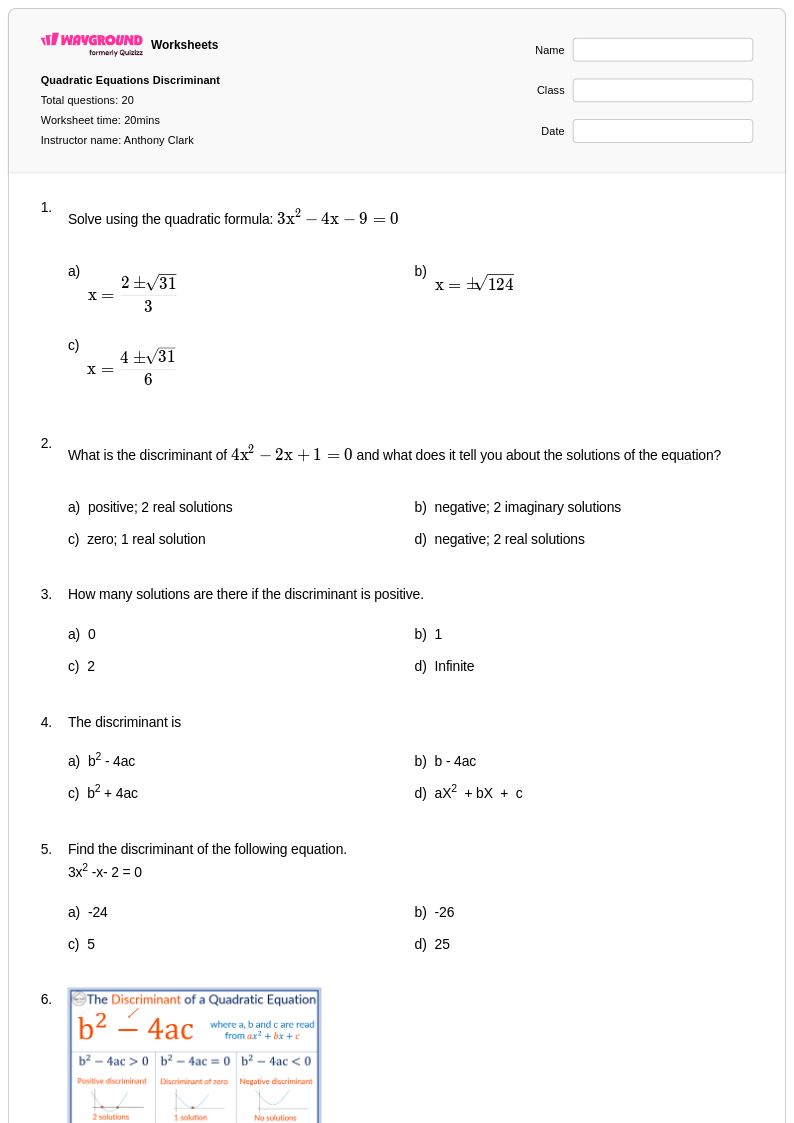
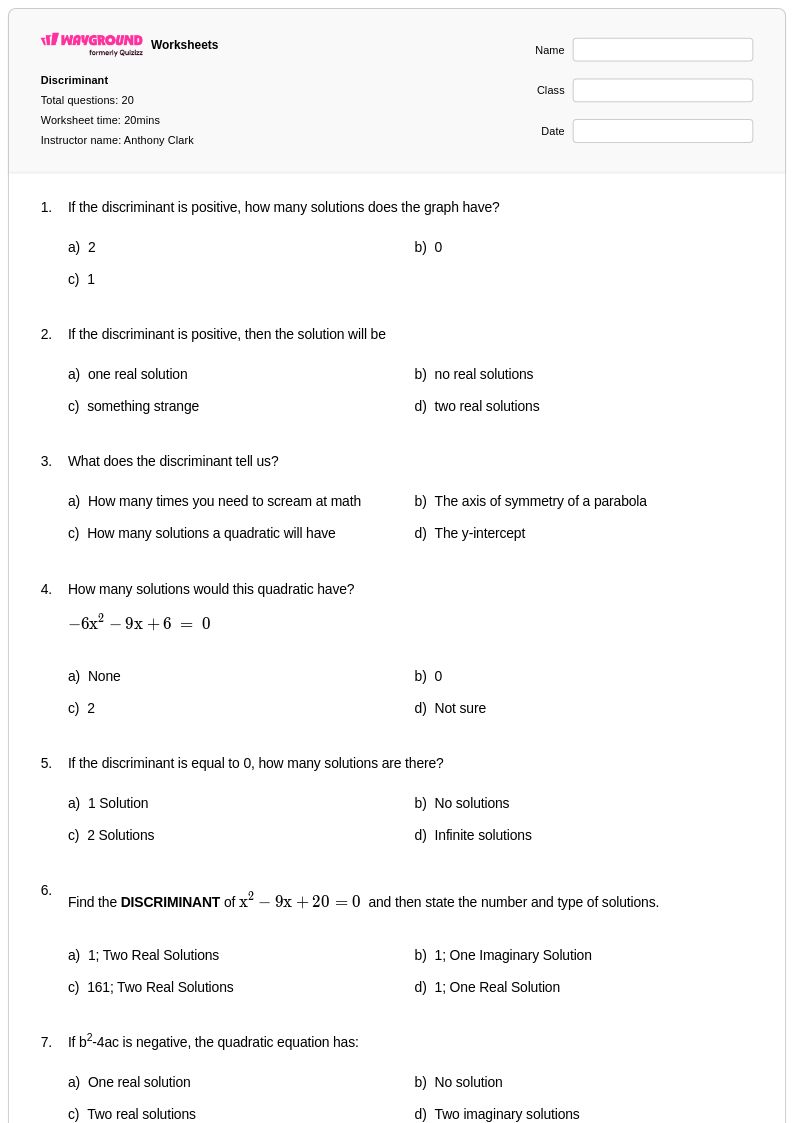
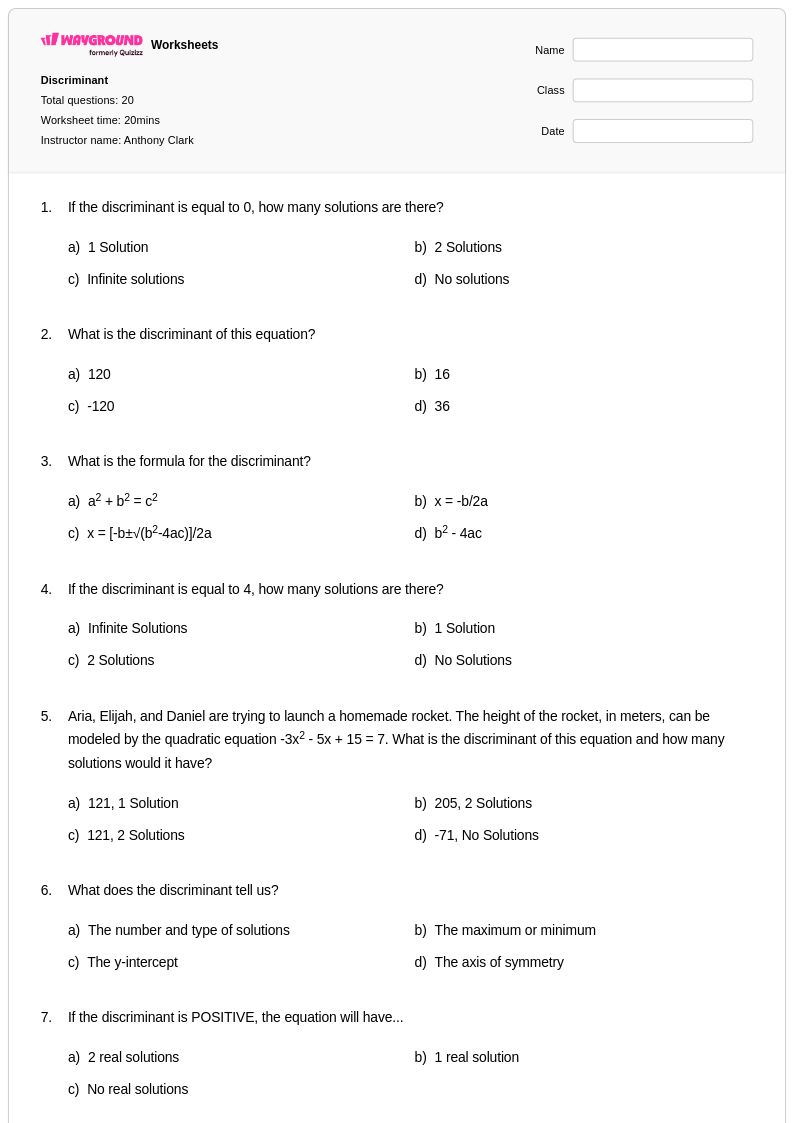
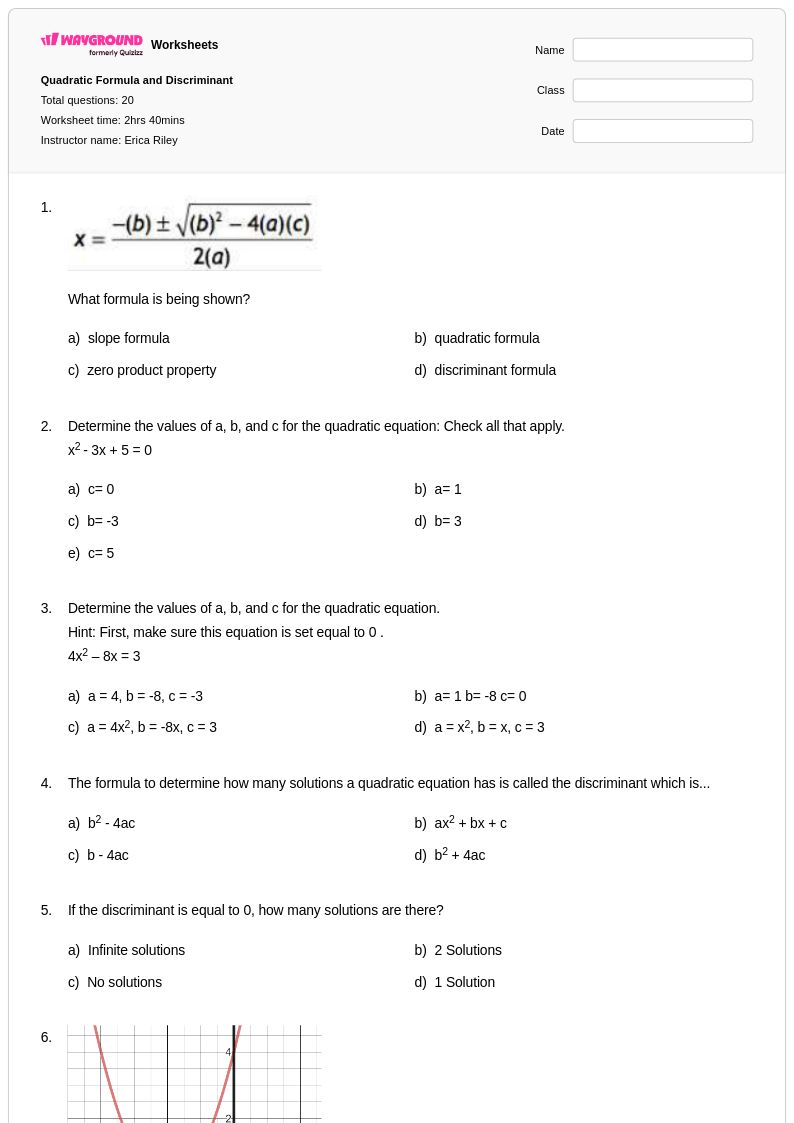
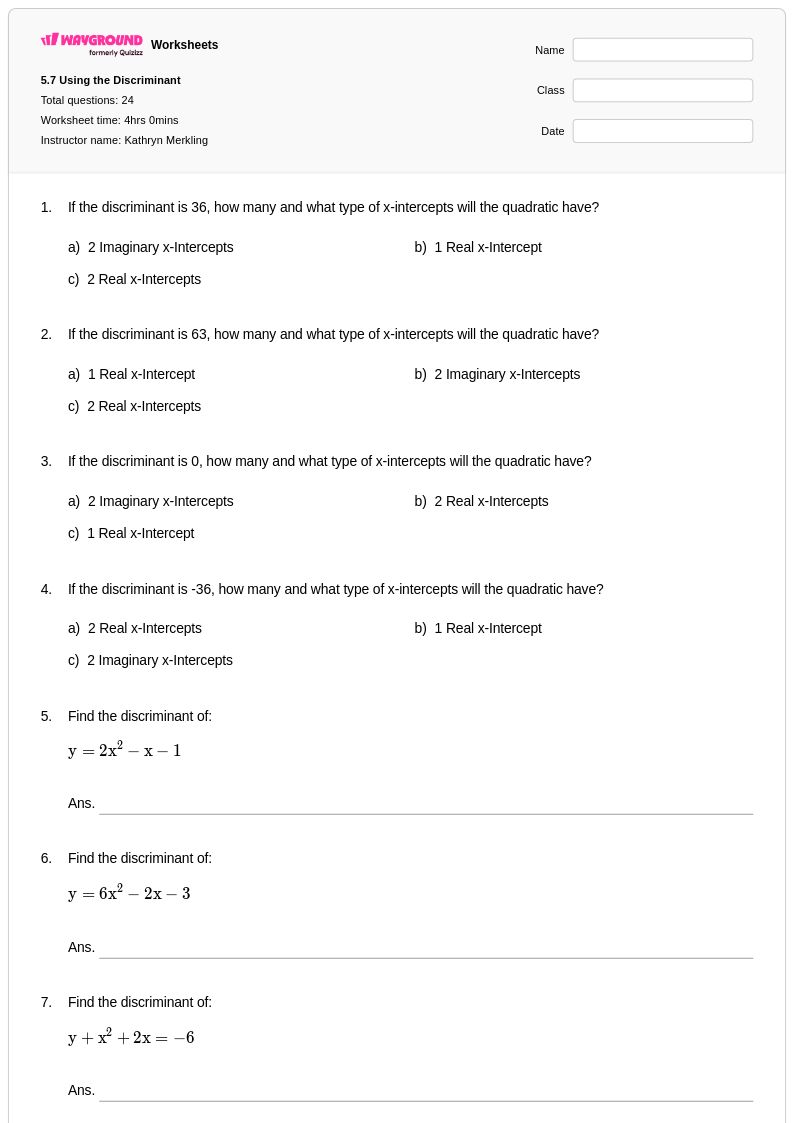
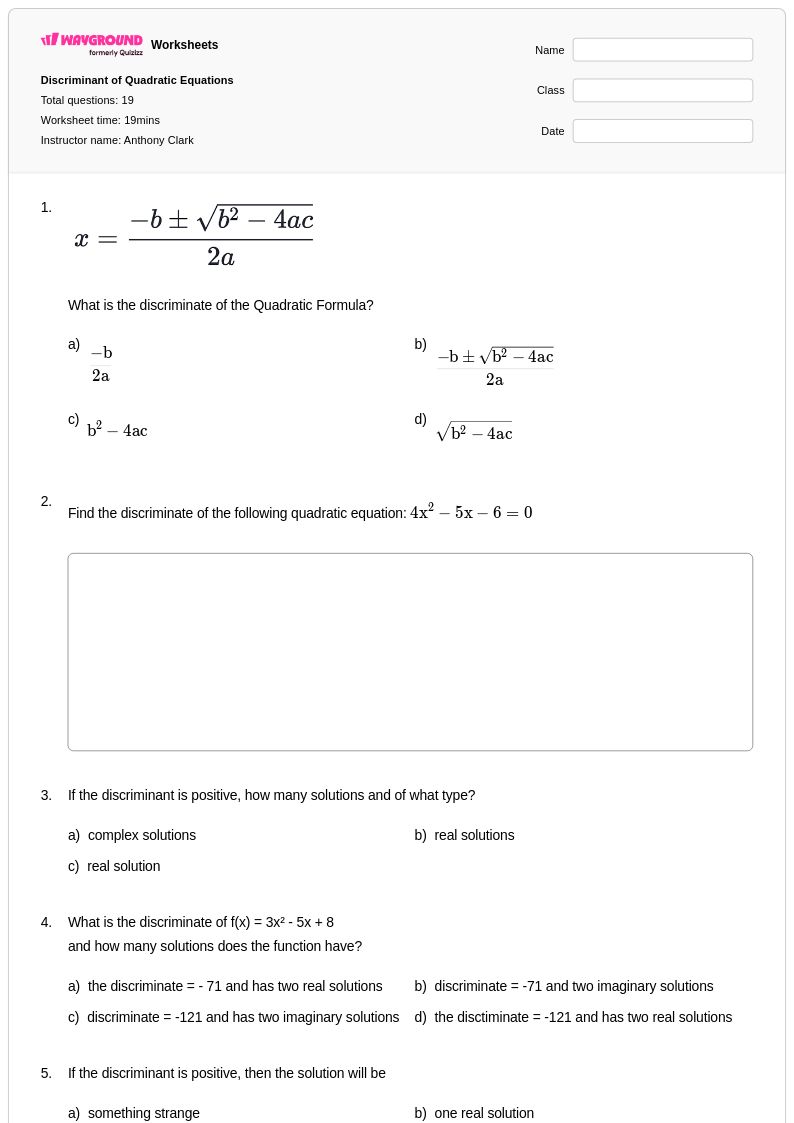
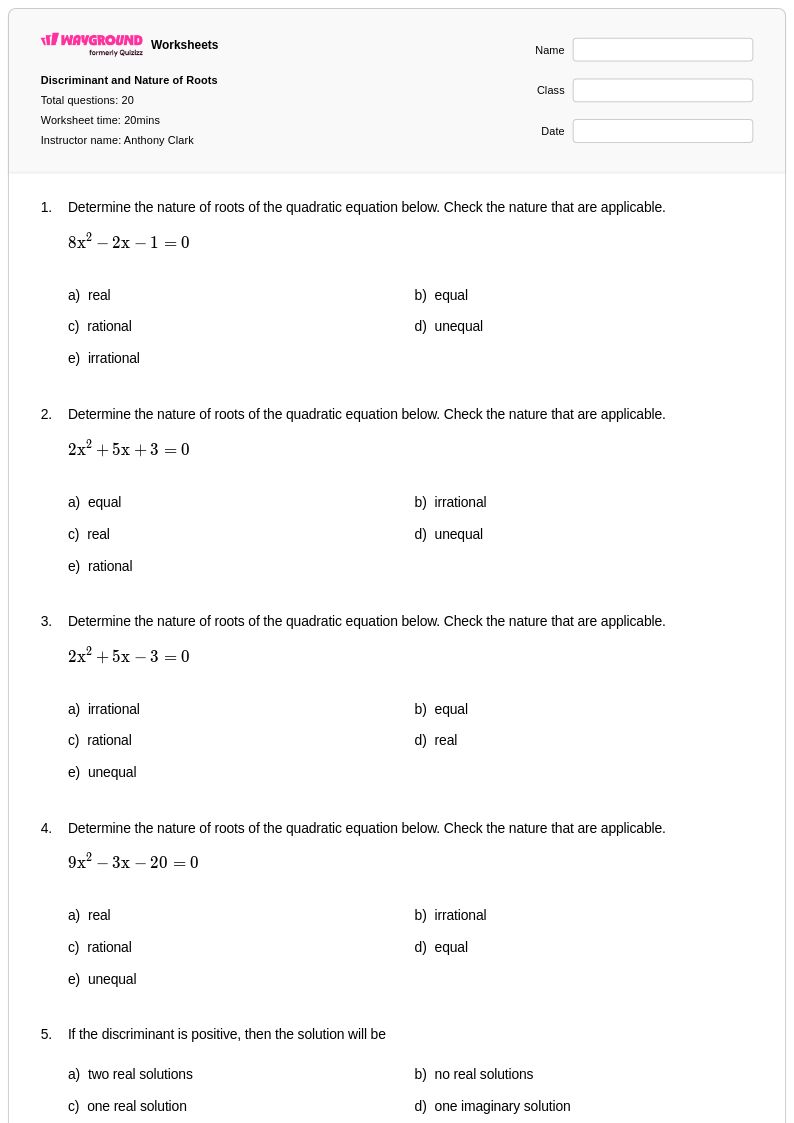
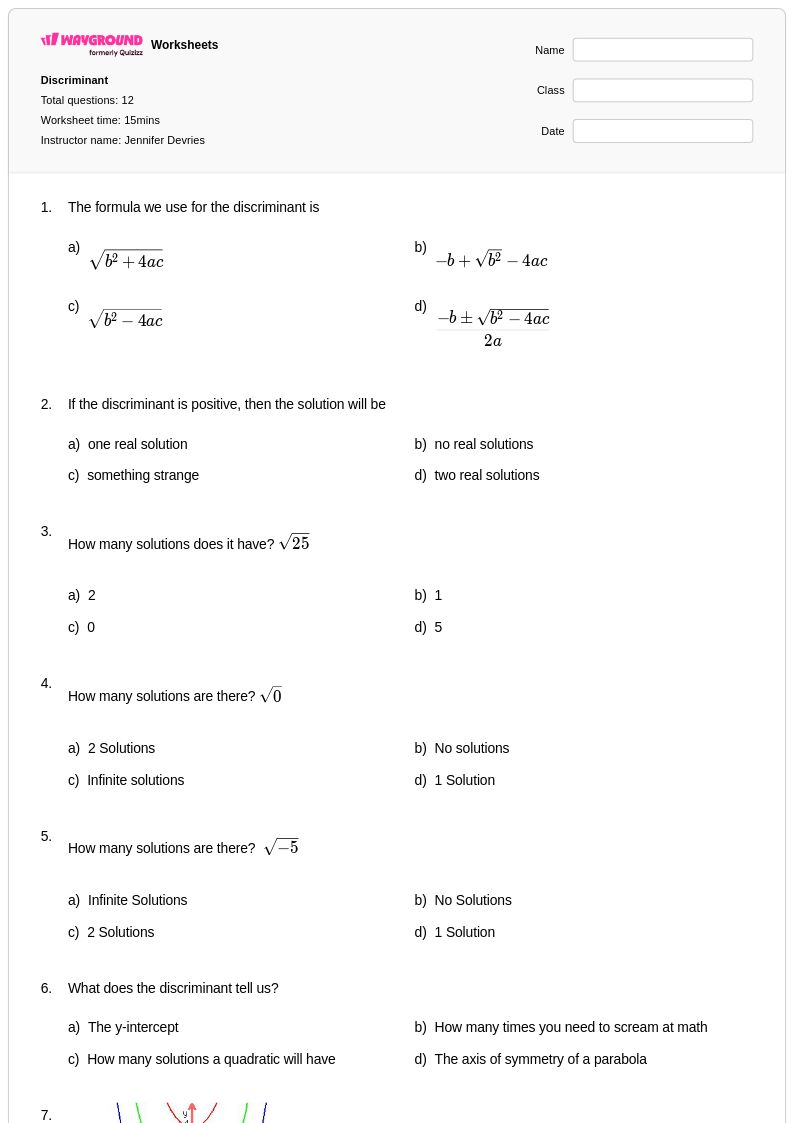
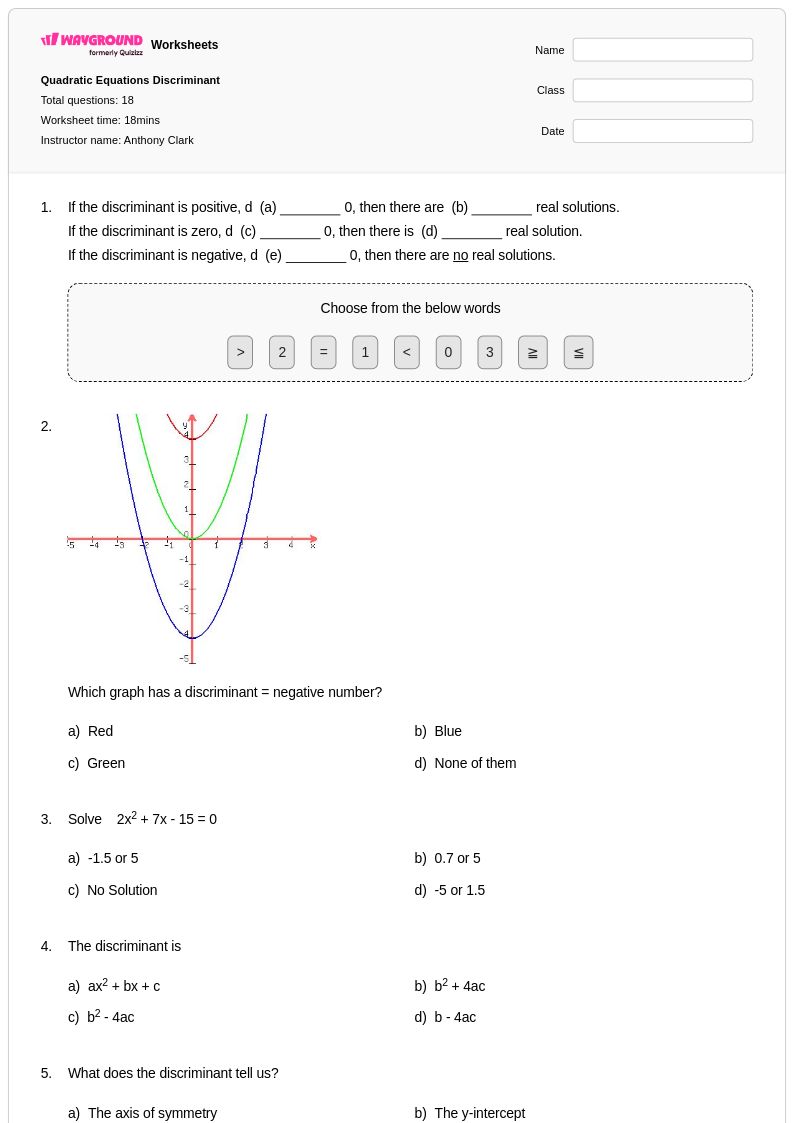
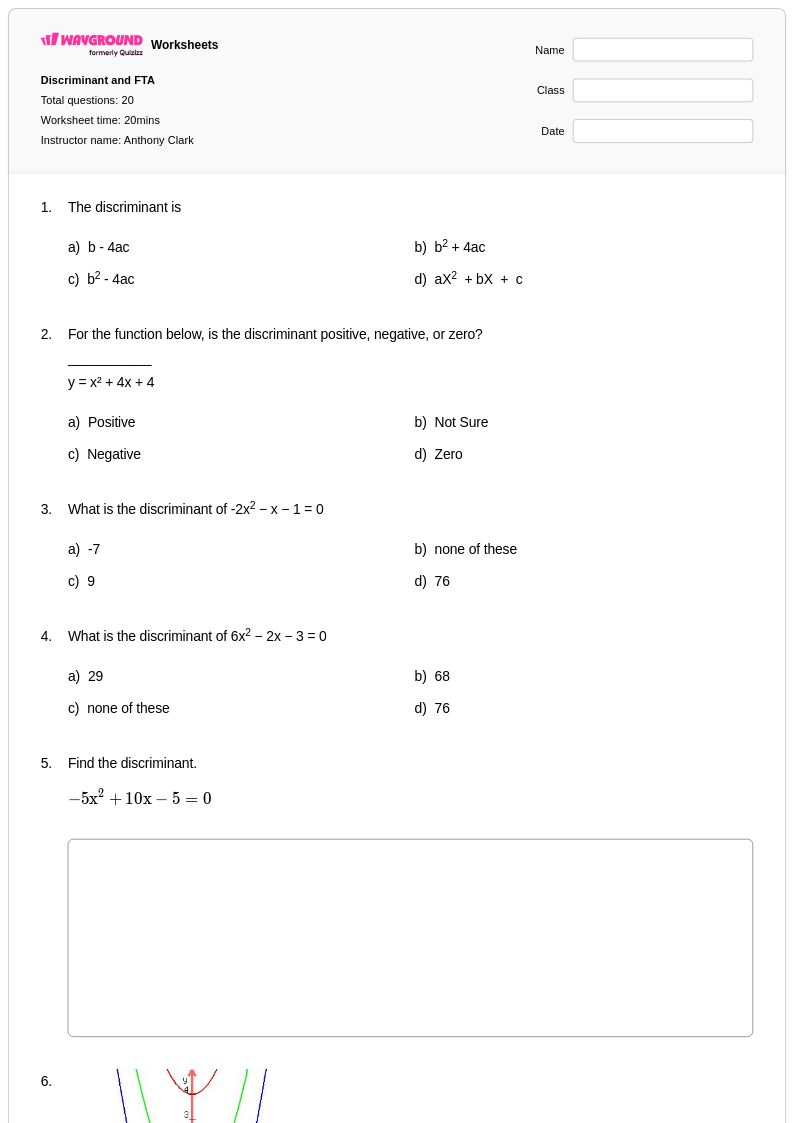
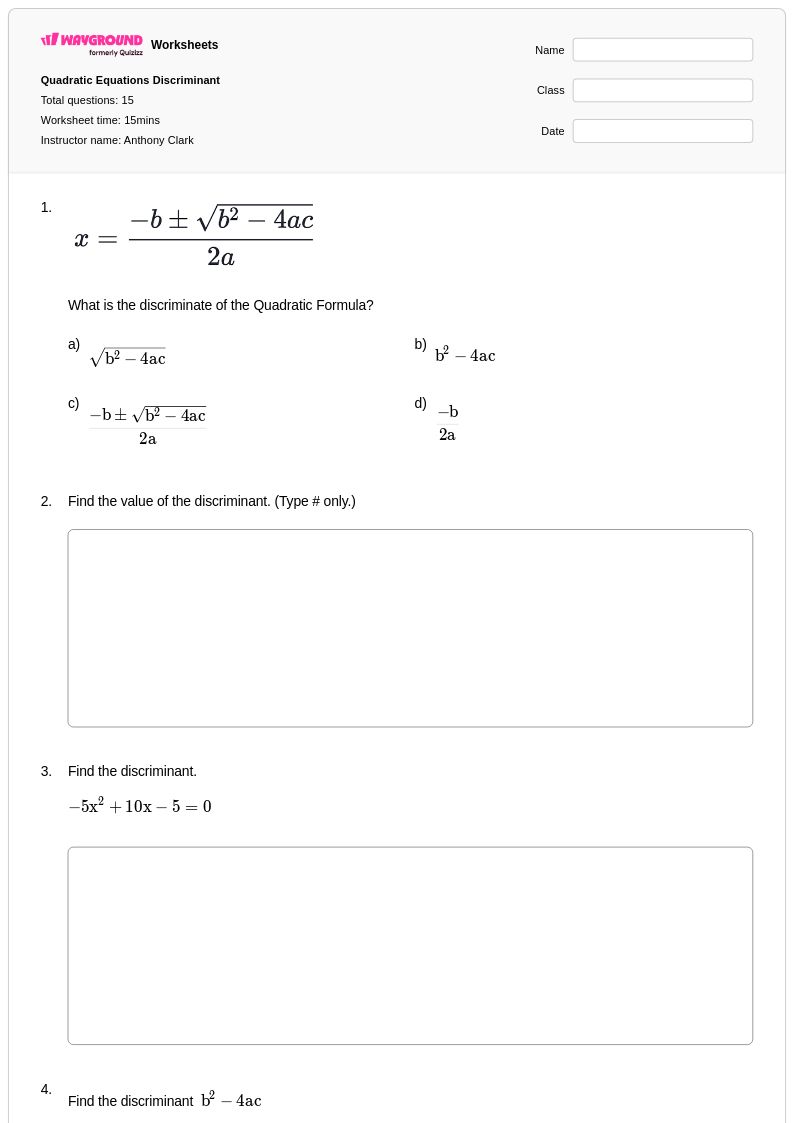
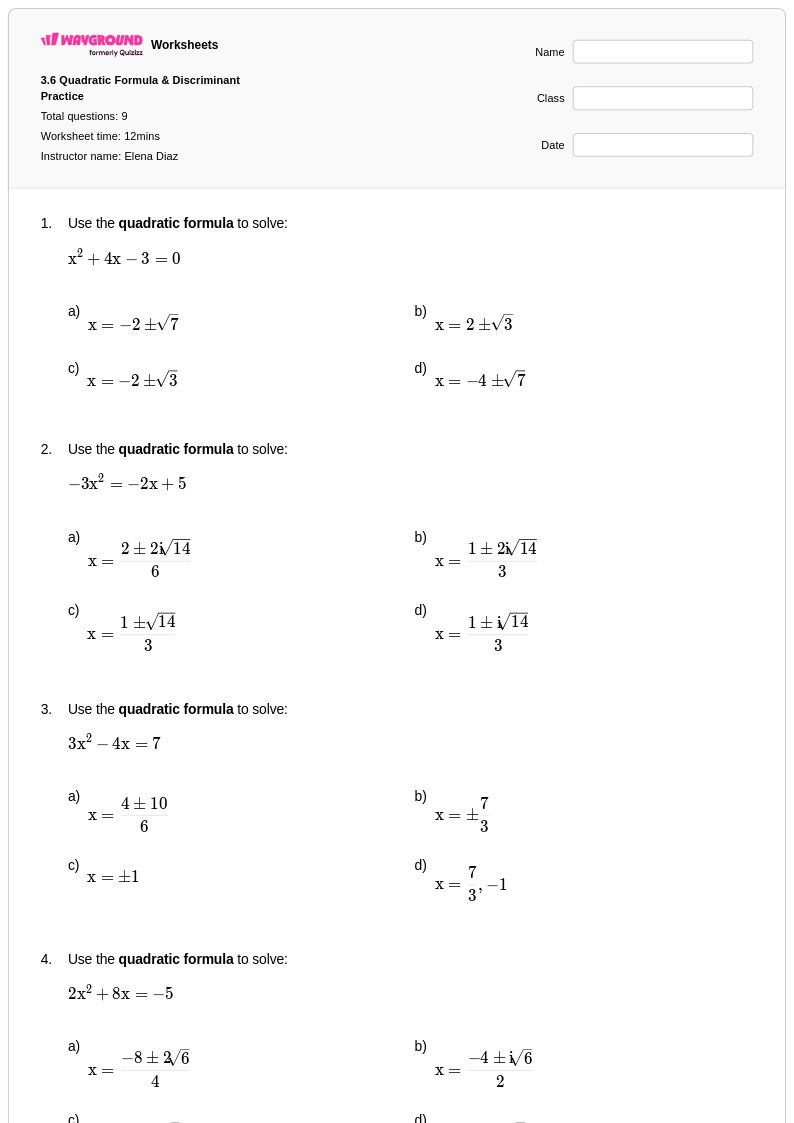
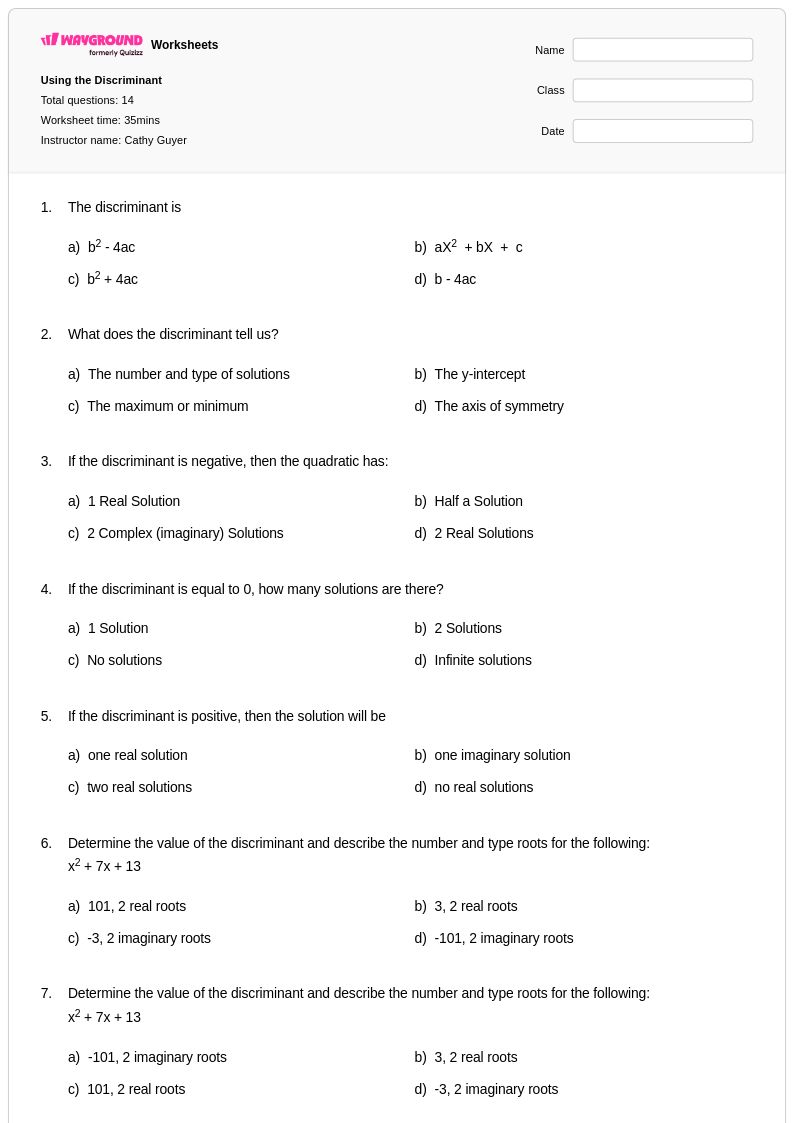
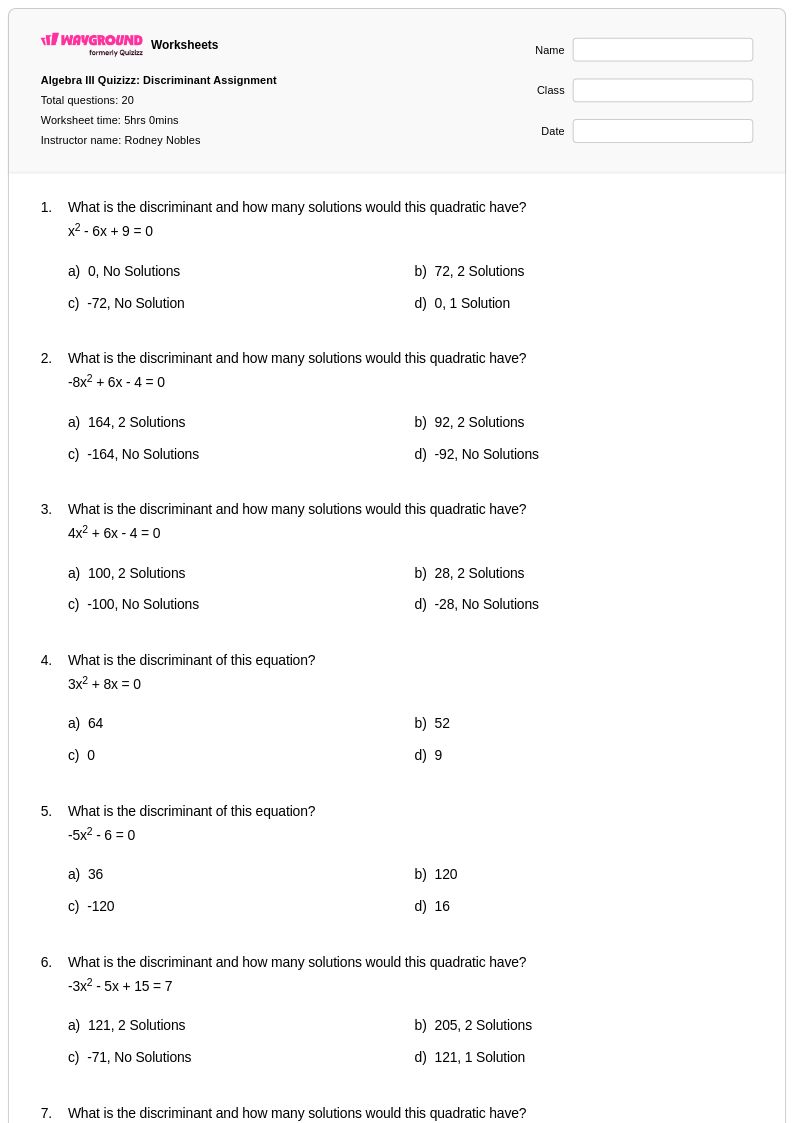
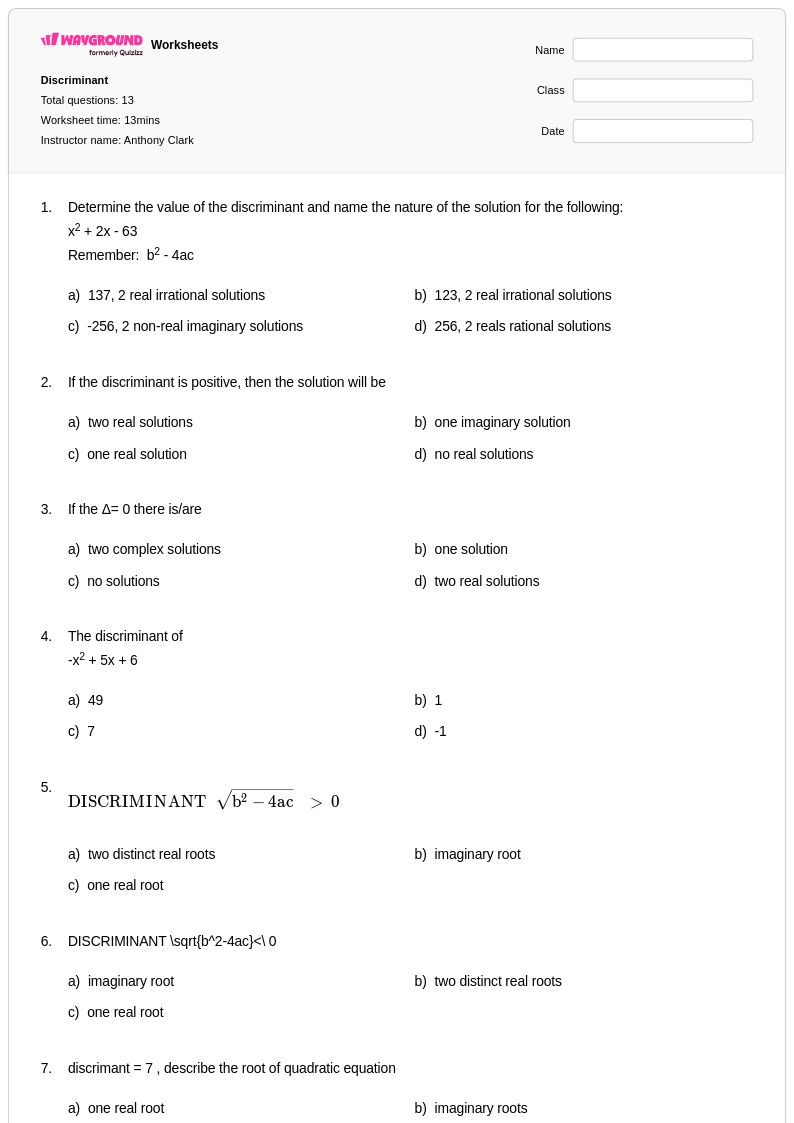
Discriminant worksheets for Class 12 mathematics provide students with essential practice in analyzing quadratic equations through the powerful tool of the discriminant formula. These comprehensive worksheets guide students through calculating b² - 4ac to determine the nature and number of solutions for quadratic equations, strengthening their ability to predict whether equations will have two real solutions, one repeated real solution, or two complex solutions without actually solving the equation. The practice problems progress systematically from basic discriminant calculations to more complex applications involving real-world scenarios and graphical interpretations. Each worksheet includes detailed answer keys that show step-by-step solutions, helping students identify common errors and reinforce proper mathematical reasoning. Available as free printable pdf resources, these worksheets serve as invaluable tools for mastering this fundamental concept that bridges algebraic manipulation with deeper mathematical analysis.
Wayground, formerly Quizizz, empowers educators with an extensive collection of discriminant worksheets created by millions of teachers worldwide, ensuring access to diverse approaches and difficulty levels for Class 12 mathematics instruction. The platform's robust search and filtering capabilities allow teachers to quickly locate materials that align with specific curriculum standards and match their students' learning objectives. Advanced differentiation tools enable educators to customize worksheets for various skill levels within the same classroom, while the flexible format options support both traditional printable assignments and interactive digital learning experiences. These resources prove invaluable for lesson planning, targeted remediation for students struggling with quadratic concepts, enrichment activities for advanced learners, and ongoing skill practice throughout the academic year, ultimately supporting comprehensive understanding of how discriminants reveal the fundamental properties of quadratic functions.
FAQs
How should I approach teaching the discriminant at the Grade 12 level?
By Grade 12, the discriminant should be a tool students reach for automatically, not a topic being introduced. Teaching at this level means using it in richer contexts: analyzing quadratic models in applied problems, connecting it to the vertex form of a parabola, or using it within larger problems involving systems of equations. If students are heading into calculus, it's worth emphasizing how the discriminant relates to whether a quadratic function has real critical-point behavior — that connection pays off quickly in the next course.
What practice problems are appropriate for Grade 12 discriminant work?
Grade 12 practice should emphasize application over calculation. Good problem types include: using the discriminant to determine whether a line is tangent to, intersects, or misses a parabola; finding parameter values that produce specific solution types; and interpreting discriminant results in real-world quadratic models. Wayground's Grade 12 discriminant worksheets progress from foundational review to these more complex applications, making them useful for both consolidation and extension.
What errors do Grade 12 students still make with the discriminant?
The most common issue at this level isn't arithmetic — it's setup. When the discriminant appears inside a larger problem (a system, a tangency condition, a parametric equation), students often apply the formula to the wrong equation or fail to rearrange into standard form before identifying coefficients. A second persistent error: students treat a negative discriminant as meaning the equation is unsolvable rather than recognizing the solutions are complex. That distinction matters more in Grade 12, when complex numbers are expected to be part of the working vocabulary.
How do I use Wayground's Grade 12 discriminant worksheets?
Host them as digital quizzes on Wayground for immediate feedback, or download the PDF and assign on paper — both formats include a complete answer key. For classes where reducing screen time is a priority, the printable route works well; the Wayground for Teachers app lets you scan paper submissions for grading so you're not manually entering results.
How does discriminant work at Grade 12 connect to what comes next in mathematics?
The discriminant is one of the cleaner bridges between secondary algebra and post-secondary mathematics. In precalculus and calculus, students encounter quadratic expressions inside larger functions — rational functions, optimization problems, differential equations — and the discriminant is often the fastest way to characterize the behavior of those expressions. Students who understand the discriminant conceptually, not just procedurally, are better positioned to analyze whether a quadratic factor contributes real roots or complex ones to a larger expression, which comes up repeatedly in polynomial and rational function analysis.