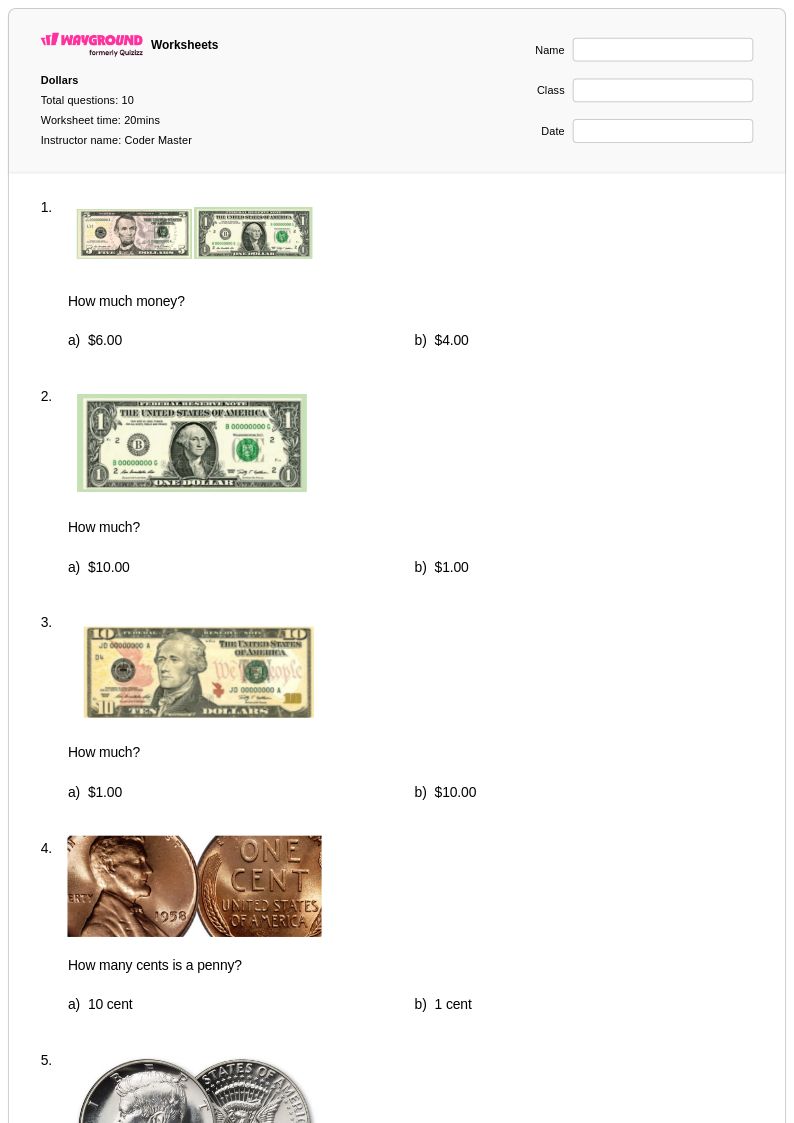
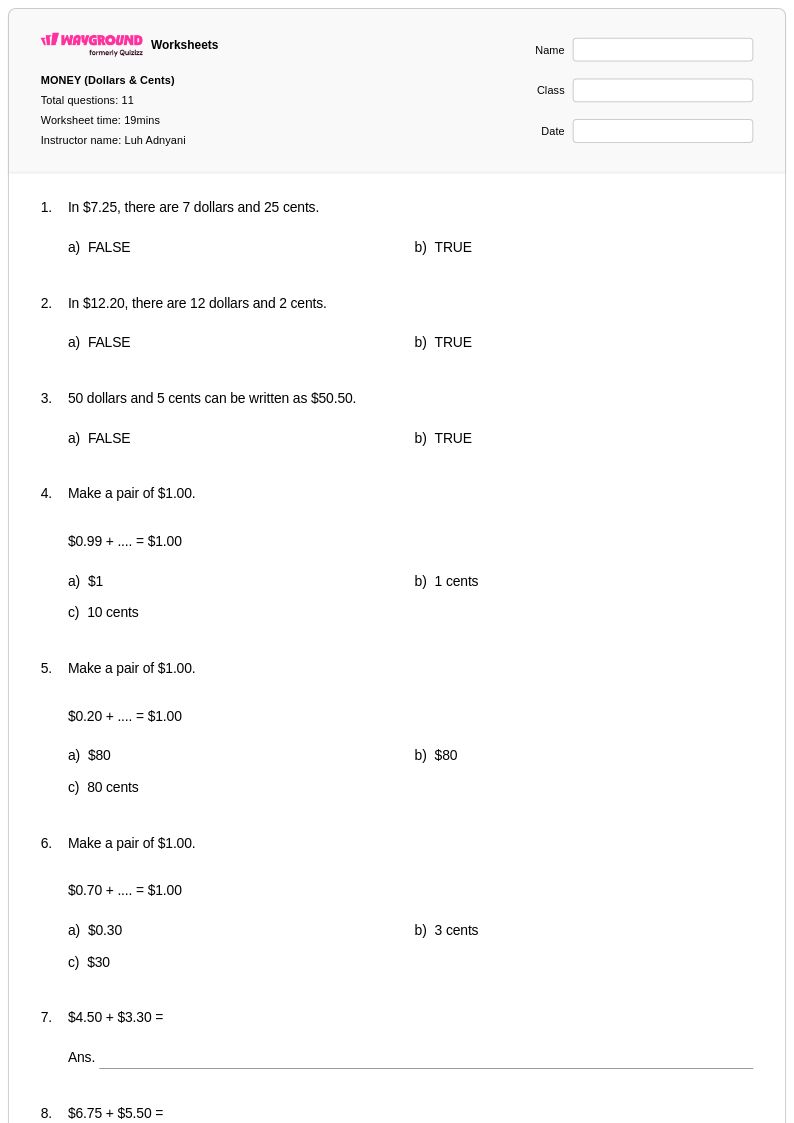
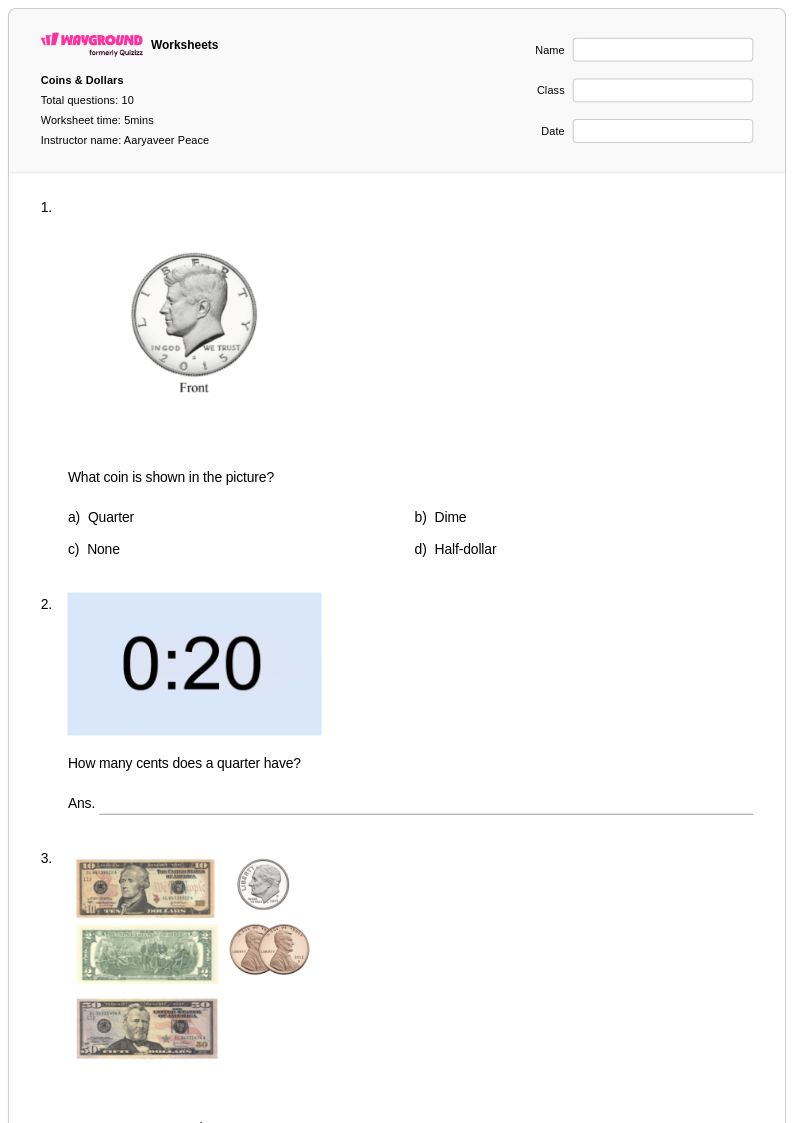
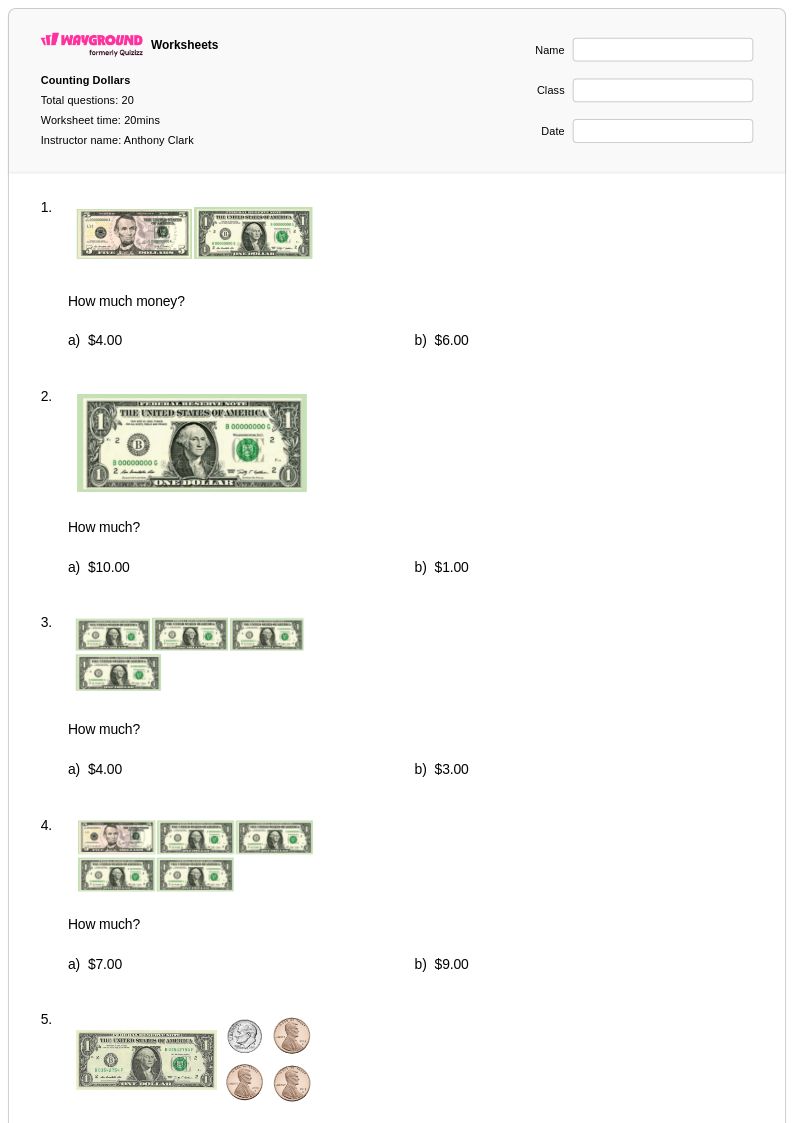
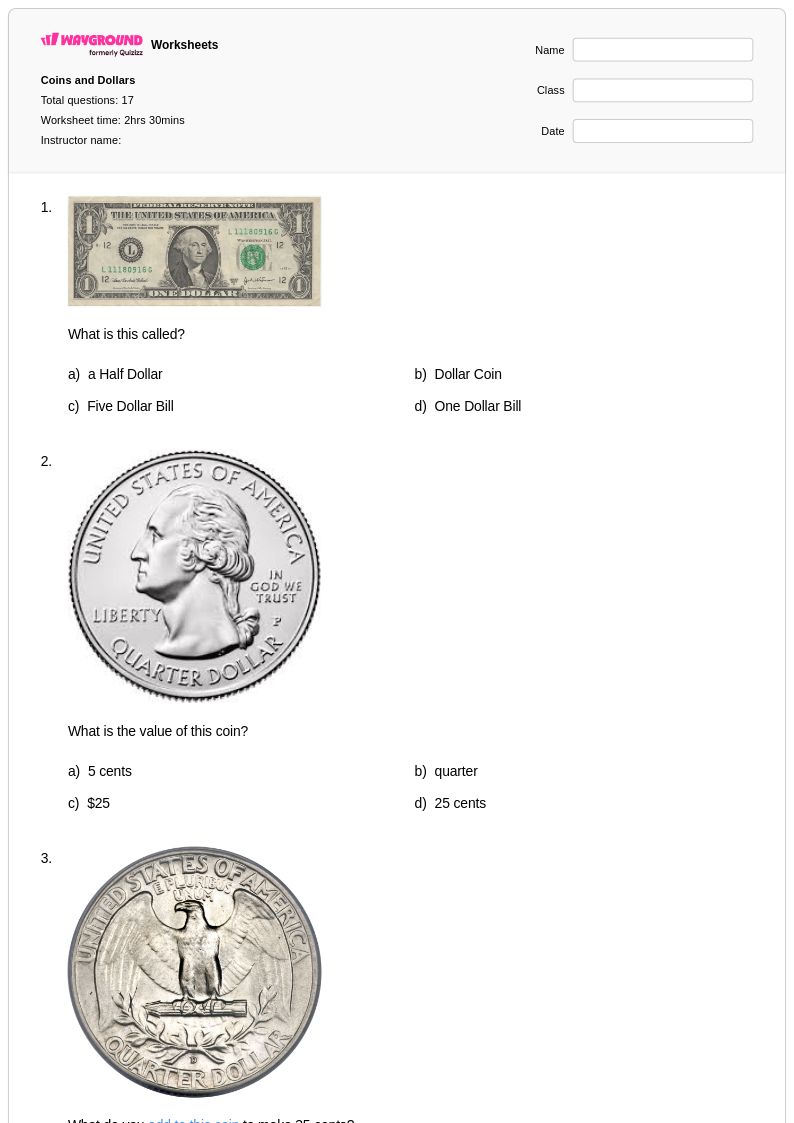
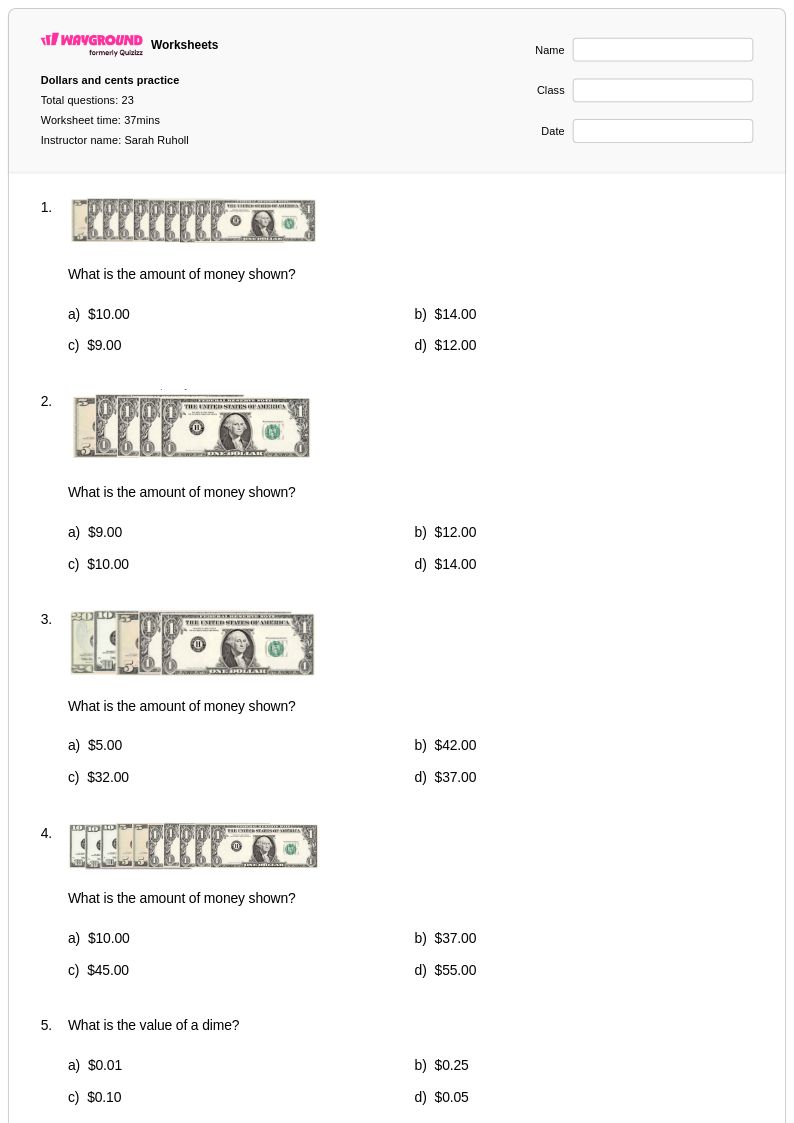
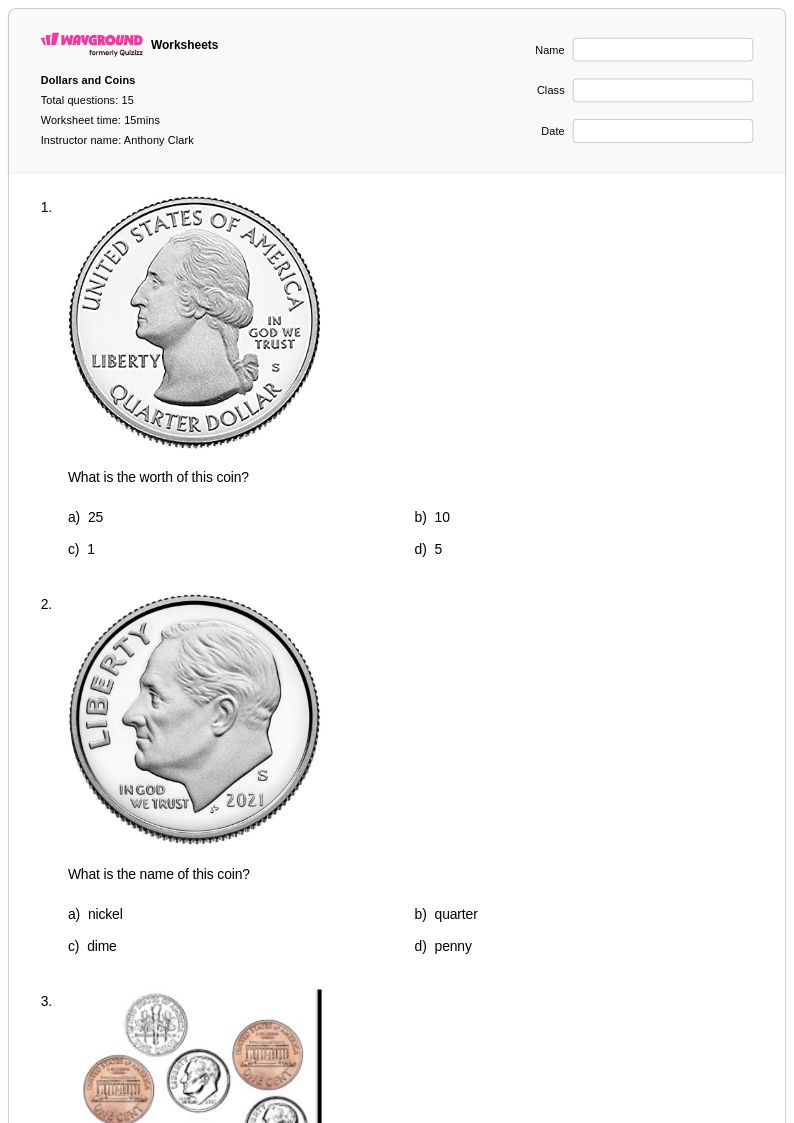
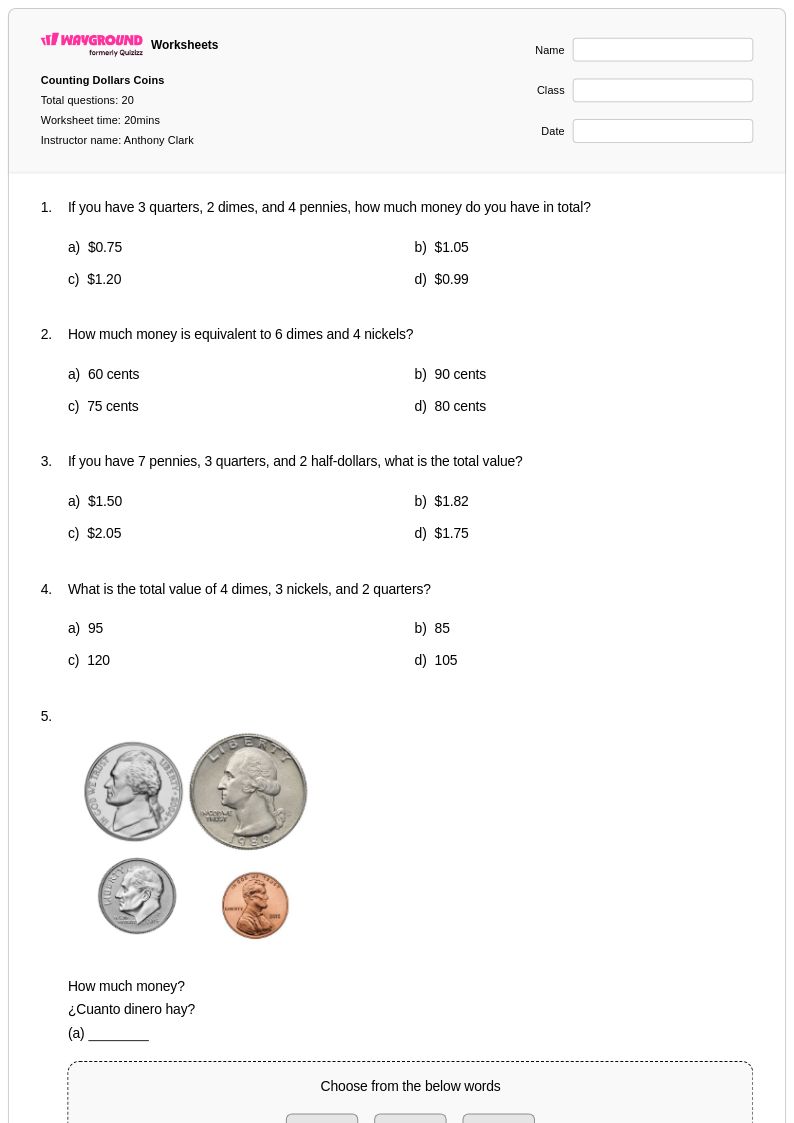
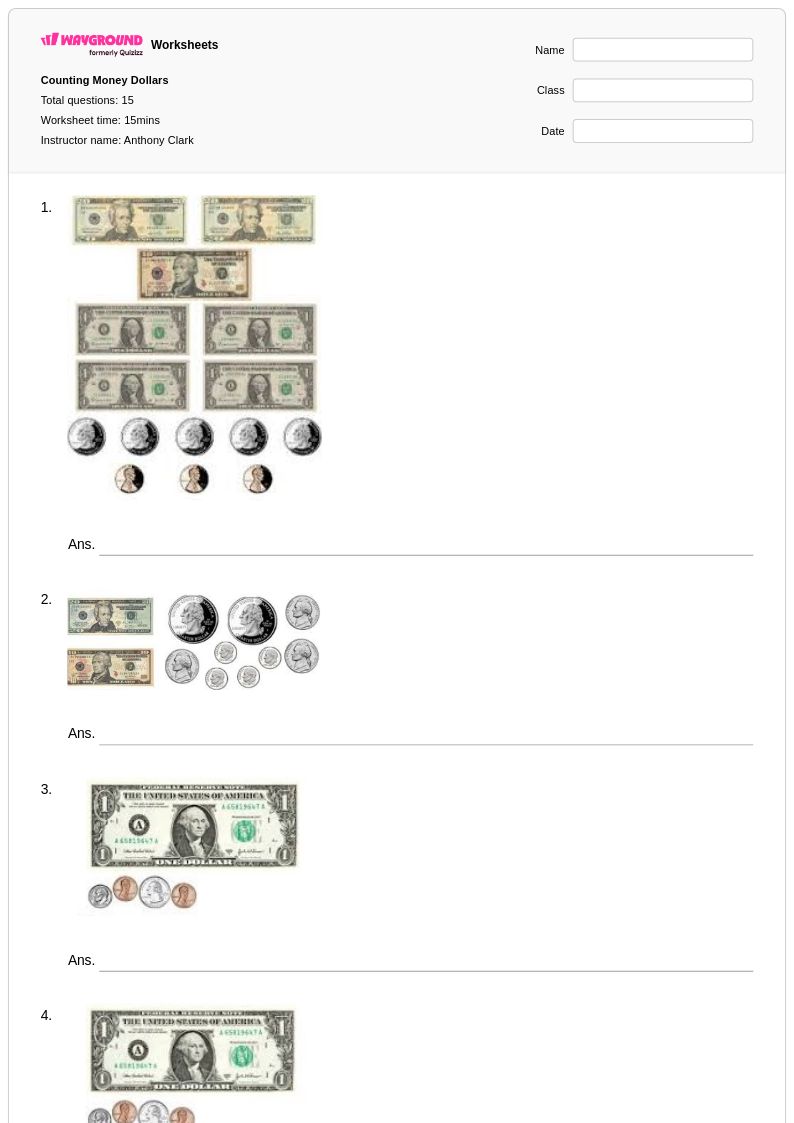
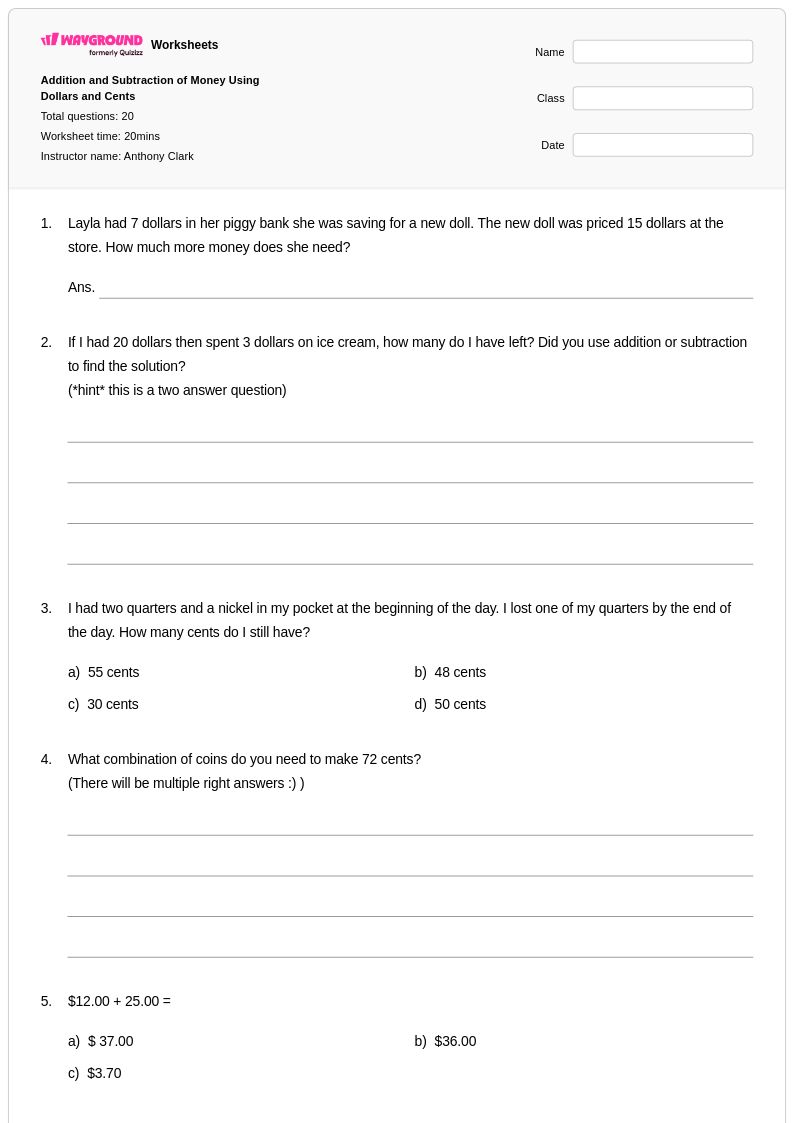
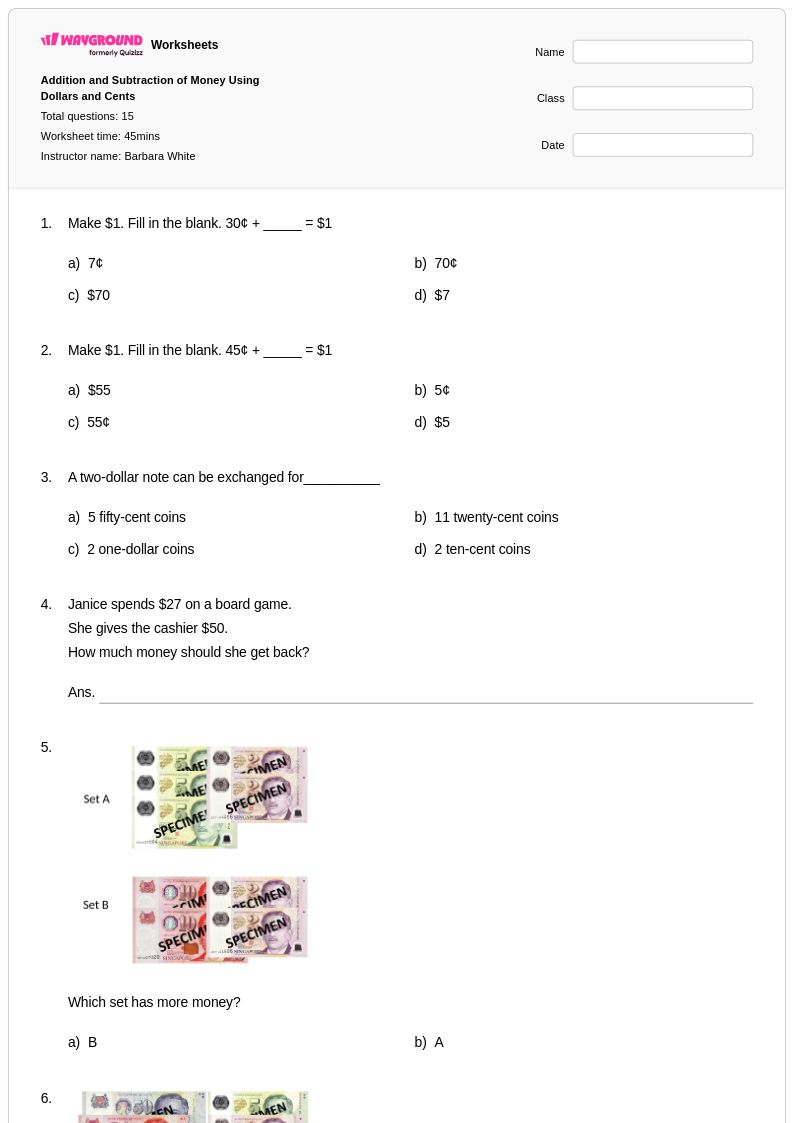
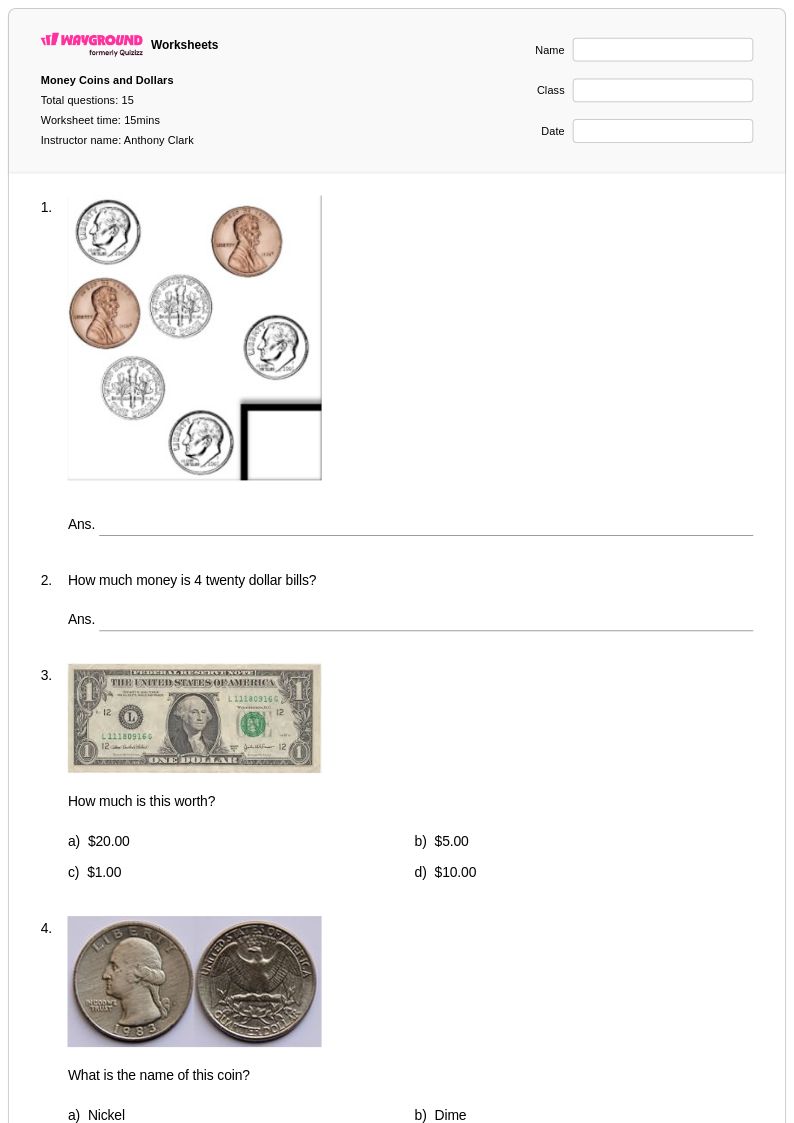
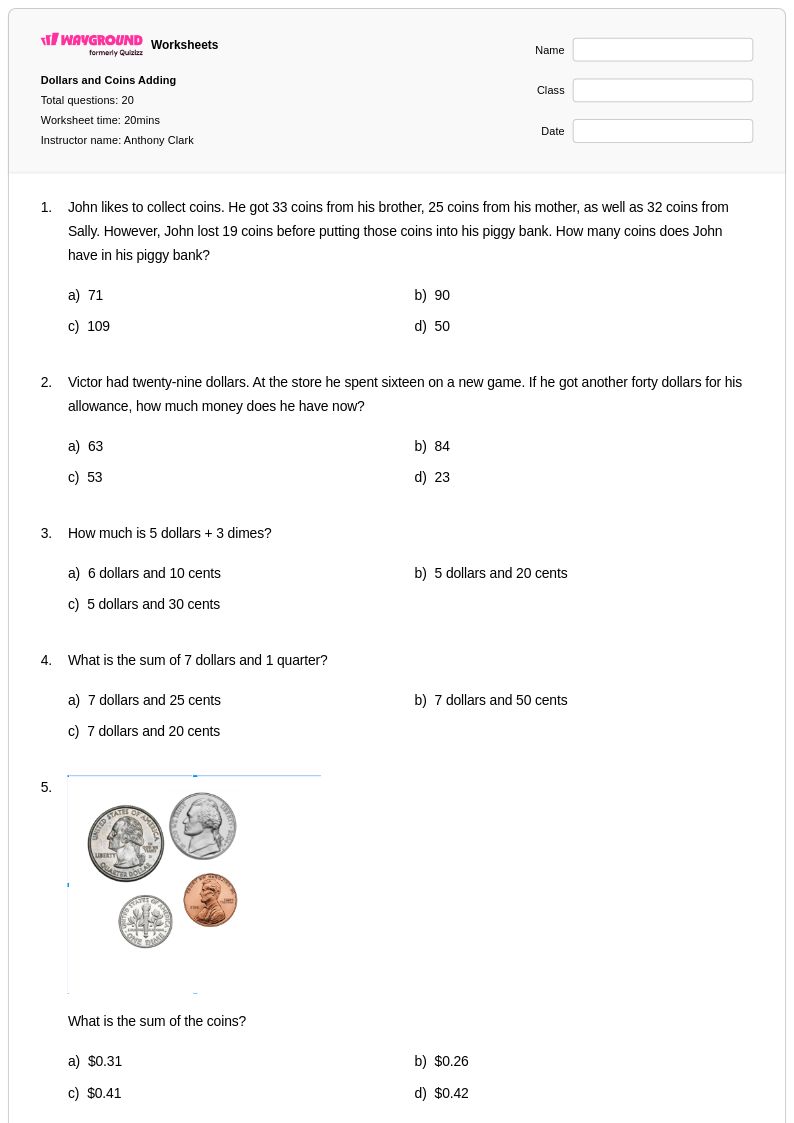
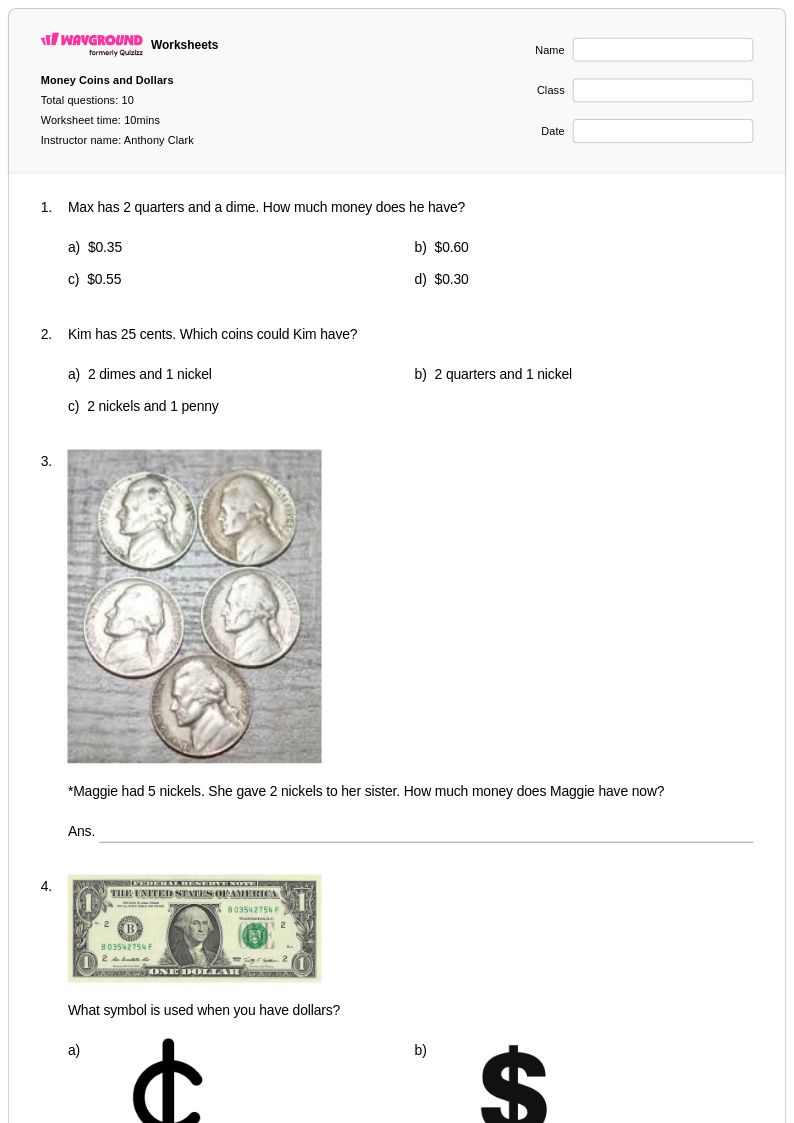
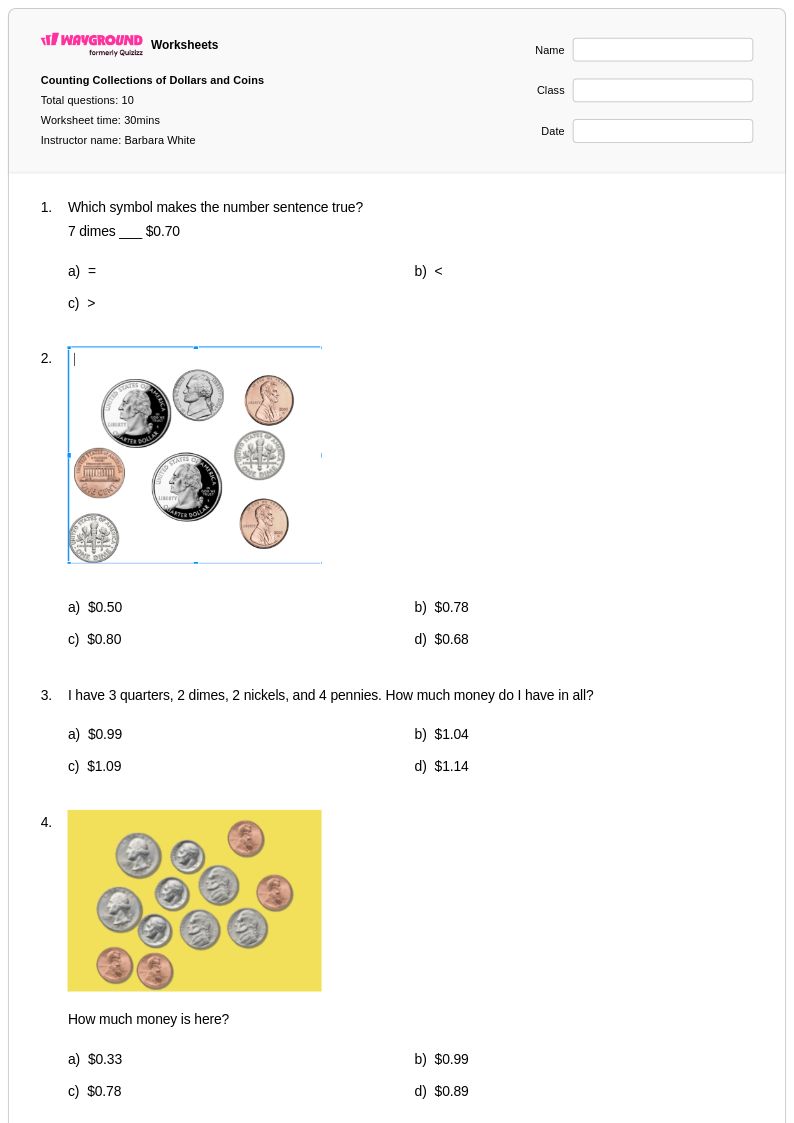
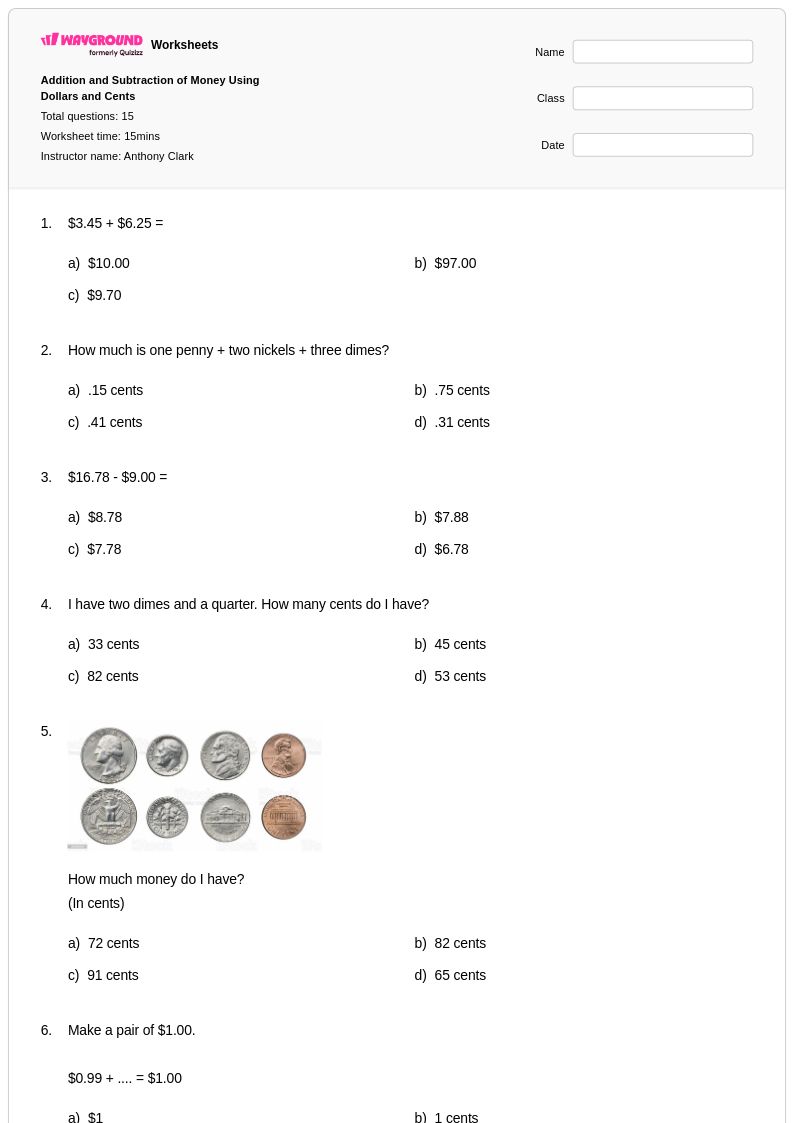
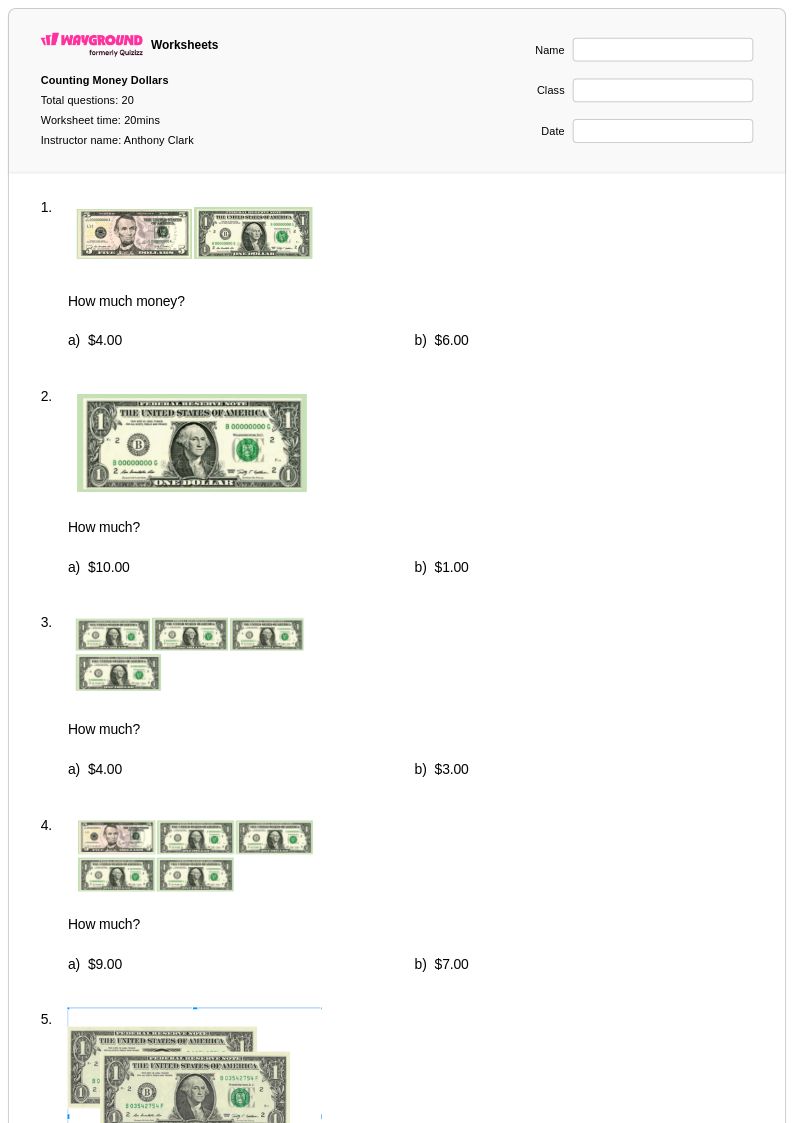
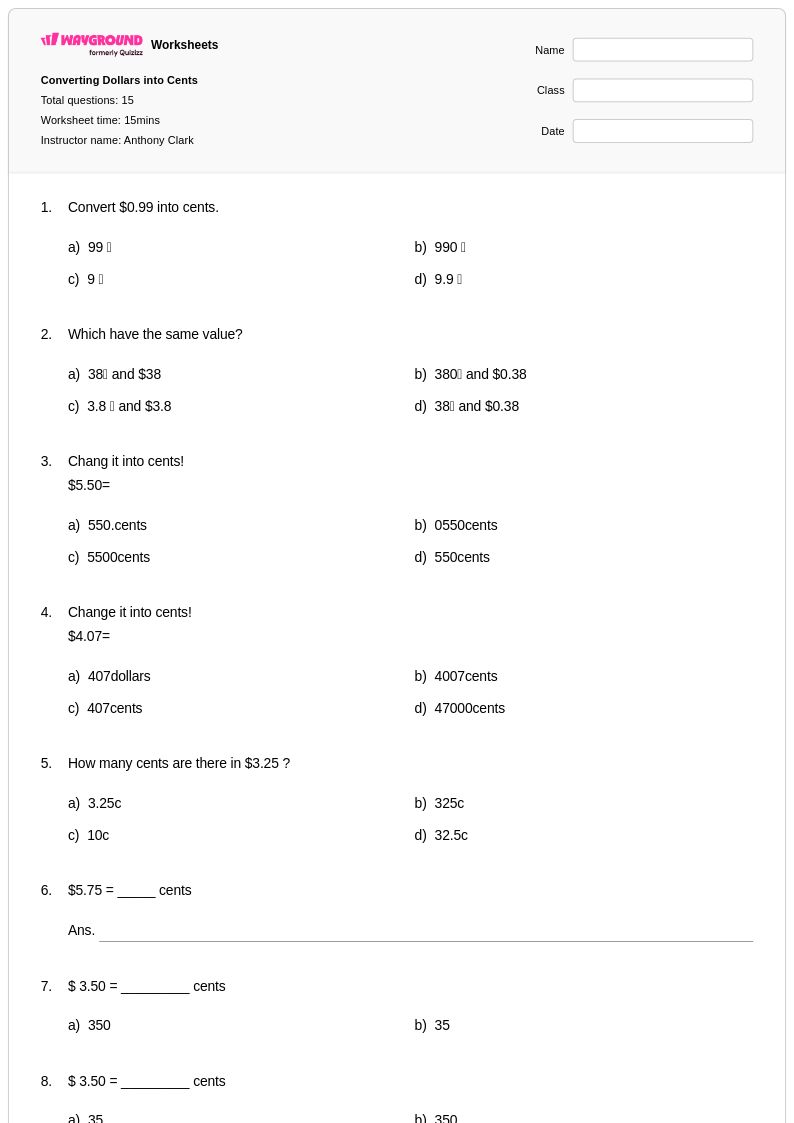
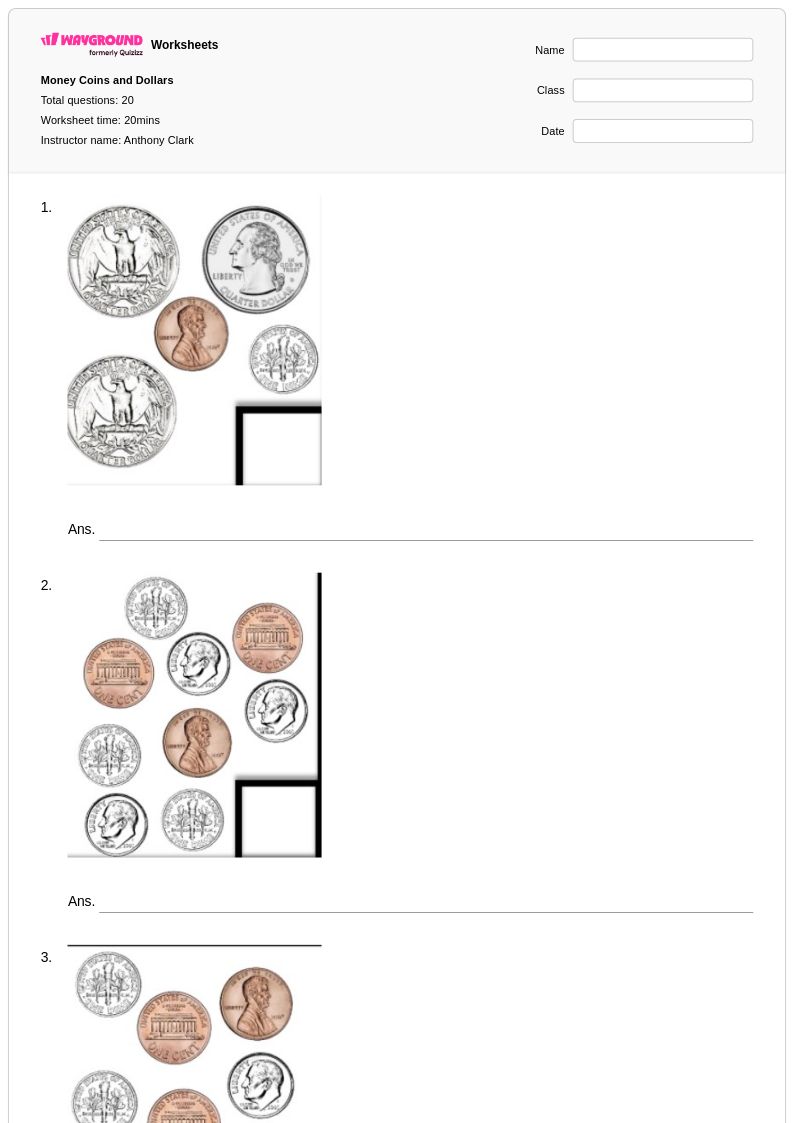
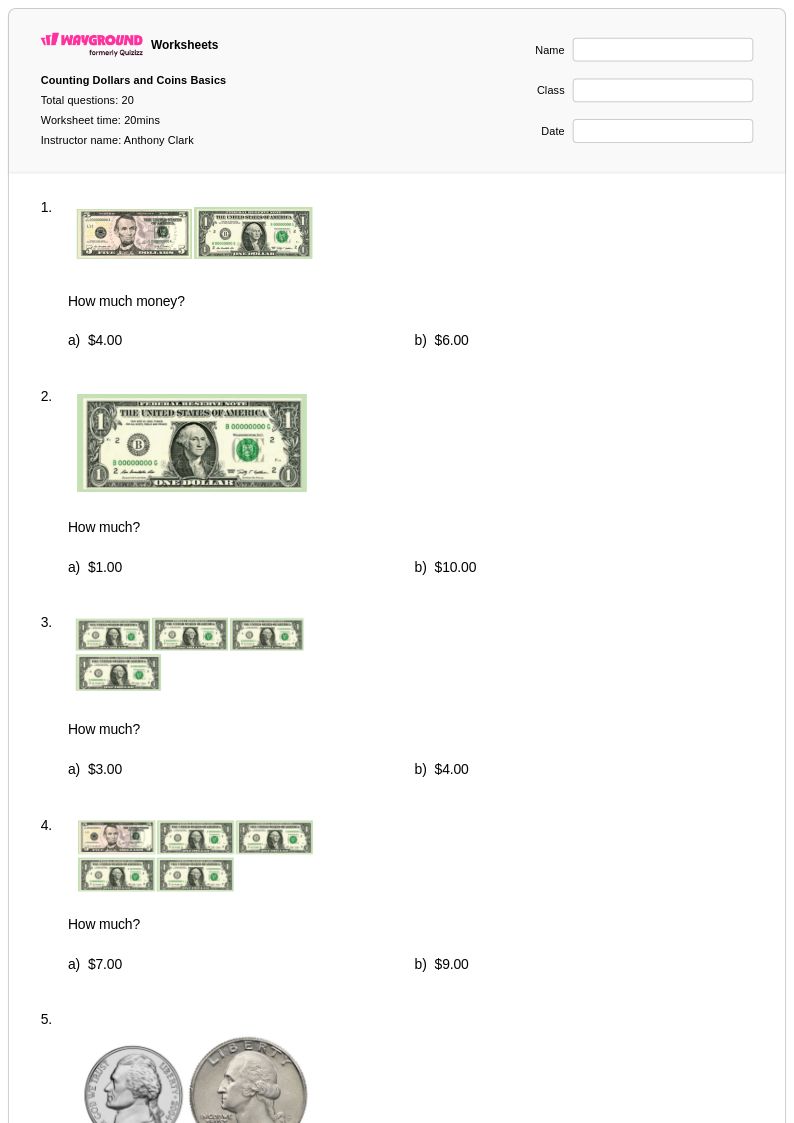
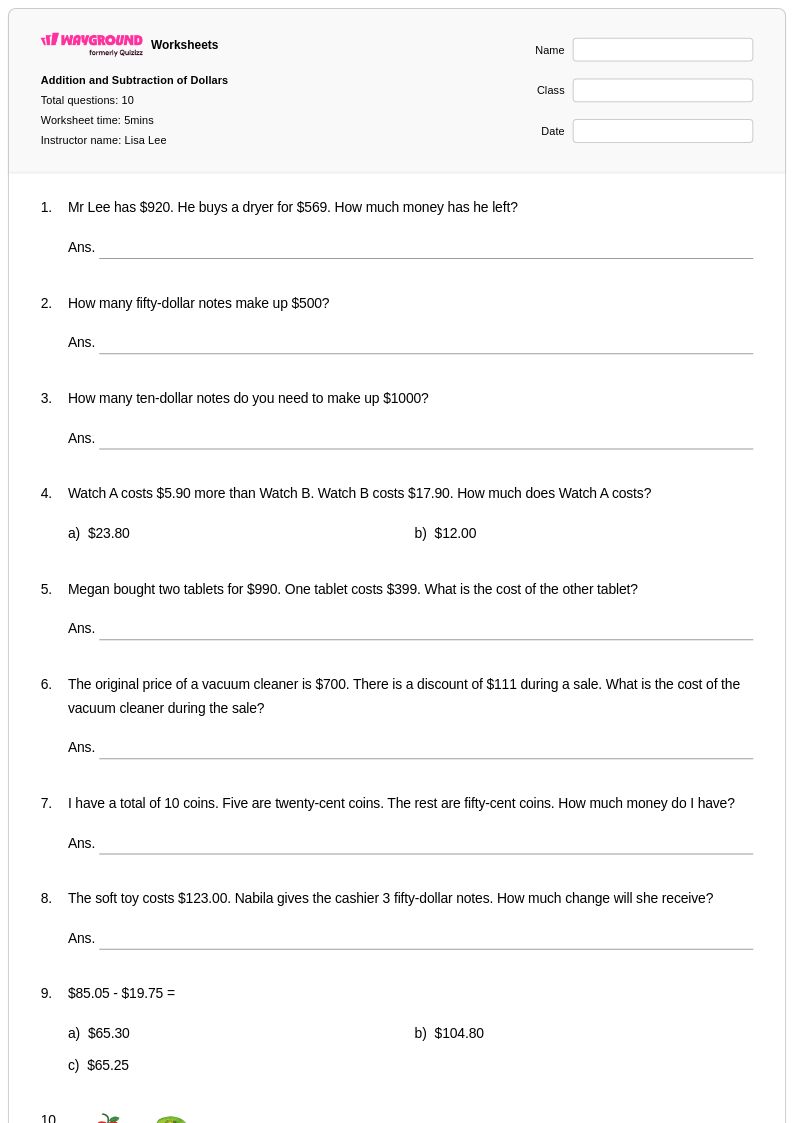
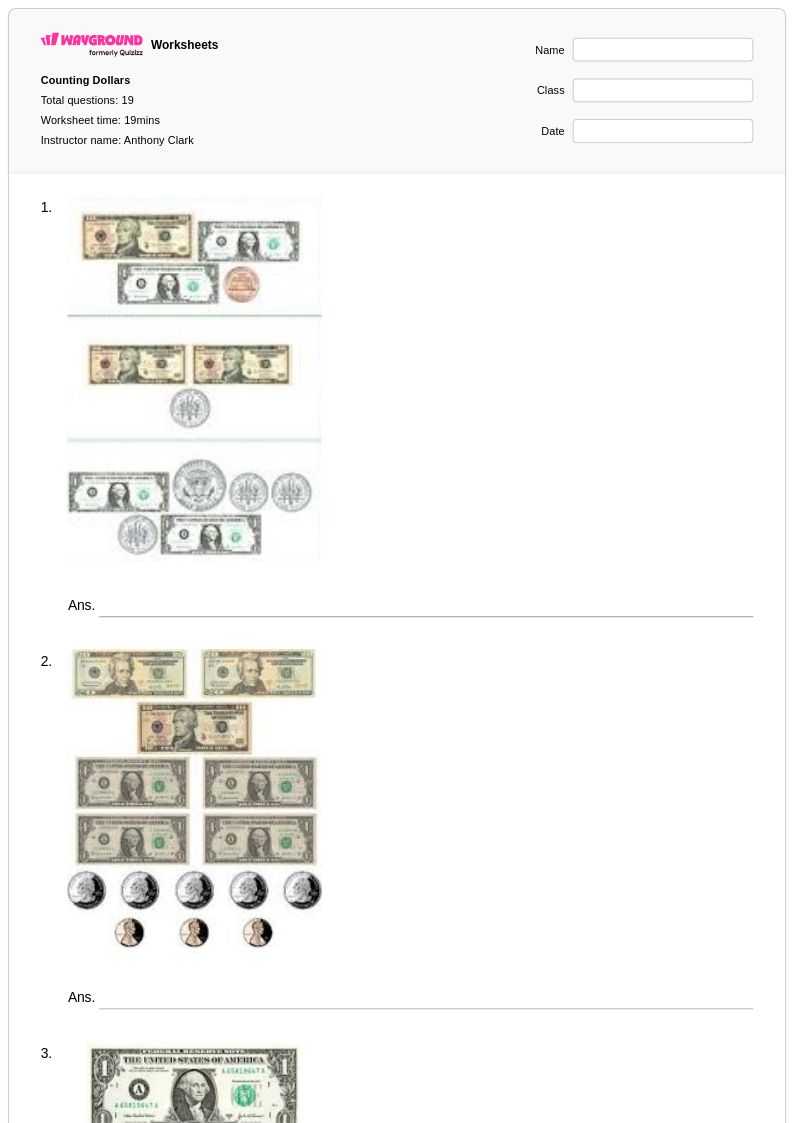
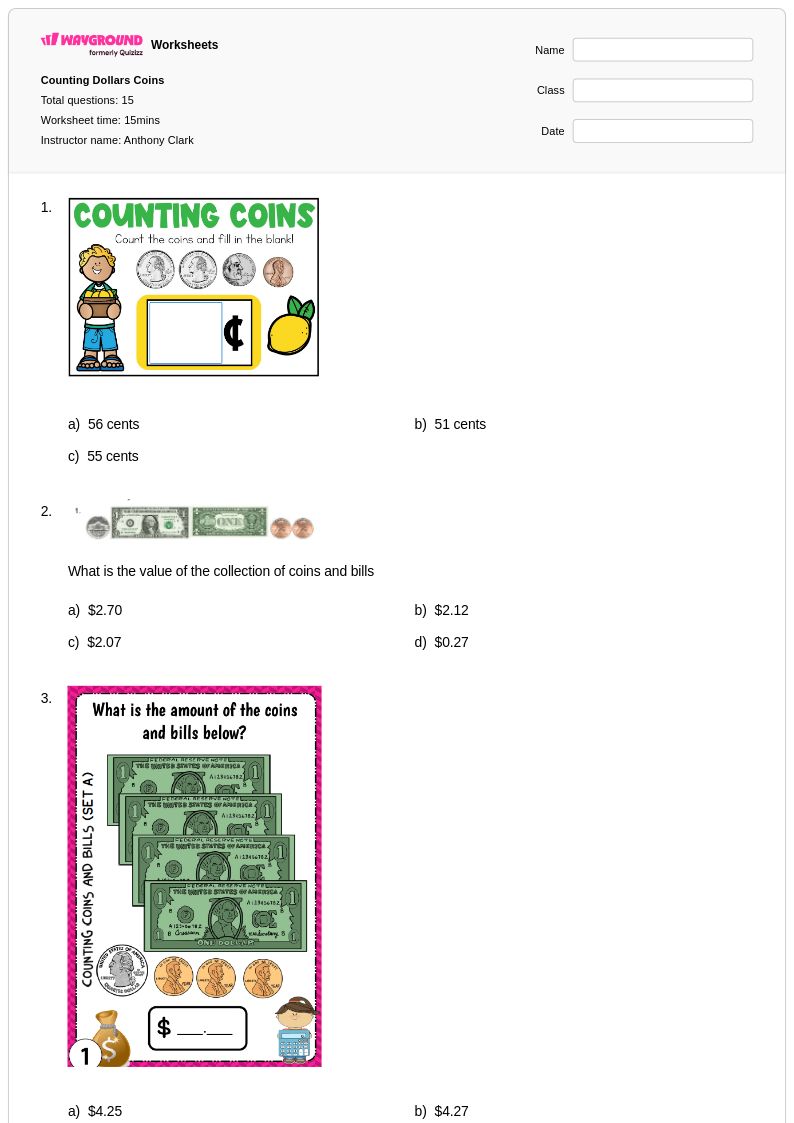
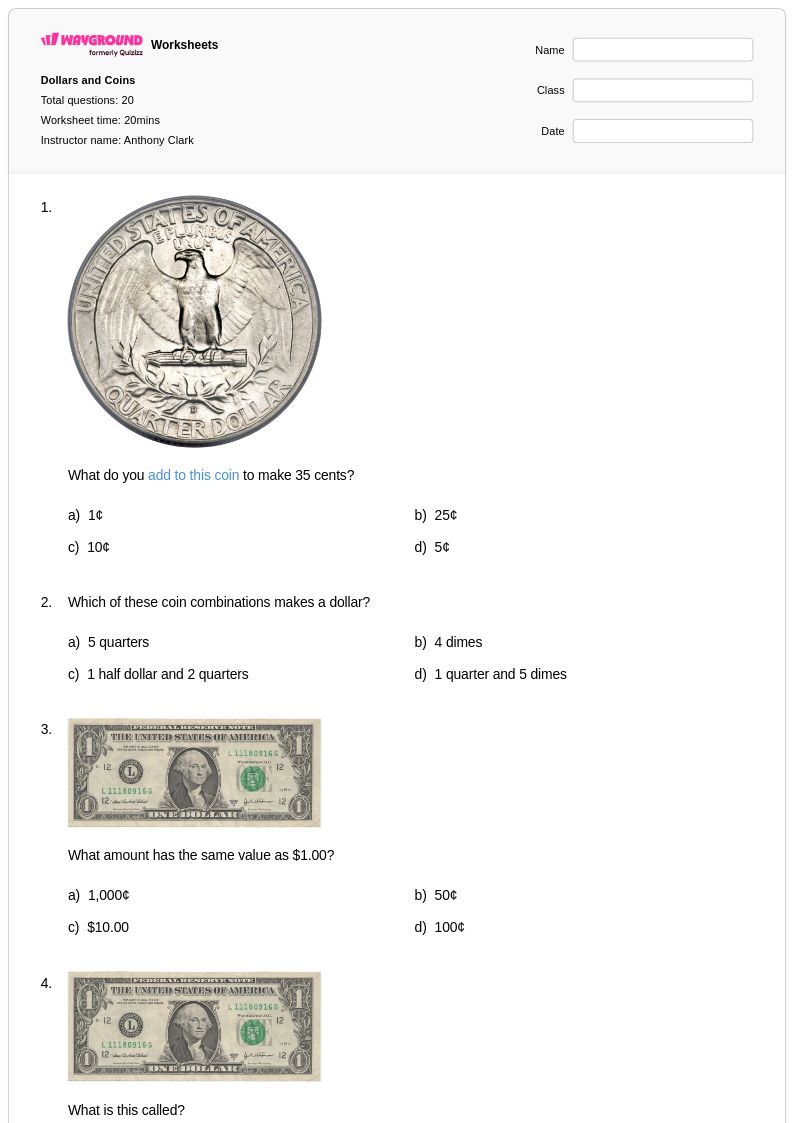
Wayground offers free Class 3 mathematics worksheets and printables focused on identifying dollars, featuring practice problems and answer keys to help students master coin recognition and money values.
Dollar recognition worksheets for Class 3 students available through Wayground (formerly Quizizz) provide comprehensive practice in identifying and understanding paper currency denominations. These educational resources strengthen essential money skills by helping third-grade learners distinguish between different dollar bills, recognize their unique features, and build confidence with basic financial literacy concepts. The collection includes free printables with answer keys that present systematic practice problems ranging from simple dollar bill identification to more complex scenarios involving multiple denominations, ensuring students develop both recognition speed and accuracy with real-world money handling situations.
Wayground (formerly Quizizz) empowers educators with access to millions of teacher-created dollar identification worksheets specifically designed for Class 3 mathematics instruction. The platform's robust search and filtering capabilities allow teachers to quickly locate standards-aligned materials that match their specific classroom needs, while built-in differentiation tools enable customization for diverse learning levels within the same grade. Whether delivered as printable pdf worksheets for hands-on practice or interactive digital activities, these resources support flexible lesson planning and provide teachers with versatile options for skill remediation, enrichment activities, and ongoing assessment of student progress in money recognition and financial literacy development.
FAQs
How do I teach dollar recognition and money skills to third graders?
By third grade, most students can identify common denominations — the instructional work is about fluency and application. Focus on multi-denomination scenarios: reading a total and determining which combination of bills makes sense, or comparing two amounts expressed in different bills. Word problems set in realistic contexts (buying supplies, making change) keep the skill from feeling abstract at this age.
What exercises help third graders practice working with dollar bills?
Third graders benefit most from mixed-denomination problems and scenario-based tasks rather than straight identification drills. Useful formats include: identifying the bills needed to reach a given total, ordering a set of bills from least to greatest value, and multi-step problems that combine recognition with simple addition. Wayground's Grade 3 dollar worksheets span this range, from foundational review to more complex multi-denomination challenges.
What mistakes do third graders still make with dollar denominations?
The most persistent error at Grade 3 is misreading the $50 and $100 — students encounter them less often and haven't built the same automatic recognition they have for smaller bills. A subtler issue: students who can identify bills individually sometimes make errors when asked to find the total value of a mixed set, because they rush the identification step to get to the addition. Slowing down the recognition phase with timed single-step drills before combining skills helps.
How do I use Wayground's Grade 3 dollar worksheets?
Each worksheet is available as a printable PDF with a complete answer key, or you can host it as a digital quiz on Wayground where students get feedback as they go. The Wayground for Teachers app makes grading printed submissions fast — scan or photograph student work and the app handles the tallying.
How does dollar recognition connect to the third-grade Common Core math progression?
By third grade, Common Core expects students to fluently add and subtract within 1,000 and solve multi-step word problems — money is a natural real-world context for both. Dollar recognition at Grade 3 isn't a new standard so much as a supporting skill: students who can't quickly identify a $20 versus a $50 will slow down on money word problems that assume that knowledge. Solid bill recognition frees up working memory for the arithmetic, which is where the third-grade standards focus.
How can I differentiate dollar practice for third graders at different skill levels?
Students still shaky on basic identification can use Wayground's reduced answer choices setting in digital mode, which narrows the options without changing the question. For printed worksheets, wider font spacing and a larger font size make bill labels and problem text easier to process for students with reading difficulties. Students ready for a challenge can be directed to multi-denomination word problems in the same collection — no need to find a separate resource.