
9 Q
3rd - Uni
15 Q
3rd - 5th
7 Q
1st - PD
20 Q
3rd
10 Q
3rd
10 Q
1st - 5th
11 Q
3rd
12 Q
3rd
10 Q
3rd
5 Q
3rd - 4th
15 Q
3rd
7 Q
3rd
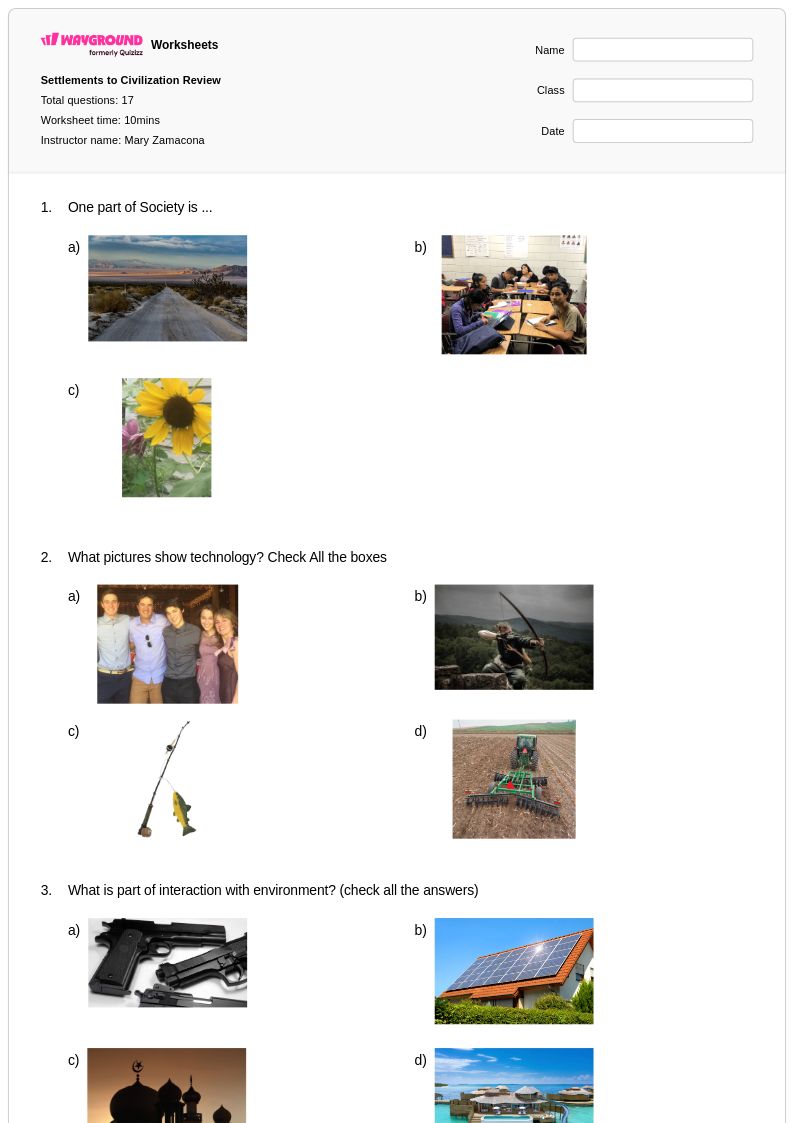
17 Q
3rd - 9th
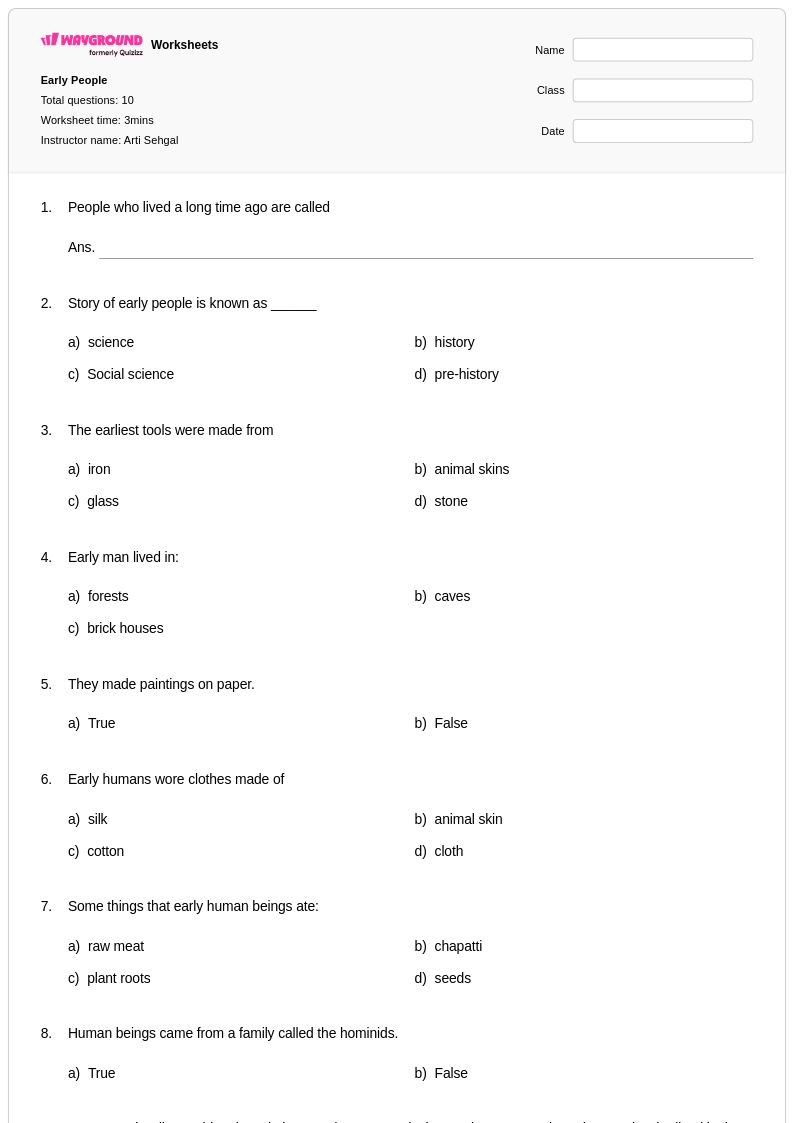
10 Q
3rd
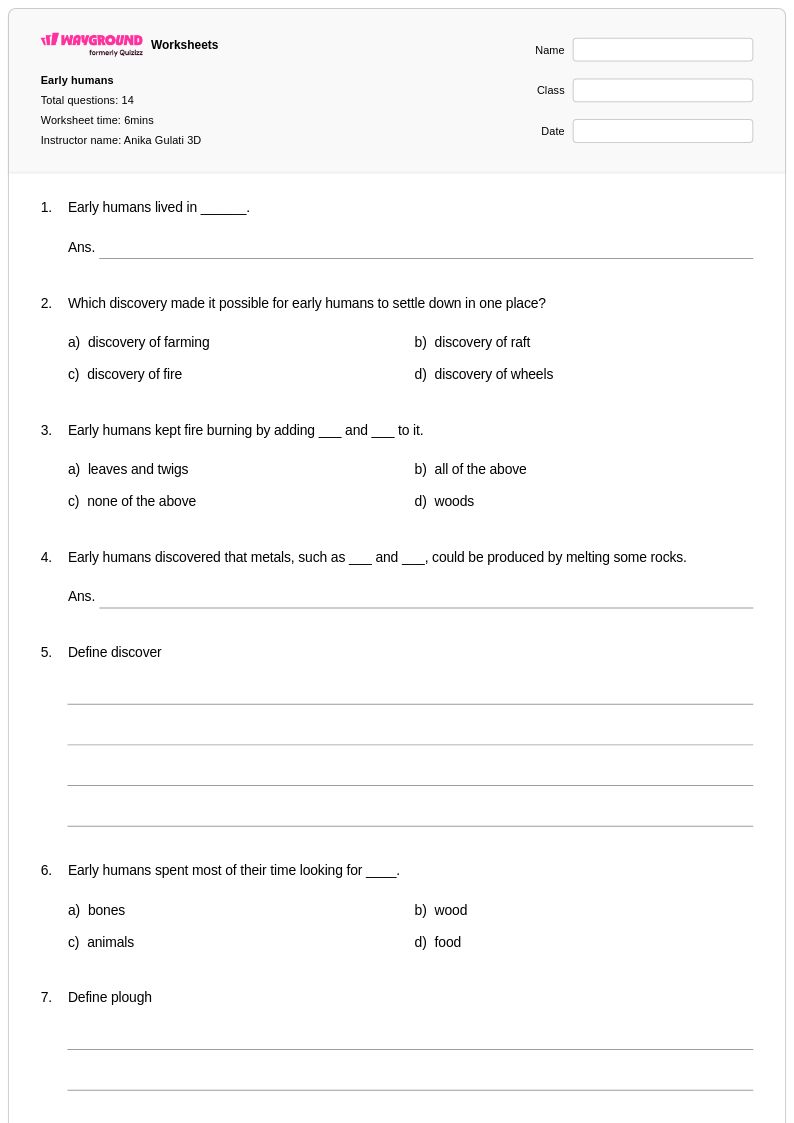
14 Q
3rd
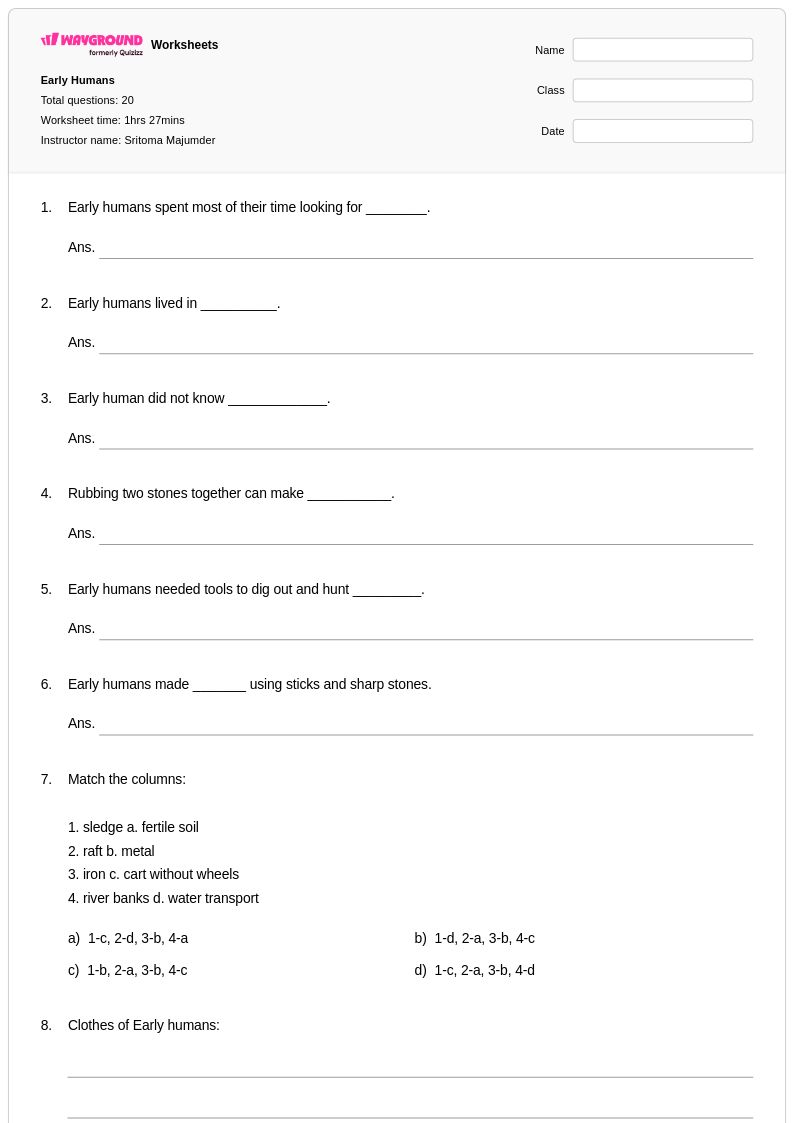
20 Q
3rd
15 Q
3rd
10 Q
3rd - 4th
10 Q
3rd
13 Q
3rd
11 Q
3rd - 4th
17 Q
3rd
9 Q
3rd
16 Q
3rd
Explore Other Subject Worksheets for class 3
Explore printable Early Mesopotamia worksheets for Class 3
Early Mesopotamia worksheets for Class 3 students available through Wayground (formerly Quizizz) provide foundational exploration of humanity's first civilization in an age-appropriate format. These educational resources guide young learners through essential concepts including the geography of the Tigris and Euphrates rivers, the development of the world's first cities like Ur and Babylon, and the revolutionary inventions that emerged from this ancient region such as the wheel, writing systems, and organized agriculture. The worksheets strengthen critical thinking skills through engaging practice problems that encourage students to analyze cause and effect relationships, compare ancient and modern life, and understand how geographic features influence human settlement patterns. Each printable resource includes comprehensive answer keys that support independent learning and enable teachers to efficiently assess student comprehension of these fundamental historical concepts. These free educational materials present complex historical information through age-appropriate activities, visual aids, and interactive exercises designed specifically for elementary learners developing their understanding of ancient civilizations.
Wayground (formerly Quizizz) empowers educators with an extensive collection of millions of teacher-created resources specifically designed to support Class 3 Early Mesopotamia instruction across diverse classroom needs. The platform's robust search and filtering capabilities enable teachers to quickly locate materials that align with social studies standards while accommodating different learning styles and ability levels through built-in differentiation tools. Teachers can seamlessly customize existing worksheets or create entirely new materials, with content available in both printable PDF formats for traditional classroom use and digital formats for interactive learning experiences. These comprehensive tools support strategic lesson planning by providing educators with varied options for introducing new concepts, facilitating skill practice sessions, implementing targeted remediation for struggling learners, and offering enrichment opportunities for advanced students ready to explore deeper connections between Mesopotamian innovations and their lasting impact on human civilization.
FAQs
How do I teach Early Mesopotamia to middle school students?
What are good practice activities for students learning about ancient Mesopotamia?
What common mistakes do students make when studying Early Mesopotamia?
How do Early Mesopotamia worksheets help students understand the Code of Hammurabi?
How do I use Early Mesopotamia worksheets in my classroom?
How can I differentiate Early Mesopotamia instruction for students with varying skill levels?