
Recommended Topics for you
- Deposition
- Dinosaur Fossils
- Dinosaurs
- Earth's Seasons
- Earth in Space
- Earth Science
- Environmental Studies
- Erosion
- Hemispheres
- Hydrologic Cycle
- Labeling
- Land Formations
- Landforms and Water Bodies
- Moon Phases
- Natural Disasters
- Natural Events
- Nature Activities
- Oceans
- Patterns in the Sky
- Planet Earth
- Planets
- Precipitation
- Predicting
- Properties
- Rainbows
- Rainforest
- Recycling
- Rocks
- Rocks and Minerals
- Rocks and Soil
- Soil Composition
- Soil Texture
- The Sun
- Types of Rocks
- Water
- Water Cycle
- Water Distribution
- Water on Earth
- Water Properties
- Weather & Seasons
- Weather and Climate
- Weather Instruments
- Weathering
5 Q
2nd
5 Q
1st - 3rd
15 Q
2nd
7 Q
2nd
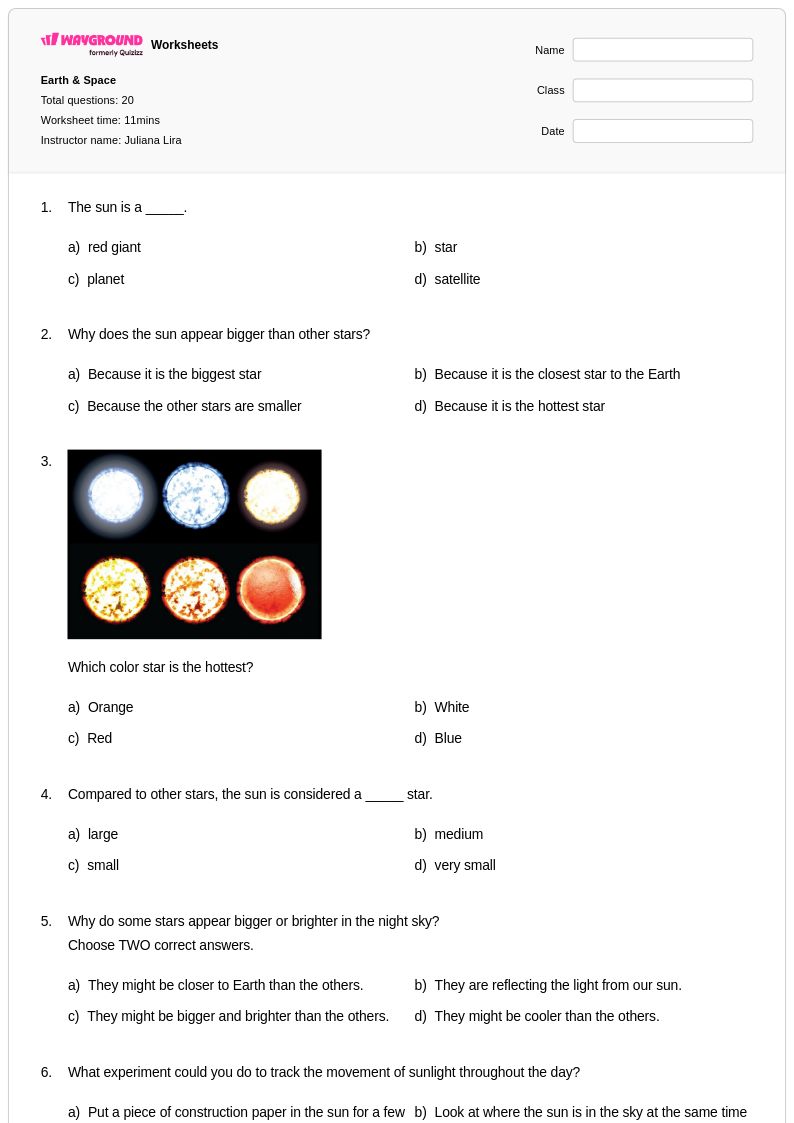
20 Q
2nd
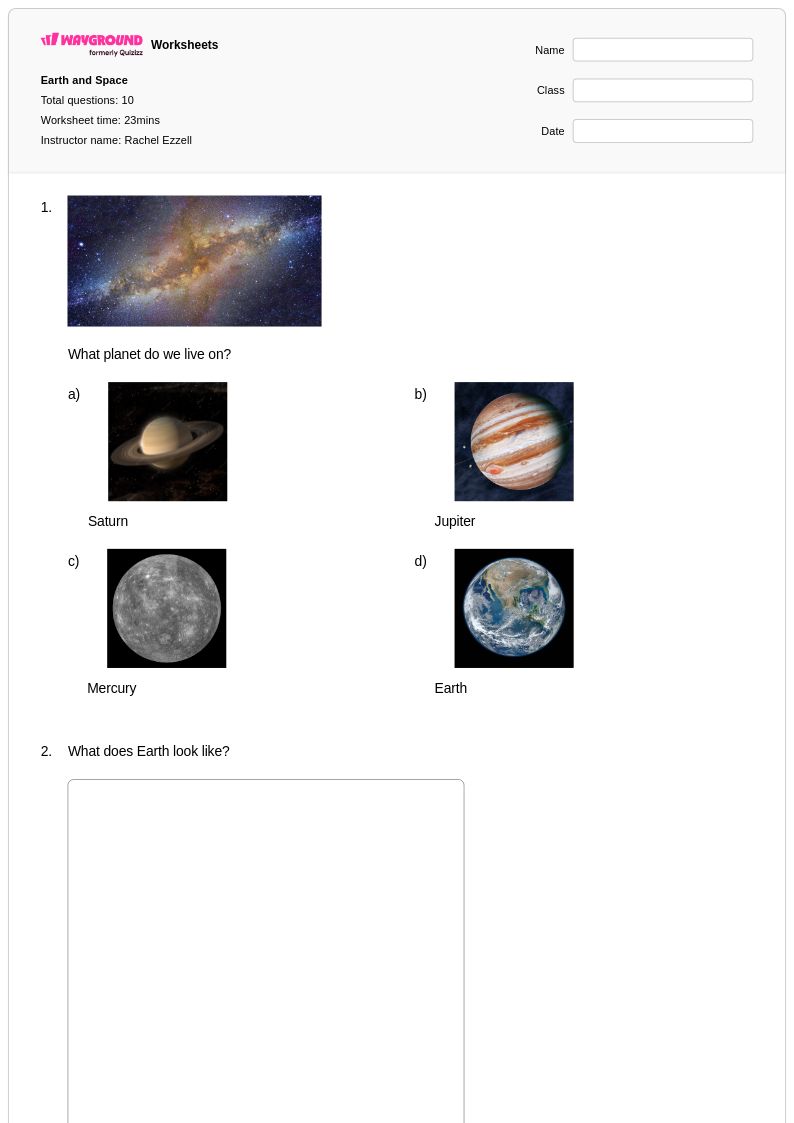
10 Q
1st - 5th
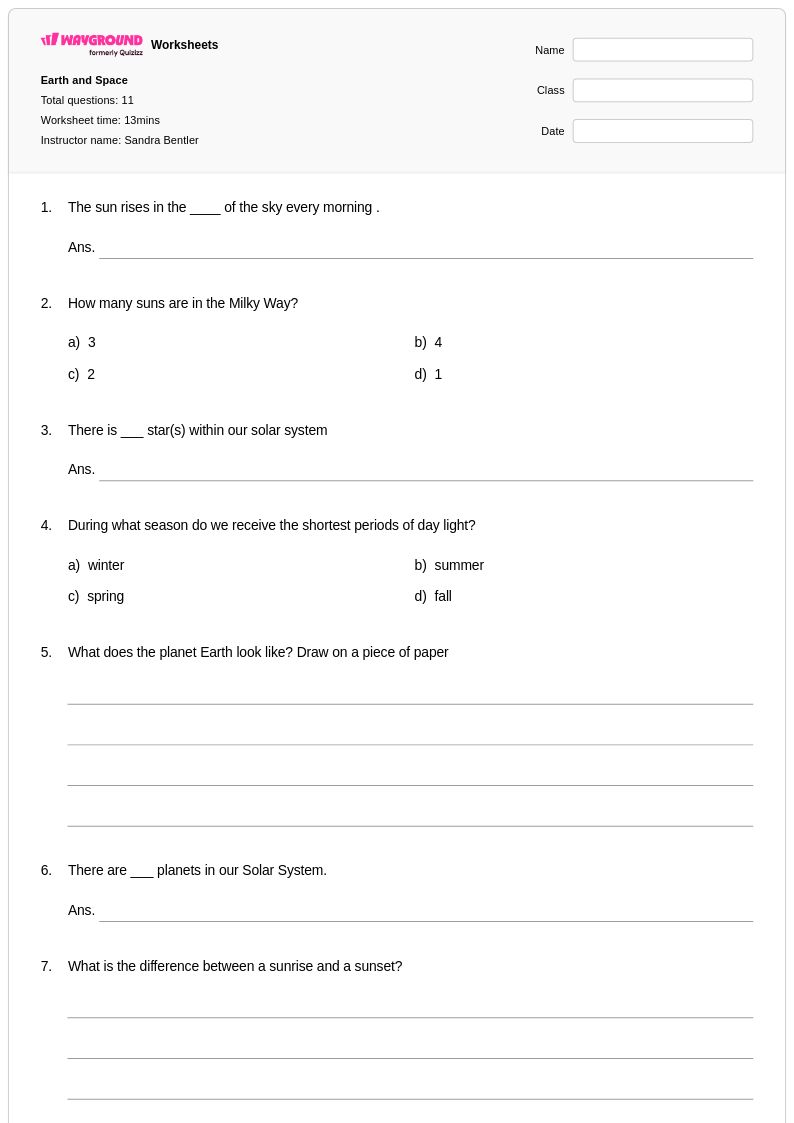
11 Q
1st - 2nd
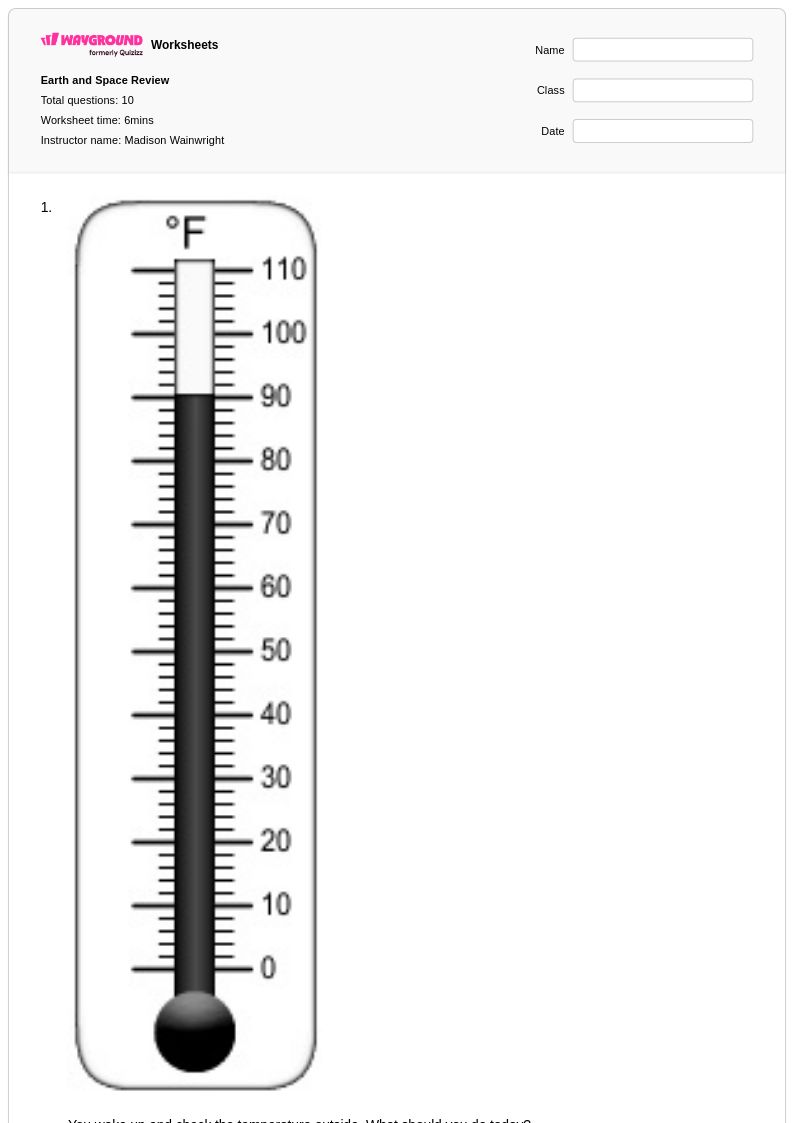
10 Q
2nd
8 Q
1st - 5th
7 Q
1st - 12th
25 Q
2nd
16 Q
1st - 5th
19 Q
1st - 2nd
10 Q
1st - 6th
10 Q
1st - PD
30 Q
2nd - 4th
12 Q
2nd
10 Q
KG - PD
10 Q
1st - 3rd
10 Q
1st - 5th
39 Q
1st - 5th
10 Q
1st - 5th
19 Q
2nd
20 Q
1st - 5th
Explore Earth & Space Science Worksheets by Grades
Explore Earth & Space Science Worksheets for class 2 by Topic
Explore Other Subject Worksheets for class 2
Explore printable Earth & Space Science worksheets for Class 2
Earth & Space Science worksheets for Class 2 students available through Wayground (formerly Quizizz) provide young learners with foundational knowledge about our planet and the universe beyond. These carefully designed educational resources help second graders explore essential concepts such as the water cycle, weather patterns, seasonal changes, day and night cycles, and the basic characteristics of Earth, moon, and sun. The worksheets strengthen critical thinking skills through hands-on activities that encourage observation, comparison, and scientific reasoning while building vocabulary specific to earth and space phenomena. Each worksheet comes with a comprehensive answer key to support accurate assessment, and the free printables offer teachers convenient access to practice problems that reinforce classroom learning through engaging visual elements and age-appropriate scientific investigations.
Wayground (formerly Quizizz) empowers educators with an extensive collection of millions of teacher-created Earth & Space Science resources specifically tailored for Class 2 instruction. The platform's robust search and filtering capabilities allow teachers to quickly locate worksheets aligned with specific learning standards and student needs, while built-in differentiation tools enable customization for diverse learning abilities within the classroom. Teachers can access these materials in both printable pdf format for traditional paper-based activities and digital formats for interactive learning experiences. This comprehensive resource library supports effective lesson planning by providing ready-to-use materials for skill practice, targeted remediation for struggling learners, and enrichment opportunities for advanced students, ensuring that all second graders can develop a solid foundation in earth and space science concepts through structured, curriculum-aligned practice.
FAQs
How do I teach Earth and space science concepts effectively in middle or high school?
What are good practice exercises for Earth and space science topics like plate tectonics, the rock cycle, or the water cycle?
What misconceptions do students commonly have in Earth and space science?
How can I use Earth and space science worksheets to support students who struggle with scientific vocabulary and reading?
How do I use Wayground's Earth and space science worksheets in my classroom?
How do I assess student understanding of Earth and space science without relying solely on multiple-choice tests?